Egara Tenjin Shrine: Where Cartoonists Retire Their Brushes
According to Egara Tenjin Shrine, its story began in 1104, when the sky over this spot turned dark and, in the thunder and rain, a picture came down.
These days, cartoonists bring their old brushes here.
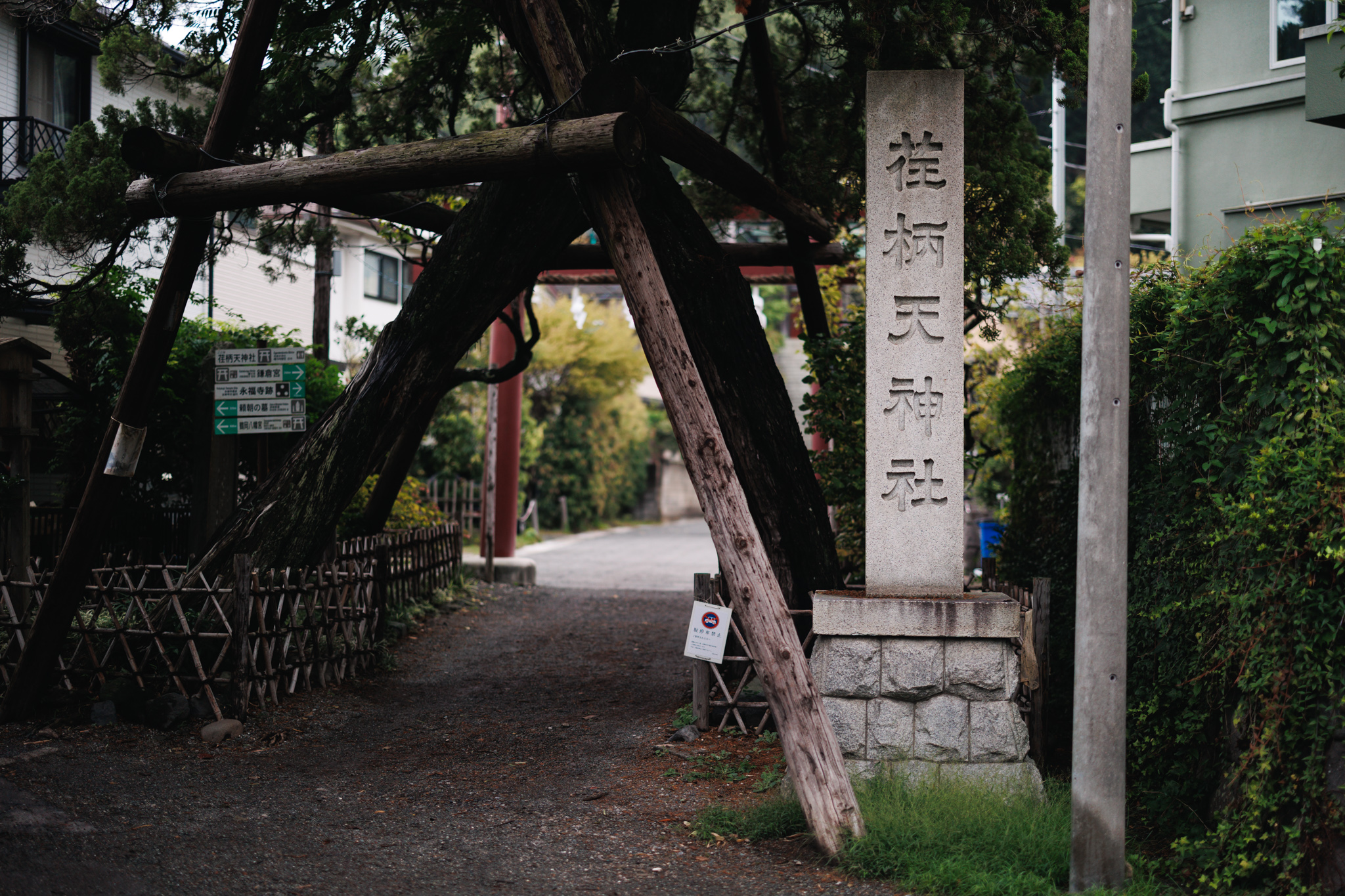
I reached the shrine on the way down from the hills. At the entrance, a stone marker gives the shrine’s name. Beside it, an old tree leans over the path, propped up on a frame of wooden supports.
After the hills, I felt some sympathy.
A picture from the sky
The picture showed Tenjin, dressed in black court robes. The people who found it were awed enough to build a shrine and place it inside.
Tenjin is Sugawara no Michizane, a ninth-century scholar and statesman who was deified after his death. Today he is best known as the god of learning, and his shrines fill up with students before entrance exams.
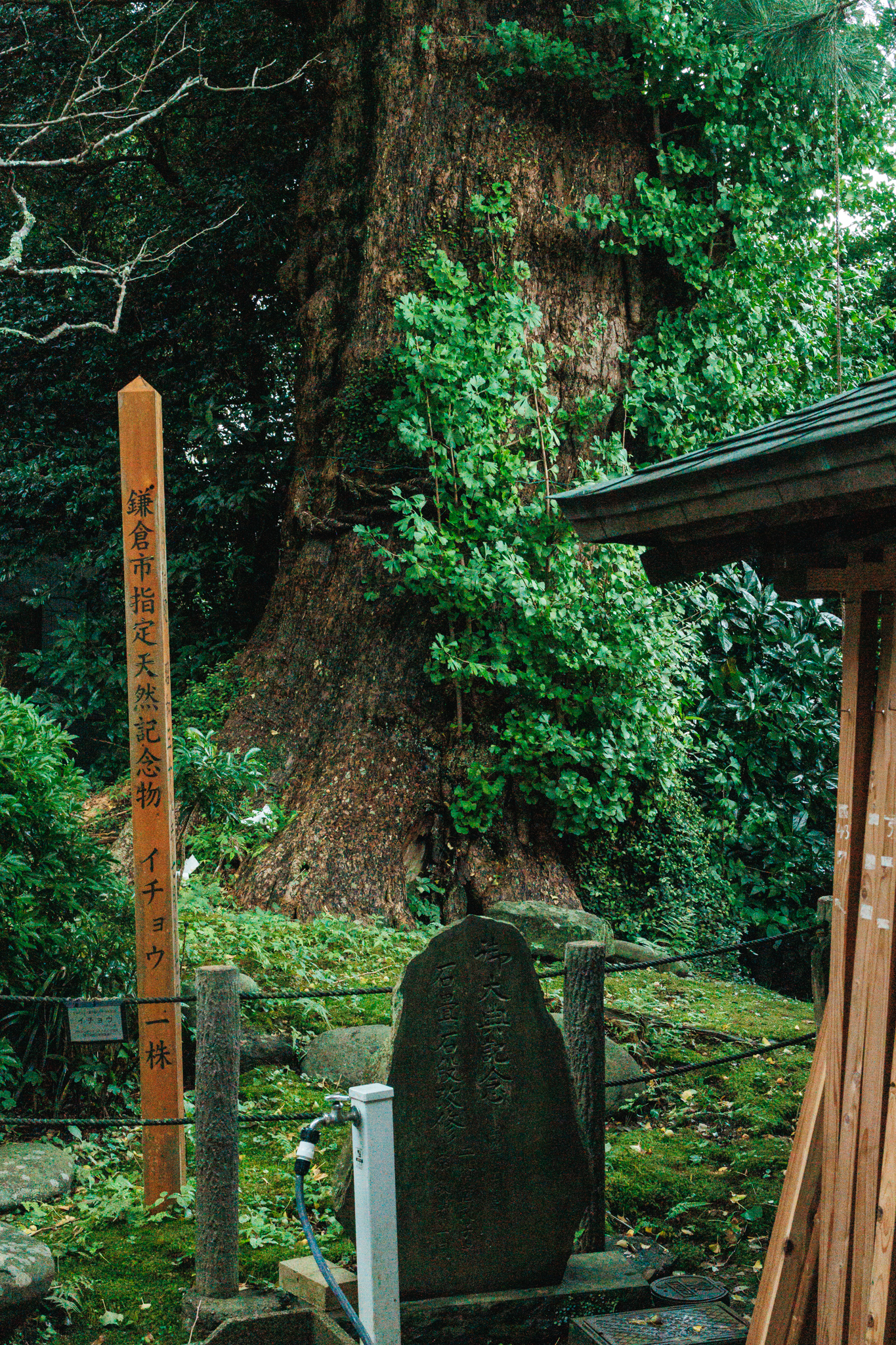
With the picture safely enshrined, there remained the question of the ground it had landed on. The answer now stands about 25 metres tall. The shrine’s ginkgo is said to be around 900 years old, and tradition says it was planted so that no one would tread on the spot where the picture came down.
Nine centuries on, I doubt anyone would even think of it.
The main hall has a history of its own. It began life at Tsurugaoka Hachimangū, Kamakura’s great shrine down the road, probably in the fourteenth century, and was moved here in the early seventeenth century when Tsurugaoka rebuilt. Egara Tenjin needed it: its own buildings had fallen into disrepair, and one had been lost to lightning, an awkward fate for a shrine founded in a thunderstorm. The hand-me-down is now a national Important Cultural Property, and is often described as the oldest surviving shrine building in Kamakura.
Egara Tenjin is also counted as one of Japan’s three ancient Tenjin shrines, alongside Kitano Tenmangū in Kyoto and Dazaifu Tenmangū in Fukuoka. Japan keeps more than one list of three Tenjin shrines, and the lists do not always agree on who comes third.
Keep out
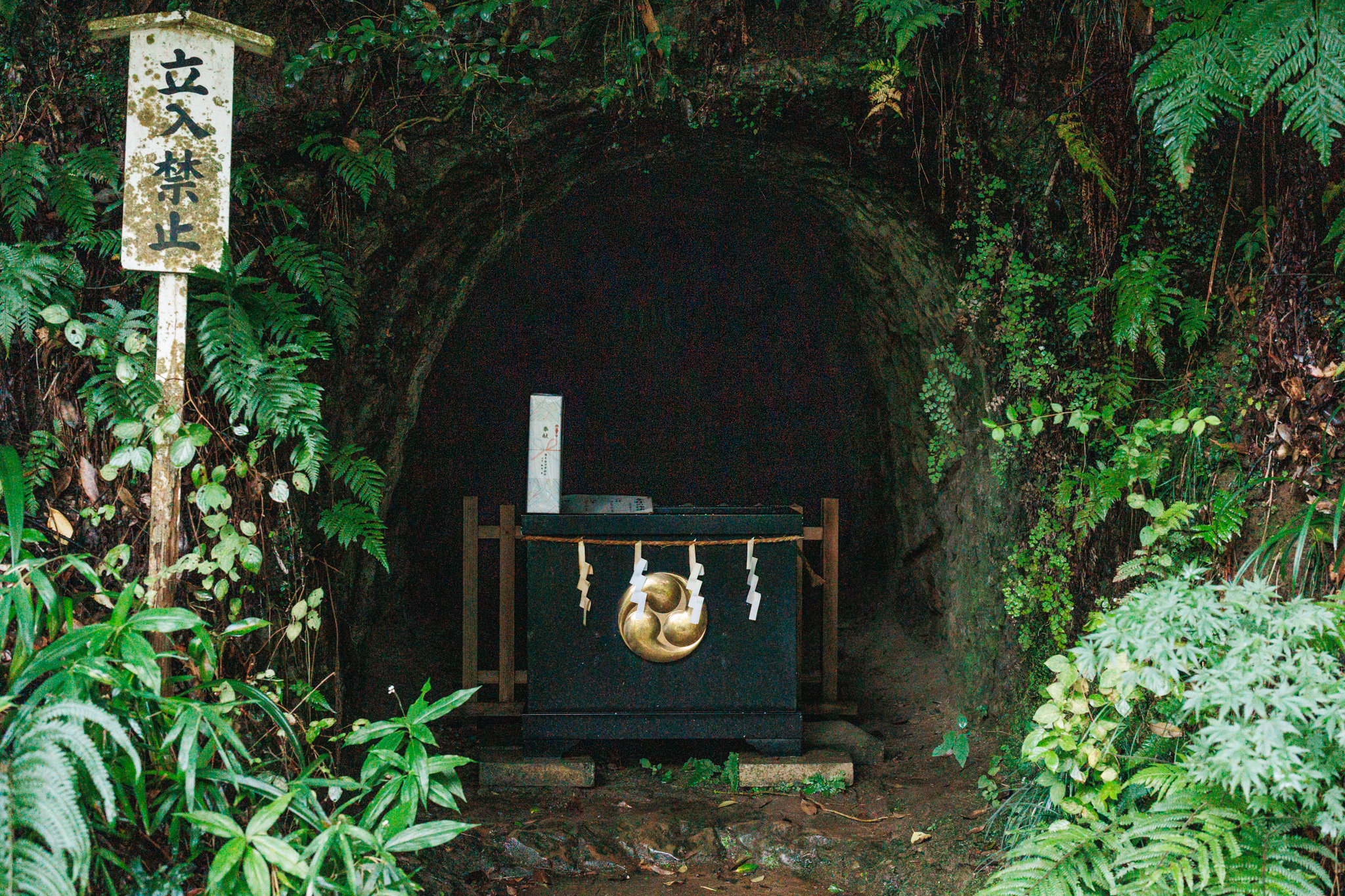
To the right of the main hall, two tunnels have been cut into the hillside. These are yagura, medieval chambers found around Kamakura and thought to have been used for burials or memorial rites. The two are connected inside.
A sign asks visitors to keep out. I stayed on the right side of it. The ferns have been allowed in.
One hundred and fifty-four kappa
Then there is the name. Egara, as it happens, is also a Japanese word for a picture or design. The characters are different, but for a shrine that began with a picture, the name fits rather well.
It fits the next part of the story, too. In 1971, the cartoonist Shimizu Kon, a Kamakura resident, dedicated a brush here. Shimizu was known for his kappa, the river creatures of Japanese folklore, usually drawn with a beak, a shell and a dish of water on the head. His were friendlier than most and spent years advertising sake.
The brush was one he had bought at a second-hand shop in Kamakura and used for his work. It rests beneath a low stone monument carved with one of his kappa, sitting with one knee raised and an enormous brush over its shoulder. I walked round the back to find an inscription by the novelist Kawabata Yasunari.
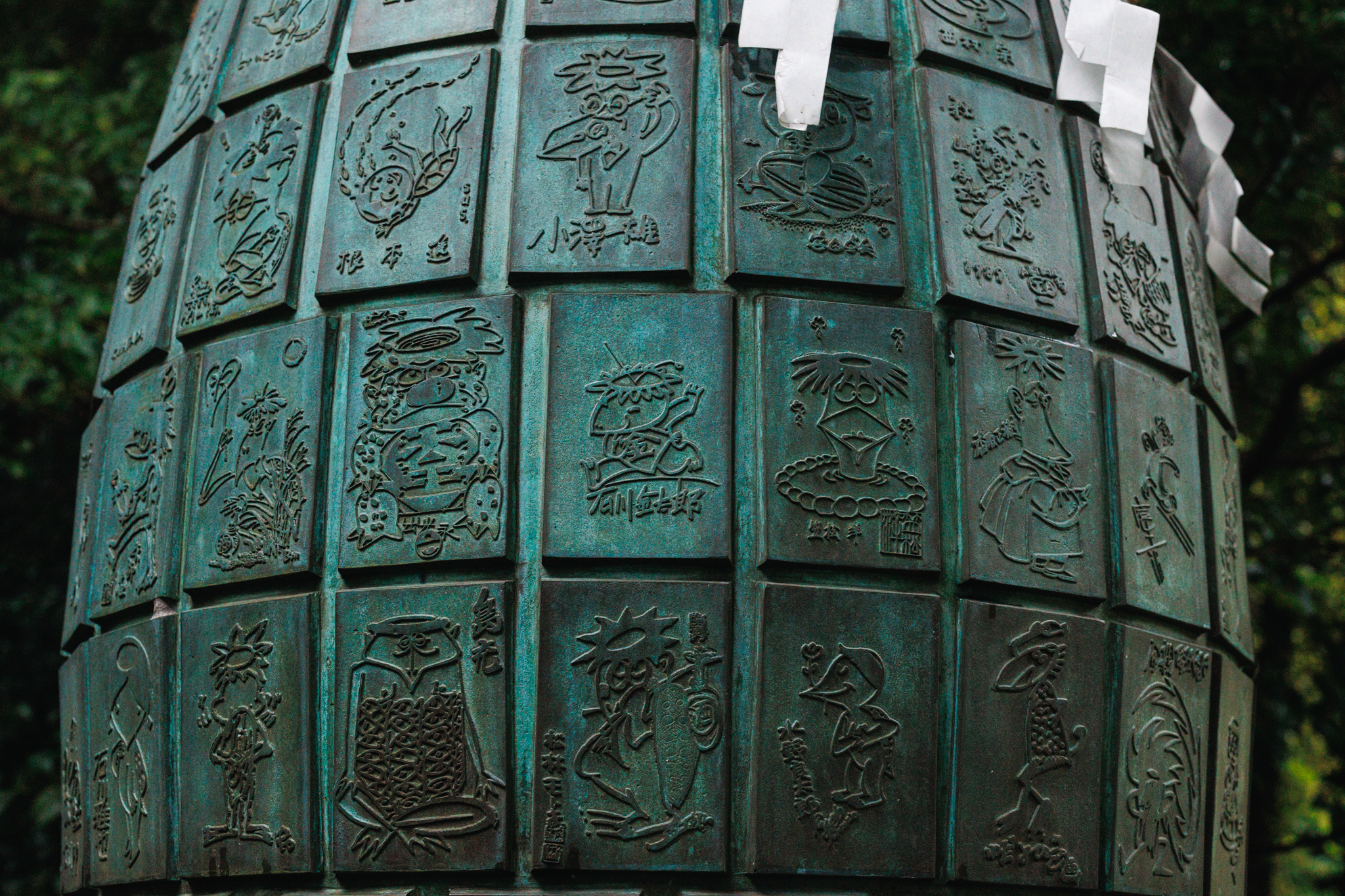
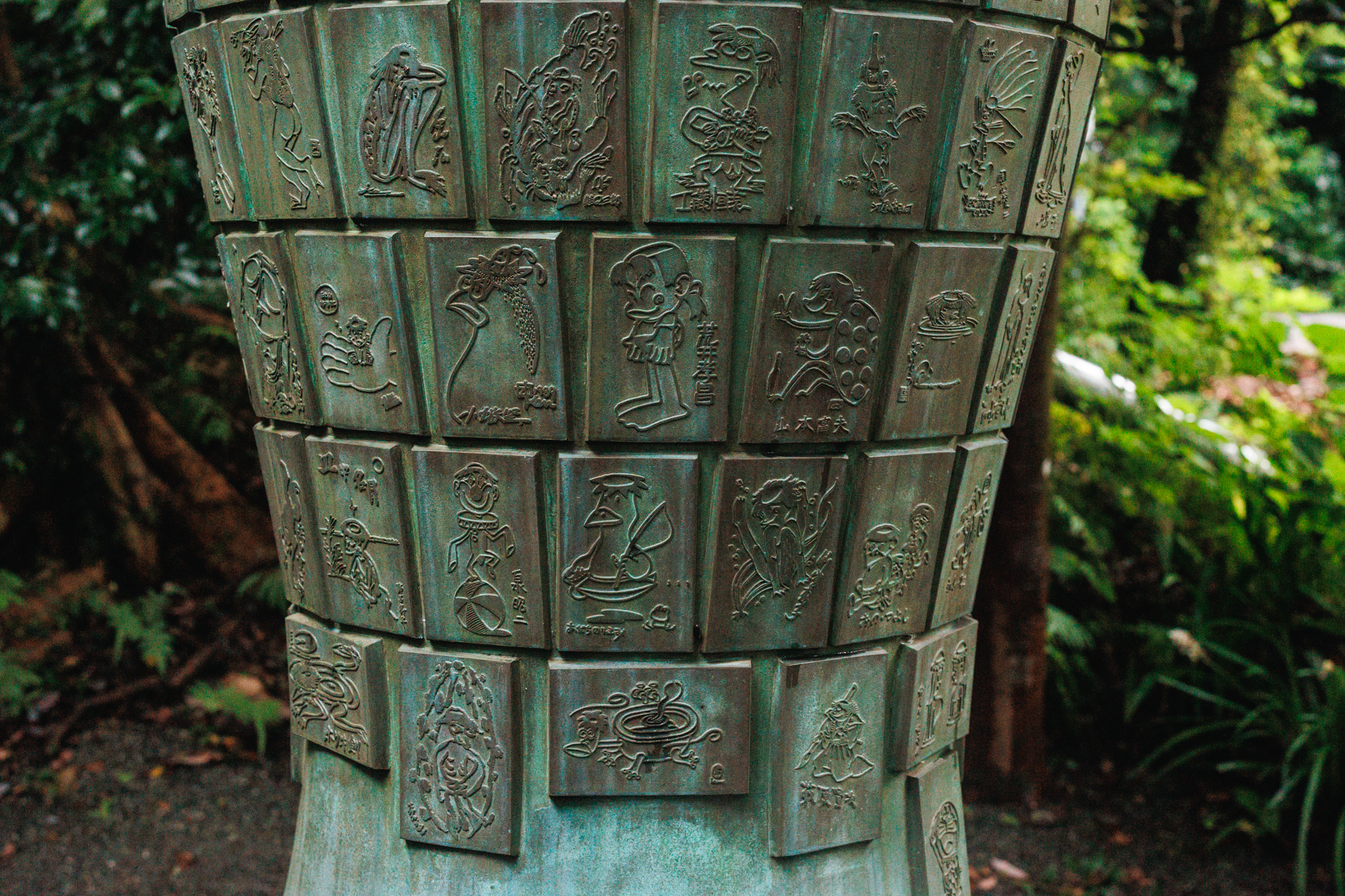
Behind it stands something much less modest. Shimizu died in 1974. In 1989, fellow cartoonists led by Yokoyama Ryūichi and Kojima Kō raised it to carry on what he had started. It is bronze, about three metres tall and weighs 800 kilograms. Its name, Efudezuka, means roughly “memorial mound for paintbrushes”.
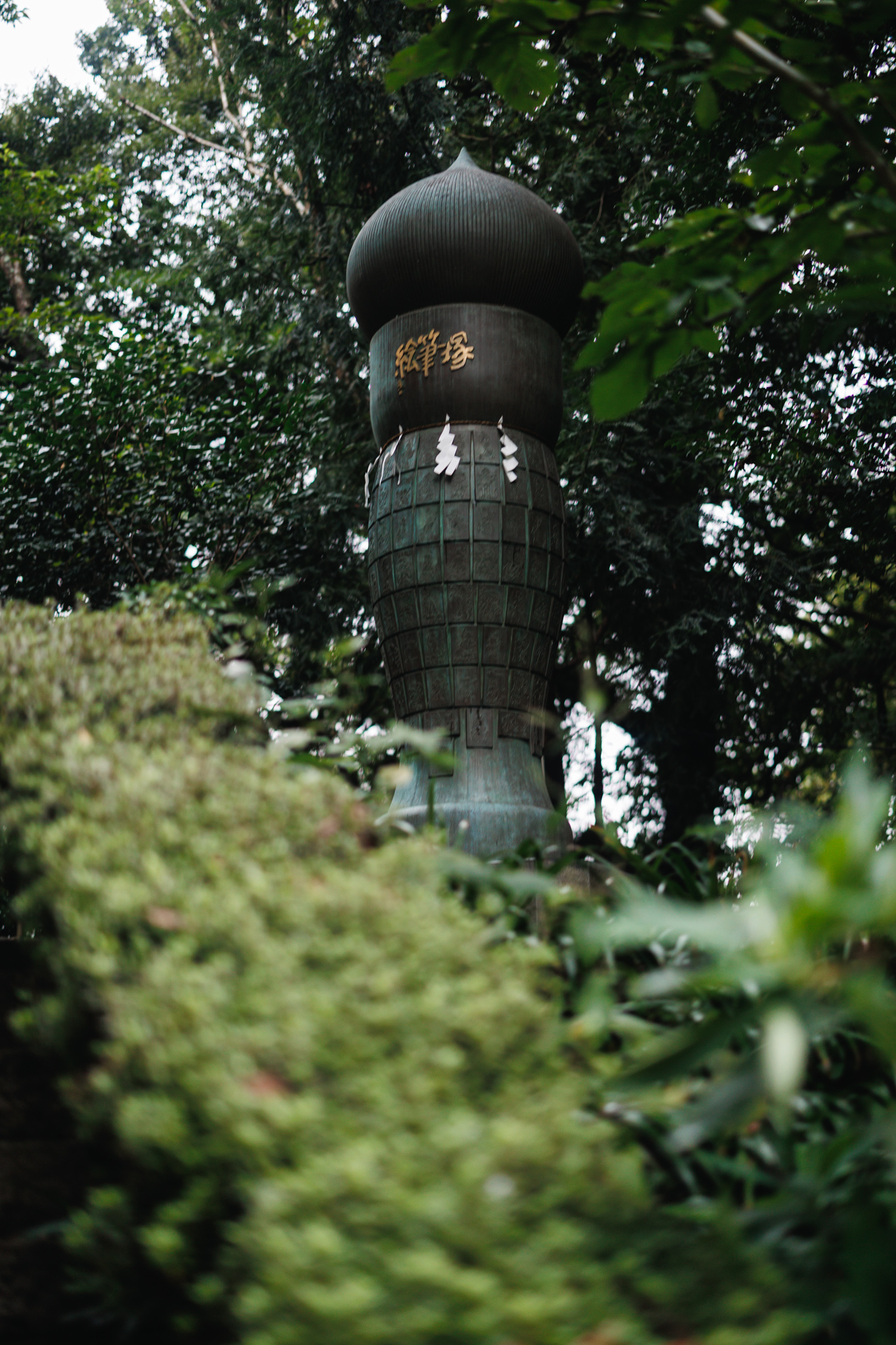
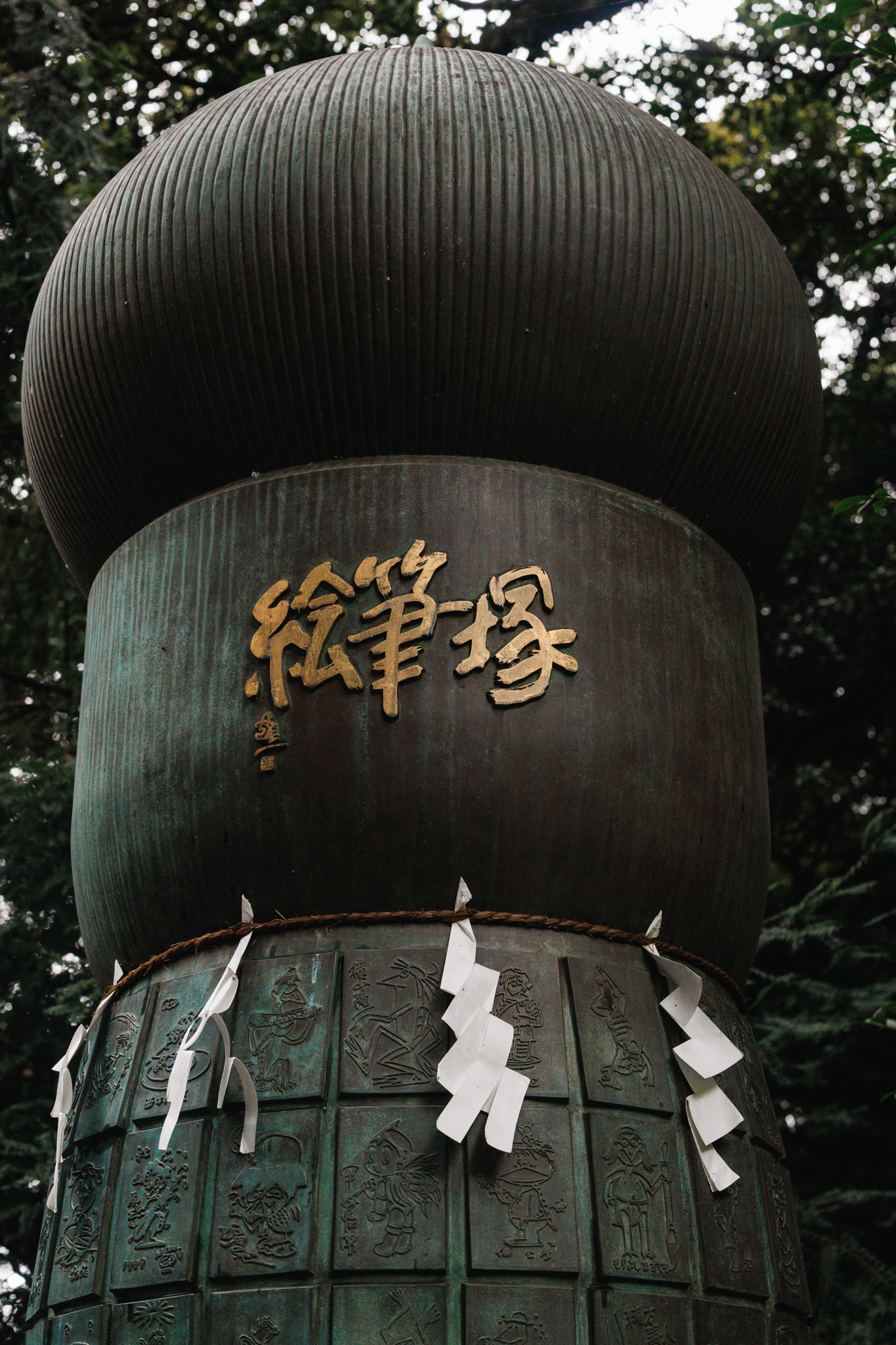
Its sides are covered in small relief panels, each a kappa drawn by a different cartoonist: 154 in all. Tezuka Osamu gave Astro Boy a dish on his head. Fujiko F. Fujio did the same for Doraemon. Others drew kappa of their own, sitting, dancing, posing and, in at least one case, carrying sake.
Generations of Japanese children have been told to stop drawing and get on with their studies.
The god of study, it turns out, has made room for the ones who drew in the margins.
Brushes into smoke
The brushes are not simply kept here. Every October, the shrine holds the Efudezuka Festival. Old brushes are gathered, cartoonists fill a large sheet of card with drawings meant to last only that day, and both are burned in a memorial rite.
I was there in September, a few weeks too early for the smoke.
In February, the shrine does something similar for sewing needles, which are laid to rest in a block of tofu.
A tree on crutches, a hall handed down from Tsurugaoka, retired needles, worn-out brushes: at Egara Tenjin, very little is simply thrown away.
The shrine began with a picture that came down from the sky.
Every October, a few more go back up.
Visit this place
Location
Efudezuka (絵筆塚), Egara Tenjin Shrine
Within the grounds of Egara Tenjin Shrine, behind the stone Kappa Fudezuka. About 20 minutes on foot from JR Kamakura Station, or about 3 minutes from the Tenjin-mae bus stop (buses from the station’s east exit).
74 Nikaidō, Kamakura, Kanagawa 248-0002, Japan
Practical Information
- Hours
- 8:30–16:30 (longer hours at New Year)
- Admission
- No fixed fee (offerings welcome)
- Events
- Efudezuka Festival in October (dates vary); needle memorial on 8 February
- Visitor note
- An active shrine. The yagura beside the main hall are closed to visitors. There is no parking.
- Official website
- Egara Tenjin Shrine
Information last checked: September 28, 2026
Conversation
Comments
Review pending commentsComments are reviewed before appearing. The internet already contains enough unattended surprises.
Checking comments…
Comments are not available in this migration preview yet. Existing comments remain on the current site.
Leave a comment