Tower of the Sun: Past, Present, Future and Missing
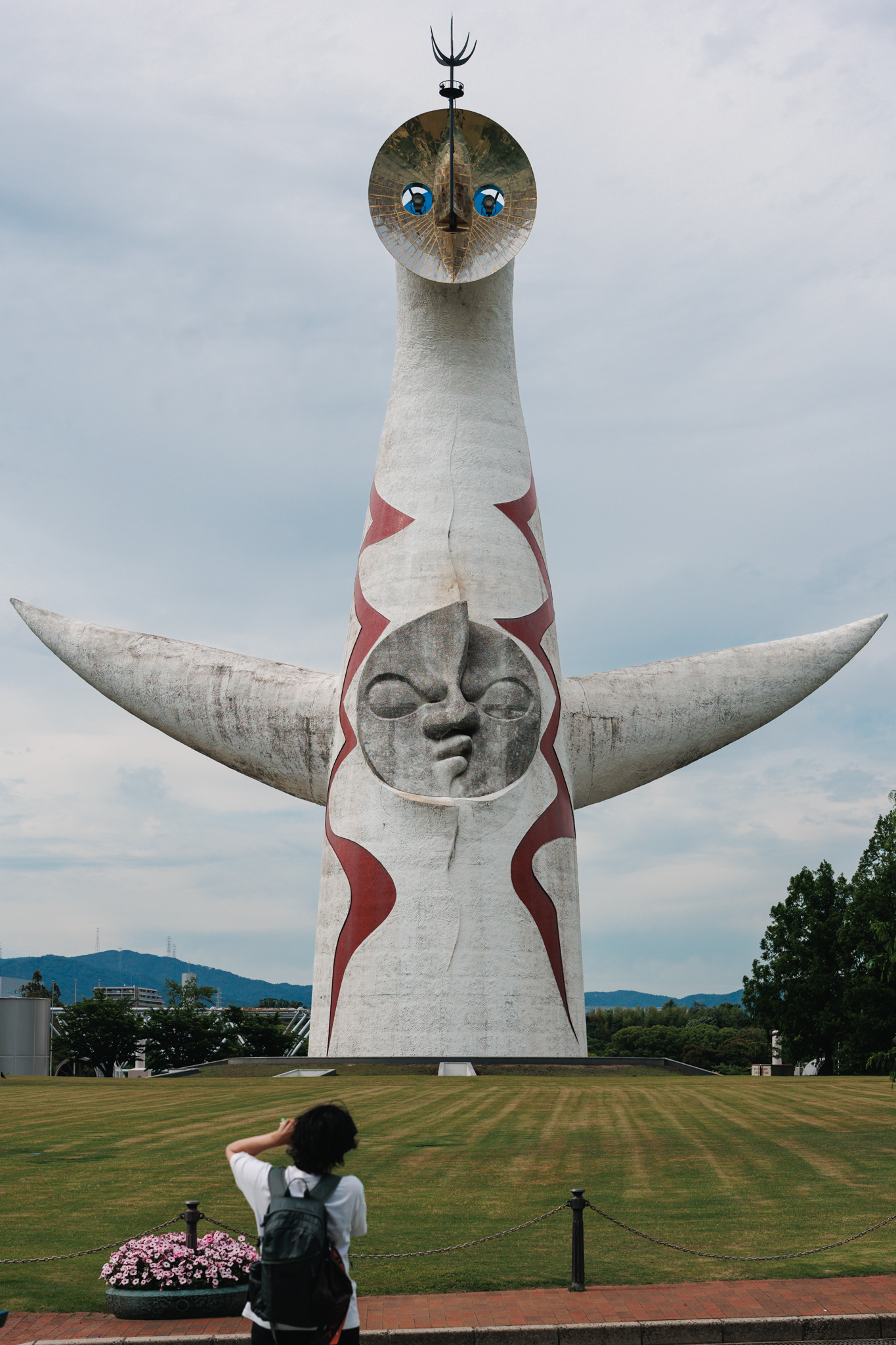
The Tower of the Sun has a face for the future, one for the present and one for the past. In 1970, it had a fourth.
I spent three days at Expo 2025, on Yumeshima, an artificial island in Osaka Bay. Afterwards, I took the monorail to the site of the first one.
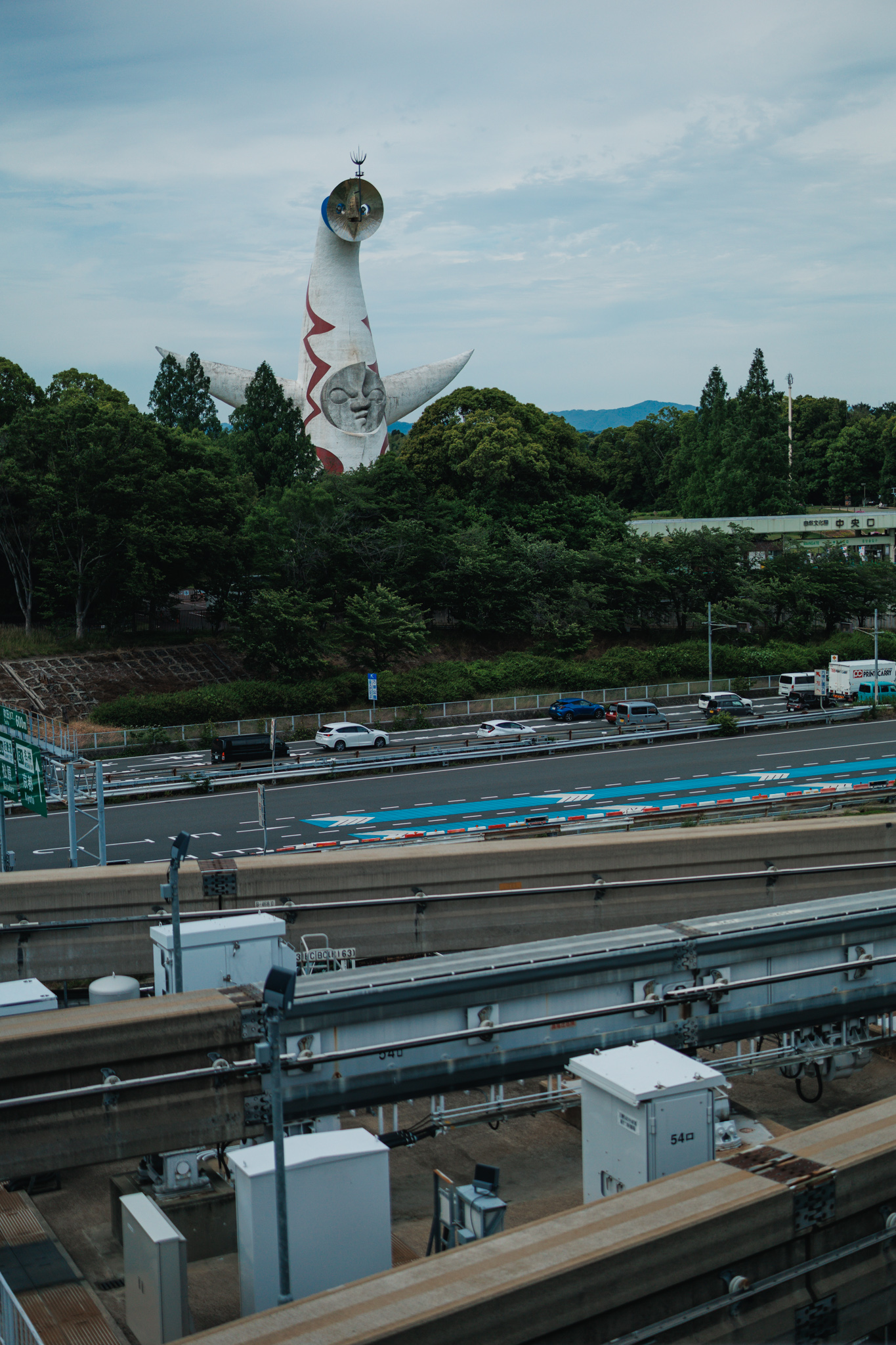
Osaka first hosted a World Expo in 1970, in Suita, just north of the city. Over 183 days, it drew some 64 million visitors. The site is now Expo ’70 Commemorative Park, mostly lawns and woodland.
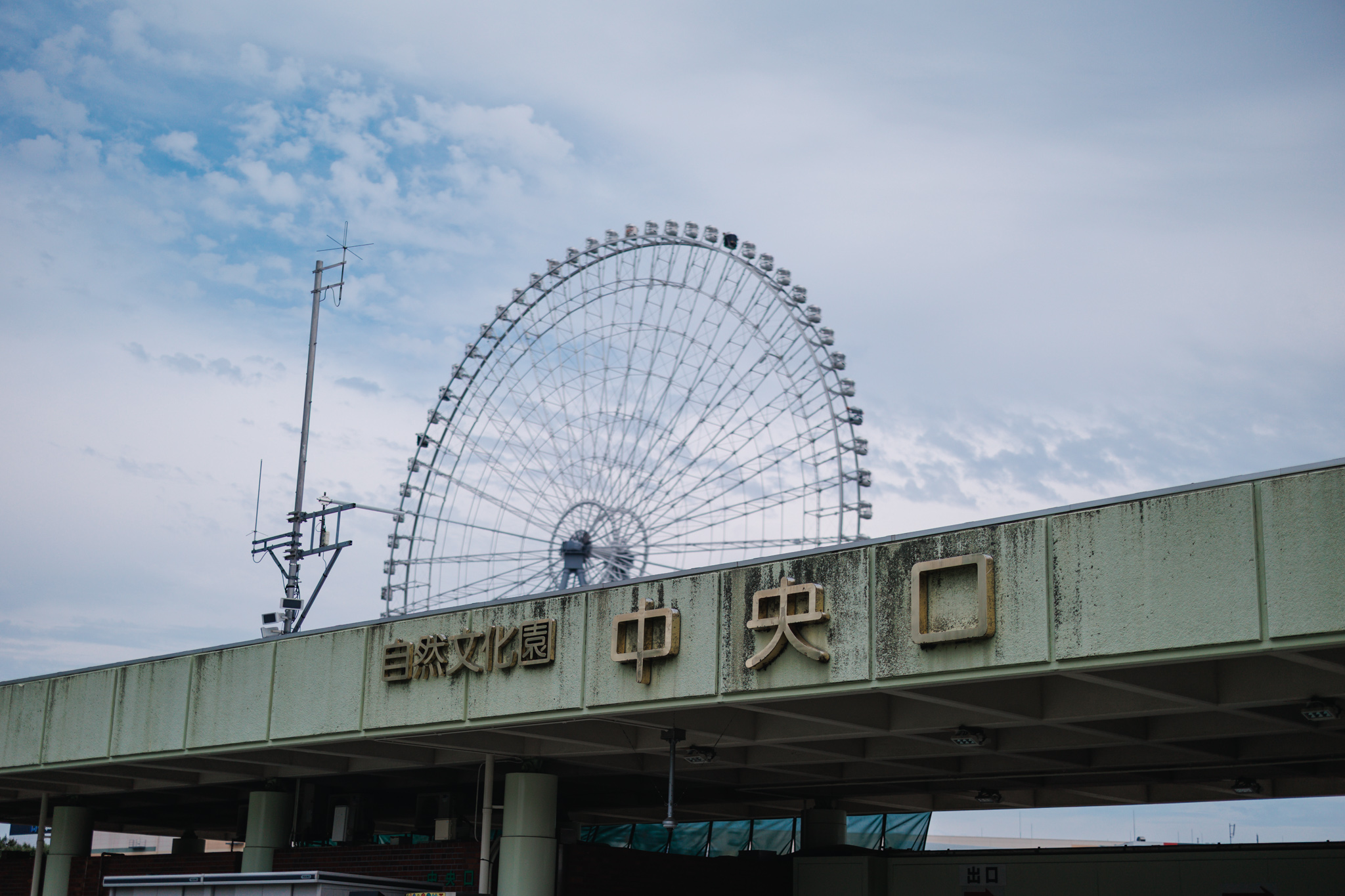
Almost all the pavilions are gone. The Expo’s symbol is still standing.
Face to face
The Tower of the Sun was designed by the artist Taro Okamoto for the Expo’s Theme Pavilion. It is about 70 metres tall, and its arms reach out about 25 metres on either side.
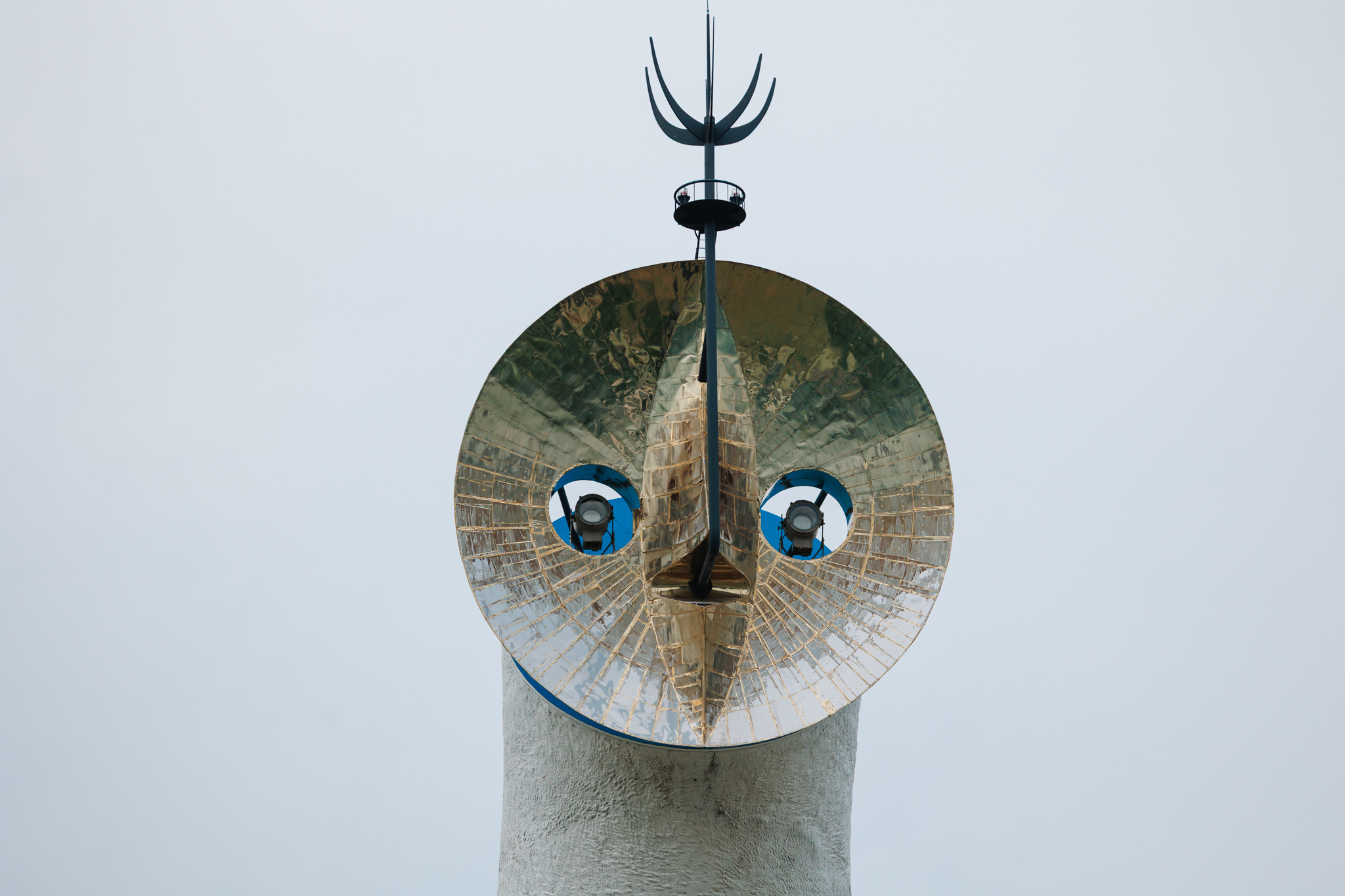
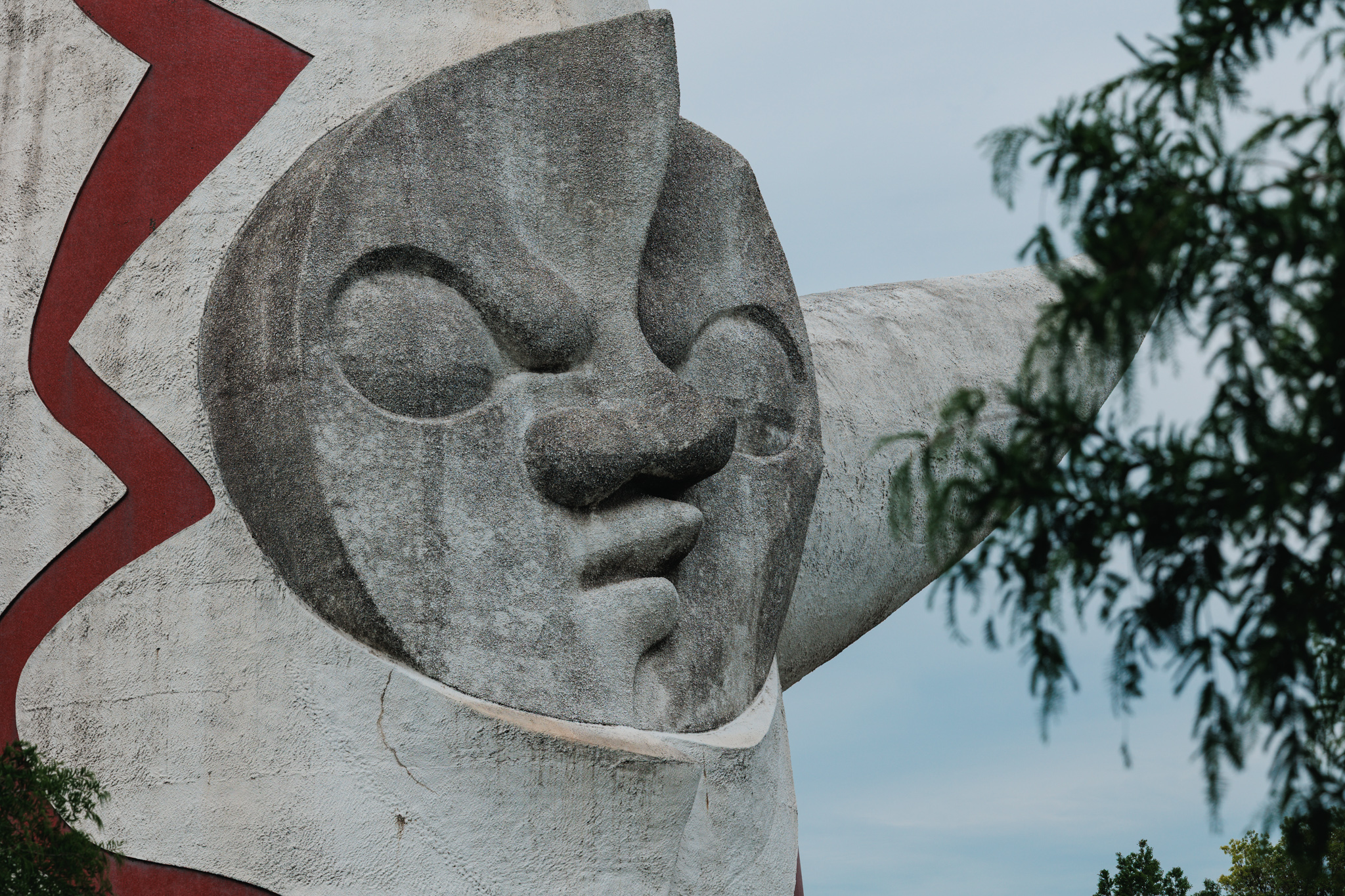
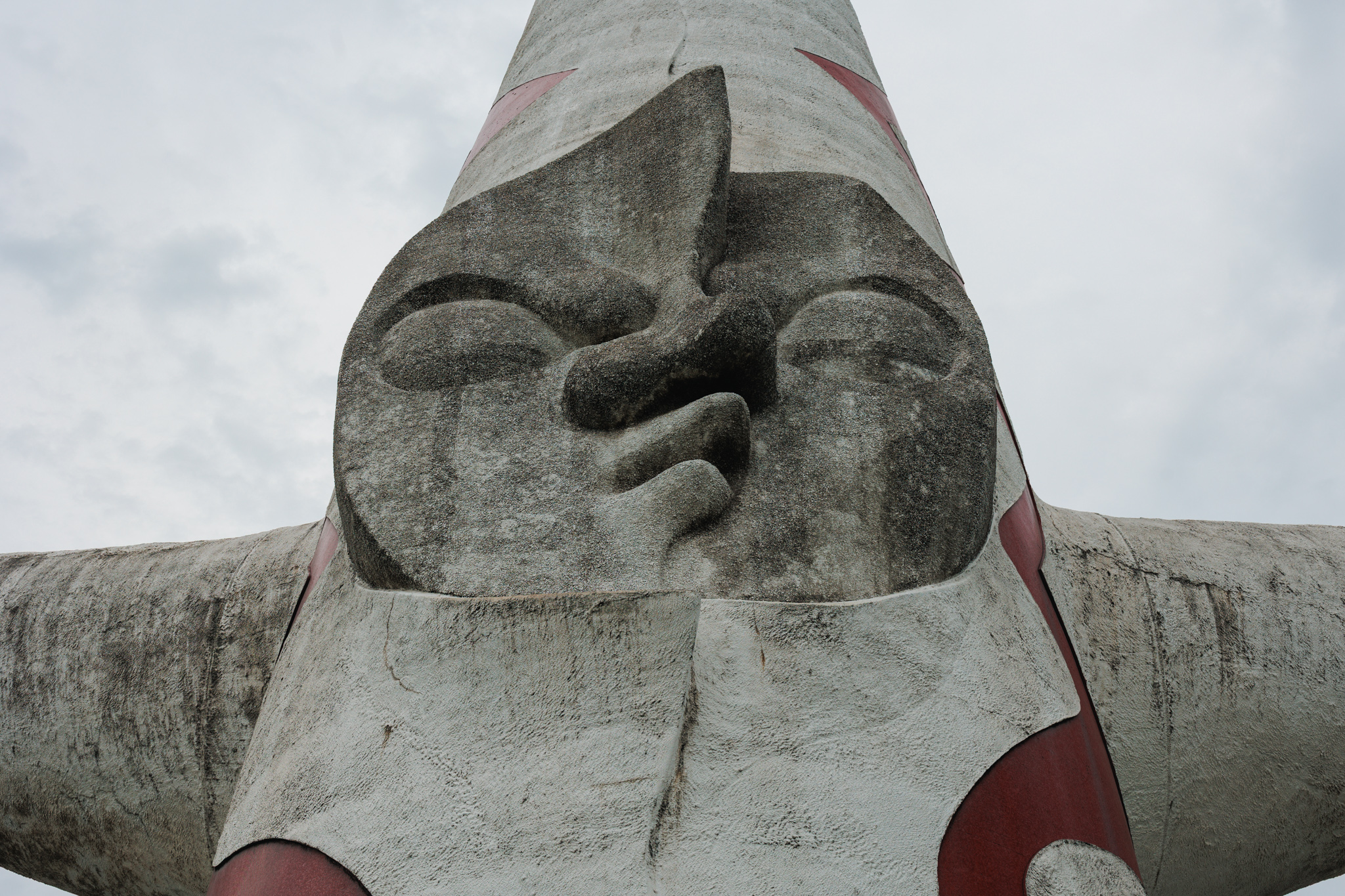
Each of its faces has a job. At the top, the Golden Face represents the future. On the front, the Face of the Sun represents the present. On the back, out of sight from the front, the Black Sun represents the past.
Most monuments have a face. This one has a timetable.
The future has had the most eventful life of the three. On 26 April 1970, a man climbed up into one of the Golden Face’s eyes and refused to come out, calling for the Expo to be stopped. He stayed until the morning of 3 May, when he gave himself up to the police.
For about a week, the future had a tenant.
The present is about 12 metres across. Close up, its grey surface is streaked by fifty-five years of weather, with a crack running down beneath it.
Two months
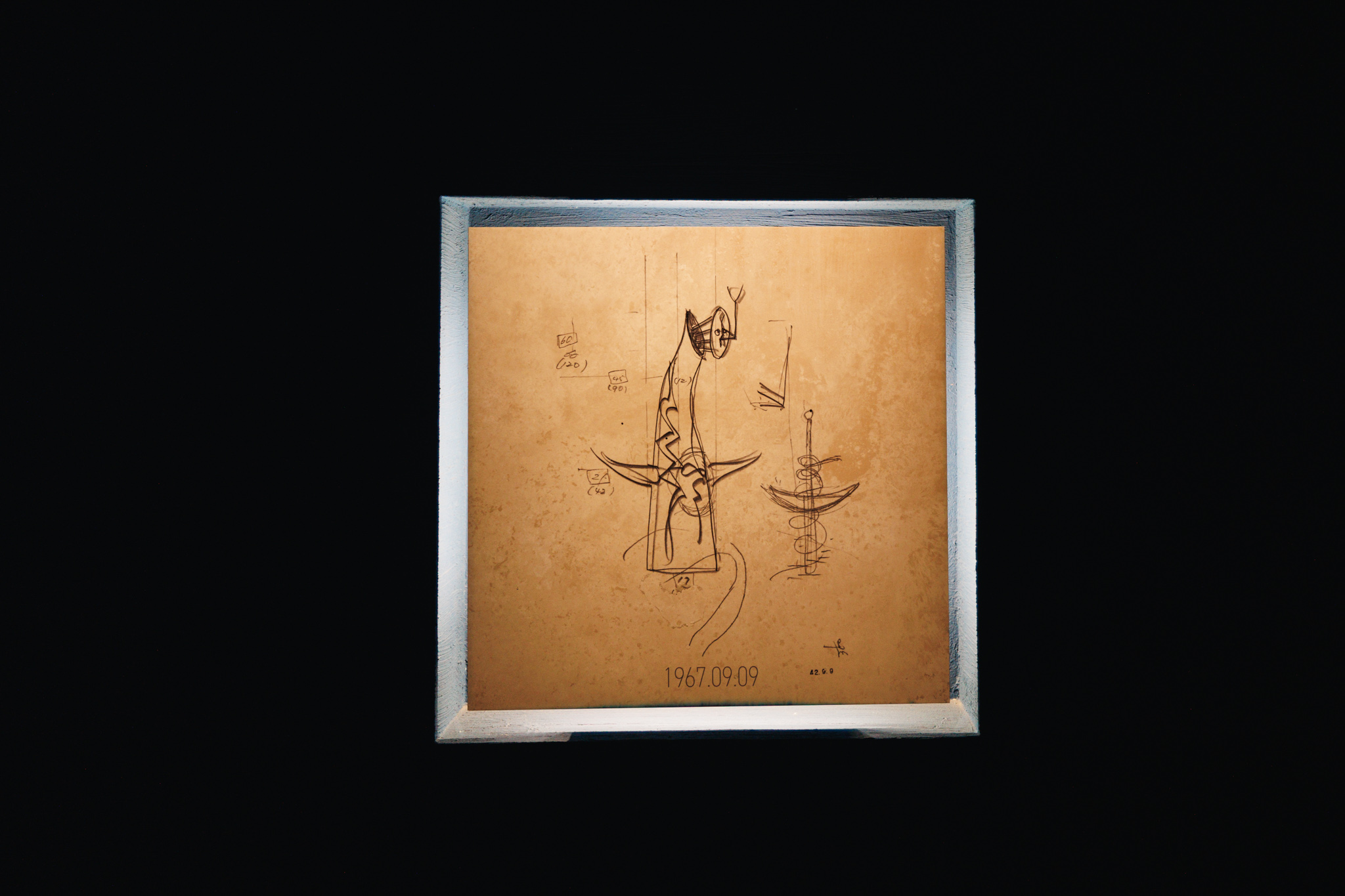
Okamoto was appointed to produce the Expo’s theme exhibition on 7 July 1967. Inside the tower, a sketch is on display, dated two months later: 9 September 1967. The tall body is already there, and the arms, and a face at the top.
When it was built, the tower did not stand in the open. The Expo’s Festival Plaza was to be covered by a vast roof by the architect Kenzo Tange, 292 metres long and 108 metres wide. The tower rose straight through it.
Downstairs
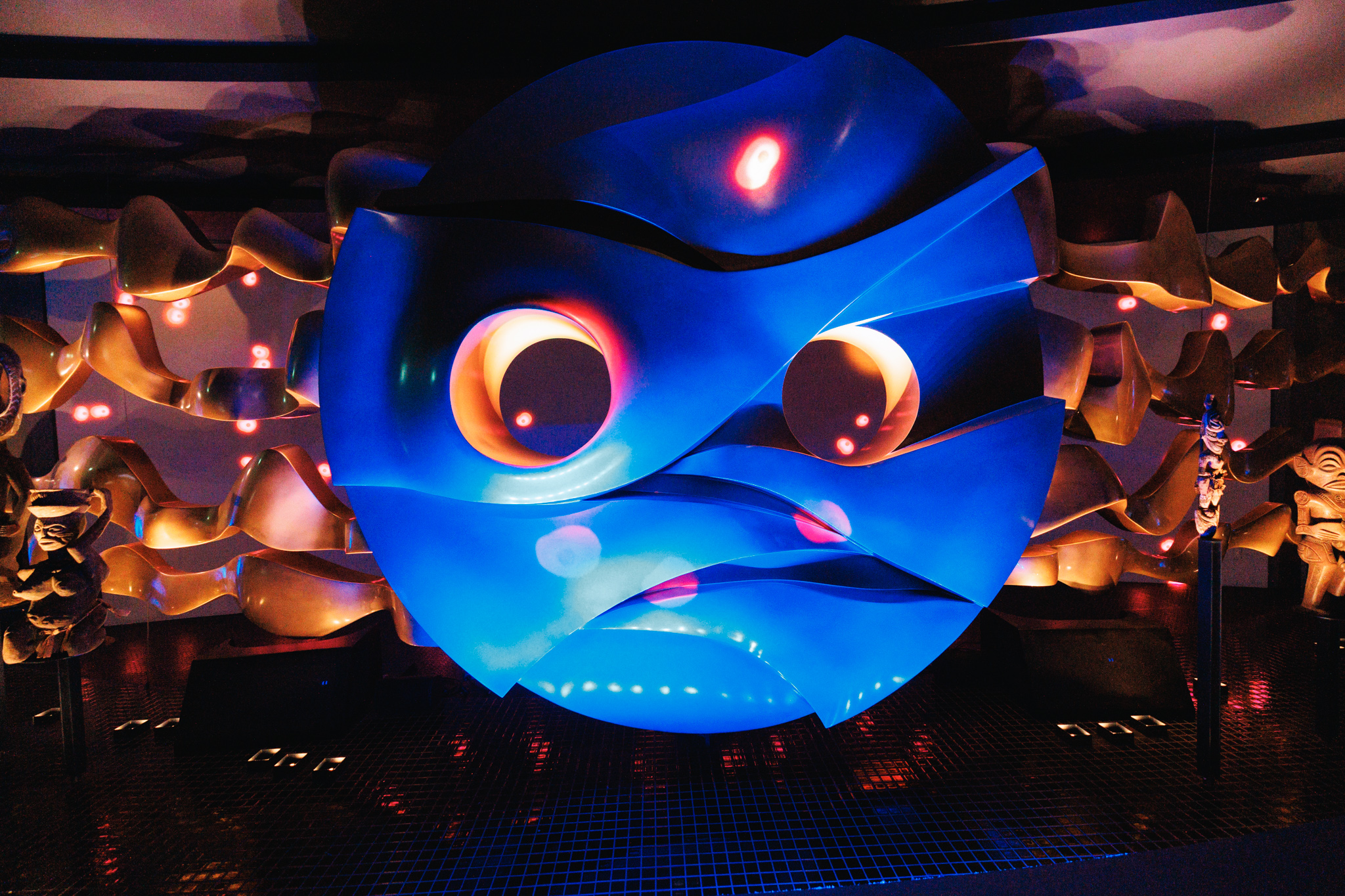
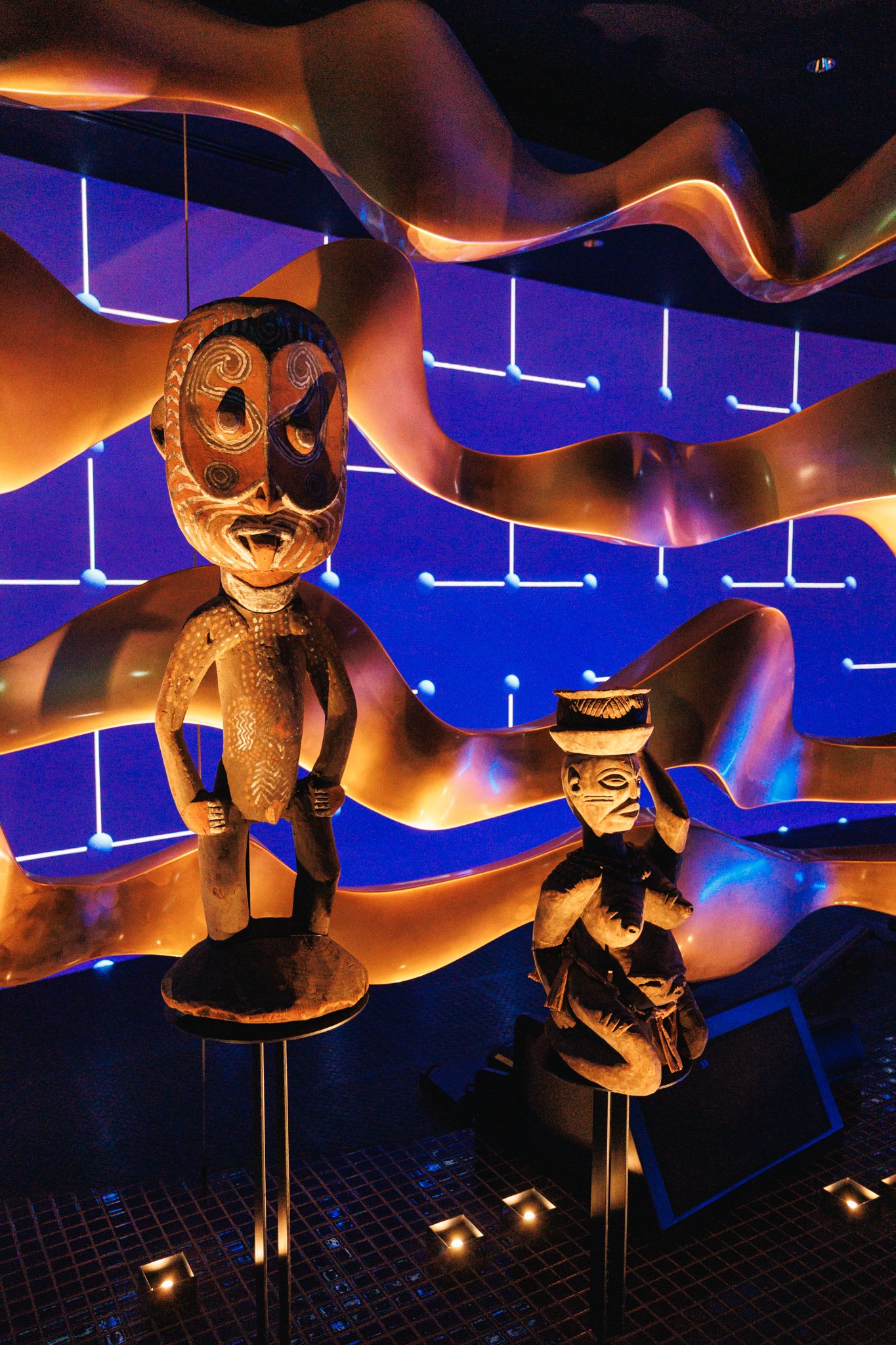
That fourth face was in the Theme Pavilion’s underground exhibition: the Underground Sun, about 3 metres high and 11 metres long, surrounded by masks and figures from around the world.
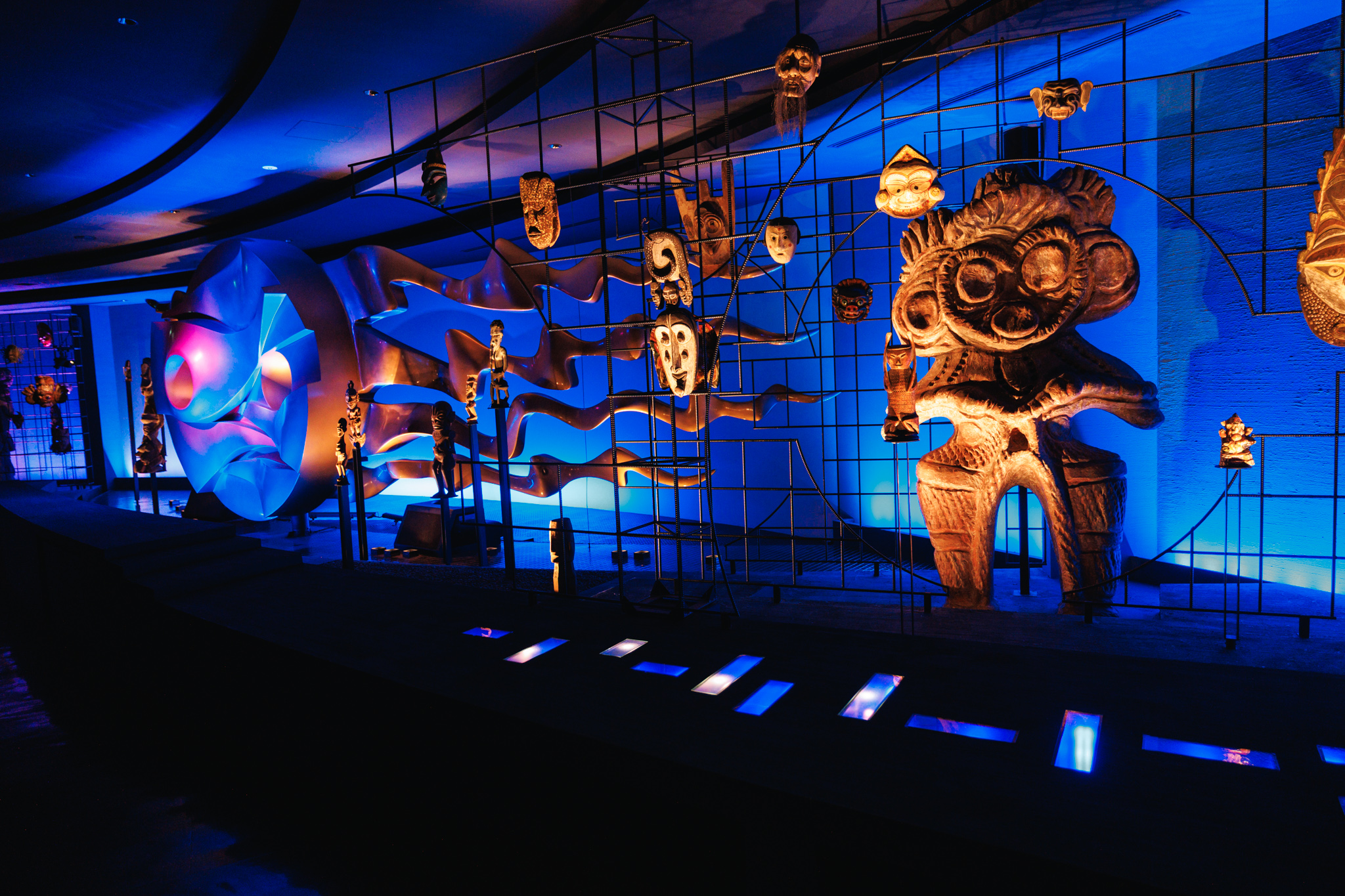
After the Expo, the underground exhibition space was filled in, and the tower’s interior was generally closed to the public for almost fifty years. When it opened to visitors in 2018, the Underground Sun was there to meet them, with coloured light moving across its face.
It is a reconstruction.
The original disappeared when the exhibition was dismantled, and nobody knows where it is.
The Tree of Life
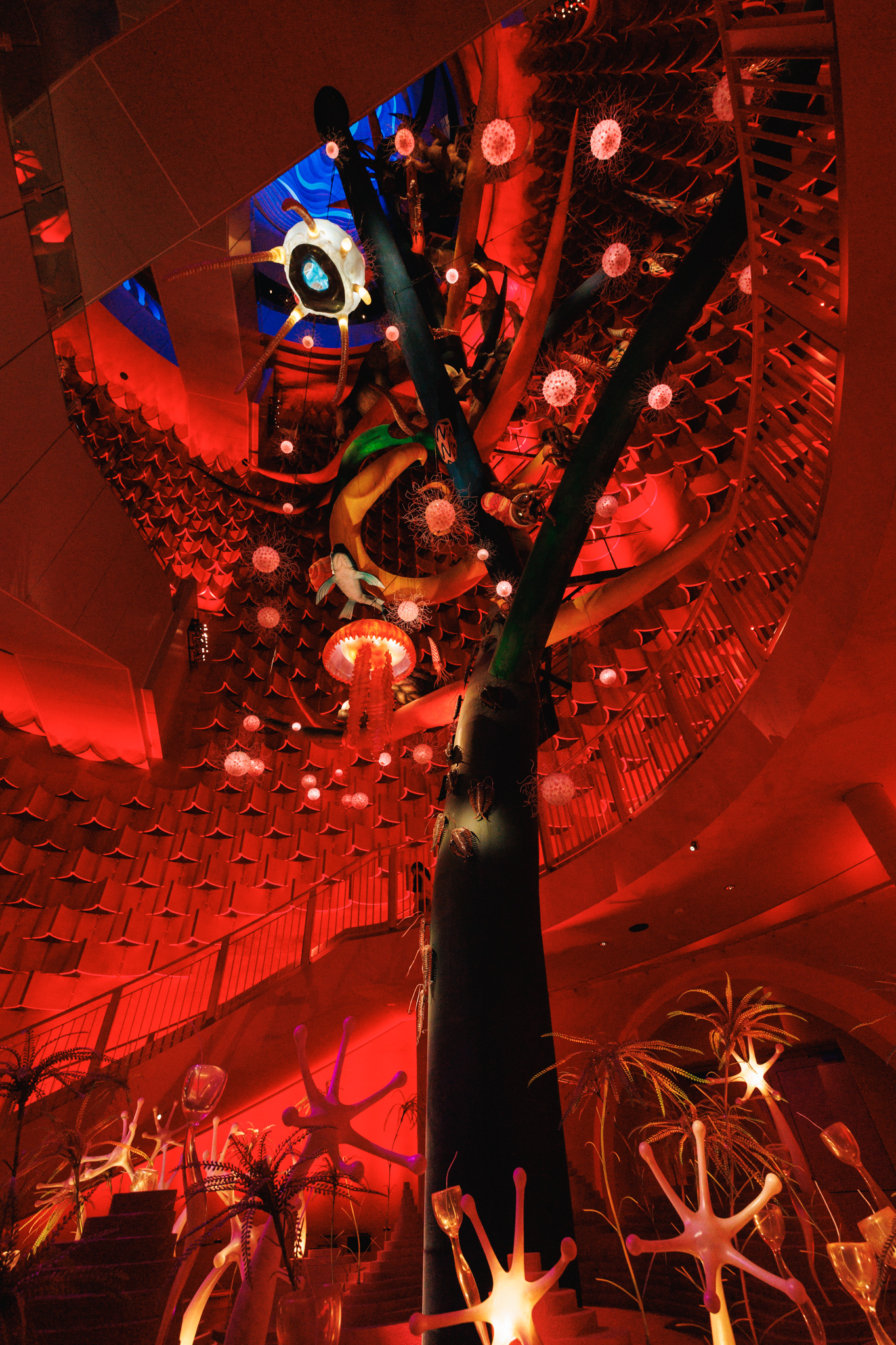
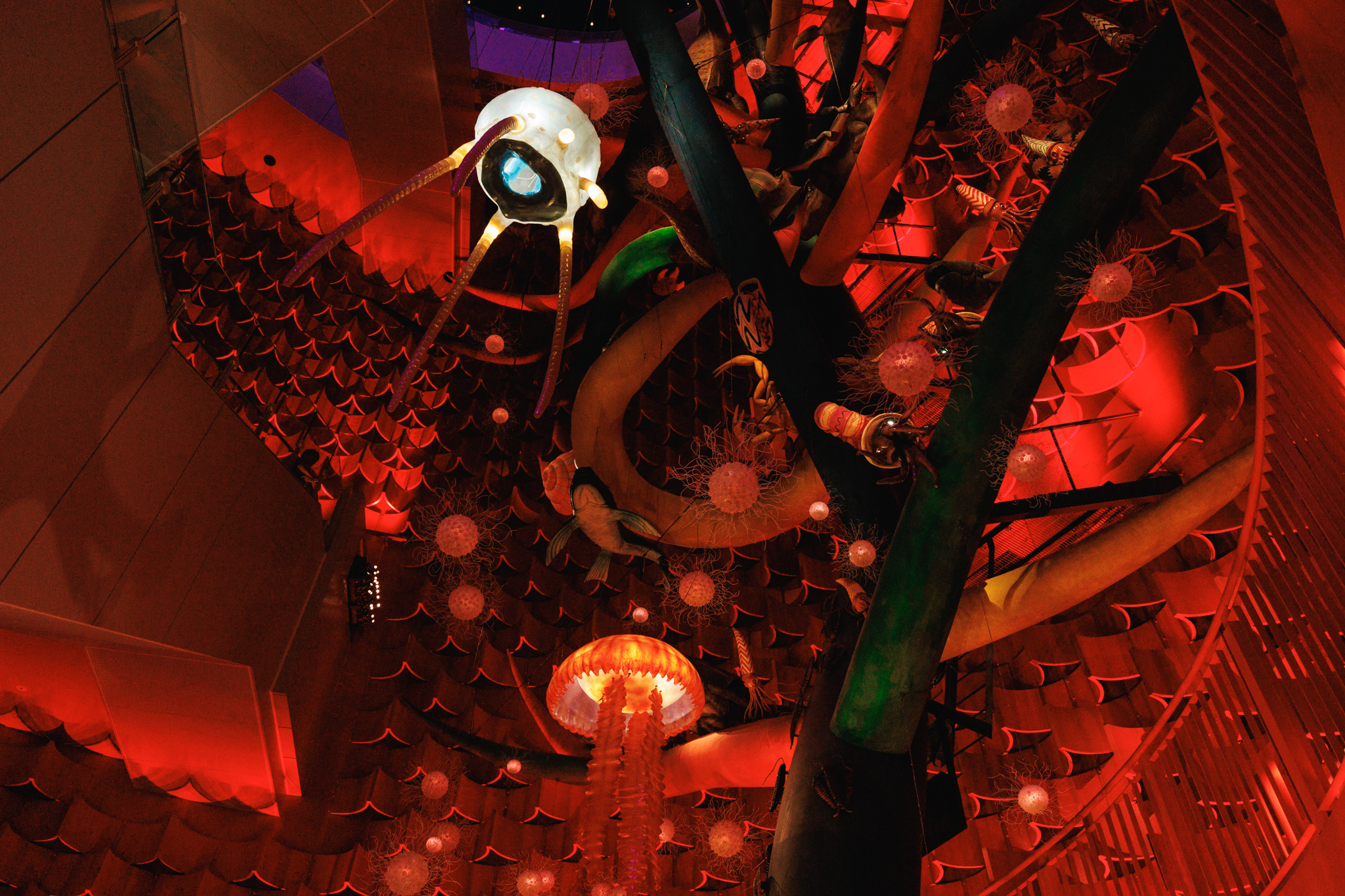
Inside the tower rises the Tree of Life, about 41 metres tall. On its trunk and branches hang models showing the history of life on Earth, from single-celled organisms through reptiles and dinosaurs to human beings.
In 1970, there were 292 models. Today there are 183.
Evolution has been abridged.
Photography is allowed only on the ground floor, so evolution is best photographed looking up.
Round the back
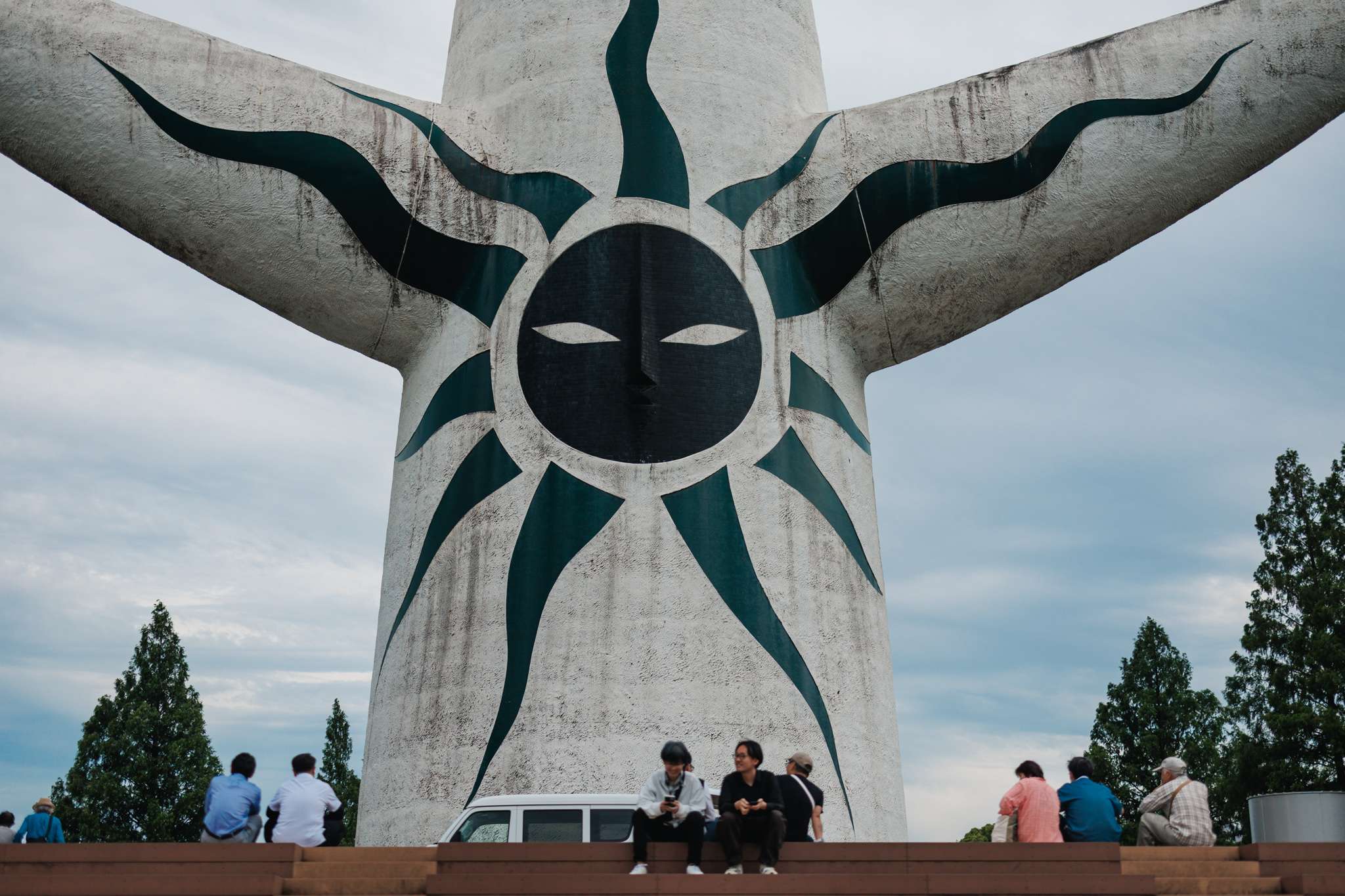
Outside, on the far side of the tower, is the past. The Black Sun is about 8 metres across, a flat face of black Shigaraki ceramic tiles, with green rays spreading out across the body and arms.
People sat on the steps below it, looking at their phones.
What stayed
The tower was meant to be dismantled after the Expo. Enough people asked for it to be kept that, in 1975, it was preserved for good.
The roof it had been built to break through was taken down in 1977 and 1978. A piece of its frame still stands at one edge of the Festival Plaza.
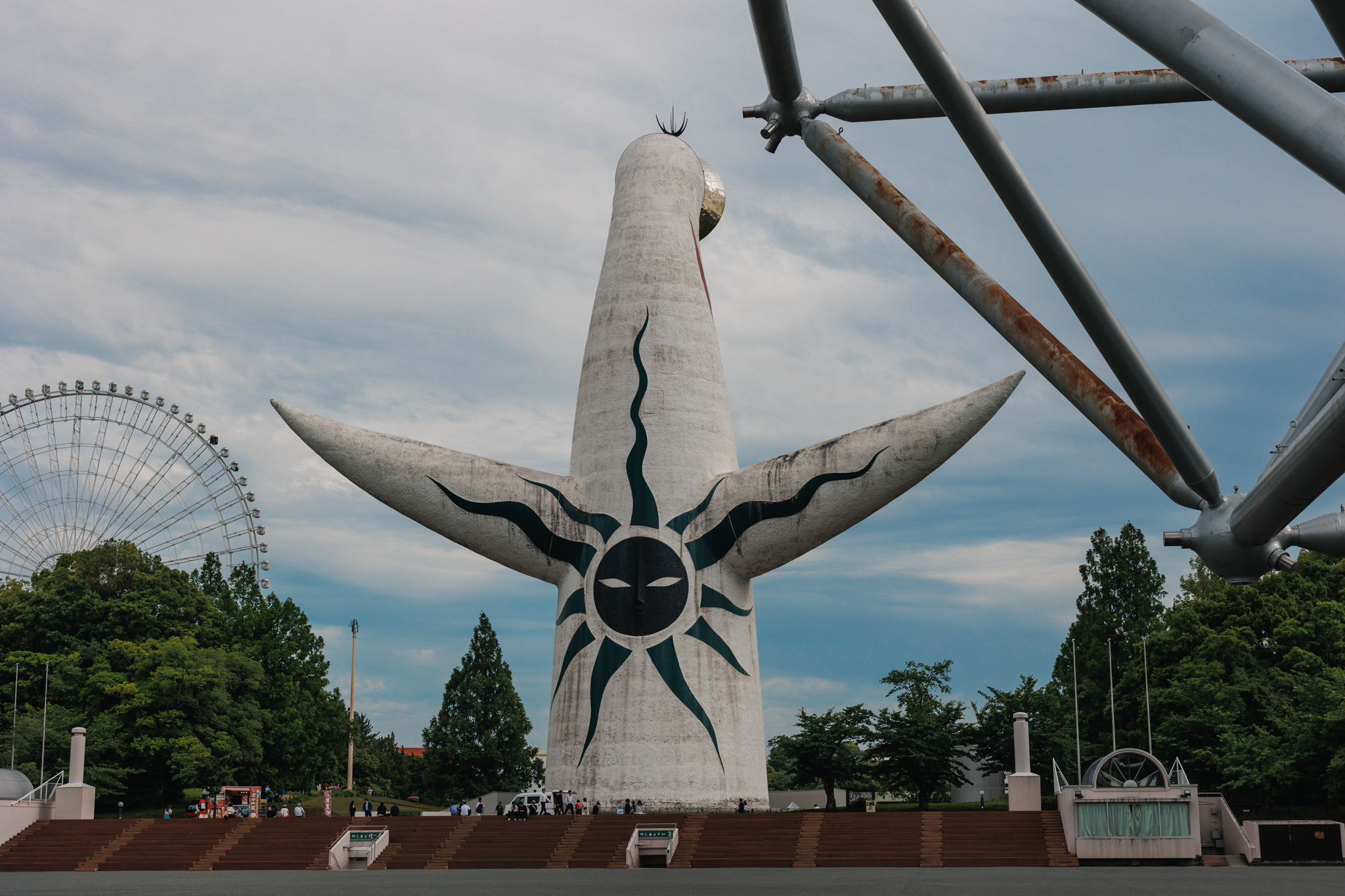
In May 2025, the government’s Council for Cultural Affairs recommended that the tower be designated an Important Cultural Property. The designation followed on 27 August.
The fourth face has not been so fortunate. In 2025, with a new Expo about to open, a search for the Underground Sun was launched, and NHK followed it. Witnesses are said to have seen it in Kobe in the late 1970s, at a zoo and at a nearby prefectural site. After that, the trail goes cold.
Three of the faces still keep their appointments: the future at the top, the present at the front, the past round the back.
The fourth was always meant to be underground. It may simply have gone further than planned.
Visit this place
Location
Tower of the Sun (太陽の塔)
Inside Expo ’70 Commemorative Park (Natural and Cultural Gardens), about 5 minutes on foot north of Banpaku-kinen-koen Station to the Central Entrance.
1-1 Senri Banpaku Koen, Suita, Osaka 565-0826, Japan
Practical Information
- Reservations
- Book an interior visit by the day before (up to 120 days ahead; card payment when booking). Same-day tickets may be available if slots remain.
- Opening hours
- Interior tours 10:00–17:00; last slot 16:30. A visit takes about 30 minutes.
- Closing days
- Follows Expo ’70 Commemorative Park: Wednesdays (the next weekday when Wednesday is a public holiday) and the New Year period; open every day from April 1 to May 2 and in October and November
- Admission
- Tower interior: adults ¥720; elementary and junior high school students ¥310. Park admission (Natural and Cultural Gardens and Japanese Garden) is also required: adults ¥450; junior high school students and younger free. Set ticket (tower + park): adults ¥1,080; elementary and junior high school students ¥310.
- Inside
- 145 steps over six floors, up to about 30 metres, alongside the Tree of Life; a lift stops at three of the floors. Children of junior high school age and younger must be accompanied by a guardian; children under 4 use the lift. No pushchairs, food or drink.
- Photography
- Allowed on the ground floor only (the Underground Sun zone and the Tree of Life ground floor), exhibits only. No flash, tripods or monopods; no commercial use.
- Access
- Osaka Monorail to Banpaku-kinen-koen Station, then about 5 minutes on foot north to the park’s Central Entrance
- Official website
- Tower of the Sun
Information last checked: October 11, 2026 (advance reservations and same-day tickets: official booking information).
Conversation
Comments
Review pending commentsComments are reviewed before appearing. The internet already contains enough unattended surprises.
Checking comments…
Comments are not available in this migration preview yet. Existing comments remain on the current site.
Leave a comment