Kenchōji Temple: A Dragon Worth Looking Up To
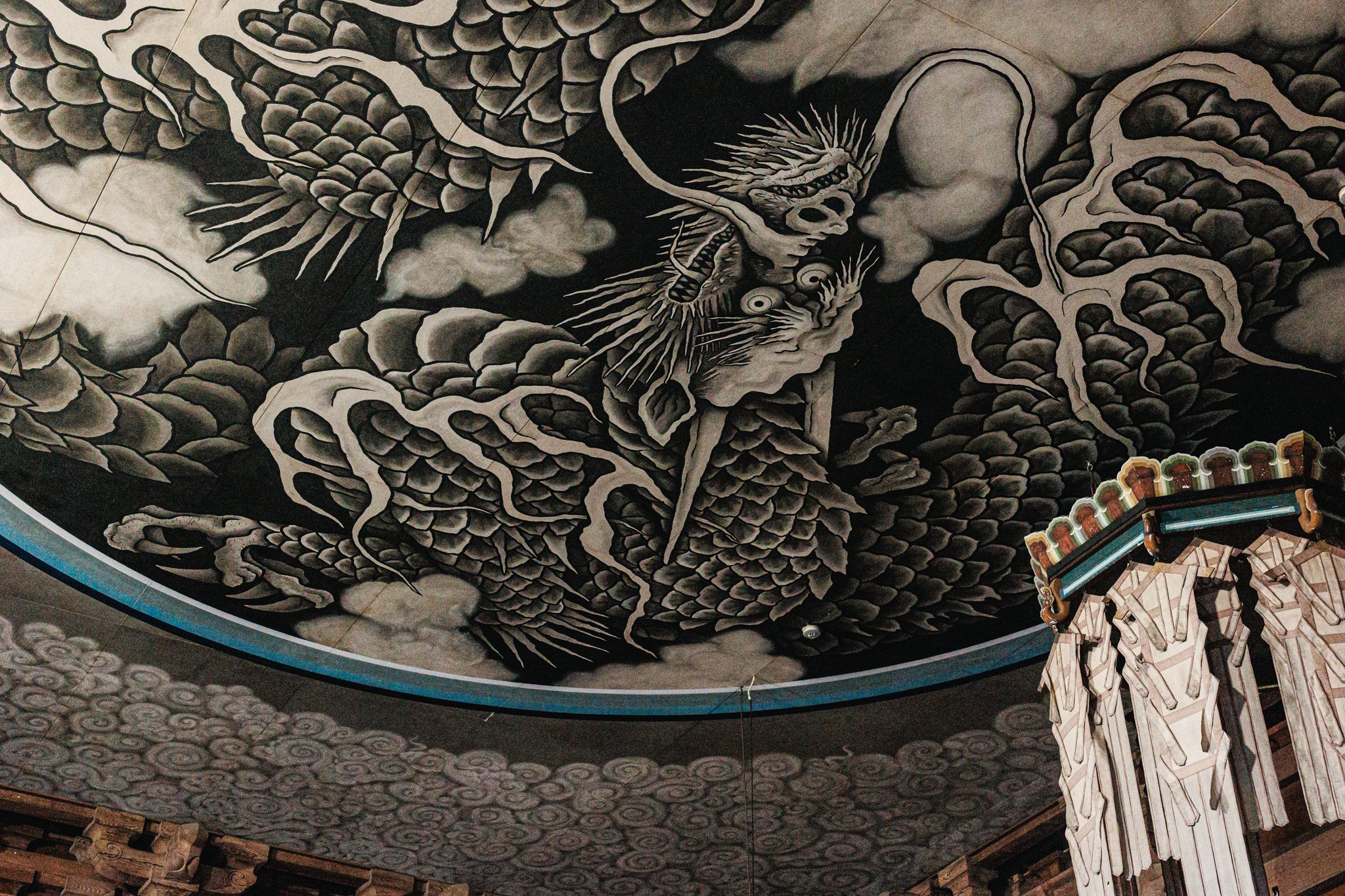
Kenchōji’s dragon does not simply decorate the ceiling. It appears to be in charge of the room. Its eyes stare down into the hall, while its body coils through the clouds around it.
Before the dragon
The approach gives you some preparation for the scale, if not the expression. In the wooded hills of Kamakura, Kenchōji’s great wooden Sanmon gate towers over the visitors beneath it. Long before reaching the dragon, you are already looking up.
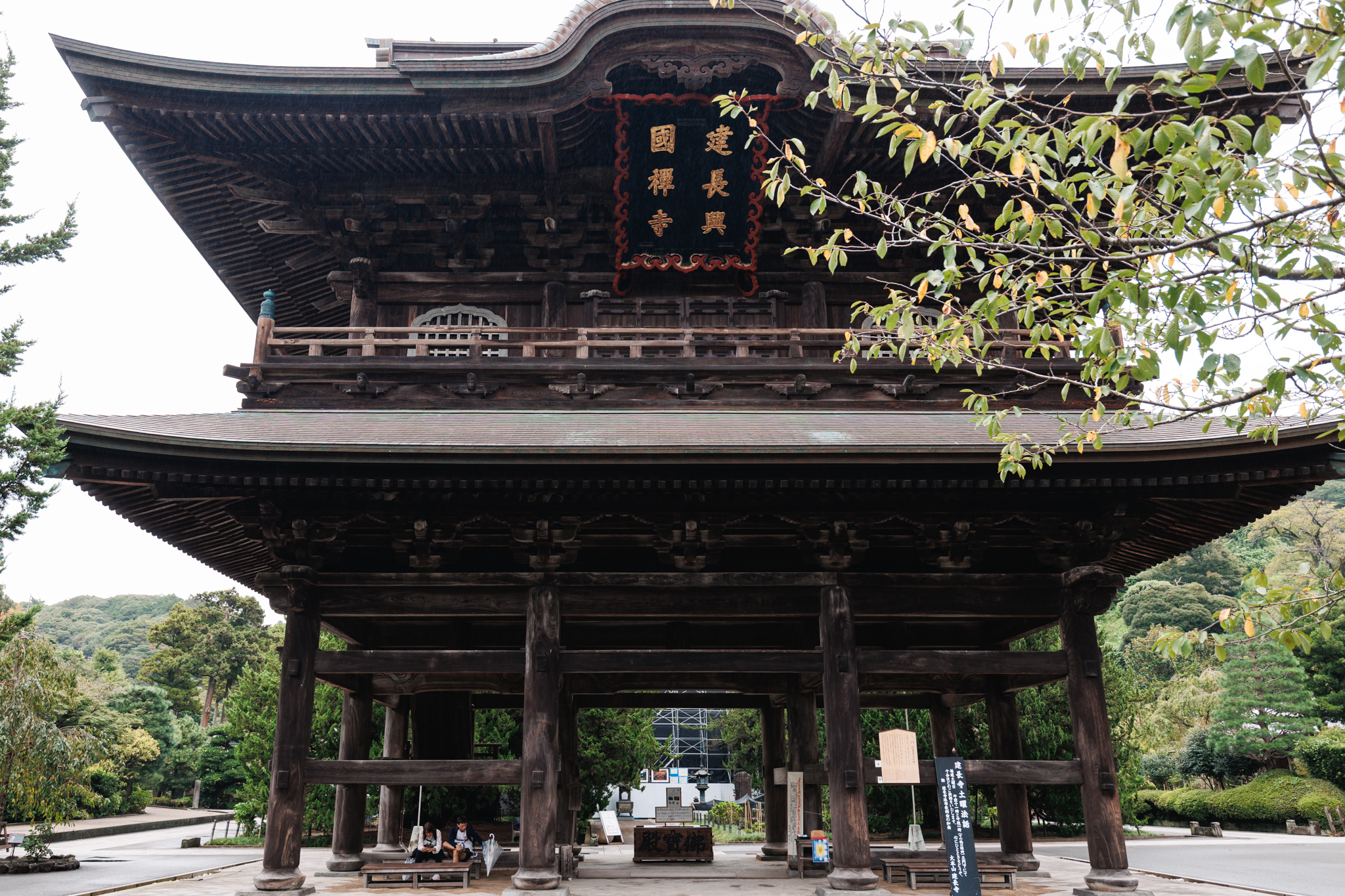
Founded in 1253 by the regent Hōjō Tokiyori, with the Chinese monk Rankei Dōryū as its first abbot, Kenchōji became a major centre of Zen training. It ranks first among Kamakura’s Five Great Zen Temples. The imposing entrance begins to make sense.
Its construction story is less imposing. The present gate went up in 1775 and is known as the Tanuki Gate. According to legend, a tanuki the temple had been feeding repaid the favour by disguising itself as a monk and travelling to collect donations for the work. In one version, a maid at an inn caught it washing its tail in the bath. That version does not end well for the tanuki, but the money still reached Kenchōji.
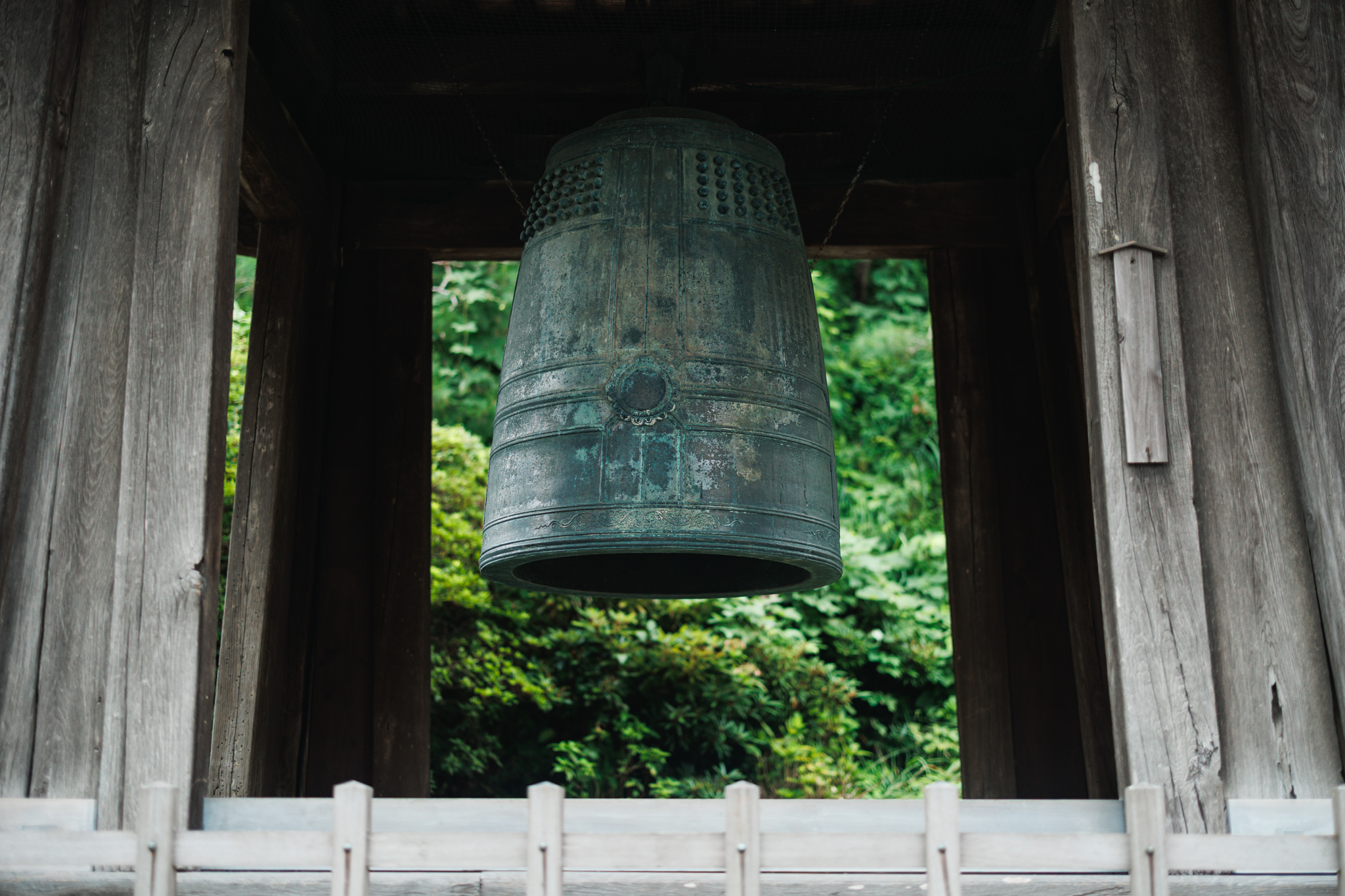
Nearby hangs a bronze bell cast in 1255, only two years after the temple’s founding. Its surface has weathered to blue-green, but the inscription, composed by Rankei Dōryū himself, still carries the name Kenchō Zenji. Much of the temple has been rebuilt over the centuries; this bell survives from its earliest years, and it is still rung every evening.
A face with a purpose
The dragon on the ceiling of the Hattō, or Dharma Hall, is Unryūzu, the painting Koizumi Junsaku completed and dedicated in 2000. Koizumi imagined a creature that had lived for thousands of years, and worked that immense age into its whiskers and scales. A whisker on a creature that old, he reasoned, could not have grown easily; it had to be more like a thorn. Scales painted too smoothly would look like a carp’s.
The dragon was not painted where it lives. The Dharma Hall is a protected cultural property, and Koizumi was not permitted to paint directly onto its ceiling. He worked on paper instead, in sections, in a 120-mat room elsewhere on the temple grounds. A creature thousands of years old took him a year and seven months. The panels were then mounted overhead.
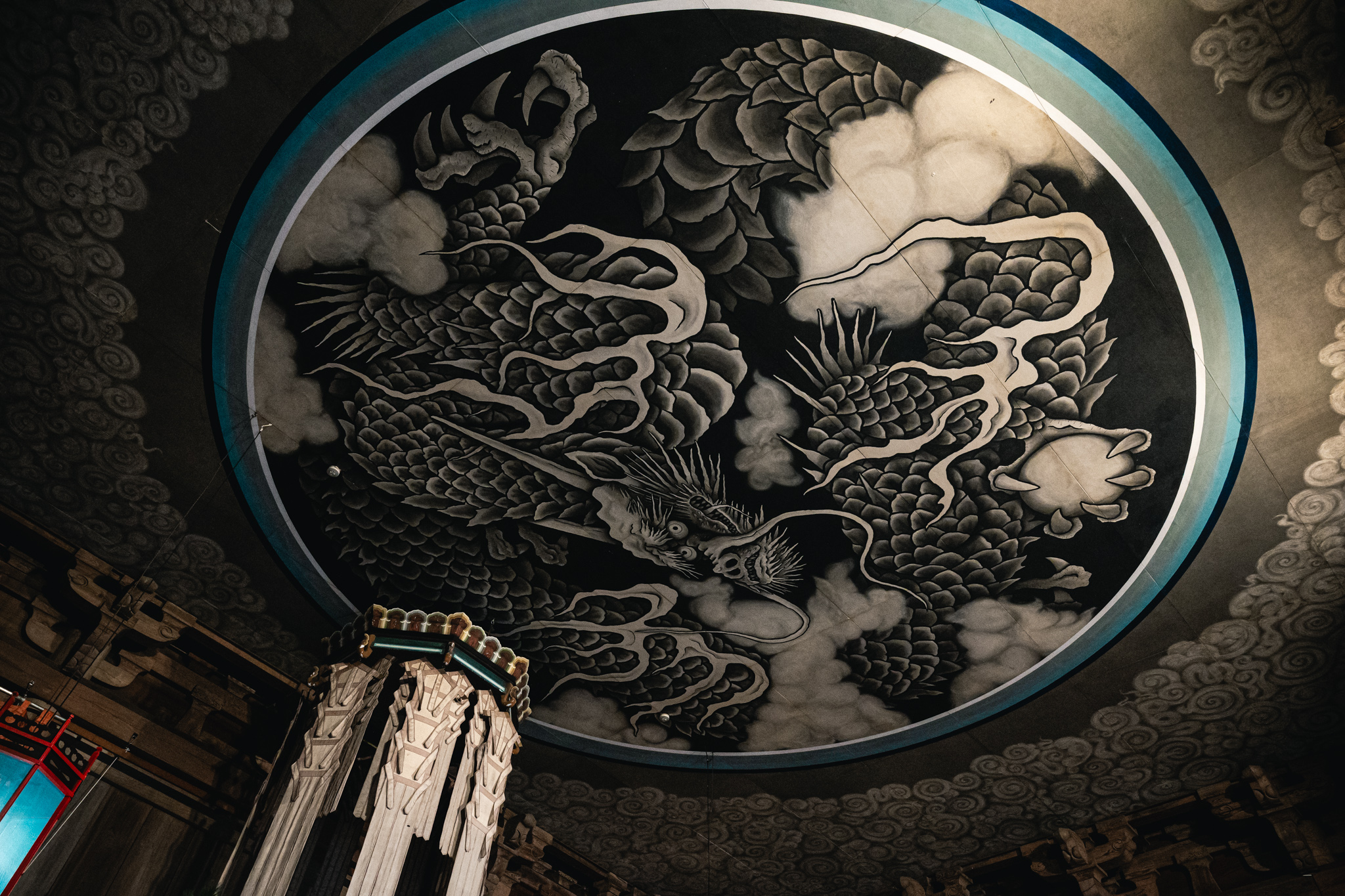
Koizumi described the dragon as a creature that looks down on the earth from the sky and protects people from all kinds of disasters. Presumably, the expression is meant for the disasters.
Kenchōji’s dragon has five claws. At Engakuji, a short walk away and ranked second among the Five Great Zen Temples, the ceiling dragon makes do with three.
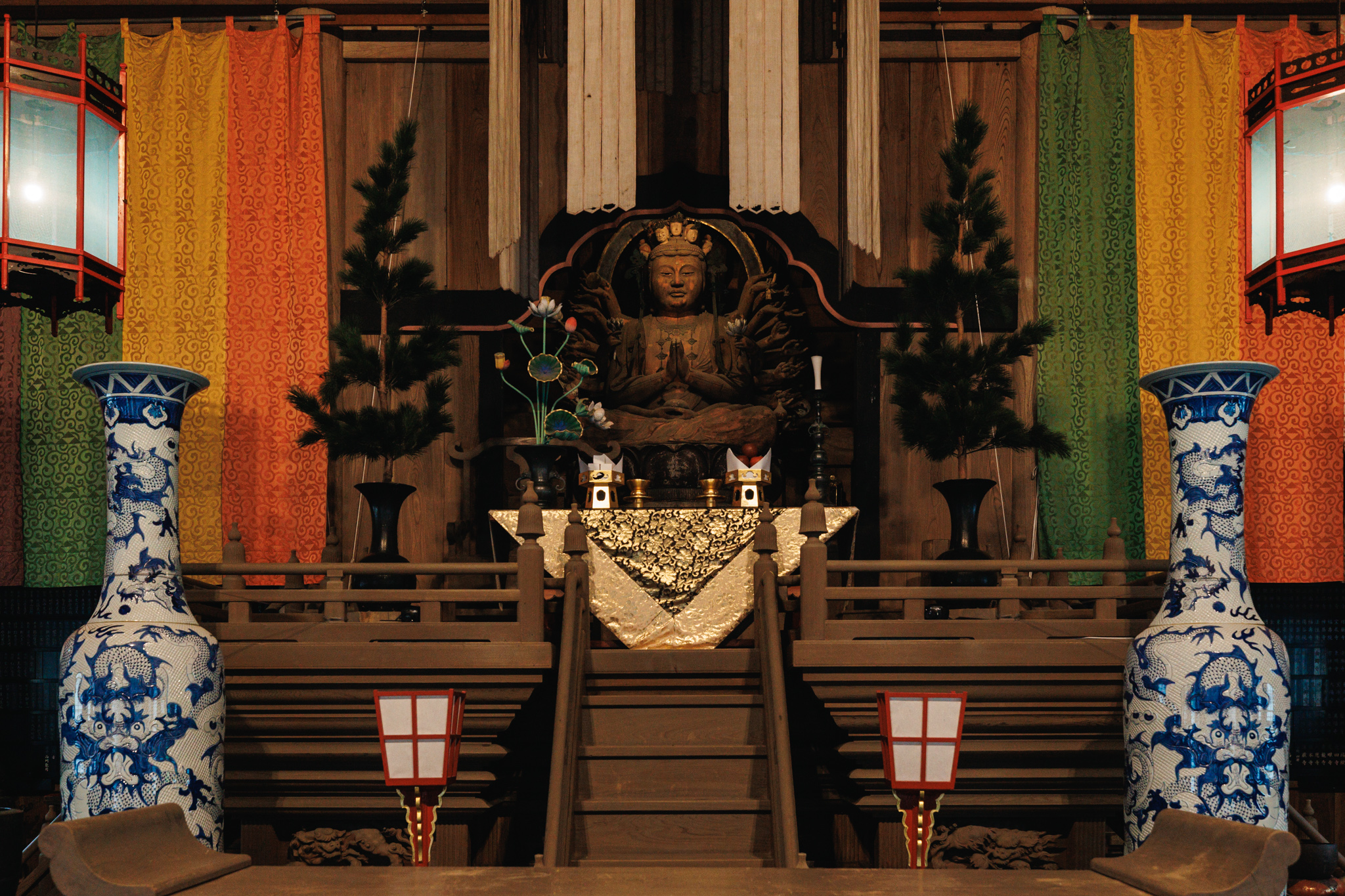
Below the dragon sits a Thousand-Armed Kannon, its arms fanning out beneath colourful hanging banners. Large blue-and-white vases flank the figure. Those have dragons on them too. Lowering your gaze only changes their size.
Close by, the Fasting Buddha offers a much starker image. Its ribs show sharply beneath the skin, and its bearded face is gaunt. It depicts the severe austerities the Buddha practised before enlightenment. Beside the elaborate display around Kannon, the figure is especially arresting.
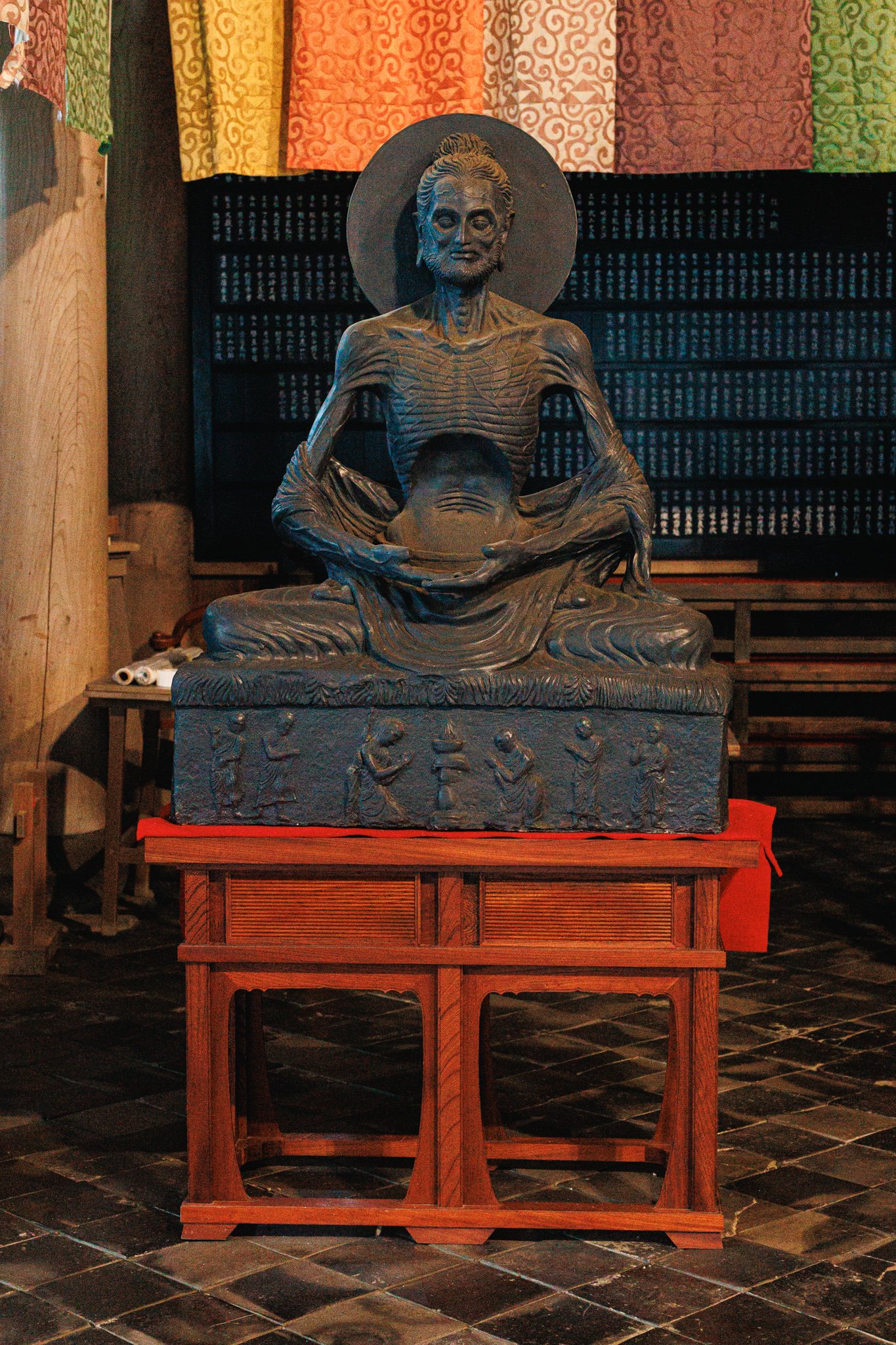
The accompanying sign explains how it came to be here. Modelled on the Gandharan sculpture in Lahore Museum, Pakistan, it was displayed at the 2005 Aichi Expo before Pakistan donated it to Kenchōji. For a seated figure, it has travelled quite a distance.
Beyond the great halls
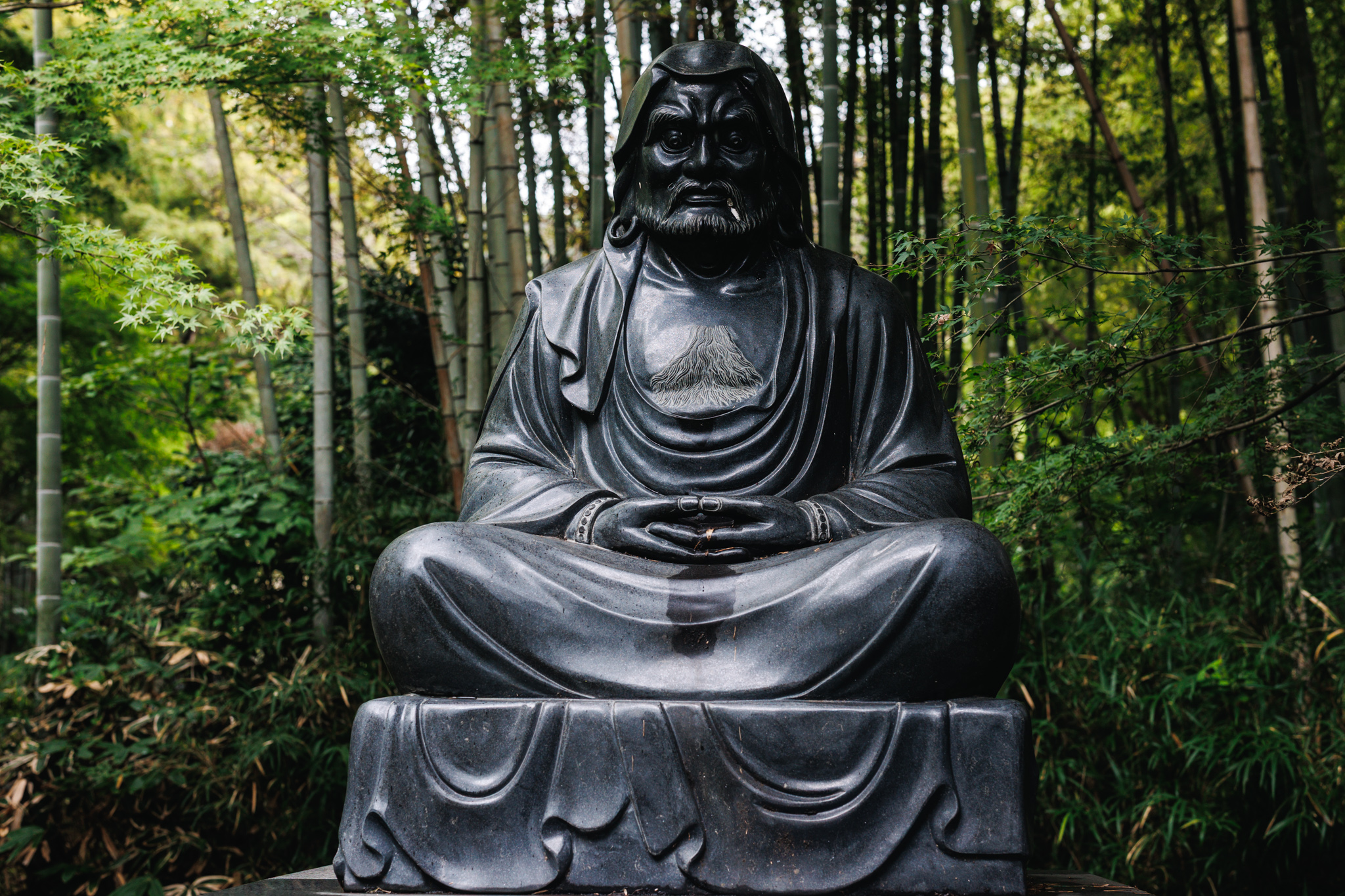
Beyond the halls, the path continues into greenery. A seated Daruma faces the passing visitors, his stern expression framed by heavy eyebrows and a beard. He also wears a large hoop earring and, where his robe opens, a carved tuft of chest hair. Behind him, the view is all bamboo.
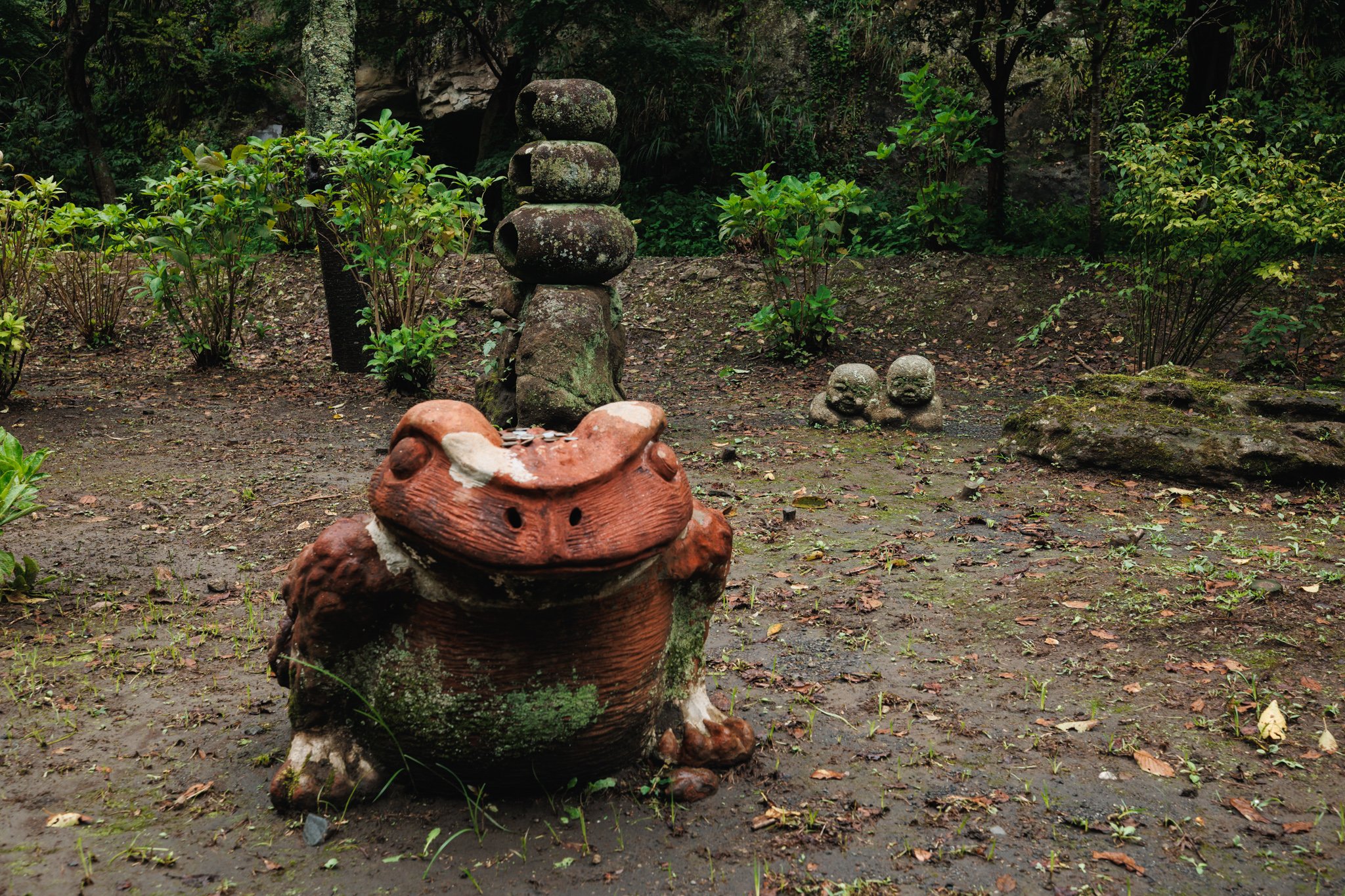
Farther along, a red frog sits among stone figures, with coins resting on its head. In Japanese, the word for frog, kaeru, sounds the same as the word for “return”. Money left on one is presumably expected back.
Of all the faces along the way, the one on the ceiling is the hardest to forget.
It is reassuring to have a dragon on your side, even if it does look down on you.
Visit this place
Location
Kenchōji Temple
Kenchōji’s main grounds in Kita-Kamakura, beginning at the Sōmon and Sanmon gates
8 Yamanouchi, Kamakura, Kanagawa 247-8525, Japan
Practical Information
- Place
- Kenchōji Temple (建長寺)
- Area
- Kita-Kamakura, Kamakura, Kanagawa
- Access
- About 15 minutes on foot from Kita-Kamakura Station (JR Yokosuka Line), or 5 minutes by bus; about 30 minutes on foot from Kamakura Station, or 10 minutes by bus
- Opening hours
- 8:30–16:30
- Admission
- Adults (high school students and above): ¥500; elementary and junior high school students: ¥200
- Payment
- Cash only
- Photography
- Tripods and monopods are prohibited. Commercial photography and filming require advance permission.
- Visitor note
- The temple is an active place of worship; keep voices low in the halls and follow posted instructions.
- Official website
- Kenchōji Temple — Visiting information
- Reference
- Junsaku Koizumi — Unryūzu
Information last checked: September 16, 2026
Conversation
Comments
Review pending commentsComments are reviewed before appearing. The internet already contains enough unattended surprises.
Checking comments…
Comments are not available in this migration preview yet. Existing comments remain on the current site.
Leave a comment