Urasoe Art Museum: Architecture Must Be Healthy
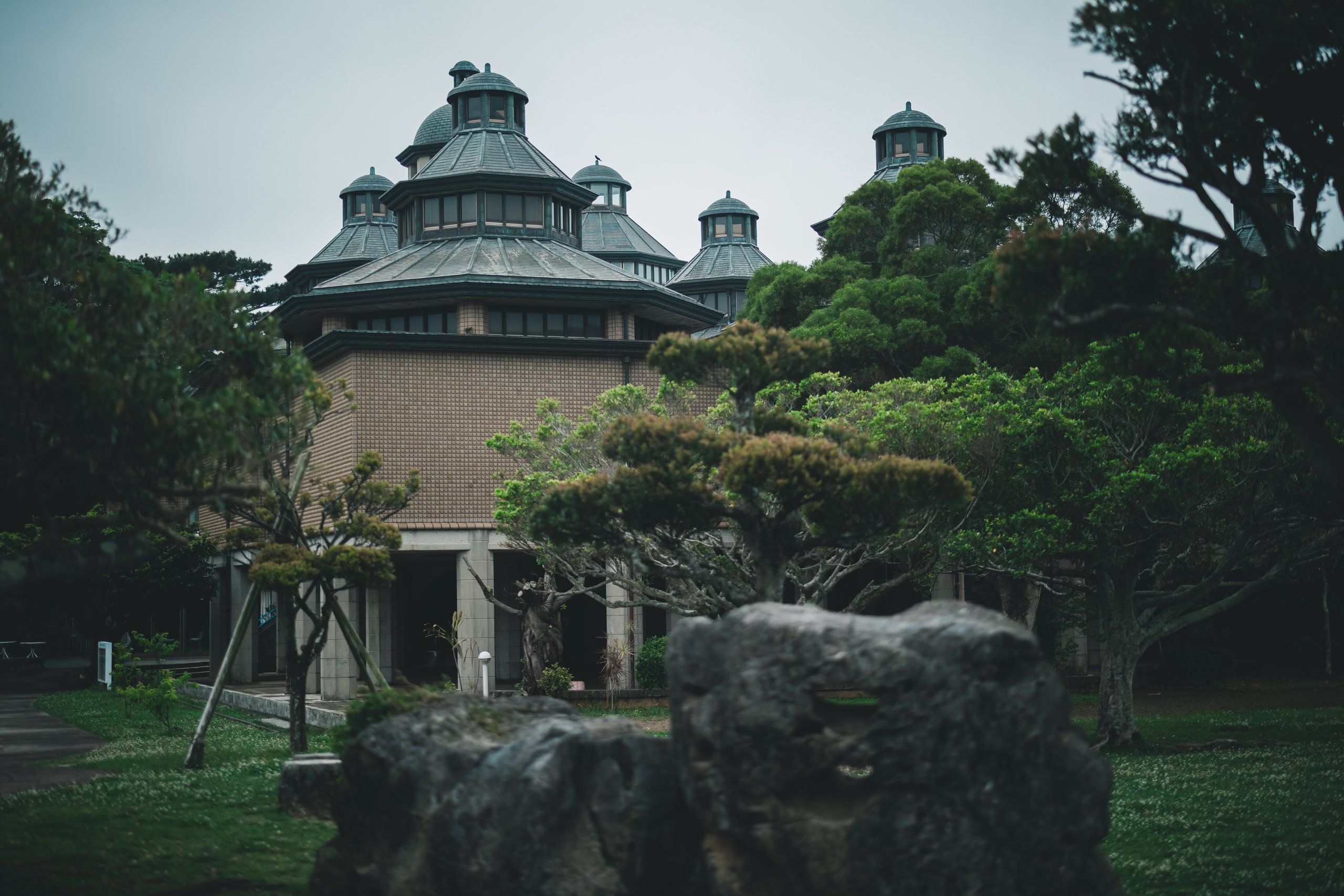
The Urasoe Art Museum’s website introduces the building with a question. Have you ever been intrigued, it asks, by the mysterious building you can see from Route 330, like a dome, like a tower? It might remind you of Asia, of an old European city, or of Islamic culture. The true identity of this multinational-style building, the website reveals, is the Urasoe Art Museum.
It is not often that a museum introduces itself as a mystery.
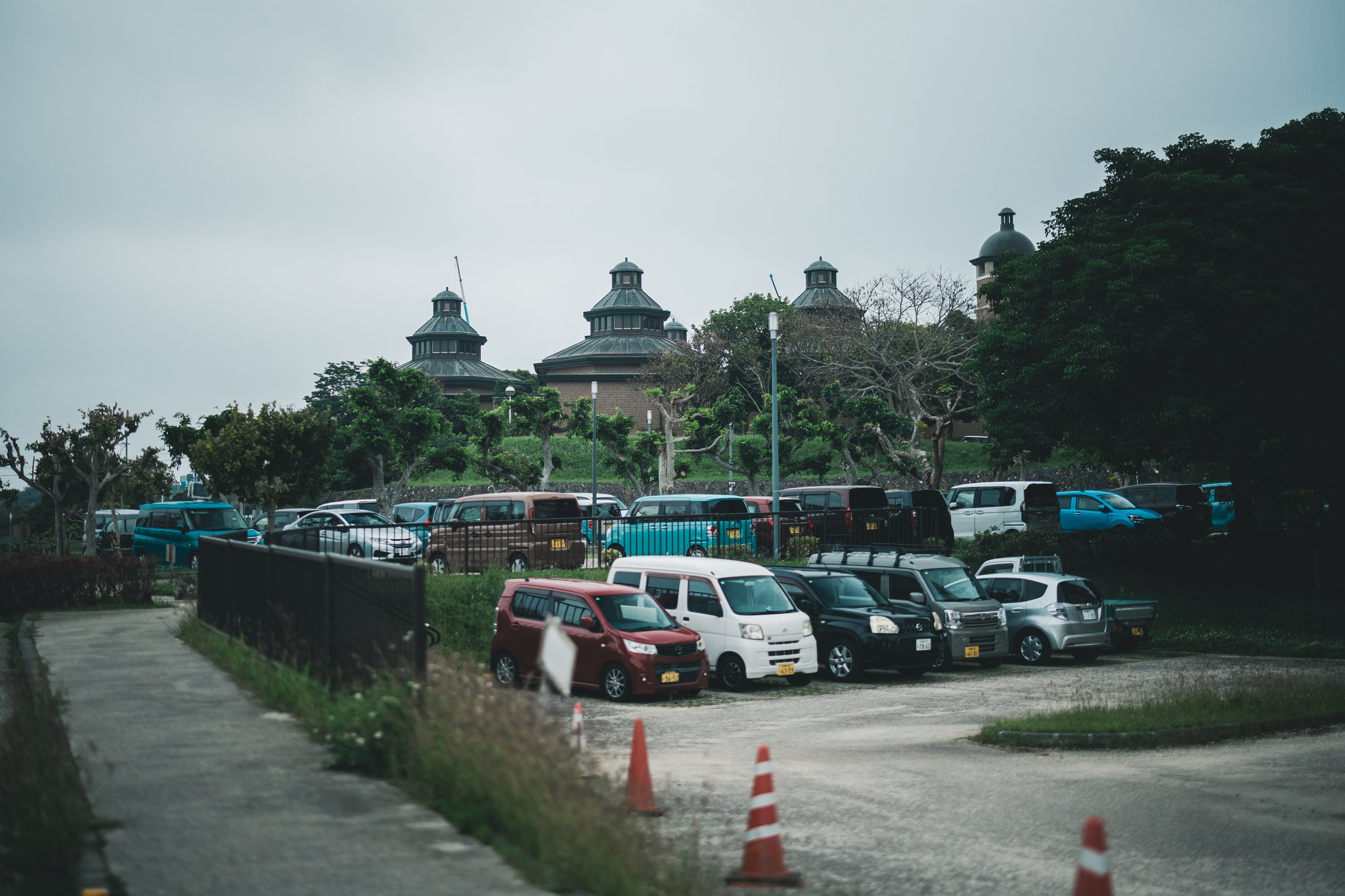
From the car park, the mystery turns out to be a cluster of roofs, rising in tiers behind a row of kei cars, Japan’s small boxy cars.
What it is for is easier to answer. When it opened in 1990, in Urasoe, just north of Naha, it was Japan’s first art museum devoted to lacquer, and Okinawa’s first public art museum. Its collection is built around Ryukyuan lacquerware, from the sixteenth century to the present.
Healthy architecture
The architect was Shōzō Uchii, best known for the Setagaya Art Museum in Tokyo. He built this one around two ideas: towers and corridors. In the museum’s words, a tower is a person with their feet gripping the ground, a world of its own; a corridor is what connects people, and worlds, to each other.
In 1988, the year before the building was finished, Uchii gave a lecture on architecture and decoration. He reminded his audience that he had once said architecture must be healthy. By healthy, he explained, he meant a balance between geometry and organic decoration.
Most architects want to know whether a building will stand up. Uchii also wanted to know whether it was well.
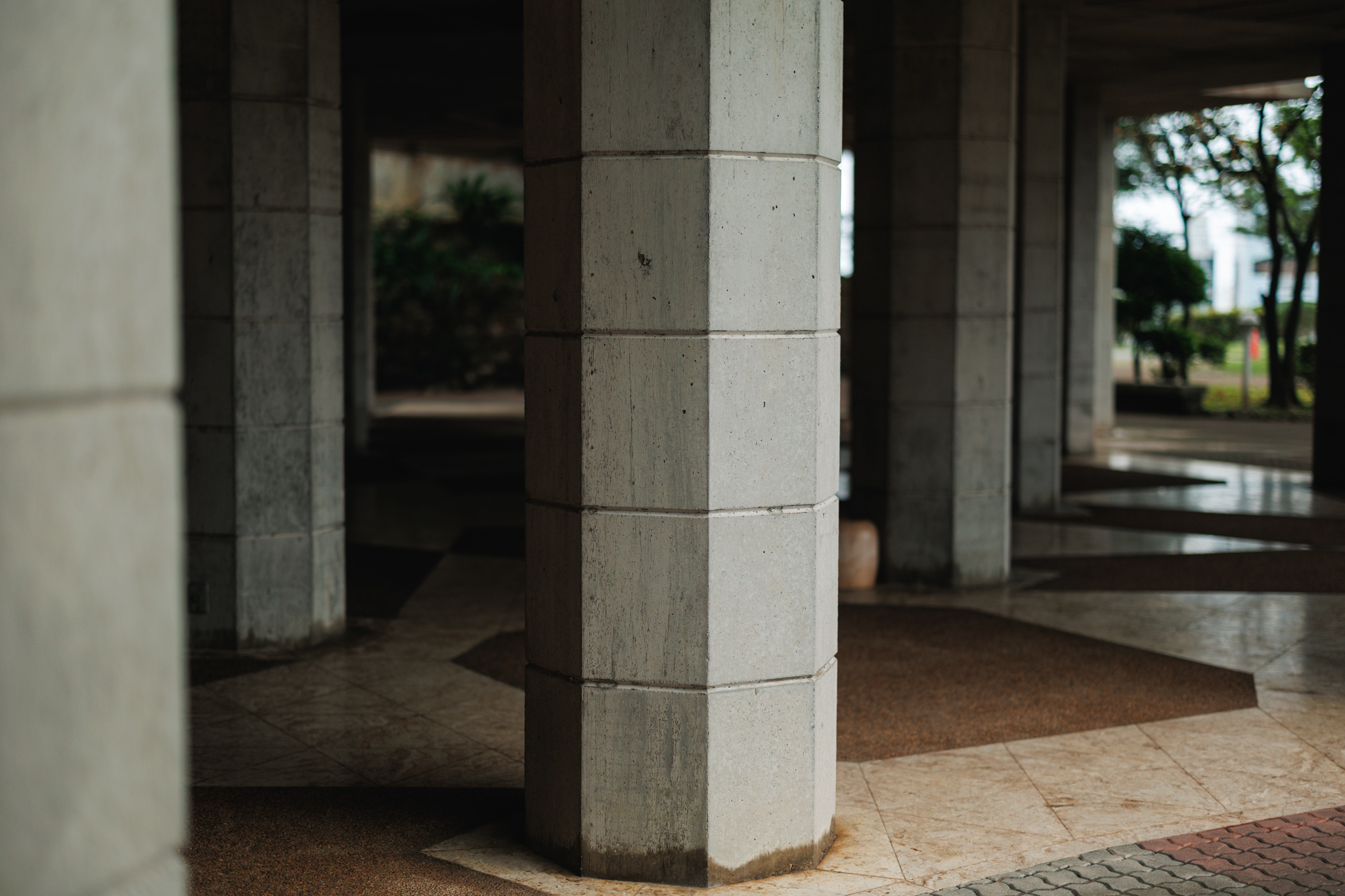
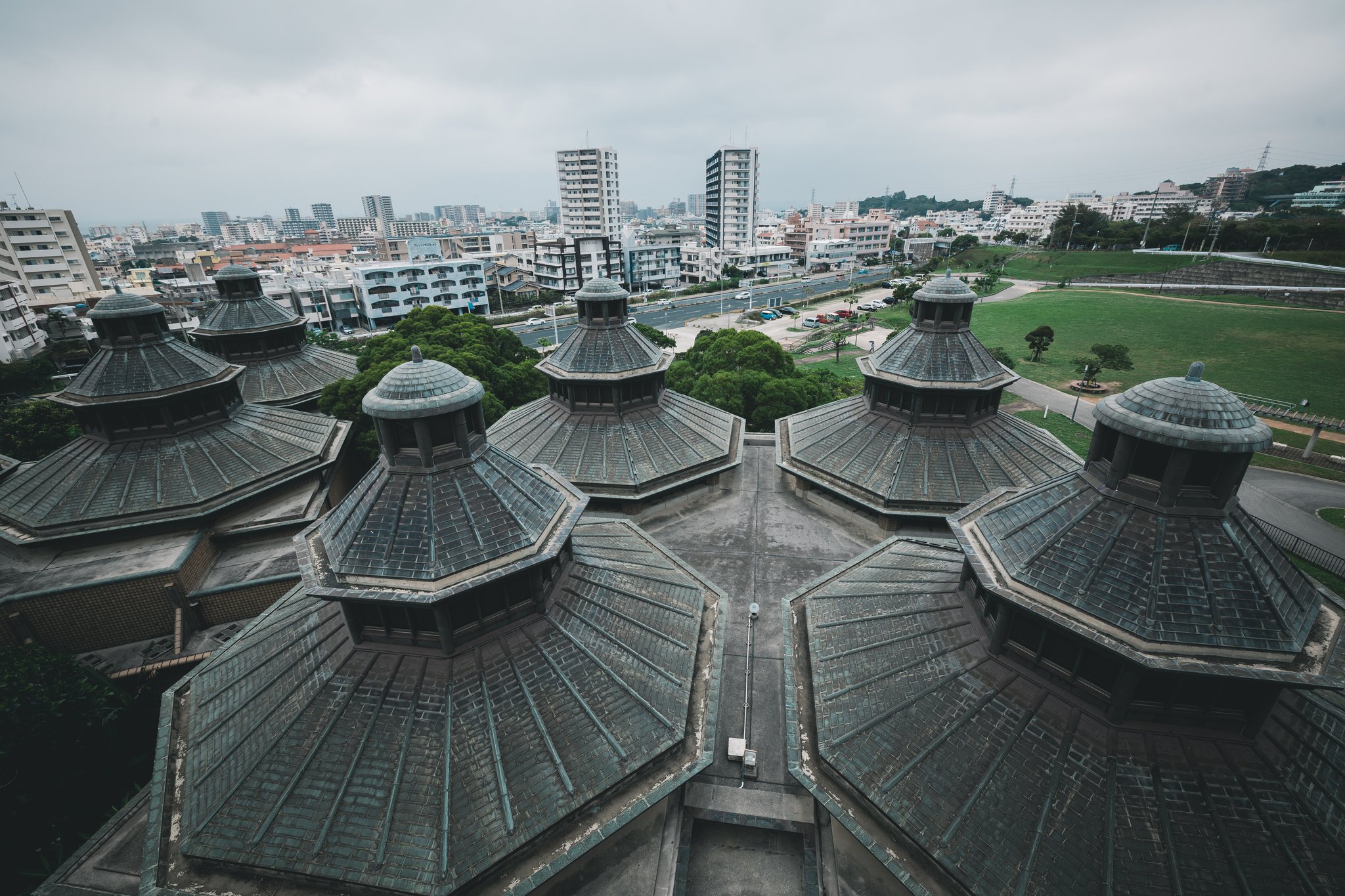
The geometry here is easy to find. The roofs are octagons. So are the towers beneath them.
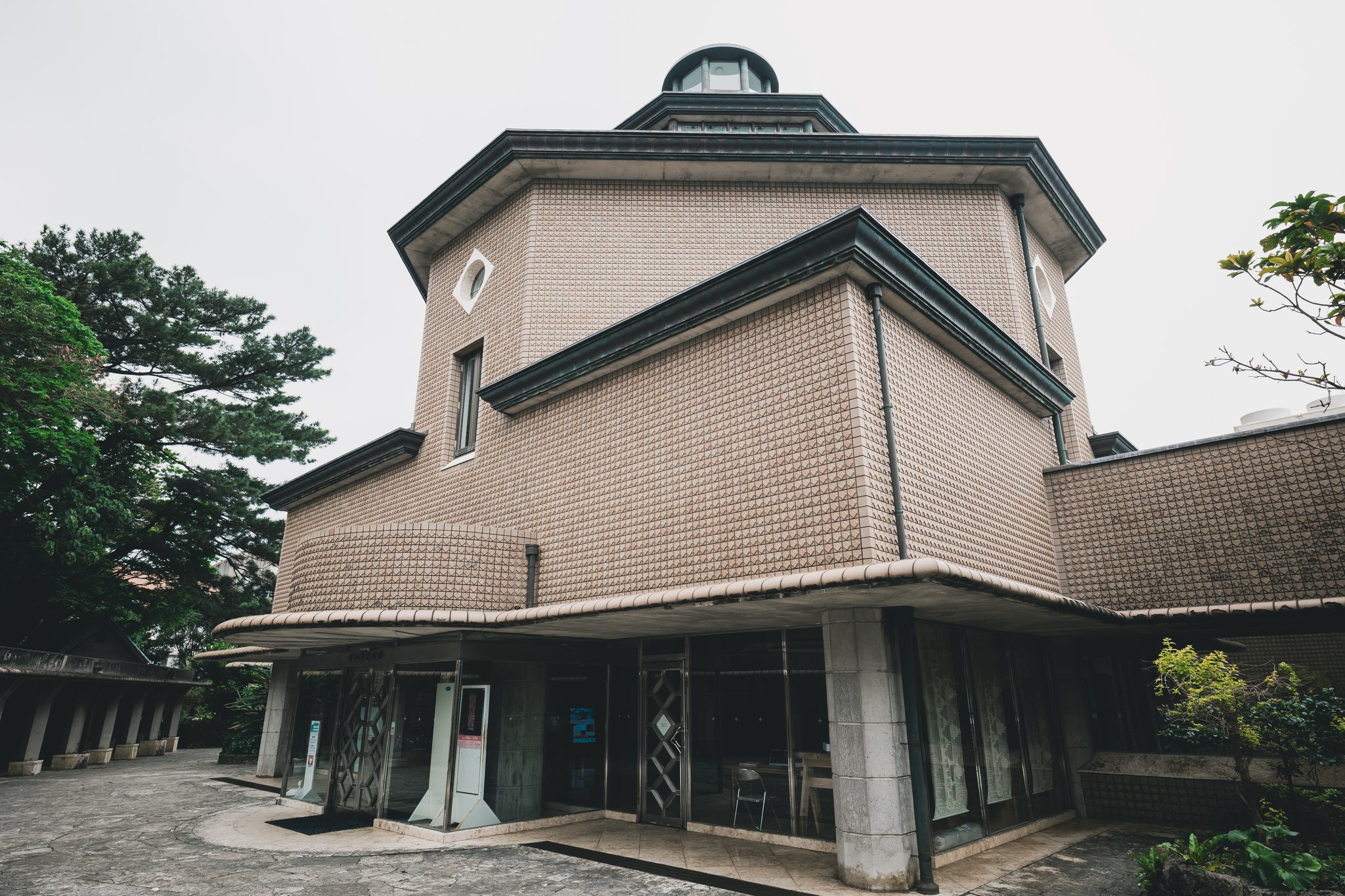
The decoration is in the walls. In the same lecture, Uchii said that the design of a wall lay in how it received the light and broke it up; a completely flat wall had no expression at all. He was then working on new tiles for a museum in Okinawa: something a little unusual, devised to receive Okinawa’s strong light.
The brown tiles on the Urasoe Art Museum are not flat. Each one is shaped so that part of it catches the light and part of it keeps a shadow.
Cloud or face
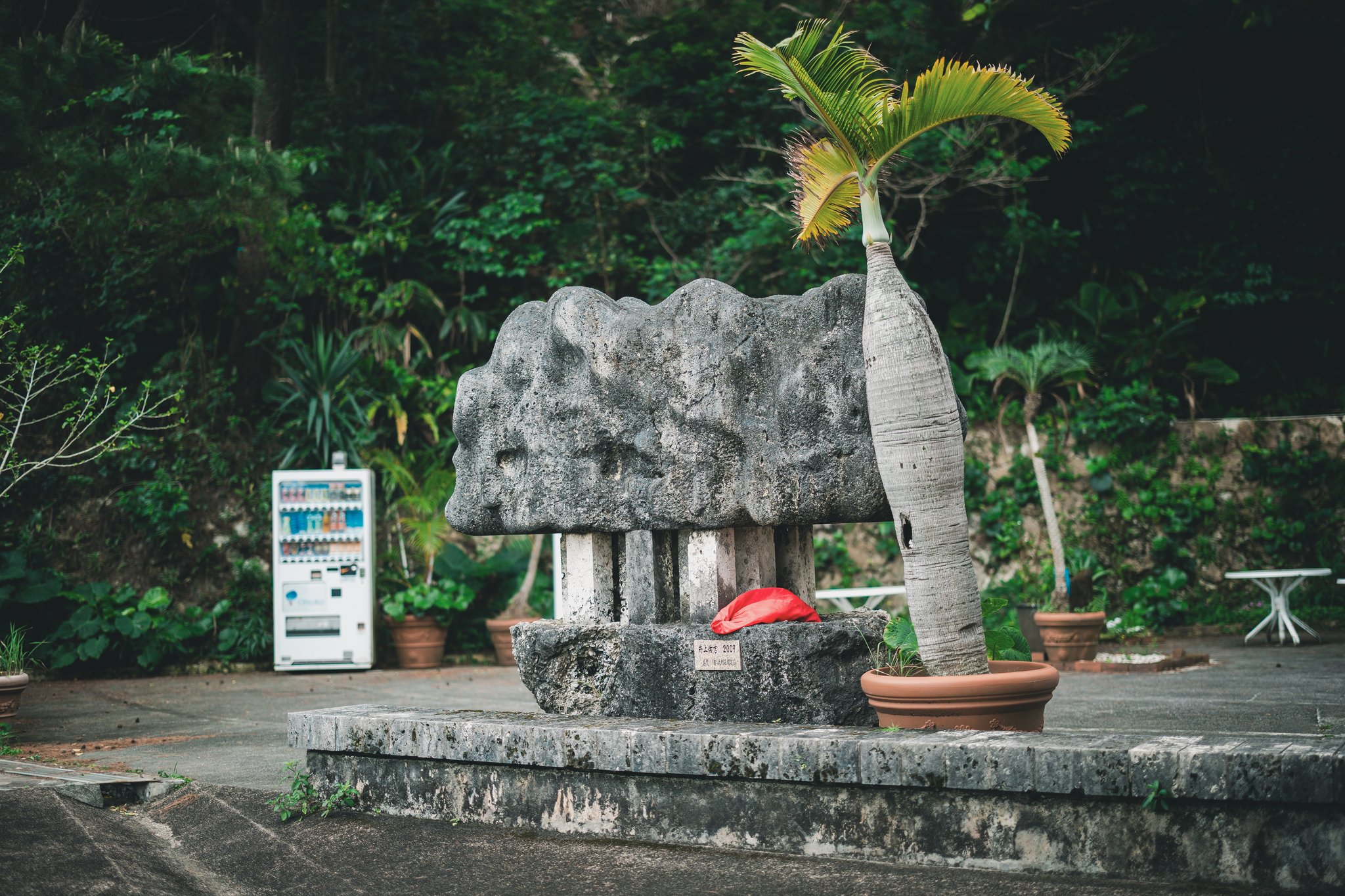
In the garden, on a low stone platform, a massive block of Okinawan stone sits on a row of stone posts. It is about two metres high and two metres wide, and weighs seven tonnes. Behind it stands a drinks vending machine; beside it, a palm in a pot.
It is the work of Yukichi Inoué, who was born in Fukuoka in 1942 and has worked as a stone carver in France since 1966. His father was killed in the Battle of Okinawa in 1945. Since then, Inoué has carved more than two hundred faces.
In the summer of 2009, he spent two and a half months in Nanjō, in the south of the island, making this one. It was installed at the museum in 2010. According to the Okinawa Times, it can look like a cloud, or like a human face.
At Inoué’s wish, no title is displayed, so that nobody is told which.
The plaque gives a name and a year, and leaves the rest to you.
Up the tower
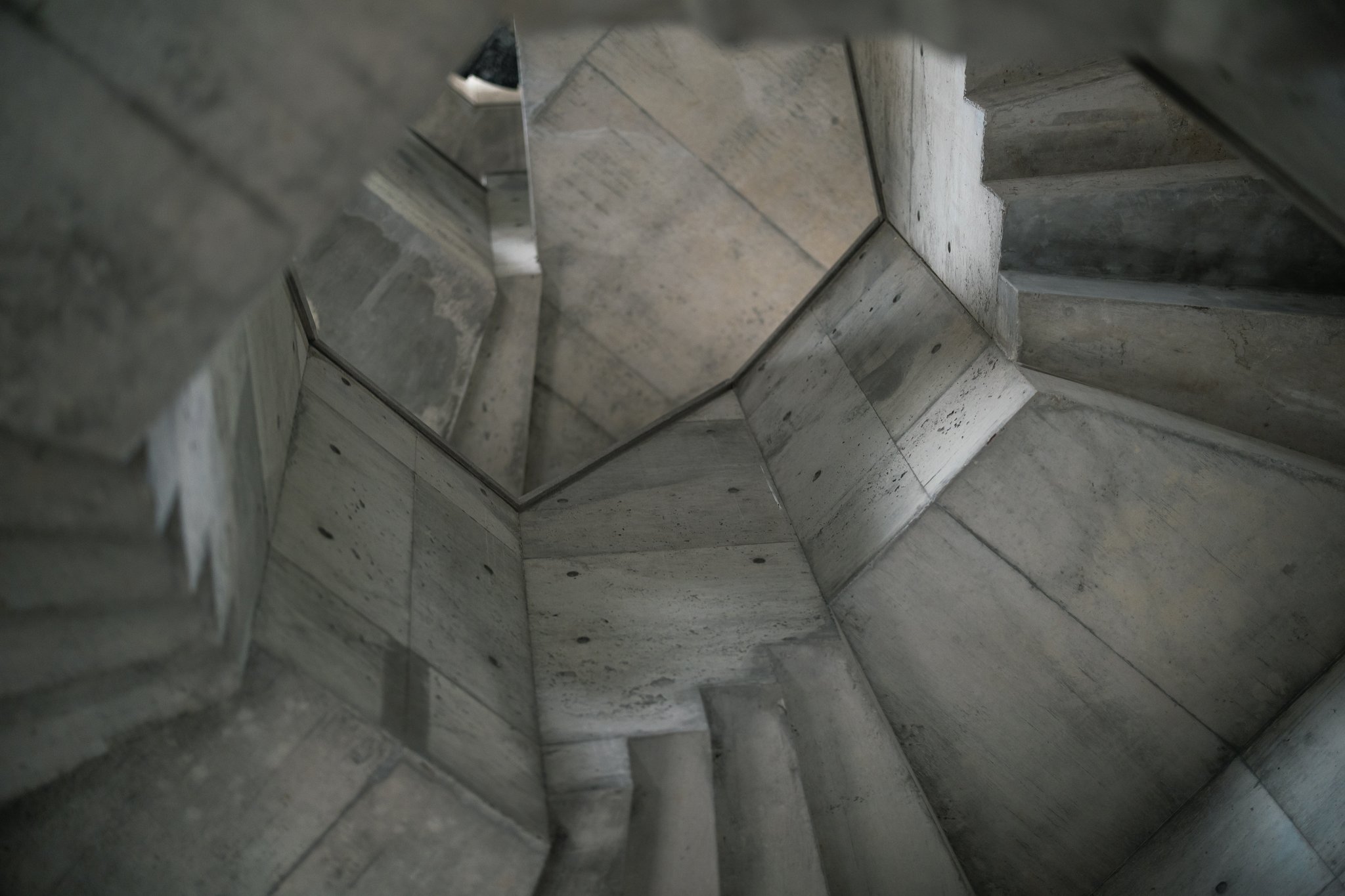
One of the towers is an observation tower, and it is free to climb. Inside, a concrete staircase winds round and round to the top. The steps are steep.
At the top, Urasoe spreads out in every direction: apartment blocks, a main road, the green of a sports ground. Closer in, the museum’s roofs gather below, grey-green octagons, most of them carrying a smaller one on top.
Under the dome
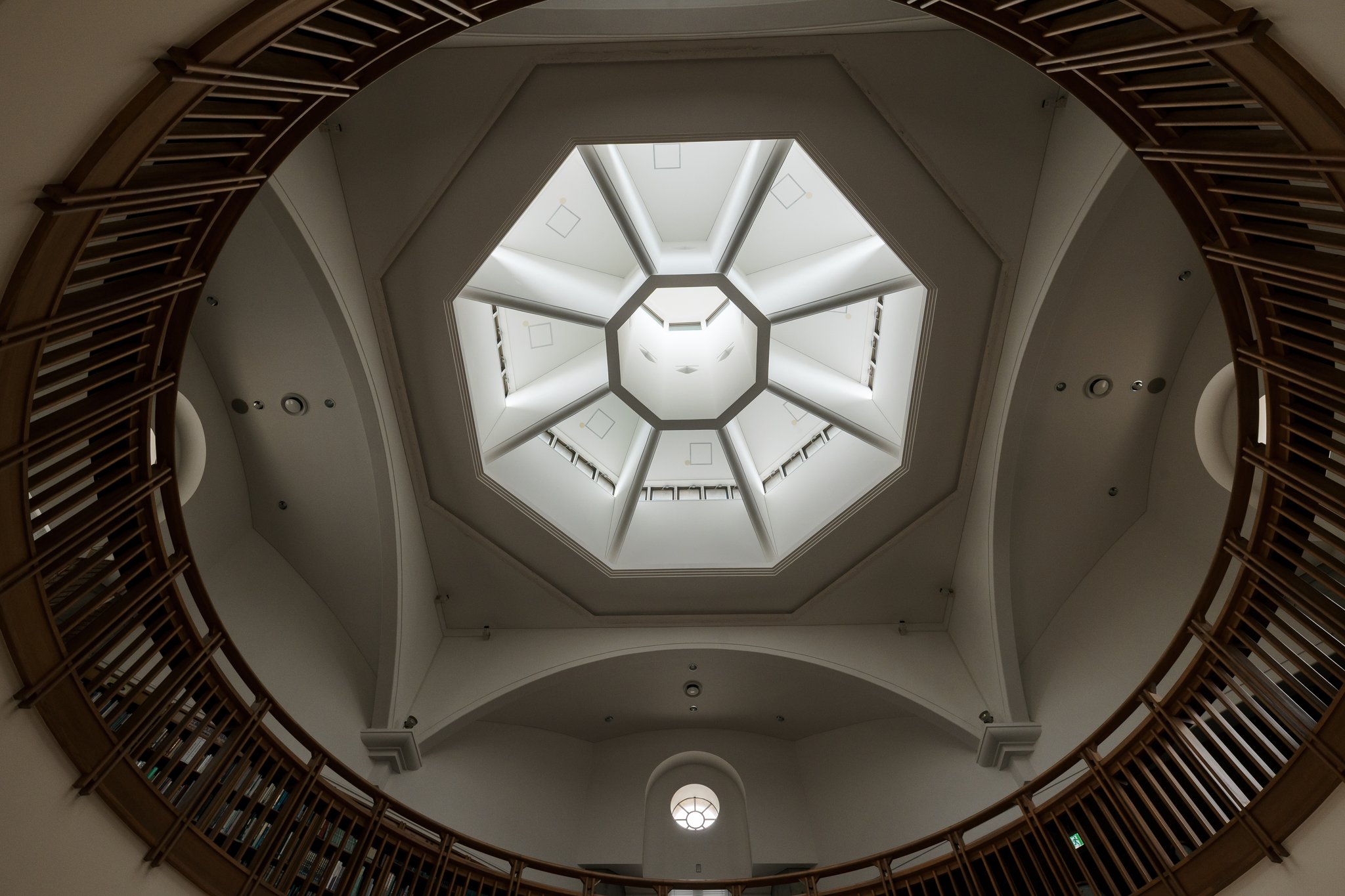
Inside, the entrance hall rises into a dome with an octagonal skylight. Around the hall runs a circular gallery, lined with bookshelves.
Uchii thought decoration was part of what made architecture healthy. The people behind the objects in this museum would not have needed persuading.
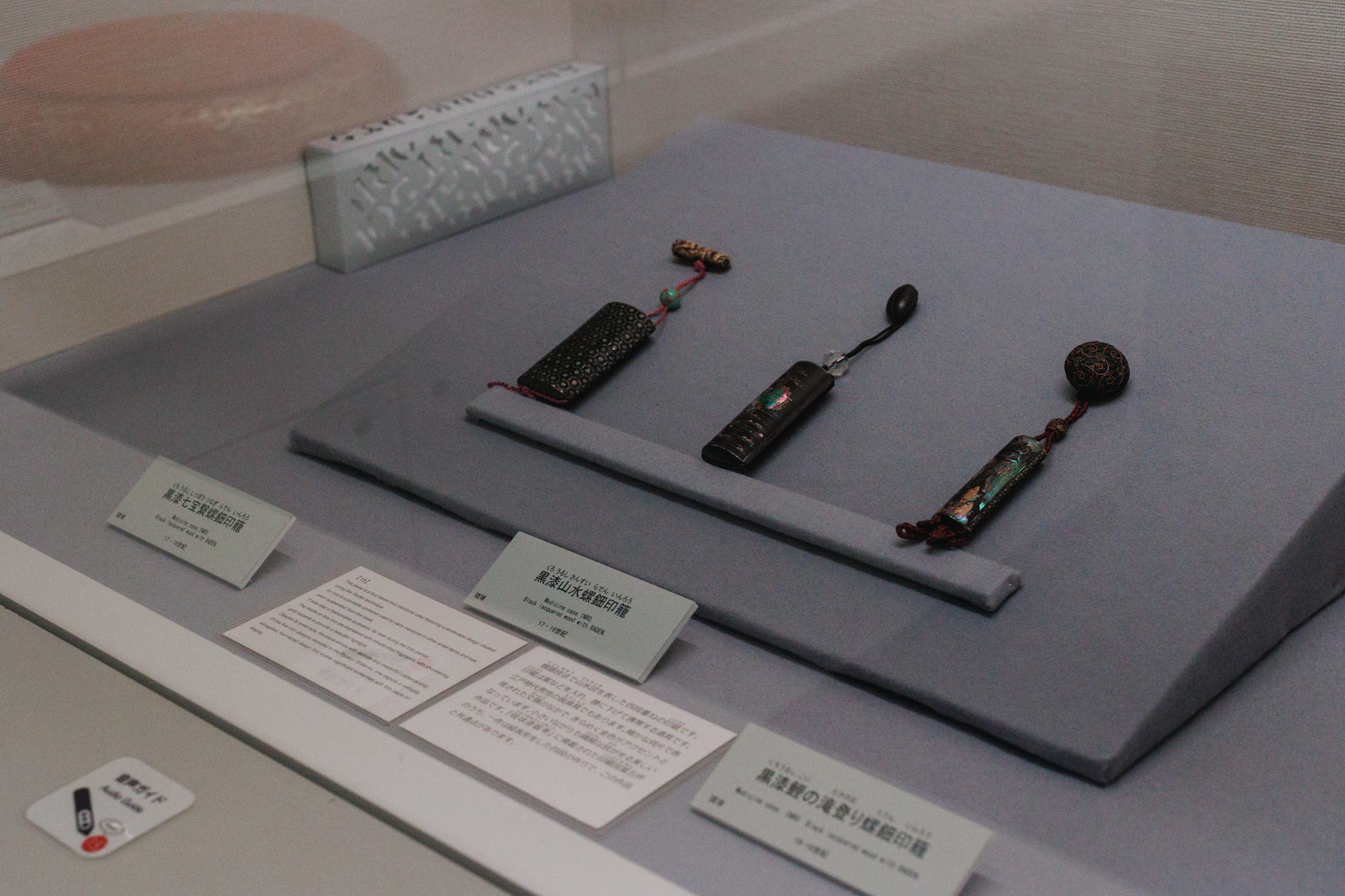
When I visited, the permanent collection was about the Kaizuri Bugyōsho, an office of the Ryukyu Kingdom’s royal government at Shuri. It oversaw lacquerware made for the royal household and for presentation abroad, as tribute to China and gifts to the shogun. For the presentation pieces, it decided the shapes and designs, and it supervised the craftsmen who made them.
In the Ryukyu Kingdom, decoration had its own government office.
The office was abolished in 1879, when the kingdom became Okinawa Prefecture.
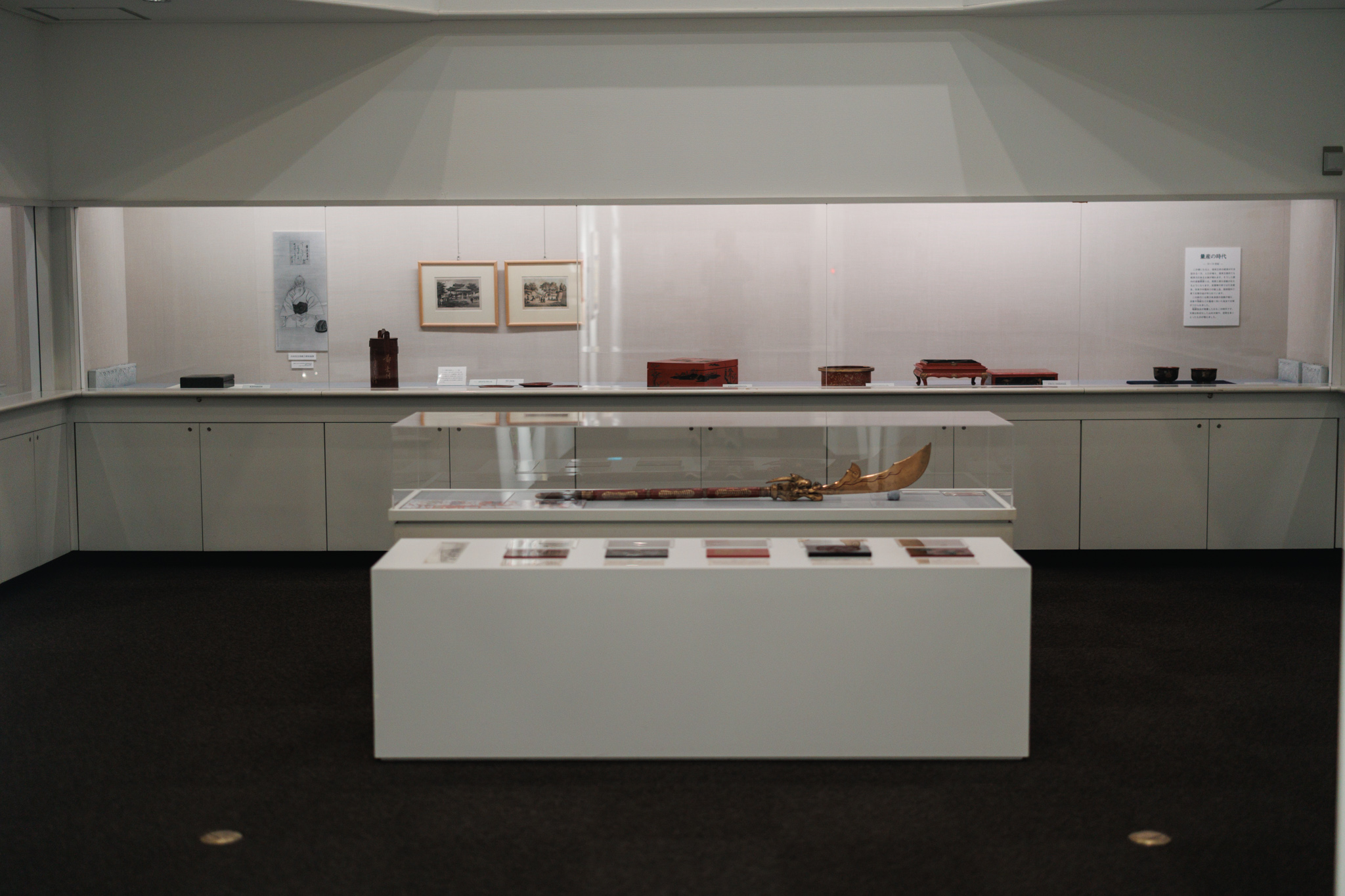
Some of the finest Ryukyuan lacquer used mother-of-pearl from the great green turban shell, plentiful around islands with few other resources. In the cases, shell covered some pieces almost completely.
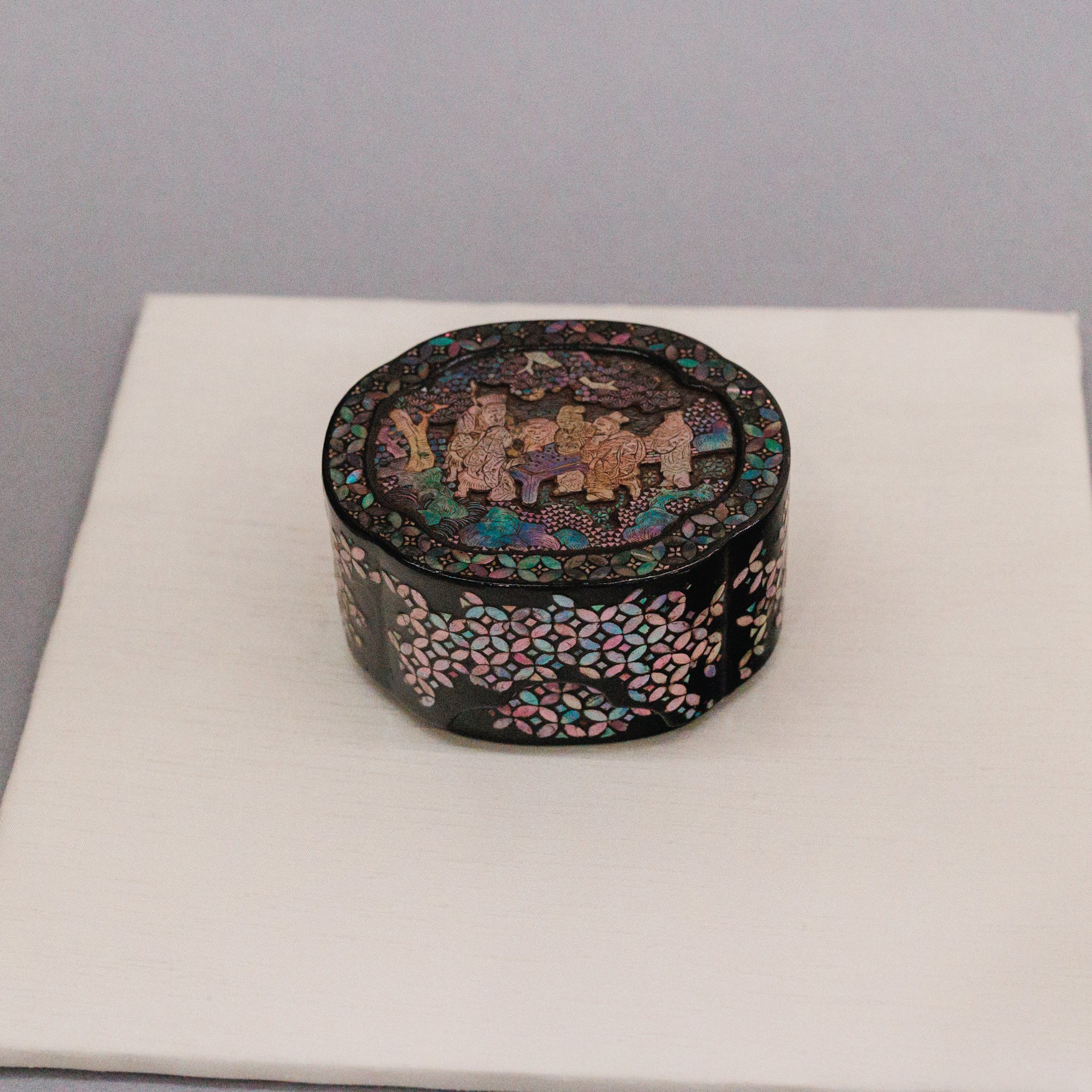
Other pieces were small enough to wear. An inro is a little tiered case for medicine, carried hanging from the belt. In Edo-period Japan, the museum’s label explained, it was also a fashionable accessory for men. One case held three from Ryukyu, in black lacquer and shell, one of them with a landscape made from tiny fragments.
Back outside
The observation tower stood against a flat grey sky. Its tiles were still catching what light there was, and keeping their small shadows.
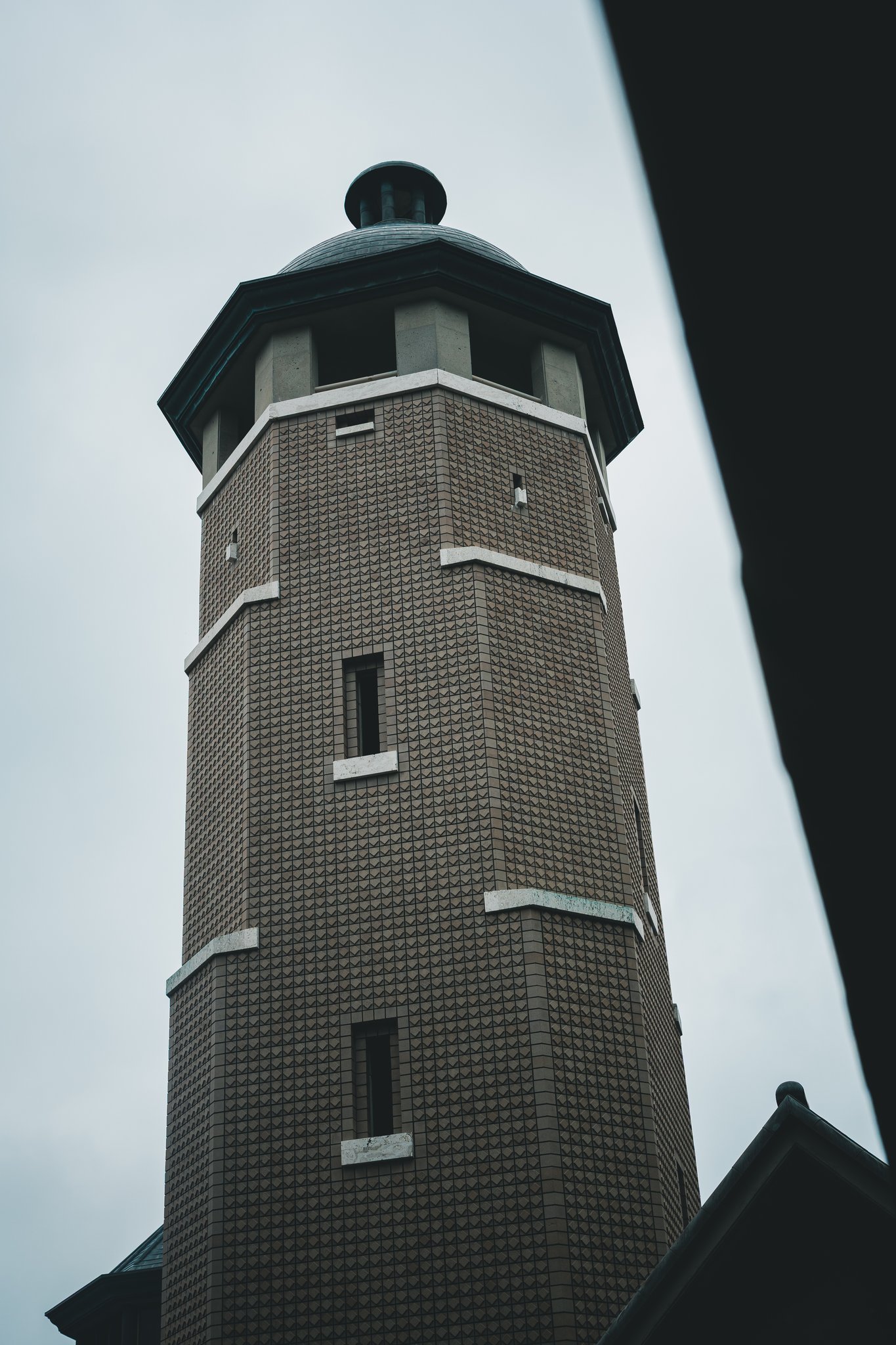
The tiles had been made for Okinawa’s strong light. That morning, Okinawa had not sent much.
Visit this place
Museum
Urasoe Art Museum (浦添市美術館)
About 5 minutes on foot from the Bijutsukan-mae and Taihei bus stops.
1-9-2 Nakama, Urasoe, Okinawa 901-2103, Japan
Practical Information
- Opening hours
- 9:30–17:00 (Fridays until 19:00). Last entry 30 minutes before closing.
- Closing days
- Mondays (open when Monday is a public or substitute holiday, or Irei no Hi on June 23); December 29–January 3. Also closed for exhibition changes and while a storm warning is in effect.
- Admission
- Permanent collection: adults ¥300; university students ¥200; 65 and over ¥240; high school students and younger free. Disability certificate holders and one companion free. Special exhibitions are priced separately.
- Observation tower
- On the April 2026 visit, it could be climbed free of charge from outside the museum. The spiral stairs are steep.
- Access
- Bus 55, 56 or 191 to Bijutsukan-mae (美術館前), or 21, 90 or 98 to Taihei (大平); about 5 minutes on foot. From Furujima Station on the Yui Rail, about 10 minutes by taxi.
- Parking
- Culture Park car park, shared with the neighbouring cultural facilities. When it is full, the museum suggests the car parks near Urasoe City Hall, about 10 minutes on foot.
- Official website
- Urasoe Art Museum
Information last checked: September 29, 2026 (opening hours, closing days, permanent-collection admission, access and parking; observation-tower access is from the author’s visit and a visitor guide).
Conversation
Comments
Review pending commentsComments are reviewed before appearing. The internet already contains enough unattended surprises.
Checking comments…
Comments are not available in this migration preview yet. Existing comments remain on the current site.
Leave a comment