Kubi Daibutsu: The Rest Is Legend
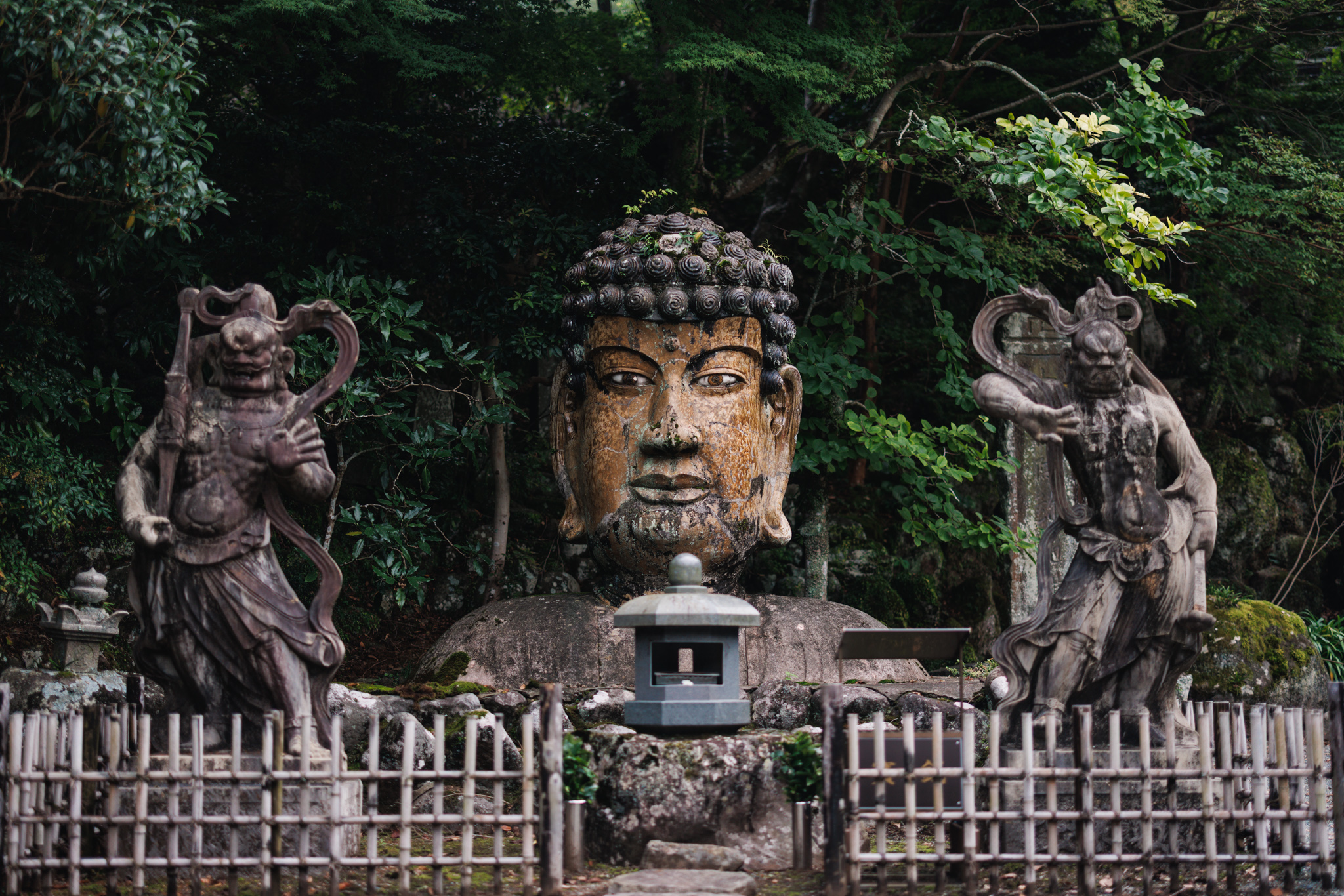
Nobody knows where the rest of this Buddha went. According to Atami City, nobody knows what it looked like, either.
What is left sits in the garden of Fukusenji, a Sōtō Zen temple: a ceramic Buddha from the chest up, about 2.5 metres tall. Above a bamboo fence, its large head rests on a broad, rounded base, with a guardian figure on either side.
It is known as Kubi Daibutsu. Kubi means neck, or head; a daibutsu is a great Buddha. This one is Shakyamuni, the historical Buddha.
On the other bank
The tourist association of Yugawara, a hot-spring town in Kanagawa Prefecture, lists Kubi Daibutsu among its sights. I walked there from Yugawara, and on the way crossed the Chitose River, which is also the border between Kanagawa and Shizuoka.
Fukusenji stands on the far bank, about 80 metres downstream from Izumi Bridge. Its address is in Atami. Yugawara, in other words, is recommending its neighbour’s Buddha.
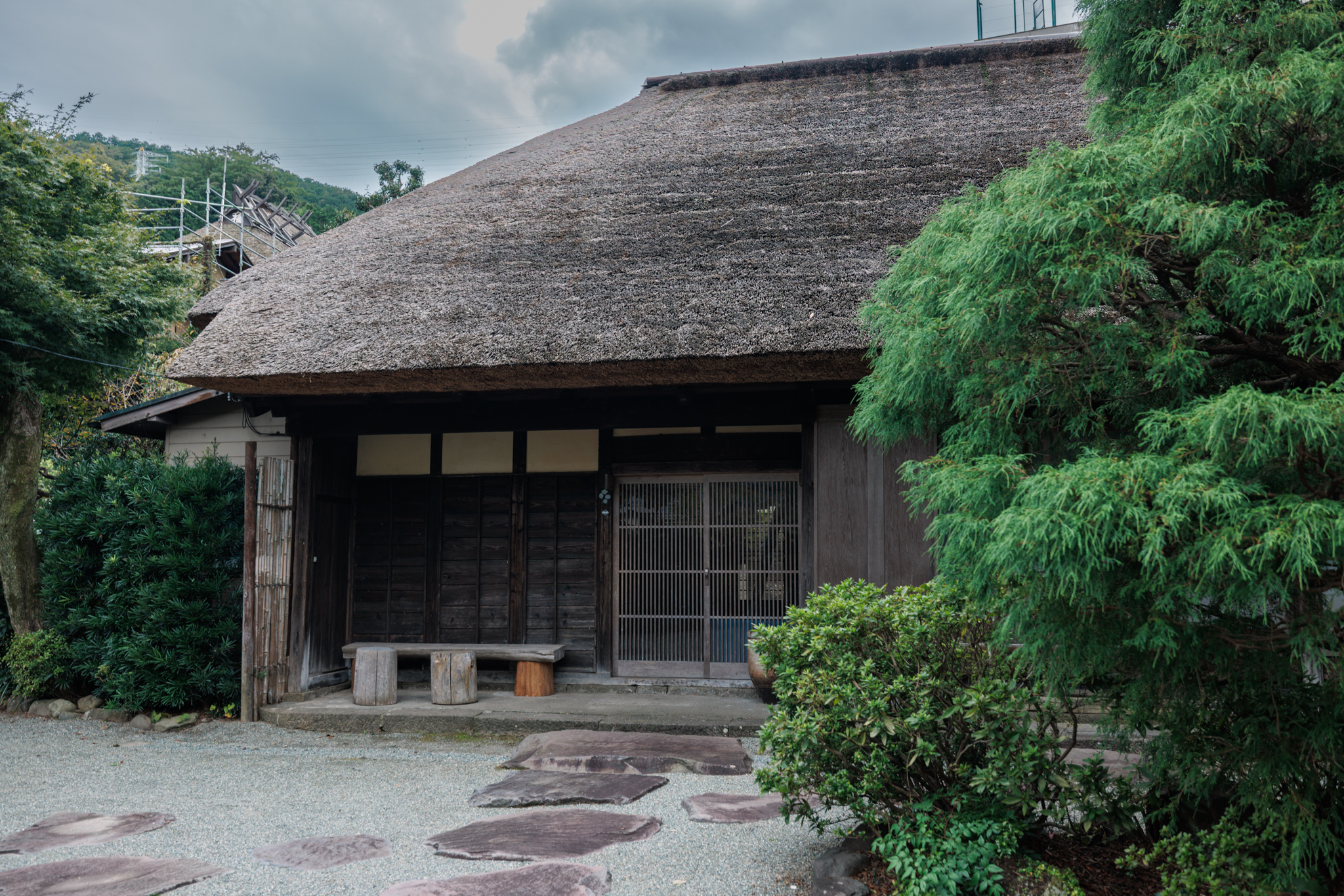
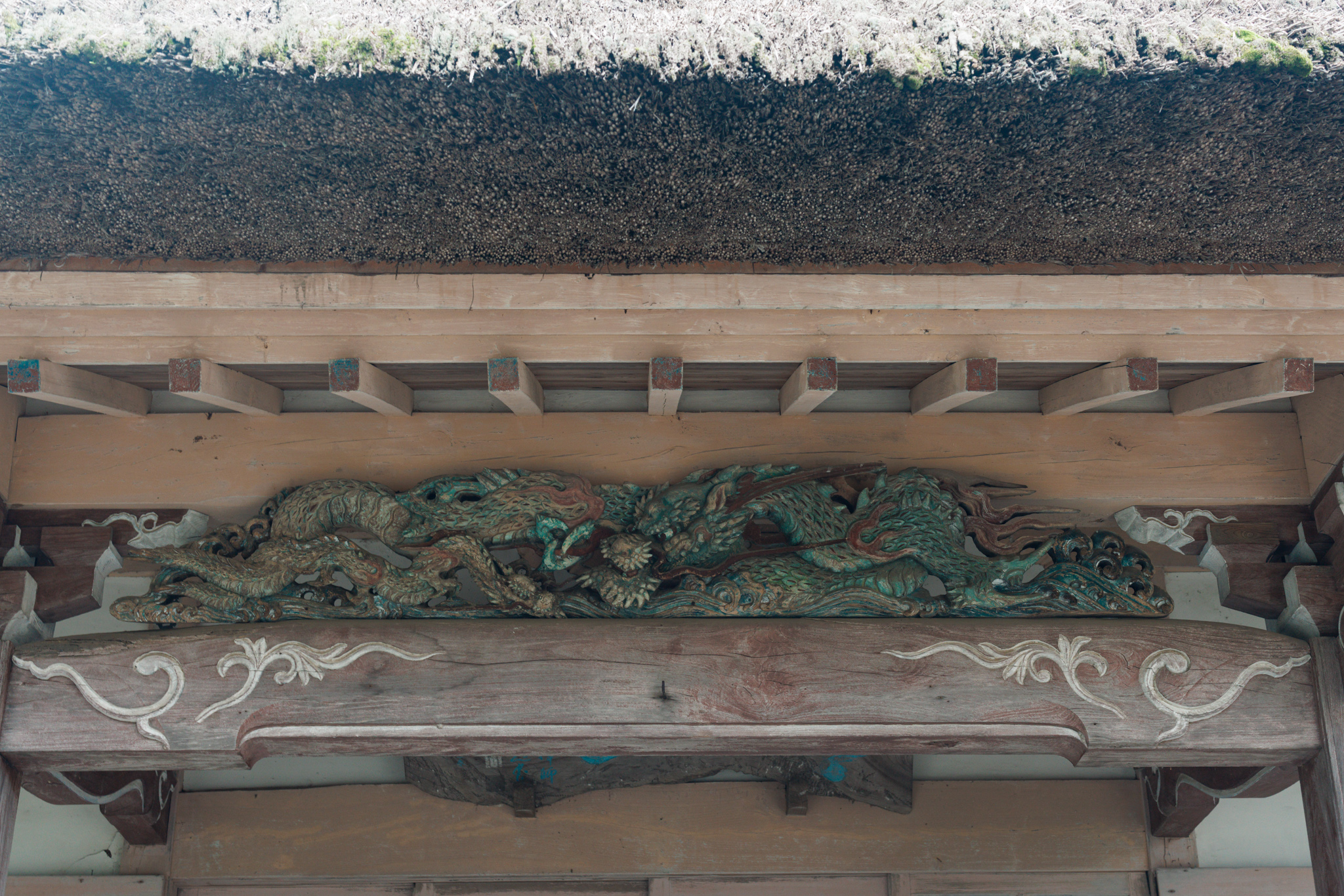
The temple’s main hall, according to the same tourist association, was rebuilt in 1875 and is the only thatched main hall in Atami. It is not the only thatched roof at Fukusenji.
A son and his mother
The story told about the statue, on Atami City’s website and by Yugawara’s tourist association, begins in the seventeenth century, in Owari, the domain around Nagoya.
Tokugawa Yoshinao, its first lord, was on his way back from a hawking trip when he came across an old woman, hard of hearing, bathing in a tub. Her daughter, with admirable presence of mind, carried her indoors, tub and all. Impressed, Yoshinao took the daughter into service in his household. She became pregnant with his son, Mitsutomo. According to the legend, she cut open her own abdomen to give birth to him, and died in the process. Mitsutomo, in her memory, had a great Buddha made in ceramic.
In 2024, Nagoya Castle held an exhibition on the temple Mitsutomo founded for her. It gives her name as Ojō no Kata, also known as Kangi-in, and the year of her death as 1634. Mitsutomo, who became the second lord of Owari, was born in 1625.
In the legend, she dies the day he is born. In Nagoya Castle’s account, she dies nine years later.
What the records do confirm is the mourning. In 1637, Mitsutomo built a mausoleum for her at Denzūin, a temple in Edo. In 1661, he moved it to Ōmori, the village where she was born, and founded a temple there, Daishinji. Ōmori is now part of Nagoya.
The mourning is documented. The statue’s part in it rests on the legend.
From the chest up
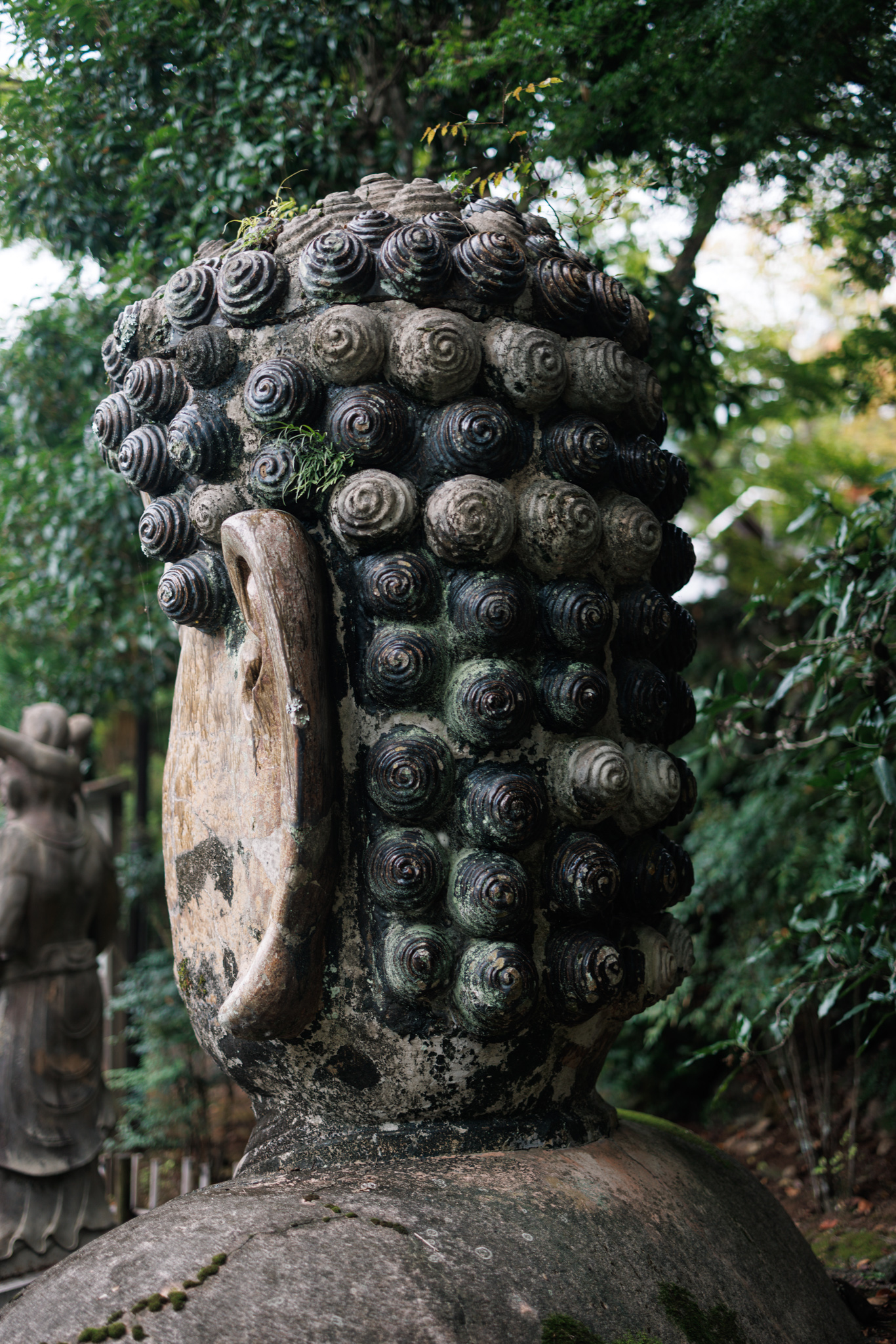
The statue itself is easier to check. The brows are heavy and the eyes wide open, pale around round, dark pupils. The mouth is closed, and gives nothing away.
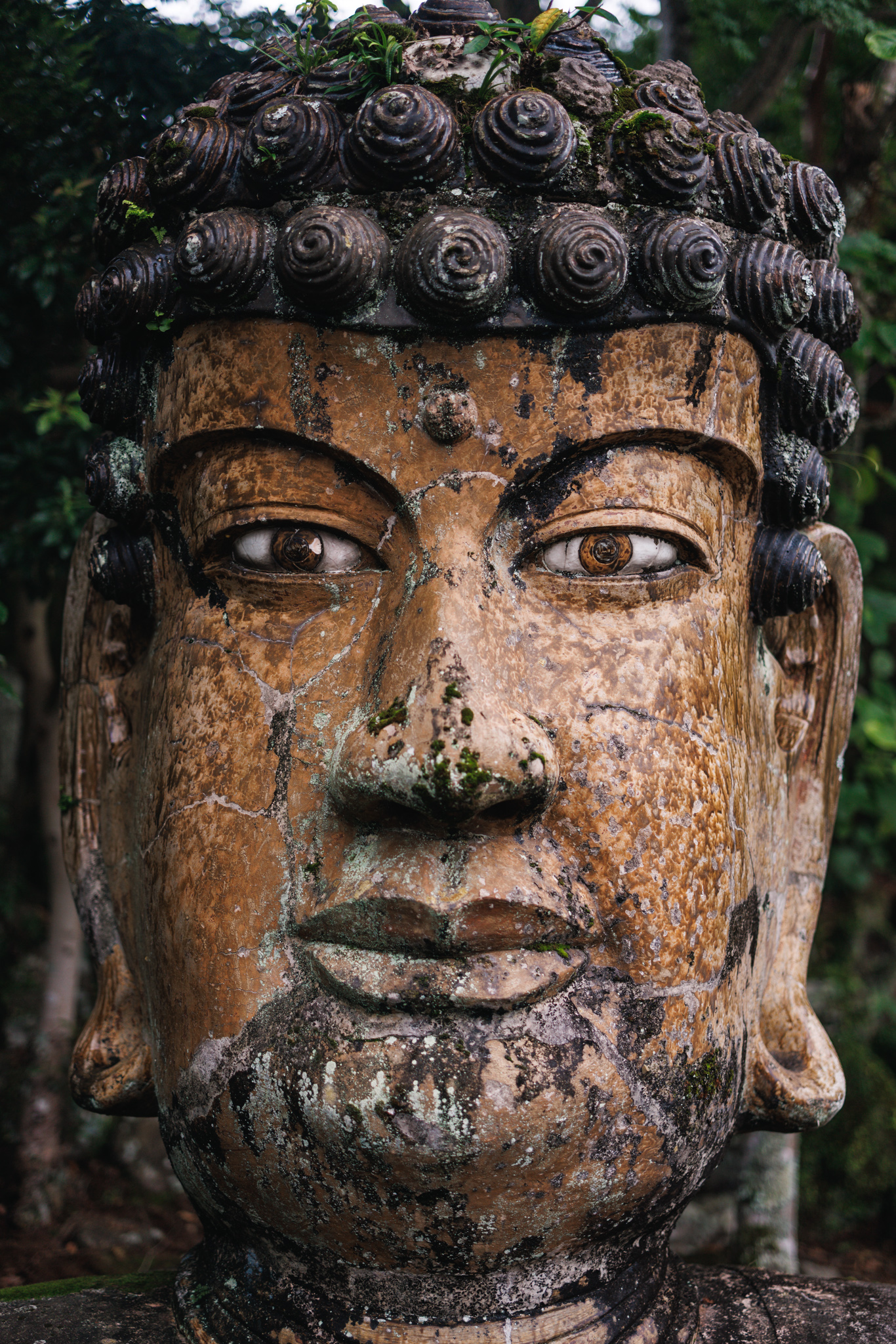
Walk round behind, and the curls keep going, row after row, down the back of the head. The ears hang long and thick at the sides.
For a statue missing most of its body, it is remarkably complete from behind.
How it got here is less complete. Yugawara’s tourist association and the town’s chamber of commerce say it once stood in Nagoya Castle and was donated to Fukusenji after the war. One account of the statue, quoted on a visitor’s blog in 2019, says it passed through many places and was enshrined here during the war.
Even when it arrived depends on who you ask.
The same account names the maker as Chen Yuanyun, an émigré from Ming China who served the Owari domain, working with clay from Akazu, in the pottery town of Seto. As for the rest of the Buddha, it mentions theories that part of the statue is buried somewhere.
The rest of the garden
Kubi Daibutsu does not have the garden to itself. There are other figures among the rocks, the shrubs and the moss, and they all seem to have kept their legs.
Swipe to explore
Tap to enlarge
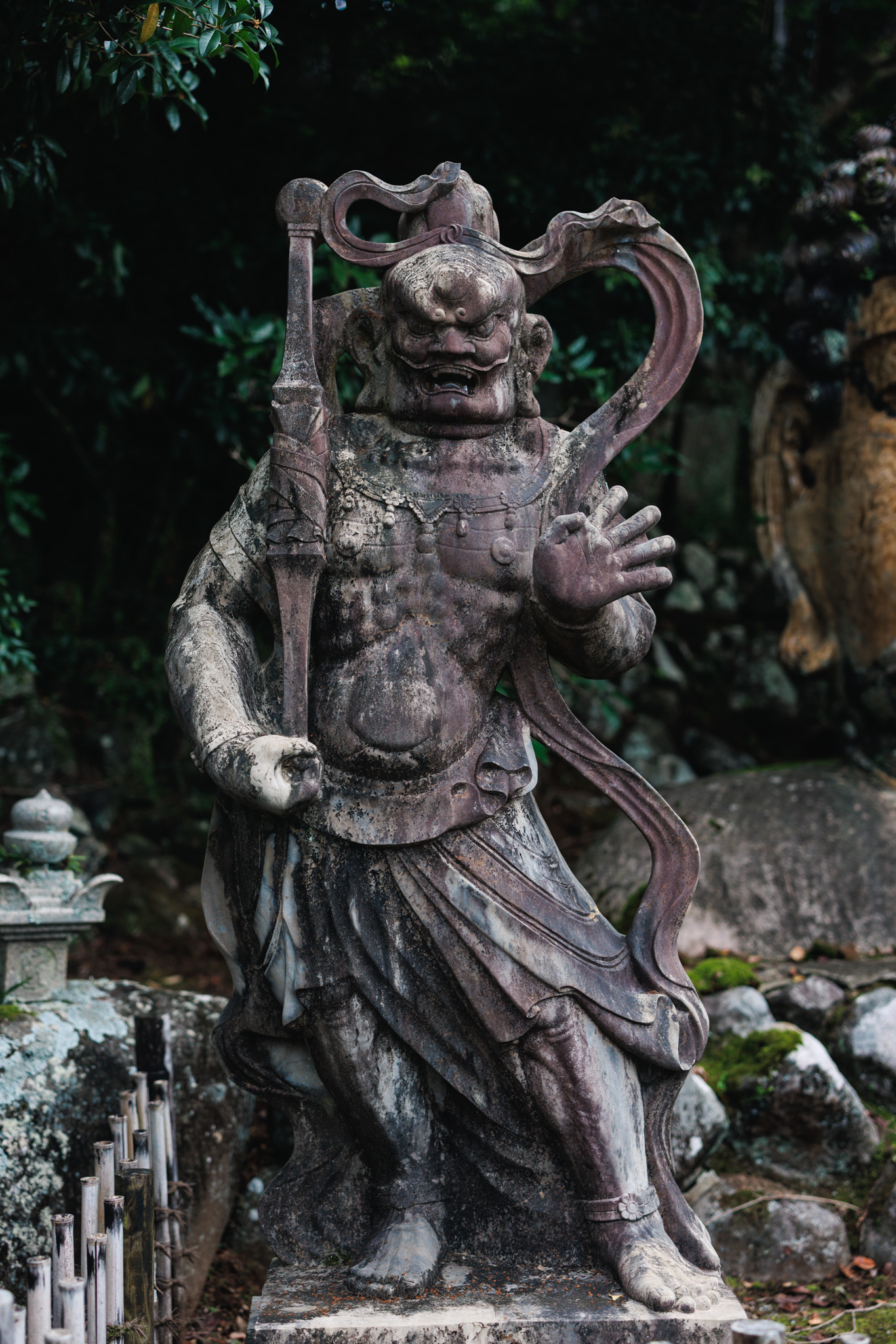
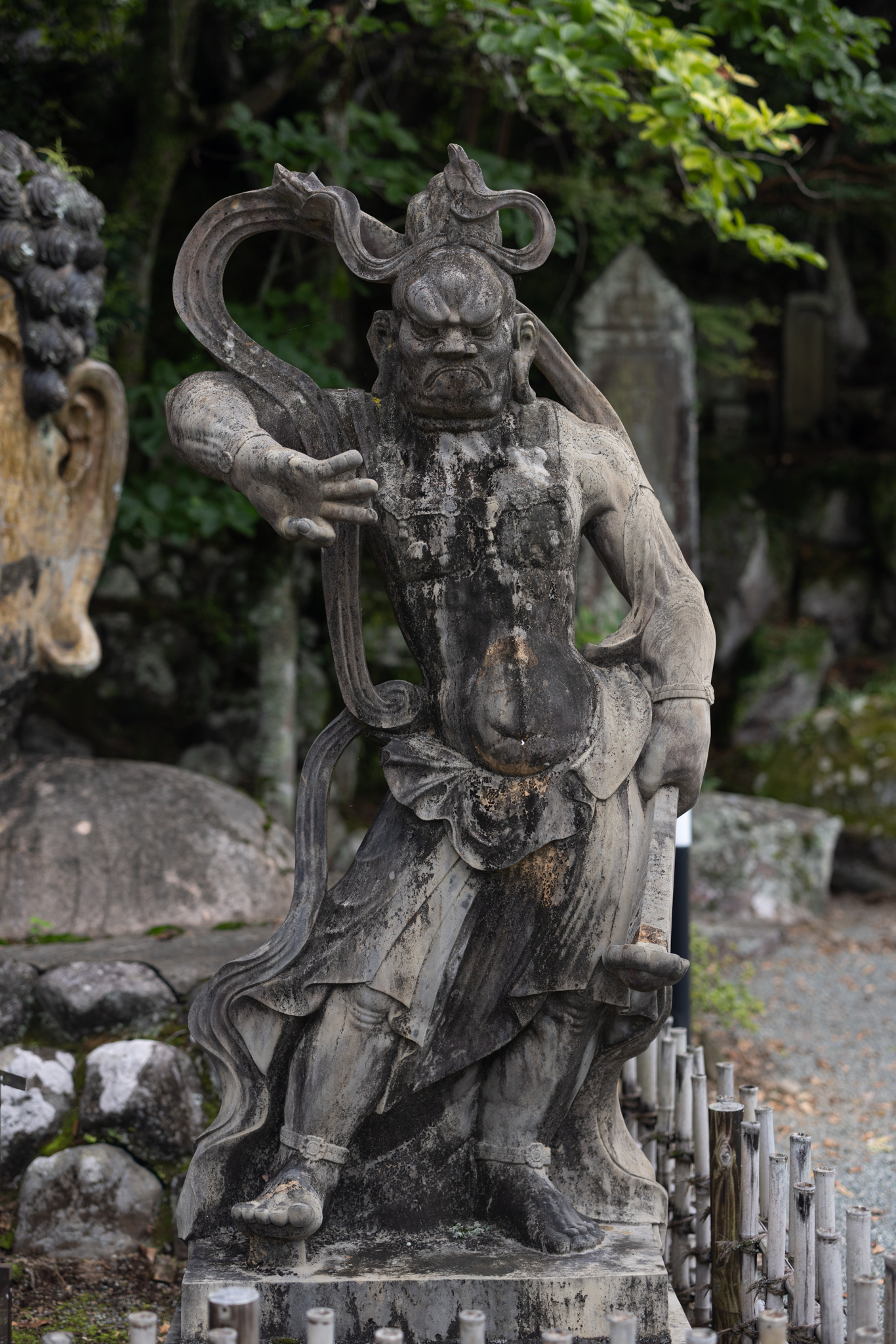
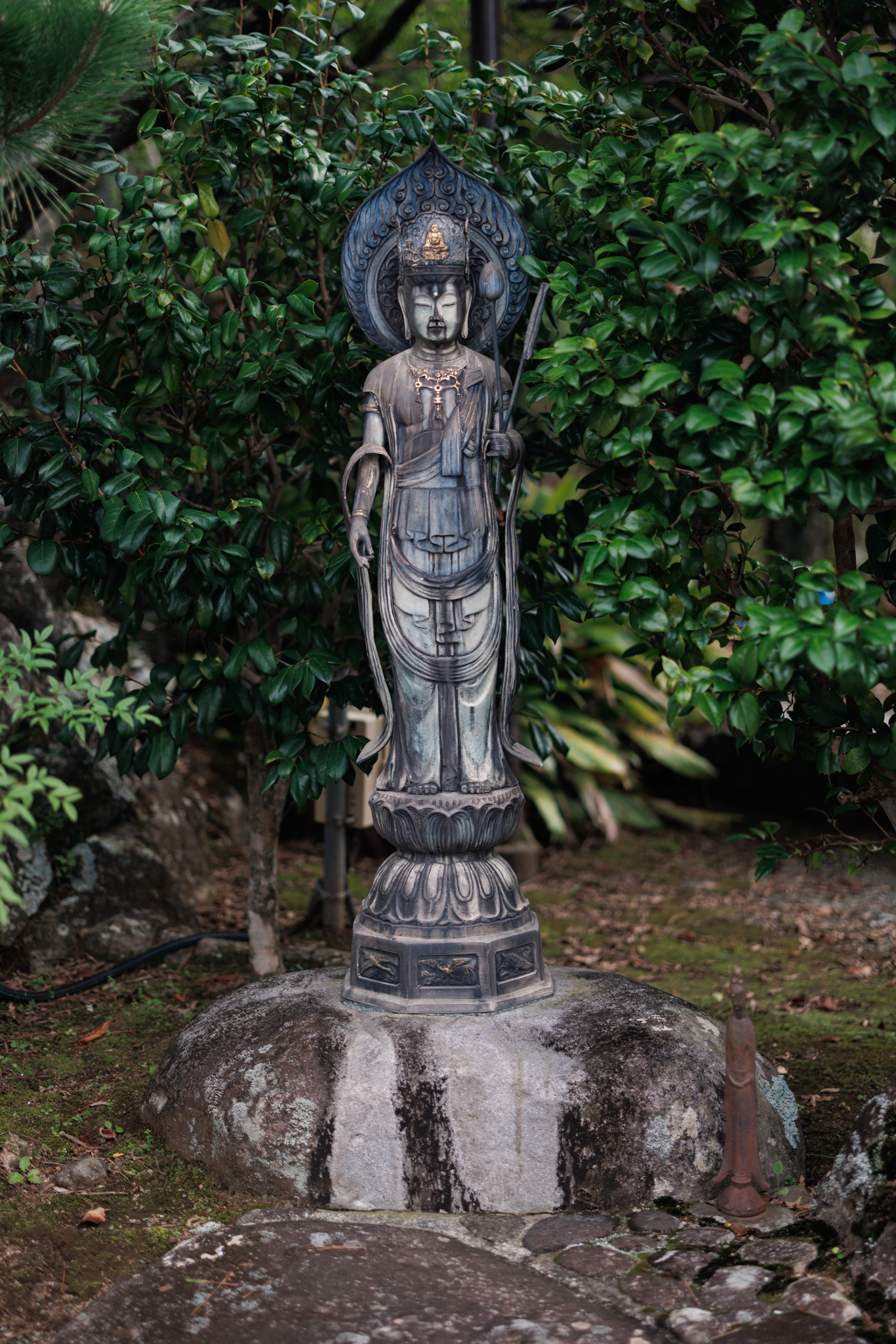
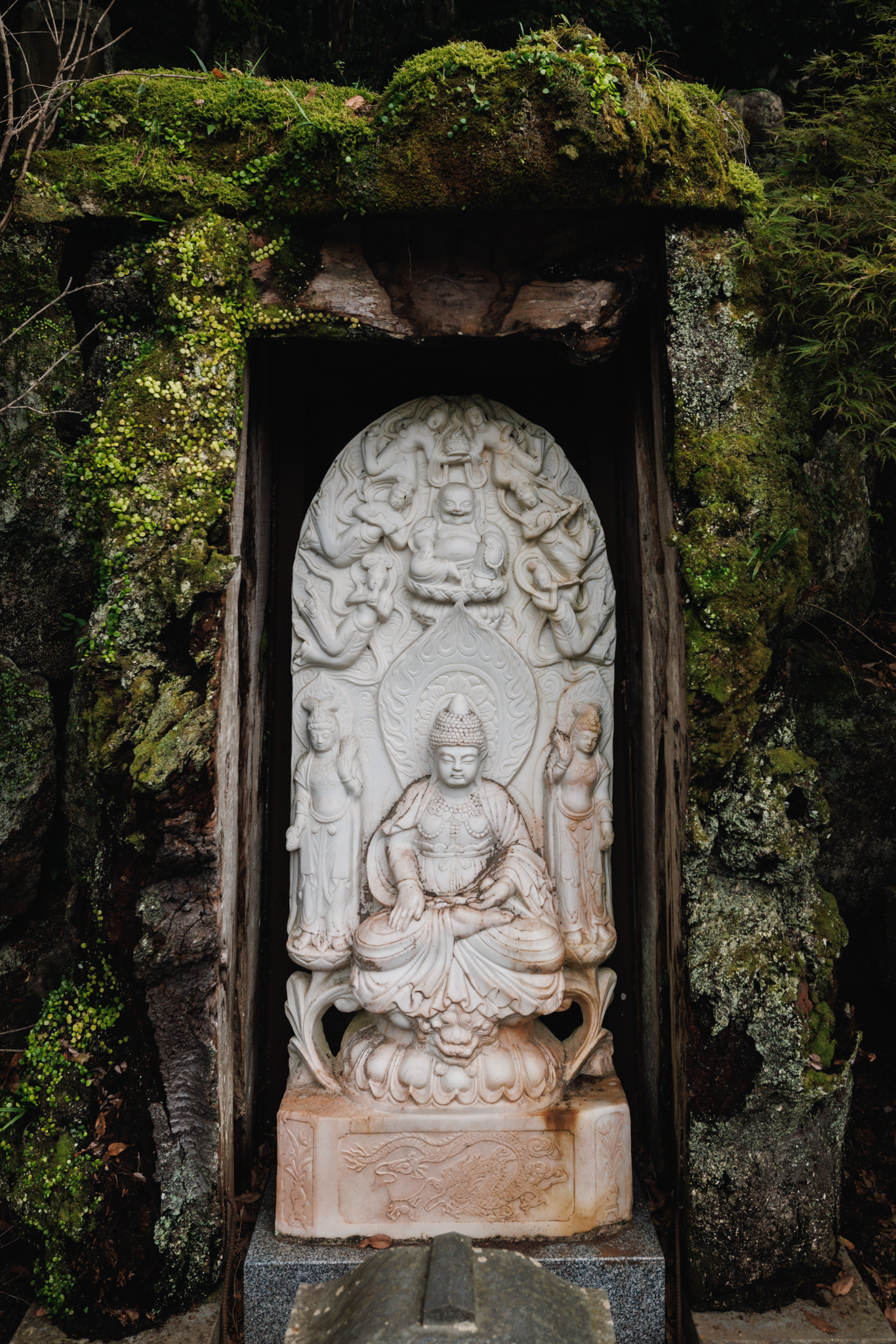
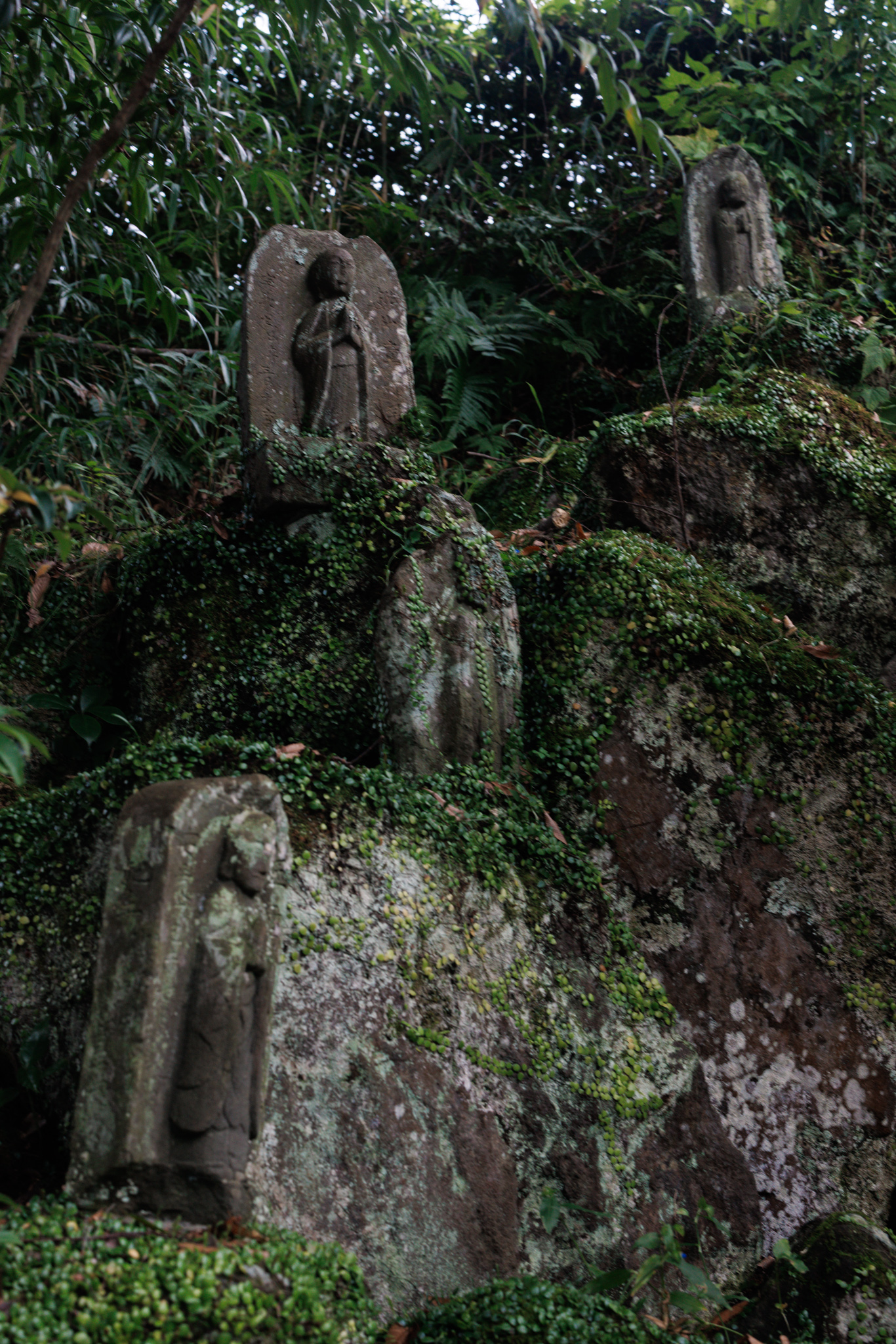
From the garden path, the head is just one more figure among the shrubs.
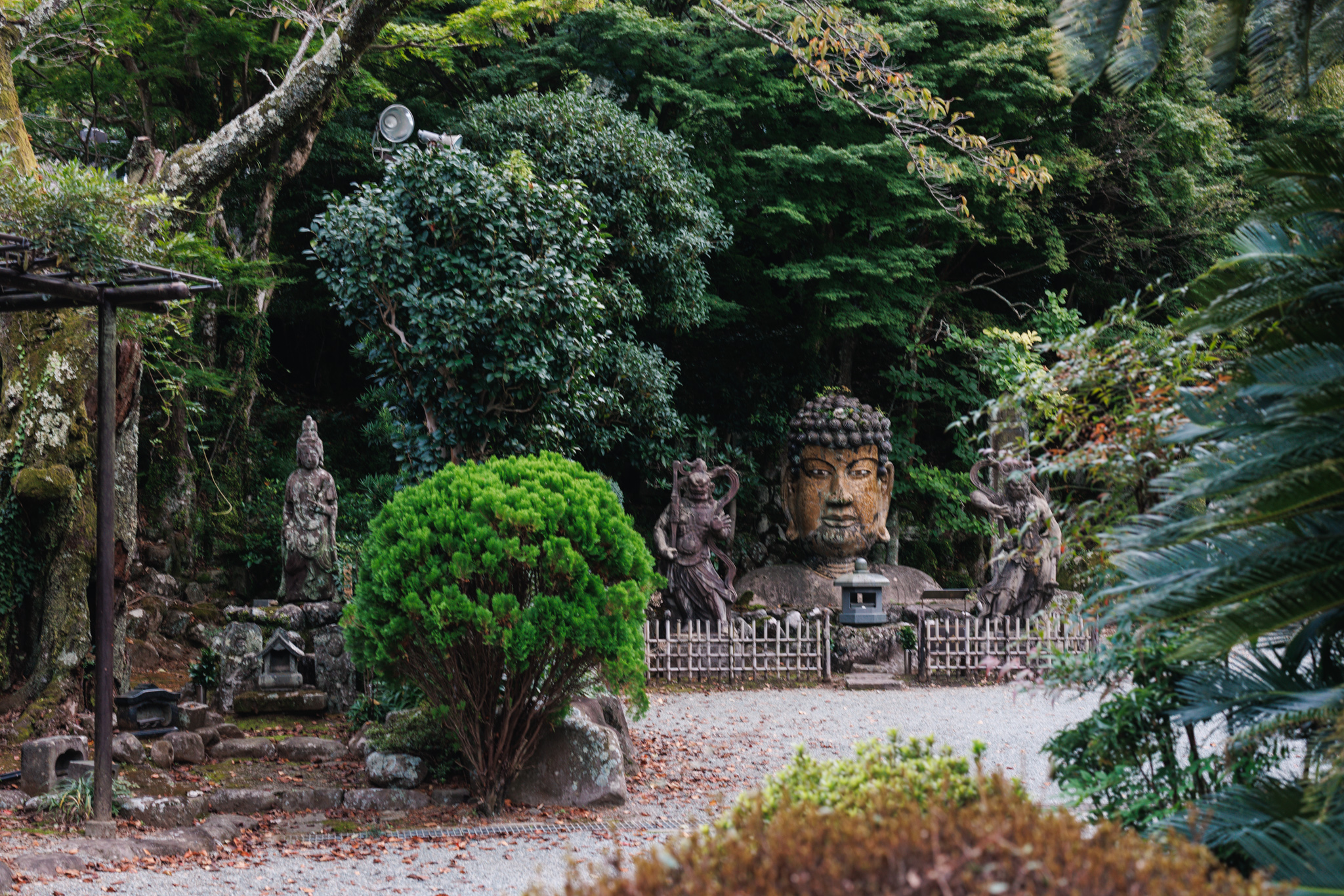
Of everything said about Kubi Daibutsu, the part that can be checked is the part that is here: about 2.5 metres of ceramic, from the chest up, with curls all the way round.
Kubi, after all, means neck. Every attempt to trace this Buddha’s story runs into the same bottleneck.
Visit this place
Temple
Fukusenji (Kubi Daibutsu) (福泉寺・首大仏)
On the Atami (Shizuoka) bank of the Chitose River, about 80 m downstream from Izumi Bridge, in the Yugawara Onsen area. Kubi Daibutsu is in the temple garden.
191-1 Izumi, Atami, Shizuoka 413-0001, Japan
Practical Information
- Access
- From JR Yugawara Station, take a bus bound for Okuyugawara or Fudōtaki and get off at Izumi Iriguchi; about 2 minutes on foot
- Parking
- Available, according to Yugawara’s tourist association (number of spaces not published)
- Opening hours and admission
- Not published in the sources checked. The temple can be contacted on 0465-62-2354 (in Japanese)
- Visitor note
- Fukusenji is a working temple; please be respectful. The garden paths are gravel and stepping stones (at the time of visit)
Information last checked: October 9, 2026 (access and parking; opening hours and admission were not published).
Conversation
Comments
Review pending commentsComments are reviewed before appearing. The internet already contains enough unattended surprises.
Checking comments…
Comments are not available in this migration preview yet. Existing comments remain on the current site.
Leave a comment