Hachi Tengoku: Museum of Hornet Nest Art
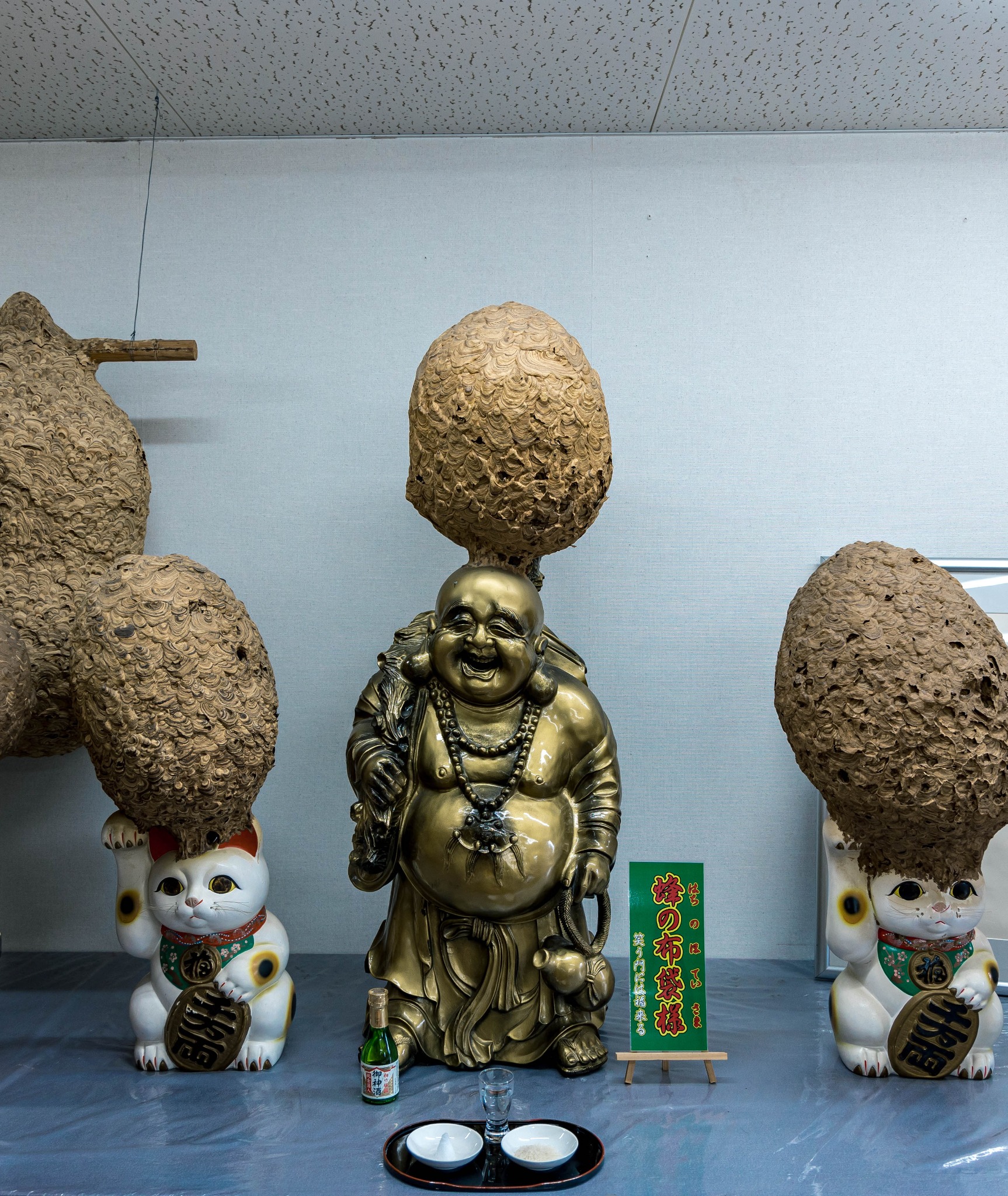
Welcome to the strangest heaven ever built by humans and hornets together.
Hotei, a smiling god of good fortune, had a hornet nest on his head. The two beckoning cats beside him carried nests of their own and continued to invite people closer. None appeared to consider this a mixed message.
This was Hachi Tengoku (蜂天国) in Tōmi, Nagano Prefecture, in central Japan. Its name means roughly “Bee Heaven”, though the nests filling its rooms belong mainly to hornets. Guinness World Records, more precise about the insects, calls it “Paradise for Hornets”.
Hachi no Mori Shrine
There was even a shrine.
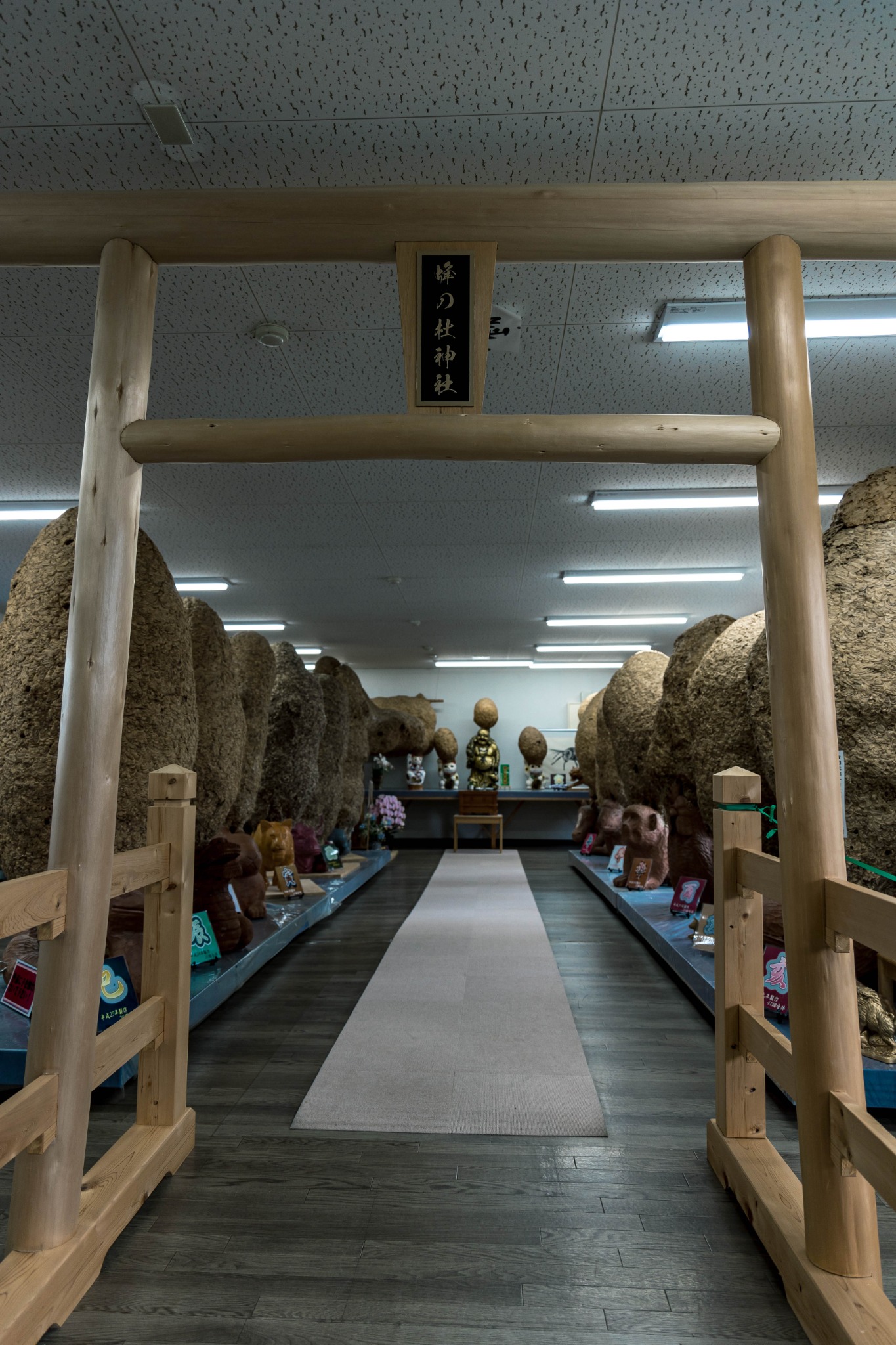
A wooden torii framed an aisle lined with enormous nests, with the smiling figure waiting at the far end. Fluorescent lights illuminated the proceedings.
The man behind the welcome
The explanation for all this appeared in a photograph of Yoshikuni Shiozawa, the museum's founder. Bare-chested and smiling, he stood with live hornets crawling over his body.
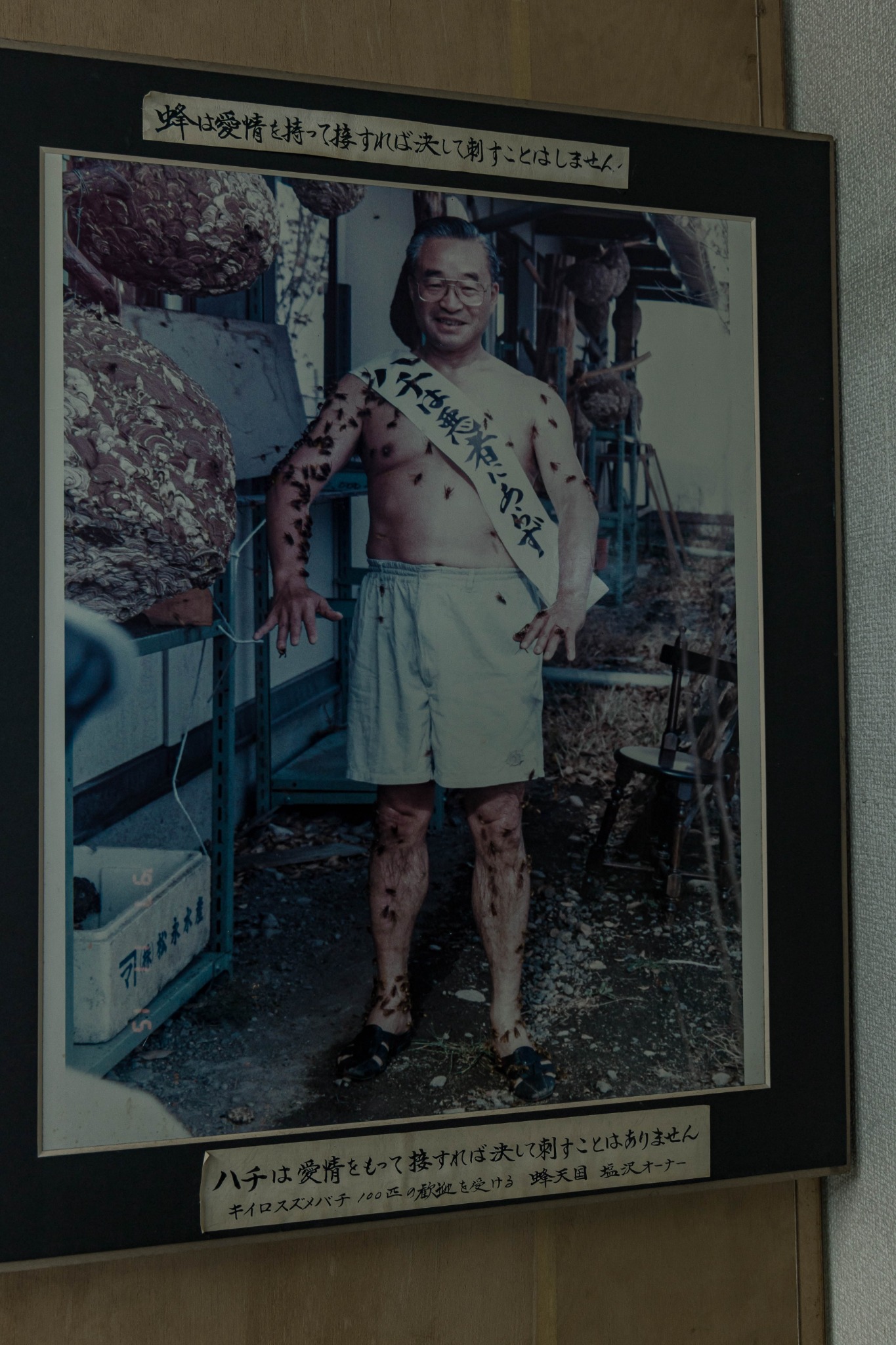
Most museum founders settle for a portrait with their collection. His collection was on him.
He was 68 when it was taken. The message he wanted to send was that hornets will not attack unless they are harmed.
Shiozawa's interest began in childhood, but it was the rippling surface of a nest beneath a friend's eaves that drew him back to hornets later in life. In a 2018 interview, he described being captivated by those patterns. Collecting nests led to combining them with other materials, and in 1995 he opened Hachi Tengoku.
Looking around the museum, it was easy to see what had caught his attention. Bands of brown and ochre curled across the surfaces, each nest carrying a pattern too intricate to take in at a glance. Mounted among polished roots and branches, they looked remarkably at home as sculpture.
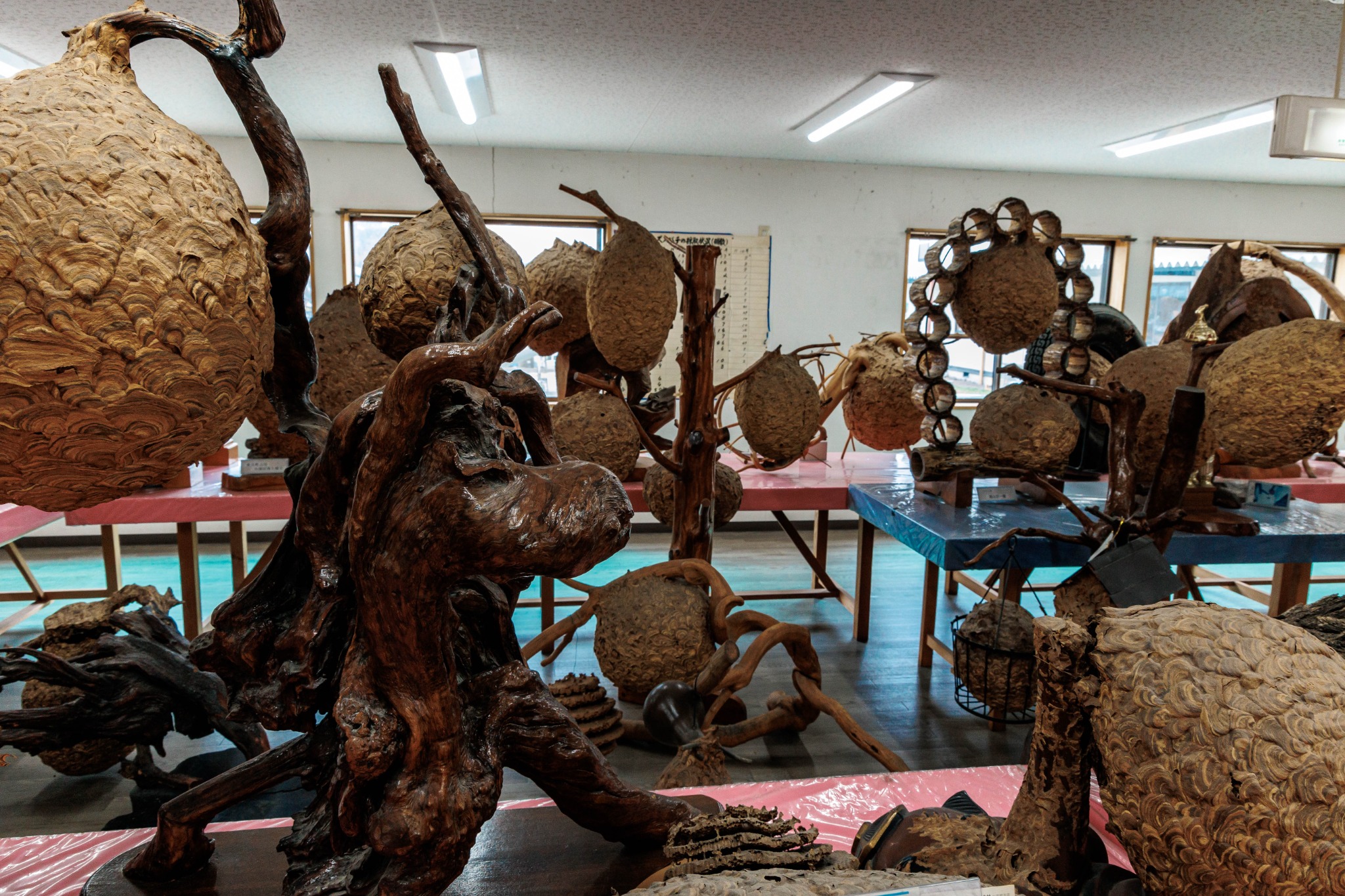
But the stranger works raised another question. Collecting a nest was one thing. How did you persuade it to become something else?
The hornets kept building
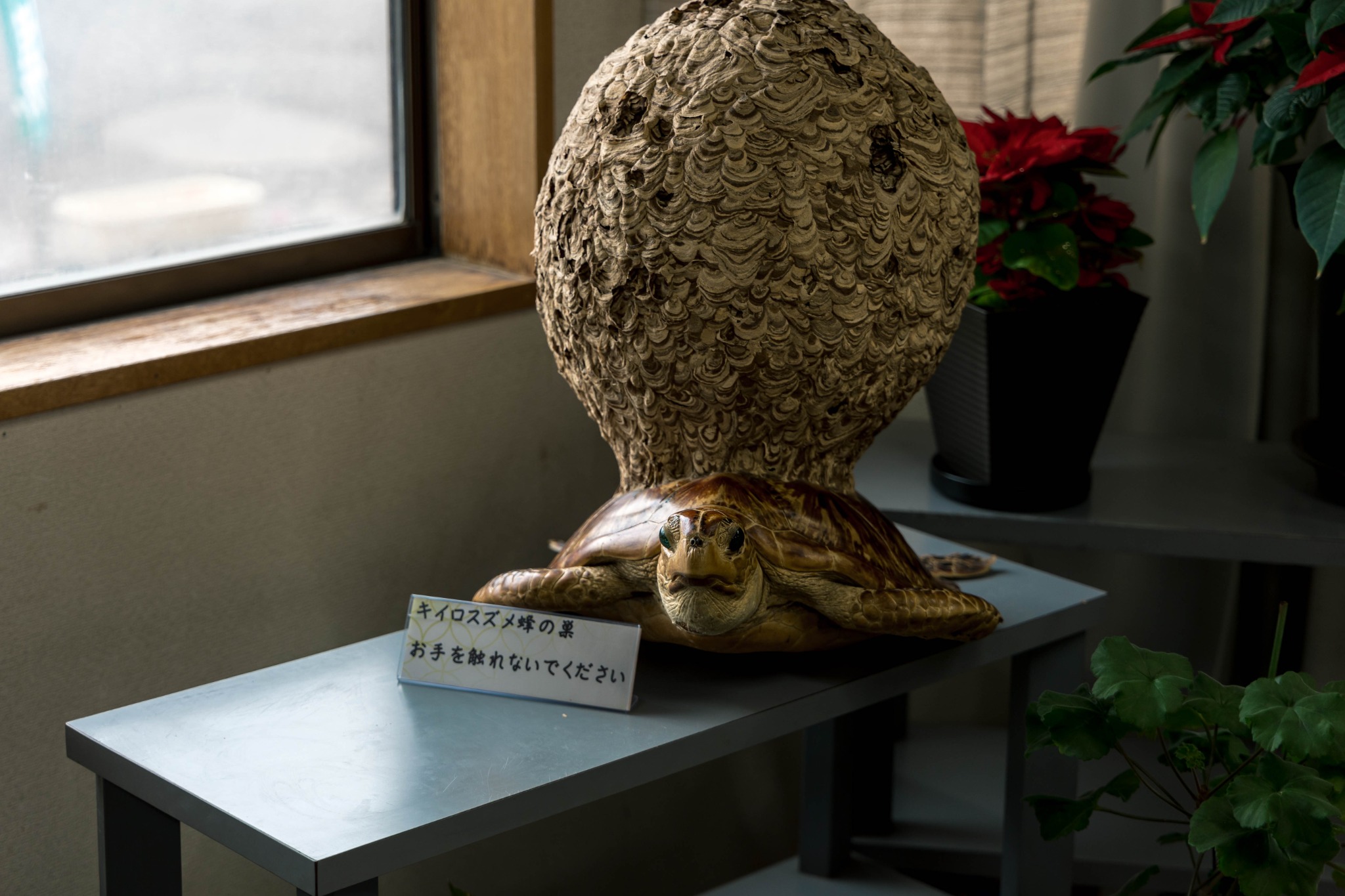
For some of the large composite works, Shiozawa placed occupied nests on steel frameworks. Gaps remained between them. The living hornets then continued building, closing those gaps and joining the separate nests together—a process documented in a television visit.
Humans supplied the framework. The hornets supplied the architecture.
The collaboration was real, although agreement on the artistic direction was presumably unnecessary. Shiozawa could be making a sculpture while the hornets got on with making a home.
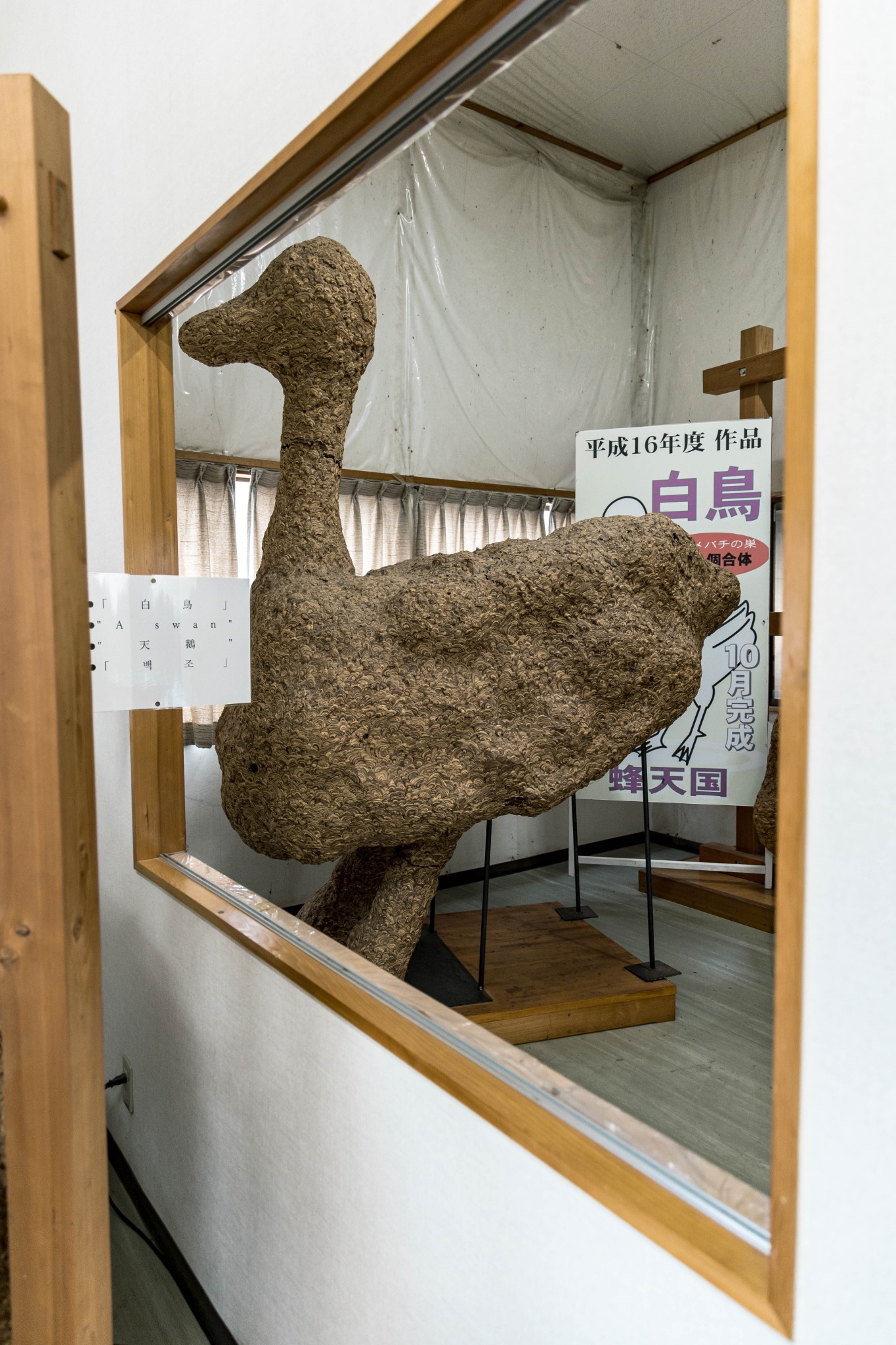
A swan showed how well those intentions could overlap. The curved neck and raised tail gave it the shape of a bird; the layered nest material supplied something surprisingly close to plumage.
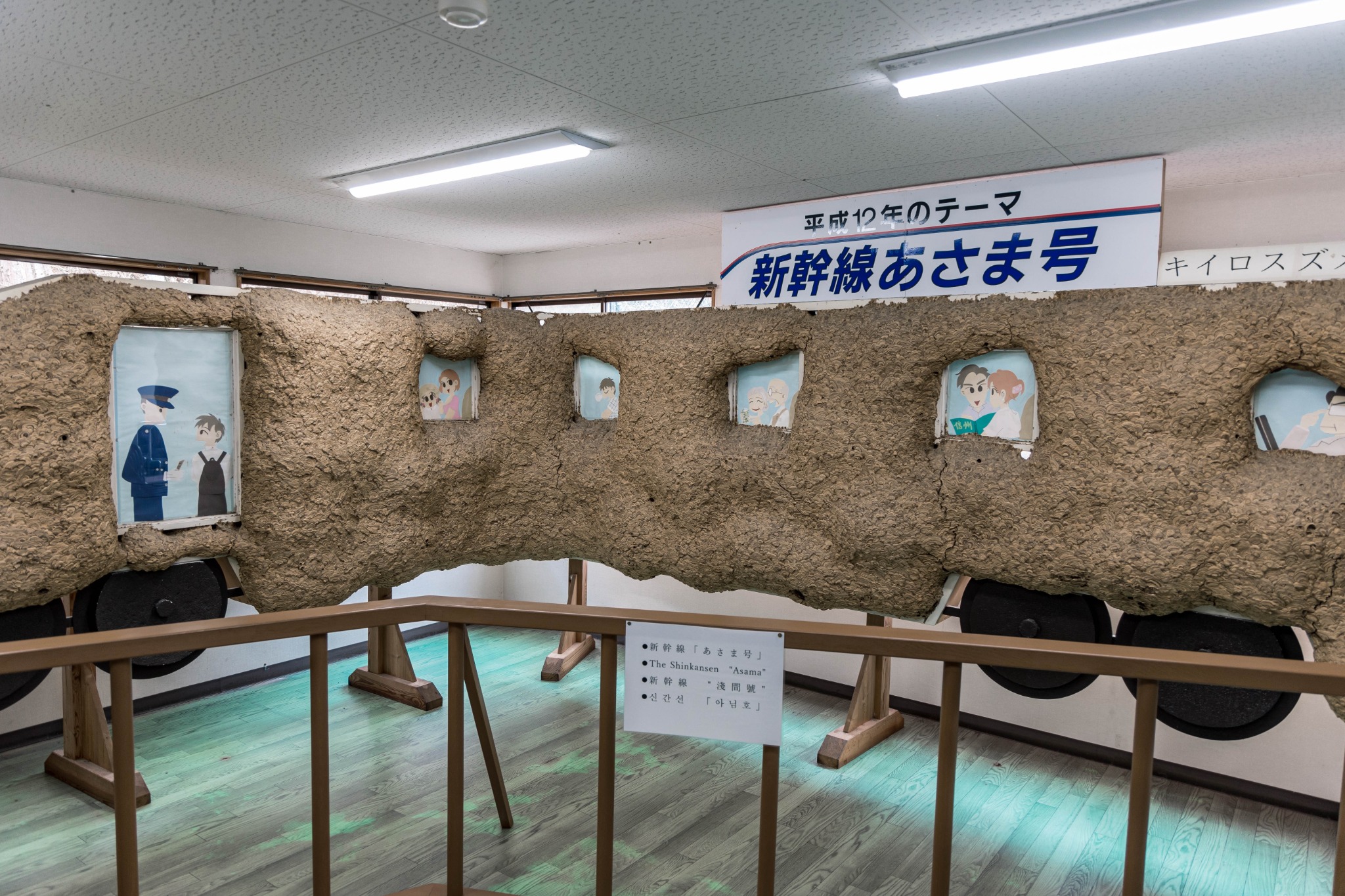
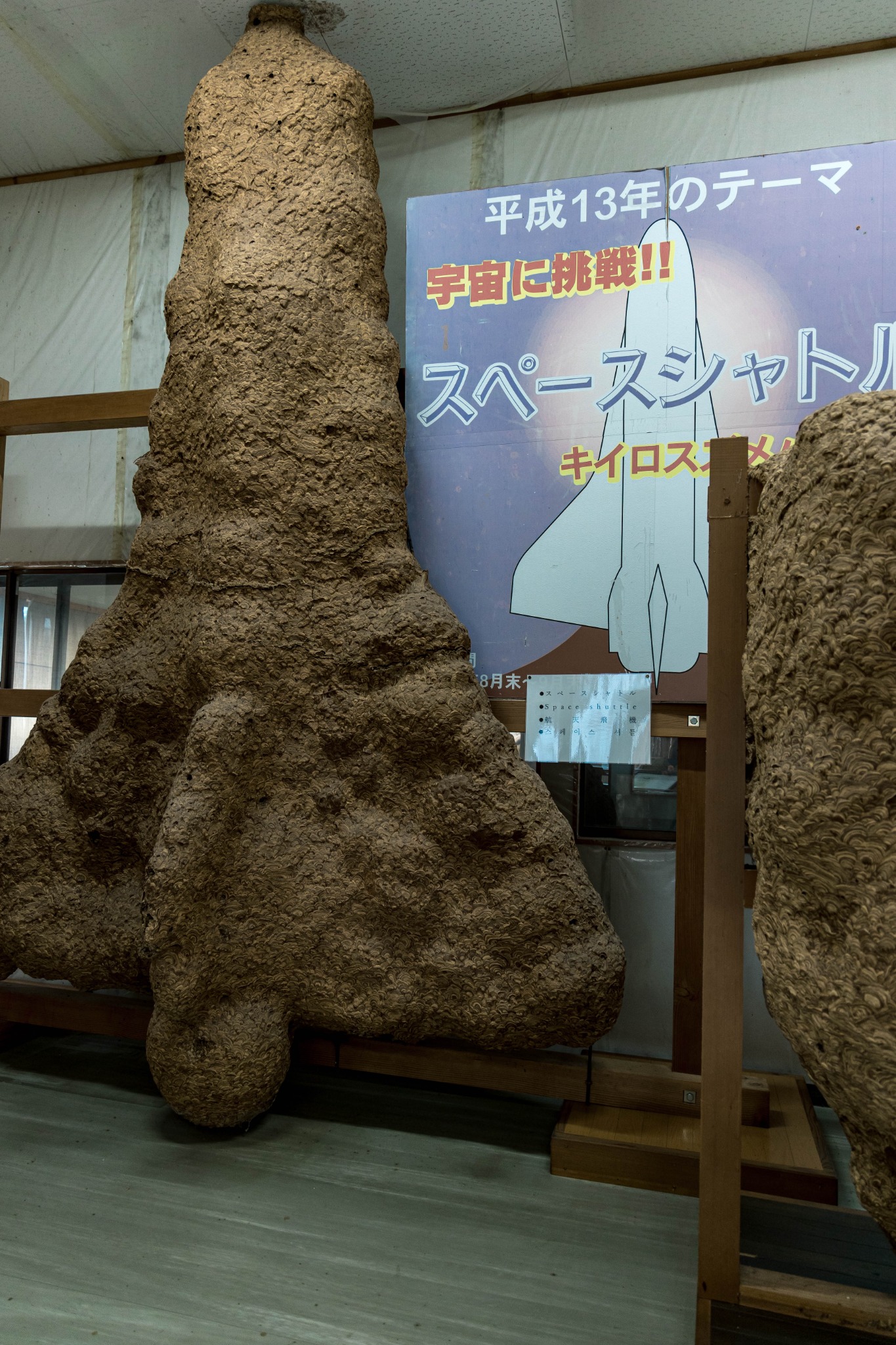
Other projects took the partnership further from anything a hornet might reasonably need. A Shinkansen had wheels, windows and illustrated passengers. A space shuttle stood upright nearby.
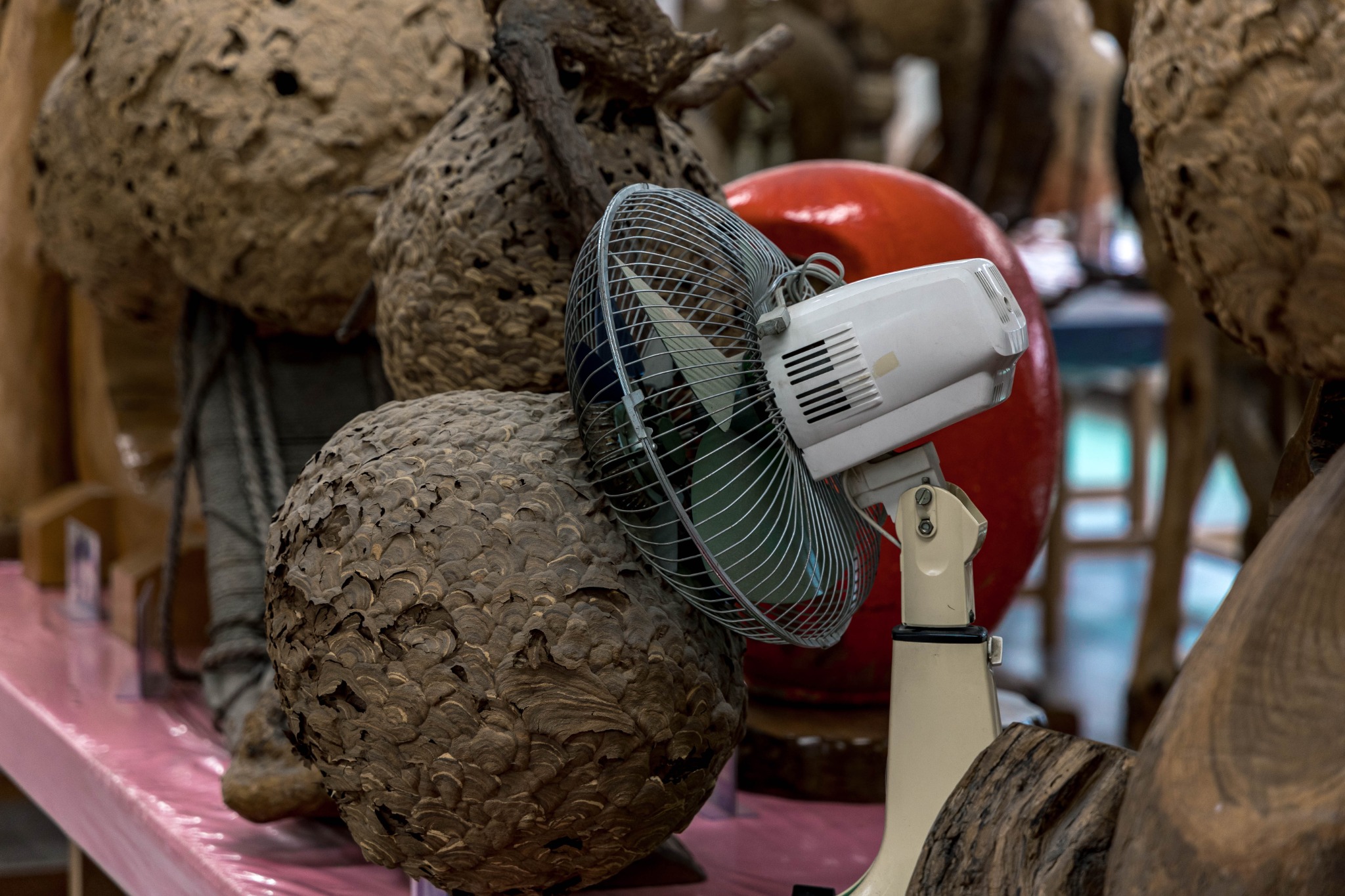
After those, an electric fan seemed almost modest. Its ordinary plastic housing and wire guard were still recognisable beside the nest. An appliance had become an exhibit without entirely losing the look of something you might have at home.
The familiar objects made the nests stranger, but they also made them easier to look at. A fan gave the eye a starting point. From there, it could follow the folds, ridges and small openings across the surface.
Then came a work that required rather more surface.
A mountain made of homes
Hachi Fuji is a Mount Fuji-shaped structure assembled from 160 hornet nests.
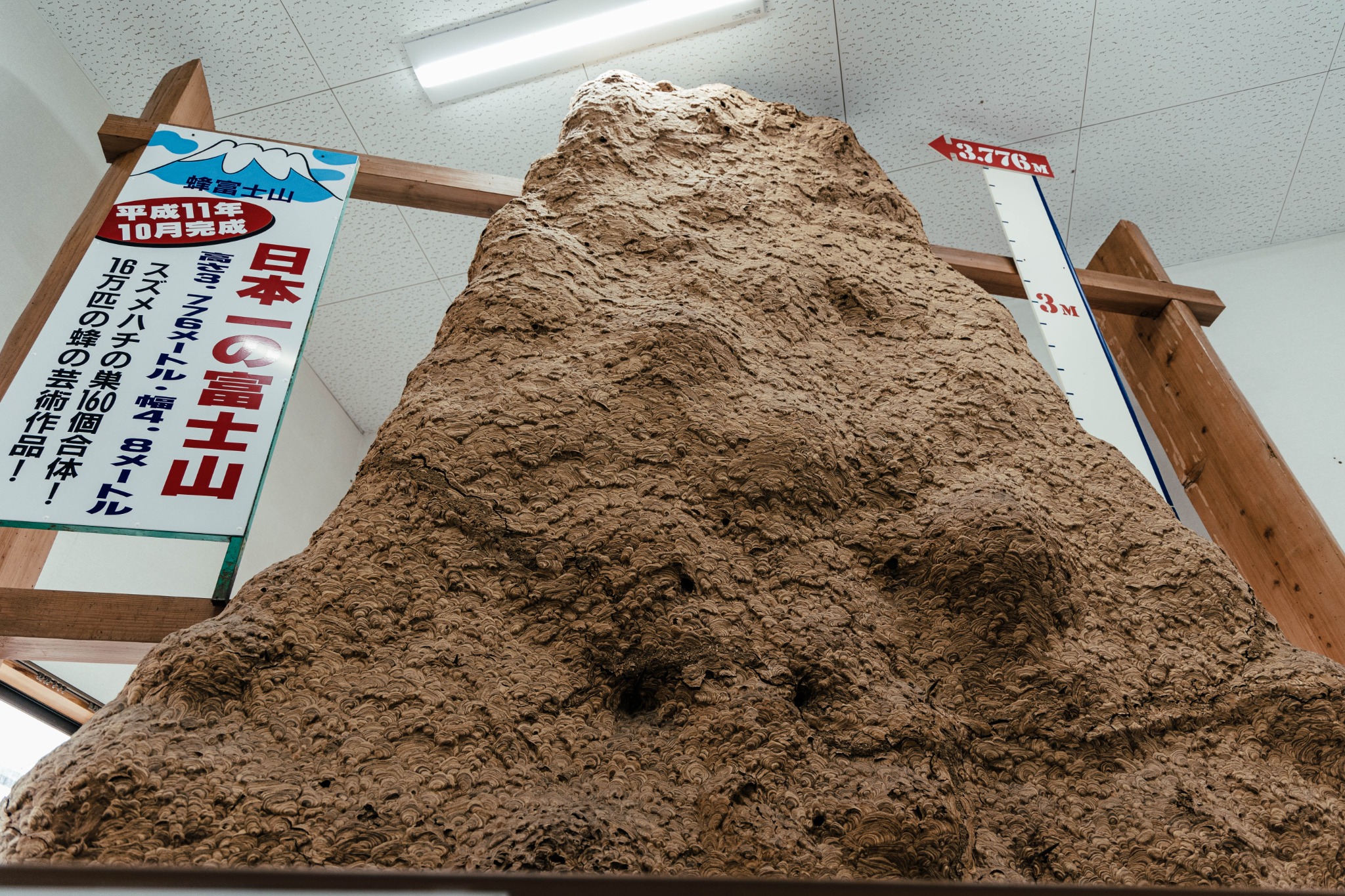
Nearly four metres high and 4.8 metres across its base, it brought the museum's collaboration to the scale of indoor geography. Guinness World Records recorded it in October 1999 as the world's largest hornets' nest, describing it as an artificially assembled composite estimated to have housed around 160,000 Japanese yellow hornets.
From a distance, the mountain shape was clear. Up close, it broke into the same intricate waves that had first attracted Shiozawa beneath his friend's eaves. The ambition had grown considerably; the reason for looking was still there.
Nearby: walnut soba at Furusato no Kusabue
Directly opposite Hachi Tengoku is Furusato no Kusabue (そば処ふるさとの草笛), a Shinshu soba restaurant that offers another local discovery on a more manageable scale.
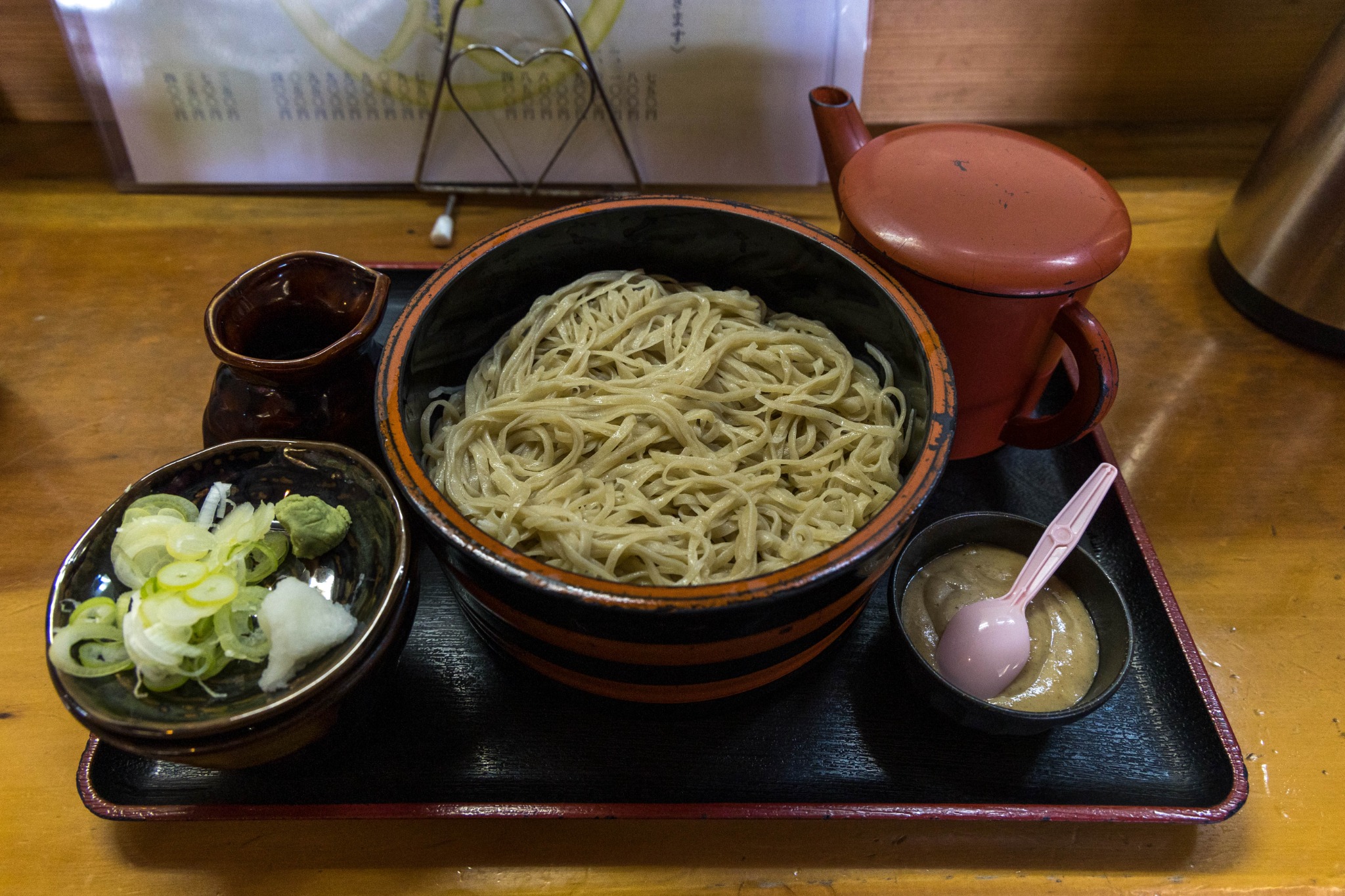
I ordered walnut soba: buckwheat noodles served with sweet walnut paste to mix into the dipping sauce.
Coming from outside Nagano, I had not expected walnuts to be involved. They made a very good case for themselves. They had home advantage. Nagano grows around 80 per cent of Japan’s walnuts, and Tōmi is one of its main growing areas.
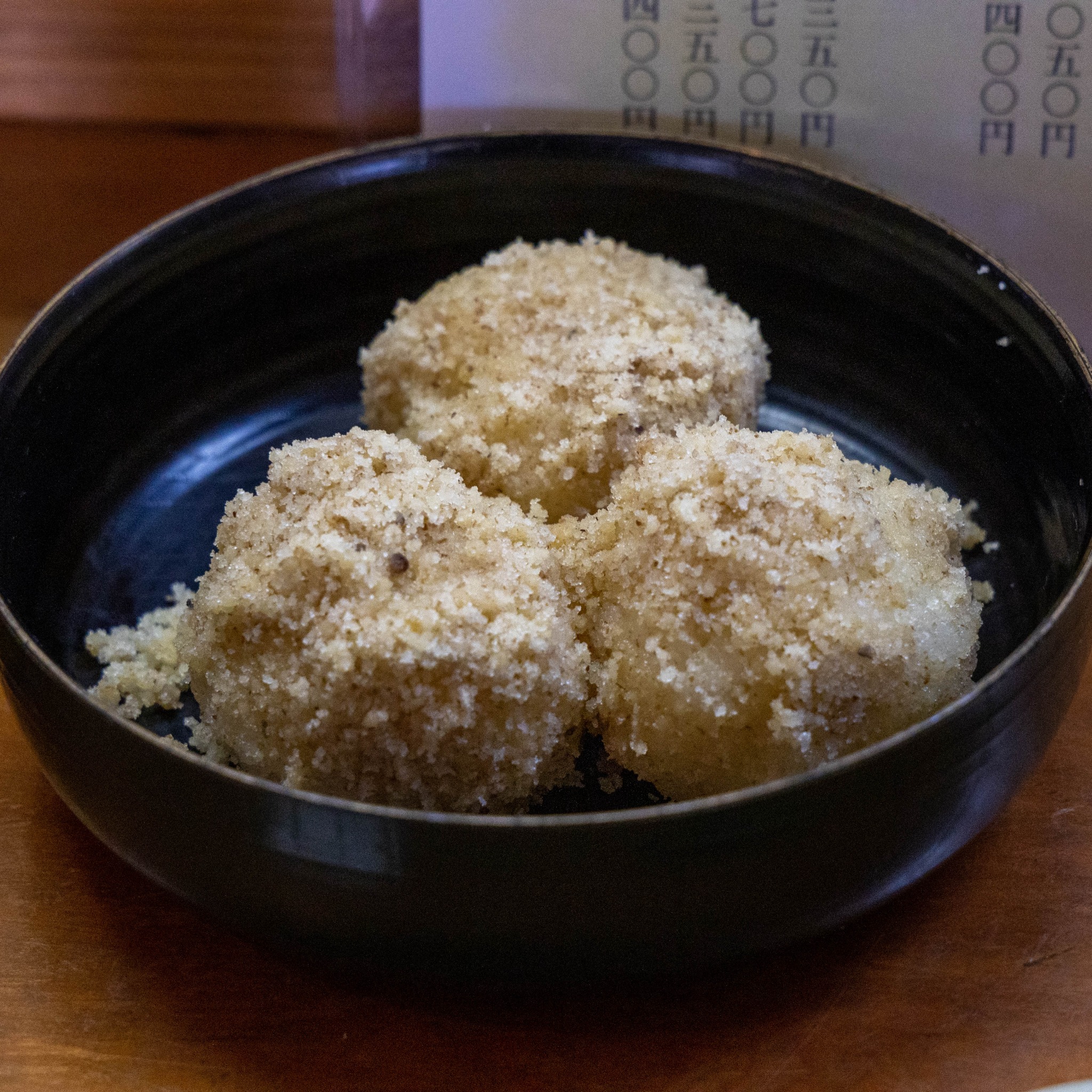
There was walnut ohagi, too. The museum had found plenty of uses for a hornet's nest; the restaurant across the road was doing quite well with walnuts.
Something sweeter to take home
There was honey to take home, too—made by honeybees, rather than the hornets responsible for the architecture.
I bought a jar of acacia honey called Zeitaku na Hitoshizuku (贅沢な一滴), “A Drop of Luxury.”
Its clean, clear sweetness made it one of the best things I brought back from the visit.
I left with a greater appreciation of hornets, and no plans to demonstrate it shirtless.
Visit this place
Location
Hachi Tengoku
435-1 Kazawa, Tōmi, Nagano 389-0514, Japan
Practical Information
- Place
- Hachi Tengoku (蜂天国)
- Opening hours
- 10:00–15:00
- Closing days
- Tuesdays and Wednesdays
- Admission
- Adults: ¥300; junior high school and high school students: ¥100; elementary school age and younger: free
- Nearest station
- Shigeno Station (Shinano Railway)
- Access
- Around 15–20 minutes on foot from Shigeno Station, or about 5 minutes by taxi. I remember the route being very quiet, with little along the way, so the walk felt longer than the distance might suggest.
- Parking
- Free parking available (30 standard vehicles; 10 large vehicles)
- Seasonal note
- The Tōmi tourism association says active nest-building can be viewed from August to October.
- Midday break note
- The Tōmi tourism association currently lists a 30-minute break beginning at 11:30, although this is not stated on Hachi Tengoku’s own hours page. Check before visiting.
- Official website
- Hachi Tengoku
Information last checked: August 25, 2026
Conversation
Comments
Review pending commentsComments are reviewed before appearing. The internet already contains enough unattended surprises.
Checking comments…
Comments are not available in this migration preview yet. Existing comments remain on the current site.
Leave a comment