Kamakura-gū Shrine: Let the Dish Take the Hit
The first thing I did at Kamakura-gū was throw a dish at a rock.
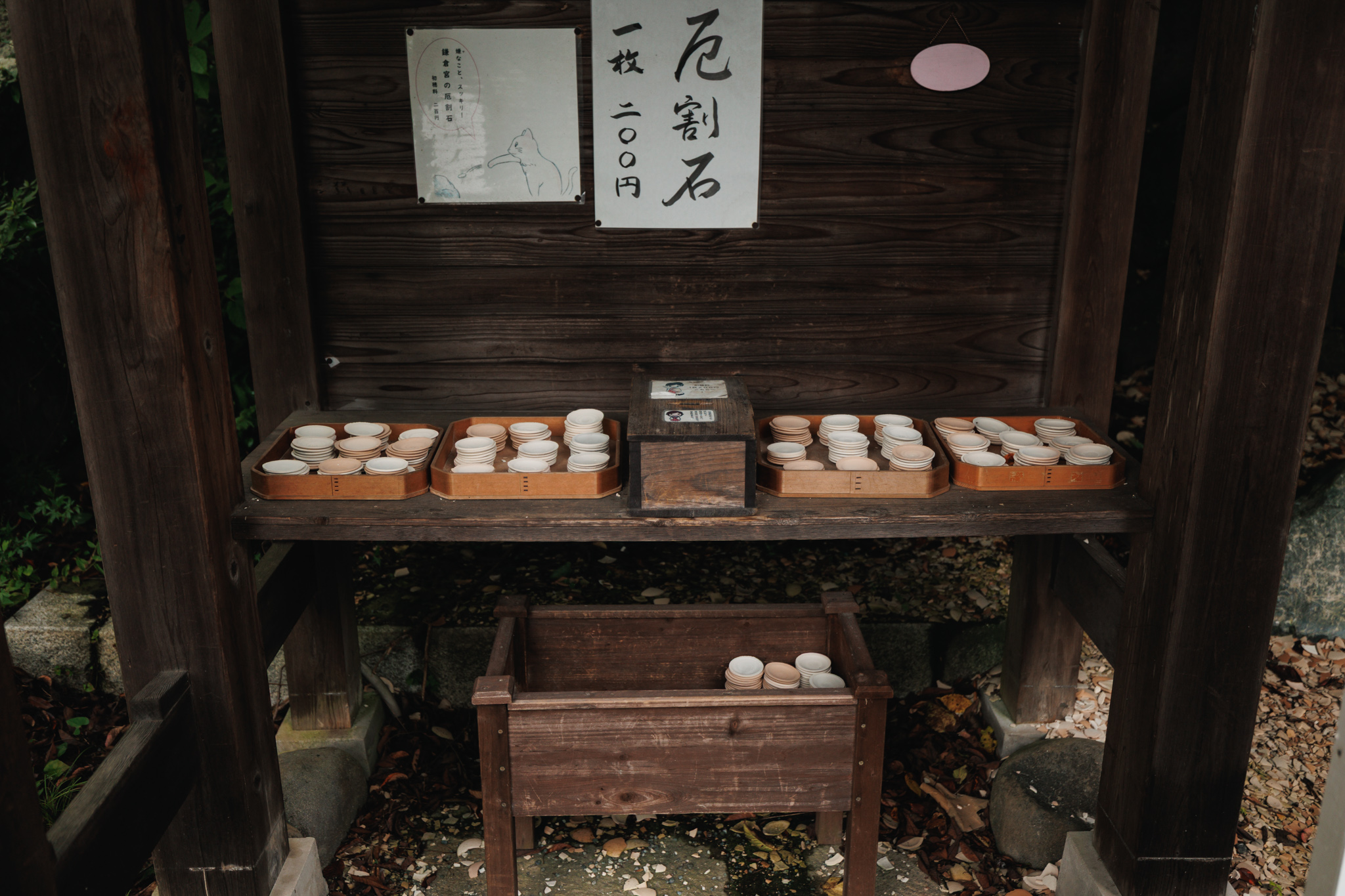
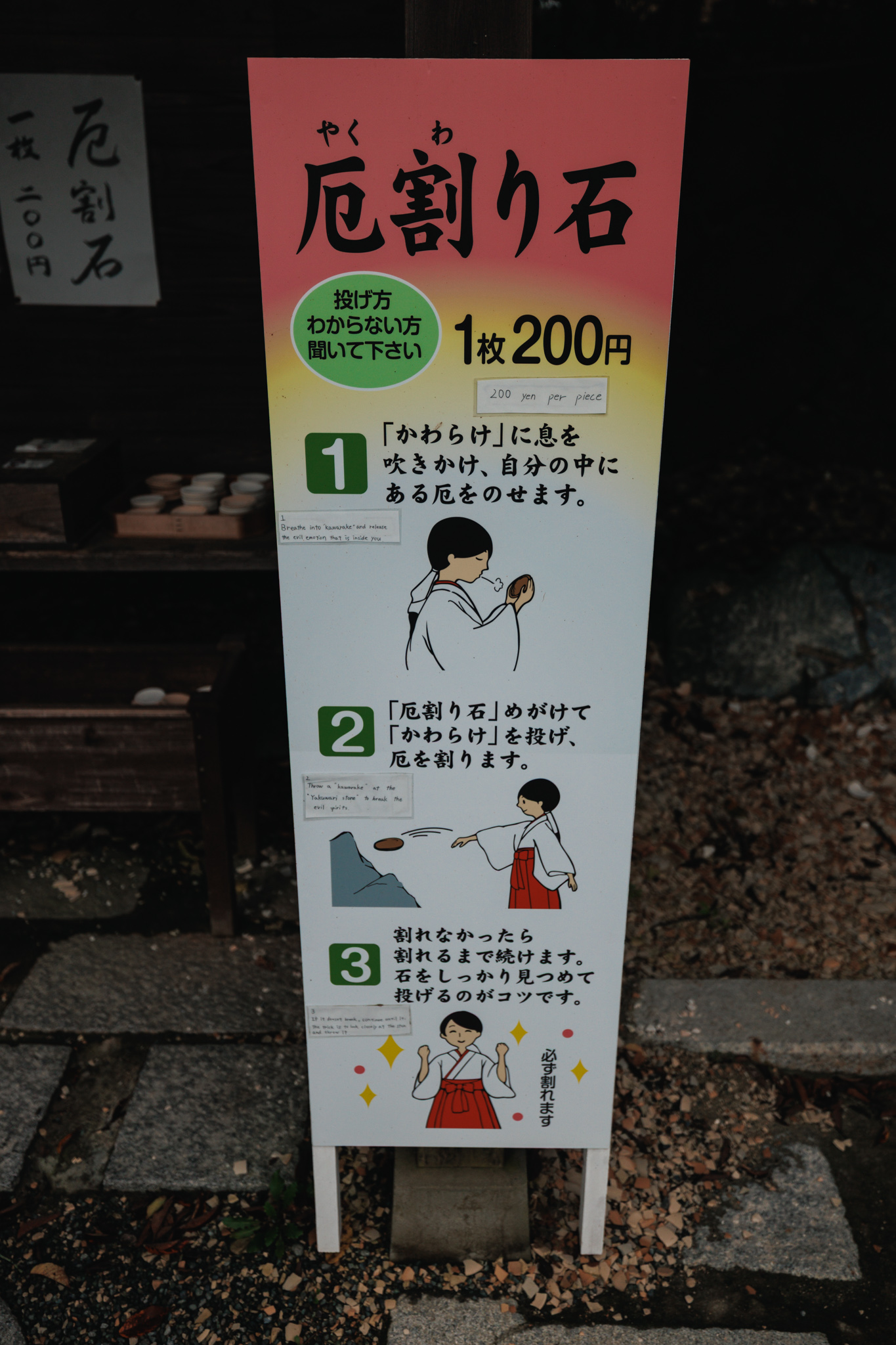
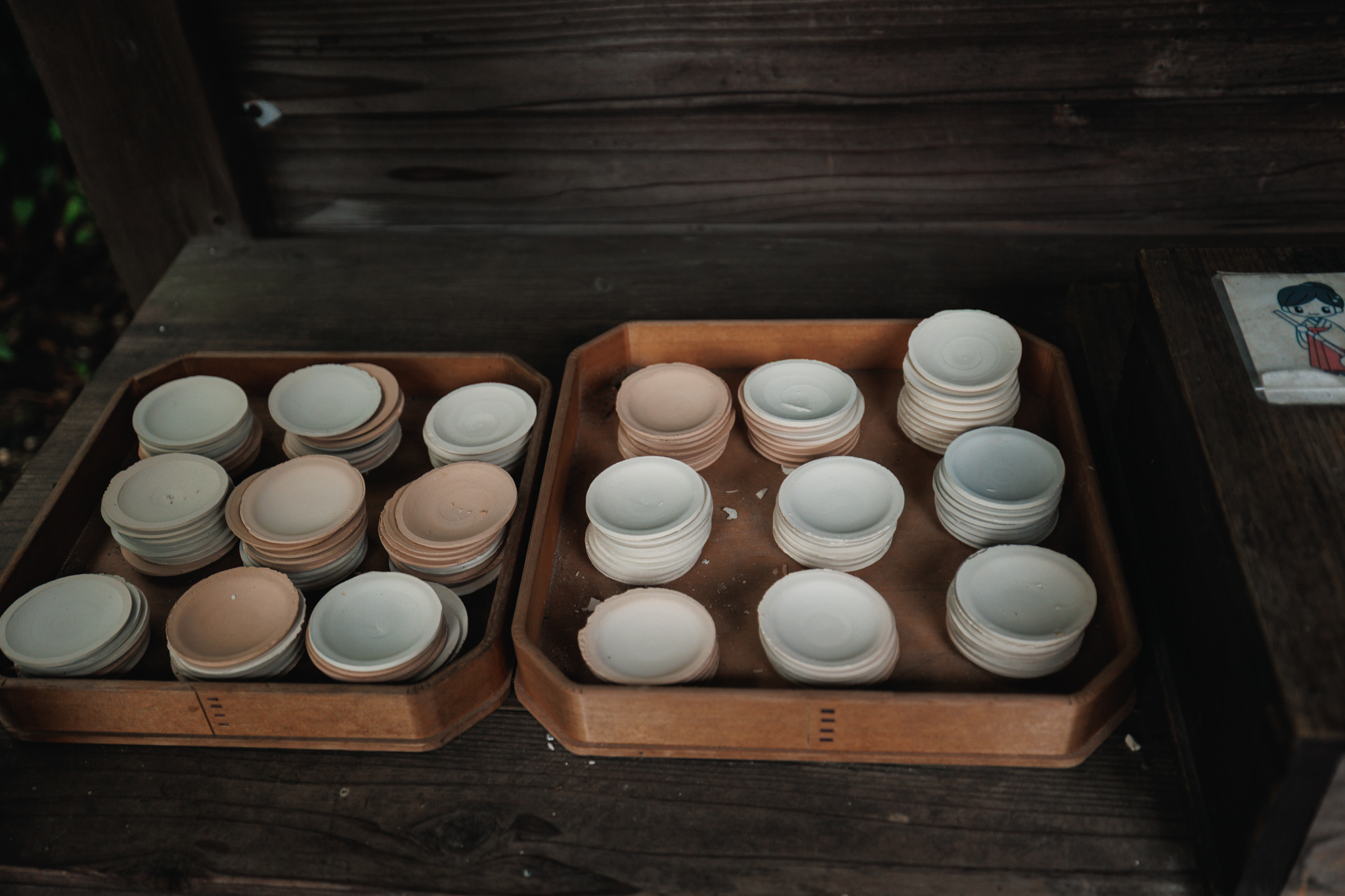
It costs 200 yen. In return you get a kawarake, a small unglazed clay dish, and a set of instructions. Breathe on the dish to move your bad luck into it. Throw it at the stone. The stone takes care of the rest.
The sign is reassuring on one point. If the dish does not break, you keep throwing until it does. It will, the sign adds, definitely break.
Mine broke on the first throw. I decided this said something about my aim rather than about how much bad luck I had been carrying.
Older guides give the price as 100 yen. Getting rid of bad luck, like everything else, costs more than it used to.
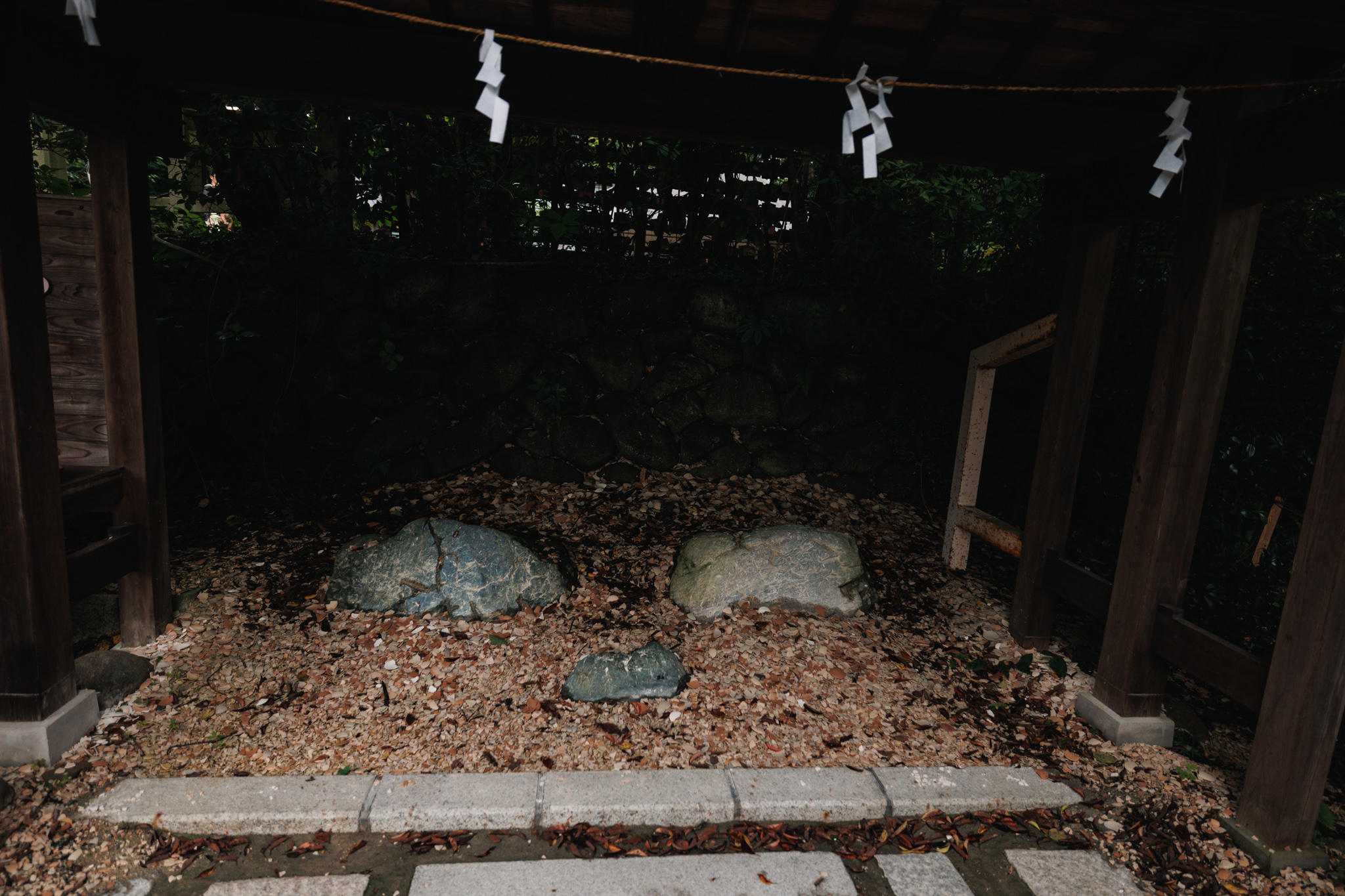
The dish-throwing only goes back to around the 1980s. The man the shrine was built for died more than six centuries earlier, in a cell behind the main hall.
A lion in his helmet
He was Prince Morinaga (also read Moriyoshi), a son of Emperor Go-Daigo. Before he was twenty, he became head of the Tendai school, one of the most powerful Buddhist establishments in Japan. A few years later he gave it up to go to war. As career changes go, it was a big one, even for the fourteenth century.
The war was his father’s campaign against the Kamakura shogunate, the military government that had ruled Japan from this city for nearly 150 years. According to the shrine, the prince went into battle with a small lion’s head charm tucked inside his helmet.
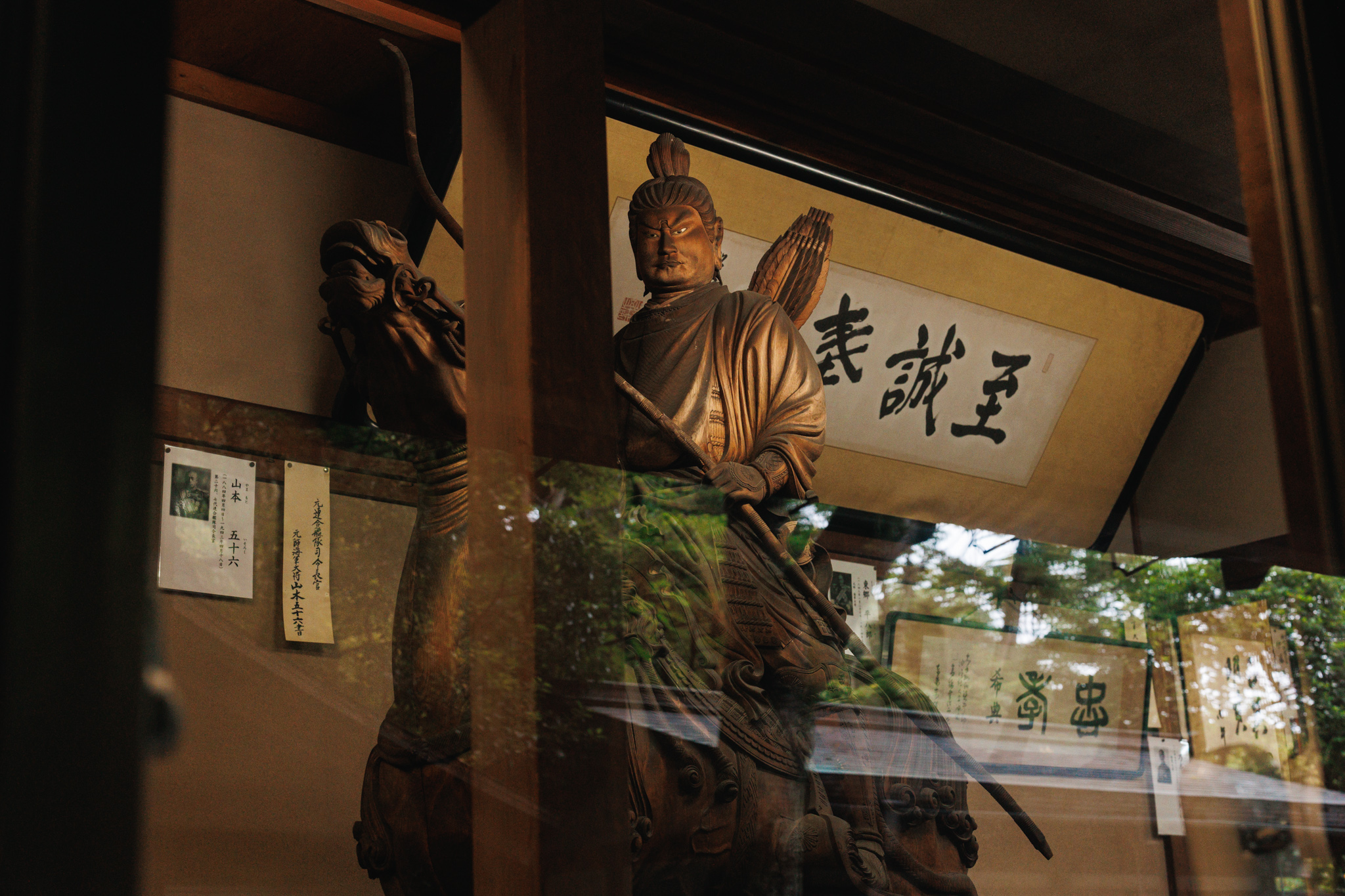
In 1333, enemy troops closed in on his stronghold at Yoshino, in the mountains south of Nara. According to the Taiheiki, a fourteenth-century war chronicle, one of his retainers, Murakami Yoshiteru, put on the prince’s armour, climbed a gate tower, announced himself as the prince and took his own life in full view of the attackers. By the time they realised they had the wrong man, the prince had escaped.
Later that year, the shogunate fell.
No stand-in
The prince soon found that winning was the easy part. He fell out with Ashikaga Takauji, the general who had done much of the fighting and now wanted power of his own. In 1334, Go-Daigo’s government had the prince arrested. He was then sent to Kamakura, the city whose government he had helped bring down.
He spent about nine months in custody there. Tradition places his cell in the hillside behind what is now the main hall. Some historians think the real prison was more likely a plastered storehouse than a cave. The shrine shows visitors the cave.
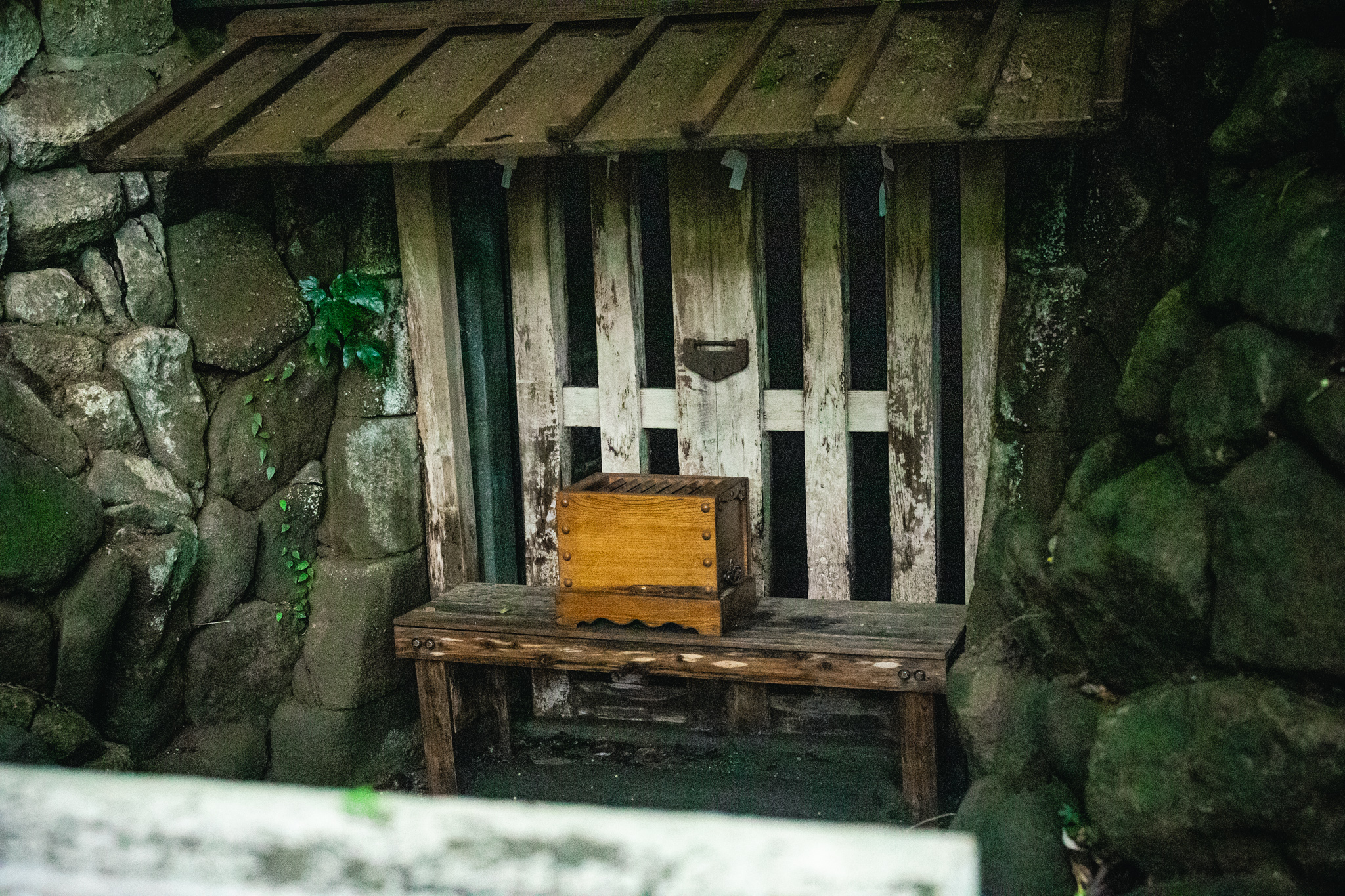
In the summer of 1335, the heir of the Hōjō, the family that had run the shogunate, marched on Kamakura with a rebel army, and Takauji’s brother Tadayoshi prepared to leave the city. Before he went, he had the prince killed.
The Taiheiki describes the end as well. The prince caught the assassin’s blade in his teeth and bit off the tip. When the assassin took his head, the story goes, it still held the blade, eyes open. The assassin threw it into a thicket and fled. Monks from a nearby temple later buried it. The prince was not yet thirty.
This time, no one put on his armour.
The name on the stone
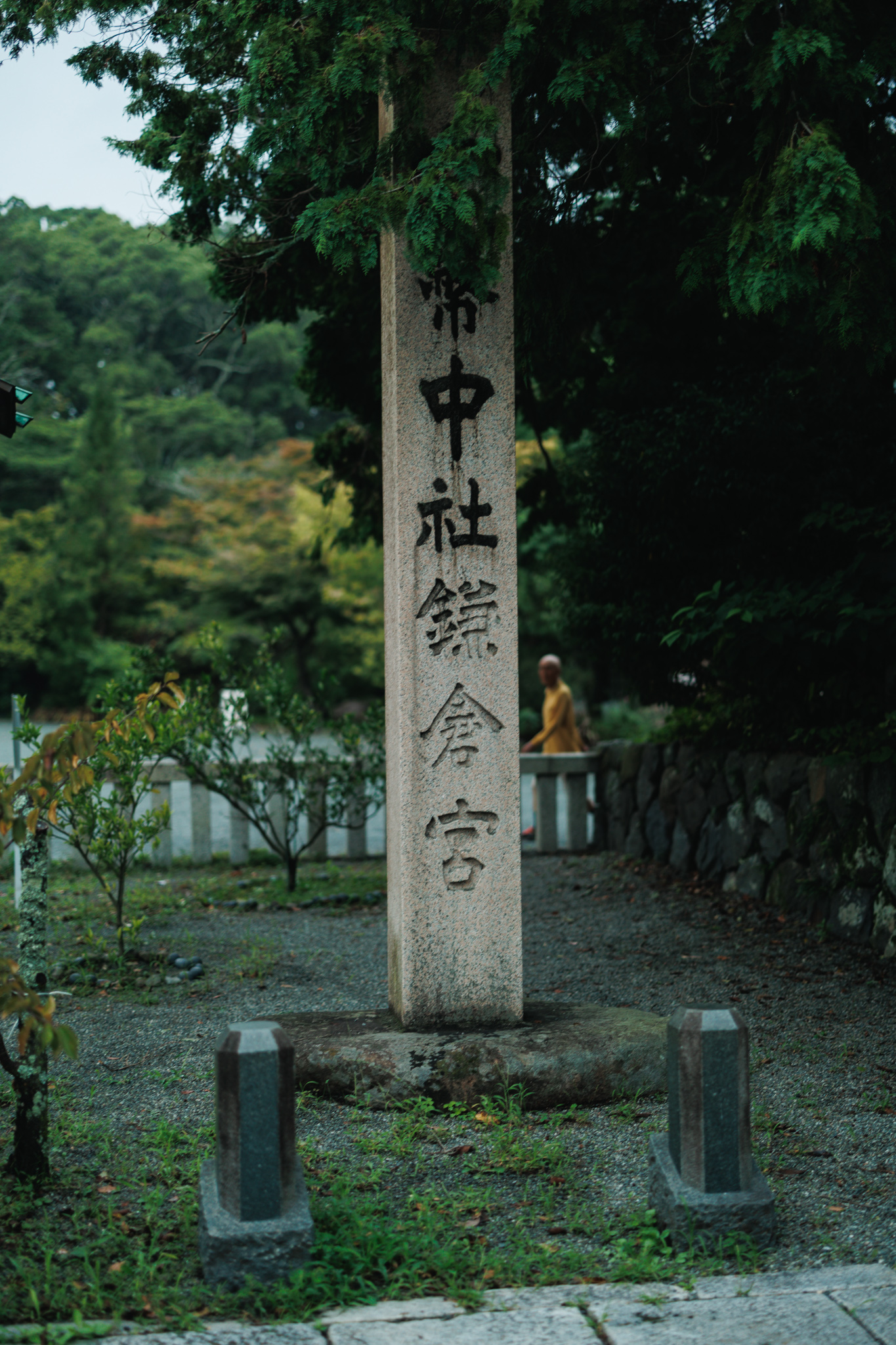
In 1869, Emperor Meiji ordered a shrine to be built here and gave it its name himself: Kamakura-gū.
For a new government keen to celebrate loyalty to the throne, a prince who had fought and died for his father’s cause made an ideal figure, whatever his father had thought of him at the time. He had spent his war trying to bring Kamakura down. More than five centuries later, he was given its name.
Locals still often call it Ōtōnomiya, the title the prince was known by. The name is thought to come from the Great Pagoda at Hōshōji, near which he had his monastic quarters.
Still standing in
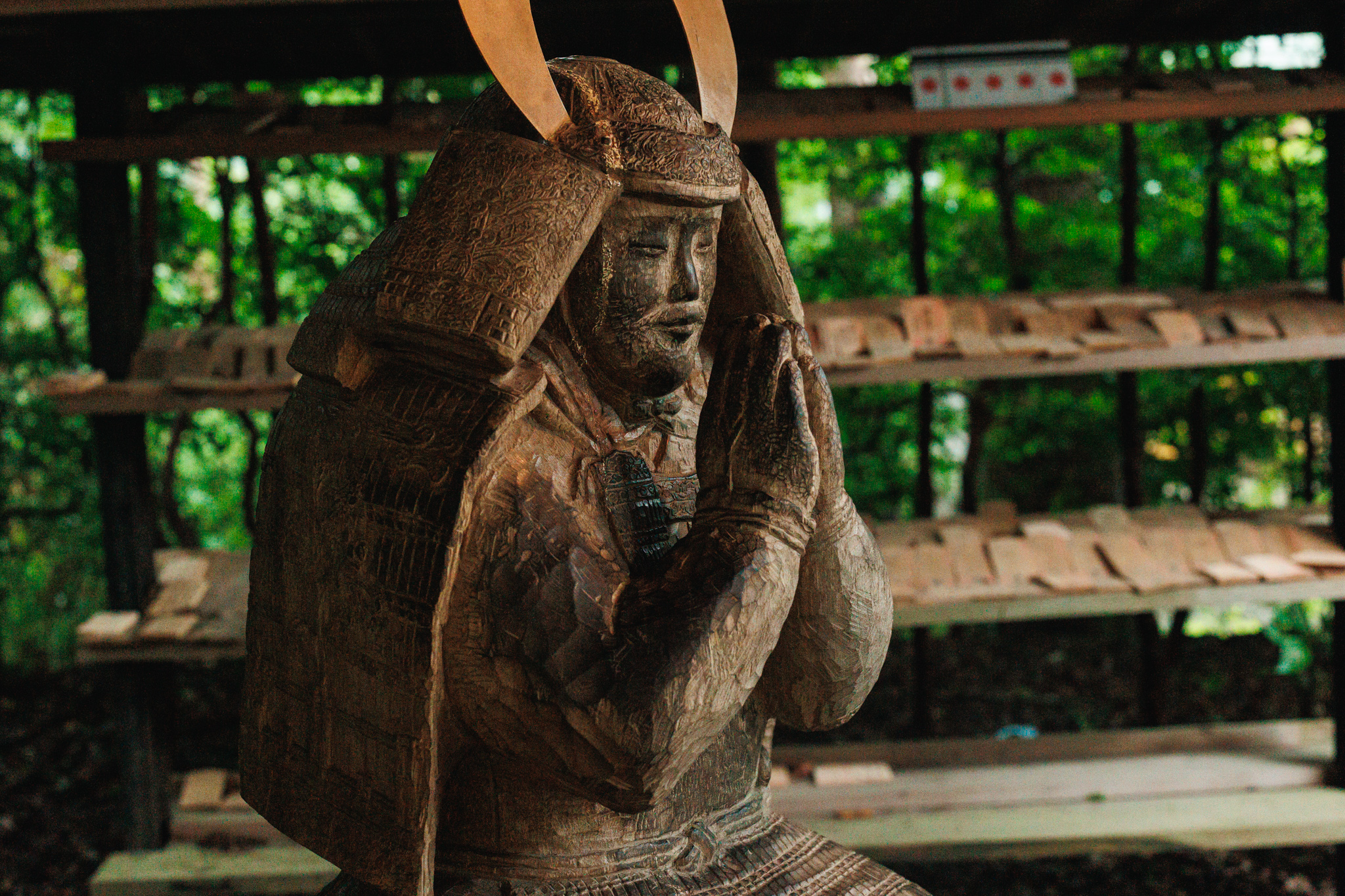
Murakami Yoshiteru is here too. Beside the worship hall sits a statue of him, carved in 2004 from a 103-year-old zelkova that grew in the shrine grounds. It is known as the Nade-migawari, the stroking stand-in. Rub the part of him that matches the part of you that hurts, and he takes it on.
Nearly seven hundred years after Yoshino, he is still standing in for other people.
These days he does it sitting down.
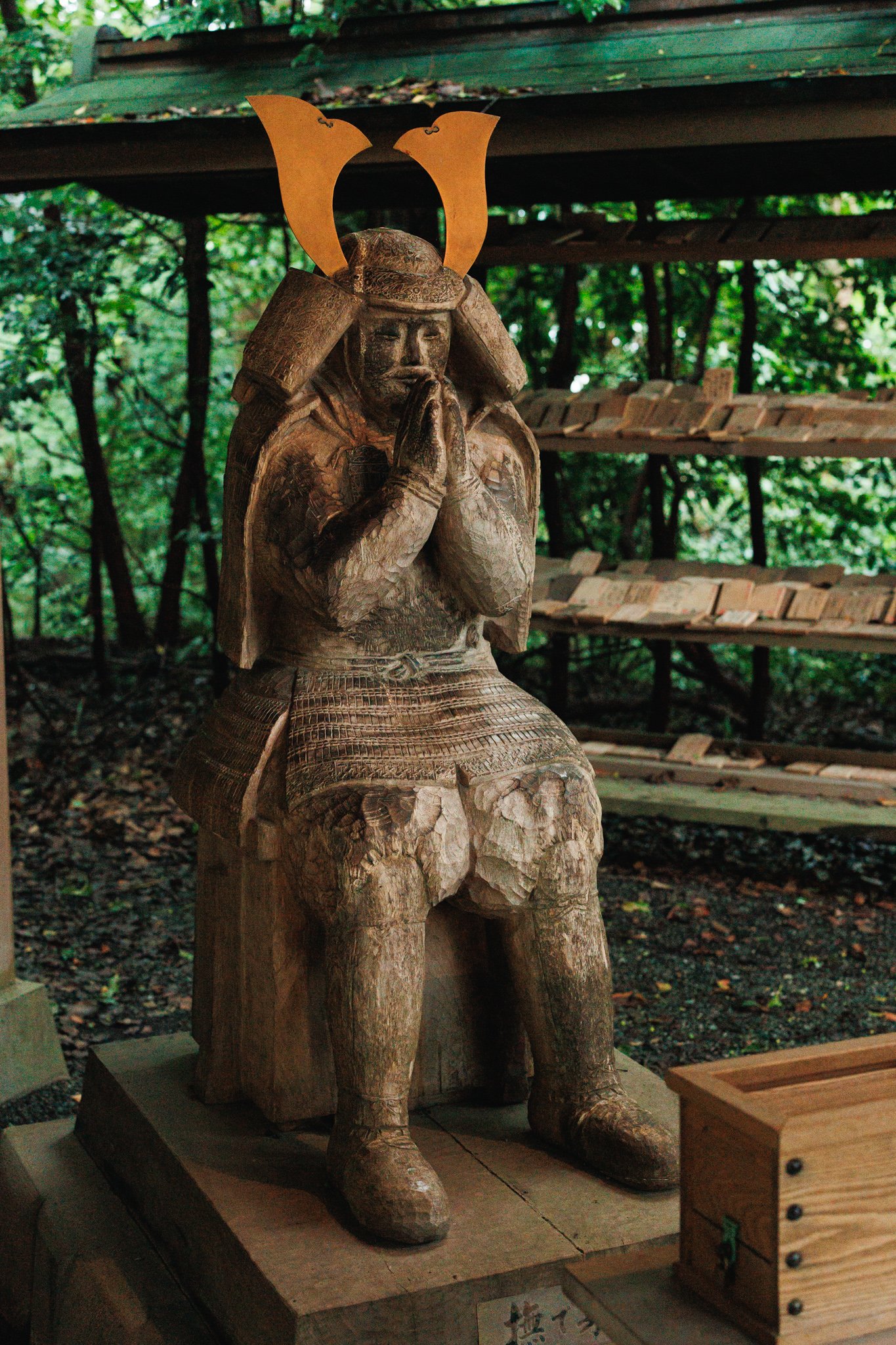
Wood keeps no records, but it does keep count. The places people rub most have gone dark: the face, the hands, the stomach and the feet. Taken together, the statue is a kind of anonymous health survey of everyone who has come before. Some of the concerns about the face, I suspect, are not strictly medical.
I rubbed him too, and added my small share to the data.
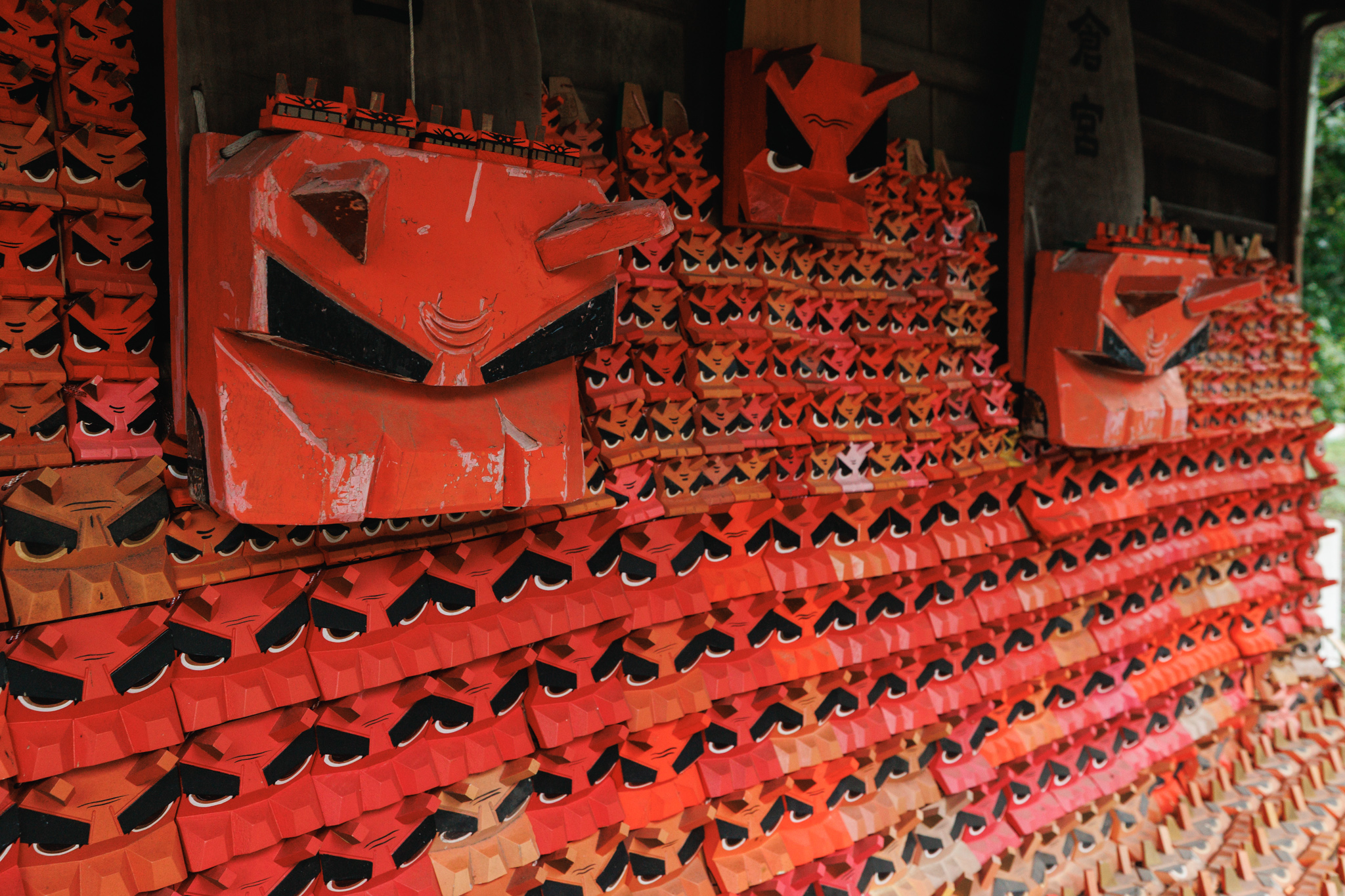
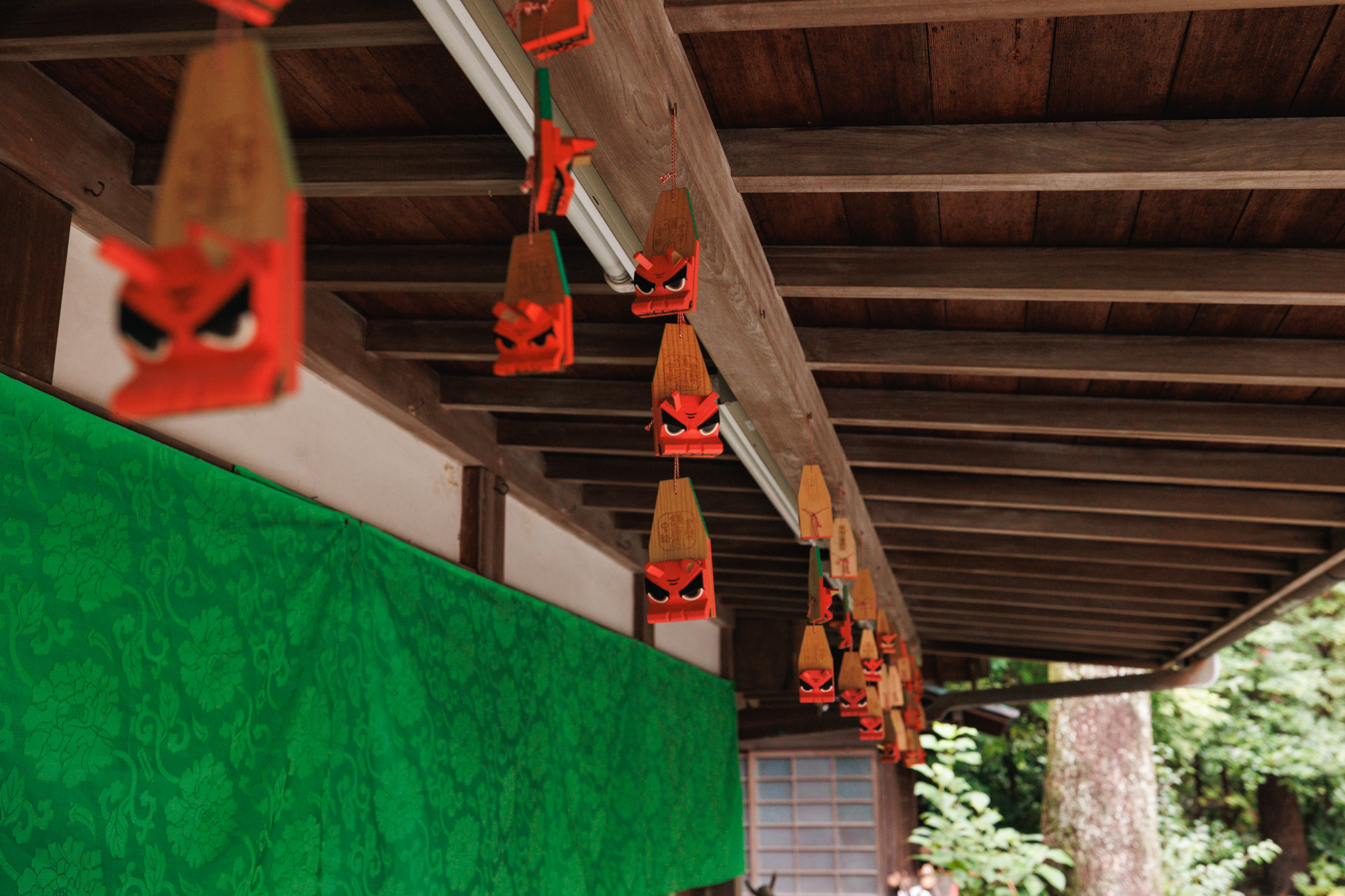
The lion from the prince’s helmet has also found work. Lion heads are said to eat misfortune, and at Kamakura-gū they appear on amulets, on votive plaques and, stacked in their hundreds, along at least one wall. The prince’s charm has had a longer career than the prince.
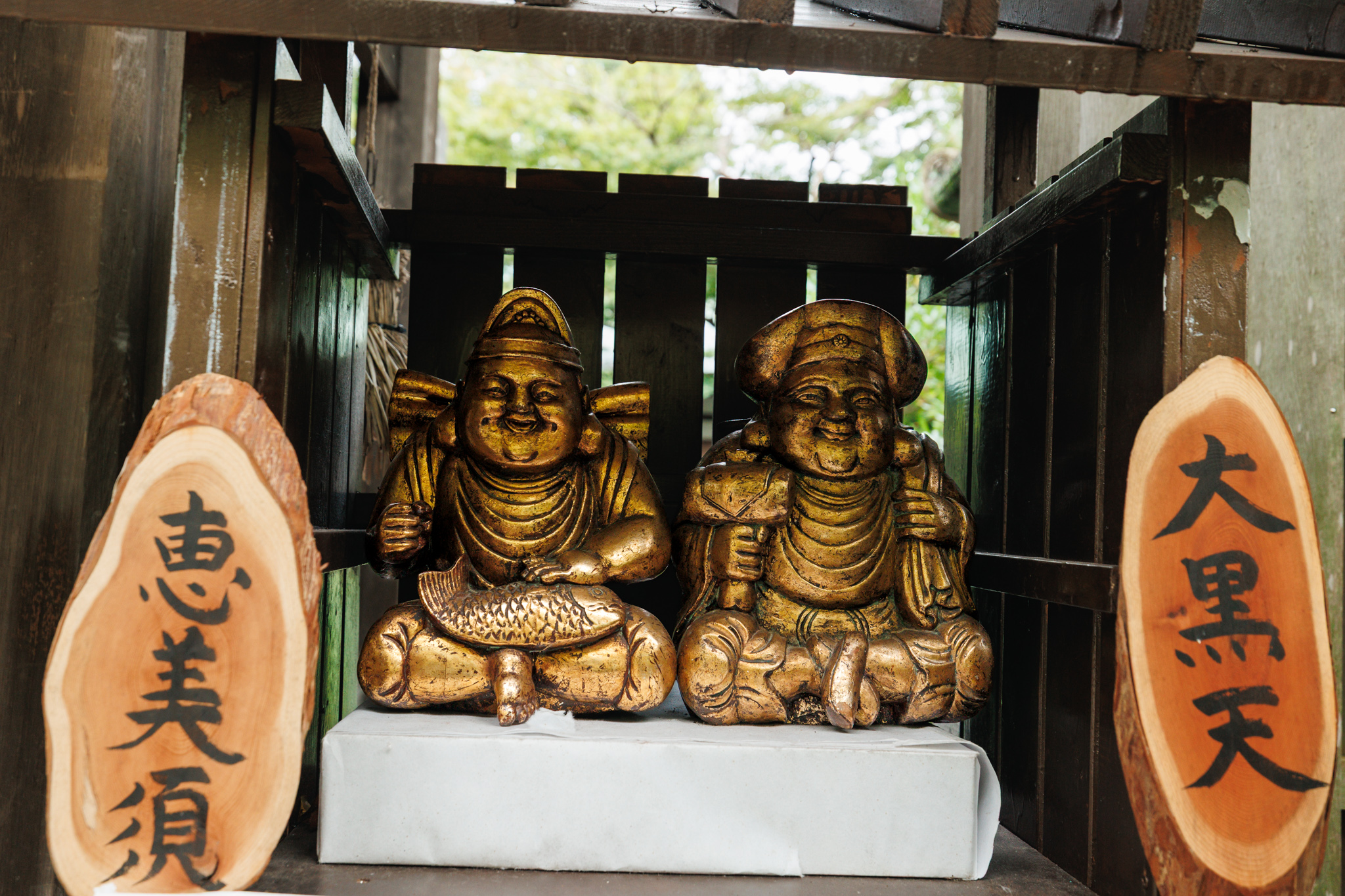
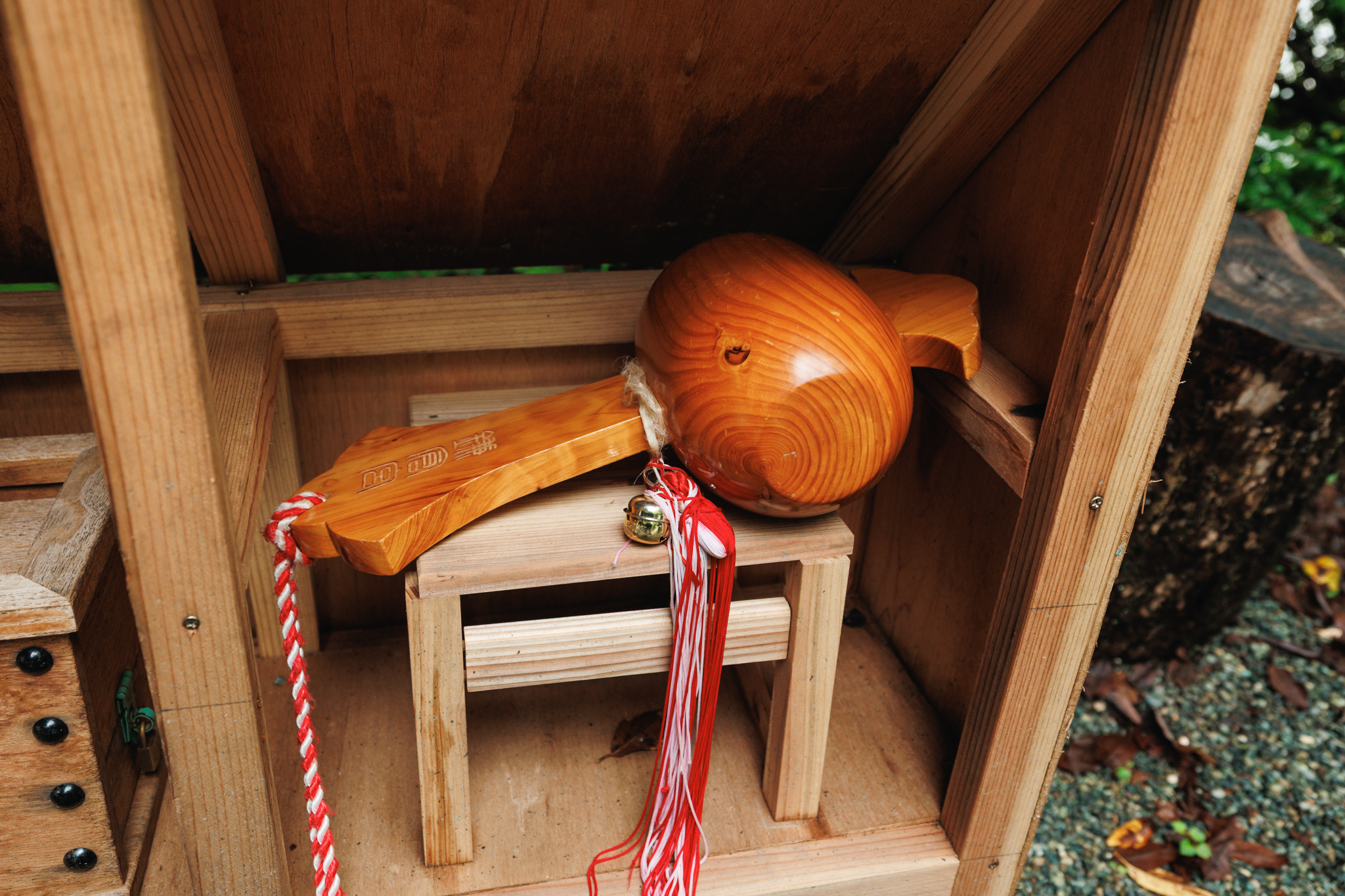
Not everything here takes something away. Beside gilded figures of Ebisu and Daikoku, two gods of good fortune, lies a large wooden mallet for visitors to pick up. Daikoku’s magic mallet is supposed to produce whatever you wish for when you shake it. Daikoku holds on to his own, a much smaller one.
I gave the big one a shake. Nothing came out, but I still had the journey home to think about.
Getting home
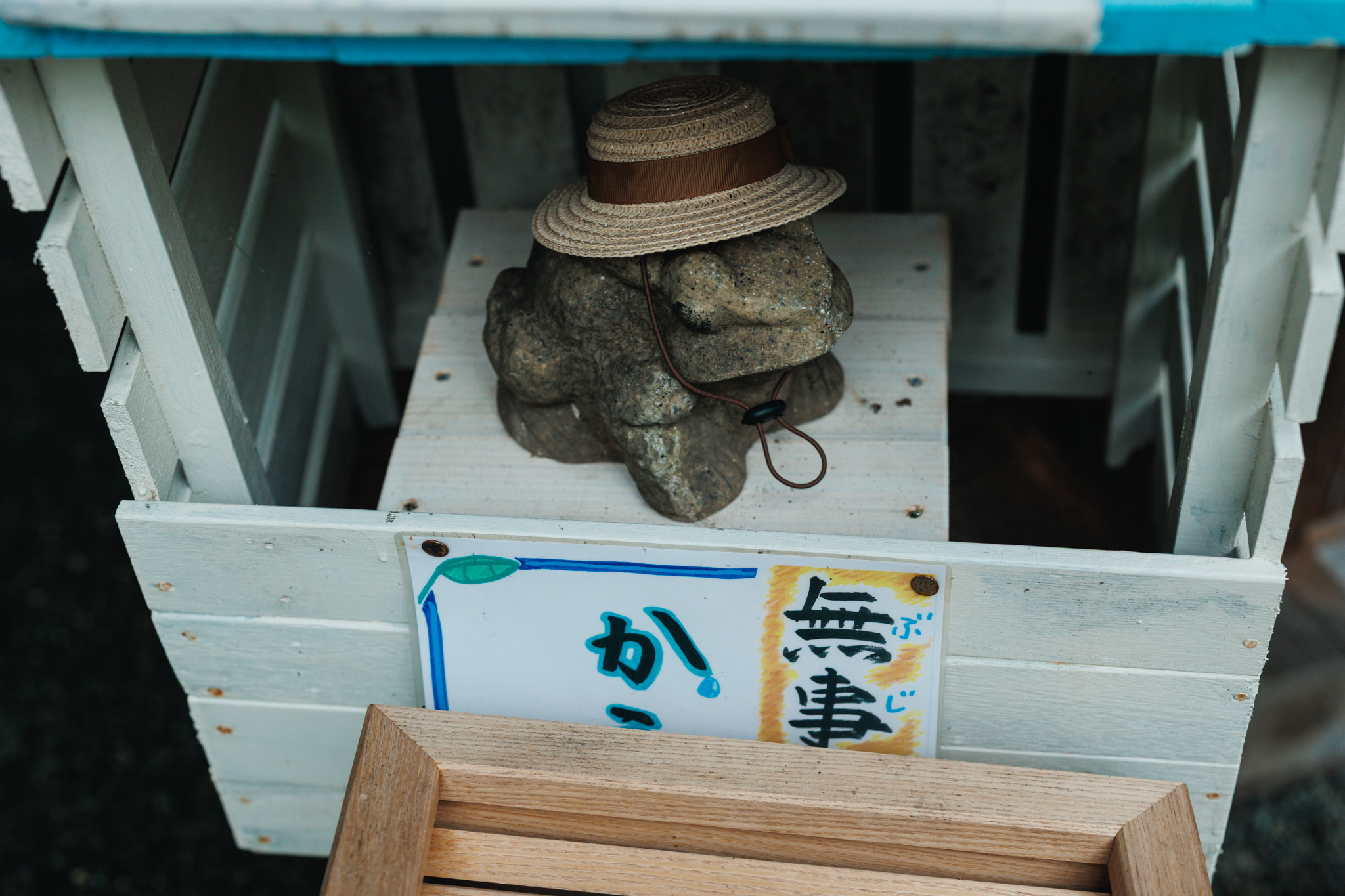
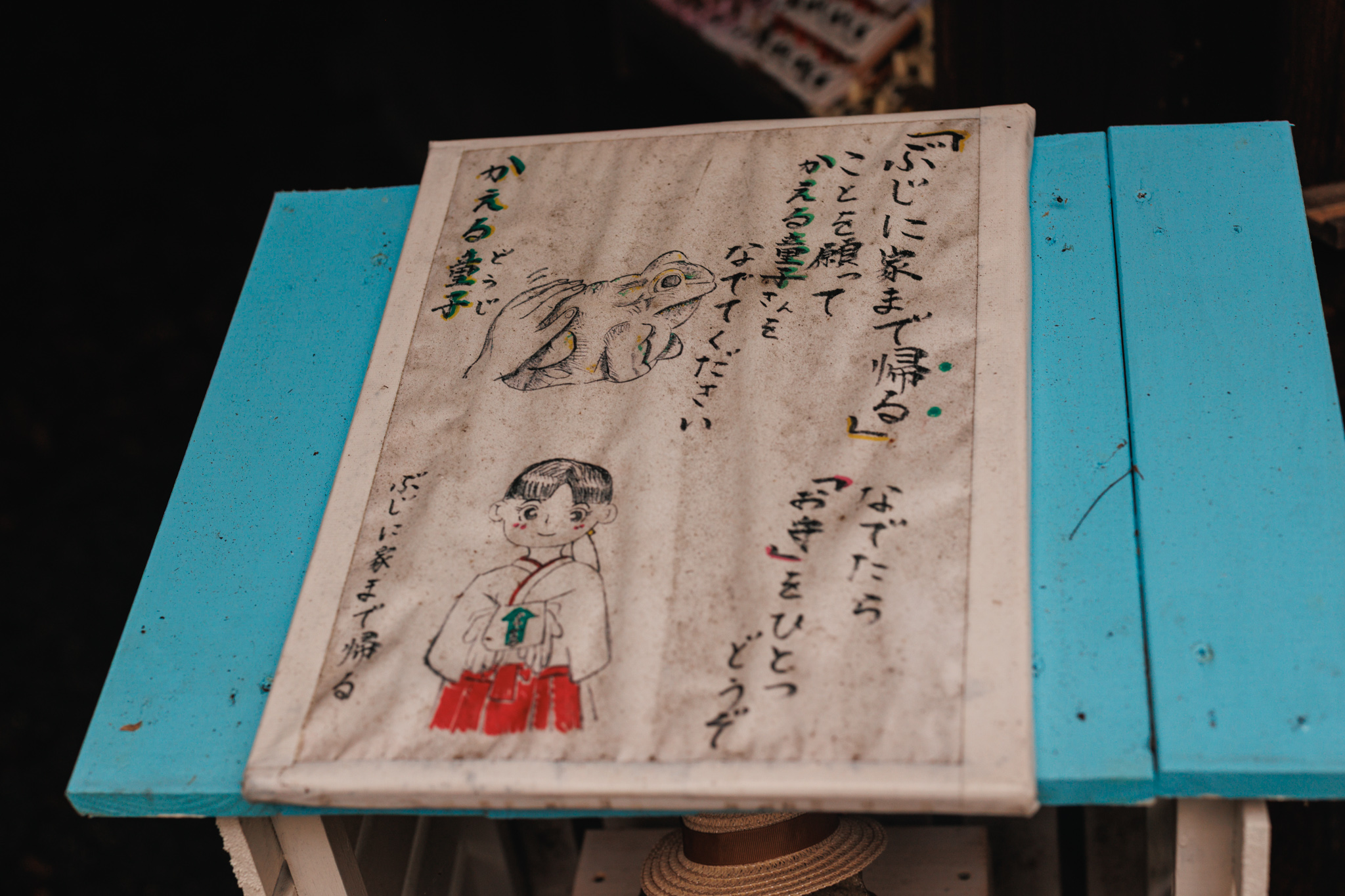
On the way out sits a stone frog in a straw hat, which is held on with a chin strap. The Japanese word for frog, kaeru, sounds the same as the word for going home, and a hand-painted sign asks visitors to stroke the frog so that they get home safely.
I stroked the frog.
A clay dish for bad luck. A lion for whatever the dish missed. A wooden warrior for aches and pains. A frog for the road. At Kamakura-gū, something is always ready to take the hit.
The prince was brought to Kamakura and never went home.
Everyone else gets a frog.
Location
Place
Kamakura-gū Shrine (鎌倉宮)
At the terminus of the Keikyū bus to Daitōnomiya (大塔宮) from the east exit of Kamakura Station. About 25 minutes on foot from the station (about 1.9 km).
154 Nikaidō, Kamakura, Kanagawa 248-0002, Japan
Practical Information
- Hours
- Grounds open at all times. Shrine office 9:00–16:00.
- Paid area
- Treasure hall, garden and the cell: 300 yen (junior high school age and over), 150 yen (elementary school). About 9:30–16:30 (until 16:00 in December and January); last entry 30 minutes before closing. The tourist association’s Japanese page lists 9:00–16:00 instead; check with the shrine if arriving near opening or closing.
- Bad-luck stone
- 200 yen per dish (as posted in September 2026)
- Events
- Prince Morinaga Festival on 23 July; annual festival on 20 August; Kamakura Takigi Noh in early October
- Visitor note
- An active shrine. The cell is inside the paid area behind the main hall.
- Official website
- Kamakura-gū
Information last checked: September 29, 2026
Conversation
Comments
Review pending commentsComments are reviewed before appearing. The internet already contains enough unattended surprises.
Checking comments…
Comments are not available in this migration preview yet. Existing comments remain on the current site.
Leave a comment