Kōsokuji: The Temple Named After Its Jailer
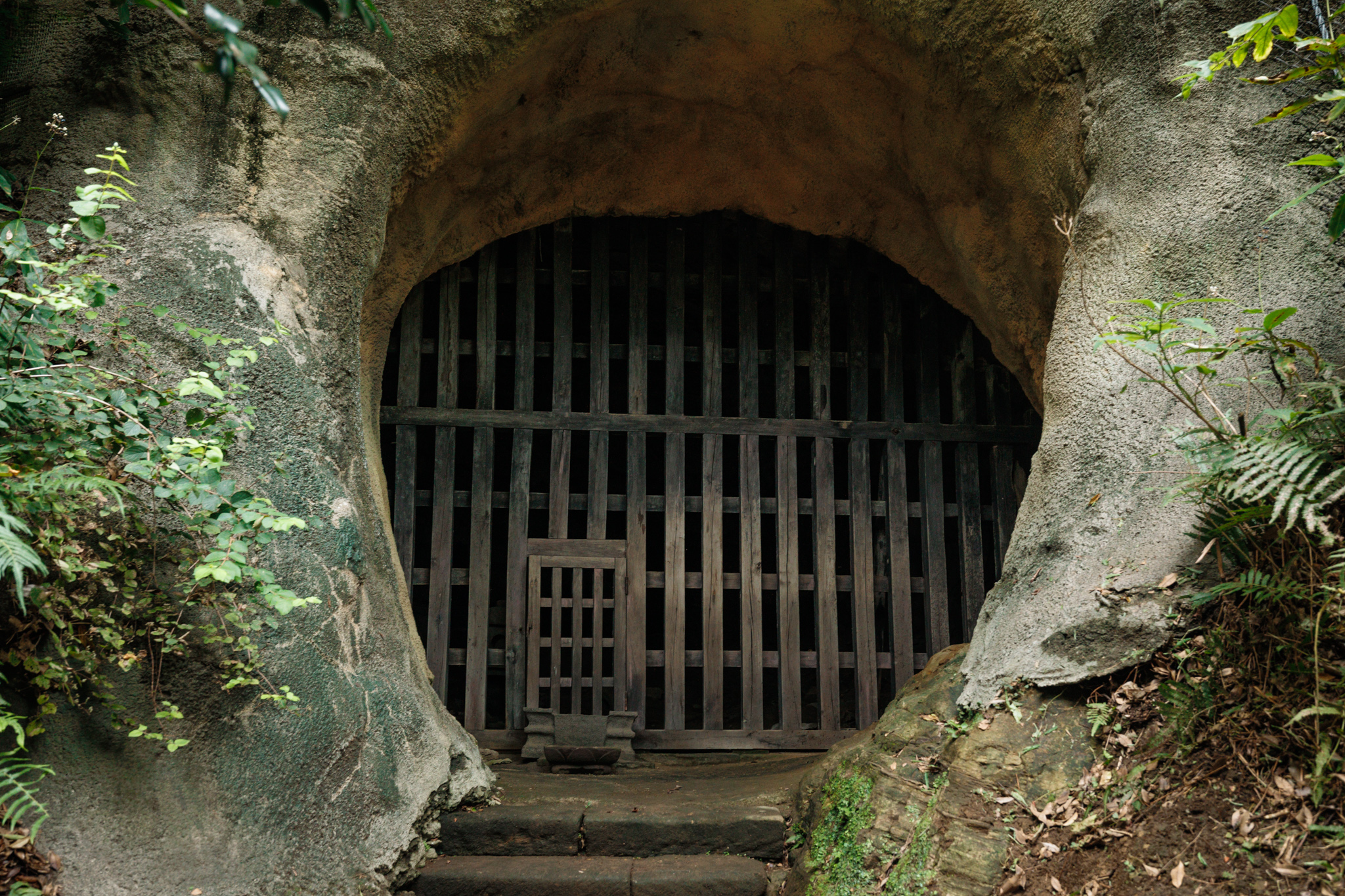
“Tomorrow I leave for Sado,” the Buddhist monk Nichiren wrote in the autumn of 1271. “Tonight, in this cold, I keep imagining what it is like inside that cell, and it pains me.”
He was writing to his disciple Nichirō. Nichiren was being exiled to the island, out in the Sea of Japan. Nichirō was being held in an earthen cell in Kamakura.
The cell is said to be still there, cut into a hillside in Hase, in the grounds of a temple.
Through the gate
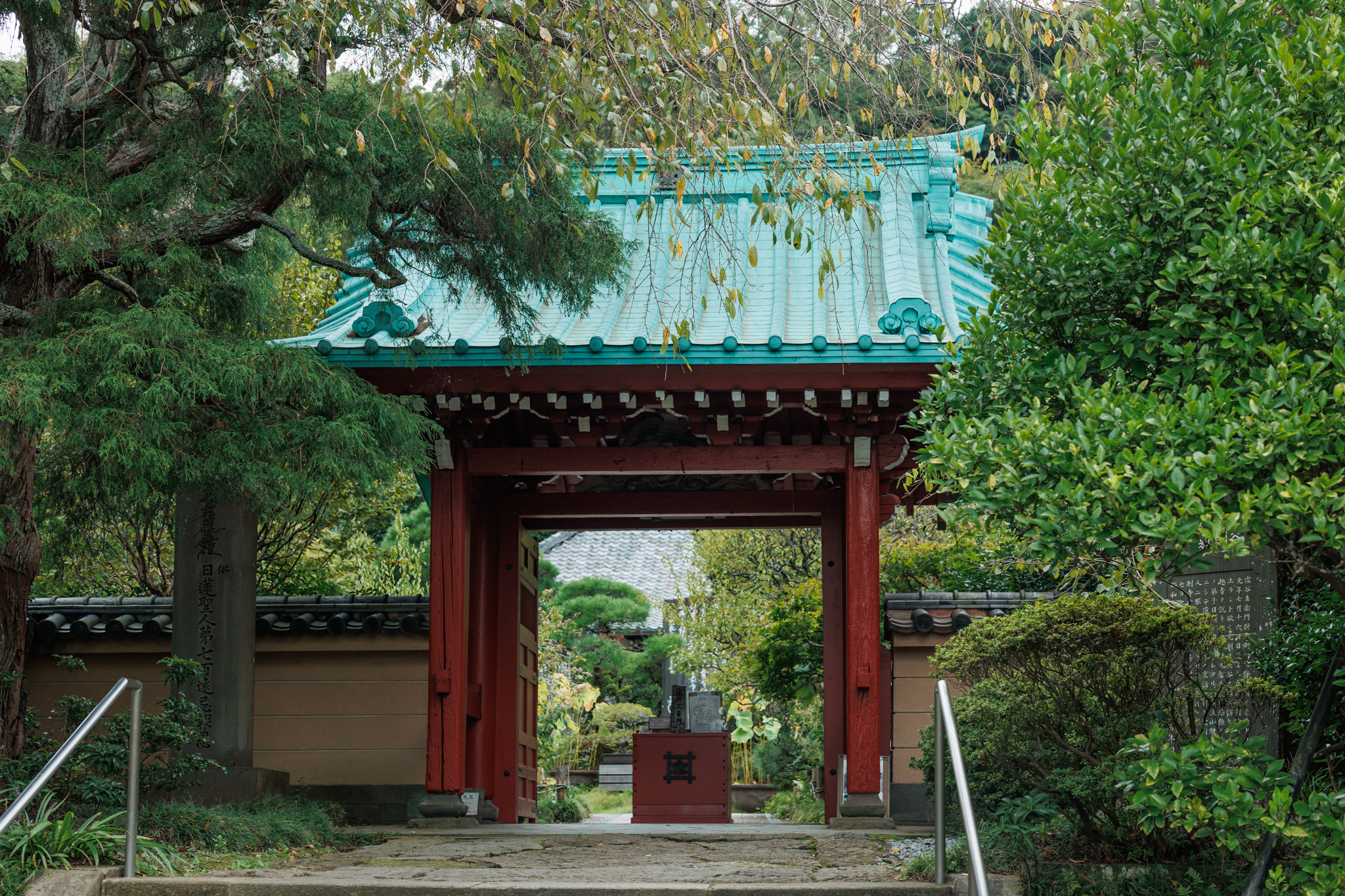
Kōsokuji is a few minutes’ walk from Hase Station on the Enoden line. Its gate is red, under a blue-green roof.
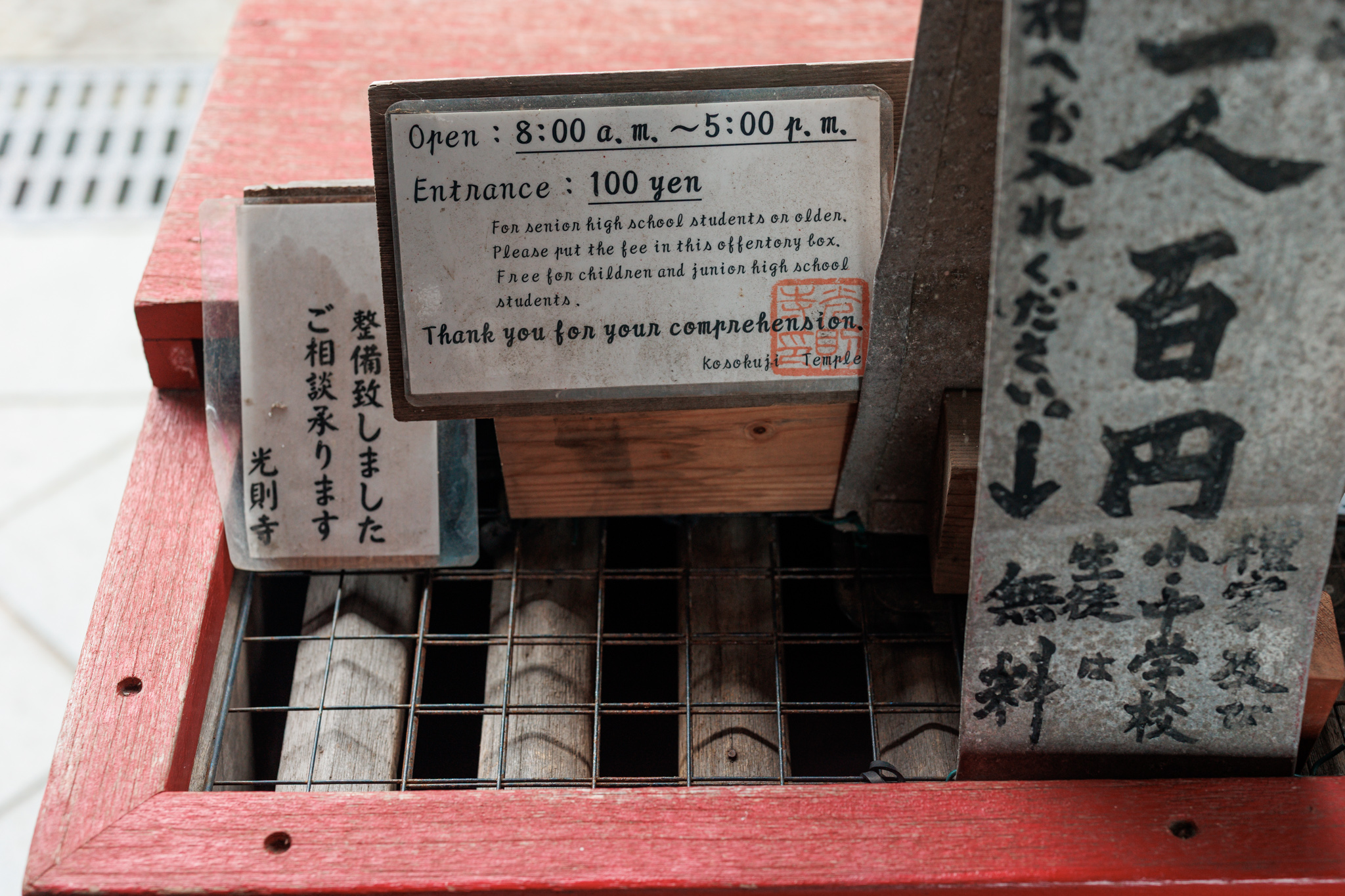
There is no ticket window. Admission is 100 yen, dropped into a red box beside the path.
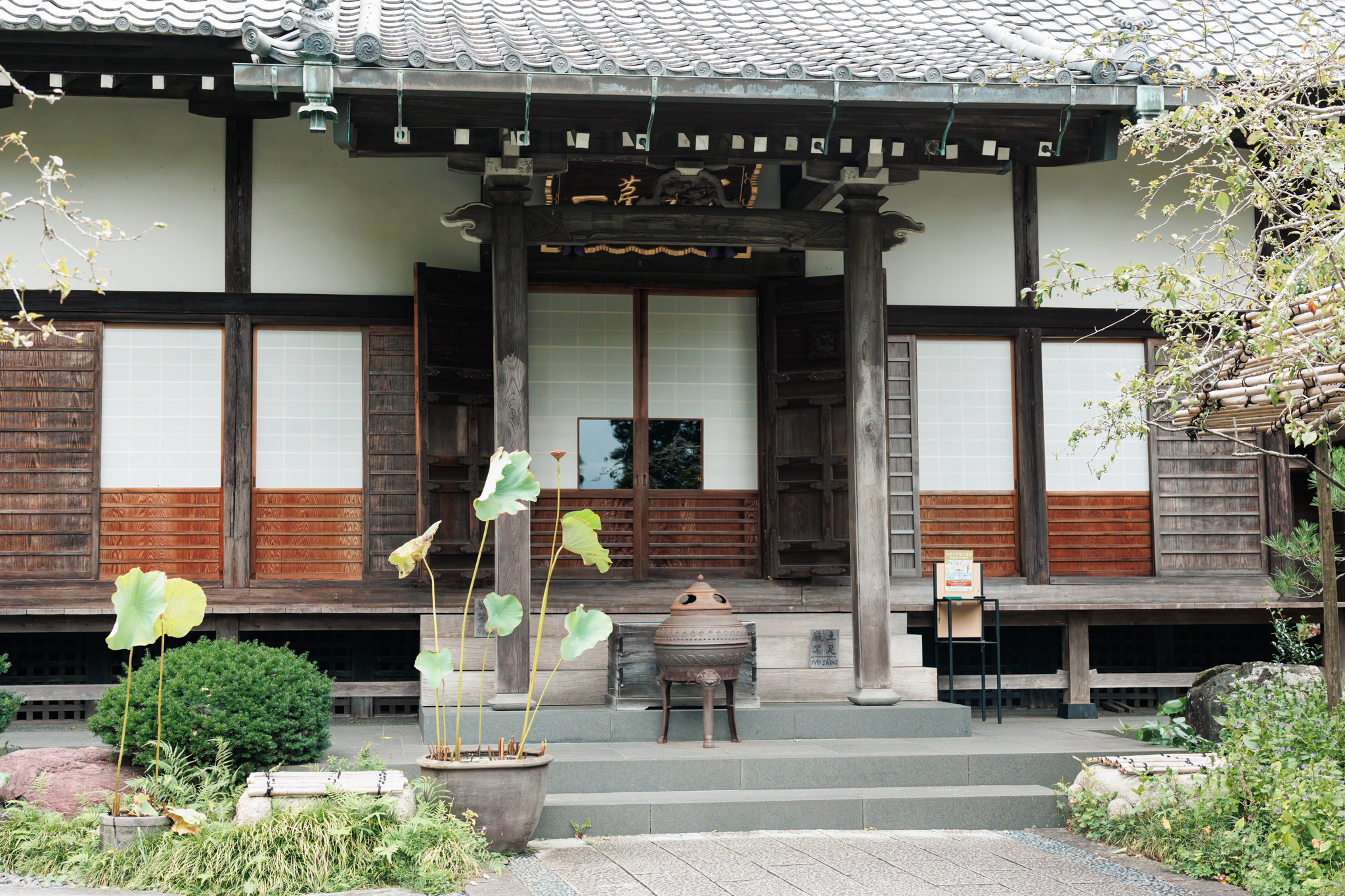
Beyond it is the main hall. Its frame dates from 1650, which makes it nearly four centuries younger than the temple.
In front of the hall, a long stone carries Ame ni mo makezu, “Unbeaten by rain, unbeaten by wind,” by Miyazawa Kenji, one of Japan’s best-loved writers. Kenji was a devout follower of the Lotus Sutra. In the notebook where he wrote the poem, it is followed by Namu Myōhō Renge Kyō, the invocation Nichiren taught, and the names of buddhas and bodhisattvas. The stone carries those too.
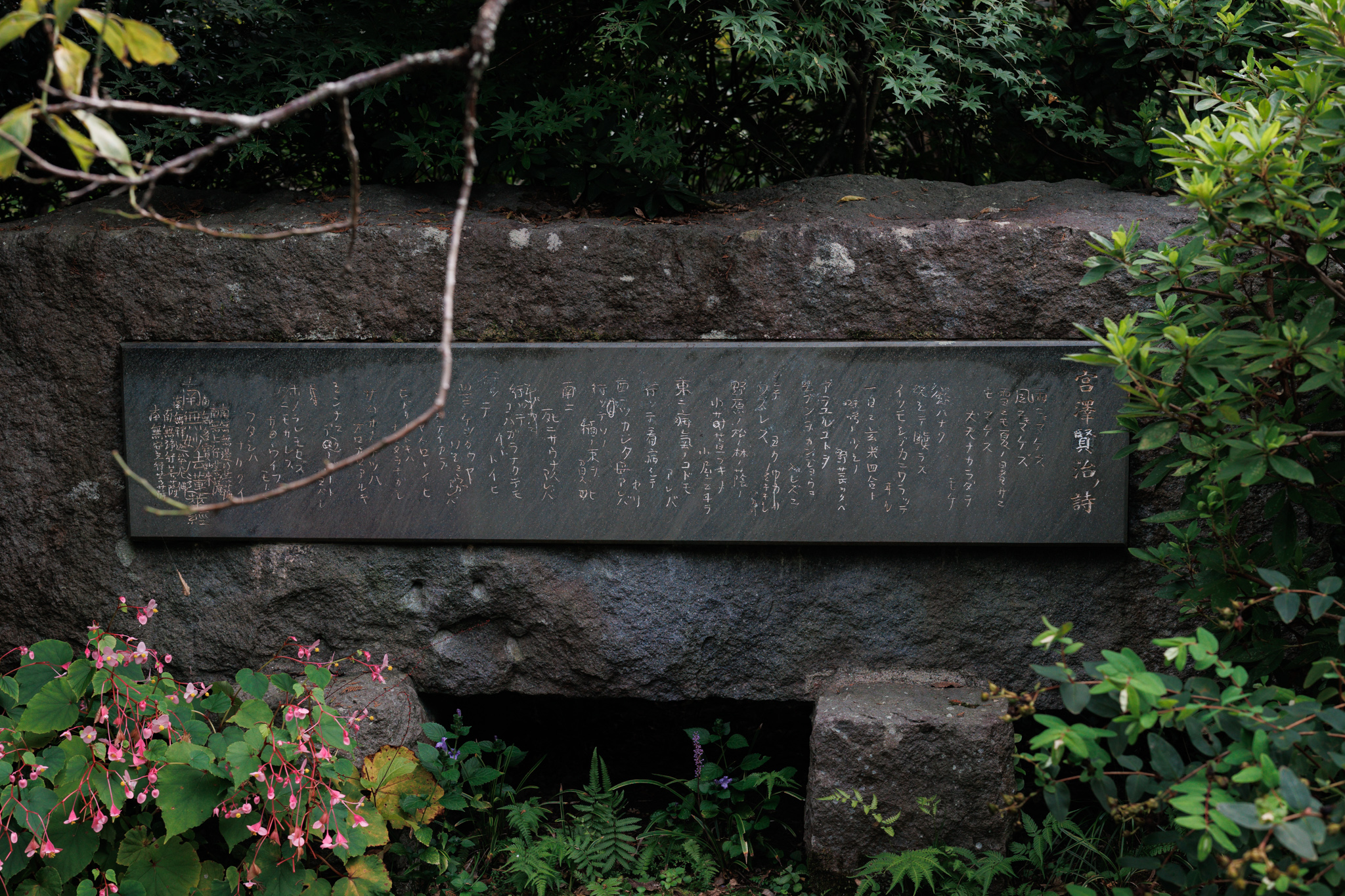
Kenji is not known to have come here. The stone is here for his faith, not his footsteps.
The other cell
Beside the main hall, a stone post names Ōhashi Tarō Michisada and calls what is up there his cell.
Kōsokuji has two.
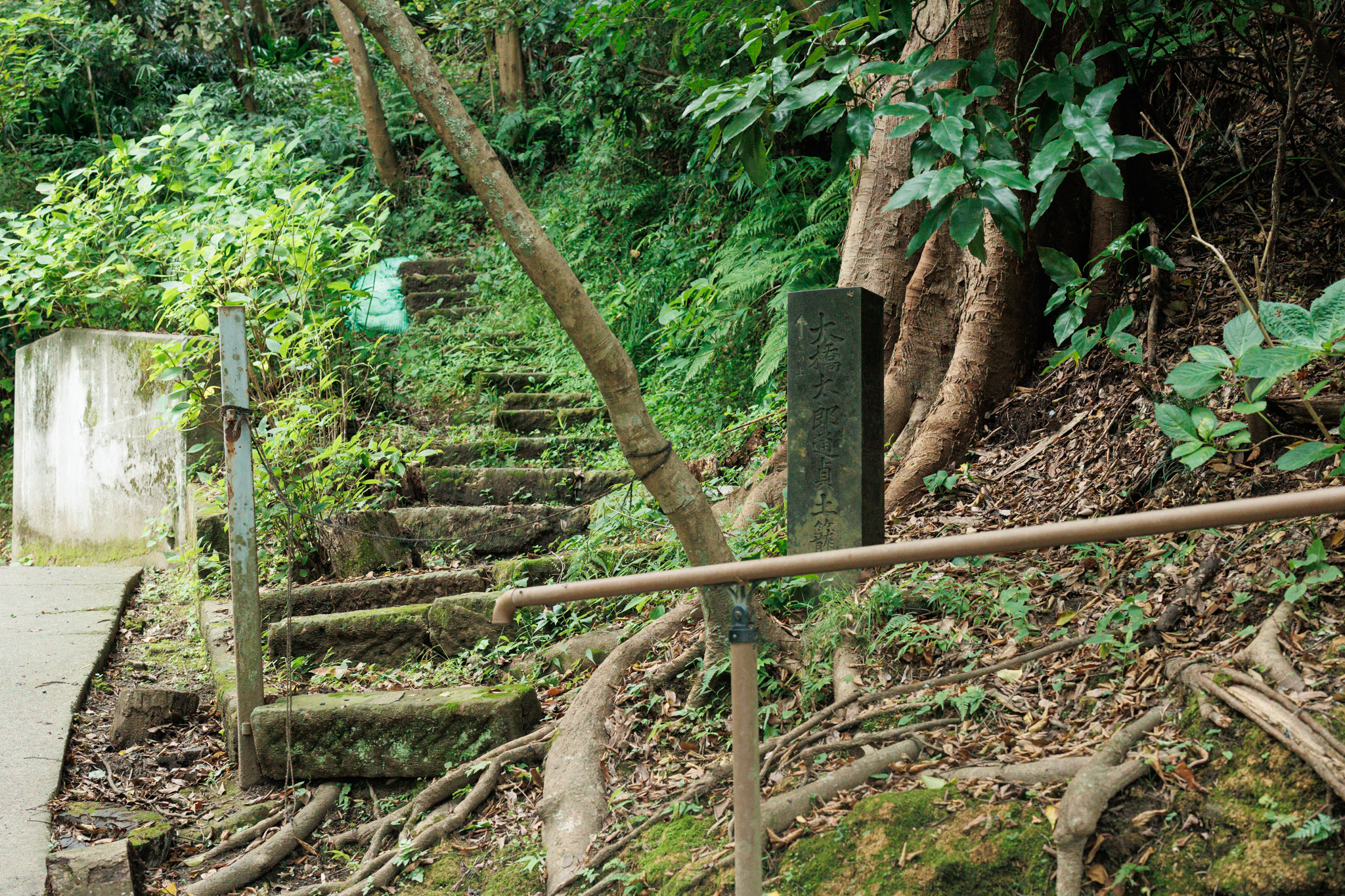
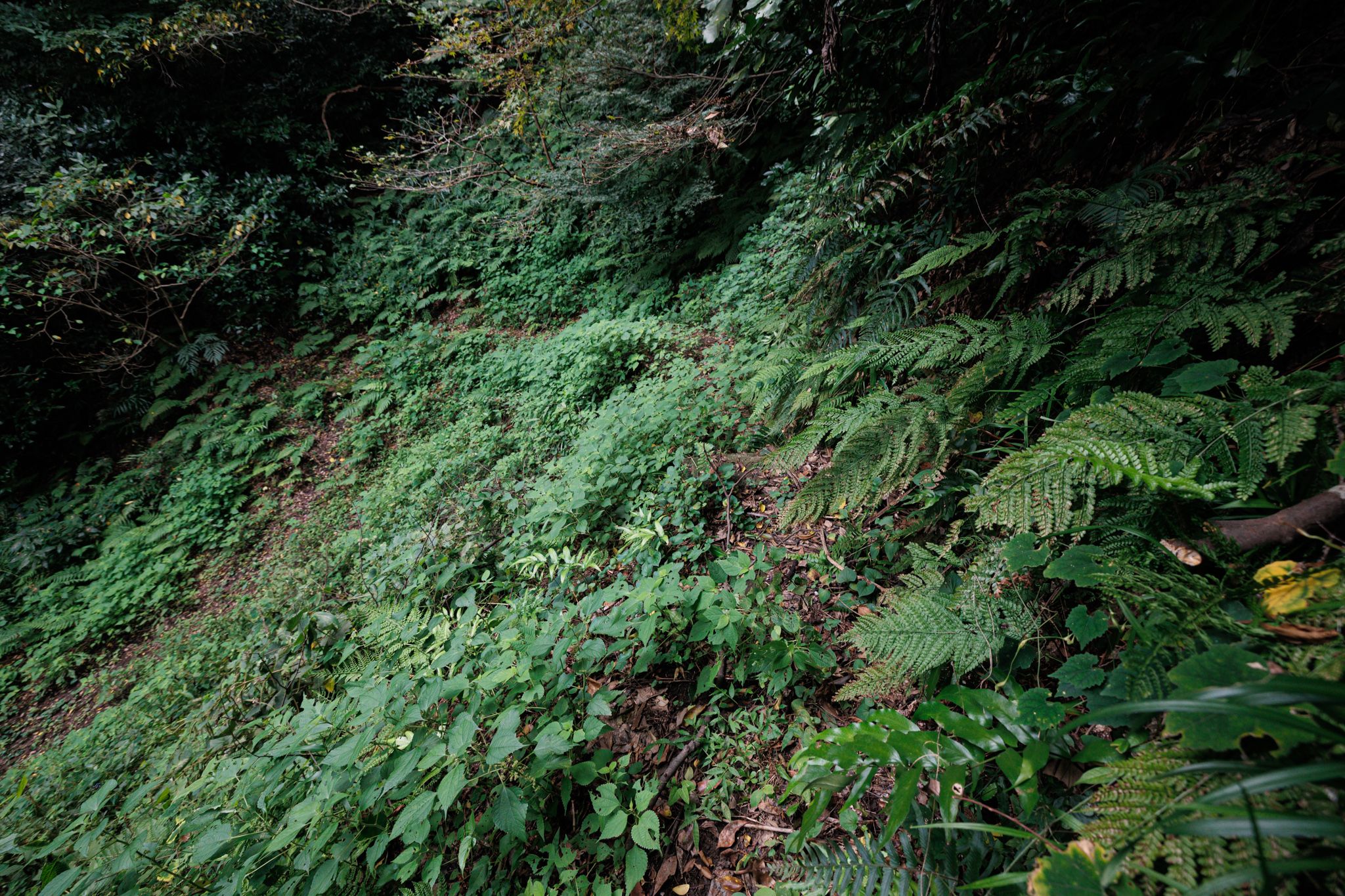
The first steps were easy to find. Then they gave out, and I followed whatever looked vaguely like a path, up a slope covered in plants. Somewhere along the way it forked.
The post had been quite sure of the direction. Nothing after it was.
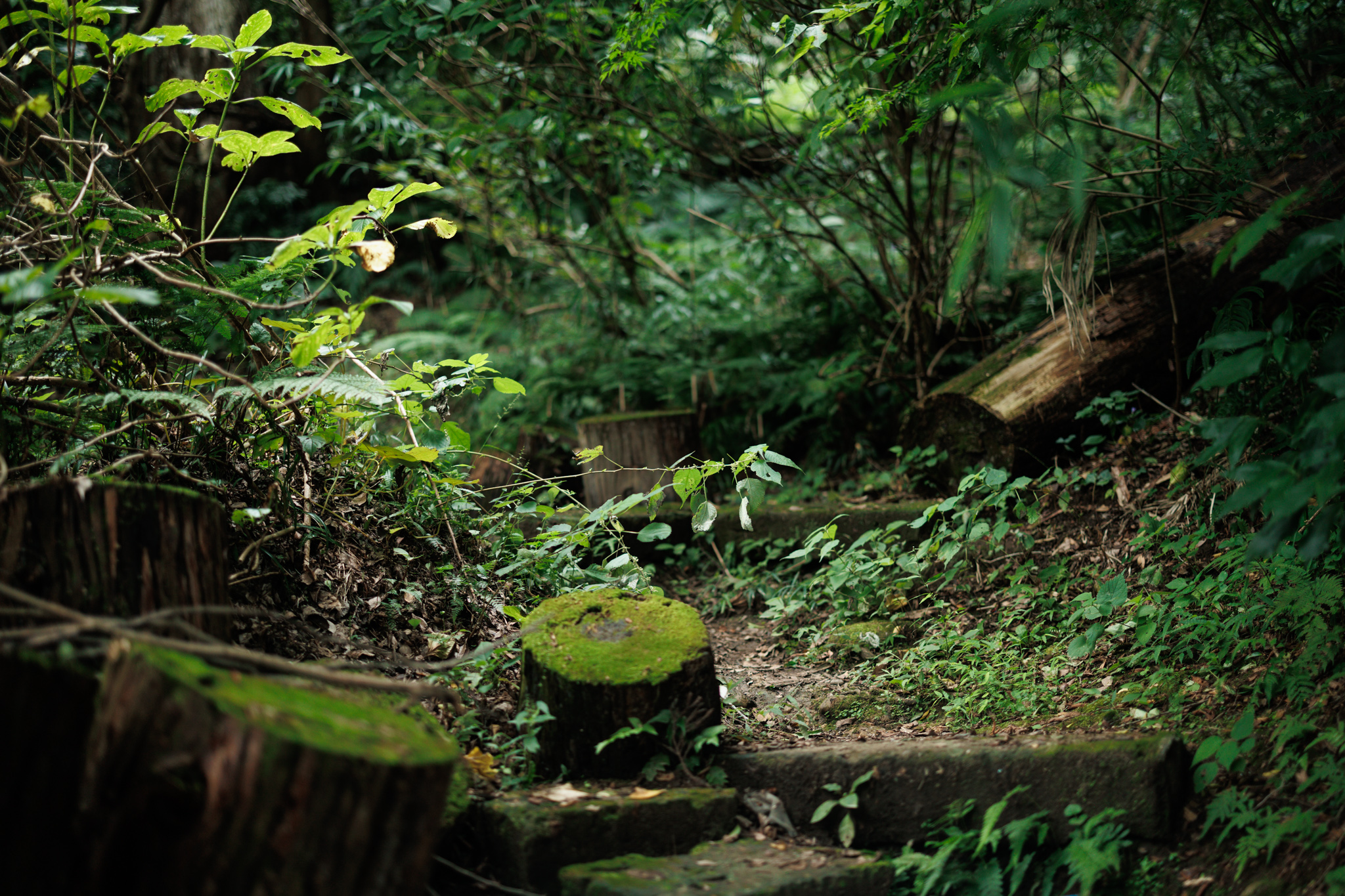
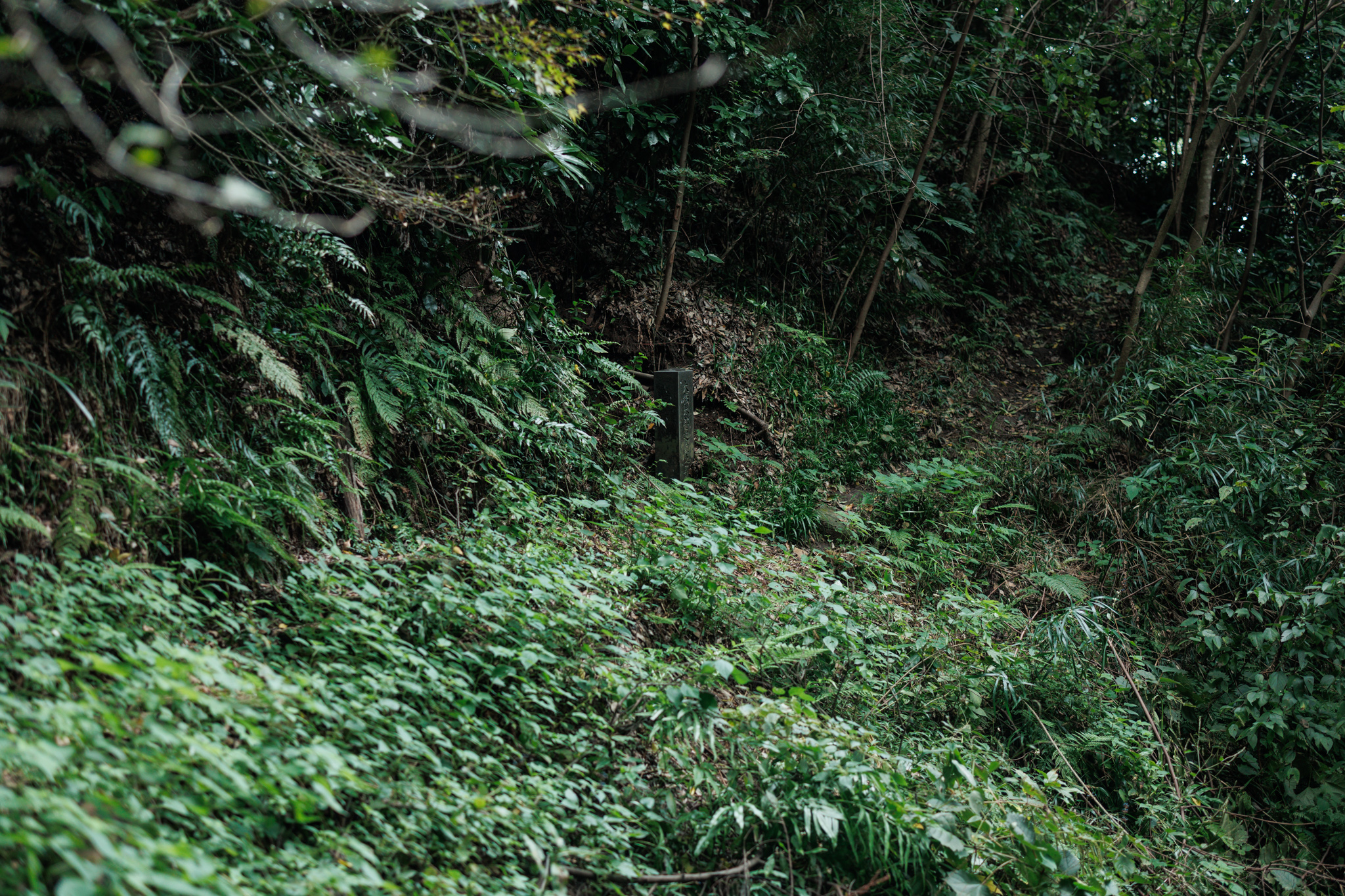
It is a genuinely risky climb, and not one to make in a hurry or in the wrong shoes.
At the top, the cell turned out to be an opening in the hillside, under the roots of a tree. Someone had tied a rope around the trunk beside it.
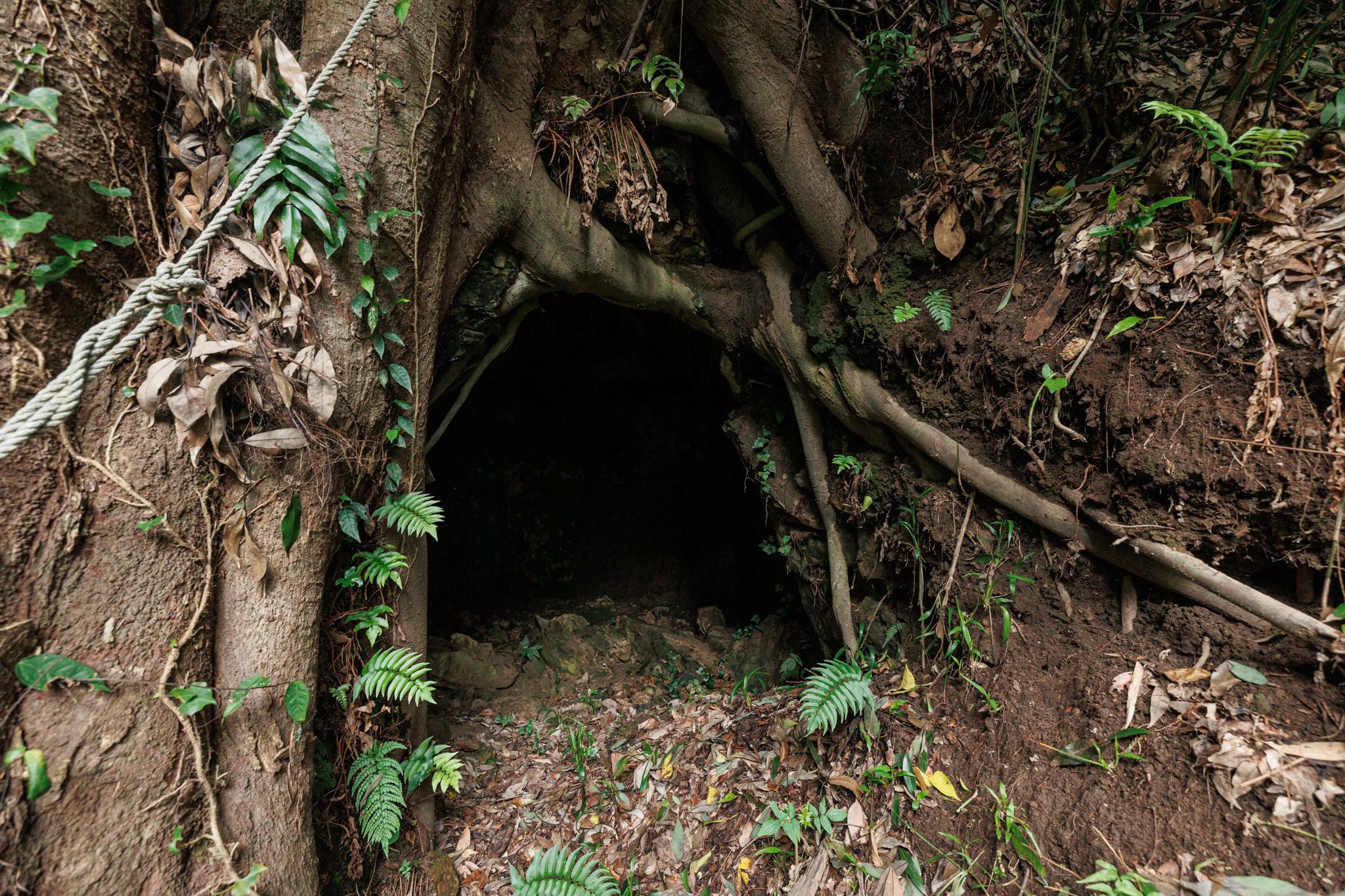
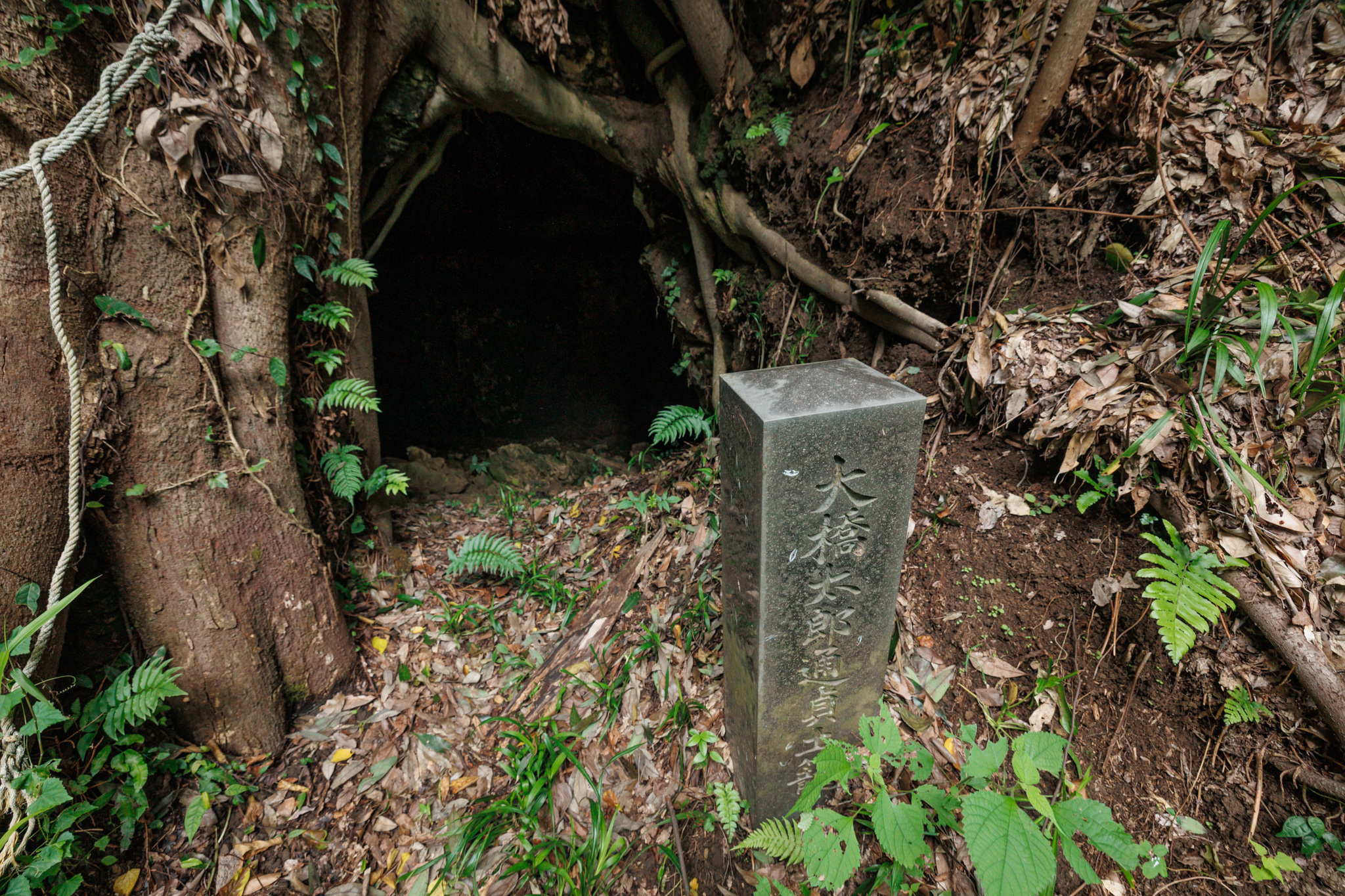
Ōhashi Tarō, the story goes, was a warrior from Kyushu who fell under suspicion of rebellion against Minamoto no Yoritomo, the first Kamakura shogun, and spent twelve years in a cell in Kamakura. His son grew up without him. When the boy came to the city looking for his father, he read the Lotus Sutra through the night at Tsurugaoka Hachimangū, its great shrine. People gathered to listen, word reached Yoritomo, and the father was set free.
Nichiren told this story himself, in a letter written in 1276. He puts the cell at Yui-no-hama, on the shore, rather than on this hillside.
In Yukuhashi, in Fukuoka Prefecture, the story keeps going. Ōhashi Tarō and his family reach Kyushu and settle on a stretch of coast where a few fishermen take them in. People from his old lands follow, and the place comes to be called Ōhashi.
The cell with bars
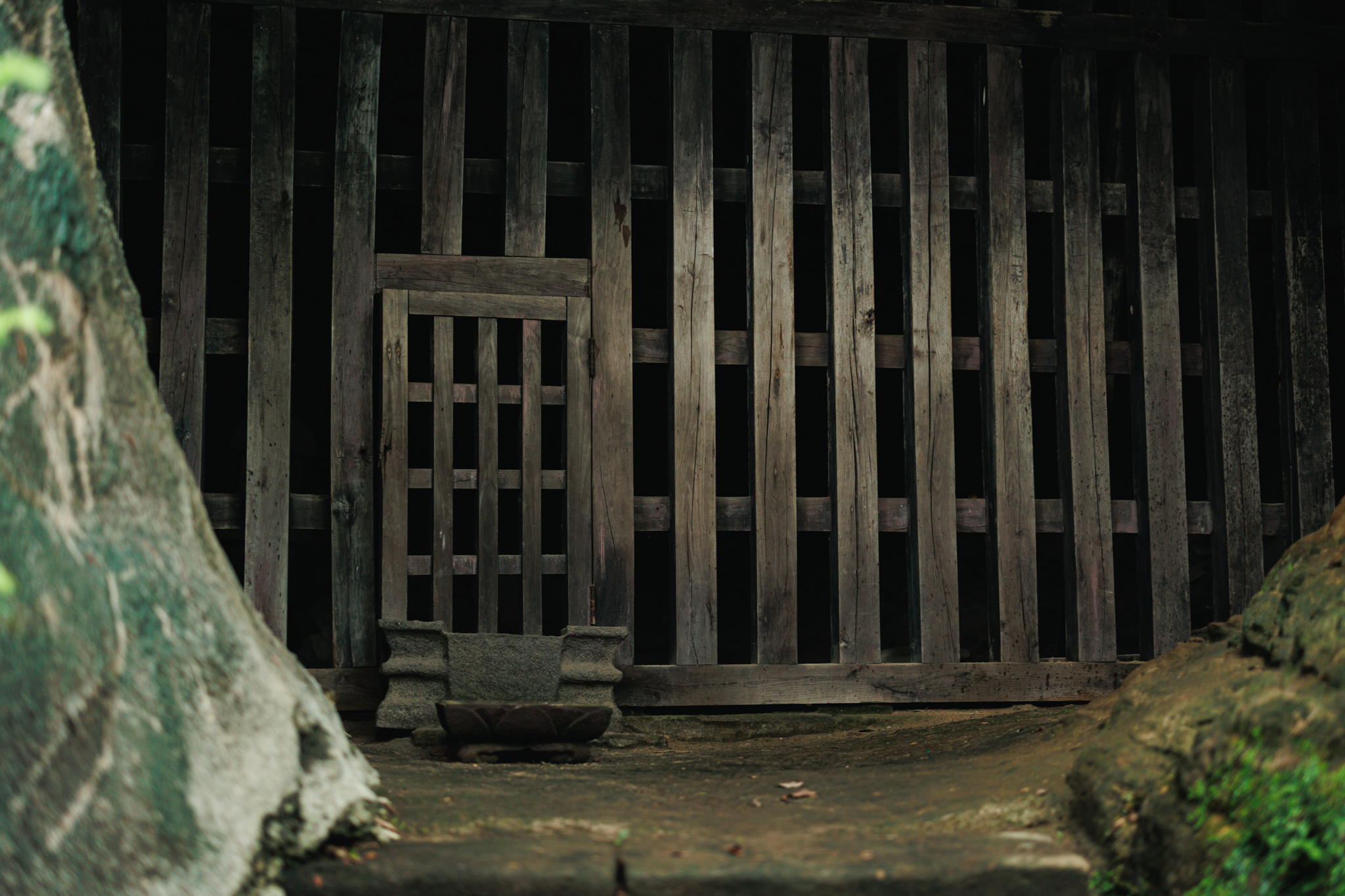
Nichirō’s cell is on the ordinary route, up stone steps behind the main hall. Nobody has to guess.
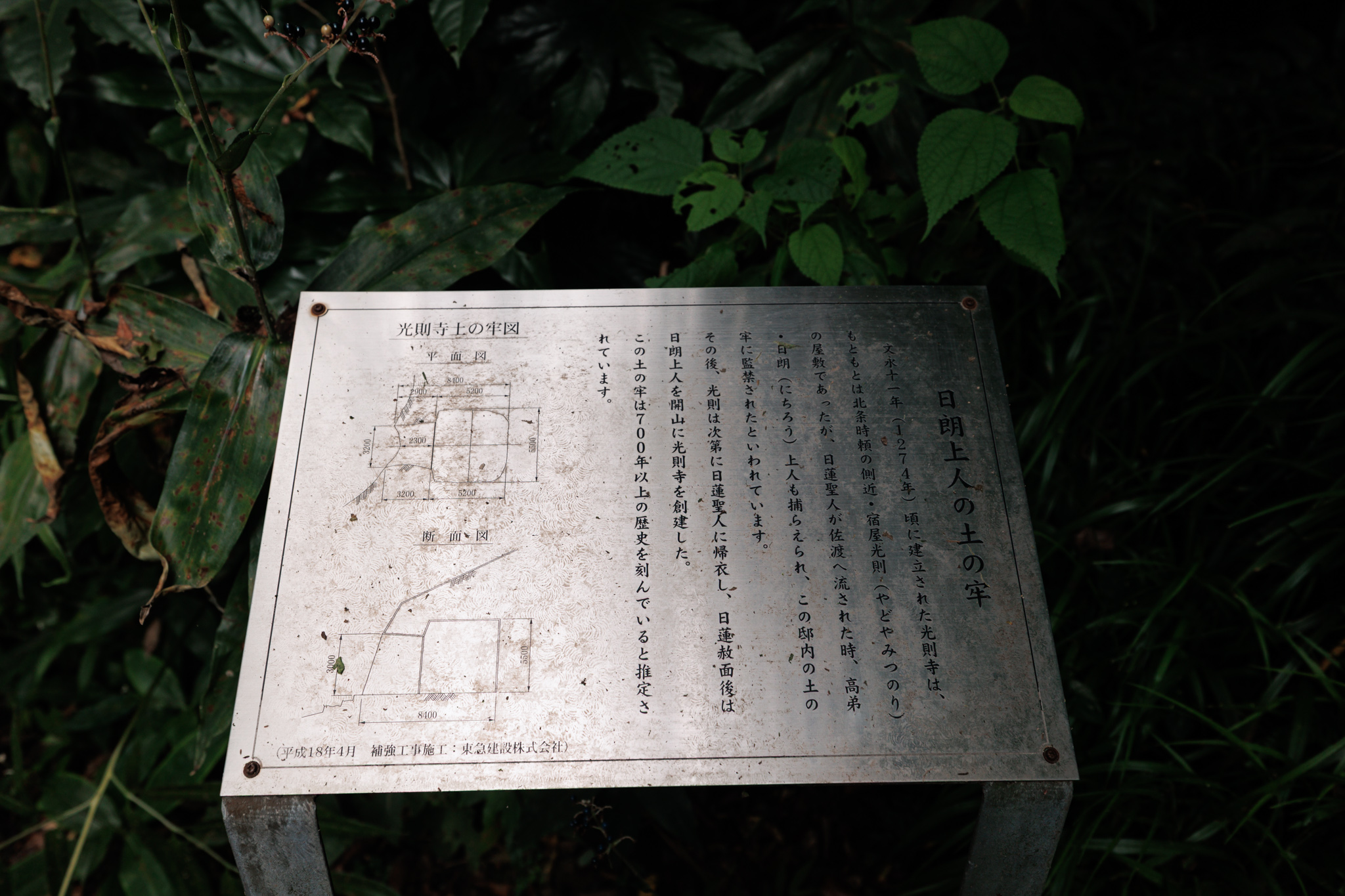
A metal sign by the cell estimates its history at more than seven hundred years.
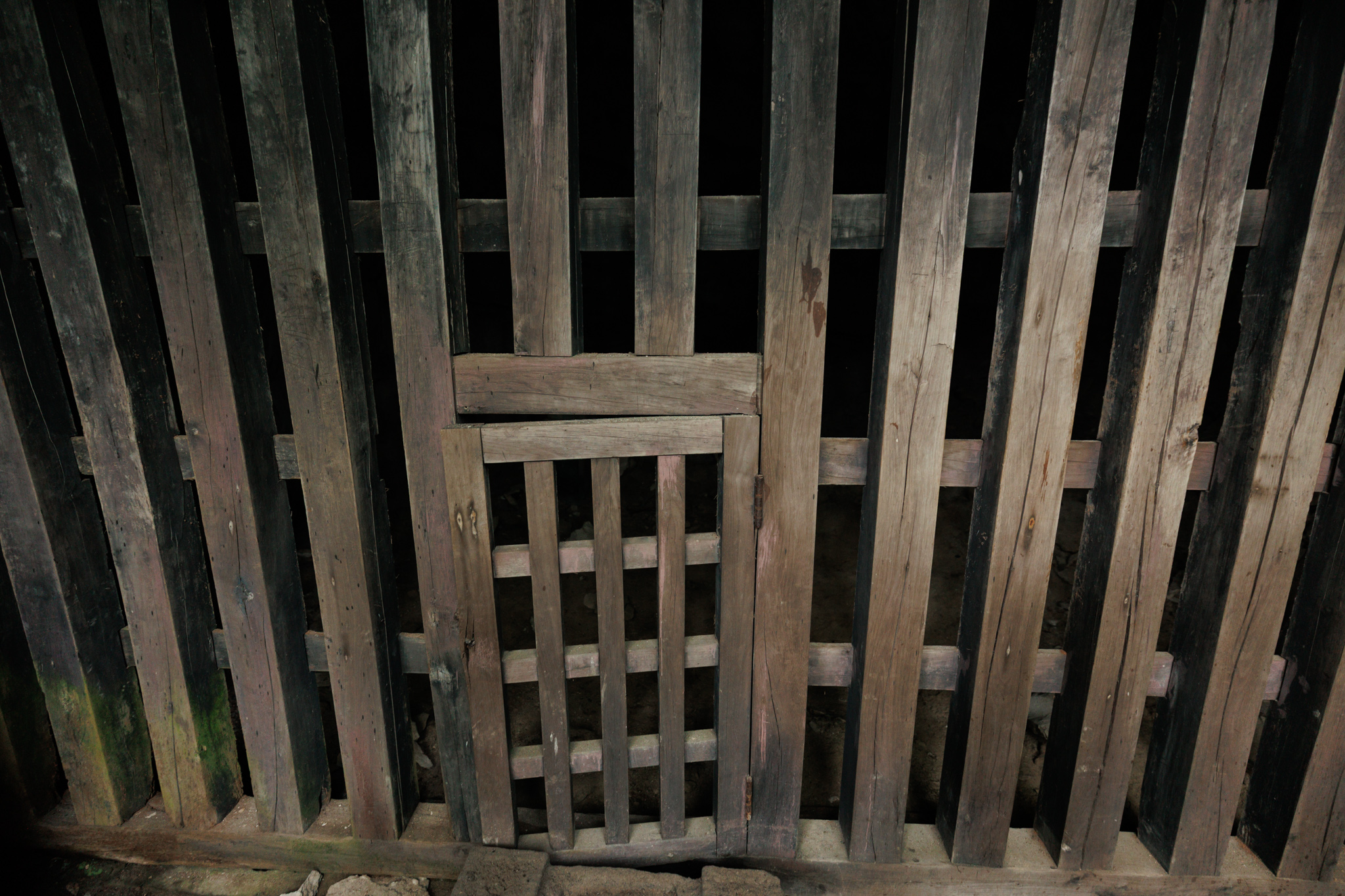
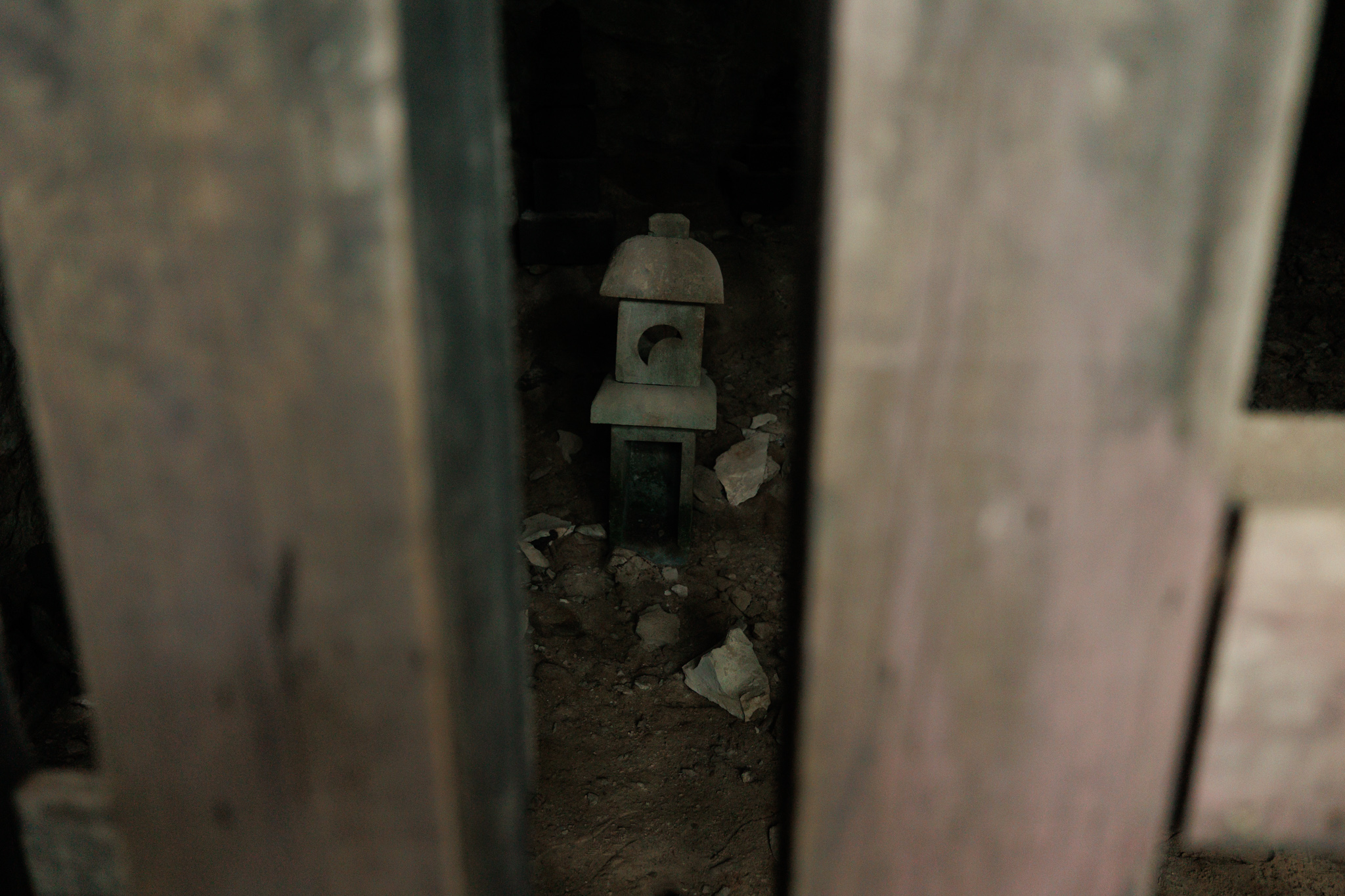
Through the lattice, the floor is bare earth and loose rock. I could not imagine anyone living in there. How Nichirō was actually held is not certain: whether in this cell, under house arrest, or with more freedom than either.
Swipe to explore
Tap to enlarge
The estate is said to have belonged to Yadoya Mitsunori, and the Yadoya family had crossed paths with Nichiren before. In 1260, Nichiren wrote Risshō Ankoku Ron, a treatise on how the country might put an end to the disasters striking it, and submitted it to Hōjō Tokiyori, the former regent and then still the most powerful man in the shogunate. It went to him through a member of the family.
In 1271, the shogunate arrested Nichiren. Less than a month before the letter, he came close to being executed at Tatsunokuchi. His disciples were rounded up, and Nichirō and others, it is said, were handed over to Mitsunori, who kept them in the cell on his estate.
Nichiren’s letter does not stay on the cold. Near the end, it gives an instruction: if you are let out of the cell, come quickly.
The name
According to the temple, what changed Mitsunori’s mind was Nichirō himself, and above all the way he served his teacher. Mitsunori became a follower of Nichiren and donated his house. Around 1274, after Nichiren was pardoned, it became a temple.
The plaque on the main hall reads Shikō Daiichi: devotion to one’s teacher comes first.
The characters 光則 can be read as Mitsunori or Kōsoku. By coincidence, kōsoku written 拘束 means “confinement.” The temple’s “mountain name”, Gyōjisan (行時山), comes from Mitsunori’s father, whose name was written 行時.
The prisoner became the founding priest. His jailer gave the temple its name.
Visit this place
Temple
Kōsokuji (光則寺)
In Hase, Kamakura, about 6 minutes on foot from Hase Station on the Enoden. Nichirō’s cell is up stone steps behind the main hall; Ōhashi Tarō’s cell is further up the slope, off any clear path.
3-9-7 Hase, Kamakura, Kanagawa 248-0016, Japan
Practical Information
- Access
- About 6 minutes on foot from Hase Station (Enoden)
- Opening hours
- 8:00–17:00
- Admission
- ¥100 (high school students and older), paid into the box at the entrance; elementary and junior high school students free
- Ōhashi Tarō’s cell
- The way up the slope is overgrown, unclear and forks, and the climb is risky underfoot. Nichirō’s cell is on the ordinary route behind the main hall
- Phone
- 0467-22-2077
- Tourism information
- Kamakura City Tourism Association — Kōsokuji (Japanese)
Information last checked: October 12, 2026 (access, opening hours, admission and phone).
Conversation
Comments
Review pending commentsComments are reviewed before appearing. The internet already contains enough unattended surprises.
Checking comments…
Comments are not available in this migration preview yet. Existing comments remain on the current site.
Leave a comment