Tsuchinoto-mi Day: A White Snake, a Lion and a Jar for Grumbles
Good luck does not always make a reassuring first impression.
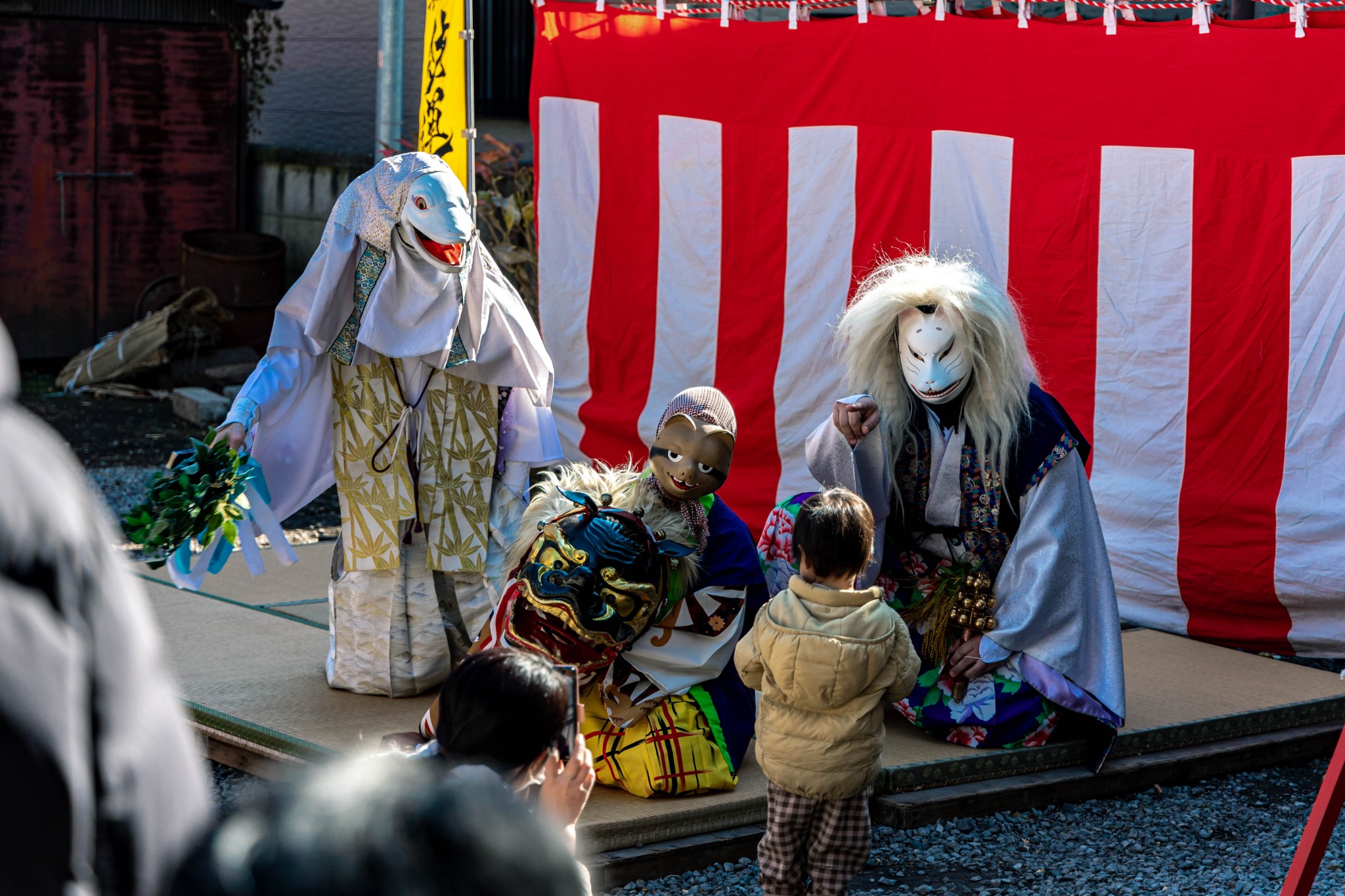
At Hebikubo Shrine in Tokyo’s Shinagawa district, it had a long red tongue, elaborate robes and a lion for company. Some of the children were delighted. Others were frightened.
Looking at the masks, I could understand both positions.
I visited on 11 January 2023, and there were considerably more people than I had expected. Winter coats filled the approach beneath the torii. Perhaps the New Year shrine-visiting season had something to do with it; perhaps this was a normal turnout for the occasion.
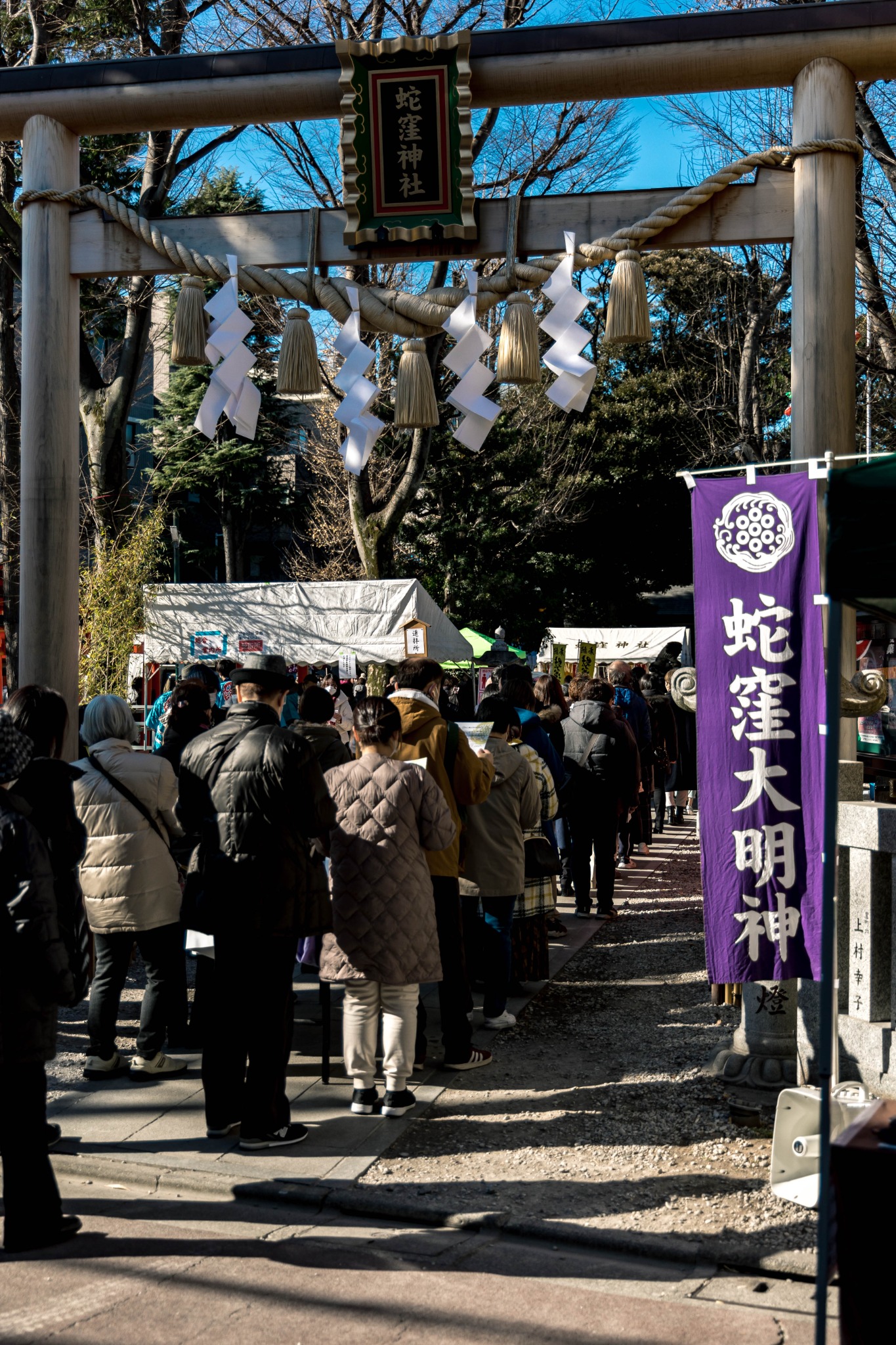
The occasion was Tsuchinoto-mi Day, an auspicious day for white-snake worship. Yoshifuku Shachū was offering its White Snake Dance, with lion dancing also on the programme.
The white snake is associated with good fortune, particularly prosperity. Its appearance that day suggested that good fortune did not necessarily intend to arrive discreetly.
The snakes that stay still
Around the grounds, smaller white-snake figures and a pair of coiled stone snakes offered a quieter introduction.
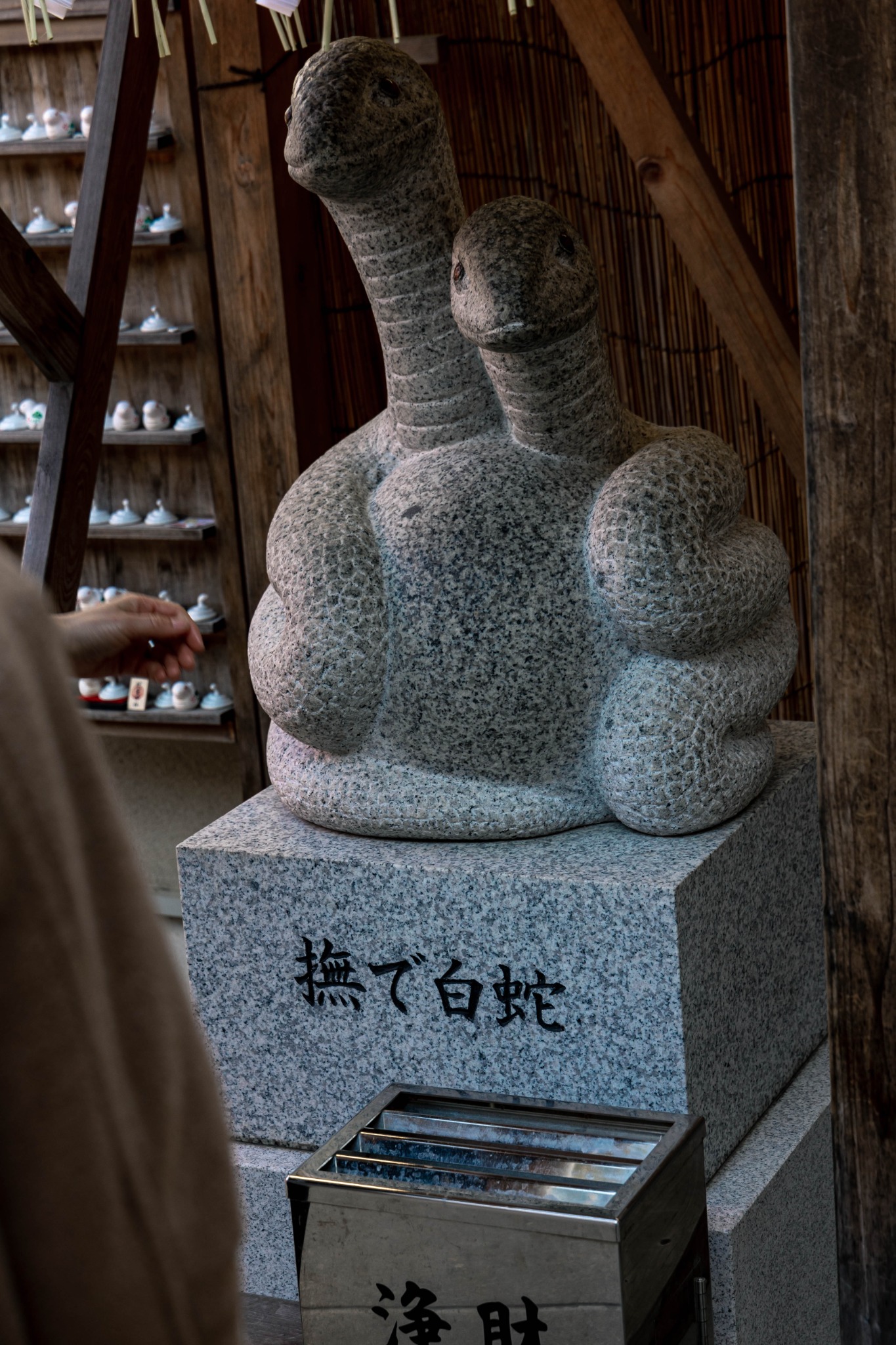
In the shrine’s own account, a white snake once lived in a spring-fed washing place beside the main hall. When the washing place disappeared, the snake had no choice but to move to a pond in what is now Togoshi Park. It then appeared in the dream of a man from an old local family and asked to be returned to its old home as soon as possible. The shrine dug a pond for it on what is now the car park, and enshrined the snake in a small stone shrine on an island in the middle.
For a supernatural encounter, the request was rather domestic.
The snake wanted its old address back.
The neighbourhood lost its snake as well. This was once the village of Hebikubo, “snake hollow.” When it became part of Tokyo City in 1932, it was renamed after the shrine instead. In 2019, the shrine made “Hebikubo Shrine” its official everyday name, though its formal name is still Tenso Shrine. The snake’s name, at least, has moved back in.
The snake with sleeves
The performing snake wore gold-patterned robes and carried a leafy branch and a fan. Being represented by a human had brought certain practical advantages.
Yoshifuku Shachū began offering this dance at Hebikubo in 2020. Its story is the shrine’s legend: the snake that lost its home, the dream, the pond. According to the troupe, the snake was so pleased with its new pond that it made it rain. I liked that the dance was so recent. Faith in the white snake was still inspiring people to create something new.
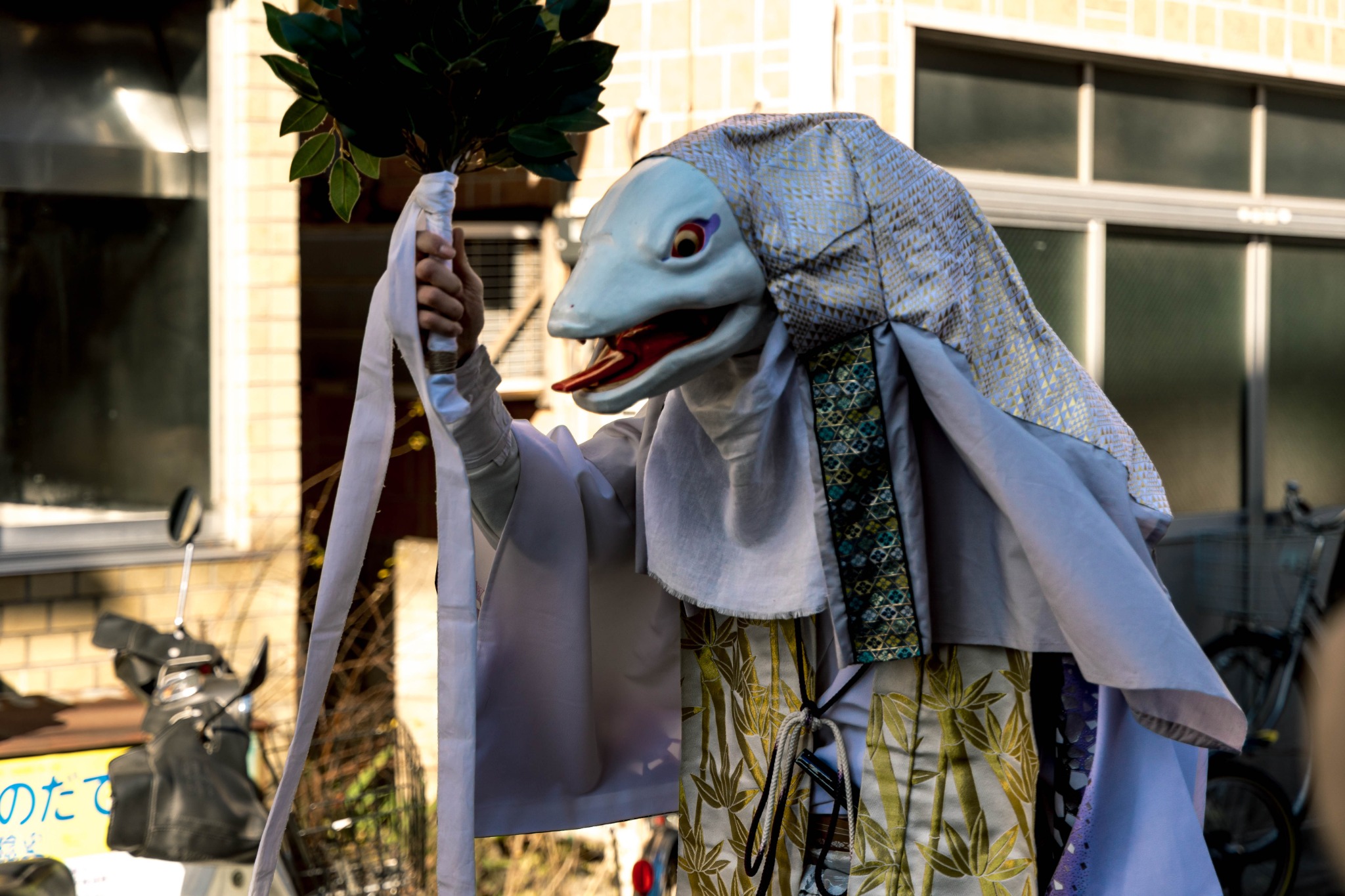
Behind the white snake were frosted windows, an air-conditioning unit and a parked scooter. The snake belonged to a sacred story; the scooter presumably belonged to someone nearby.
At the edge of the stage, a performer wearing a tanuki (Japanese raccoon dog) mask held an ornate lion head. The white snake stood on one side, a white-haired fox on the other.
A small child in a padded jacket stood just in front of them, while an adult nearby held up a phone.
By custom, a bite on the head from a lion is supposed to keep illness away.
A lion’s good intentions are probably easier to appreciate when you are taller than it is.
Somewhere for the grumbles
Elsewhere in the grounds, the shrine had provision for a different kind of offering: a guchitsubo—a jar for your grumbles. It stands ready all year round.
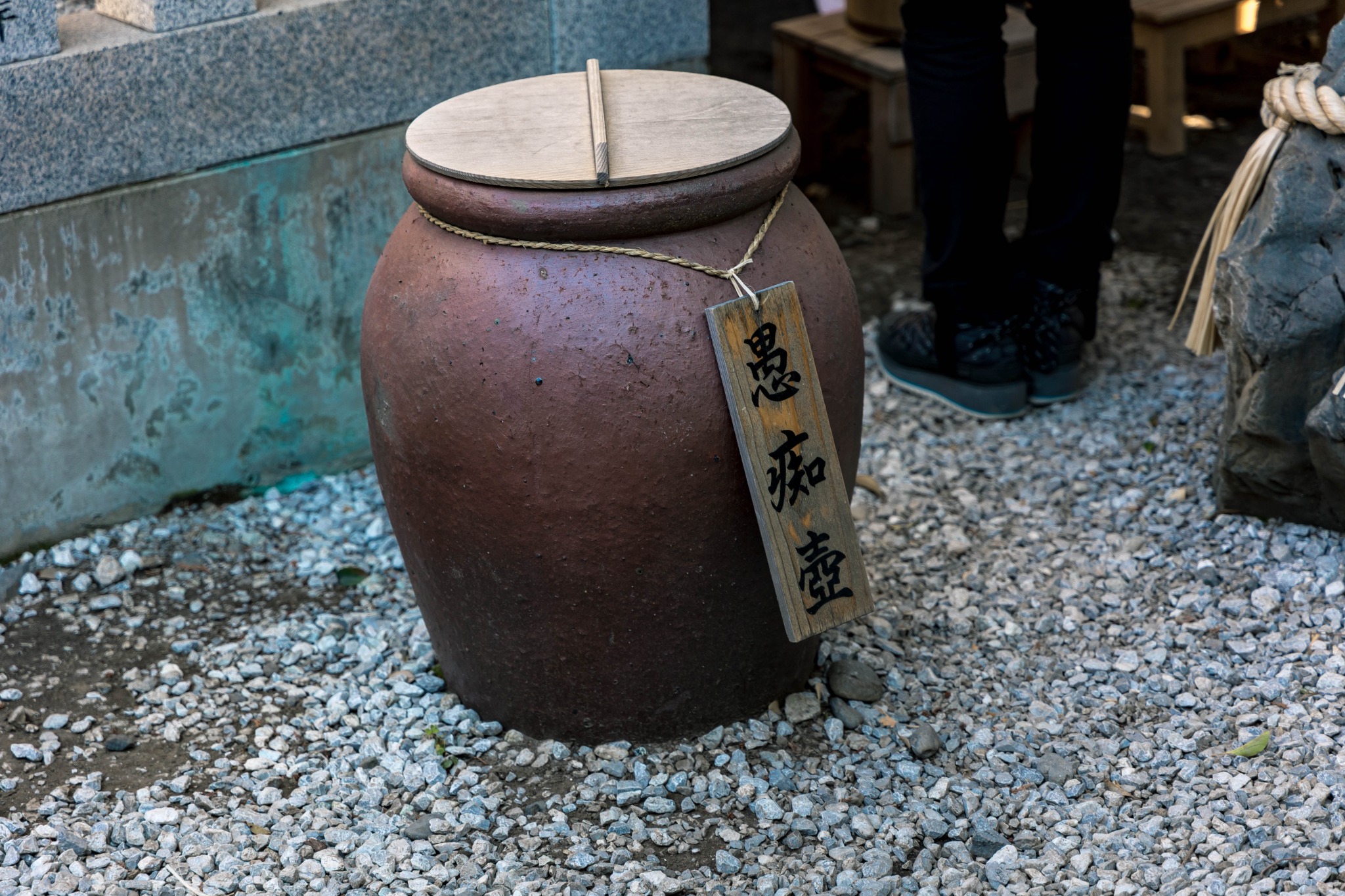
The shrine’s instructions are simple: lift the lid, tell the jar what is bothering you, and then close the lid firmly. Inside, there is salt for purification.
You can visit the shrine to ask for good fortune without having to pretend that everything is going well already.
The jar is reassuringly large. For those with less to get off their chest, there is also a smaller one.
At Hebikubo, approaching good fortune might take a little courage.
Complaining about your luck only requires lifting a lid.
Visit this place
Location
Hebikubo Shrine (蛇窪神社)
About 5 minutes on foot from Toei Asakusa Line Nakanobu Station, or 6 minutes from Tokyu Oimachi Line Nakanobu Station
4-4-12 Futaba, Shinagawa City, Tokyo 142-0043, Japan
Practical Information
- Area
- Shinagawa, Tokyo
- Event observed
- White Snake Dance and Lion Dance (白蛇舞・獅子舞)
- Observed on
- January 11, 2023
- Occasion
- Tsuchinoto-mi Day (己巳の日)
- Usual recurrence
- Approximately every 60 days
- Performance schedule
- Dates and times are not fixed. Check Hebikubo Shrine’s official announcements before visiting.
- Access
- About 5 minutes on foot from Toei Asakusa Line Nakanobu Station, 6 minutes from Tokyu Oimachi Line Nakanobu Station or 8 minutes from JR Nishi-Oi Station
- Visitor note
- Hebikubo is an active place of worship. Expect the grounds to be busier on auspicious days and follow onsite guidance around performances.
Information last checked: September 5, 2026. The next performance date and time have not been confirmed here.
Conversation
Comments
Review pending commentsComments are reviewed before appearing. The internet already contains enough unattended surprises.
Checking comments…
Comments are not available in this migration preview yet. Existing comments remain on the current site.
Leave a comment