Goryō Shrine: A Giant Ginkgo and the House That Moved Out
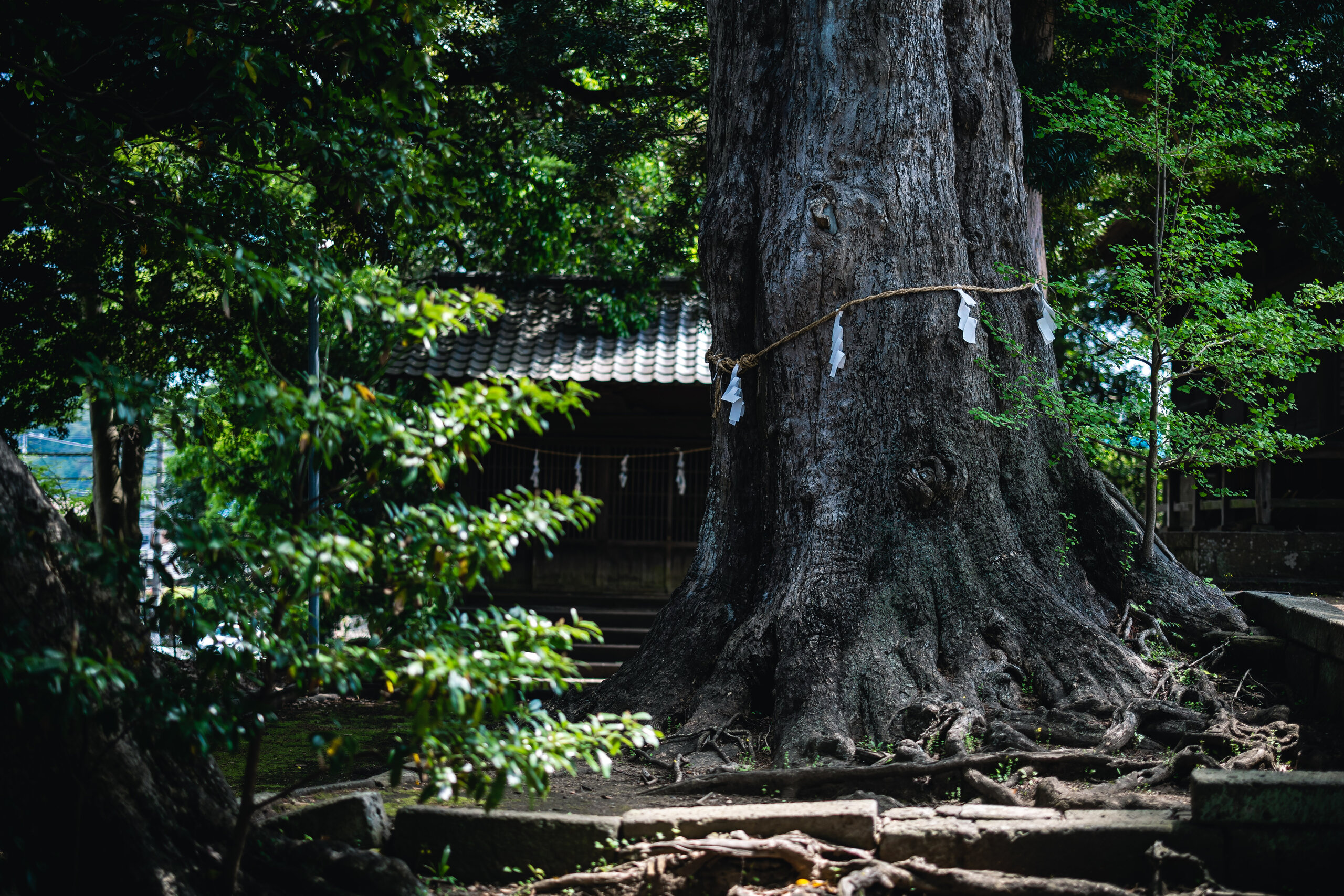
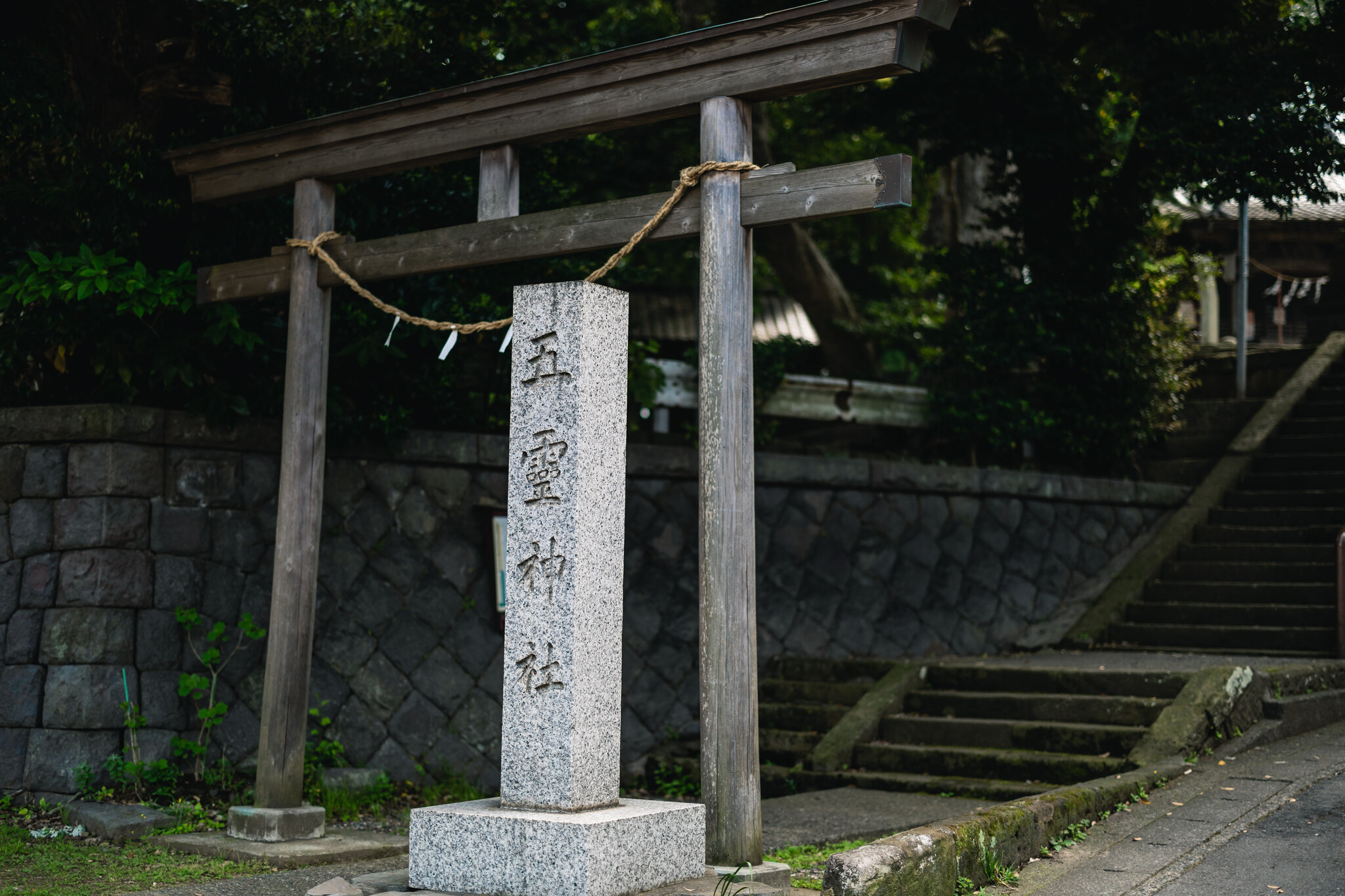
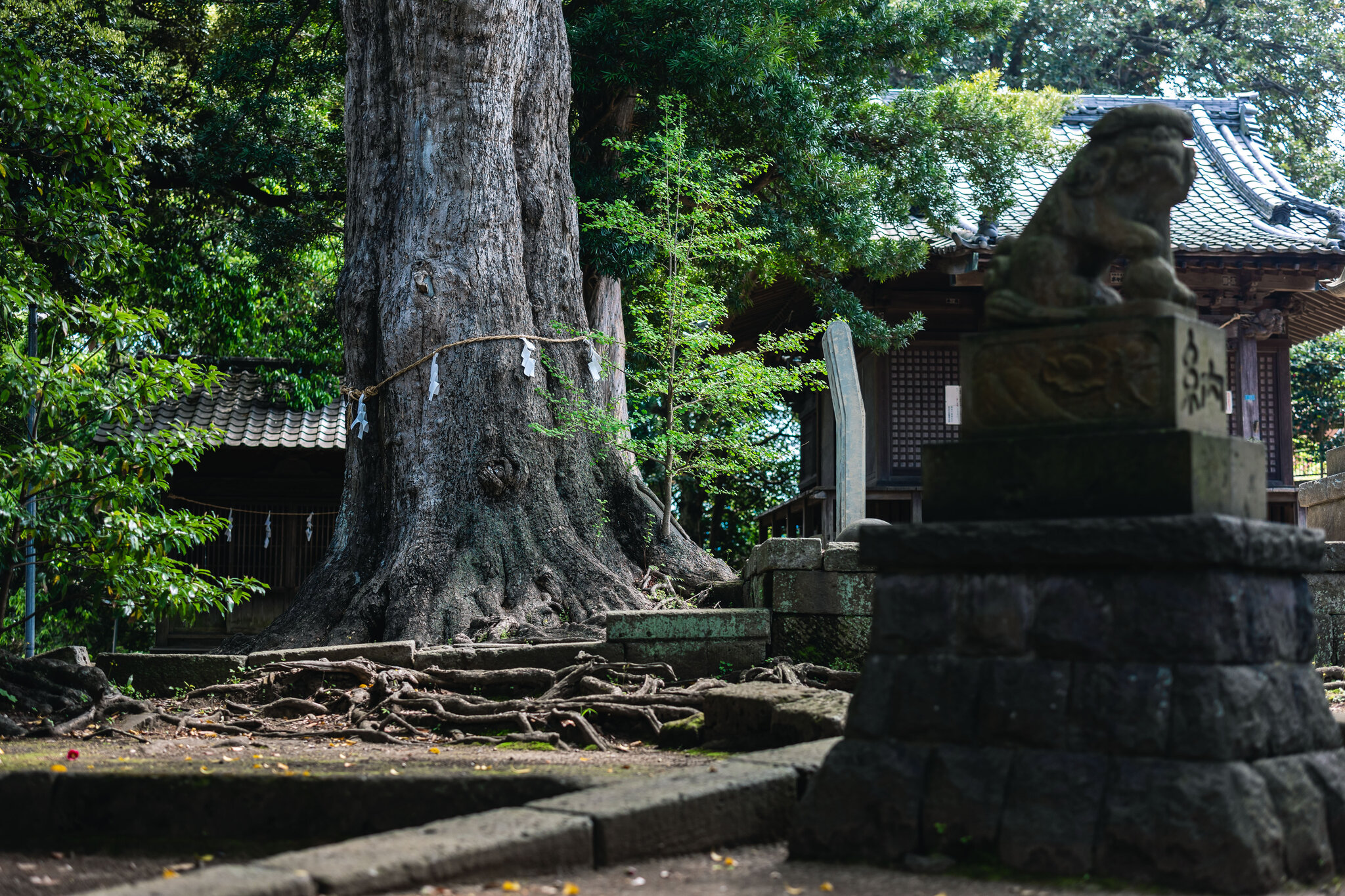
Goryō Shrine has a wooden torii, stone steps and a pair of guardians. It also has a ginkgo large enough to make the shrine buildings look like accessories. The trunk rises beside the approach, while thick roots spread across the ground and around the stonework.
This is in Zushi’s Numama district, where the steps beyond the gate lead into a pocket of woodland. Sunlight catches the roots and parts of the shrine, leaving much of the scene in shade.
A sacred tree and a sun goddess
Around the trunk, a rope hung with white paper streamers marks the ginkgo as sacred. This is a shimenawa, used in Shinto to set apart sacred places and objects. Trees honoured in this way are known as shinboku. The trunk it encircles measures roughly six metres around.
The shrine honours Ame-no-Tajikarao, a deity whose strength helped bring sunlight back to the world. In the story, the sun goddess Amaterasu withdraws behind the heavenly rock door, leaving the world in darkness. The other gods stage a lively performance outside to draw her out. Curious about the commotion, she opens the door a little. Tajikarao pulls it open and helps bring her outside, restoring sunlight to the world.
The other gods provide the entertainment. He handles the door.
The ginkgo’s own story is tied to the shrine’s beginnings. Tradition holds that the twelfth-century warrior Minamoto no Yoshitomo established the shrine to protect his nearby residence, and that the tree was planted when the deity was enshrined. Its age remains uncertain; Zushi City describes it as possibly more than 500 years old.
The house it was meant to protect did not stay. Yoshitomo was killed in 1160, and his son Yoritomo, founder of the Kamakura shogunate, had the old residence repaired in his memory; it was to remain standing. Then Yoshitomo appeared in a dream to Yoritomo’s widow, Hōjō Masako. According to the Azuma Kagami, the chronicle of the Kamakura shogunate, he told her that he was always at the house, but that the seashore there was given over to fishing. The first Buddhist precept is to refrain from taking life. He wanted the house taken down and rebuilt within a temple. In 1202, it was dismantled and moved to Kamakura, to the temple now known as Jufukuji.
The shrine was there to protect the house. In the end, it was the house that left.
Beneath the branches
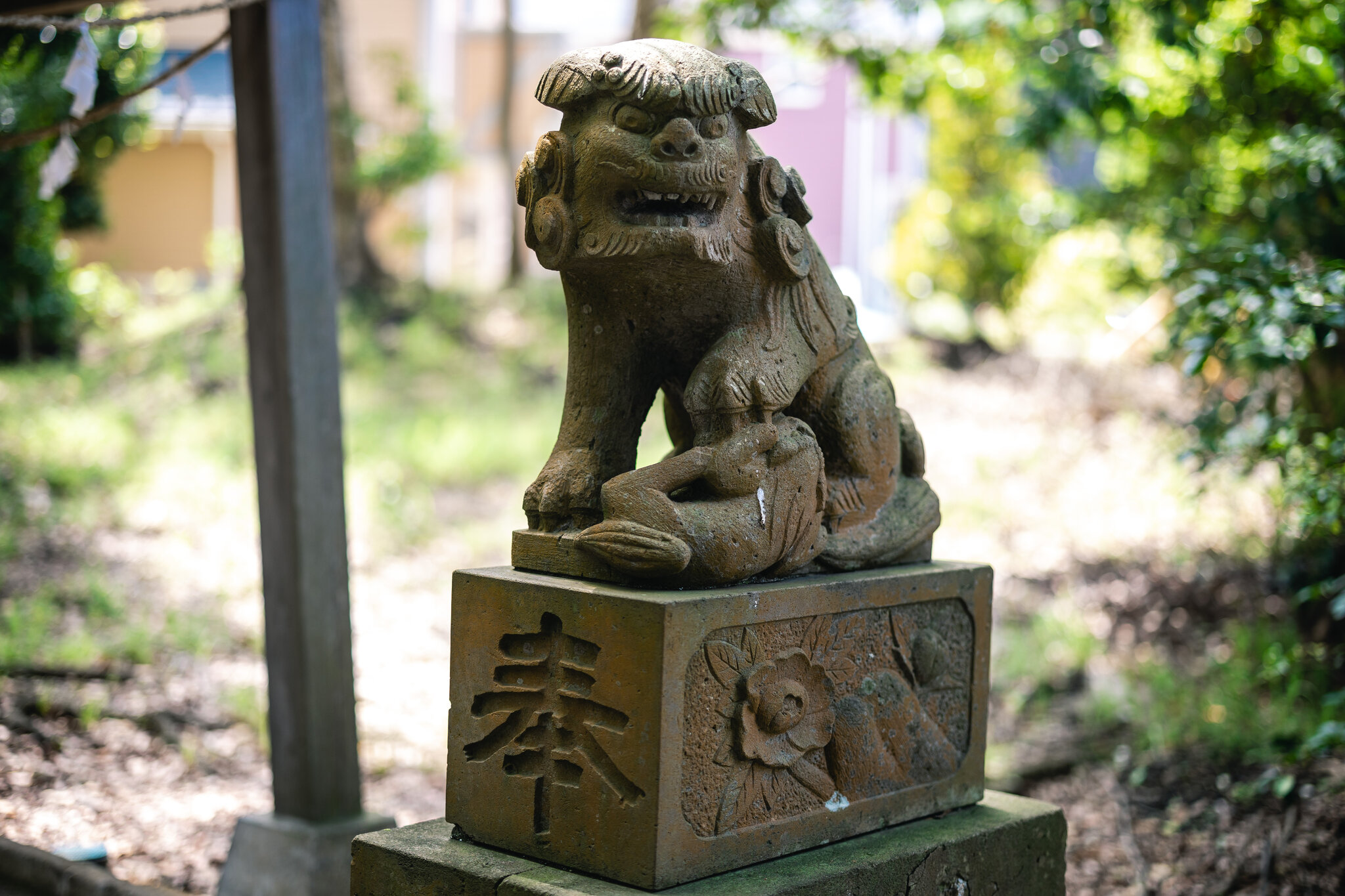
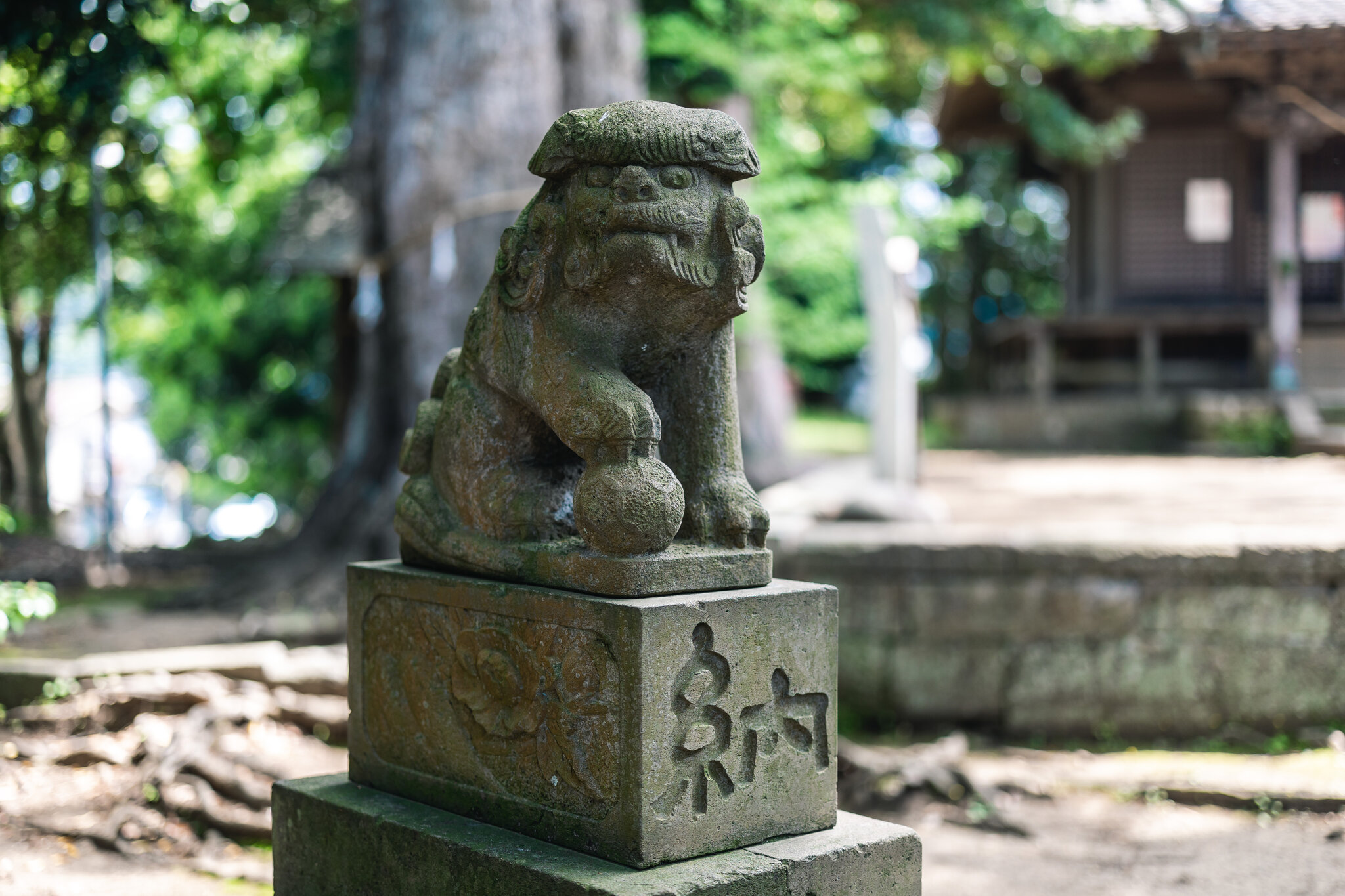
The komainu beneath the ginkgo have their own duties. These lion-like guardians ward off evil, though the rounded faces and neatly carved fringes of this pair give them a rather approachable air. One rests a paw on a ball. The other has a small lion twisting beneath its front paw. Guard duty appears to include childcare.
Elsewhere in the grounds, greenery surrounds a short run of uneven stone steps. The huge trunk draws attention to one tree, but it stands within a whole grove that has been protected as sacred woodland.
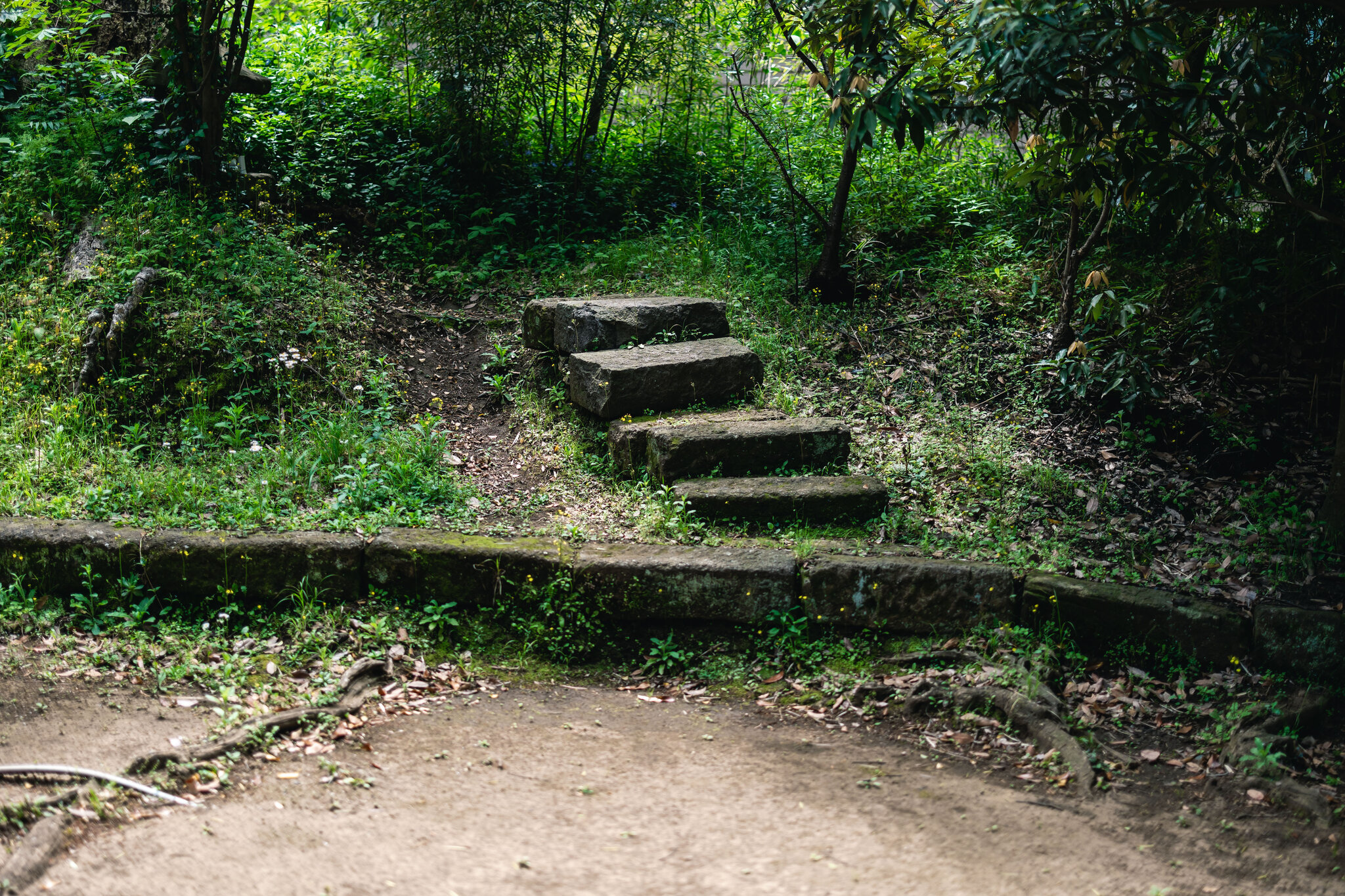
Known as chinju no mori, such woods form part of a shrine’s sacred grounds. Here, that protection has helped preserve vegetation characteristic of the surrounding coastal region. The ginkgo and its neighbouring woodland were designated a prefectural Natural Monument together in 1967. The rope around the trunk is the most visible sign of reverence; the surviving grove gives it a much larger setting.
Across the roots and stone steps, sunlight gets through in patches.
The god helped bring it back to the world. The ginkgo seems to feel that a little goes a long way.
Visit this place
Location
Goryō Shrine (五霊神社)
A Shinto shrine in Zushi’s Numama district, beside a protected sacred grove and its giant ginkgo.
3-10-34 Numama, Zushi, Kanagawa 249-0004, Japan
Practical Information
- Area
- Zushi, Kanagawa
- Access
- About 9 minutes on foot from JR Higashi-Zushi Station
- Visitor note
- An active shrine. Please avoid climbing on the roots or stonework, and leave the surrounding woodland undisturbed.
- Tourism information
- Zushi tourism information
Information last checked: September 20, 2026
Conversation
Comments
Review pending commentsComments are reviewed before appearing. The internet already contains enough unattended surprises.
Checking comments…
Comments are not available in this migration preview yet. Existing comments remain on the current site.
Leave a comment