Namba Yasaka Shrine: Where a Giant Lion Eats Bad Luck
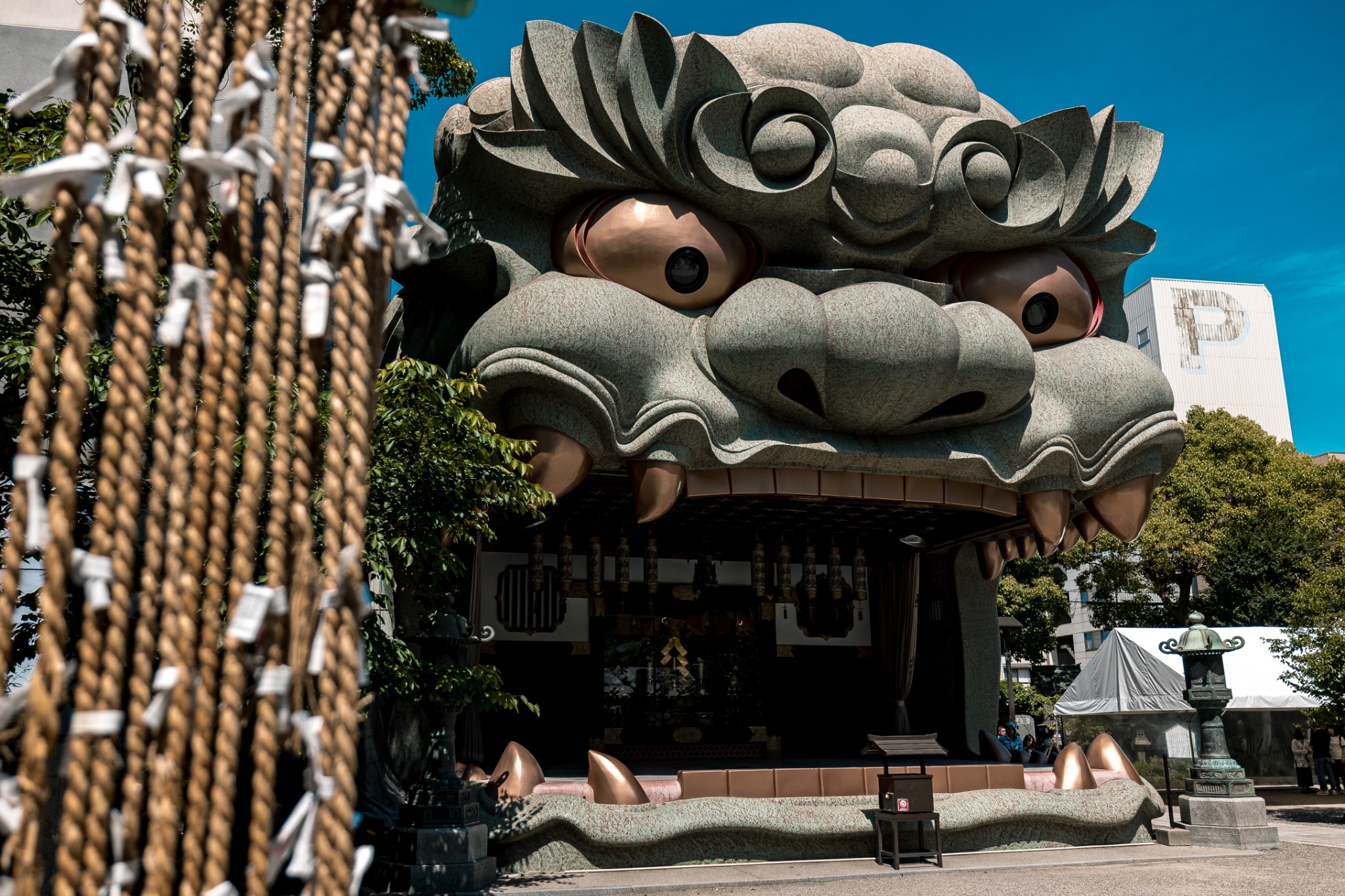
There is a twelve-metre lion waiting at Namba Yasaka Shrine.
More precisely, there is a twelve-metre head.
Its mouth hangs open over the courtyard, lined with golden teeth and large enough to make the people standing beneath it look like they have made a questionable decision.
Fortunately, they have come to the right mouth. According to the shrine, it swallows evil and brings victory and good fortune. The teeth are on your side.
This is the Shishi-den, or Lion Hall, at Namba Yasaka Shrine in Osaka. People come from all over Japan to pray for progress in their studies, for jobs and for business. Behind that alarming face are some very ordinary human concerns.
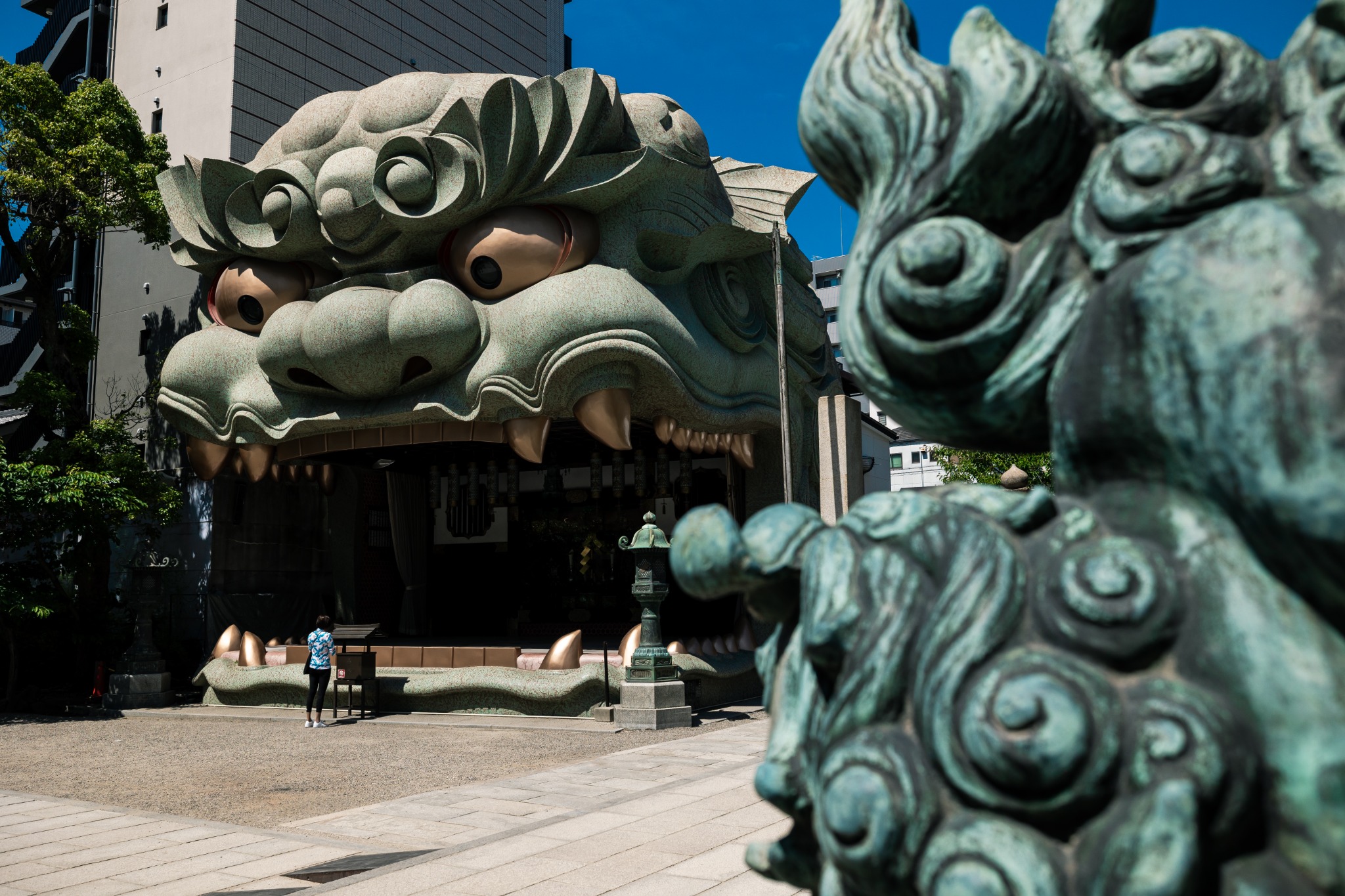
There are more discreet ways to deal with bad luck. This one has teeth.
The mouth has another job
Look past those teeth and there is a stage.
The lion is a building, and its open mouth provides a setting for religious offerings of music and dance. At New Year, these include kagura and iaido, the martial art of drawing a sword. During the summer festival, there are lion dances inside a larger lion. The audience is unlikely to forget the theme.
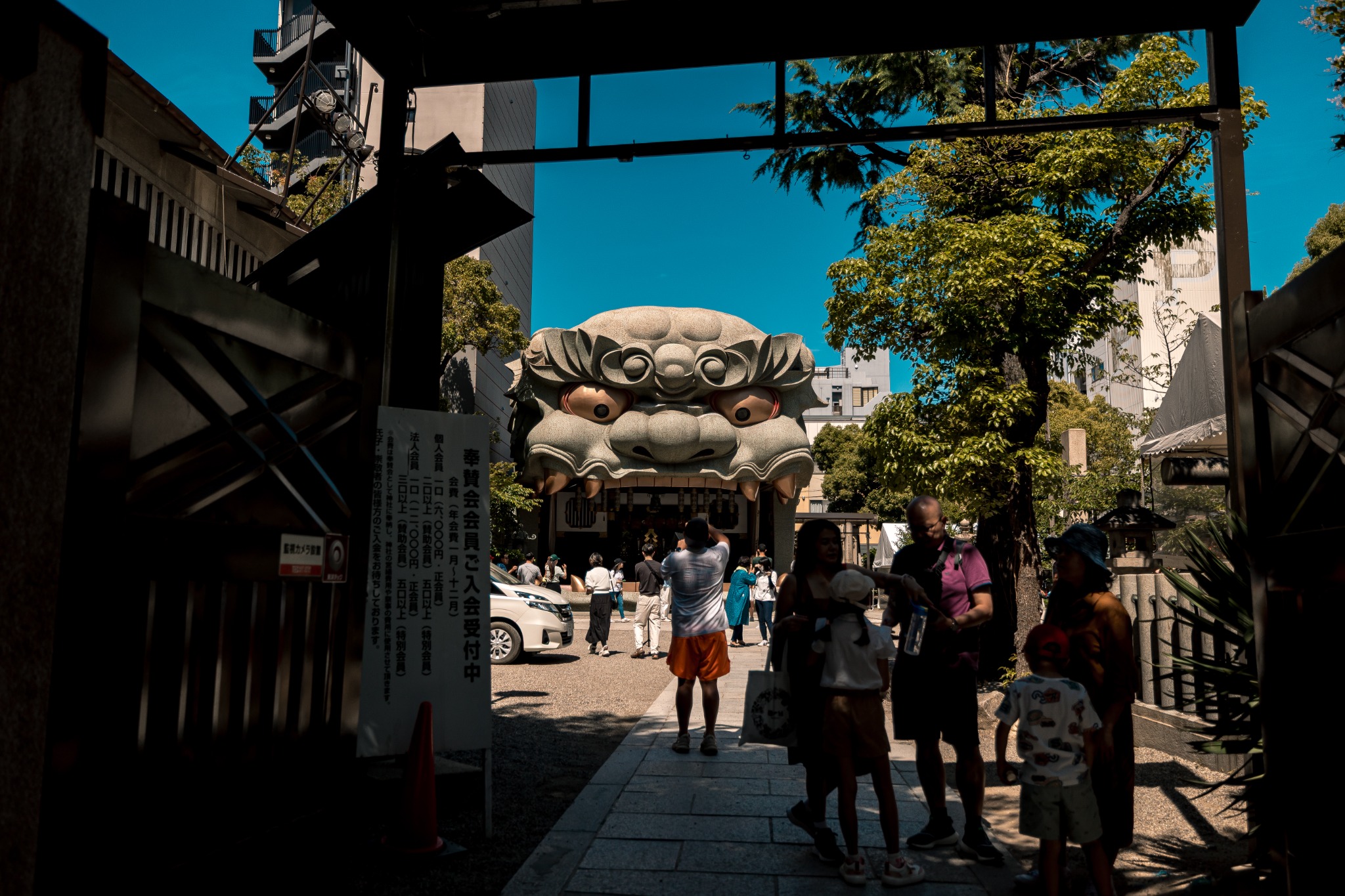
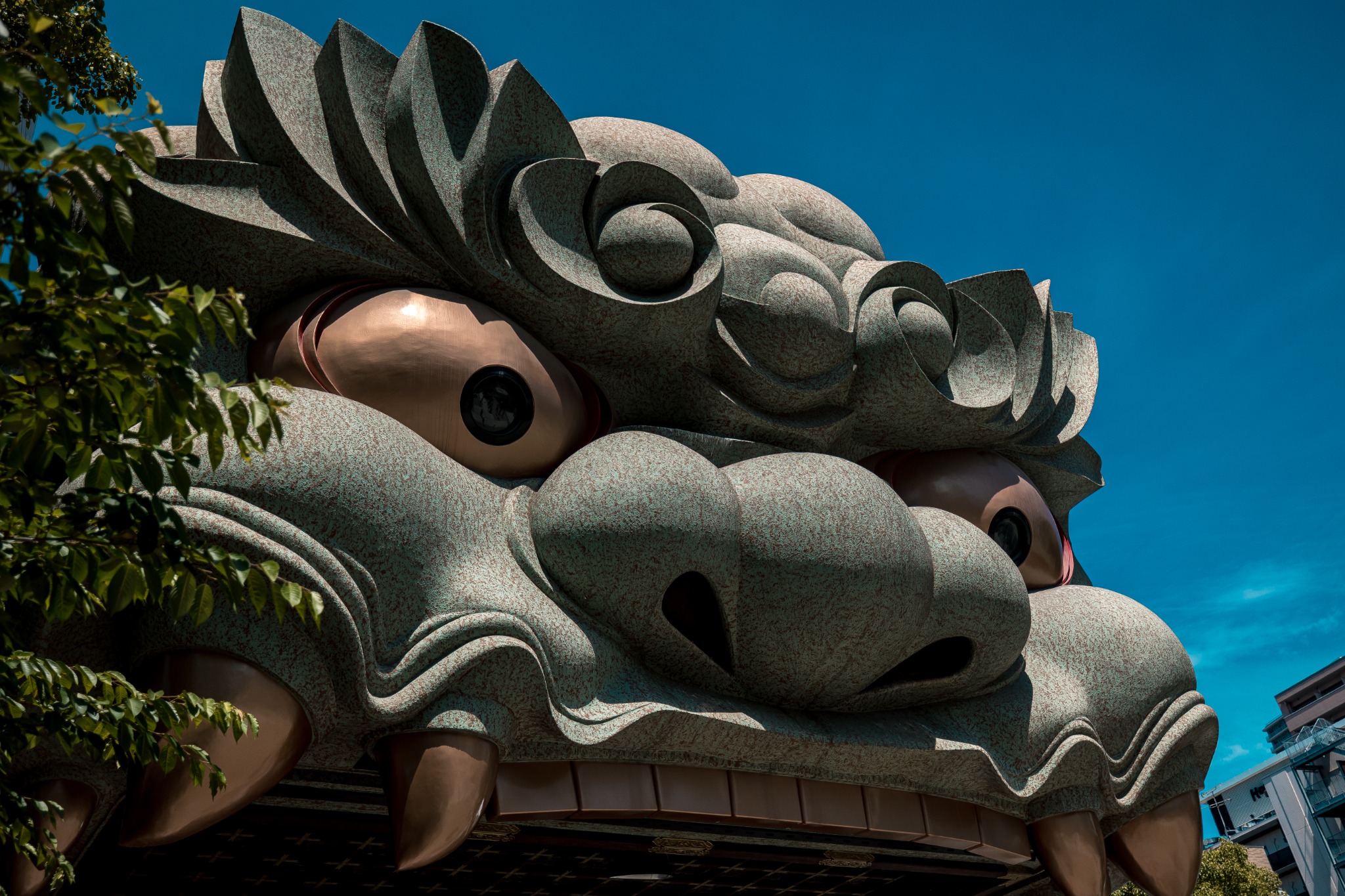
The face also supplies some of the equipment: the eyes serve as lights, and the nose as a speaker.
Older than it looks
The shrine’s history stretches back many centuries; the enormous face is a more recent addition. The shrine’s buildings burned in the air raids of 1945. The present main sanctuary and the Shishi-den were completed together in May 1974.
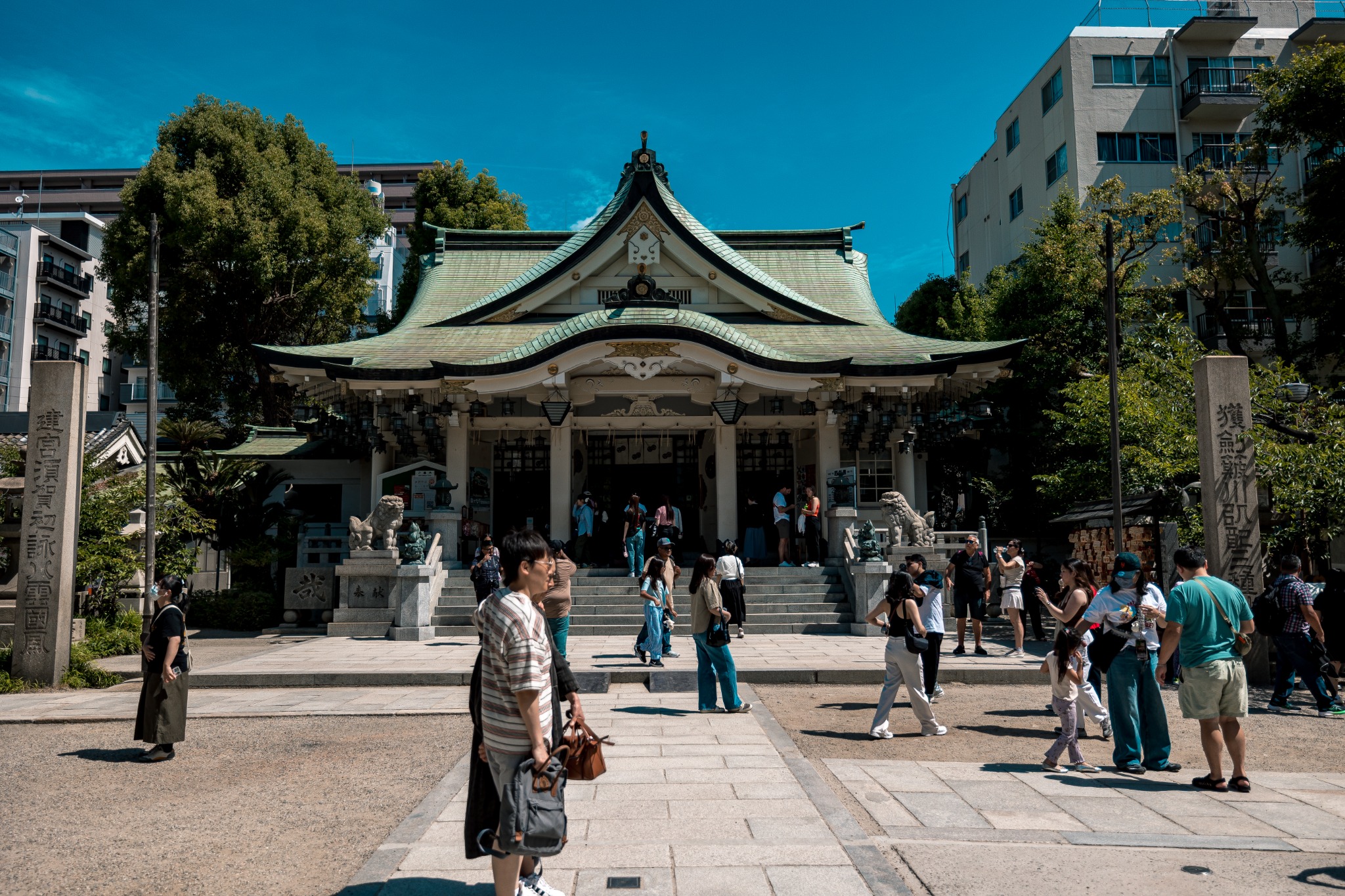
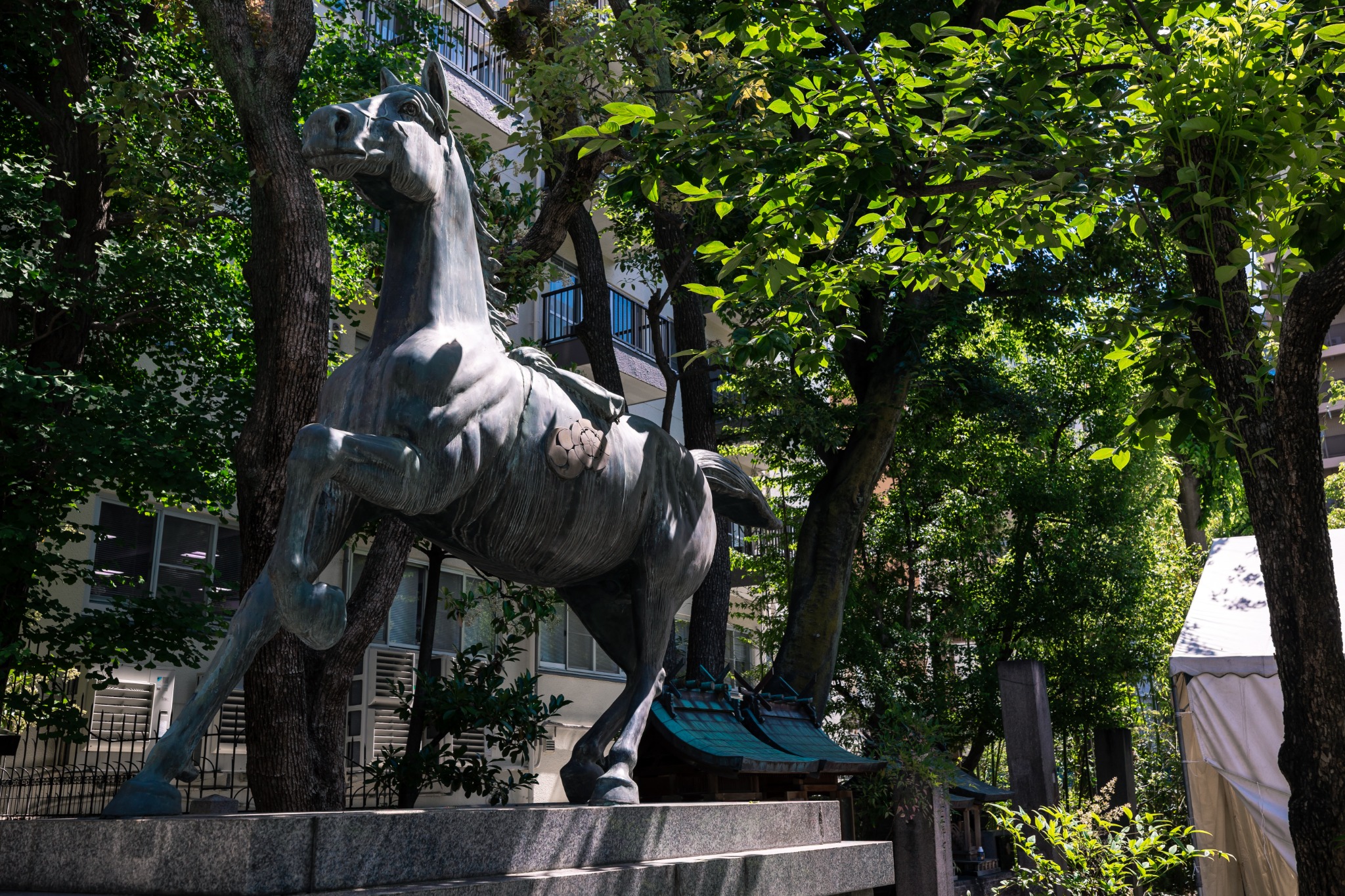
The god enshrined here is Susanoo, best known in Japanese myth for killing Yamata no Orochi, a serpent with eight heads and eight tails. Every January, on the third Sunday, the story returns as a rope. A great rope is twisted into the same shape and pulled towards the year’s lucky direction, to drive off disease and disaster.
Illustrated guidebooks from the Edo period already describe the ritual, and it was the first intangible folk cultural property designated by the city of Osaka.
Susanoo’s most famous day was spent fighting a giant monster. In 1974, his shrine built a giant of its own.
This one works for the shrine.
Looking away from the lion
It takes a little effort to give the rest of the courtyard a fair share of your attention. The main sanctuary has a roof, lanterns and a sacred rope. Its neighbour has a face twelve metres high.
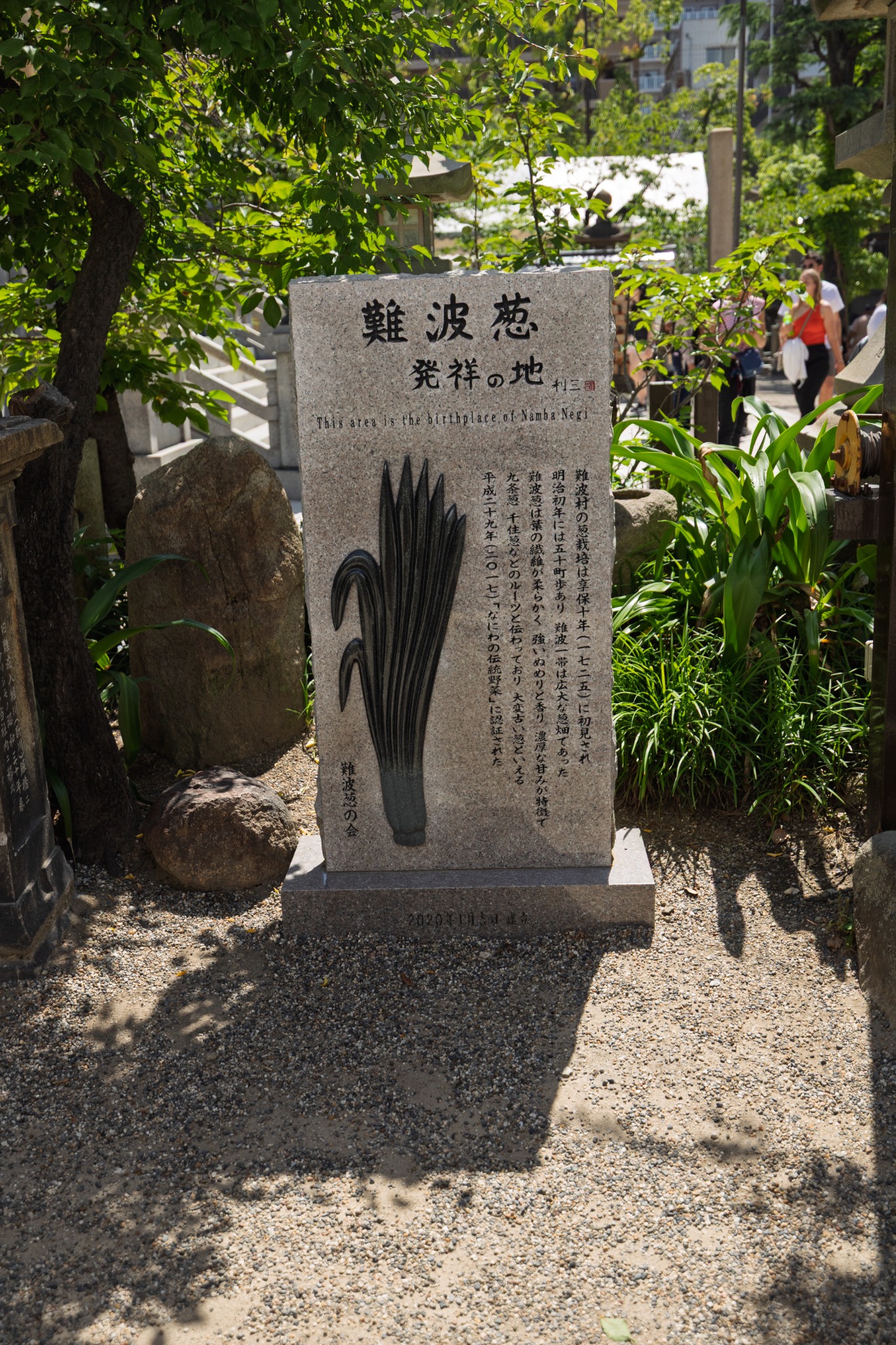
Namba negi is a traditional variety of green onion. Records of onion cultivation here go back to 1725. In an account of the neighbourhood published by Naniwa Ward, a resident recalls his grandfather’s description of growing up here: the area was largely covered in onion fields.
Around modern Namba, stations, shops, hotels and restaurants make that landscape difficult to picture. But the variety outlasted the fields that once defined the district. Known for its tender leaves, sweetness and strong aroma, Namba negi was recognised as one of Osaka’s traditional vegetables in 2017.
The monument, put up in 2020, adds a family connection: Namba negi is said to be the ancestor of Kyoto’s Kujō negi and Tokyo’s Senju negi.
Back in the courtyard, the lion remains at its post, waiting for whatever bad luck comes next.
Someone has to eat it.
Visit this place
Location
Namba Yasaka Shrine (難波八阪神社)
Around 6 minutes on foot from Osaka Metro Namba Station or Nankai Namba Station
2-9-19 Motomachi, Naniwa-ku, Osaka 556-0016, Japan
Practical Information
- Area
- Namba / Motomachi, Osaka
- Access
- About 6 minutes on foot from Osaka Metro Namba Station or Nankai Namba Station
- Gate hours
- 6:00–17:00
- Visitor-information hours
- 9:00–16:50
- Admission
- Free
- Closing days
- No regular closing days listed by Osaka’s official tourism site
Information last checked: September 2, 2026
Conversation
Comments
Review pending commentsComments are reviewed before appearing. The internet already contains enough unattended surprises.
Checking comments…
Comments are not available in this migration preview yet. Existing comments remain on the current site.
Leave a comment