Jōsenji: The Head Priest Sends His Kappa
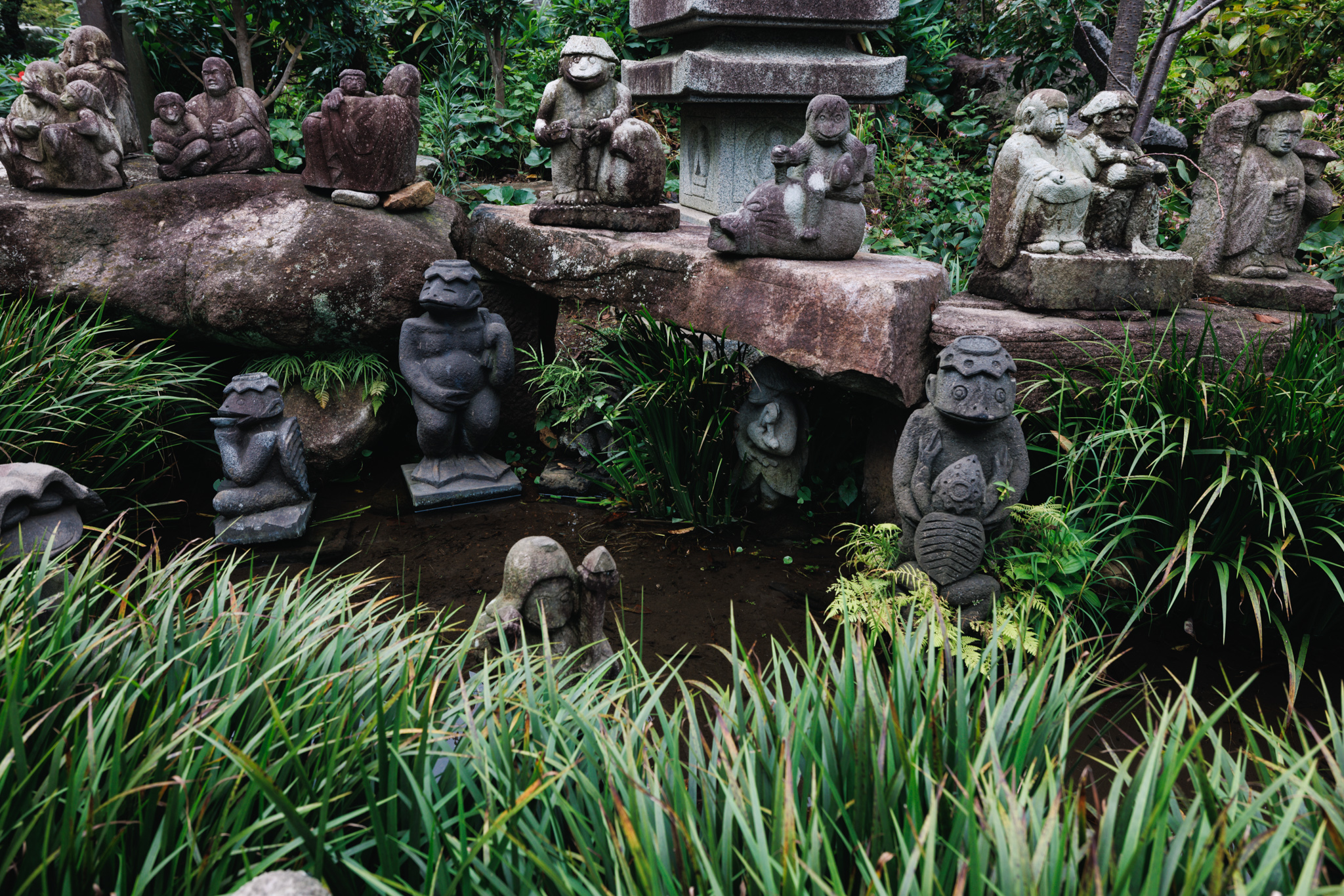
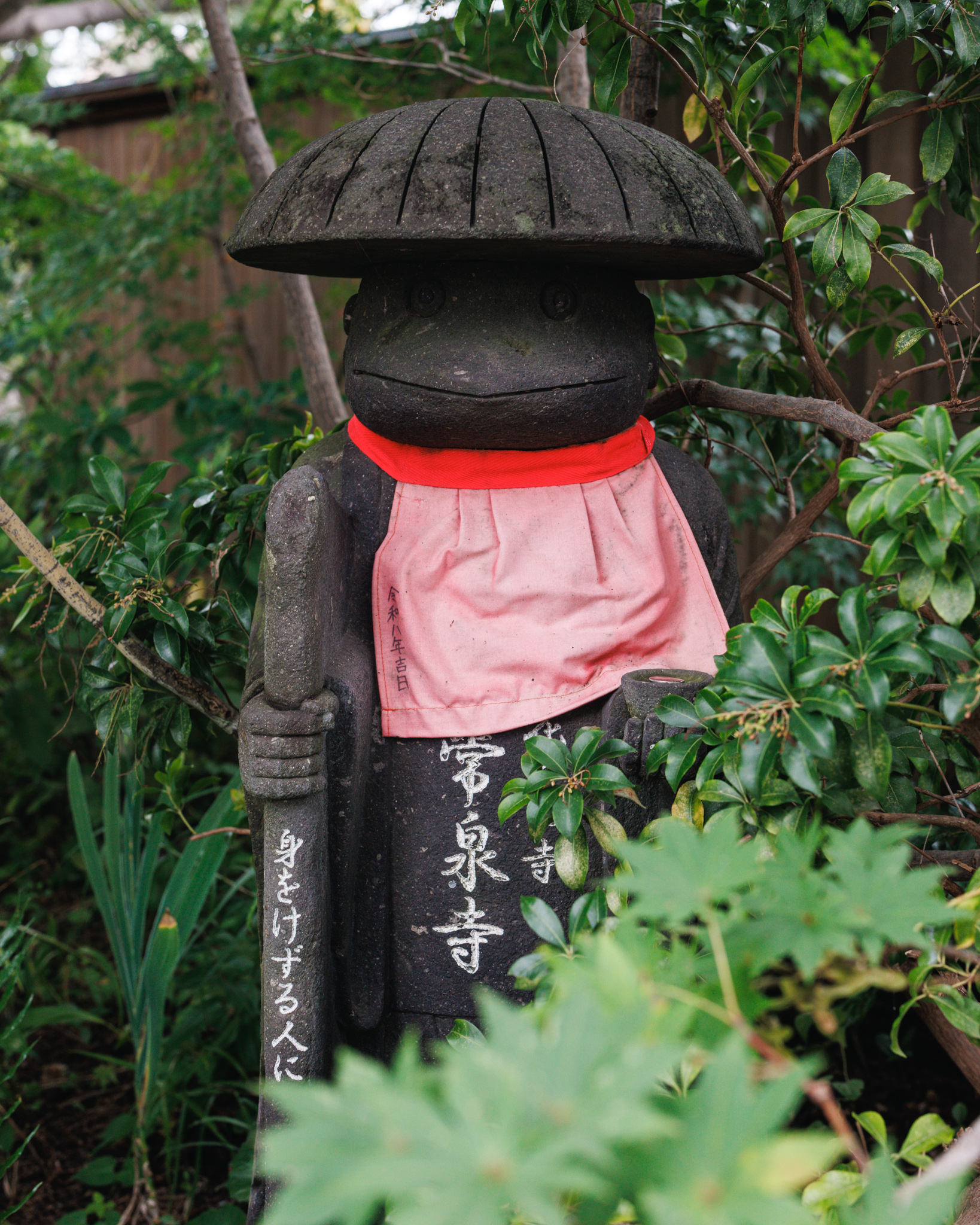
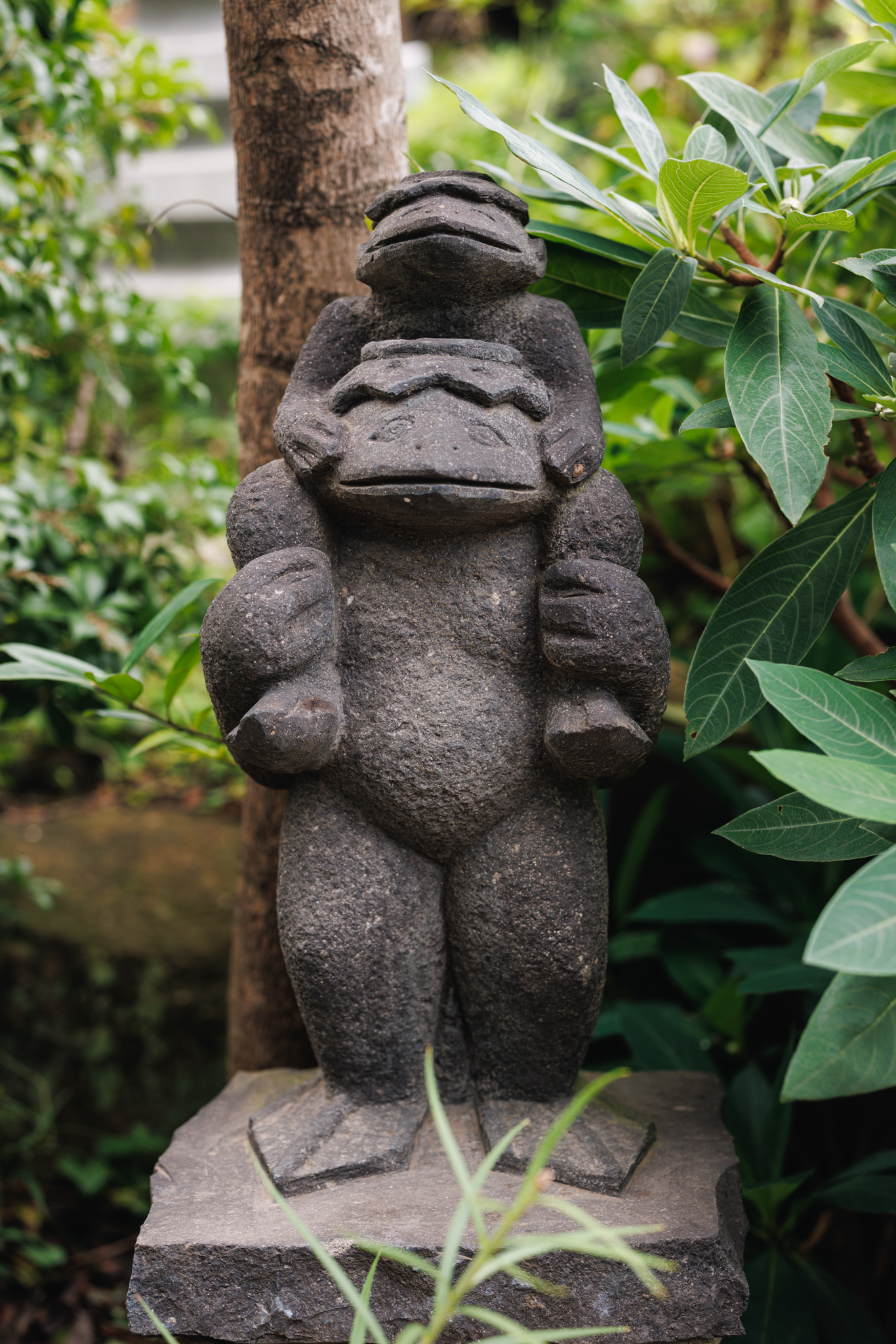
By the temple’s count, there are more than 300 kappa at Jōsenji. They are here on the head priest’s behalf.
He would like visitors to feel at ease, the temple explains, but rarely gets the chance to spend time with each one. So the kappa were placed around the grounds to do it for him.
Kappa are the water creatures of Japanese folklore, with a beak, a shell and a dish of water on top of the head. The choice is not random. Jōsenji’s full name, Seiryūzan Jōsenji, means roughly “Clear Stream Mountain, Temple of the Constant Spring”. According to the temple, it comes from the Buddhist name of the man behind its founding, in the late sixteenth century. Because of that name, and water that has welled up in its grounds, the temple enshrines kappa as gods of water.
Here and there
Just inside the gate, on the left, stands a monument to Tōkei Gakusha, a public elementary school that opened at the temple in 1873 and moved away soon after.
Beside the monument, a kappa is reading.
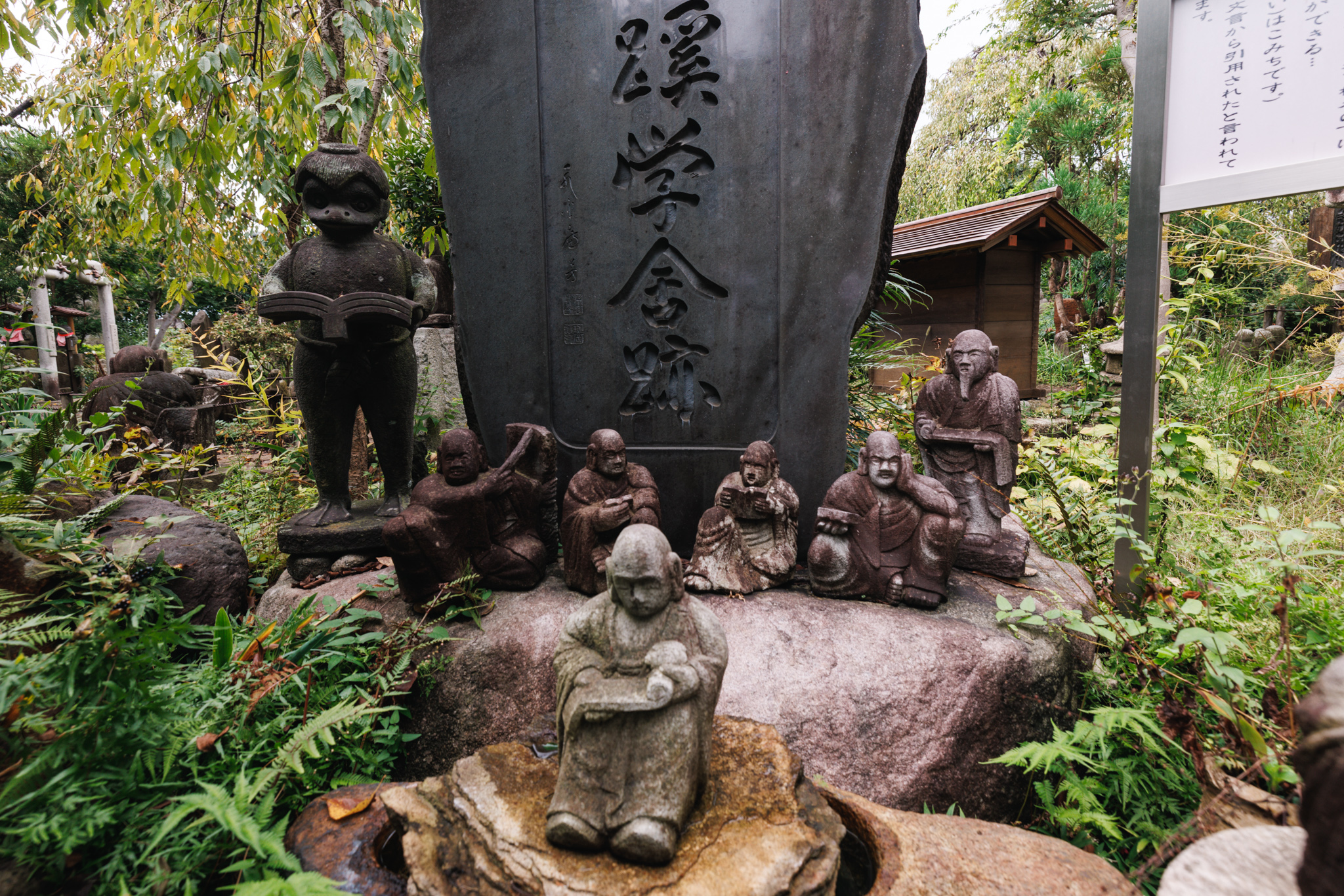
The school took its name from an old Chinese saying: peach and plum trees say nothing, yet a path forms beneath them. People come without being called. At Jōsenji, someone goes out to meet them anyway.
Swipe to explore
Tap to enlarge
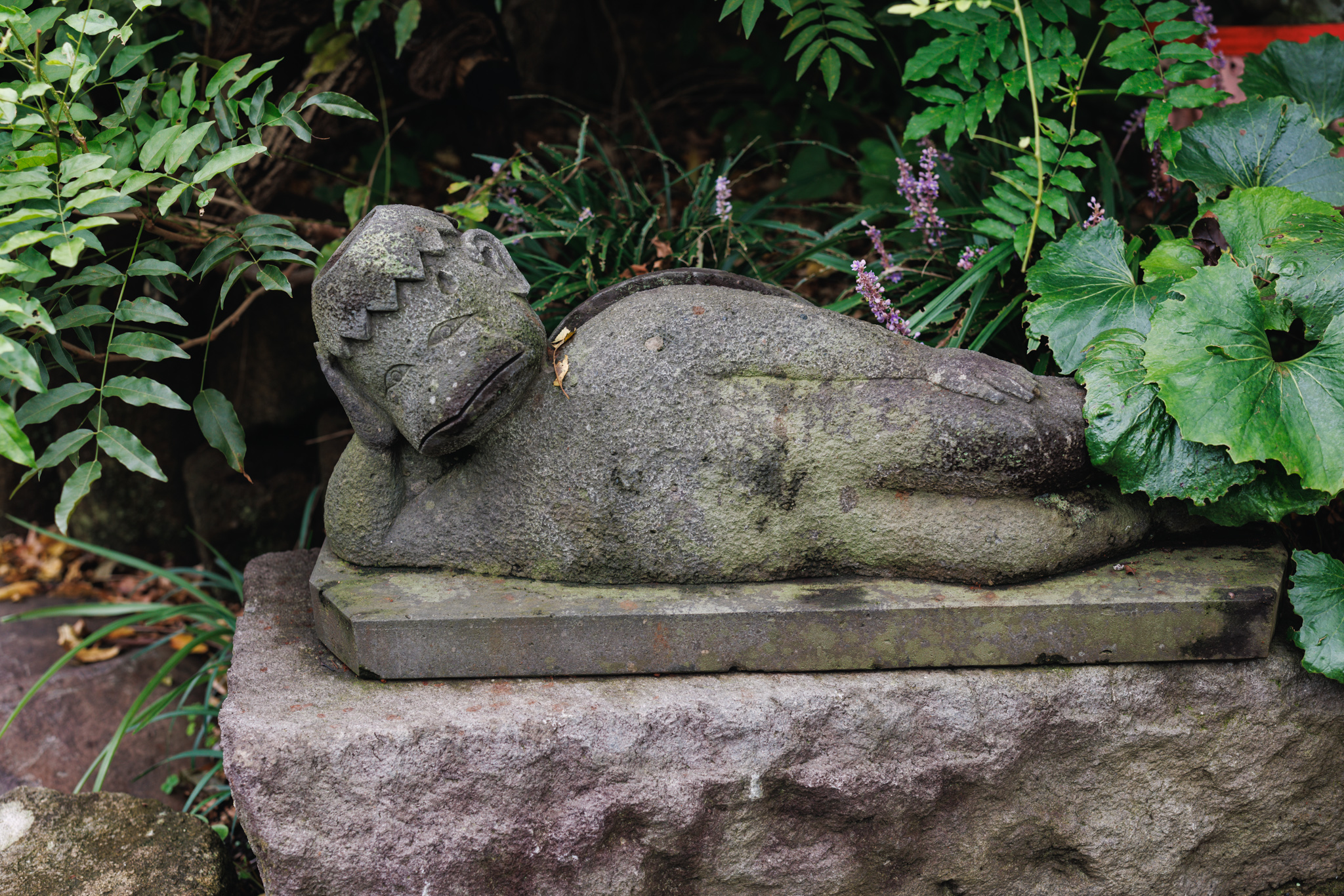
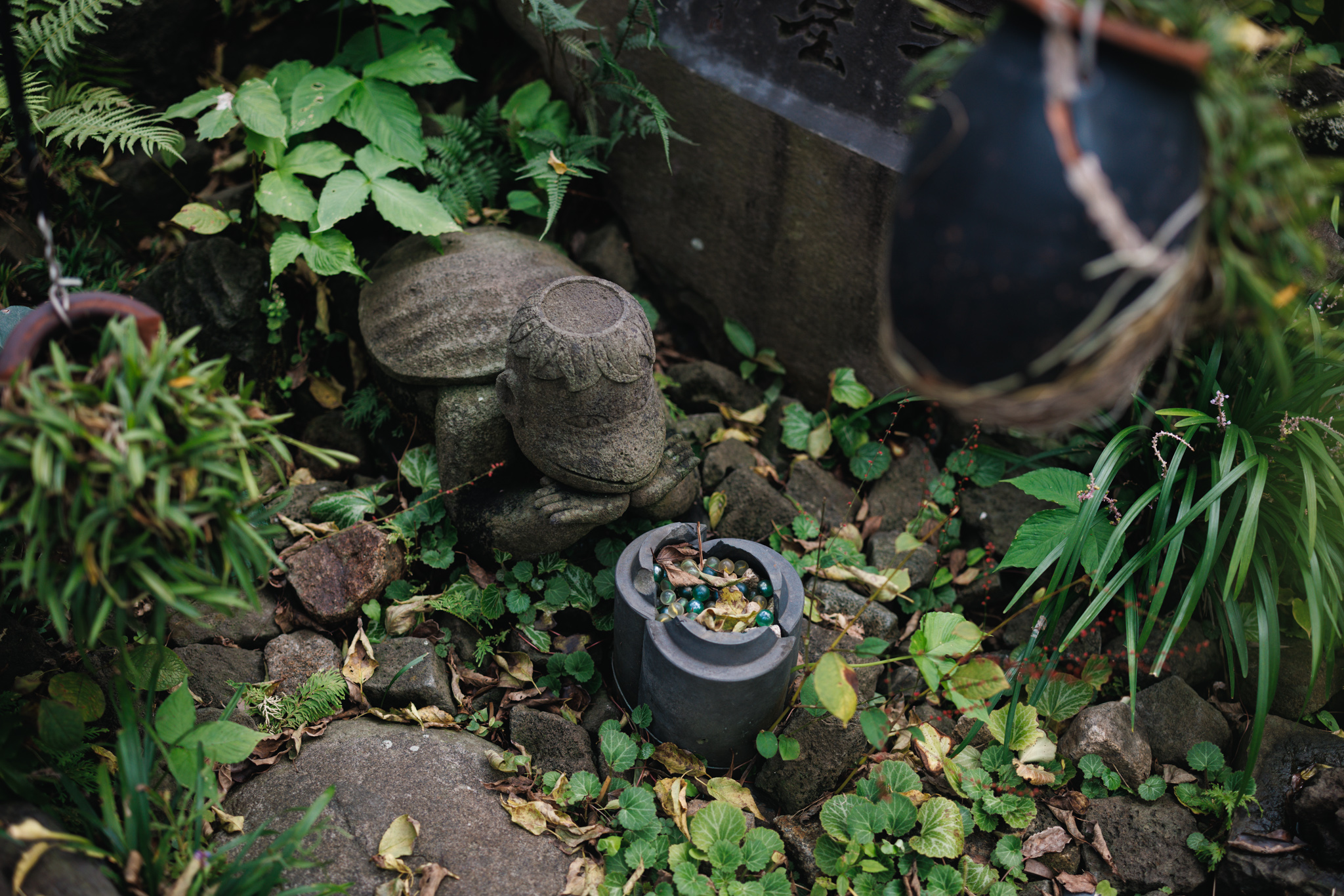
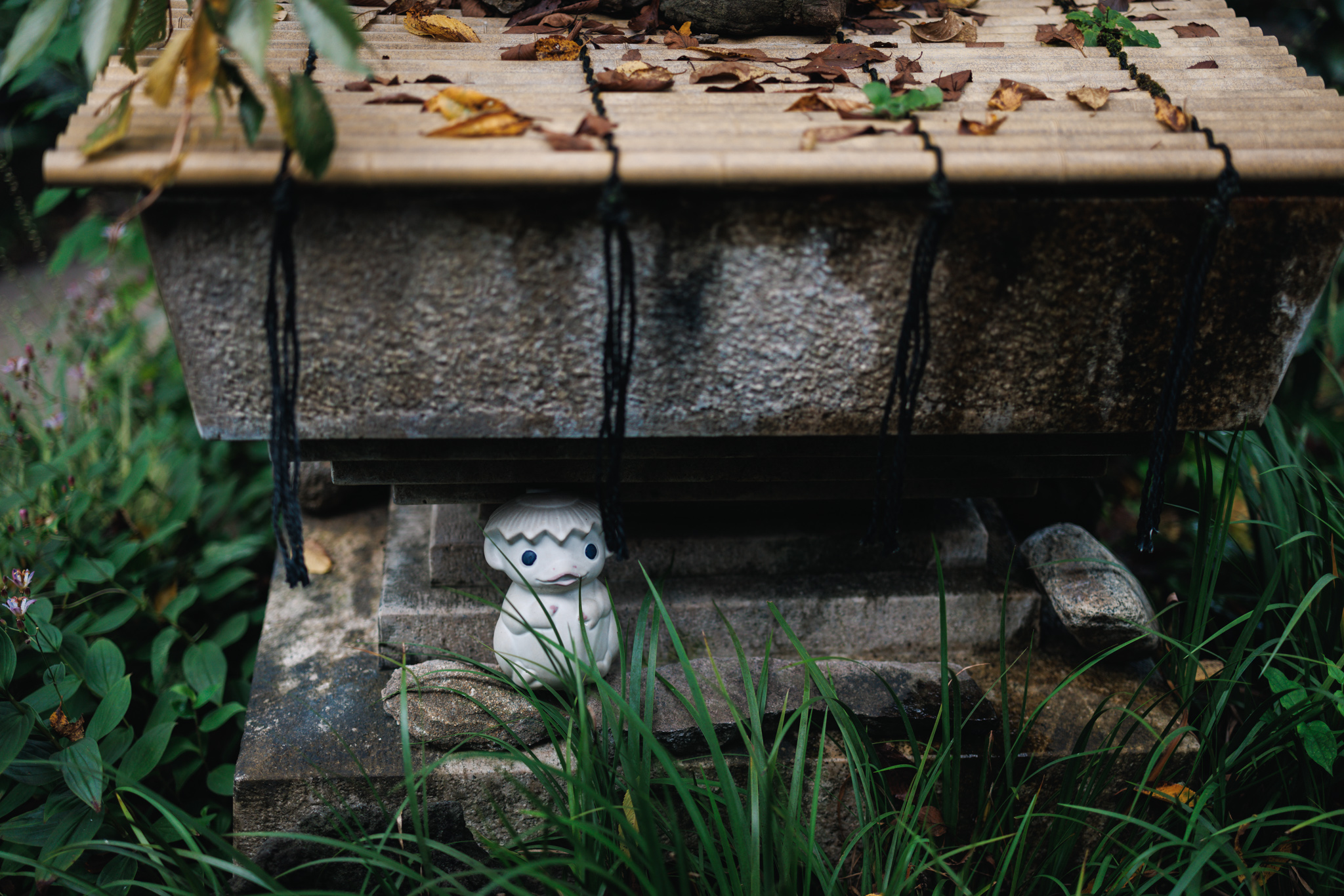
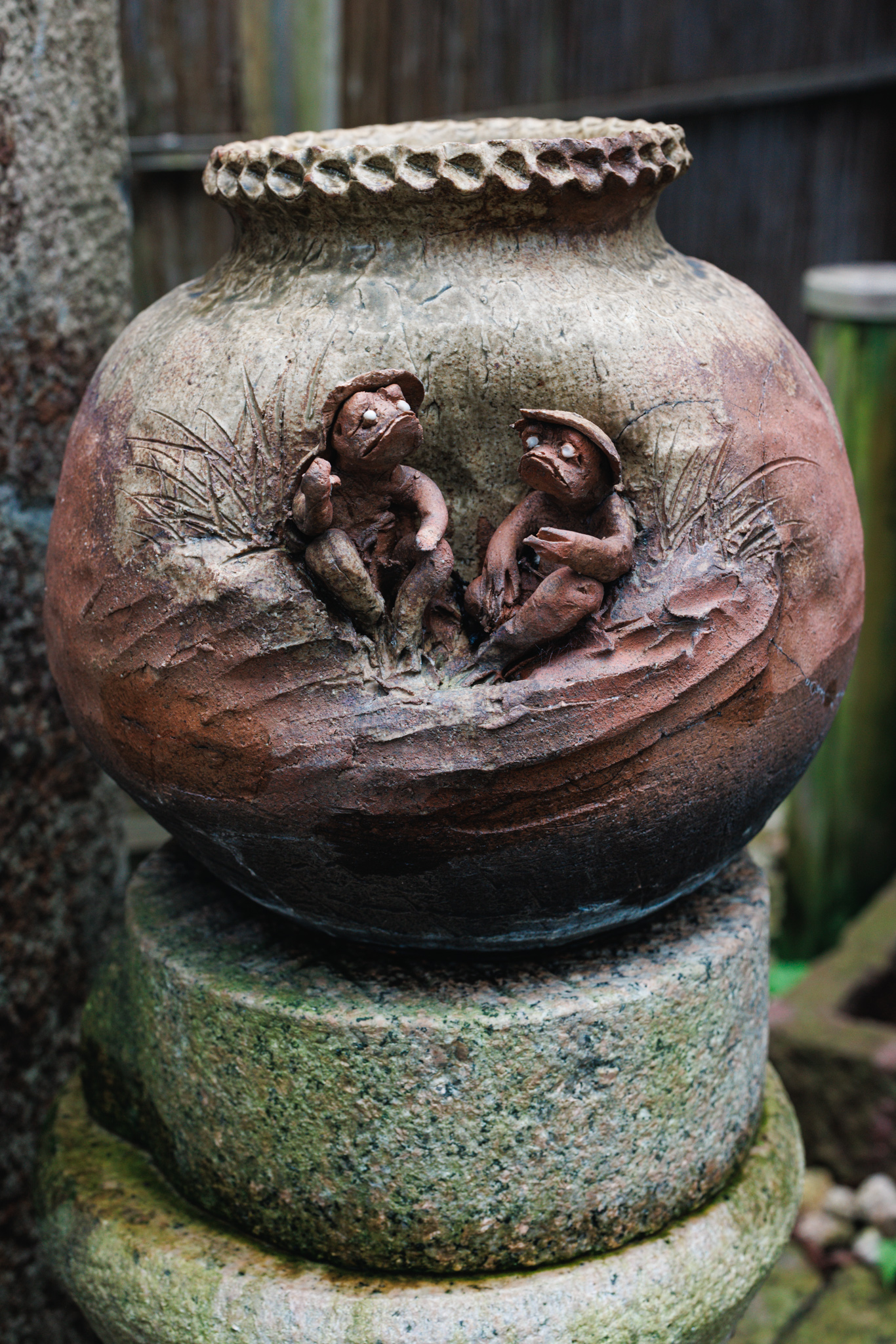
Five hundred disciples
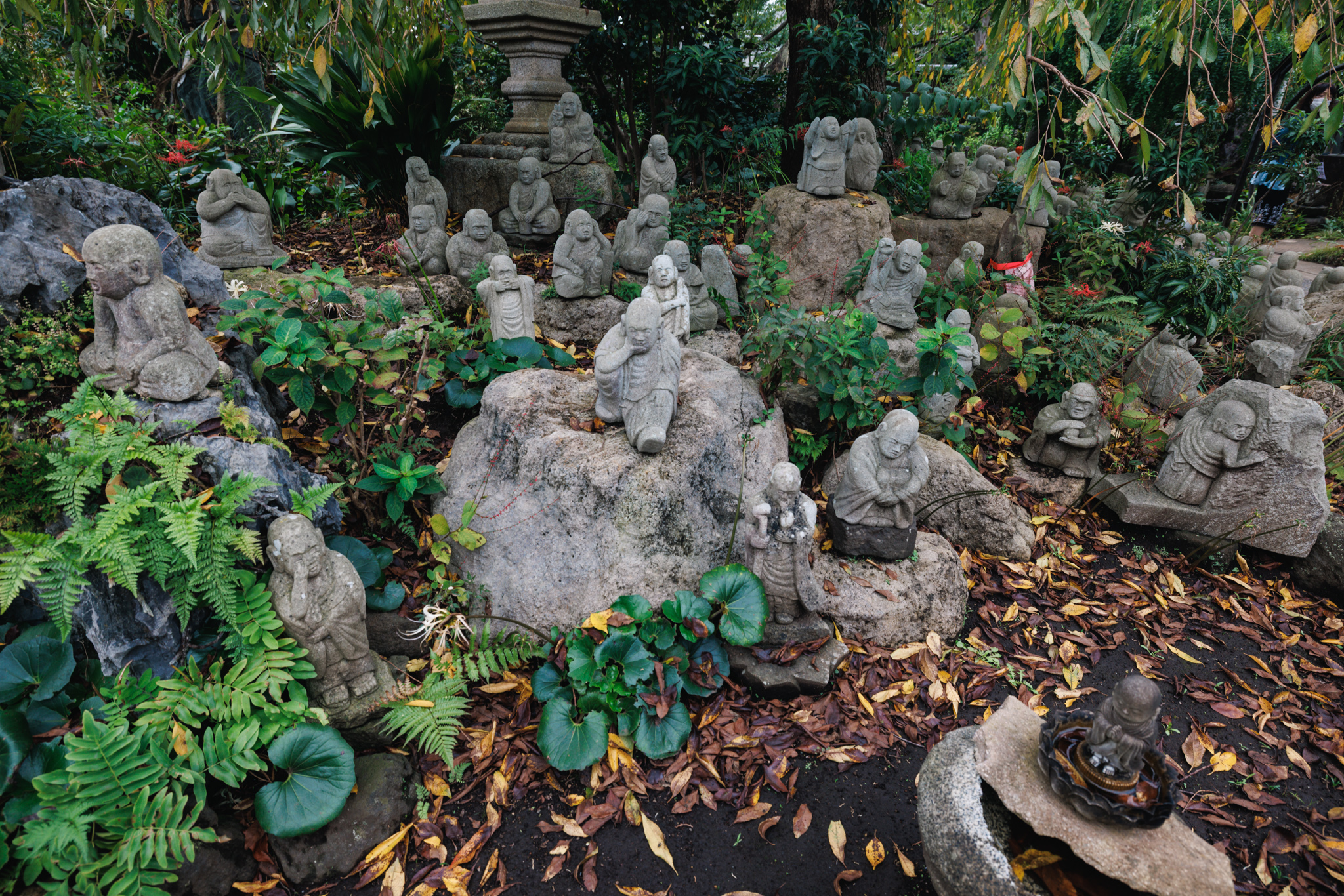
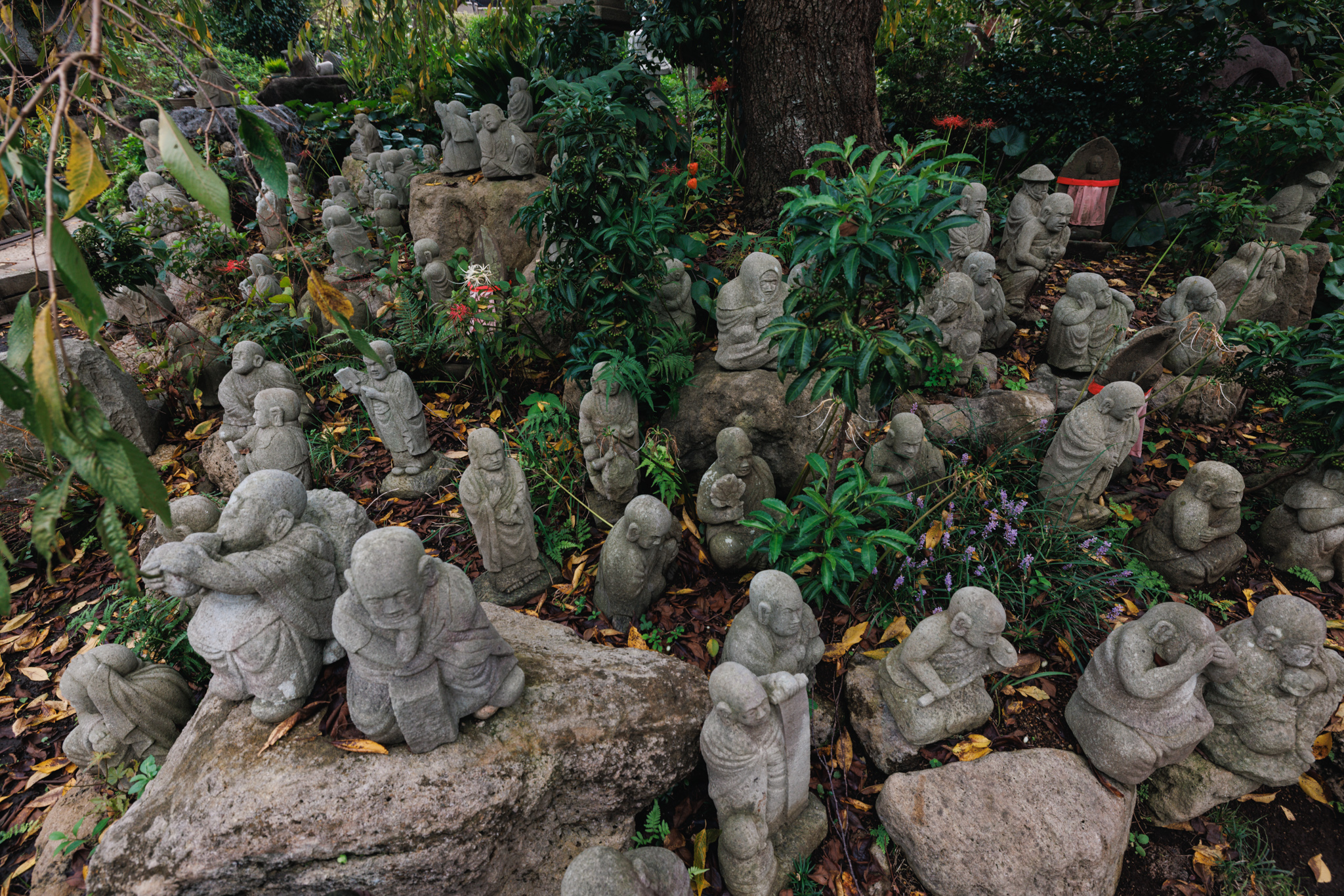
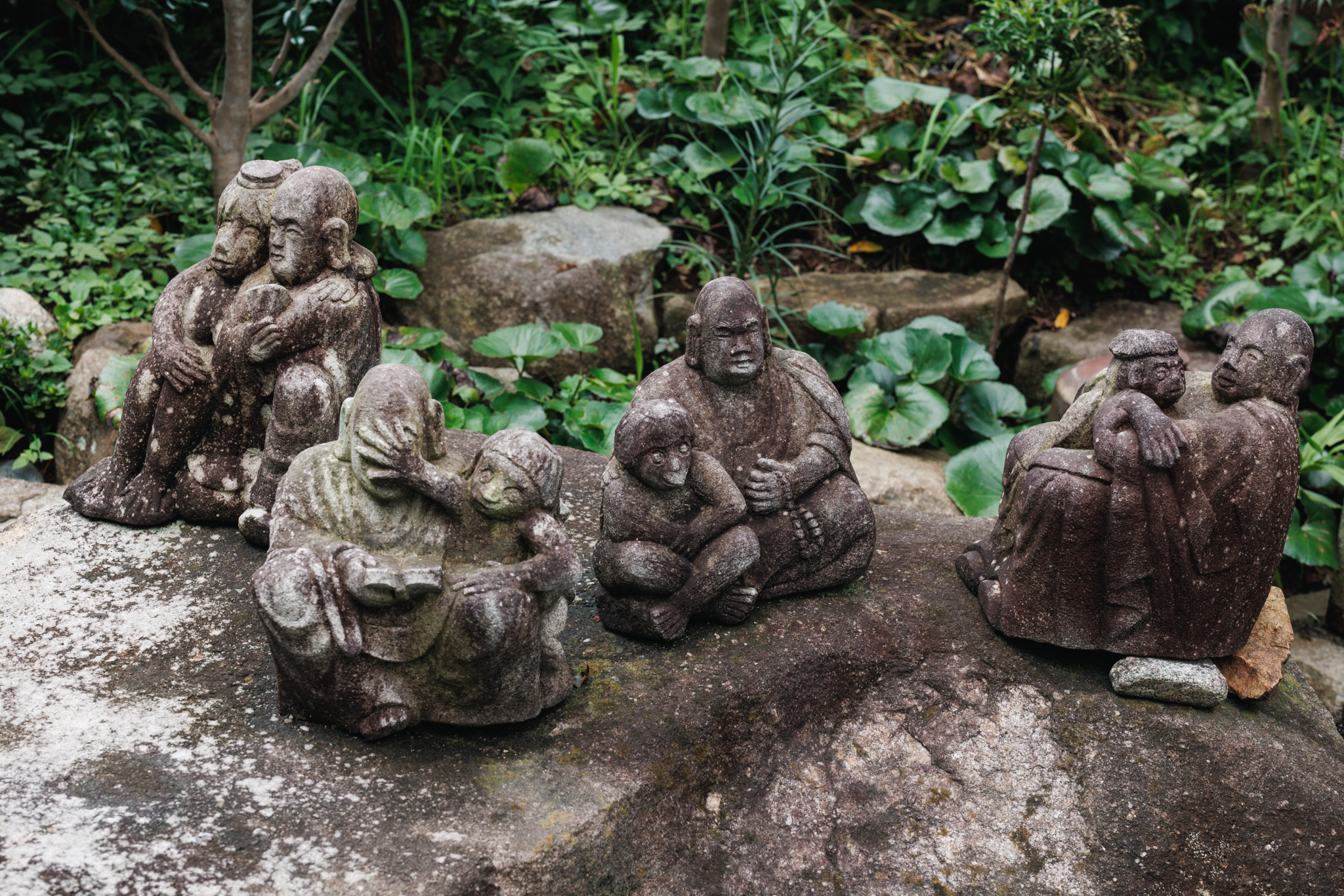
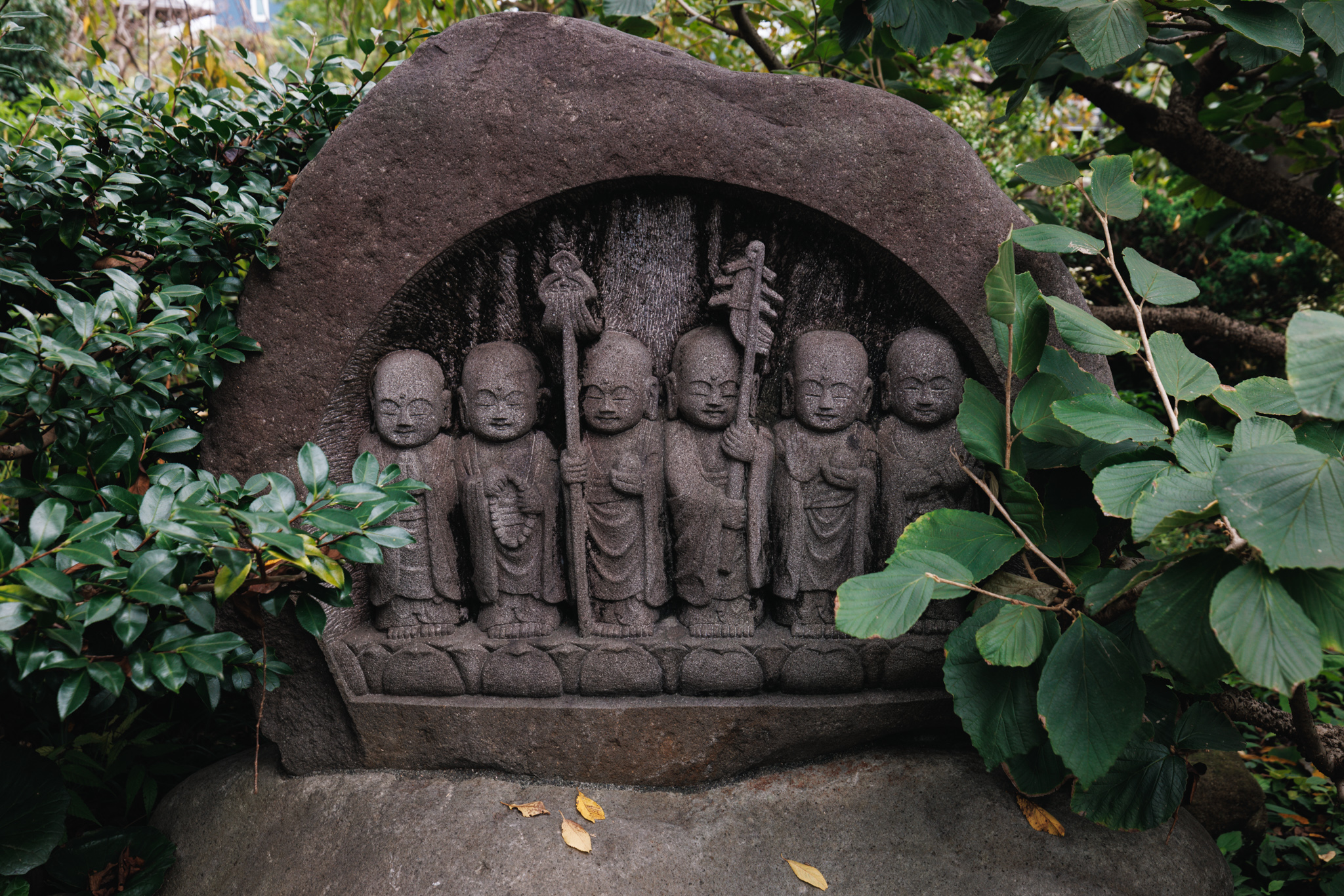
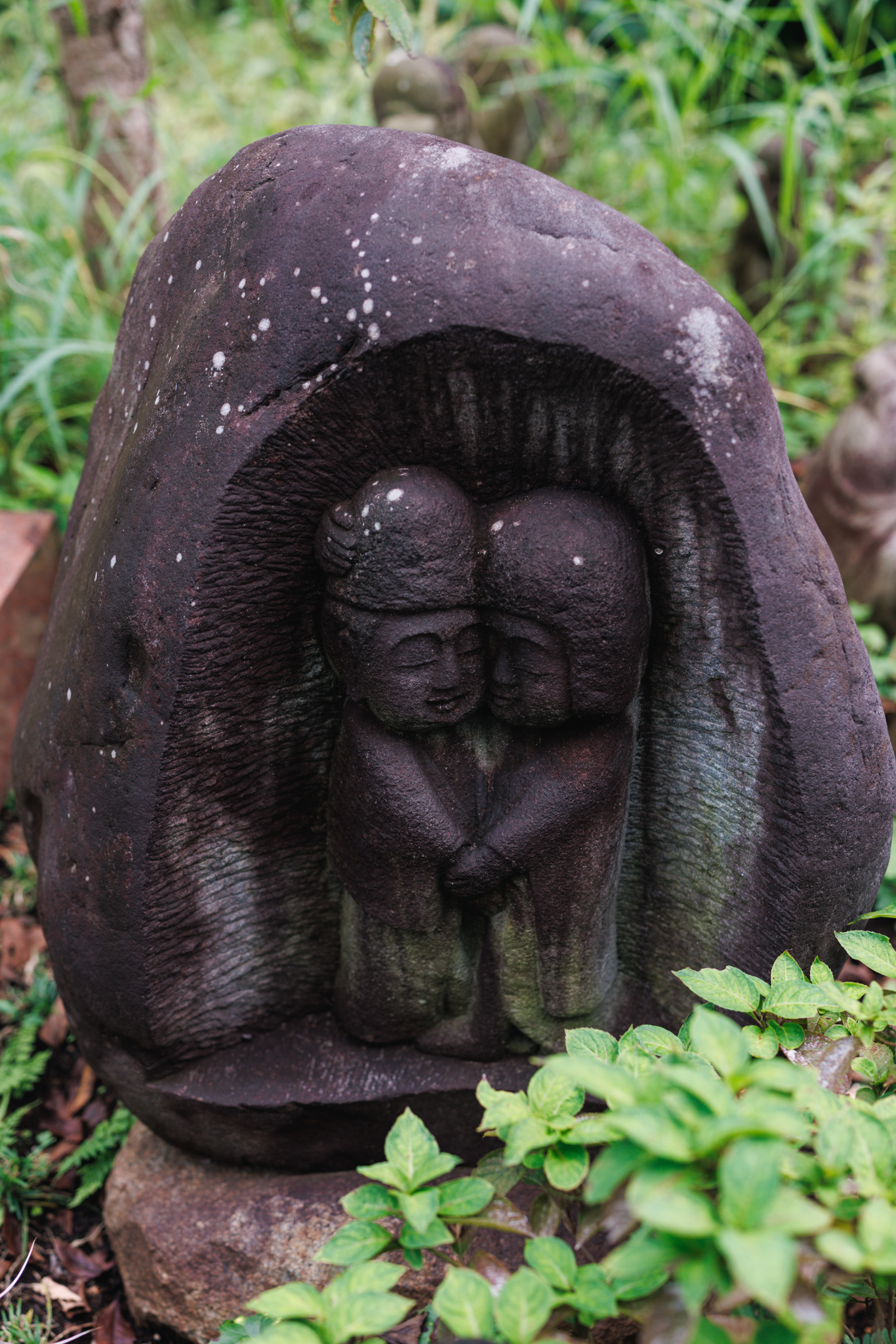
Kappa are not the only crowd in the garden. Among the rocks, ferns and fallen leaves sit the Five Hundred Arhats, the disciples of the Buddha, in all sorts of postures.
The temple is more than four centuries old. The statues are not. In 1988, the temple and the stone sculptor Kurata Tatsuhiko set out to make them, and the work took more than thirty years. The last of them were finished in 2022.
One sculptor made all five hundred.
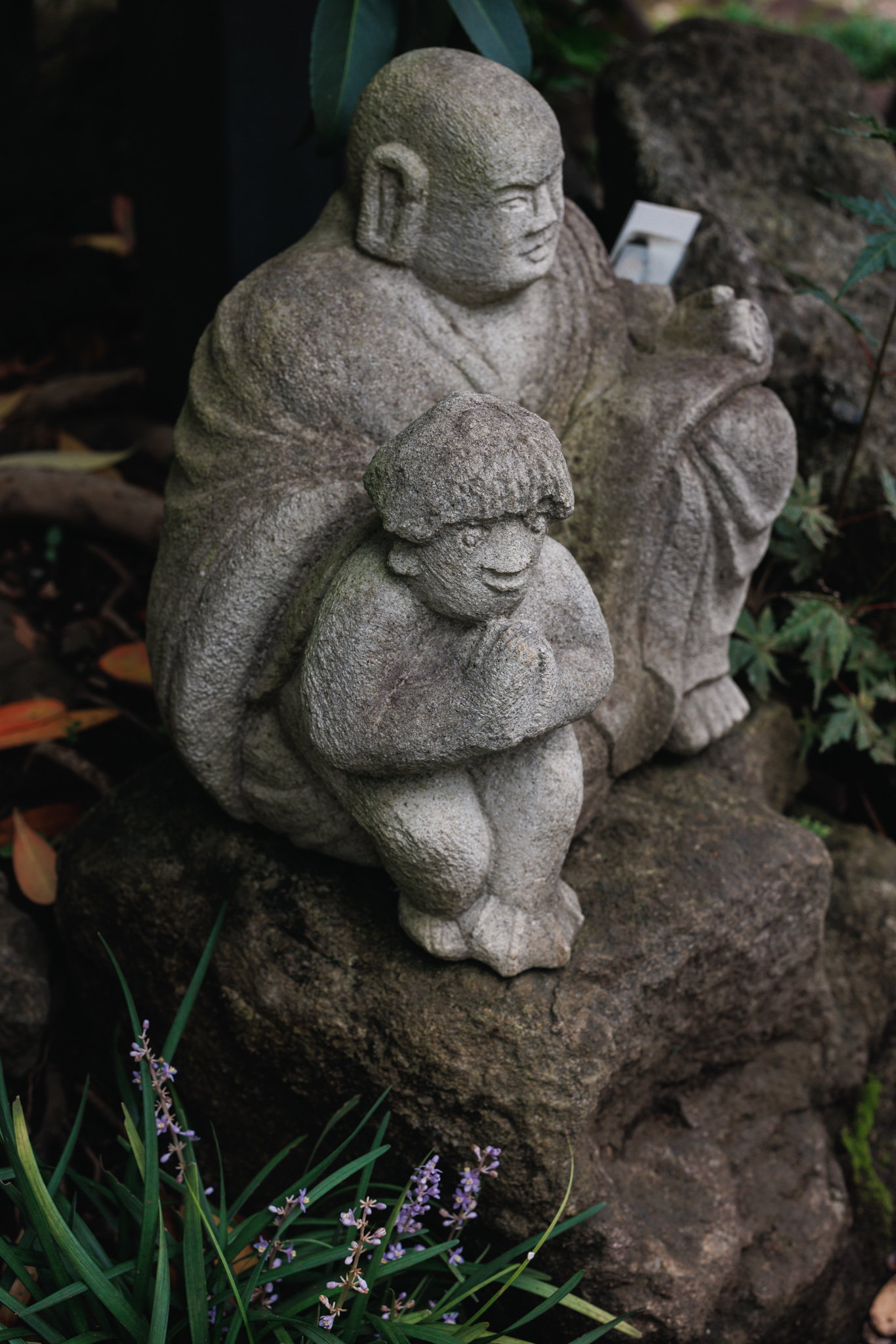
Some of the groups include a kappa. A disciple has one at his knee, or an arm around one.
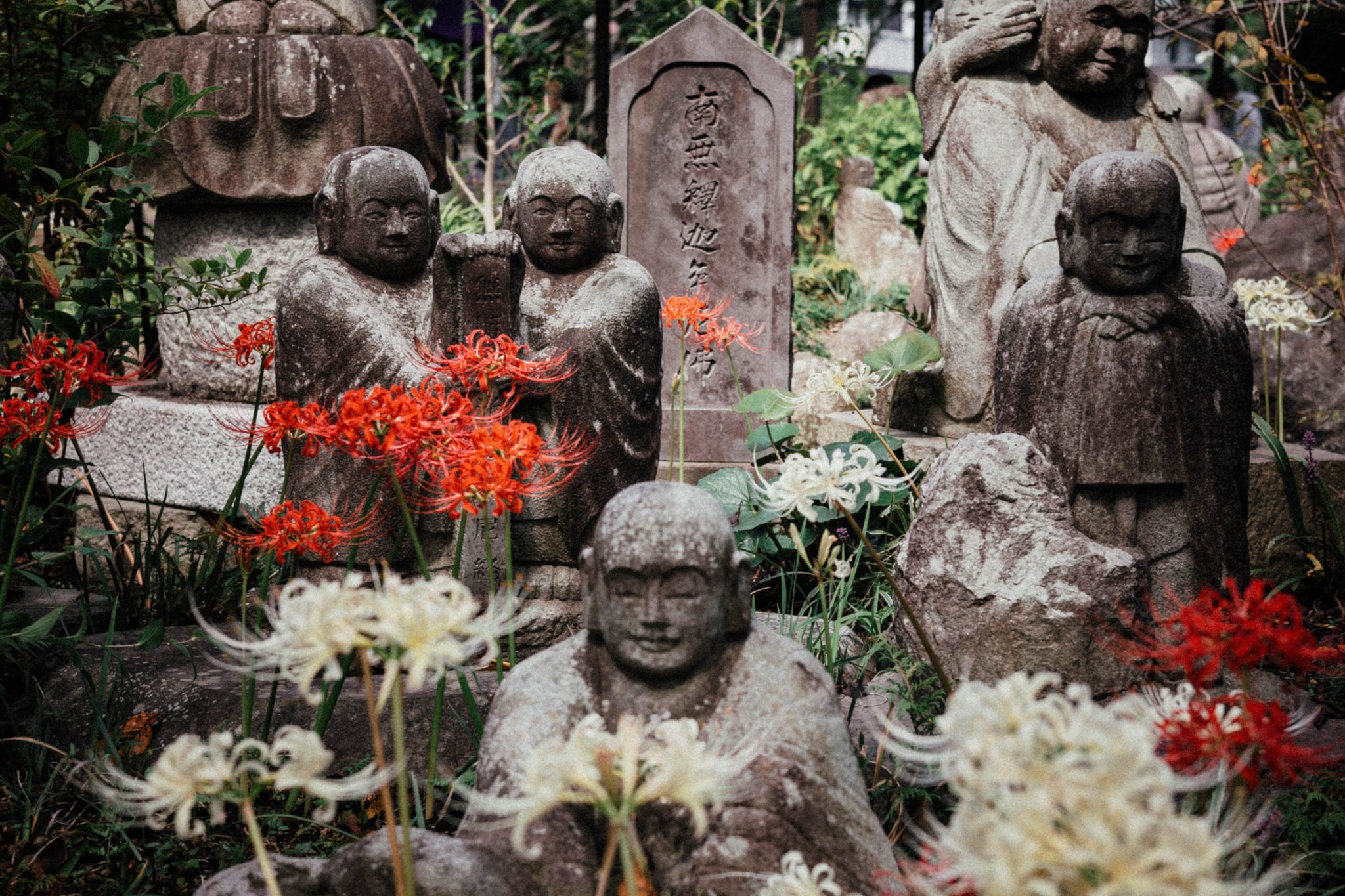
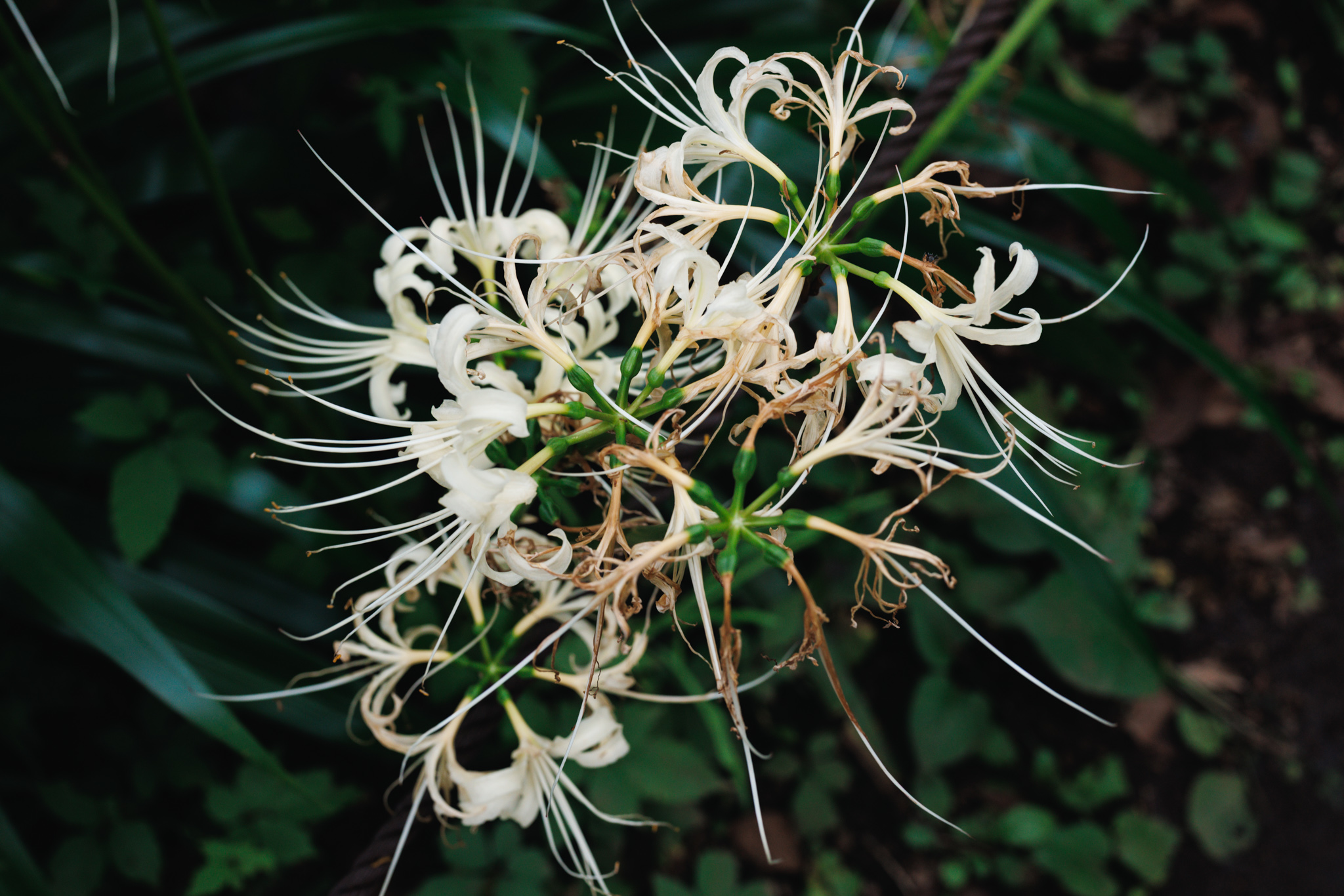
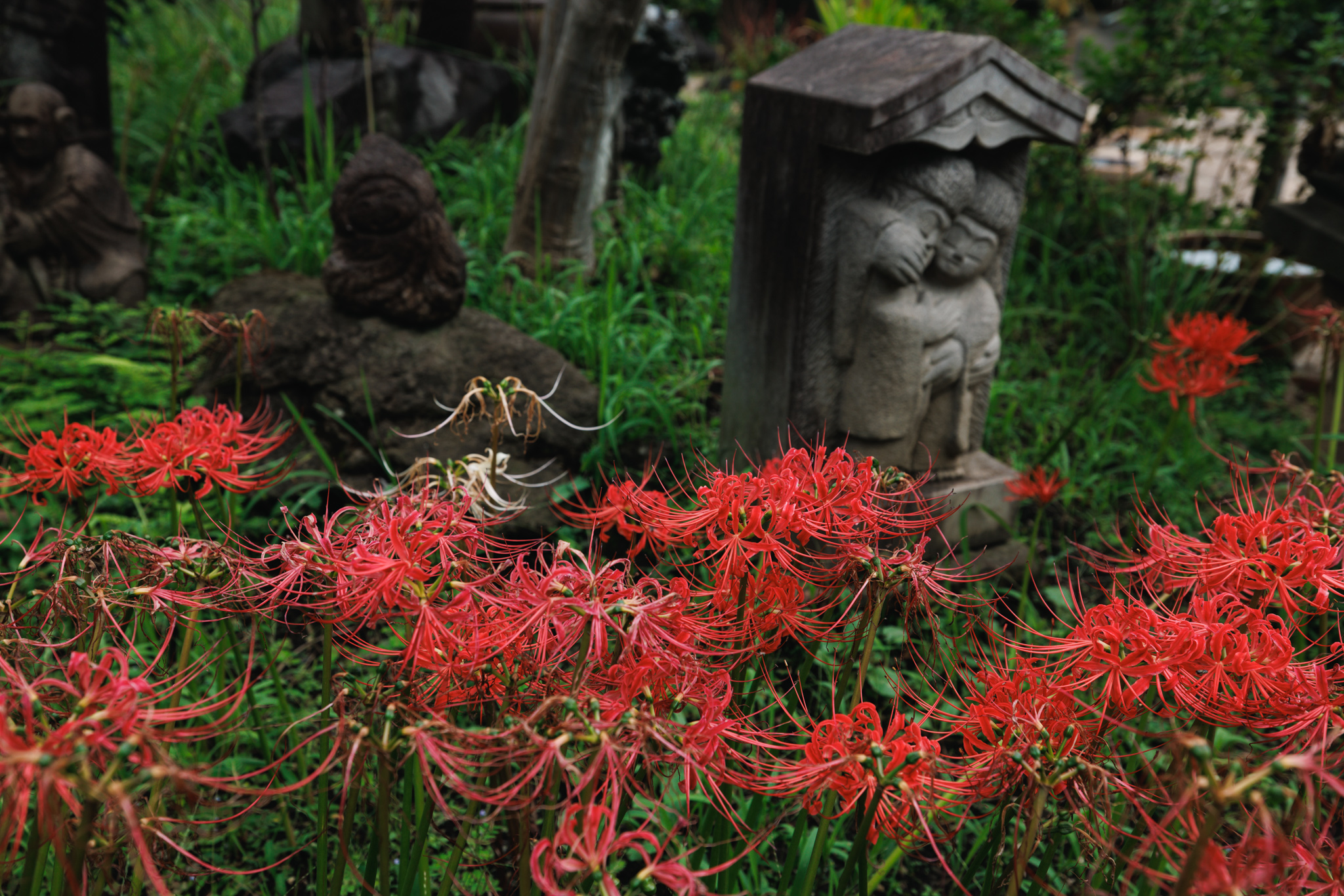
I first came in September 2022, a few months after the disciples were finished. The spider lilies were in full bloom between them, red and white. Jōsenji calls itself the temple of kappa, but also the temple of flowers.
When I came back, in September 2026, the lilies were nearly over. The temple says its white spider lilies bloom a little earlier than the red ones. This time, the white were mostly past it. The red were still going.
Ring gently
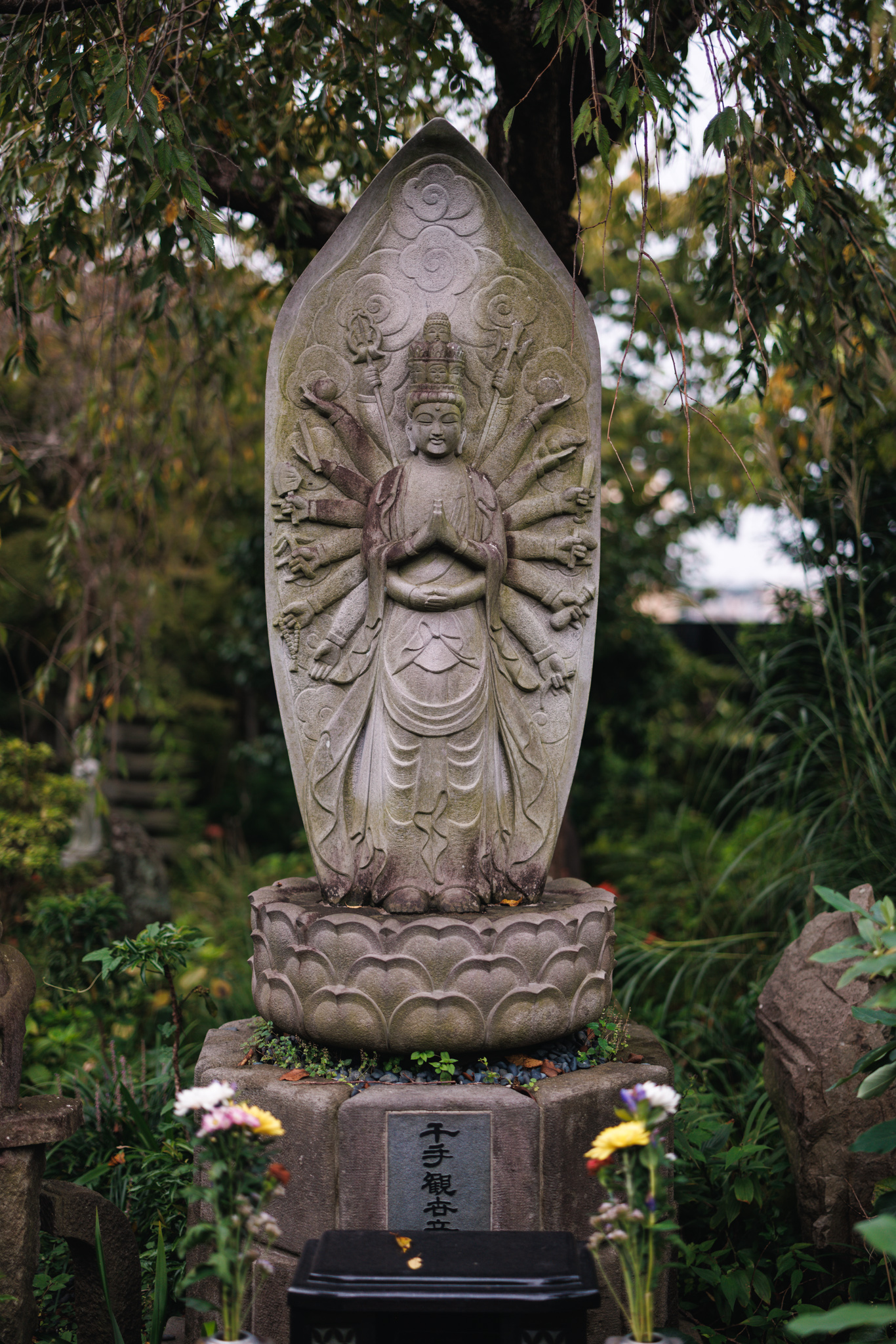
In a small open hall stands the Enmusubi Bodhisattva, who ties people to good connections: in love, but also, the temple says, in work, study, health, family and friendship.
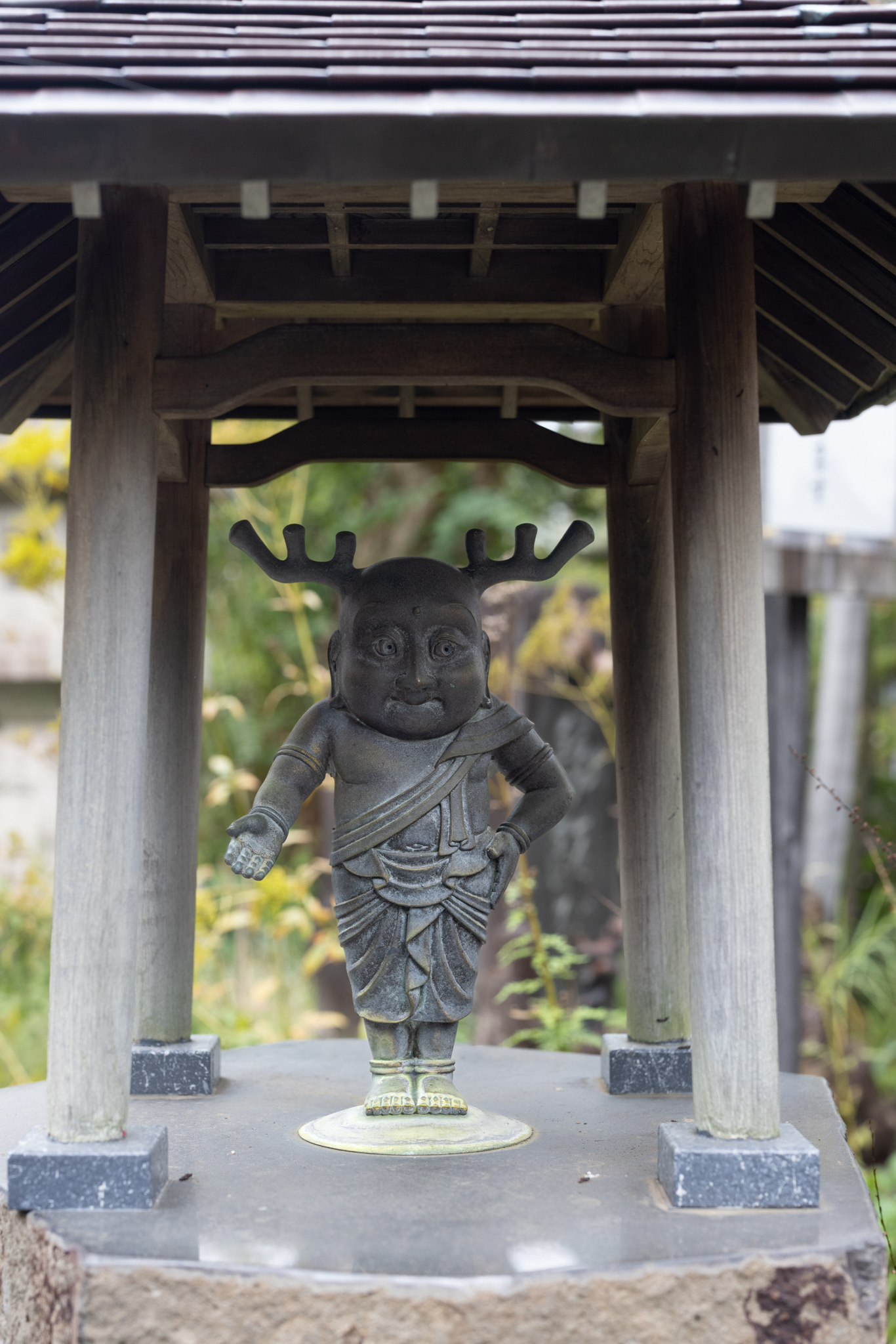
It was made by the sculptor Yabuuchi Satoshi, working with the temple’s head priest. Yabuuchi also created Sento-kun, the antlered mascot of Nara’s 2010 celebrations, held 1,300 years after Japan’s capital moved there. Elsewhere in the grounds stands a figure of a familiar shape.
The bodhisattva comes with instructions. Ring the bell first.
Ring it gently, the temple warns. Too loud, and the bodhisattva will be startled and will not tie your thread.
Then stroke the bodhisattva while making your wish, silently. Of the two threads used in the ritual, tie one to the ring and keep the other on you.
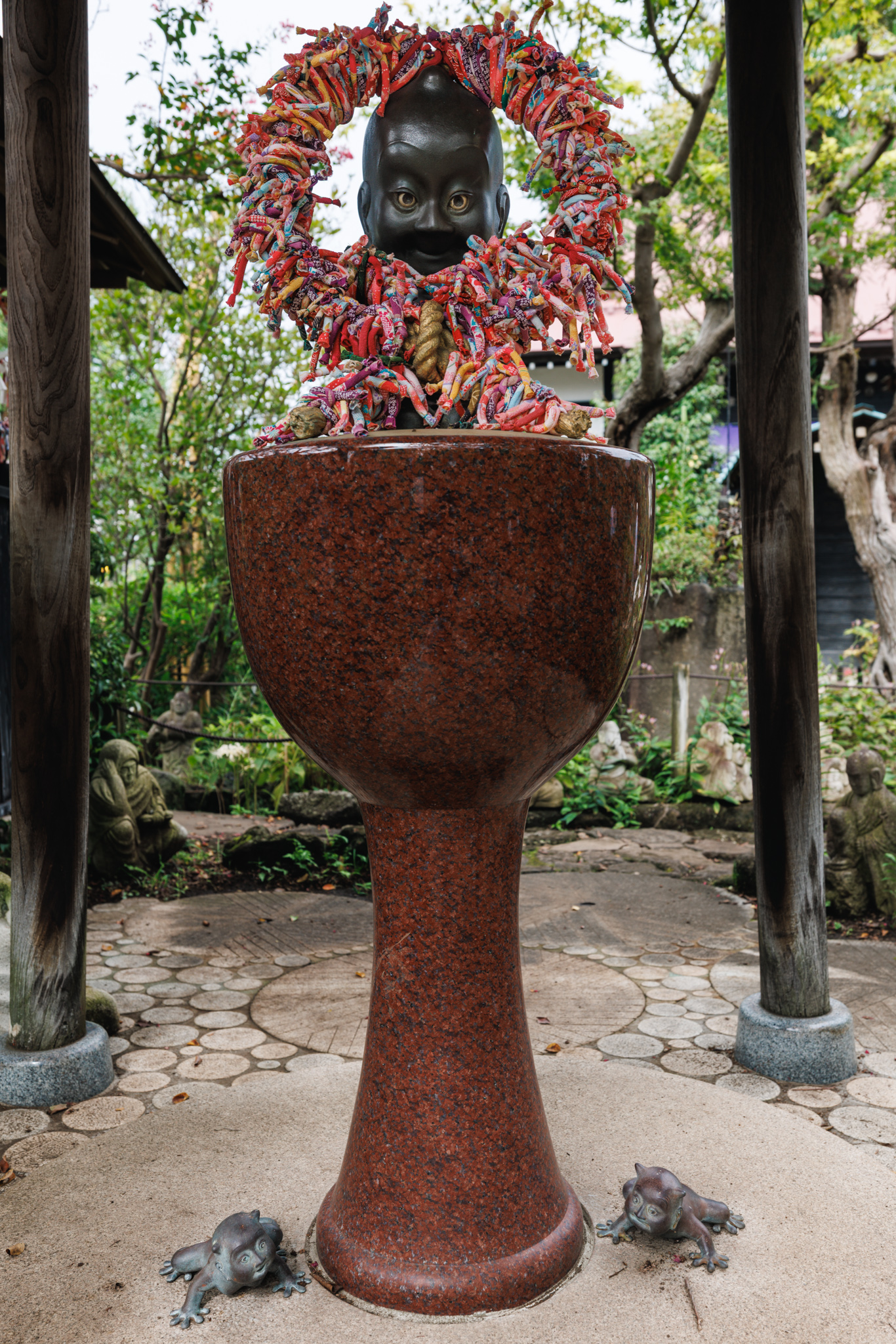
If the wish comes true, there is a procedure for that too. Ring the bell gently again, rest your right hand on the bodhisattva’s head, and walk once around it, clockwise. Report the good news in a small voice. Then walk another half circle and tie your thread.
Everything after the asking, the temple adds, is down to your own efforts.
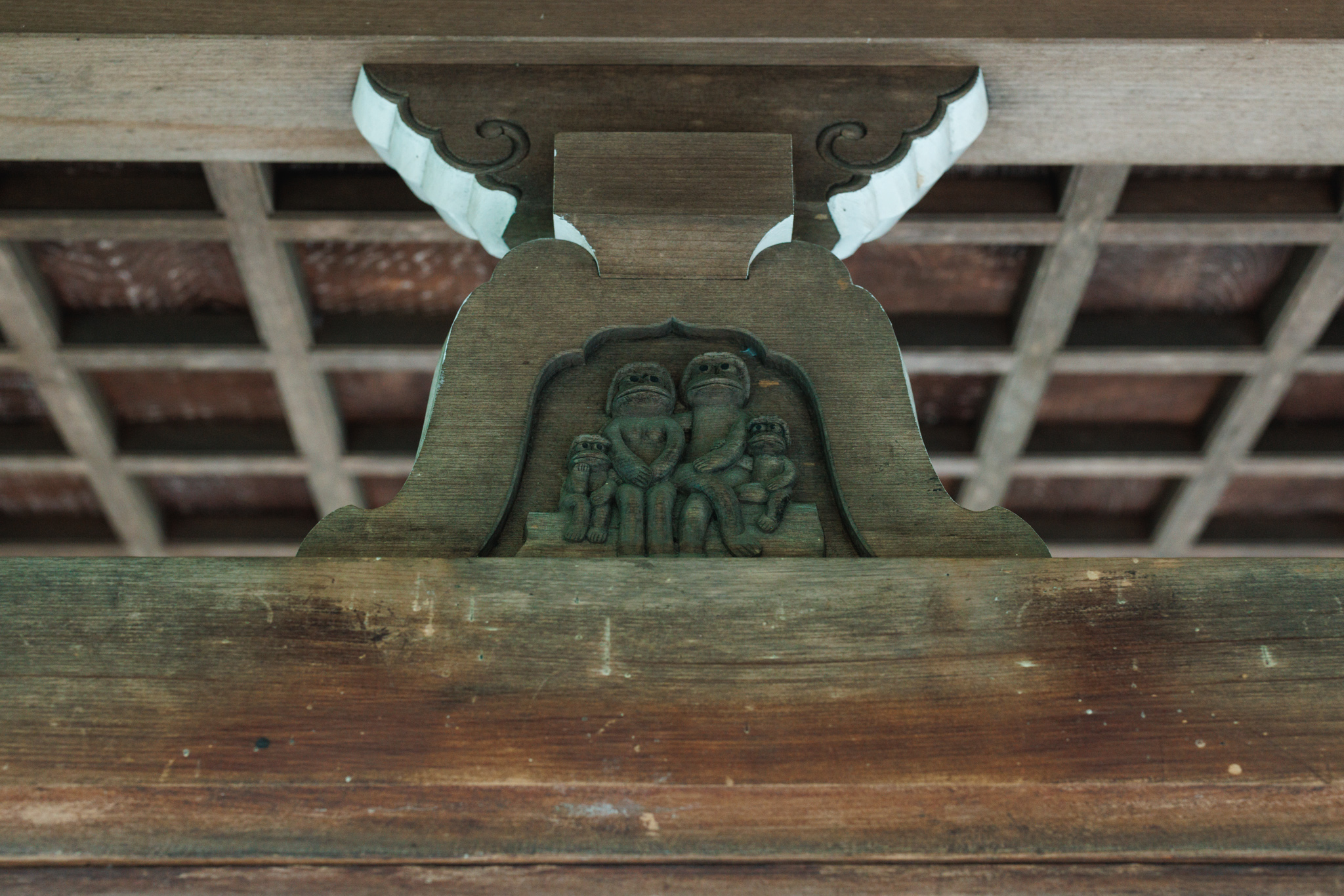
Even here, the kappa have got in. On all four sides of the hall, the temple says, kappa are carved into the kaerumata, struts named after the splayed legs of a frog.
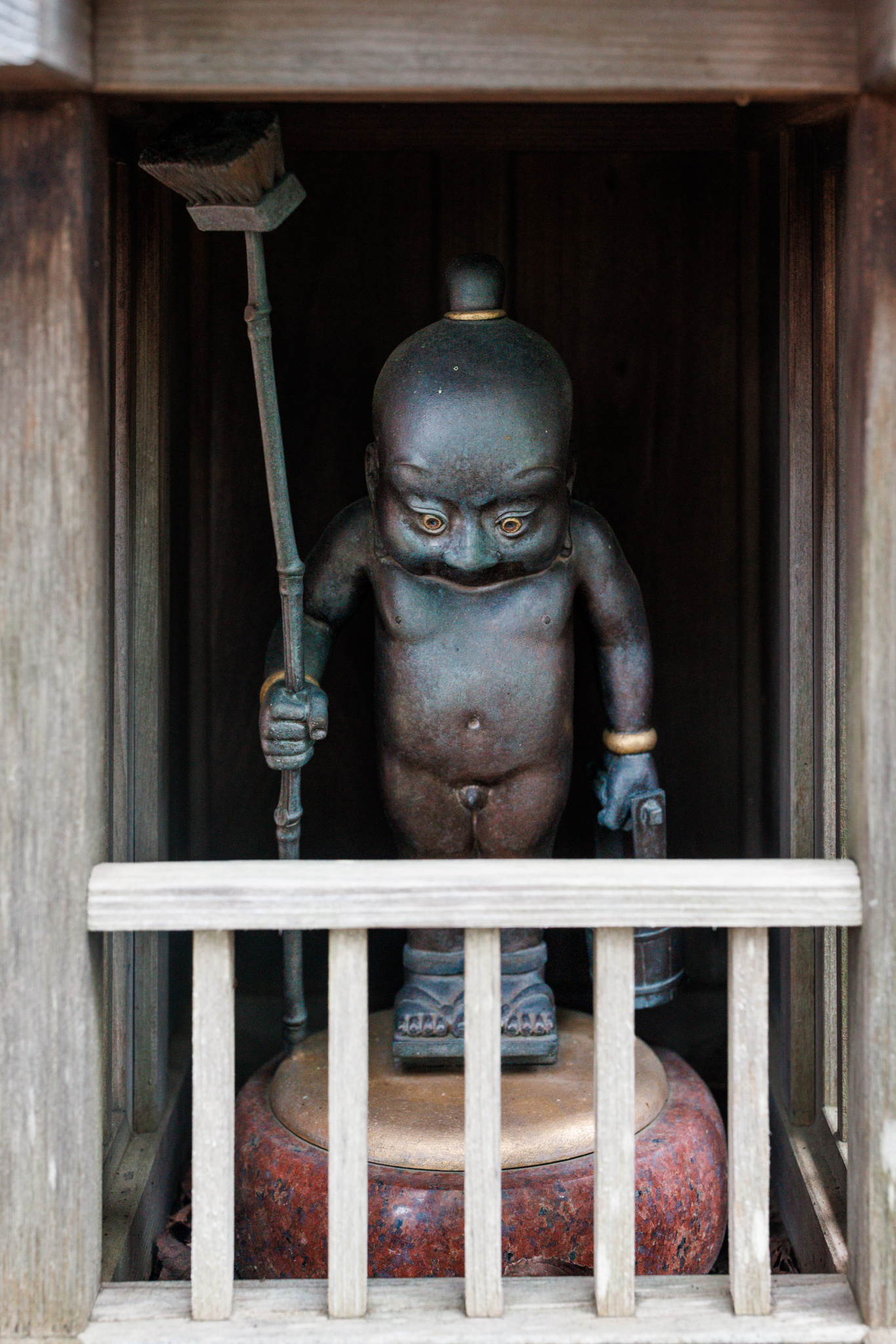
Yabuuchi’s work turns up elsewhere in the grounds as well.
Not everyone is a kappa
The kappa do most of the welcoming, but they have colleagues.
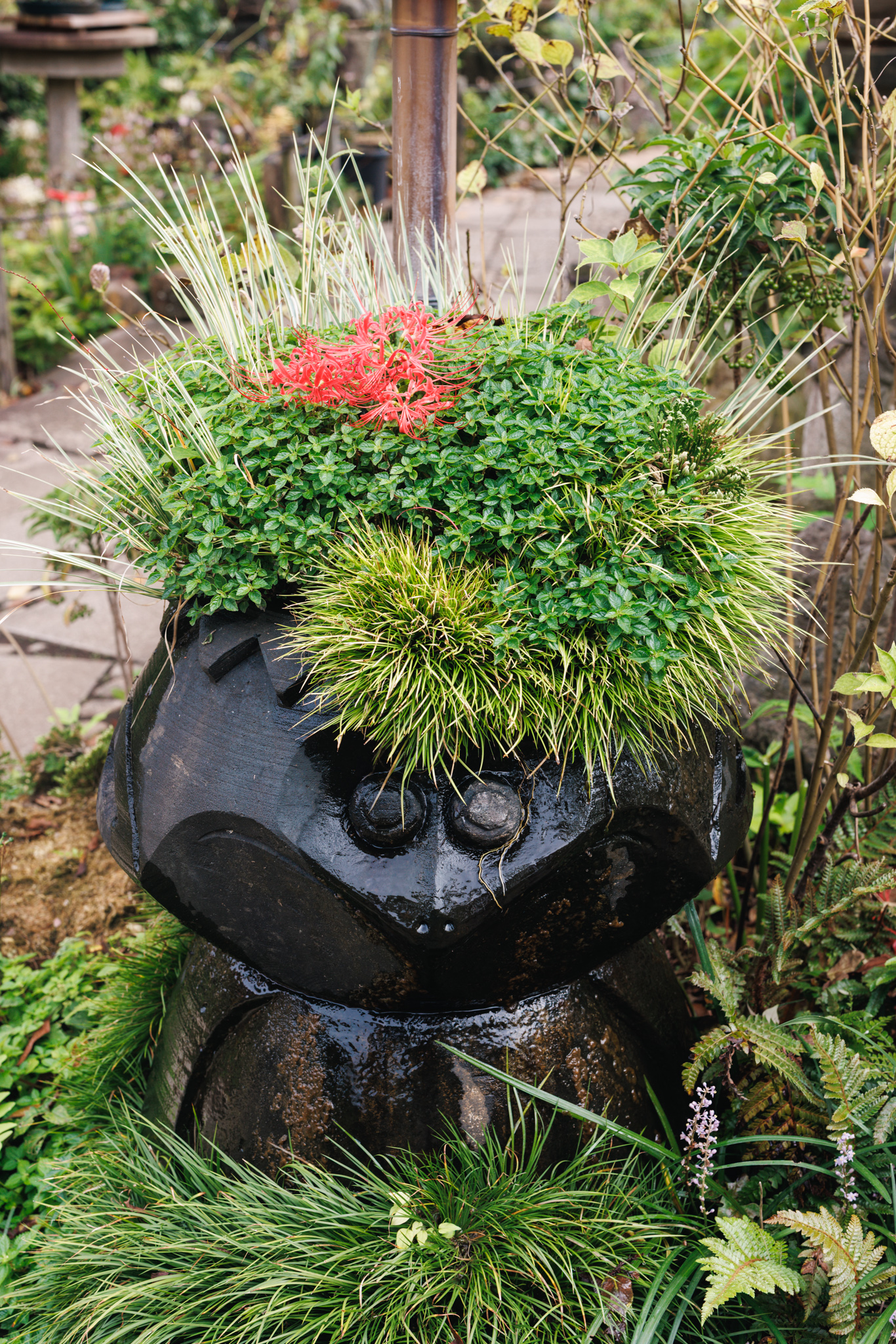
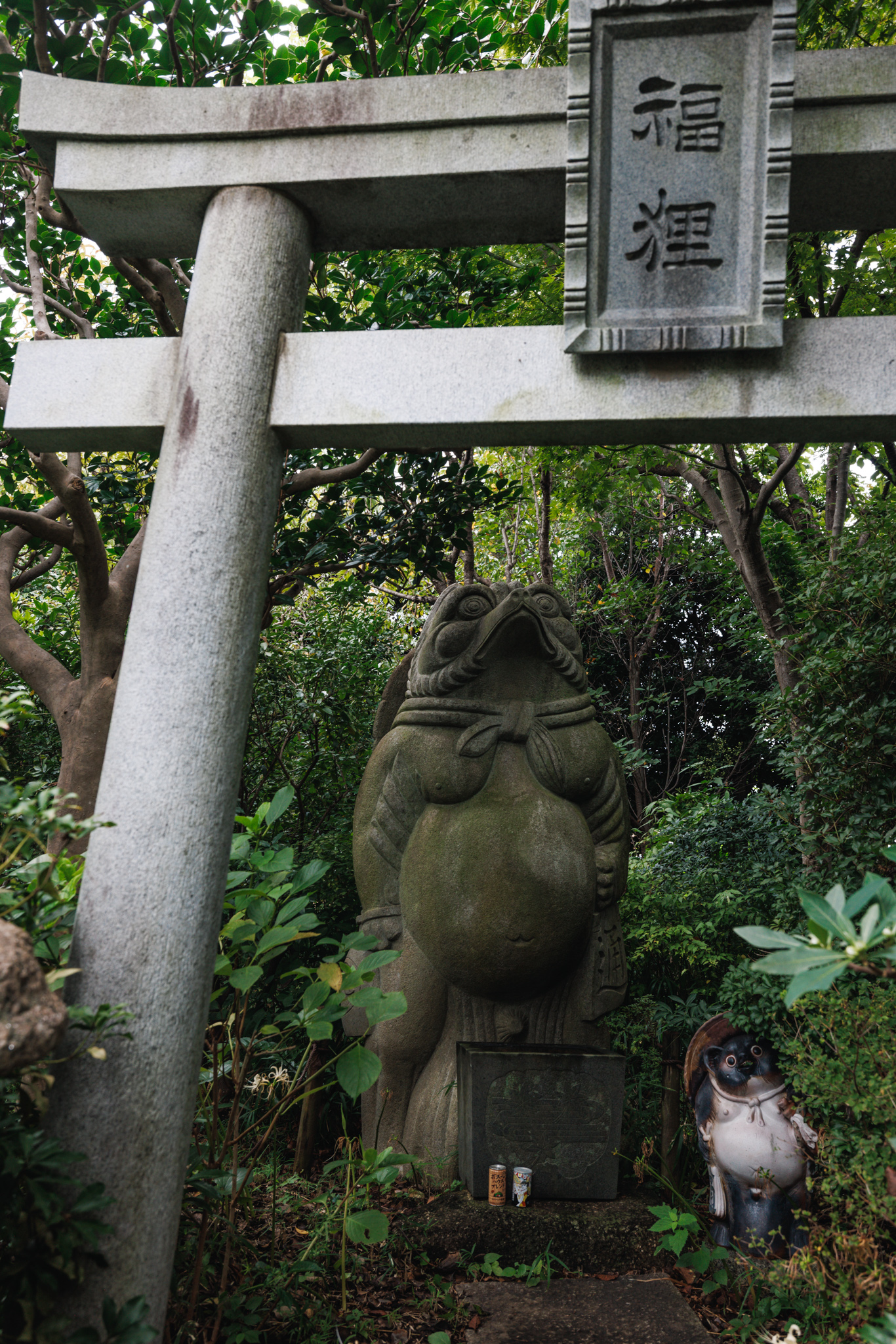
Fuku-tanuki, the lucky tanuki, or raccoon dog, has a torii of his own. When I visited, someone had left him a can of coffee.
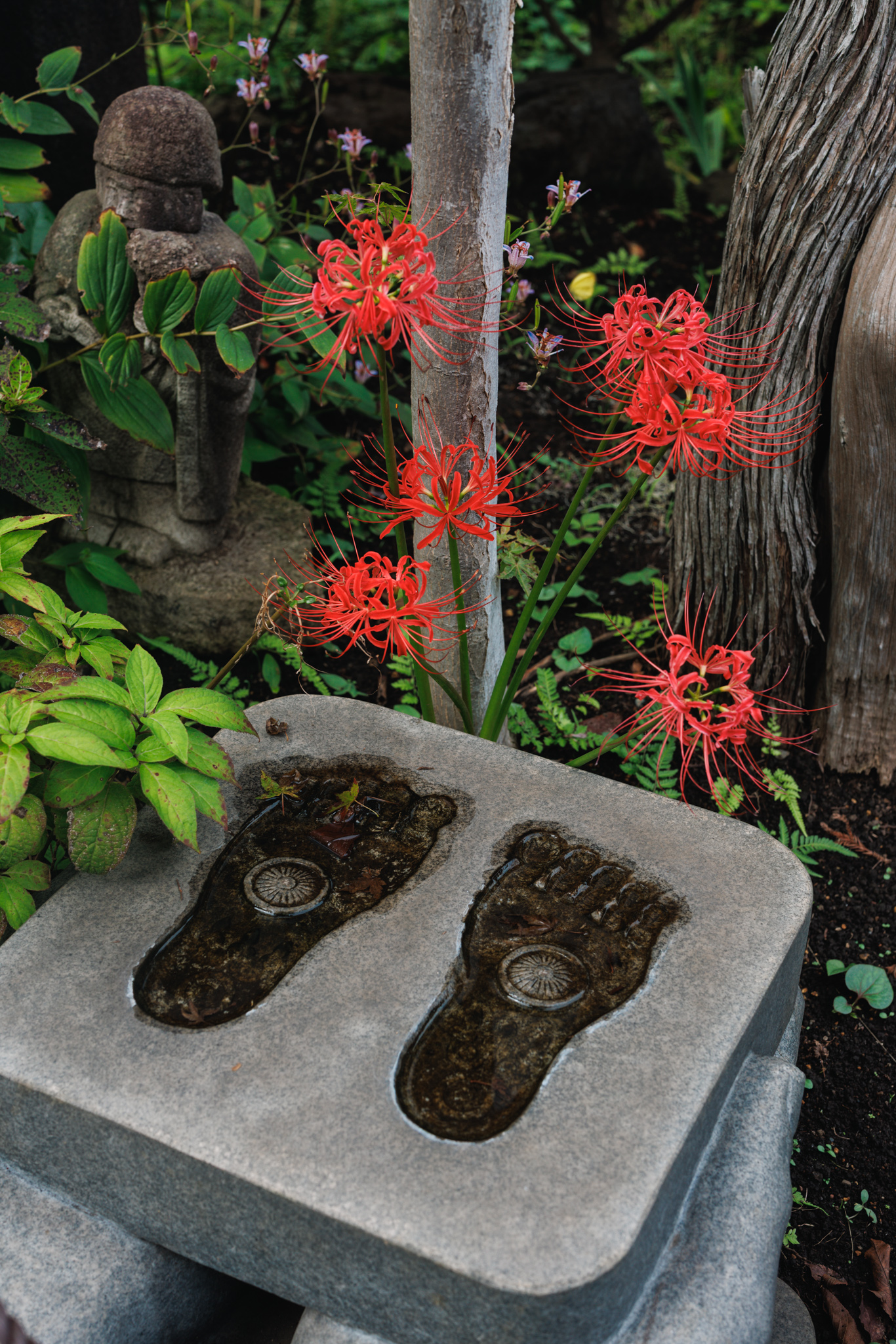
There is also a stone carved with the Buddha’s footprints. A sign explains that it shows the footprints and a monk receiving them in both hands. The footprints all but invite you to step into them. The sign asks you not to.
Swipe to explore
Tap to enlarge
The family business
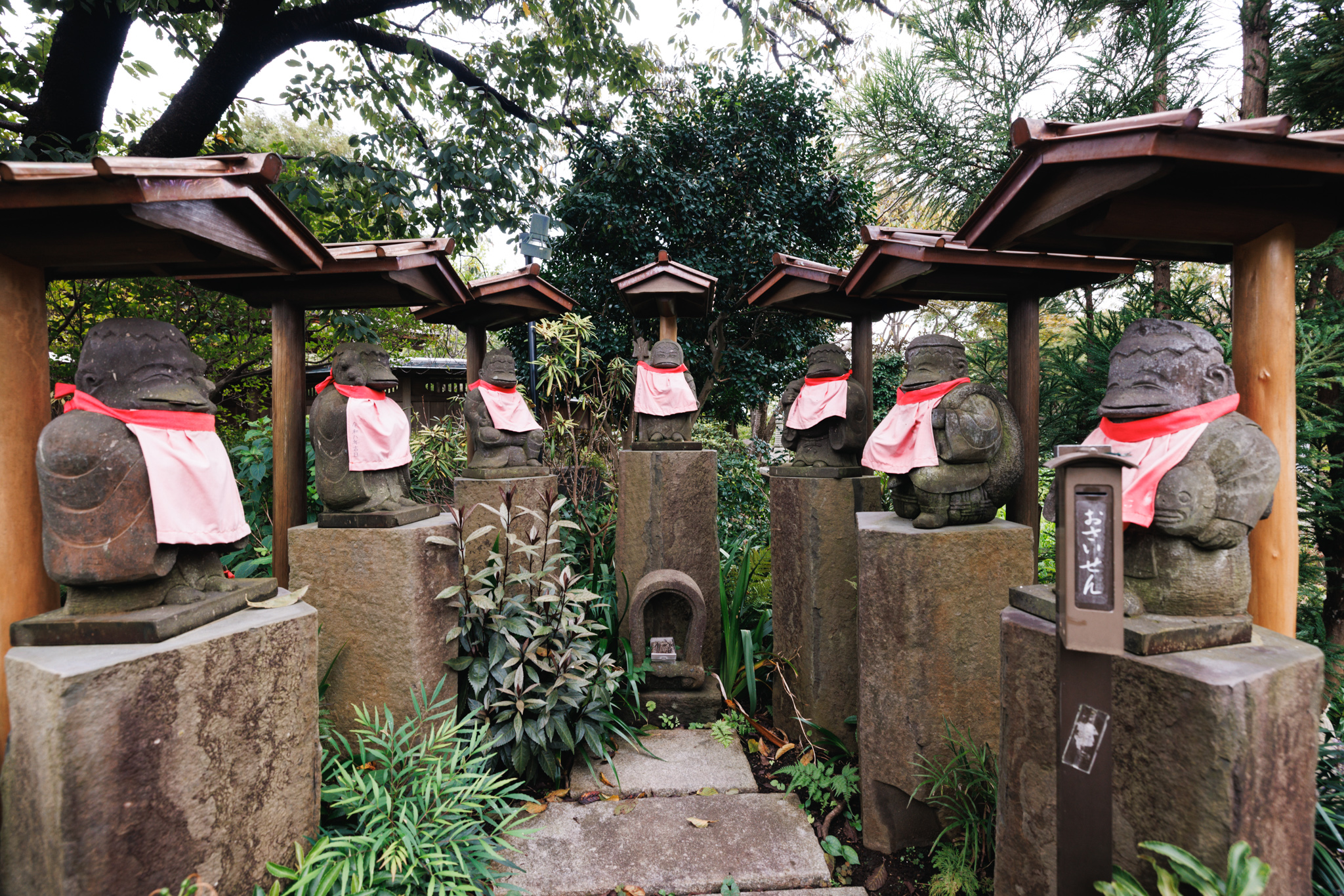
Even the Seven Lucky Gods here are kappa, lined up along a path in pink aprons.
The temple’s website also mentions a Kappa Family Club, for people who like kappa or flowers. The head of the household is the head priest.
I did not meet him. His kappa looked after me instead.
A box of small kappa holds fortunes: pick the one you like, pull the string, and your fortune comes out. Mine said shōkichi, small luck.
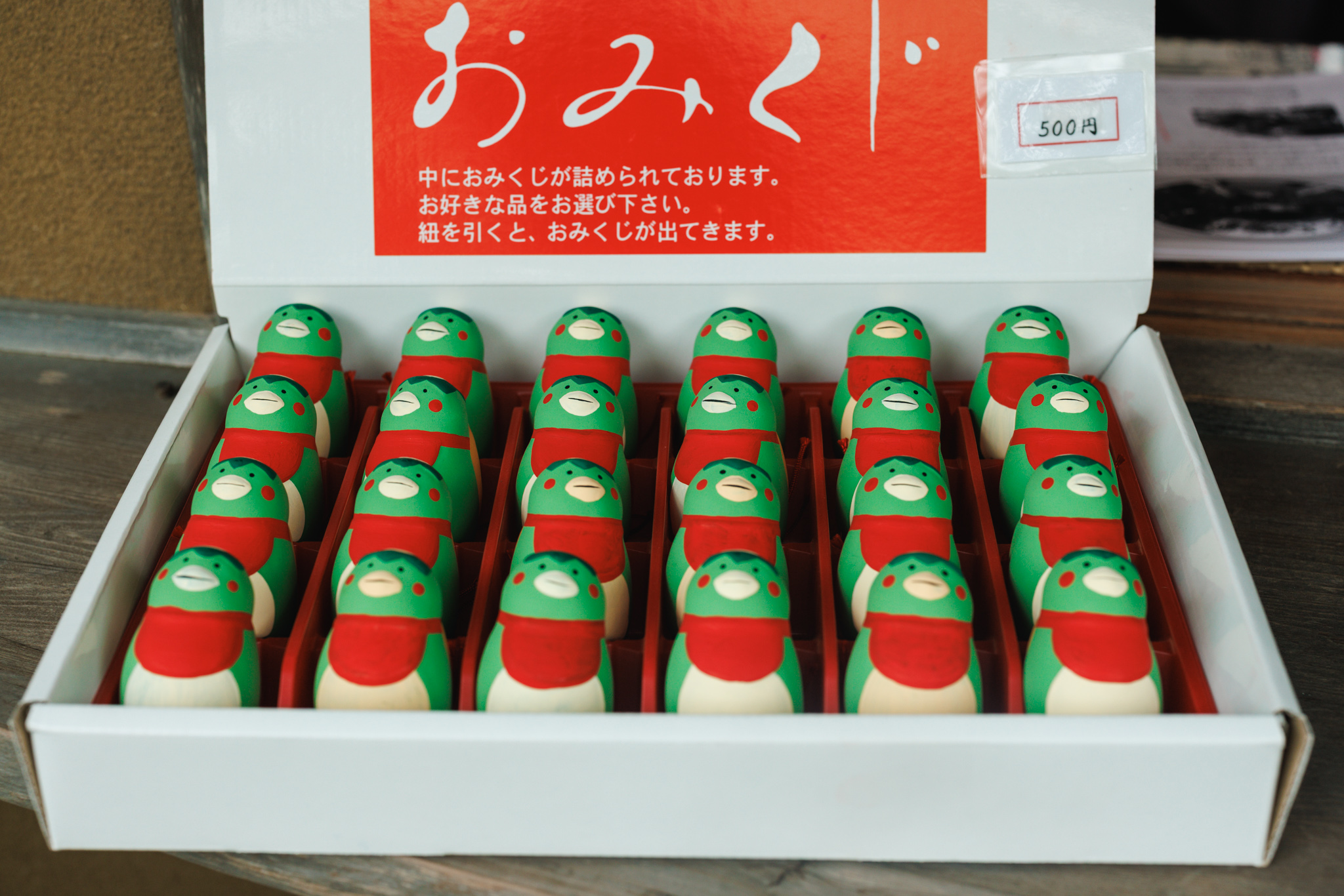
Even speaking for the head priest, the kappa do not overpromise.
Visit this place
Temple
Jōsenji (常泉寺)
In Fukuda, Yamato. The kappa, the Five Hundred Arhats and the Enmusubi Bodhisattva are all within the temple grounds (admission charged).
2176 Fukuda, Yamato, Kanagawa 242-0024, Japan
Practical Information
- Access
- About 7 minutes on foot from the west exit of Kōza-Shibuya Station (Odakyū Enoshima Line)
- Opening hours
- 9:00–16:30; last admission 16:00
- Admission
- High school students and older: ¥300; elementary and junior high school students: ¥150. Free for the holder of a disability certificate (the holder only)
- Parking
- Limited, and priority goes to people visiting graves; may be unavailable around the equinox weeks and during Buddhist services. The temple recommends coming by train.
- Visitor rules
- Tripods, monopods and camera stands may not be used. No pets. No drinking or smoking in the grounds.
- Flower seasons
- Mitsumata (paper bush): mid-March to early April. White spider lilies: mid- to late September.
- Official website
- Jōsenji — Hours and access (Japanese)
Information last checked: October 9, 2026 (access, hours, admission, parking, visitor rules and flower seasons).
Conversation
Comments
Review pending commentsComments are reviewed before appearing. The internet already contains enough unattended surprises.
Checking comments…
Comments are not available in this migration preview yet. Existing comments remain on the current site.
Leave a comment