Niegawa-juku: A Quiet Village with Busy Scarecrows
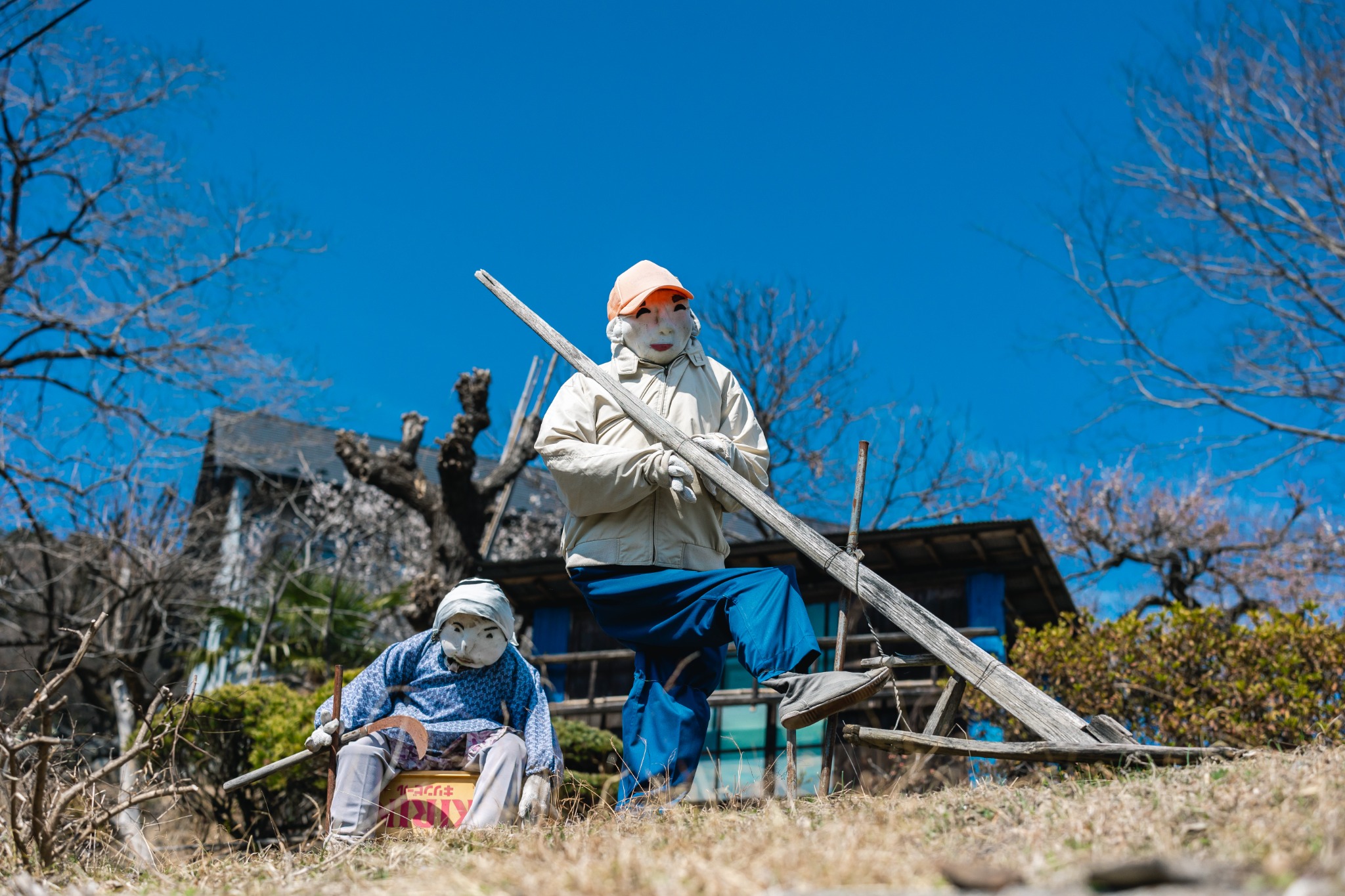
One figure had raised a leg while gripping a long wooden implement. Whatever the job was, a more relaxed approach had apparently been ruled out.
It was a scarecrow. Someone had worked hard to make it look busy.
This was Niegawa-juku, an old post town in Chichibu, in the mountains of Saitama Prefecture northwest of Tokyo. Handmade figures occupied its gardens, doorways and roadside corners, each with somewhere to be and, often, something to do.
I met more scarecrows than people here, but rarely felt short of company.
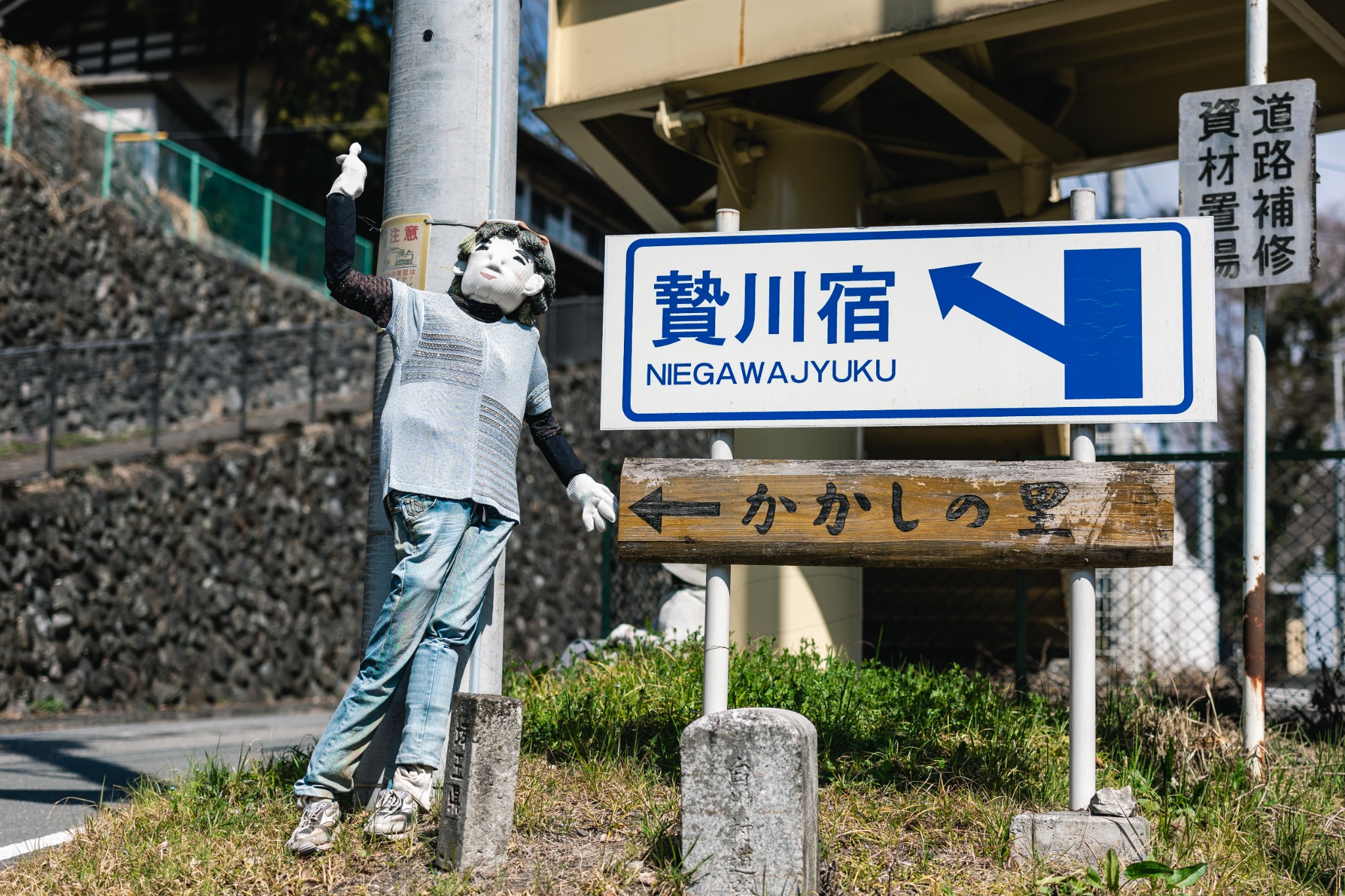
Even beside the village sign, a figure raised a gloved hand in welcome.
Everyone has a part
A smiling figure in a headscarf sat before a wooden washing tub and washboard. Nearby, a smaller figure in a yellow coat occupied an adult’s lap beneath flowering branches.
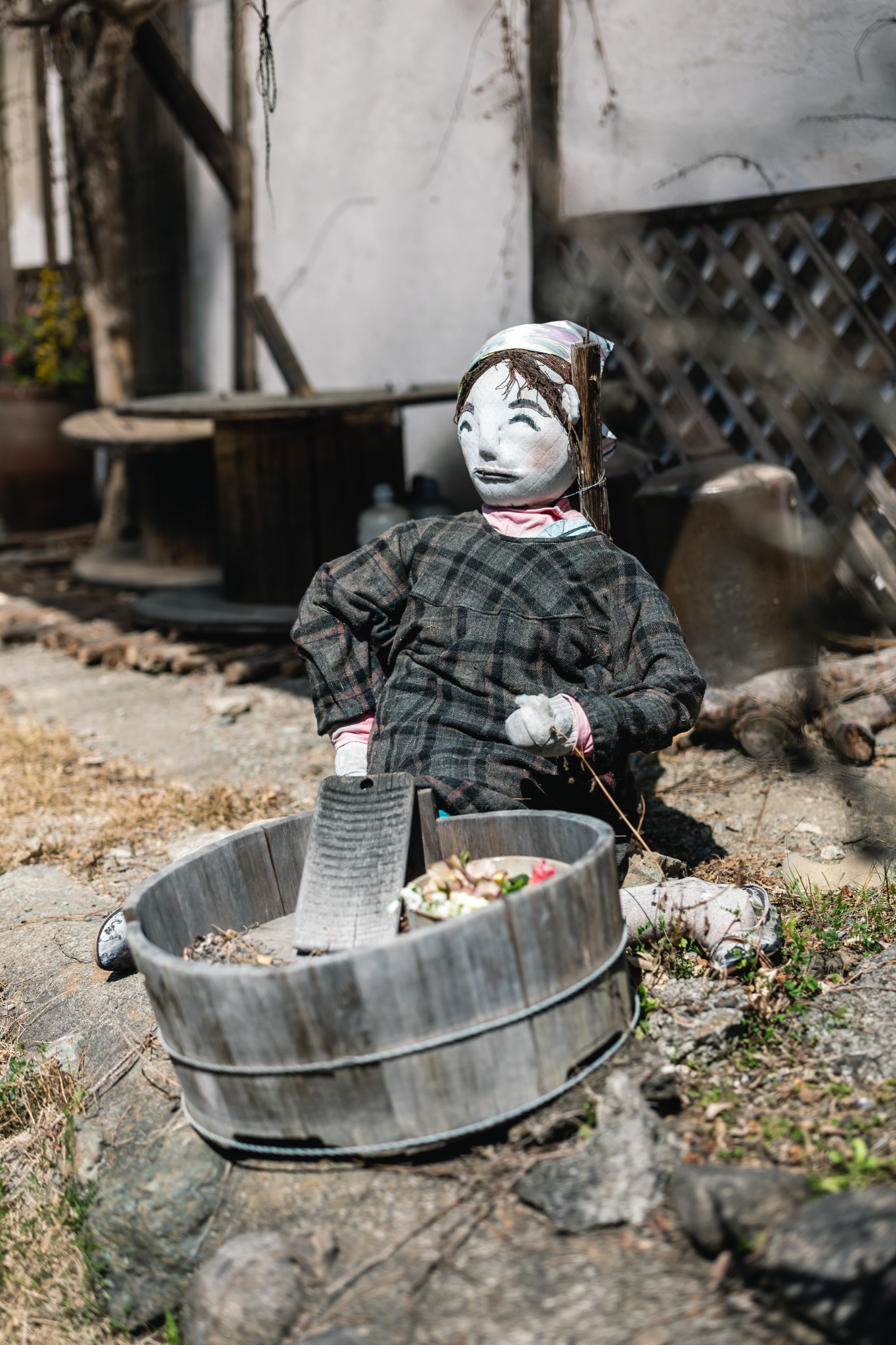
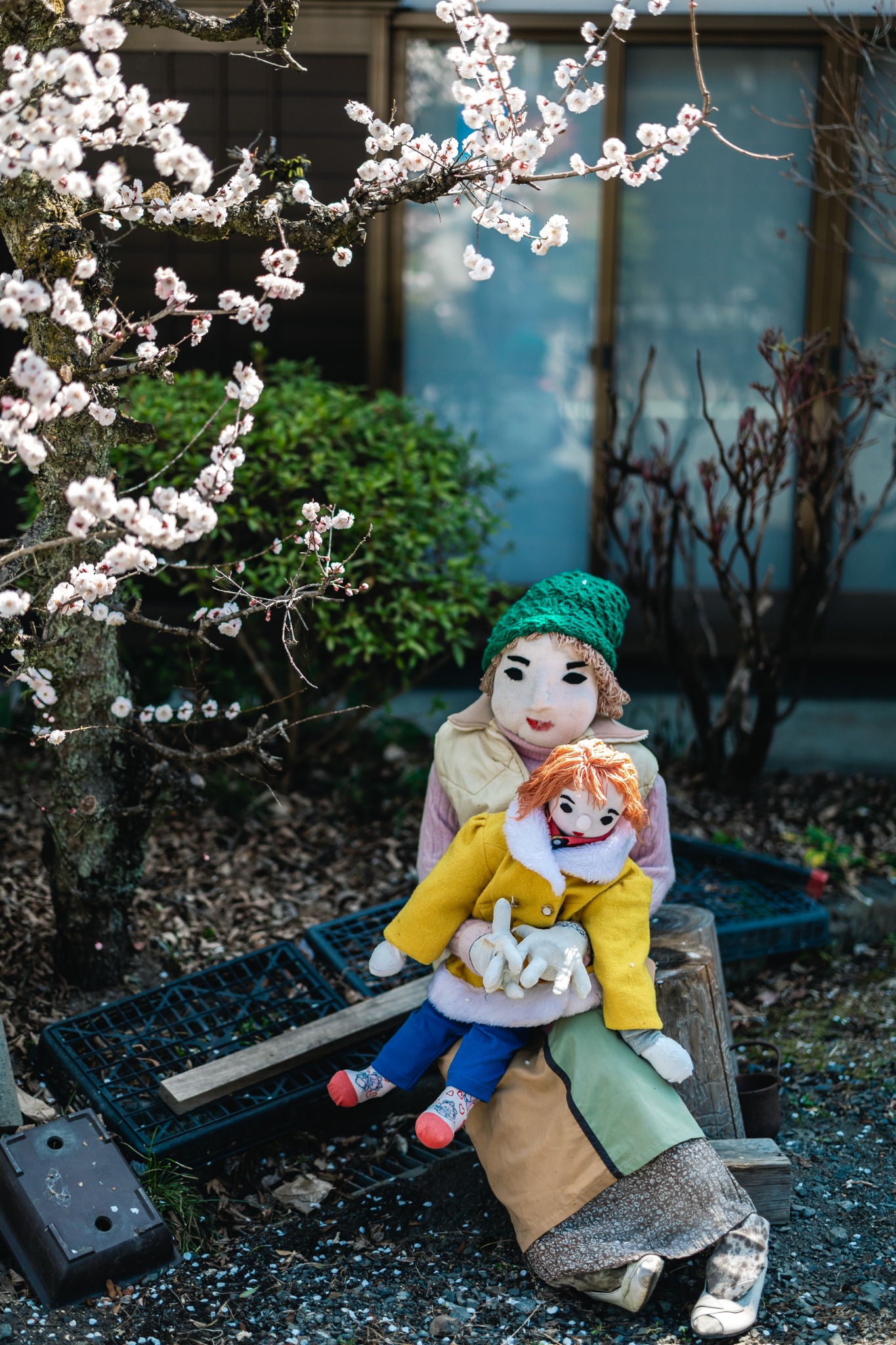
The household equipment gave the figures something to do. A face and an apron established a character; the washboard supplied the afternoon’s obligations.
Elsewhere, a large cooking pot stood beside another seated figure, with a hand fan close by. Outside a house, three figures sat together beneath a postbox.
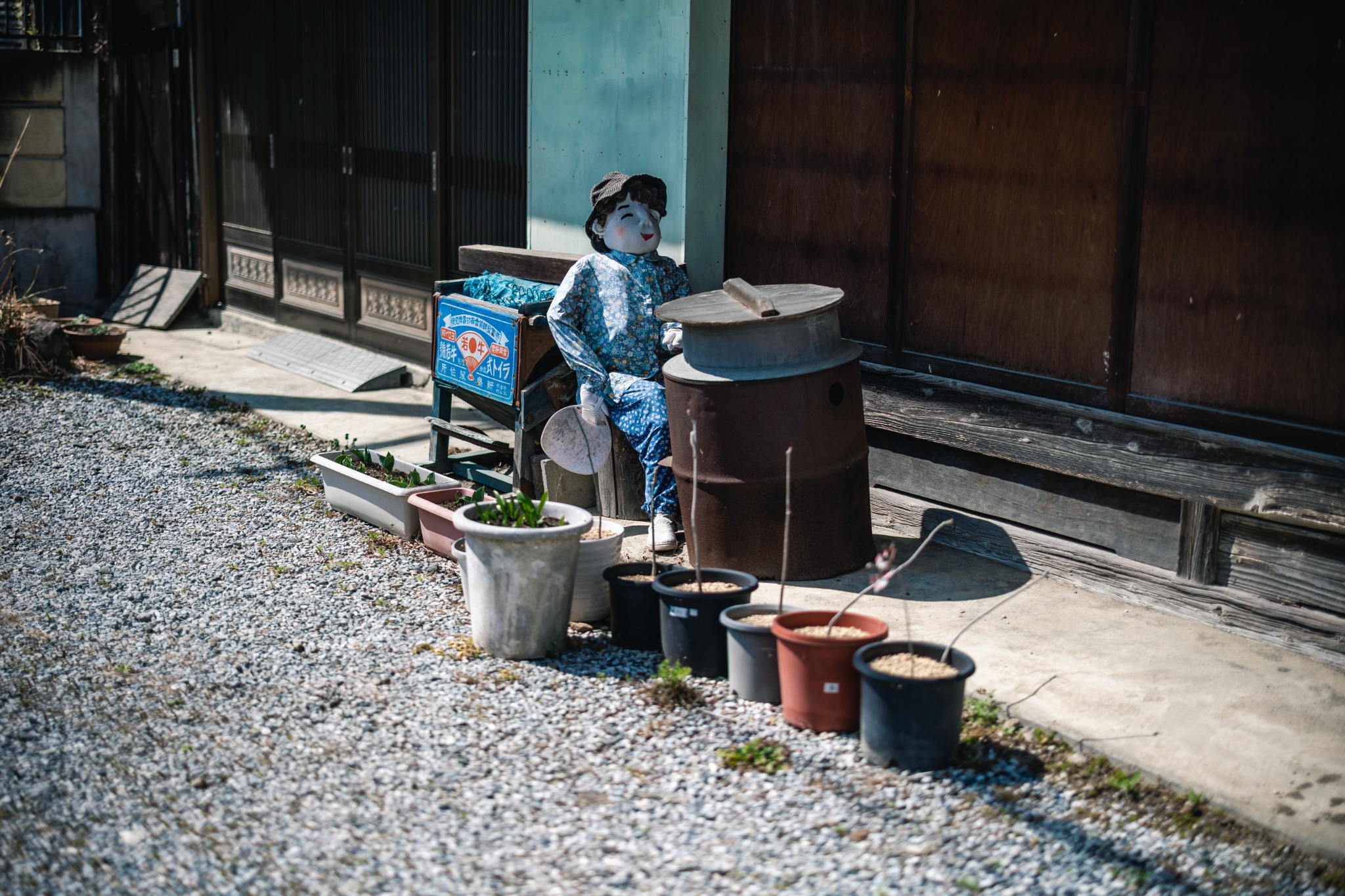
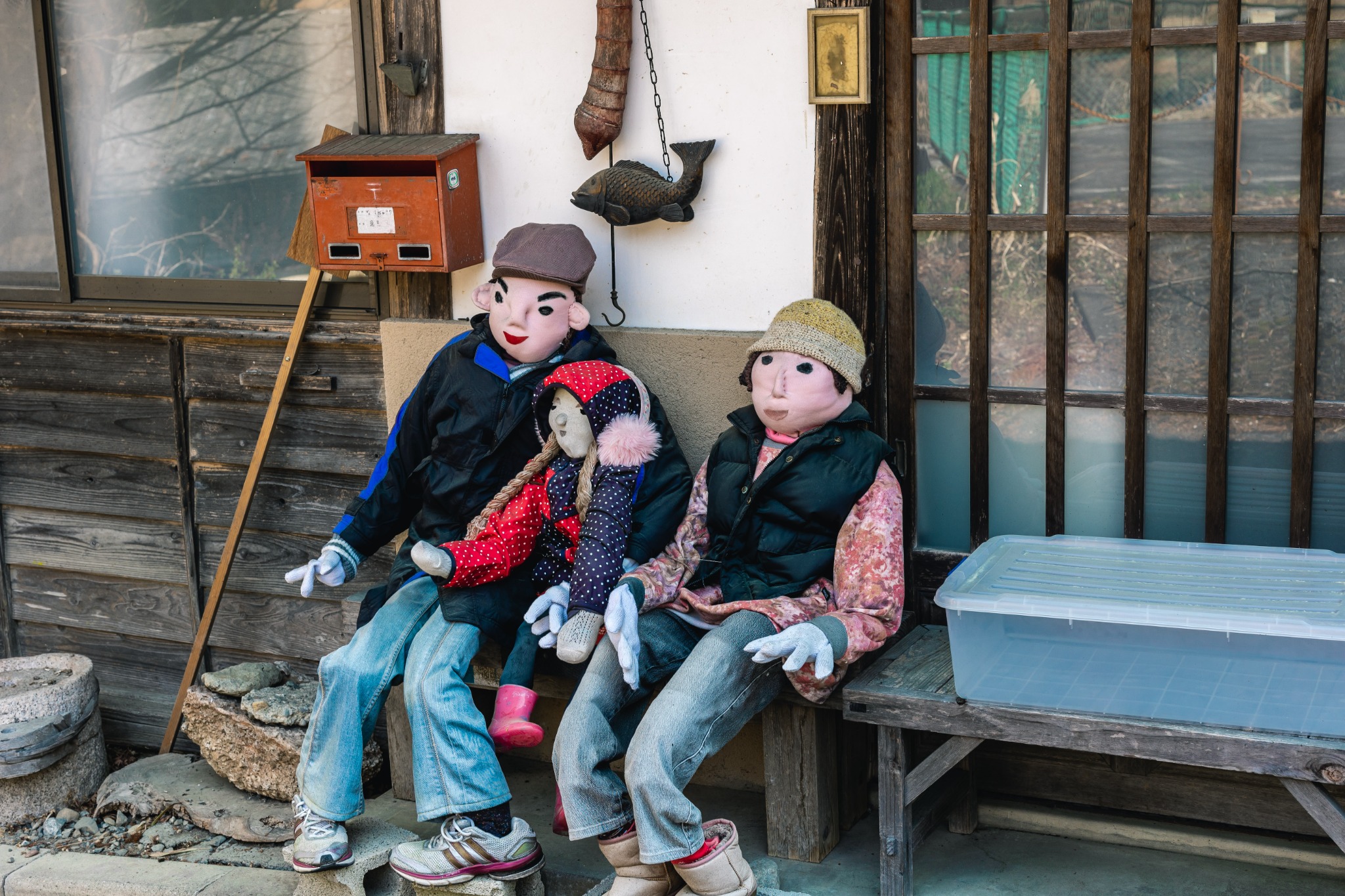
Plant pots, sliding doors and storage boxes surrounded them. Their jackets and shoes fitted easily into these domestic settings. They looked less like exhibits than neighbours who happened to be made by hand.
As these little scenes accumulated, the village began to feel busy without becoming any less quiet.
Making the neighbours
Niegawa-juku once accommodated travellers heading towards Kōshū, in present-day Yamanashi, and pilgrims visiting Mitsumine Shrine. It prospered as a post town until the early Shōwa era. In 1930, the Chichibu Railway reached Mitsumineguchi, about ten minutes away on foot; today, it is the nearest station to the scarecrows. The village’s present-day gatherings owe something to a more recent local activity.
According to the village’s own walking guide, local women began making scarecrows in 2016 to deter birds and animals and to create a way to spend time together. Old clothes and other reused materials supplied much of what they needed. Chichibu’s tourism association now counts more than sixty scarecrows in the village.
Making company was itself a reason to get together.
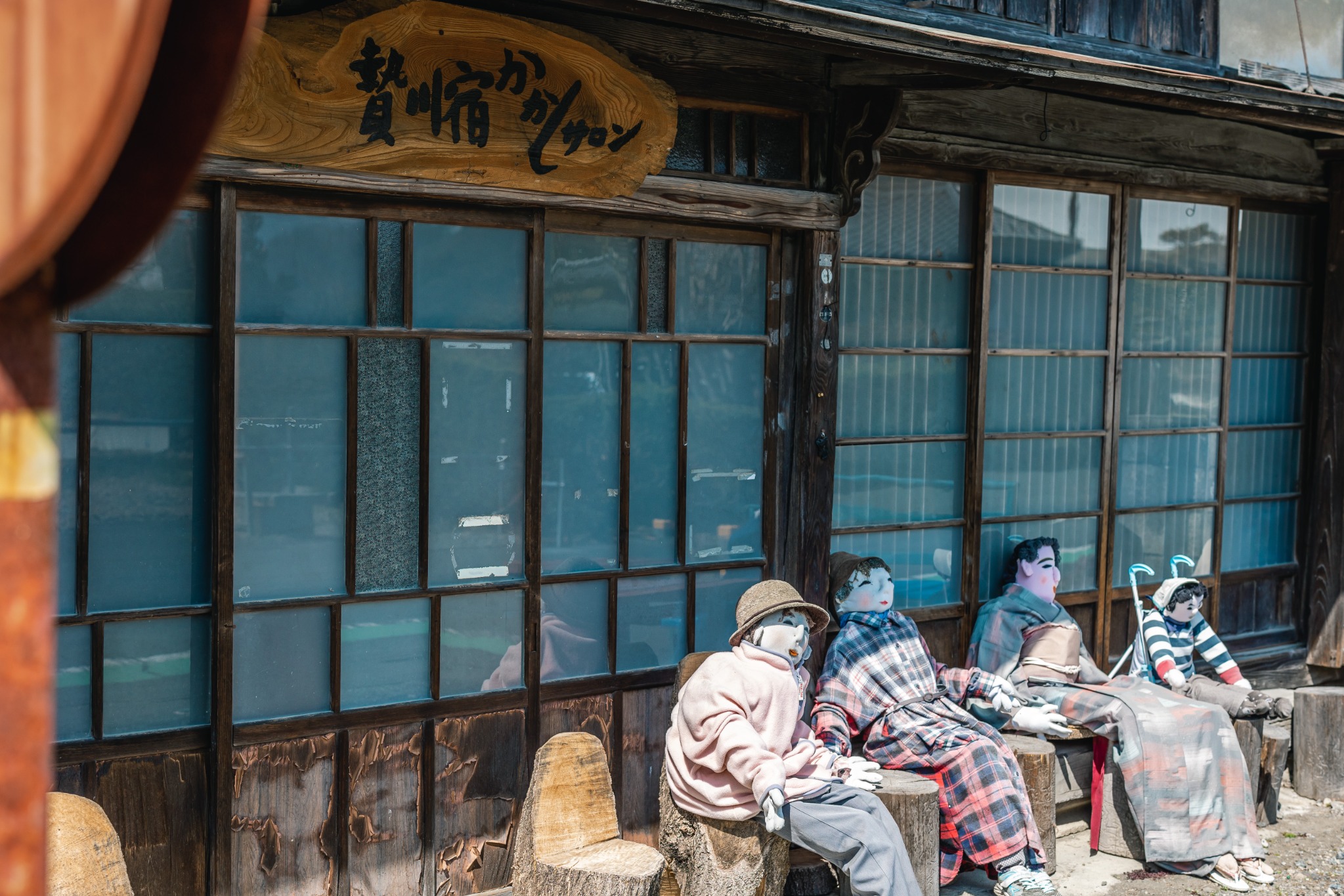
Knowing that gave the scenes another dimension. The finished figures were the visible result of people getting together, making things and finding places for them around their homes.
Even without meeting their makers, there was something of their humour to encounter.
Scarecrows are meant to keep birds away. These had managed to attract a photographer instead.
And some of these had interests that extended well beyond guarding crops.
Beyond the job description
In an open area, groups of figures were arranged with handcarts. Some held the handles; others rode aboard. The division of labour appeared to suit the passengers particularly well.
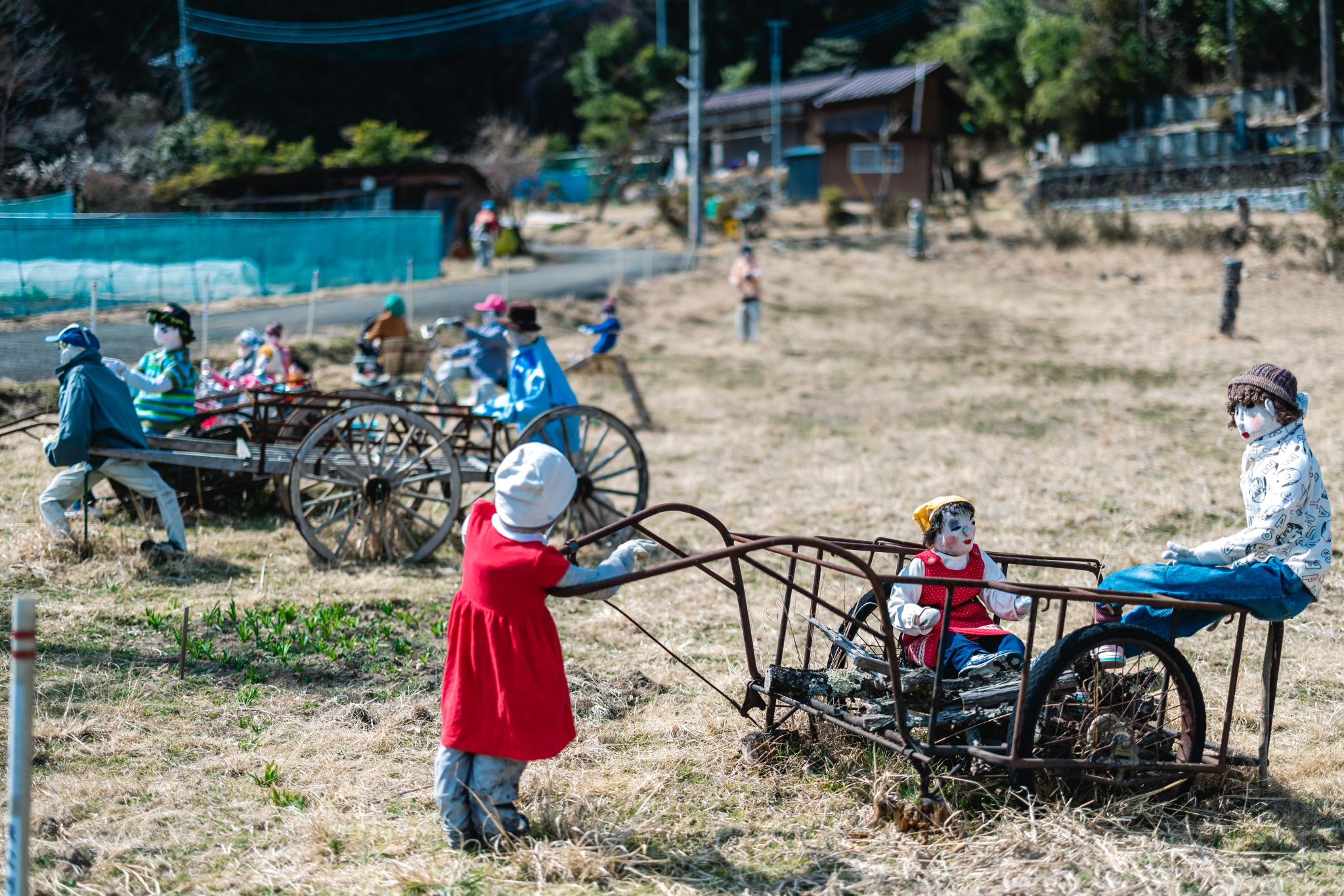
Then came the unicyclist.
Housework and childcare had established a fairly practical picture of village life. This figure, arms spread above a single wheel, had chosen a more specialised contribution.
Apparently, the village’s essential services extended to circus skills.
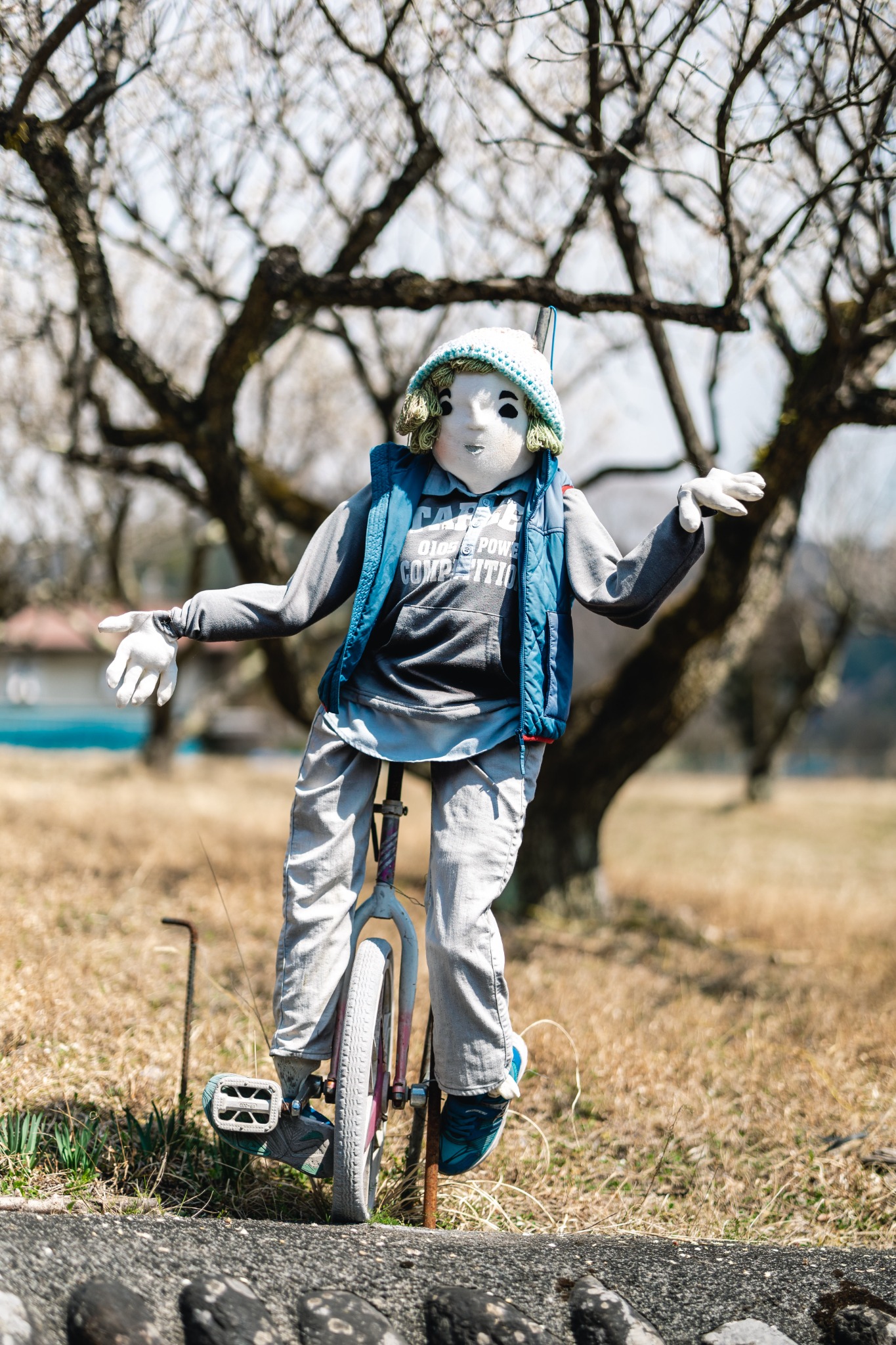
After that, it seemed unwise to predict what the next figure might be doing. Every old bicycle or piece of household equipment offered its maker another possibility.
Looking around became part of the pleasure. The faces drew attention, but the arrangements rewarded a second look.
Taking their advice
With so many figures to inspect, the mountains could almost become background. Two scarecrows offered a correction.
Wearing hats and backpacks, they faced the ridges beyond the village. From behind, there was no expression to interpret and no household task to identify. The view explained the arrangement.
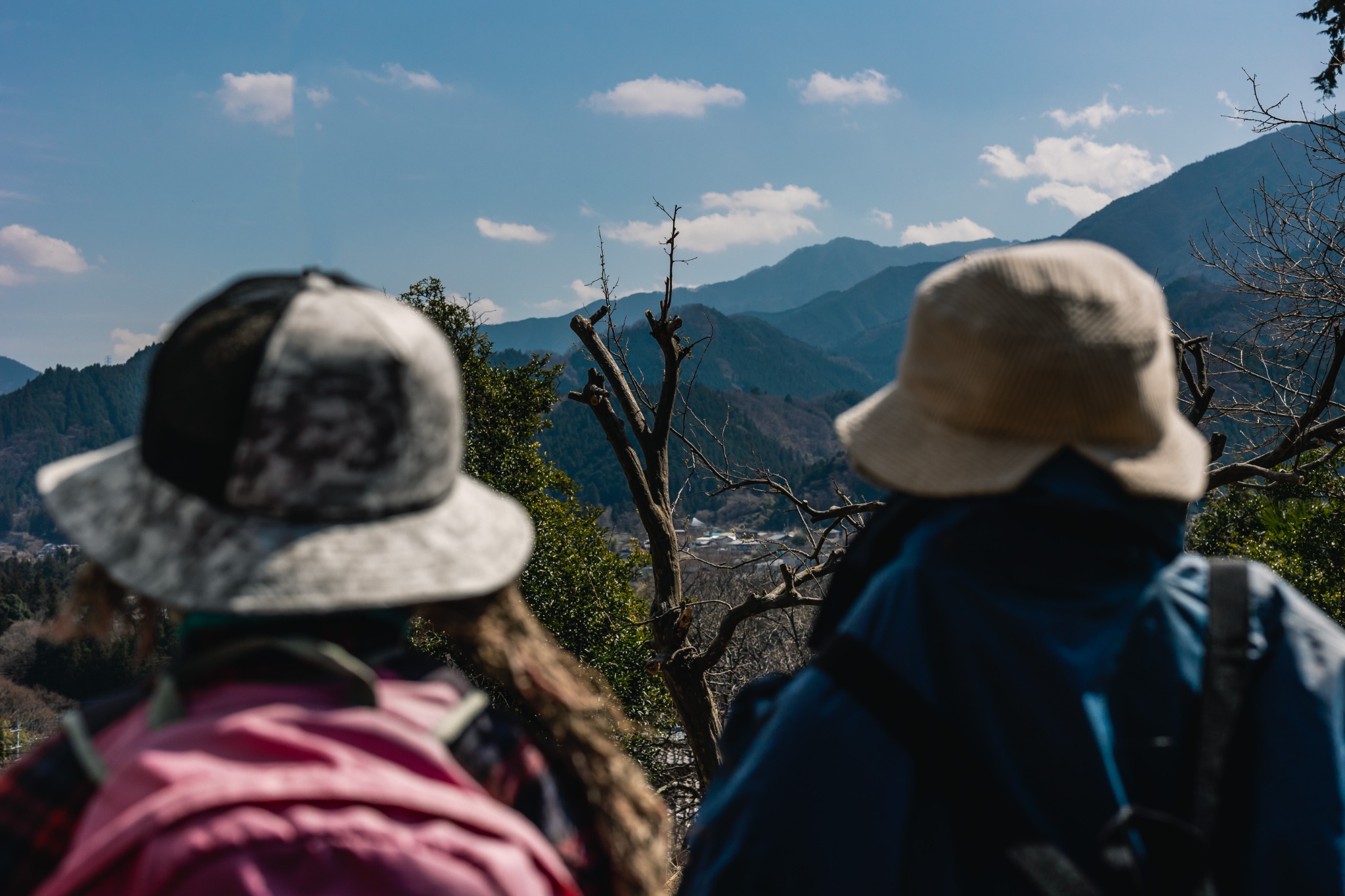
Houses lay below, with mountains rising beyond them beneath a clear blue sky. The two companions seemed perfectly satisfied with the afternoon’s programme.
They had chosen their spot well. The scarecrow plaza, up a steep slope near the trailhead for Mount Ontake, looks out over Mount Bukō and the Arakawa River. The geologist Edmund Naumann and the novelist Kōda Rohan, who both visited, are said to have praised the view as if Switzerland lay before them.
After all the washing, cart-pushing and unicycling, theirs was the activity that appealed to me most.
At last, a village occupation I was qualified for: standing there, looking at the mountains.
Visit this place
Area
Niegawa-juku Scarecrow Village (贄川宿かかしの里)
The pin marks the Niegawa-juku area near the free parking, rather than a private home in the village. About 10 minutes on foot from Mitsumineguchi Station.
Arakawa Niegawa, Chichibu, Saitama 369-1911, Japan
Practical Information
- Access
- About 10 minutes on foot from Mitsumineguchi Station on the Chichibu Railway
- Parking
- Free parking is available near the village.
- Admission
- Free
- Visitor note
- This is a living residential area, not an admission-based museum. Visit in daylight, avoid entering private property, and photograph residents’ homes with consideration.
- Local guide
- Official Niegawa-juku walking guide
- Local overview
- Saitama Prefecture overview
Information last checked: September 7, 2026
Conversation
Comments
Review pending commentsComments are reviewed before appearing. The internet already contains enough unattended surprises.
Checking comments…
Comments are not available in this migration preview yet. Existing comments remain on the current site.
Leave a comment