Entsuji Temple: The Giant Kannon and the Bullet-Scarred Black Gate
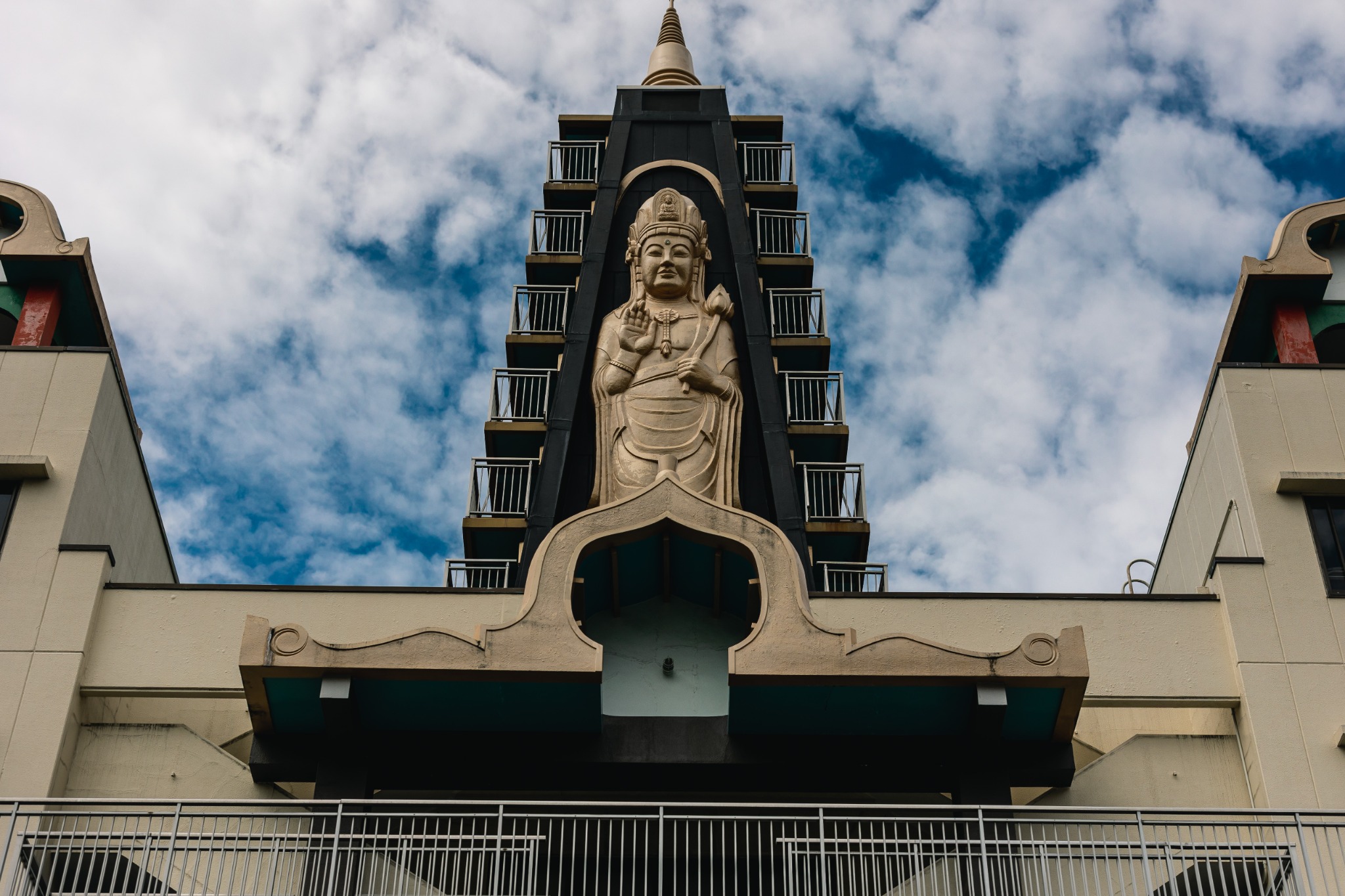
At Entsuji, a golden Kannon occupies several storeys of a building. Rows of balconies climb up either side, as though the architect had been asked to accommodate one unusually tall resident.
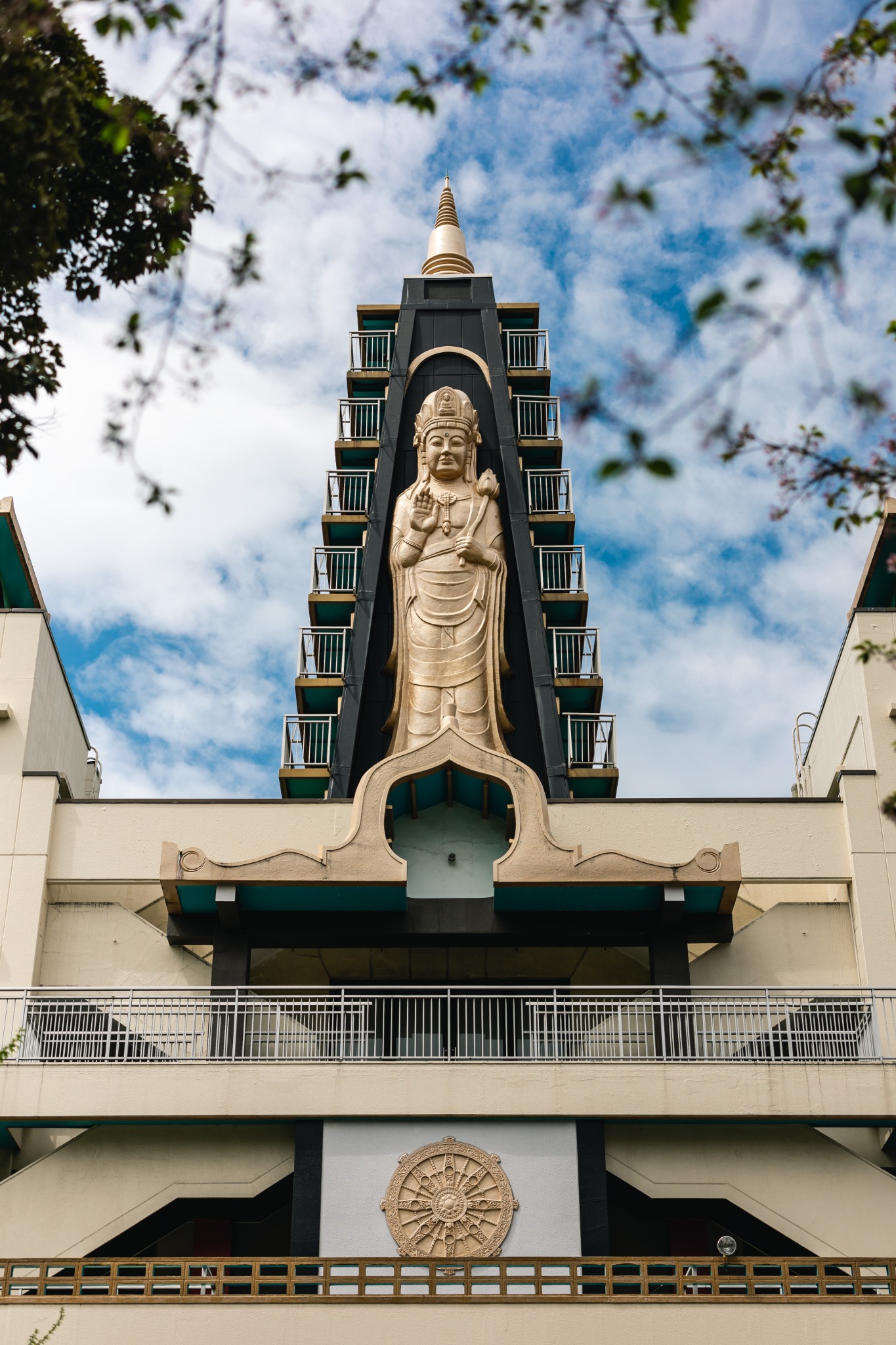
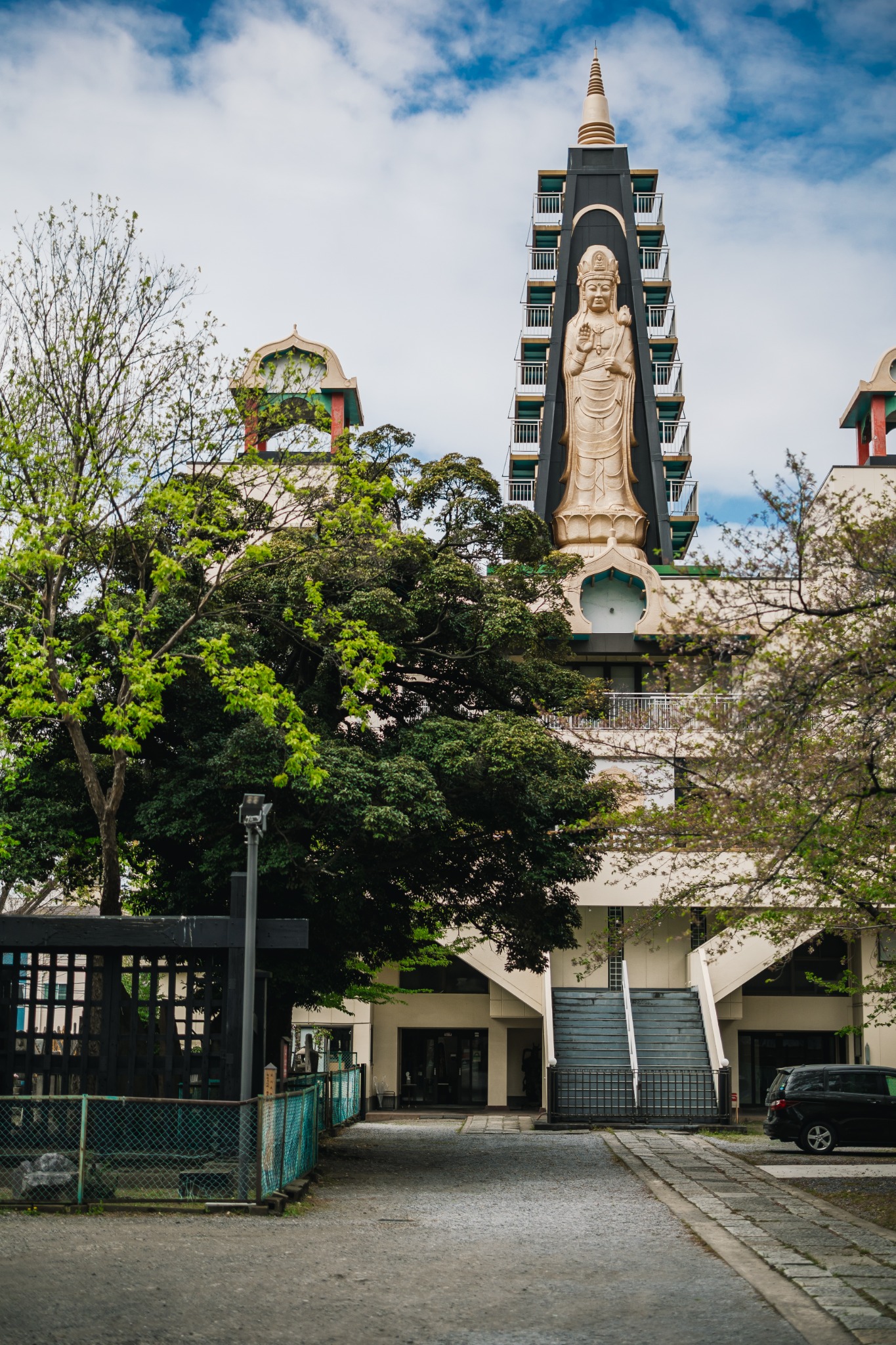
The figure stands against a dark central tower, crowned by a stupa-like spire. Around it are pale concrete walls and decidedly ordinary metal railings. This is a working Sōtō Zen temple in Minamisenju, northeastern Tokyo, though its façade makes a conventional temple roof seem like a rather cautious choice.
From model to monument
Kannon is the Buddhist bodhisattva of compassion. Here, compassion is difficult to overlook.
The figure is about twelve metres tall. Its model was approximately 5.5 centimetres.
According to an explanation displayed at the temple, the Shō Kannon was based on a model made in 1923 by sculptor Takamura Kōun. Something small enough to fit in a hand became something that occupied several floors.
It was rather like using a chess piece as the blueprint for a tower block.
Back at ground level
Despite appearances, the giant figure is not why Entsuji is known as Hyaku Kannon—the “Hundred Kannon.”
Even at twelve metres, one Kannon still counts as one.
The name comes from an older hall containing one hundred Kannon images associated with three pilgrimage circuits. The hall collapsed in the great earthquake of 1855, but its name survived. Thirty-three Kannon are now kept in the main hall. The name has not been revised.
The temple also claims a part in another name. According to its history, the warrior Minamoto no Yoshiie buried forty-eight enemy heads here after campaigning in the north in the eleventh century. The mounds are said to have given the area its old name, Kozukappara—roughly “the plain of small mounds.”
Closer to the entrance, two muscular Niō guardians stood beneath a fluorescent light. Their expressions were fierce. The bicycles parked beside them suggested that everyday arrangements continued undisturbed.
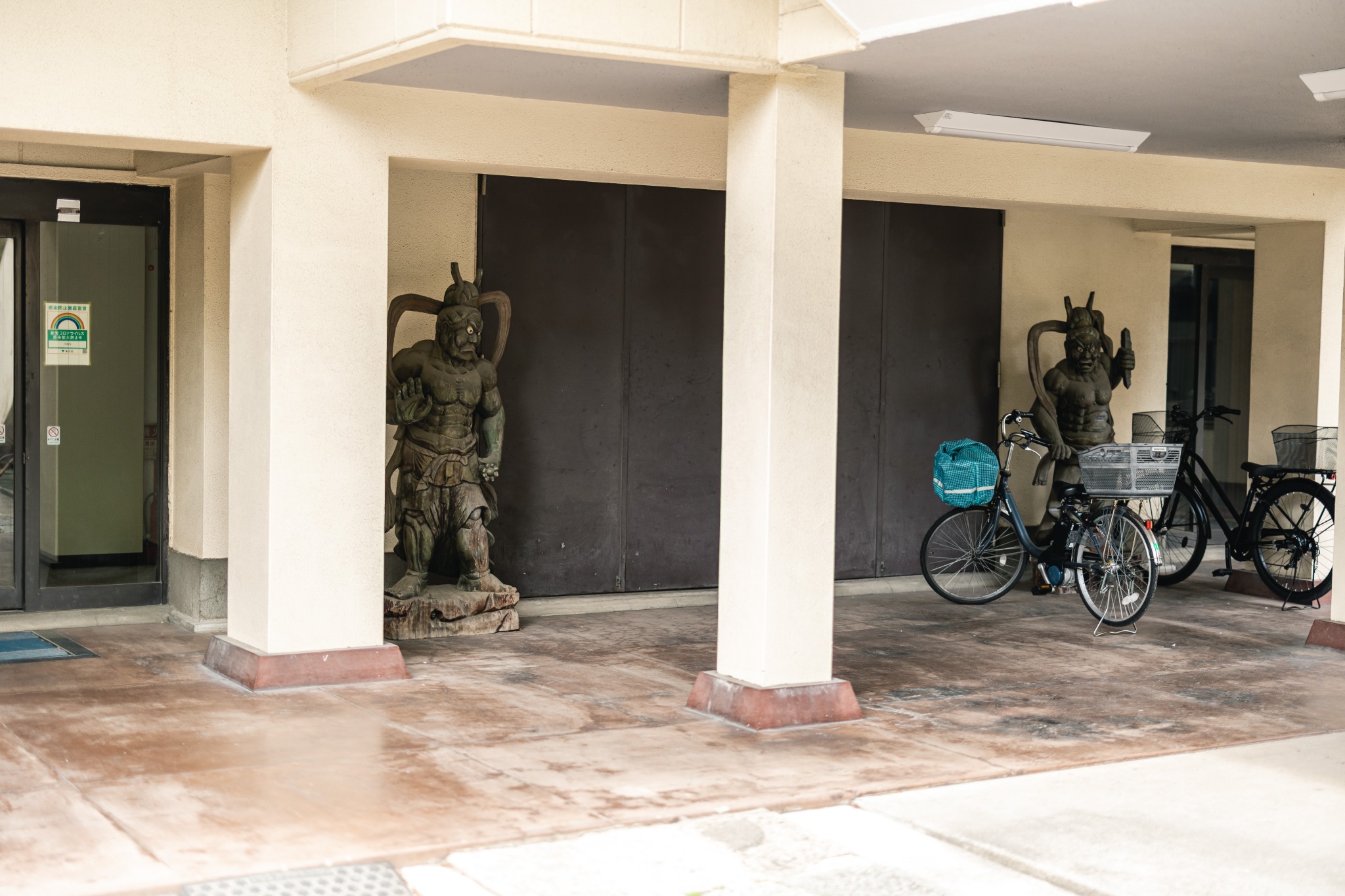
Between the giant figure above and the guardians below, there was plenty to look at before paying much attention to an old wooden gate.
The gate makes considerably less effort to catch the eye. Yet its timber holds something the golden figure does not: bullet scars from the Battle of Ueno.
A battlefield, elsewhere
The Kuro-mon—the “Black Gate”—once stood at Kaneiji Temple in Ueno. In 1868, during the conflict that accompanied the fall of the Tokugawa shogunate, fighters loyal to the old regime known as the Shōgitai faced the new imperial government’s forces there.
Fierce fighting took place around the gate.
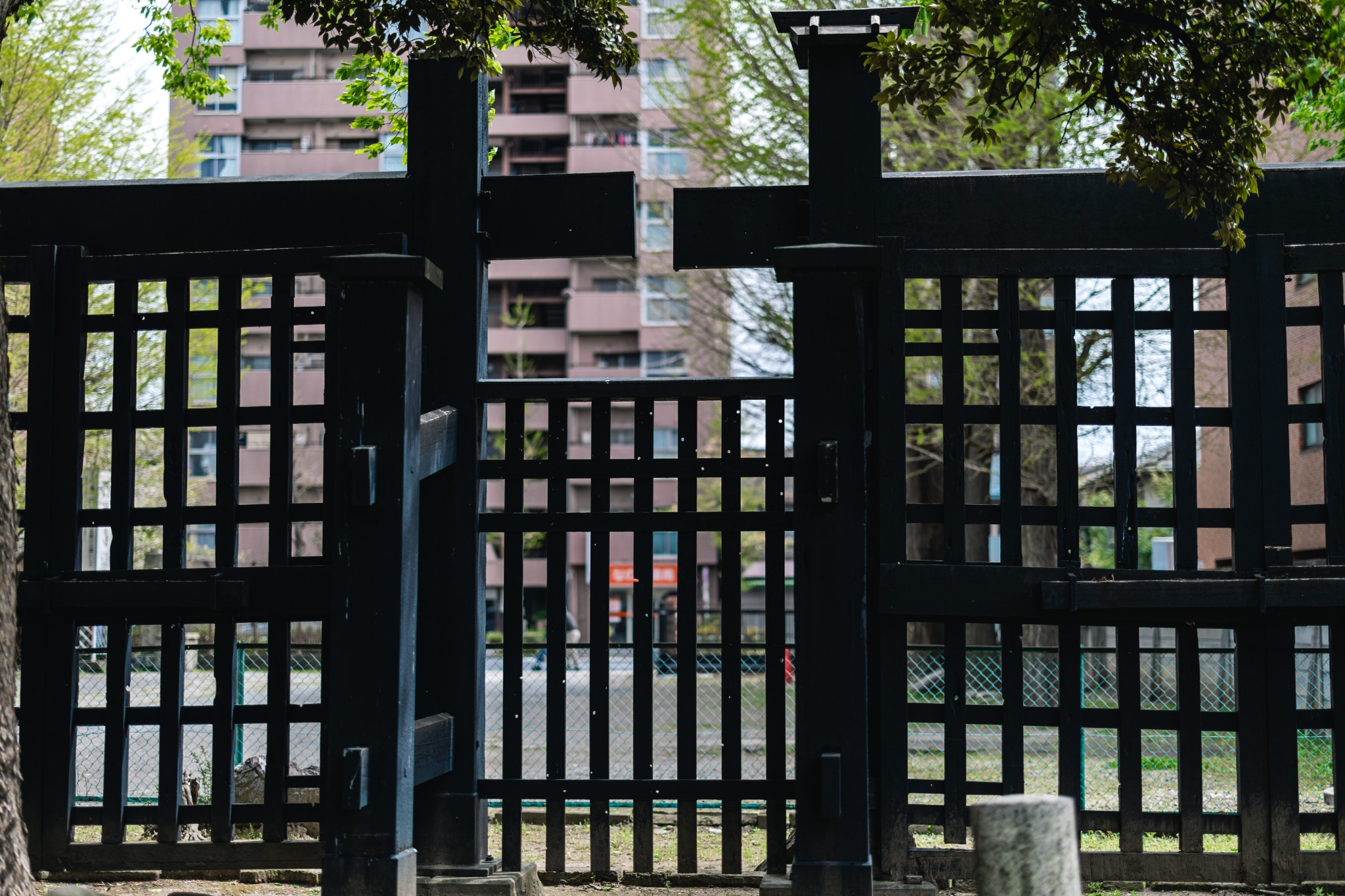
From farther away, the dark wood reads as a grid of posts and crosspieces. Closer up, small pits interrupt its surface. The damage is not confined to one convenient spot.
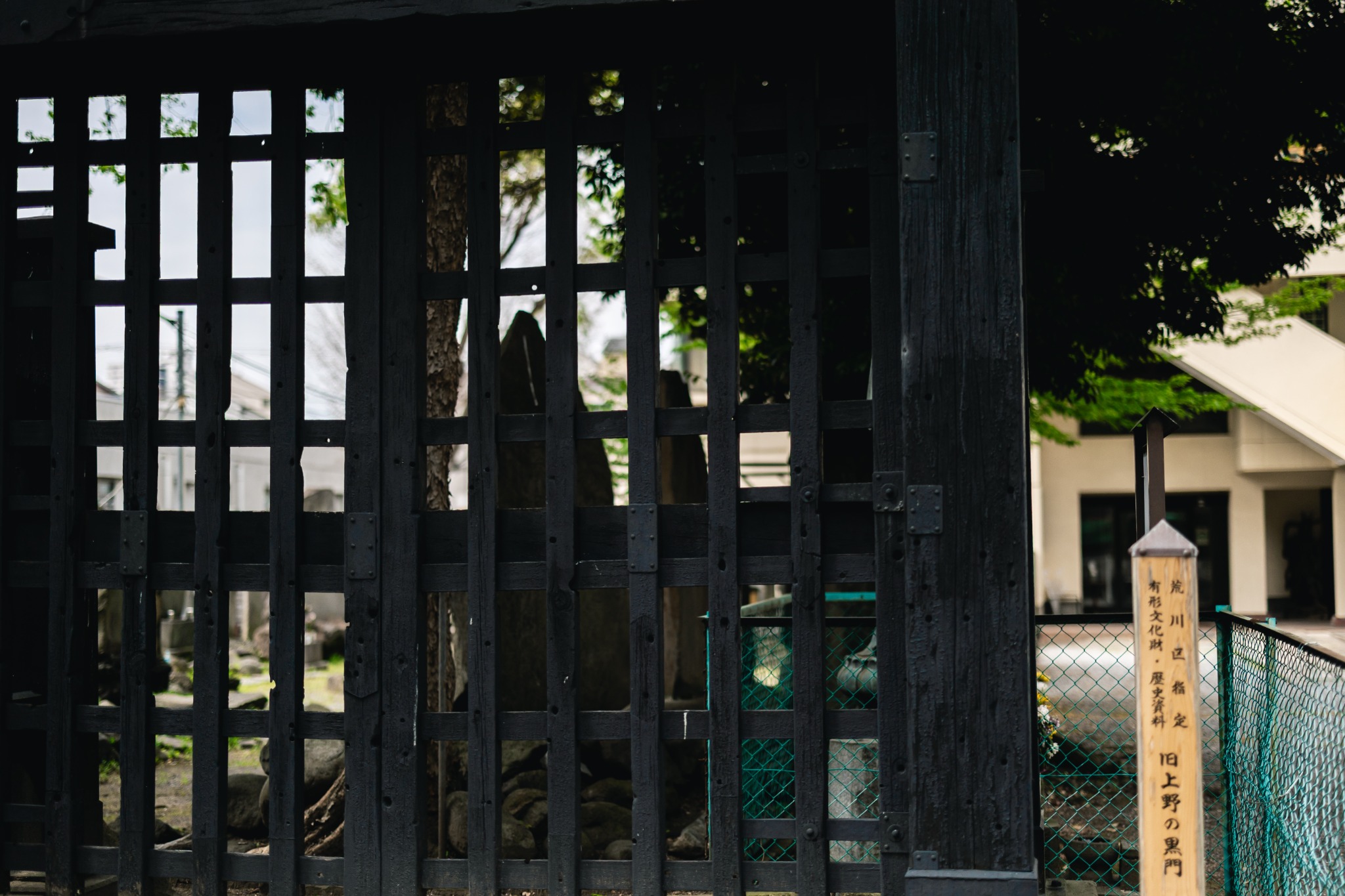
The setting makes those marks more arresting. There is a green wire fence, a modern temple building and the surrounding neighbourhood. The battlefield was elsewhere.
Why had its gate ended up here?
Someone had to bury the dead
The answer begins with the people left behind after the fighting.
According to Entsuji’s own history, the defeated Shōgitai had been branded rebels, and their bodies remained unburied on the battlefield.
Entsuji’s priest, Butsuma, went to Ueno to perform rites for them. The temple’s account describes him as prepared to risk beheading. Government troops detained him, but he eventually obtained permission to cremate and bury the dead.
Even tending to the dead required permission from the people who had defeated them.
With help from a merchant associated with Kaneiji, 266 bodies were cremated in Ueno, and their remains were brought to Entsuji. The temple continued to hold memorial rites for the Shōgitai.
That history of care explains the gate’s journey. In 1907, the Kuro-mon was given to Entsuji by the Imperial Household Museum. The gate the Shōgitai had fought around now stands in the same corner of the grounds as their graves.
The giant Kannon gives compassion a conspicuous form. Butsuma’s story gives it a more difficult task: caring for people whom the victors had labelled rebels.
Above the courtyard, the golden figure is still the easiest thing to notice. The blackened timber below takes longer to understand.
Entsuji gave the defeated somewhere to rest. Nearly forty years later, a piece of their battlefield followed.
Visit this place
Location
Entsuji Temple (円通寺)
The giant Kannon and the former Kuro-mon of Kaneiji are both inside the temple grounds.
1-59-11 Minamisenju, Arakawa City, Tokyo 116-0003, Japan
Practical Information
- Admission
- Free
- Opening hours
- 9:00–17:00
- Closing days
- No regular closing days
- Access
- Under 5 minutes on foot from Minowabashi Station (Tokyo Sakura Tram)
- Suggested visit time
- About 20 minutes, according to Arakawa City’s tourism guide
- Official website
- Entsuji Temple
- Tourism information
- Arakawa City — Entsuji
- Visitor note
- Some cultural properties on the grounds are not generally open to the public; follow onsite instructions.
Information last checked: August 30, 2026
Conversation
Comments
Review pending commentsComments are reviewed before appearing. The internet already contains enough unattended surprises.
Checking comments…
Comments are not available in this migration preview yet. Existing comments remain on the current site.
Leave a comment