Enoshima’s Bronze Torii: A Gate from the Pleasure Quarter
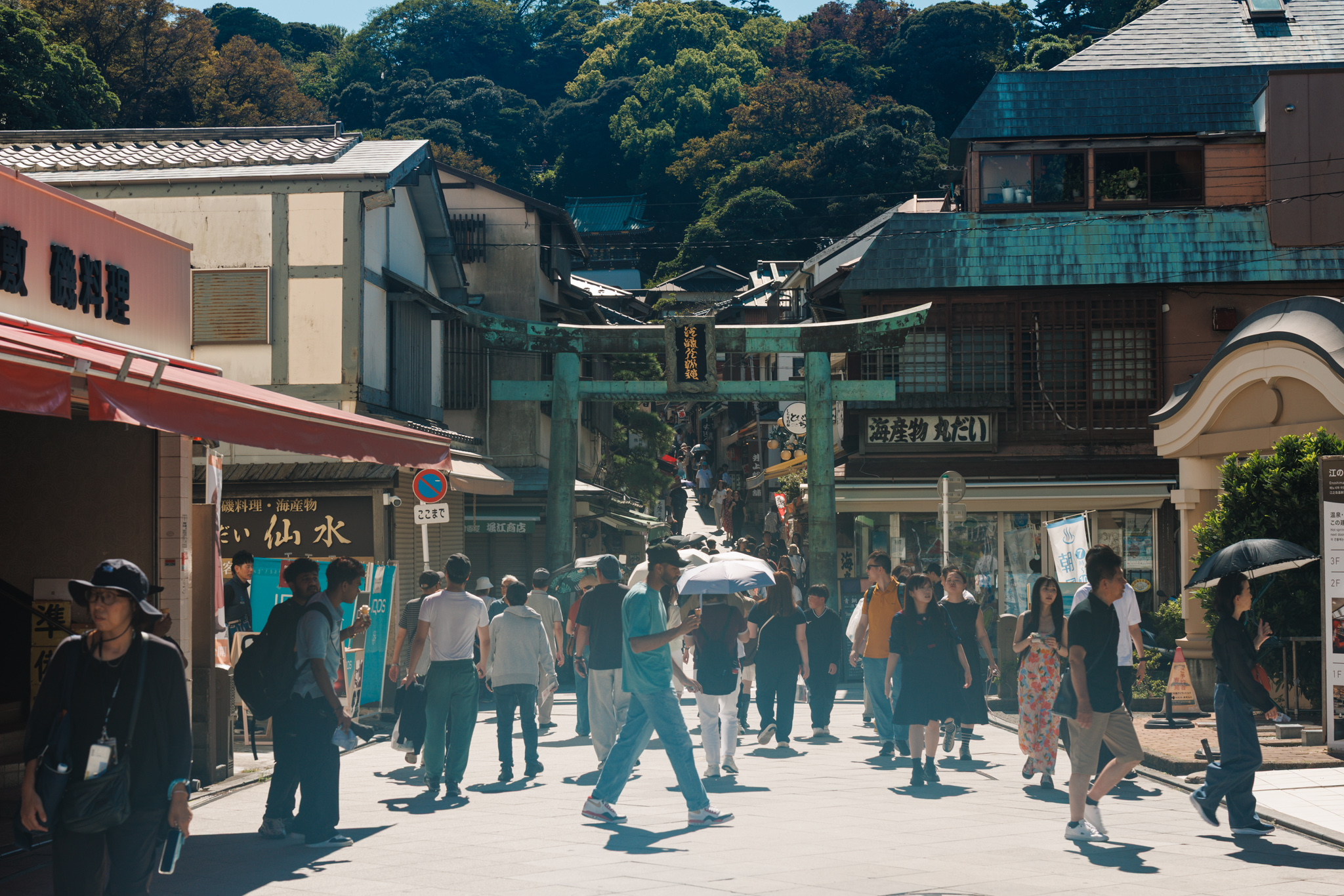
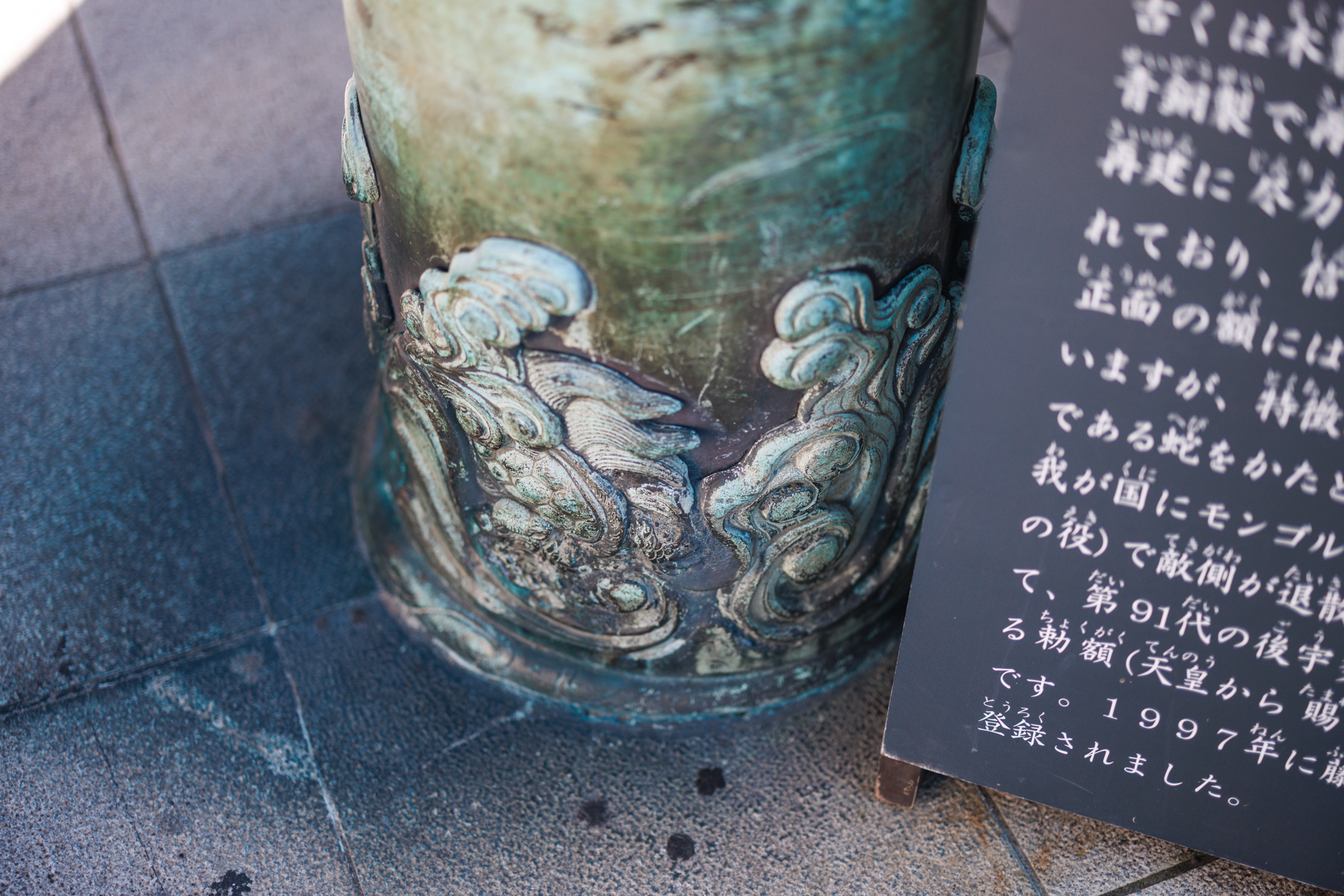
A sign beside Enoshima’s bronze torii, in Japanese only, explains that the gate’s pillars carry the names of the many people who helped rebuild it, and that the names speak of the depth of their faith.
The crowd passing beneath it has other things on its mind. It flows up and down the street under parasols, with the odd soft-serve ice cream, through a gate the colour of old seawater.
Enoshima is a small island off the coast of Kanagawa Prefecture, south of Tokyo. The gate stands just beyond the end of the bridge that links the island to the mainland, where the approach to Enoshima Shrine begins: a narrow, climbing street of souvenir shops and seafood restaurants.
A torii has stood here since 1747. The present one, cast in bronze, went up in 1821, and has spent two centuries in the sea air turning green.
Bronze, down to the rope
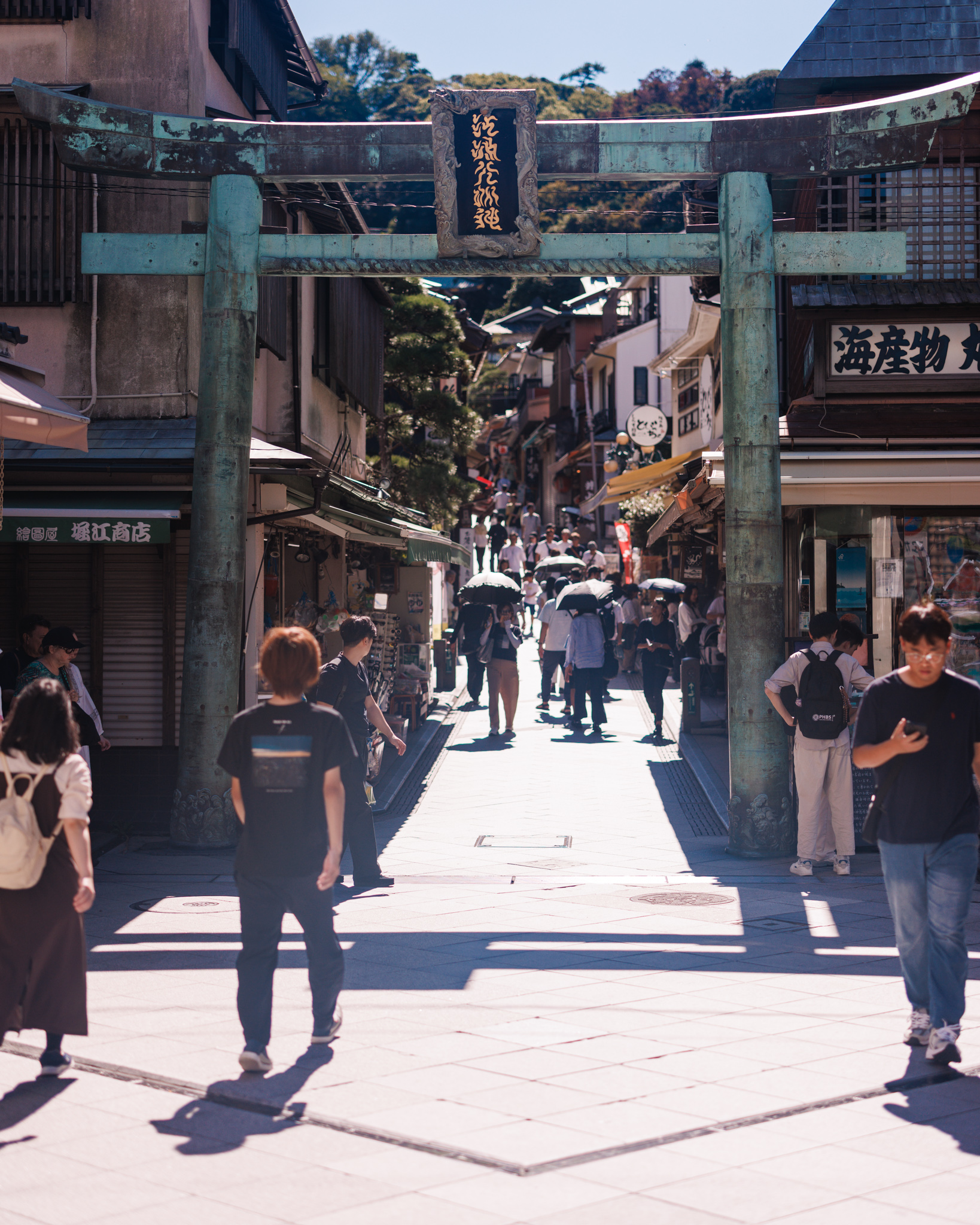
Up close, the gate is fussier than it looks from a distance. The sacred rope that often hangs across a torii is cast in bronze here, twist and all, along the lower crossbeam. At the foot of each pillar, bronze waves curl around the base.
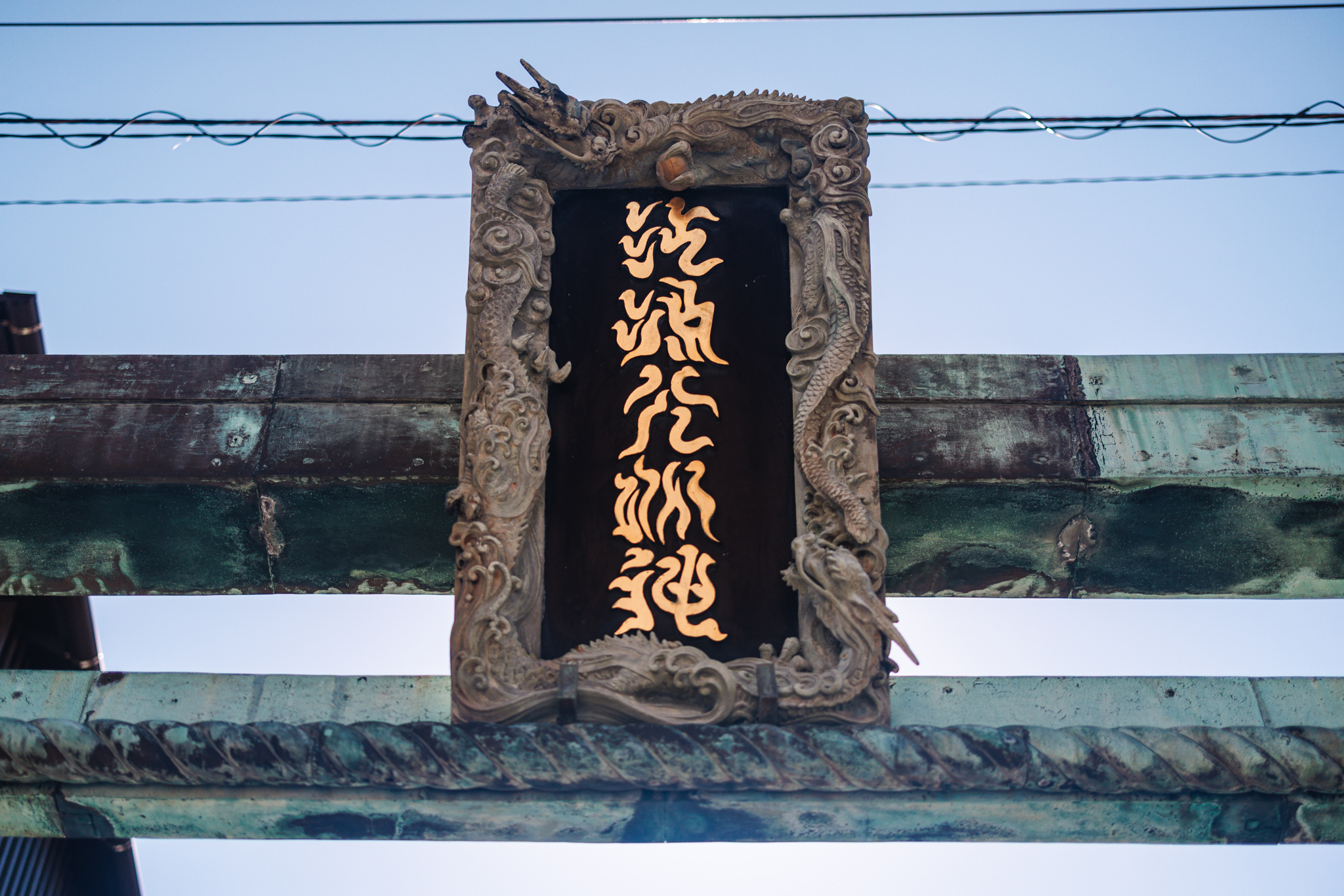
The plaque at the top reads Enoshima Daimyōjin, an old title for the island’s deity. The characters are drawn in curling strokes meant to look like snakes, the messengers of Benzaiten, the goddess the island is best known for. The plaque itself is a copy. According to Enoshima Shrine, the original was given by Emperor Go-Uda after the Mongol invasion of 1274. The sign puts it more cautiously: the emperor is said to have offered it in thanks when the invaders withdrew.
Carved dragons coil around the frame, through clouds and waves. Enoshima is a dragon’s island as much as a goddess’s. Further across the island, one has a shrine of its own.
Who paid for the gate
There are indeed a great many names.
The sign does not say where some of them made their living. The pillar does, in raised characters.
Above one block of names are three characters: 新吉原, Shin-Yoshiwara.
Yoshiwara was the licensed pleasure quarter of Edo, as Tokyo was then called: an enclosed district where the shogunate permitted prostitution. In 1657, it moved to the northern edge of Asakusa and officially became New Yoshiwara.
Beneath the heading run more than a dozen lines of names. According to local histories, the gate’s principal donors were the owners of three Yoshiwara houses: the Ōgiya, the Daikokuya and the Matsubaya.
The donation was organised by a man recorded as Yaoya Zenshirō of Shin-Torigoe, Asakusa. Yaoya means greengrocer. In 1821, a man of exactly that name was the head of Yaozen, a business in Asakusa that had started out selling vegetables and grown into what was rated the finest restaurant in Edo. No source identifies them as the same man. But the name and the year fit.
The other pillar is said to list merchants, from Edo and further afield.
None of this is as strange as it first looks. Benzaiten is the goddess of music and entertainment. Yoshiwara had a Benzaiten of its own on its doorstep, and the women of the quarter worshipped there. A trip to Enoshima to visit the goddess was a popular outing for Edo’s townspeople, and in 1858 Hiroshige put this very entrance in a print. A district that lived on entertainment had every reason to keep her on side.
A name among the names
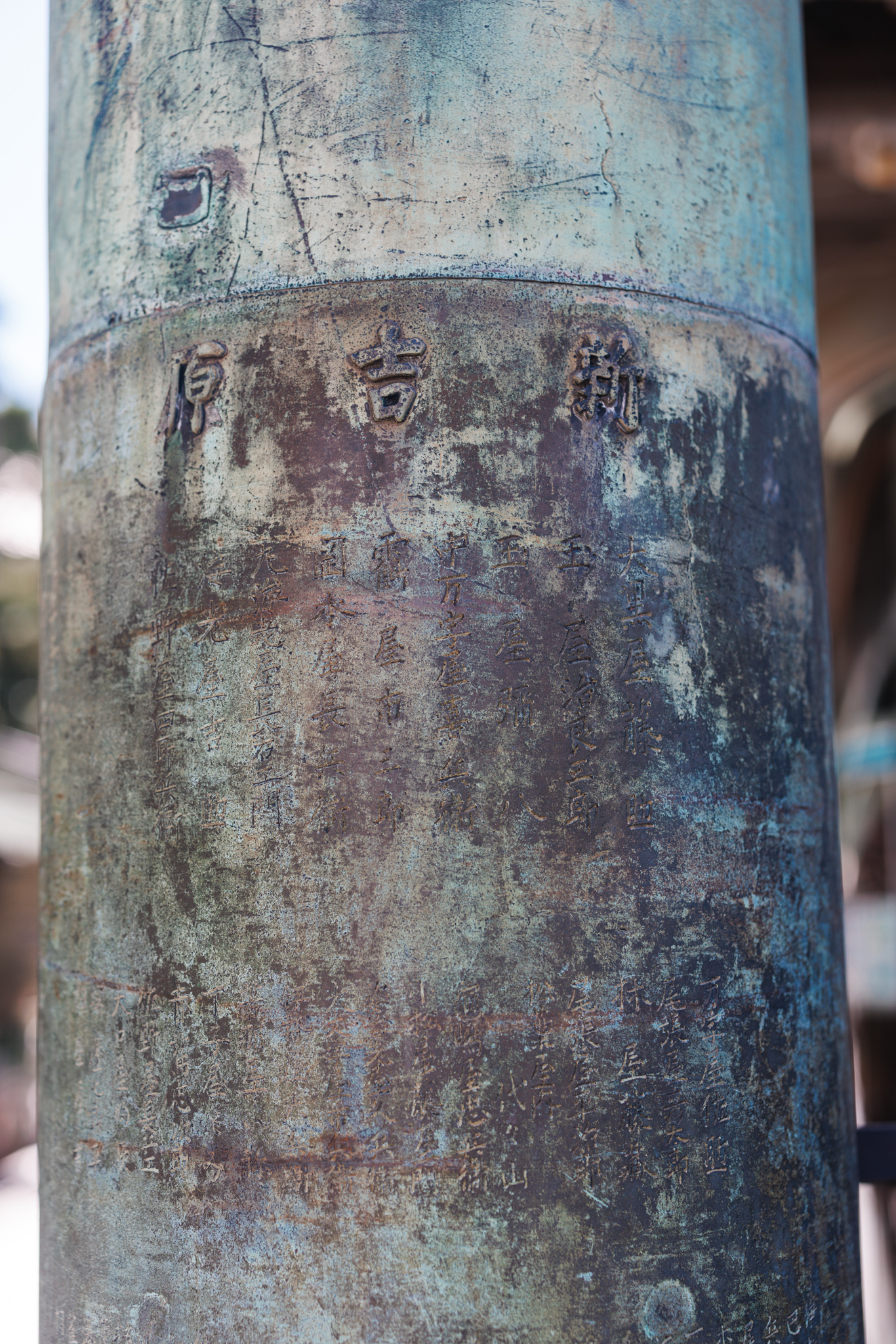
Further down the same pillar, the list of houses and owners is interrupted by a woman’s name: Yoyoyama, of the Matsubaya. She was one of the house’s courtesans. Her name is on the same list of donors as the men who ran it.
Yoshiwara had only one way in and out. That was partly to keep order, and partly so that the women inside could not escape.
For more than two hundred years, her name has remained on a gate that anyone may walk through.
Visit this place
Location
Enoshima’s Bronze Torii Gate (江島神社 青銅の鳥居)
At the island end of the bridge from the mainland, where Benzaiten Nakamise-dōri, the approach to Enoshima Shrine, begins.
1-4-1317 Enoshima, Fujisawa, Kanagawa 251-0036, Japan
Practical Information
- Area
- Enoshima, Fujisawa, Kanagawa
- Access
- About 12 minutes on foot from Katase-Enoshima Station (Odakyu Enoshima Line), across the bridge to the island
- Opening hours
- Open at all times
- Admission
- Free
- Visitor note
- The Shin-Yoshiwara inscription is on the right-hand pillar as you face the shrine. The street is at its busiest on weekends and holidays.
- Tourism information
- Fujisawa City Tourism Association — Bronze Torii (Japanese)
Information last checked: October 2, 2026 (location, access time from Katase-Enoshima Station, opening hours and admission).
Conversation
Comments
Review pending commentsComments are reviewed before appearing. The internet already contains enough unattended surprises.
Checking comments…
Comments are not available in this migration preview yet. Existing comments remain on the current site.
Leave a comment