Jewelpia: The Details Have Details
A dragon’s head rose from the bow of an ivory boat. Behind it stood a many-tiered pavilion, with tiny figures on the decks. A chain hung from the dragon’s neck, curving down towards an anchor.
The dragon was hard to miss. The chain was hard to make sense of.
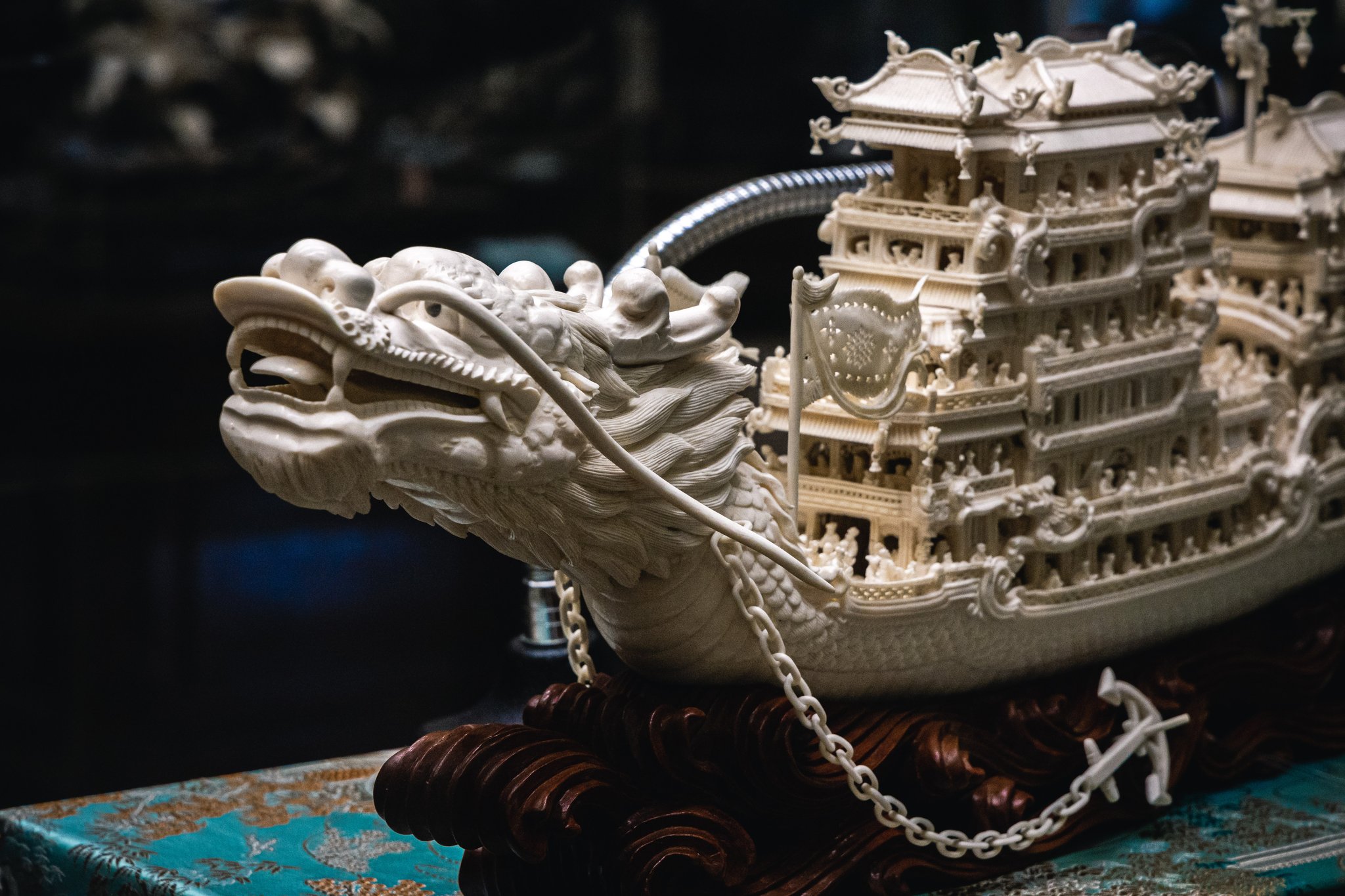
This was the Dragon Houseboat at Jewelpia, a museum of ivory and stone sculpture in Izu Kōgen, on Japan’s Izu Peninsula. The chain’s links had not been made separately and joined together. They had been carved from a single piece of ivory, already interlocked, with no joints to conceal.
According to the museum, its windows can open and close, and the rooms are furnished with tables and chandeliers. The little figures on deck were apparently travelling first class.
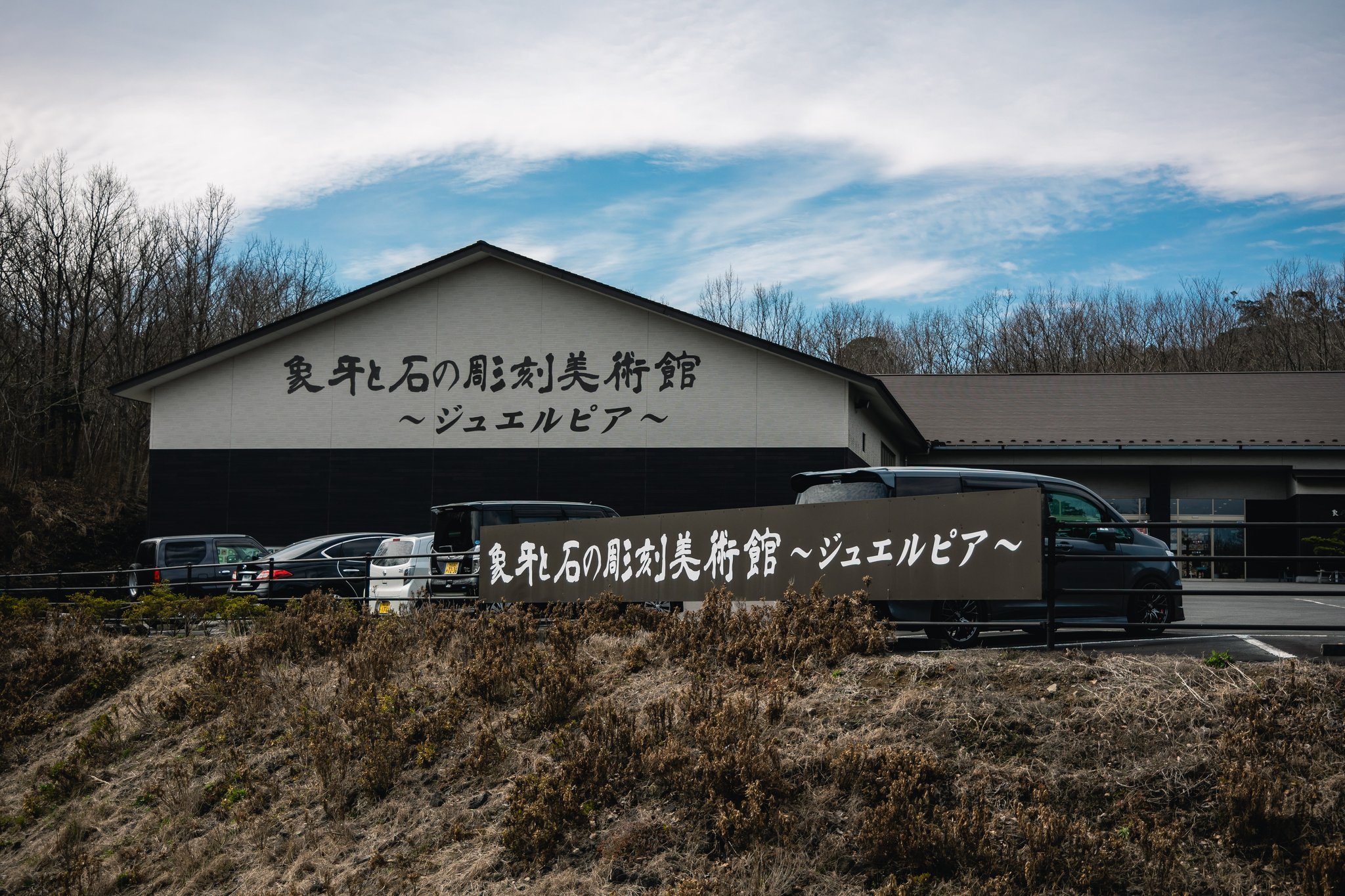
The collection began with a rather different kind of work. Yoshimitsu and Shigeko Yamamoto travelled repeatedly to China to advise on growing and processing cherry leaves. The Izu Peninsula supplies most of the salted cherry leaves wrapped around Japan’s sakura mochi rice cakes. In China, they encountered ivory carvings and other artworks and began collecting. Their collection was first opened to the public in Toi, on the western side of the peninsula, before moving here in 2014 and reopening under a new name, Jewelpia, chosen from 580 suggestions.
The boat was not the only exhibit with more to see inside.
Inside the detail
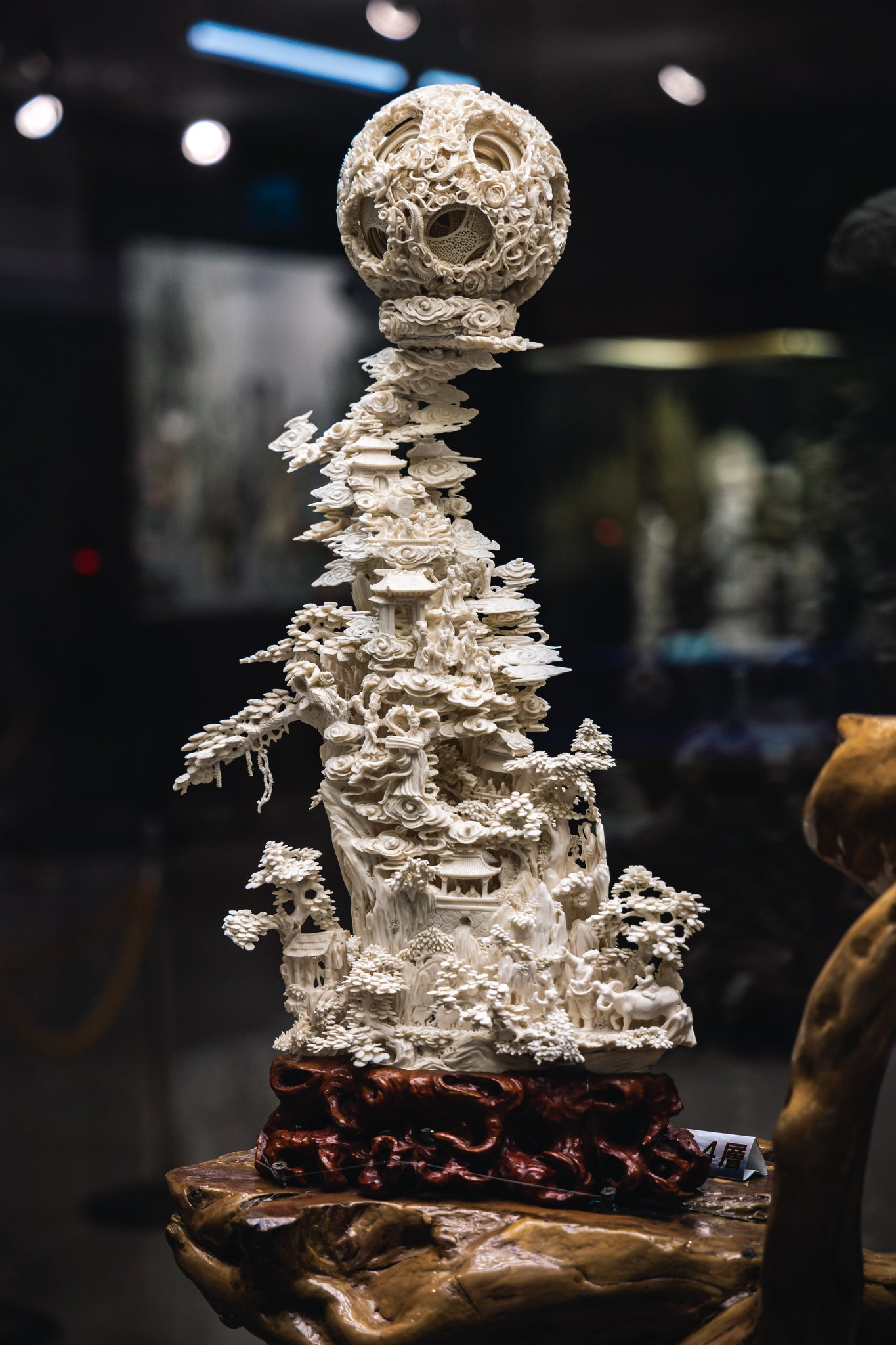
An ivory ball rested above a tall, crowded landscape. Through openings in its surface, another carved sphere was visible. Behind that lay further layers.
The nested spheres are carved from a single solid ball of ivory, rather than assembled from separate parts. Each can rotate independently. The museum describes how carvers work through holes in the outside, inserting narrow tools to cut the layers free and carve their patterns. The inner spheres are not simply smooth supports for the outer decoration. They have their own openwork.
The inner patterns were difficult enough just to see. Someone had carved them through those same small holes.
According to the museum, a sphere of more than twenty layers takes either a carver’s whole working life or two generations of one family. Spheres of thirty, forty and fifty layers are on display.
Ivory was suited to such intricate carving. Its dense, fine-grained structure could hold minute details and be polished to a smooth finish. Workable did not mean effortless; it meant the material could accommodate what the carvers were attempting.
But it was also elephant tusk. Poaching and the illegal ivory trade have caused severe losses among elephant populations, and import and export of elephant ivory between Japan and other countries are now prohibited in principle under CITES and Japanese law. Recognising the workmanship does not require celebrating the demand for its raw material.
A family project
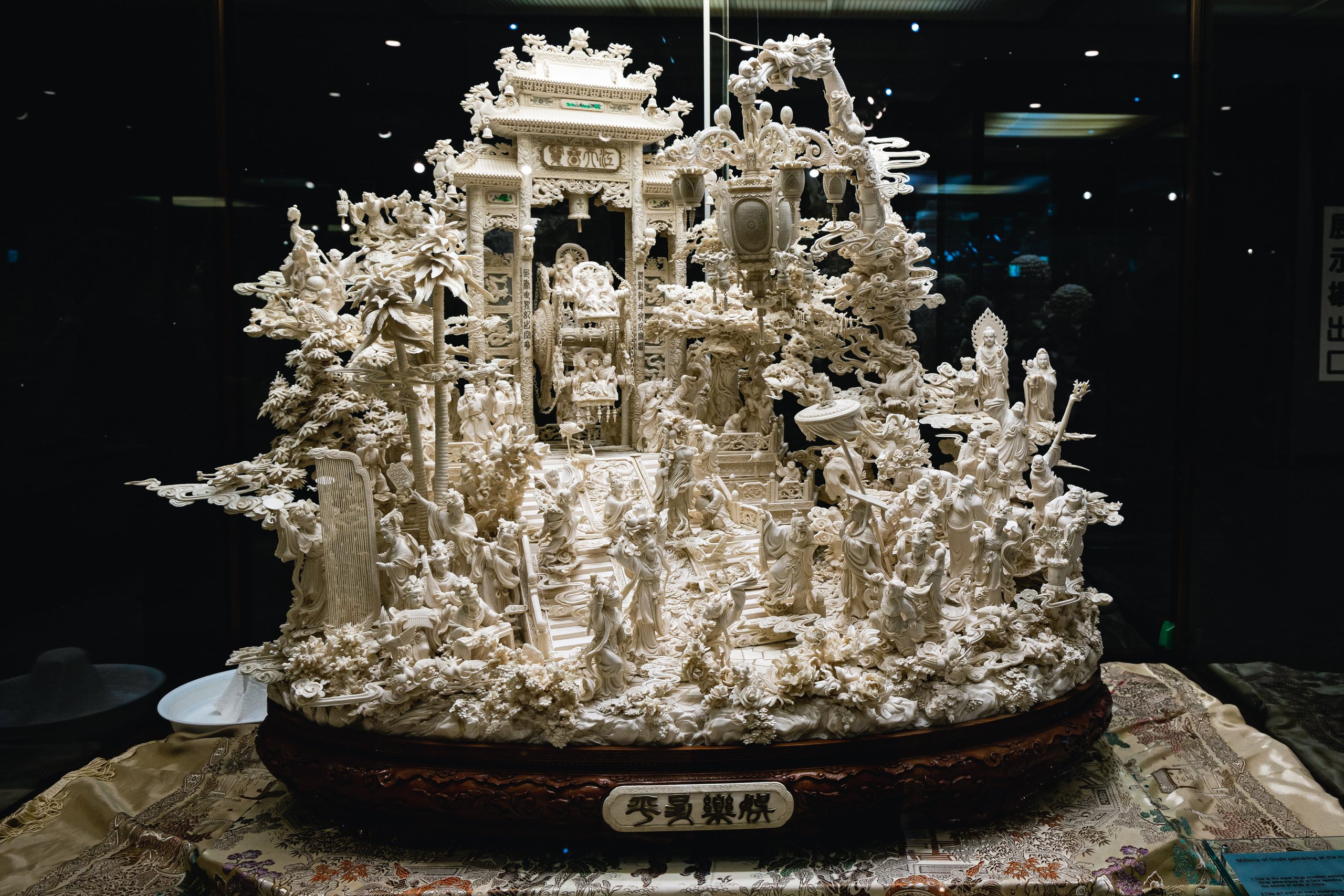
The ivory scene shown at the beginning of this story gathered gateways, figures, lanterns, branches and curling clouds onto a broad wooden base. Even the roofs carried small creatures along their edges.
From a distance, it formed one pale, intricate mass. Closer in, individual faces, sleeves and tiny railings began to separate from it.
The museum says Goraku Shōhei, the work shown at the beginning of this story, took seventy years and three generations of one family to complete.
The skills were handed down. So was the unfinished work.
A lantern’s pierced shade was only a small feature in the whole scene. Someone still had to finish every opening. The same attention extended to the figures below, where a turned head or a raised hand gave each one something of its own to do.
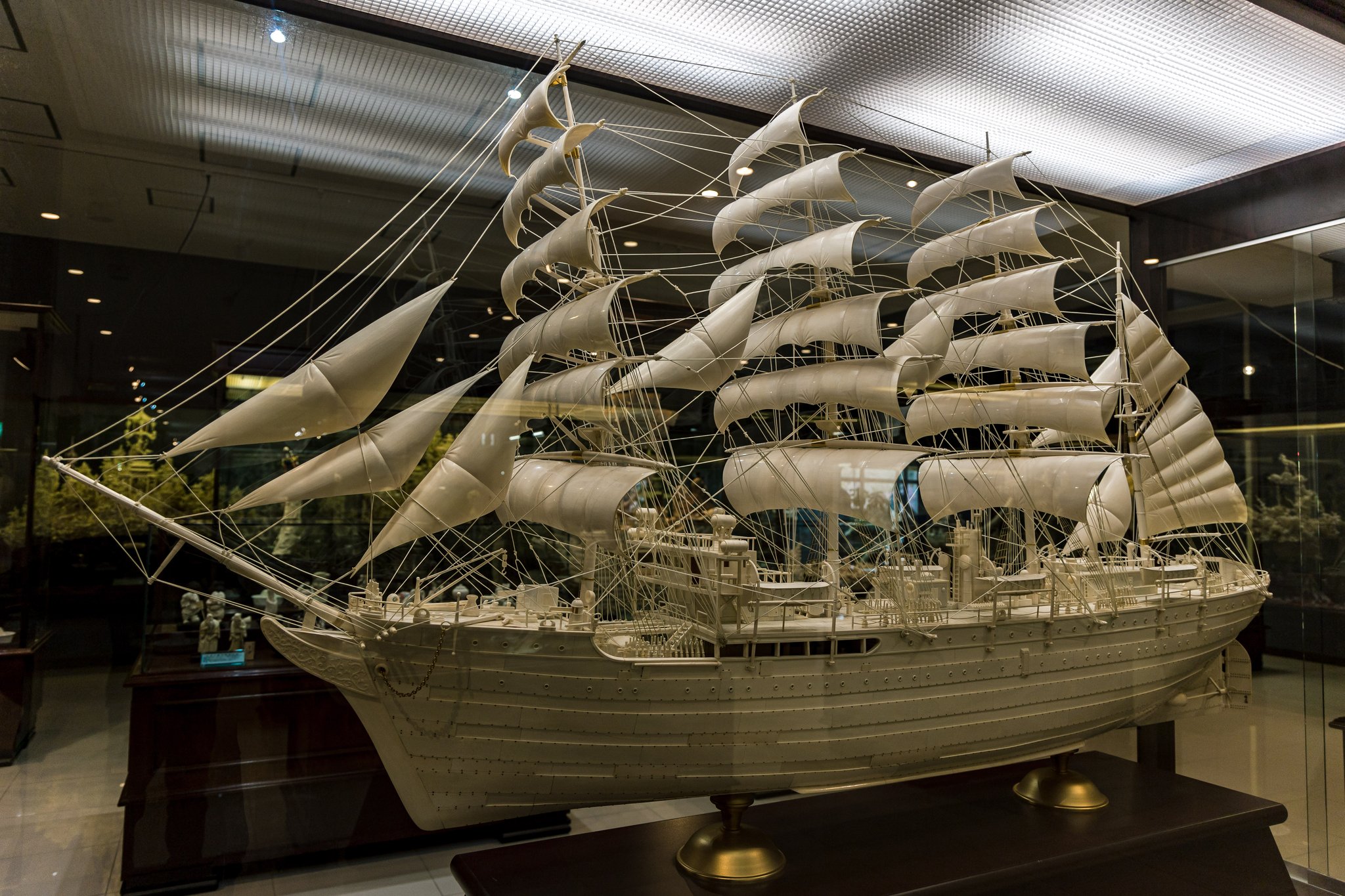
Not every work packed its details so tightly. An ivory model of the sailing ship Nippon Maru spread them across masts, sails and a web of rigging. The museum says it was carved at 1:36 scale, with a rudder and propeller made to move.
Colour, by the metre
In the stone displays, the scale changed again. Instead of peering through the openings of a ball, there was a long room to look along. Figures and branches filled dark panels on both sides, with their reflections stretching across the floor.
The screen telling the story of Yang Guifei, an imperial consort in Tang-dynasty China, runs to 108 panels and seventy-five metres in total. Its scenes give a courtly story enough room to surround the visitor.
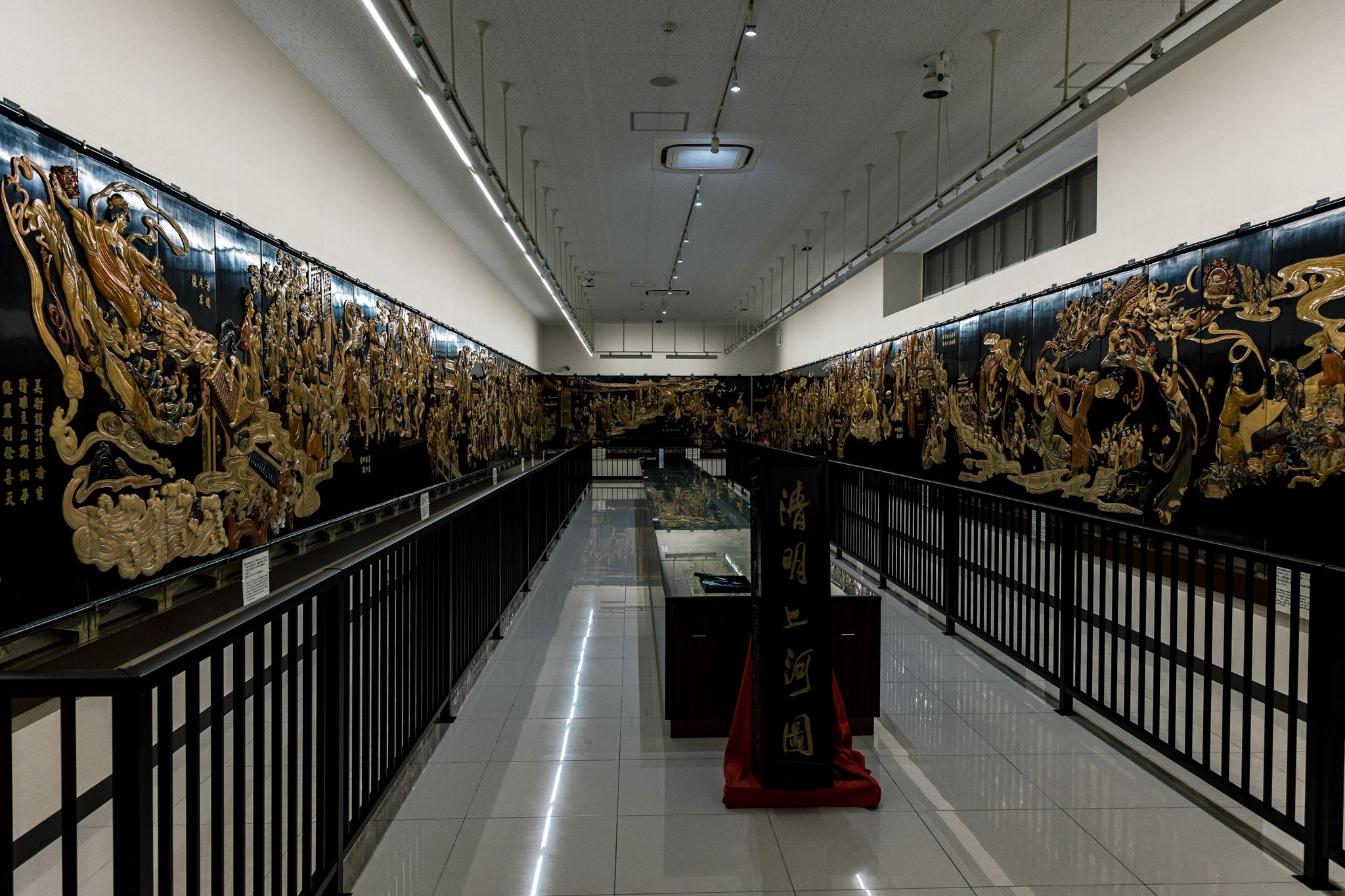
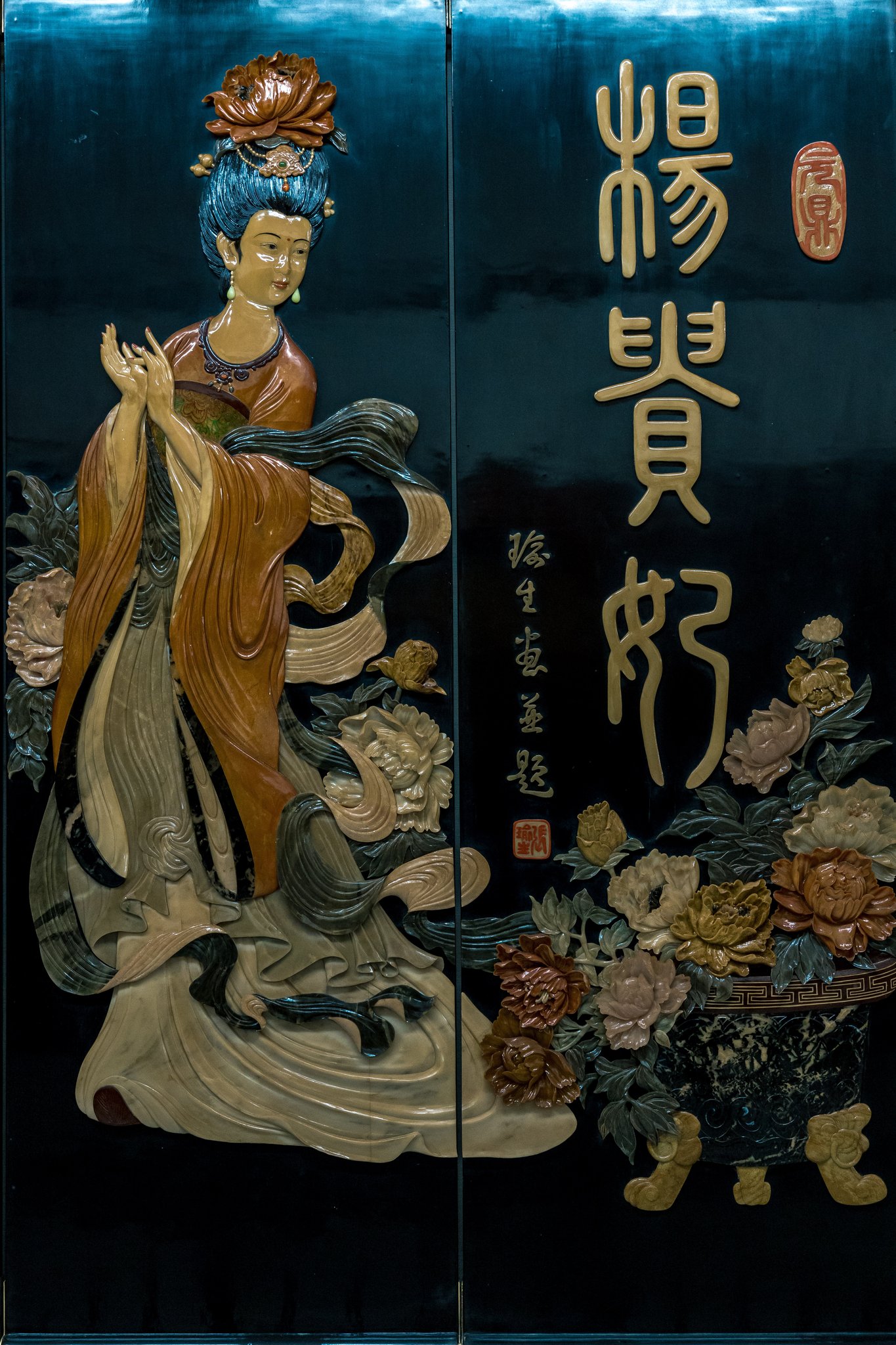
The colour required a second look. Much of what could initially pass for painting was made from pieces of natural stone, carved, polished and fitted together on lacquered panels. The makers used the stones’ own colours and markings. Some details, including hair and eyes, were coloured, but most of the palette came from the material itself.
In one panel, Yang Guifei’s long sleeves and layered robes stood out against blue. The carved folds suggested soft fabric, while the stone’s natural markings gave the robes their patterns.
Another screen turns Journey to the West, the Chinese tale of a monk’s journey to India with his unusual companions, into a fifty-metre sequence. Here, a white horse stood among the travellers, with patterned rock rising behind them.
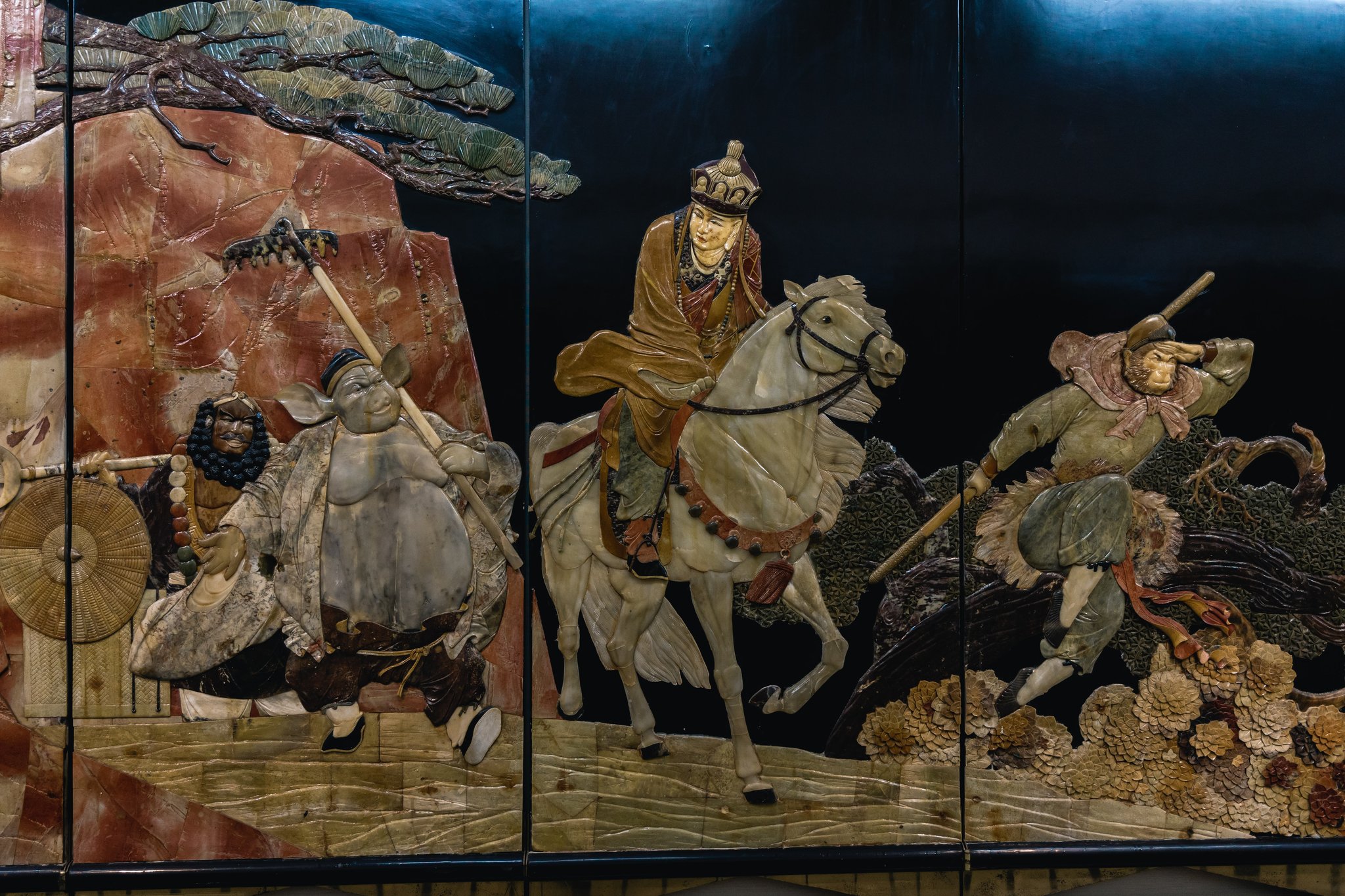
The pale horse, the robes and the reddish rock all depended on finding suitable material as well as shaping it. The carvers had been working with what the stone already contained, deciding where a colour or a vein might become part of the scene.
For the Journey to the West screen, the museum says, gathering the stones from across China took two years.
Something more familiar
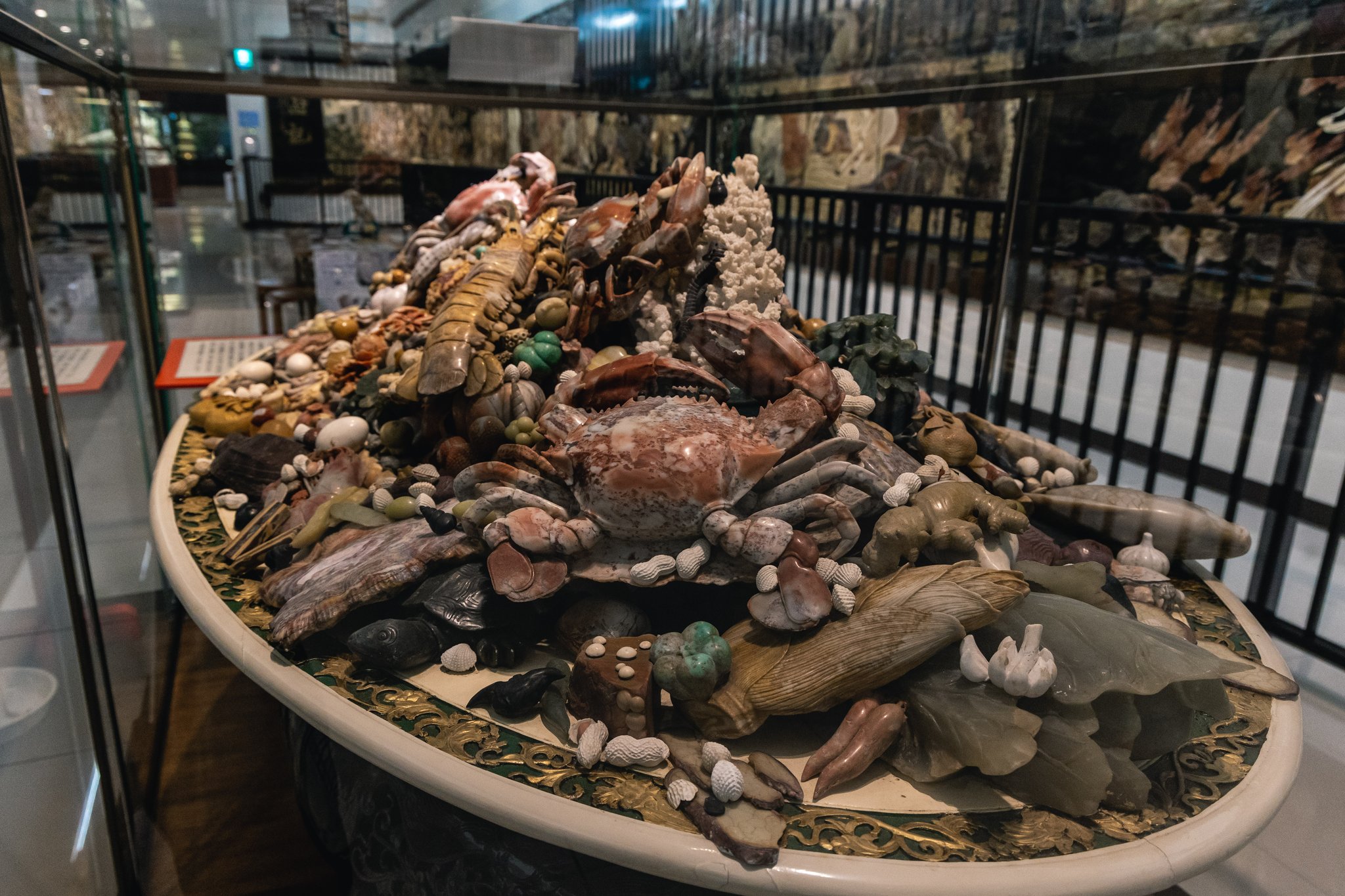
The same attention to colour had also been applied to dinner.
A large crab occupied the front of an oval platter. Prawns, fish, fruit and vegetables crowded around it, their shells, skins and leaves picked out in differently patterned stone. The display label described the work as entirely uncoloured and gave its weight as 350 kilograms.
This was not the sort of dish to pass around the table.
The stone collection also included somewhere to lie down. A green structure rose in columns and tiers, with dragons and pierced panels across its canopy. The museum identifies it as a jade bed. Vases stood beneath the canopy, behind hanging strands of beads.
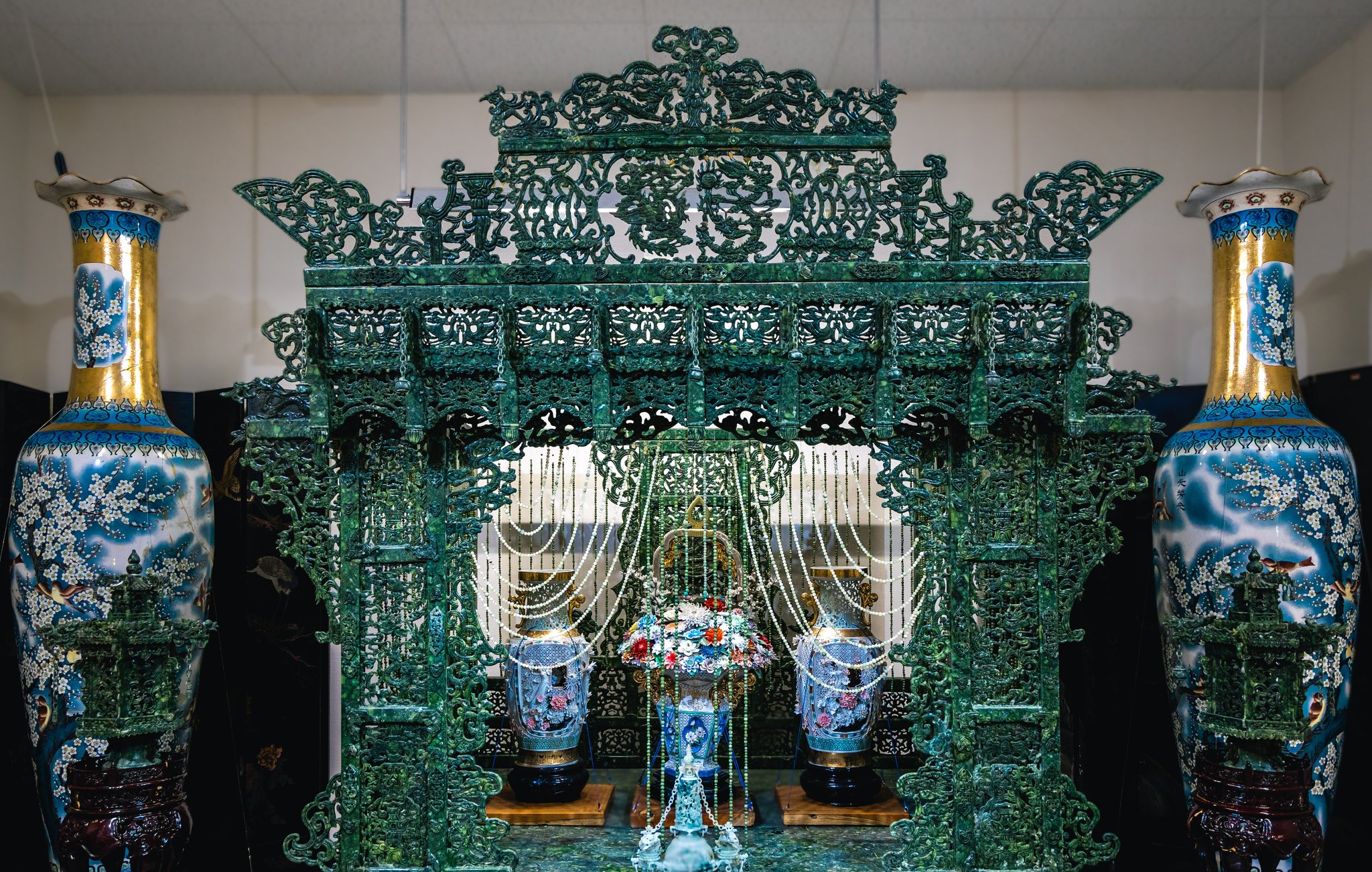
If I slept in a bed this expensive, I suspect I would spend most of the night worrying about the bed.
Visit this place
Museum
Museum of Ivory and Stone Sculptures — Jewelpia (象牙と石の彫刻美術館~ジュエルピア~)
In Izu Kōgen on the Izu Peninsula
1096-1 Futo, Ito, Shizuoka 413-0231, Japan
Practical Information
- Admission
- Adults: ¥1,200; children: ¥600
- Photography
- Photography is allowed inside; no flash, tripods or selfie sticks
- Accessibility
- Step-free access from the car park through the entrance, galleries, toilet and garden; 2 loan wheelchairs are available
- Visitor note
- The museum’s Japanese and English official pages currently publish different opening and closing schedules. Check the official website before travelling.
- Official website
- Jewelpia
Information last checked: September 26, 2026
Conversation
Comments
Review pending commentsComments are reviewed before appearing. The internet already contains enough unattended surprises.
Checking comments…
Comments are not available in this migration preview yet. Existing comments remain on the current site.
Leave a comment