Enoshima’s Olympic Fountain: Five Rings, Five Women
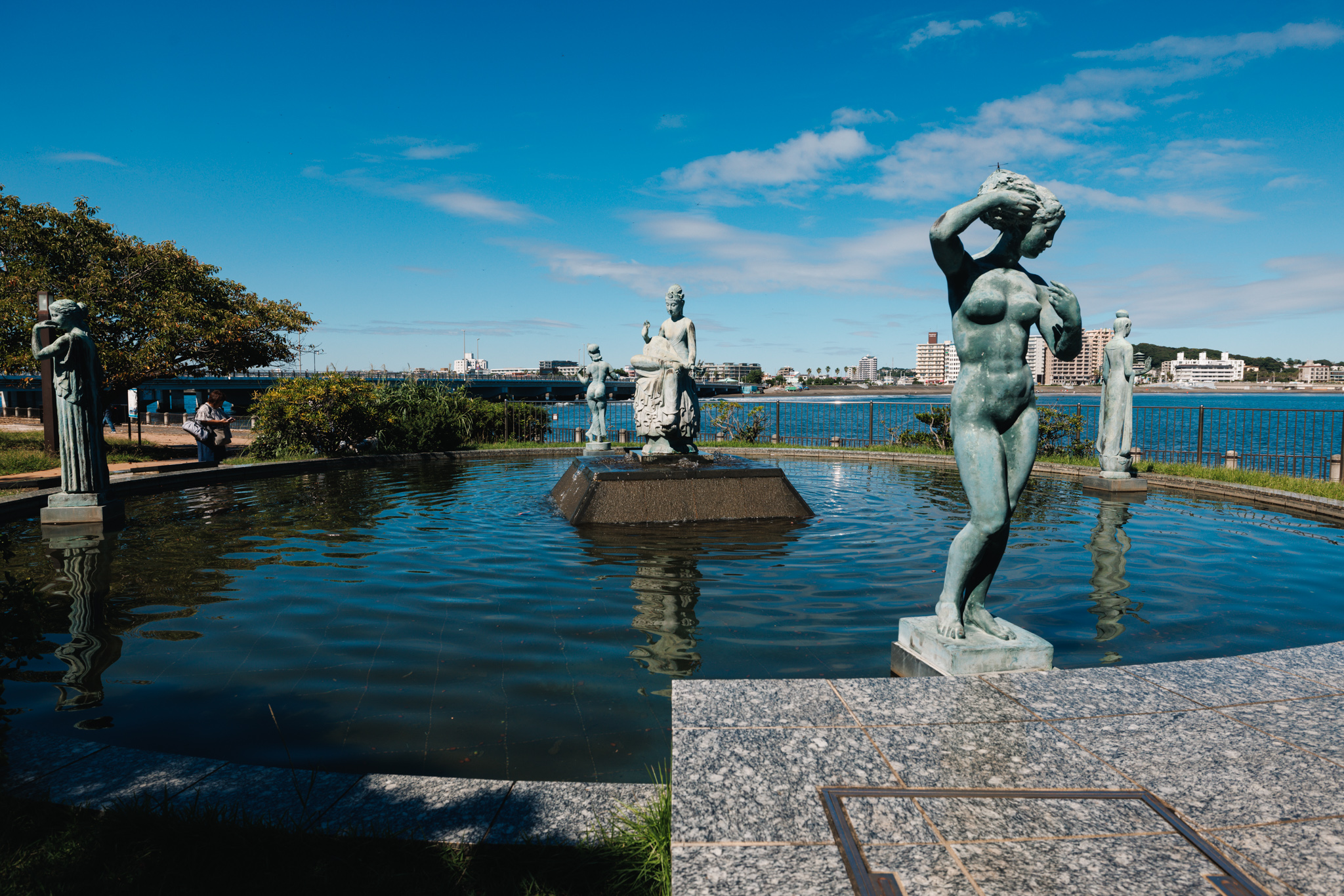
Enoshima’s memorial to the 1964 Olympic Games has no athletes in it, and no boats.
Off to one side of the path from the bridge, on a lawn by the water, five bronze women stand in a round pond. The one in the middle is seated, with a lute in her arms. Most people who cross to the island walk straight past, on to the bronze torii and the souvenir shops beyond it.
Enoshima is a small island off the coast of Kanagawa Prefecture, south of Tokyo. The pond’s full name is the Fountain Pond of Benzaiten and the World’s Women. It is better known by a shorter one: the Olympic Memorial Fountain.
Five rings, in bronze
In October 1964, Tokyo hosted the Olympic Games, and the sailing events were held in Sagami Bay, off Enoshima. Yokohama had been the original plan. Instead, a yacht harbour was built on the island’s north-eastern shore, over rocks that were filled in from 1961. It was finished in the summer of 1964, and sailors from 40 nations raced out of it.
To mark the occasion, the city of Fujisawa, which Enoshima belongs to, commissioned a group of statues from the sculptor Kensei Katō, a member of the Japan Art Academy who lived in the city. Matsushita Electric, now Panasonic, paid for the construction. The fountain was unveiled in October 1964.
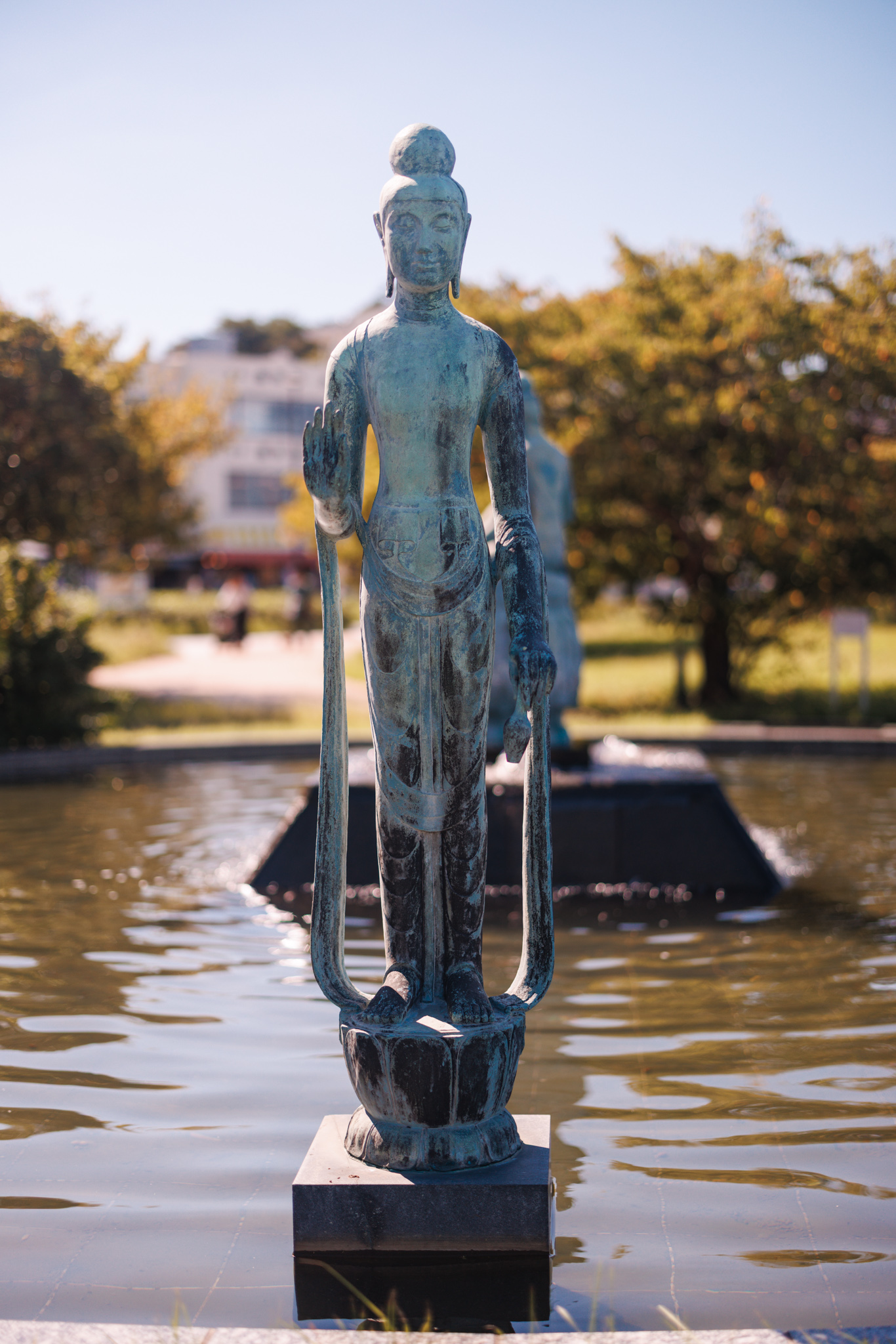
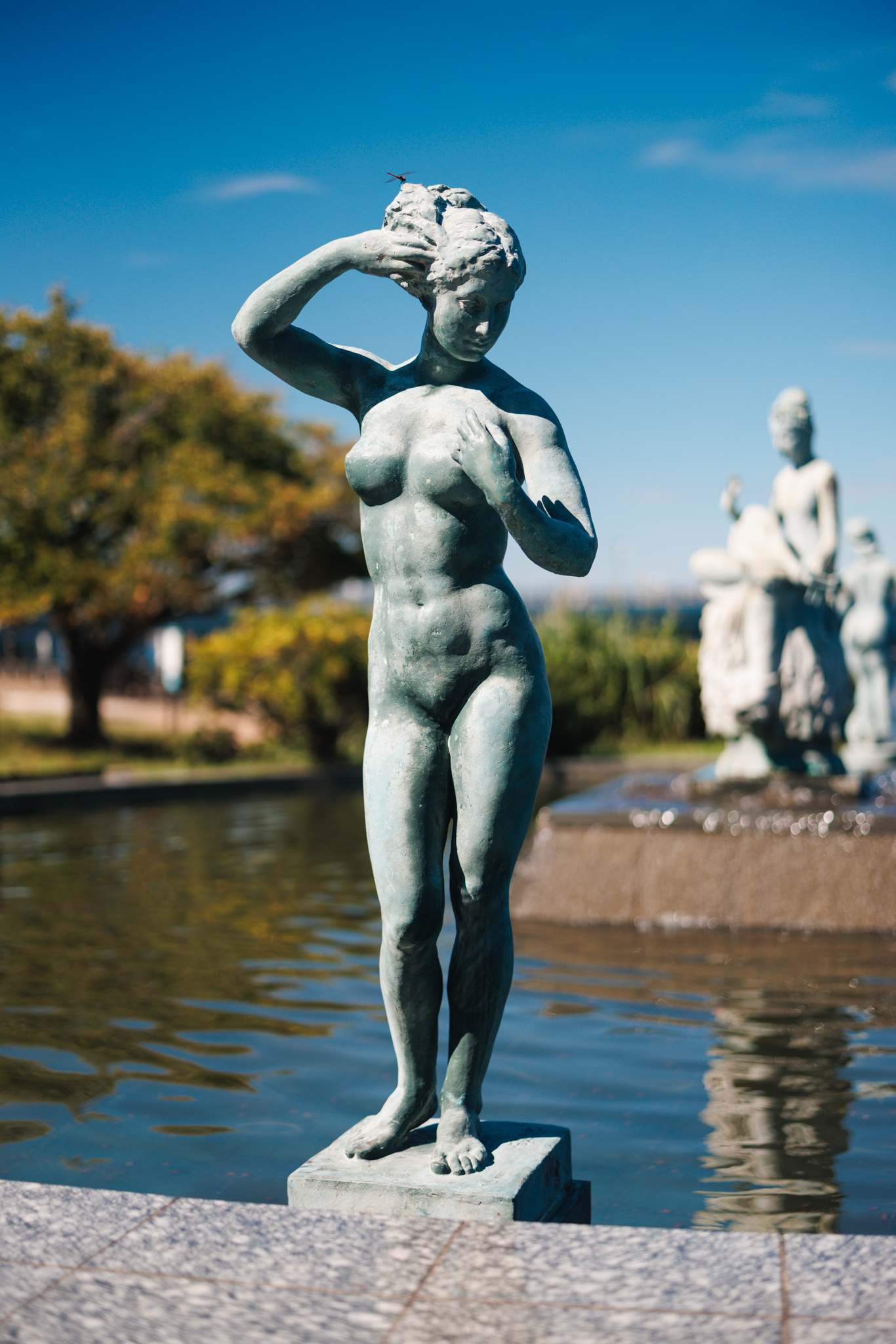
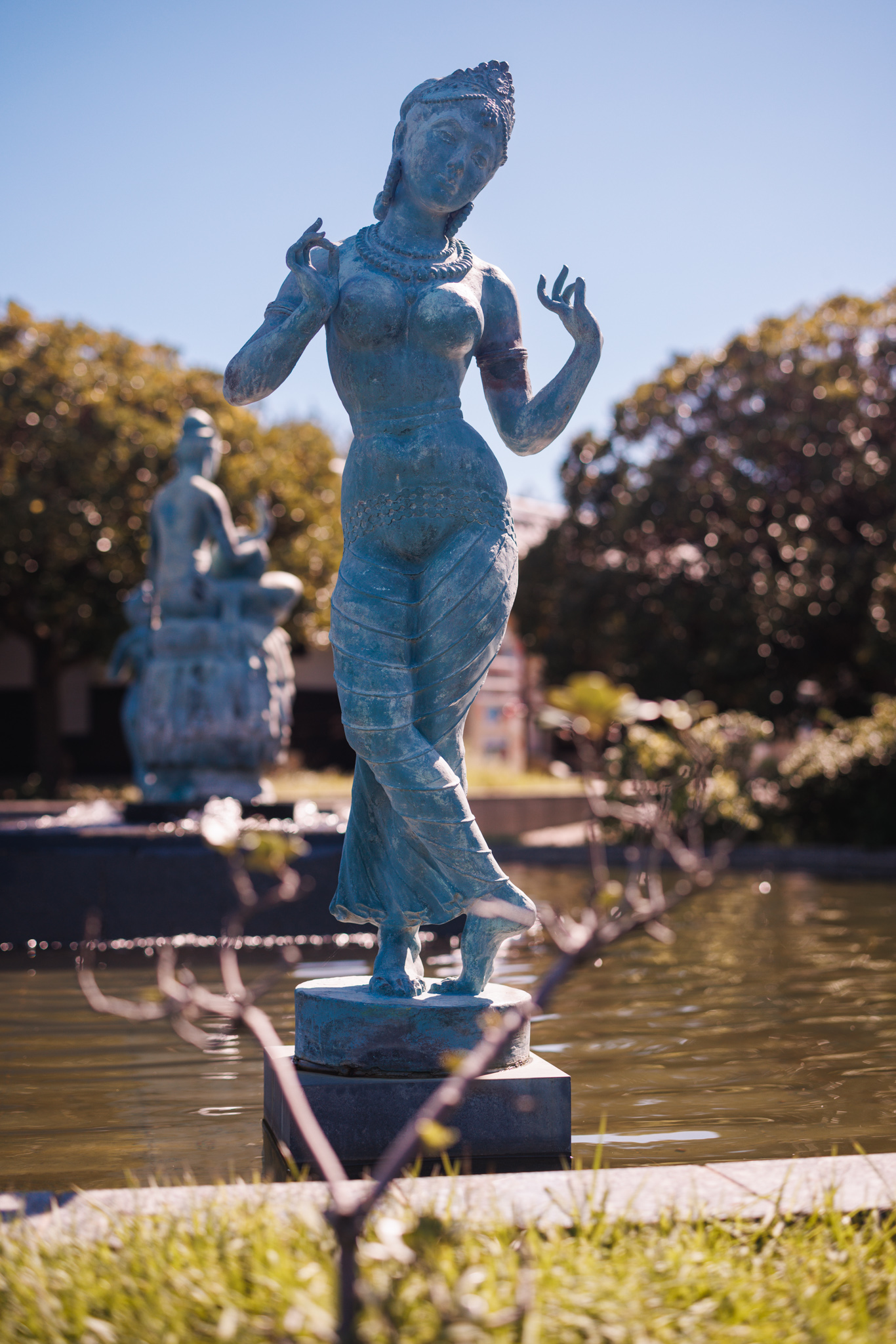
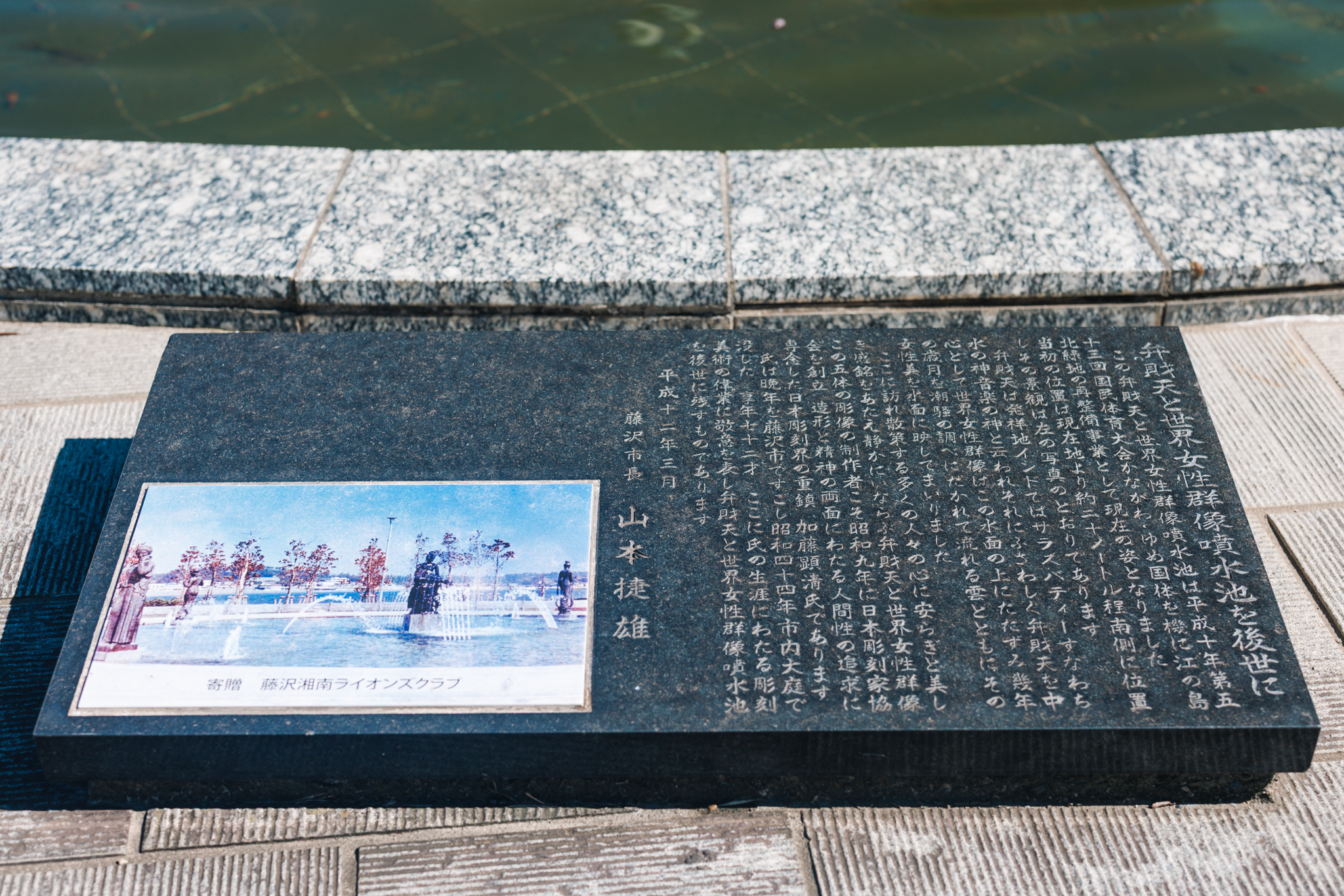
The plaque at the edge of the pond sets out the plan. Benzaiten, the goddess of Enoshima, sits in the centre. Around her stand four women, chosen along two lines: East and West, classical and modern.
Then it explains why there are five. Together, the figures represent the five Olympic rings.
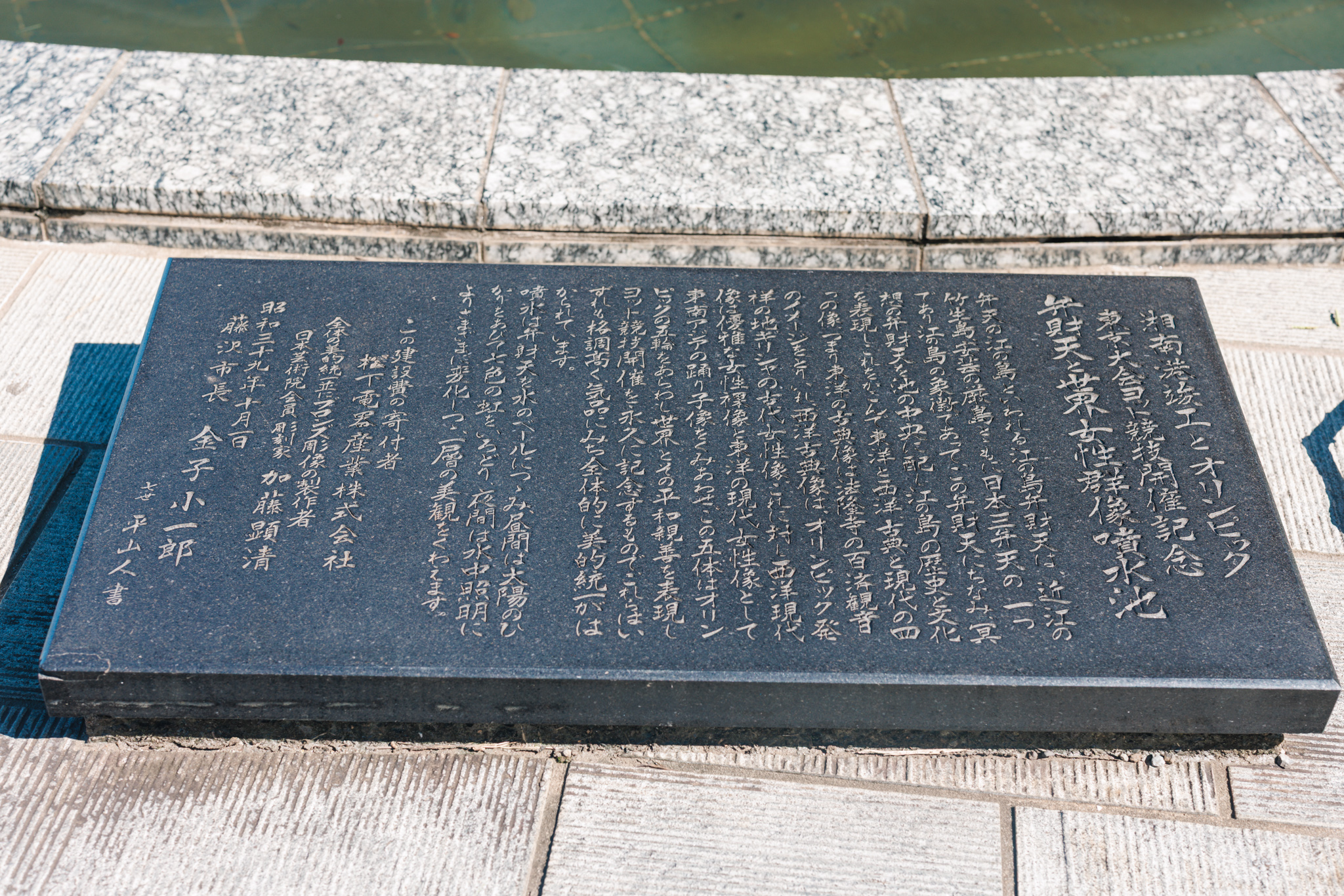
There were also five sailing events in 1964. The plaque does not bring this up.
The line-up
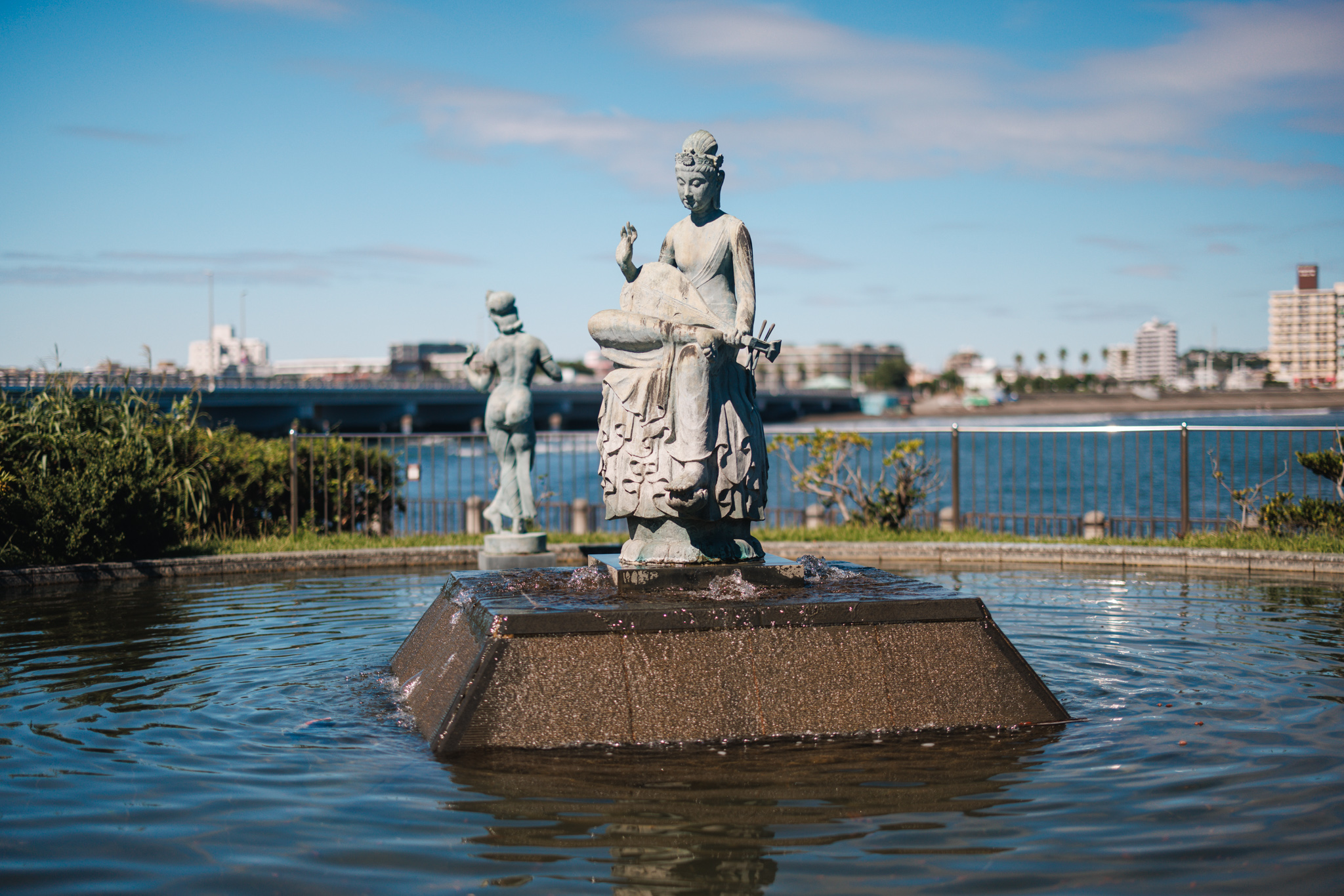
The woman in the middle was the obvious choice. Benzaiten is the goddess Enoshima is best known for. In India, where she began as Sarasvati, she was a goddess of water and of music: a natural candidate for the centre of a fountain. The 1964 plaque describes her as meditating. She has her lute ready all the same.
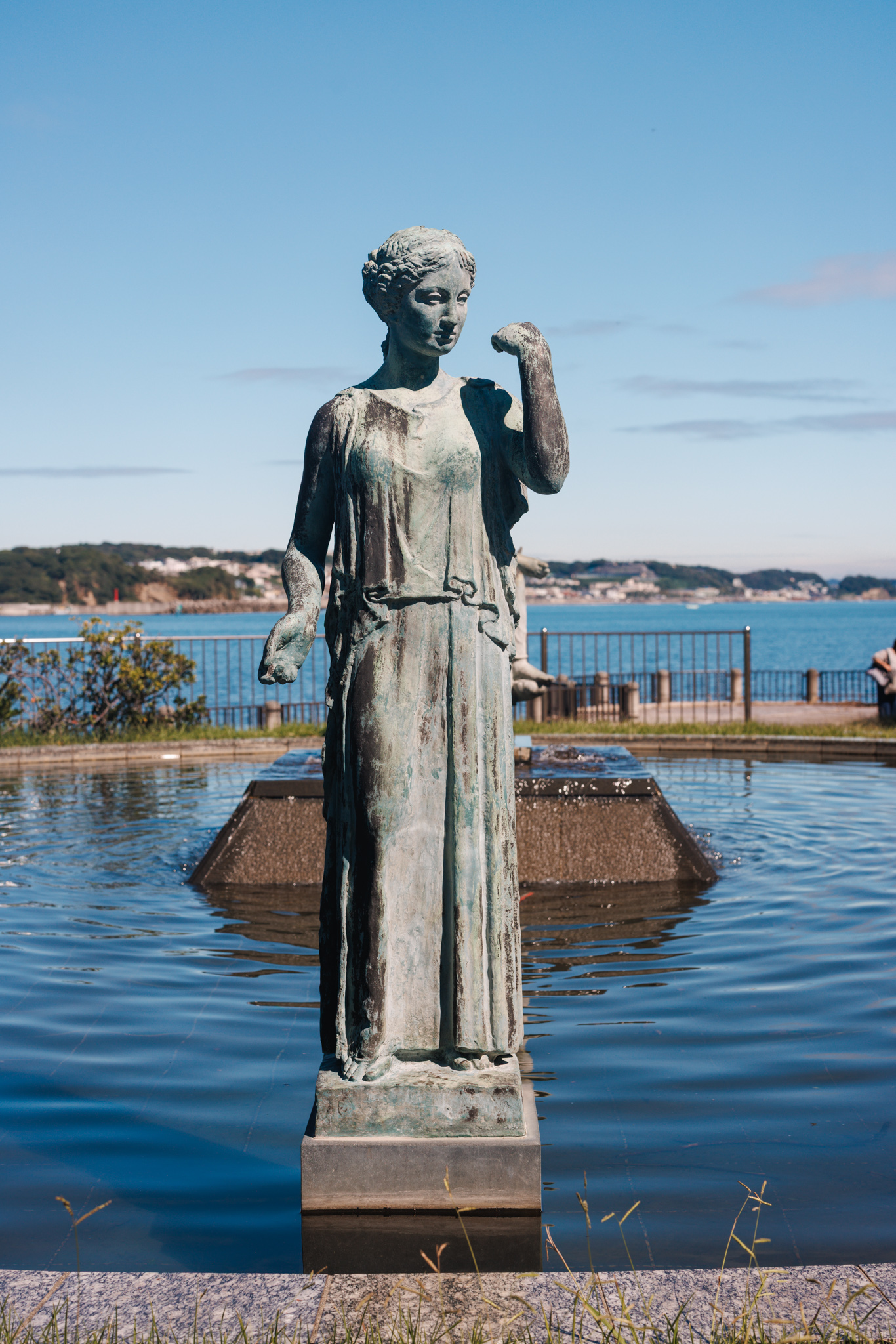
For the classical West, Katō chose a woman of ancient Greece, where the Olympics began. She stands in a long draped dress, with her hair tied up and one hand raised.
For the classical East, he took as his model the Kudara Kannon, a tall, slender wooden figure carved in the seventh century and now a National Treasure at Hōryū-ji, a temple in Nara. Kannon is a bodhisattva, a being who has put off becoming a Buddha in order to help others. In East Asia, Kannon is often shown as a woman, but a bodhisattva is not, strictly speaking, either. The plaque counted this one anyway.
The modern West is represented by what the plaque calls “a graceful female nude”.
The modern East is a Southeast Asian dancer, in a crown and a long wrapped skirt, balanced on the ball of one foot. The year before the Olympics, a statue he had made of Kartini, the Javanese pioneer of women’s education, was unveiled in Jakarta, a gift from the Japanese government to Indonesia.
At the time, Katō said he had used the Olympics as an occasion to symbolise the long exchange between the cultures of East and West. Two axes, four corners and a goddess in the middle: it is a tidy system. The sport, for the time being, was out at sea.
Rainbows, as promised
The 1964 plaque ends with a promise. The fountain would wrap Benzaiten in a veil of water. By day it would catch the sun and paint rainbows in seven colours; by night, underwater lights would make it more beautiful still.
While I was there, the water welled up around Benzaiten’s feet and slid quietly down the sides of her block. No rainbows were on the schedule.
The pond itself has moved. In the late 1990s, the green was redone for a national sports festival, and the fountain was rebuilt about 20 metres north of where it had first stood. A second plaque went up in 2000, titled For Future Generations. It pays tribute to Katō as a giant of Japanese sculpture who spent his last years in Fujisawa, and records that he died there in 1969, aged 72.
The plaque is three years out. He died in 1966.
The second Games
In the summer of 2021, the Olympics came back to Enoshima. The Tokyo Games had been postponed by a year, and the sailing was held at the same harbour, just along the shore from the pond.
Further up the island, on a wooden viewing deck beside the path to the shrine, Kanagawa Prefecture and the city of Fujisawa have marked both Games with a single sign. It is cut in the shape of two sails. The one for 1964 says Yacht; the one for 2020 says Sailing. Between the two Games, the sport changed its name. This time, the rings appear as rings.
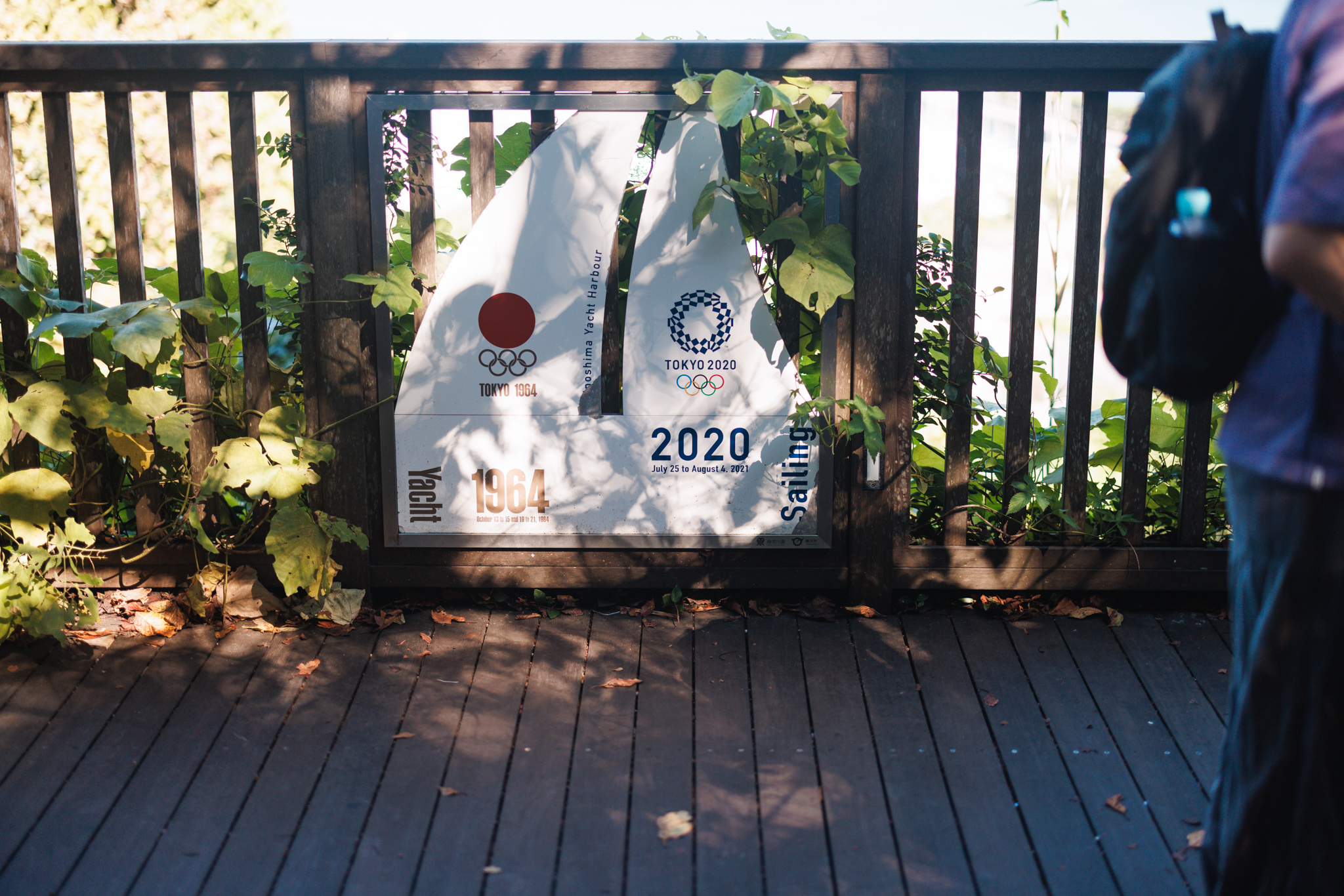
The leaves are slowly taking the sails. The rings from 1964 are still standing in the water.
Visit this place
Location
Olympic Memorial Fountain (オリンピック記念噴水池)
In the north green (Shōnan Port North Green / 北緑地広場) beside Enoshima Yacht Harbour, just east of where the bridge from the mainland reaches the island.
1-1 Enoshima, Fujisawa, Kanagawa 251-0036, Japan
Practical Information
- Area
- Enoshima, Fujisawa, Kanagawa
- Access
- About 15 minutes on foot from Katase-Enoshima Station (Odakyu Enoshima Line), across the bridge to the island; the fountain is on the green just east of where the bridge reaches the island
- Admission
- Free
- Visitor note
- The two plaques at the edge of the pond are in Japanese only. The Tokyo 1964/2020 sail sign is on a wooden viewing deck beside the path up to Enoshima Shrine.
- Tourism information
- Fujisawa City Tourism Association — Olympic Memorial Fountain (Japanese)
Information last checked: October 3, 2026 (location, walking route from Katase-Enoshima Station and admission; walking time is approximate).
Conversation
Comments
Review pending commentsComments are reviewed before appearing. The internet already contains enough unattended surprises.
Checking comments…
Comments are not available in this migration preview yet. Existing comments remain on the current site.
Leave a comment