Manpukuji: Yoshitsune’s Waiting Room
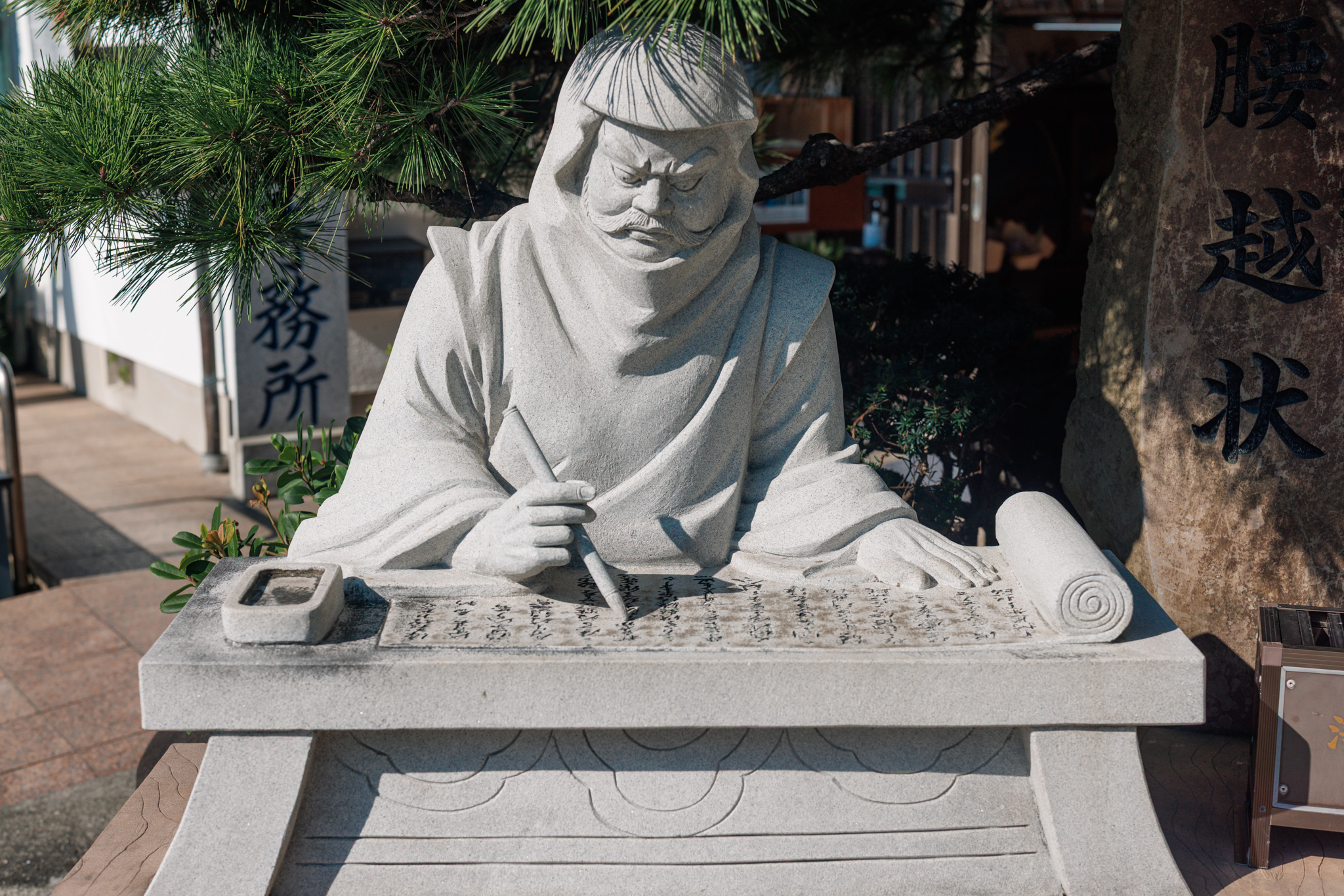
Benkei, the warrior monk who served Minamoto no Yoshitsune, is remembered for many things: his size, his strength, the seven weapons he is said to have carried, and dying on his feet, full of arrows.
At Manpukuji, he is remembered for paperwork.
In 1185, Yoshitsune had just destroyed the Taira, his family’s great rivals, at the sea battle of Dan-no-ura. But he had fallen out of favour with his elder half-brother, Yoritomo, who ruled from Kamakura. Travelling there from Kyoto, Yoshitsune was refused entry and held at Koshigoe, just outside the town.
According to the temple, he stayed at Manpukuji while he waited, and Benkei drafted a letter pleading his case. It was addressed not to Yoritomo himself but to one of his closest advisers, Ōe no Hiromoto, asking him to intervene. It is known as the Koshigoe-jō, the Koshigoe letter.
It did not work.
The draft
I paid 200 yen at reception to go into the main hall, where the letter lies in a glass case. It is presented as the draft.
There is a reason a draft would stay behind. The letter is said to have come out six characters short. The missing words were added, by Benkei or, in another telling, by Yoshitsune himself, and the finished letter went to Kamakura. The one with the mistake stayed here.
Of all the words to leave out, these were the six: 不顧為敵亡命.
They mean “heedless of losing my life to the enemy”.
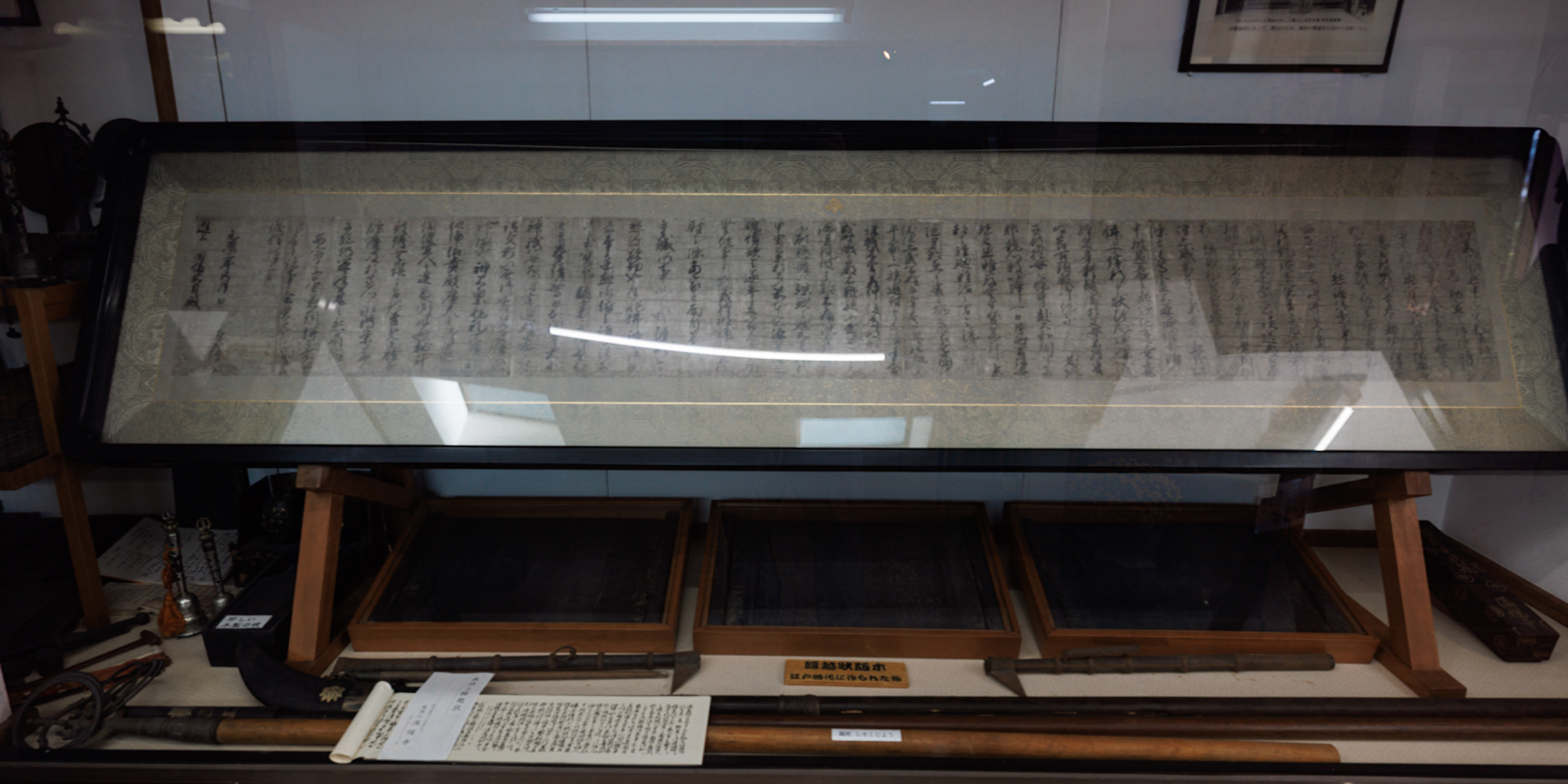
The letter’s later career went better. In the Edo period, it was included in a collection of old letters and widely read as a schoolbook. Whether Yoshitsune, or Benkei, actually wrote it is another matter. Its authenticity has been questioned.
Outside, the temple keeps a reminder of the other Benkei.
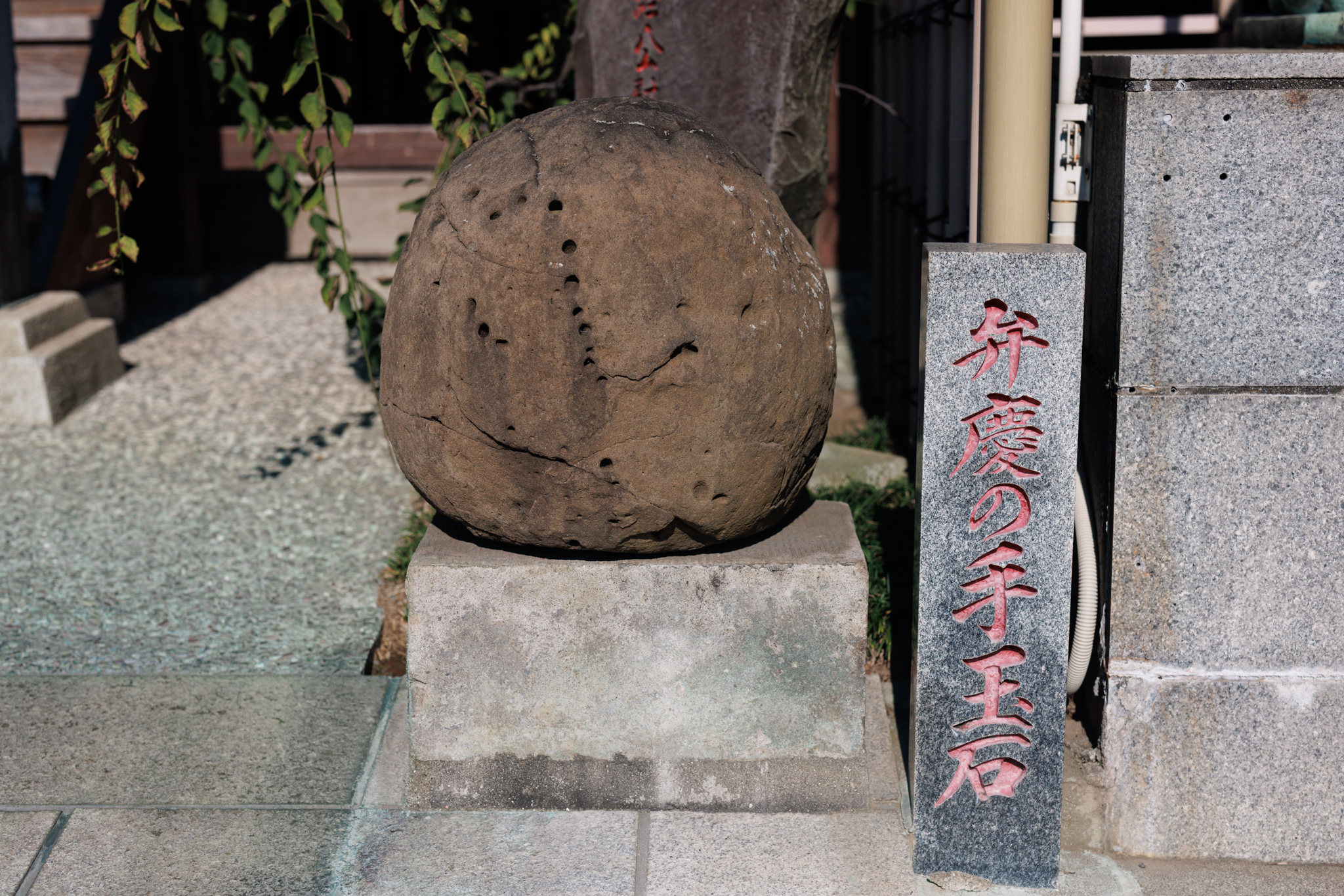
He does not seem to have been easy to work beside. Benkei is said to have been grinding ink for the draft when crickets started chirping by a pond. He shouted at them to stop. The crickets at Manpukuji, the story goes, have not chirped since.
Told again
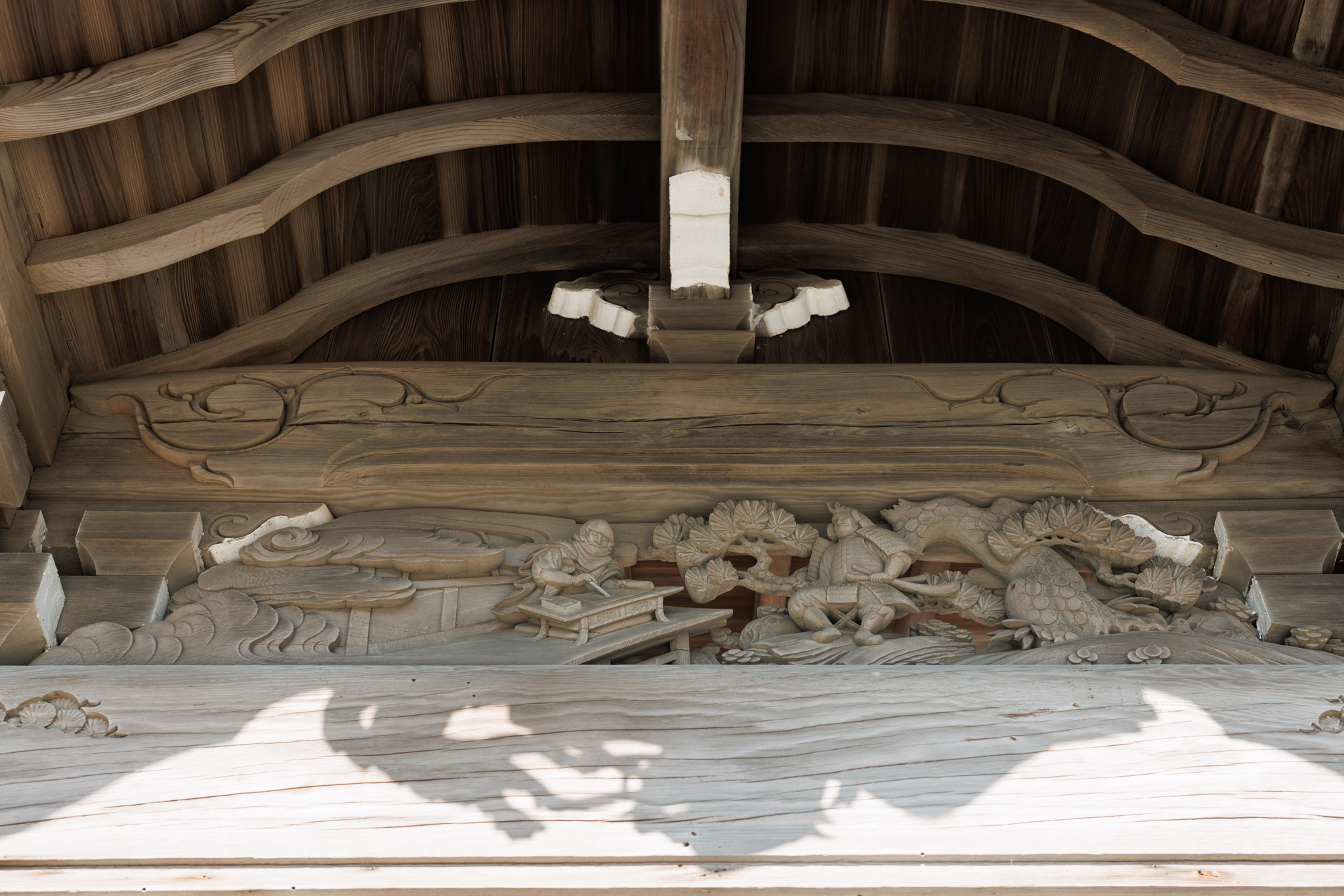
The temple tells the scene more than once. Under the eaves of the main hall, it is carved in wood.
Inside, the story runs across the fusuma, the sliding doors of the main hall: thirty-two painted panels covering Yoshitsune’s life. They are done in lacquer, with techniques borrowed from Kamakura-bori, the local craft of carving wood and finishing it in lacquer. They are said to have been made in 1985, by a carpenter then living in nearby Kugenuma.
One set of doors shows the letter. Here the roles are switched. Yoshitsune holds the long white scroll; Benkei watches from behind a tree.
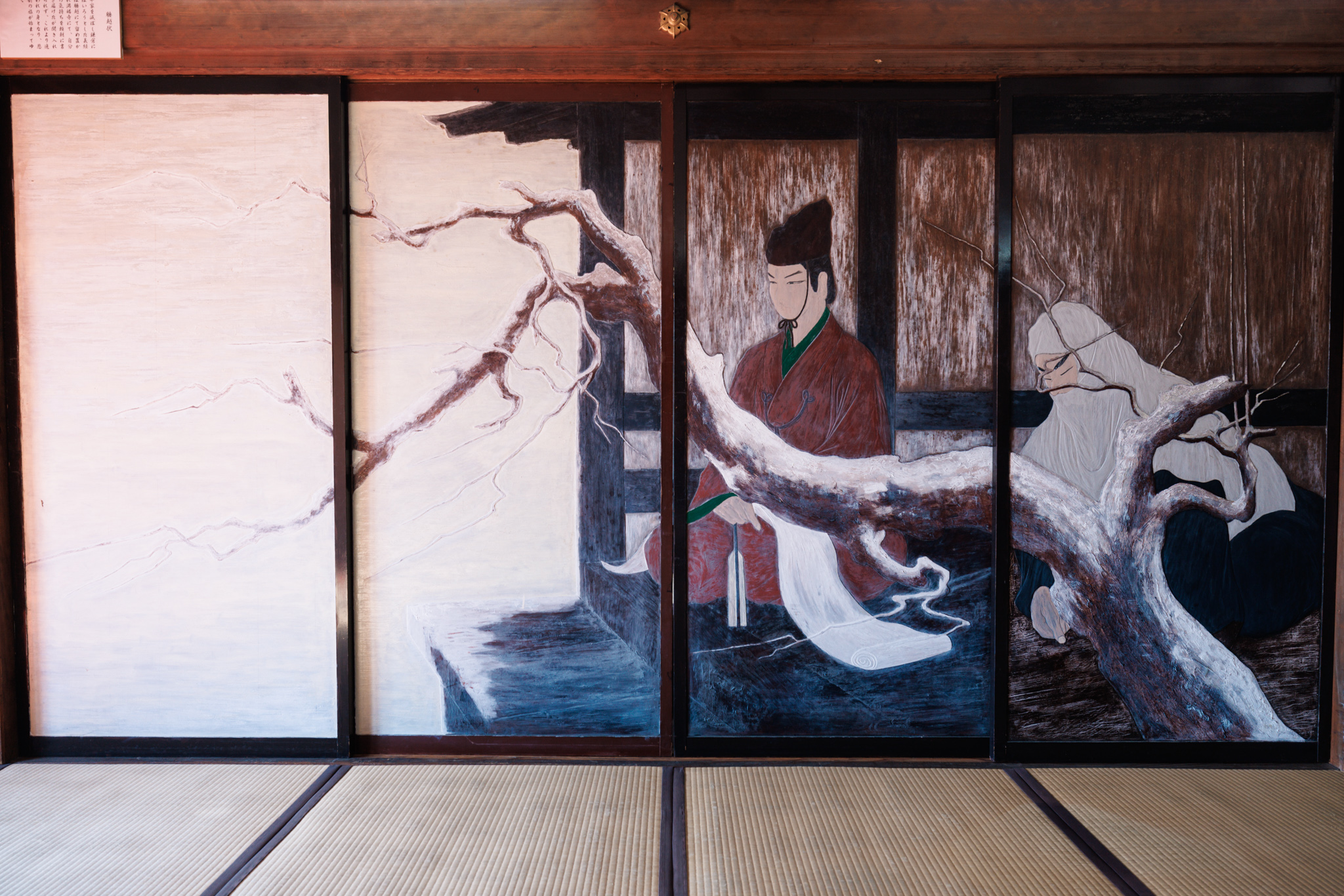
The label above that set ends by saying that from here, his tragic journey begins. The rest of the doors follow him on it.
Swipe to explore
Tap to enlarge
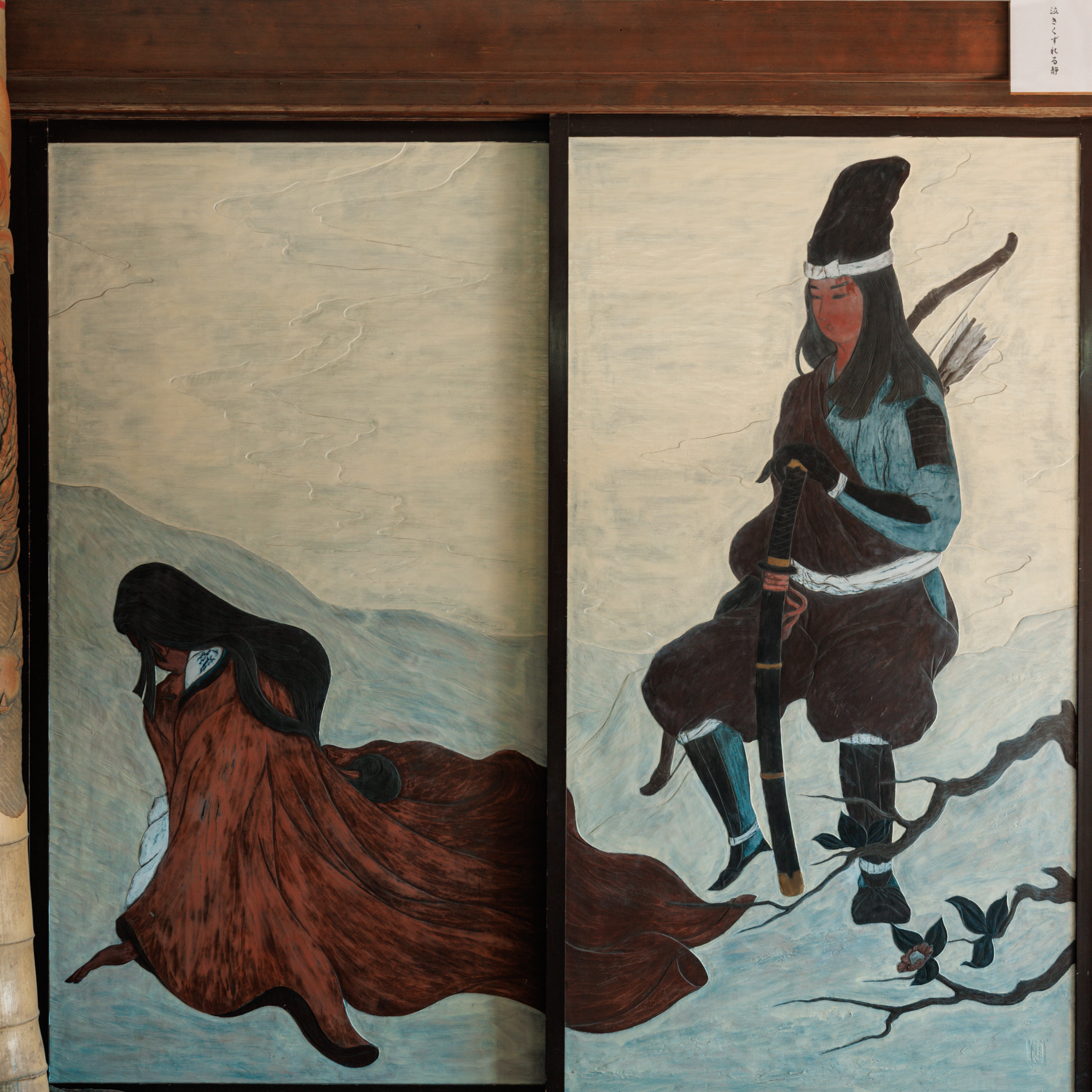
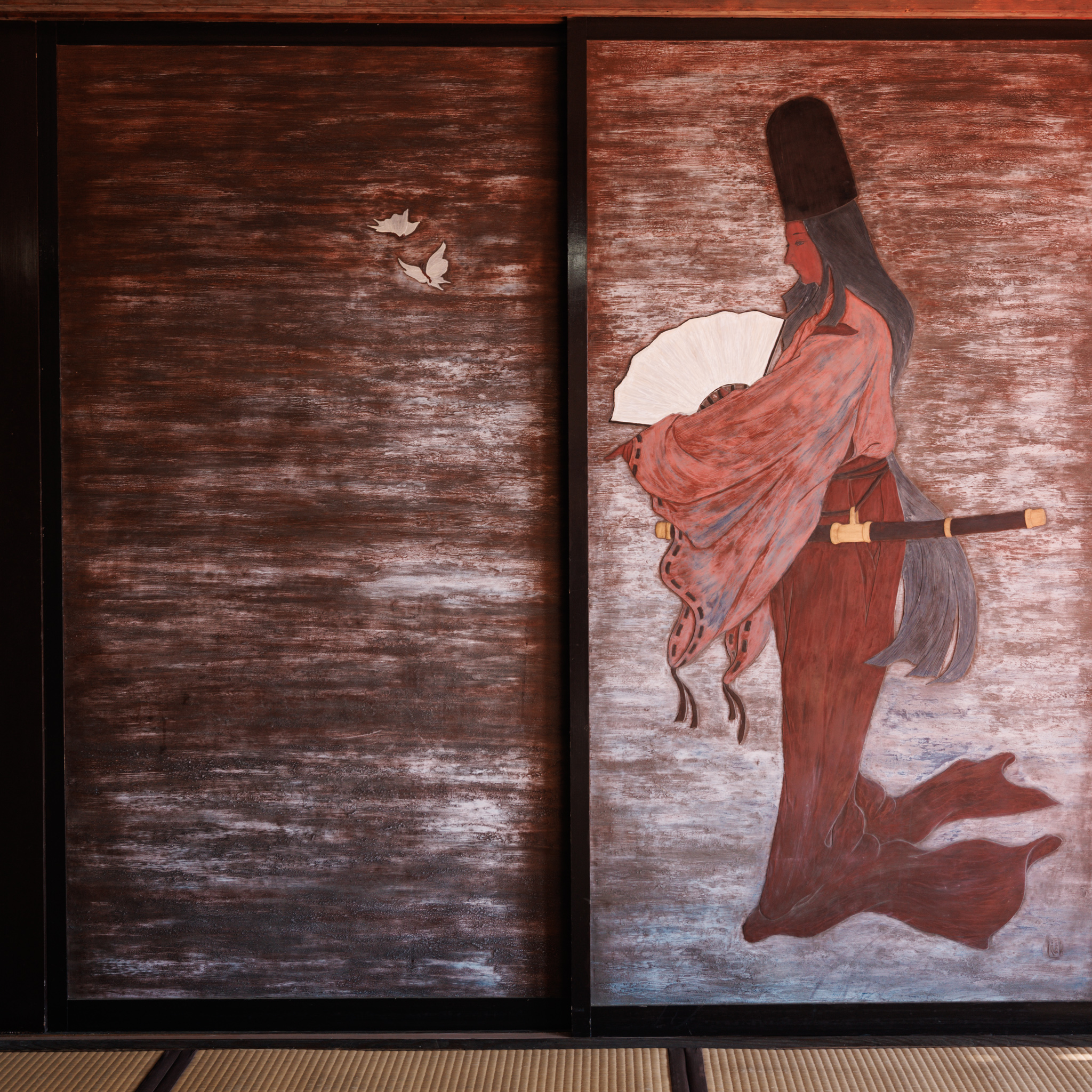
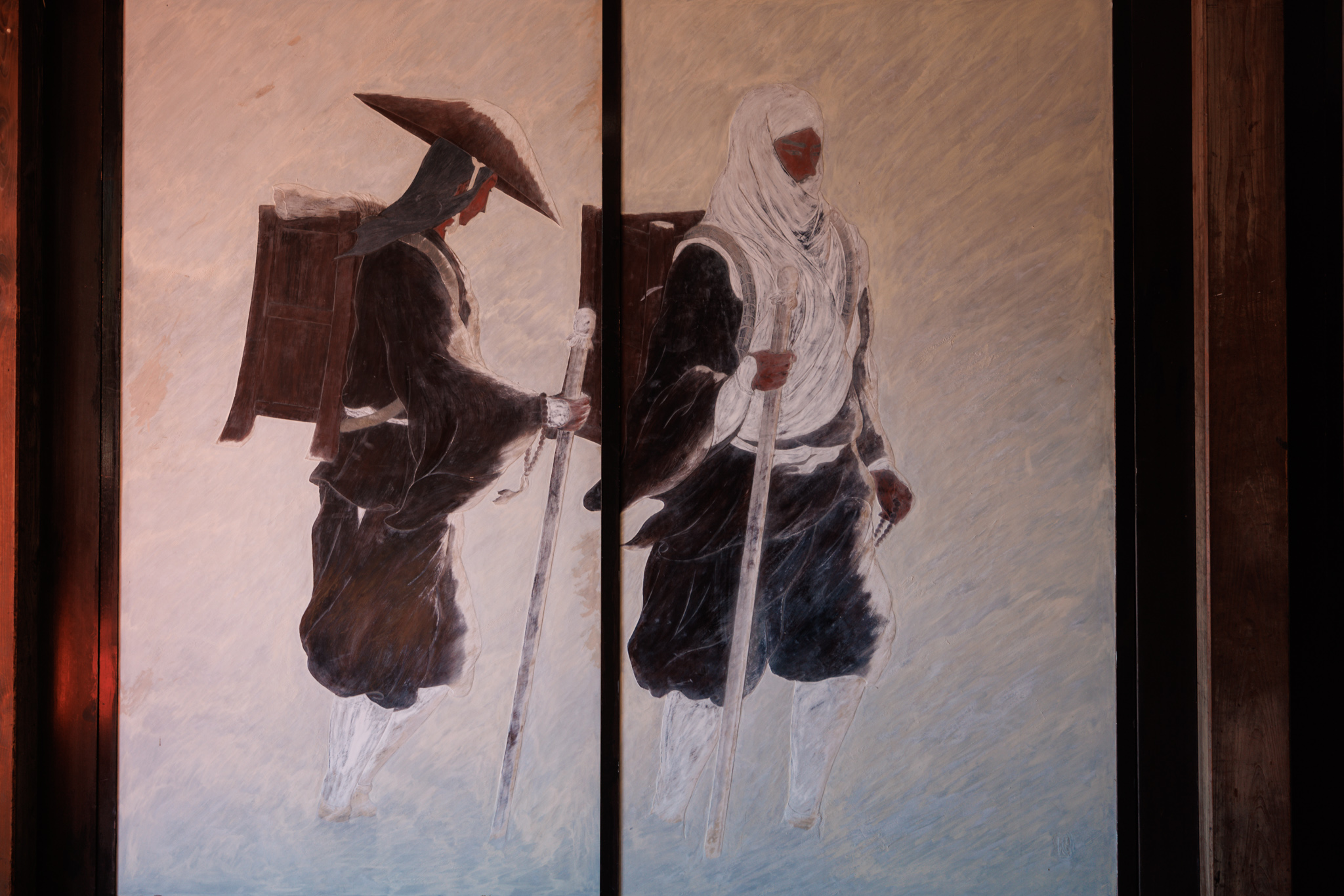
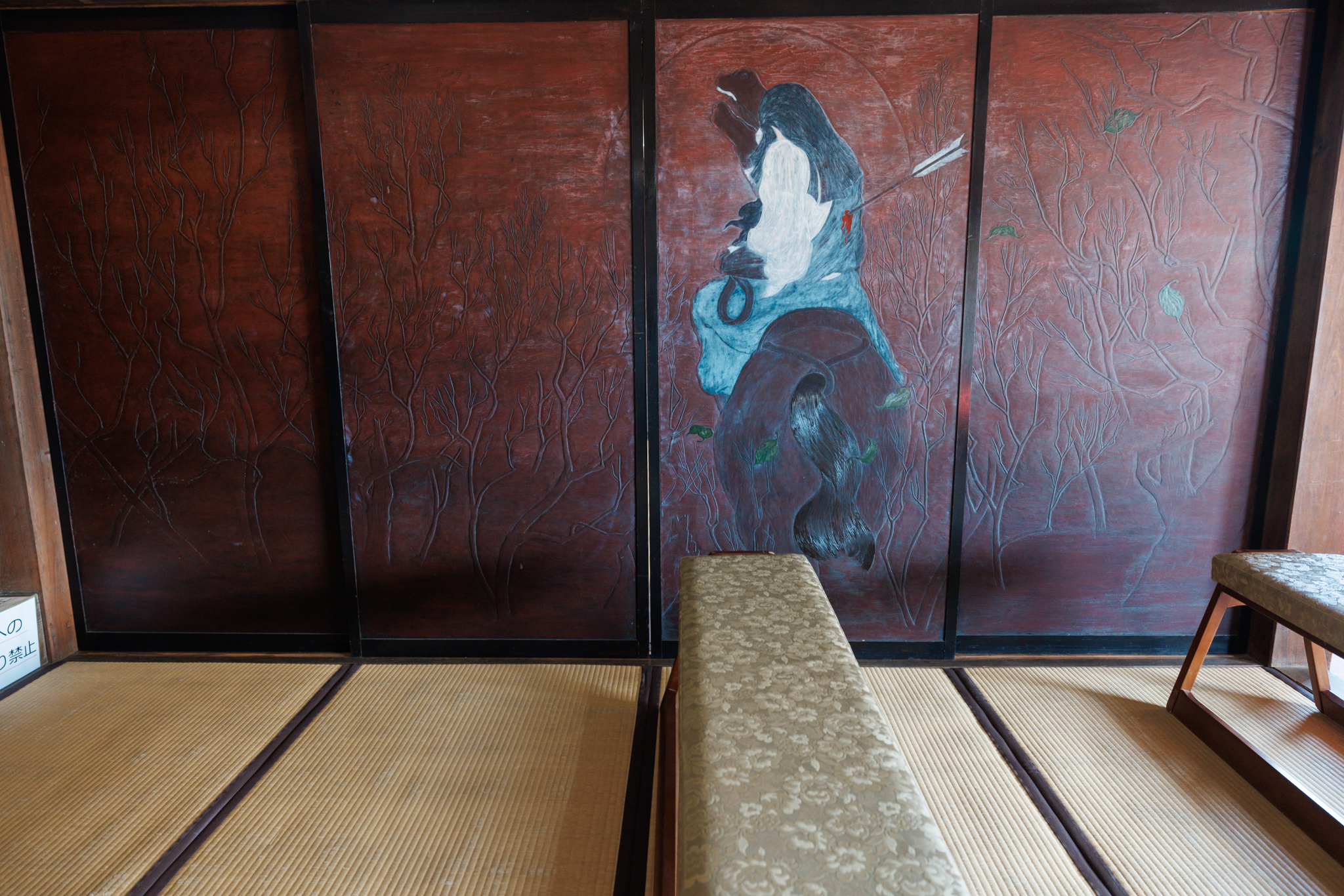
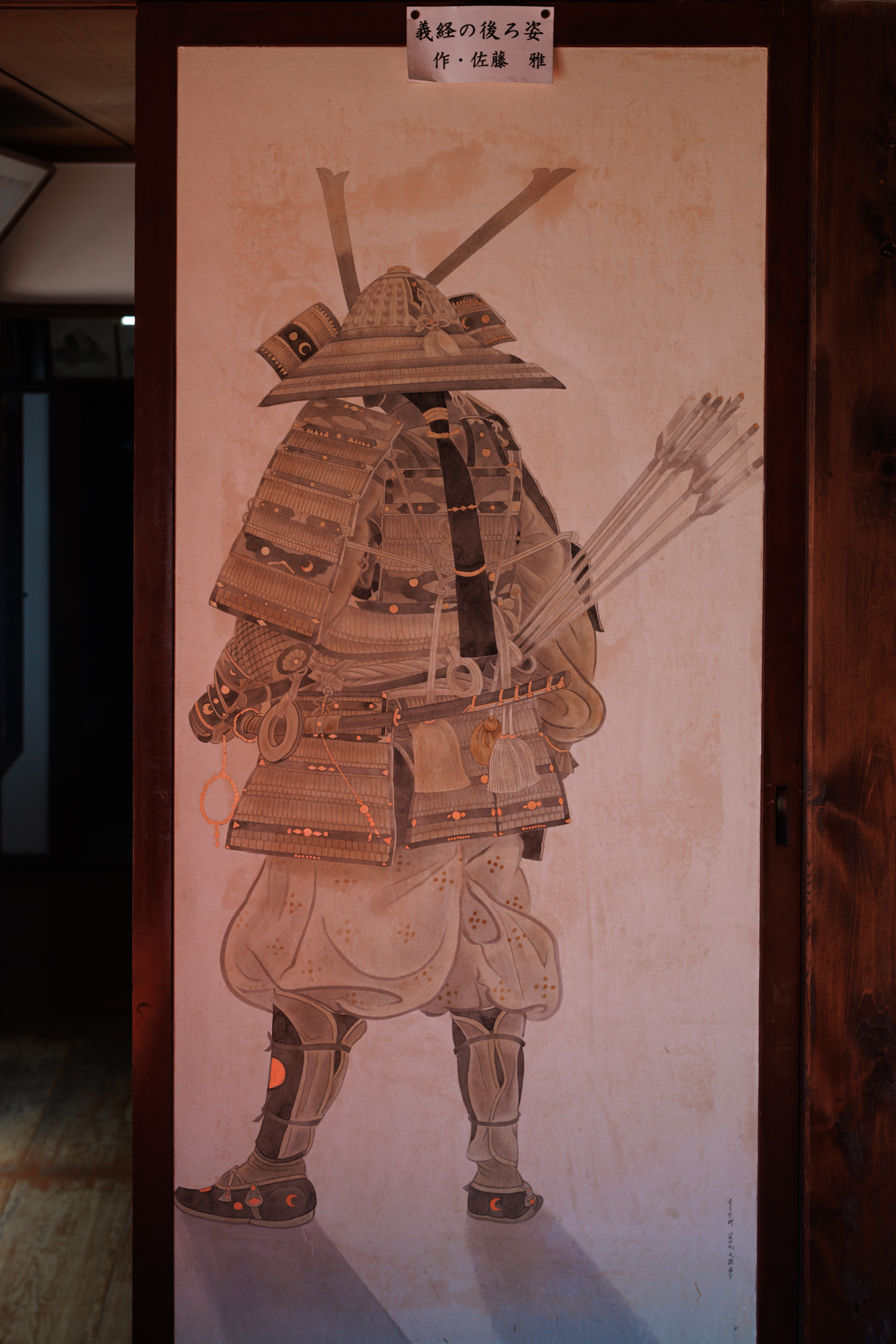
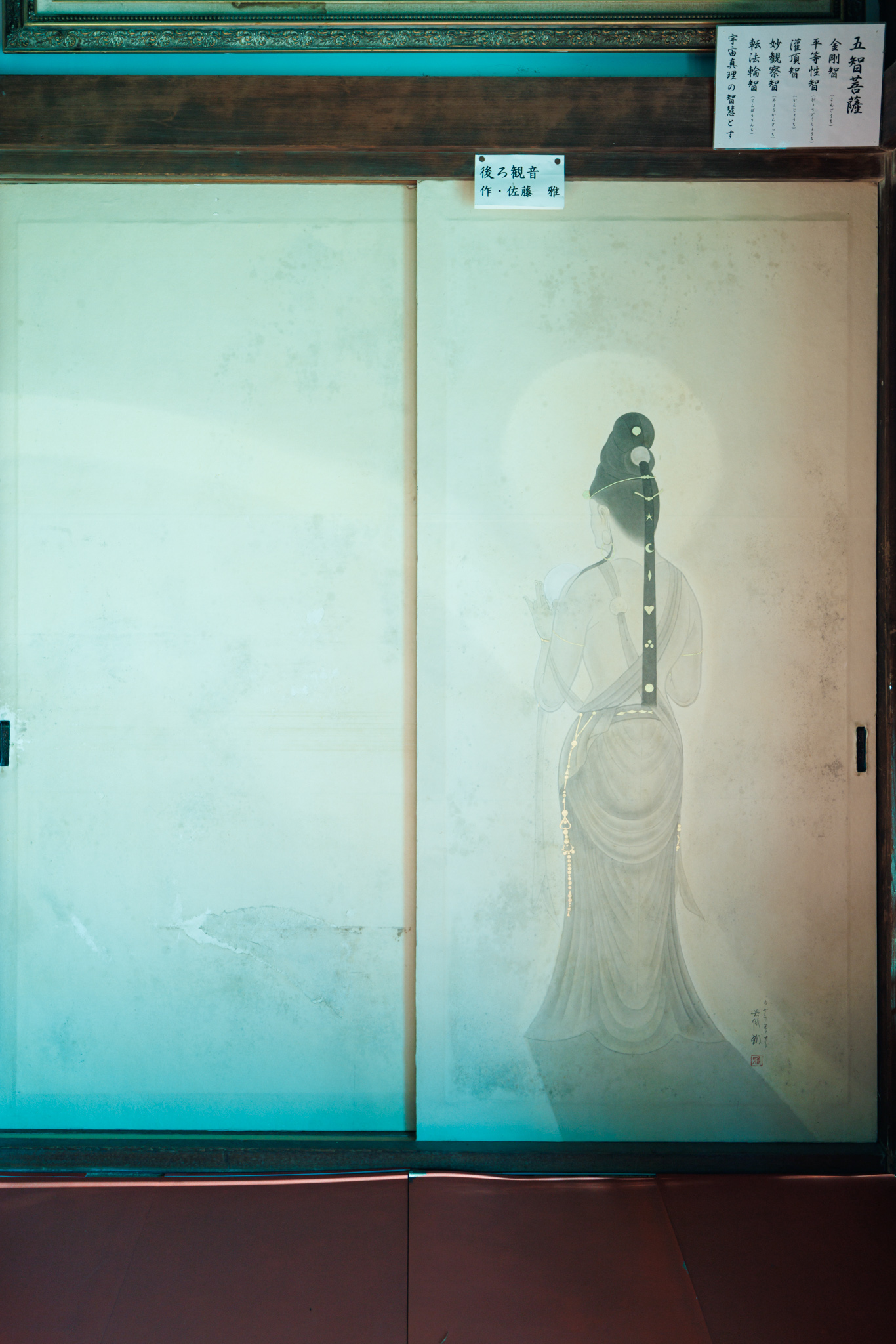
Two other doors show their subjects from behind. Both are credited to the same artist.
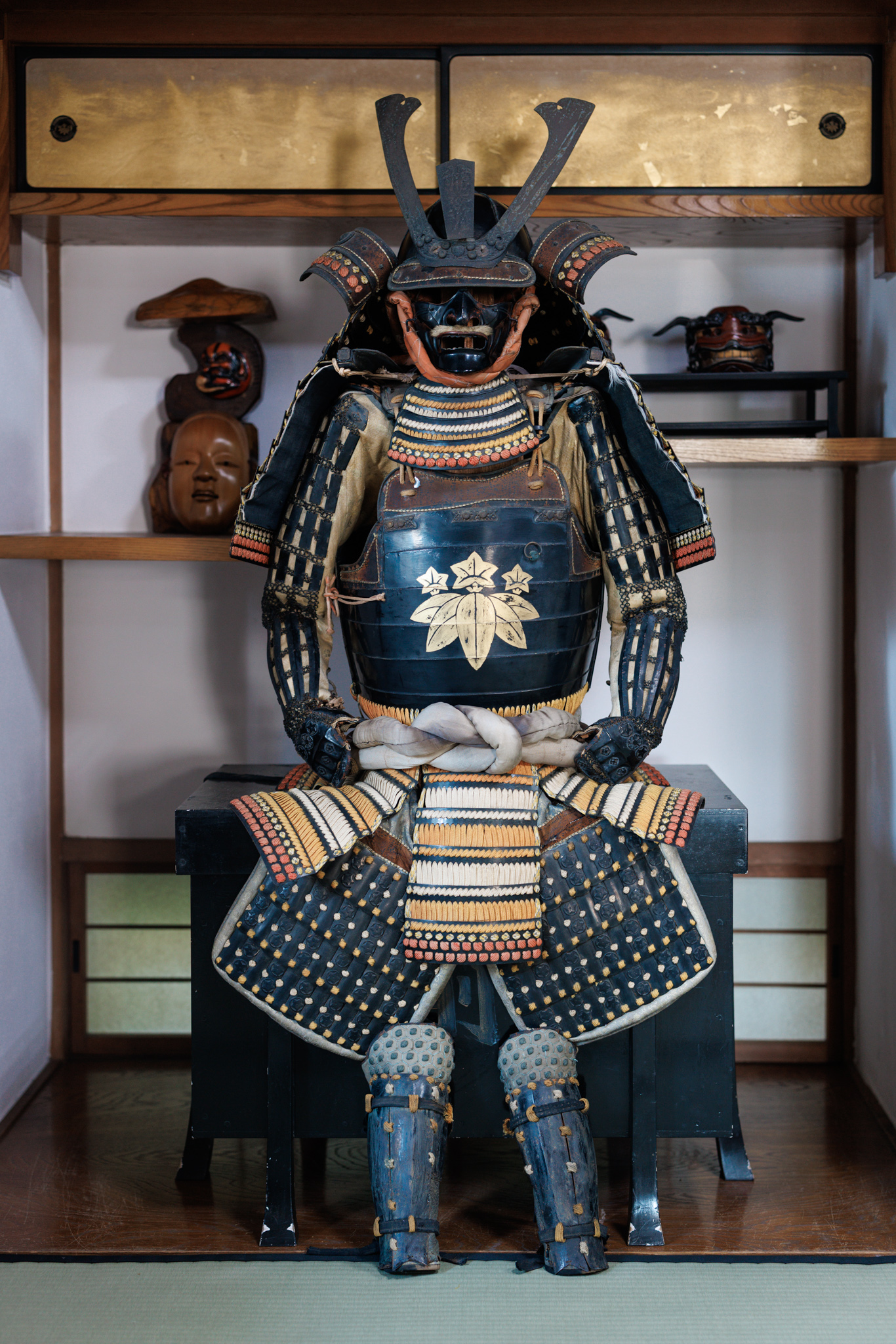
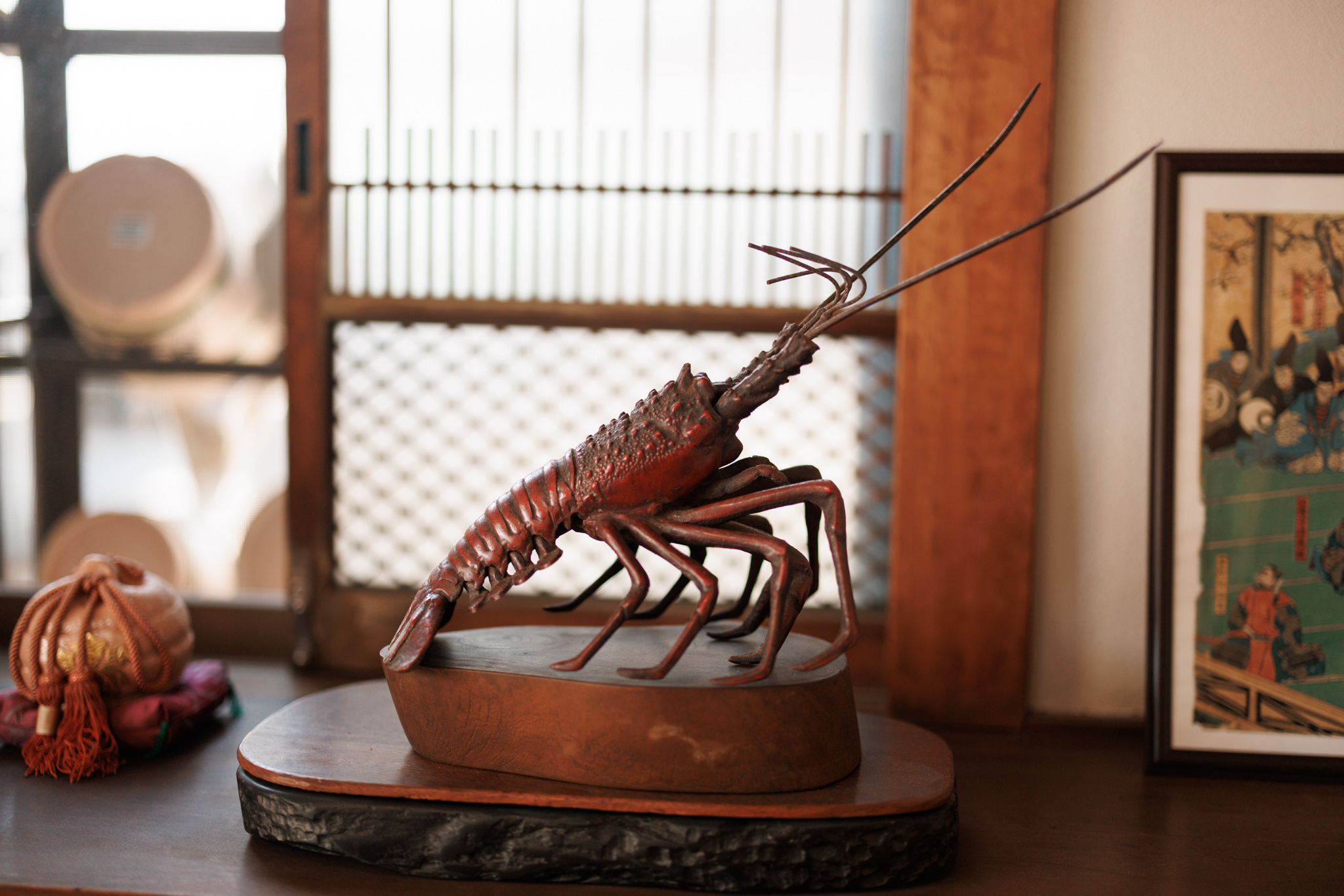
There is armour in the hall, too.
The tail
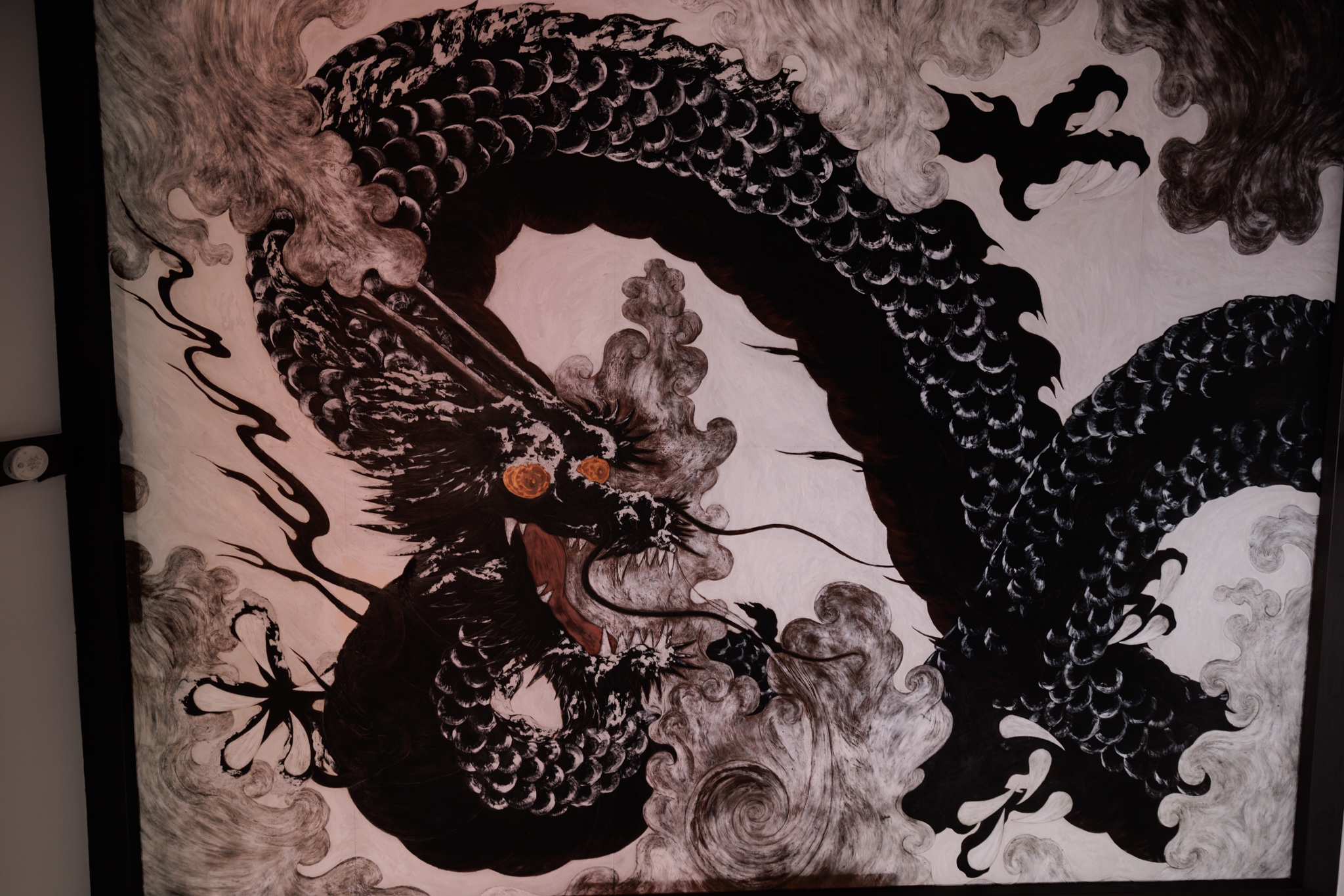
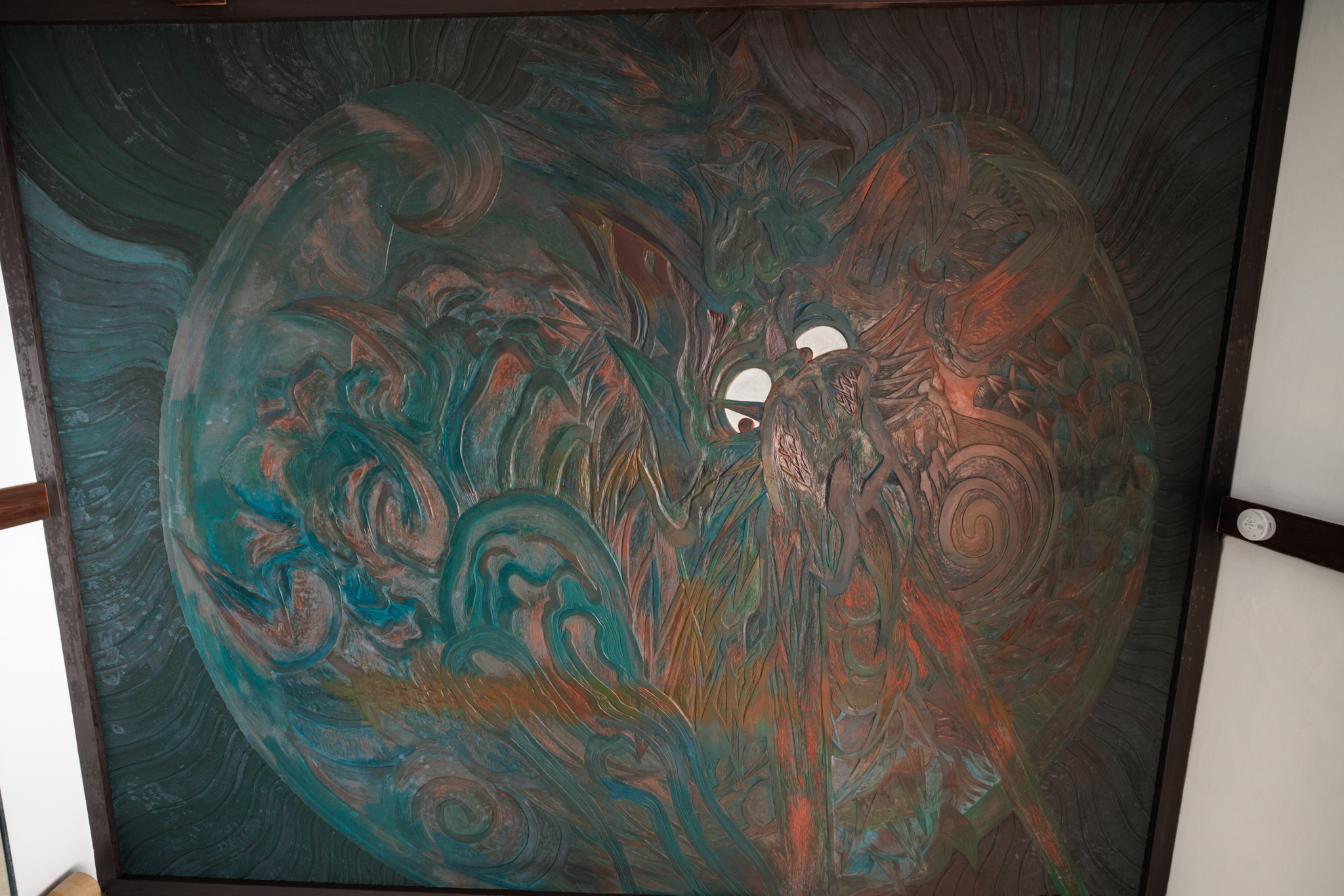
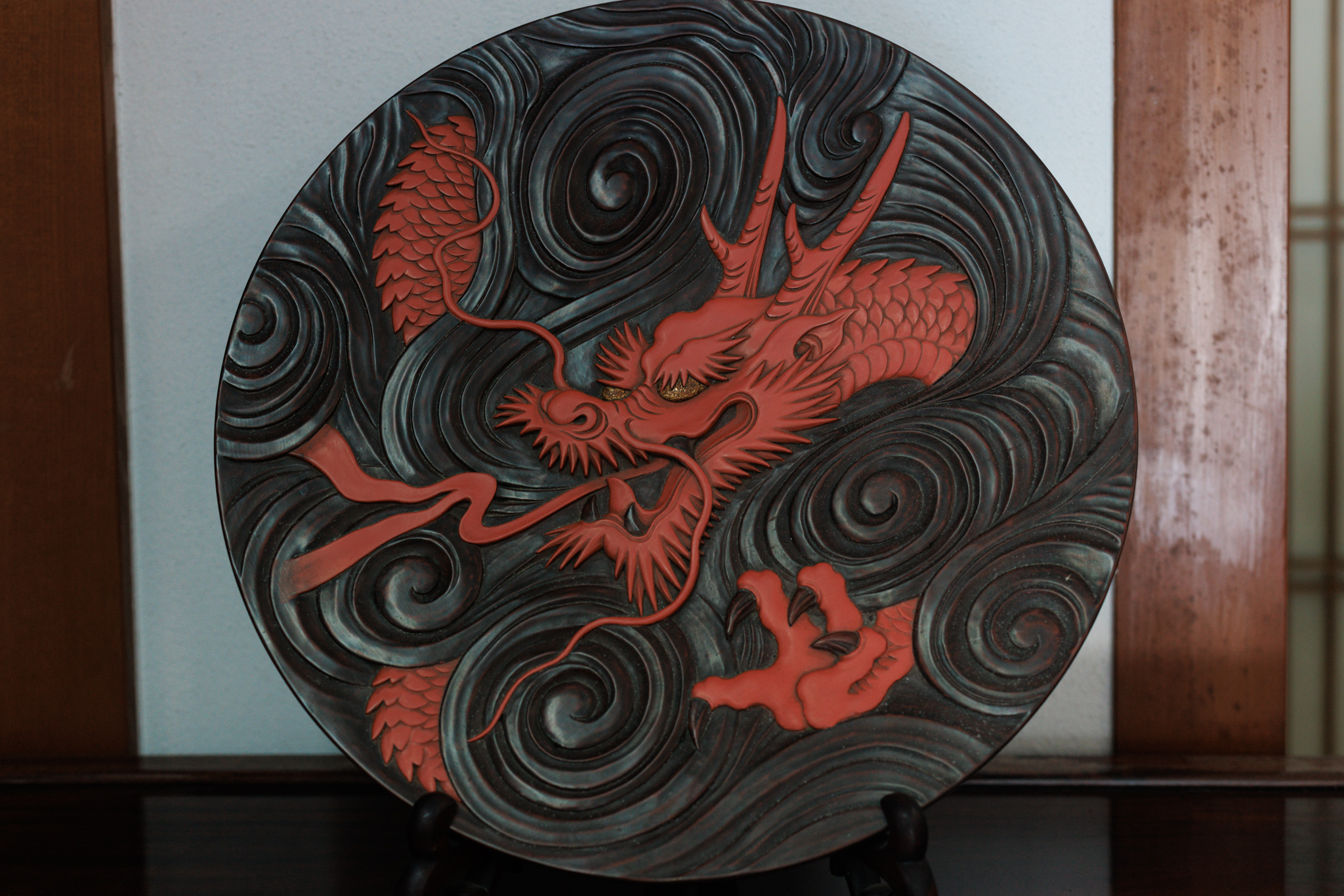
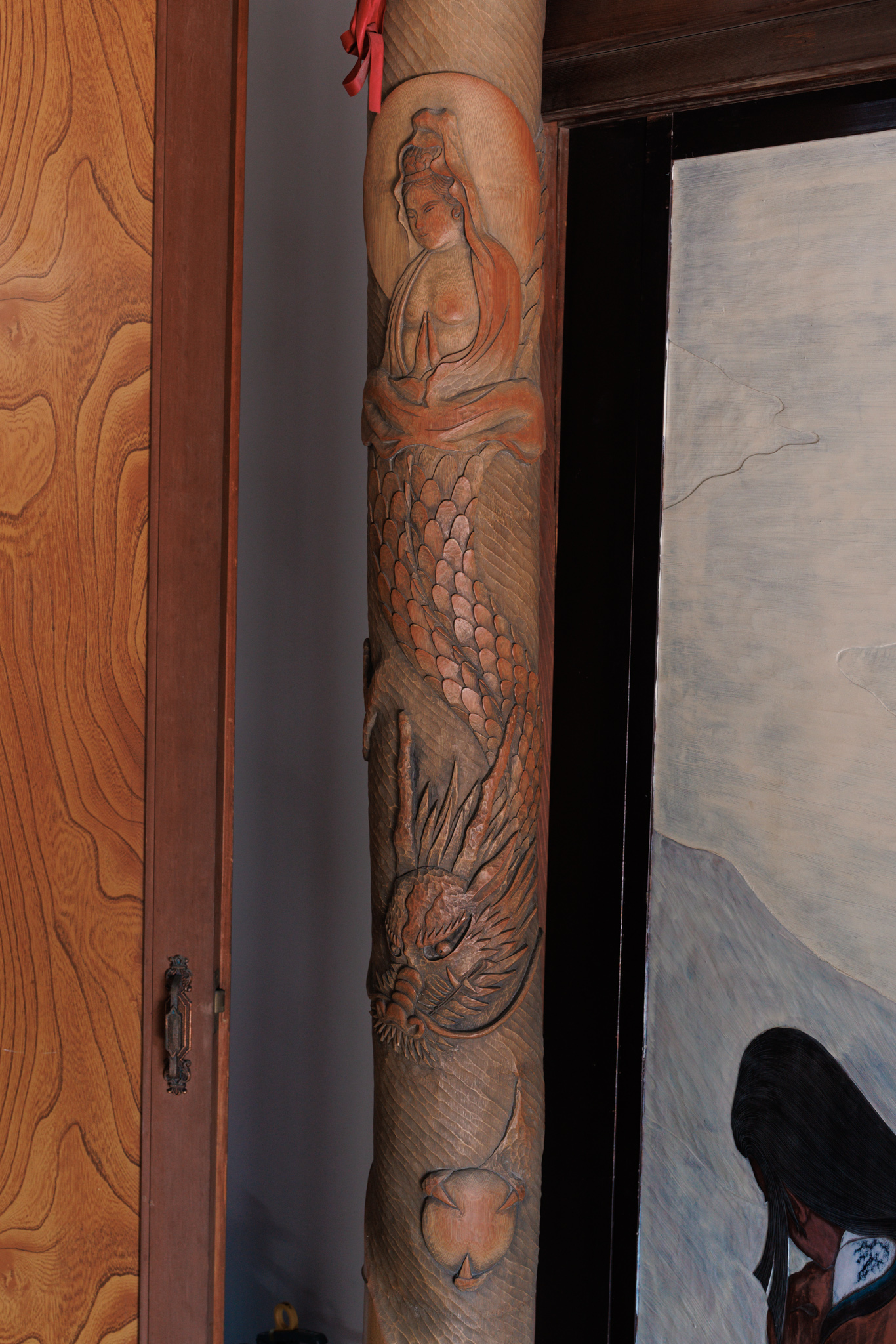
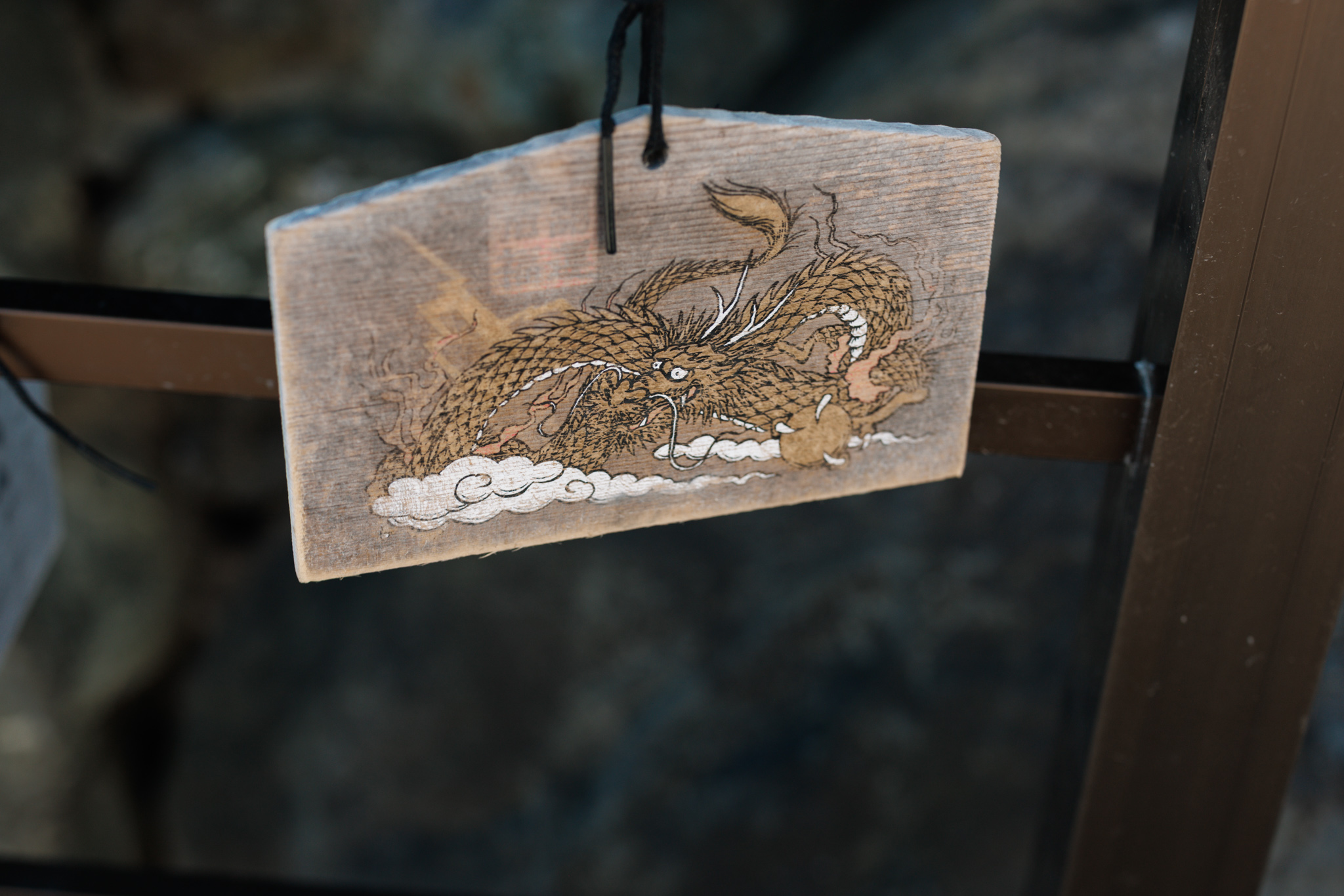
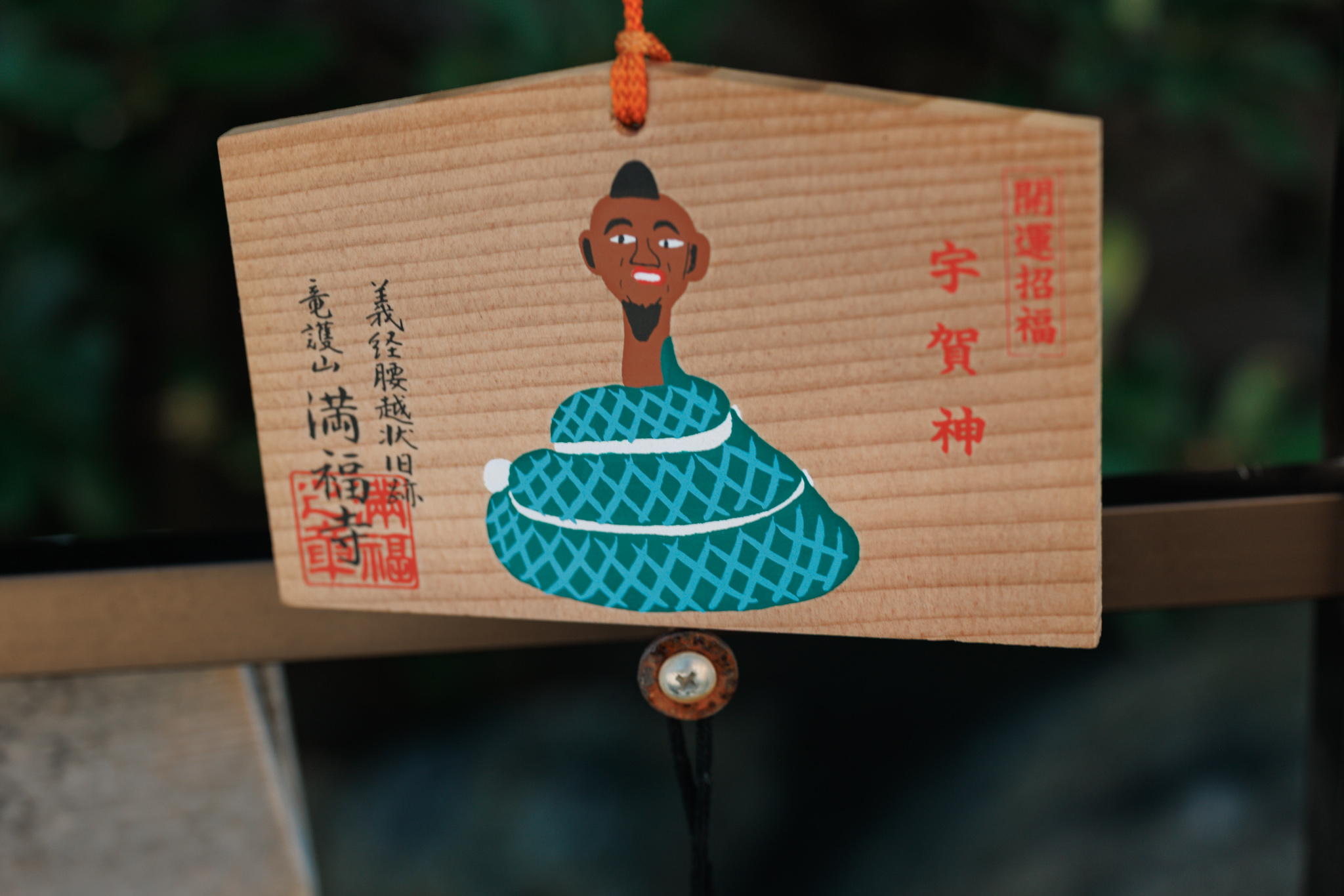
Manpukuji’s mountain name, Ryūgozan, means roughly “dragon-guarding mountain”, and it comes with a story. Seen from Enoshima, the hills along this stretch of coast look like a dragon. Its head is at Ryūkōji, the Dragon’s Mouth Temple, nearby. Manpukuji is the tail, and the tail guards the dragon.
Not every ceiling here has a dragon on it.
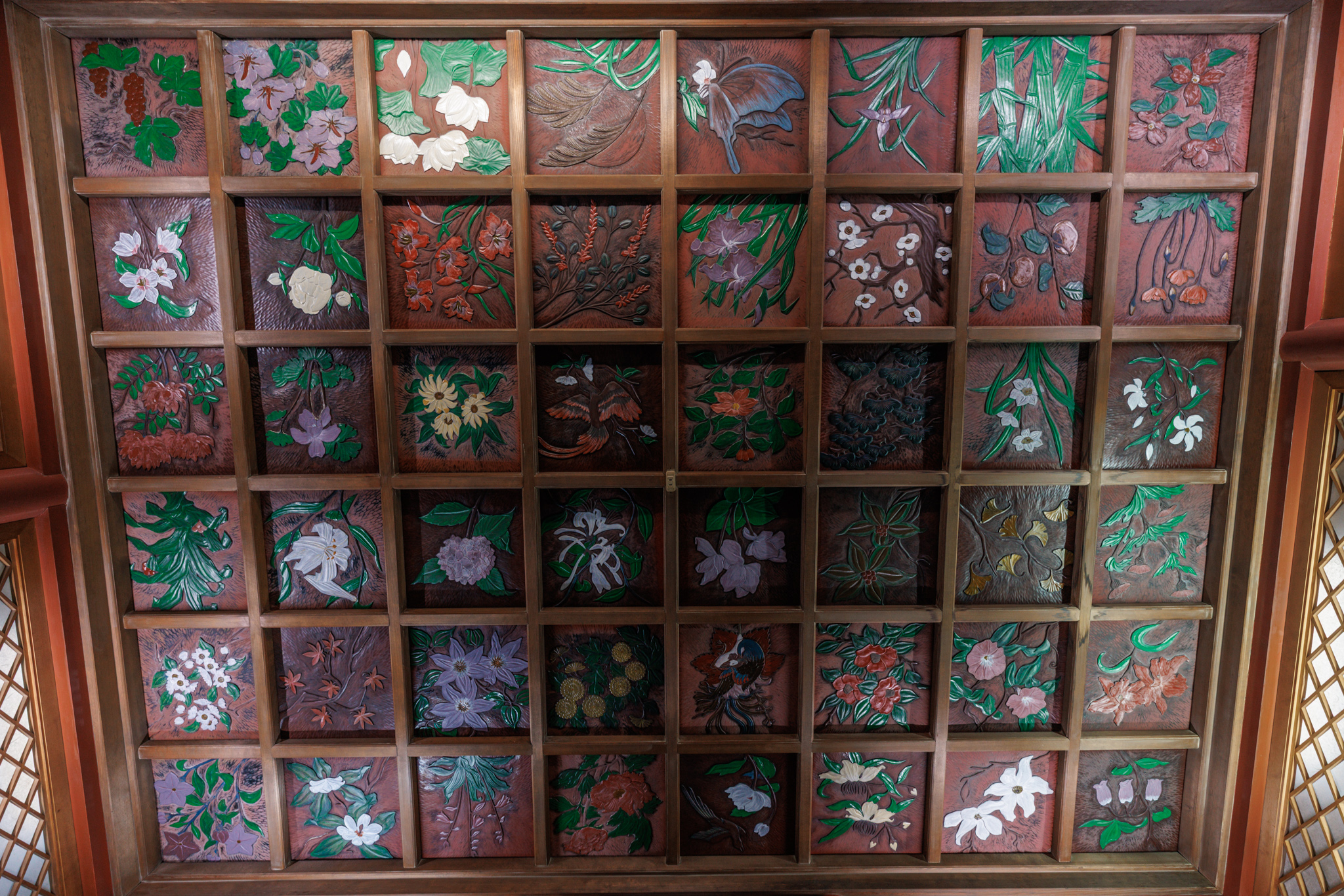
But the tail is well supplied, in quite different styles: painted on ceilings, carved into discs and pillars, and hanging outside on ema, the wooden plaques visitors write their prayers on.
Swipe to explore
Tap to enlarge
Round the back
In the grounds stands a stone inscribed as a memorial to Minamoto no Yoshitsune.
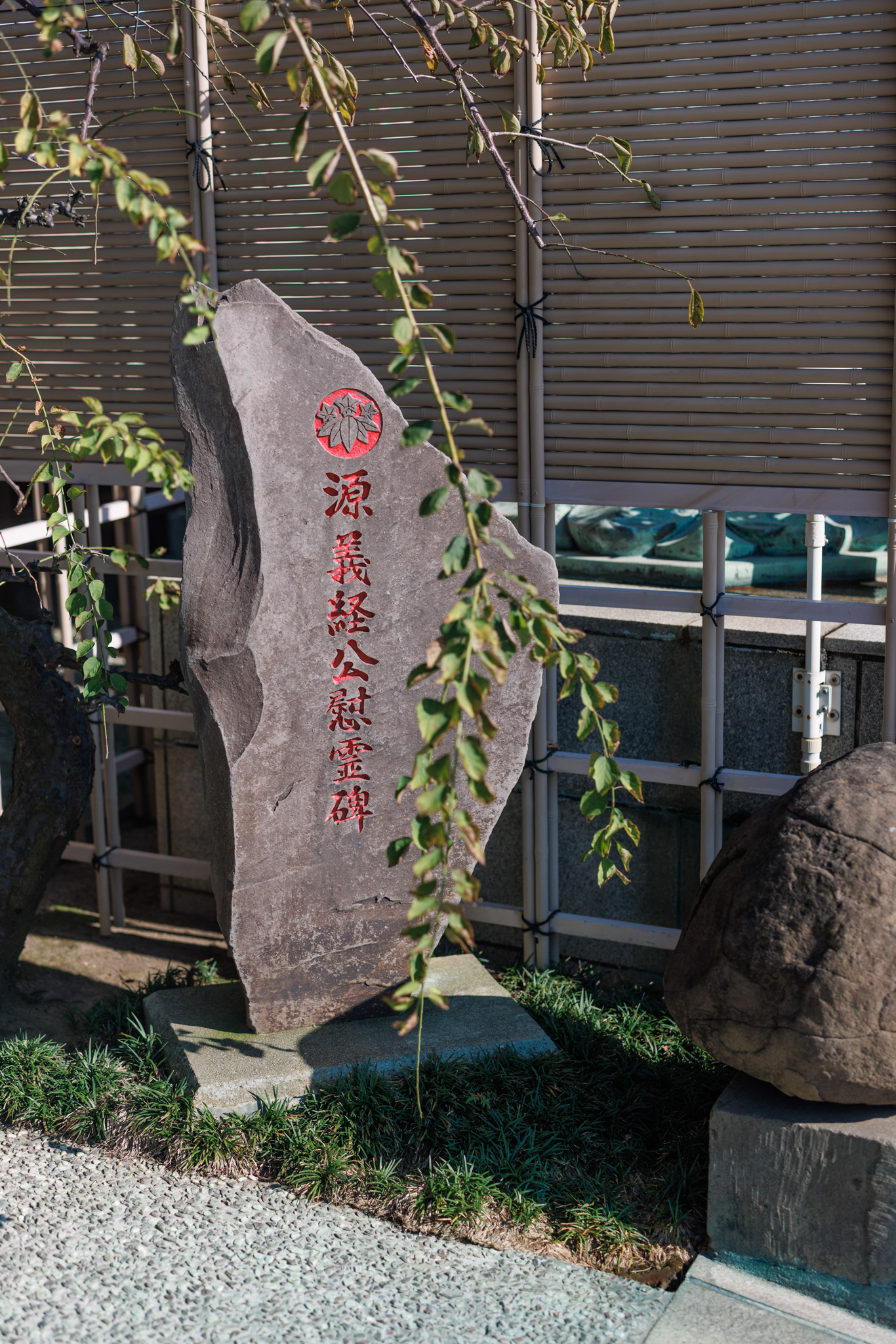
After Koshigoe, things went badly for him. He ended up in the far north, and in 1189, cornered there, he killed himself. His head was brought back to the shore at Koshigoe, where, according to the shogunate’s own chronicle, it was examined to confirm that it was his.
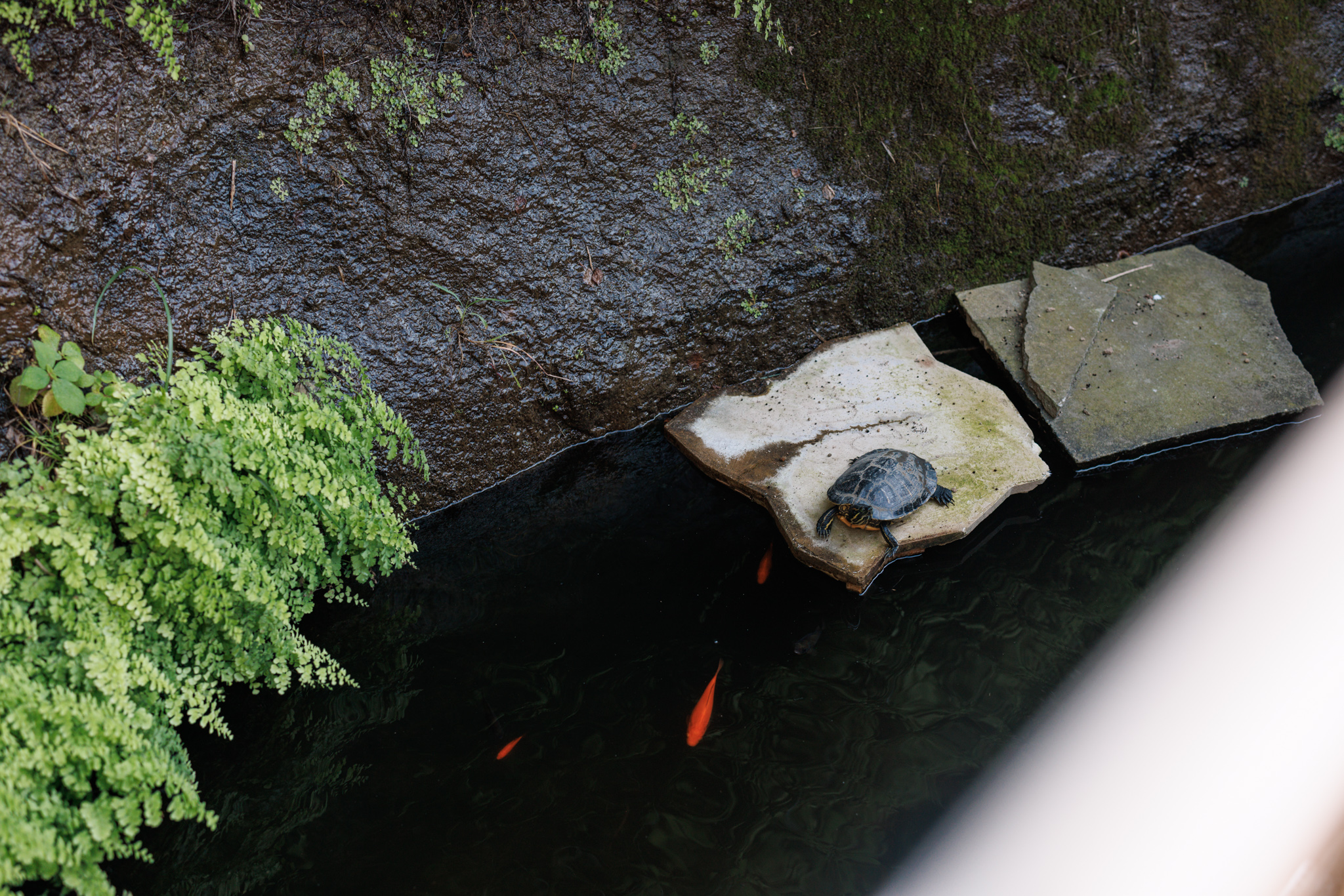
Beside the temple, a tunnel leads to Kamakura Shichirigahama Cemetery, which Manpukuji manages. Two women in flowing robes are painted at its mouth. Next to them, a small stone marks Suzuri-no-ike, the Inkstone Pond, where Benkei is said to have drawn water to grind his ink.
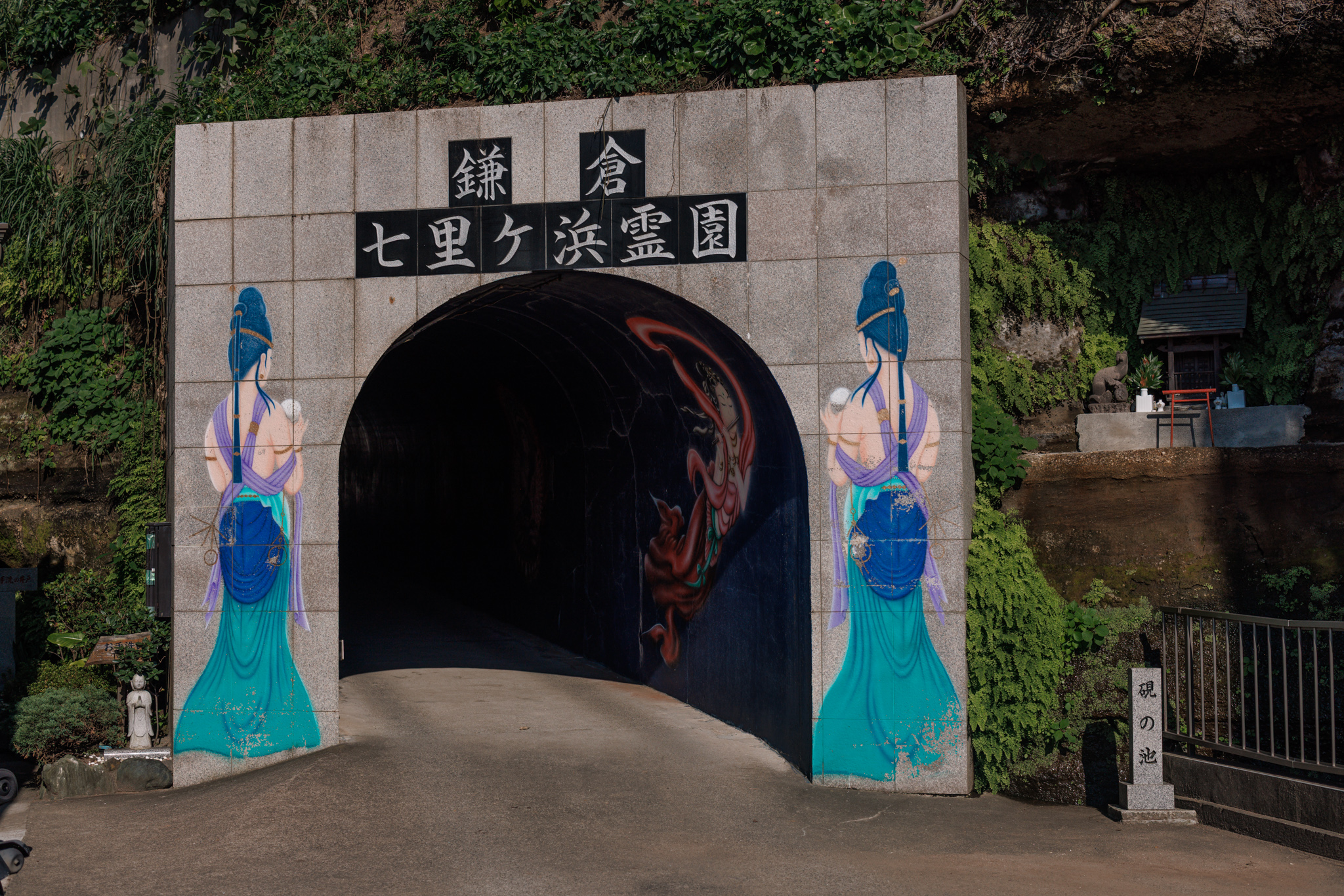
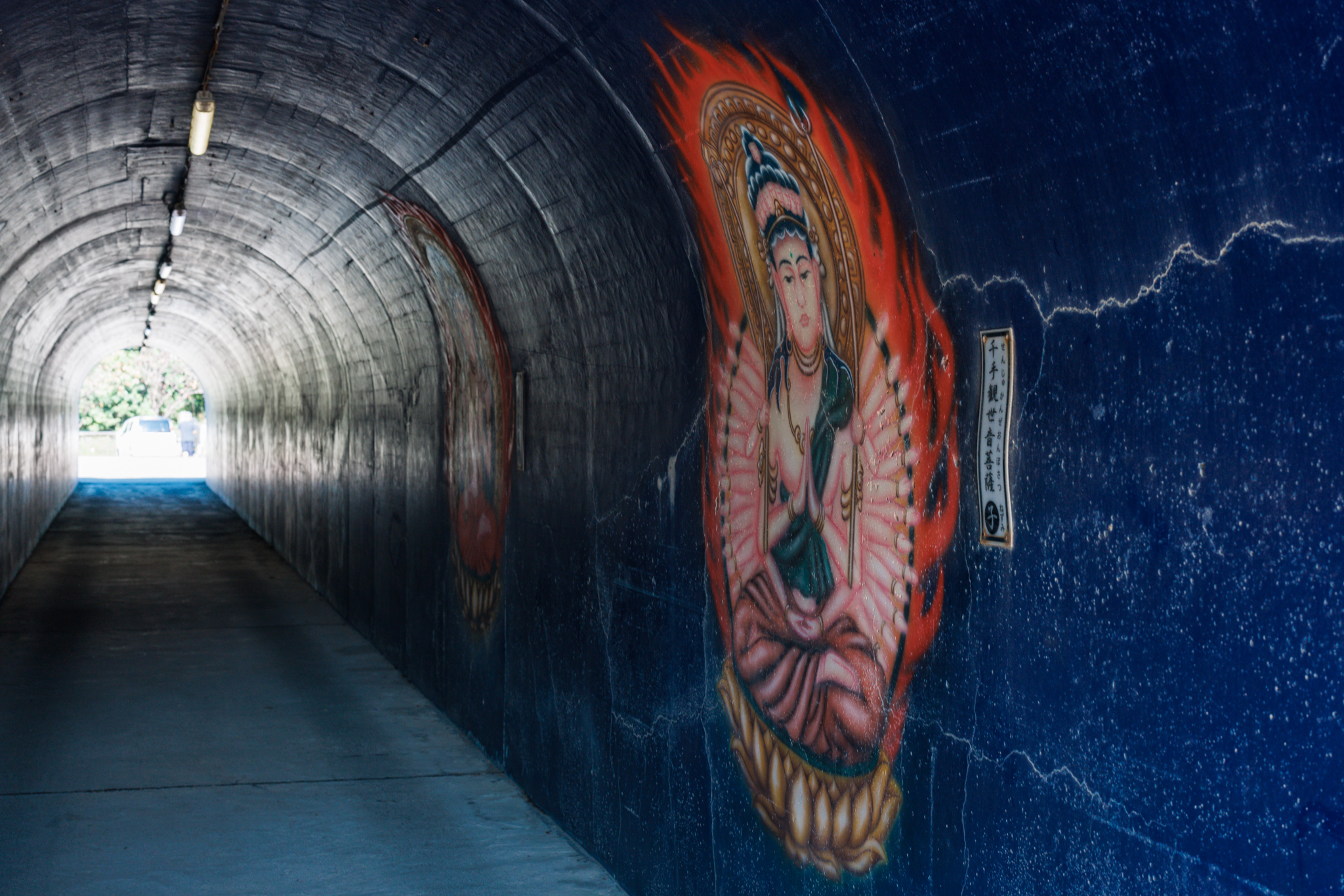
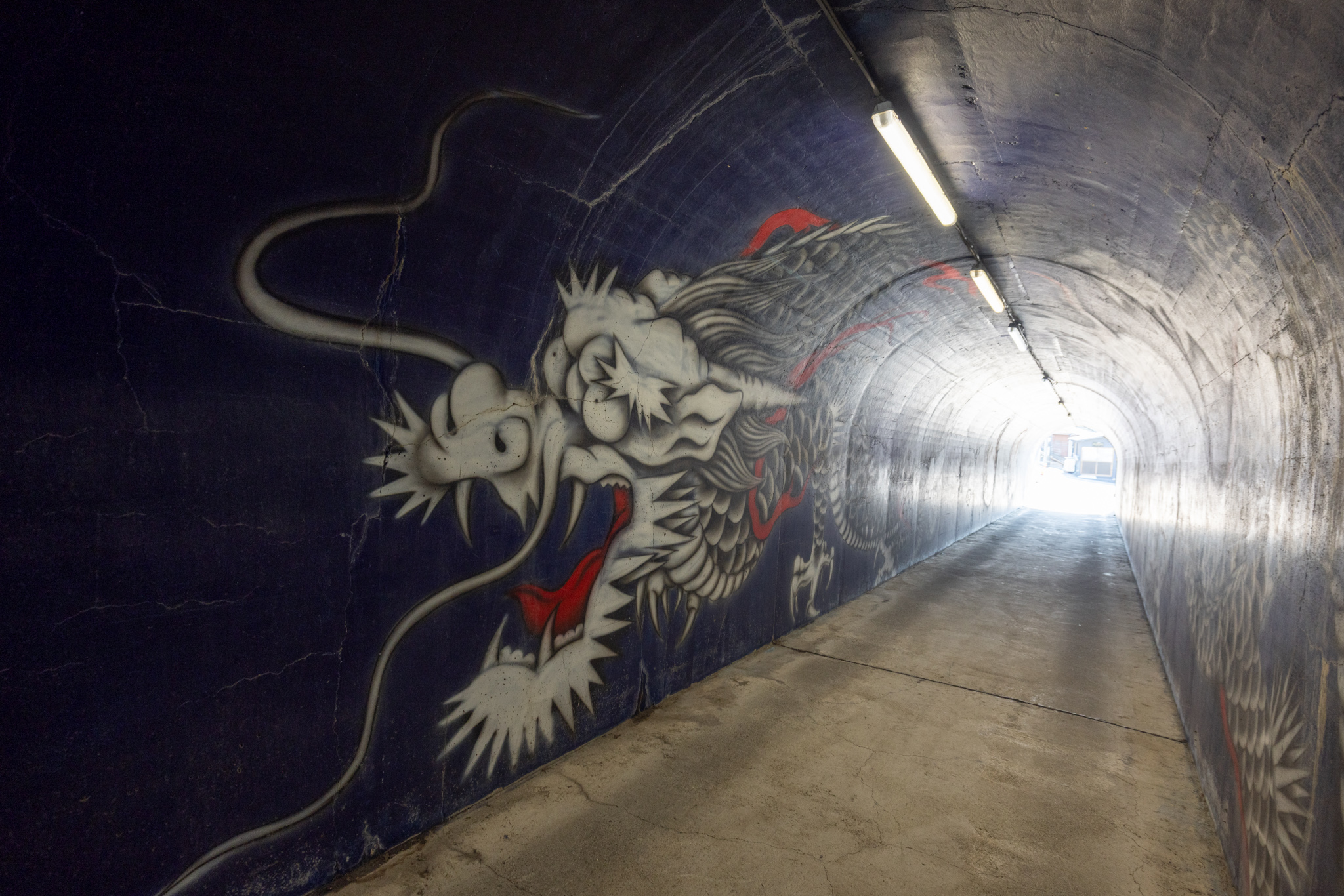
The tunnel is a path to people’s family graves, so it is worth walking quietly. I walked through to the far end. Along the way are a thousand-armed Kannon and a white dragon, its mouth open, stretched along the wall.
Near the temple office, Benkei is still at his desk, brush to the paper.
More than eight hundred years on, he is still working on the first draft.
Visit this place
Temple
Manpukuji (満福寺)
In Koshigoe, Kamakura, a few minutes from Koshigoe Station on the Enoden. The Koshigoe letter display, the fusuma and the ceilings are in the main hall (admission); the tunnel beside the temple leads to the temple-managed cemetery.
2-4-8 Koshigoe, Kamakura, Kanagawa 248-0033, Japan
Practical Information
- Access
- About 3 minutes on foot from Koshigoe Station (Enoden)
- Reception
- 9:00–17:00
- Admission
- Adults ¥200; junior high school students ¥100; elementary school children and younger free
- Parking
- Available for cars and mid-size buses; no space for large buses
- Visiting the tunnel
- The tunnel beside the temple is the path to Kamakura Shichirigahama Cemetery. Keep quiet and give way to people visiting graves
- Phone
- 0467-31-3612
- Official website
- Manpukuji — Visiting and access (Japanese)
Information last checked: October 11, 2026 (access, reception hours, admission, parking and phone).
Conversation
Comments
Review pending commentsComments are reviewed before appearing. The internet already contains enough unattended surprises.
Checking comments…
Comments are not available in this migration preview yet. Existing comments remain on the current site.
Leave a comment