Navy Underground HQ: Names in a Shell Casing
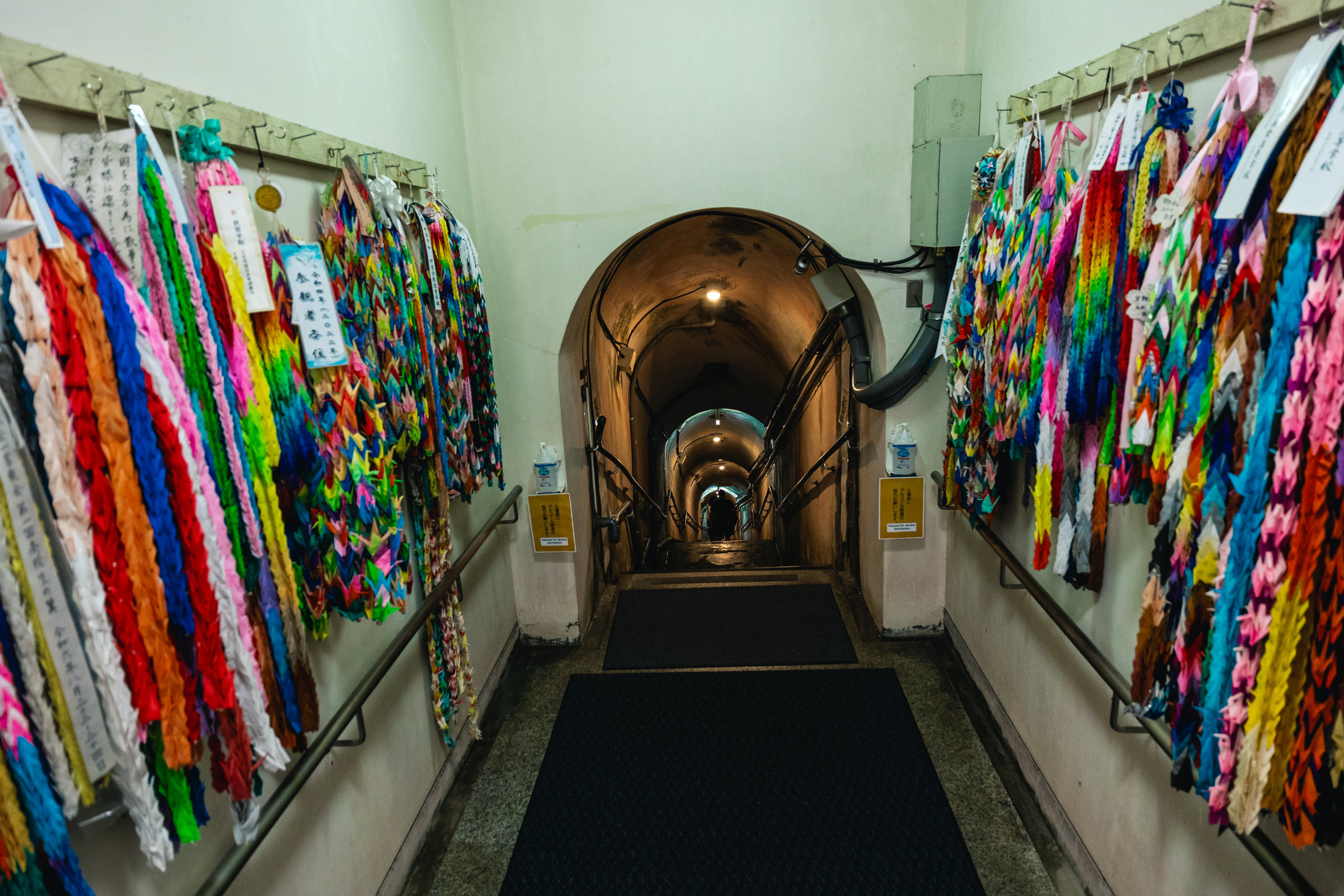
In October 2022, a group searching for the remains of the war dead dug a shell casing out of a closed-off tunnel in southern Okinawa. It was Japanese, from a 25-millimetre gun, with the projectile end cut off. It went where old ammunition goes: to Japan’s Ground Self-Defense Force, for disposal.
During the disposal, someone noticed there was paper inside.
Rolled up and packed into the casing was a list headed Rikusentai hensei-hyō, the organisation table of a naval landing unit. On it were names and ranks.
The tunnel belongs to the Former Japanese Navy Underground Headquarters, dug into a hill in Tomigusuku, just south of Naha. The part open to visitors begins in a round, glass-walled visitor centre on top of the hill. I walked up to it from the nearest bus stop.
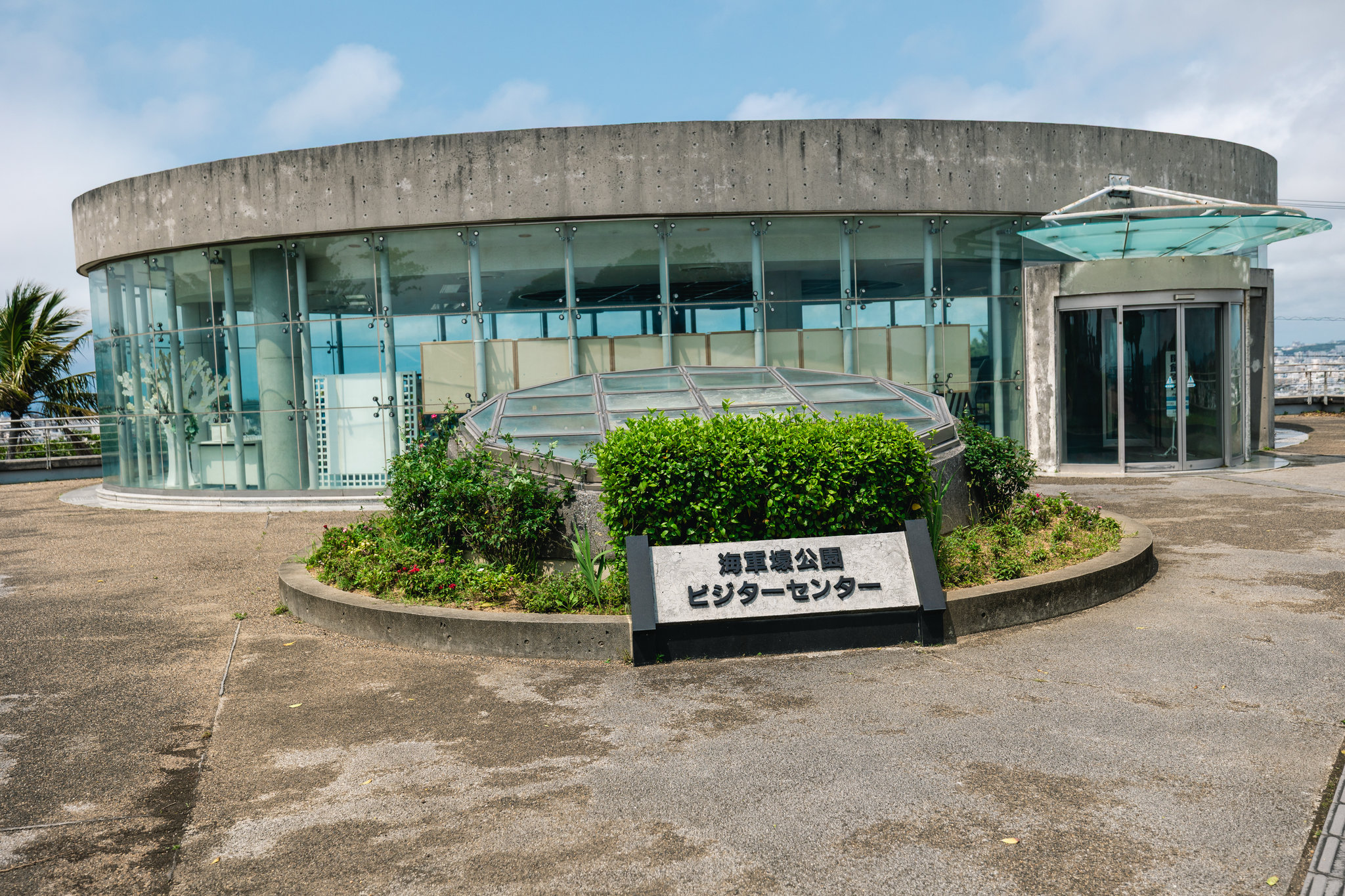
A hill for signals
Long before the navy came, the hill was used to pass on news. In the days of the Ryukyu Kingdom it was the site of a hibanmui, a beacon station. It announced ships arriving from China and Satsuma, and when smoke went up from the Kerama Islands, offshore to the west, it passed the warning on to Shuri Castle.
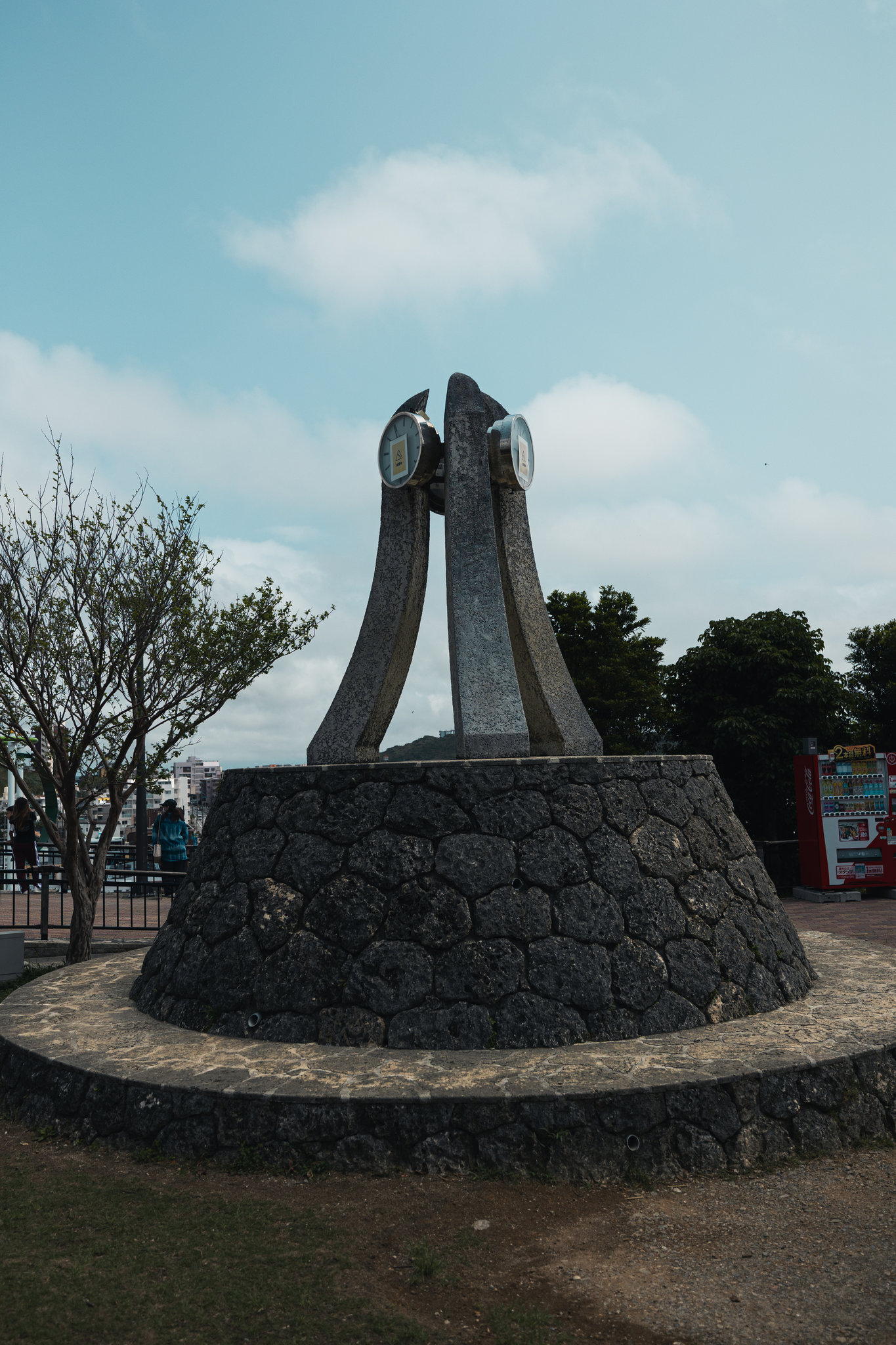
A clock tower in the park now stands in for it; a local news site describes it as inspired by the old beacon. When I visited, both of its clocks had a notice taped over the face. It said, in Japanese, out of order.
The Japanese navy built its headquarters here to defend Oroku airfield, one of its key bases on the island. The site’s own FAQ lists the hill’s advantages: it stood close to the airfield, it looked out over the whole area, and nothing would interfere with communications. At 74 metres above the sea, it was known during the war as Hill 74.
The hill, in other words, was still good for signals.
According to the site, about 3,000 officers and men dug the headquarters by hand in 1944, over about five months: some 450 metres of tunnels, about 20 metres underground. The FAQ also mentions another account, in which the digging began only after the great air raid of 10 October 1944, and the tunnels were still unfinished when the fighting came. It adds that local people took no part in the work, because the project was top secret.
About 300 metres of the tunnels, centred on the commander’s room, were restored and opened to the public in March 1970. The way in is down 105 steps.
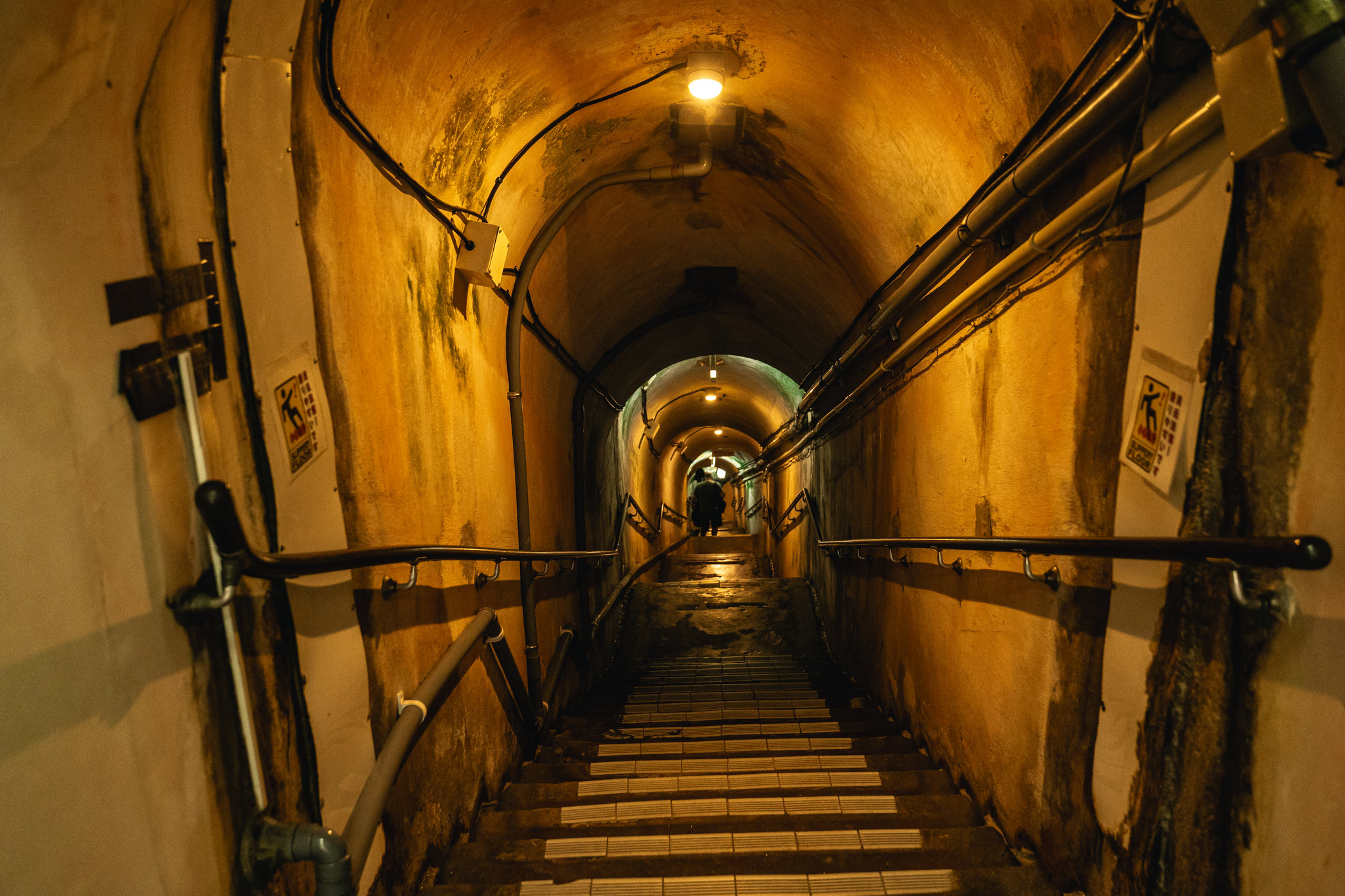
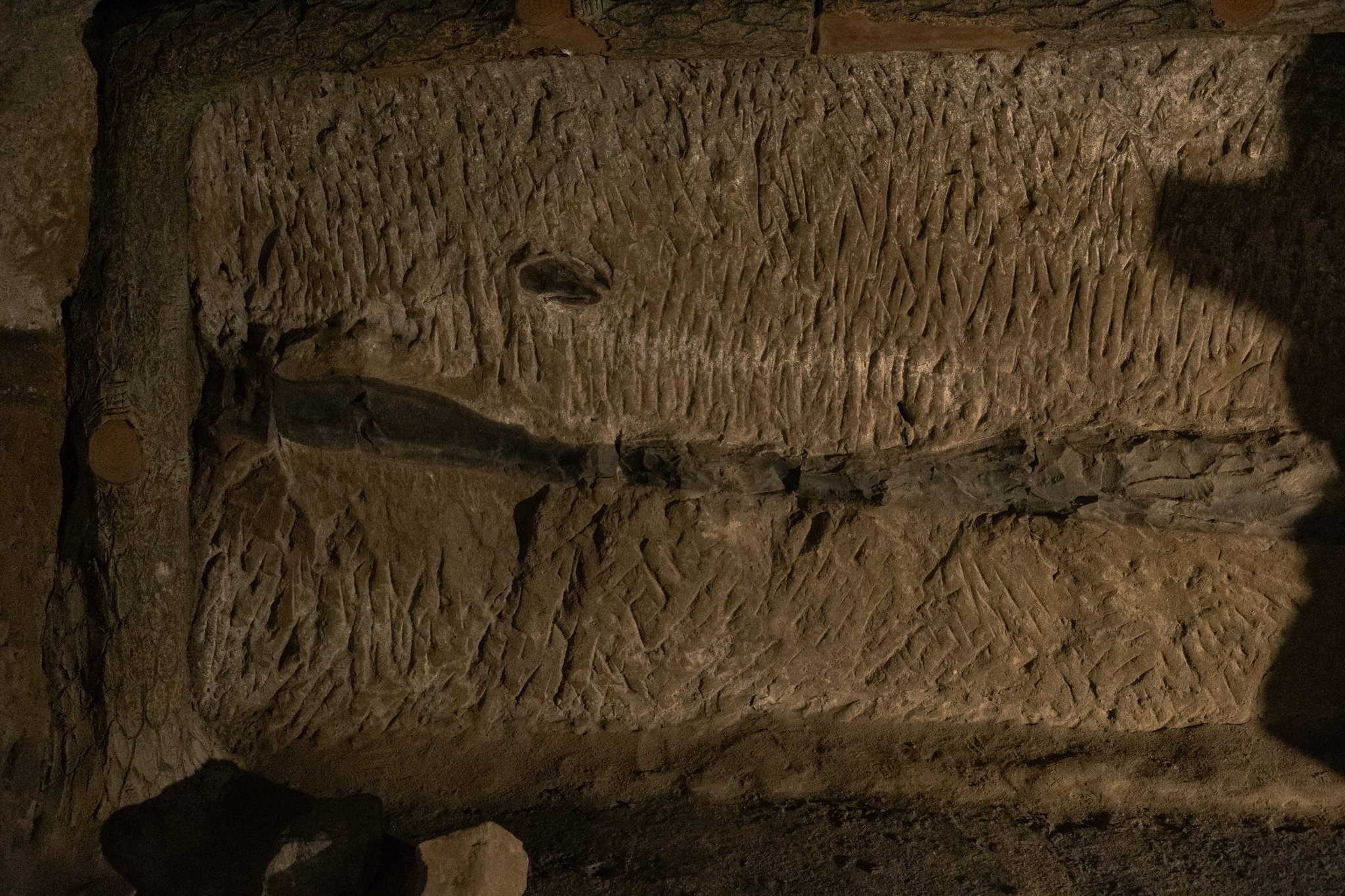
The walls show how it was done. The tunnels were dug entirely with picks and hoes, the museum says, and in places the rock is covered with short, narrow gouges, row after row.
No well, no kitchen
For a headquarters, it was not much of a place to live. Ventilation was poor, and the men normally lived in schools and large houses, coming down into the tunnels only during air raids. The toilets were outside. There was no well and no kitchen: water was drawn, and cooking done, at the Tomigusuku village well, about 200 metres away. Once the fighting grew heavy, those errands became dangerous. Many of the soldiers who went out, the site says, did not come back.
The rock overhead could protect a room. It could not supply it with water.
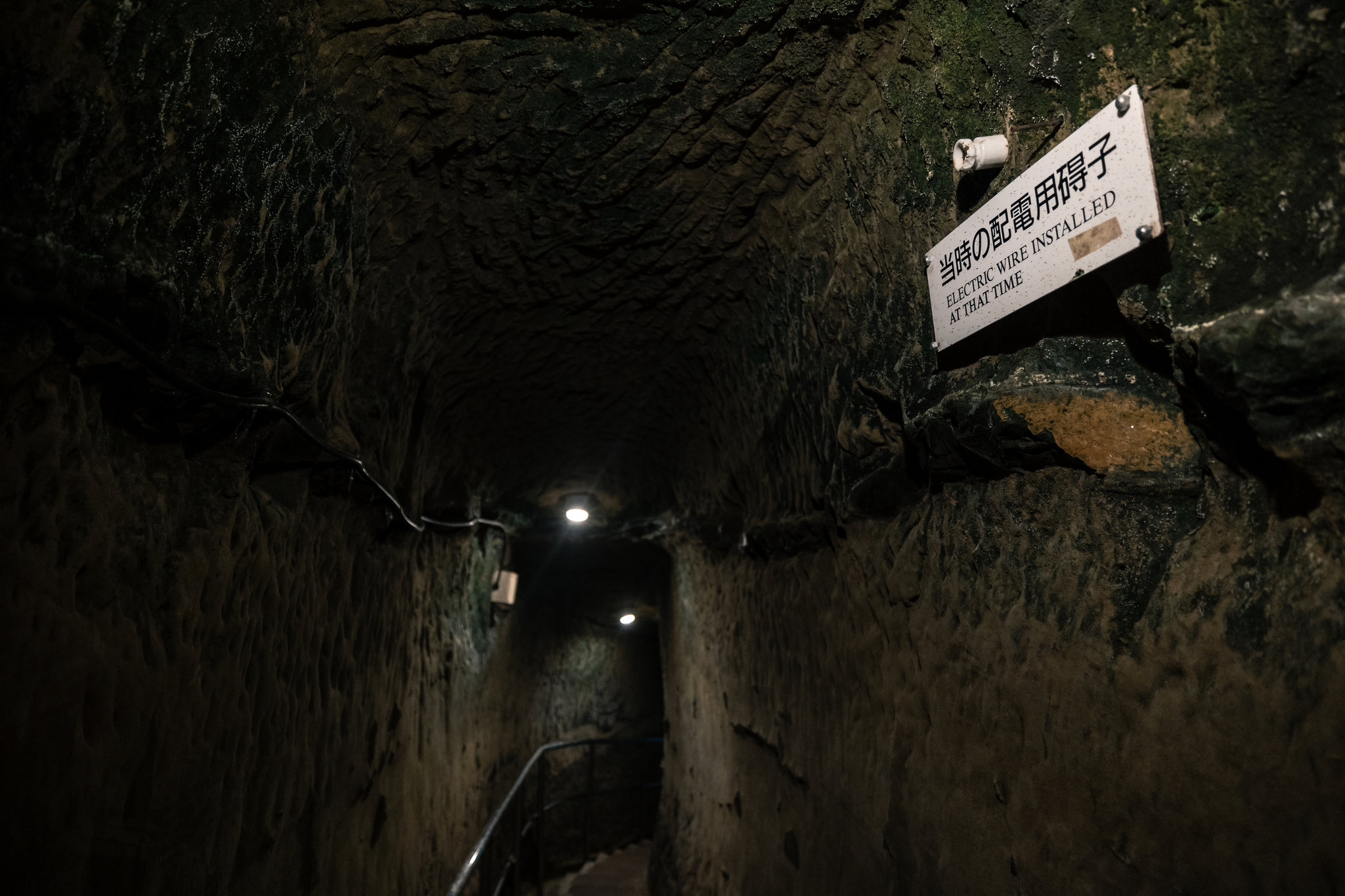
What the tunnels did have was electricity. There was a generator room, and a small white fitting high on one wall is labelled as an insulator from the wartime wiring.
And there was a signal room. Some 2,900 messages were sent from that small space, according to the site.
Thus they fought
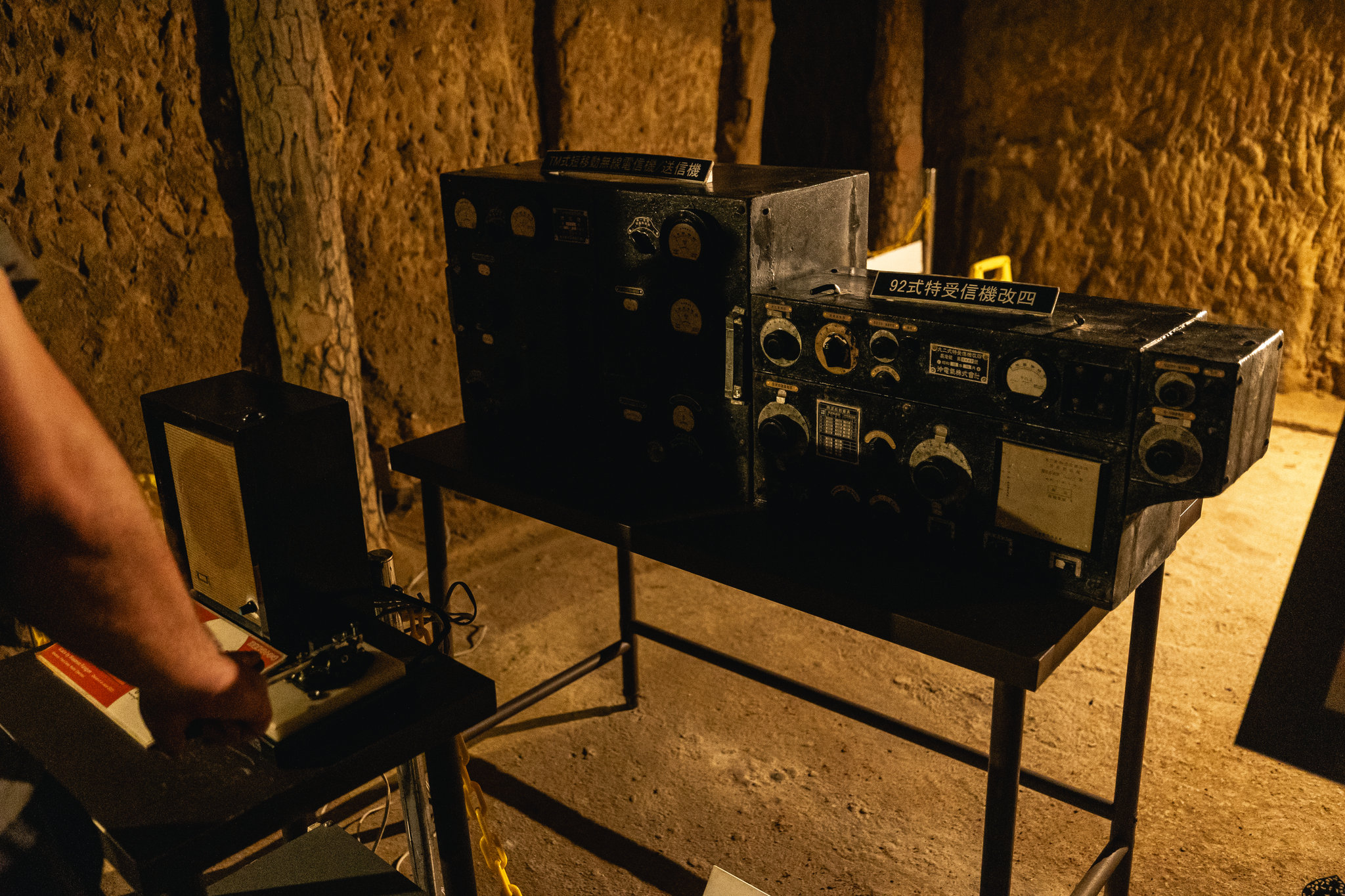
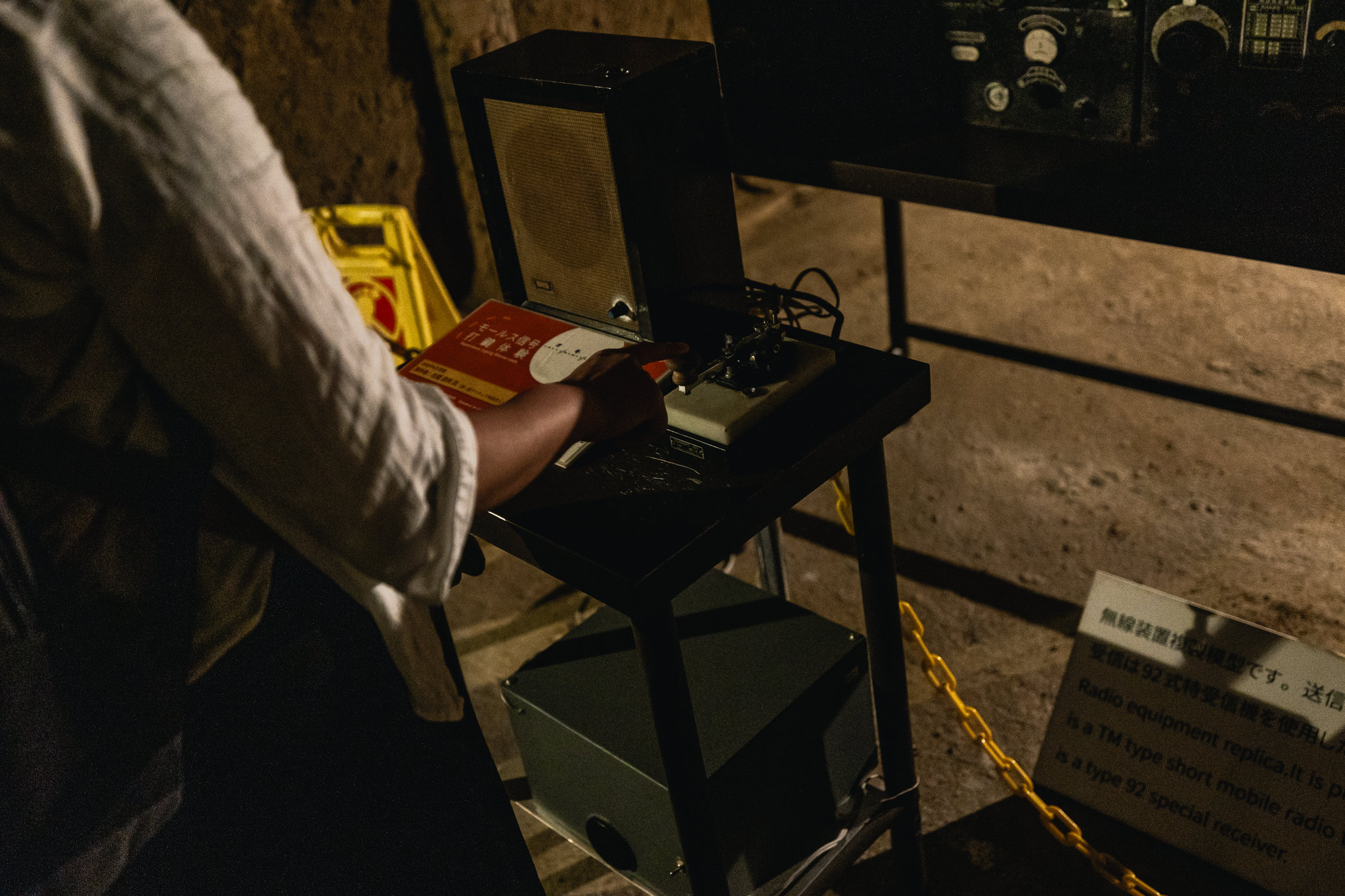
The signal room now holds two radio sets, and a telegraph key for visitors to try, with a booklet of Morse code beside it. A visitor had a hand on the key, and Morse code was playing.
What was playing was a telegram from 1945. In 2022, a licensed radio operator, Masanao Furugen, recreated its signal from the text, so that visitors could hear it. I stood and listened.
It is the best-known message sent from these tunnels: from Minoru Ōta, commander of the navy’s Okinawa Base Force, to the Vice-Minister of the Navy, on 6 June 1945, at 20:16.
It begins with an explanation. Reporting on the people of Okinawa, it says, ought to be the governor’s job, but the prefecture no longer has any means of communication, and the army headquarters has none to spare. Ōta had not been asked by the governor. He was sending it anyway.
What follows is an account. Since the attack on Okinawa began, it admits, the army and navy have been so taken up with the fighting that they have had almost no time to spare for the people. All the young and middle-aged men have been mobilised for defence. The old, the children and the women have lost their homes and belongings to the shelling and bombing, and are living in small air-raid shelters, in places where they will not get in the army’s way, exposed to wind and rain. Young women have volunteered as nurses and cooks, to carry ammunition, even to join attack parties. When the army changed its plans and assigned residents to distant areas, they moved at night, in the rain, with no transport. Throughout the fighting they have been made to work for the army and to go without. Food will last until the end of June.
Then the last line, roughly: The people of Okinawa fought thus. I ask that, in the years to come, they be given special consideration.
The telegram is remembered for that line. Most of it is about what the war, and the army, had demanded of them.
It is still a commander’s report, written from where he stood. It is not the testimony of the people it describes.
One week later, on the night of 13 June, Ōta and six of his staff officers killed themselves in the headquarters.
A list of names
The route for visitors does not cover the whole headquarters. In October 2022, a nonprofit group began searching a closed section, about 150 metres long. They found bones, and belongings with their owners’ names on them. The shell casing came from that search.
The casing was about 4 centimetres across and 13 centimetres long. The list inside names its company commander, a navy lieutenant called Maruyama. The men on it are thought to have belonged to the Maruyama Battalion, a naval landing unit sent towards Shuri in mid-May 1945 to cover the army’s retreat south.
Nobody knows who rolled the list into the casing, or why. The head of the site’s office has suggested that a soldier wanted to leave proof that they had lived.
In February 2023, a woman named Kumiko came from Kagoshima to see it. Her father’s name is on the list. The local paper, the Okinawa Times, reported her visit. When I was there, the clipping hung in the museum beside a long table of belongings.
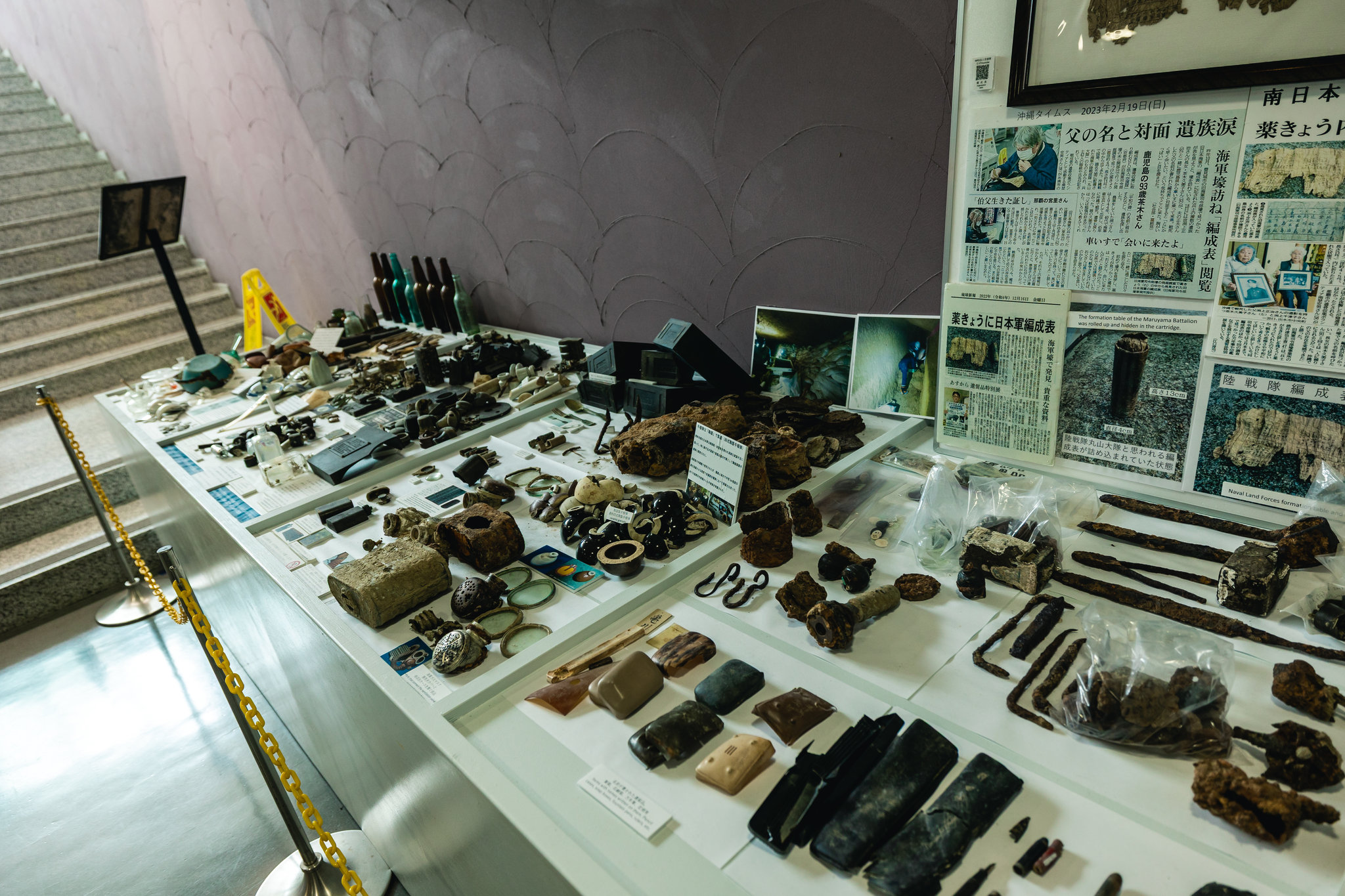
The search did not end there. Japan’s health ministry carried out its own recovery of remains in the tunnels in early 2025.
Ōta’s telegram was sent in a single evening. More than eighty years later, it is what this place is known for.
The list in the shell casing was not sent anywhere. It was rolled up, packed away and stayed underground, and it reached the family of one of the men on it seventy-eight years later.
Of everything sent from this hill, the message that took longest to arrive was the one nobody sent.
Visit this place
Location
The Former Japanese Navy Underground Headquarters (旧海軍司令部壕)
In Kaigungō Park (海軍壕公園) on a hill in Tomigusuku, just south of Naha. Entry is through the visitor centre at the top of the hill.
236 Tomigusuku, Tomigusuku, Okinawa 901-0241, Japan
Practical Information
- Opening hours
- 9:00–17:00 (last entry 16:30)
- Closed
- Open every day, except temporary closures (for example in typhoons)
- Admission
- High school age and over ¥600; elementary and junior high school students ¥300; preschool children free. Groups of 20 or more: ¥400 / ¥200 (According to Okinawa Prefecture, 2024.)
- Admission from January 1, 2027
- High school age and over ¥800; elementary and junior high school students ¥400; preschool children free. Groups of 20 or more: ¥600 / ¥300. Groups booked by December 31, 2026 retain the previous rates, including for later visits. See the official fee-change notice.
- Access
- About 5 minutes on foot from the Uebaru-danchimae (宇栄原団地前) bus stop. Free car park on site
- Getting around
- The standard route goes down 105 steps. Wheelchair users must contact the site in advance: a power-assisted wheelchair (provided on site, limited number; not for users weighing 75 kg or more) is used from the exit side, and a companion is required
- Time needed
- About 30–40 minutes for the museum and tunnels, according to the site
- Guided tours
- Peace guide on Fridays only, by reservation by the day before. Groups of 20 or more must book
- Visitor note
- The tunnels are a place of remembrance; please be respectful
Information last checked: October 11, 2026 (opening hours, closing days and the admission change from January 1, 2027).
Conversation
Comments
Review pending commentsComments are reviewed before appearing. The internet already contains enough unattended surprises.
Checking comments…
Comments are not available in this migration preview yet. Existing comments remain on the current site.
Leave a comment