Enoshima-don: Sea and Land, Strangers in a Bowl
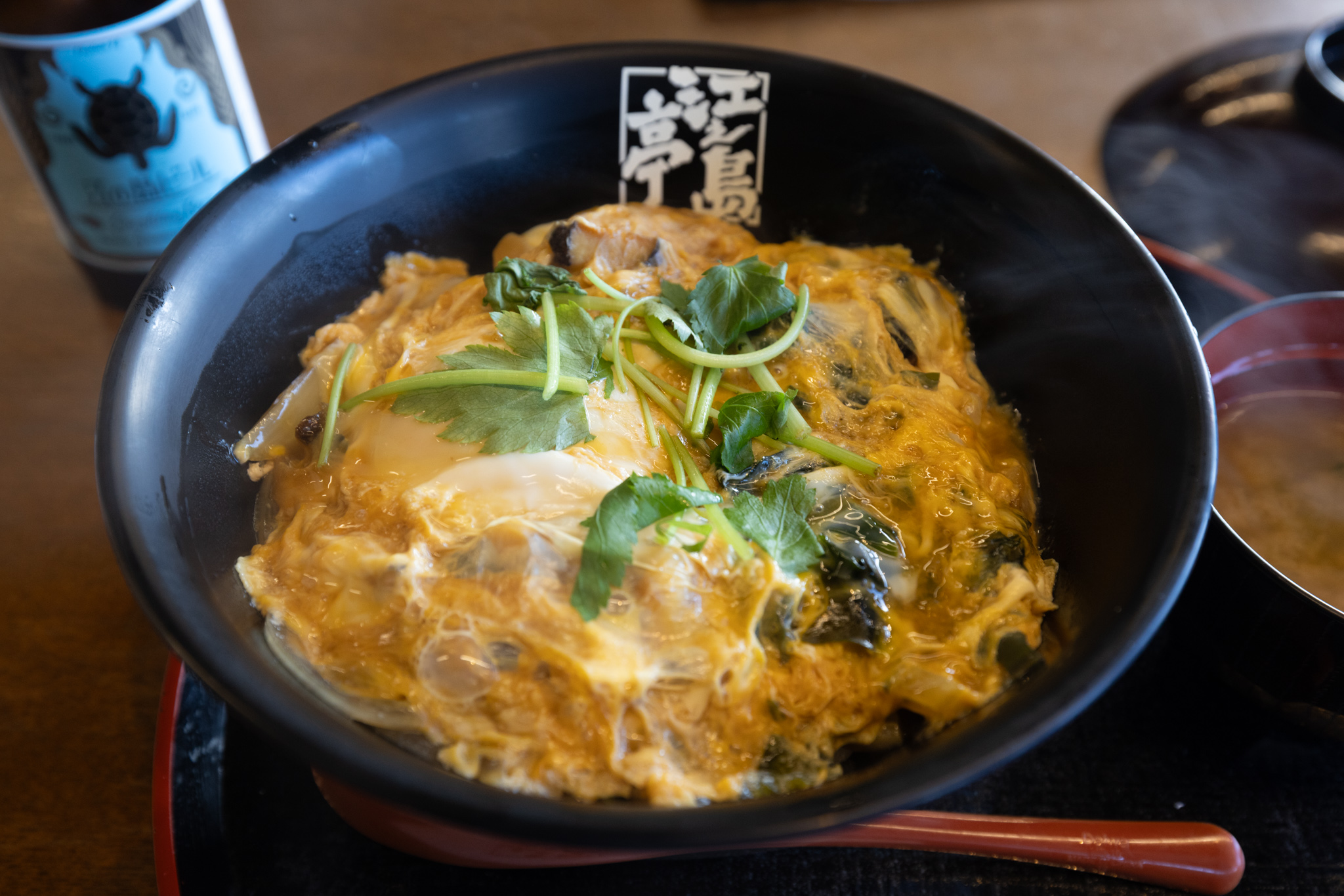
Under a layer of soft egg, onion and a few sprigs of mitsuba, a Japanese herb, lay slices of turban shell, a sea snail with a heavy, often spiny shell. One of the main ingredients had come out of the sea. The other had come from a hen.
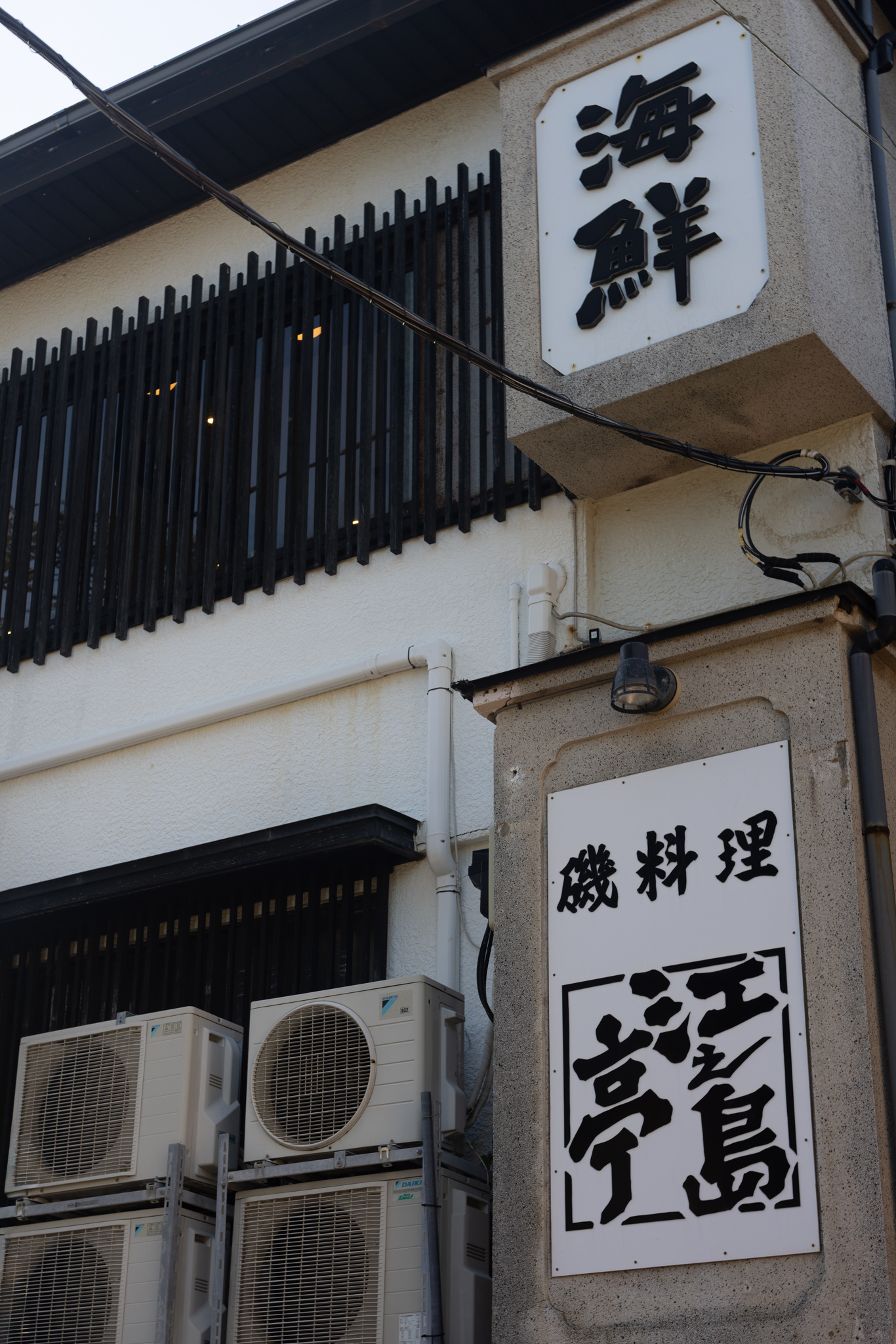
This was Enoshima-don, served at Enoshimatei on Enoshima, a small island off the coast of Kanagawa Prefecture, south of Tokyo. The restaurant has been serving food on the island since 1909.
Parents, children and strangers
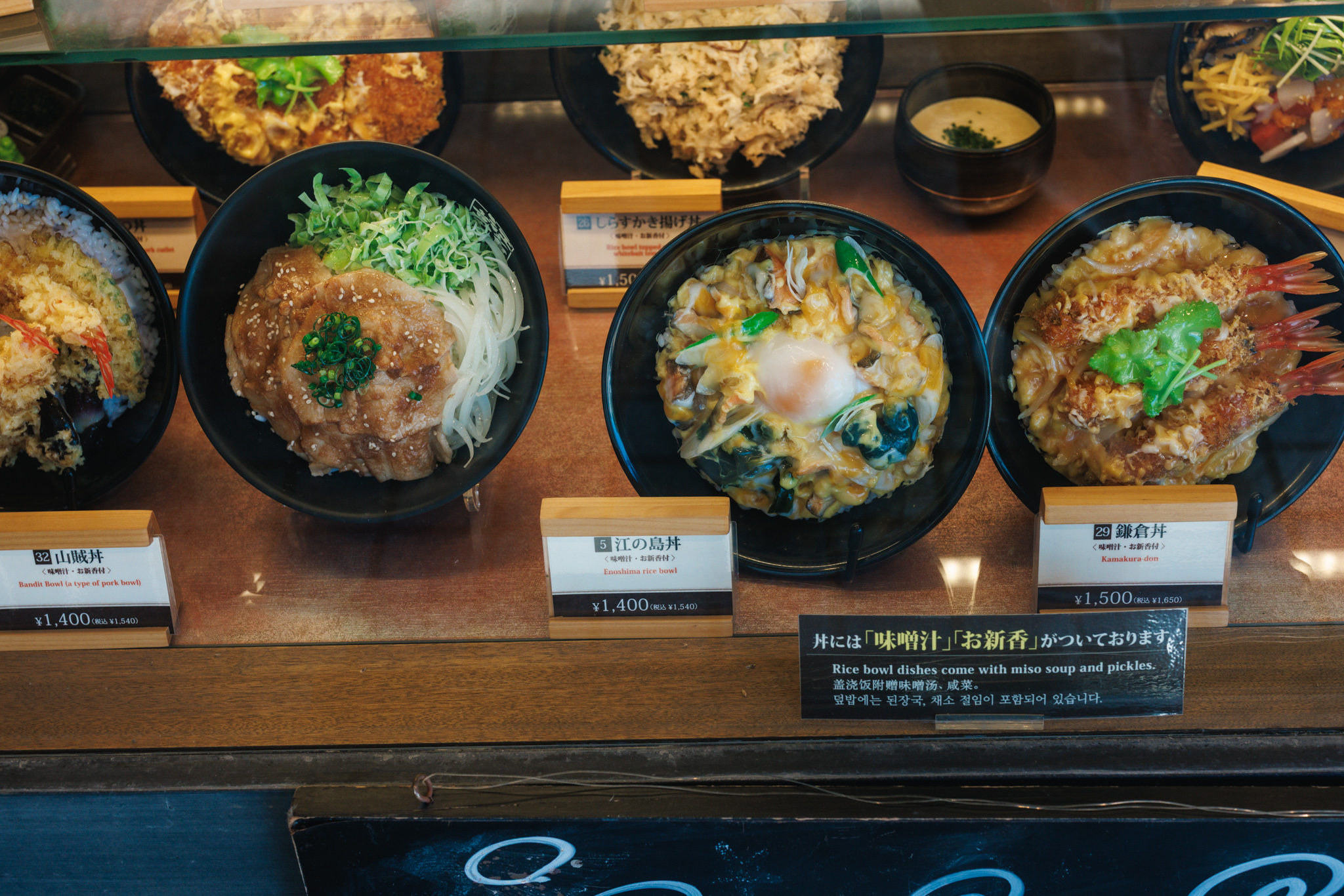
In the display window, Enoshima-don sat next to Kamakura-don, the bowl named after Kamakura, a short train ride along the coast. Enoshima-don was listed at ¥1,400 before tax. Kamakura-don, made here with fried prawns, cost ¥100 more.
Enoshima-don is usually made by simmering turban shell in a sweet broth, then binding it with egg and onion and serving it over rice. It is built like oyakodon, the chicken-and-egg bowl whose name means “parent and child”. When something other than chicken goes in, usually beef or pork, Japanese has a name for that too: tanin-don, the strangers’ bowl.
Beef and egg are strangers who might at least have met on a farm. A sea snail and an egg come from opposite sides of the shore.
When the island had turban shells
Enoshima-don seems to have appeared in the island’s restaurants around the end of the Meiji era (1868–1912) or the start of the Taishō era that followed. In 2016, the fourth-generation owner of Fujimitei, another long-running restaurant on the island, told a local news site how it is thought to have come about: turban shells were caught in large numbers around the island at the time, and they went into oyakodon in place of the chicken. At first, he said, the dish was simply called sazae-don, after the Japanese name for the shellfish. A restaurant called Harumi is usually named as the place it began.
Before Enoshimatei, I had tried Harumi. It was no longer serving Enoshima-don.
The shellfish have not stayed as local as the name either. They could no longer be caught off Enoshima, the same owner said, and his restaurant was buying them from Chiba and the Izu Peninsula instead.
Kamakura-don has a history of the same kind. Its original seafood was spiny lobster; prawns took over later.
The tray
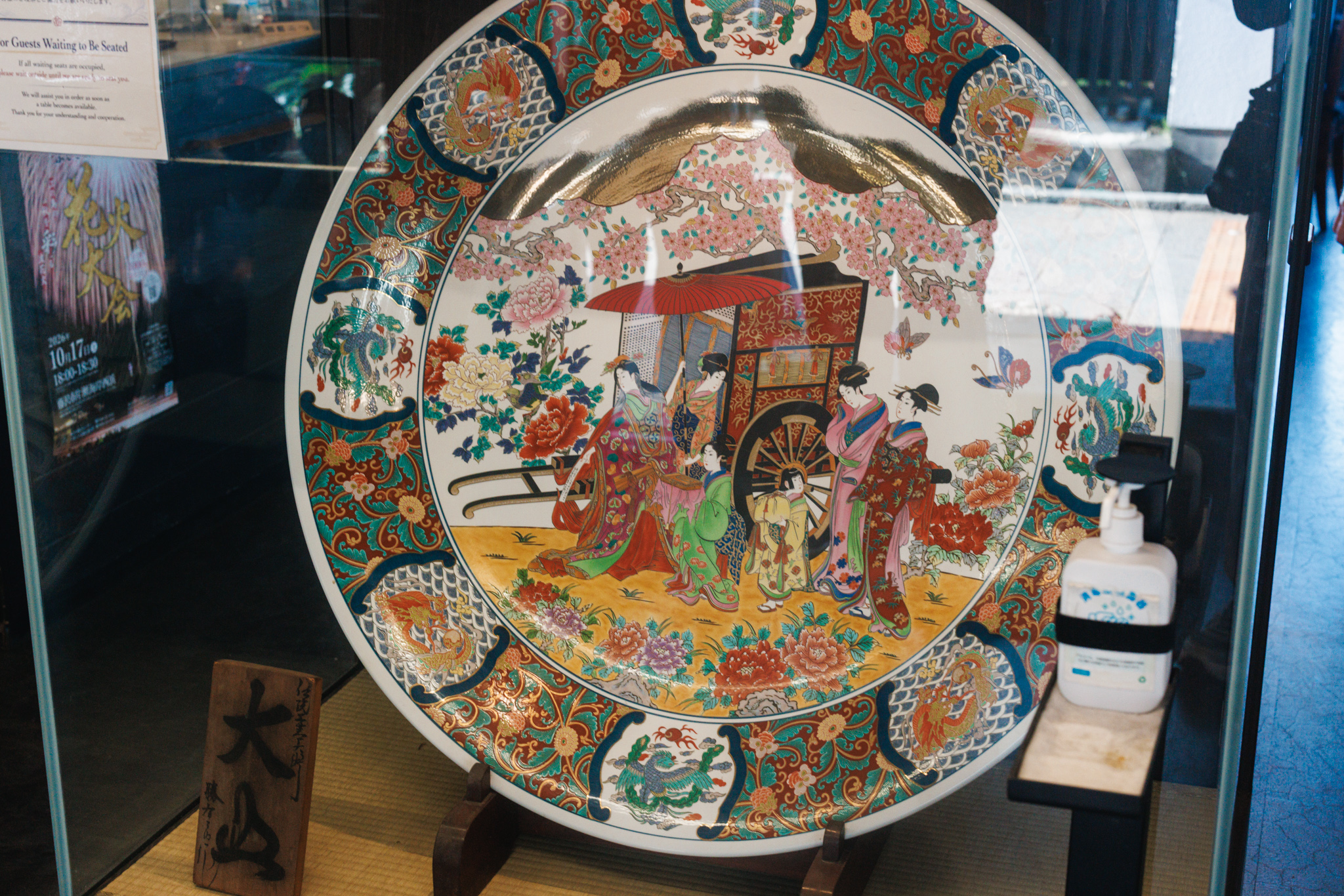
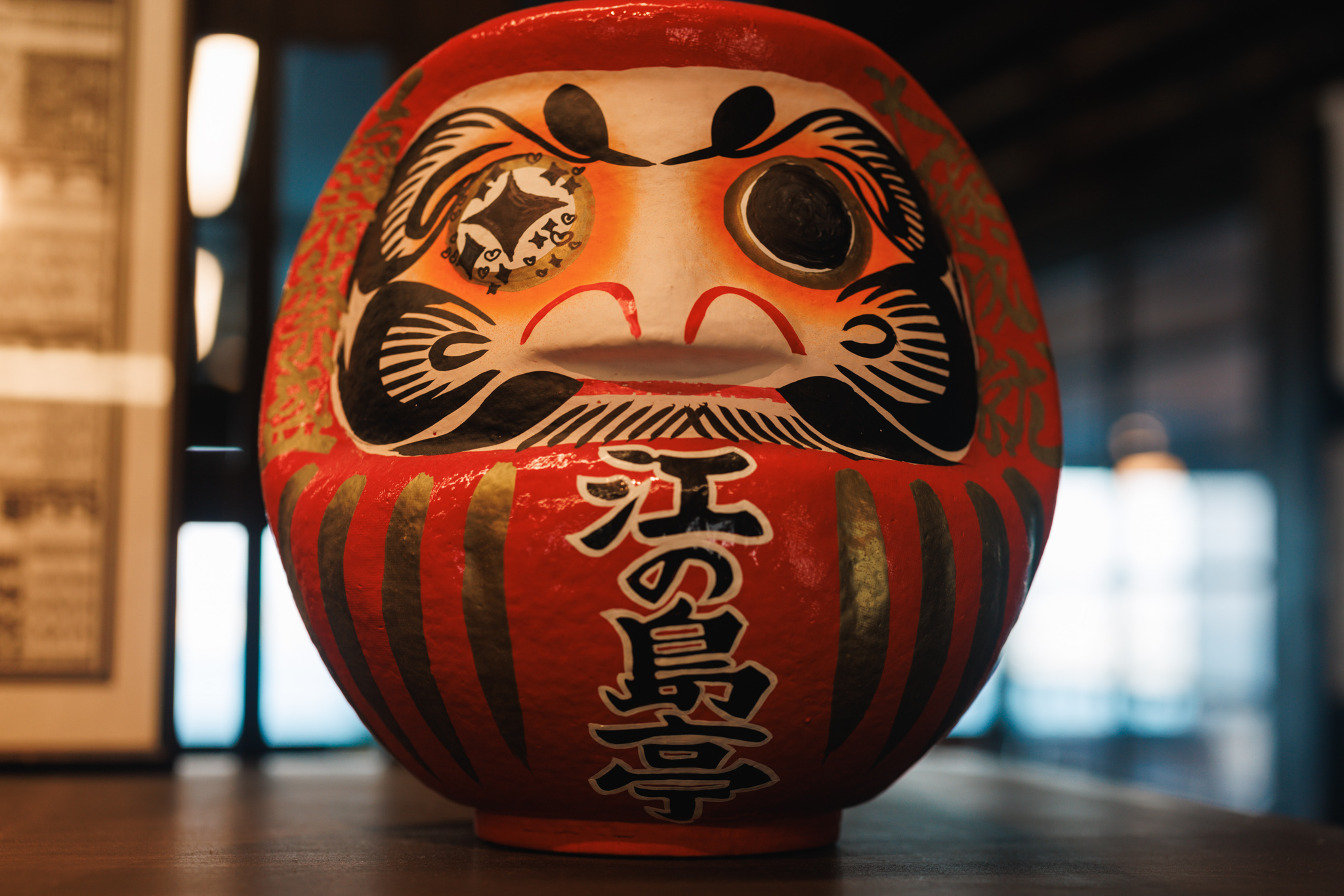
Inside, the restaurant had a few things to look at while the bowl was on its way.
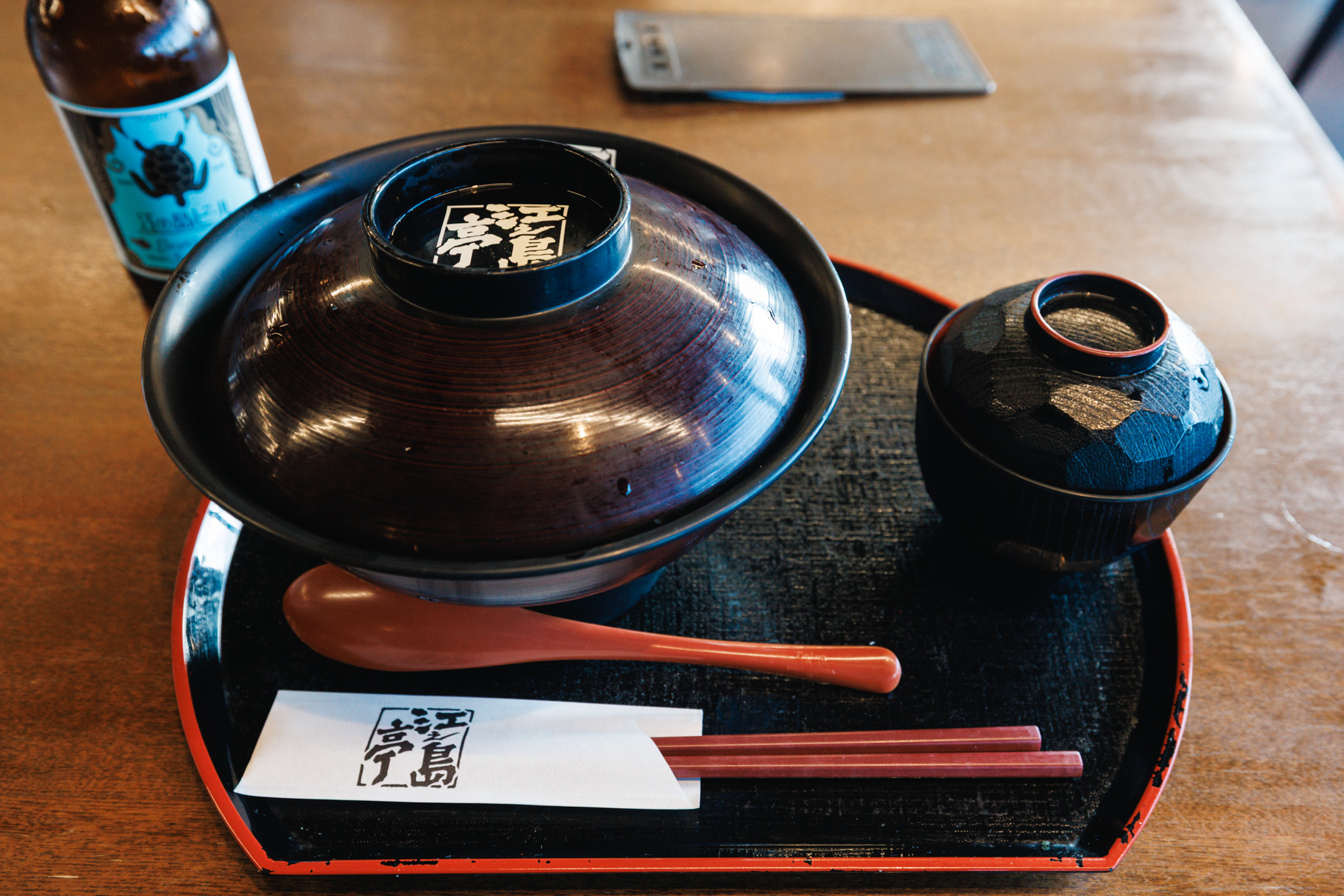
The bowl arrived on a red-rimmed tray, lid on, with the miso soup covered beside it.
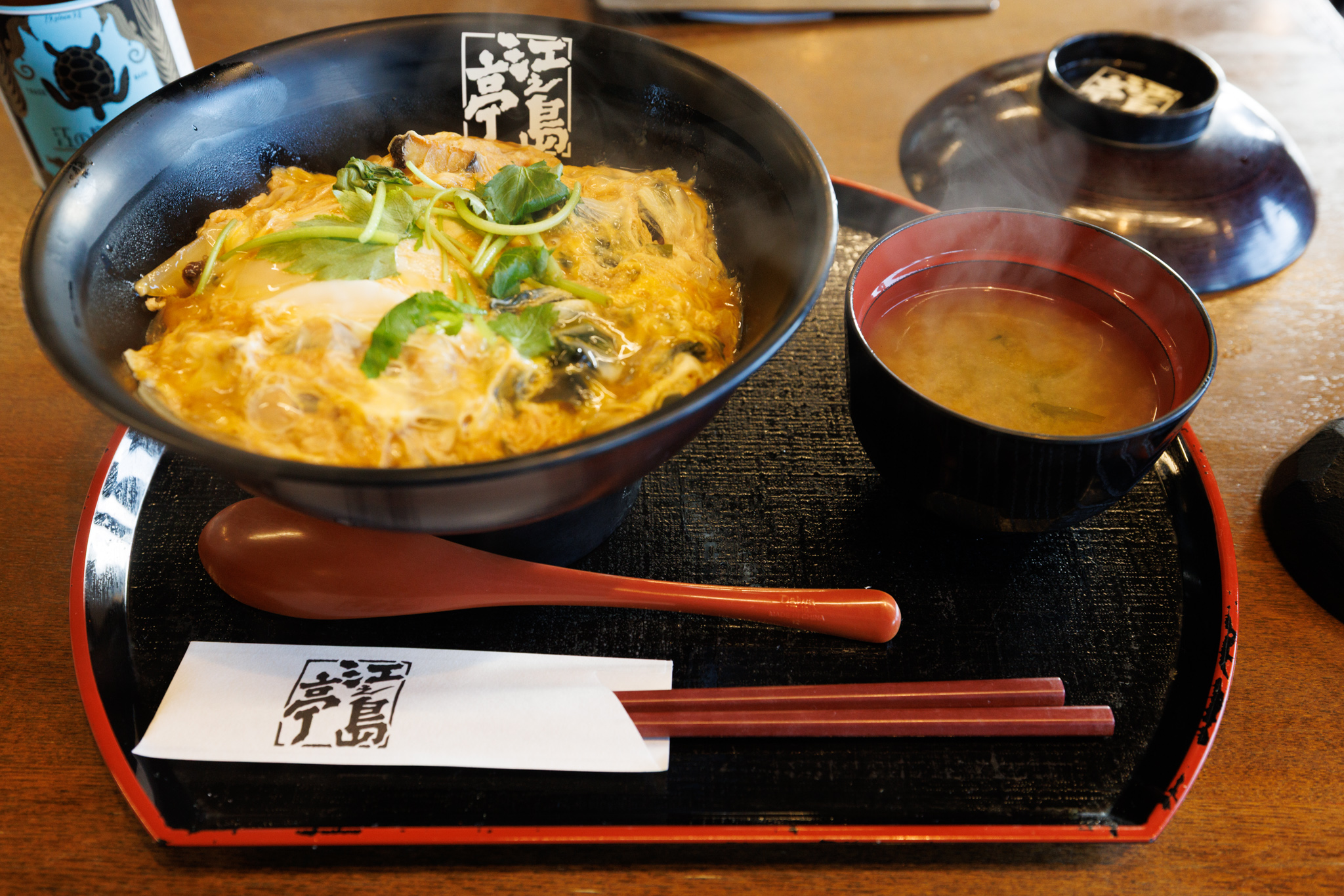
The turban shell had a good, firm bite. A few pieces were bitter, probably from the innards; parts of a turban shell’s insides are known for it. A few weeks earlier, I had eaten Kamakura-don in Kamakura, with two large tempura prawns stretched across the rice. Next to that bowl, this one made a quieter case for itself.
The miso soup had seaweed in it, aosa I think, and smelled strongly of the shore. Miso is made from soybeans, but here the sea was clearly winning.
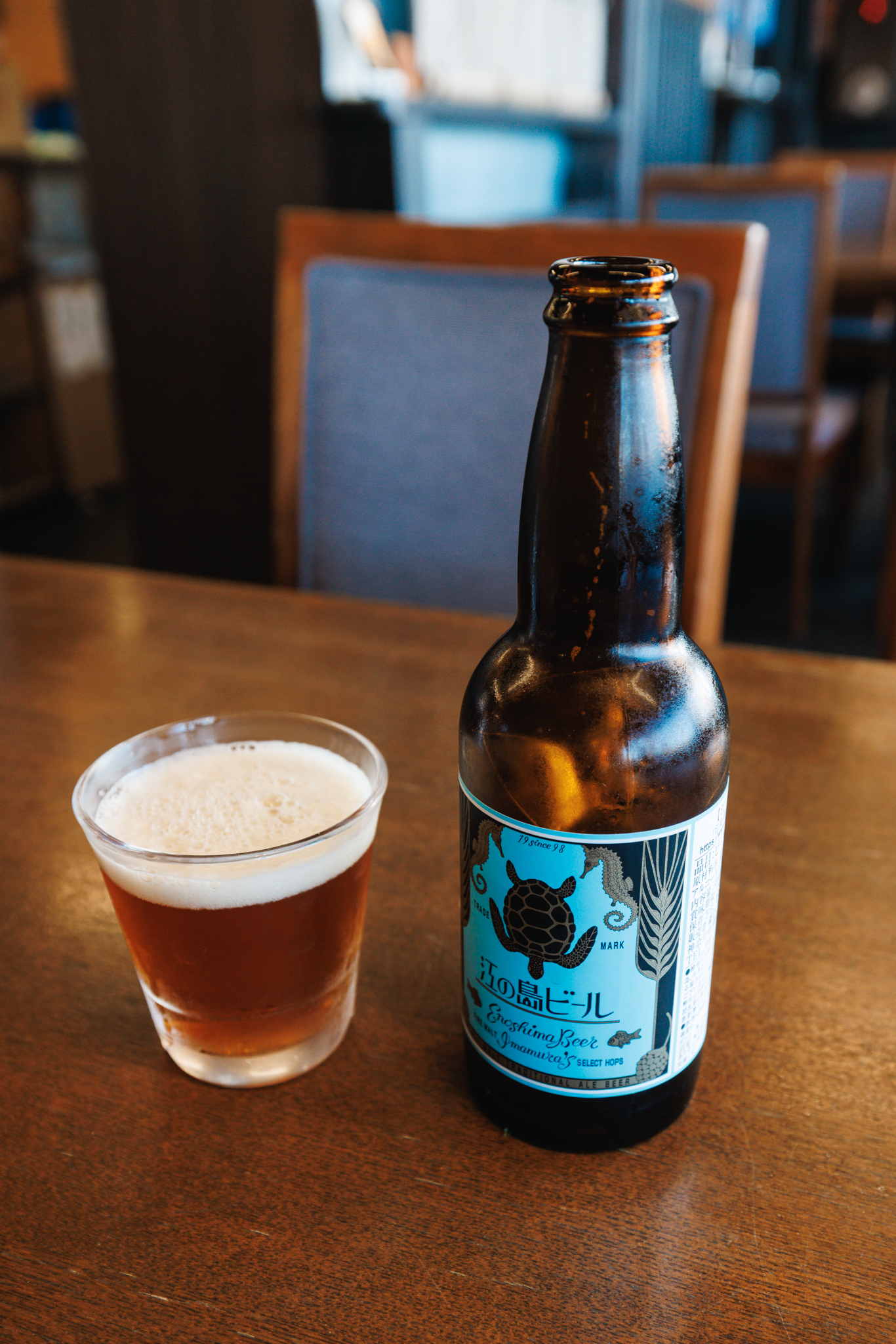
The beer was Enoshima Beer, a pale ale brewed on the mainland by Kamakura Beer, with water that has been prayed over at Enoshima Shrine. It was a deep amber and tasted as rich as it looked. The brewery says a renewal in 2019 made it more refreshing. Refreshing is not the word I would have reached for. It was a beer with a punch.
Sea, land and sky
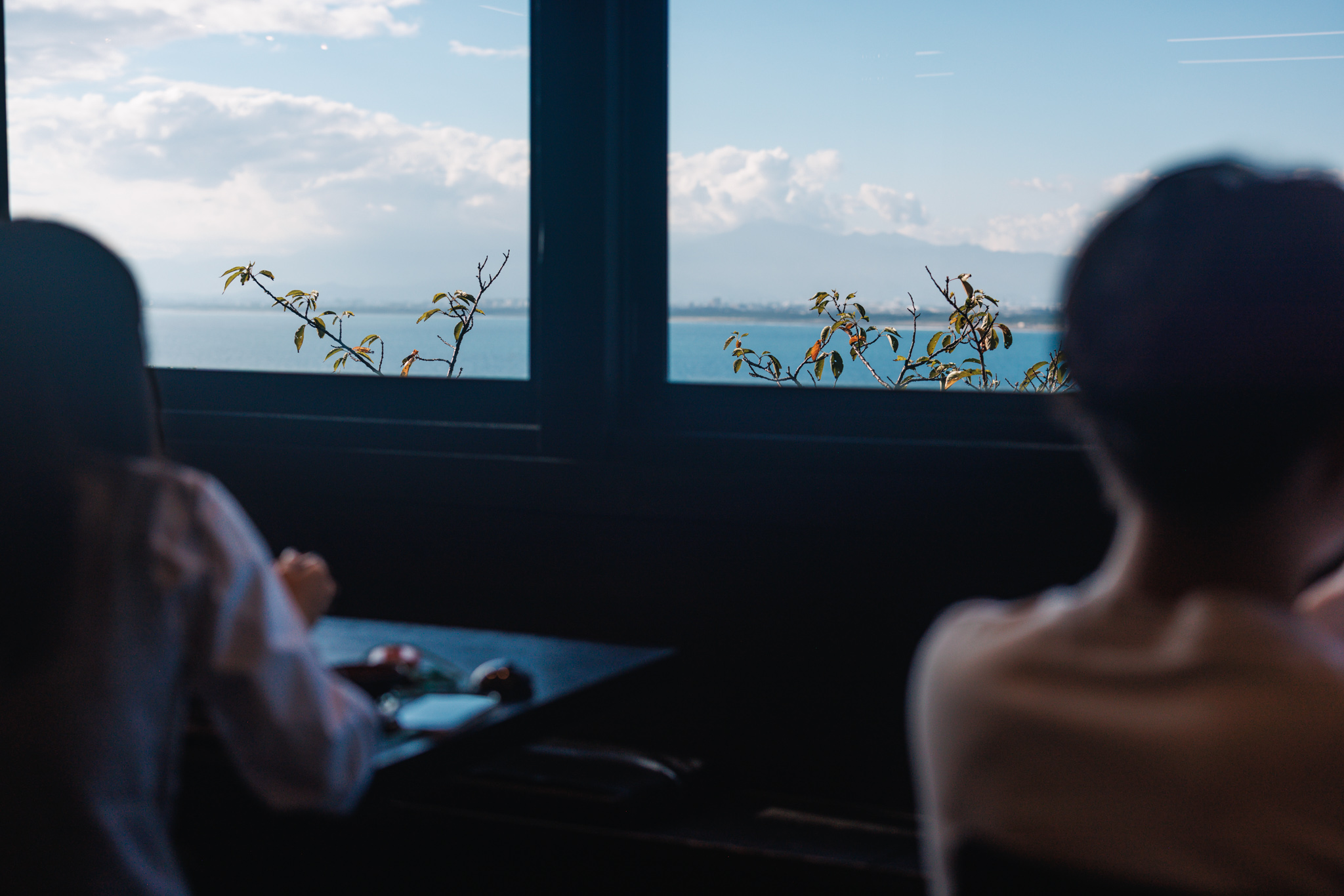
The tables along the windows look straight out to sea; take one of those, and you can eat facing it. Enoshimatei’s website promises Mount Fuji as well. That afternoon, Fuji was somewhere in the clouds.
The egg had come from a bird, though not one that has ever had much to do with the sky.
The bowl had brought the sea and the land together. The sky kept Fuji to itself.
Location
Restaurant
Enoshimatei (江之島亭)
Near Okutsu-no-miya, on the far side of Enoshima from the bridge
2-6-5 Enoshima, Fujisawa, Kanagawa 251-0036, Japan
Practical Information
- Dish
- Enoshima-don (江の島丼) — turban shell and egg rice bowl
- Associated area
- Enoshima, Fujisawa, Kanagawa
- Price at visit
- ¥1,400 (¥1,540 including tax), with miso soup and pickles
- Opening hours
- Weekdays: 10:30–18:00 (last orders 17:30); weekends and public holidays: 10:30–19:00 (last orders 18:30)
- Closing days
- Irregular; may close in bad weather
- Seating
- No reservations. Take a number at the ticket machine by the entrance; you can choose a window seat there for a view of the sea.
- Access
- On the far side of the island from the bridge; the walk there includes slopes and stairs.
- Official website
- Enoshimatei (Japanese)
Information last checked: October 2, 2026 (opening hours, closing days and the ticket-machine system). Price as displayed on the day of the visit.
Conversation
Comments
Review pending commentsComments are reviewed before appearing. The internet already contains enough unattended surprises.
Checking comments…
Comments are not available in this migration preview yet. Existing comments remain on the current site.
Leave a comment