Enmeiji Temple: The Beheading Jizō Statue
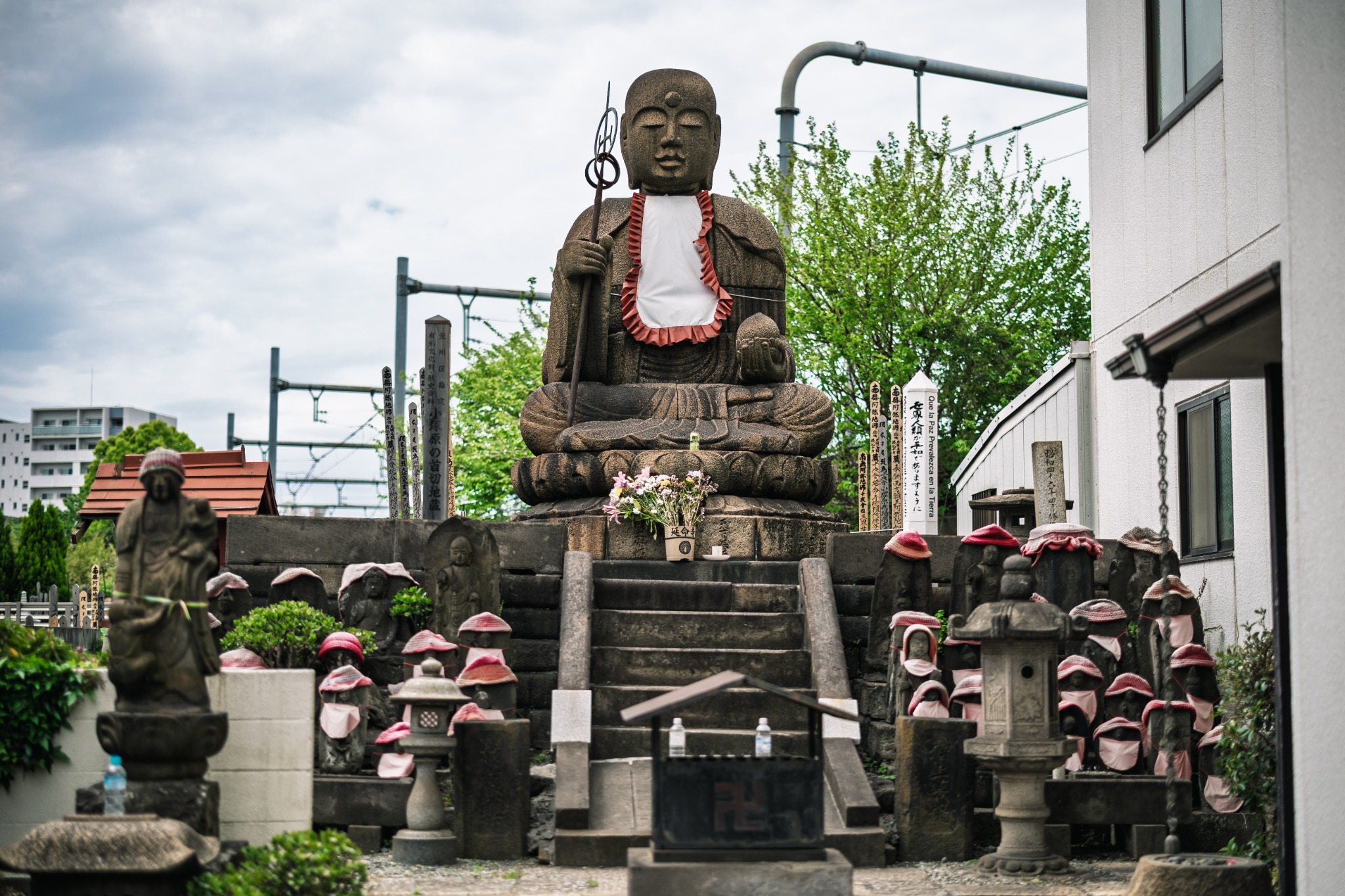
The “Beheading Jizō” wears a white bib with a pink frill.
Flowers stand at its feet. Smaller stone figures in knitted hats gather around it. Behind its head, railway wires cross the sky.
The name has done very little to prepare you for the scene.
This is Enmeiji, a small Buddhist temple in Minamisenju, northeastern Tokyo. Its name roughly means “Temple of Prolonged Life,” which is reassuring until you learn that the grounds occupy part of a former execution site.
The statue itself is formally Enmei Jizō, the Jizō of Prolonged Life. “Beheading Jizō” is simply the name it is known by.
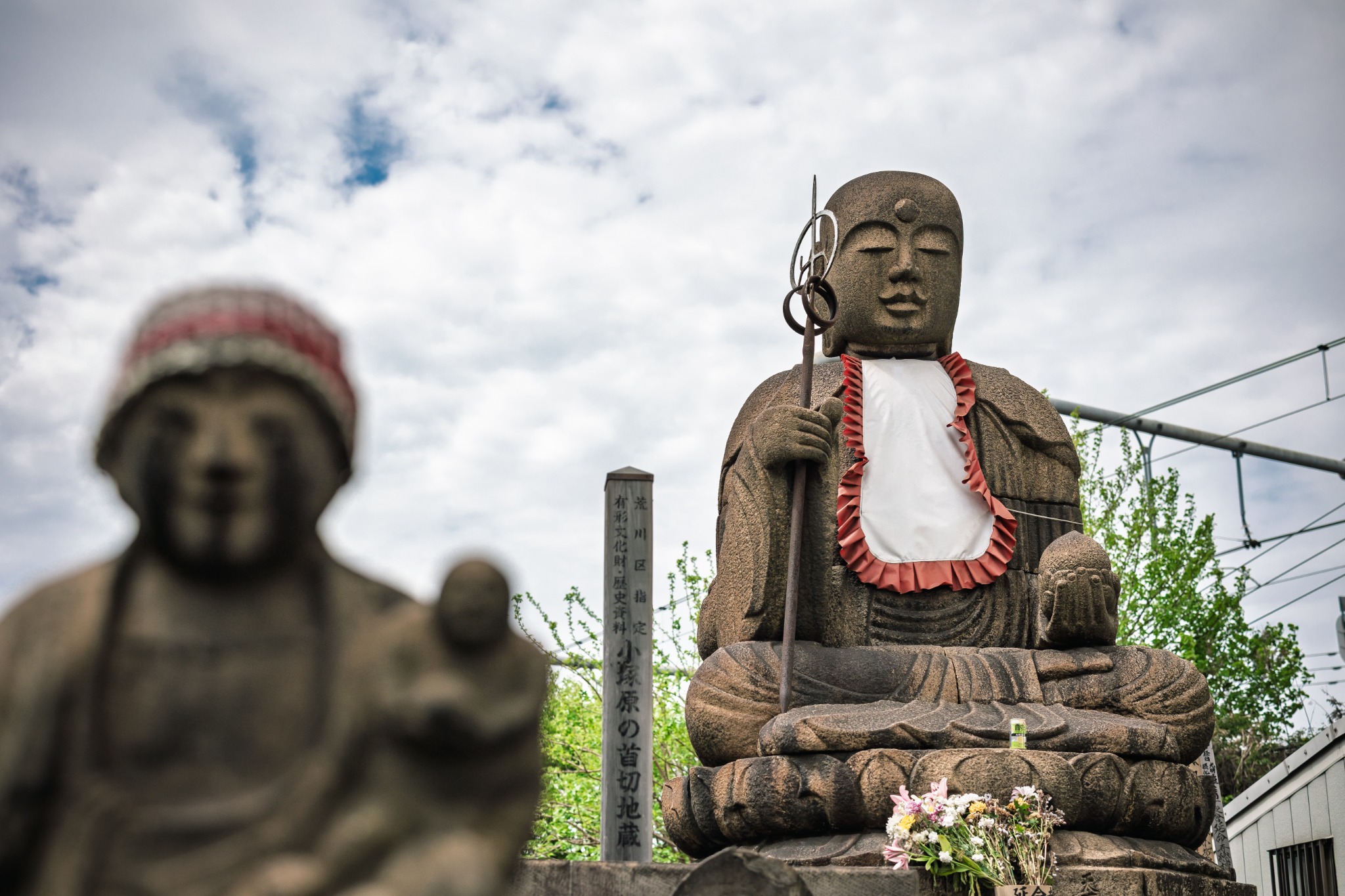
The nearly four-metre Jizō was erected in 1741 to commemorate people executed at Kozukappara. Jizō is a Buddhist figure associated with protection and care for the dead. The alarming nickname belongs to the memorial, not the executioner.
Look at its face and that distinction becomes easier to believe.
A different reason to look inside
Kozukappara was one of Edo’s major execution grounds. Its history also takes an unexpected turn into medicine.
In 1771, physicians including Sugita Genpaku and Maeno Ryōtaku came here to observe the dissection of an executed prisoner. They brought a Dutch anatomy book and compared its illustrations with the body before them.
The drawings matched what they saw remarkably well. The Chinese-based anatomy long accepted in Japan did not.
That encounter helped prompt the translation project published in 1774 as Kaitai Shinsho, or New Text on Anatomy, a landmark in the development of Western medicine in Japan.
It is an extraordinary piece of history to find behind a small temple beside the tracks. A place where lives were ended also contributed to knowledge that would be used to treat the living.
The Jizō was already thirty years old when the physicians arrived.
Even then, it was not the oldest monument here.
The railway is part of the story
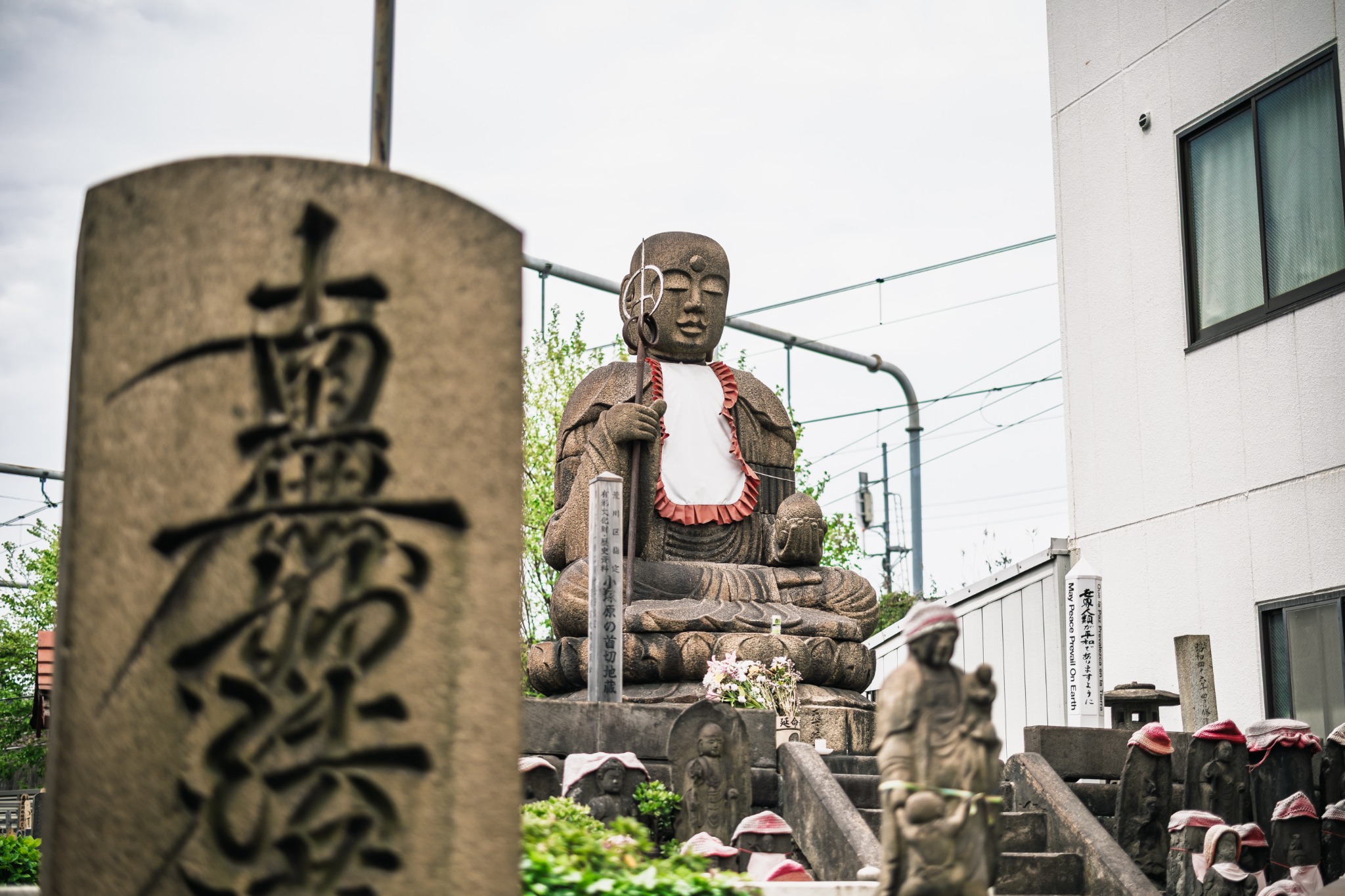
In the photographs, the railway equipment might look like an intrusion into an otherwise historical scene. It helps explain why the scene exists in this particular shape.
The Jizō once stood within the grounds associated with nearby Ekōin, where memorial rites were held for people who died at Kozukappara. After the execution ground closed in the early Meiji period, the area was gradually put to other uses.
In 1895, railway construction required the statue to be moved. The tracks divided the old temple grounds; the southern section eventually became the independent Enmeiji Temple in 1982.
The temple is considerably younger than its principal resident.
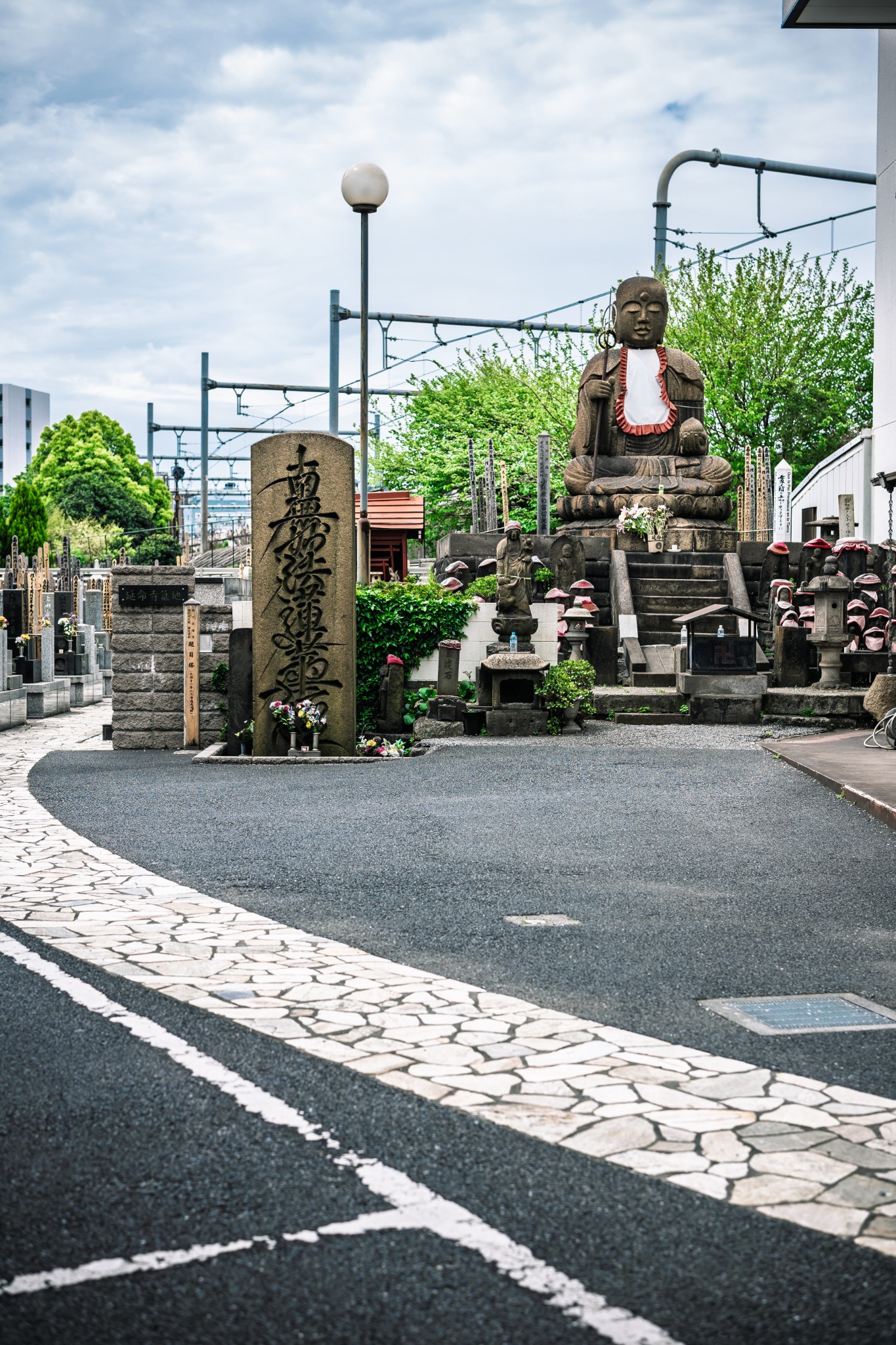
What now looks like a compact temple squeezed beside railway lines is a surviving fragment of a much larger history. The stones belong to the old arrangement; the wires explain some of the new one.
A statue this large seems designed to stay put. Tokyo had other plans.
Yet moving it also meant keeping it. The railway went through, and the memorial was given another place to stand.
More than a century later, keeping it would require rather more work.
Someone had to put it back together
In 2011, the Great East Japan Earthquake brought down the Jizō’s left arm and shifted parts of its body, leaving it in danger of collapse.
For all its apparent solidity, the figure is built from more than twenty pieces of granite. It had to be dismantled, repaired and reassembled.
Its calm expression gives very little indication of the amount of work required to keep it sitting there.
The smaller figures offer a different scale of care. In the foreground of this photograph, one wears a knitted cap; behind it, the giant wears its broad, pink-edged bib. Stone is the older material. The clothing belongs to a continuing relationship.
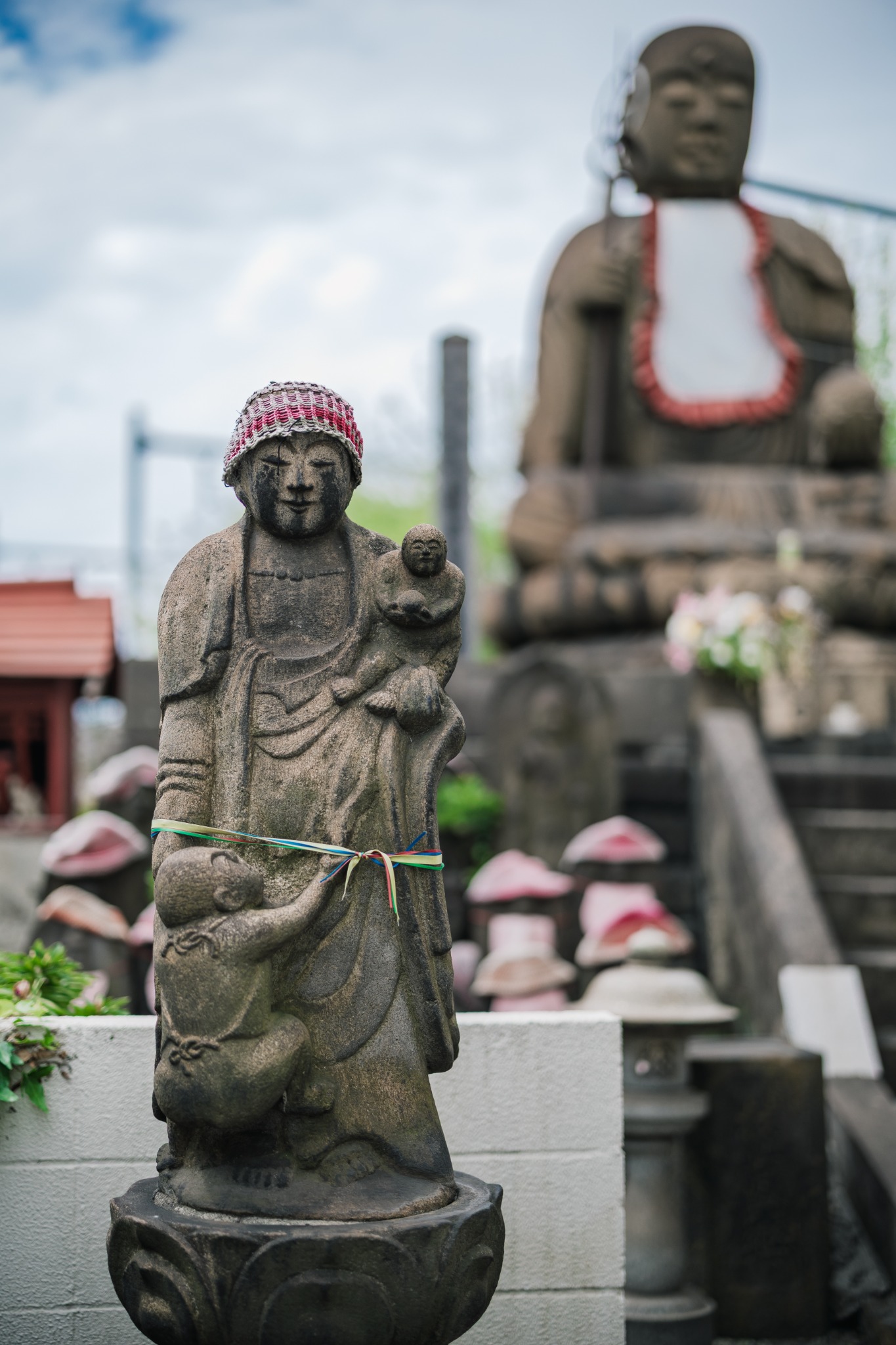
The execution ground has disappeared. The railway has divided the site, and an earthquake has broken off the Jizō’s arm. Its survival has involved relocation, repairs and people willing to do both.
“Beheading Jizō” is the name that makes you stop.
The flowers and the carefully fitted bib tell you what people do after stopping.
The place no longer carries out executions. It still makes room for the dead.
Visit this place
Location
Enmeiji Temple (延命寺)
The Kubikiri Jizō stands inside the small temple grounds beside the railway.
2-34-5 Minamisenju, Arakawa City, Tokyo 116-0003, Japan
Practical Information
- Admission
- Free
- Visiting
- Temple grounds are freely accessible.
- Access
- About 4 minutes on foot from Minamisenju Station (JR / Tokyo Metro) / 200 metres in the current Tokyo accessibility guide
- Accessibility
- Step-free from the entrance to the Kubikiri Jizō; the guide reports no steps or slope on this route.
- Restrooms
- No visitor restroom listed on site
Information last checked: August 29, 2026
Conversation
Comments
Review pending commentsComments are reviewed before appearing. The internet already contains enough unattended surprises.
Checking comments…
Comments are not available in this migration preview yet. Existing comments remain on the current site.
Leave a comment