Fukui Station: Where Dinosaurs Keep Multiplying
Apparently, I had been lured into a trap.
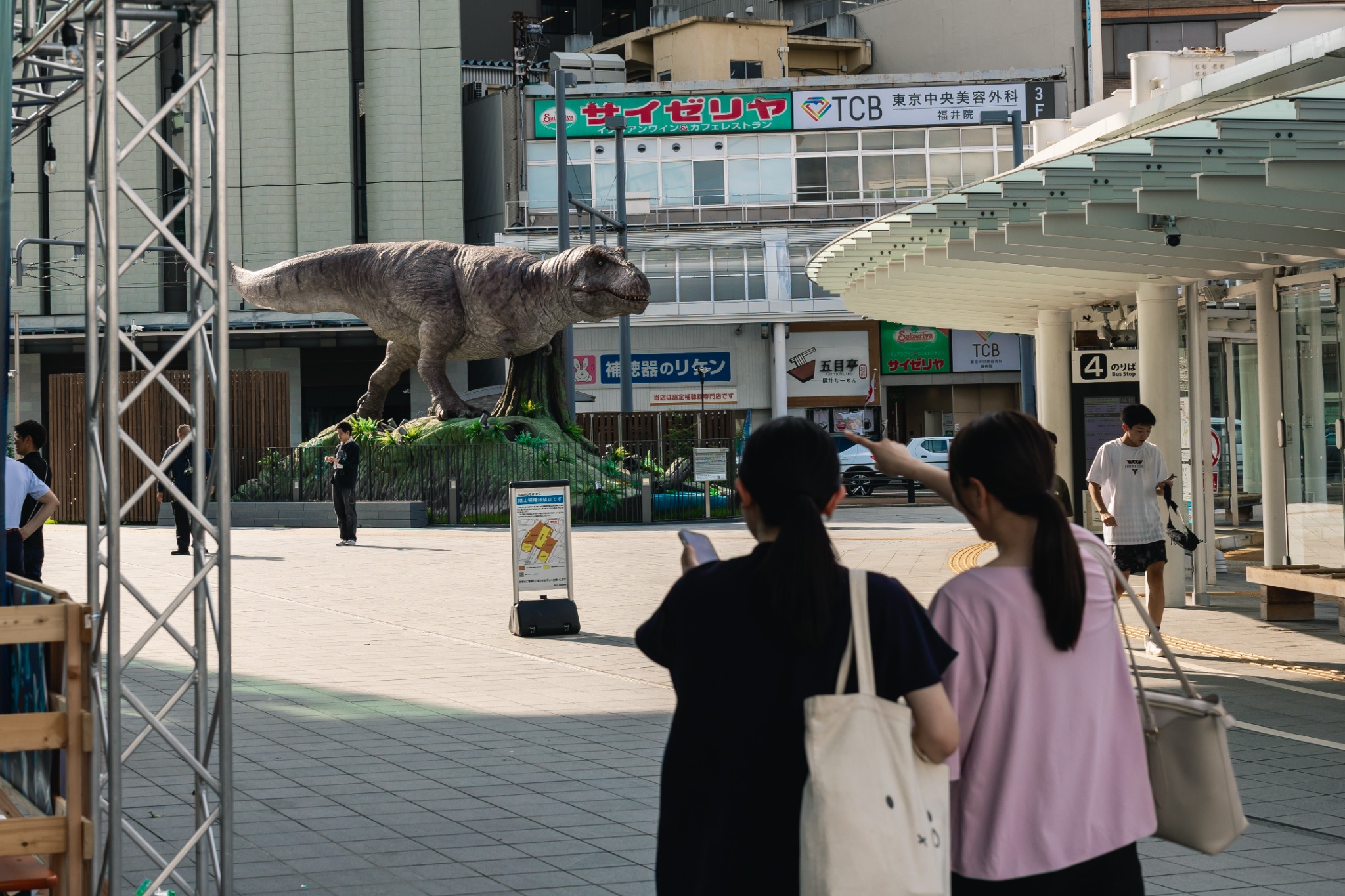
I had arrived at Fukui Station intending to visit the seaside cliffs of Tojinbo and the moss-covered grounds of Heisenji Hakusan Shrine. Outside the west exit, a twelve-metre Tyrannosaurus turned its head and roared. It was making a fairly forceful case for staying at the station.
It was nothing personal. The robot has a sensor. During the day, step in front of it and it stirs, roars, then holds a pose for the cameras.
It stood beside the bus stops, with restaurants behind it and people crossing the forecourt. In my photograph, one visitor points towards it while another looks at a phone. A giant predator had become something you could either admire or walk past on your way to catch a bus.
This was Fukui, the capital of Fukui Prefecture on Japan’s Sea of Japan coast. The prefecture’s dinosaur museum is in Katsuyama. The station was clearly unwilling to leave the entire subject to the museum.
The first three
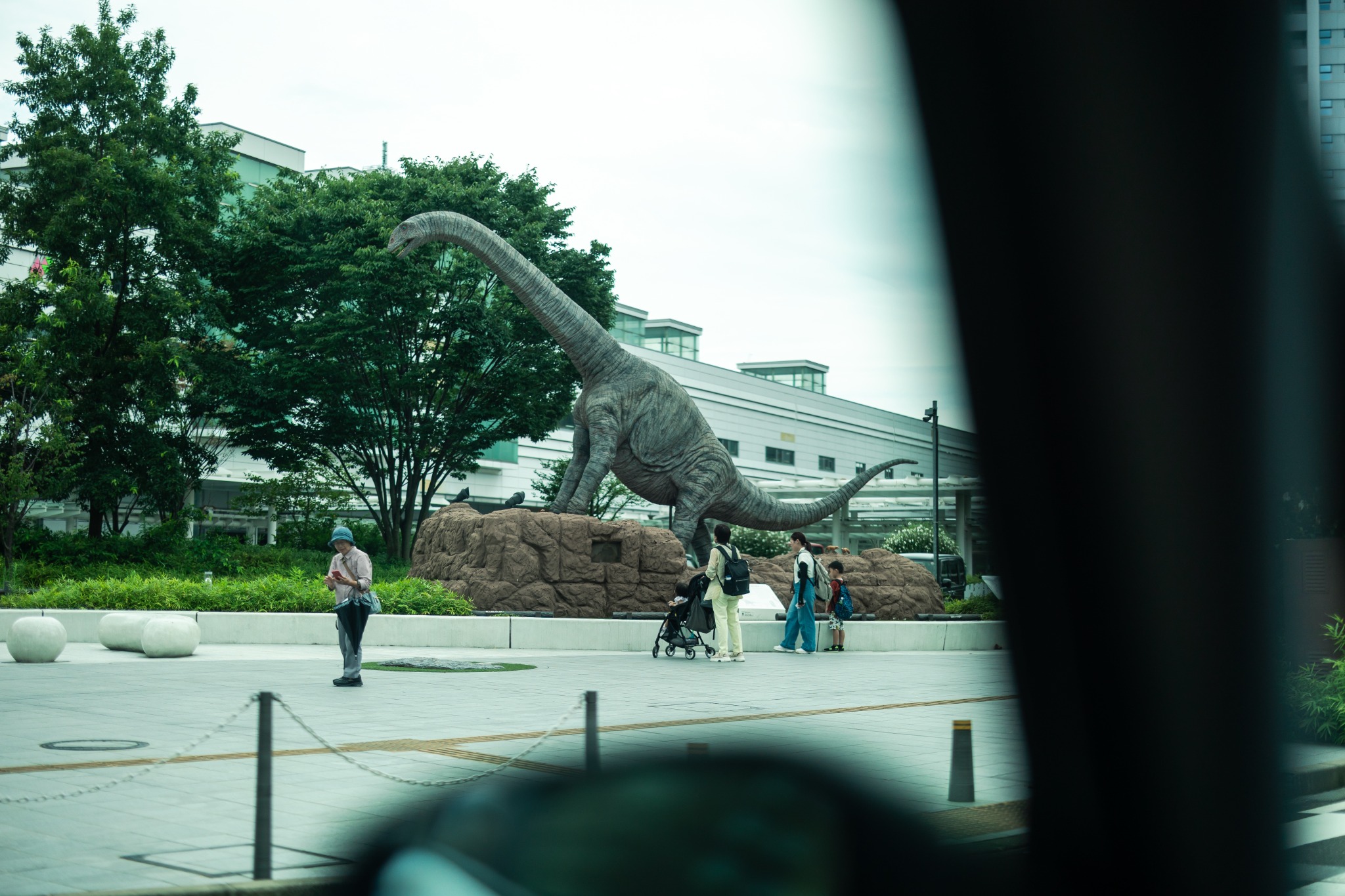
The first three dinosaurs outside the station were local species: Fukuiraptor, Fukuisaurus and Fukuititan, all discovered in Fukui Prefecture. In 2015, they returned as full-scale moving models.
Behind them, a huge mural turned the station wall into a view of prehistoric Fukui.
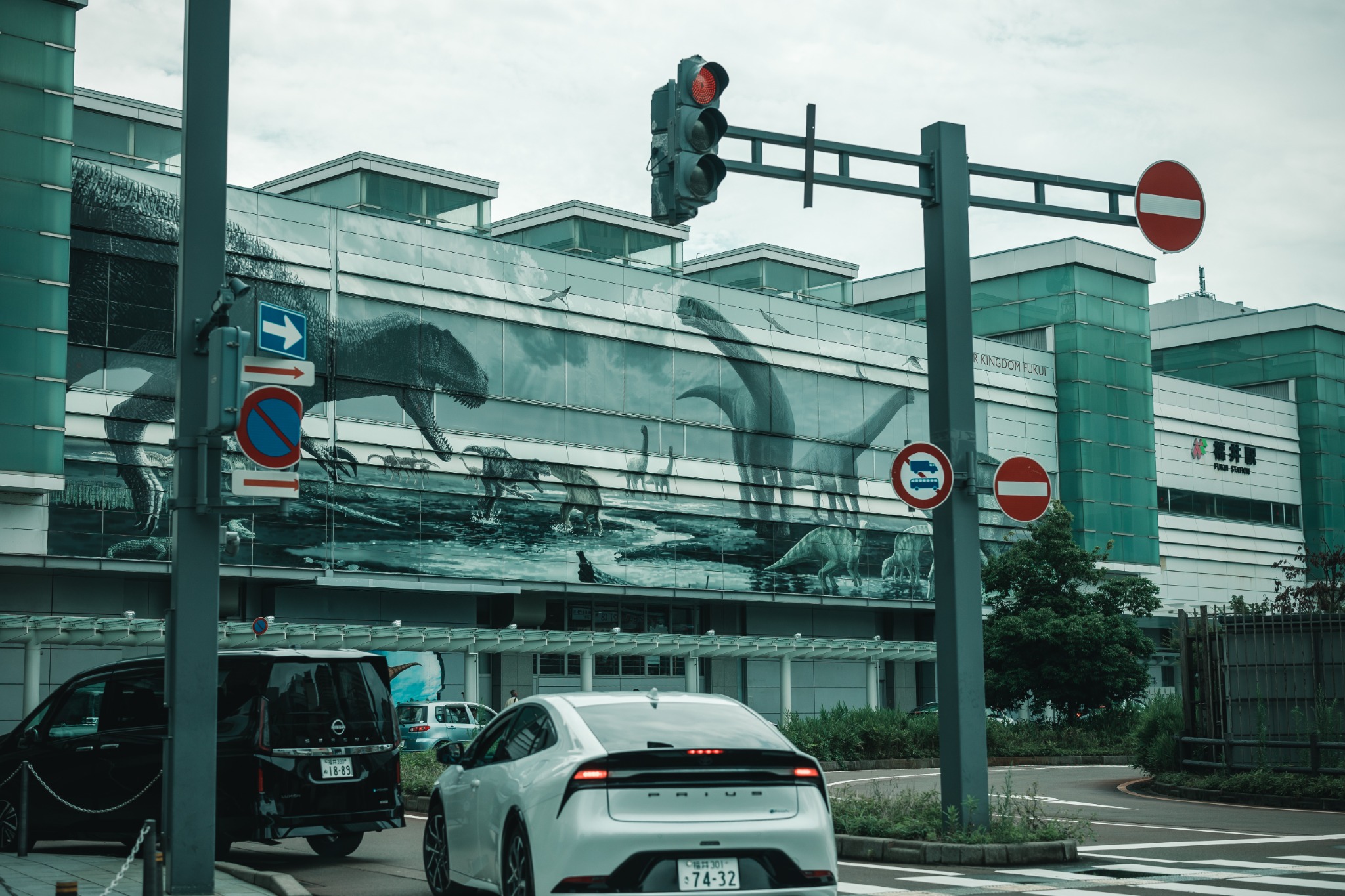
The idea was that the animals in the mural would seem to emerge into the plaza. What looked like a dinosaur escape was, in fact, the intended design.
Then the Shinkansen arrived
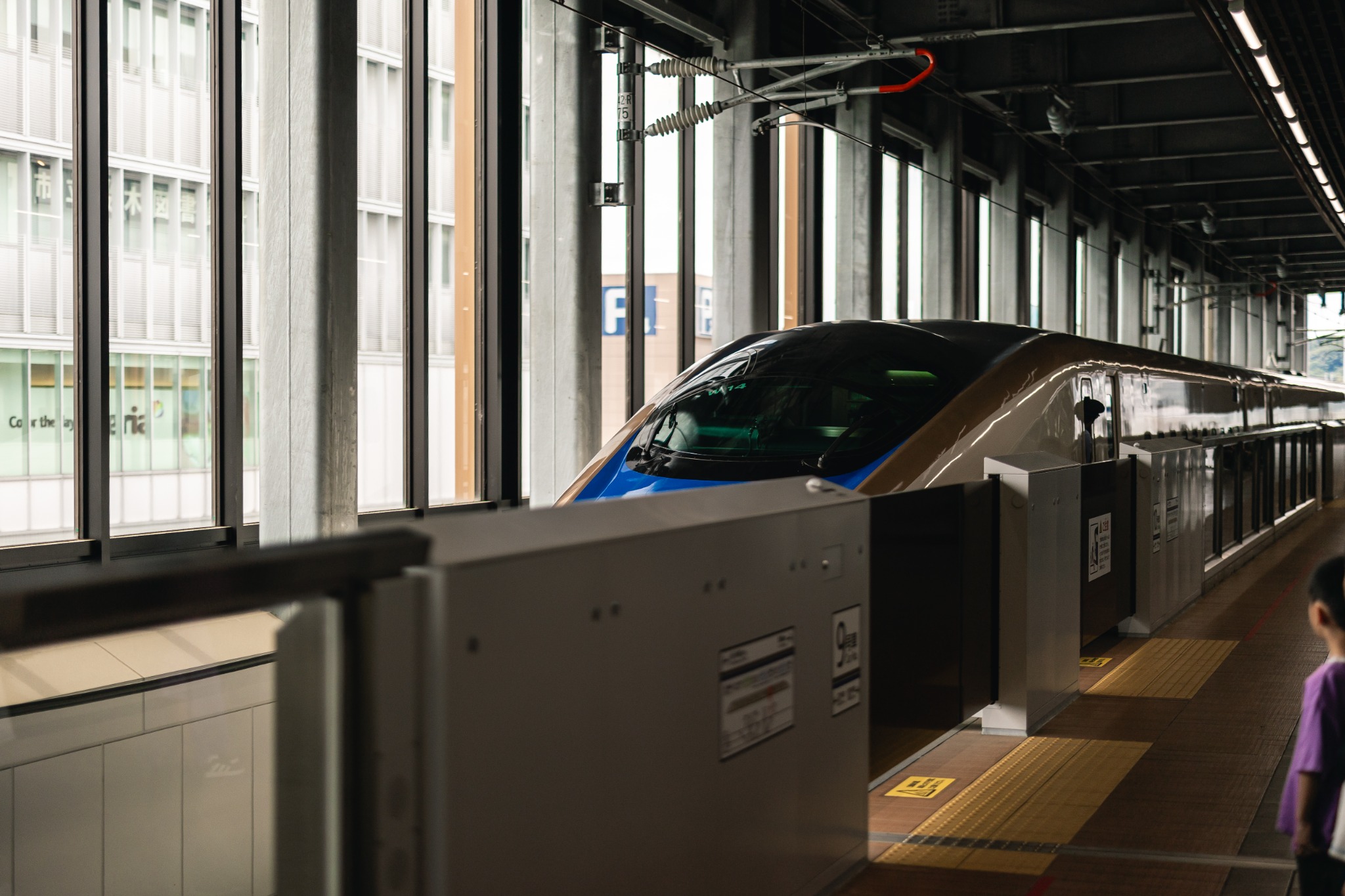
The Hokuriku Shinkansen reached Fukui in March 2024. The day before services began, the Tyrannosaurus was switched on outside the west exit, part of a much larger expansion around the station.
The new railway brought people to Fukui faster. The new dinosaurs gave them something to stop for.
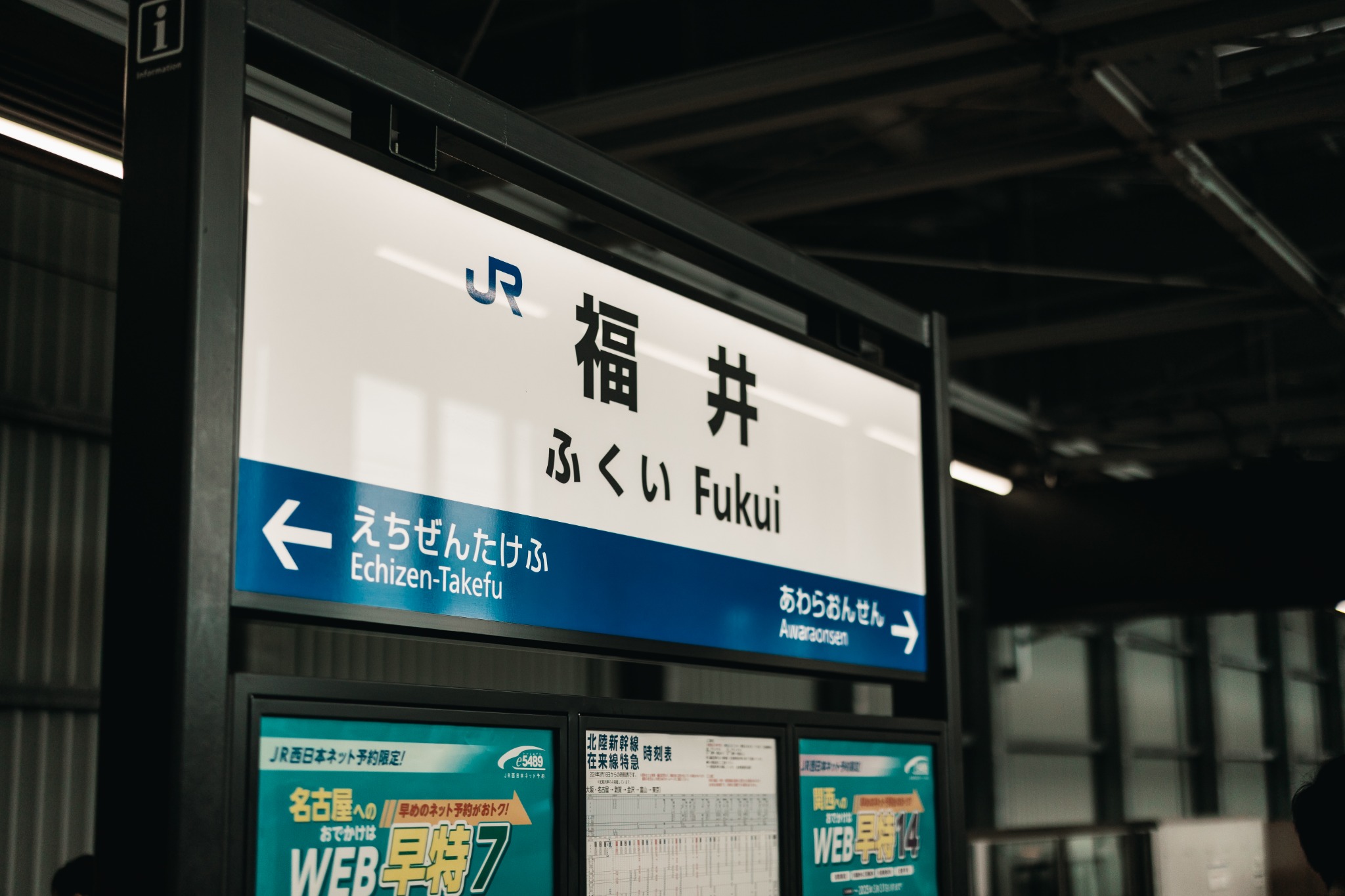
A family at the other exit
The east exit offered a different reception: a Triceratops parent with a smaller child looking up at it.
The city’s theme here was “family love.” The adult was more than eight metres long; visitors were allowed to touch the smaller child.
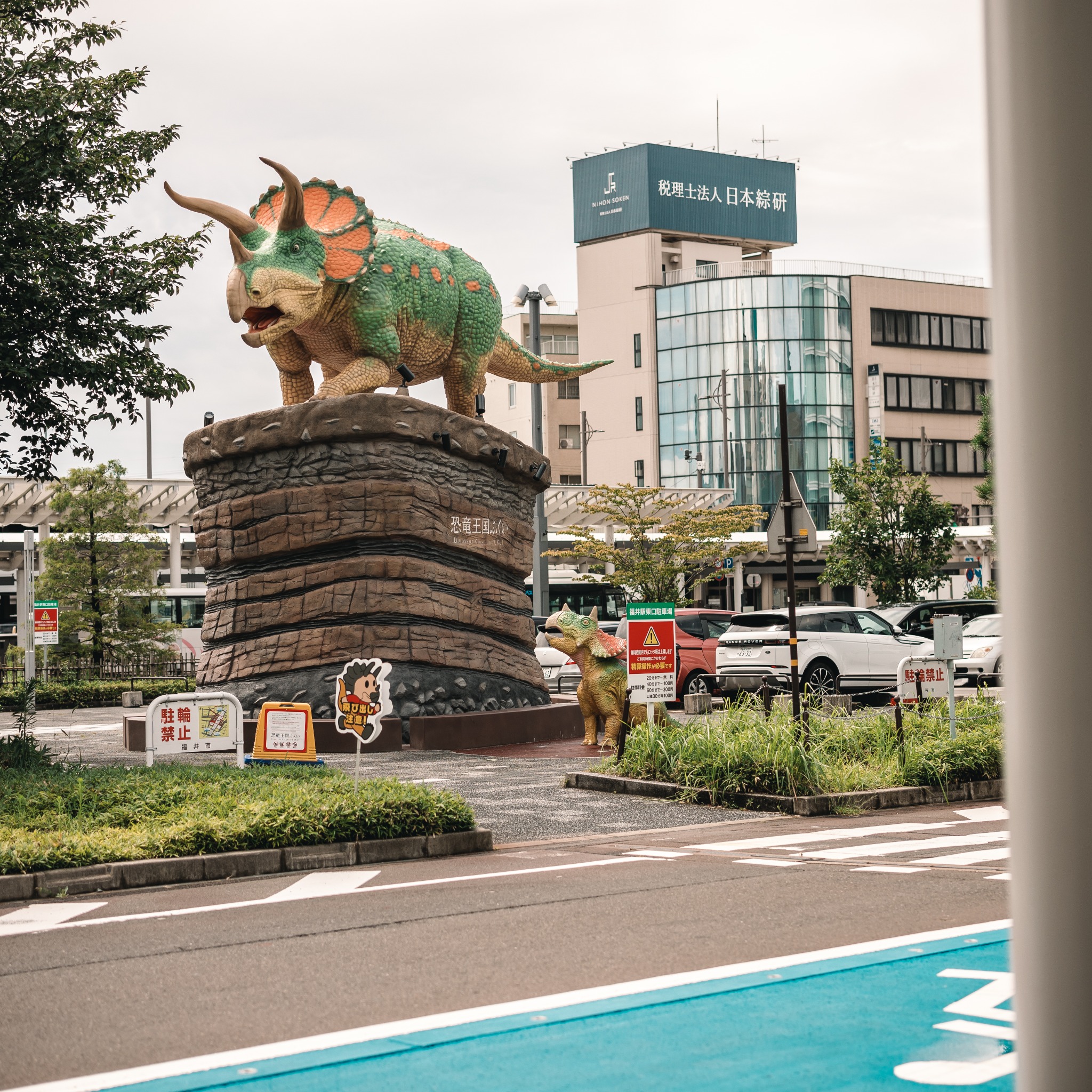
One exit had a giant predator. The other had childcare.
Beyond the large models, the prehistoric world began appearing in the smaller things that normally make a station easy to ignore. Lamp posts carried signs. Benches acquired occupants. A road-safety sign of the kind that usually shows a child running into the street had cast a dinosaur in the role.
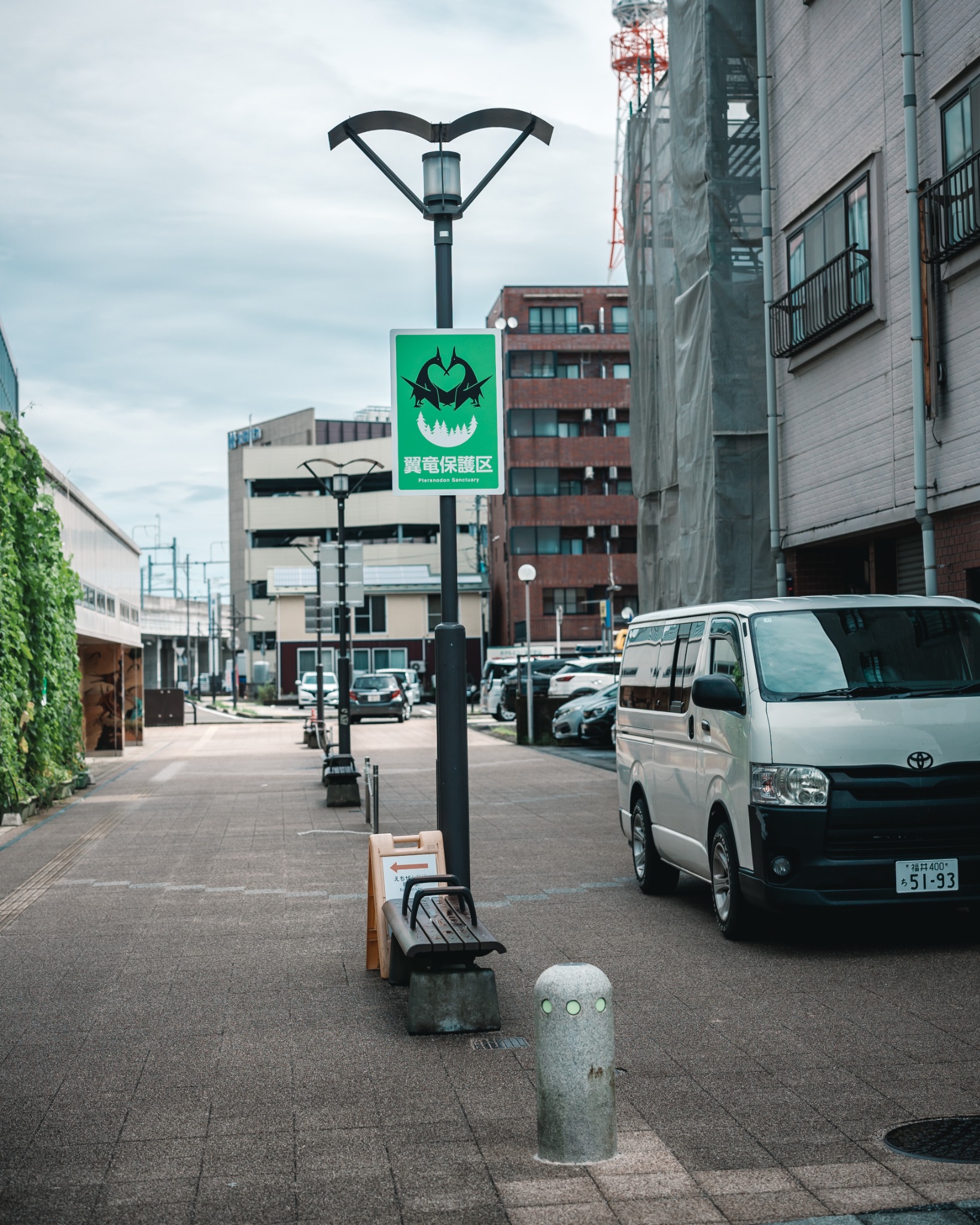
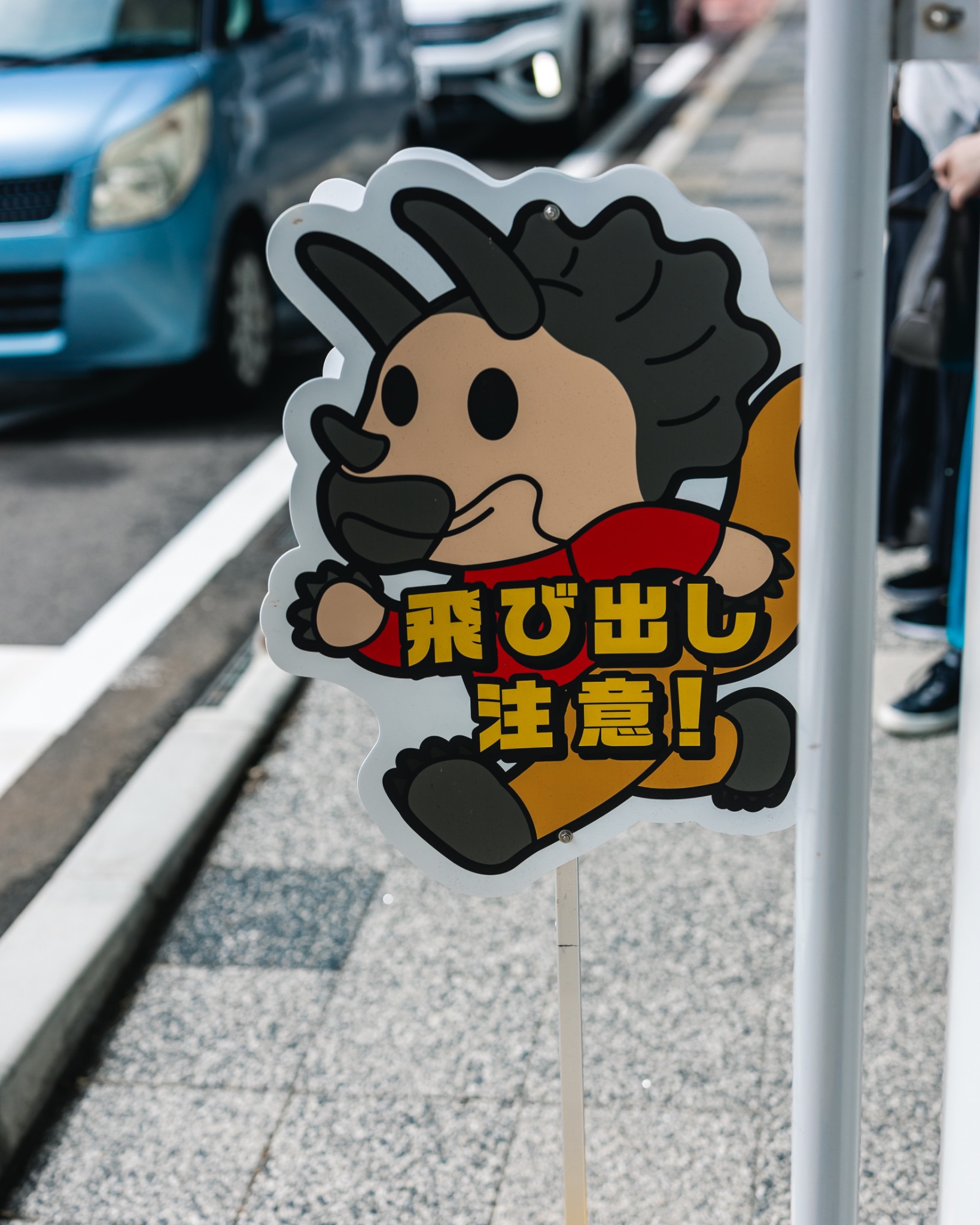
The east-side spaces were arranged around land, air and sea, extending the welcome to flying reptiles and marine creatures as well. An ordinary station needs somewhere to sit. Here, that could mean sitting beneath the tracks in a blue-lit prehistoric sea.
On another bench sat a small dinosaur in a white coat and red bow tie, holding an egg with a baby pteranodon halfway out of it.
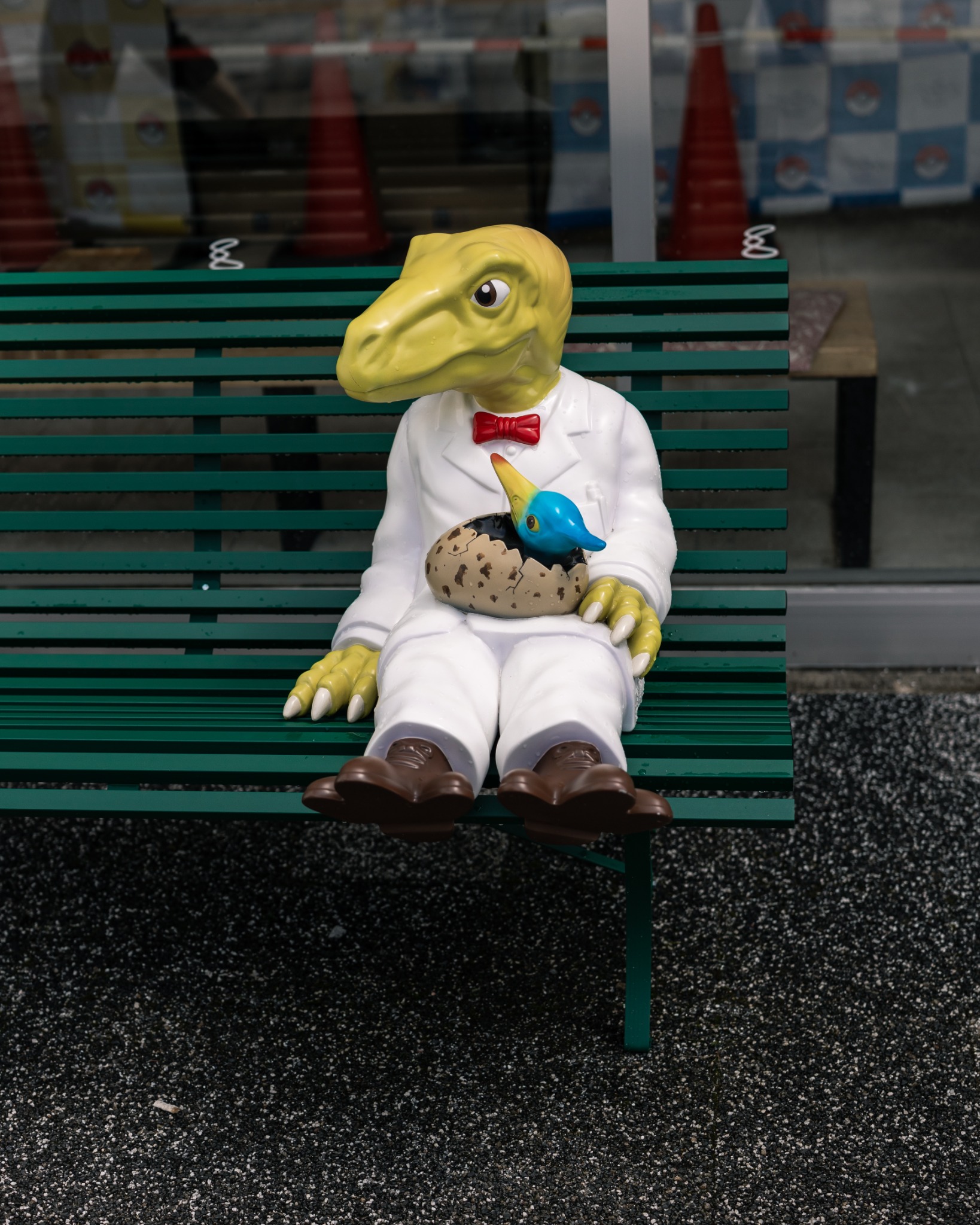
According to the city, this youngster dreams of becoming a dinosaur scientist. The animals were now supplying their own researchers.
Available in other materials
Inside, the dinosaurs changed materials.
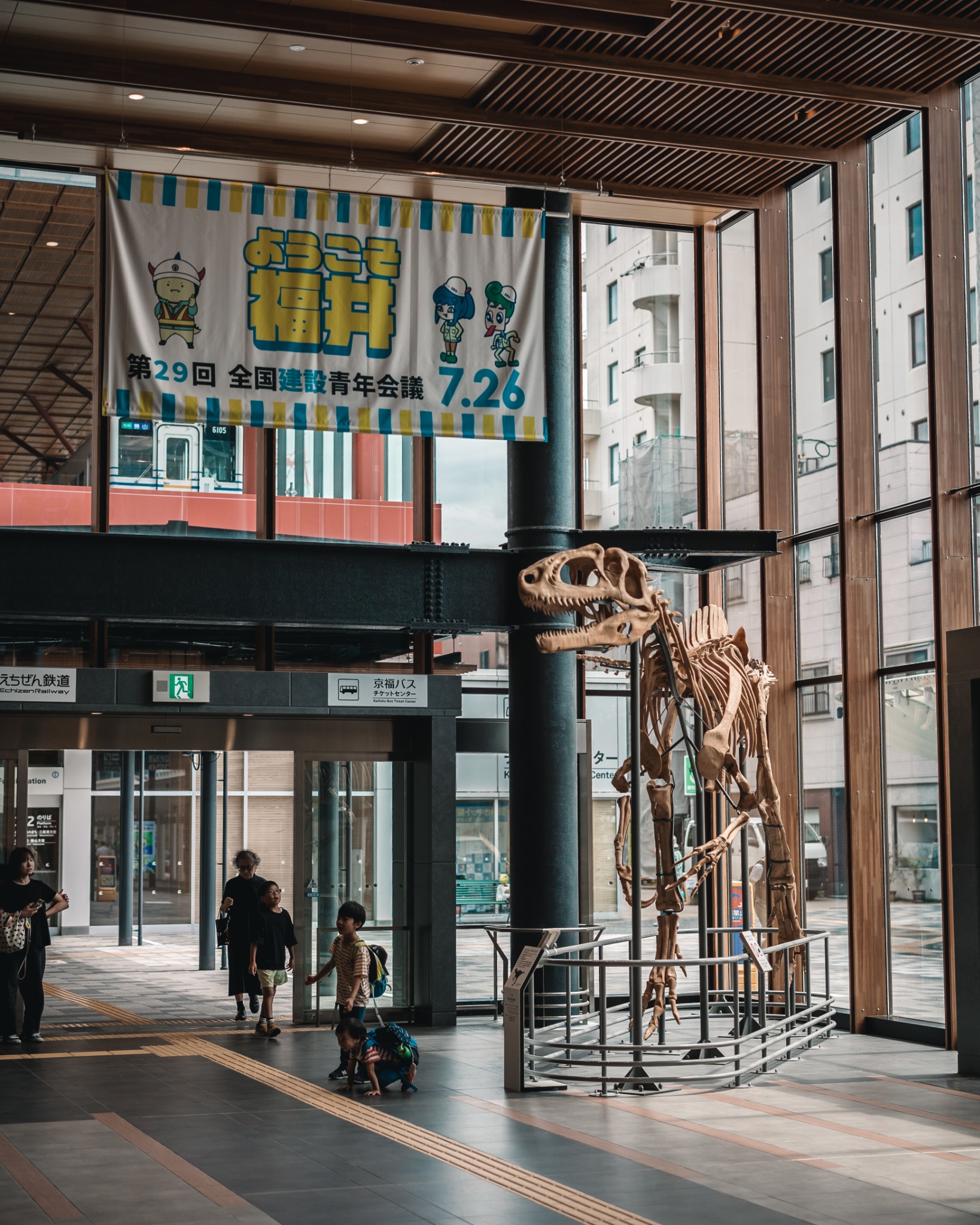
A wooden Fukuiraptor skeleton stood on display. At the neighbouring Echizen Railway station, dinosaurs filled an illuminated stained-glass artwork.
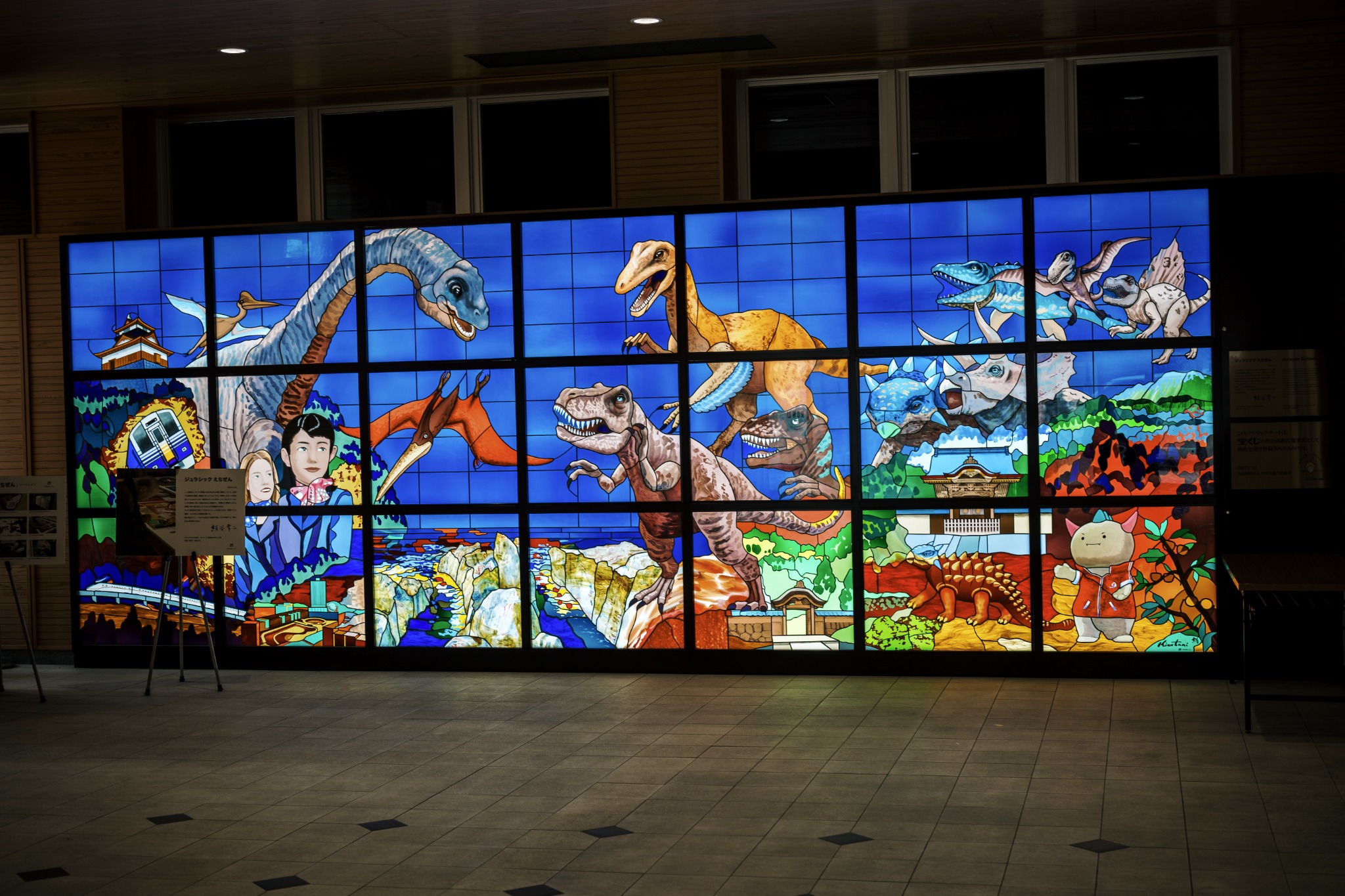
Installed in 2023 at Echizen Railway Fukui Station, Jurassic Echizen combines the animals with Eiheiji, Tojinbo, Maruoka Castle, Sabae’s eyewear and the railway itself.
There was Tojinbo, one of the places I had actually come to see. Even here, it had to share the view with dinosaurs.
Then came the LEGO.
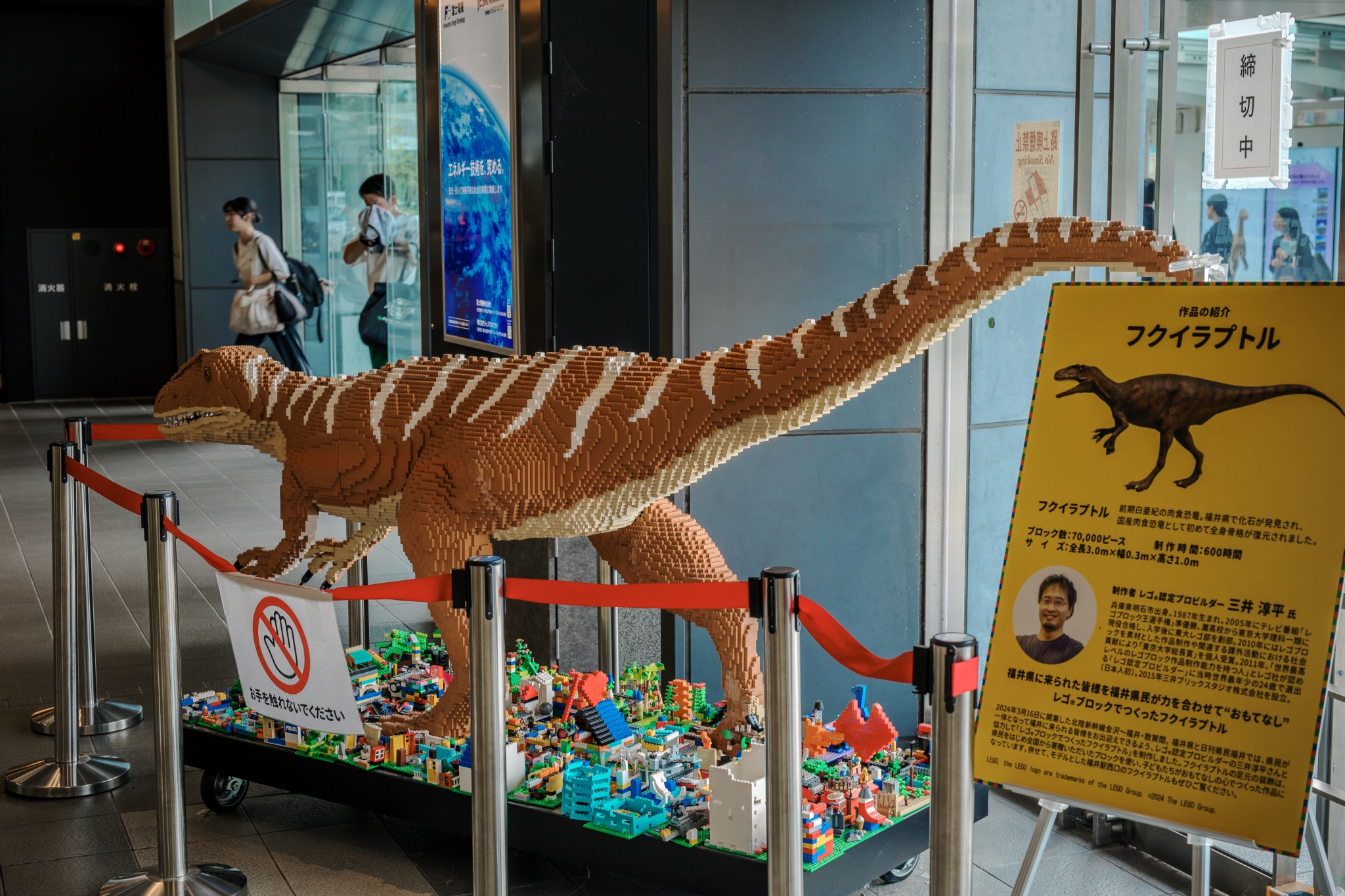
LEGO Certified Professional Junpei Mitsui built this Fukuiraptor from roughly 70,000 pieces, spending about 600 hours on it ahead of the Shinkansen opening.
Residents across Fukui donated bricks to the wider project, and children used some of those donations to build the smaller objects and buildings displayed around its feet.
By this point, even the local children were helping to increase the population.
After I left
When I visited, the Tyrannosaurus had been outside the station for only a few months.
On September 30, 2024, just over two months after my visit, a roughly ten-metre Suchomimus joined it outside the west exit: a fish-eater with a crocodile-like snout. Local news reported it as the 23rd dinosaur around the station.
By that count, the first three had become twenty-three.
They already went extinct once. At Fukui Station, they appear to be having the opposite problem.
Visit this place
Location
Fukui Station (福井駅)
Dinosaur installations are spread across both sides of Fukui Station, inside the station area and around the neighbouring Echizen Railway Fukui Station.
1-1-1 Chuo, Fukui, Fukui 910-0006, Japan
Practical Information
- Area
- West Exit, East Exit, station interior / tourist-information area, and the neighbouring Echizen Railway station
- Admission
- Public dinosaur installations can be viewed without admission; ticketed railway areas require the appropriate fare or ticket.
- Suggested visit time
- Roughly 30–60 minutes for the main dinosaur areas
- Tourism information
- Fukui Station Dinosaur Area Portal
Information last checked: September 1, 2026
Conversation
Comments
Review pending commentsComments are reviewed before appearing. The internet already contains enough unattended surprises.
Checking comments…
Comments are not available in this migration preview yet. Existing comments remain on the current site.
Leave a comment