Tsunagi’s Sixteen Sculptures: A Quiet Town with a Flair for the Dramatic
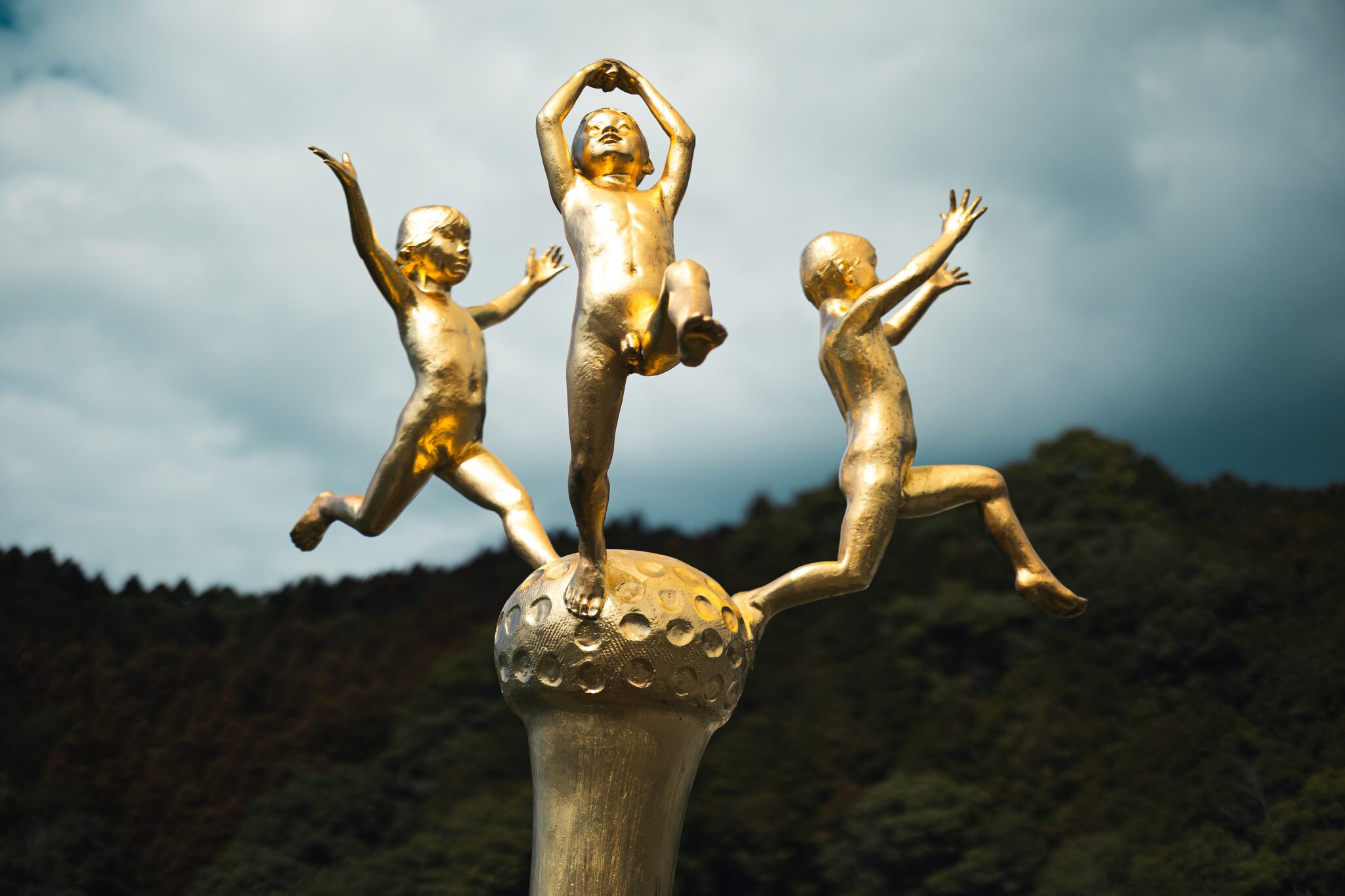
Three golden children were launching themselves into the air above a bridge. I was content to use the pavement.
The group was Kazenko, a sculpture by Yūzō Iwano. Each child seemed to have a different departure in mind: outstretched arms, bent knees, three small bodies apparently unwilling to remain on the same pedestal.
This was Tsunagi, in southern Kumamoto Prefecture on the island of Kyushu, where sixteen sculptures occupy bridges, public spaces and other corners of town. Walking between them, I found that a quiet street rarely stayed unremarkable for long.
Beyond the figures stood a tiled-roof house and wooded hills. Nothing else in the scene suggested quite this level of excitement.
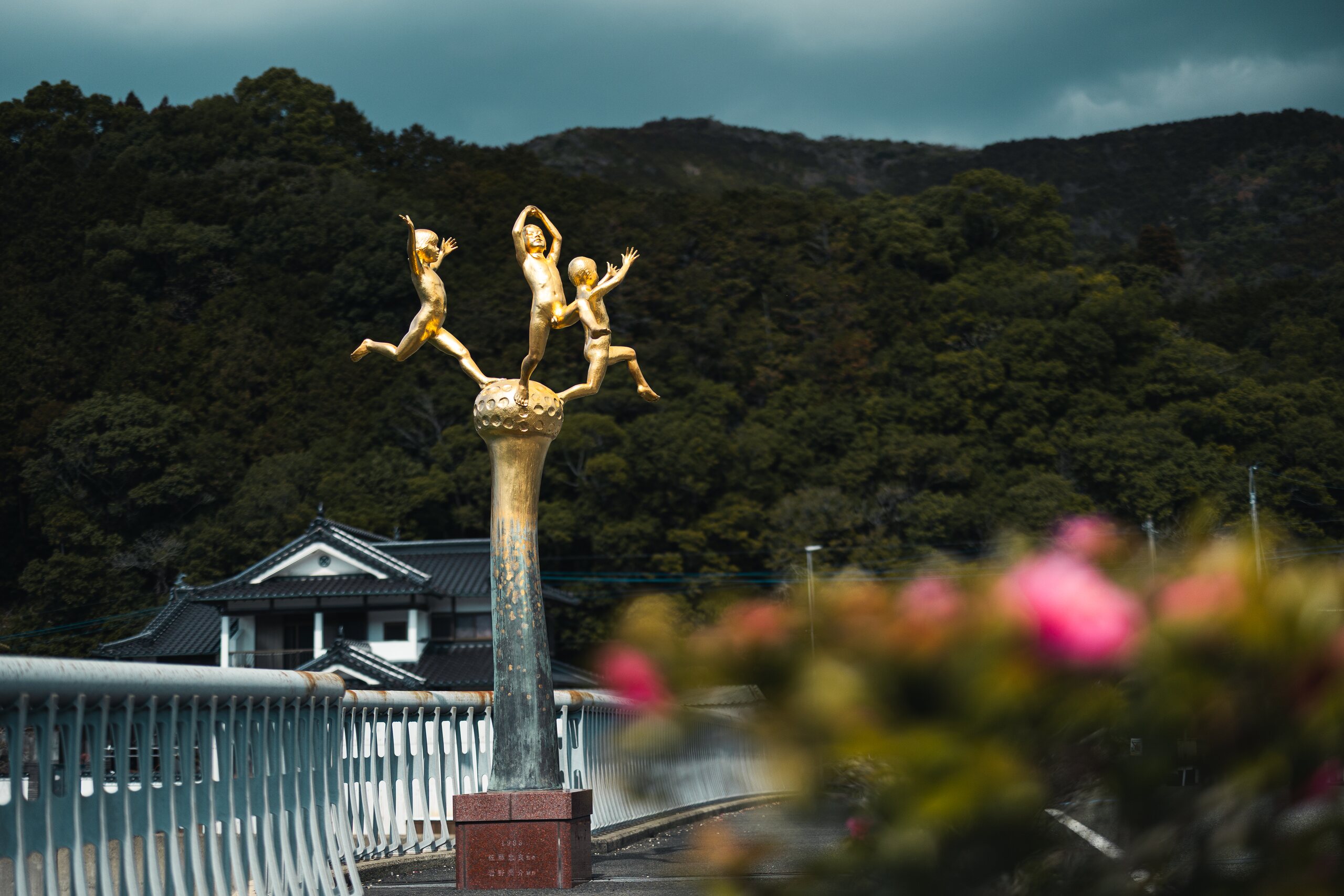
The work evokes dandelion seeds carried away by the wind, expressing the hope that local children will grow and venture out into the world.
A family spread across the bridges
The children had parents elsewhere in town.
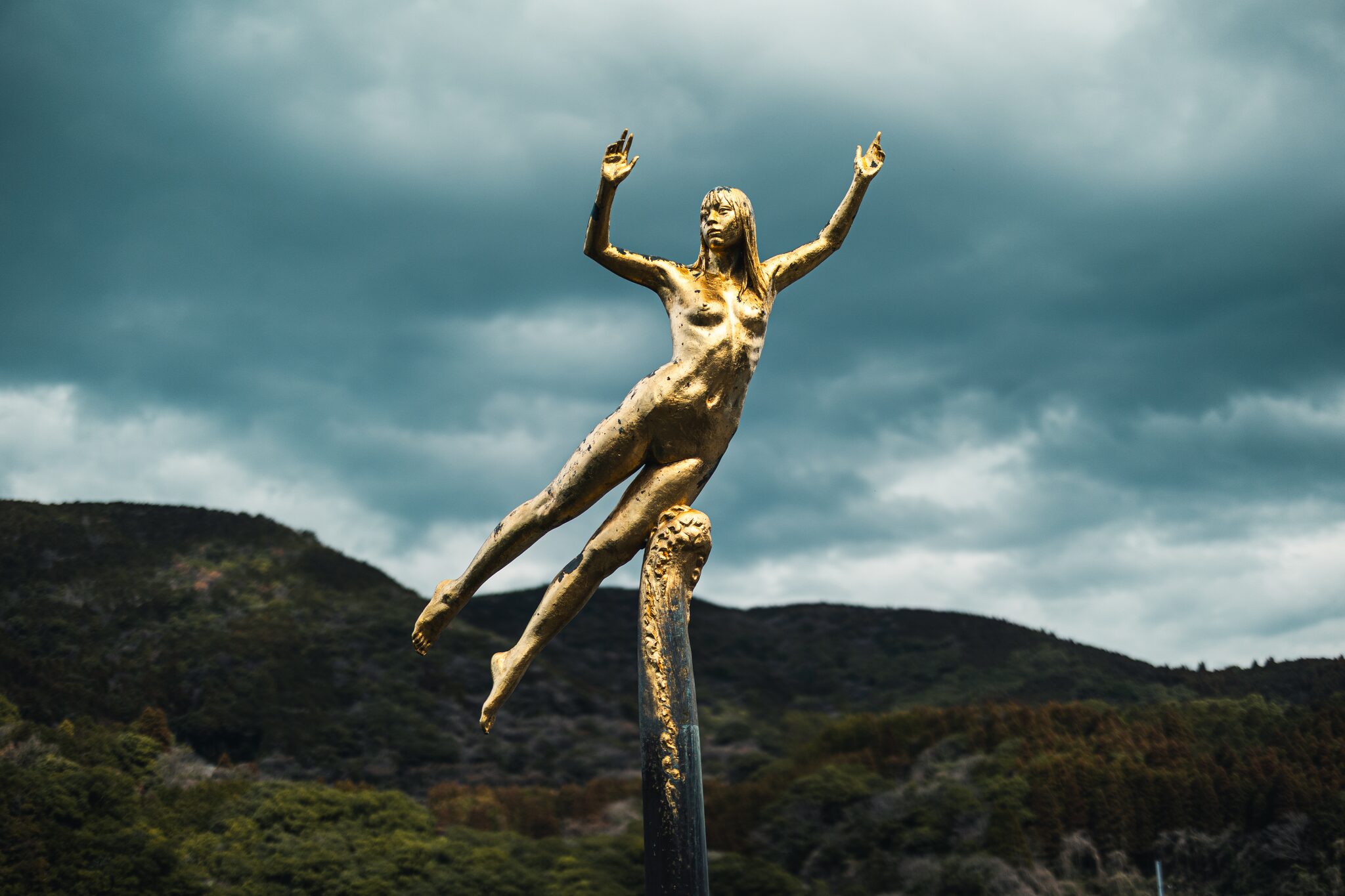
On Akebono Bridge, Iwano’s Sōfū leaned into the air with both hands raised, her body extending beyond the narrow support beneath her. Gold caught the light against dark clouds and wooded hills. The pose had considerably more confidence in its engineering than I would have had.
On Tsunagi Ōhashi Bridge, Kunpū spread his arms with a leafy twig held in his mouth. Against the blue sky, the gesture seemed expansive enough to take in the whole town.
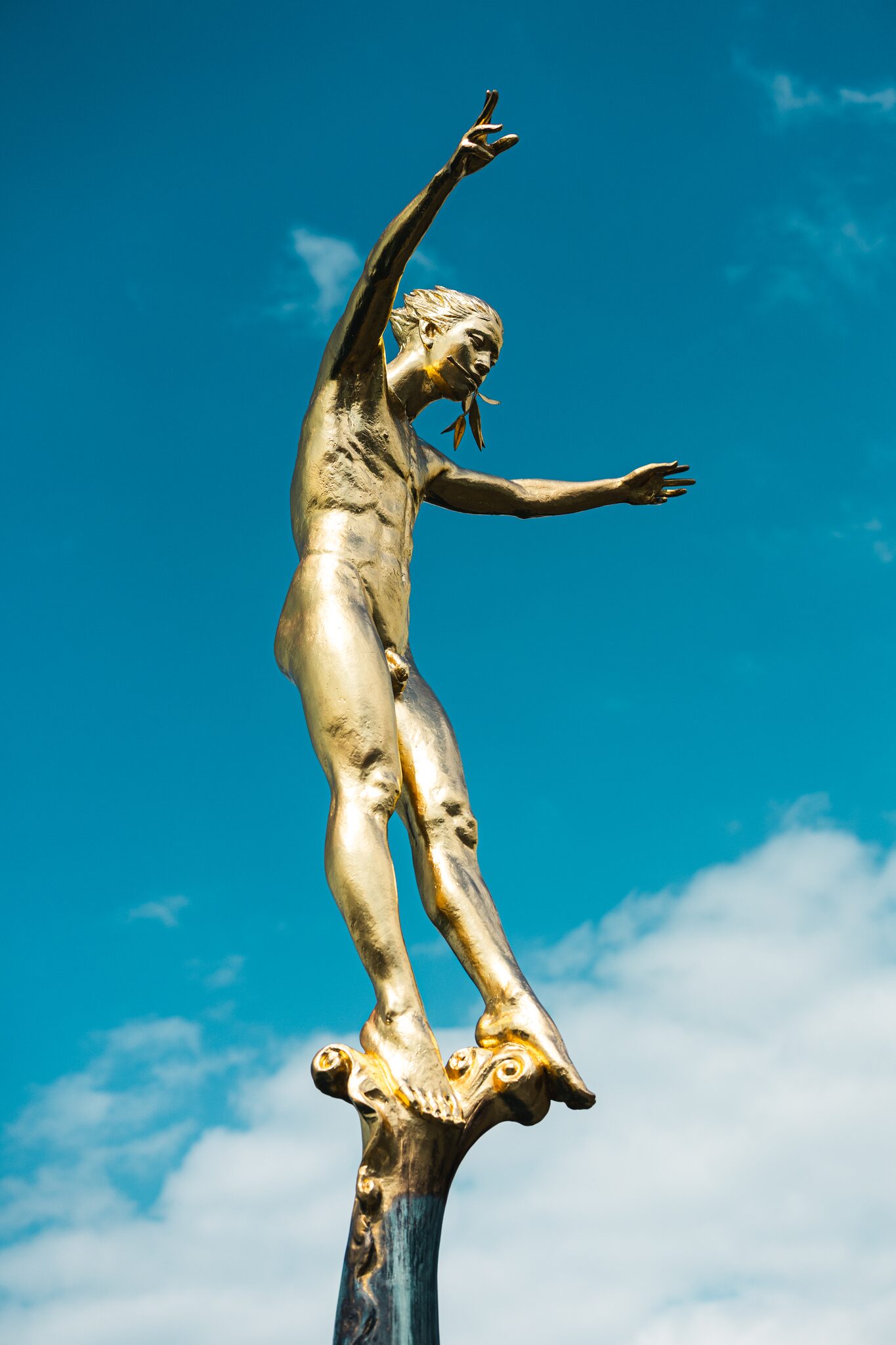
Together, the three works represent a father, mother and children, united by the theme of wind and an image of peaceful family life.
The names all belong to the wind. Sōfū means a refreshing breeze; Kunpū, the fragrant breeze of early summer. Kazenko is the local way of saying kaze no ko, “child of the wind” — the phrase behind a Japanese saying that children will happily play outside in any weather.
The family had not arrived together. Sōfū came first, in 1985, Kunpū in 1987 and the children in 1988.
It was a family portrait on the scale of town planning.
The connection turned separate encounters into parts of a larger composition. To see the family together, I had to carry one figure in my mind while walking towards another.
Art beside the everyday
Not every work announced itself in gold.
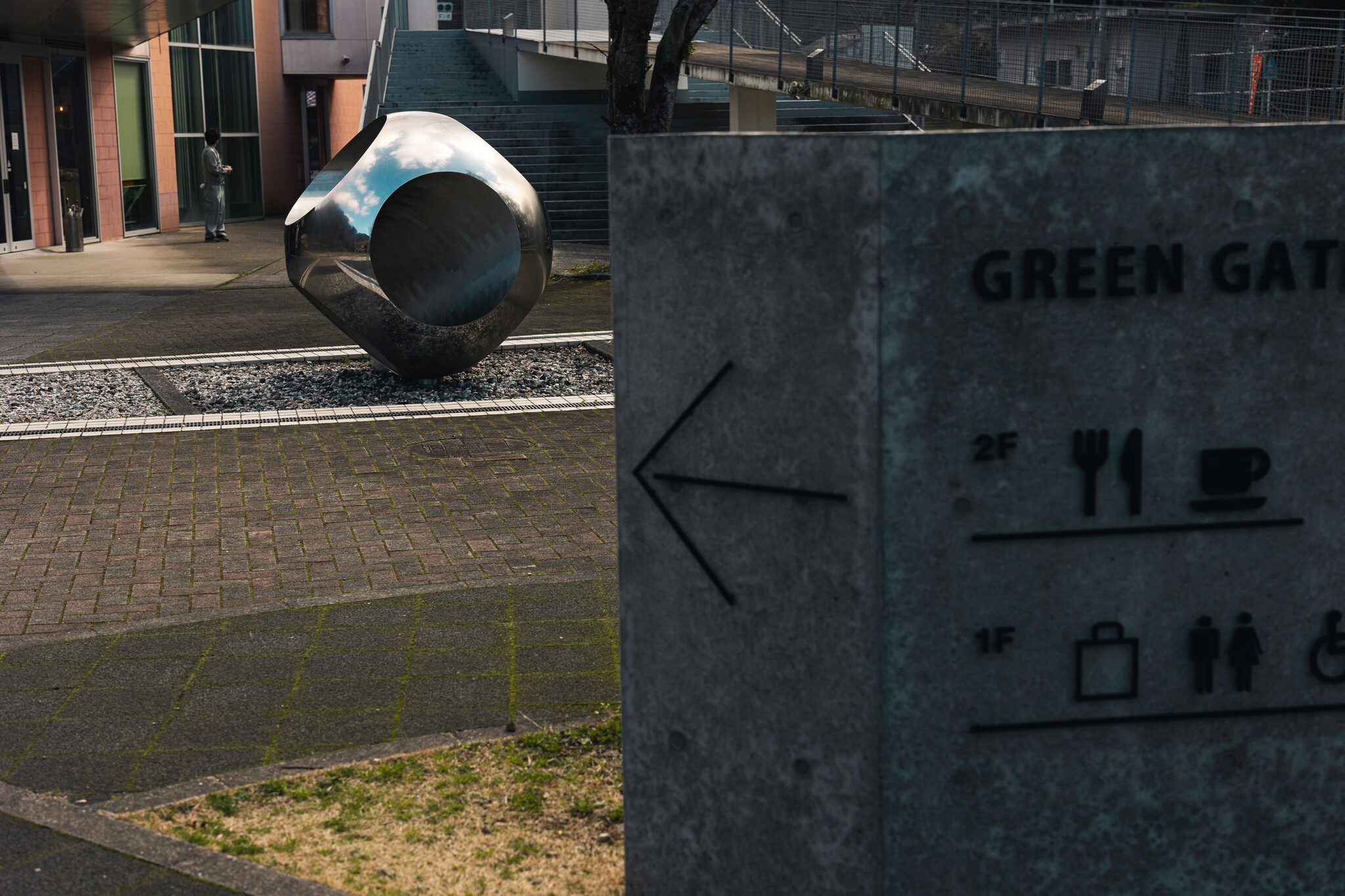
Outside Green Gate, a polished abstract form reflected patches of sky and the buildings around it. Its title was Time Capsule. According to the museum, the town’s past and present are condensed inside it and projected onto its stainless-steel surface. In the foreground, a sign directed visitors towards food, shopping and toilets.
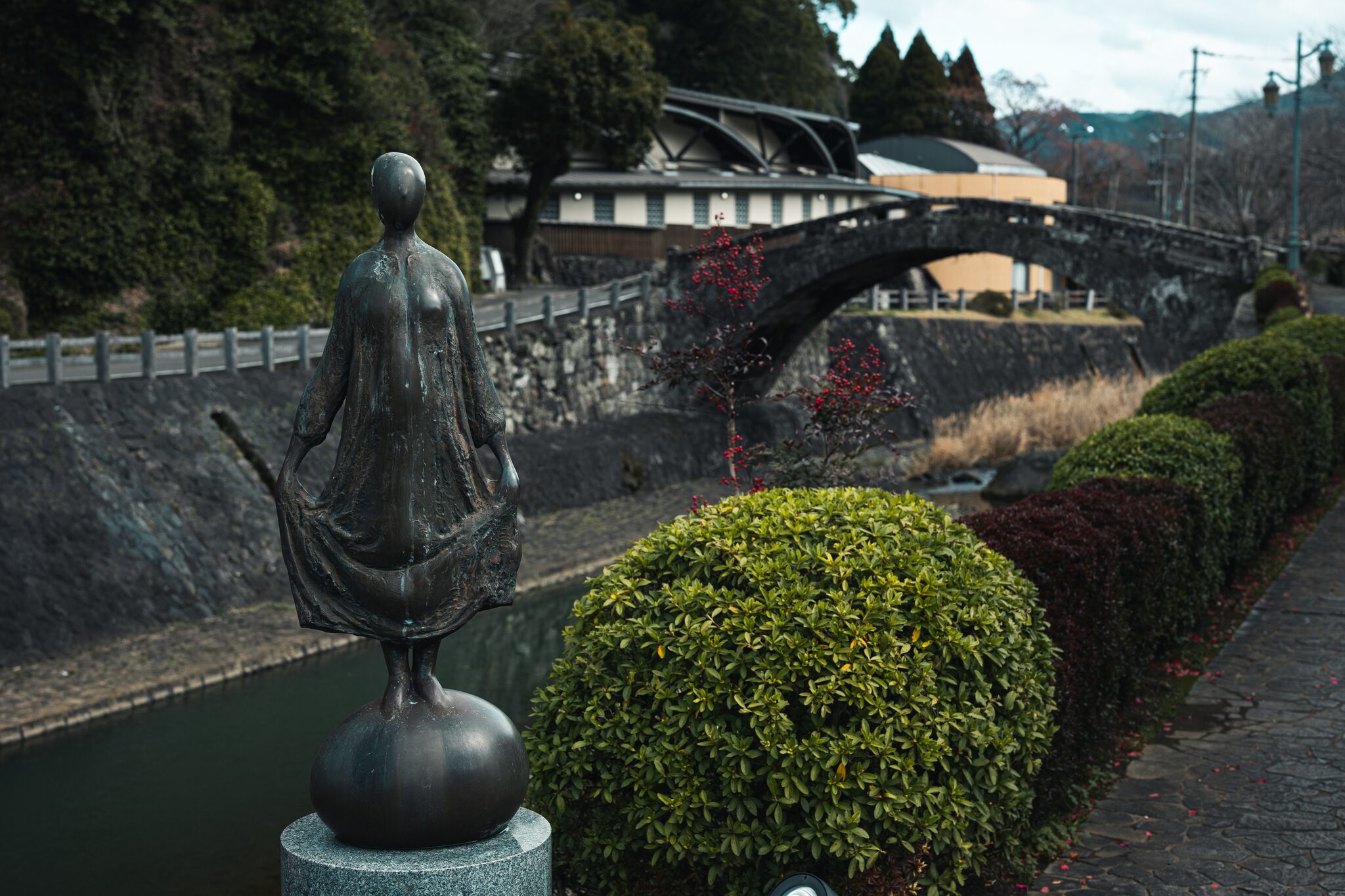
By the river, a slender figure emerged from a sphere among clipped shrubs. It was installed in 2014 to mark fifty years since Tsunagi became a town. Beyond it, a stone bridge arched over the water, with buildings and utility poles continuing along the banks.
I liked having all of that in the same frame. The sculptures gave me a reason to stop, and stopping revealed more of the town: the curve of a bridge, the river below it, a roof against the hillside. The spaces between the artworks were becoming part of what I had come to see.
There was a reason they had been placed along these everyday routes.
In 1984, Tsunagi began a town-wide museum initiative as part of efforts to revitalise a community affected by Minamata disease, caused by industrial mercury pollution. The programme brought art into public spaces, seeking to create a richer cultural environment as part of the region’s renewal. Tsunagi Art Museum itself opened in 2001.
The sculptures had been here before the museum building.
Bridges, the town hall and other familiar places had offered opportunities to encounter art in the course of daily life. I was making a special trip to look at works that someone else might pass on an entirely ordinary errand.
A wider view
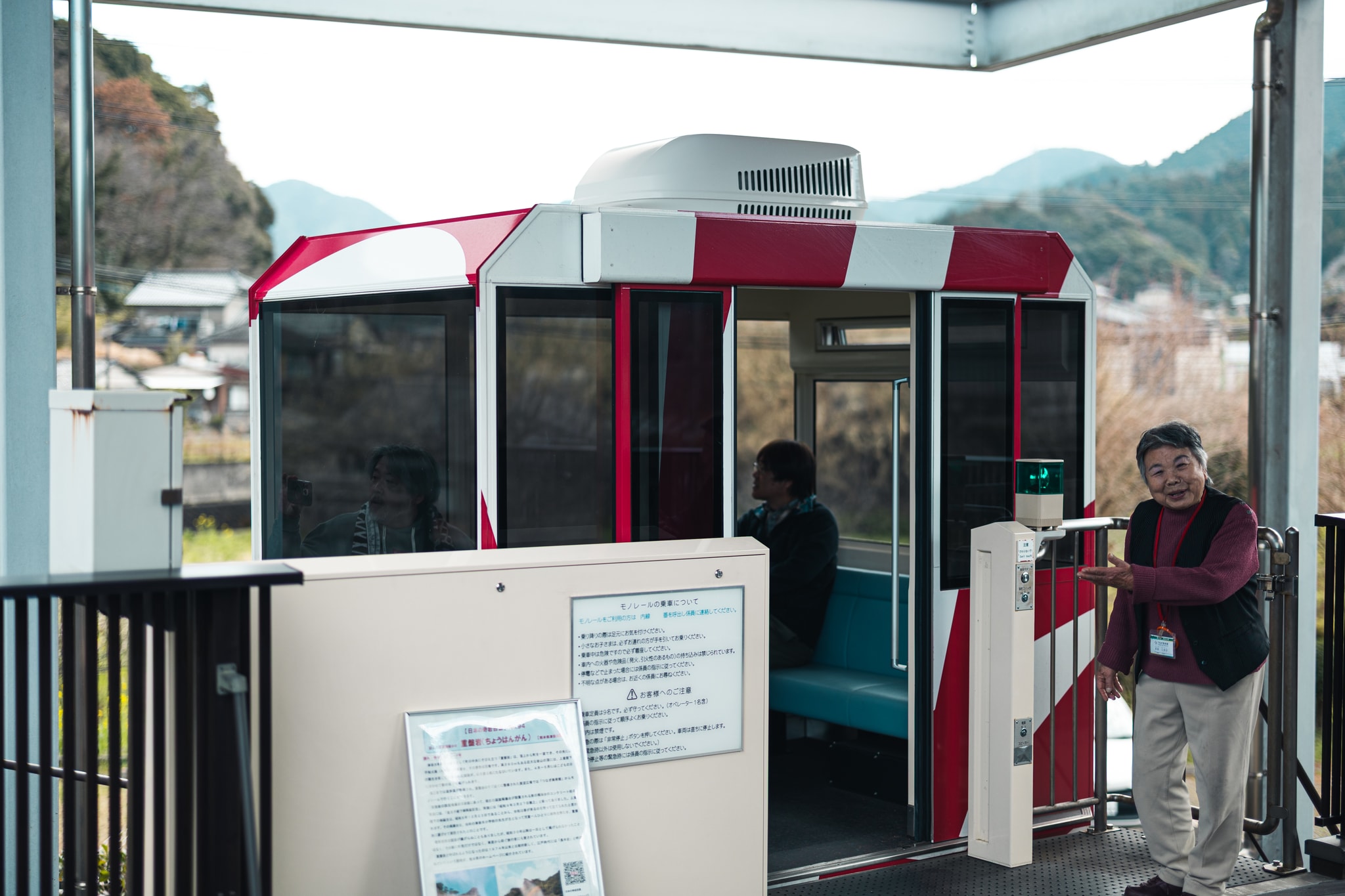
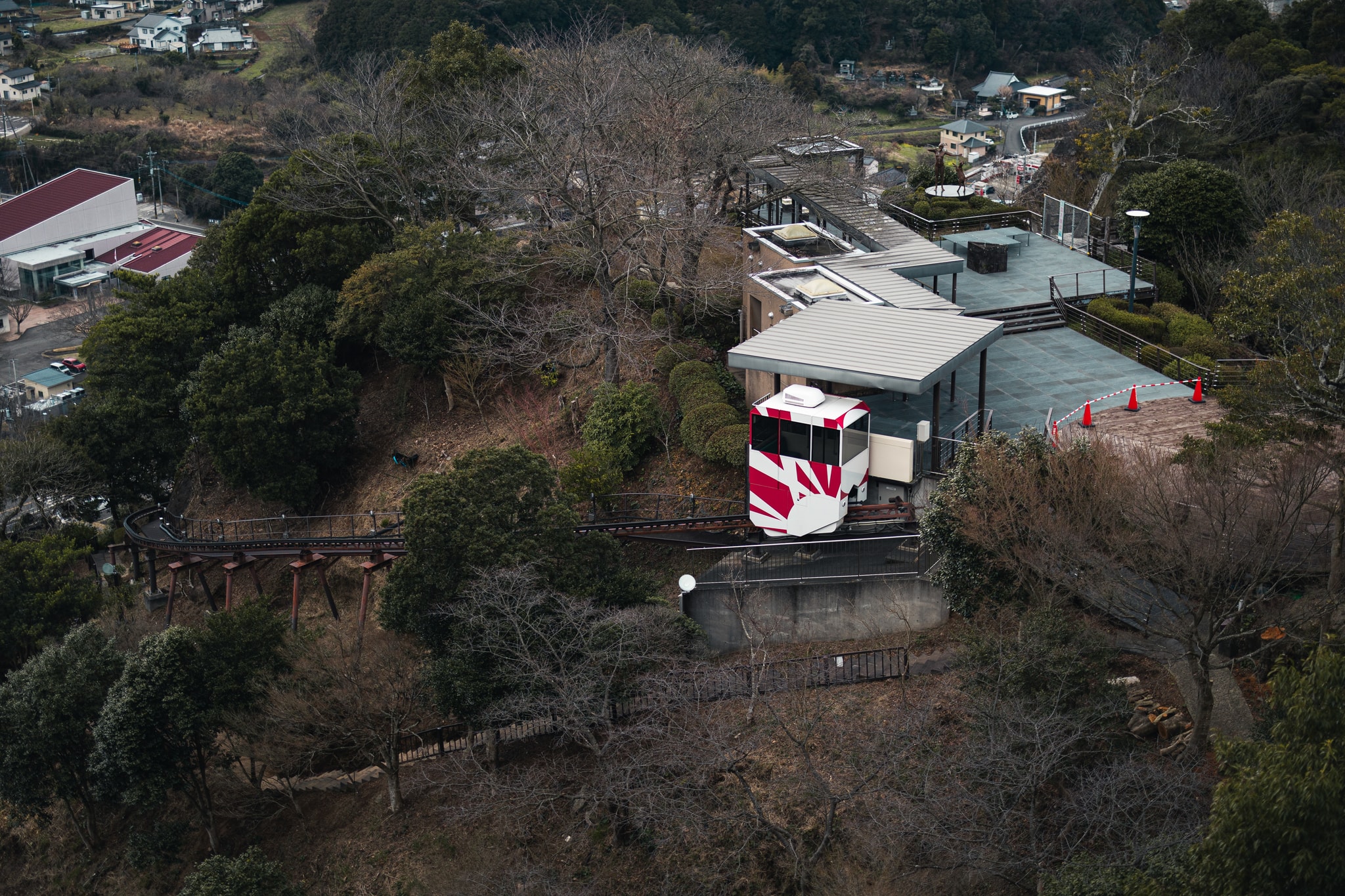
Above the hot spring next to Standing Sphere—Birth rises Chōbangan, a cliff close to a hundred metres high that serves as Tsunagi’s landmark. A small monorail climbs it from Tsunagi Art Museum at a gradient of thirty-two degrees.
Its livery, introduced when the monorail returned to service in 2022, was supervised by Yukinori Yanagi, the artist behind Ishidama Garden beside the town hall. The two sides of the car do not match.
In Tsunagi, even the ride up to the art had an artist.
Near the top, at the lookout in Maizuru Castle Park, Iwano’s Bokka, or “Pastoral,” stood above a view of the town and sea.
A woman held a leaf near her mouth while a goat reared beside her. Behind them, the hills opened towards blue water, with buildings gathered in the valley below.
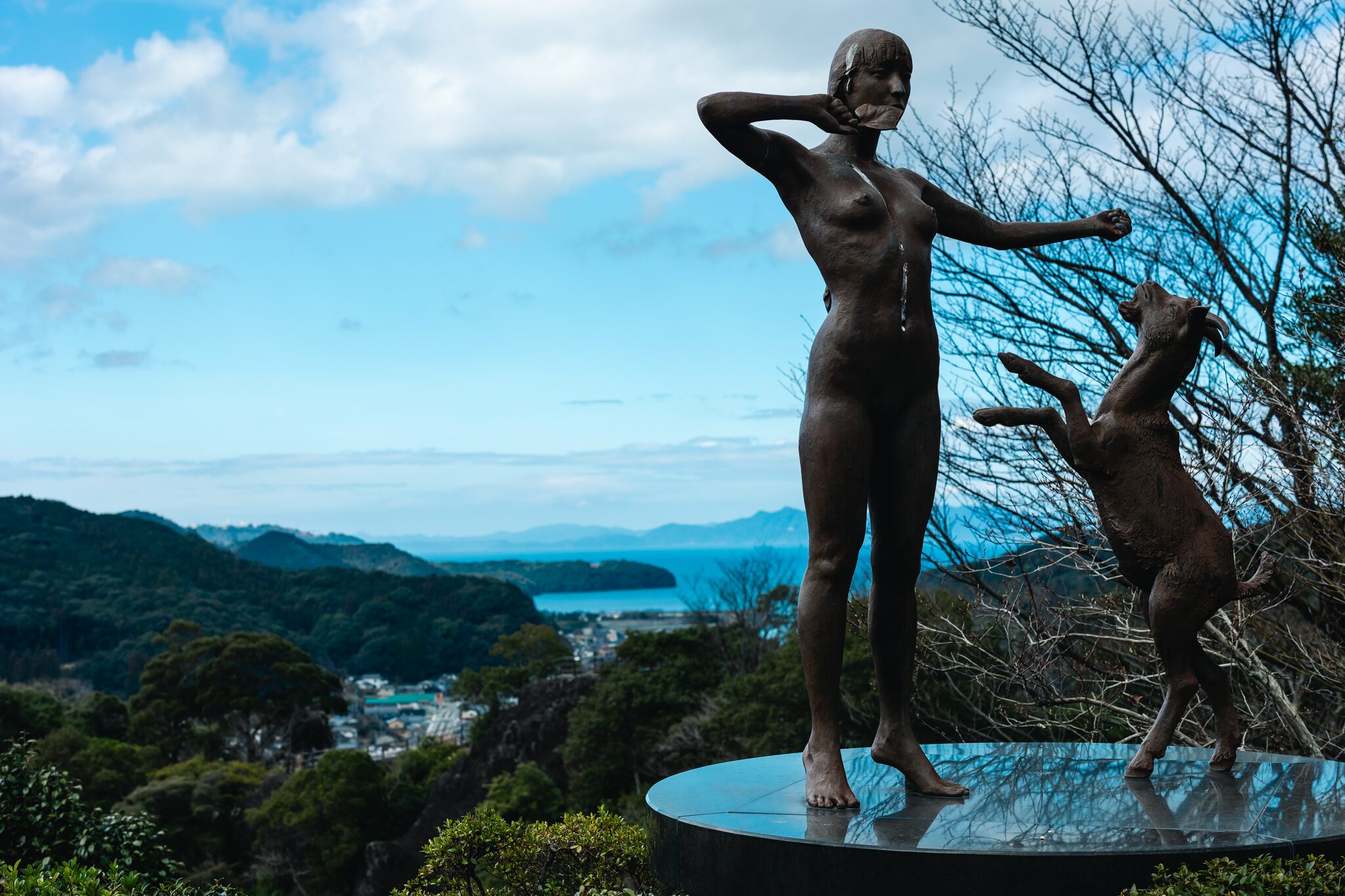
Roofs filled the gaps between wooded slopes, and the sea appeared beyond the town. It was the Shiranui Sea — the same sea into which mercury had been released at Minamata, a short way down the coast.
Bokka was installed in 2000 with a stated wish: that the image of a pollution-damaged district would fade, and a new era would arrive. Iwano had died in 1987; of all his works in Tsunagi, this one came last.
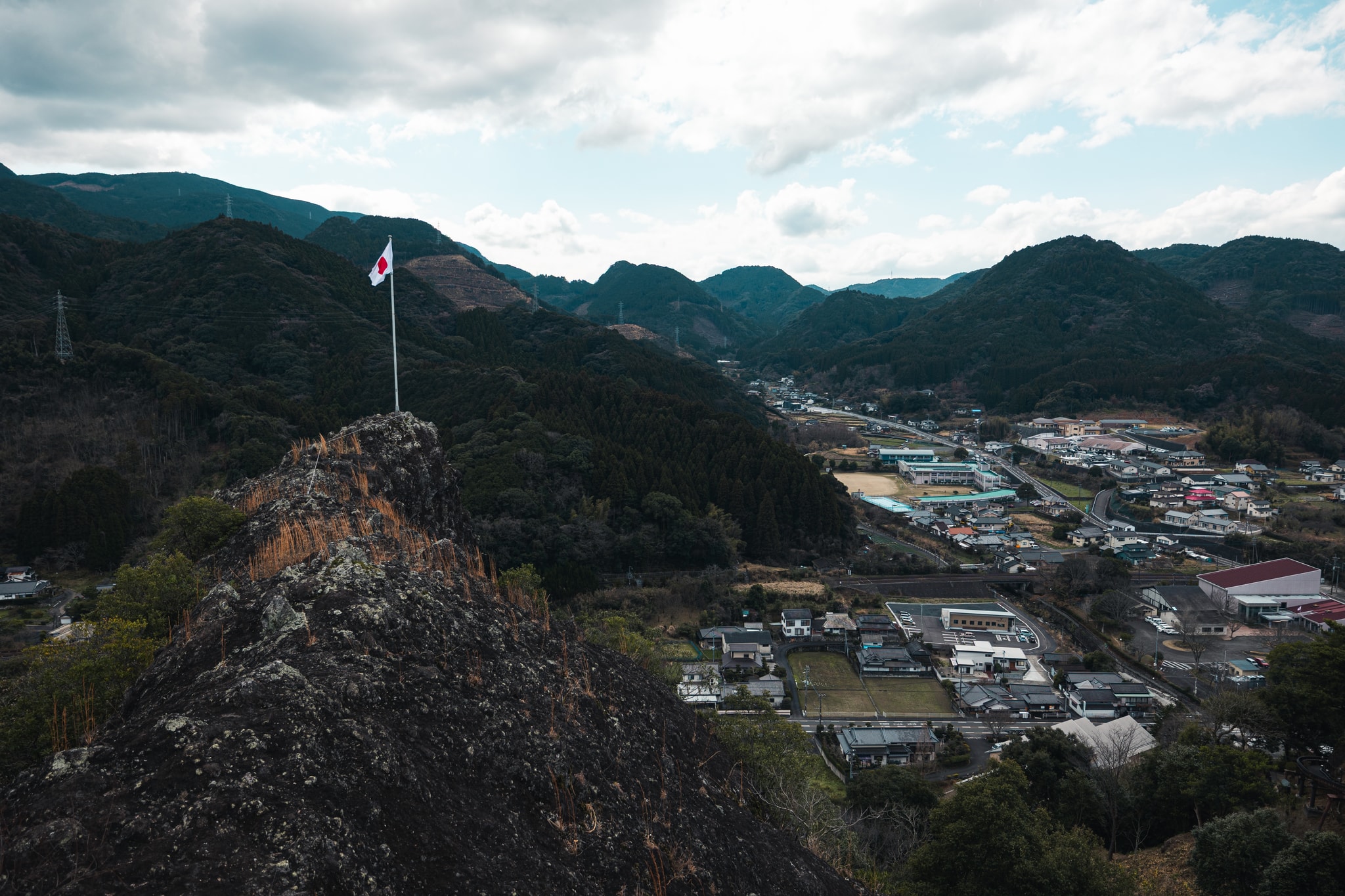
Even the station had company.
Outside its white walls and green pointed roof stood Chiyo: a young woman holding out a hand to a substantial bronze horse. According to the museum, Chiyo lived in the town in the late Edo period, and her devotion to her family reached the lord of Higo, who rewarded her with ten bales of rice a year.
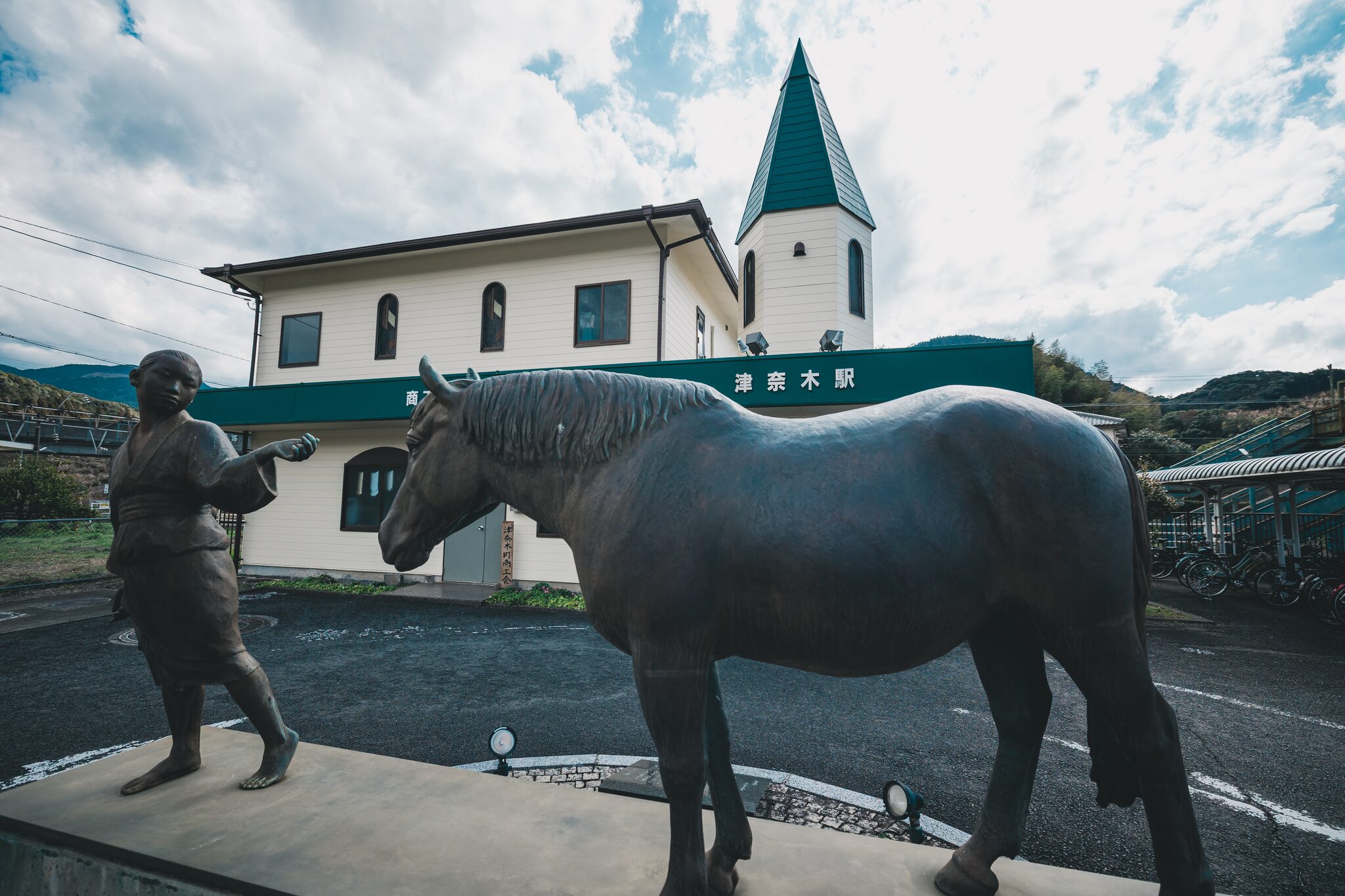
The town’s own retelling is less straightforward. Villagers once whispered that she went to bed before her grandparents; she was warming their futon. An official sent by the lord found her eating what looked like white rice while they ate millet. It was unseasoned okara.
Every accusation against her turned out to be further evidence for the defence.
The rice kept coming until she died at seventy-two. The sculptor, Ryōsuke Iwano, is the son of the man who made the family on the bridges. Neither version of her story mentions a horse.
By then, finding a horse outside the station felt reasonably consistent with the rest of the place. Bridges had families. A shopping stop had a time capsule. The hillside had a goat.
The sculptures had not moved an inch. They had still managed to take me all over town.
Visit this place
Location
Tsunagi’s Sixteen Sculptures (津奈木の16体の彫刻群)
The map pin marks Tsunagi Art Museum, a useful starting point; the works are spread across town.
Various locations across Tsunagi, Ashikita District, Kumamoto, Japan
Practical Information
- Area
- Tsunagi, Ashikita District, Kumamoto
- Access
- Tsunagi Station on the Hisatsu Orange Railway is about 10 minutes on foot from Tsunagi Art Museum. The sculptures are distributed across town, so seeing the full set requires additional walking or transport.
- Parking
- At Tsunagi Art Museum: 13 spaces. If full, use the Tsunagi Culture Centre car park.
- Visitor note
- The works are not in a single ticketed display. Use the official guide for individual locations, and check access conditions before seeking a work within another facility.
Information last checked: September 12, 2026
Conversation
Comments
Review pending commentsComments are reviewed before appearing. The internet already contains enough unattended surprises.
Checking comments…
Comments are not available in this migration preview yet. Existing comments remain on the current site.
Leave a comment