Tetsugakudo Park: Where Even the Bridges Have a Philosophy
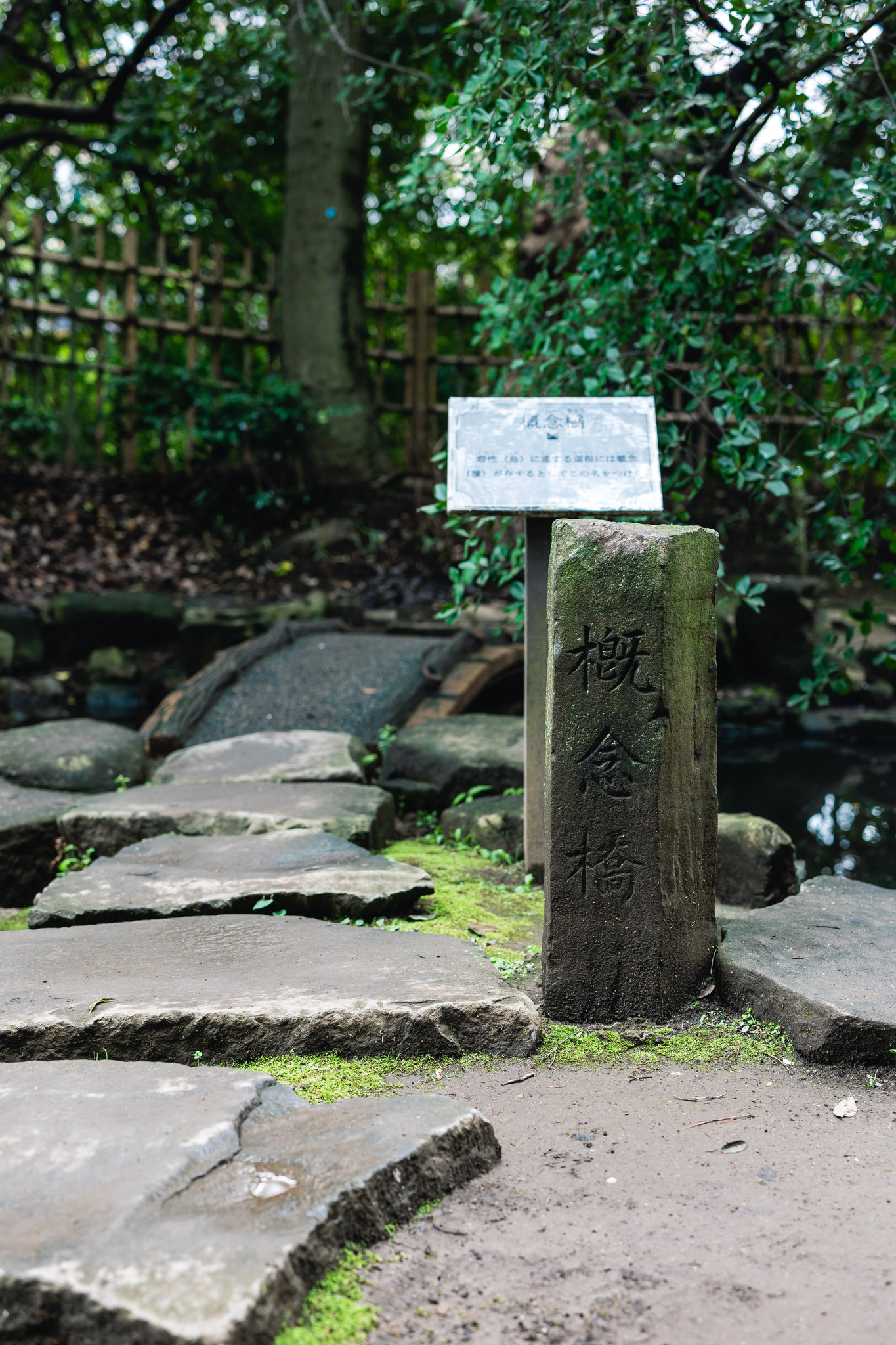
At Tetsugakudo Park, the route to Reason crosses a small stone bridge. The bridge is called Concepts. Someone has taken the trouble to make the journey walkable.
The stones lead across a pond to a little island, with a carved marker beside the approach. In this park in Tokyo’s Nakano district, reading the names changes what you are looking at. A short crossing becomes a stage in the workings of the mind.
A park with a syllabus
The person responsible was Inoue Enryō, a philosopher and the founder of Toyo University. Beginning with the construction of Shiseidō, the Four Sages Hall, in 1904, he developed the grounds as a place where people could cultivate their minds through philosophy. Buildings, paths, stones and water became parts of the lesson, arranged into 77 named features.
Enryō said he paid for it with his handwriting. Over some thirty years he gave 5,291 lectures across Japan, and between engagements he wrote what he called his poor calligraphy for anyone who asked, saving the fees for the park. A verse carved on the park’s Brush Mound sums up the arrangement: writing characters and disgracing myself, just a little longer, until Tetsugakudo is built. In Japanese, the writing and the disgrace share a sound: kaku.
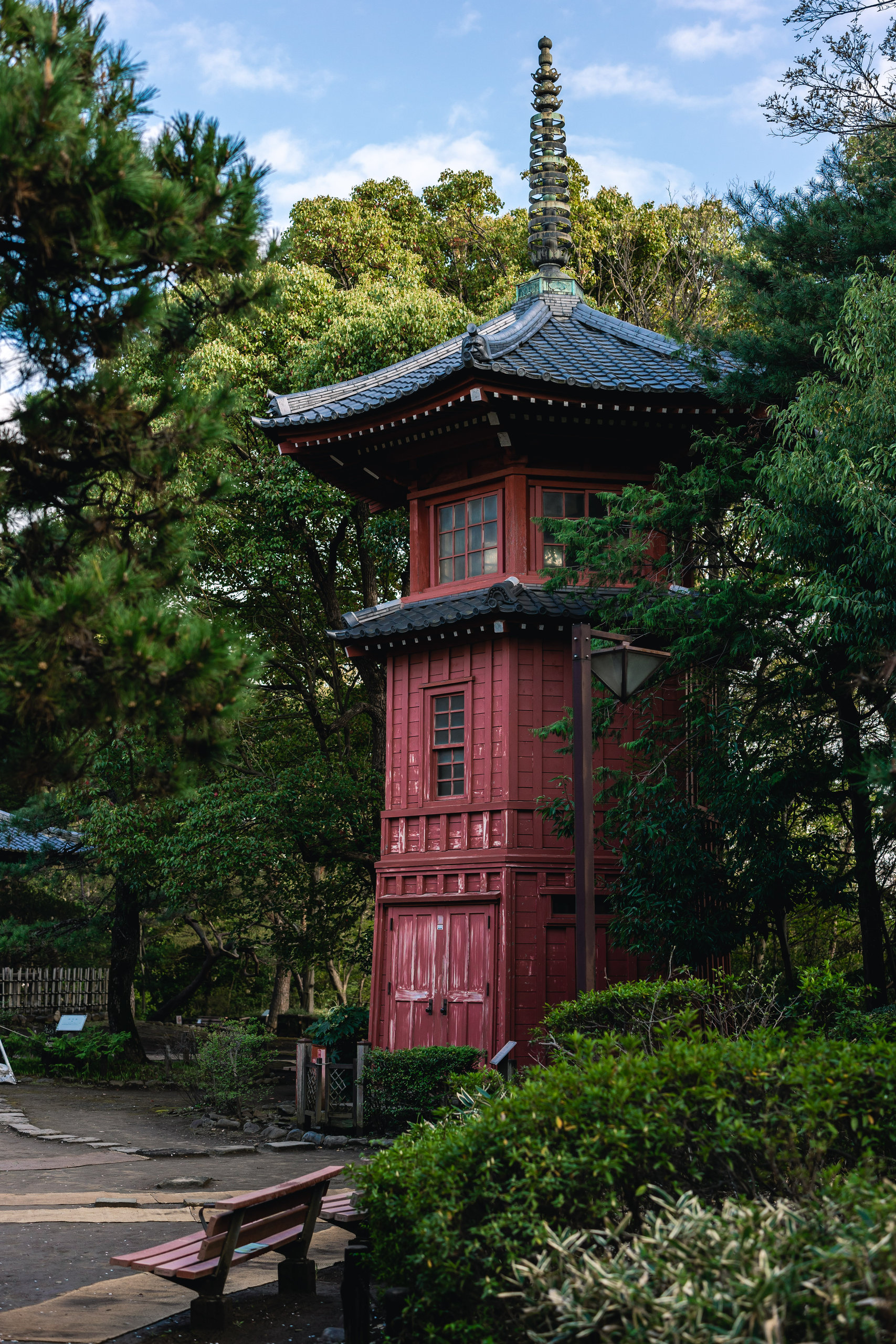
Shiseidō honours Confucius, the Buddha, Socrates and Kant. Nearby, the red, hexagonal Rokkendai tower honours six sages from Japan, China and India. Together, they give the park a faculty drawn from several countries and considerably more than one century.
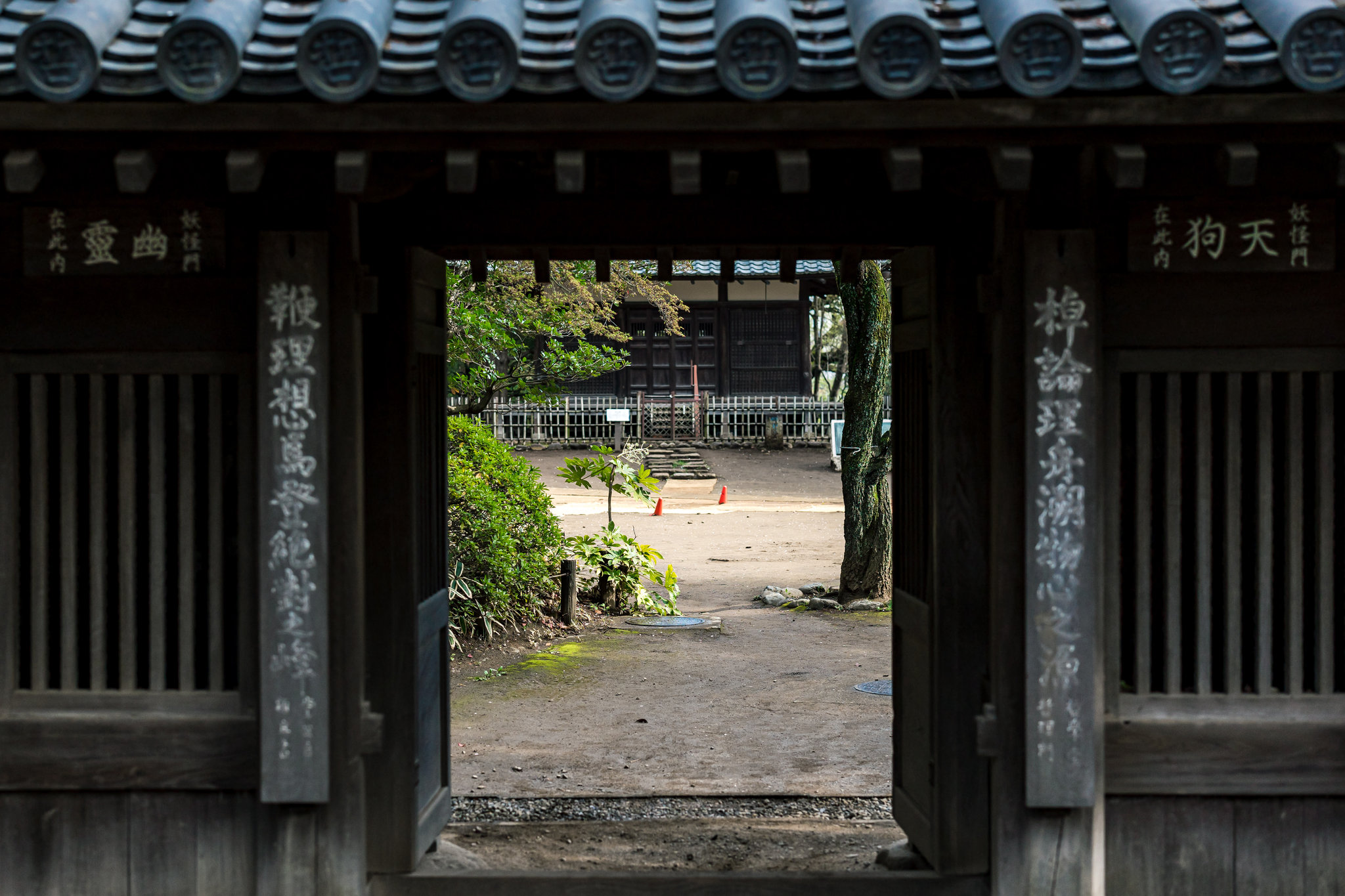
The main gate has an equally deliberate selection of residents. Tetsurimon, the Gate of Philosophical Reason, houses a ghost and a tengu, a supernatural being familiar from Japanese folklore. For Enryō, they represented mysteries of the mental and physical worlds respectively.
The gate’s other name is the Yōkai Gate, and its signs are admirably direct. One reads, in effect, “Ghost: within.” The other: “Tengu: within.”
Enryō also studied reports of supernatural phenomena, investigating the mistakes, deception and natural causes behind many of them; the work earned him the nickname Yōkai Hakase, or Doctor Yōkai. Yet he distinguished these explainable occurrences from deeper mysteries about the nature of existence. Putting a ghost at the gate was quite consistent with wanting people to think carefully.
The idea for the gate came from closer to home. When Enryō lived in Komagome, there was a commotion one night over a ghost said to have appeared beneath a plum tree at his house. He named it the Ghost Plum and moved it to Tetsugakudo, so that it could be married to the park’s Tengu Pine. The gate’s ghost and tengu, he explained, were inspired by the pair.
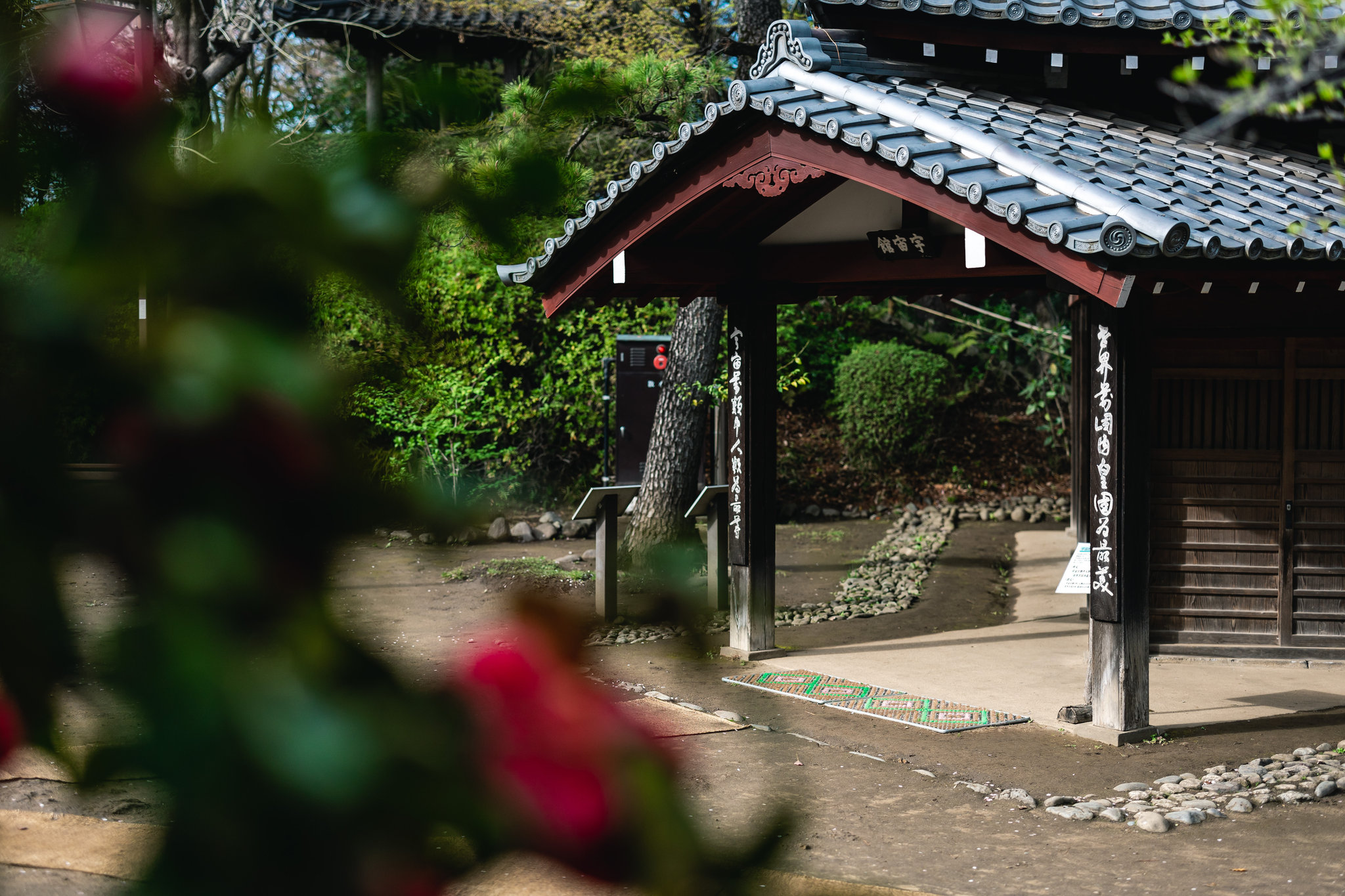
There were places for more conventional teaching, too. Uchūkan, the Cosmos Hall, was built as a lecture hall for philosophy. Its tiled entrance stood behind flowers, with inscriptions running down the wooden pillars. The lessons had somewhere to go when it rained.
Matter and mind
Beyond the buildings, Enryō gave two approaches to understanding the world their own gardens. Yuibutsuen represents a view grounded in matter; Yuishintei represents one grounded in mind. The distinction determines more than the names on the signs. It shapes the routes between them.
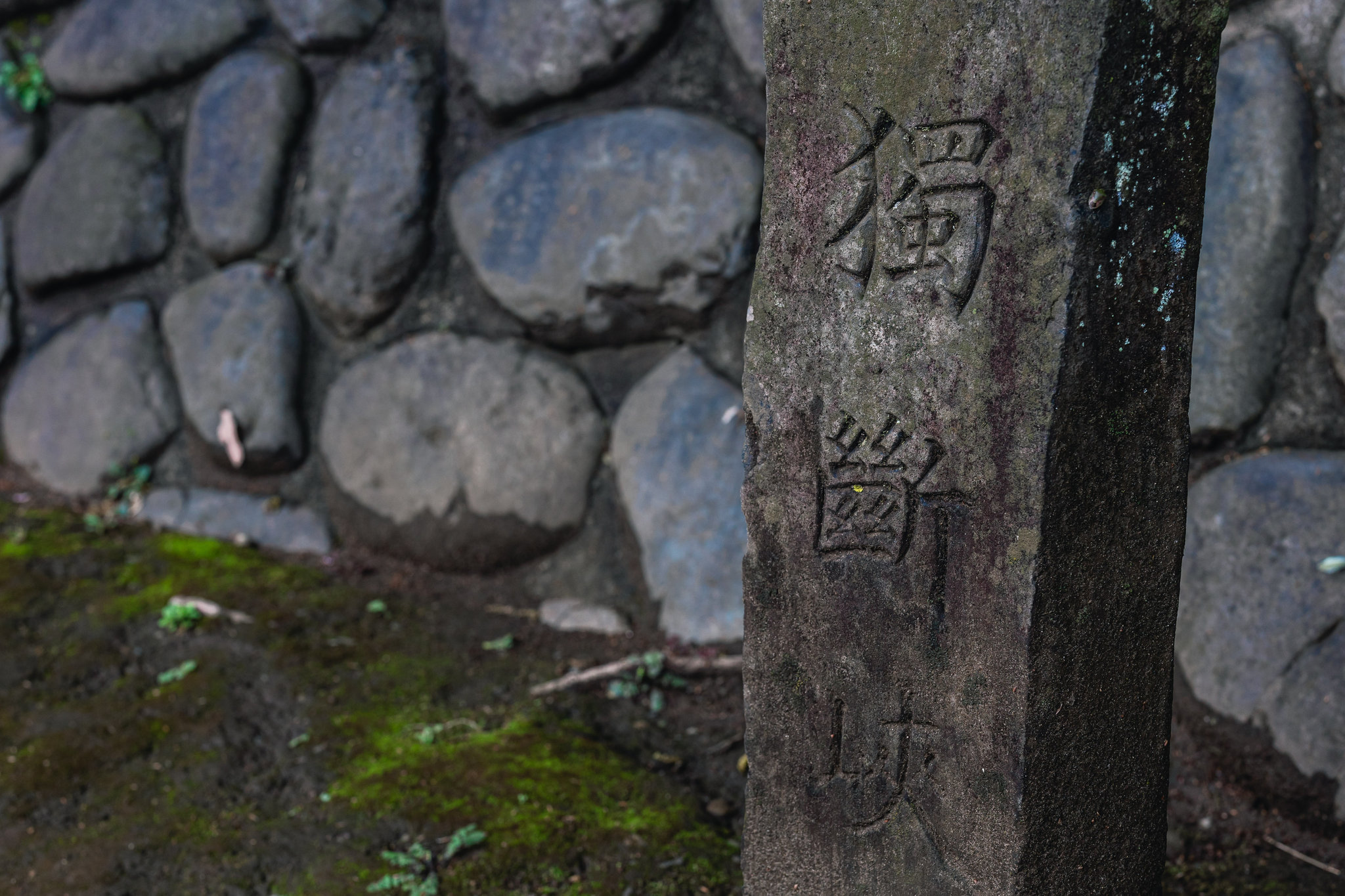
A path cut through the hillside towards the garden of mind is called Dokudankyō. Its name refers to a philosophical approach based on thought rather than experience. The path is paired with an “Experience Slope” on the route towards the garden of matter.
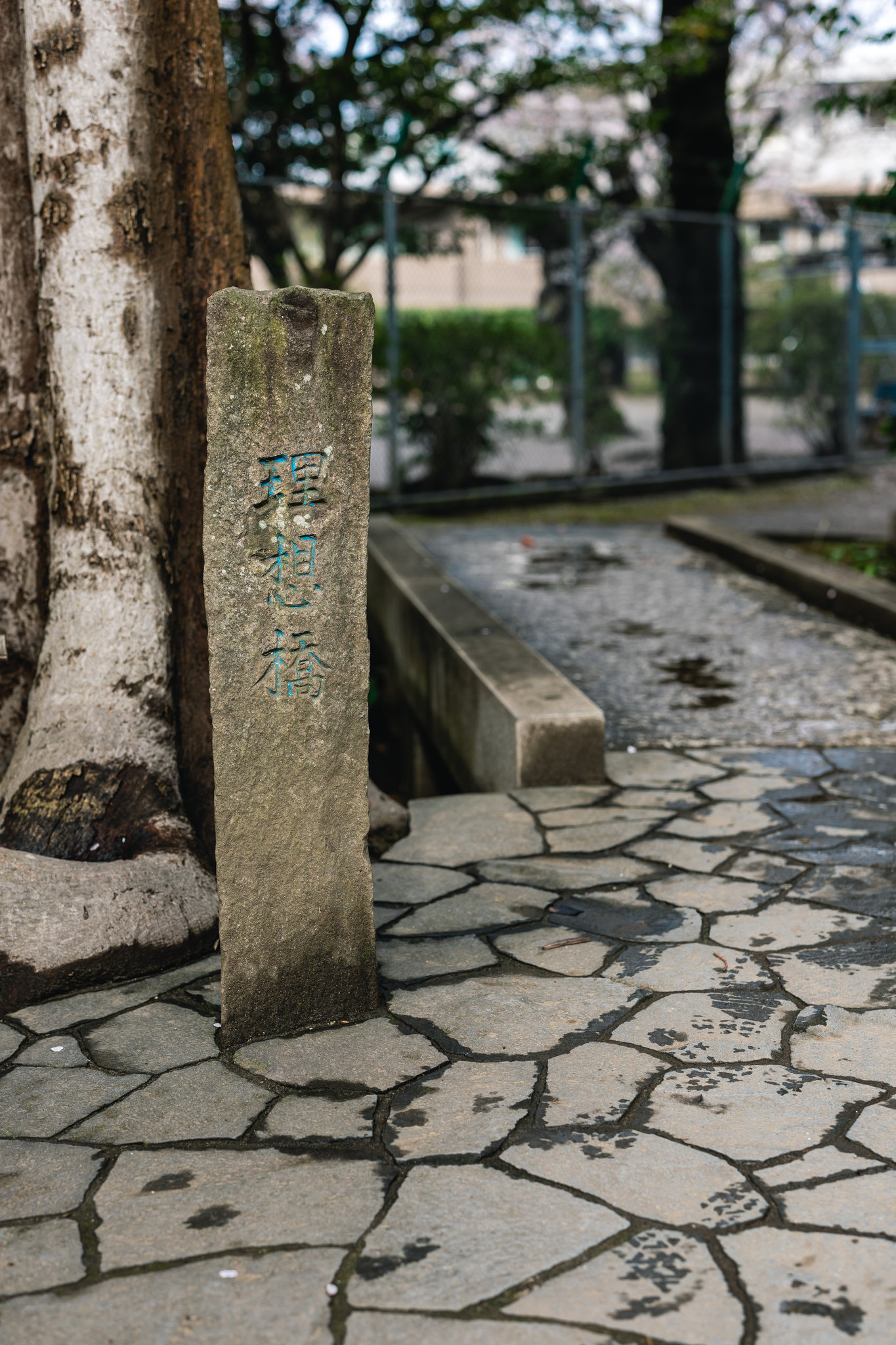
Elsewhere, another small bridge carries the name Risōkyō: the Ideal Bridge. In Japanese, its name sounds exactly like the word for “utopia”—only the final character changes, from “land” to “bridge”.
It crosses Sōtaikei, the Ravine of Relativity—a dry channel beside Zettaijō, the Castle of the Absolute. The castle is the park’s library. Read every book in it, Enryō reasoned, and you would reach the Absolute.
The names were ambitious. The distance involved was reassuringly modest.
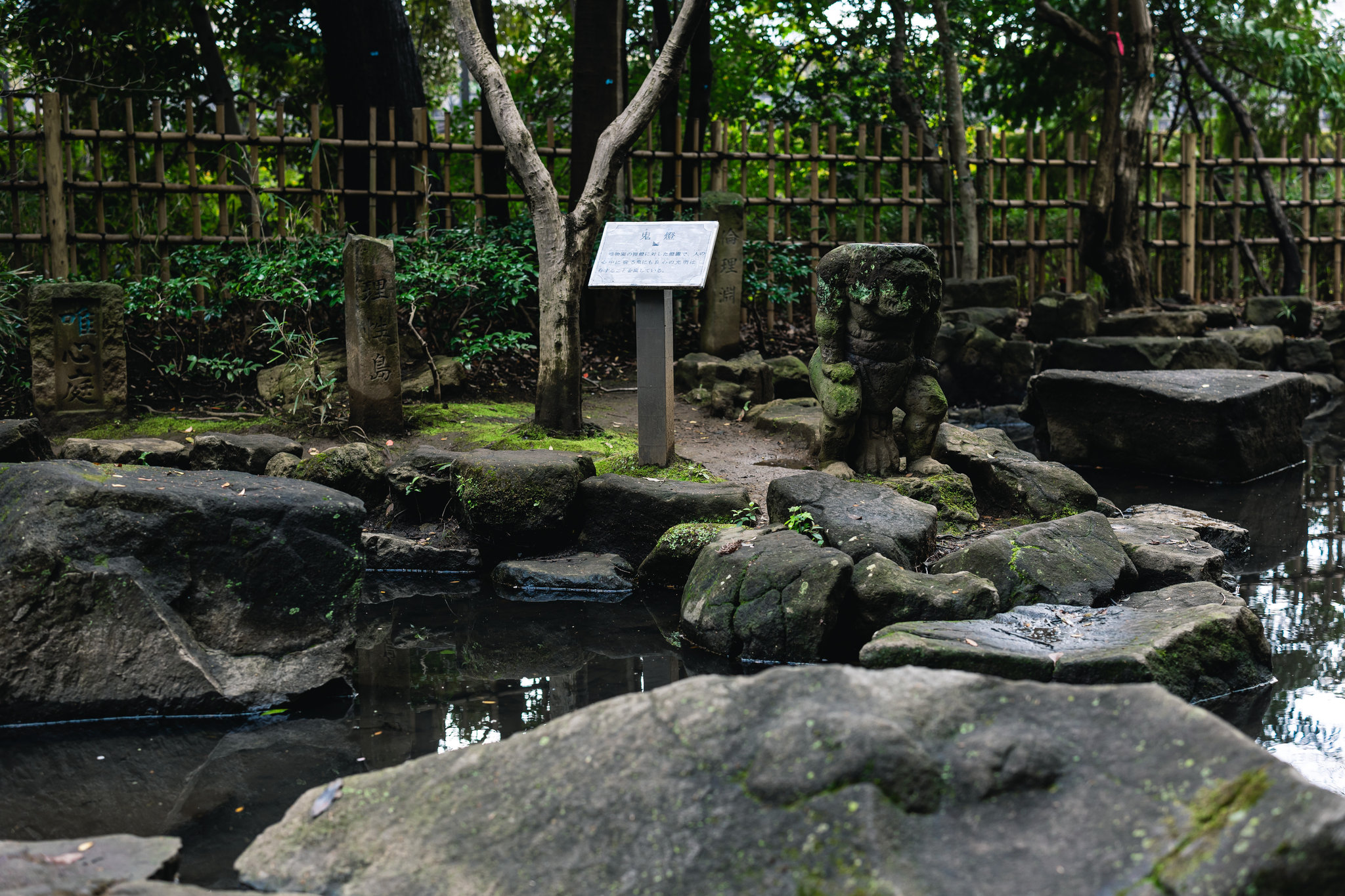
Back in the garden of mind, the Bridge of Concepts gives an abstract idea a more literal route. It leads towards the Island of Reason, turning a relationship between ideas into something that can be crossed on foot. Beside the water, a squat stone oni—an ogre-like figure—adds a less scholarly face to the scene.
A little light inside
The oni has a philosophical job of its own. Enryō designed it as a lantern bearer, with the weight of the light pressing down on the creature. The design made conscience visible as a force restraining the darker impulses within the human mind.
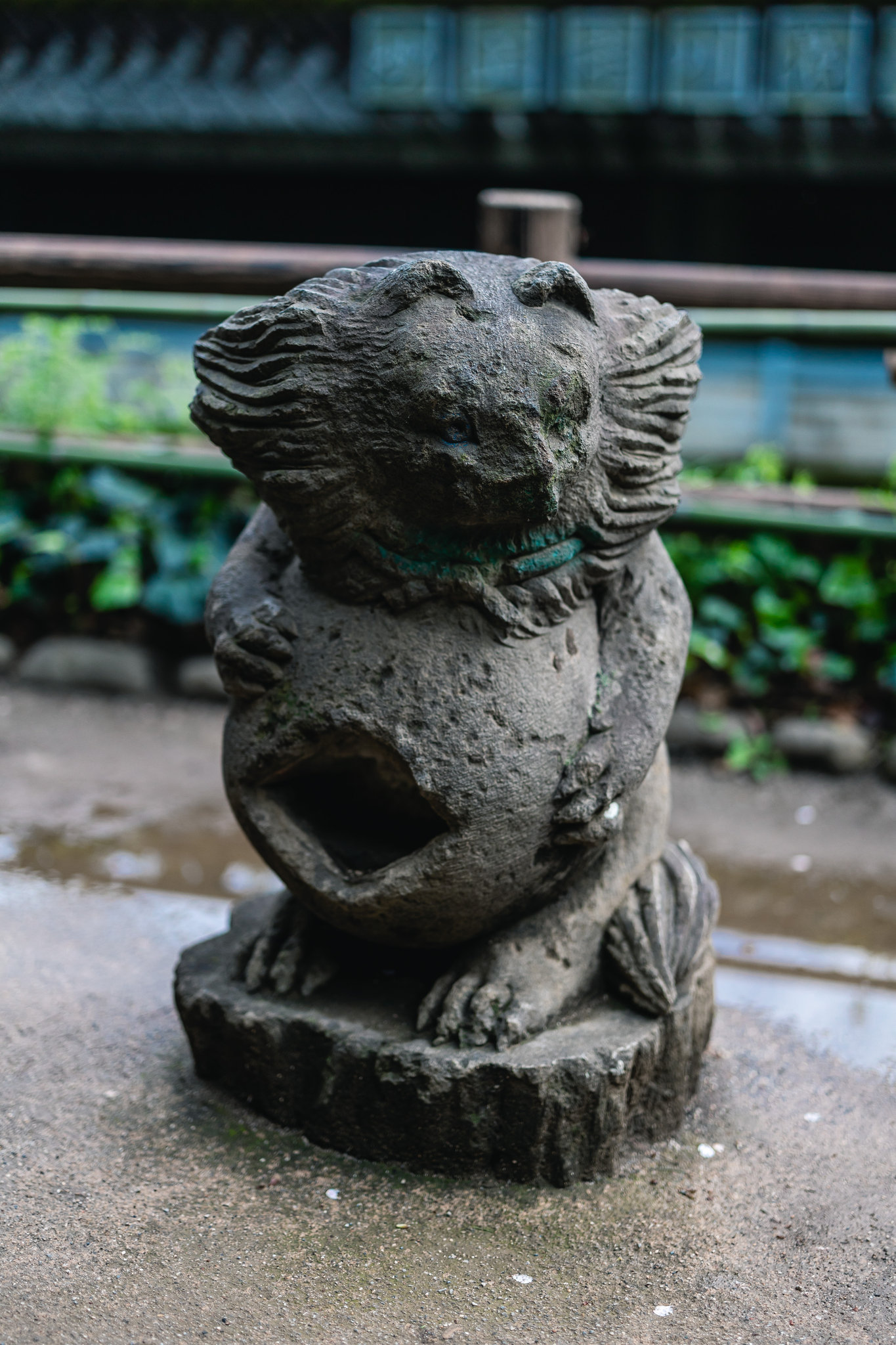
Across in the garden of matter, a stone tanuki offers another assessment of human nature. Tanuki are raccoon dogs, animals also familiar in Japanese folklore as tricksters. This one had a rounded belly with a conspicuous opening in it.
The opening was for a light. The accompanying explanation compared human behaviour to the tanuki’s trickery, while allowing that people could sometimes reveal a brighter spiritual nature. The lamp inside the belly represented those moments.
Enryō had left room for improvement. In this case, inside a tanuki.
The faculty keeps growing
The park’s international gathering of thinkers has also grown since Enryō’s day. Added in 2009, the Garden of Philosophy is a sculpture group by Nándor Wagner, bringing figures from religion, philosophy and law together in concentric rings. Photography is prohibited around the group, so this part of the park is missing from my photographs. I have also visited its counterpart in Budapest, Hungary.
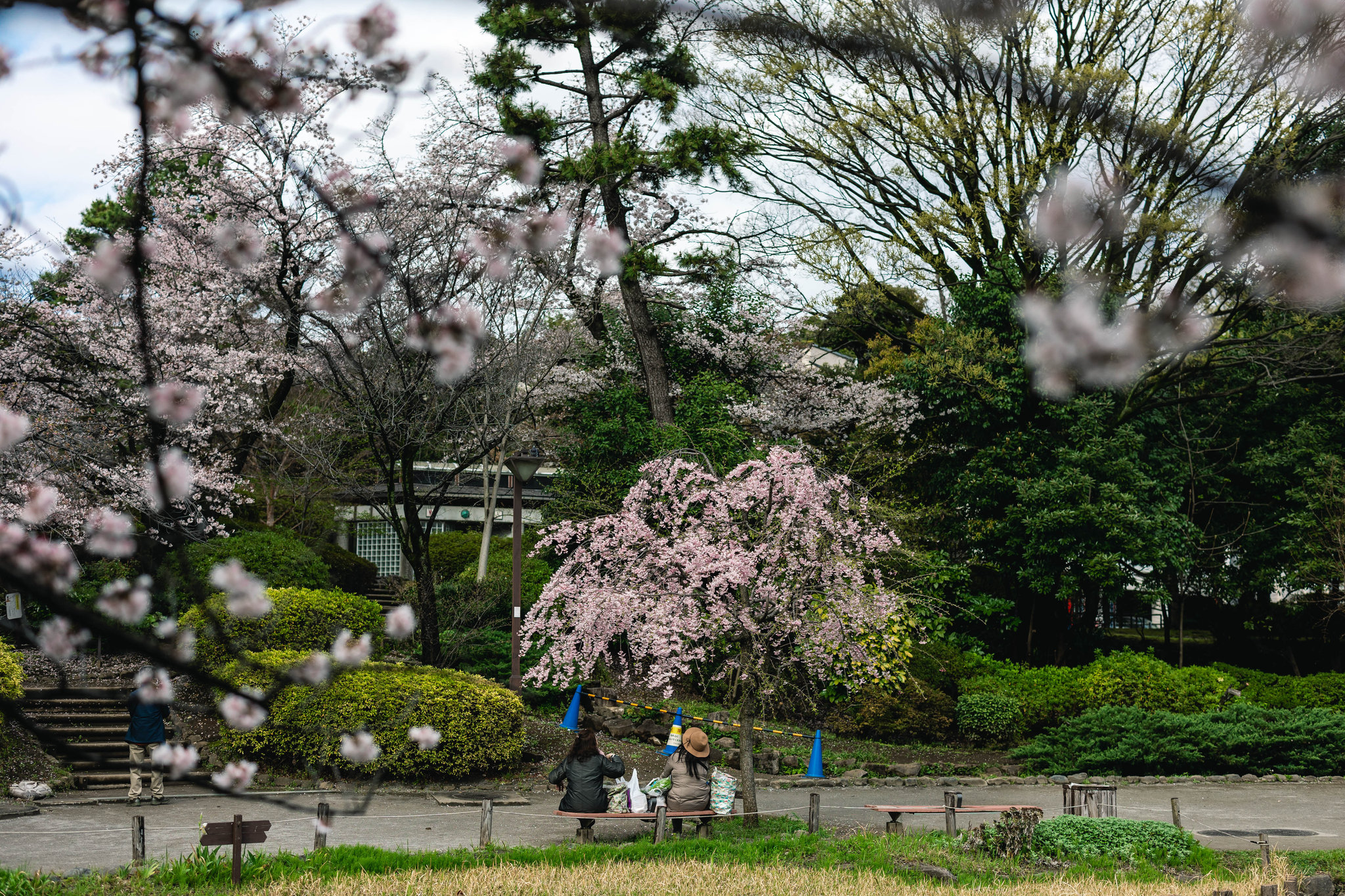
For all these demands on the mind, the grounds also offered a straightforward spring afternoon. In March 2023, cherry blossoms hung over the paths, and people sat on benches beneath the trees. The philosopher’s carefully arranged world had room for shopping bags and a rest.
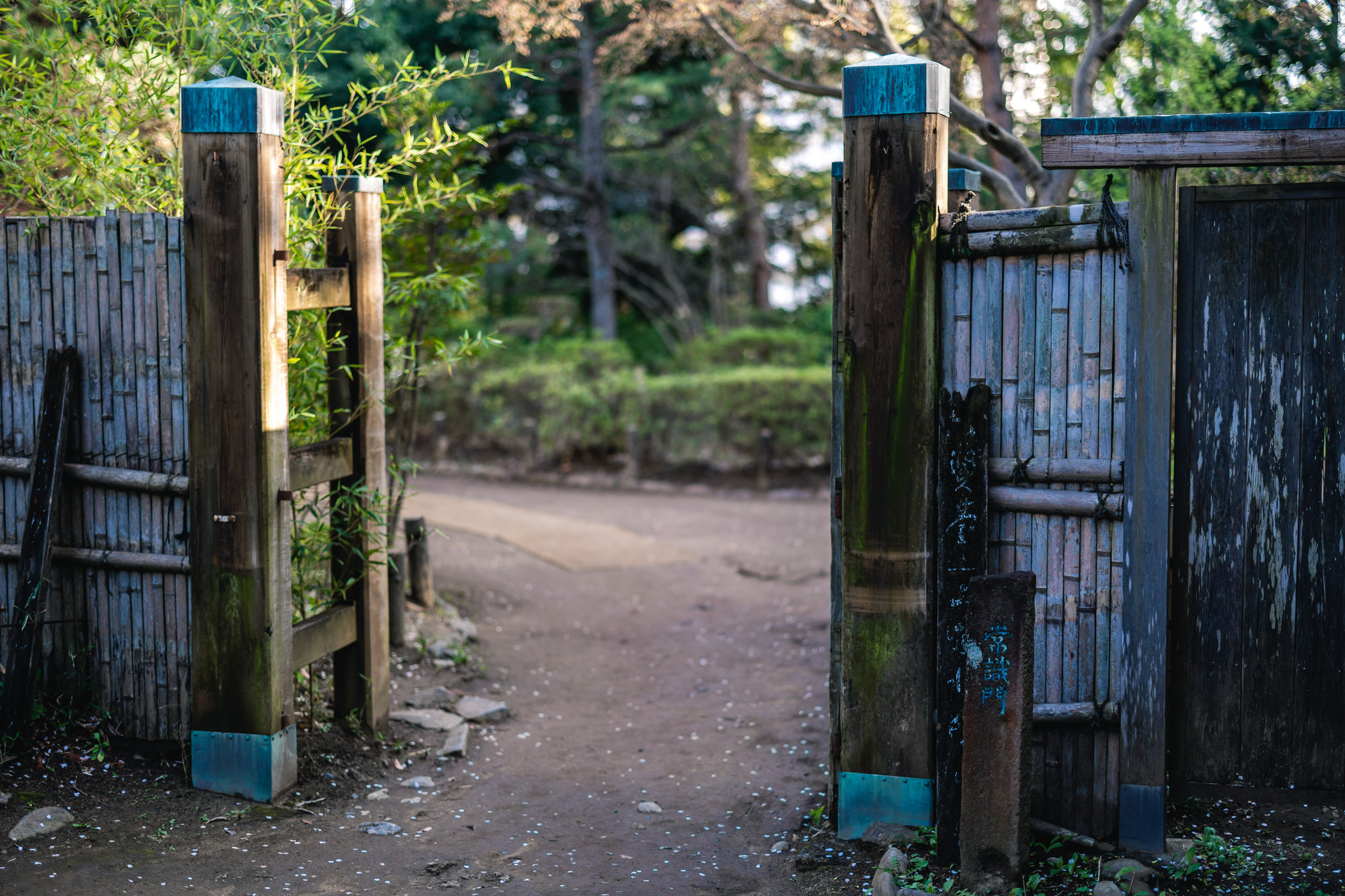
A simpler wooden gateway stood open between bamboo fences. Its stone marker identified it as Jōshikimon, the Gate of Common Sense. In Enryō’s day, it served as the everyday gate: visitors came in by Common Sense, and left by it too.
Reaching Reason was a matter of crossing a small bridge.
Staying there was presumably another matter.
Visit this place
Location
Tetsugakudo Park (哲学堂公園)
In Tokyo’s Nakano district, about 12 minutes on foot from Araiyakushi-mae Station
1-34-28 Matsugaoka, Nakano-ku, Tokyo 165-0024, Japan
Practical Information
- Opening hours
- March–June and September: 8:00–18:00
July–August: 7:00–18:00
October–November: 8:00–17:00
December–February: 9:00–17:00 - Closing days
- December 29–31
- Admission
- Free
- Access
- About 12 minutes on foot from Araiyakushi-mae Station (Seibu Shinjuku Line), or about 13 minutes from Ochiai-Minami-Nagasaki Station (Toei Oedo Line)
- Historic buildings
- Interiors open on the first Sunday of each month and during seasonal openings; check the official schedule before visiting
- Photography
- Photography is prohibited around the Garden of Philosophy
- Official website
- Tetsugakudo Park
Information last checked: September 24, 2026
Conversation
Comments
Review pending commentsComments are reviewed before appearing. The internet already contains enough unattended surprises.
Checking comments…
Comments are not available in this migration preview yet. Existing comments remain on the current site.
Leave a comment