Wadatsumi-no-miya: The Dragon Moved Upstairs
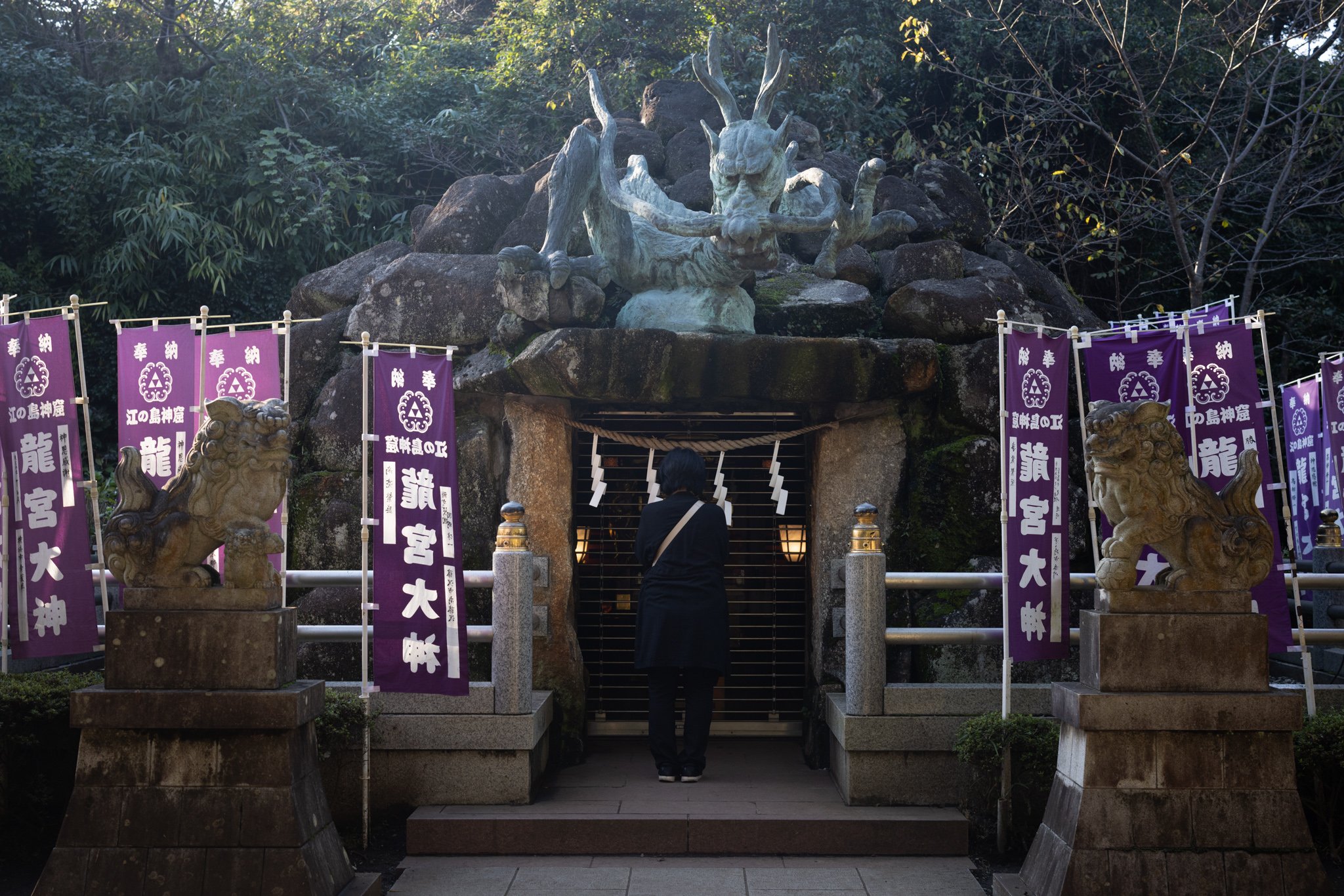
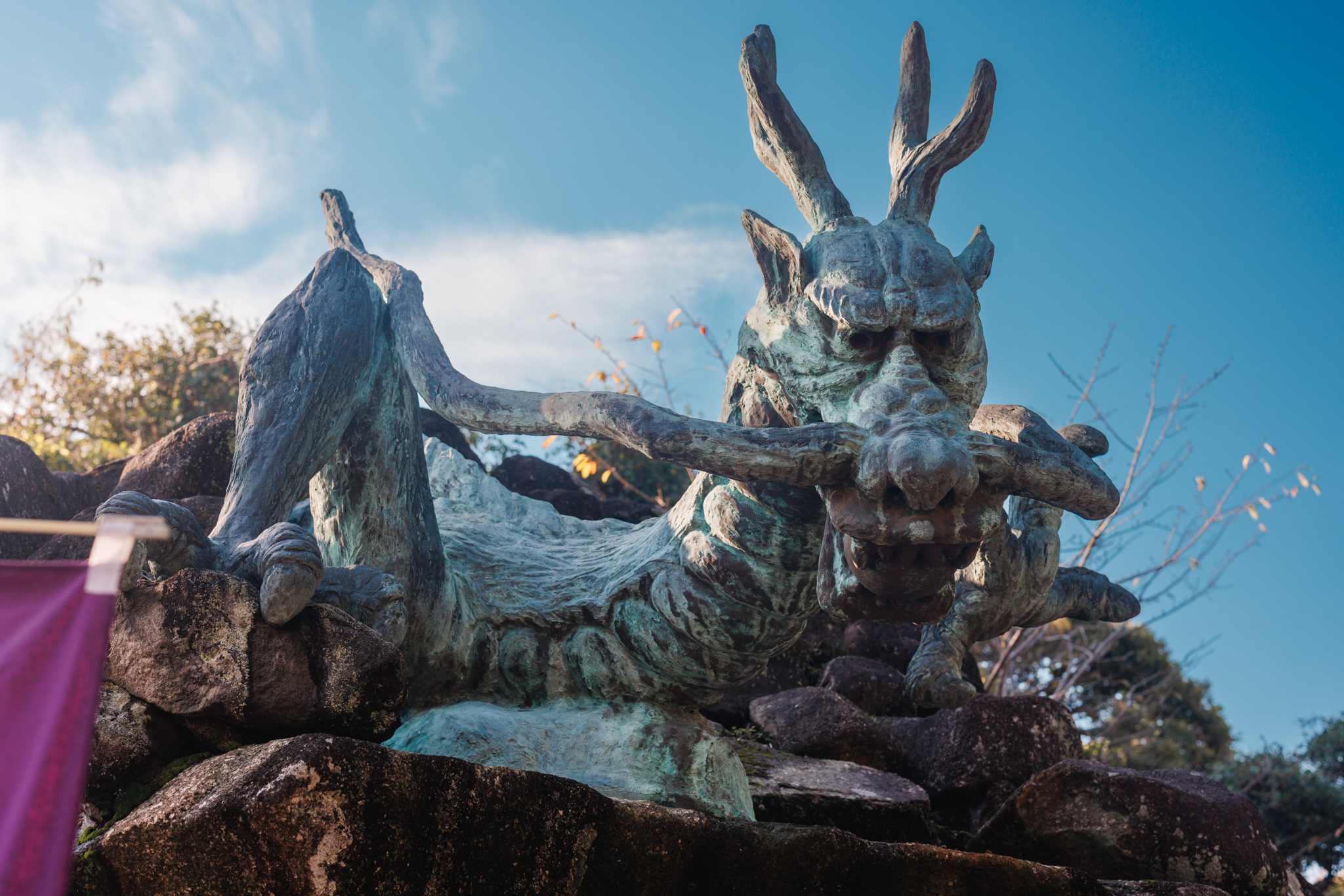
A bronze dragon was leaning over a heap of rocks, glaring down like someone on a balcony who had heard enough. Its whiskers stuck straight out on either side, as stiff as the handlebars of a bicycle.
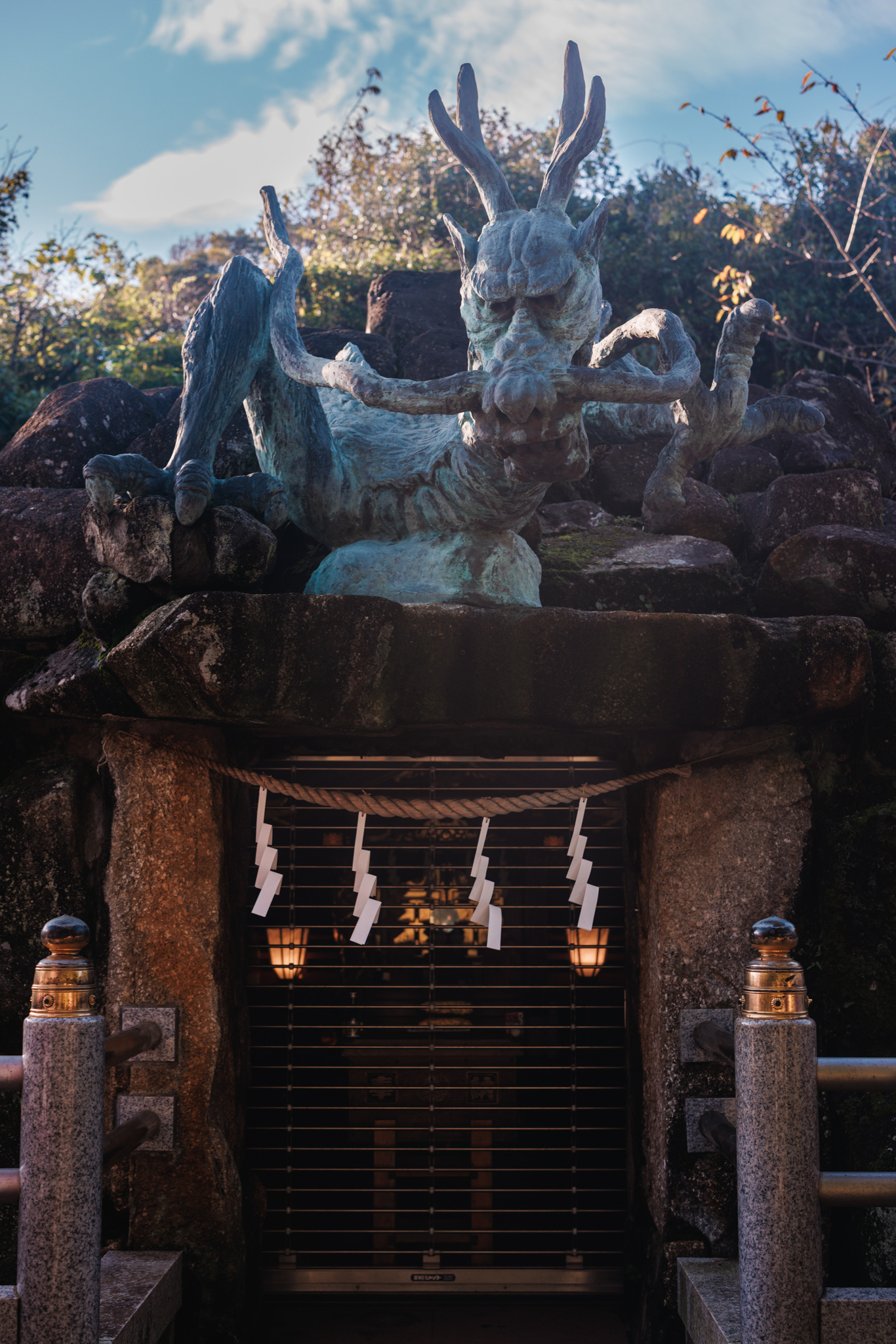
Below it, the rocks had been arranged into the mouth of a cave. A sacred straw rope hung across the entrance, and behind the rope was a shutter, pulled down. A visitor stood in front of it with her hands together. I prayed there too.
This is Wadatsumi-no-miya, a dragon shrine on Enoshima, a small island off the coast of Kanagawa Prefecture, south of Tokyo. It belongs to Enoshima Shrine and stands beside Okutsumiya, the last of the shrine’s three sanctuaries on the way across the island.
A palace, read differently
To a Japanese reader, the name on the banners looks familiar. Its two characters are normally read Ryūgū: the Dragon Palace under the sea, where the fisherman Urashima Tarō spends what feels like a short, pleasant stay in the folk tale, then returns home to find everyone he knew long gone.
Here, the same characters are read Wadatsumi-no-miya. Wadatsumi is an old name for the god of the sea. The deity enshrined here is the Great God of the Dragon Palace.
According to Enoshima Shrine, a dragon god has lived on the island ever since it rose out of the sea, and dragon worship here has long been bound up with the worship of Benzaiten, the goddess the island is best known for.
The legend begins in 552. A five-headed dragon living in a lake in what is now Kamakura was bringing down mountains and sending floods and storms. Then the earth shook, a heavenly maiden came down from the sky, and when the clouds cleared, there was an island where there had only been sea. The maiden came to be identified with Benzaiten.
The dragon proposed. She turned him down on account of his record. He promised to mend his ways and began making himself useful.
The address downstairs
The rocks are not only for show. Directly beneath the shrine is the Iwaya, a pair of caves worn into the island’s cliffs by the sea. According to Enoshima Shrine, this is where the island’s worship of Benzaiten began, and the caves were once the shrine’s main sanctuary.
They were not always dry. Because seawater came into the caves in summer, the shrine says, the deity of the caves used to be moved up the hill from the fourth to the tenth month of the old calendar, to a temporary home where Okutsumiya now stands.
In 1971, a rockfall closed the caves. They stayed shut for 22 years. In 1993, after surveys and repairs, they reopened as a paid attraction.
That same year, devotees paid for a new shrine on the hill directly above them.
These days, the dragon lives upstairs all year round.
Behind the shutter
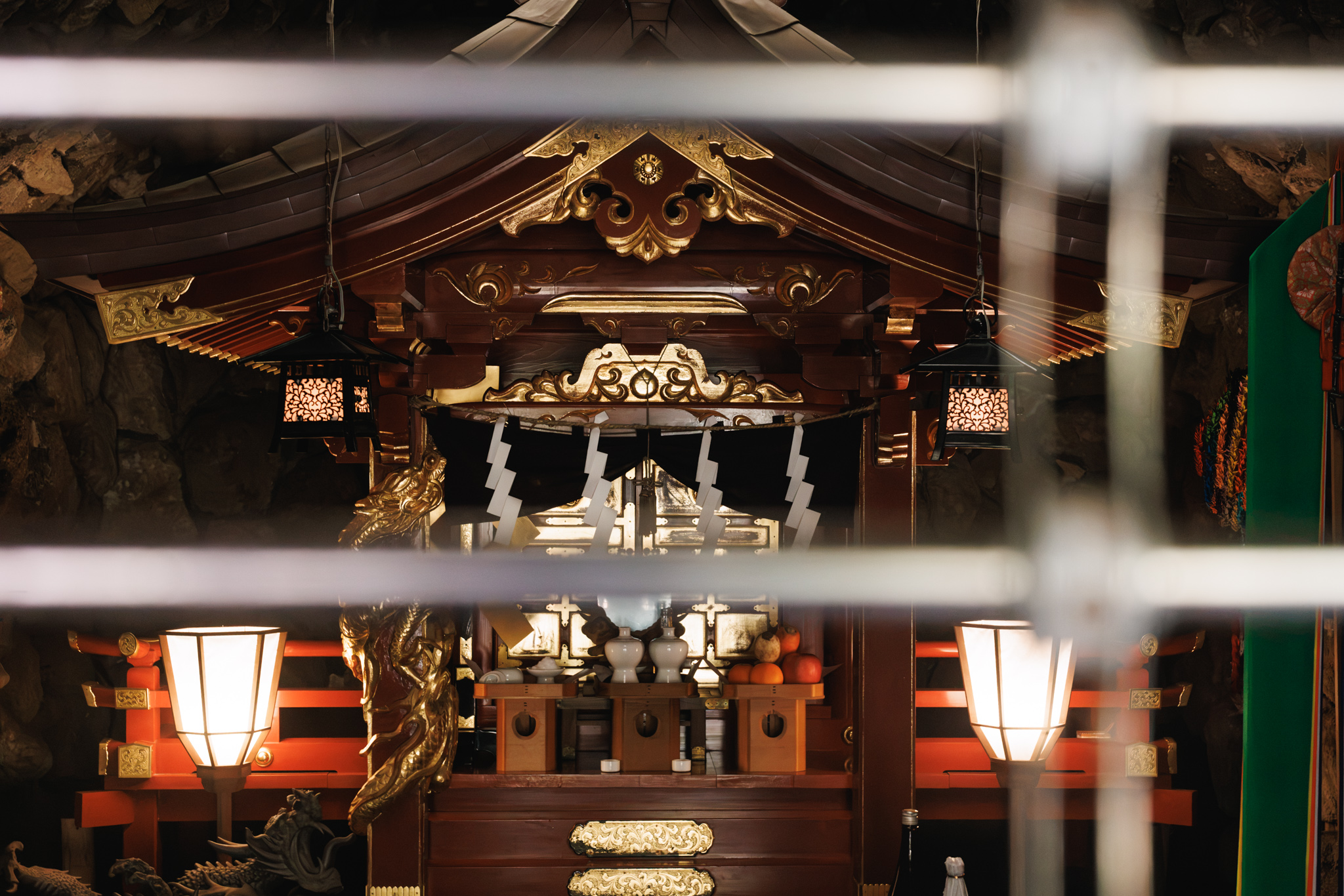
Up here, the cave has been built to order. Boulders are piled into a small hill, and a long slab of stone forms the lintel over the entrance. Inside, the old Iwaya is said to have been recreated, along with a shrine similar to the one that once stood in the caves below.
Visitors do not go in. Through the bars, though, there is more to see than the rocks outside suggest: a shrine in red and gold set against walls of rock, lanterns lit on either side, a gilded dragon coiled around a pillar, and oranges laid out as offerings.
It is a sensible arrangement. The new cave stays dry, and nobody has to move anyone up the hill when the sea comes in.
It is also a very quiet life for a dragon. Then again, on Enoshima, dragons settled down a long time ago, and nobody had to fight them first.
A dragon can bring down mountains and raise floods and storms. Even so, it is no match for love.
Visit this place
Location
Wadatsumi-no-miya (龍宮(わだつみのみや)), Enoshima Shrine
Beside Okutsumiya, near the far end of Enoshima, directly above the Iwaya caves
2-6 Enoshima, Fujisawa, Kanagawa 251-0036, Japan
Practical Information
- Area
- Enoshima, Fujisawa, Kanagawa
- Access
- About 23 minutes on foot from Katase-Enoshima Station (Odakyu Enoshima Line). The route crosses the island and includes stairs.
- Opening hours
- Open at all times
- Admission
- Free
- Annual festival
- September 9
- Visitor note
- Visitors pray at the shutter and do not go inside. The Iwaya caves below are a separate paid attraction.
- Official website
- Enoshima Shrine — grounds guide (Japanese)
Information last checked: October 1, 2026 (location, access time from Katase-Enoshima Station, opening hours, admission and the annual festival date).
Conversation
Comments
Review pending commentsComments are reviewed before appearing. The internet already contains enough unattended surprises.
Checking comments…
Comments are not available in this migration preview yet. Existing comments remain on the current site.
Leave a comment