Miyajidake Scarecrow Village: A Closed School with a Full Class
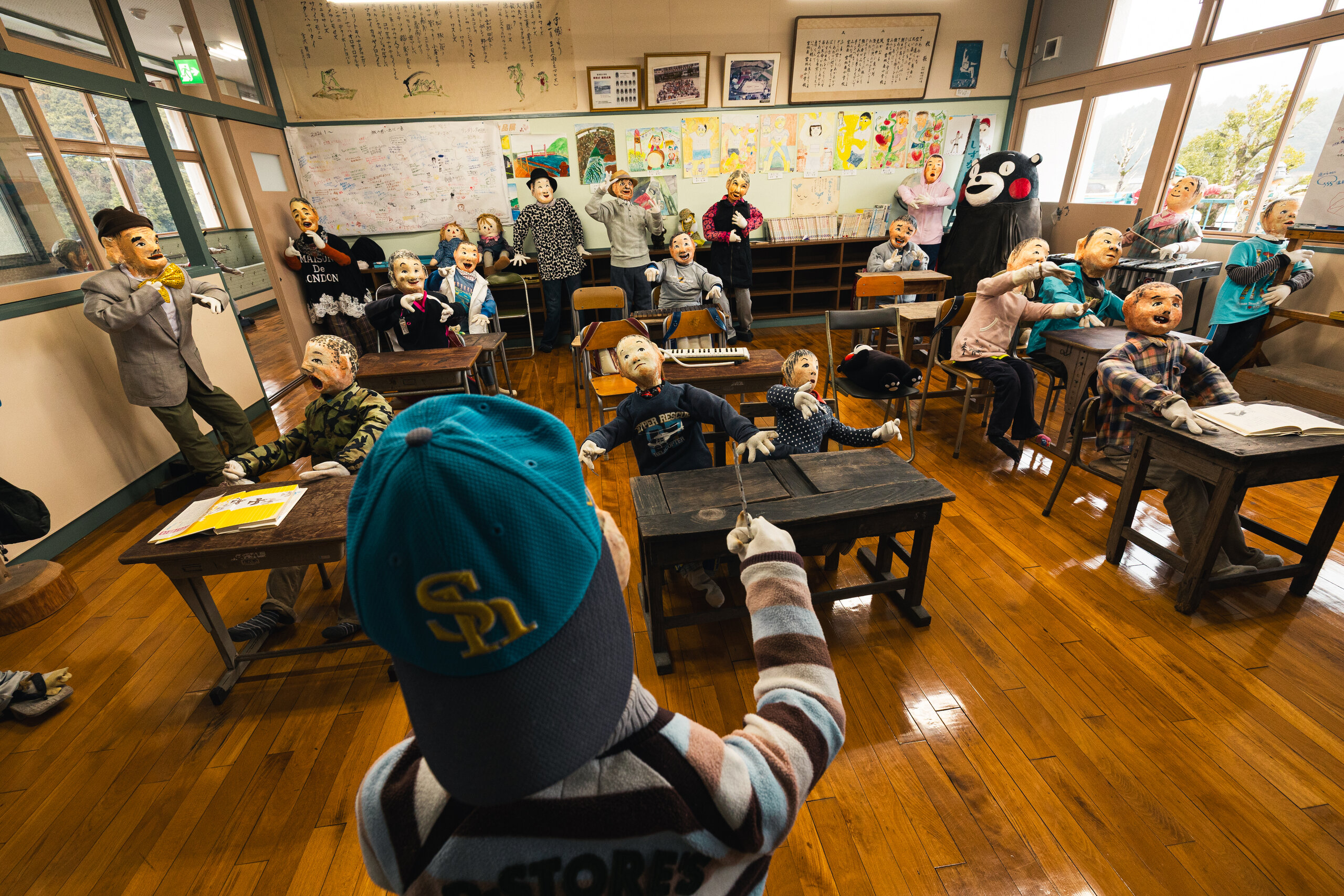
The building where our Amakusa bus tour stopped for lunch had a school clock above the balcony. Along the railing, large yellow letters urged everyone to be clever, friendly and strong. Several figures stood looking out over the grounds. Some appeared to have left primary-school age behind quite some time ago.
This was Miyajidake Scarecrow Village, a roadside station in the hills of Amakusa, in Kumamoto Prefecture. A former primary school now houses a shop, a restaurant and an upstairs exhibition of handmade scarecrows. Visitors can stop for a meal and local produce; the figures on the balcony have a rather longer commitment.
A little body language
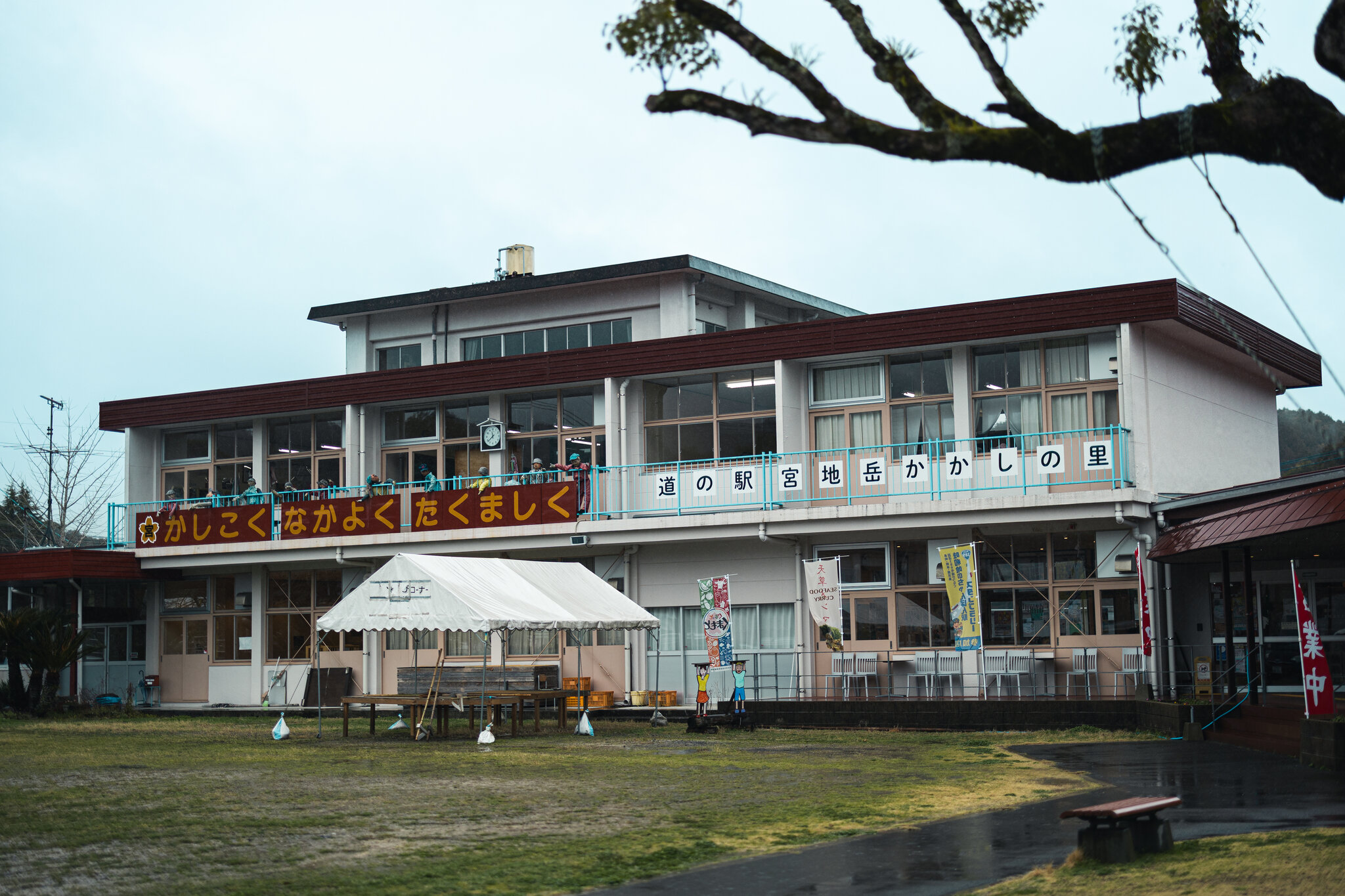
Inside, a group had gathered around a wooden table, with one figure leaning into the conversation from behind, a hand on a neighbour’s shoulder. I seemed to have arrived halfway through a discussion. The hand on the shoulder made it difficult to tell whether he was joining in or trying to get a word in.
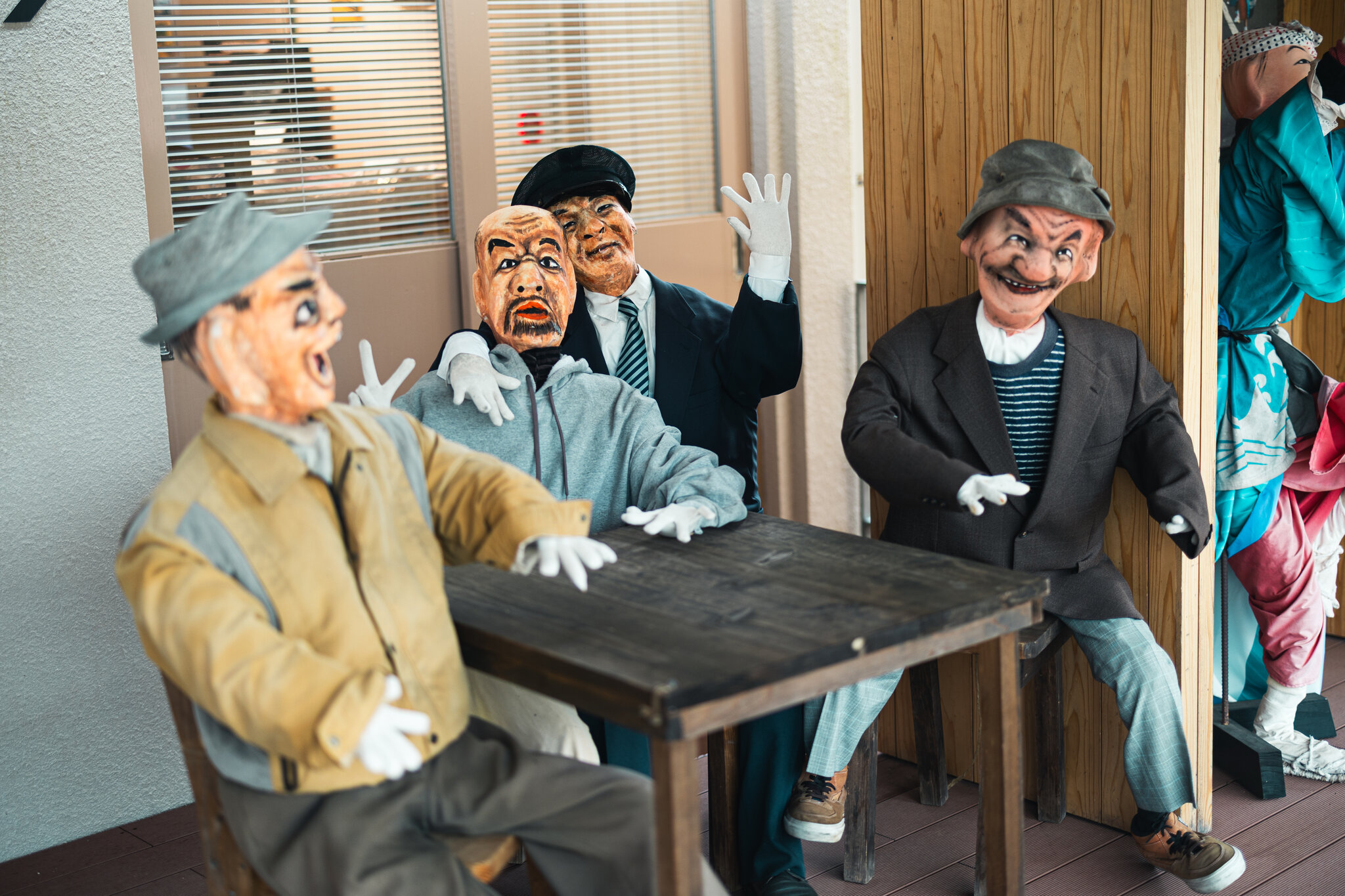
They were much more elaborate than the crossed sticks and old shirt that the word “scarecrow” might suggest. The tilt of a head or the position of a hand supplied each figure with an attitude. Even the group beside the school washbasins seemed to be in the middle of doing something, though agreeing on what might have taken a while.
A broad intake
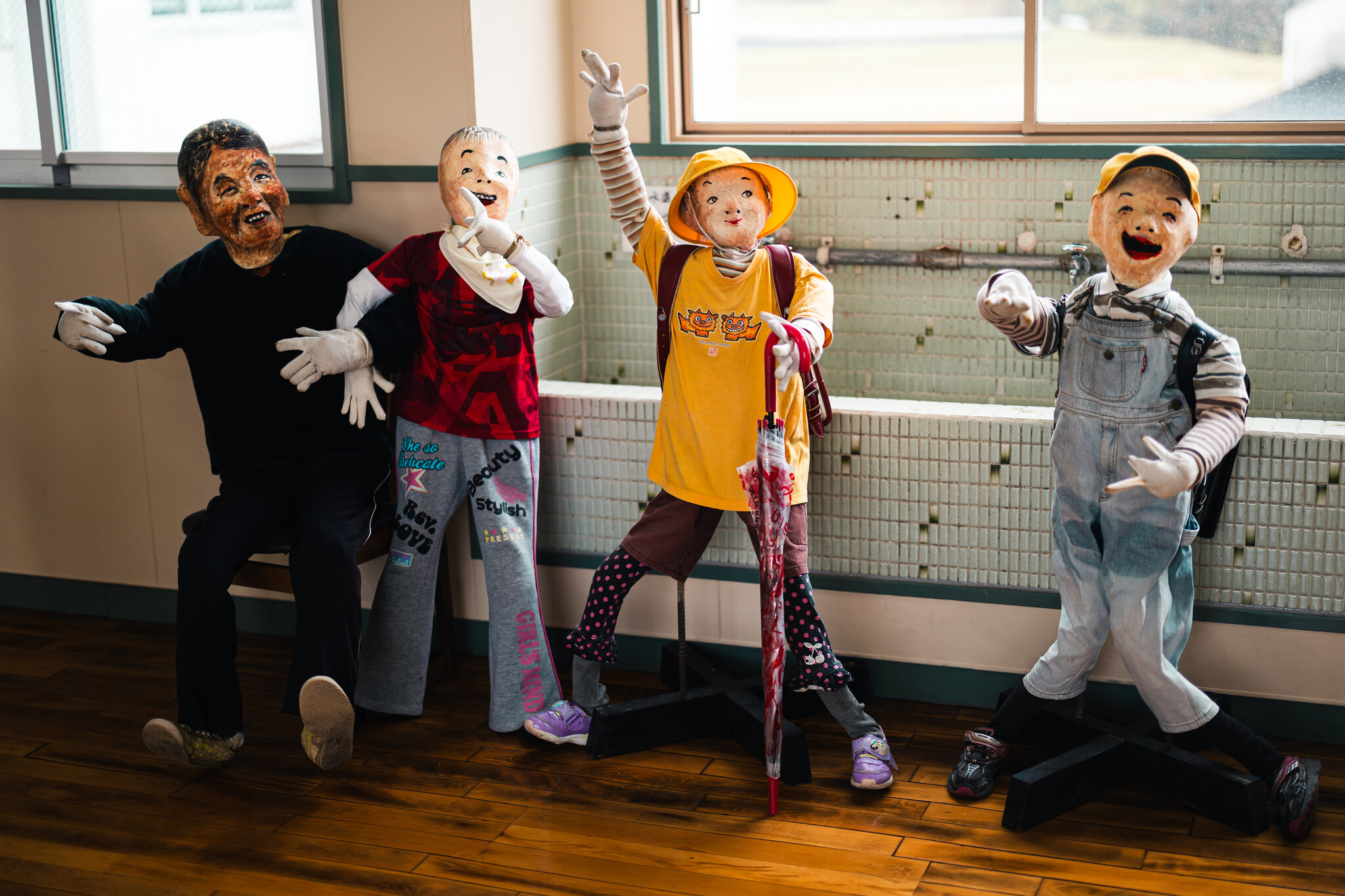
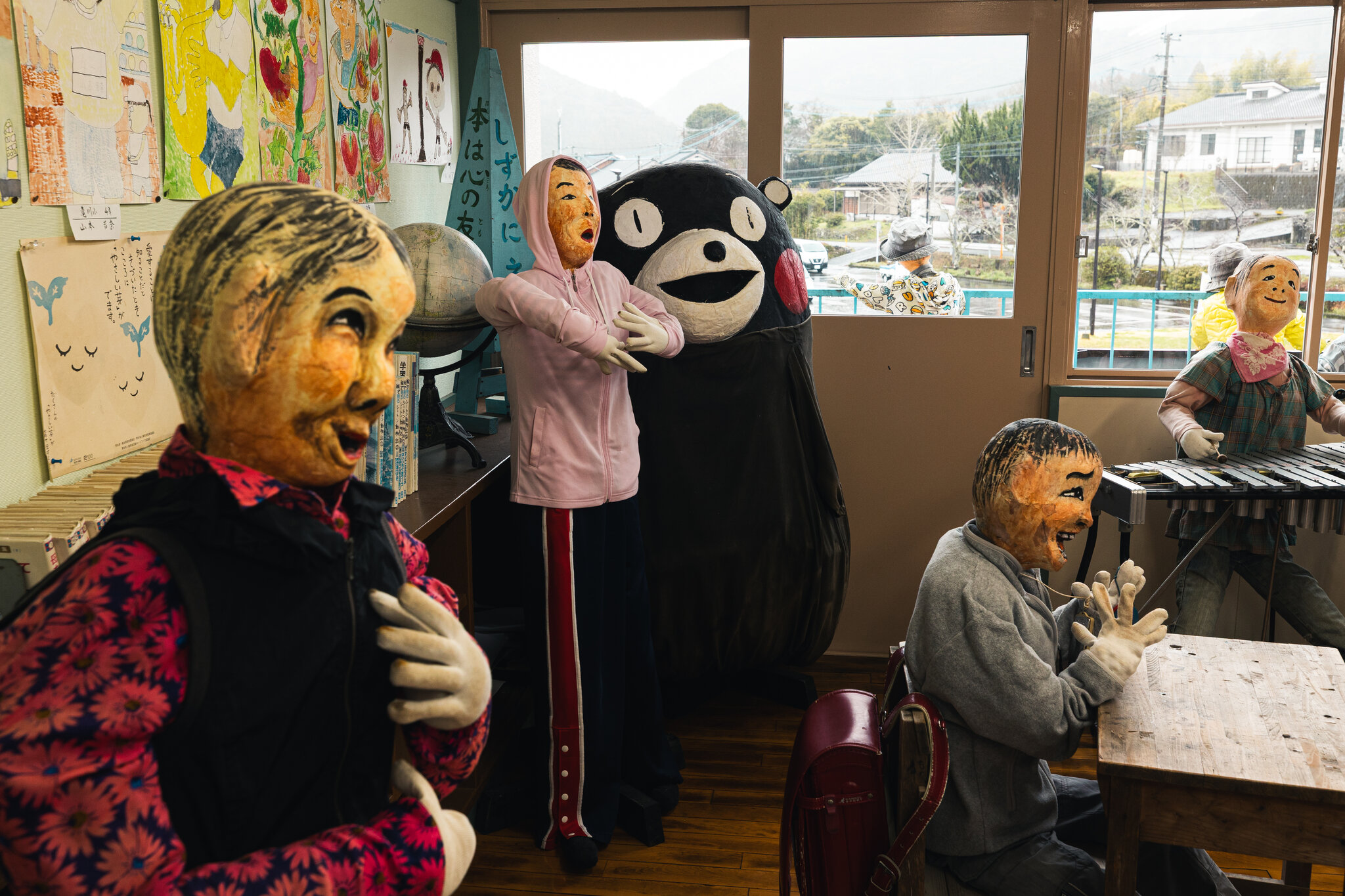
In the classroom, the old wooden desks and children’s pictures on the walls made the setting immediately familiar. The faces were less easily placed.
There were small figures in children’s clothes, but also faces with decades of experience drawn into them. Near the back stood a handmade version of Kumamon, Kumamoto’s black bear mascot, taller and rounder than most of the class.
The school had closed. Admissions appeared to have become more flexible.
From the front, it was easy to imagine a lesson, a song, or the moment before either was brought under control. The old furniture did a great deal of the work: put the same figures in a row against a wall and they would be a collection; give them desks and they became a class.
A full social calendar
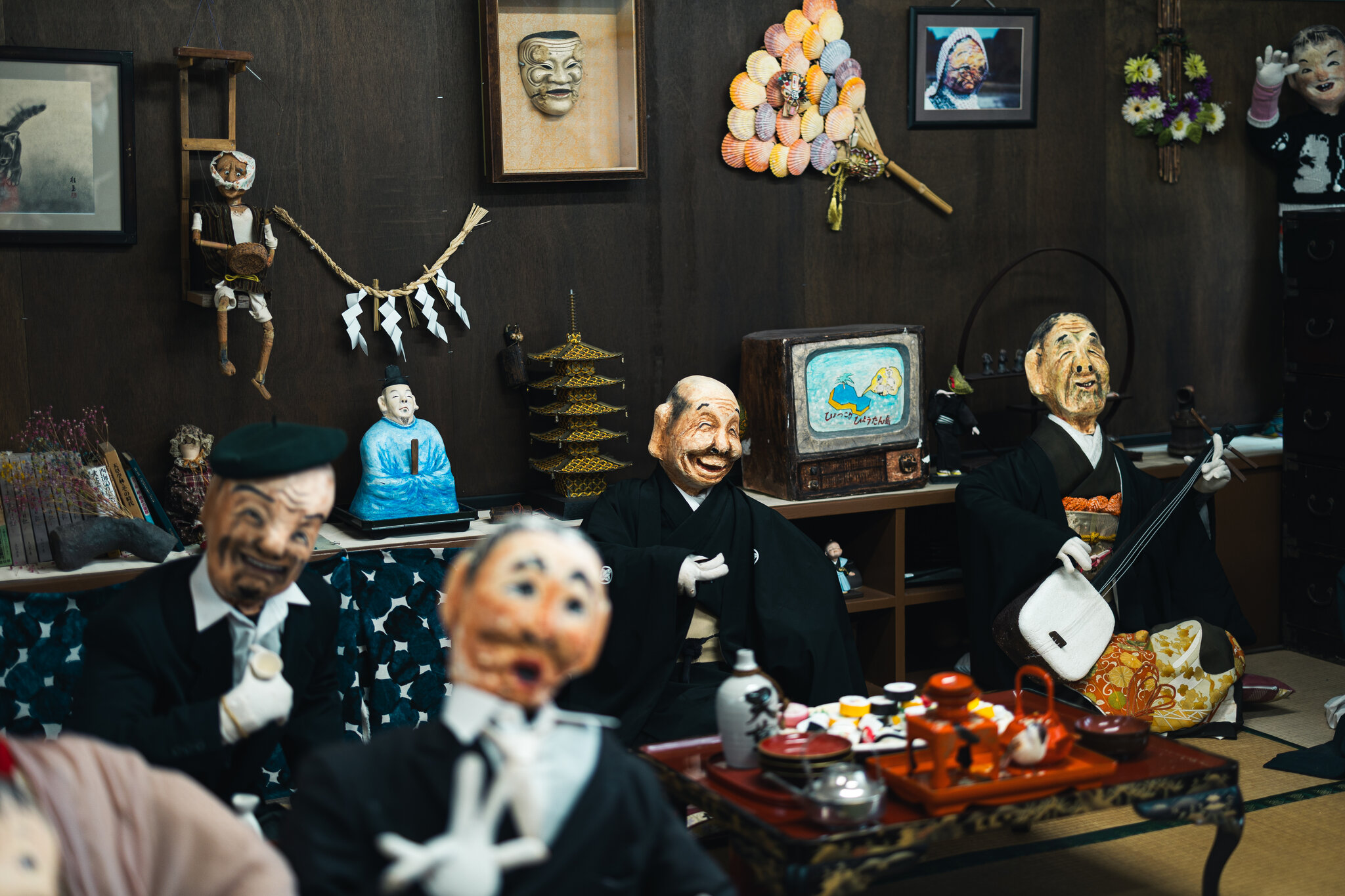
School was only one of the gatherings assembled here. The exhibition recreates scenes of rural life, extending the company well beyond the classroom. At a wedding celebration, the guests sat around low tables while a shamisen player supplied the entertainment. Their broad smiles suggested that the formalities were well behind them.
Behind the gathering stood an old-fashioned television. Someone had taken the trouble to give it a picture, too—a small extravagance in a room where the guests already had plenty to occupy them.
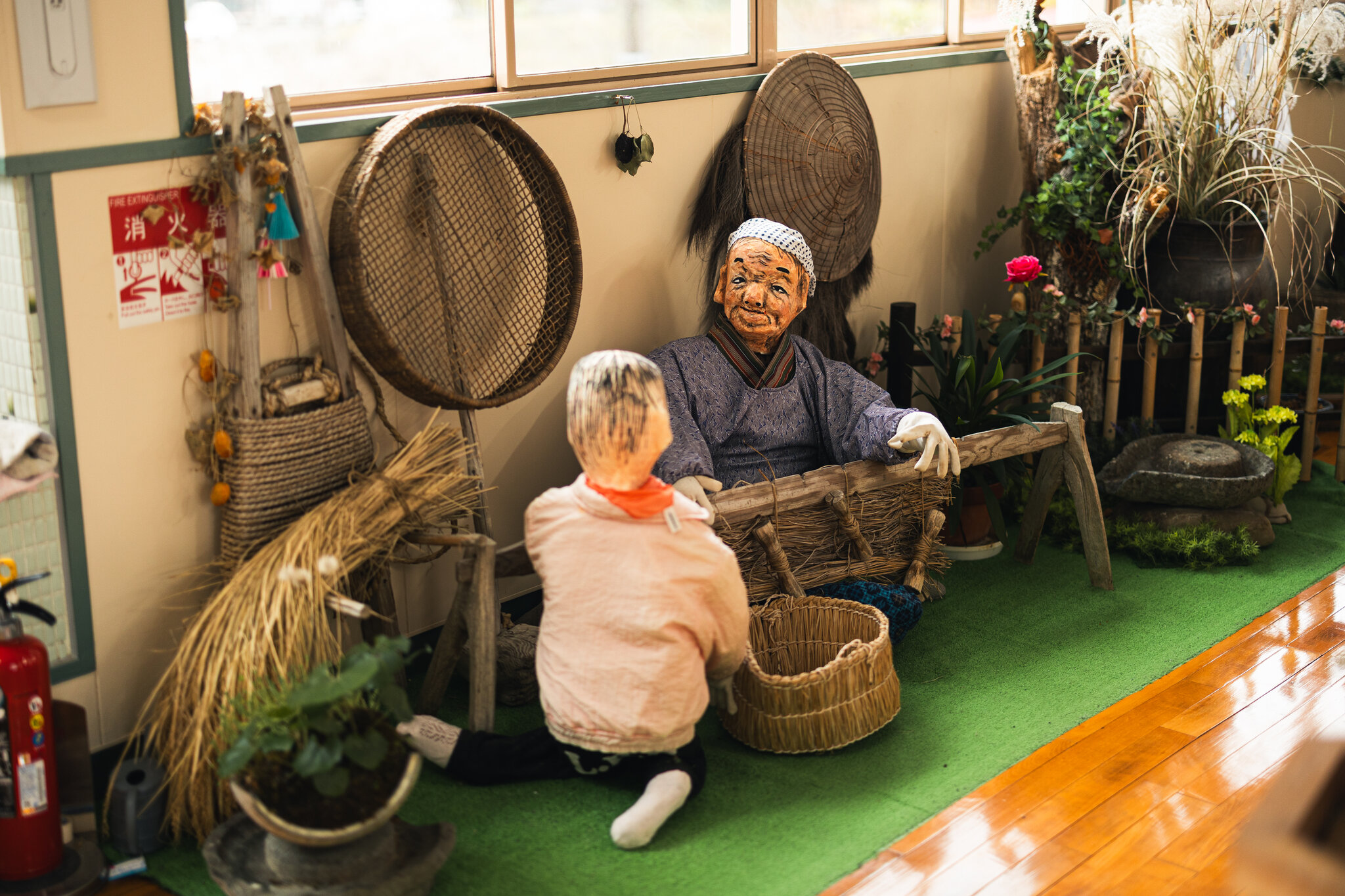
A quieter scene brought the scale back down to an older figure and a child, facing each other across some straw work. It occupied only a strip beside the school windows, but made room for an ordinary afternoon among the larger occasions.
Making the next person
The straw appeared again in a display labelled “Body-making, step 2.” Two figures sat on the floor with an unfinished body stretched between them. Its legs were still bundles of straw, with none of the clothing that had made the other figures so easy to read as people.
The scarecrows were making another scarecrow. John von Neumann’s idea of a self-replicating machine appeared to have reached the straw-and-gardening-gloves stage.
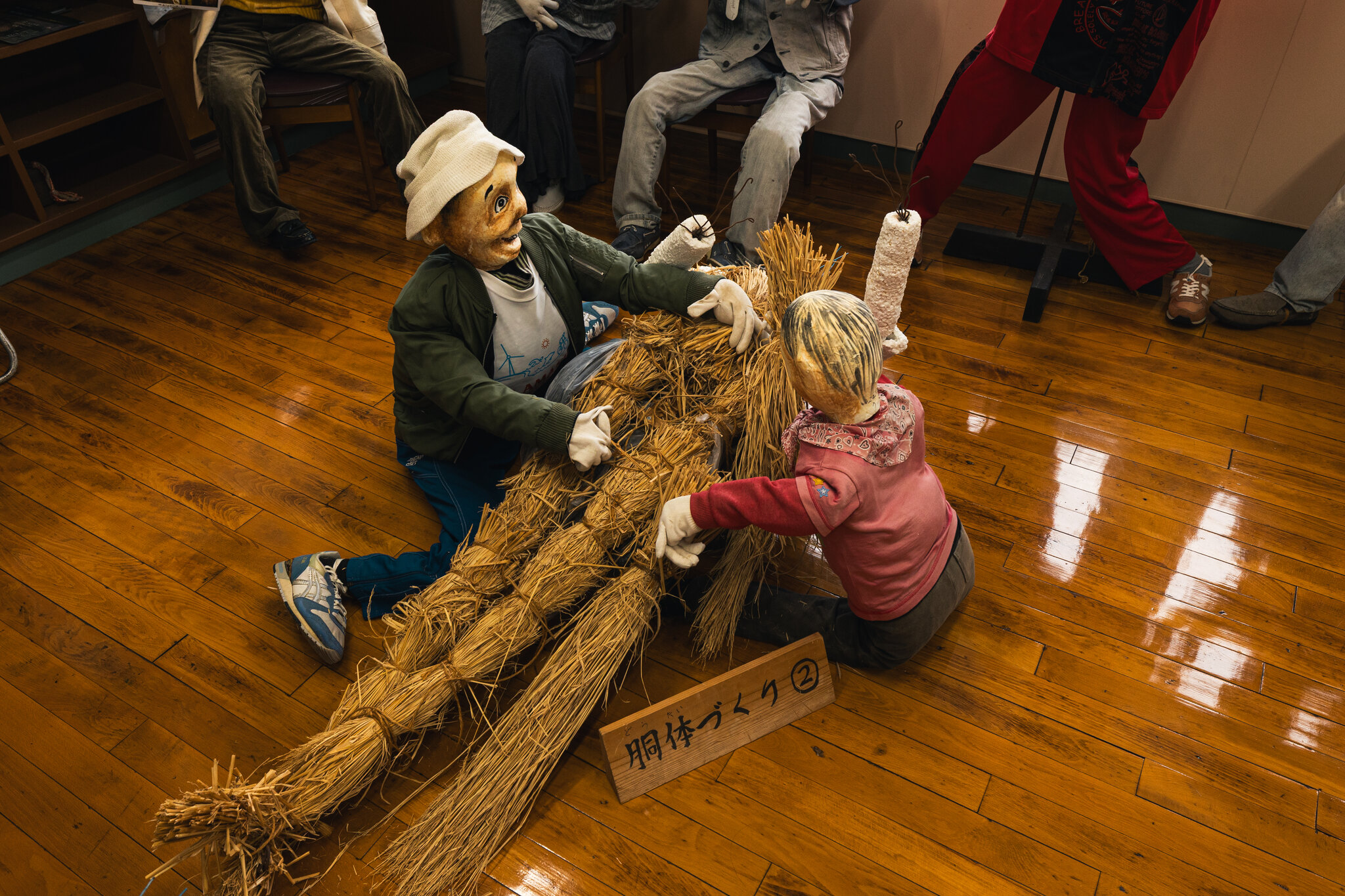
Until this point, I had been reading the finished figures through their gestures: a hand on a shoulder, an arm raised in class. Here, the straw and unfinished limbs briefly showed how those people had been assembled. The body between the two makers was still waiting for an expression. There was time yet to decide whether it would be paying attention in class or reaching for the sake.
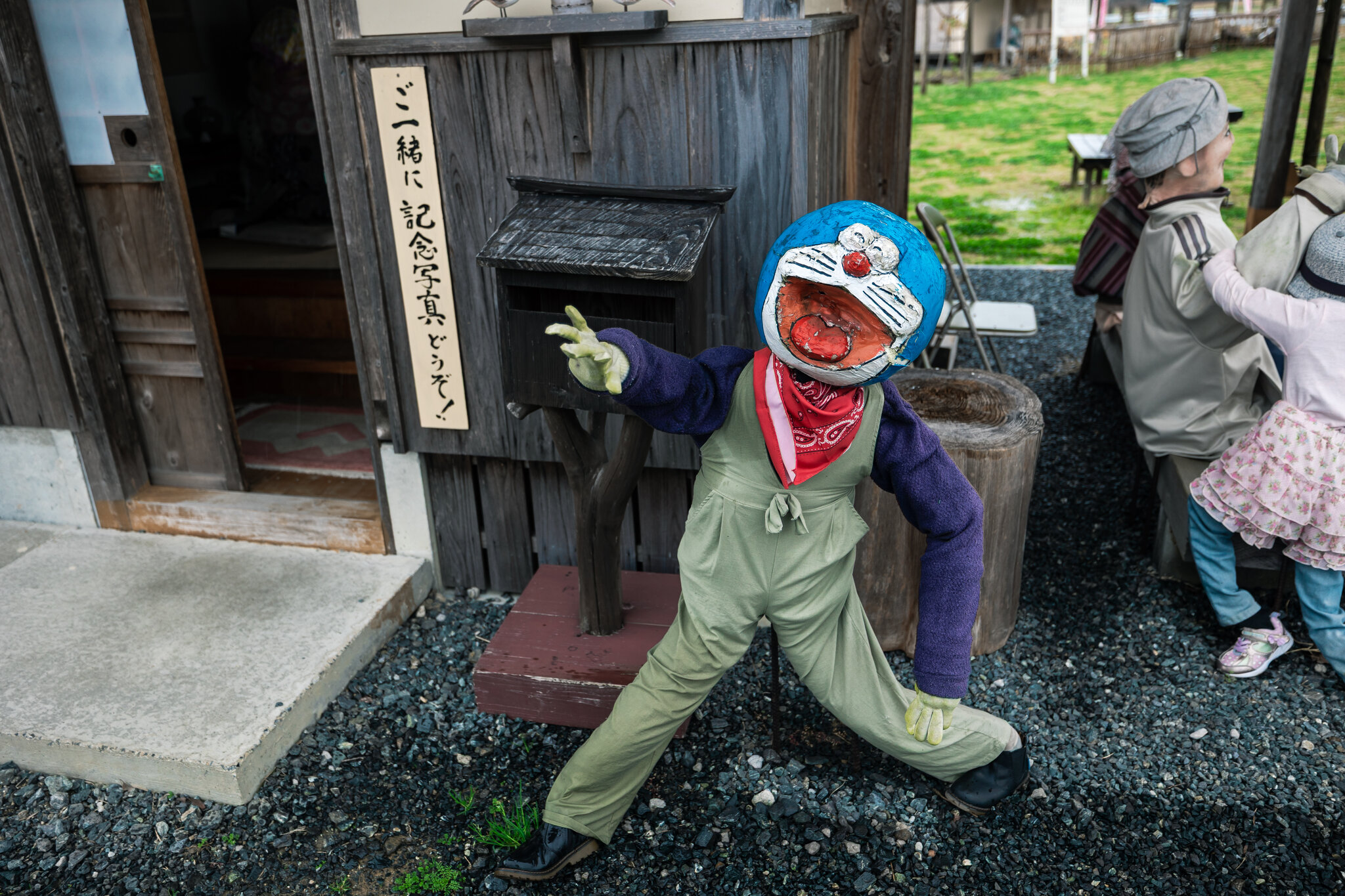
Outside, one last figure had already found a role. Beside a wooden doorway, Doraemon’s familiar blue face sat above a surprisingly long pair of legs, with one hand stretched out towards visitors.
A sign invited us to take a photograph together. It did not specify whether we were expected to match the pose.
Visit this place
Roadside station
Miyajidake Scarecrow Village (道の駅 宮地岳かかしの里)
A former primary school reused as a roadside station and permanent scarecrow gallery in central Amakusa.
5516-1 Miyajidake-machi, Amakusa, Kumamoto 863-1161, Japan
Practical Information
- Area
- Amakusa, Kumamoto
- Opening hours
- March–October 9:00–18:00; November–February 9:00–17:00. Hours may change.
- Closed
- First and third Wednesdays (the following Thursday when a holiday), plus December 31 and January 1.
- Access
- The Miyajidake Scarecrow Village bus stop is on the route between Hondo Bus Center and Ushibuka Port. The Amakusa Gurutto sightseeing bus also stops here.
- Scarecrow gallery
- The permanent exhibition is on the second floor and can be visited year-round. Its themes include weddings, classroom scenes and scarecrow-making.
- Restaurant
- The roadside-station restaurant serves soba, ramen, udon, set meals and soft-serve ice cream. See the official facility guide for current details.
- Official website
- Miyajidake Scarecrow Village
- Access information
- Official access guide
Information last checked: September 20, 2026
Conversation
Comments
Review pending commentsComments are reviewed before appearing. The internet already contains enough unattended surprises.
Checking comments…
Comments are not available in this migration preview yet. Existing comments remain on the current site.
Leave a comment