Gotokuji Temple: Where Lucky Cats Come Back
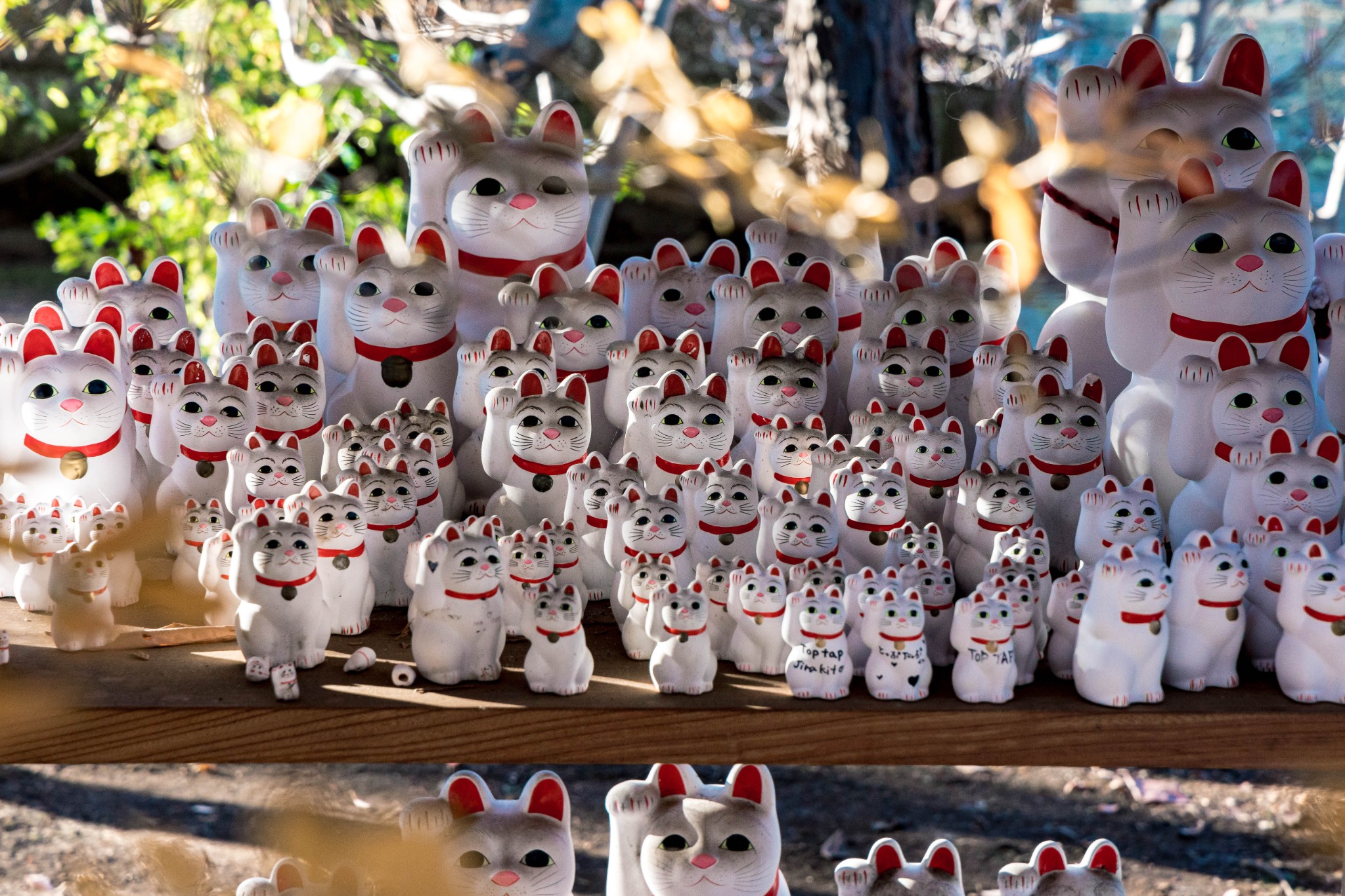
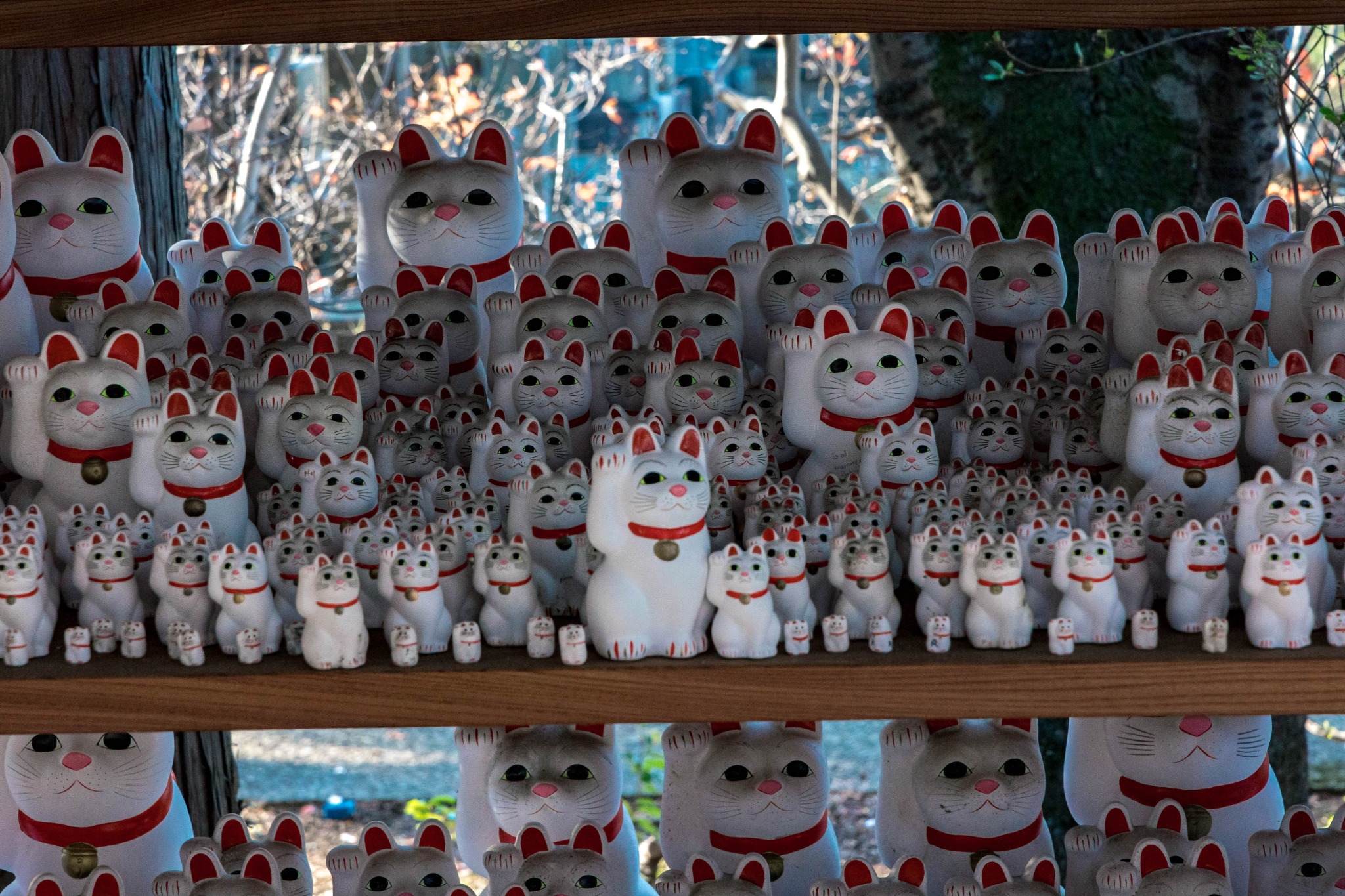
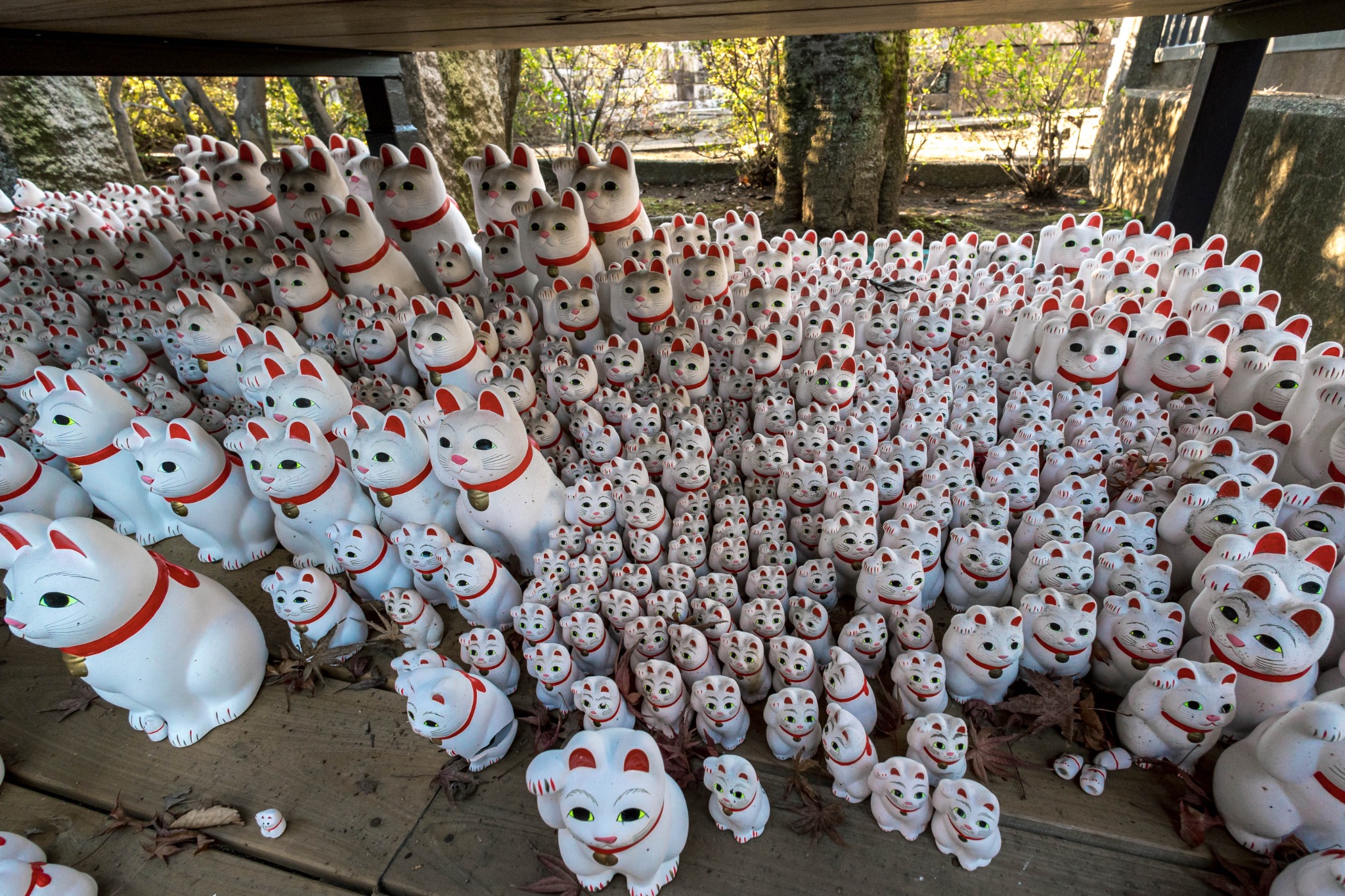
Every cat had a paw raised. Not one appeared concerned about where the next arrival would sit.
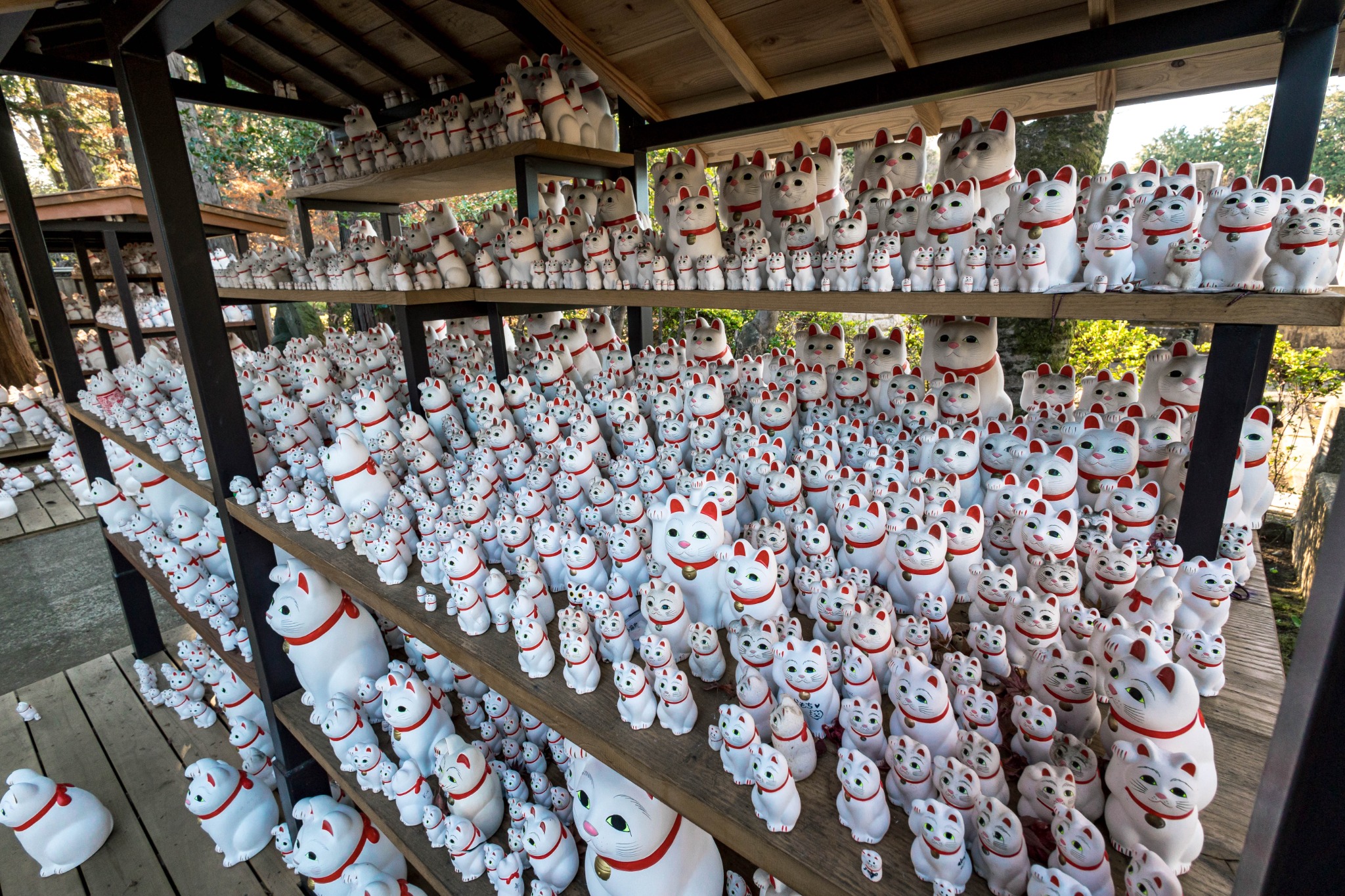
Large cats stood behind small cats. Tiny cats occupied the gaps between their feet. Red collars and pink ears repeated across the shelves, with fallen leaves occasionally interrupting the arrangement.
The result looked less like a collection than a population.
This was Gotokuji, a Buddhist temple in Tokyo’s Setagaya district. Its residents were maneki-neko—the beckoning cats familiar from shop counters and restaurant entrances across Japan. Here, they had an audience of their own.
A cat invites a samurai inside
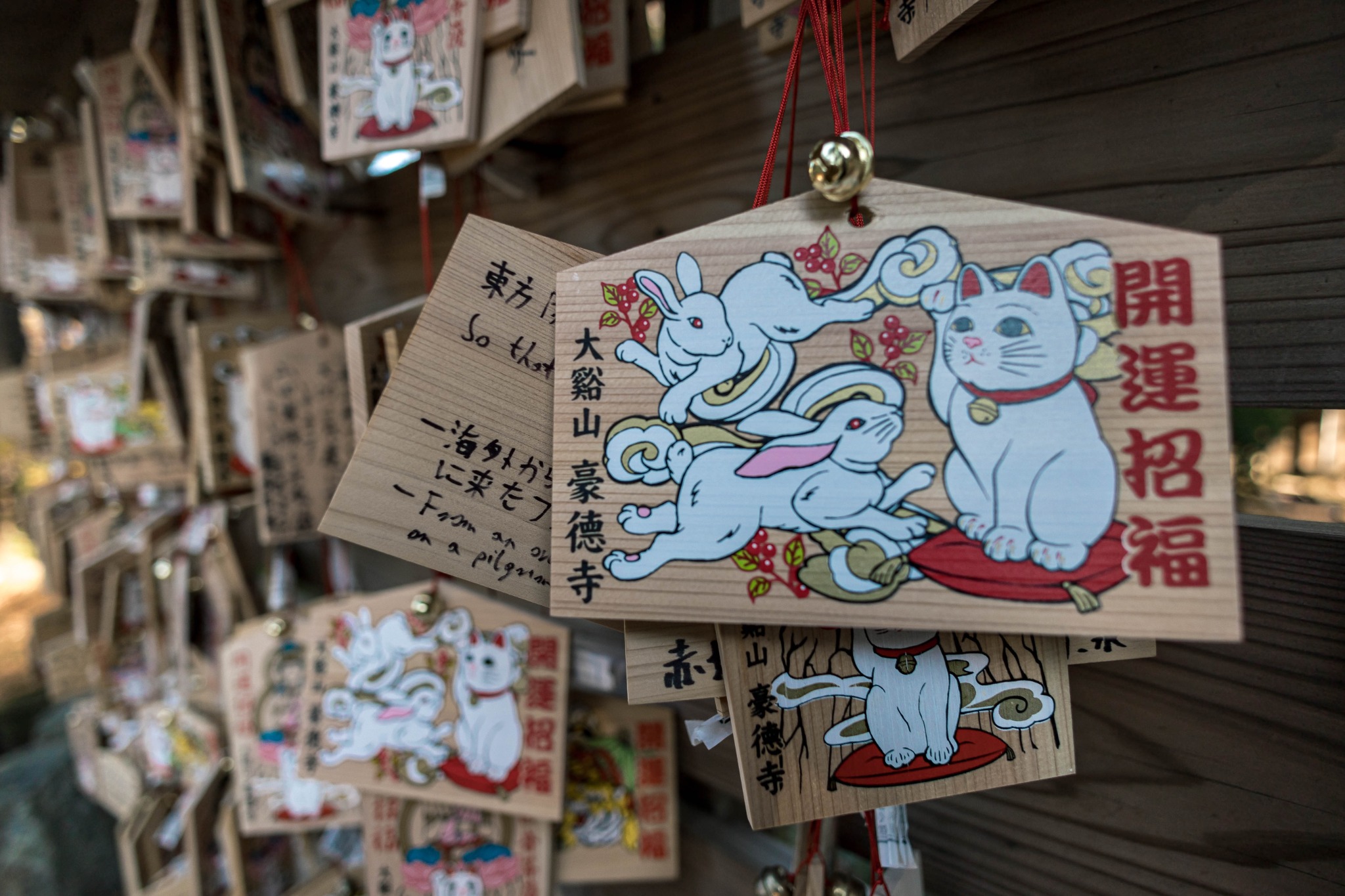
According to temple legend, the feudal lord Ii Naotaka was returning from falconry when a cat beckoned him into the temple. He followed it. Soon afterwards, a thunderstorm broke out.
Naotaka had escaped the rain and enjoyed a conversation with the priest. He became a supporter of the temple. Whether the cat knew about the weather is not recorded.
It was a productive encounter. Gotokuji became the Ii family’s temple in Edo, where generations of the family would be buried and remembered. It later took its name from Naotaka’s posthumous Buddhist name. Among those buried here is Ii Naosuke, the powerful statesman assassinated outside Edo Castle in 1860.
A lucky cat without the money
There is one important thing missing from Gotokuji’s cats.
Money.
Many familiar maneki-neko carry a koban, an oval gold coin associated with wealth and good fortune. Gotokuji’s Shofuku Manekineko do not.
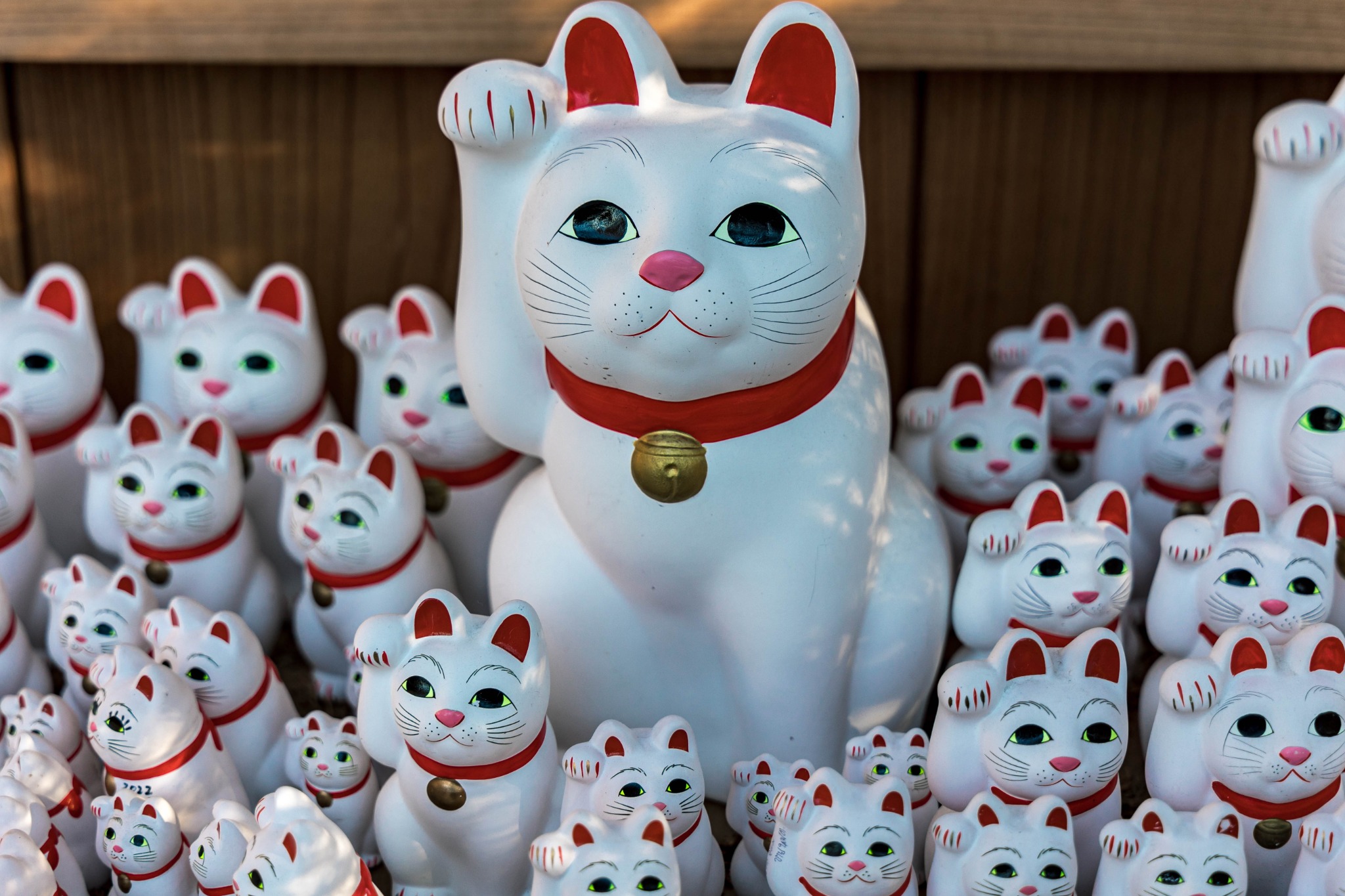
The temple’s explanation is more interesting than a promise of riches. Its cats bring en—connections and fortunate encounters. Making something of those encounters depends on the person, with gratitude an essential part of the teaching. The cat makes the introduction; it does not do everything that follows.
Naotaka, after all, still had to follow the cat.
Visitors can receive a maneki-neko at the temple and make a wish. There is no requirement that it must return, but many people bring the figure back as an offering after their wish has been fulfilled.
That changes the view of the shelves.
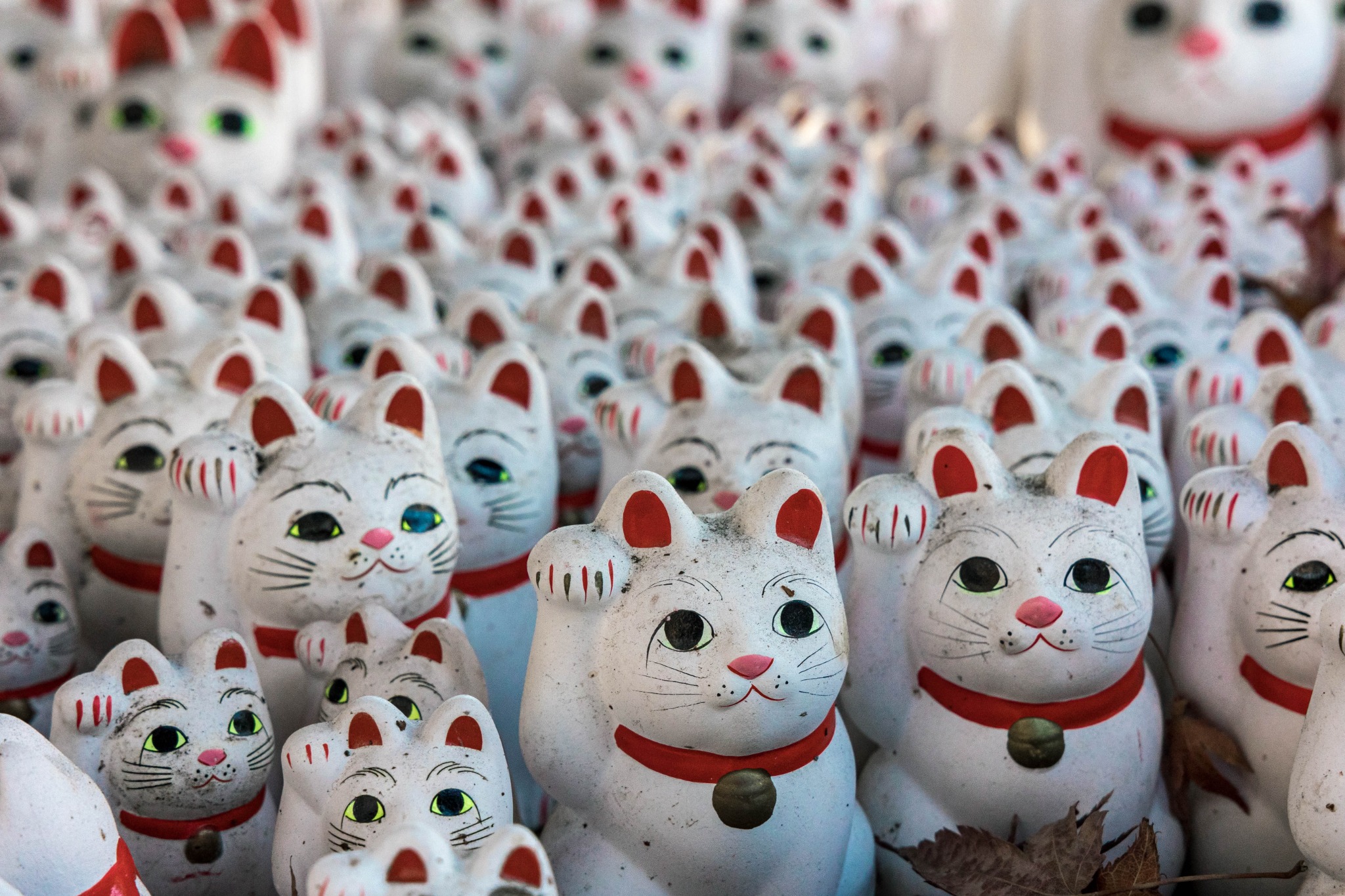
What first looks like an extraordinary quantity of the same object contains traces of many separate lives. Someone had something to hope for, and later a reason to bring a cat back.
Some figures were bright white; others had weathered to grey. Their sizes and surfaces broke up the apparent uniformity. They had not arrived as a single installation. They had come back one by one.
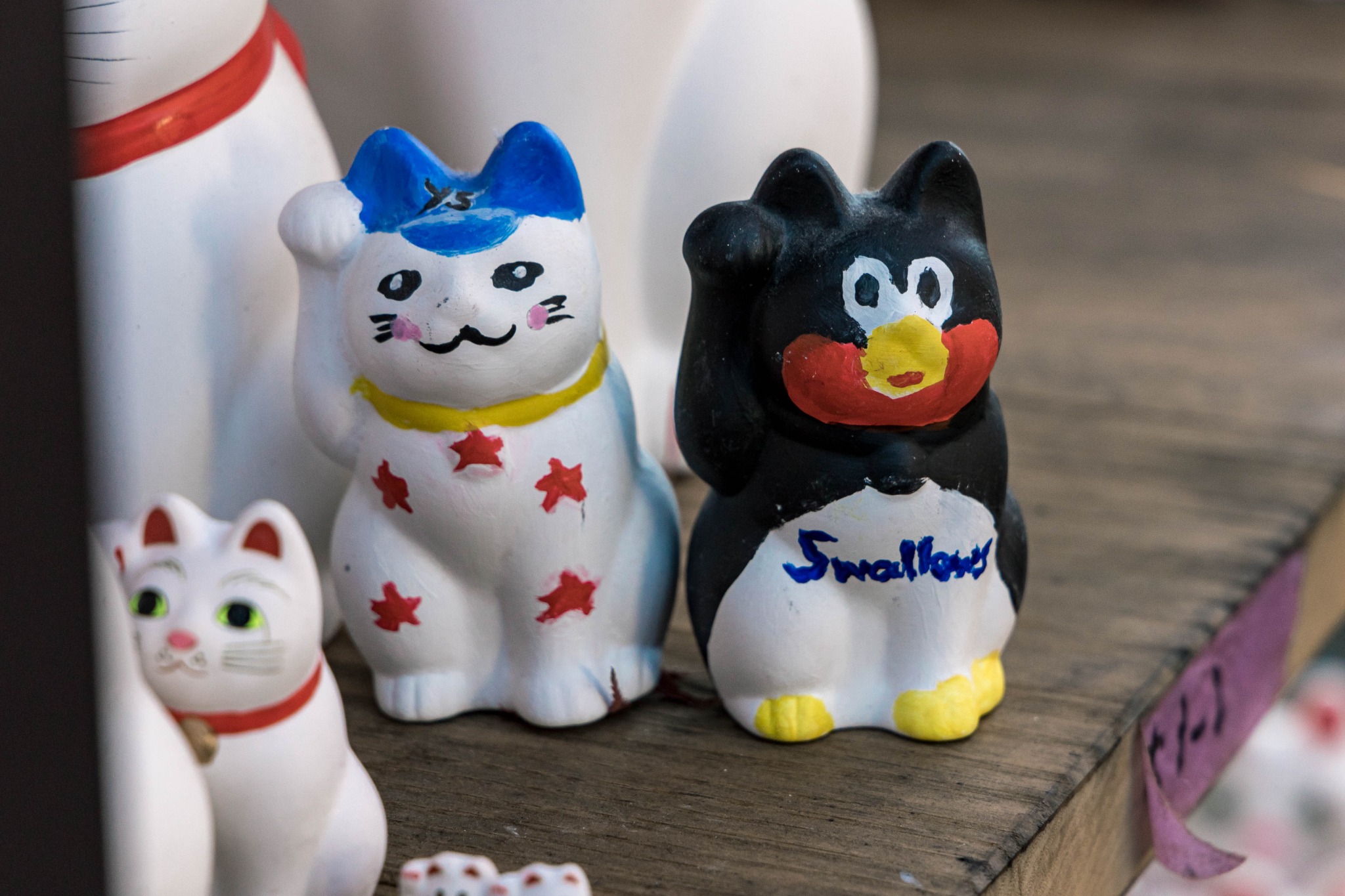
Among the white faces, two figures had acquired entirely different appearances. One had been given a blue cap. The other had been painted black, given a yellow beak and labelled “Swallows”—the name of a Tokyo baseball team. It was now, in most respects, a swallow. Its paw was still raised.
Elsewhere, someone was doing the lifting
Away from the shelves, a bronze incense burner offered a different arrangement of creatures. A shishi—a guardian lion—sat comfortably on its lid. Below, small demons crouched beneath the bowl, holding the whole thing up.
The distribution of responsibilities seemed unlikely to have been decided by those underneath.
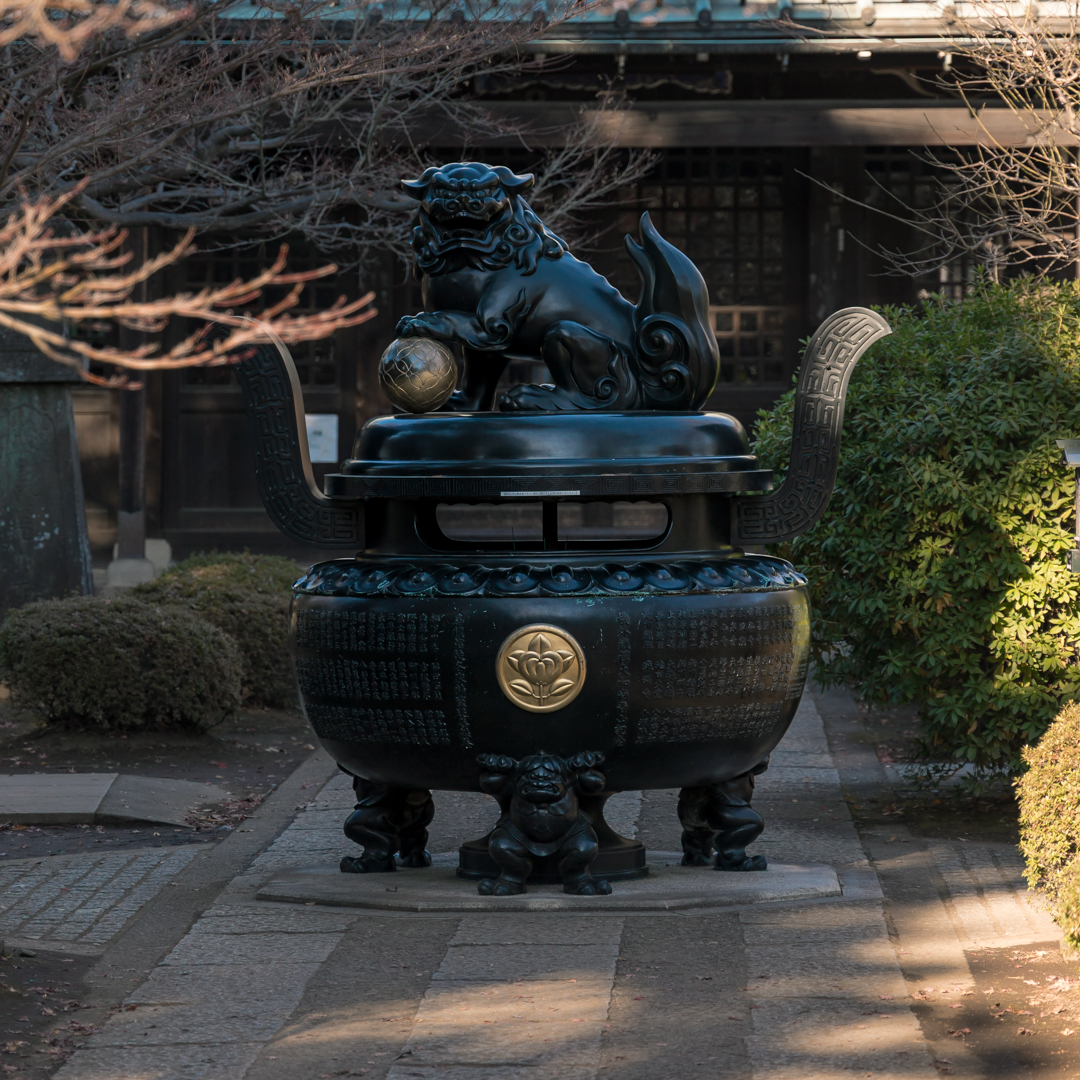
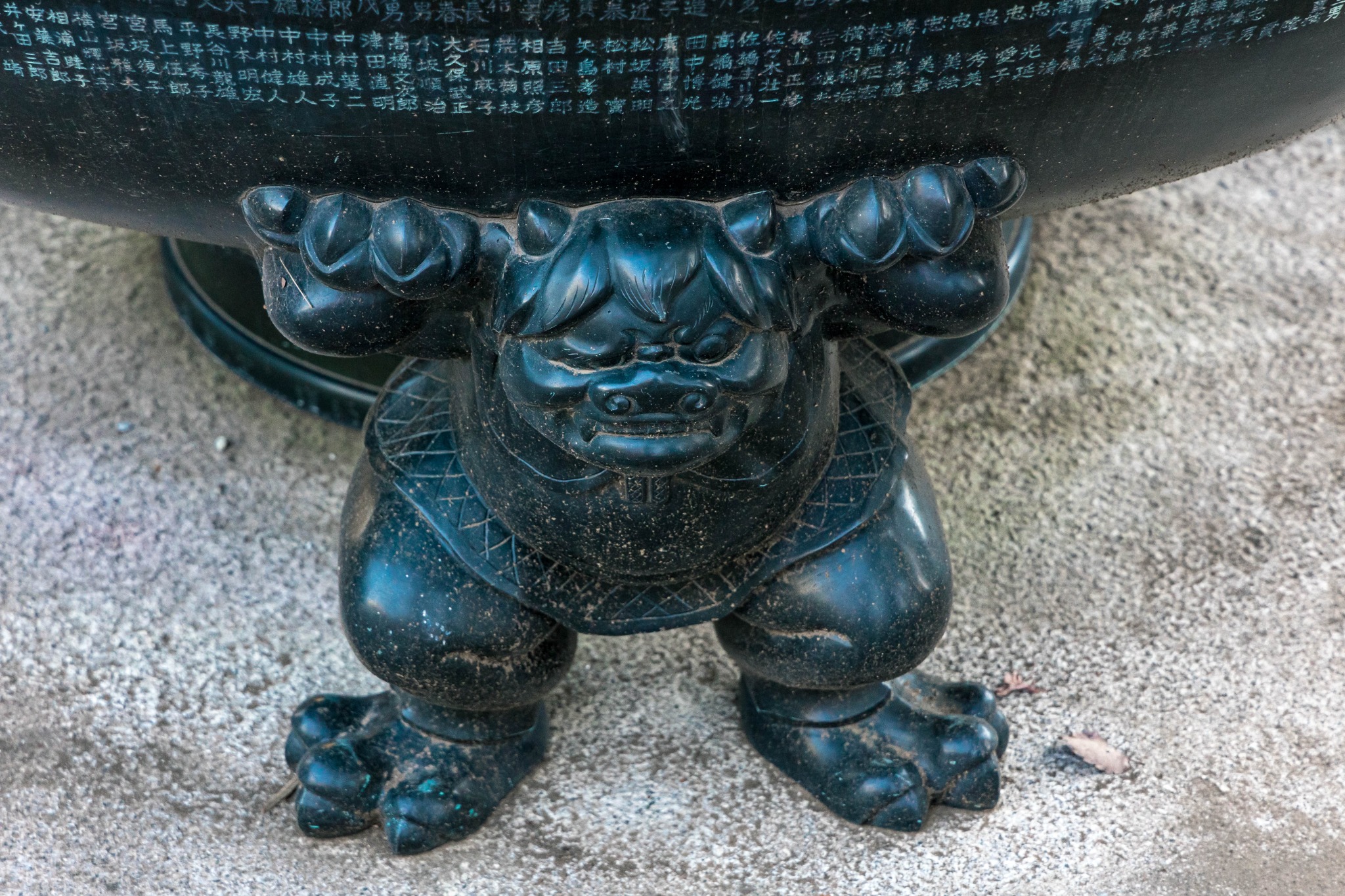
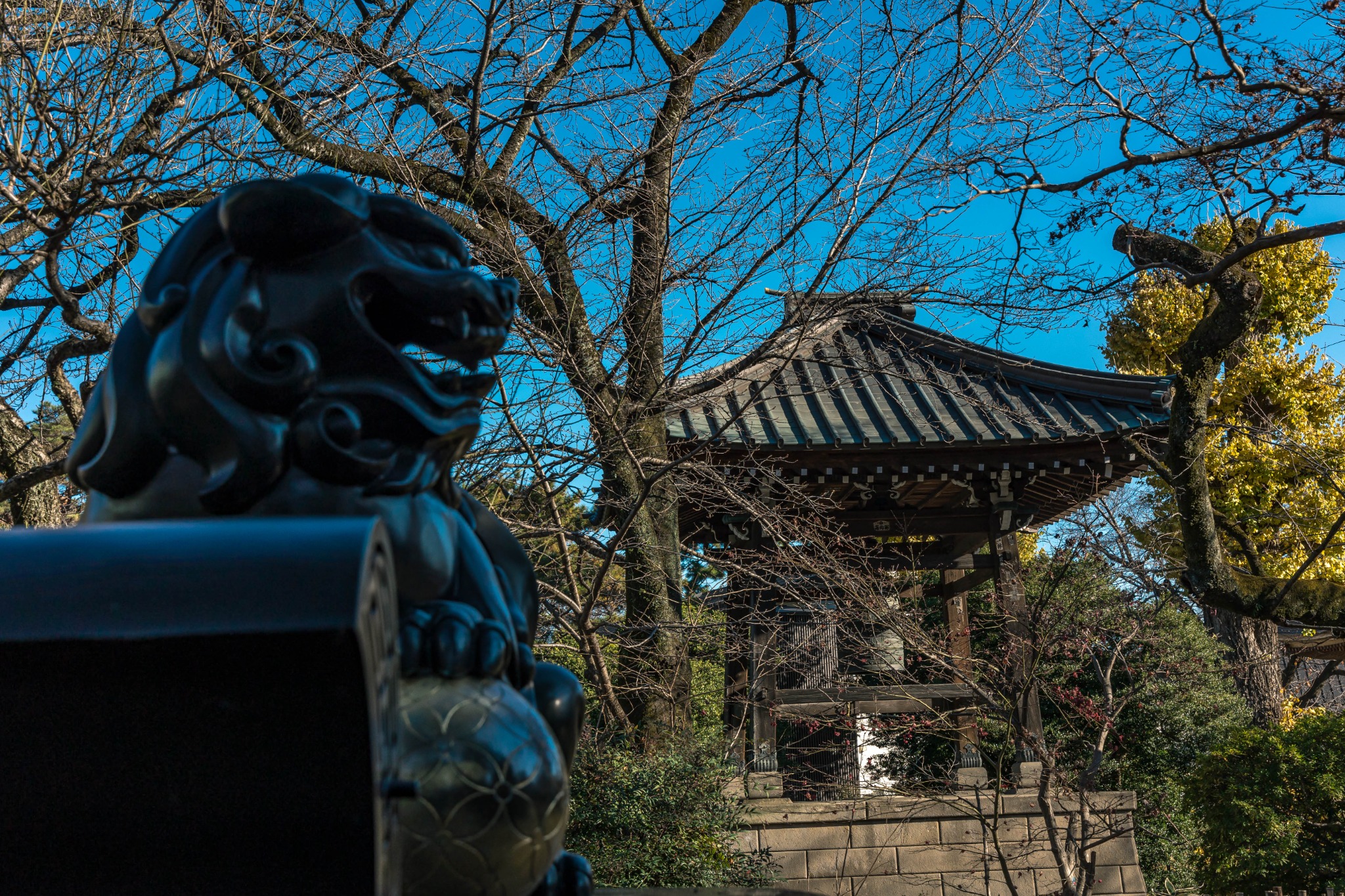
Behind the lion, the bell tower rose through bare branches. It would be easy to fill a memory card with cats here and leave much of the temple unphotographed.
The cats start before the temple
Outside the grounds, the cats resumed their duties. A painted one accompanied an arrow towards the temple. Near Gotokuji Station, a stone cat raised a familiar paw.
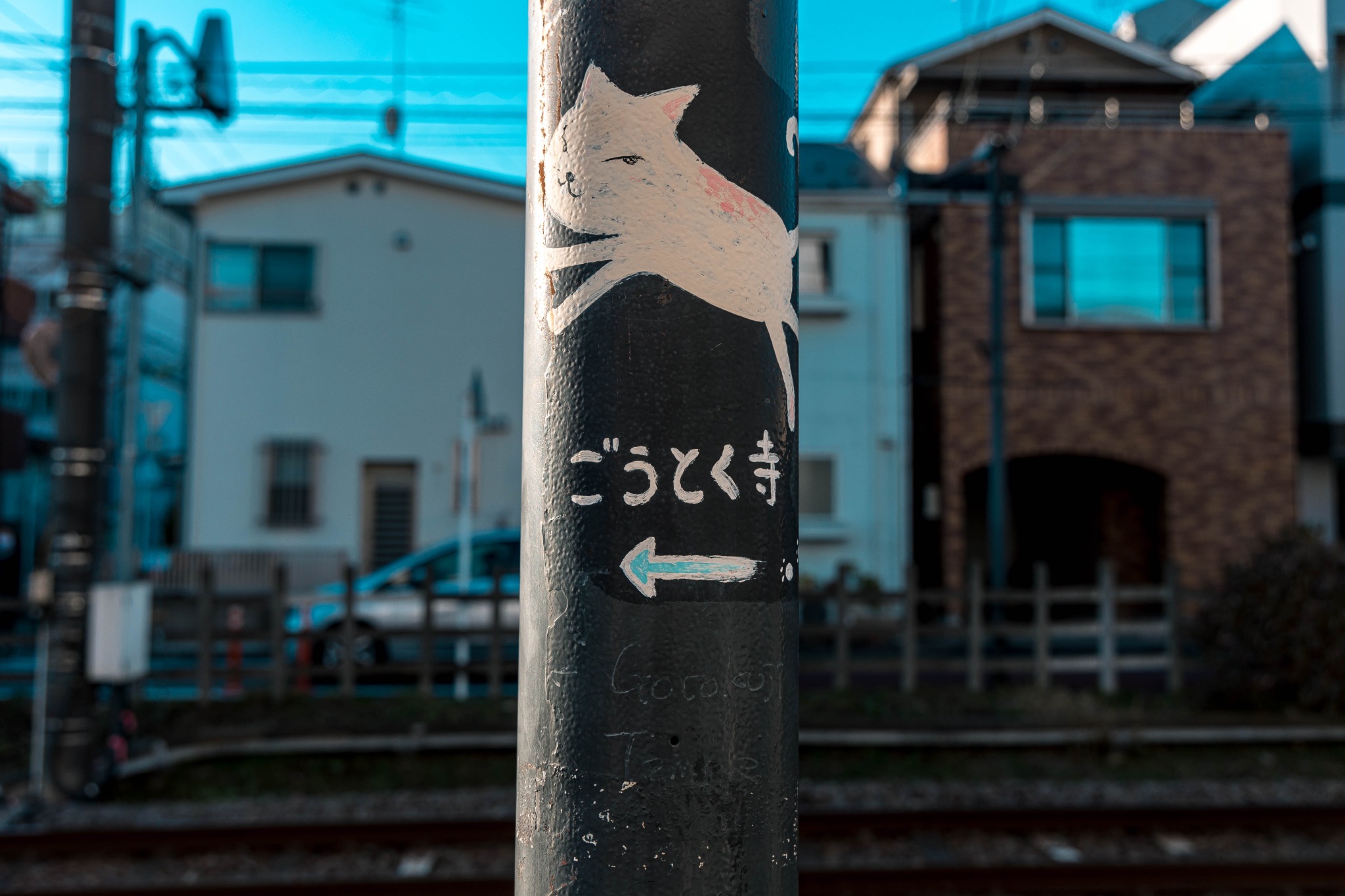
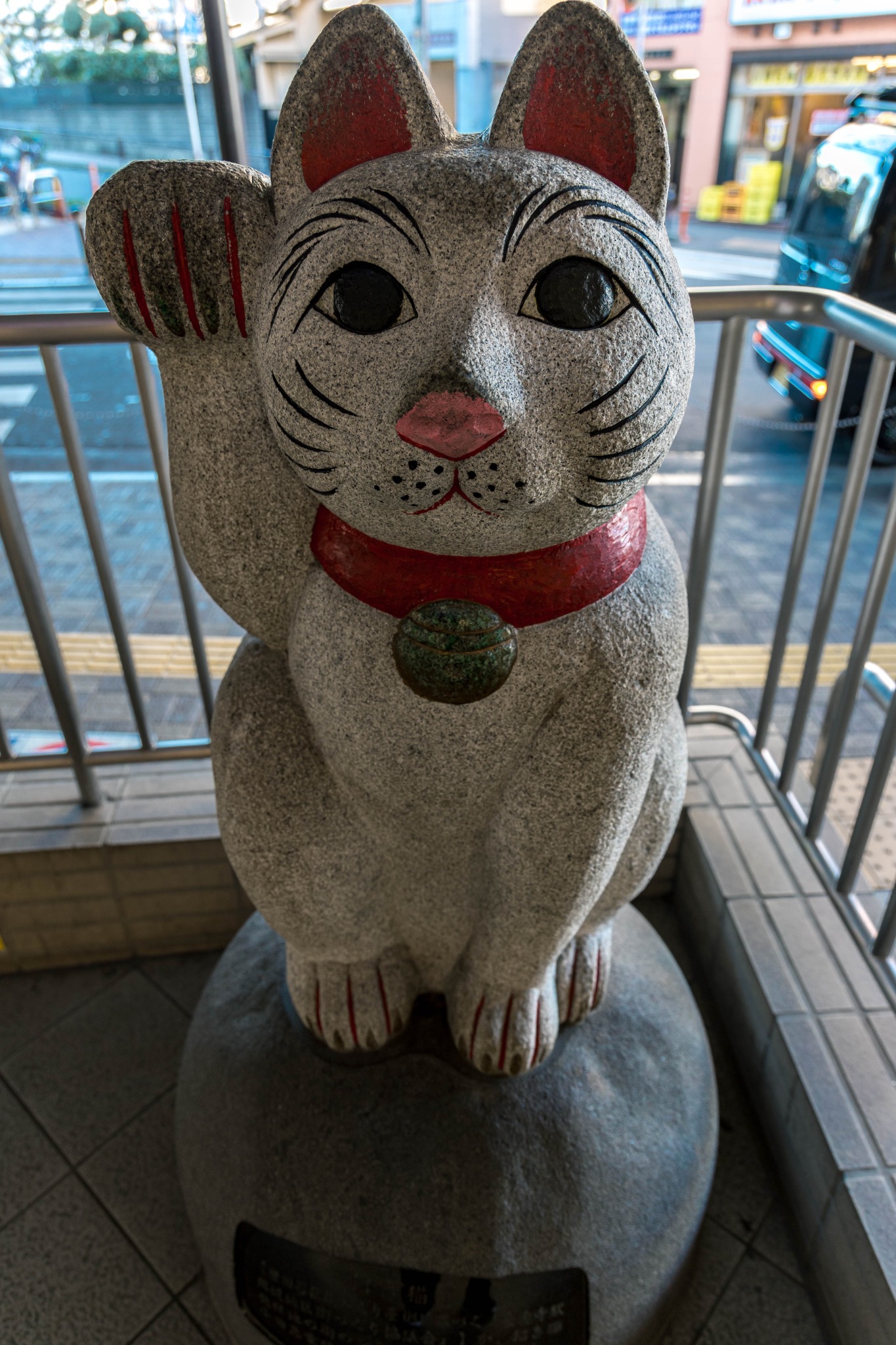
The first cat in the story had brought in a feudal lord.
The one near the station seemed willing to settle for me.
Visit this place
Location
Daikeizan Gotokuji Temple (大谿山 豪徳寺)
About 5 minutes on foot from Miyanosaka Station (Tokyu Setagaya Line), or about 15 minutes from Gotokuji Station (Odakyu Line)
2-24-7 Gotokuji, Setagaya-ku, Tokyo 154-0021, Japan
Practical Information
- Opening hours
- 6:00–17:00
- Temple office hours
- 8:00–15:00
- Maneki-neko
- Shofuku Manekineko figures are available from the temple office; some sizes may be unavailable.
- Access
- About 5 minutes on foot from Miyanosaka Station (Tokyu Setagaya Line), or about 15 minutes on foot from Gotokuji Station (Odakyu Line)
- Admission
- Free
- Official website
- Gotokuji Temple
Information last checked: August 28, 2026
Conversation
Comments
Review pending commentsComments are reviewed before appearing. The internet already contains enough unattended surprises.
Checking comments…
Comments are not available in this migration preview yet. Existing comments remain on the current site.
Leave a comment