Sakitsu Village: The Altar Went Where the Stepping Was
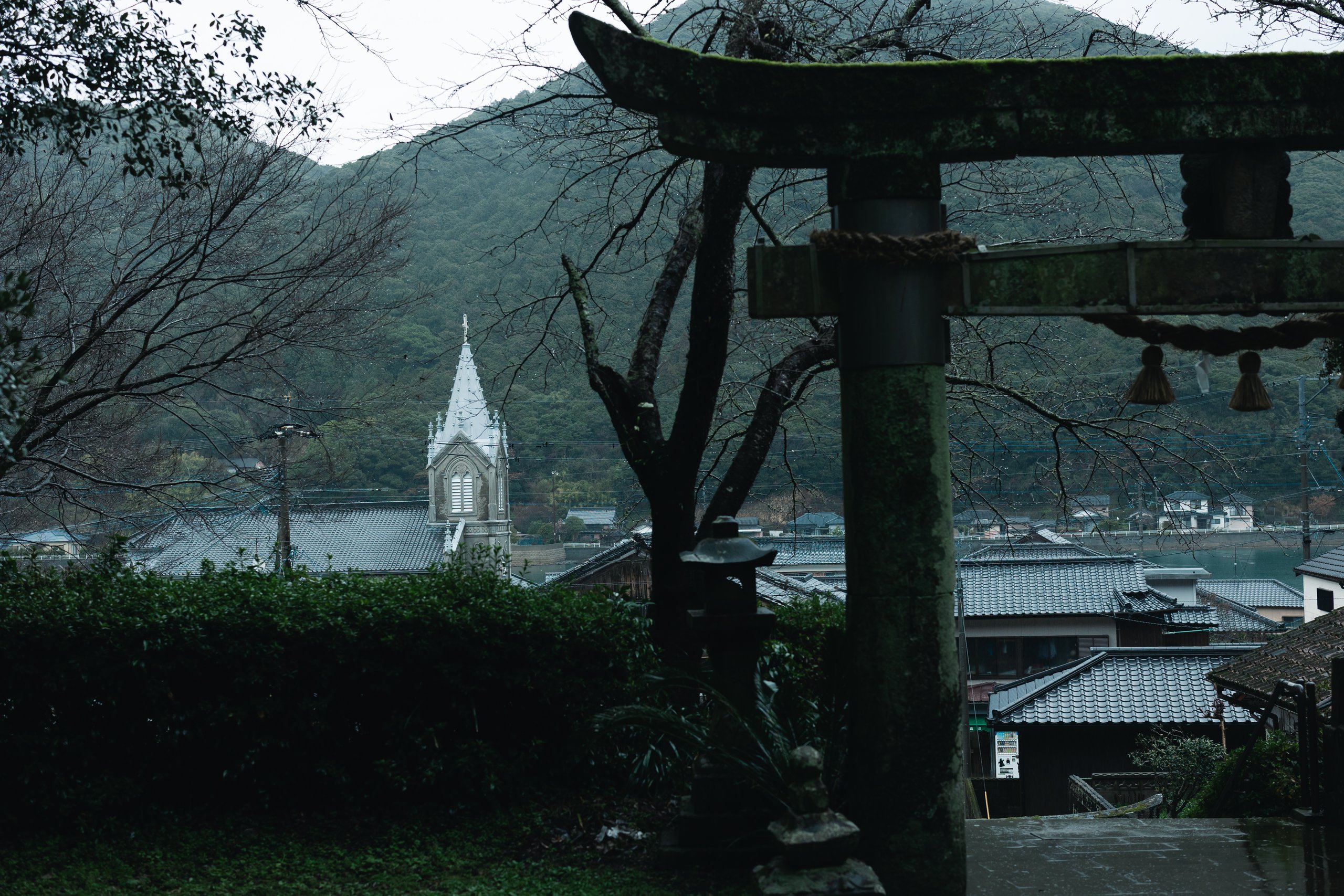
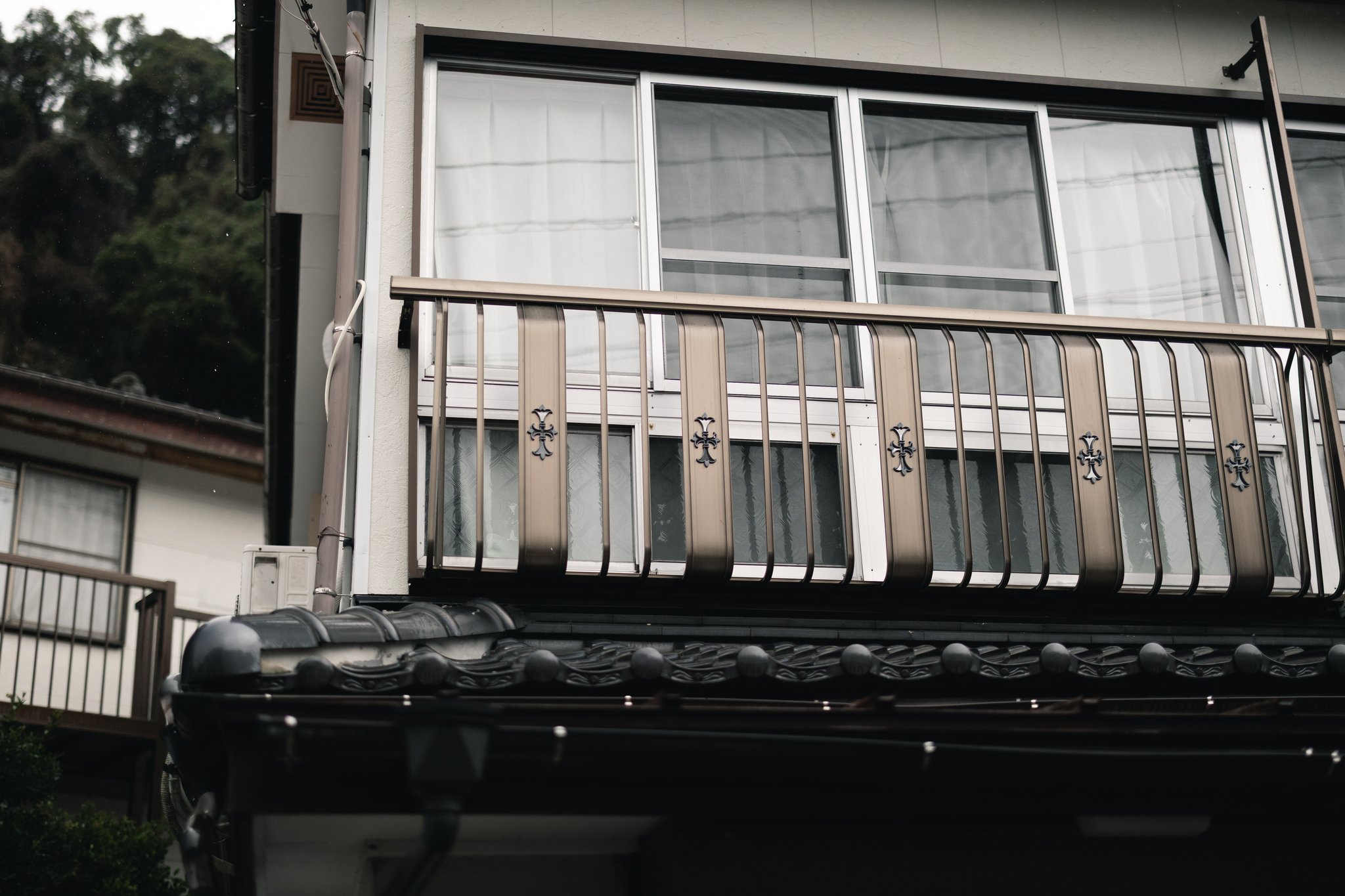
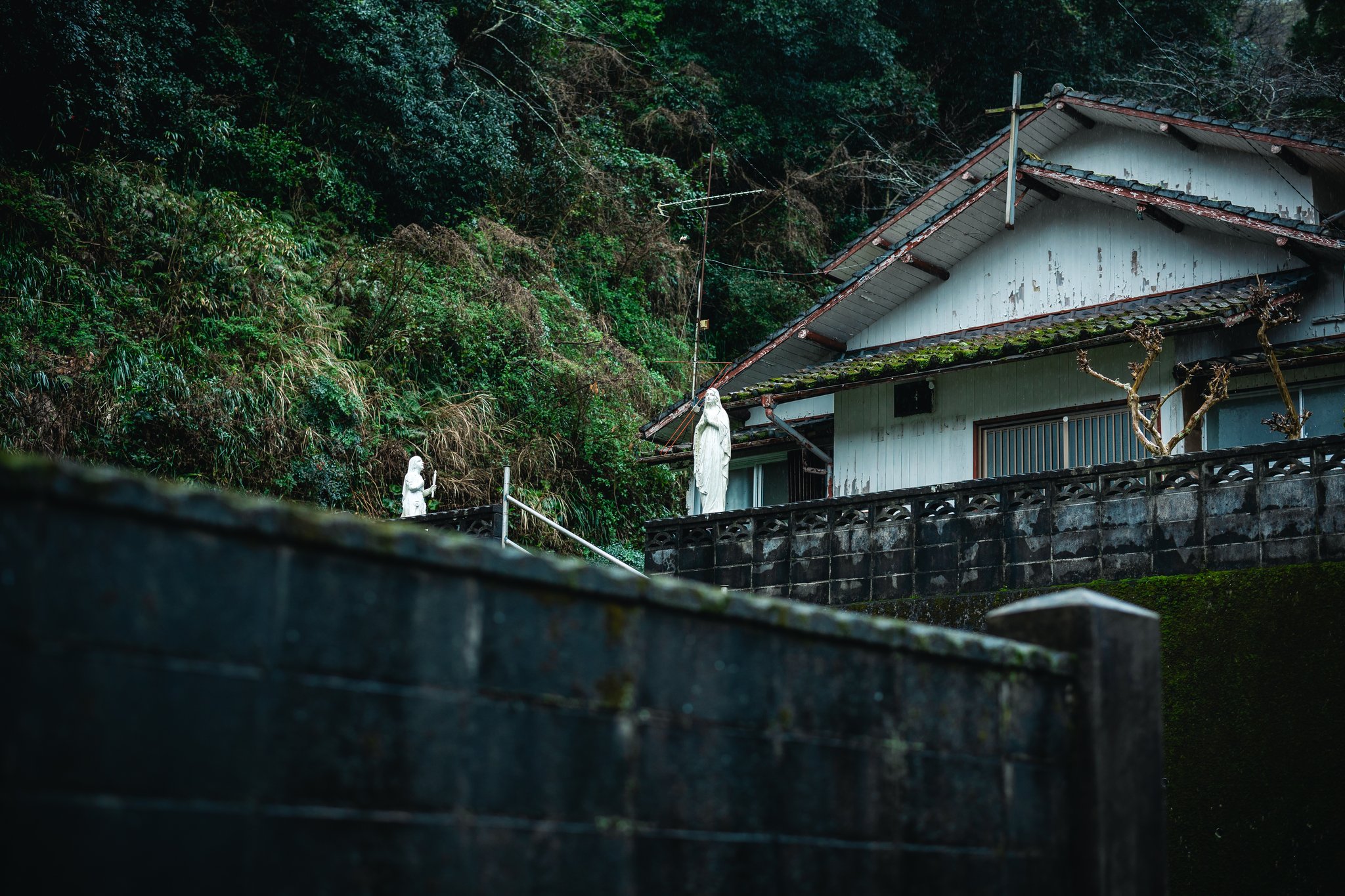
The houses in Sakitsu look much like those in any Japanese fishing village: tiled roofs, weathered wooden walls, bicycles parked by the door. Then you notice the balconies.
Sakitsu sits on a narrow inlet in western Amakusa, a group of islands off the west coast of Kyushu. Over the hills is Ōe, whose white church looks down on its fields. Sakitsu keeps its houses close to the water, and its lanes close to each other.
The front doors have something to show as well. Over one of them hangs a shimenawa, a rope of twisted straw with paper strips, which in Shinto marks a place as sacred and protected. In most of Japan, a household puts one up for New Year and takes it down again in January. In Amakusa, and especially in Sakitsu, some are left up all year.
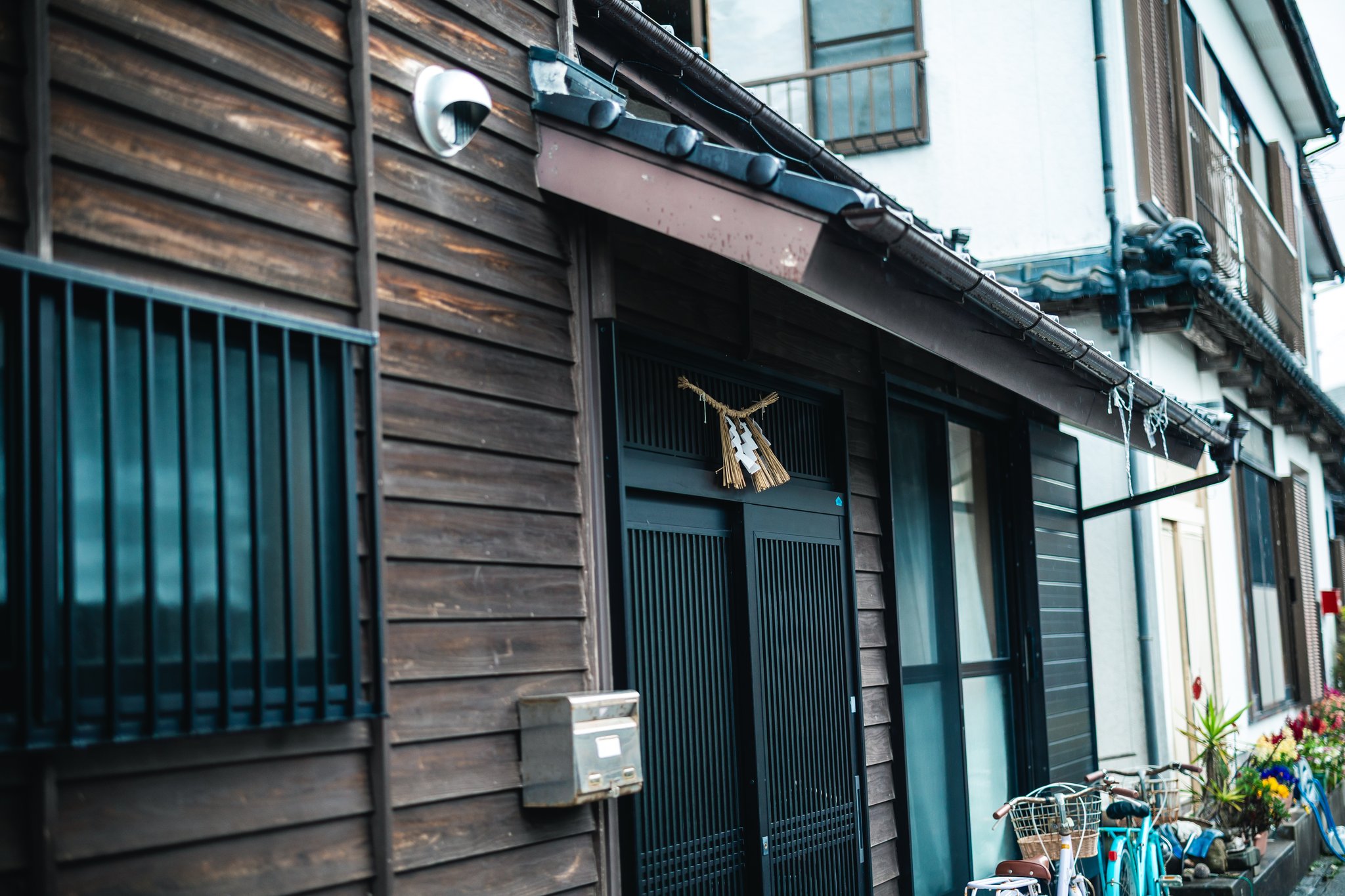
A Shinto rope on the door, crosses on the balcony. For most of the village’s history, only one of them could safely be seen.
Deus, god of good catches
Christianity reached Sakitsu early. The Portuguese missionary Luís de Almeida preached here in 1569. In 1614, the Tokugawa shogunate banned the faith across Japan. In 1637–38 came the Shimabara–Amakusa Uprising, a rebellion of hungry, overtaxed peasants, many of them Christian, which ended in a massacre. After that, Amakusa was watched closely. Every household had to be registered with a Buddhist temple. People were made to step on a fumie, a picture of Christ or the Virgin Mary, often cast in metal, to show that they were not Christians.
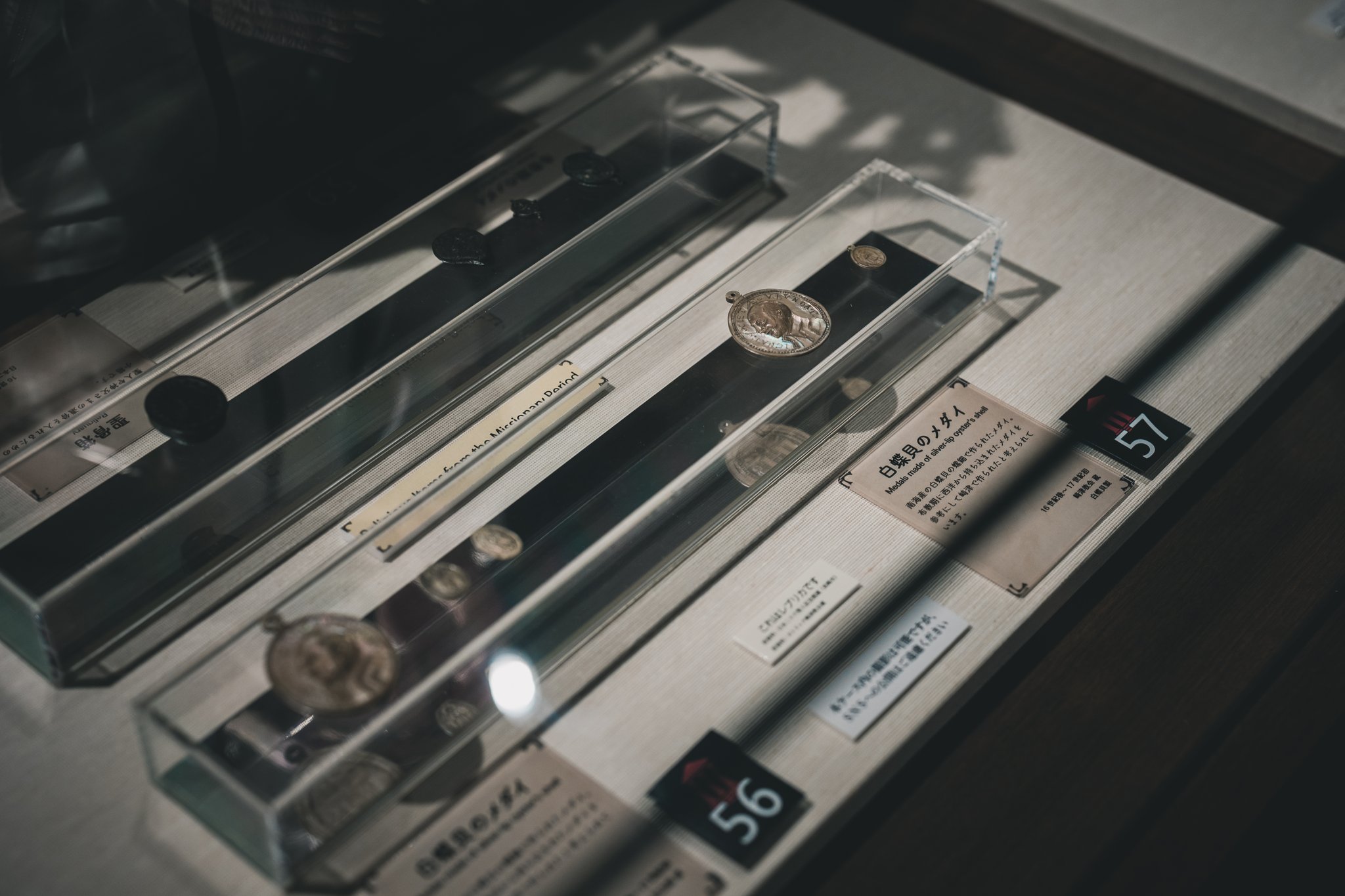
Sakitsu kept the faith anyway, without priests. Believers were organised into small groups, with religious leaders known as mizukata, who carried out baptisms and funerals and kept the calendar of feast days. Medals, crosses, shells and mirrors were among the objects kept at a mizukata’s house.
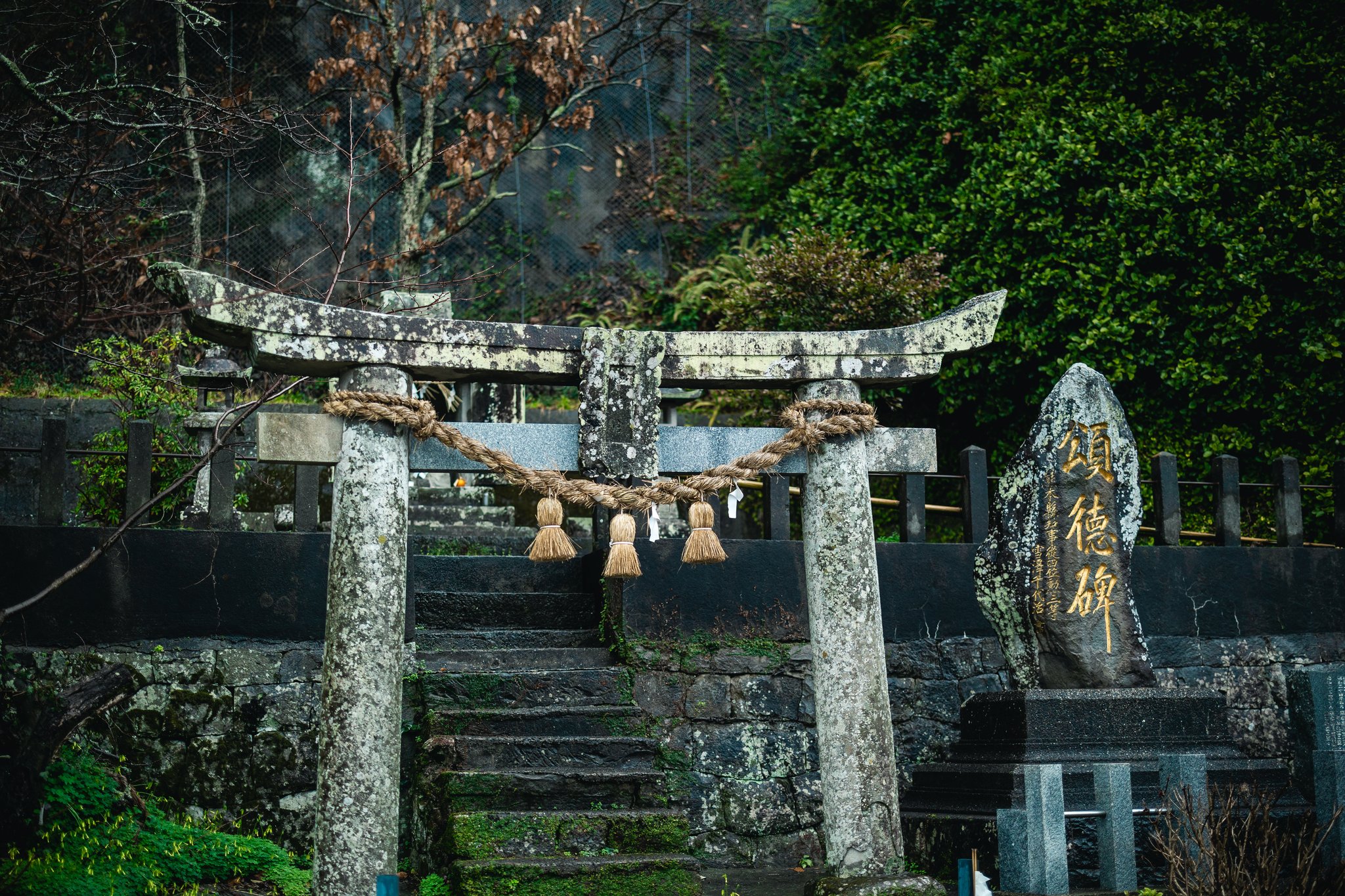
Stone steps lead up from the village to Sakitsu Suwa Shrine. It was founded in 1647 to pray for good catches and safe voyages. The villagers were its parishioners, Christians included.
Sakitsu’s hidden Christians kept their faith with what a fishing village already had. Ebisu and Daikoku, gods of fishing and prosperity found in homes all over Japan, were venerated as Deus, the Christian God. In the mother-of-pearl inside abalone shells, people saw the Virgin Mary. Deus came to be prayed to for good catches, which, in a fishing village, is exactly the kind of god you want.
They visited the shrine, too. According to the records of a later investigation, a leader of the community explained that when they came to worship there, they said anmen riyusu, a local form of “Amen, Deus”. To anyone listening, it sounded like people praying at a shrine. In a sense, it was.
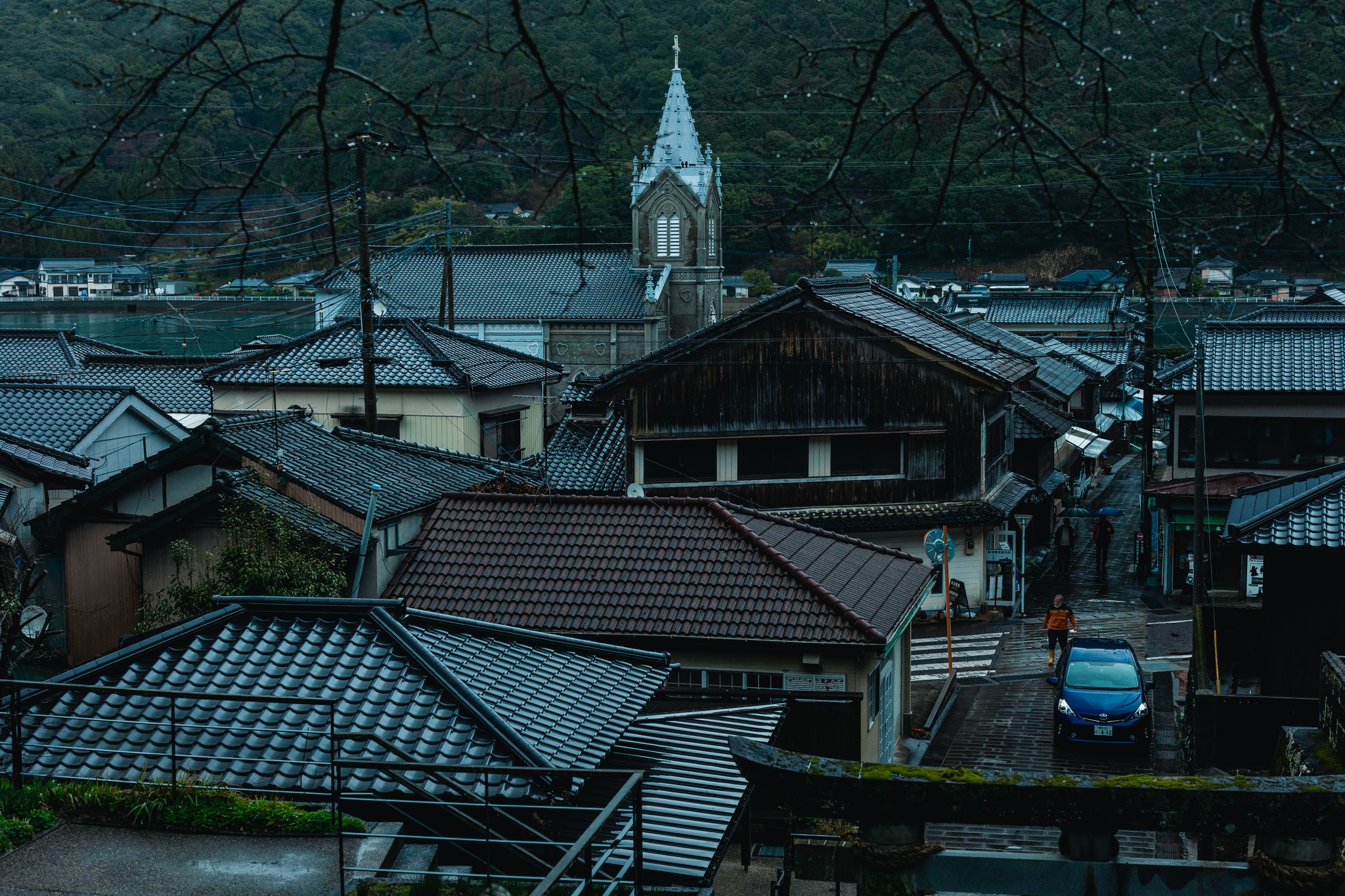
A very large misunderstanding
The investigation began with cattle. At the end of 1803, two cows were slaughtered in the area, in a country where beef was not generally eaten. When believers were questioned, they explained that meat was used in their rituals. After nearly two centuries of discretion, it was the beef that gave them away.
In 1805, 5,205 people in four villages were identified as followers of a forbidden faith. In Sakitsu, it was 1,709 out of 2,401, or about seven in ten. They were told to hand in their devotional objects. The place chosen for this was Sakitsu Suwa Shrine.
The verdict came the following year. The shogunate chose not to treat them as Christians. They had simply misunderstood their religion, it decided. With seven in ten villagers involved, it was a very large misunderstanding.
The pardon came with conditions. Each person had to step on a fumie once more, then put their seal to an oath renouncing the faith.
Officially, it had all been a misunderstanding.
During the ban, Sakitsu’s regular fumie took place at the house of the village headmen, the Yoshida family.
The altar on the spot
After the ban was lifted, Sakitsu’s Catholics built their first church in 1888. It was made of wood and stood just below the shrine, on land that had belonged to the mizukata.
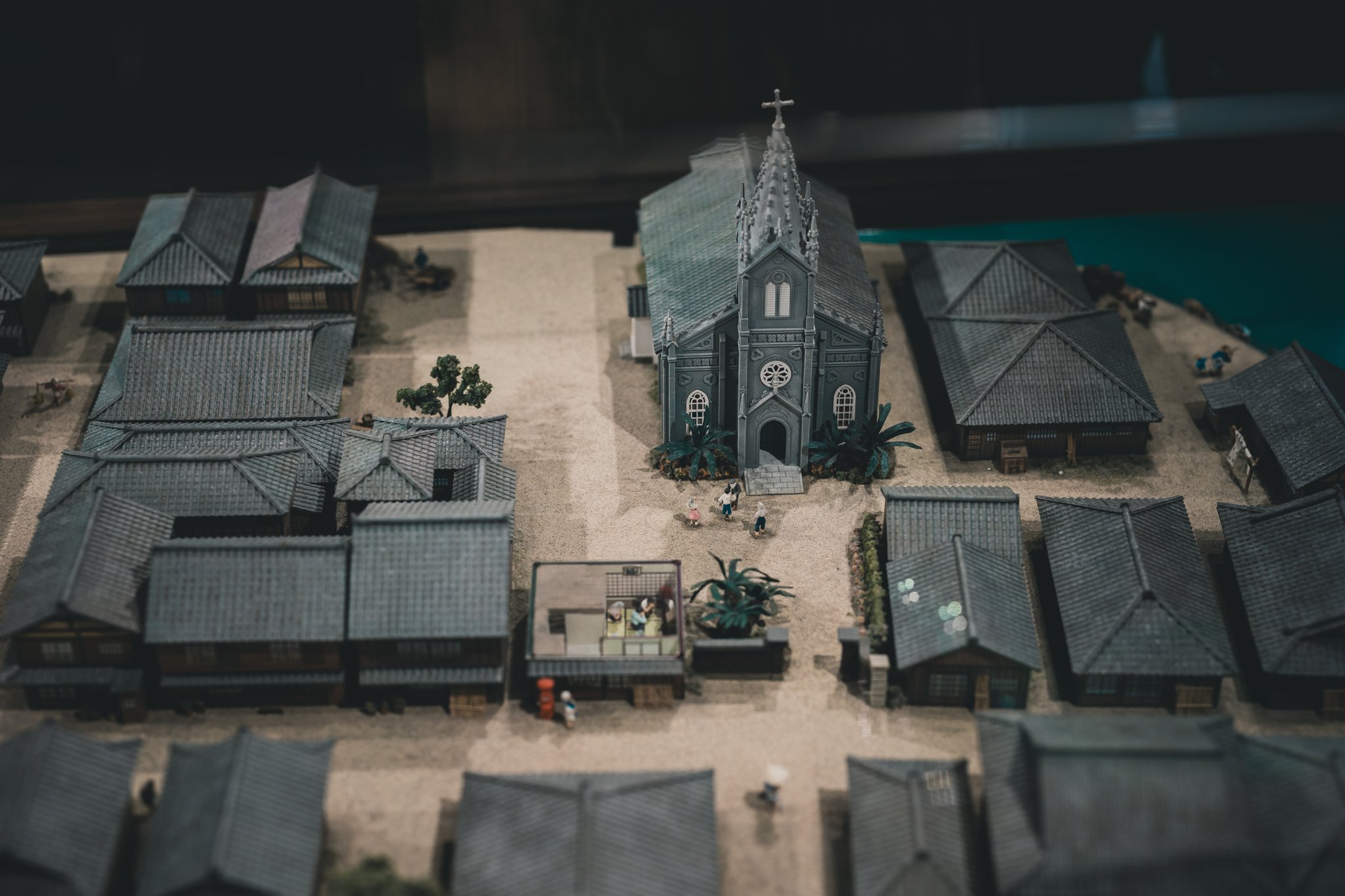
In 1934, the church moved. A French priest, Father Augustin Halbout, bought the old Yoshida property. He wanted a church that stood for resurrection on the place where the faithful had been made to step. Tetsukawa Yosuke, who had finished the church at Ōe the year before, built it in Gothic style, with a concrete front, a spire and a wooden hall behind.
I had never taken my shoes off to go to church before. Inside, the floor is tatami, as it has been since the church was built. From the street it is a Gothic church; from within it feels like a Japanese room that has been given a church to live in. Photography is not allowed inside, but Amakusa City’s page on the church has an official photo.
The altar was placed on the spot where the stepping had been done.
Ōe’s church stands on a hill above its village. Sakitsu’s is known as the Church of the Sea, and sits among the houses, a few steps from the water.
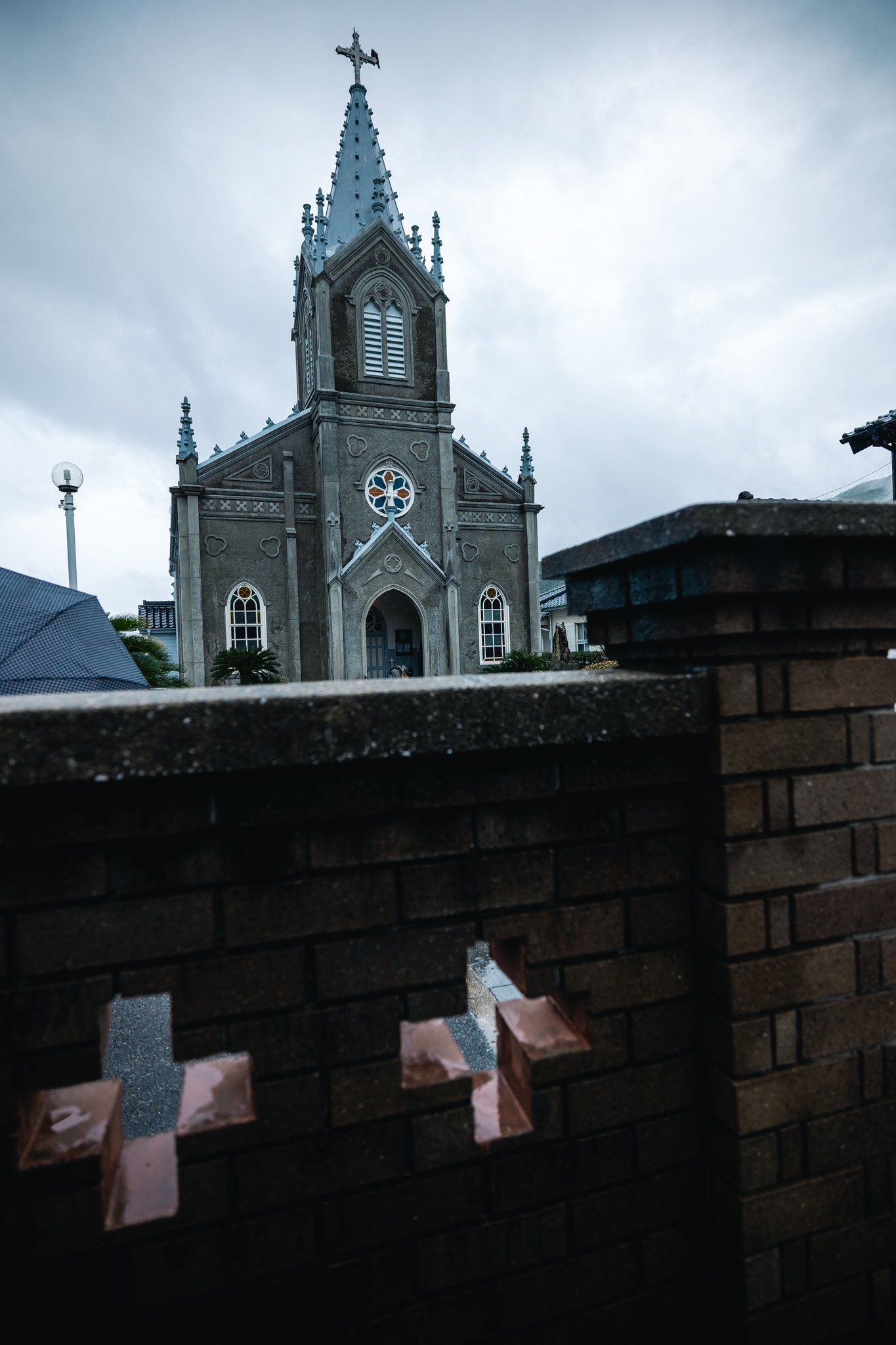
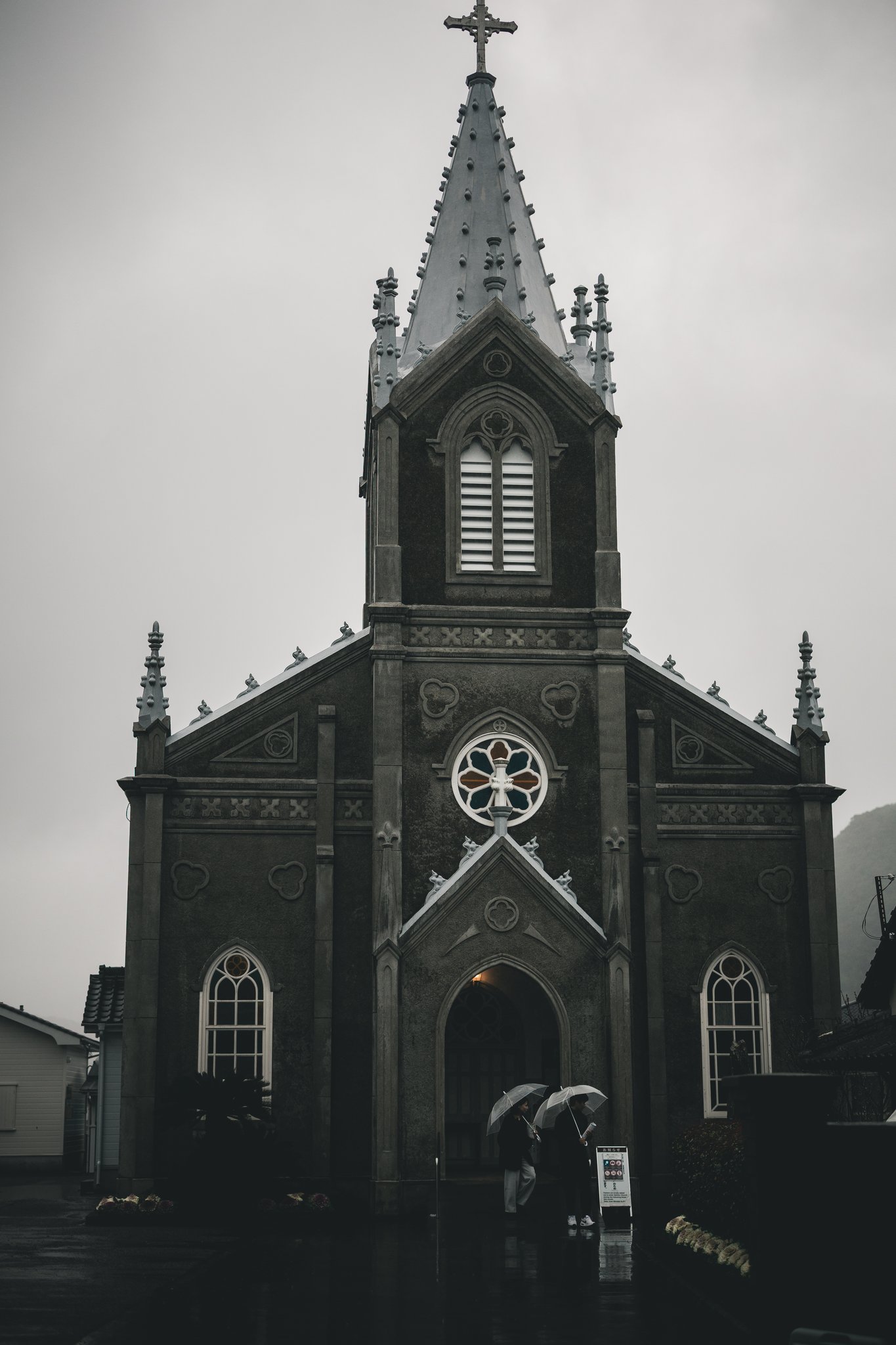
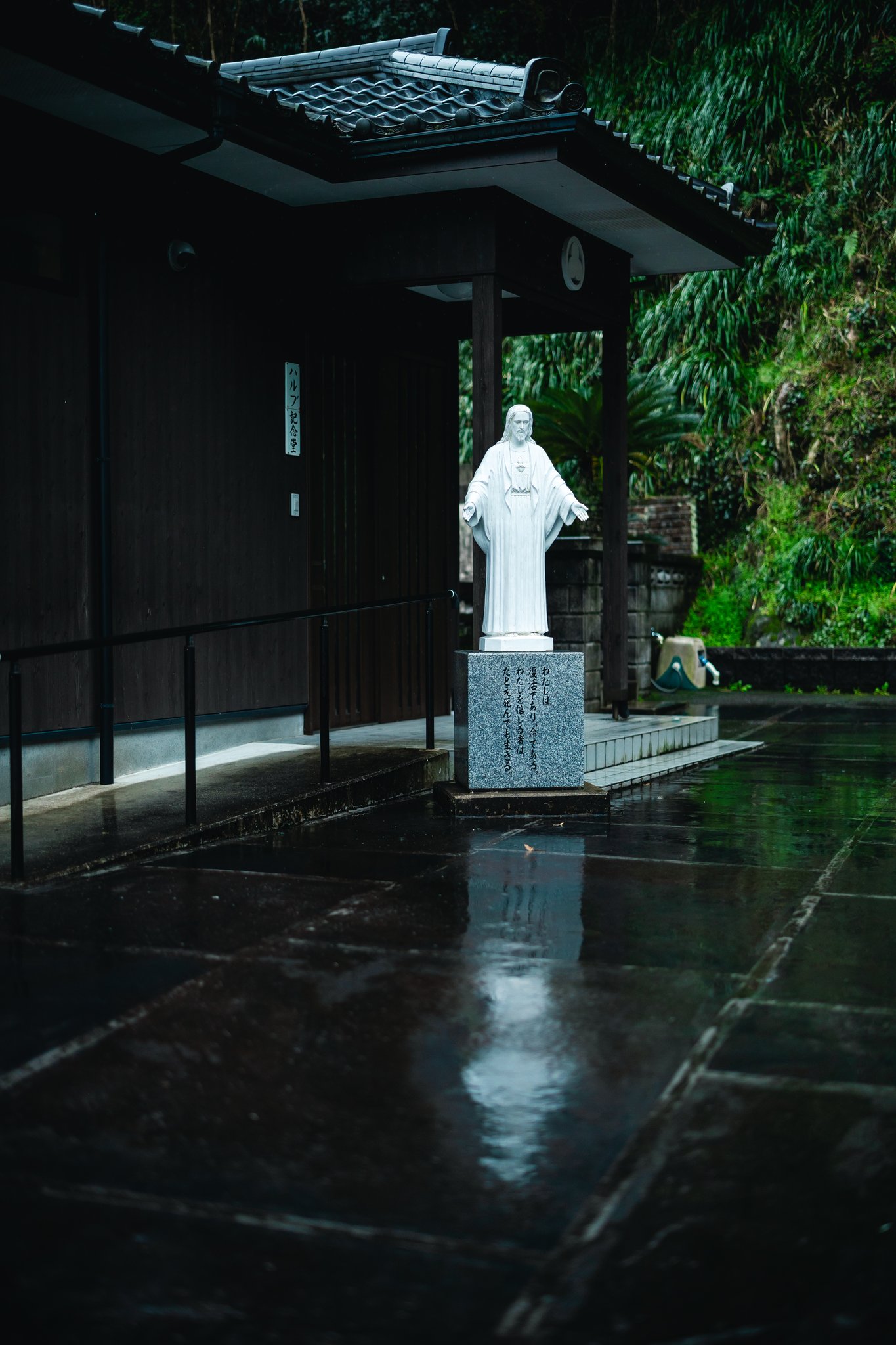
Evidence, on display
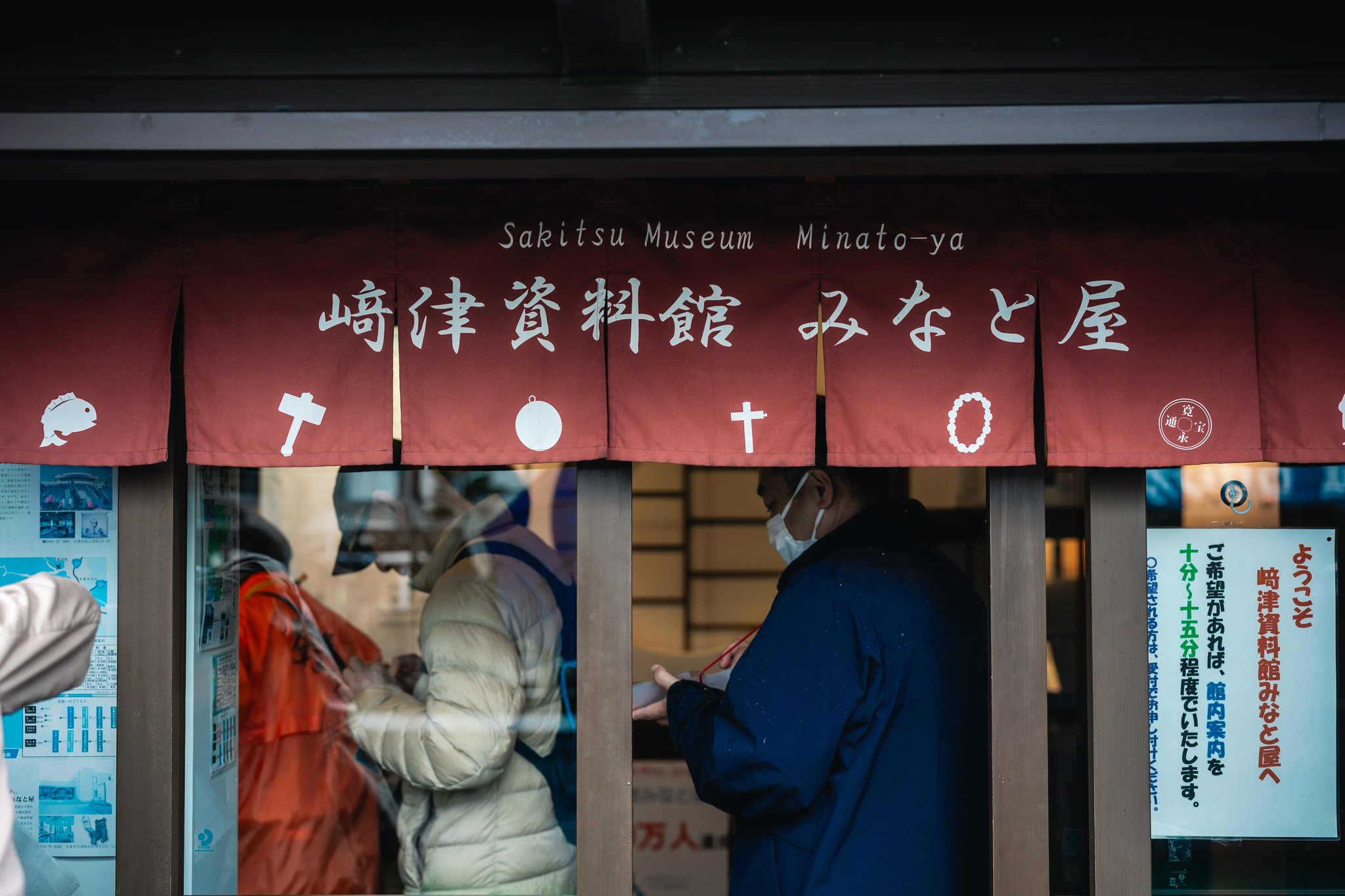
Near the church, an inn built in 1936 has been turned into a small museum, Sakitsu Museum Minato-ya. The curtain over its door sums up the local method in six pictures: a fish, a mallet, a round mirror, a cross, a rosary and an old coin.
The fish and the mallet are what Ebisu and Daikoku usually carry. Mirrors and coins were among the objects handed over across Amakusa in 1805. Half the pictures on the curtain belong to Japanese gods of good fortune, which was rather the point.
The most local objects in the museum are also among the smallest. Religious medals brought from Europe in the missionary period, in the late sixteenth and early seventeenth centuries, are thought to have been copied here in the shell of the silver-lip pearl oyster. The village made its medals from the sea as well.
Both, all year
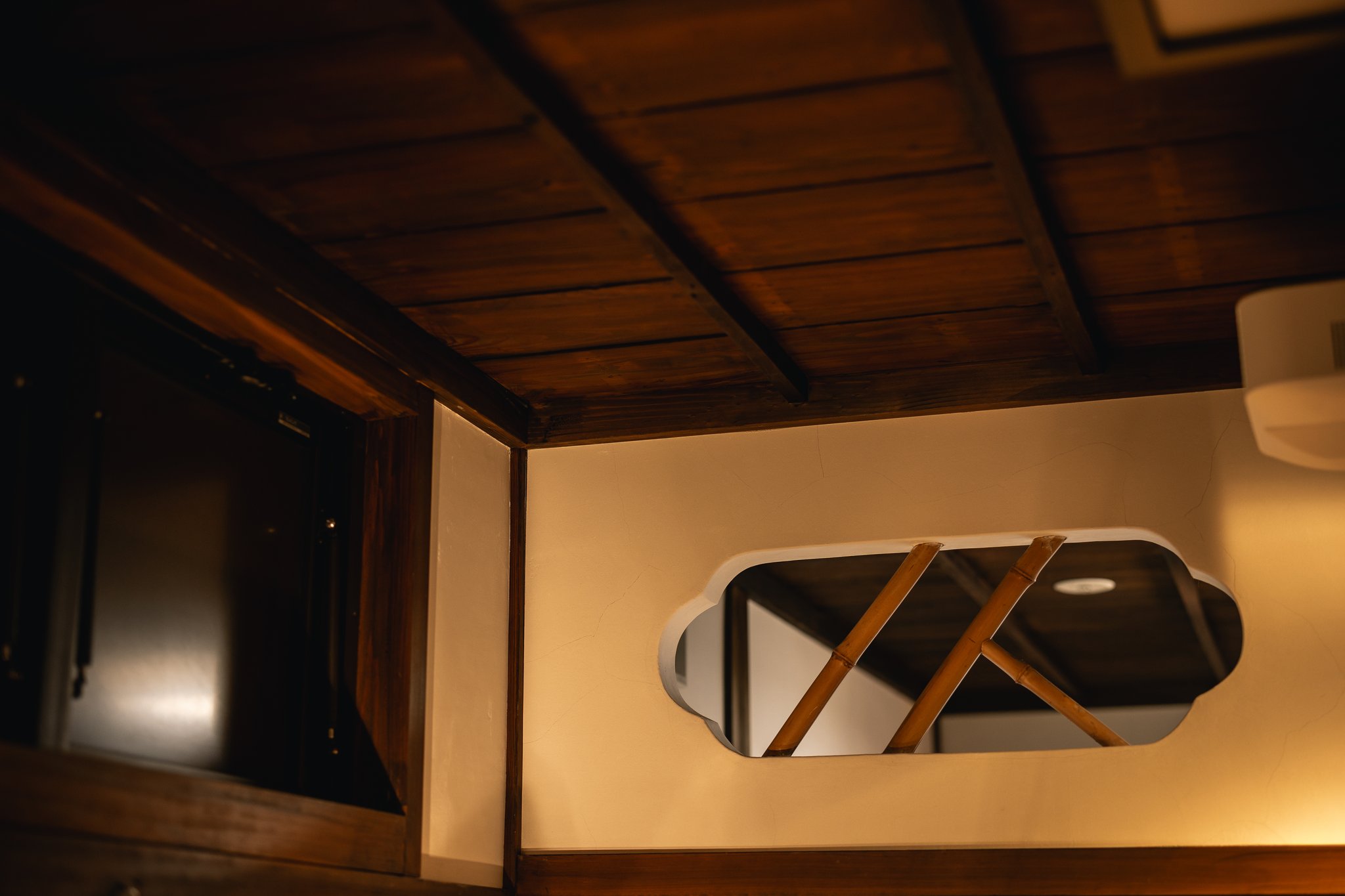
Outside, it was still raining. In one garden, a statue of Mary stood on the rocks above a pond, while a koi went about its business underneath.
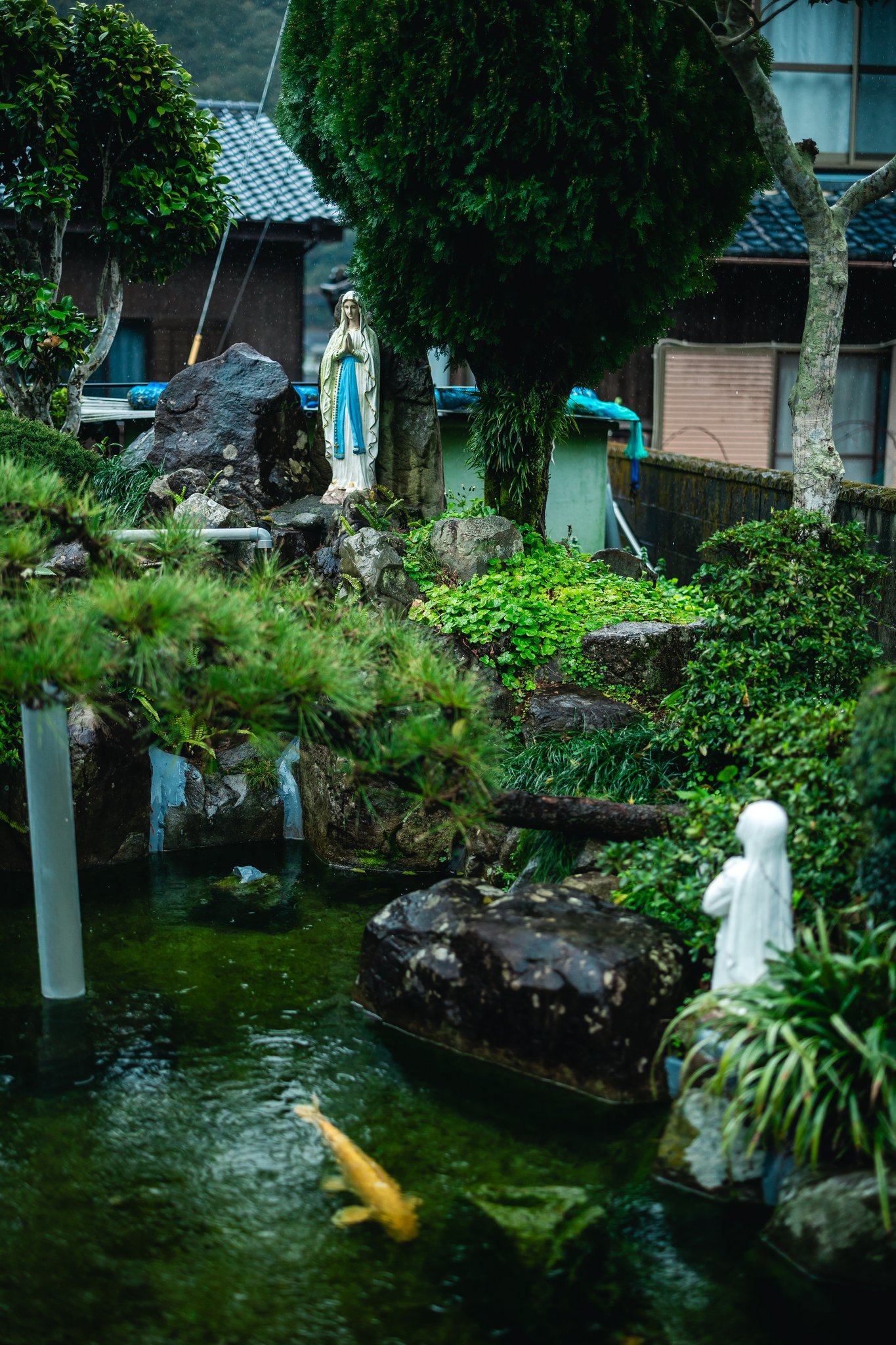
On a doorstep, someone had lined up scallop shells in colours scallops do not usually bother with. Hiōgi scallops are farmed in the bay.
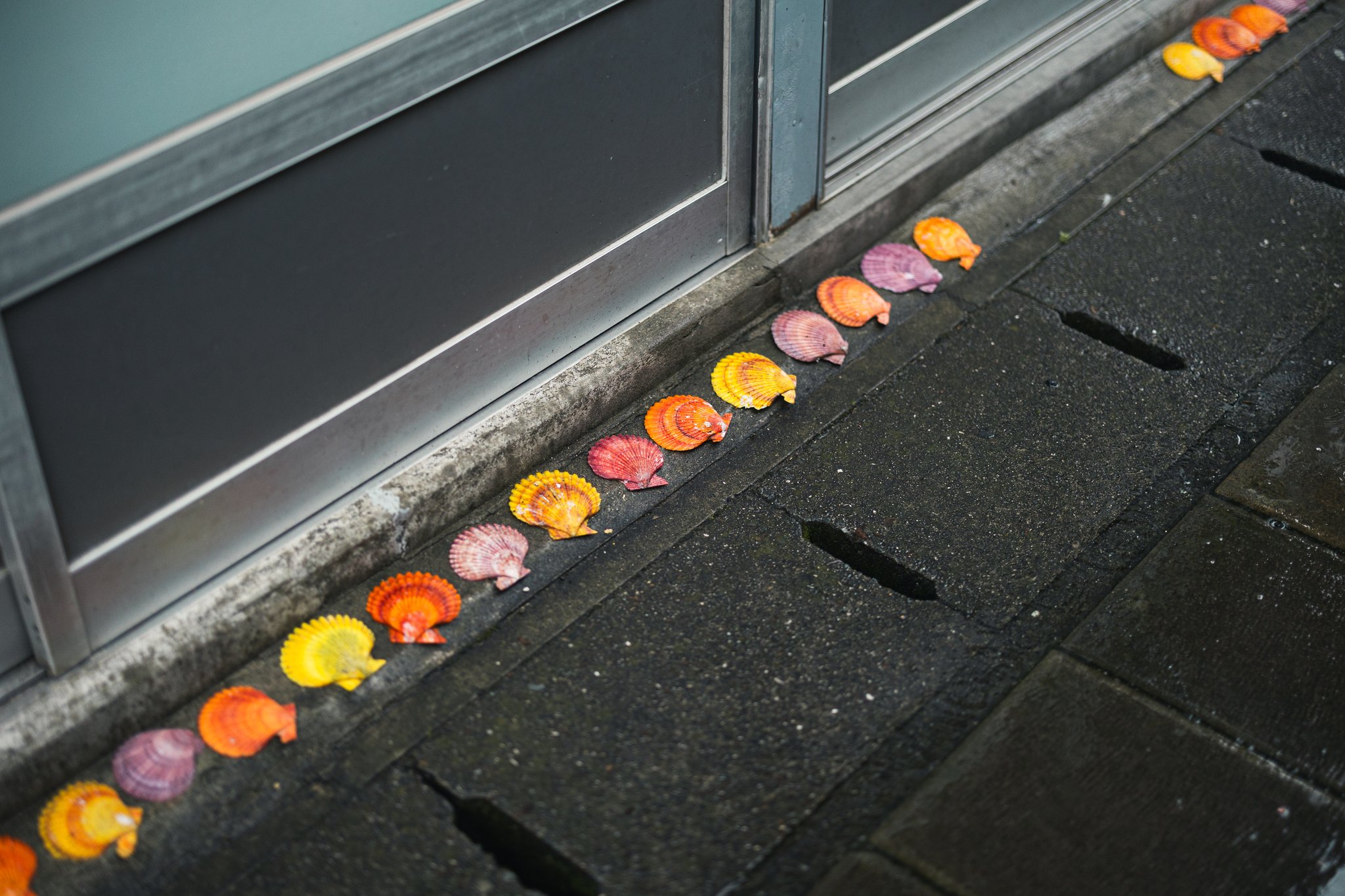
A shop was selling sugi yōkan, which is not really yōkan, the firm bean-paste sweet, but a thin rice cake with bean paste inside, laid on cedar leaves. Local tradition credits the recipe to envoys from the Ryukyu Kingdom, now Okinawa, who were shipwrecked near Sakitsu and rescued by the villagers.
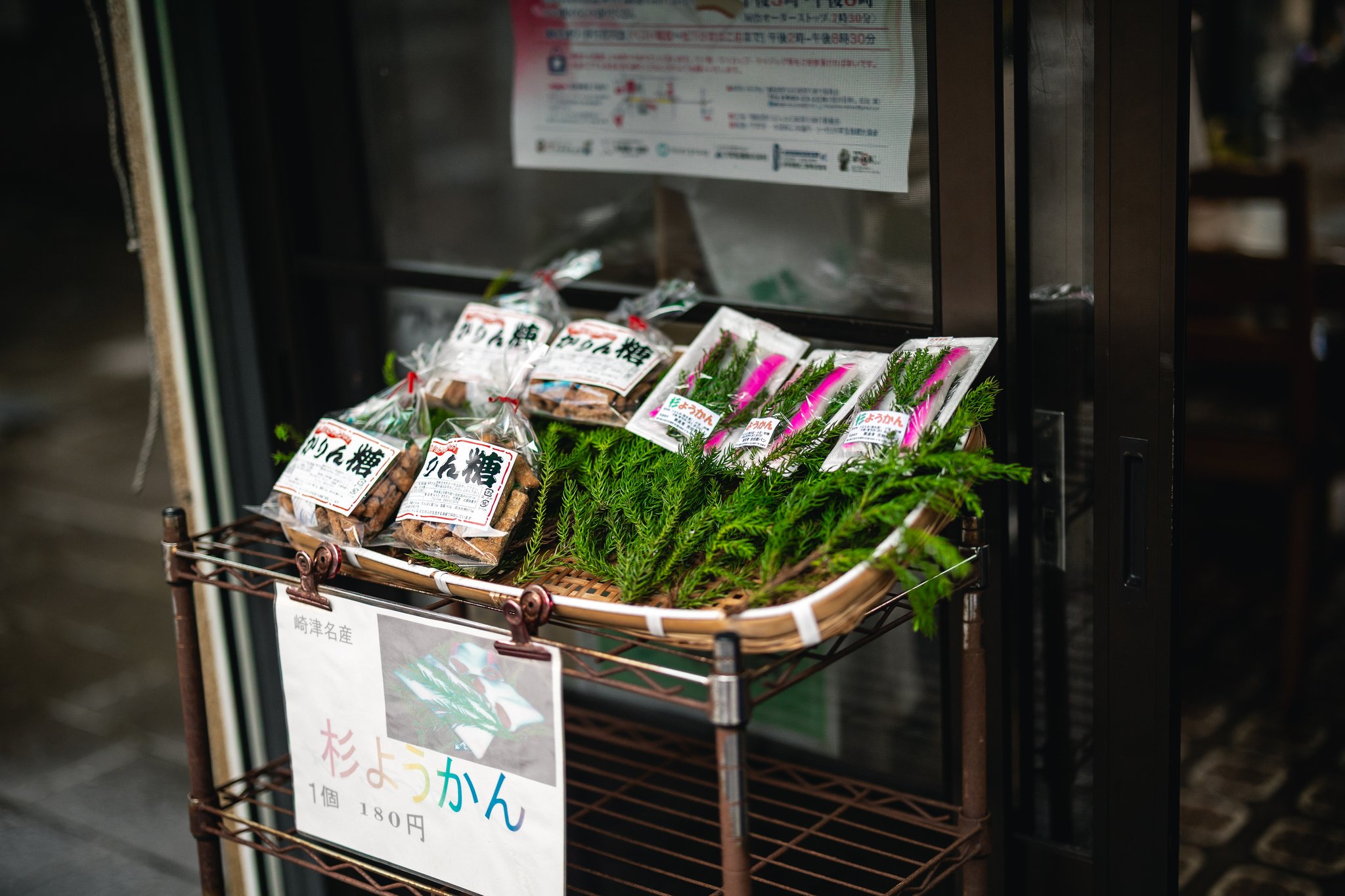
Back down the lane, the rope was still over the door. In Amakusa, the habit of leaving it up all year is said to go back to the years of the ban, when a Shinto rope helped a Christian house look like any other.
Sakitsu no longer needs the cover. The crosses are in the balcony railings now, and nobody is calling it a misunderstanding.
The rope stays up all year. The cross no longer needs it.
Visit this place
Village
Sakitsu Church (﨑津教会), Sakitsu Village
In Sakitsu, a fishing village on an inlet in western Amakusa. The church stands at the centre of the village; Sakitsu Suwa Shrine is on the slope just above it and Minato-ya is a short walk away.
539 Sakitsu, Kawaura-machi, Amakusa, Kumamoto 863-1204, Japan
Practical Information
- Sakitsu Church
- Visits by advance reservation. About 9:00–17:00; free. No visits during Mass or church events. Shoes off inside (tatami). No photography inside.
- Church reservations
- Online form or phone via the official booking page. Same-day and weekend/holiday bookings: Sakitsu Guidance Center, +81-969-78-6000.
- Sakitsu Museum Minato-ya
- 9:00–17:00 (last entry 16:30). Adults 100 yen; high school students and under free. Closed 30 December–1 January.
- Parking
- Use the Sakitsu Guidance Center car park (Michi-no-eki Sakitsu), not the small lots inside the village.
- Access
- Sanko Bus to Sakitsu Kyōkai Iriguchi (﨑津教会入口), then 1–2 minutes on foot. Routes from Hondo Bus Center may involve a change; check Sanko Bus before travelling.
- Visitor note
- People live and work here. The lanes have no pavements, so walk in single file, keep quiet near homes and the waterfront work platforms, and do not feed the cats. The church is an active place of worship.
- Official information
- Amakusa City — Sakitsu Village
Information last checked: September 29, 2026Church reservations and hours, Minato-ya hours and admission, parking, access and visitor etiquette.
Conversation
Comments
Review pending commentsComments are reviewed before appearing. The internet already contains enough unattended surprises.
Checking comments…
Comments are not available in this migration preview yet. Existing comments remain on the current site.
Leave a comment