Kofukuji Temple: A Ghost Jizō Fading at Both Ends
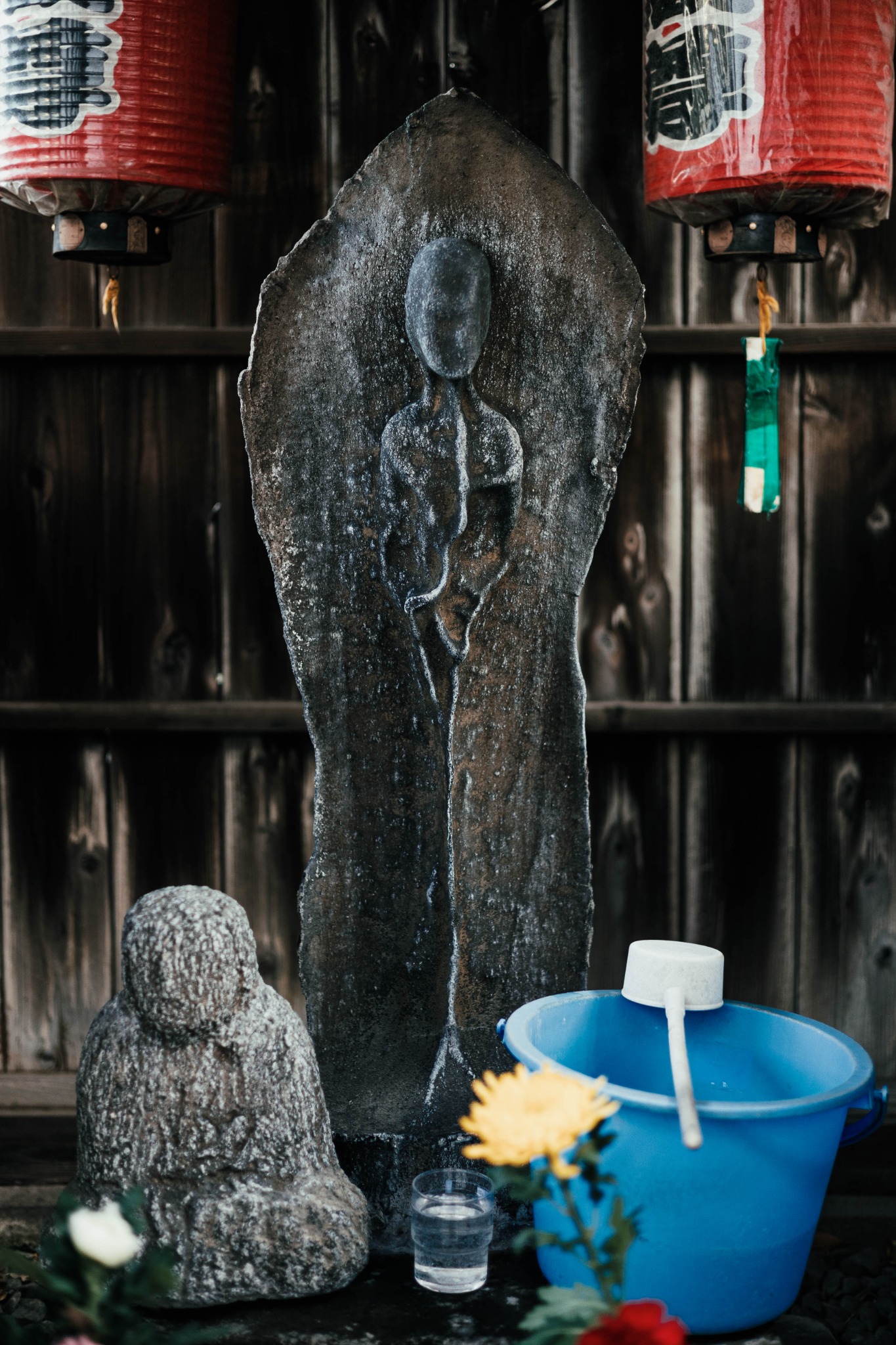
There are at least two ways to make a ghost statue.
One is to carve a ghost.
The other is to carve a Jizō and wait.
At Kofukuji Temple in Tokyo, a stone figure stood beneath a wooden shelter with an almost featureless face and a narrow body tapering towards the ground. Japanese ghosts, or yūrei, are often pictured fading away below the waist. This one appeared to be making a start on the upper half as well.
It is known as Yūrei Jizō—the “Ghost Jizō”. Its home is a small Jōdo-shū Buddhist temple in Takanawa, within walking distance of Tokyo’s Shinagawa Station.
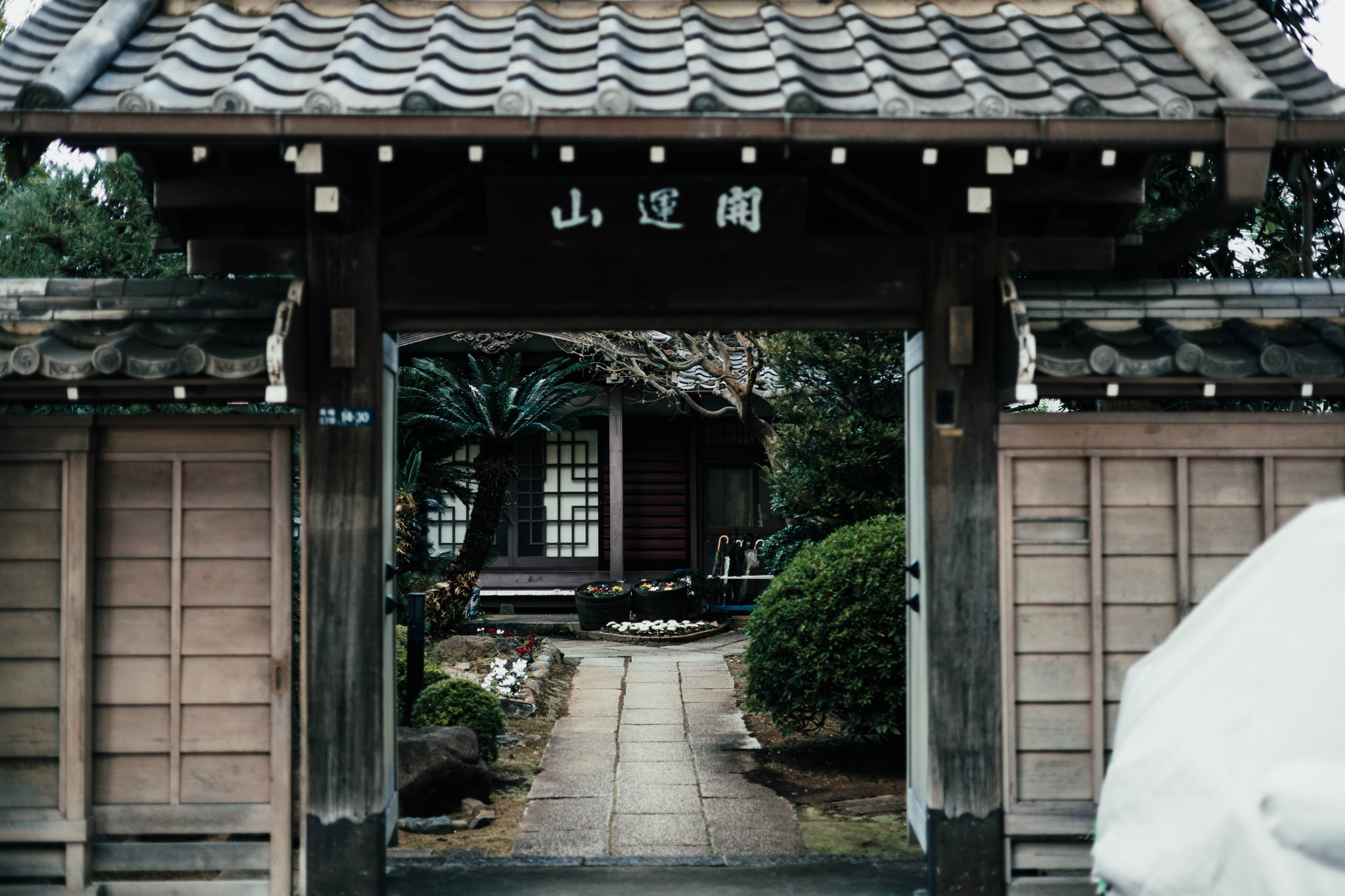
Where did the rest of the Jizō go?
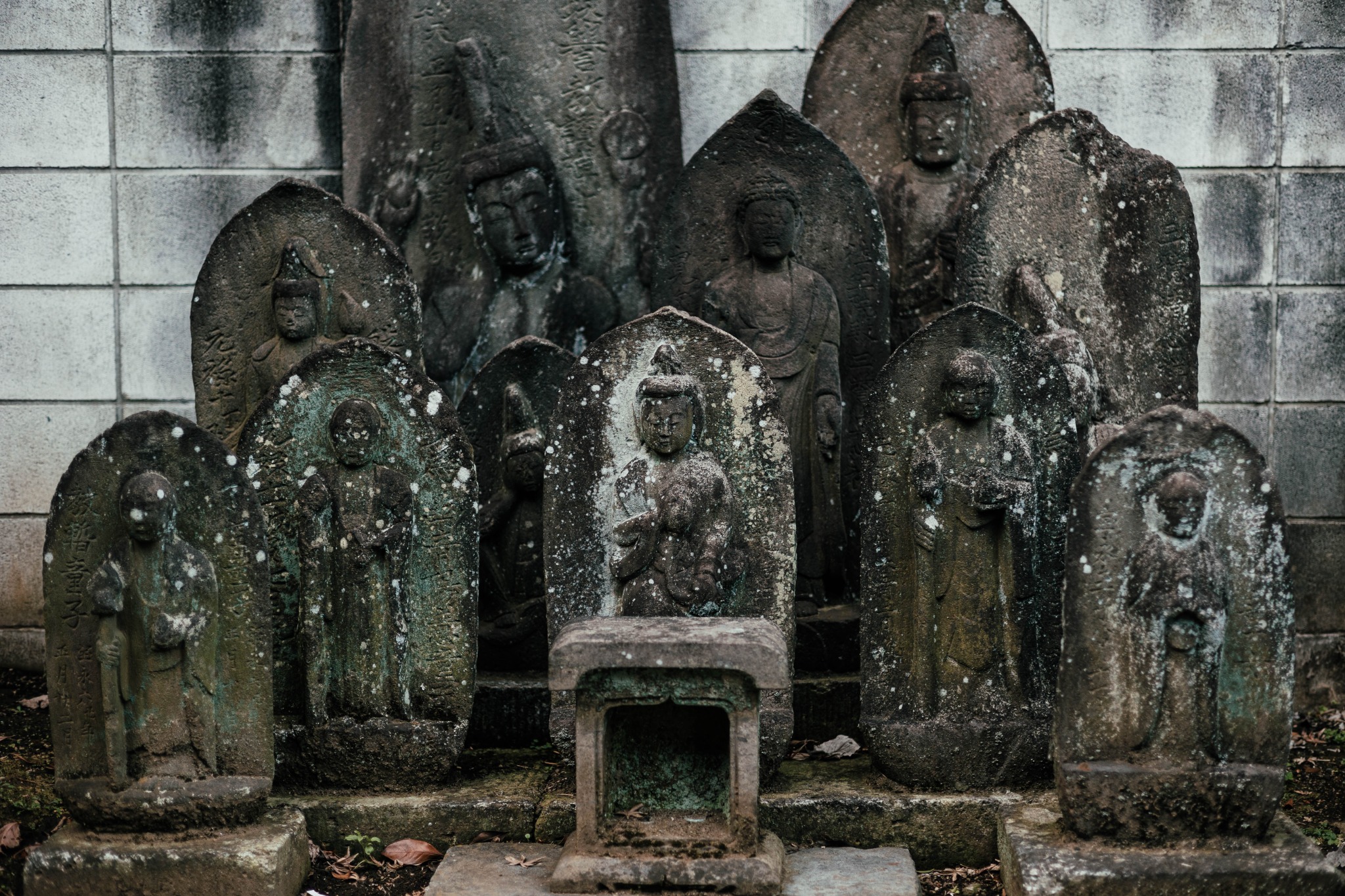
Jizō is a Buddhist bodhisattva commonly associated with protecting children and travellers. His statues are familiar sights beside roads and in temple grounds, usually with a rounded head, robes and a recognisably human shape.
Other stone figures at Kofukuji still had faces and folds of clothing to examine.
Kofukuji’s version looks as though somebody has gradually turned down the amount of Jizō.
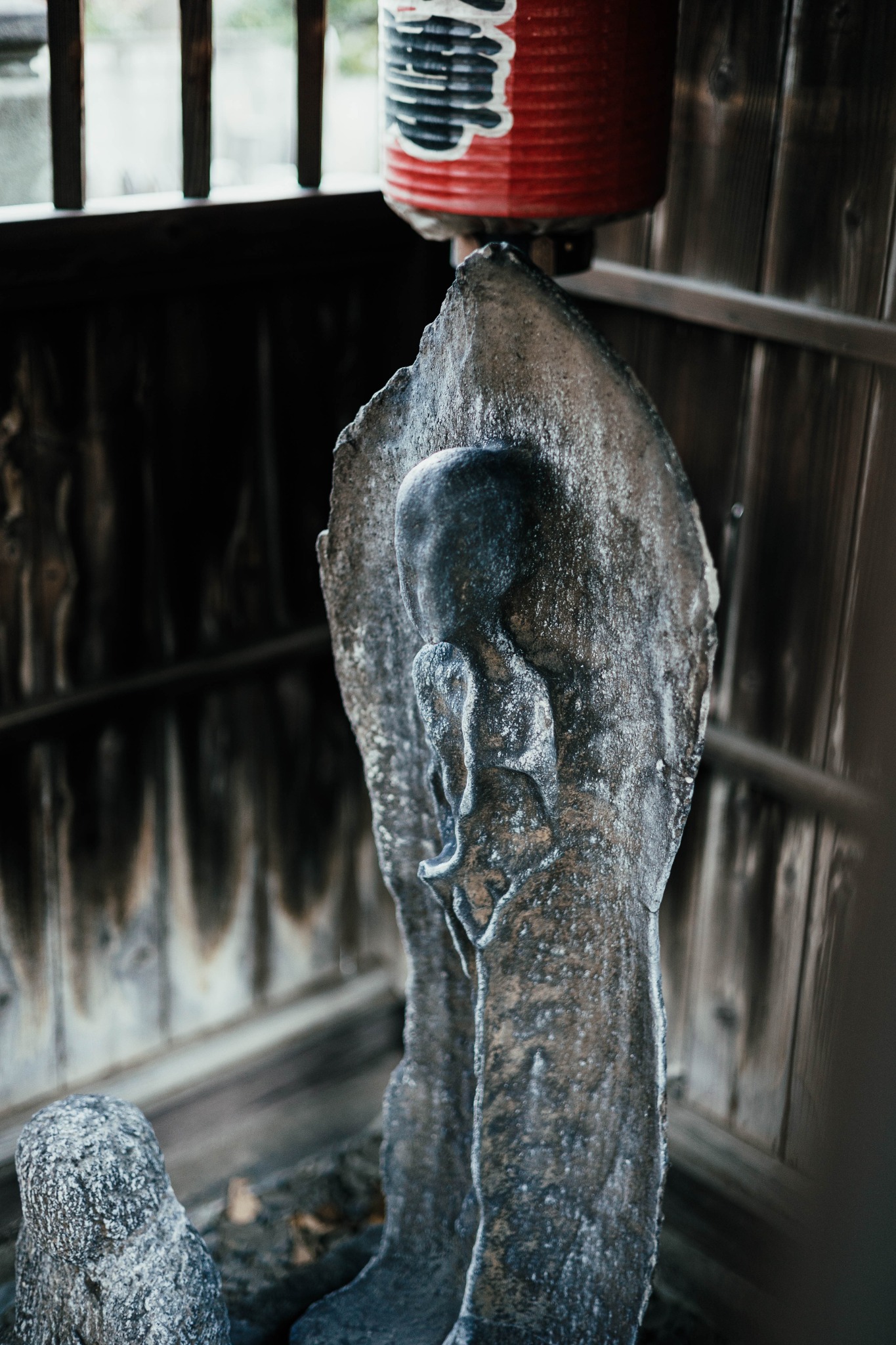
The eyes, nose and mouth were almost impossible to distinguish. Below the head, the remaining contours formed an unusually thin body.
Moving to the side revealed how little of the figure projected from the stone slab. Changing the angle did not make the nickname seem excessive.
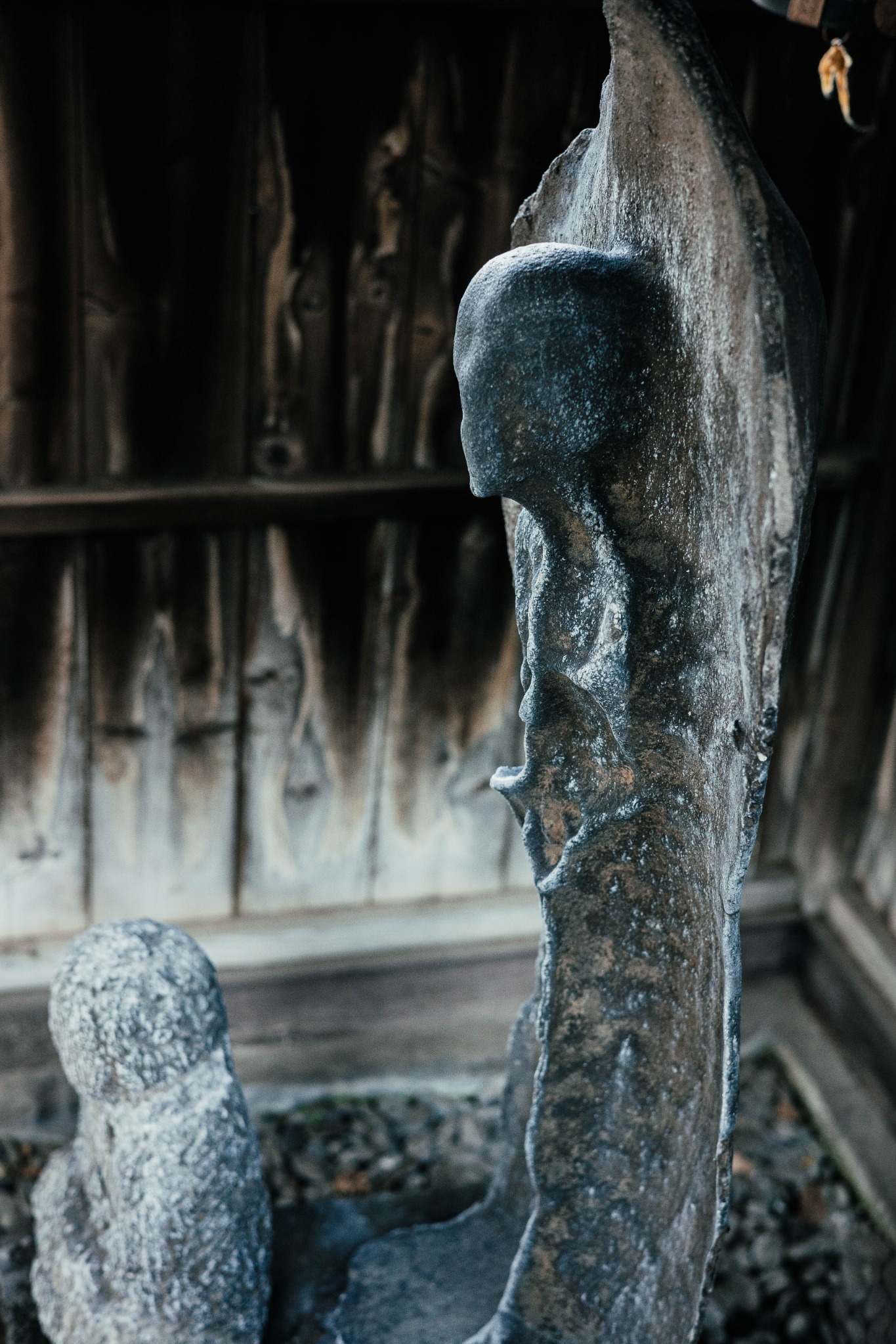
A face without a history
An original portrait would have been useful. Unfortunately, the missing features are accompanied by missing records.
In a 2019 interview, the temple’s priest could offer only a guess. He imagined that an older Jizō, long venerated, had gradually worn down, partly through worshippers pouring water over it.
That is an explanation, rather than an established history. The present Kofukuji was formed around 1879 by merging two temples, and with no documents to consult, the priest could not say which of them had owned the figure. The ghost nickname, he said, was already in use at the time of the merger.
The stone had kept its nickname more successfully than its paperwork.
Its official status is firmer: Minato City lists Yūrei Jizō as a Registered Tangible Folk Cultural Property. Whatever else remains uncertain, this ghost is administratively tangible.
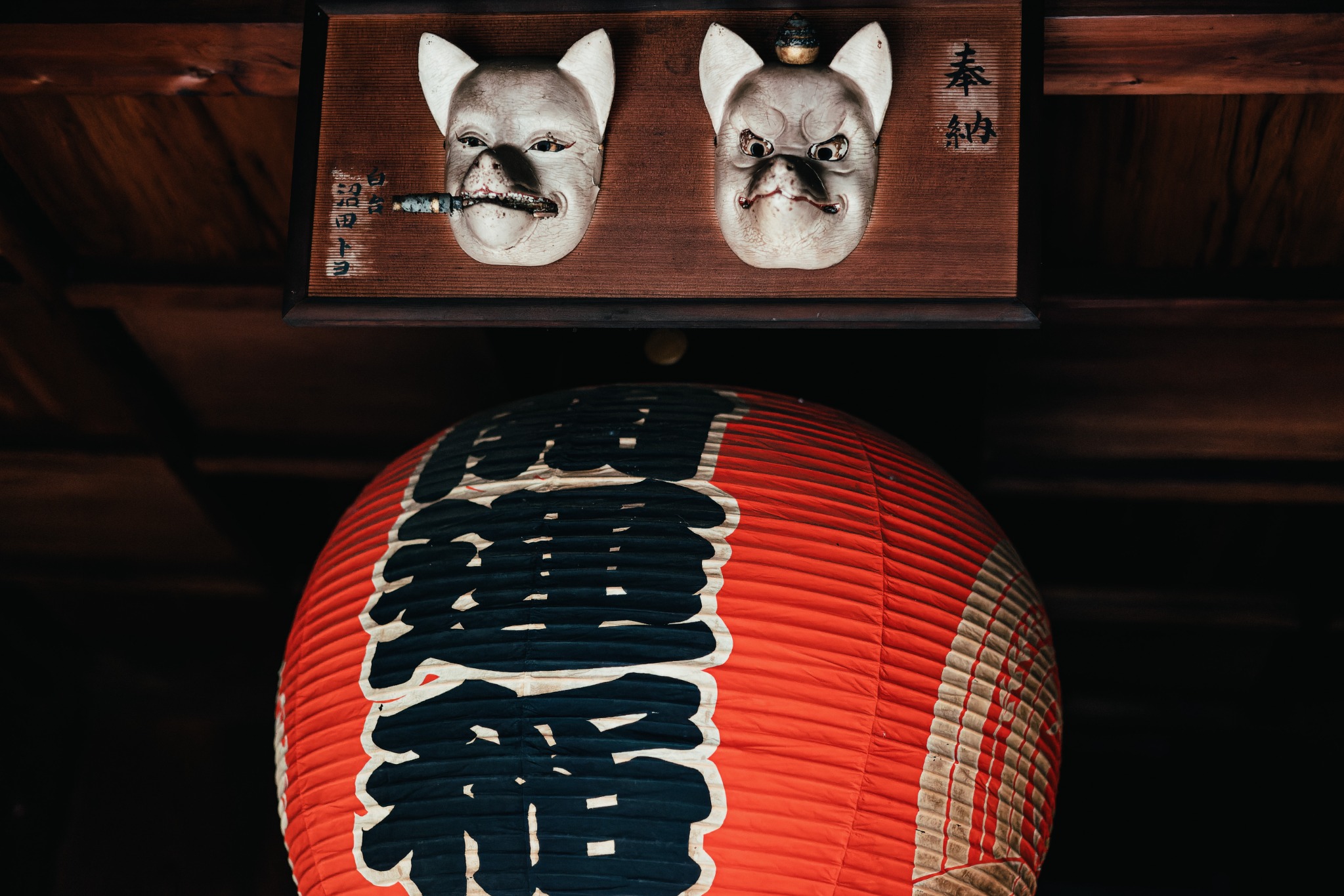
An unexpected guardian
The lantern gives the figure a more reassuring name: Koyasu Sakae Jizōson. The priest described it as a Jizō to whom people pray for children to grow up healthy.
That is quite a responsibility to discover beneath this particular face.
A Minato City booklet on local cultural properties records more. According to tradition, the figure was brought up from the sea off Shinagawa, and it raised a child whose mother had died.
The booklet also tells a story. Every day, a mother and child came to buy sweets at a shop near the temple—even in the rain, without an umbrella. The shopkeeper and the priest grew curious and followed them. The trail ended in front of this Jizō. Once the priest began holding memorial rites for it properly every day, the mother and child stopped appearing.
The story does not establish how the stone acquired its shape. It does reveal a very different way of seeing it. In this telling, the strange figure is the one who stays to help when a child has lost a parent.
Water is still poured over the figure in prayer. If the priest’s theory is right, that familiar gesture may have helped produce the appearance that now attracts curious visitors.
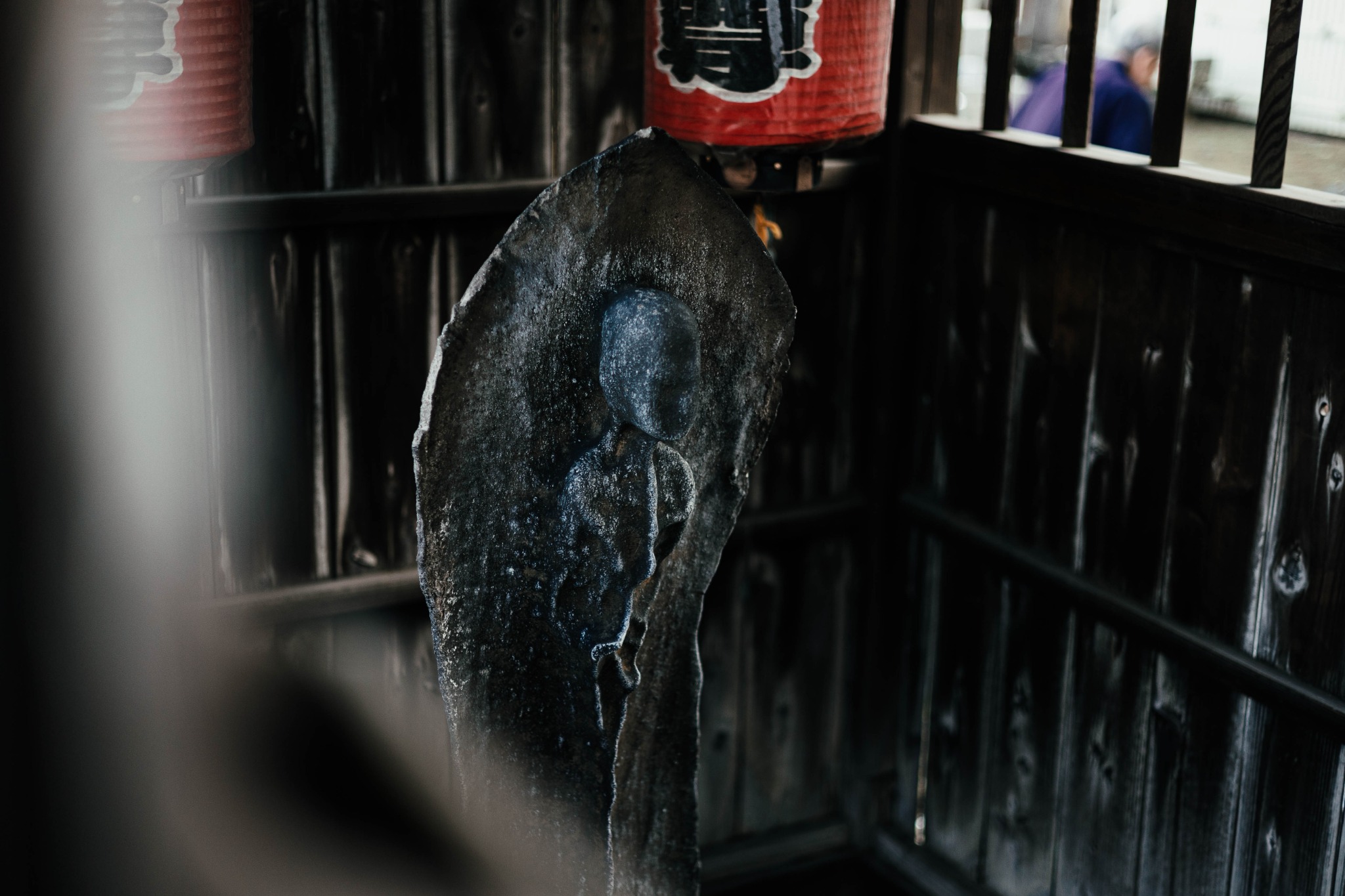
Here, you ask the ghost to keep the frightening things away.
Visit this place
Location
Kofukuji Temple (光福寺)
3-14-30 Takanawa, Minato City, Tokyo 108-0074, Japan
Practical Information
- Access
- About 4 minutes on foot from Takanawadai Station (Toei Asakusa Line)
- Reference
- Jōdo-shū Temple Directory — Kofukuji
Information last checked: August 25, 2026
Conversation
Comments
Review pending commentsComments are reviewed before appearing. The internet already contains enough unattended surprises.
Checking comments…
Comments are not available in this migration preview yet. Existing comments remain on the current site.
Leave a comment