Kōkōdō: A Delicious-Looking Shortcut
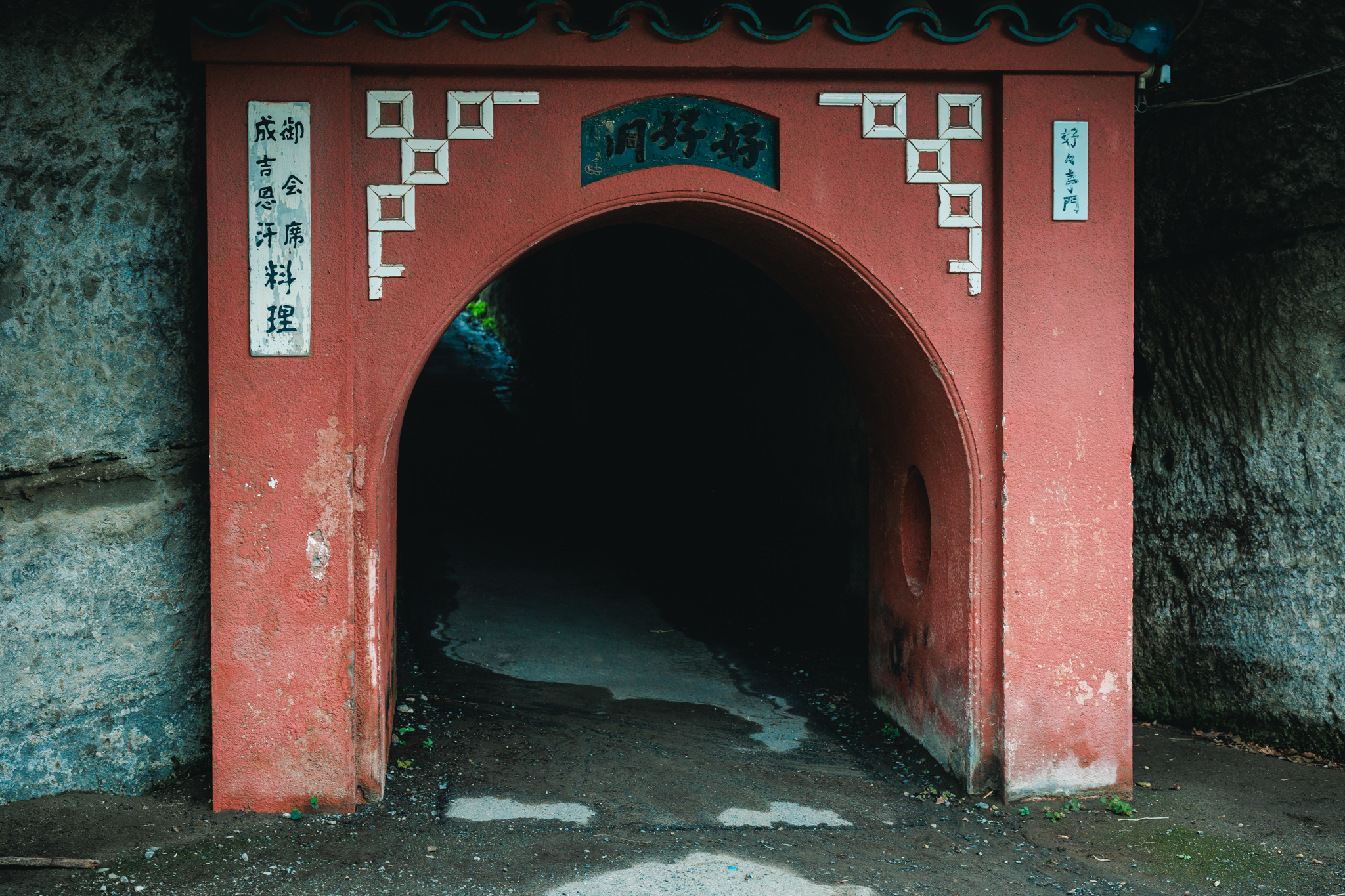
The entrance to the hillside advertised two kinds of dinner: a formal multi-course Japanese meal, and Genghis Khan. Whatever lay in the darkness, it apparently knew how to entertain.
A faded red gateway stood against the rock, with green roof tiles and white geometric decorations. Above the opening, written right to left in the old style, was the name Kōkōdō. A sign to one side offered kaiseki dining and jingisukan—grilled lamb or mutton, named after Genghis Khan and written here with the characters for his name. A smaller sign on the other side read “Kōkōtei Gate”.
This was a pedestrian tunnel near Kita-Kamakura Station, in Kamakura, Kanagawa Prefecture, south of Tokyo. Alongside it ran a narrow road and railway tracks. It was an unusually theatrical place to turn off an otherwise ordinary street.
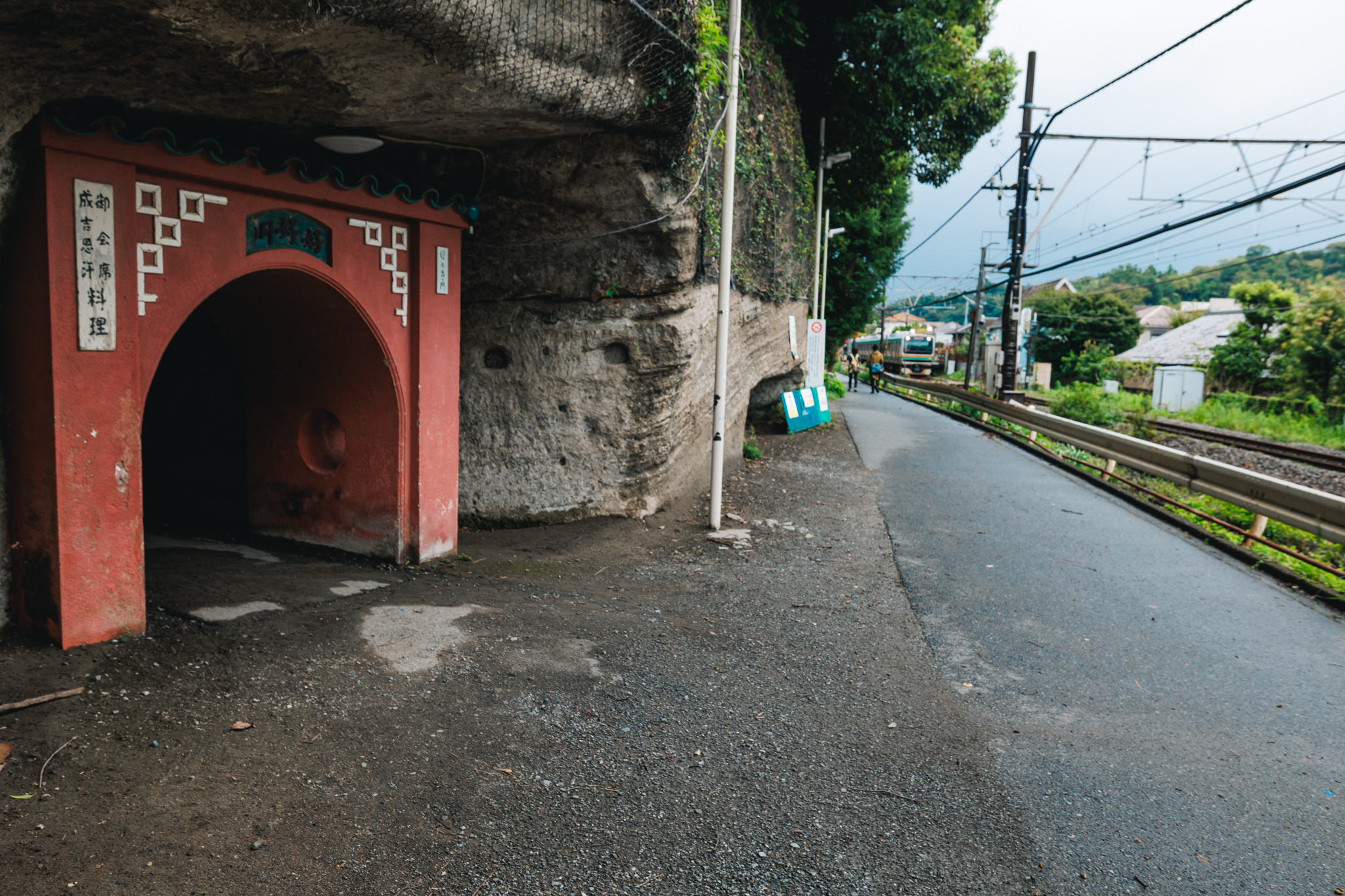
Before the dinner guests
According to a local account recorded in a neighbourhood report, the tunnel began, around the time of the Second World War, with a father whose daughter travelled to school in Tokyo. Their home stood on the other side of the hill, so he had a passage dug through it to make her journey easier.
Some parents help with the school run. This one reportedly rearranged the geography.
The same man is said to have run Kōkōtei, on that side of the hill, and the tunnel became its entrance. Kōkōtei had opened as a ryokan inn in 1935. As an inn, it was visited by the writers Kawabata Yasunari—later a Nobel laureate—and Osaragi Jirō; the film director Ozu Yasujirō’s crew also used it for meetings. In 1949 it became a ryōtei, a traditional Japanese restaurant. The food signs belong to that chapter of its life.
The restaurant closed around 2004. The passage remains in use as a local route through the hill.
The entrance has outlasted the place it was inviting people into.
Through the hill
Beyond the red arch, the walls were rough rock, marked by grooves and irregular hollows. A narrow strip of paving ran through the passage beneath an electric light. The decorated entrance had given way to the practical business of getting through a hill.
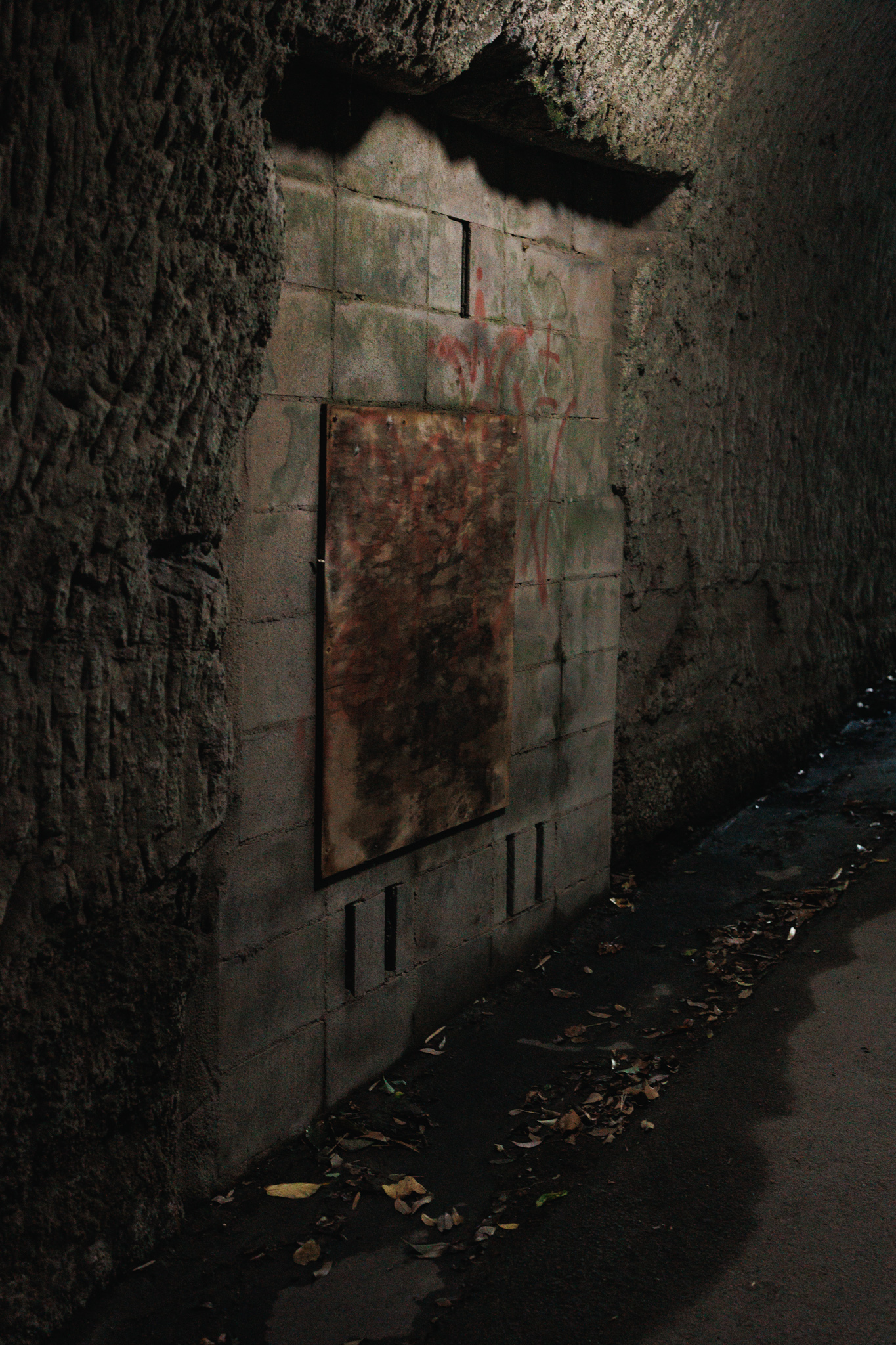
Openings in the side walls had been blocked with concrete blocks and covered with weathered boards. During the war, according to a local record of Kamakura’s tunnels, side passages were dug off the tunnel and put to military use. Whatever these openings had been, the boards were not telling.
One board did carry a notice. It concerned dog mess.
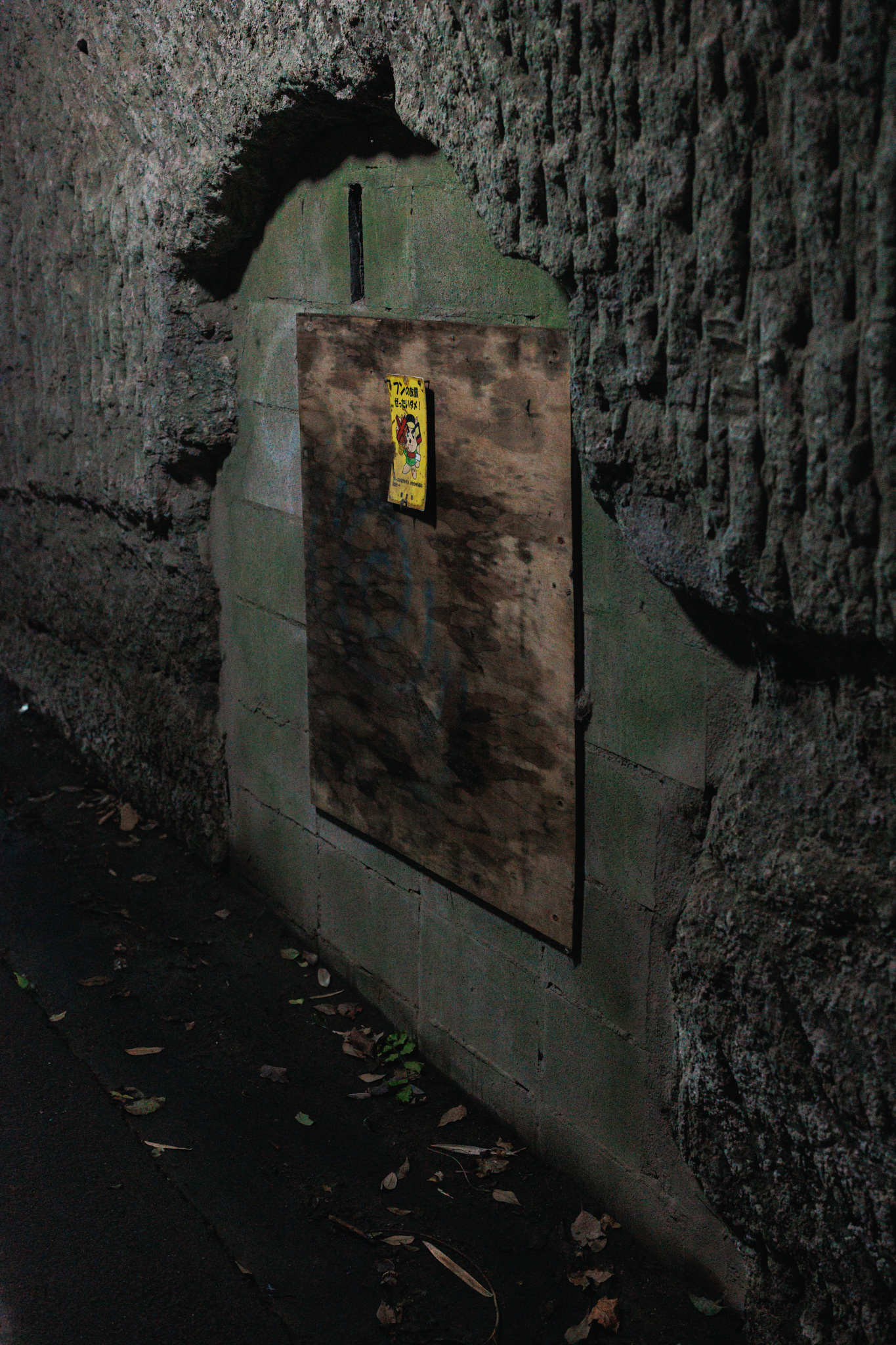
I was looking at the walls; someone else had reason to be more concerned about the floor.
Ahead, daylight framed a blue house, utility poles and greenery.
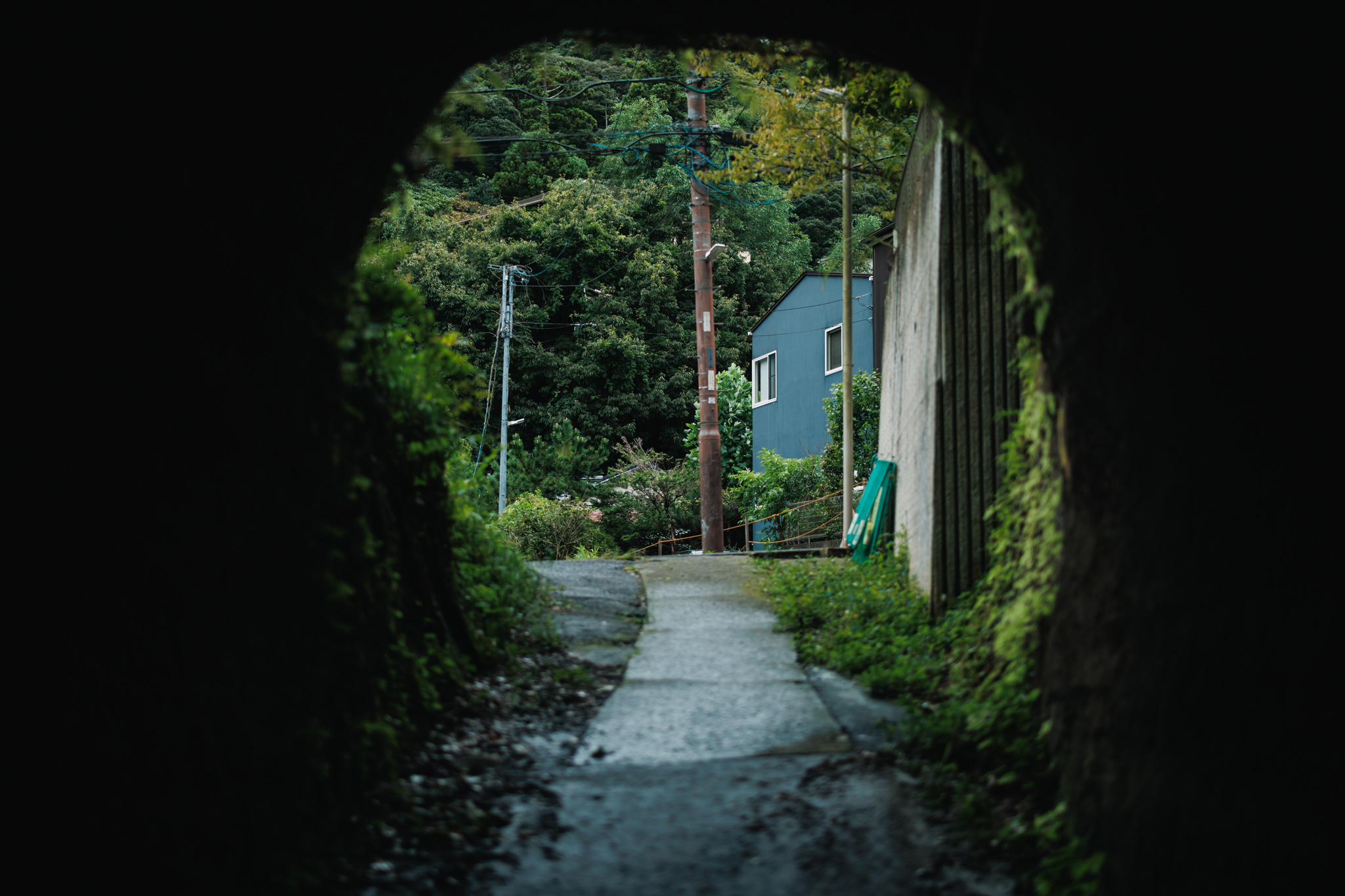
There was no grand arrival. The paving continued outside, past the houses and the wooded slope. For somebody heading home, the remarkable part of the journey might simply be the bit they barely noticed.
Looking back, I found no matching red gateway. From this side, Kōkōdō was a dark opening edged with plants, with the railway visible through the far end.
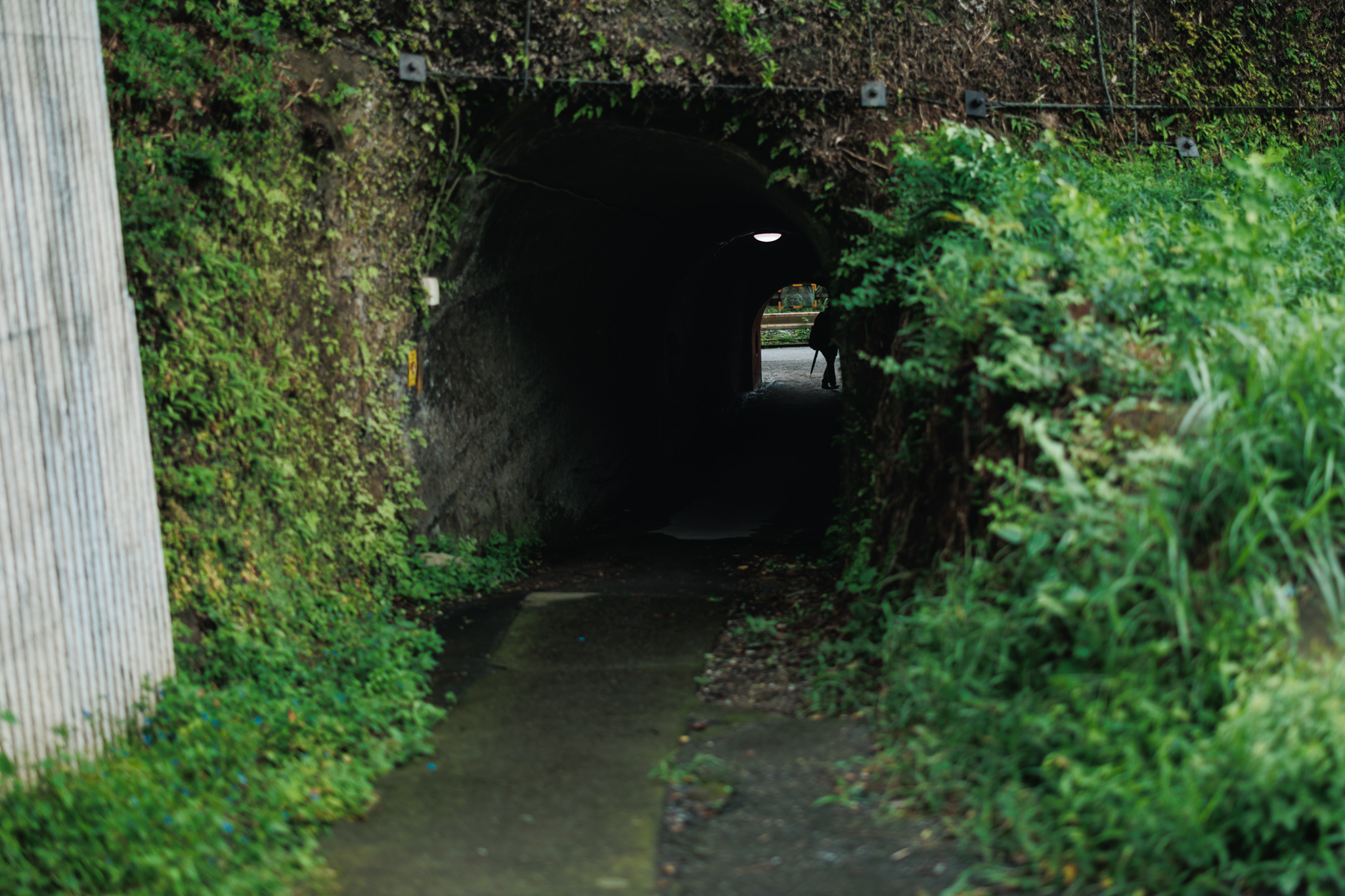
I had stopped for the signs, the rock walls and the view out. Having reached the other end, I was now photographing the way back in. At the far end, somebody with an umbrella was simply walking through.
The tunnel was meant to save time. I had managed to make a meal of it.
Visit this place
Location
Kōkōdō (好好洞)
A short pedestrian tunnel near Kita-Kamakura Station
Around 610 Yamanouchi, Kamakura, Kanagawa 247-0062, Japan
Practical Information
- Access
- About 3 minutes on foot from Kita-Kamakura Station’s temporary exit, or about 6 minutes from the west exit
- Admission
- Free
- Visitor note
- A public pedestrian passage
Be quiet and keep clear of local residents and through traffic. - Reference
- Kamakura PRESS
Information last checked: September 10, 2026
Conversation
Comments
Review pending commentsComments are reviewed before appearing. The internet already contains enough unattended surprises.
Checking comments…
Comments are not available in this migration preview yet. Existing comments remain on the current site.
Leave a comment