Tatzu Butzu: Golden Buddhas That Keep Growing
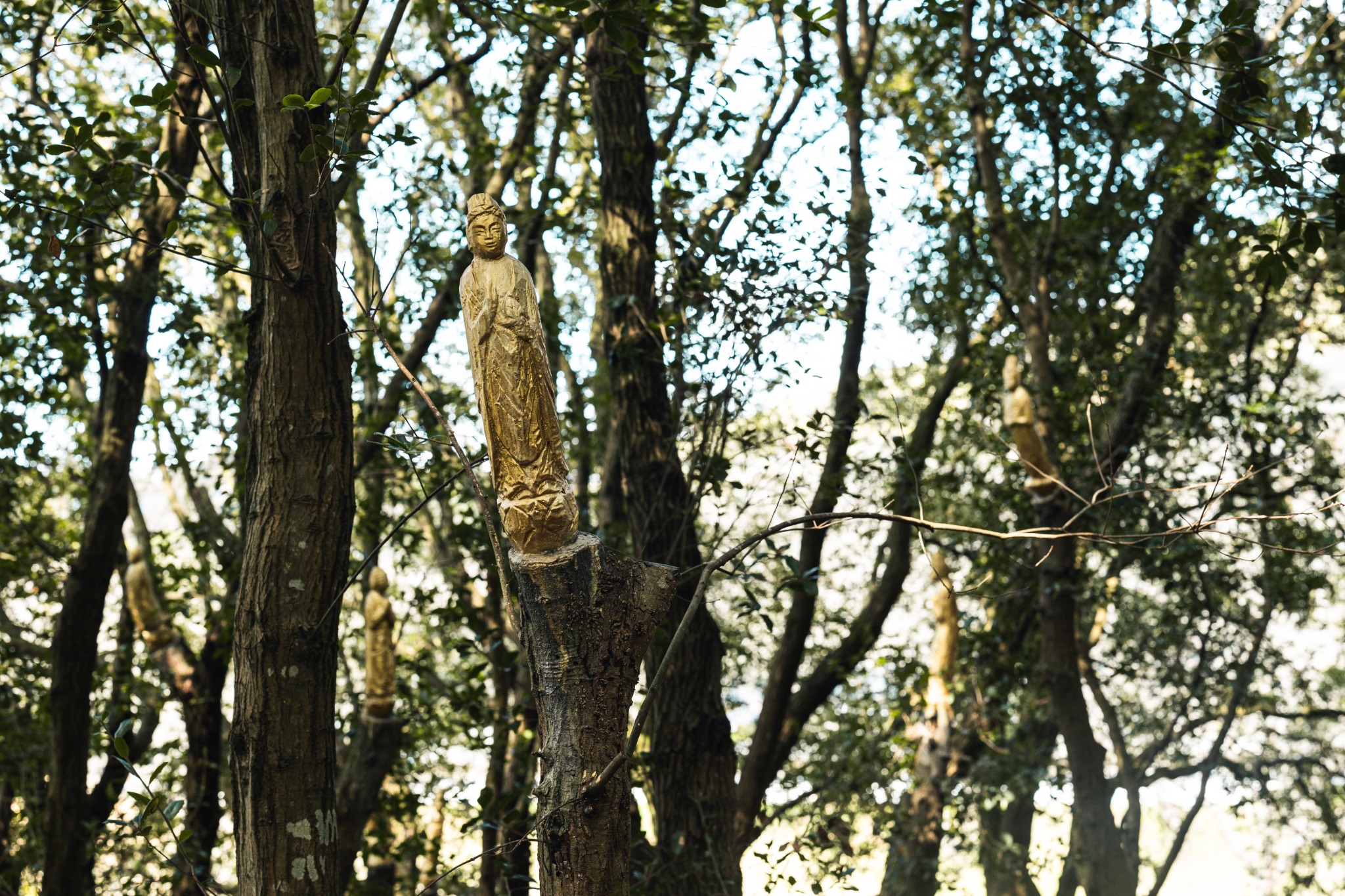
The Buddha was keeping very still. The tree had other plans.
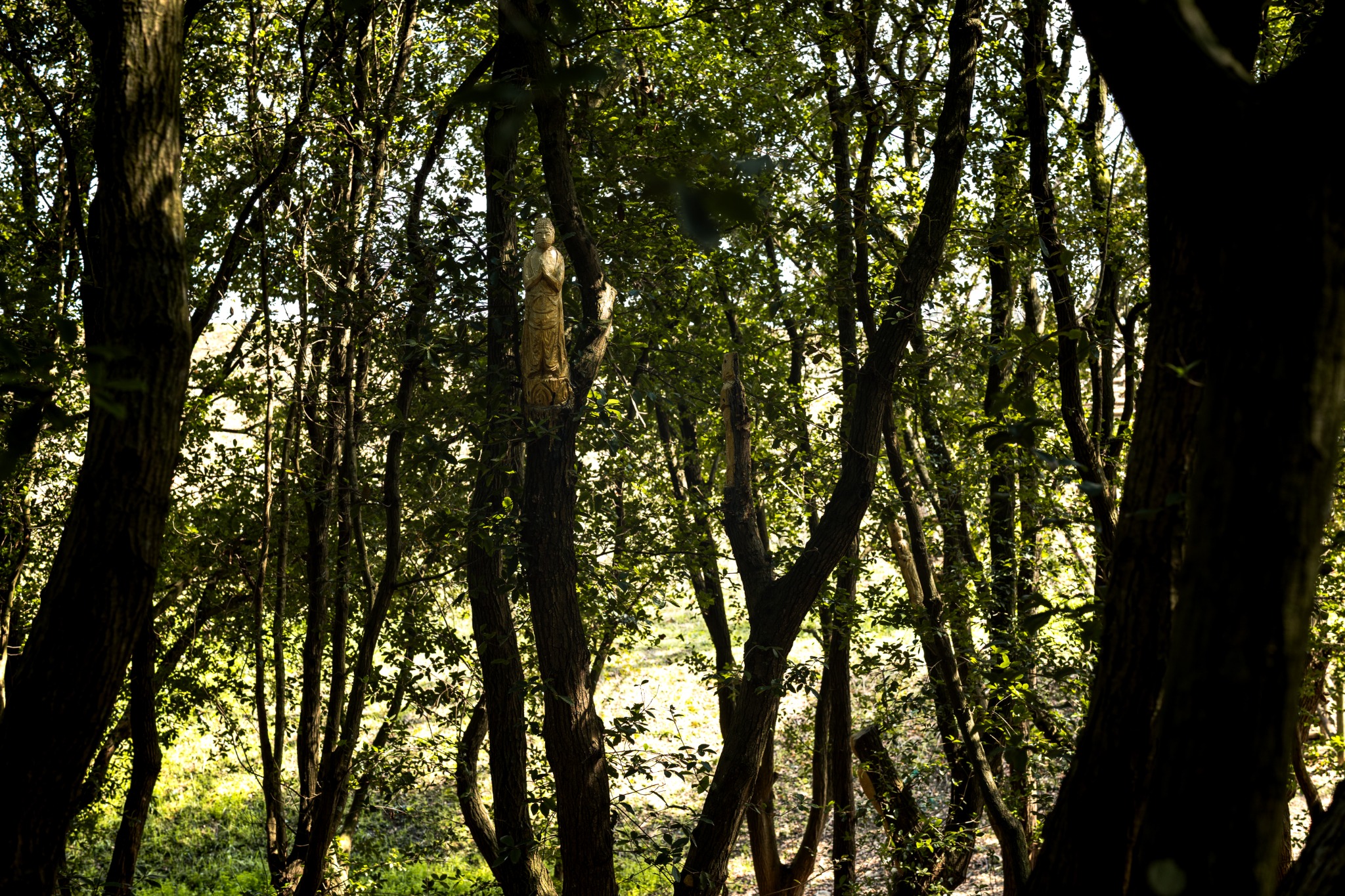
A golden figure stood among the dark trunks, with another visible farther into the grove. Leaves and branches surrounded them. Look past one face and there was often another.
This was Tatzu Butzu (達仏), an artwork by Tatzu Nishi in Tsunagi, a small town in Kumamoto Prefecture on Japan’s southwestern island of Kyushu. The Buddhas were carved directly into living trees.
A conventional wooden statue begins with timber. Here, the material was still busy being a tree.
Nishi is better known abroad for bringing public monuments indoors. For the 2011 Singapore Biennale, he built a hotel room around the Merlion; in 2012, he built a living room around the statue of Christopher Columbus in New York.
Those rooms were temporary. Tsunagi Town describes Tatzu Butzu as his only work on permanent display in a public collection in Japan, and only the second in the world, after Nantes in France. Here, he left everything outdoors and put the Buddhas into the trees. The work’s title borrows the 達 from his name and adds 仏, Buddha.
A sculpture that refuses to stay finished
The grove, known as Minna no Mori—“Everyone’s Forest”—stands near Tsunagi Town Hall. Its golden faces suggest somewhere secluded and sacred; the address is considerably more municipal.
It had been laid out as a place for people to relax, but gradually fell out of use. Nishi’s work, first presented in 2017 through a project involving local residents, gave people a new reason to enter it.
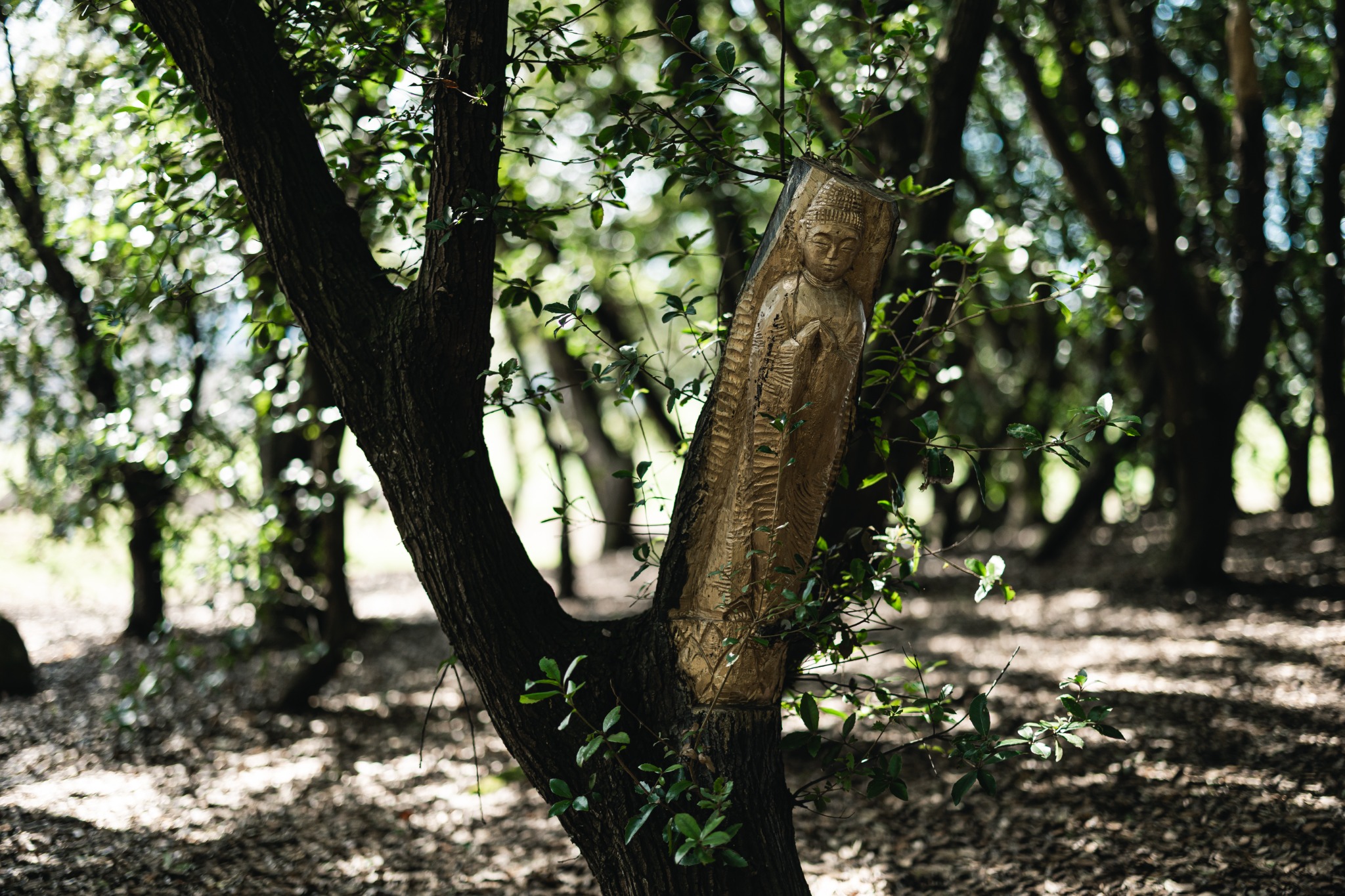
The figures do not line up obligingly for inspection. Some rise from the ends of cut branches; others are carved into the sides of trunks, with bark still framing their robes.
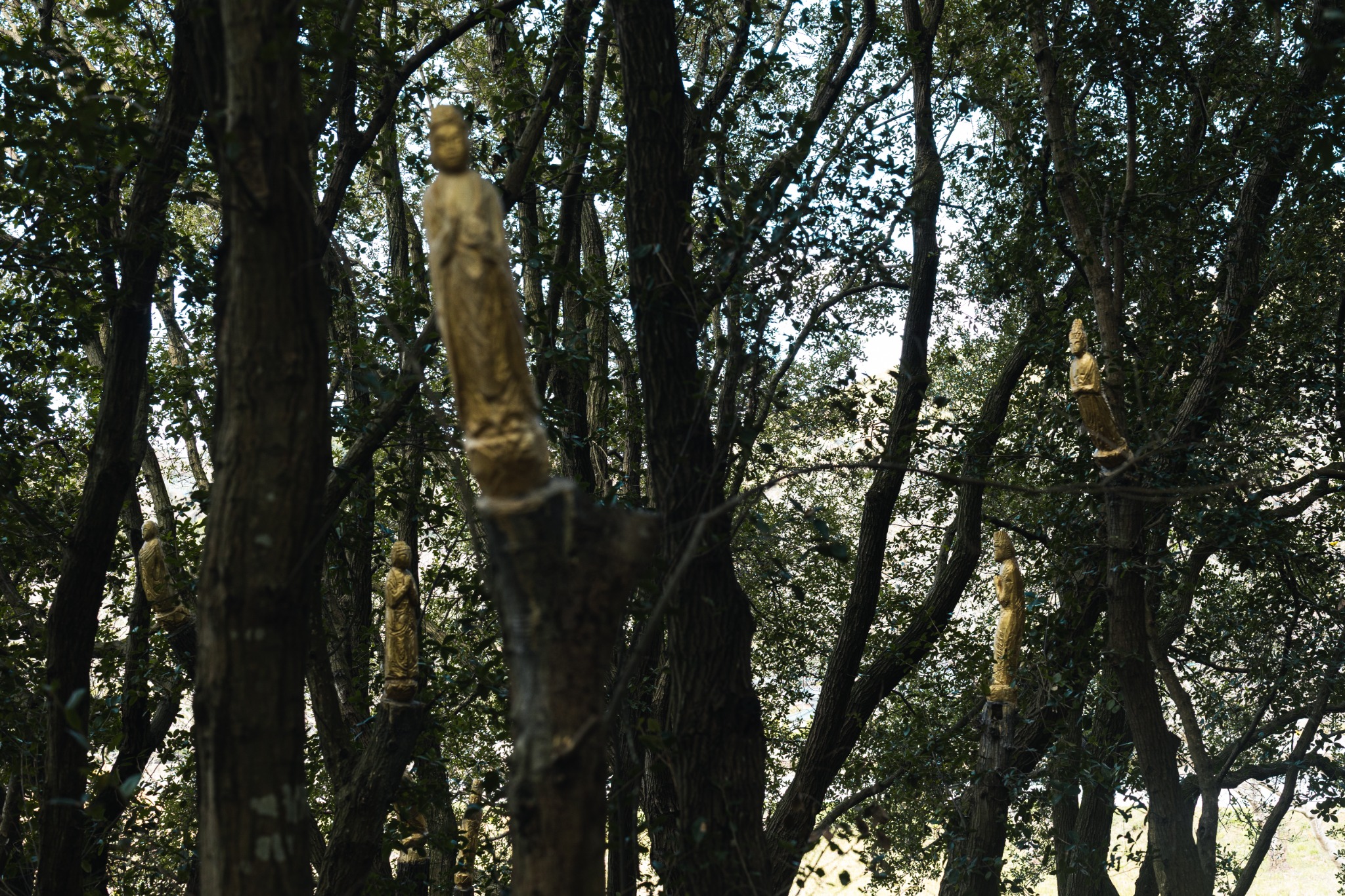
The installation originally comprised thirty-three figures, a number with significance in Buddhist tradition. Each belongs to its particular trunk.
A figure can look remarkably self-contained until your eye follows the wood beneath it. There is no separate pedestal. The tree continues down into the ground and out into the surrounding growth.
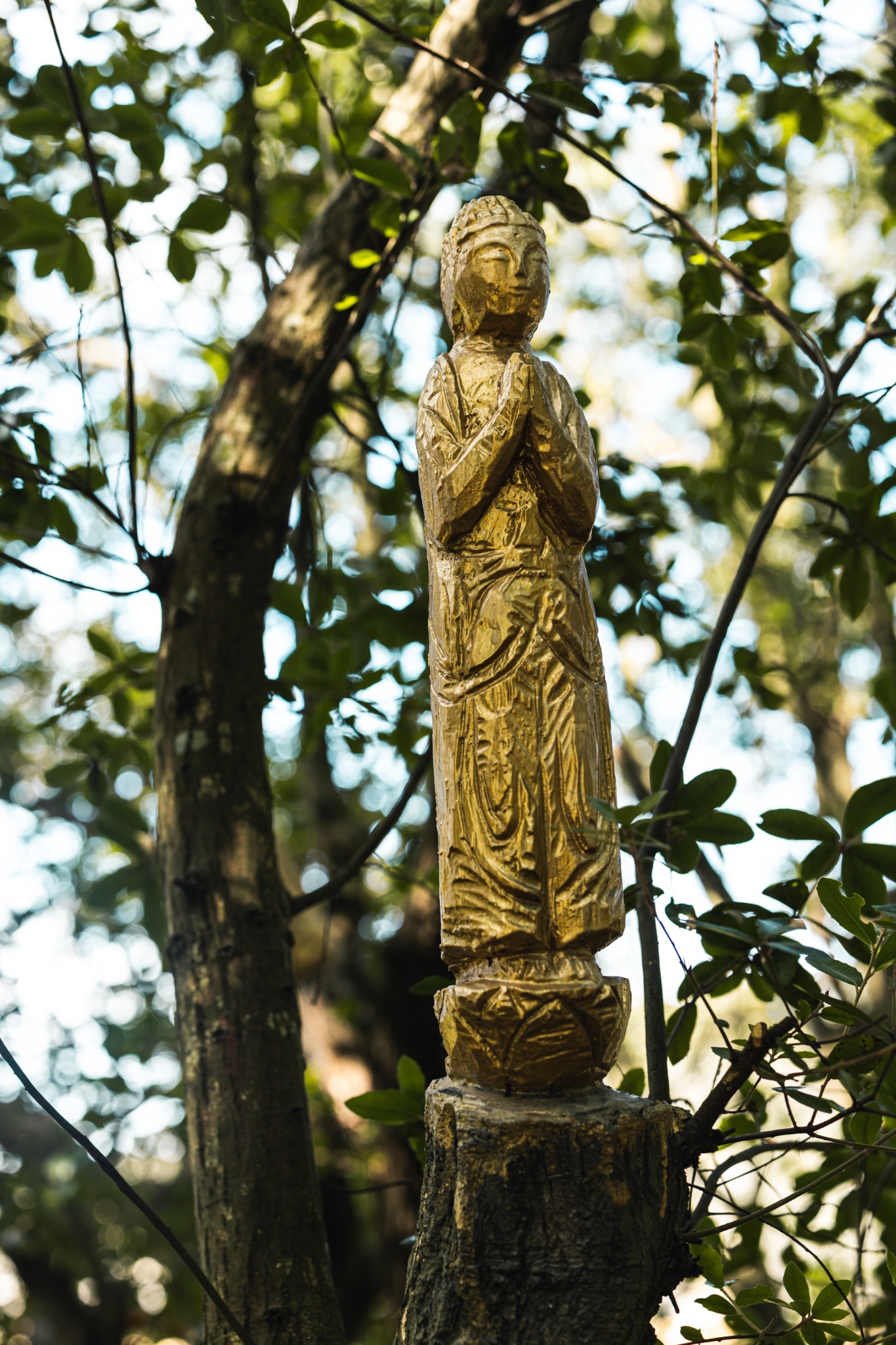
That living connection also makes maintenance part of the story. Growth can obscure a figure, and the trees remain vulnerable to damage. Becoming a Buddha does not appear to discourage insects.
A living sculpture also inherits the problems of being alive.
The people who make the work have to return to it. Sculptor Hideaki Mori, who participated in its creation, carved four of the figures anew during maintenance in 2024, according to Tsunagi Town’s account. The museum also reports that one figure has been removed because of insect damage, with restoration being planned.
The stones have something to say
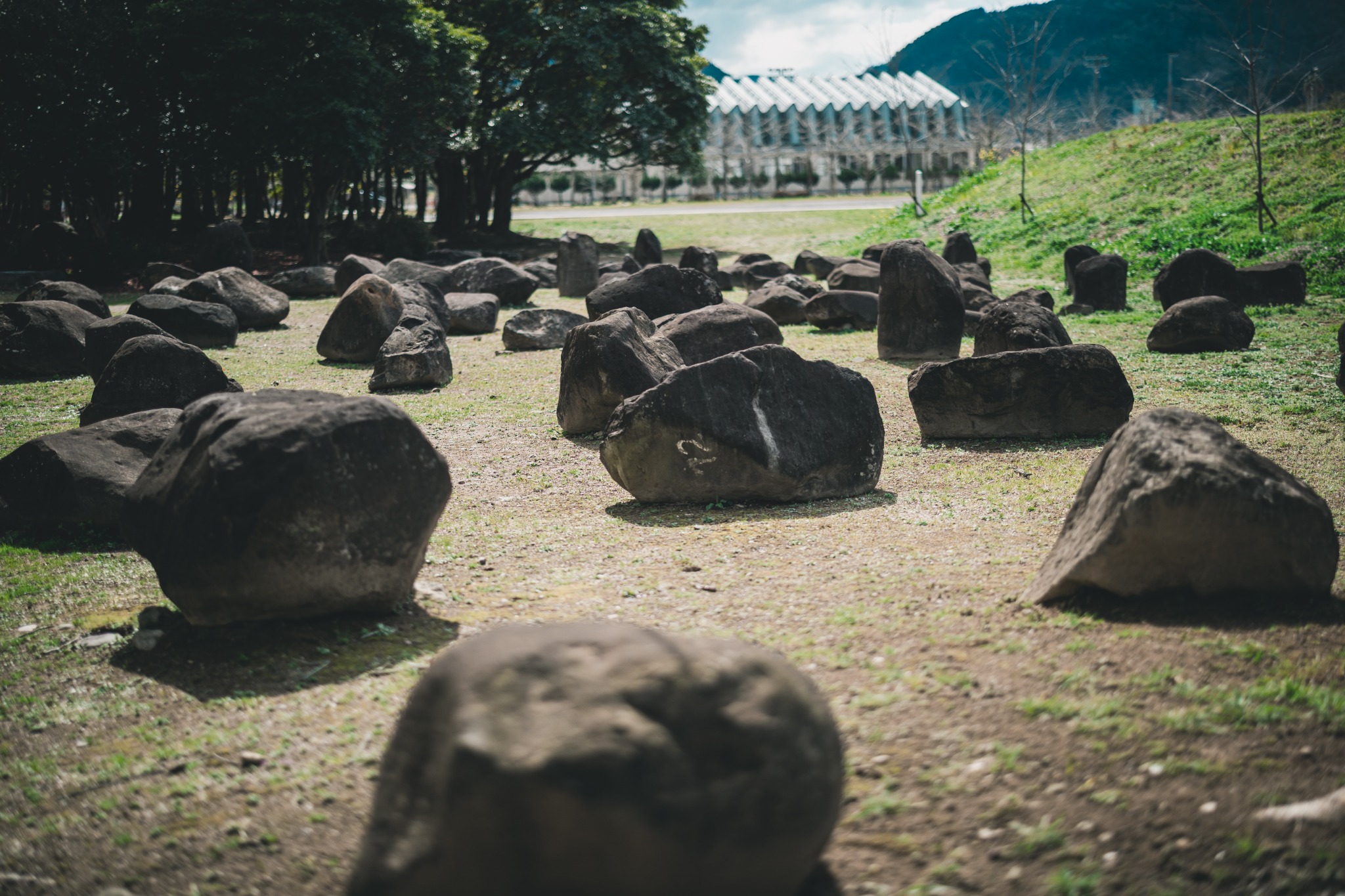
Beside Tatzu Butzu, a different grove contains YANAGI Yukinori’s Ishidama Garden (石霊の森), completed in 2021.
Here, large stones sit among ginkgo trees. They have no golden faces to catch your attention. Their contribution is harder to photograph.
Then there are the voices.
Faint human speech comes from cracks in some of the rocks. The mechanism is straightforward: speakers are concealed inside split stones. Knowing that explains the equipment. It does surprisingly little to make a speaking boulder feel ordinary.
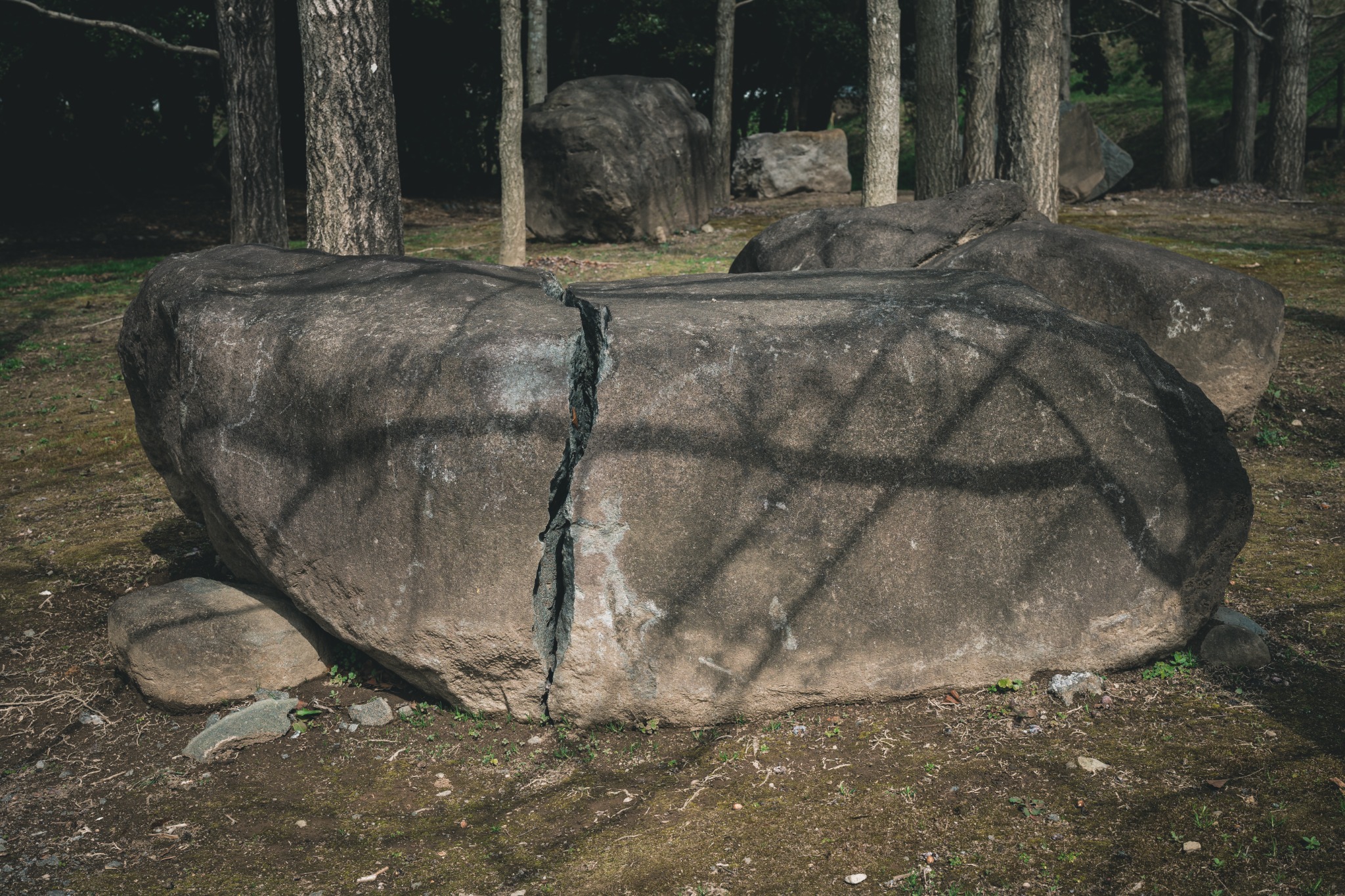
The words belong to this region. The recordings include local residents reading poems by Michiko Ishimure, whose writing gave powerful expression to lives affected by Minamata disease. The disease was caused by eating fish and shellfish contaminated with methylmercury discharged from a chemical factory, as Japan’s Ministry of the Environment explains.
Alongside the poems are recordings of storytellers passing on the history of Minamata disease and sounds from a traditional local dance, as a curator’s account of the work describes.
That gives the quiet speech a different weight. These are human words placed in something we usually expect to outlast us: poetry, painful memories and the sounds of a community’s continuing life.
I had come to see what an artist could make of a tree. I left thinking about what a stone could be asked to remember.
Visit this place
Location
Tatzu Butzu (達仏) / Ishidama Garden (石霊の森)
Beside Tsunagi Town Hall (2123 Kotsunagi), a landmark for the outdoor installations
Kotsunagi, Tsunagi, Kumamoto 869-5604, Japan
Practical Information
- Works
- Tatzu Butzu (達仏) and Ishidama Garden (石霊の森)
- Area
- Beside Tsunagi Town Hall, Tsunagi, Kumamoto
- Admission
- Free
- Tatzu Butzu viewing
- Outdoor installation; generally viewable except during maintenance
- After dark
- Visiting after sunset is not recommended because there is no lighting.
- Ishidama Garden sound
- The work uses a timed sound system. Fixed operating hours are not currently published, so visitors who especially want to hear the voices should check with Tsunagi Art Museum before visiting.
- Nearest station
- Tsunagi Station on the Hisatsu Orange Railway
- Access
- Tatzu Butzu is about 3 minutes on foot from Tsunagi Town Hall. Ishidama Garden is immediately beside the same town-hall area.
- Reference
- Tsunagi Art Museum
Information last checked: September 9, 2026
Conversation
Comments
Review pending commentsComments are reviewed before appearing. The internet already contains enough unattended surprises.
Checking comments…
Comments are not available in this migration preview yet. Existing comments remain on the current site.
Leave a comment