Urasoe Yōdore: Evening Calm Beside Hacksaw Ridge
“You’ve been here before, haven’t you?”
It was my first visit to Urasoe Gusuku–Yōdore Hall, and one of the staff greeted me as if we had met. We had not met, and I had not been.
Yōdore is an old Okinawan word, often explained as the evening calm: the hour when the wind drops and the sea goes quiet. In Urasoe, just north of Naha, it is also the name of a royal tomb, cut into the cliff below the ruins of Urasoe Castle.
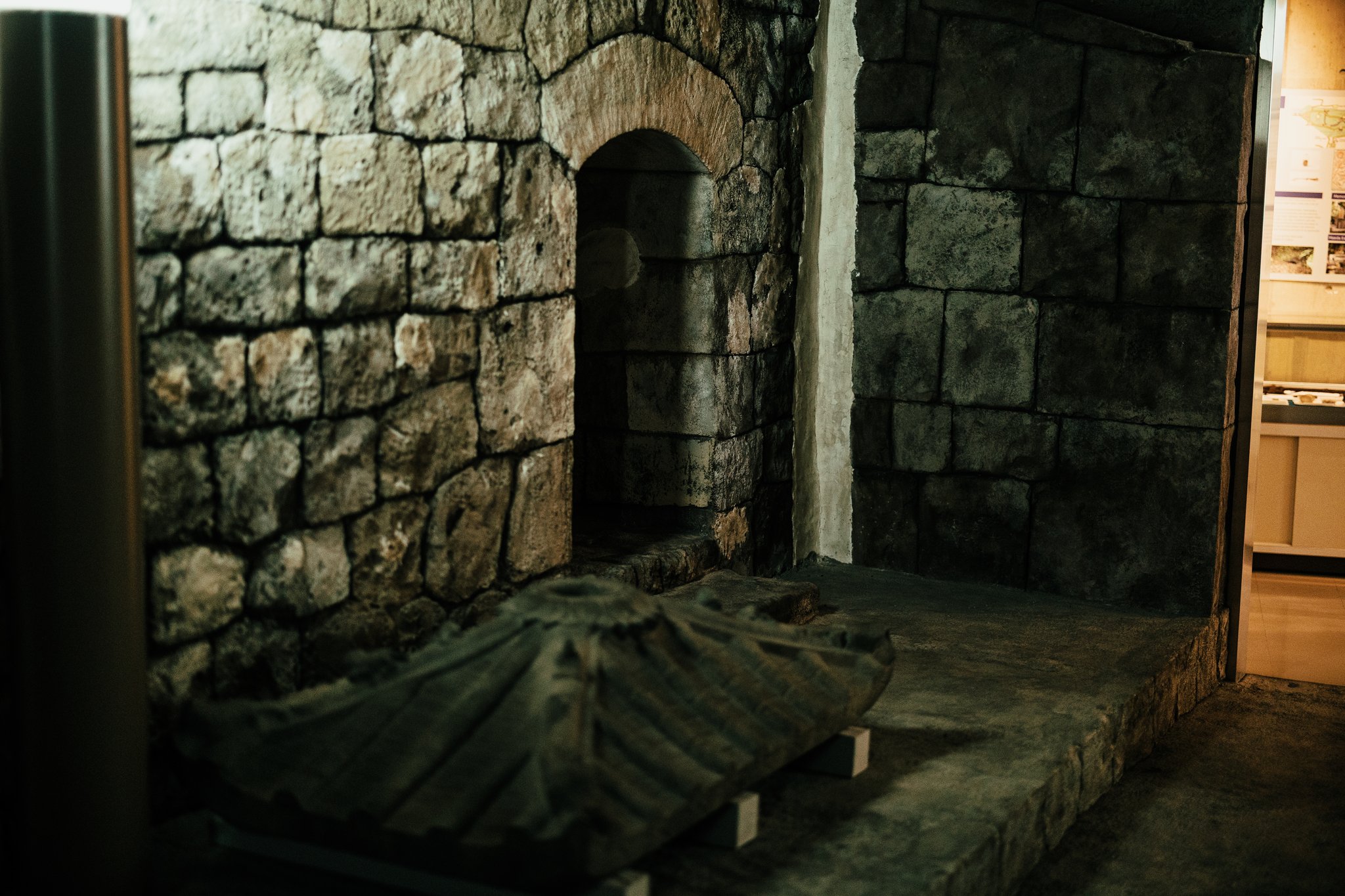
The hall explains the site with old photographs and finds from the excavations. Through one doorway is a dim stone room: a full-size reproduction of the tomb’s west chamber. The staff then explained the tomb to me in careful detail.
Small stone houses
The chamber holds stone coffins. They were made for bones, and carved from stone brought from China.
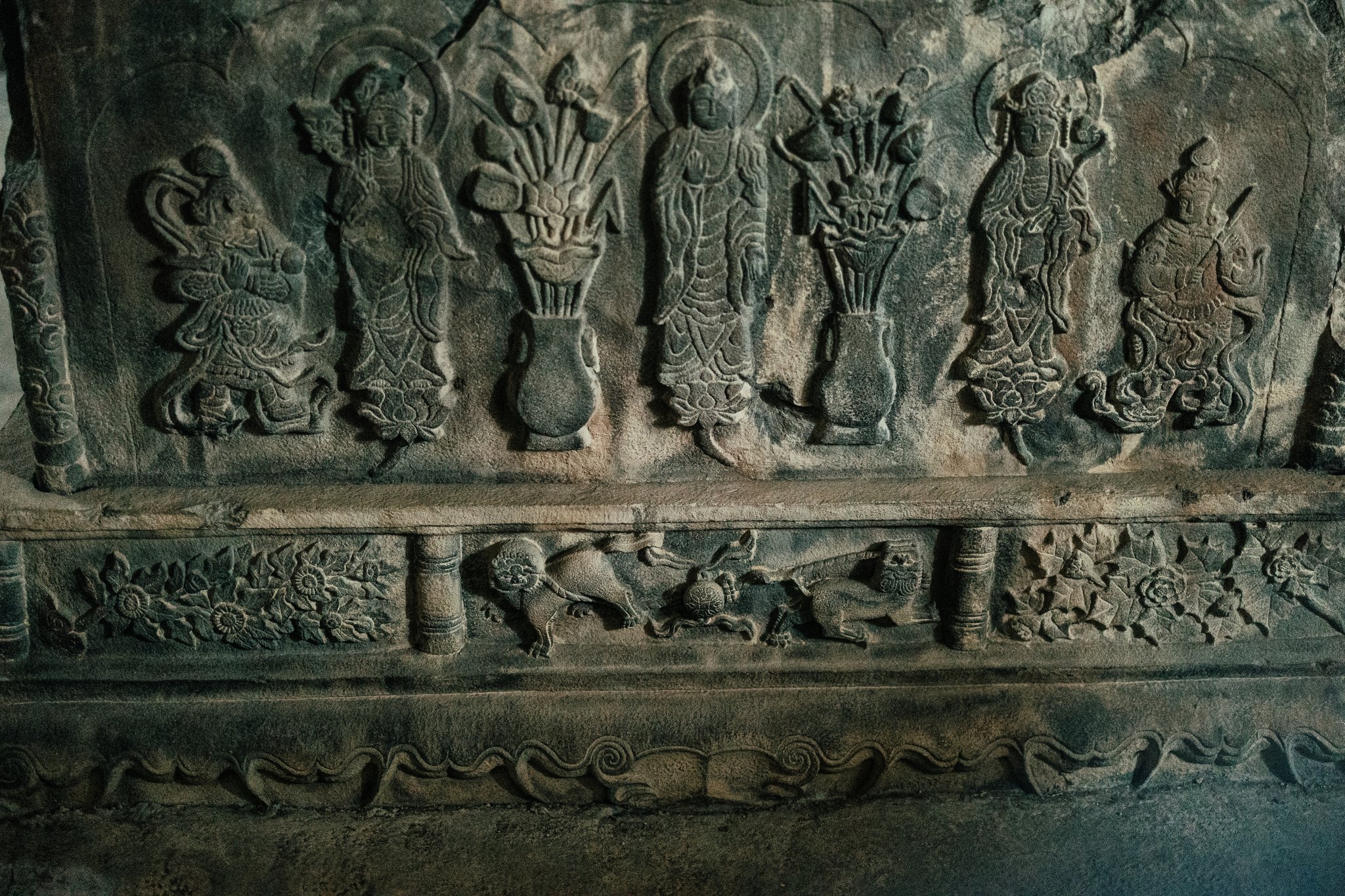
The coffins are shaped like small houses. The lid is a roof, with rows of tiles running down to the eaves. The walls are panels of carving.
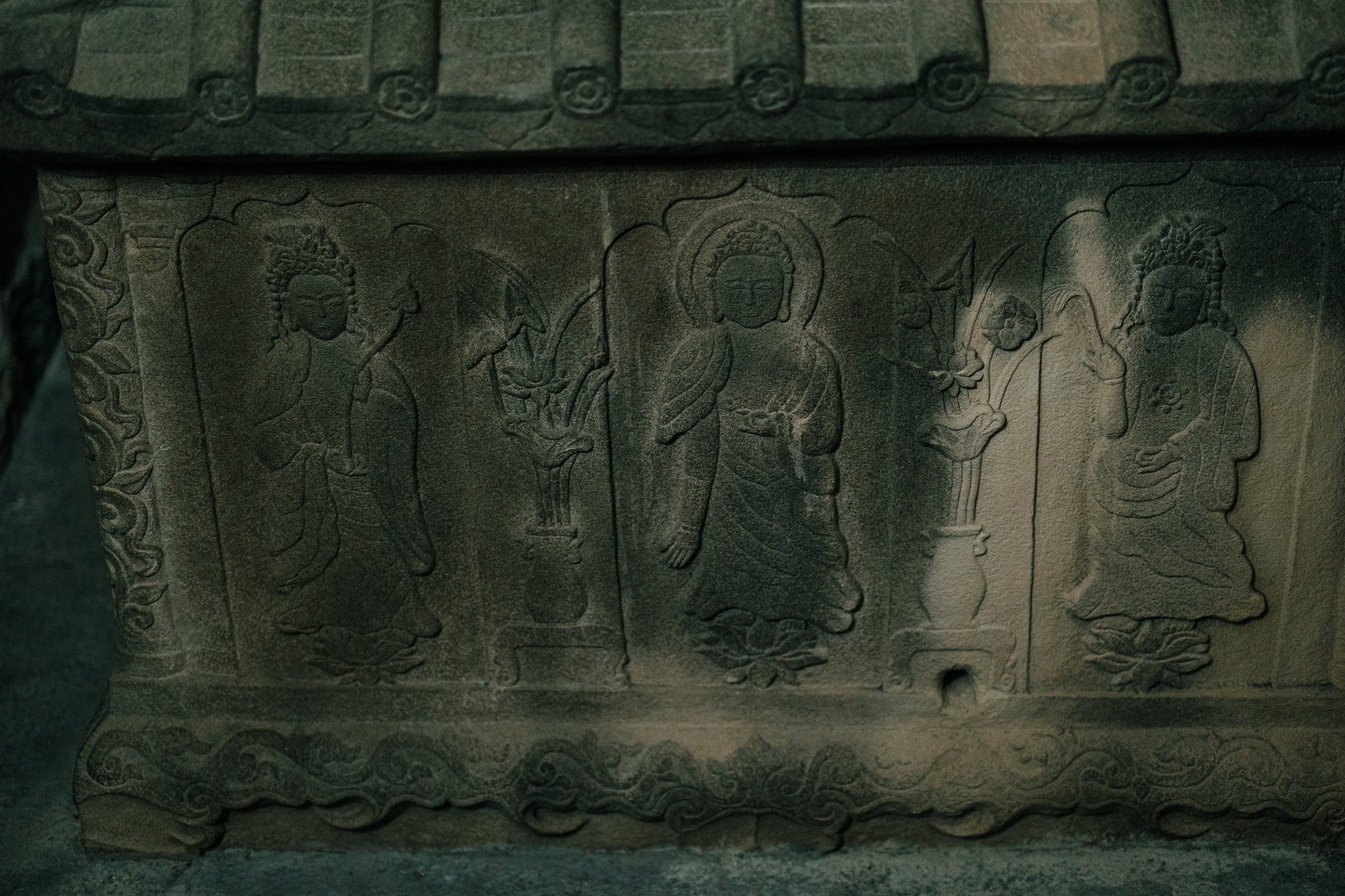
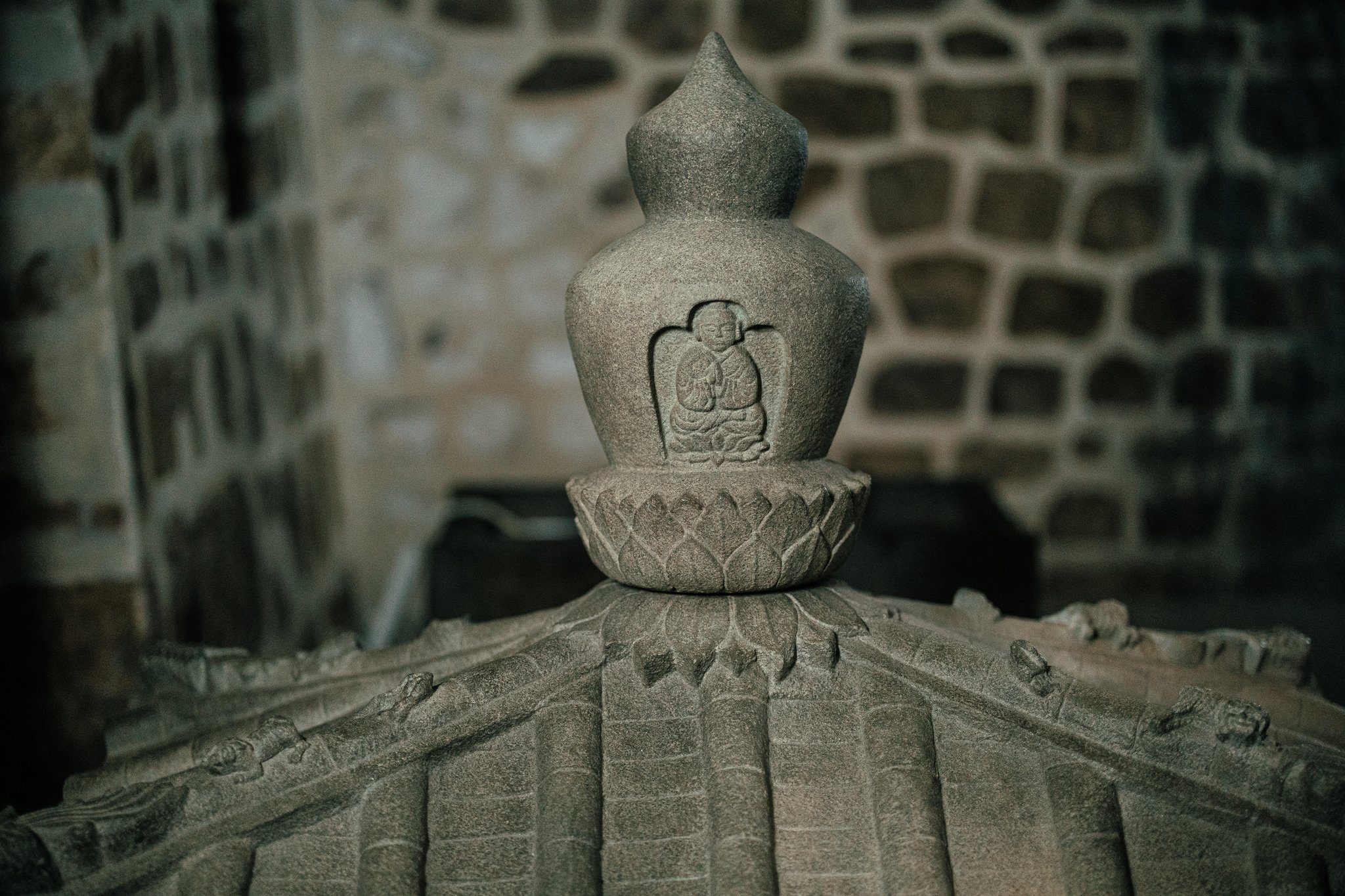
The carving is Buddhist, and there is a great deal of it. On the ridge of one roof, a small figure sits on a lotus with its hands pressed together.
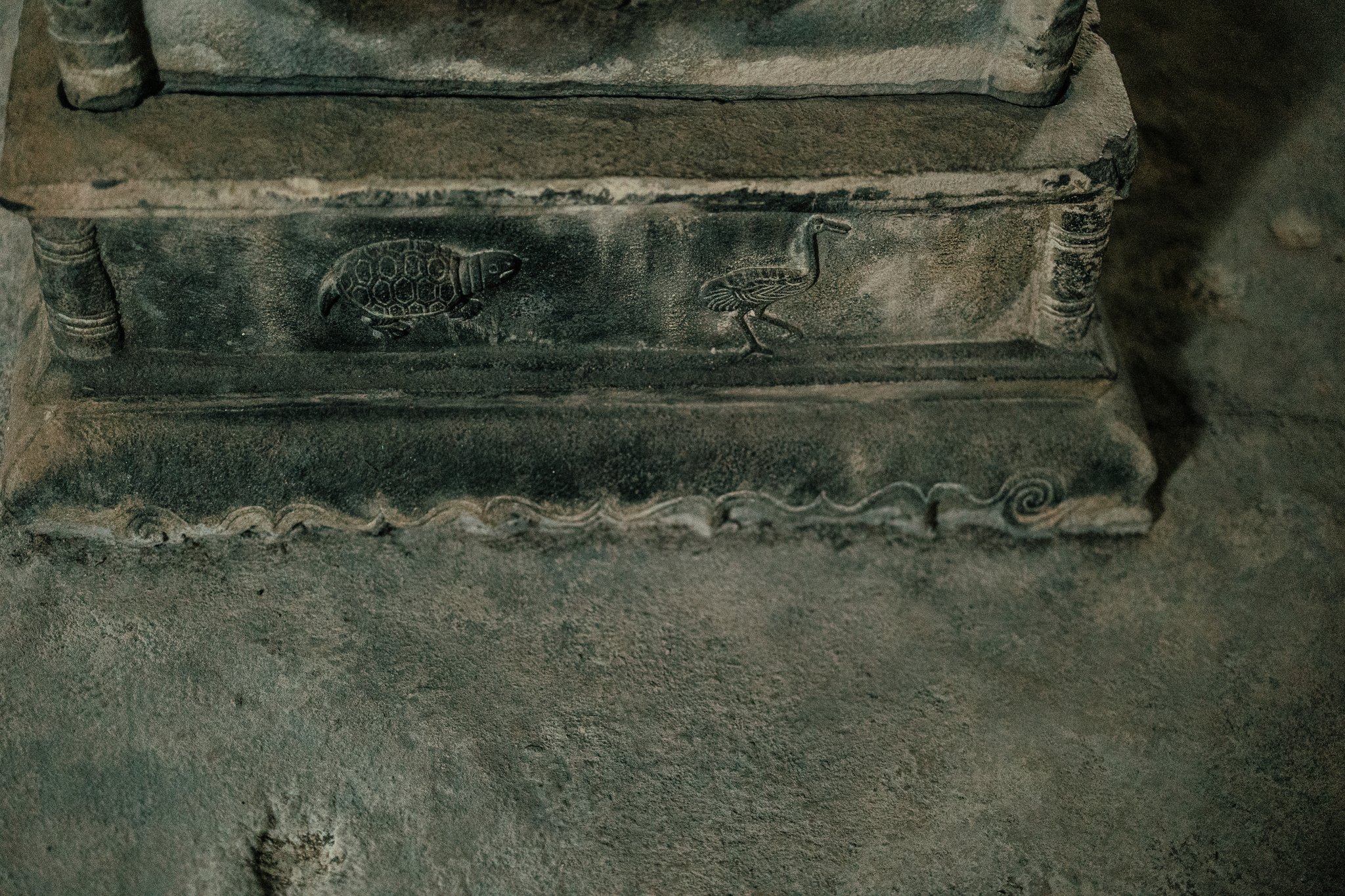
On another coffin, guardians in armour stand among the Buddhas, with a pair of lions below them and a ball between the lions. Along a base, a turtle and a bird.
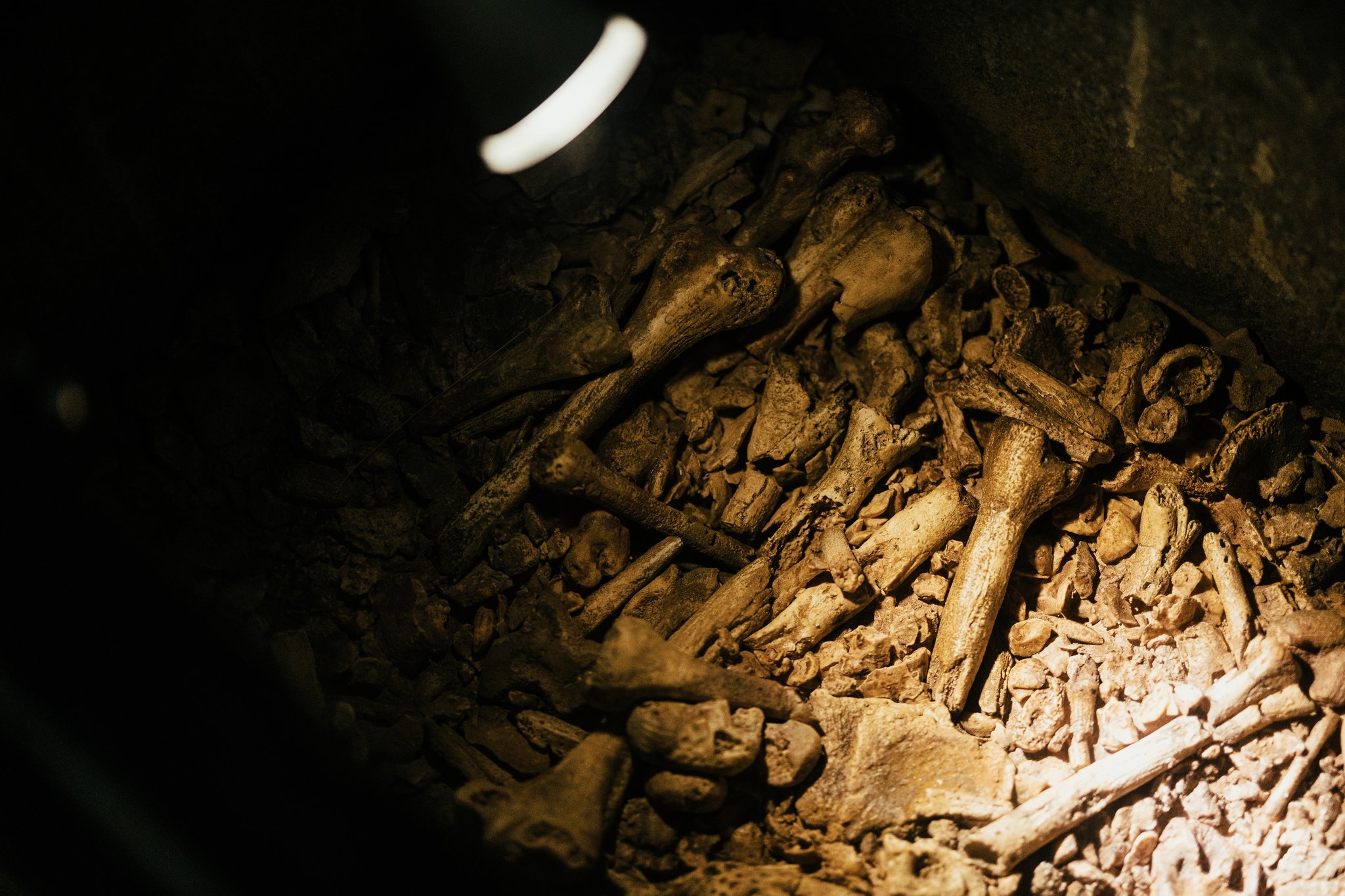
The houses are not empty.
Two kings
The first king here is said to be Eiso, who reigned from 1260 to 1299; the tomb is thought to have been built for him in the thirteenth century. According to Urasoe’s own tourism guide, his mother dreamed that the sun flew into her bosom before he was born, and people called him Eso no Tedako: Eiso, the one who is the sun.
The same guide says that on the winter solstice, when the sun was thought to be reborn, the rising sun shines straight in through the tomb’s arched gate, and that it was built that way on purpose, to draw in the sun’s power. A tomb named for the evening, then, arranged for a sunrise.
The second king arrived more than three centuries later. Shō Nei took the throne in 1589. In 1609 the Satsuma domain of southern Japan invaded Ryukyu, and he surrendered. He was taken to Japan, where he met Tokugawa Ieyasu at Sunpu and the shogun Hidetada in Edo, and he was allowed home in 1611. In 1620 he renovated this tomb, and in the same year he was buried in it.
The kings of his dynasty were buried at Tamaudun, the royal mausoleum in Shuri. Shō Nei was not. For a long time, the explanation was shame: having lost to Satsuma, he could not face his ancestors.
Urasoe tells it differently. Shō Nei came from a branch of the royal family that had lived around Urasoe Castle. The inscription at Tamaudun does not list that branch; it had never been meant to lie there at all. For his family, he seems to have decided, the proper tomb was this one.
The king who had lost the war had not hidden himself away. He had gone home.
His queen, according to the same account, waited for him while he was in Japan and is said to have composed a verse about the north wind bringing the king home. She was buried elsewhere at first. In 1759 her bones were moved here, to join his.
The cliff next door
Afterwards I went out to the real thing. High walls curve along the foot of the cliff.
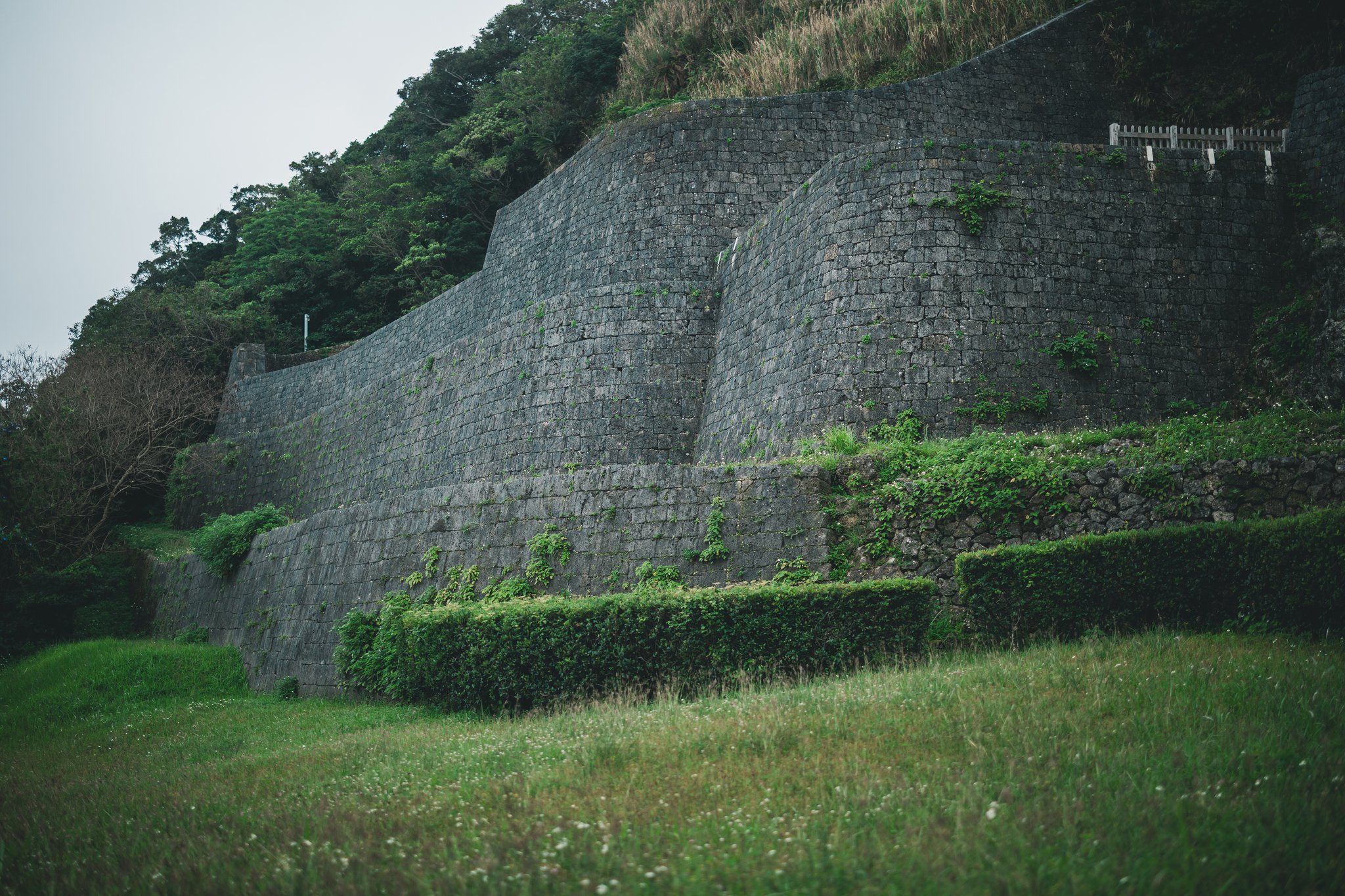
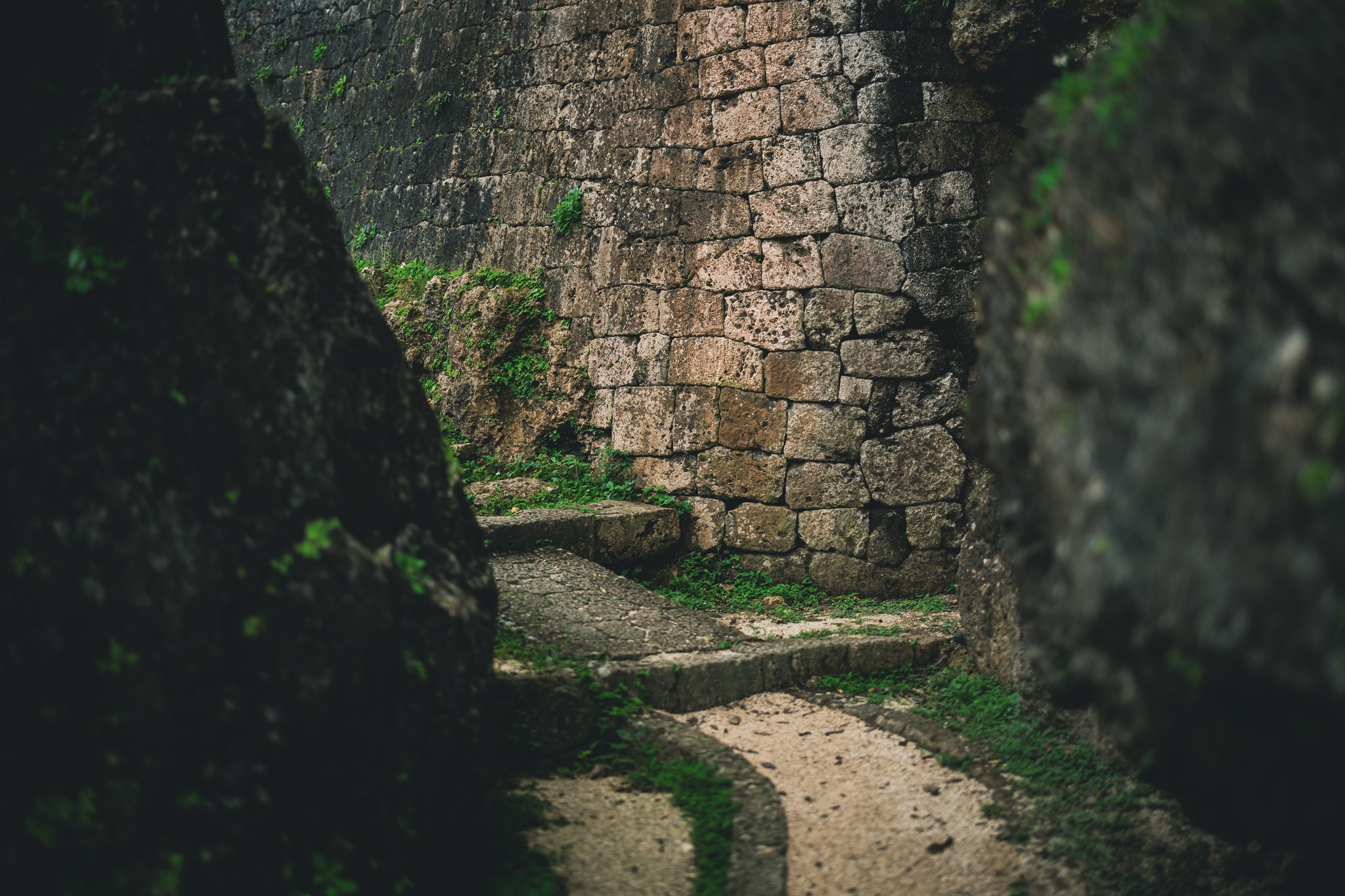
The cliff that runs east from the tomb has another name. In 1945, American forces called the ridge around Urasoe Castle Hacksaw Ridge for its sheer face. A Hollywood film later made the name famous. Their attack on it began on 25 April. On 6 May, the Americans took it, and the Japanese forces withdrew.
According to Urasoe City, the area known as Maeda Heights stretches from Yōdore Hall to about where the city’s fire headquarters now stands. The hall where I had seen the copy stands at one end of it.
The tomb was thoroughly destroyed in the Battle of Okinawa and by quarrying after the war. Excavations began in 1996. Based on the findings, the tomb was restored to its pre-war appearance in 2005.
Two doors
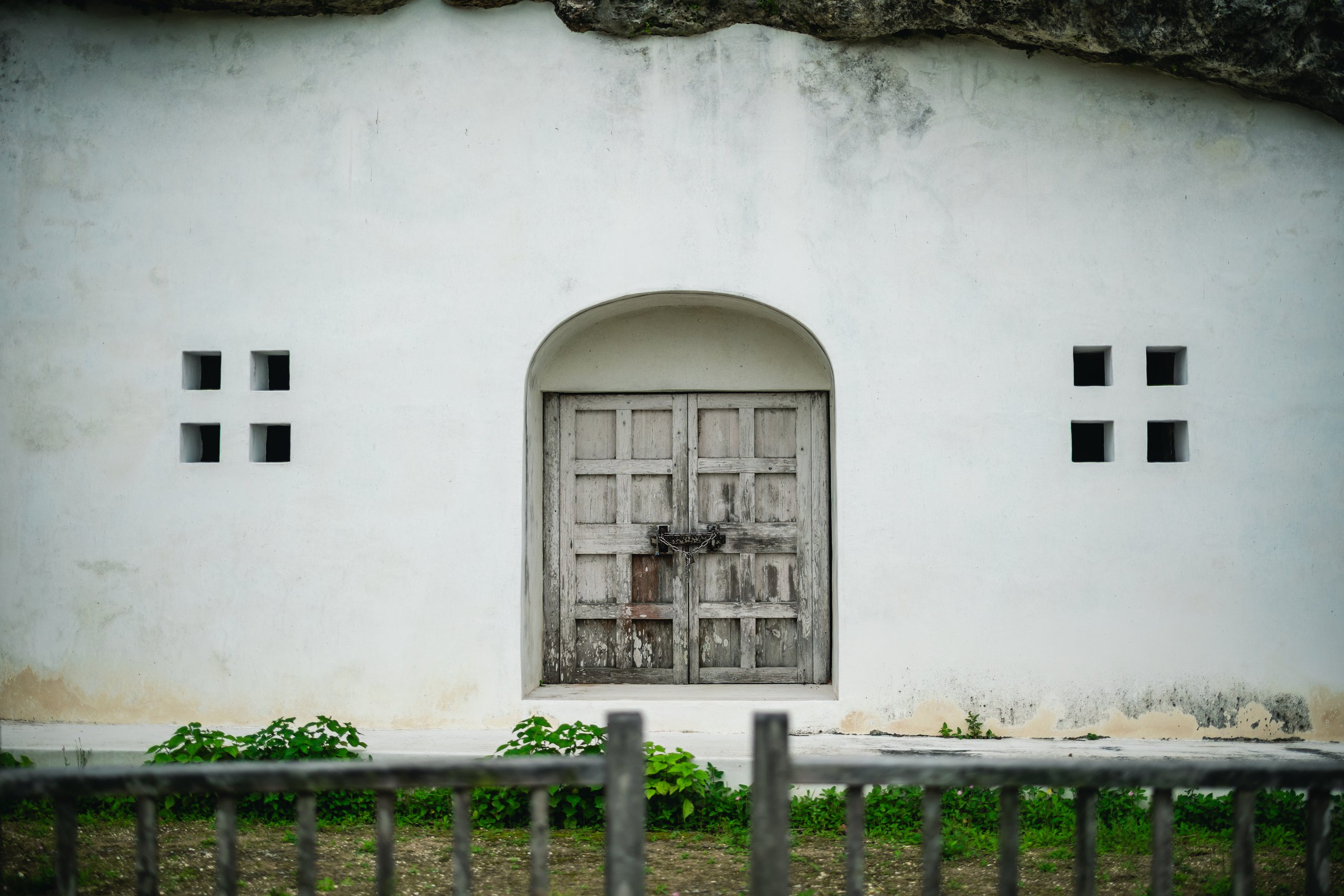
The courtyard is quiet now. Two chambers are cut into the cliff, their fronts white under the overhanging rock. According to the sign, the west chamber, on the right, is Eiso’s. The east chamber, on the left, holds Shō Nei and his family. Between them, a stone tablet stands against the rock. A fence keeps visitors back.
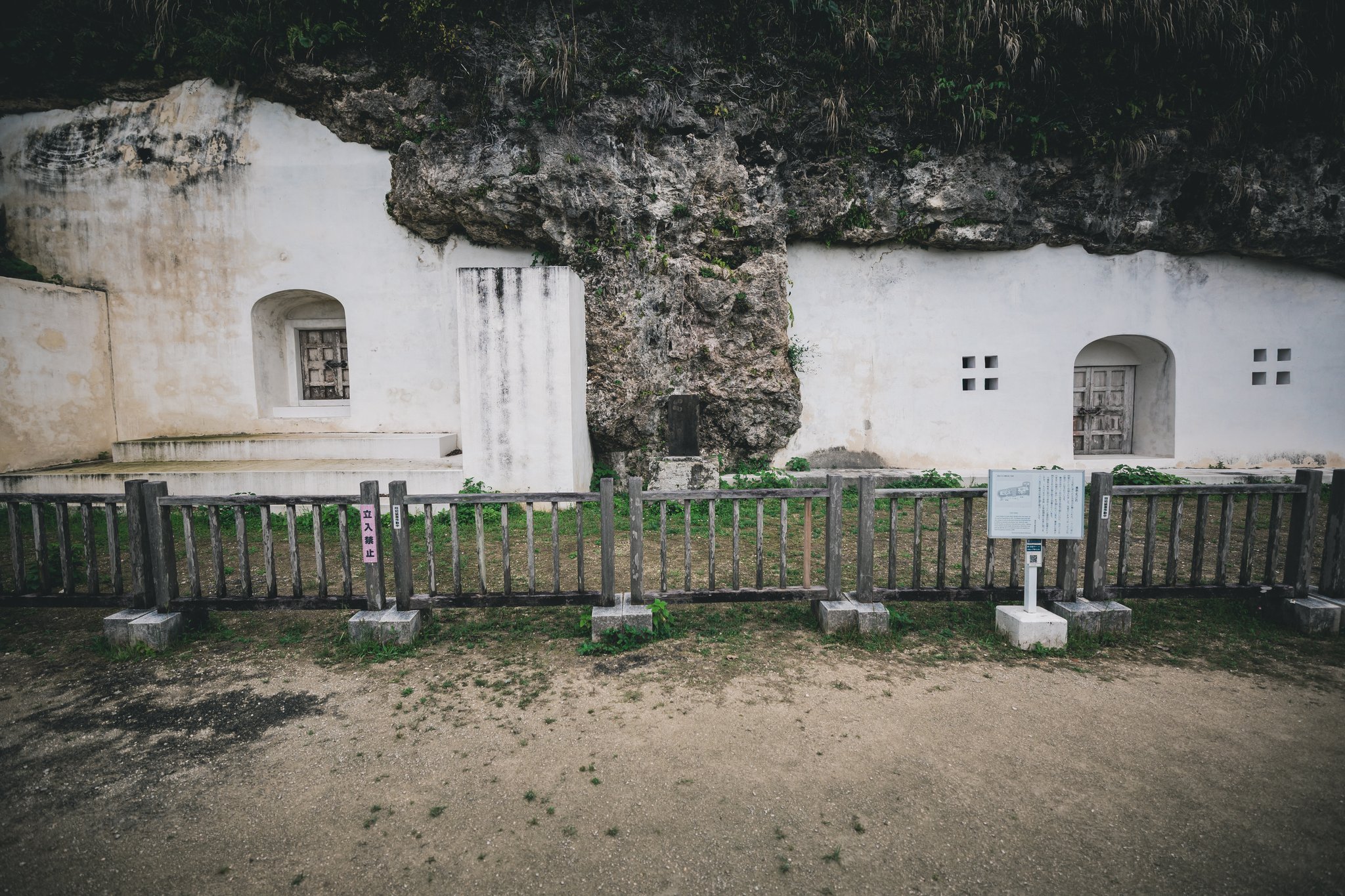
The door of the west chamber was chained and padlocked. There was no way to see inside.
There was no need to, either. I had already seen the stone houses, the lions, the praying figure on the roof, and the bones.
The staff member had been right, in a way. I had been in there before.
Visit this place
Location
Urasoe Yōdore (浦添ようどれ)
On the cliff below the Urasoe Castle ruins. The full-size copy of the west chamber is in Urasoe Gusuku–Yōdore Hall, 2-53-1 Nakama.
2-53 Nakama, Urasoe, Okinawa 901-2103, Japan
Practical Information
- The tomb
- The two chambers are closed. The courtyard is fenced, and the chambers are seen from behind the fence.
- Yōdore Hall
- Urasoe Gusuku–Yōdore Hall has a full-size reproduction of the west chamber, with old photographs and finds from the excavations.
- Opening hours (Yōdore Hall)
- 9:00–17:00
- Closing days (Yōdore Hall)
- Mondays; December 28–January 3
- Admission (Yōdore Hall)
- Adults (high school and older) ¥100; elementary and junior high school students ¥50. Free for preschool children, elementary and junior high school students living in Urasoe, and disability certificate holders with one companion.
- Access
- Ryukyu Bus Kotsu route 55 (Makiminato line) to Nakama (仲間), about 5 minutes on foot; or about 15 minutes on foot from Urasoe-Maeda Station on the Yui Rail. (Times are to Yōdore Hall, per Urasoe City.)
- Official website
- Urasoe City — Urasoe Gusuku–Yōdore Hall
Information last checked: September 30, 2026 (Yōdore Hall opening hours, closing days, admission and access; the note on the tomb is from the author’s visit).
Conversation
Comments
Review pending commentsComments are reviewed before appearing. The internet already contains enough unattended surprises.
Checking comments…
Comments are not available in this migration preview yet. Existing comments remain on the current site.
Leave a comment