Gongorō Chikara Mochi: A 300-Year Tradition, Best Eaten Today
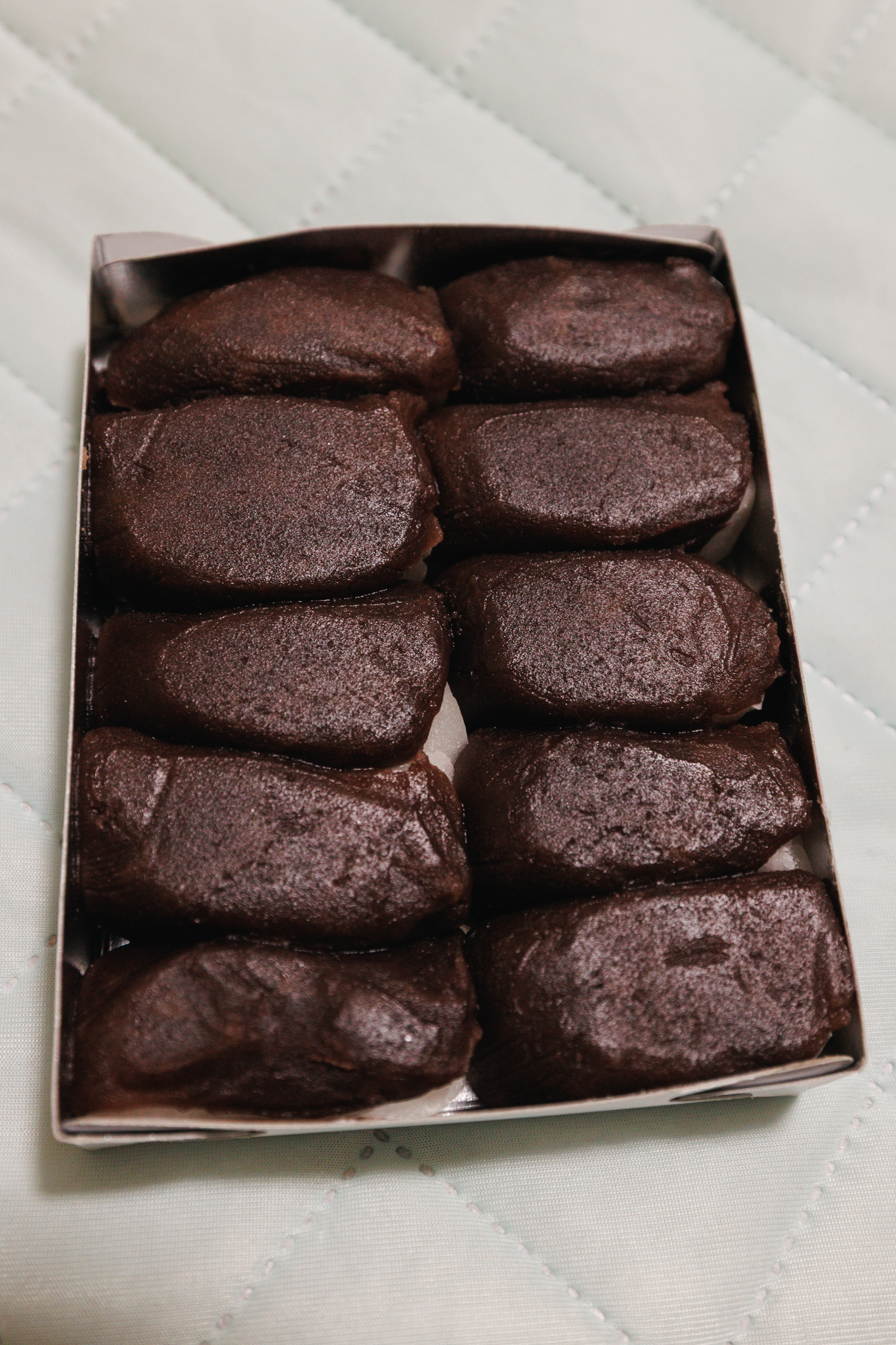
Chikaramochiya has been selling sweets in Kamakura for more than 300 years. The box I bought asked me to eat them today.
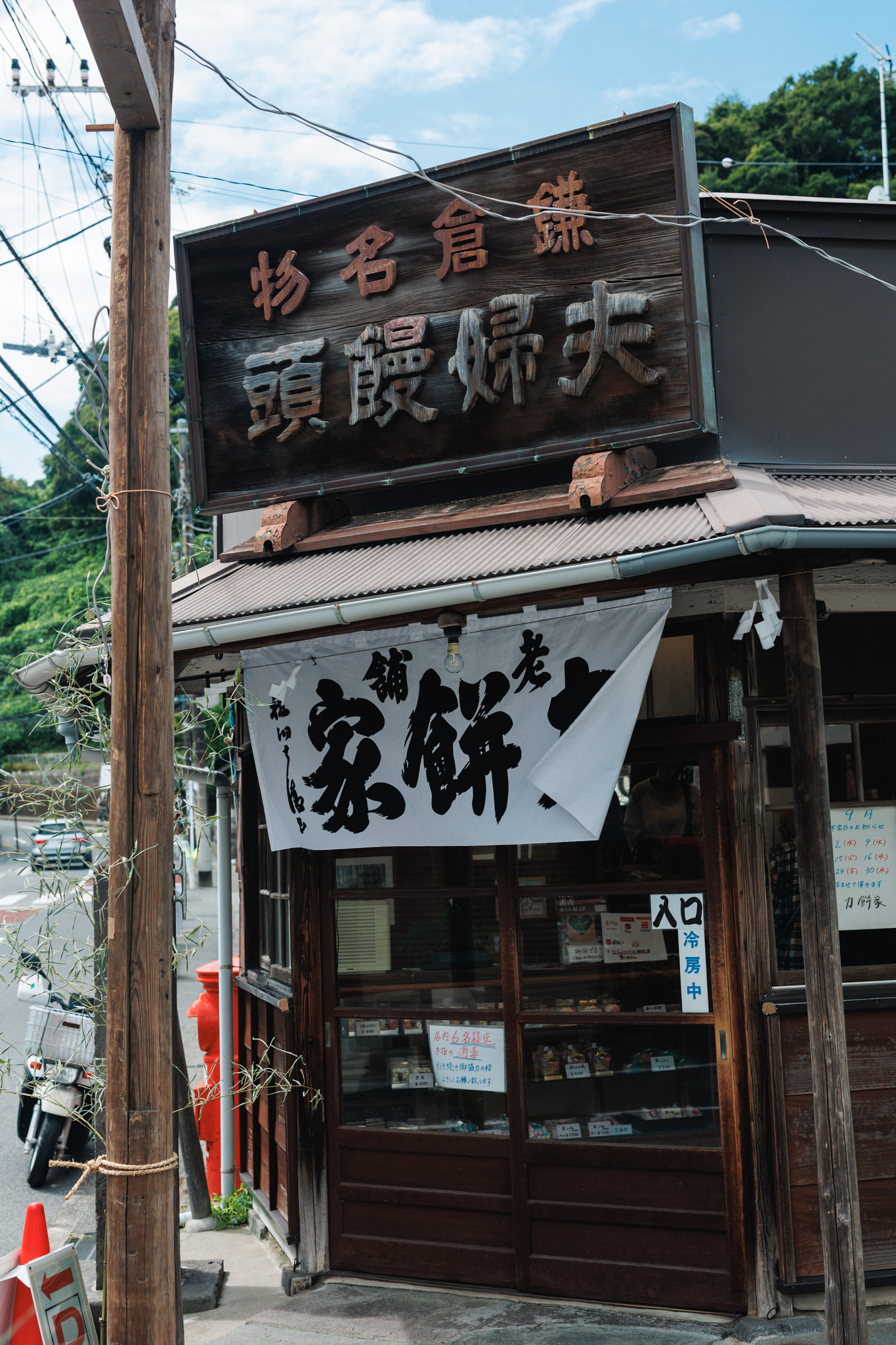
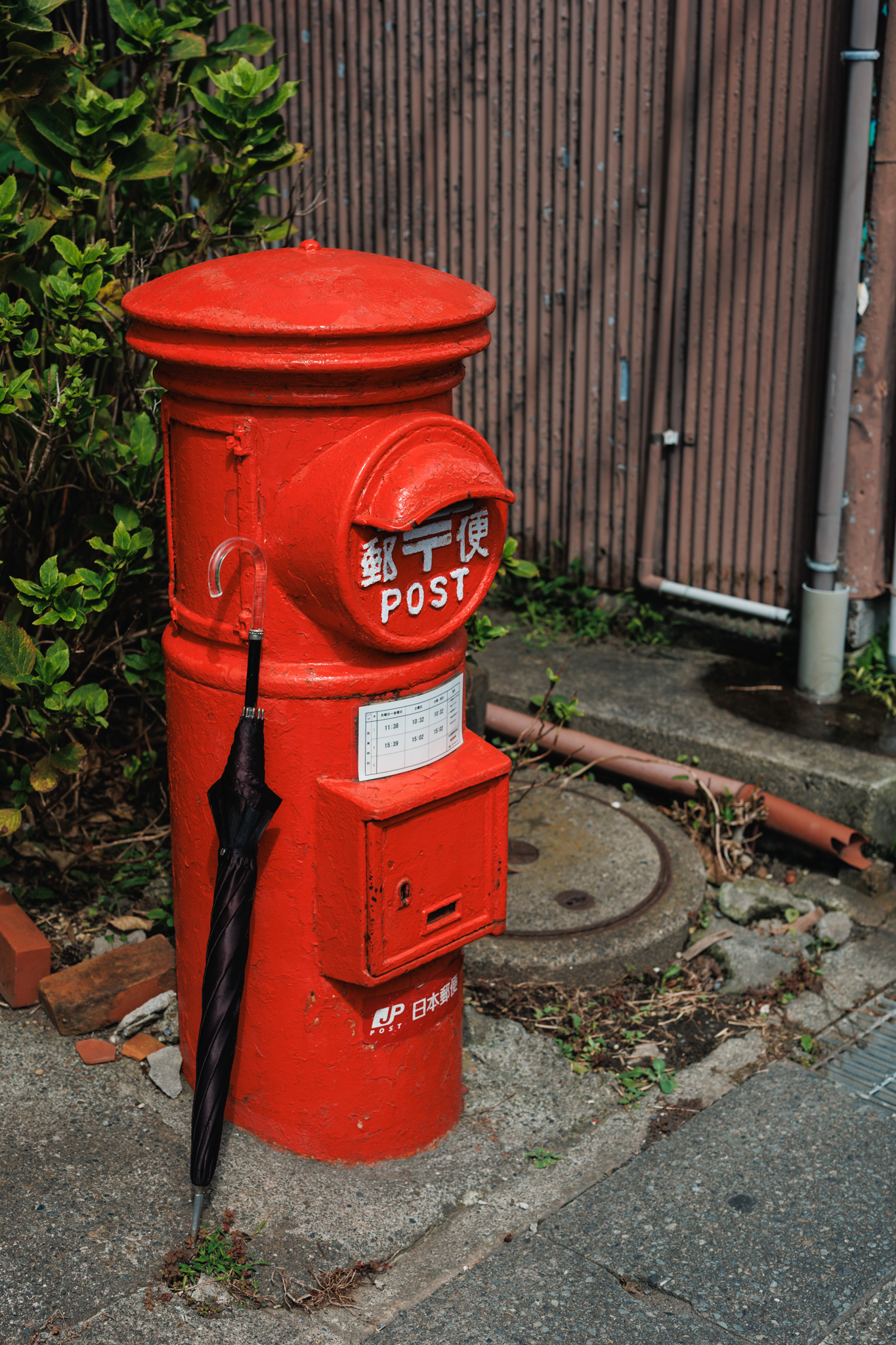
The shop stands in Sakanoshita, near Hase Station, with a white noren curtain at the door and a red postbox beside it. The large wooden sign above, read right to left in the old style, announces a Kamakura speciality: meoto manjū, “husband-and-wife buns”. They are still sold inside, but the shop’s own speciality is Gongorō chikara mochi: small cakes of steamed, pounded sticky rice covered in koshian, a smooth, sweet paste made from azuki beans.
Behind the glass
The business dates from the Edo period, but the building is younger. According to the shop, it was put up hurriedly during the shortages after the Second World War and has remained in use ever since. It has done rather well for an improvised solution.
Inside, boxes of mochi sat behind glass, their handwritten price cards propped against the shelves. Two versions were displayed separately. One used ordinary mochi; the other used gyūhi, a soft dough made by heating and kneading sticky-rice flour with water and sugar. The sugar helps it retain moisture and stay soft longer. At this shop, the gyūhi version keeps for three days from purchase.
Below the mochi, boxes of fukumen manjū were wrapped in drawings of the Menkake procession, the masked parade held every 18 September at nearby Goryō Shrine. I had come on the day of the procession. The manjū themselves had faces of their own.
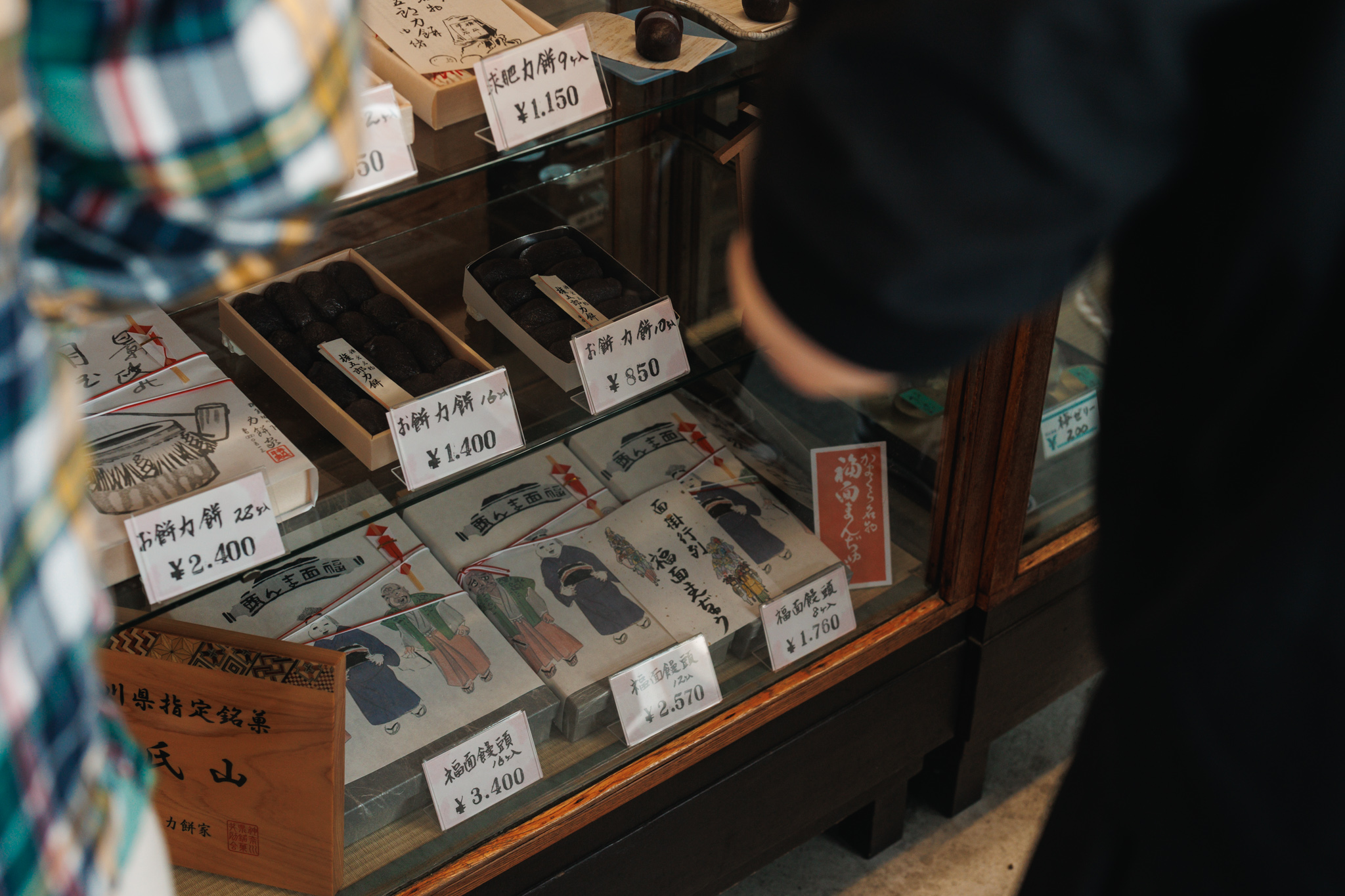
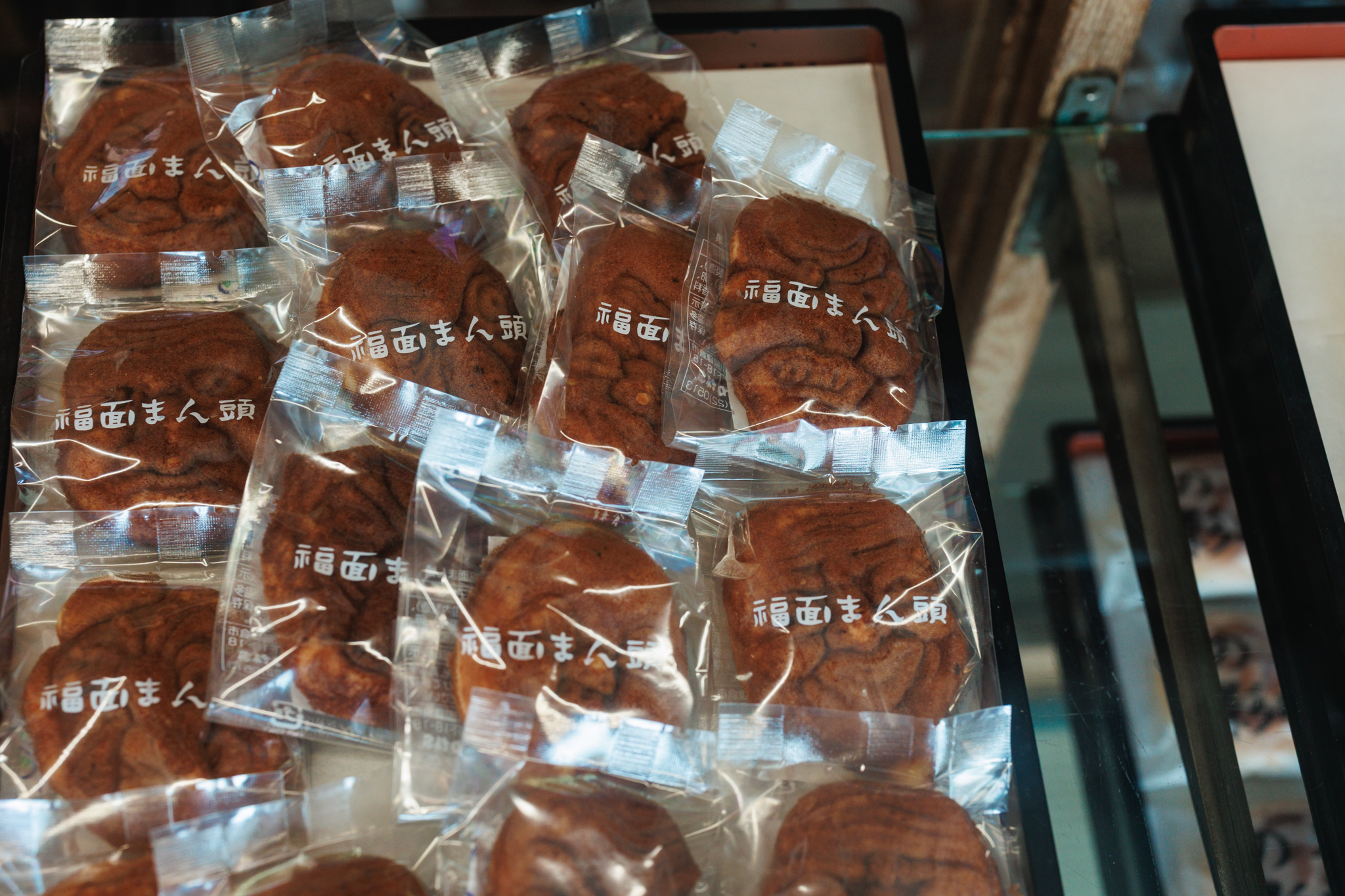
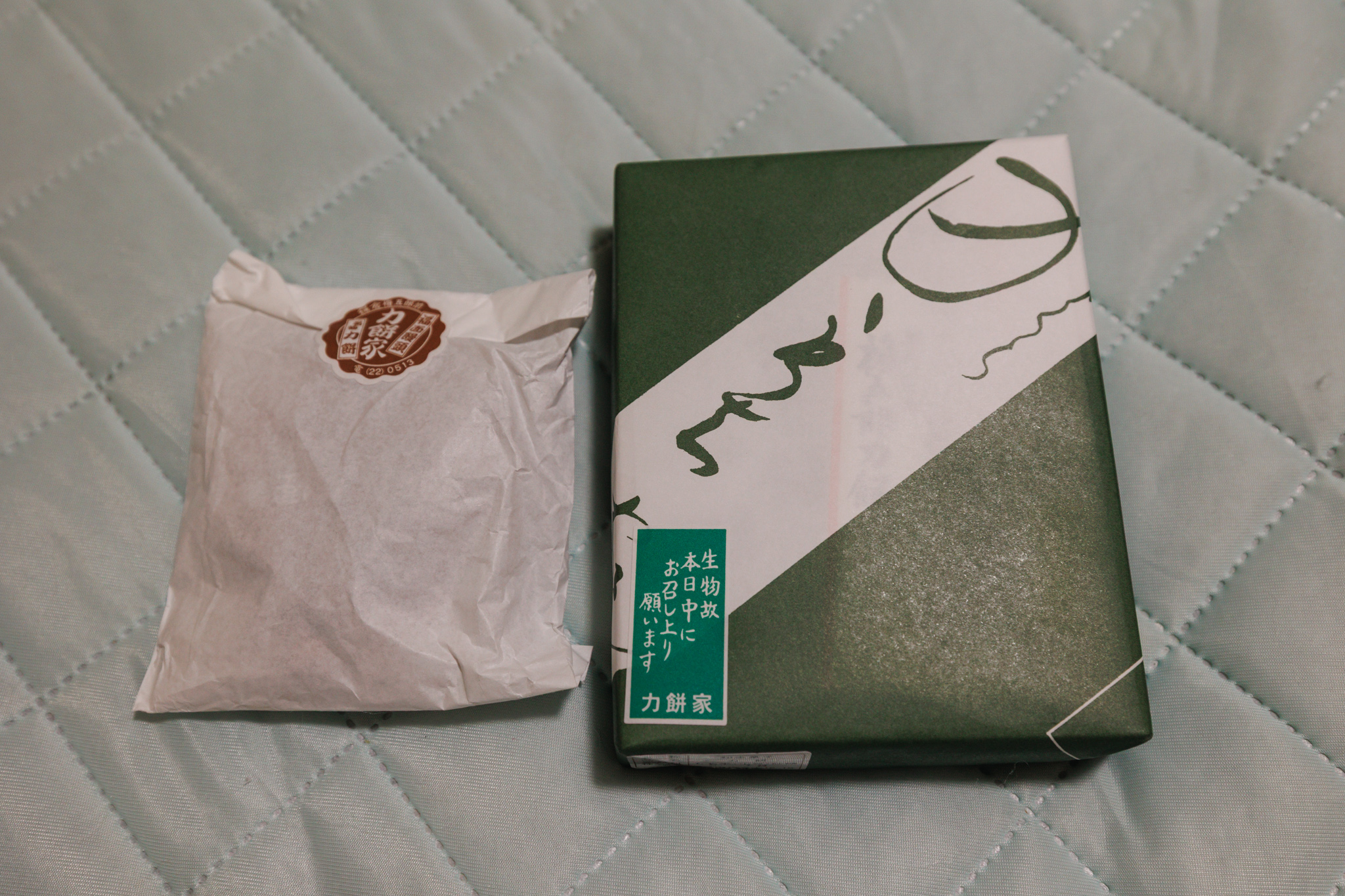
I bought a box of the ordinary mochi and a single fukumen manjū. The manjū would keep for ten days from baking. The mochi came with a green label, brief and practical: perishable, please eat today. Fresh mochi hardens with time. The paper inside the box explained why it was worth seeking out in the first place.
A name with some weight
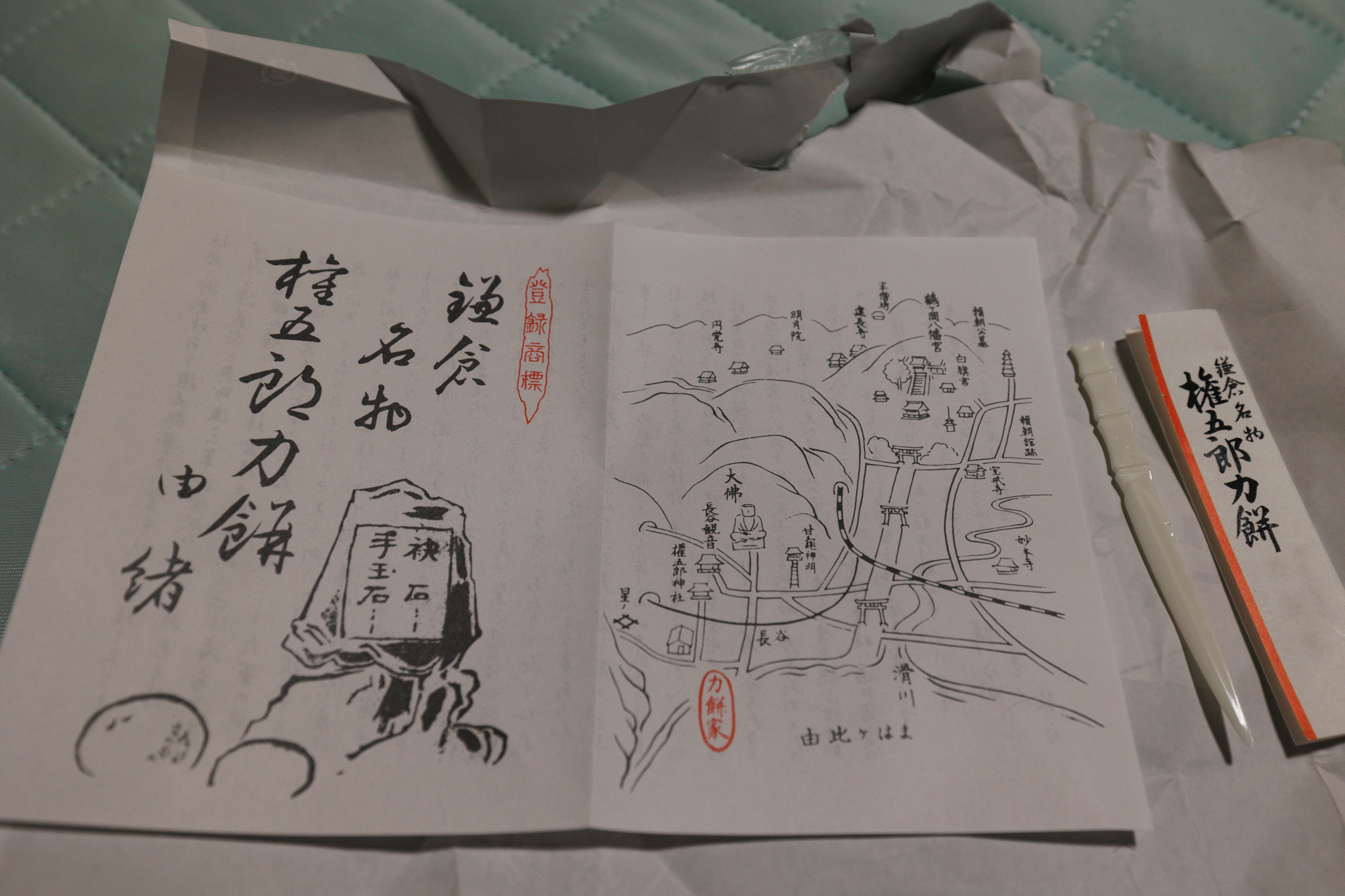
The accompanying leaflet carried an illustration of large stones and a map of Kamakura. The stones were a clue to the name. Chikara mochi combines “strength” and “mochi”. It also sounds exactly like chikaramochi (力持ち), the Japanese word for a physically strong person. Written 力餅, the sweet exchanges the “having” part of that word for a rice cake.
The Gongorō in the name is Kamakura Gongorō Kagemasa, a warrior enshrined at nearby Goryō Shrine. At sixteen, fighting in the Later Three Years’ War of the 1080s, he was hit in the eye by an arrow, shot the archer dead and made it back to his own camp. When a comrade set a booted foot on his face to pull the arrow out, Kagemasa drew his sword from where he lay. To die by an arrow, he said, was what a warrior hoped for.
To have his face trodden on while still alive was another matter.
The shrine still keeps two stones. The larger, about 105 kilograms, is the tedama-ishi, the “juggling stone”; the smaller, about 60, is the tamoto-ishi, the “sleeve stone”. Legend says Kagemasa tossed them about like beanbags and tucked them into his sleeve. In the account passed down by the shop, warriors inspired by his courage and strength tested themselves with these stones. Mochi offered to them were shared among those present, and the sweet’s name and tradition grew from those offerings.
Inside the box
After the warrior and the stones, the contents of the box looked modest. Dark, rounded pieces sat snugly together, their coating of bean paste reaching almost to the edges of the box. Opening one exposed the white mochi underneath.
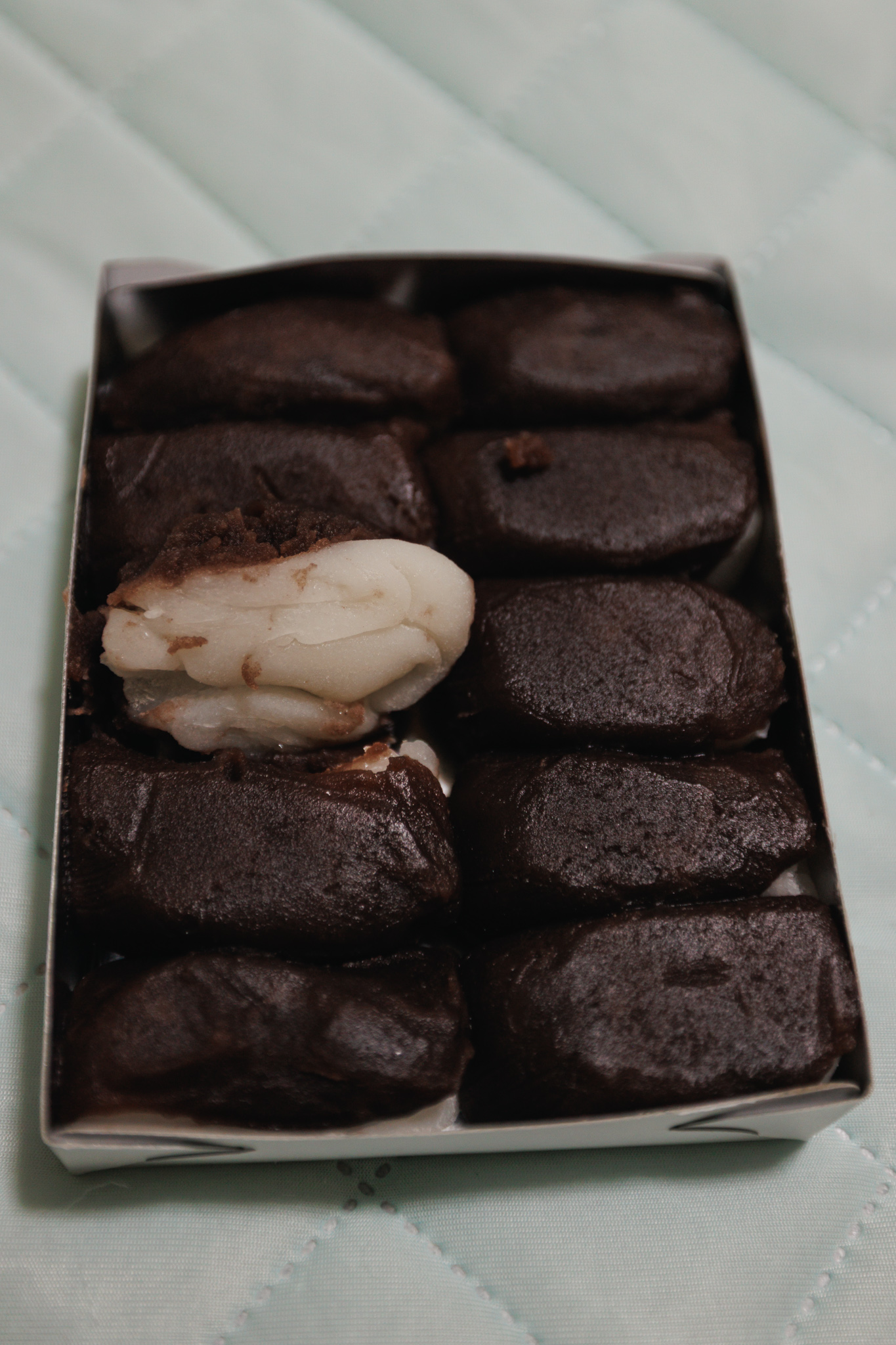
The mochi was fairly firm, with a proper chew, and the bean paste was not too sweet. Neither overwhelmed the other. I liked their simple, old-fashioned taste.
There were ten in the box, all to be eaten that day. I managed it in several sittings over the rest of the day.
Perhaps I should have done the stone-lifting first.
Location
Shop
Chikaramochiya (力餅家)
About six minutes on foot from Hase Station on the Enoden Line
18-18 Sakanoshita, Kamakura, Kanagawa 248-0021, Japan
Practical Information
- Dish
- Gongorō Chikara Mochi (権五郎力餅)
- Opening hours
- 9:00–18:00
- Closing days
- Wednesdays and the third Tuesday of each month
- Price when checked
- Regular mochi: ¥850 for ten pieces; the February–April yomogi version has a different price.
- Shelf life
- Regular mochi: eat on the day of purchase. The gyūhi version keeps for three days from purchase.
- Official website
- Chikaramochiya — shop information
- Product information
- Chikaramochiya — sweets and shelf life
Information last checked: September 23, 2026 (opening hours, closing days, prices and shelf life).
Conversation
Comments
Review pending commentsComments are reviewed before appearing. The internet already contains enough unattended surprises.
Checking comments…
Comments are not available in this migration preview yet. Existing comments remain on the current site.
Leave a comment