Yukinoshita Catholic Church: Kamakura’s Christians, Remembered in Paint
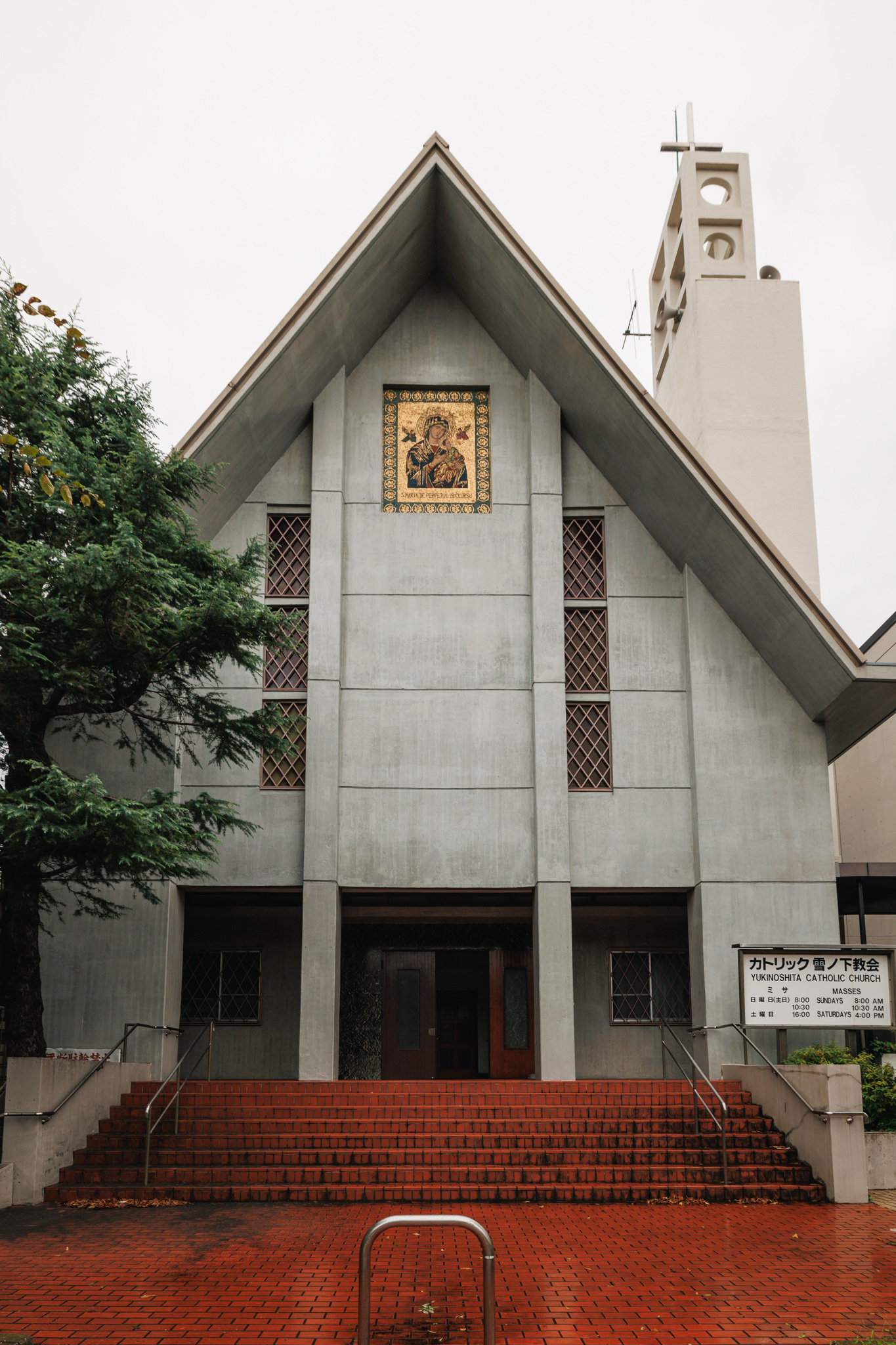
On Wakamiya Ōji, the broad road leading to Tsurugaoka Hachimangū, the Virgin Mary has a good view of the approach to a Shinto shrine.
Her image sits beneath the steep gable of Yukinoshita Catholic Church, with a slender bell tower beside it. Here in central Kamakura, south of Tokyo, temples and shrines are familiar sights. A church takes a little more explaining.
Under the white arches
The church began in 1948 with three Redemptorist priests from Canada. Its parish was established the following year. The present church building was completed in 1958. In Kamakura, a building can be several decades old and still be one of the newcomers.
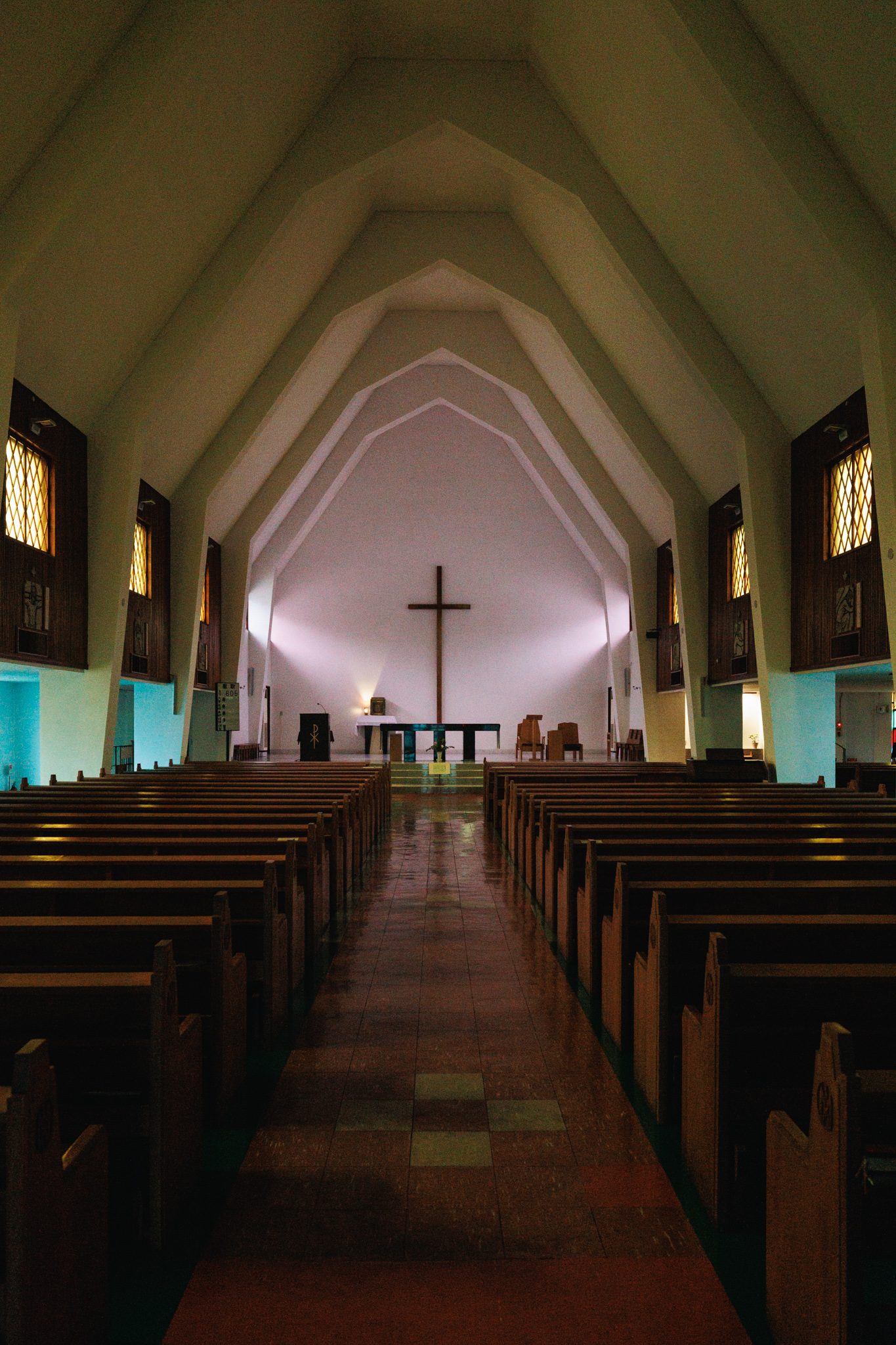
It is dedicated to Our Lady of Perpetual Help, the Madonna pictured on the façade. Inside, the eye travels beneath a succession of white, angular arches towards a plain cross on the far wall. Dark pews line the aisle, while light from the windows gives the walls touches of blue, yellow and violet. Even the coloured glass keeps to the edges.
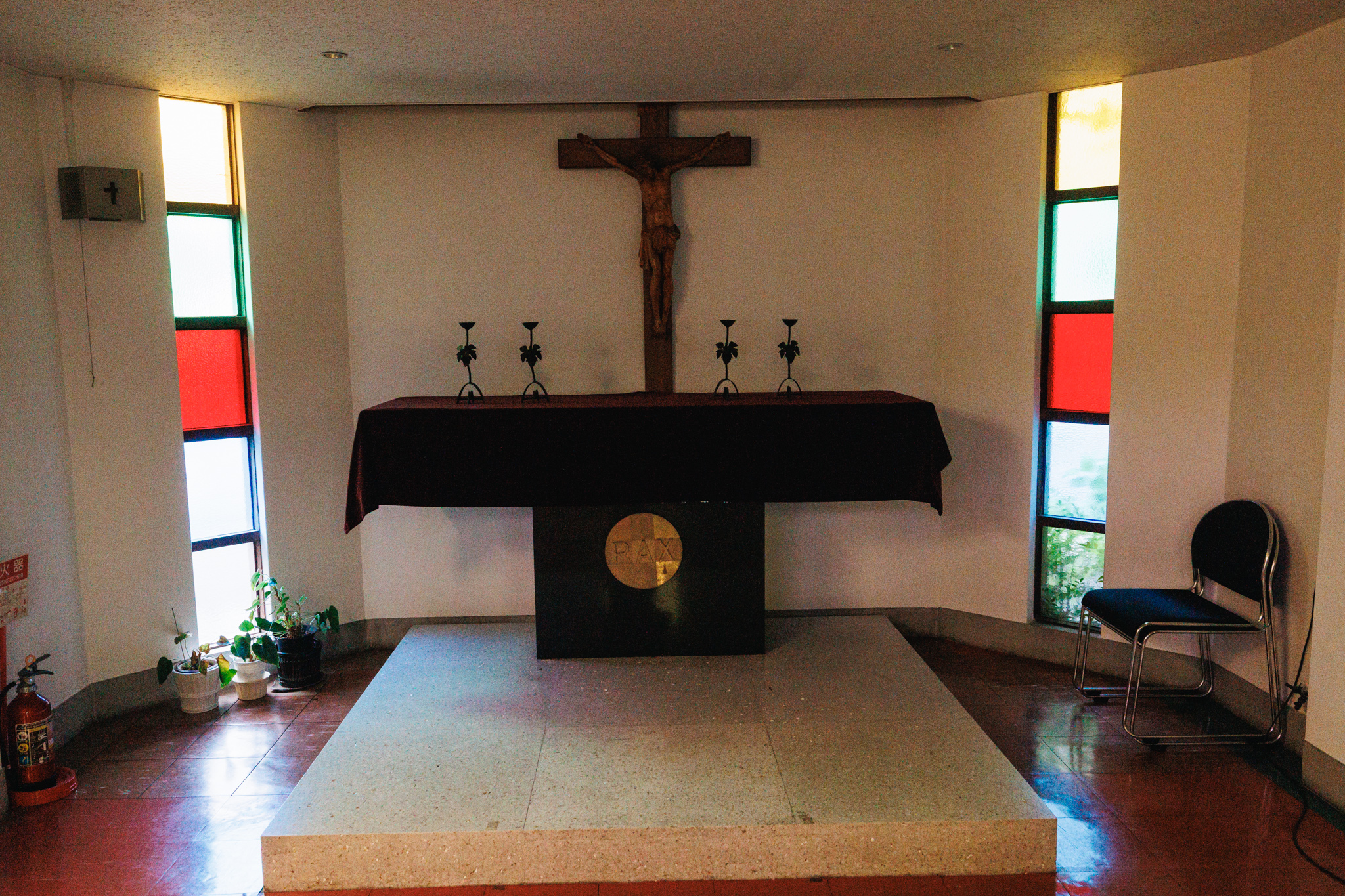
The main altar has space around it. From the entrance, the arches and rows of pews direct the eye towards the cross. The architecture has made a fairly clear suggestion about where to look.
The figures with the most to tell about Kamakura are off to one side. Beside the main altar, three paintings hang behind a stone baptismal font. There are Japanese robes, waves, prison bars and flames.
The building dates from 1958. The story on this wall reaches back to 1623.
Kamakura’s Christians
The paintings are by Kayoko Murata and concern Kamakura’s Kirishitan, the early Japanese Christians whose history belongs to this city as well as to the better-known Christian sites of western Japan.
By 1623, the Tokugawa shogunate had banned Christianity in Japan. Continuing to practise the faith could lead to imprisonment or execution. For Kamakura’s Christians, gathering with a visiting priest carried risks far beyond a difference in religious opinion.
According to the church’s account, five Christians were arrested in Kamakura in 1623, probably on the coast at Gokurakuji village. Among them were Hilario Magozaemon and his wife, who were connected with a mission in Kobukuroya, between present-day Kita-Kamakura and Ōfuna. A visiting Franciscan priest, Francisco Gálvez, and two companions were arrested with them.
They were taken to Edo, now Tokyo. Magozaemon, Gálvez and the two companions were executed on 4 December that year with forty-six other Christians. The day was recorded as clear and cold. Magozaemon’s wife was executed on 24 December, one of thirty-seven people that included the families of those already executed and those who had sheltered them.
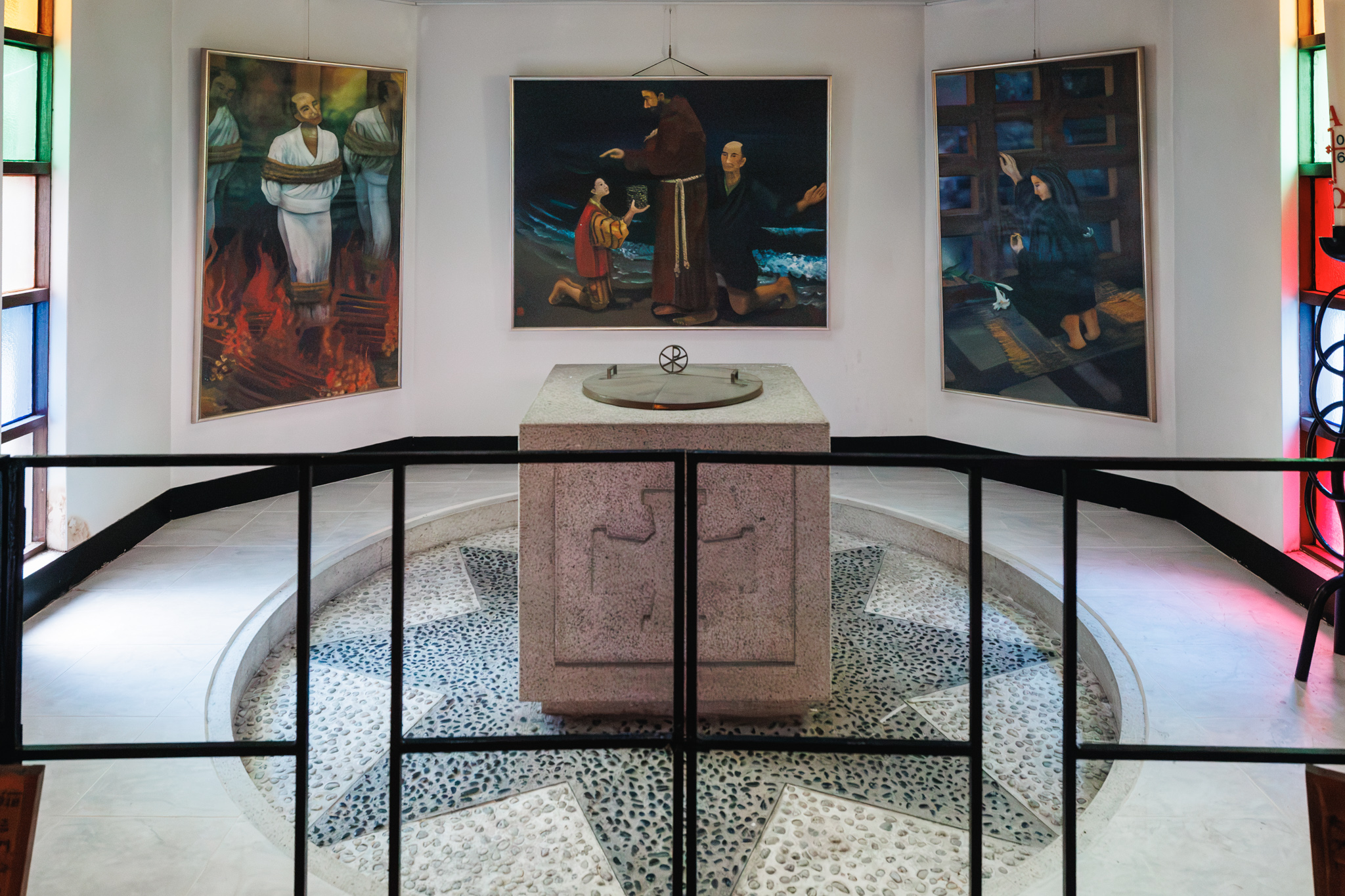
In the central painting, a brown-robed priest stands beside the sea. A young woman kneels before him, holding a small box, while another figure kneels to his side. The scene draws on a local tradition: Gálvez and Magozaemon, about to flee, entrust a box for communion wafers to a village girl. The box in the painting is identified with one now kept at Tōkeiji, a Buddhist temple in Kita-Kamakura, not far from Kobukuroya. Made in Japan for export to Europe, it is an Important Cultural Property. How it came to the temple is not known.
Tōkeiji is better known for a different kind of refuge. Until 1870, women escaping their marriages could take shelter there and, after about two years, obtain a divorce.
This is a later artist’s rendering of the tradition, not a surviving image from the time. Alongside it, the other two paintings bring the story closer to its end: Magozaemon bound above flames, and his wife praying behind the bars of a cell in Edo’s Kodenmachō prison.
The paintings give faces to the names in the church’s account. Their story belongs to the coast and villages around Kamakura—the same city through which visitors now walk from one temple or shrine to the next.
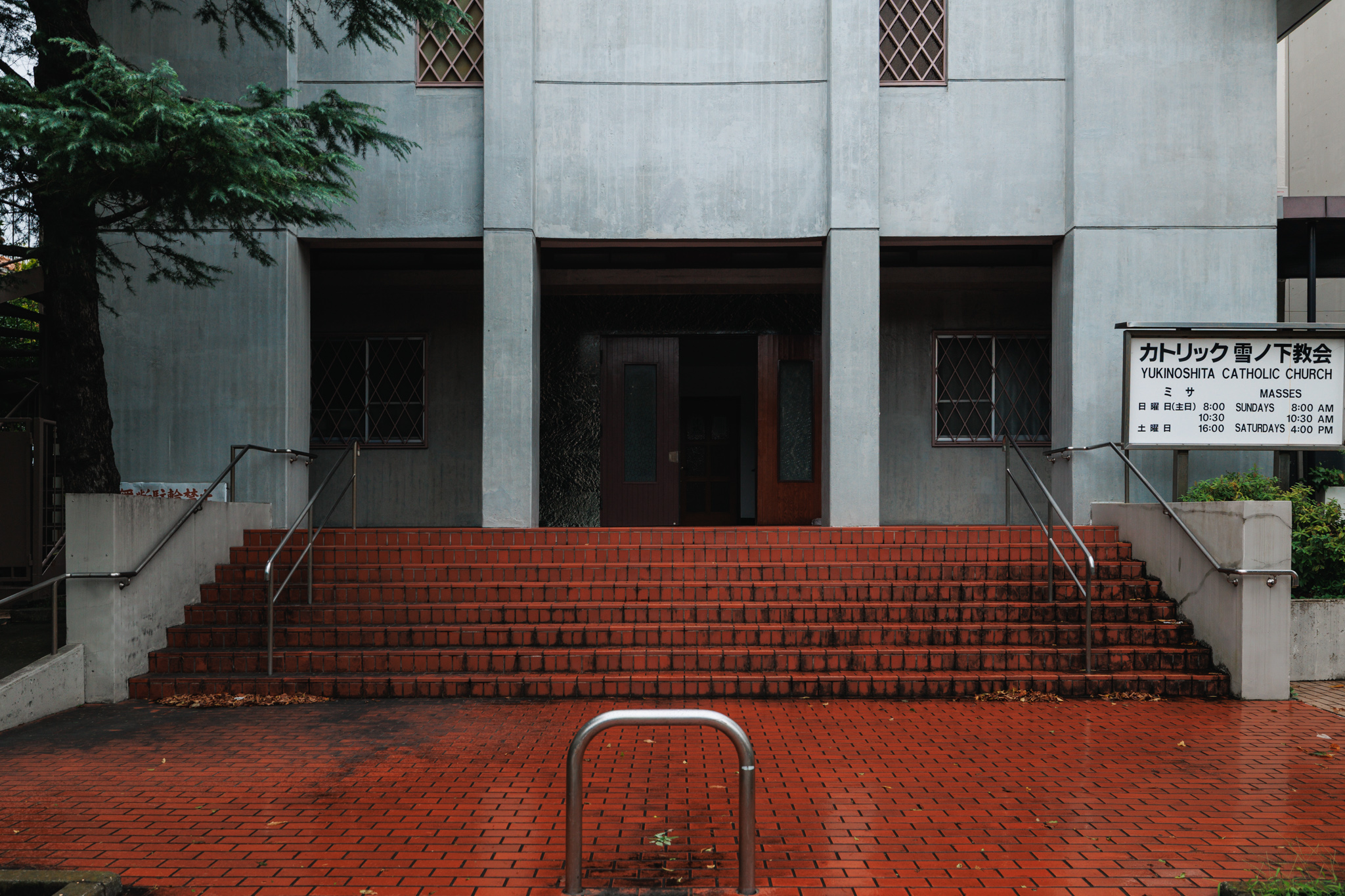
Outside, the road continues towards Hachimangū. The church’s Madonna remains above the entrance, and its concrete walls give little indication of the older local history inside.
The three paintings remember people for whom being a Christian was dangerous.
Below them stands a font used to become one.
Location
Church
Yukinoshita Catholic Church (カトリック雪ノ下教会)
On Wakamiya Ōji in central Kamakura, north of Kamakura Station
2-14-4 Komachi, Kamakura, Kanagawa 248-0006, Japan
Practical Information
- Visitor note
- Visitors are welcome. If you are coming specifically to see the paintings, check visiting times with the church: +81 467-22-2064.
- Mass
- Saturday 16:00–17:00; Sunday 8:00–9:00 and 10:30–11:30. Check the official Mass schedule for changes.
- Photography
- Photography is permitted, but not during Mass. Avoid large movements while taking photographs and keep your phone on silent.
- Official website
- Yukinoshita Catholic Church — visitor information
Information last checked: September 26, 2026
Conversation
Comments
Review pending commentsComments are reviewed before appearing. The internet already contains enough unattended surprises.
Checking comments…
Comments are not available in this migration preview yet. Existing comments remain on the current site.
Leave a comment