Keihin Fushimi Inari Shrine: 108 Foxes and a Little Mount Fuji
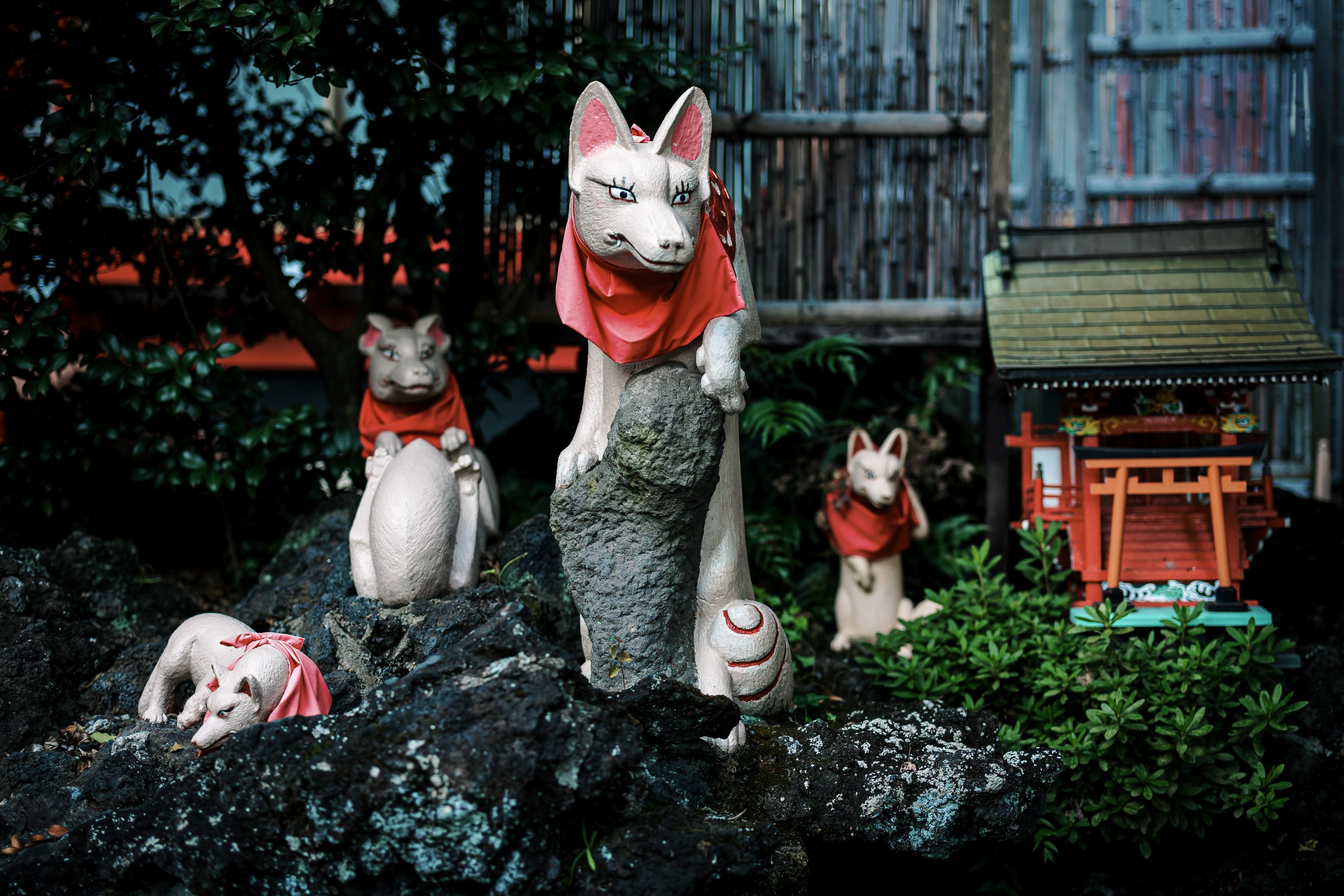
One fox is perfectly normal at an Inari shrine. One hundred and eight requires an explanation.
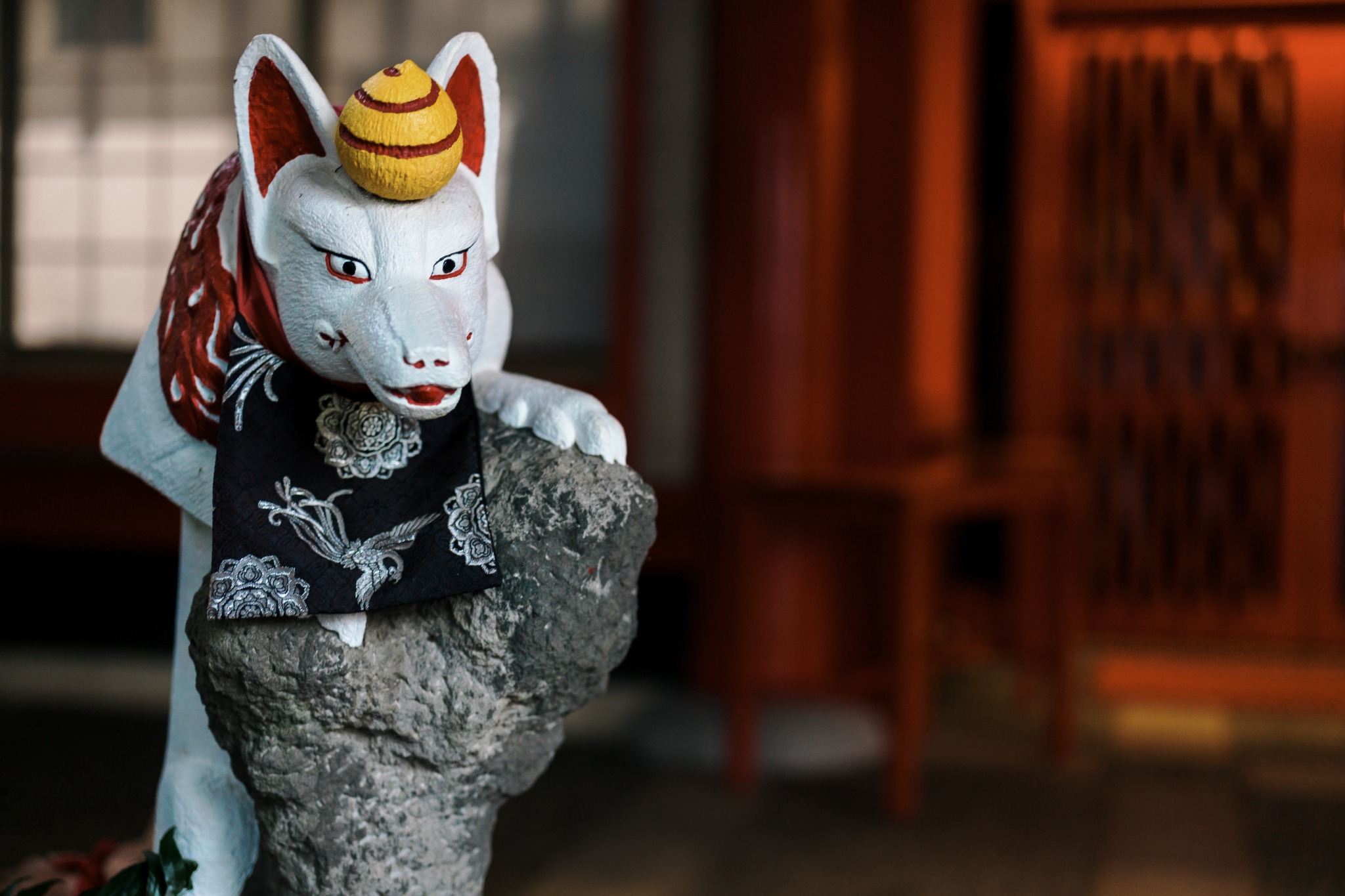
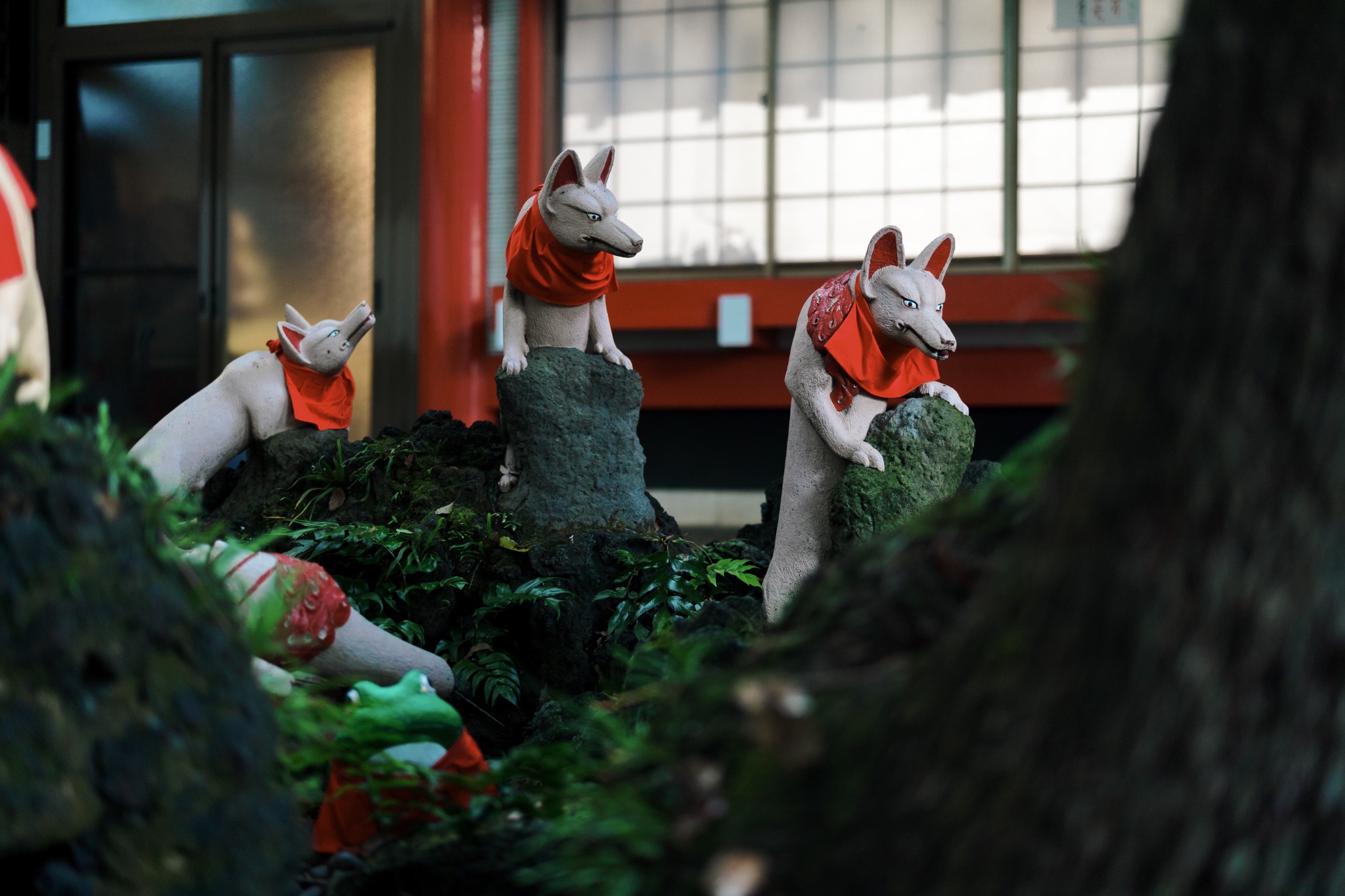
At Keihin Fushimi Inari Shrine in Kawasaki, just south of Tokyo, a white fox leaned over a rock with one paw hanging down its side. Behind it, another sat with its substantial belly on full display. A third kept low to the ground, apparently pursuing a different approach to the day.
They wore red bibs. Beyond that, there seemed to be little agreement about how to present themselves.
The number was impressive. The individuals were more distracting.
A rather informal gathering
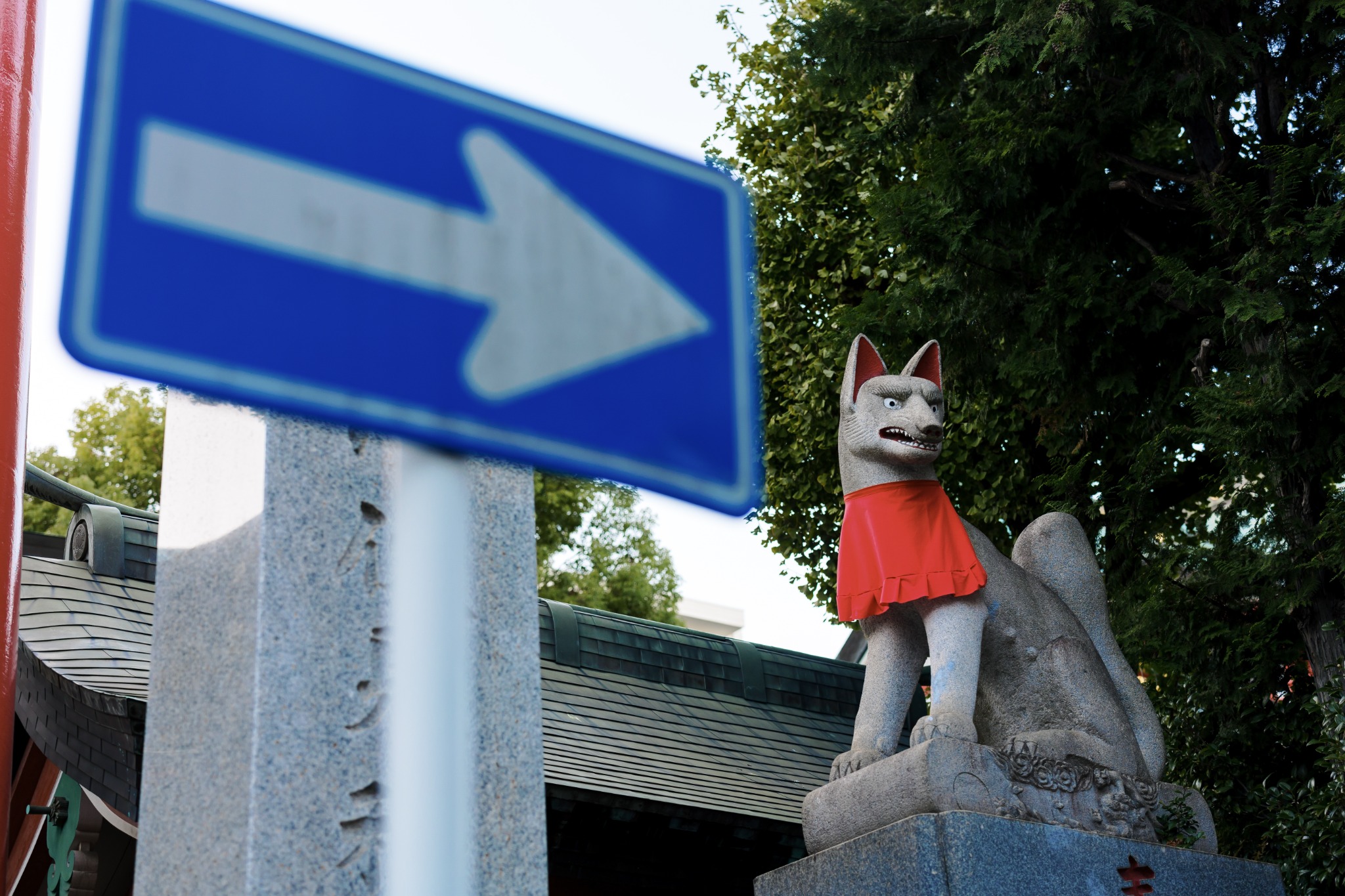
Foxes are familiar sights at Inari shrines across Japan. They are regarded as messengers of Inari, the deity traditionally associated with rice, agriculture and prosperity.
At many shrines, they sit upright and alert, looking quite capable of handling the responsibility.
Here, some had found other things to do.
One fox clambered over another, which twisted its head upwards to look at it. Inside a hollow in the rock, a smaller fox lay beneath a larger one's curling tail. Their bodies fitted together with the untidy intimacy of animals sharing a favourite spot.
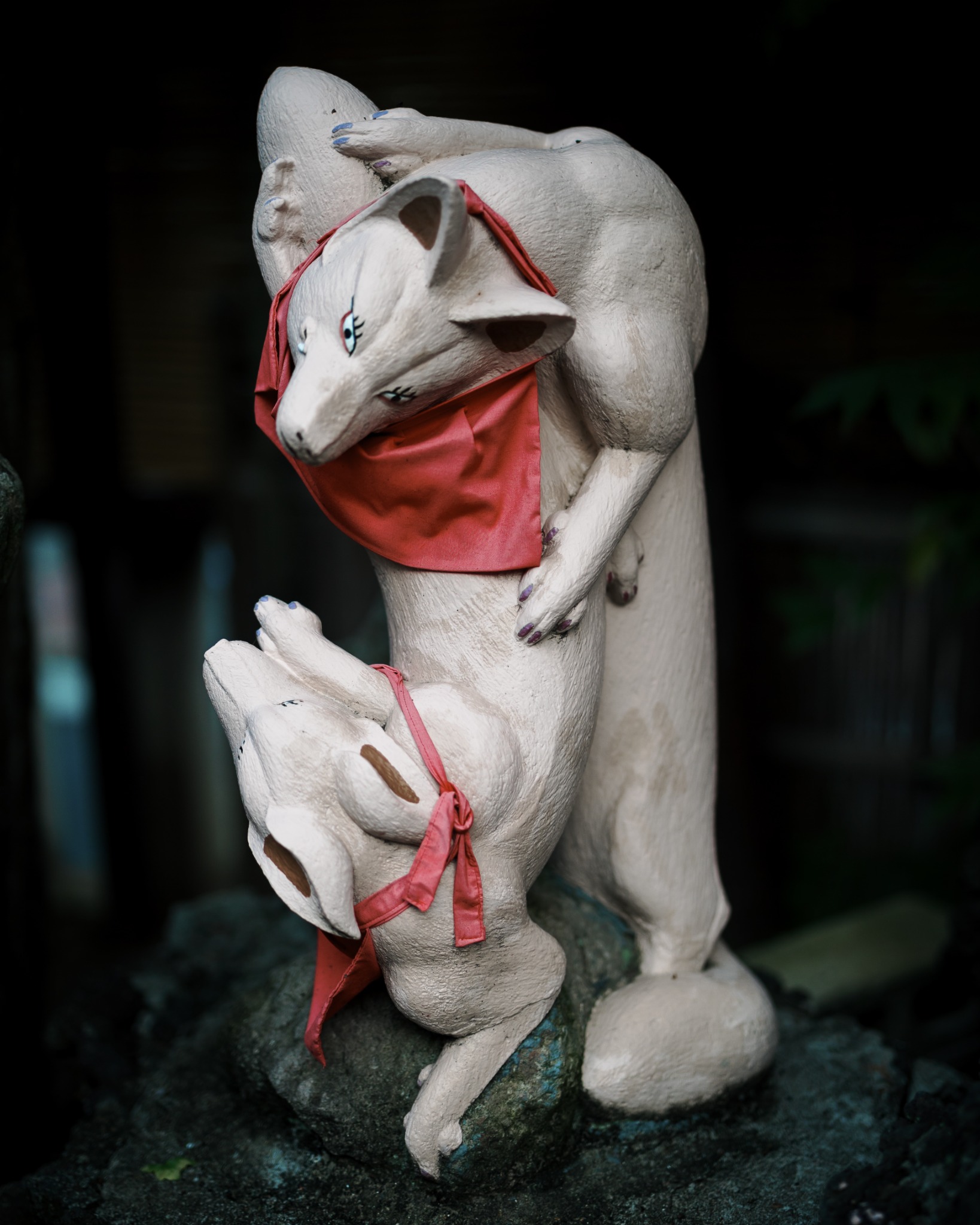
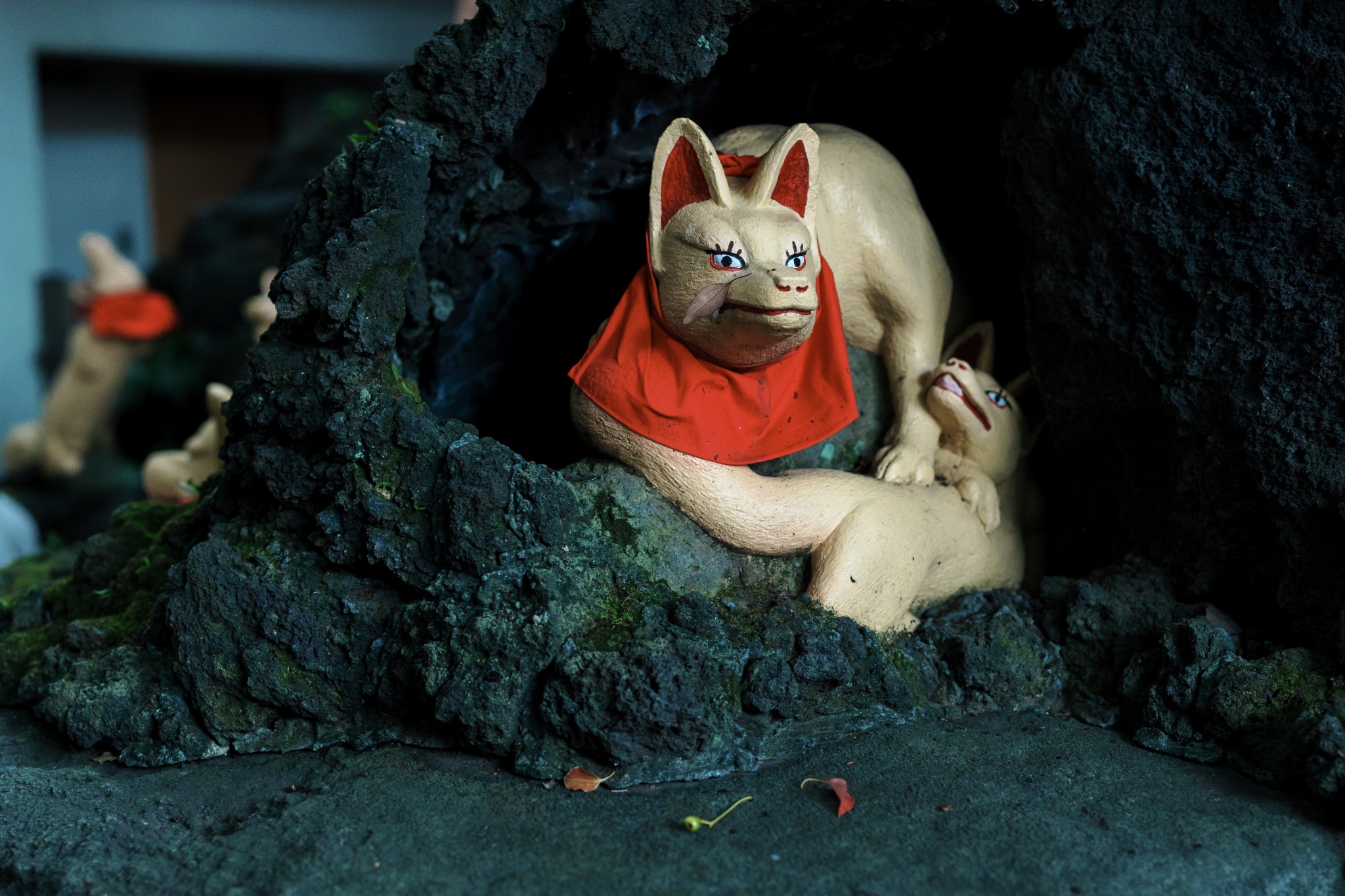
The number 108 has a familiar religious association in Japan. In Buddhism, it represents the earthly desires and delusions that keep people tied to suffering—the reason temple bells are traditionally struck 108 times at New Year.
According to the shrine, the explanation is more cheerful: 100, a very large number, plus 8, a lucky one. The character for eight, 八, widens towards the bottom, like a fortune that keeps growing.
The number sounded solemn. The arithmetic was not.
Some foxes looked stern; others seemed almost amused. Painted eyes and sharply drawn brows gave even a motionless face something approaching an opinion.
The paint came later. A 2017 account reports that the foxes were carved over nearly ten years from 1964 and originally left the colour of the stone. According to the shrine, the paint was added to protect them from weathering, proved popular with visitors and had remained ever since.
There was enough variation to make the next fox worth looking for. Sometimes it was tucked into a crevice. Sometimes it was standing in plain sight, dressed rather better than its neighbours.
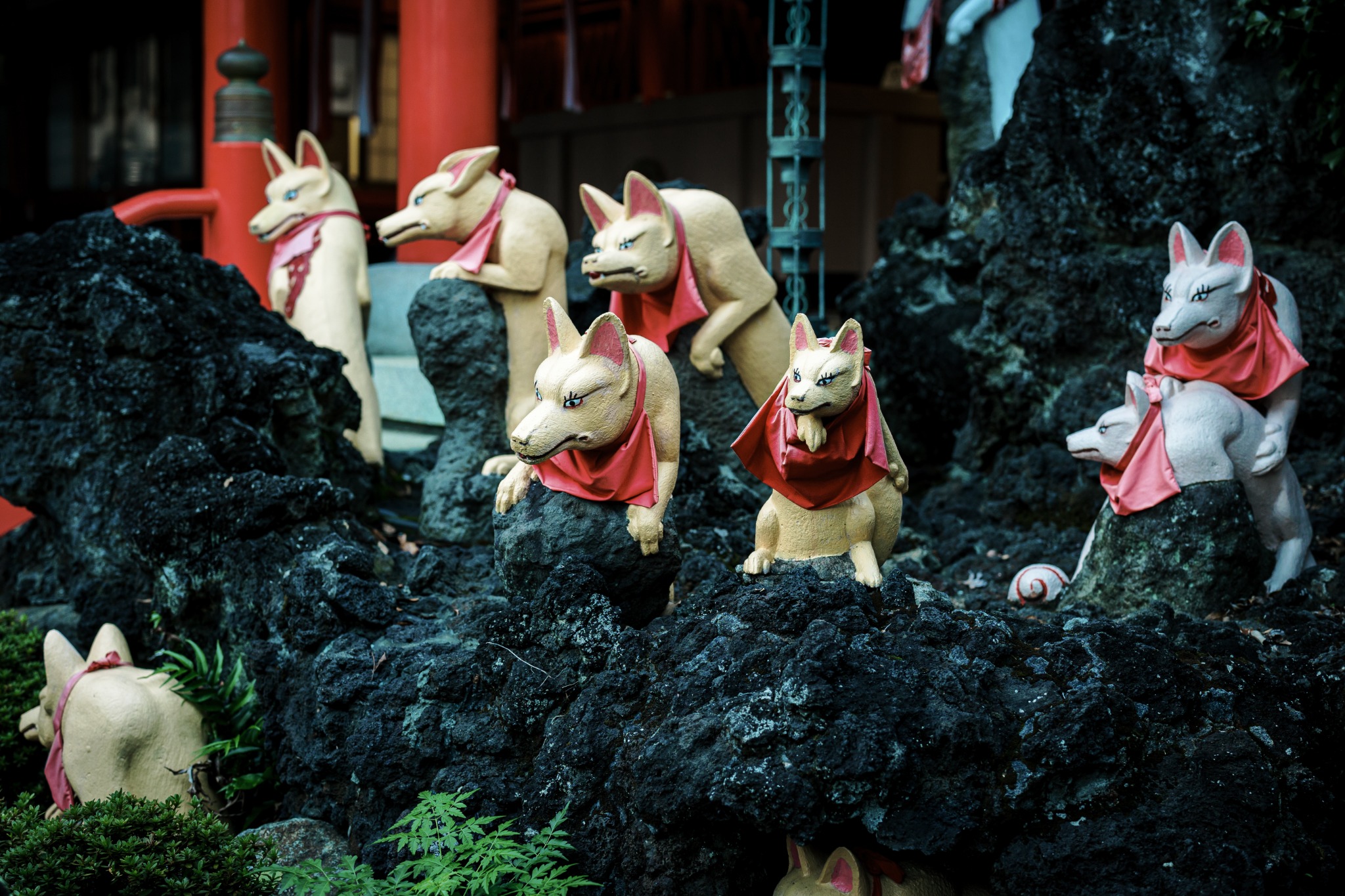
A new beginning, with company
This lively gathering belongs to a shrine established after the Second World War. Inari was invited here from Kyoto's Fushimi Inari Taisha, and the shrine was founded with hopes for the surrounding town's recovery and prosperity.
Knowing that, the crowded grounds felt like a fitting place to wish for a neighbourhood to flourish. Even the gaps between the rocks had occupants.
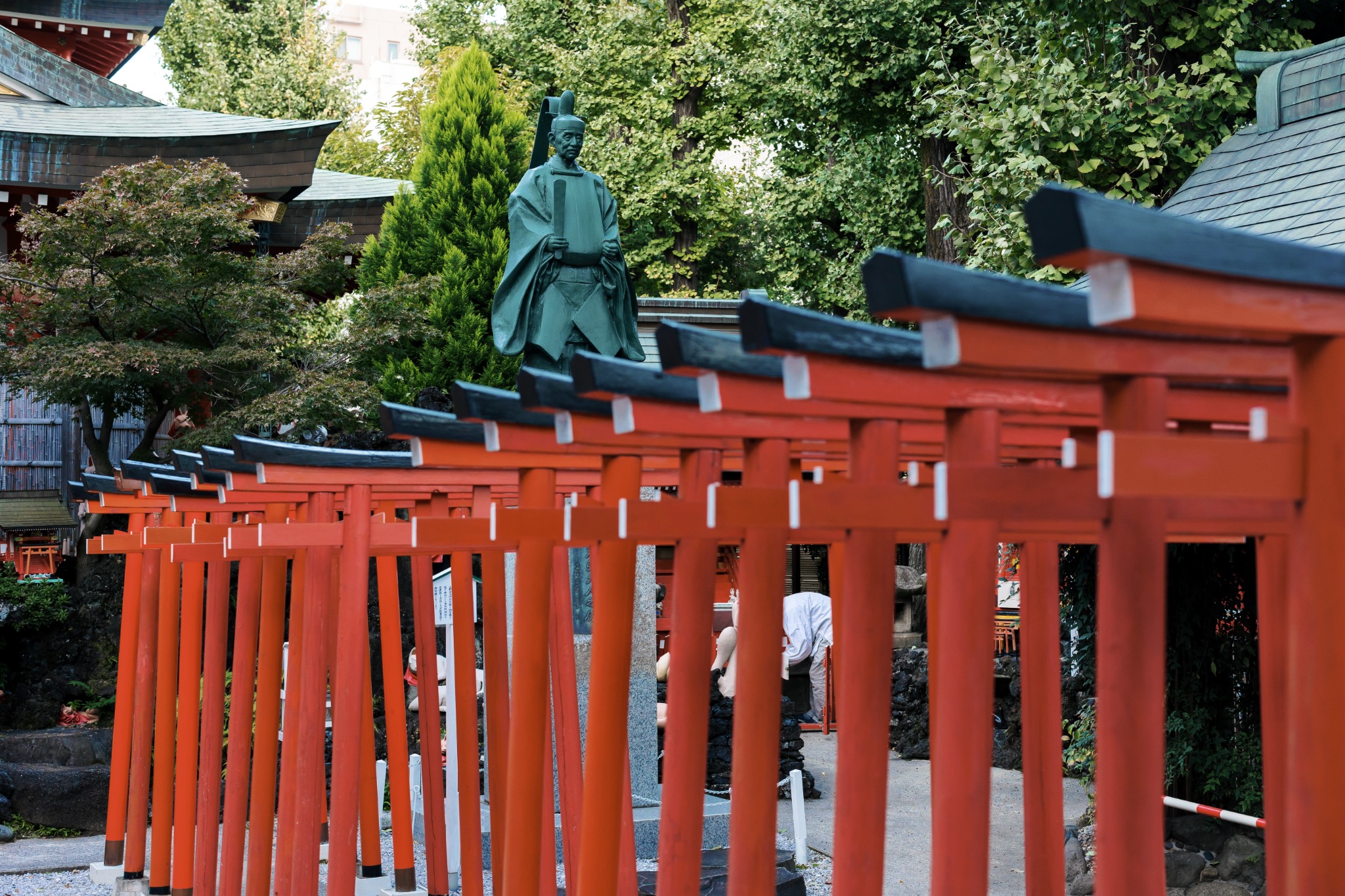
Below, the rough, dark rock gives the foxes ledges to lean on, hollows to disappear into and small ridges from which to inspect visitors.
After looking so closely at the occupants, it was worth considering their address.
The rock was brought from Mount Fuji.
A mountain that fits
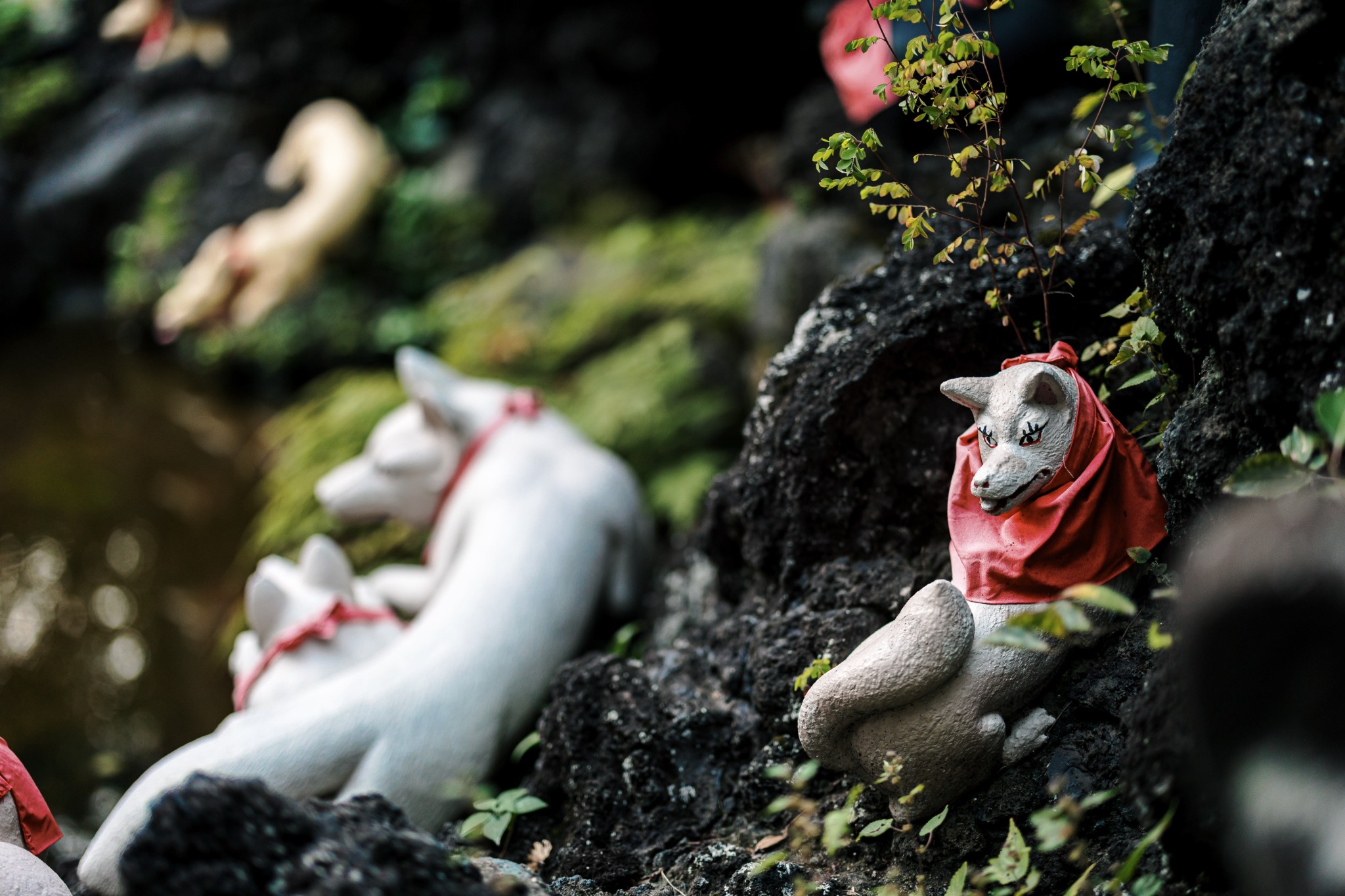
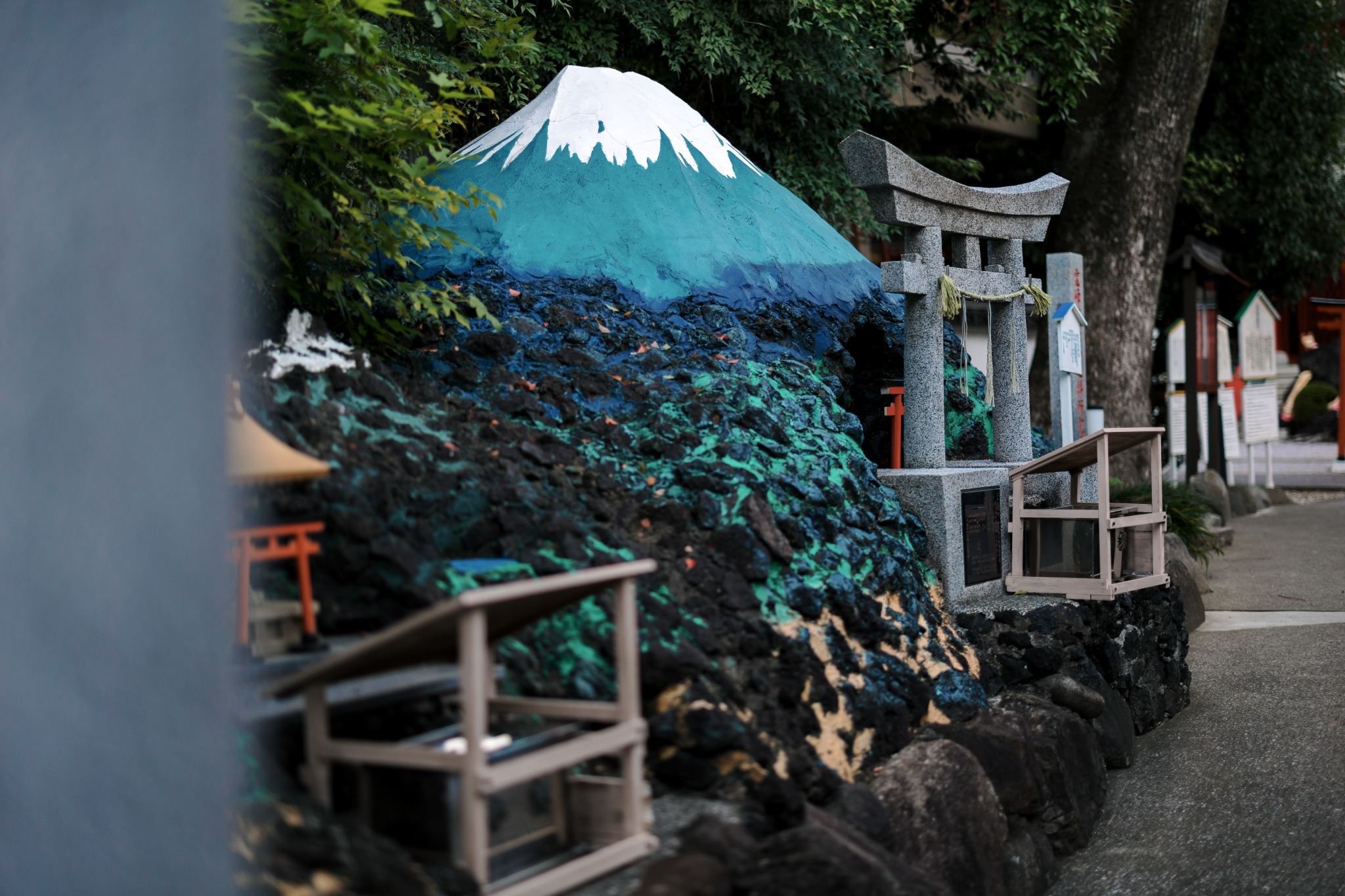
The shrine has also assembled some of that volcanic stone into a miniature Mount Fuji.
Its blue slopes rise to a white summit, with a small torii at the base. After the uneven rocks and restless poses of the foxes, the mountain is immediately recognisable: a neat, familiar silhouette, brought down to a size that fits beside a path.
The snow, at least, has been spared the uncertainty of the weather.
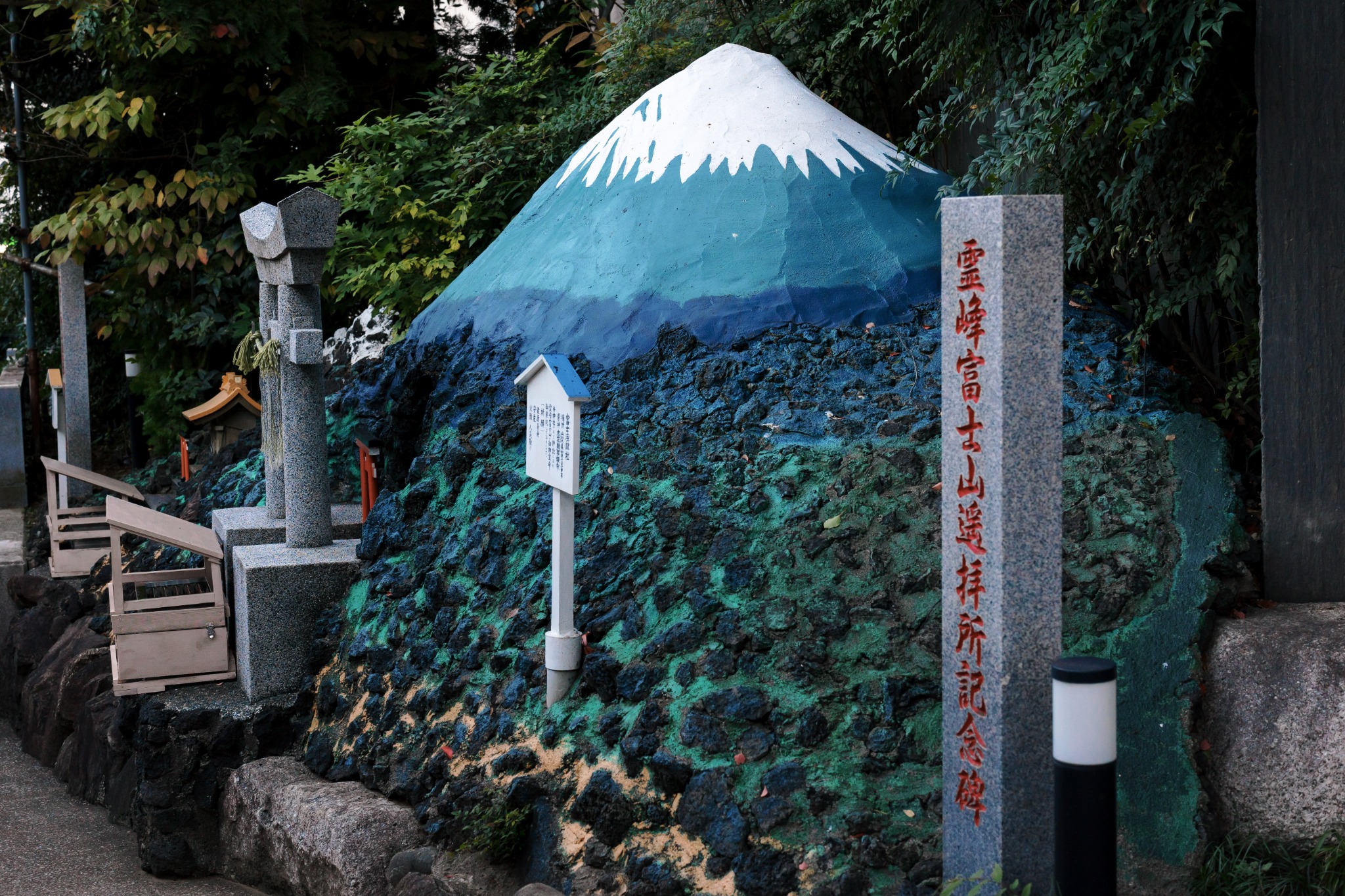
Worshippers can pay their respects to the sacred mountain here without travelling to Fuji itself. Some of the mountain has made the journey on their behalf.
Lake Biwa has a local representative too: Shōfuku Pond, modelled after the lake. Around its rocky edges, foxes sit, lean, recline and peer towards the water.
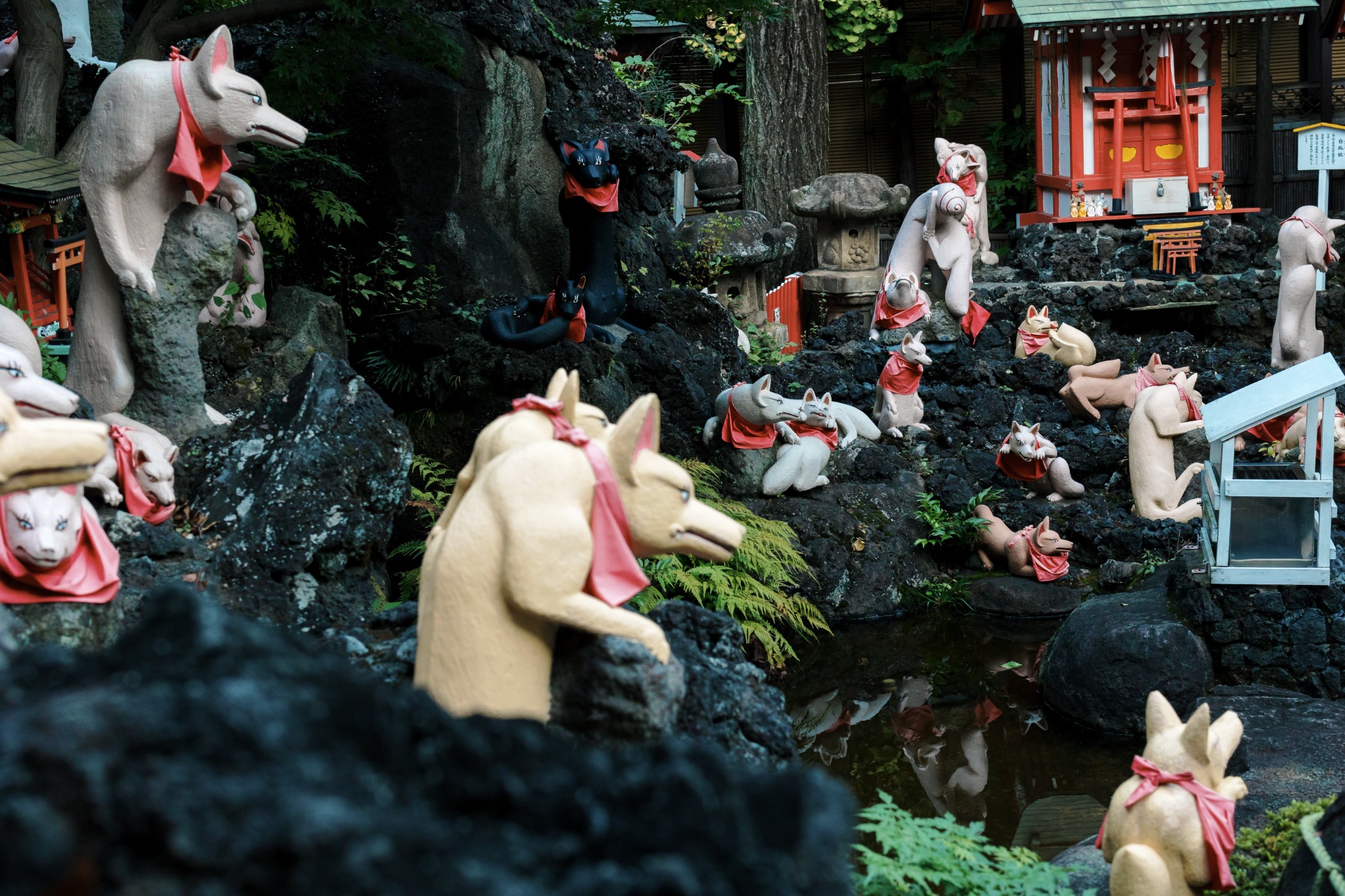
Mount Fuji and Lake Biwa have both been reduced to shrine size. No such restraint was applied to the foxes.
Visit this place
Location
Keihin Fushimi Inari Shrine (京濱伏見稲荷神社)
Near Shin-Maruko and Musashi-Kosugi stations
2-980 Shinmaruko Higashi, Nakahara-ku, Kawasaki, Kanagawa 211-0004, Japan
Practical Information
- Access
- About 2–3 minutes on foot from Shin-Maruko Station
Musashi-Kosugi Station is also nearby. - Opening hours
- 6:00–17:00
- Closing days
- No regular closing days listed by Kanagawa's official tourism site
- Telephone
- 044-411-4110
- Tourism information
- Kawasaki City Tourist Association / Kanagawa Tourism Association
Information last checked: August 27, 2026
Conversation
Comments
Review pending commentsComments are reviewed before appearing. The internet already contains enough unattended surprises.
Checking comments…
Comments are not available in this migration preview yet. Existing comments remain on the current site.
Leave a comment