Anyoin Temple: Kankan Jizō, Worn Away by Prayer
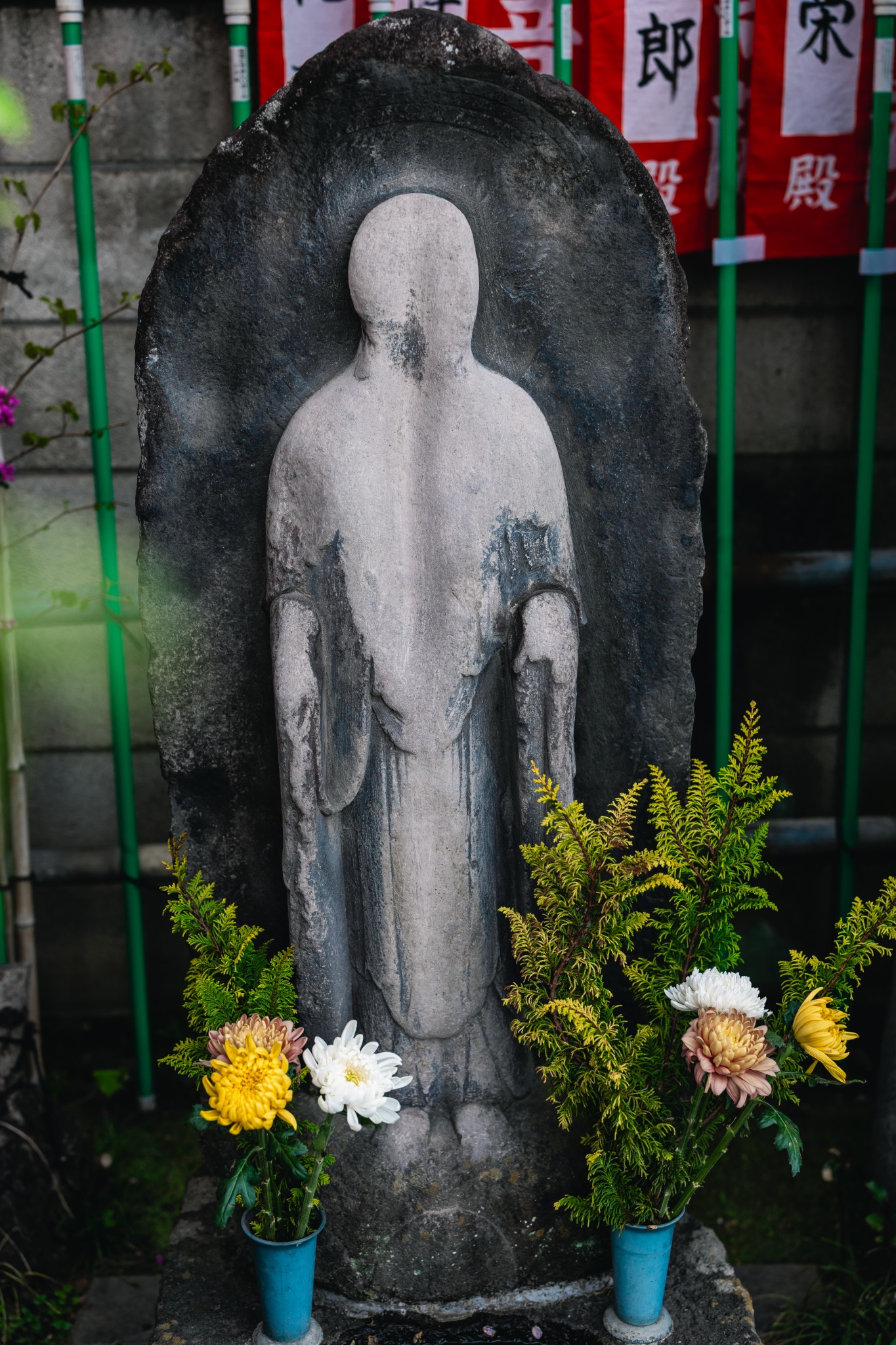
Small stones lie within easy reach of a centuries-old Buddhist figure. This would normally seem an unfortunate arrangement.
At Anyoin Temple, they are part of the prayer.
This is Kankan Jizō, in Senju, northeastern Tokyo. Worshippers strike the figure with the stones when praying for relief from illness and other troubles. Stone meets stone with a sound rendered in Japanese as kan, kan. The figure takes its name from it.
The name is easier to make out than the face.
Flowers stand before a pale, almost featureless figure, framed by darker stone and rows of red banners.
The neighbours still have faces
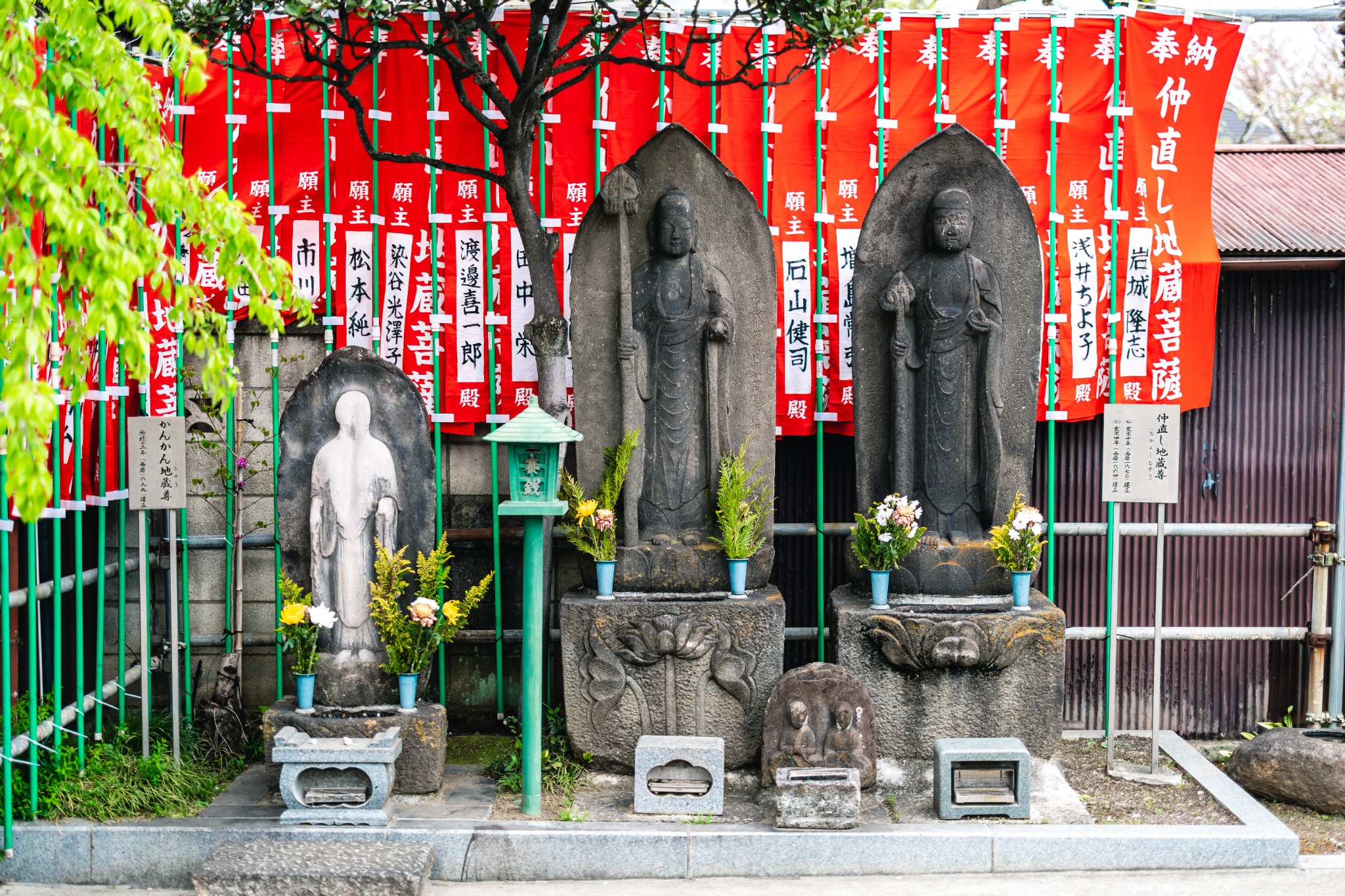
Beside Kankan Jizō stand two taller stone figures. Their faces, robes and the objects they hold remain clearly defined. Kankan Jizō has been reduced to something closer to an outline.
Jizō is a Buddhist figure associated with protection and compassion, often approached for help with very human problems. Here, those requests take an unusually physical form.
For a figure asked to relieve discomfort, it is a demanding line of work.
The sign beside Kankan Jizō dates it to 1699, during the Edo period. The statue is easy to date. The custom is not: exactly when people began striking it is unclear.
Its neighbours have a sign of their own. It names them Nakayoshi Jizō—roughly, “the Jizō of getting along”—and dates them to 1664 and 1670.
The older figures kept their faces.
What prayer leaves behind
The face is now a smooth, pale oval. Much of the carving across the chest has gone too, although traces of the robes remain farther down.
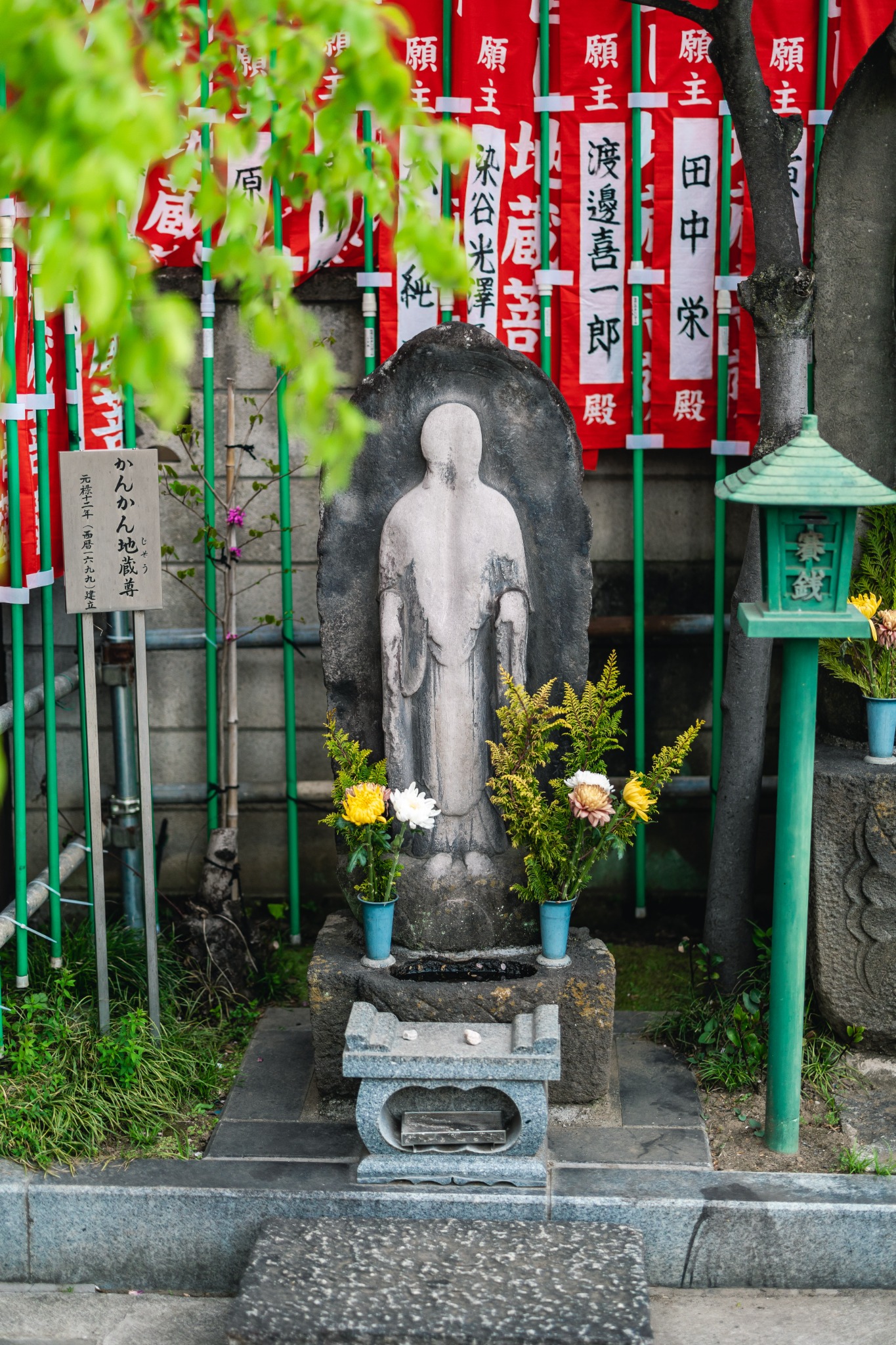
The small stones are laid out in front of the statue. Looking at its face, I felt that perhaps it had already heard enough requests for one day.
Other sacred figures have also been changed by the attention they receive. At Hozenji in Osaka, repeated offerings of water have helped clothe Mizukake Fudō in moss. At Anyoin, devotion involves considerably more percussion.
Anyoin’s is not Tokyo’s only Kankan Jizō. Sensoji in Asakusa has one too, also struck with stones and named for the sound, although by the temple’s account it is said to have been a statue of Dainichi Nyorai—not a Jizō at all. There, worshippers offer salt and hope for prosperity. Senju’s hears about illness; Asakusa’s, about money.
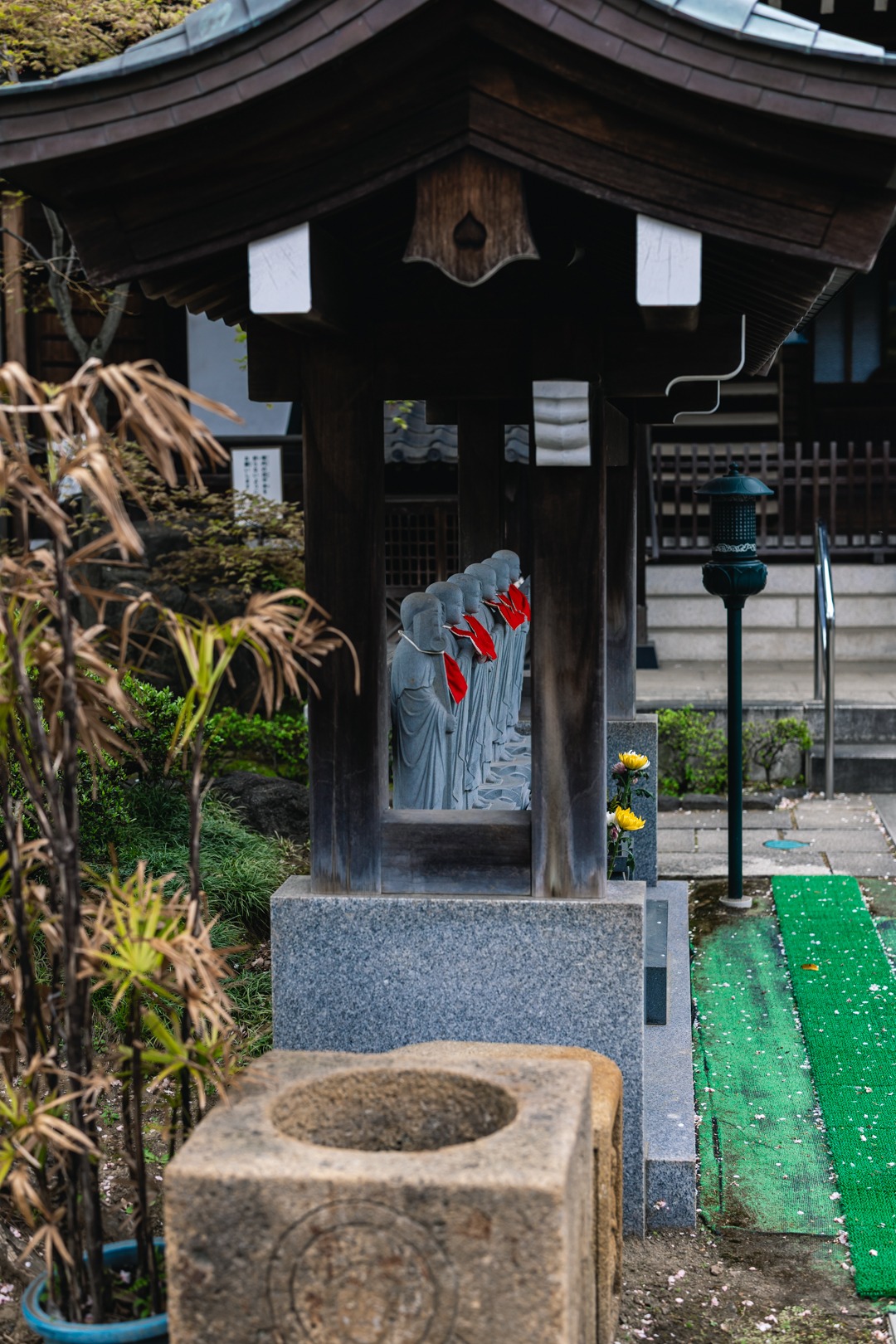
Elsewhere in the grounds, a row of Jizō wears red bibs beneath the eaves.
People have come to Kankan Jizō hoping that something painful or difficult in their lives might improve. There is no way to tell how many went home feeling better. The wear on the stone is easier to see.
The worshipper hopes to become whole again. The Jizō slowly becomes less so.
Its name preserves the sound of the exchange.
Kan. Kan.
Visit this place
Location
Anyoin Temple (安養院)
Kankan Jizō stands in the temple grounds among other old stone figures.
5-17-9 Senju, Adachi City, Tokyo 120-0034, Japan
Practical Information
- Subject
- Kankan Jizō (かんかん地蔵尊)
- Access
- Roughly 10 minutes on foot from Kita-senju Station
- Viewing
- Kankan Jizō is an outdoor devotional figure in the grounds of an active Buddhist temple.
- Visitor note
- Treat the site as an active place of worship and follow any onsite instructions regarding the stones and prayer ritual.
Information last checked: August 31, 2026
Conversation
Comments
Review pending commentsComments are reviewed before appearing. The internet already contains enough unattended surprises.
Checking comments…
Comments are not available in this migration preview yet. Existing comments remain on the current site.
Leave a comment