Hozenji Temple: The Fudō Beneath the Moss
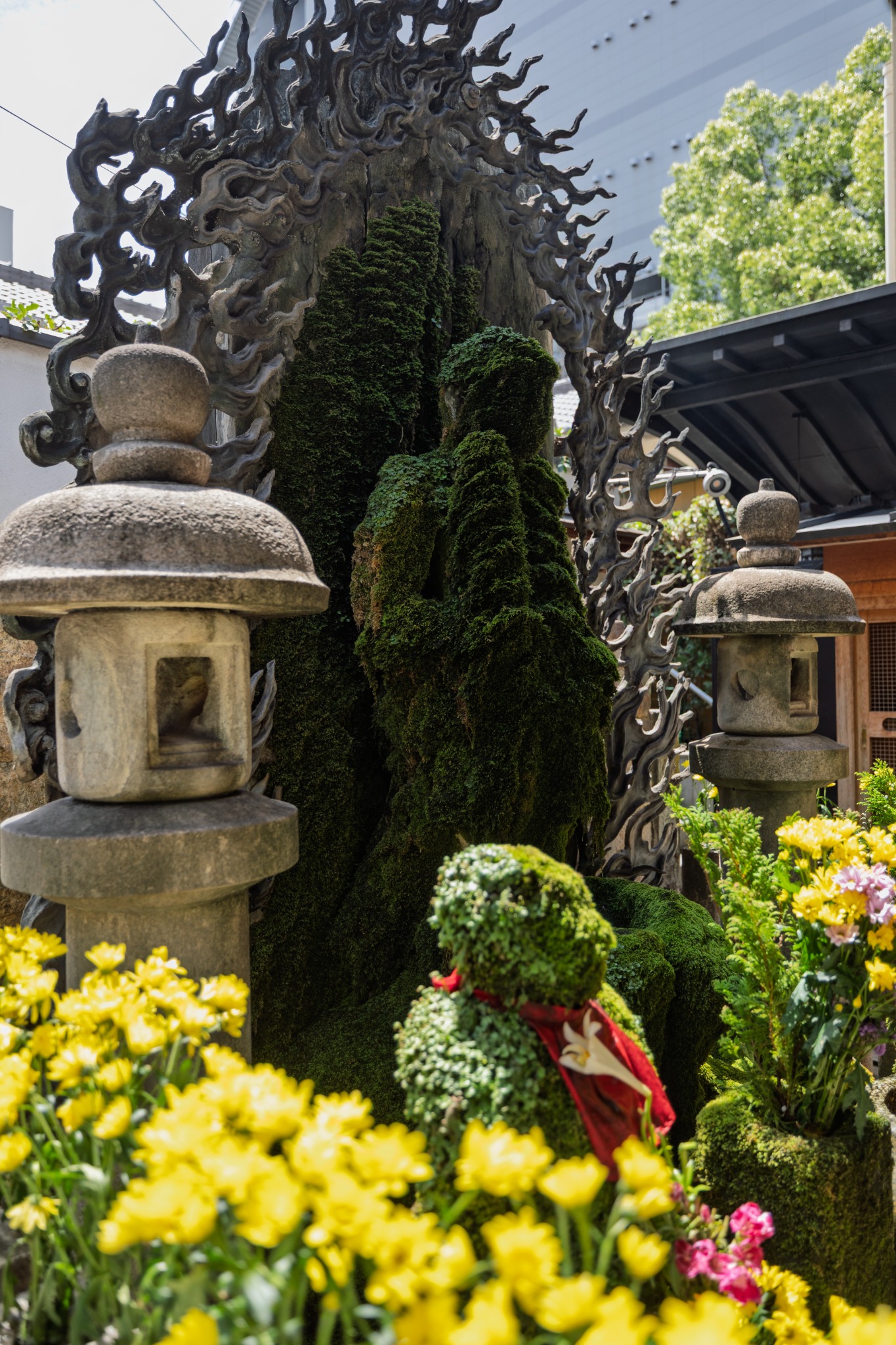
The flames were easy to make out. The face required rather more faith.
At Hozenji Temple in Osaka, a thick green covering had swallowed much of a stone figure’s expression. This was Fudō Myōō, a fierce Buddhist deity usually depicted with a sword, flames and a face that suggests the conversation is not open to negotiation.
Here, the moss had softened his presentation considerably.
Flowers crowded around the stone lanterns. A smaller figure in front wore a red cloth and an equally thorough covering of green. Behind them stood the buildings of Minami, Osaka’s busy entertainment district. Among all those hard urban surfaces, the figures looked remarkably lush.
A water vessel and a ladle offered a clue.
How to turn a deity green
Known as Mizukake Fudō, the “Water-Splashing Fudō,” the figure receives water from worshippers making wishes. A ladleful is a small gesture. Repeated over decades, it becomes difficult to see the original sculpture.
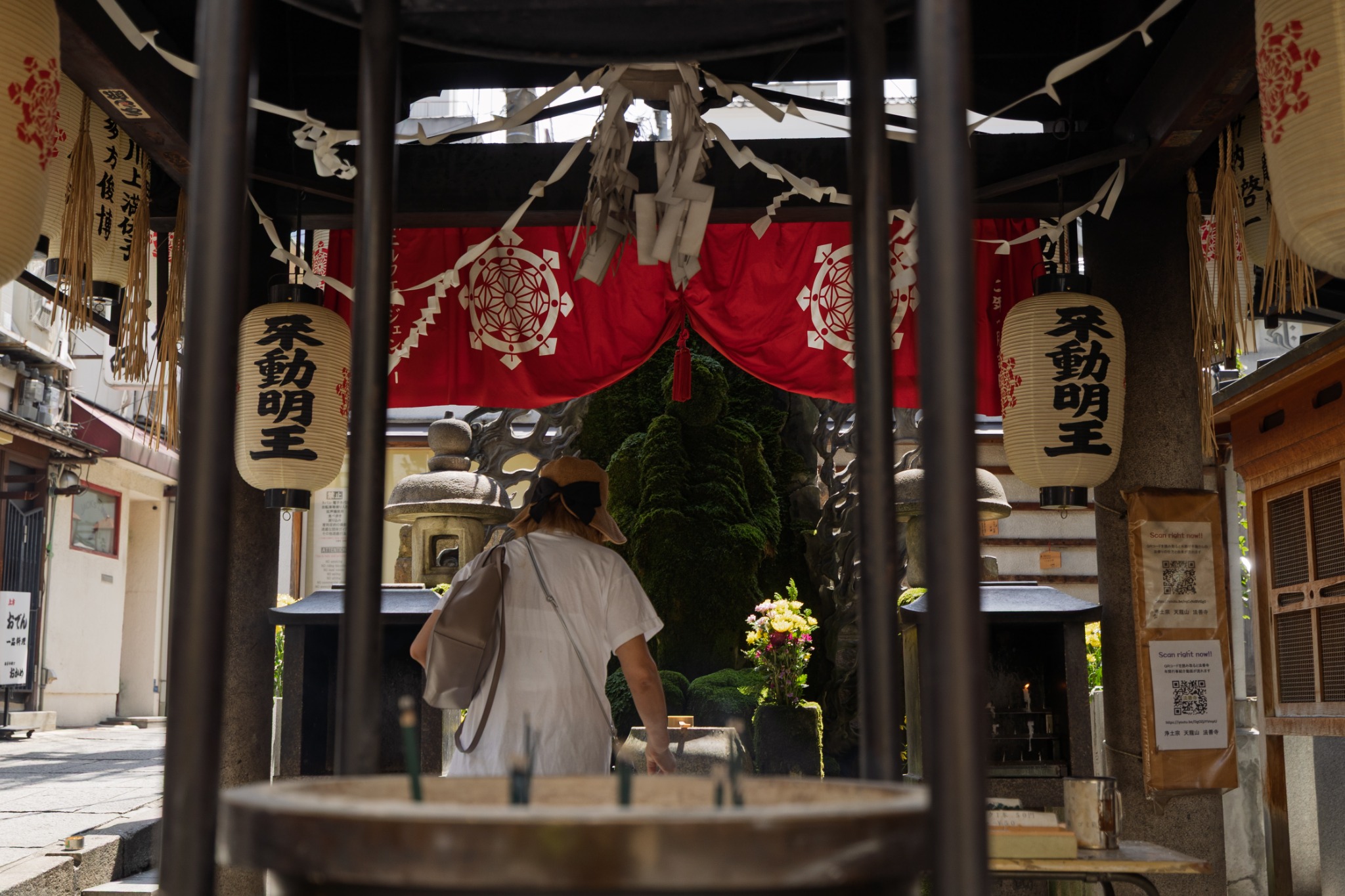
Hozenji has stood in this part of Osaka since 1637. The district around it, Sennichimae—“in front of the thousand days”—takes its name from a thousand days of prayers for the dead held by its priest, Sennen, in what was then an area of cremation grounds, cemeteries and execution sites. The water-splashing ritual is much younger.
In March 1945, an air raid destroyed the temple buildings. The Fudō survived.
Fire could not destroy him. Water would slowly transform him instead.
According to the temple, the water-splashing custom began soon after the war. A woman scooped up, with her hands, the water placed before the figure as an offering, and splashed it over him while making a wish. Other visitors followed.
The ladles came later.
What now looks like an established instruction began with someone doing something a little differently.
The moss gives the scene an air of great antiquity. Yet the custom responsible for this appearance began within living memory. The temple’s long history and the figure’s green covering tell different parts of the story.
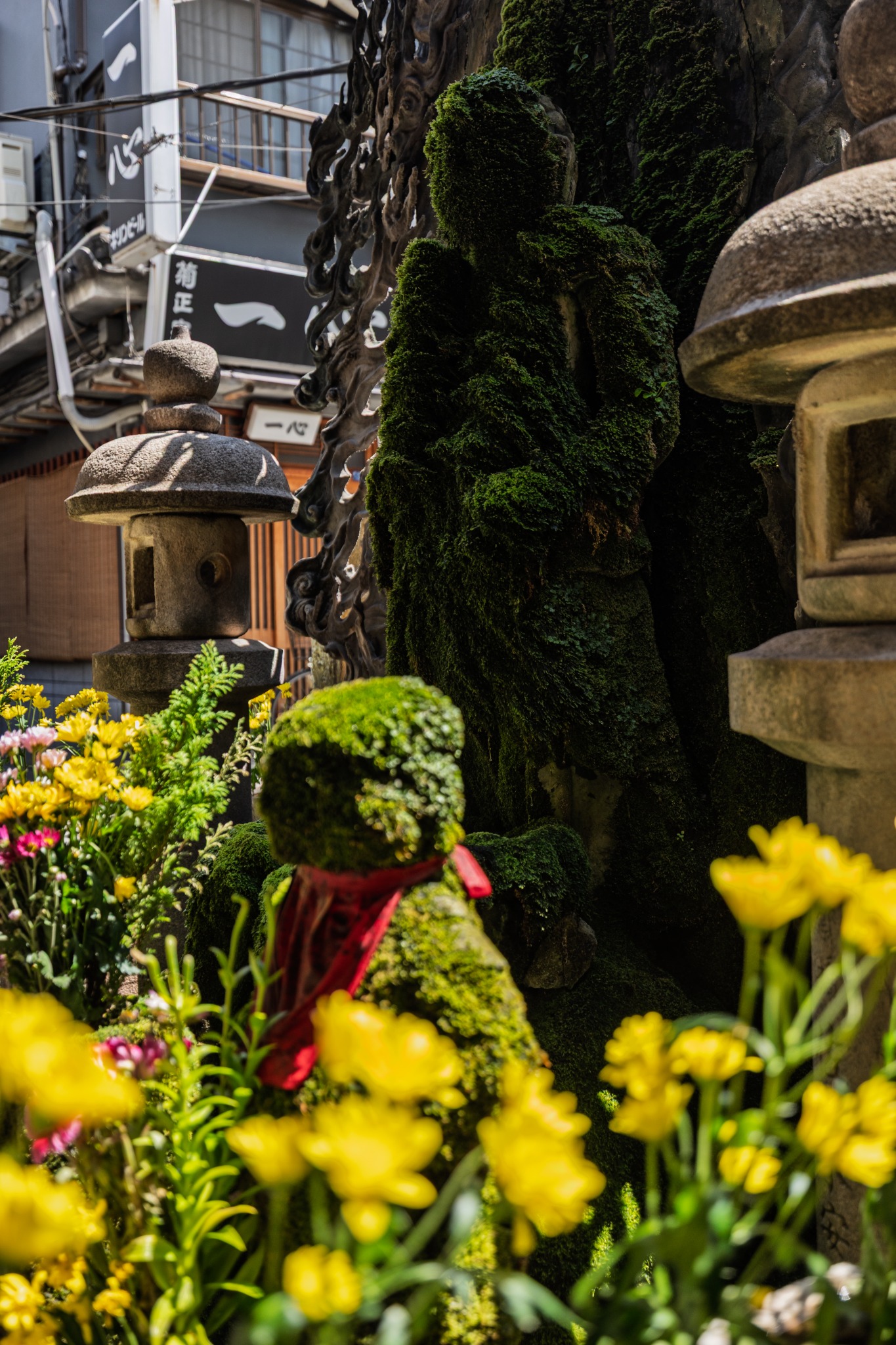
Up close, the moss was not a thin coating. It formed thick cushions over the figures, blurring the carved features and rounding their outlines. There was plenty to photograph, though a conventional portrait was becoming ambitious.
An overgrown statue can suggest that everyone has gone away. This one looked as it did because they kept returning.
The act of worship has physically changed the object of worship.
No single visitor had set out to create the figure in these photographs. Each had come with a wish of their own. Together, they had helped give him a surface no sculptor had carved.
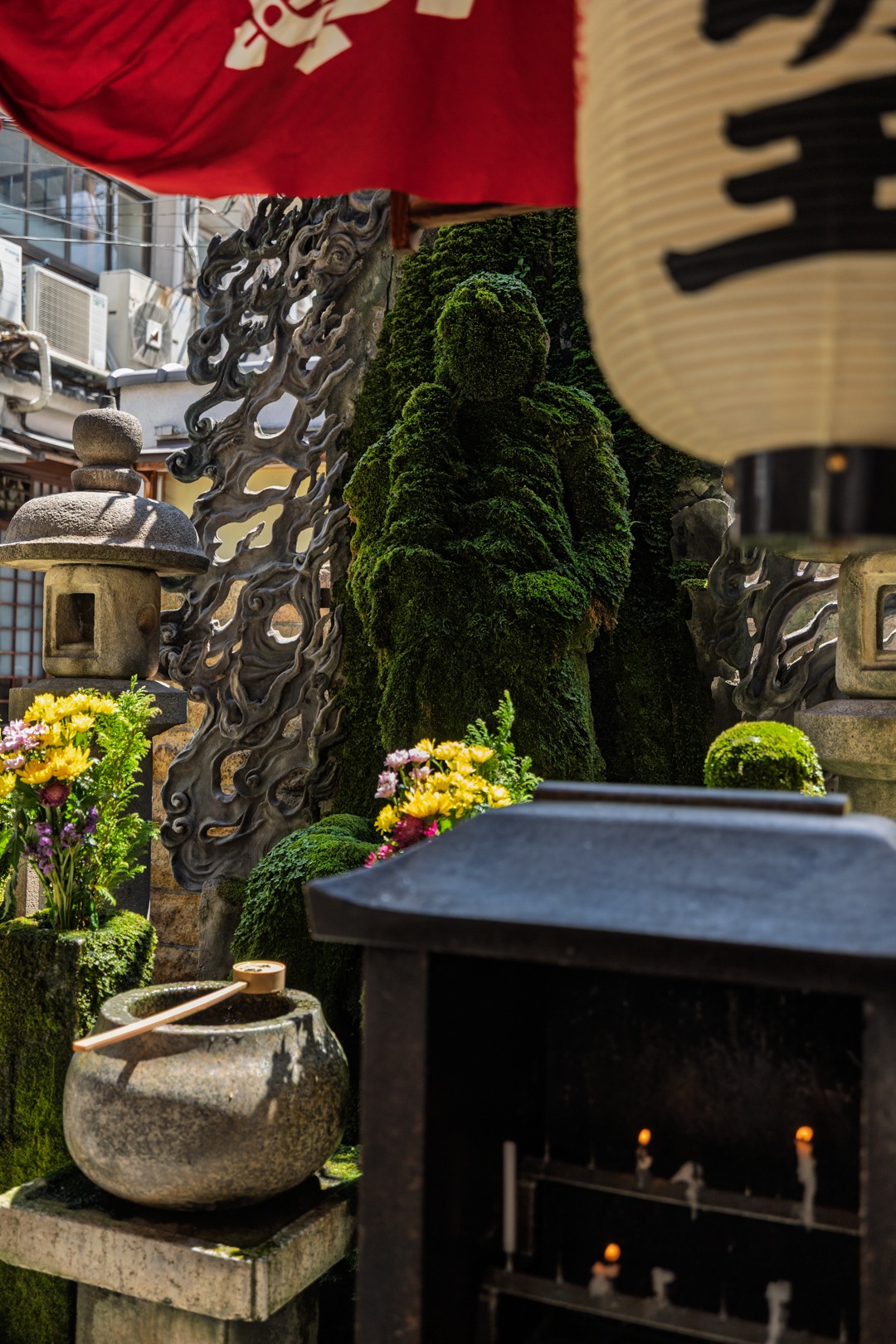
The ladle resting across the vessel brought everything back to the scale of one person’s visit. The next contribution would be as simple as the last.
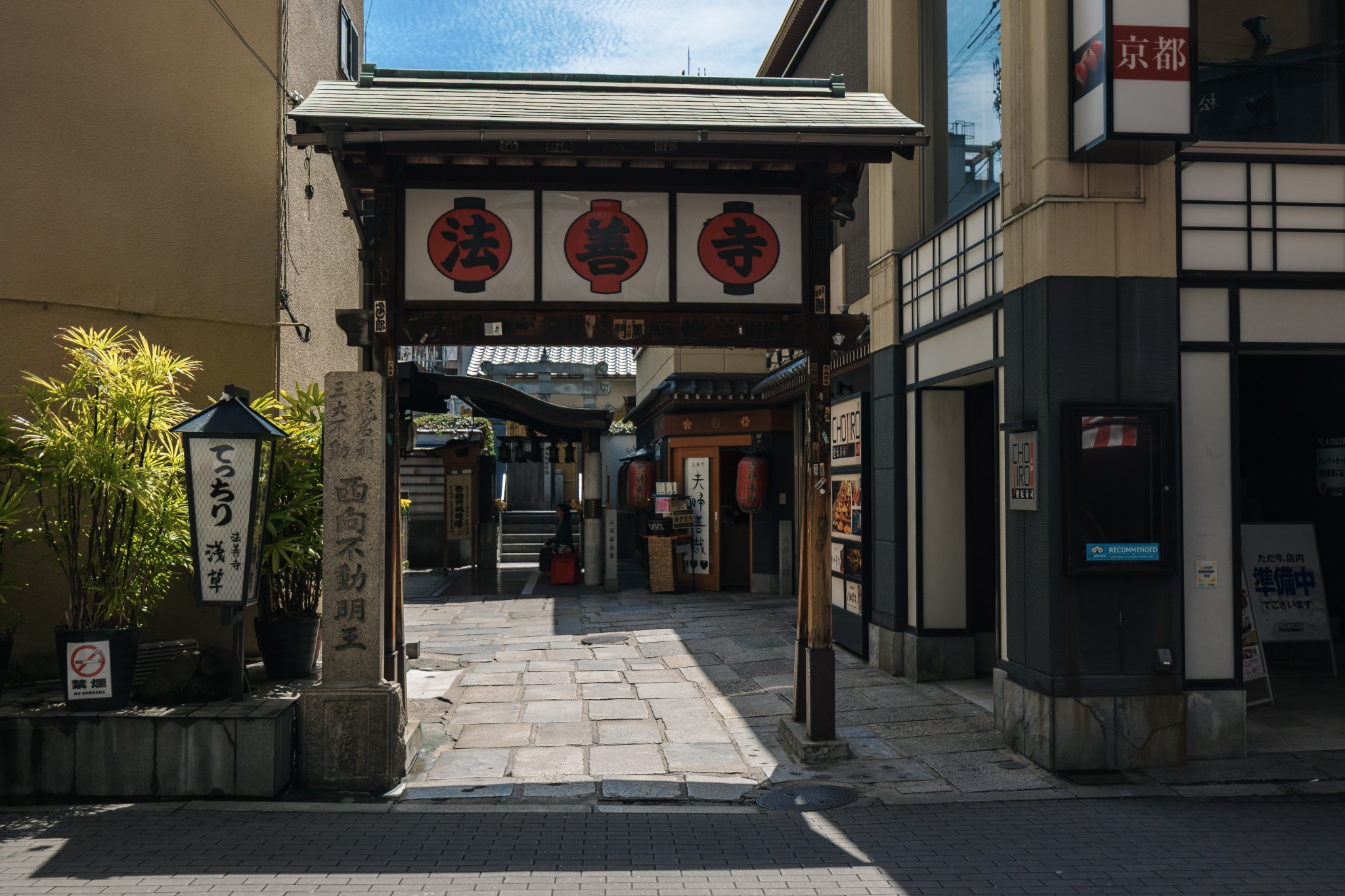
Outside, restaurant signs and modern buildings pressed close to the temple. There was no long approach separating the figure from the neighbourhood. A place to make a wish fitted between places to eat.
By then, the hidden face seemed less of an obstacle. People had helped obscure his features through the very act of turning to him. The expression was harder to read; the connection was plain enough.
Fortunately, making a wish does not require eye contact.
Visit this place
Location
Hozenji Temple (法善寺)
1-2-16 Namba, Chuo-ku, Osaka, Japan
Practical Information
- Temple grounds / Mizukake Fudō
- Open 24 hours
- Temple office hours
- 10:00–18:00
- Access
- About 1 minute on foot from Namba Walk Exit B16; also about 1 minute from Exit B18 via Nipponbashi Station
- Official website
- Hozenji Temple
Information last checked: August 26, 2026
Conversation
Comments
Review pending commentsComments are reviewed before appearing. The internet already contains enough unattended surprises.
Checking comments…
Comments are not available in this migration preview yet. Existing comments remain on the current site.
Leave a comment