Fukui Dinosaur Museum: Getting the Dinosaurs Back on Their Feet
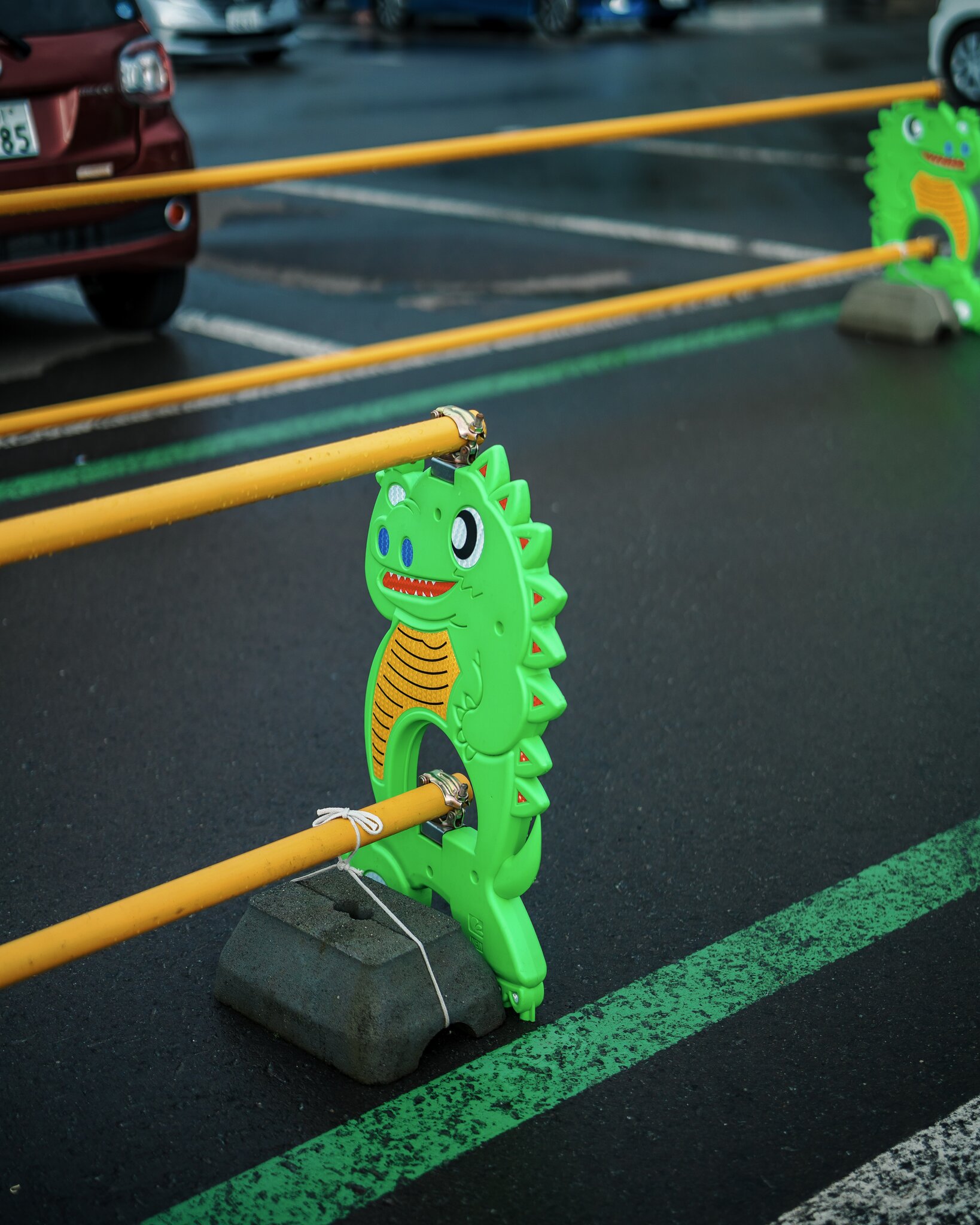
The first dinosaur I met at Fukui Prefectural Dinosaur Museum was working in the car park. Small, bright green and apparently content with its job, it held up a barrier.
The dinosaurs inside had entire galleries. This one had a single pole.
Into the egg
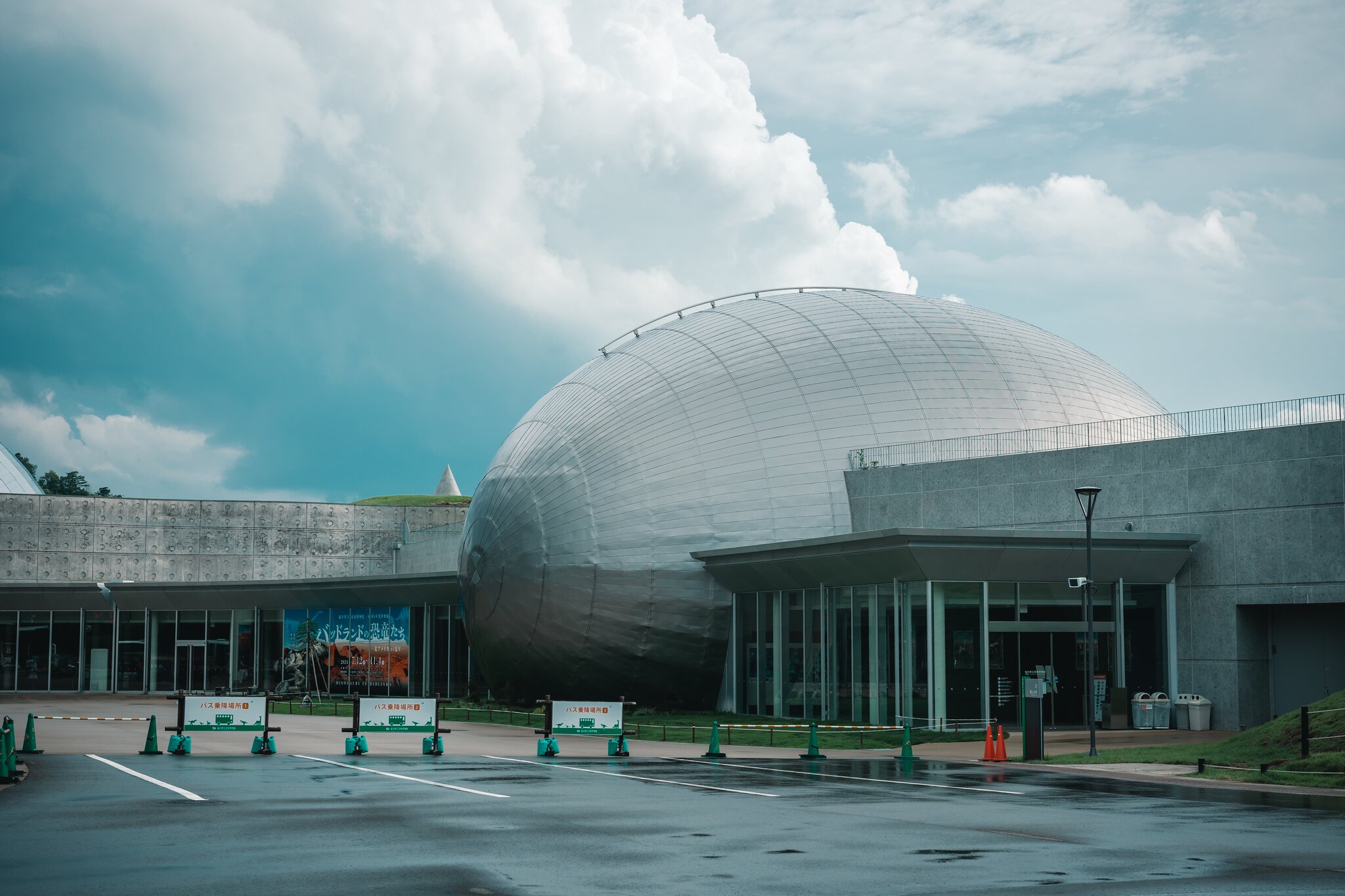
Beyond it, a giant silver egg rose against the hills of Katsuyama. The museum’s exterior takes its shape from a dinosaur egg, enlarged sufficiently to accommodate the adults. Inside, white balconies circled a deep central space.
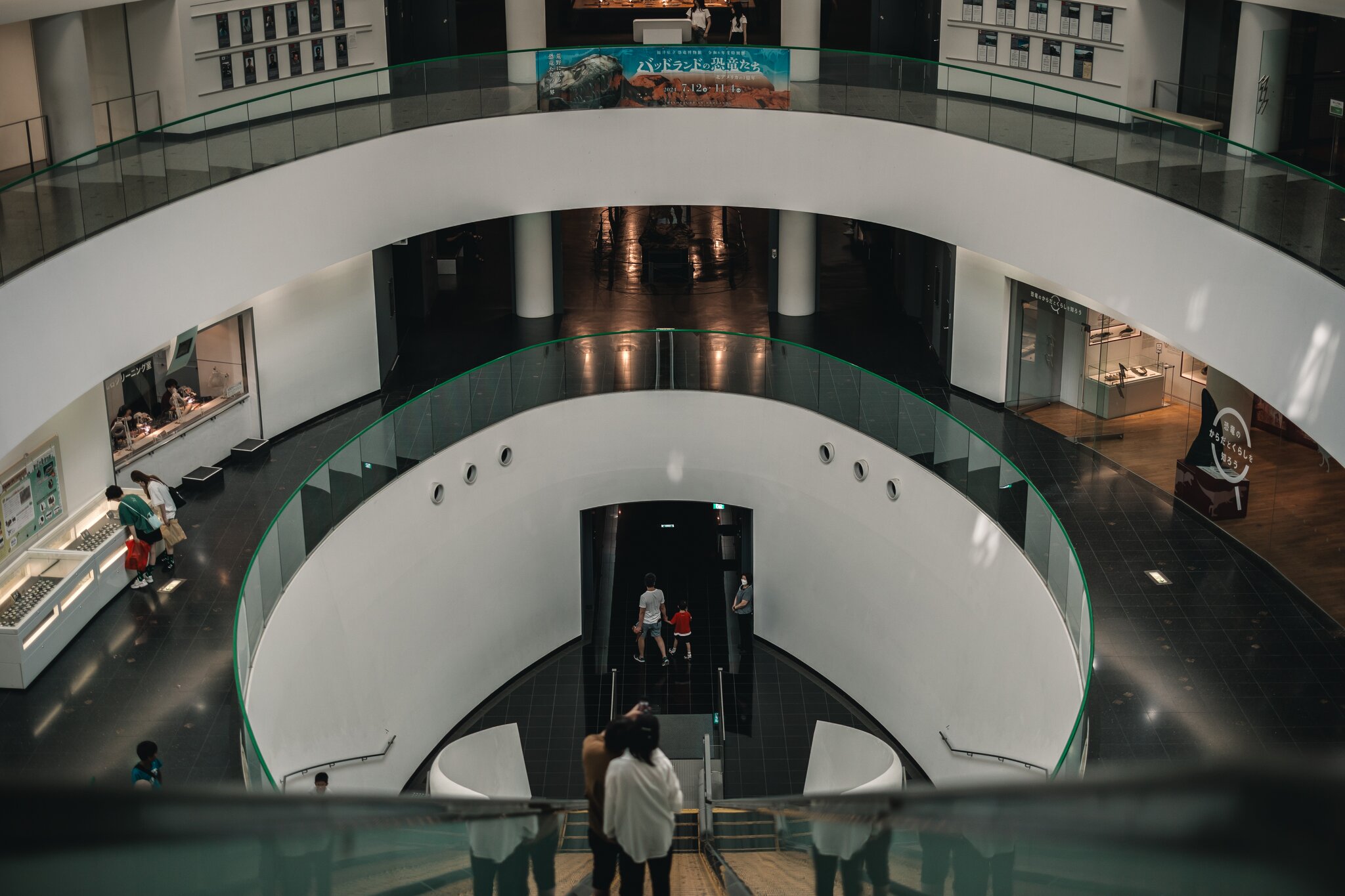
From the top of the long escalator, visitors on the floor below looked tiny; the ride down made the building itself the first exhibit, before the fossils began.
The trail before the skeleton
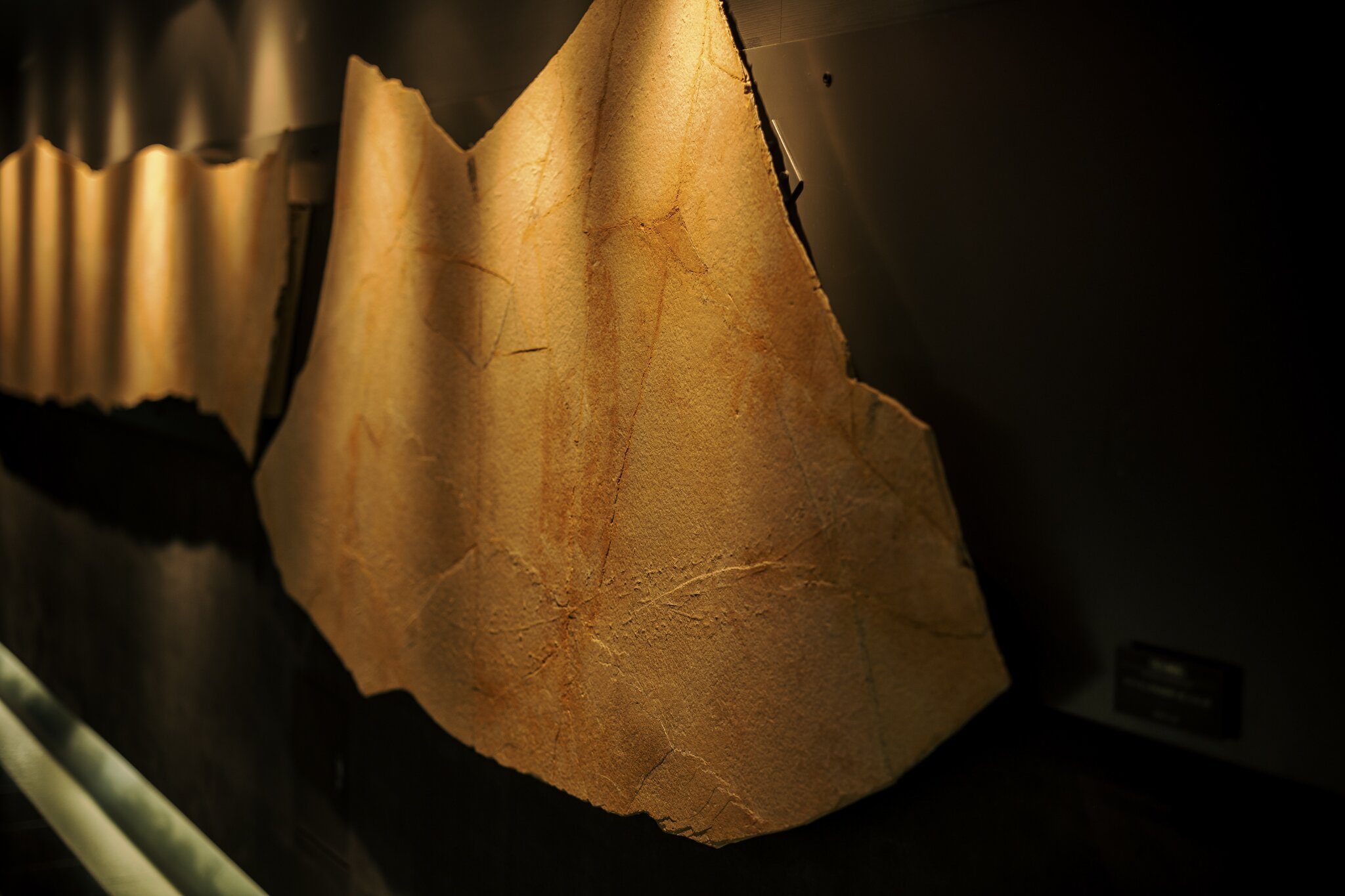
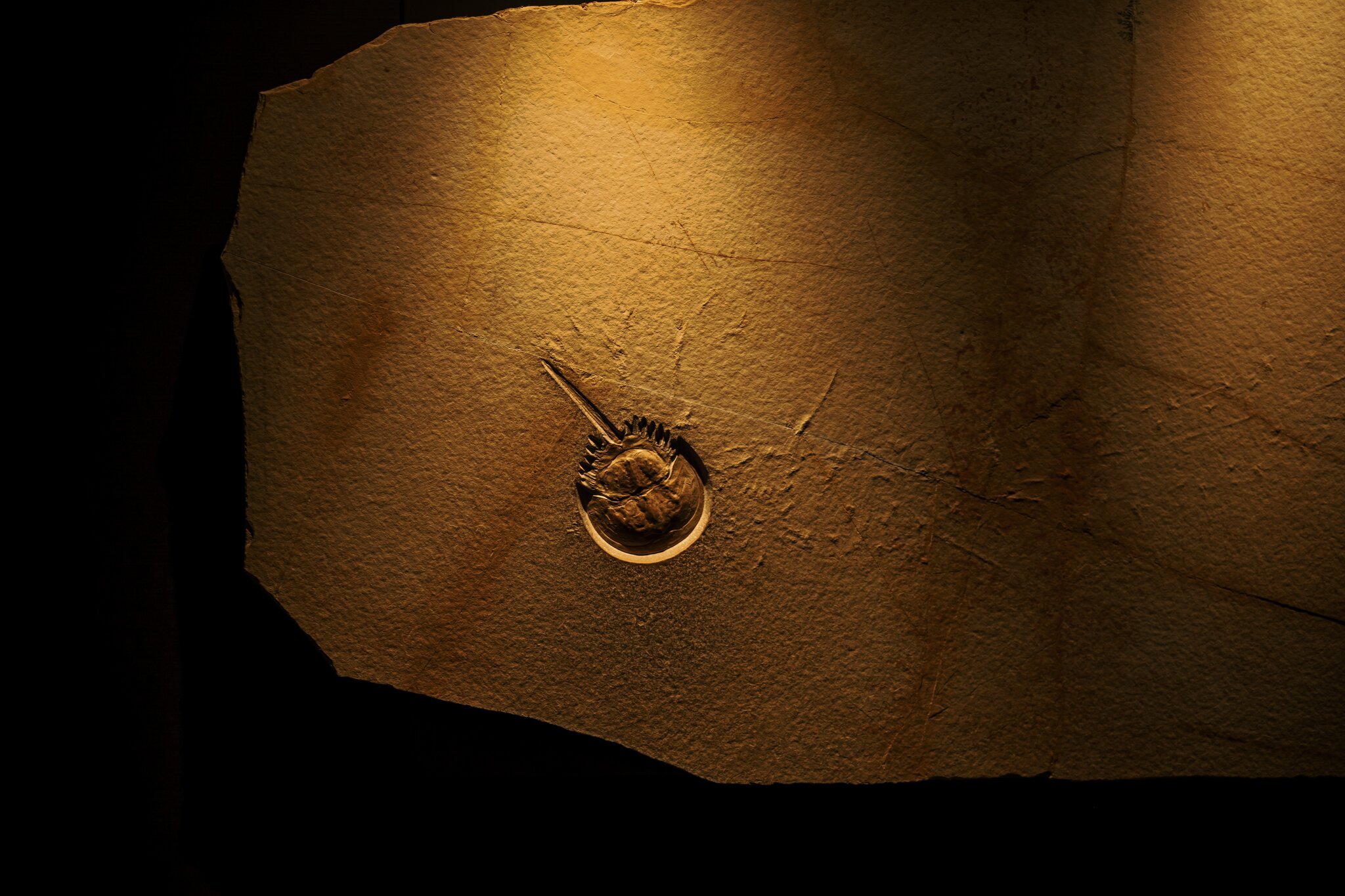
Before the large skeletons came a much smaller animal, and a record of where it had been. Across a pale slab of stone ran the marks left by a horseshoe crab. Follow them and there it was, at the end of its own trail. The label called the exhibit “Final trail of a horseshoe crab”; the Japanese title was more theatrical: “Dance of Death.”
The animal belonged to the Jurassic. That puts a considerable distance between its walk and ours, yet the tracks made the encounter unusually specific. This was not just the shape of an ancient creature. It had moved across this surface, leaving one mark after another, and then stopped.
Both the traveller and the journey had survived.
Getting a fifteen-metre animal standing
A little farther on, the problem of putting an extinct animal on display became much larger. A Camarasaurus lay stretched and curved across a broad slab, its bones labelled by body part. This was a replica showing the skeleton as it had been found in Wyoming. It was recognisably a dinosaur, but it was a long way from the upright animal usually presented in museum halls.
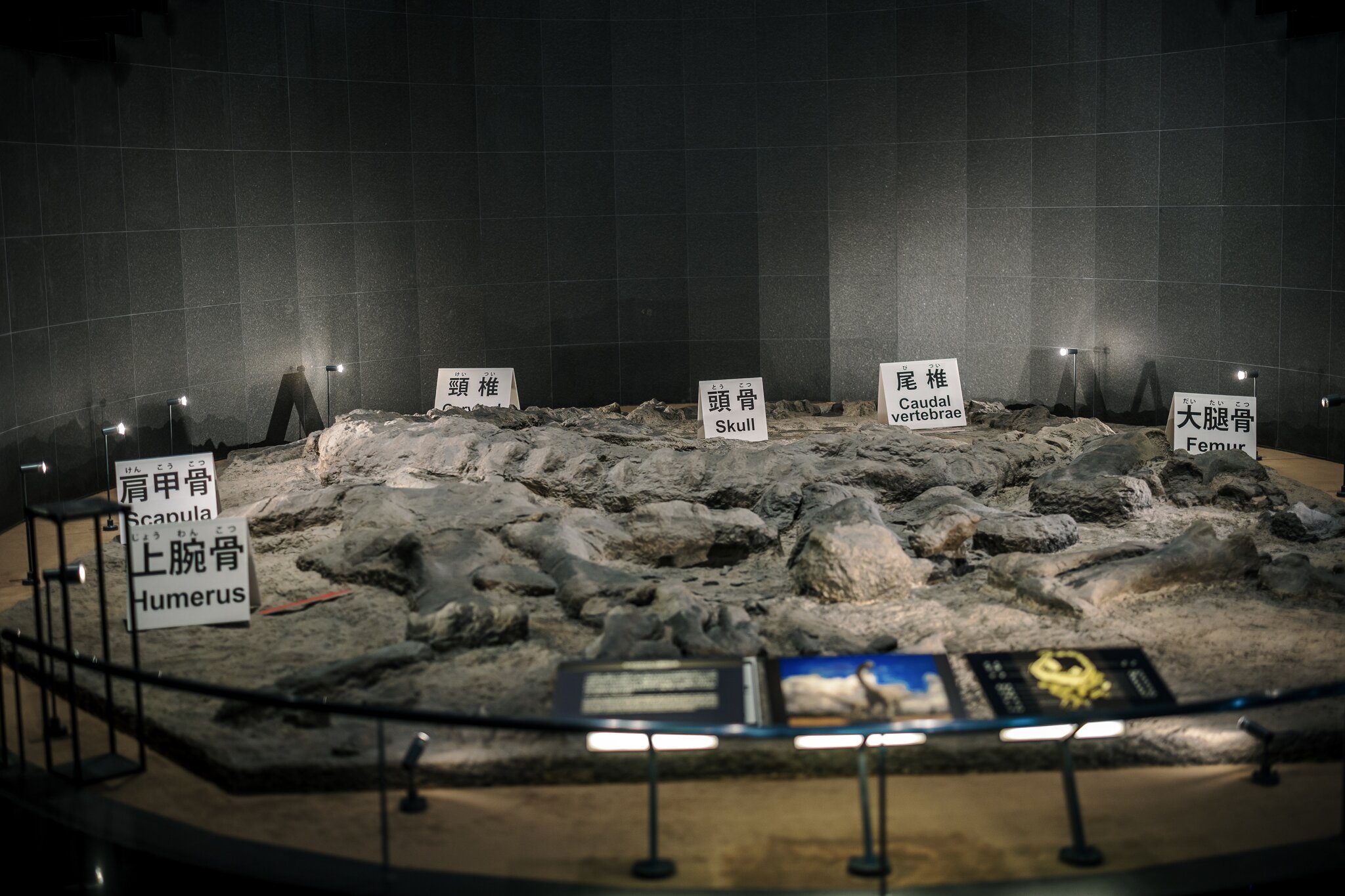
The museum acquired the fossil in 2009 and undertook the cleaning, repairs, casting and reconstruction itself. The mounted skeleton went on display in 2013. More than ninety per cent of the mount consists of original fossil material. Even with most of the parts supplied, assembly took several years.
There was much more to do than fit one bone to the next. Rock had to be removed without losing what was inside it. Damaged bones needed attention; missing parts required comparison with other specimens. Casts allowed the team to test the arrangement before mounting the originals. In the project’s photographs, ribs are held in wooden frames while people work out how to put a fifteen-metre animal back on its feet. The finished skeleton conceals a great deal of that practical difficulty.
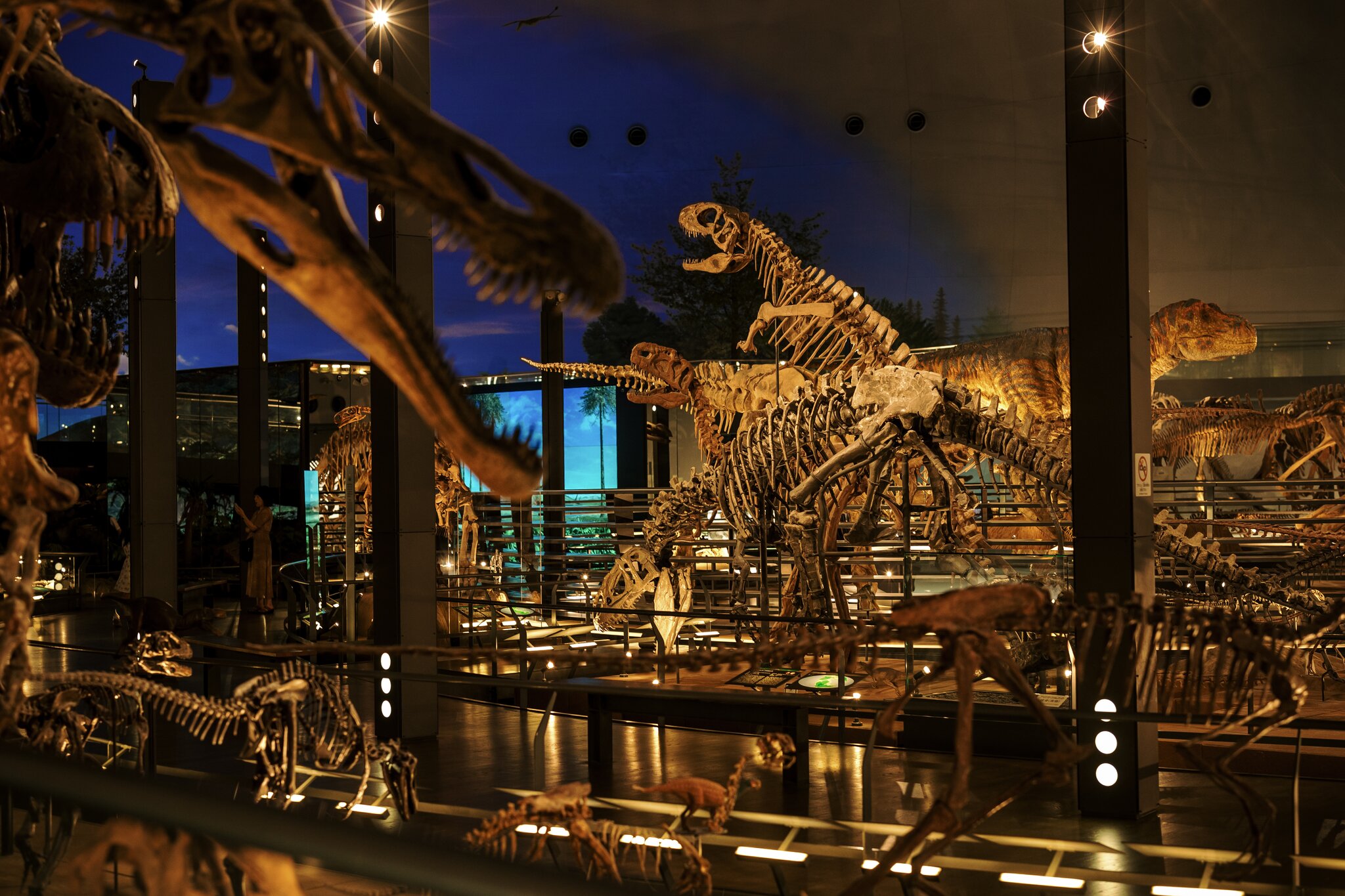
In the main hall, the results crowded the view. Jaws projected into the foreground, tails crossed behind other skeletons, and ribs repeated into the distance. Looking at one animal meant looking through parts of several others. The small signs and railings established a sensible human order at floor level. Above them, necks and teeth had taken over.
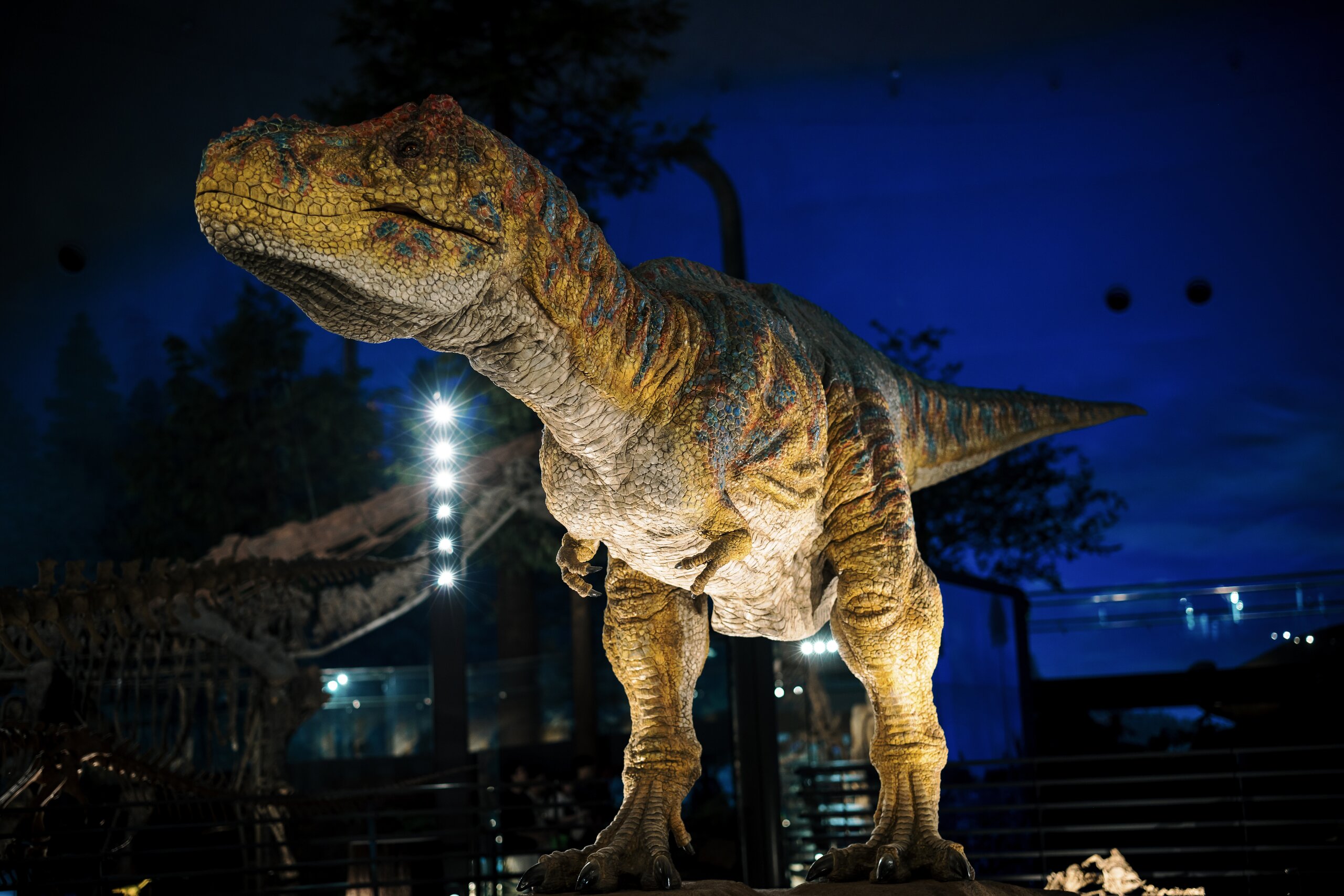
At the centre stood a moving Tyrannosaurus, with skin, eyes and a substantial amount of flesh restored around the familiar frame. The bones elsewhere invited a closer look at joints and teeth; this version made it easier to imagine the consequences of their working together. Its feet were fixed to the base, a useful limitation in a room full of visitors.
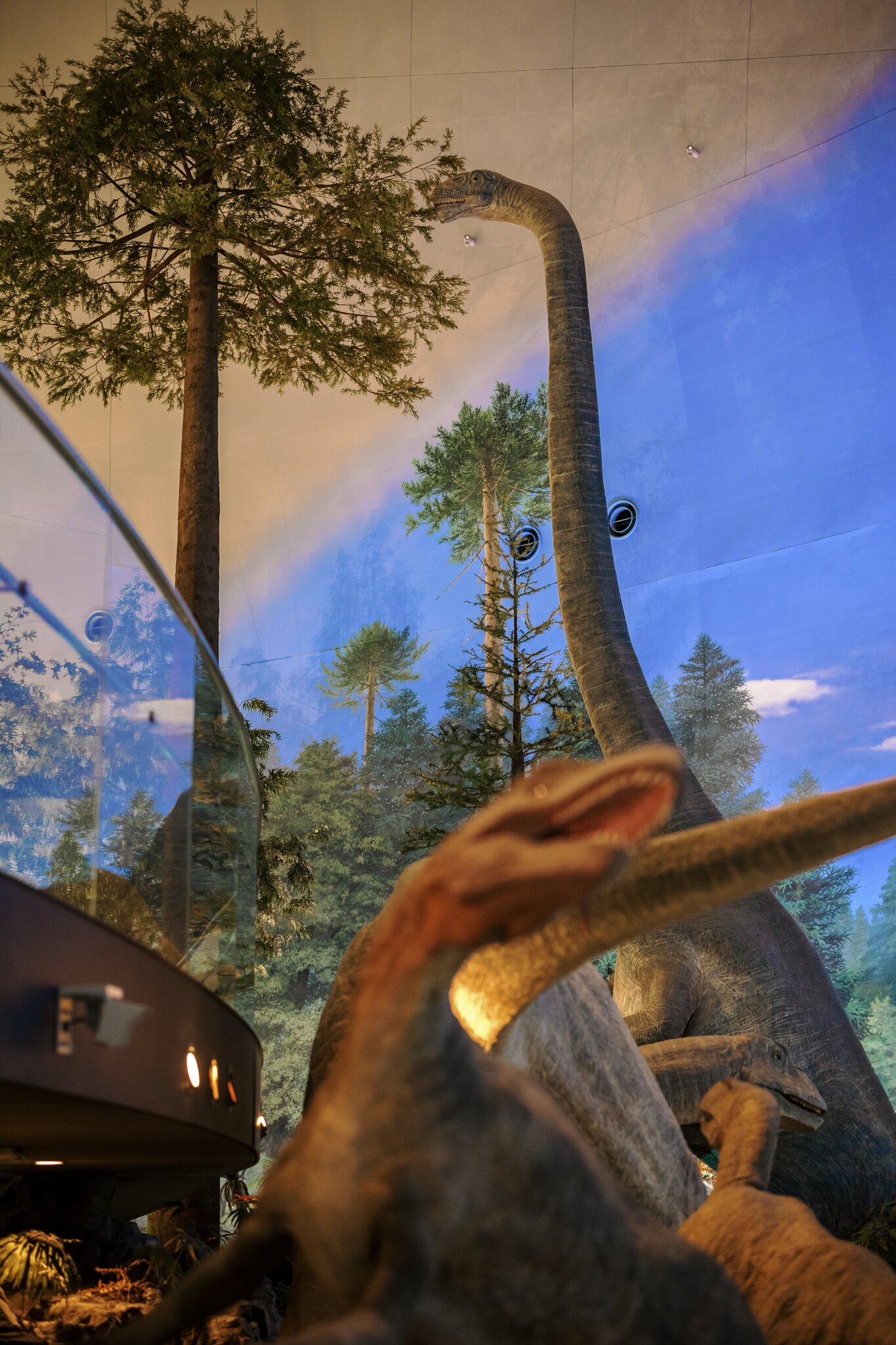
The reconstructions extended into a forest scene. A long neck rose past the trees while smaller animals occupied the space below. The familiar outline of a skeleton acquired a bulk that was harder to ignore: a chest filled out, a head looking back, a body taking up room among other bodies. Between the skeletons and the forest, it was possible to look at a rib cage and then see how much animal had once fitted around it.
Before anything could loom
The Camarasaurus had come from Wyoming, but other discoveries began much closer to the museum. Excavations at Kitadani, here in Katsuyama, started in 1989 and yielded fossils of dinosaurs that were new to science. Fukuiraptor, Fukuisaurus and Fukuititan are among the animals identified from those finds. Their names carry a little of the local geography with them, even when their skeletons are displayed far from the rocks where they were found.
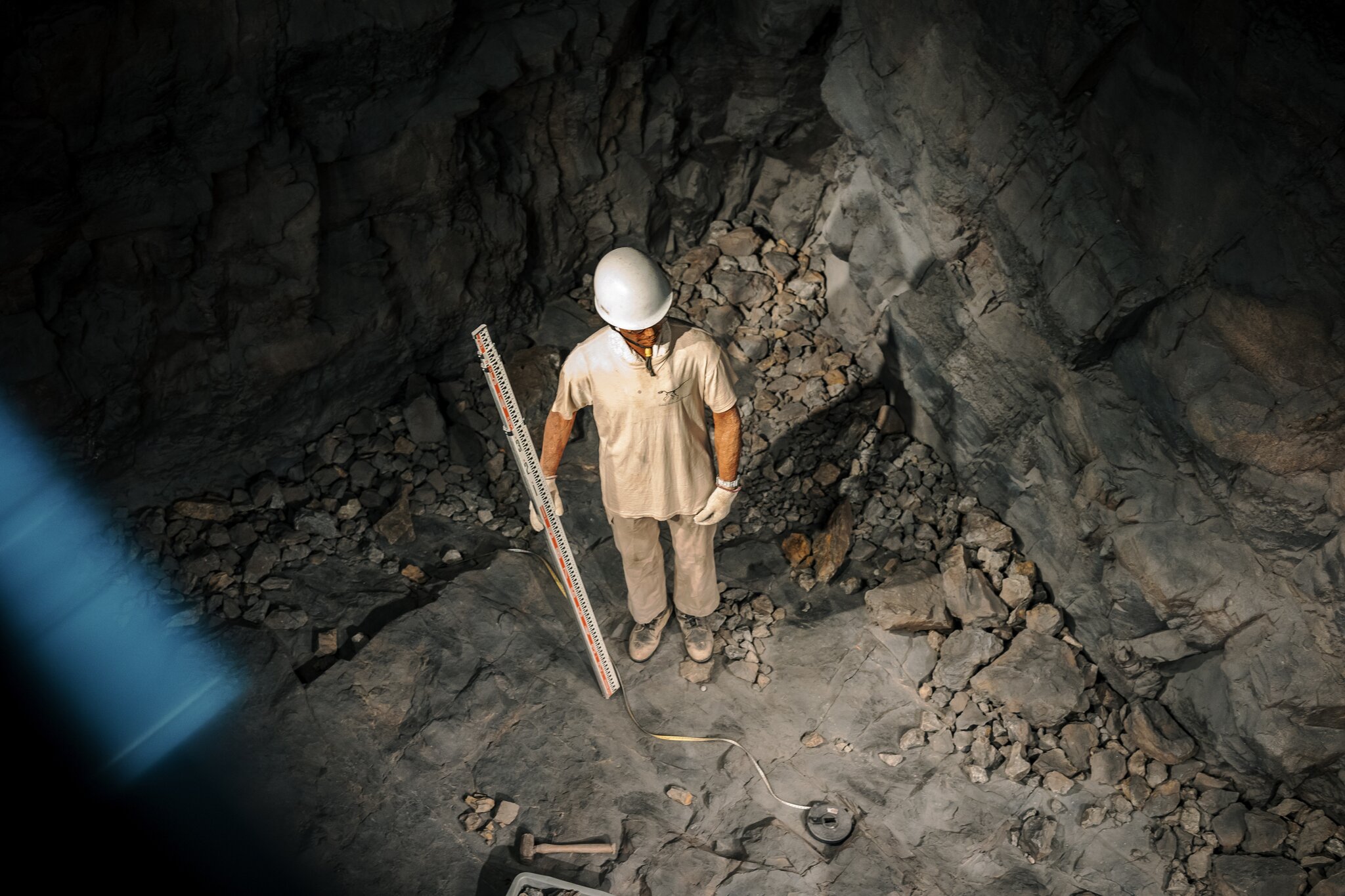
An excavation reconstruction brought the work back down to ground level. A helmeted figure stood among broken rock with a measuring staff; a hammer and tape lay nearby. After the carefully lit skeletons, it was a useful change of scene. Before anything could loom over a visitor, someone had to recognise it in the ground and get it out.
The small ones still demand attention
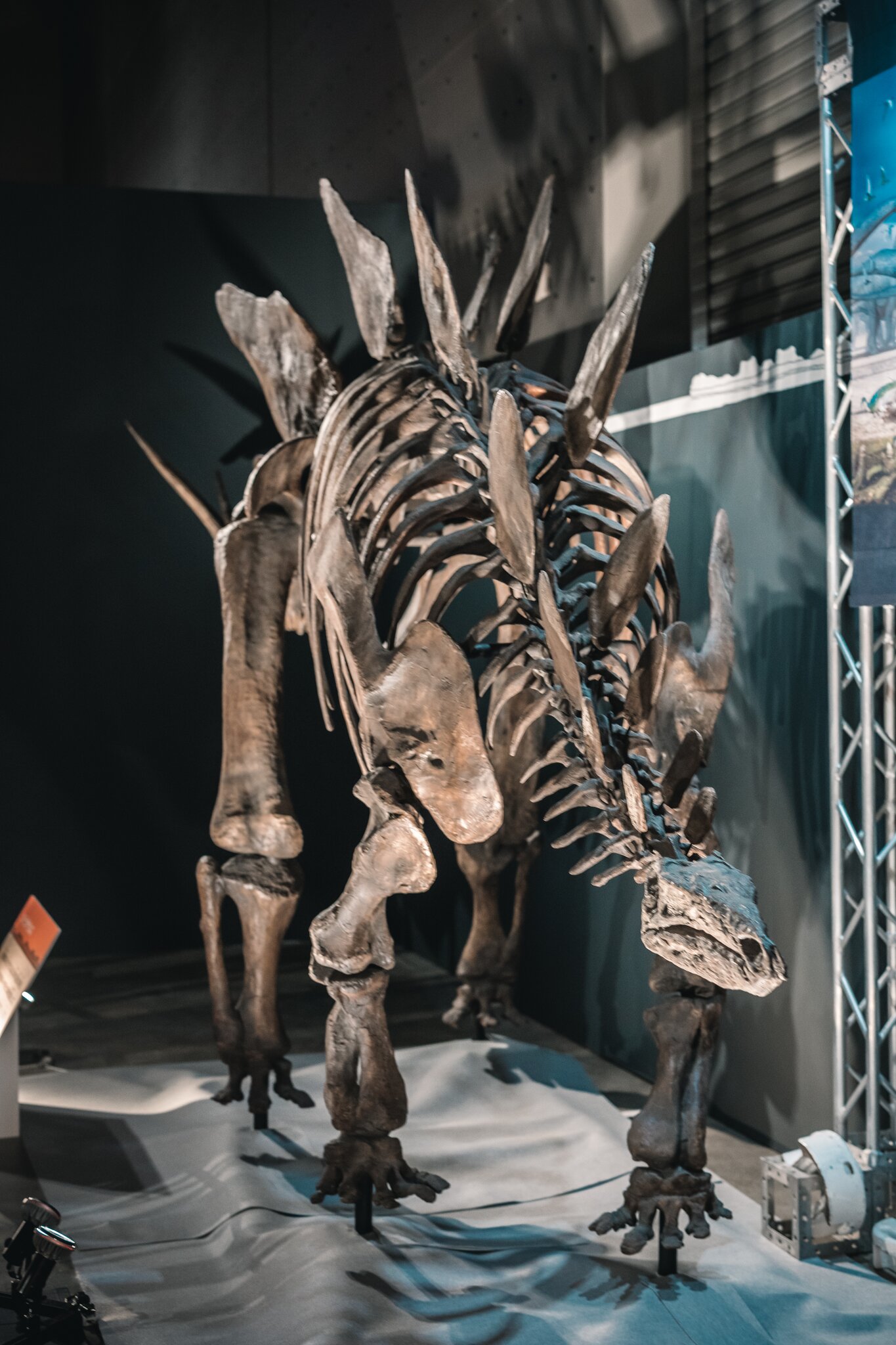
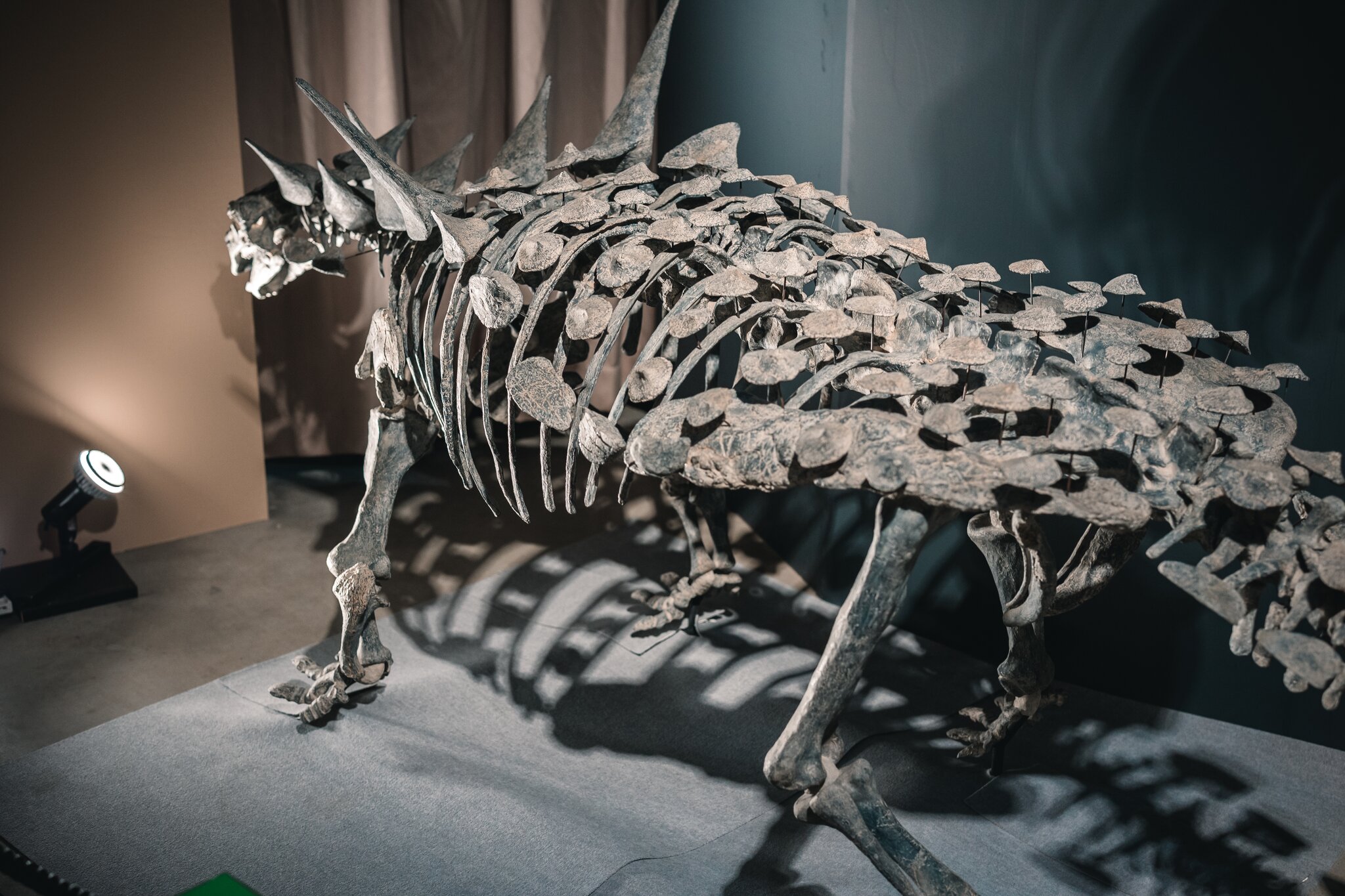
Back among the skeletons, the large outlines began to give way to smaller peculiarities. A row of tall plates ran down one back. Another animal carried an elaborate covering of armour, its individual pieces held above the ribs by thin supports. The mounts made it possible to see both the outside of the animal and the space beneath it—layers that a living body would have kept inconveniently covered.
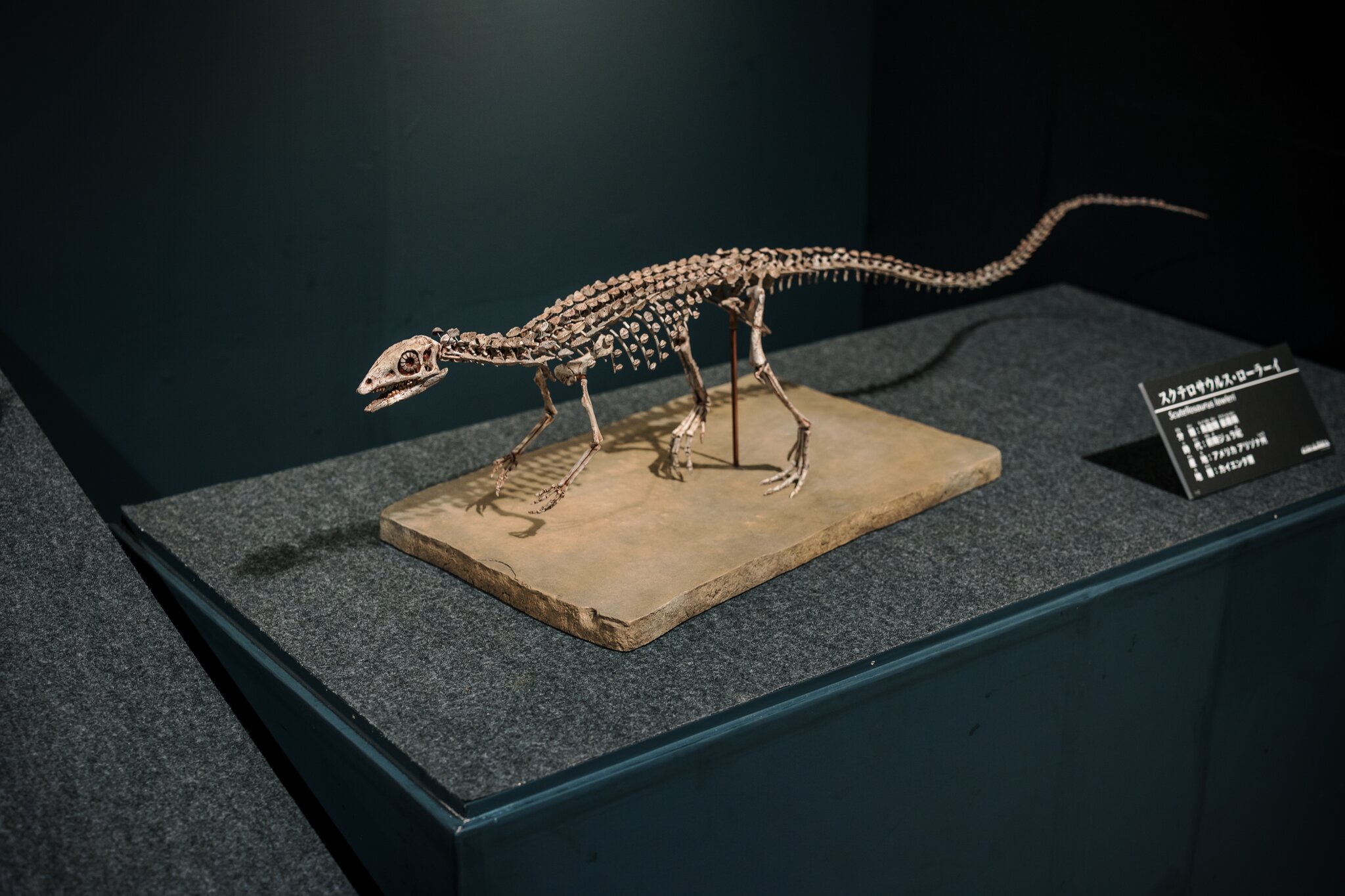
Then there was Scutellosaurus, a small dinosaur whose slender skeleton could have been overlooked after so many large neighbours. Its long tail curved away over a modest base, and little pieces of armour dotted its back. There was plenty to examine without tilting the head upwards. Its armour required a closer look than the enormous jaws nearby.
The portable specimens
In the shop, horned dinosaurs stood in rows on the shelves, blue bodies facing the same direction, while long-necked animals waited below with tags attached. These came fully assembled. After the Camarasaurus, that seemed a considerable selling point.
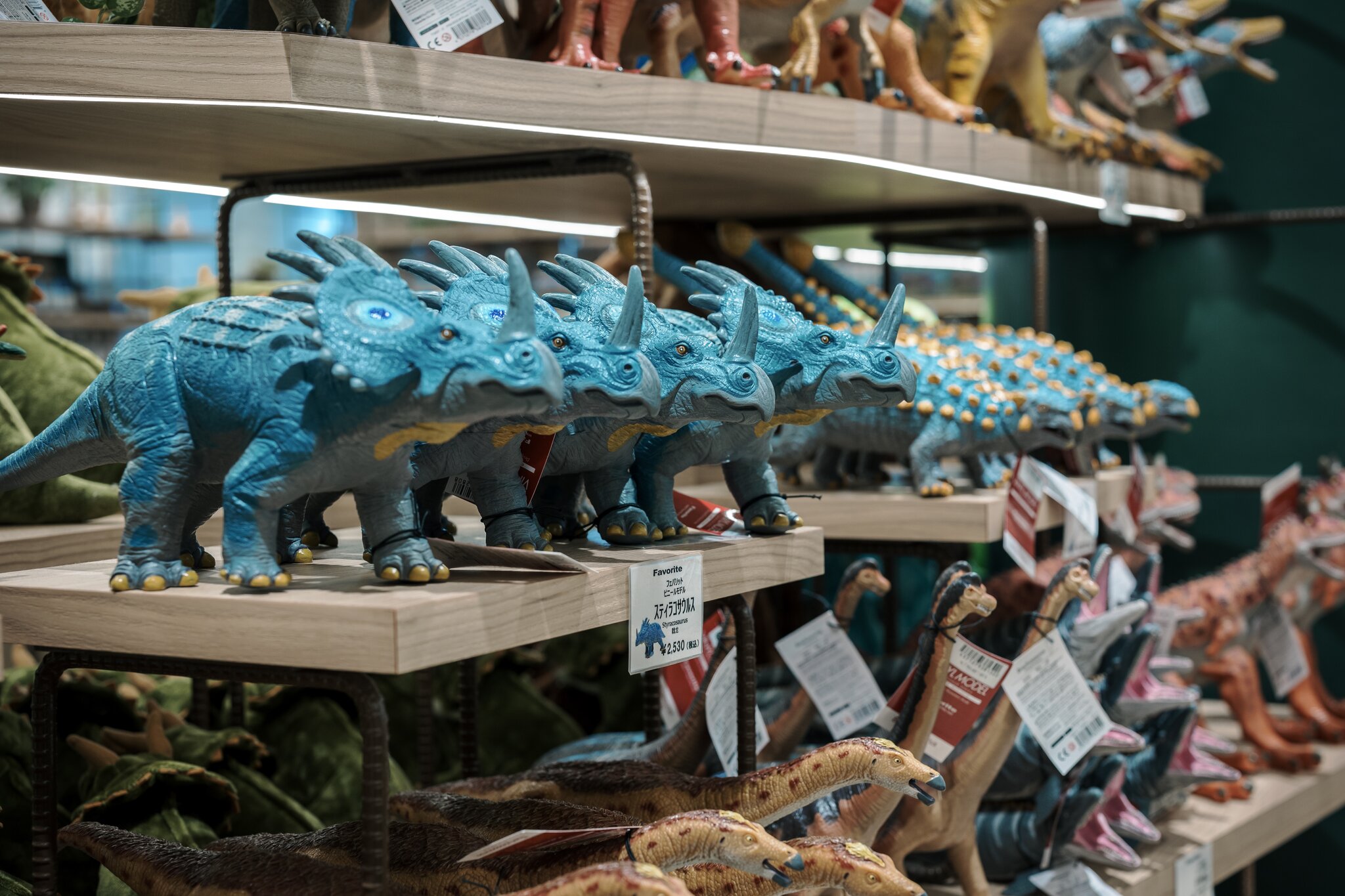
The museum begins with a silver egg and ends with dinosaurs that fit on a shelf. In between, it lets you watch a fossil move from a mark in stone to a reconstruction large enough to make the room feel temporary.
That is the museum’s useful trick: scale keeps changing, but the work remains visible.
A dinosaur can be fifteen metres long, or small enough to hold up a parking barrier. Either way, someone has to put it in the right place.
Visit this place
Museum
Fukui Prefectural Dinosaur Museum (福井県立恐竜博物館)
Main museum building and entrance in Katsuyama, Fukui. The pin marks the museum rather than Fukui Station.
51-11 Terao, Muroko, Katsuyama, Fukui 911-8601, Japan
Practical Information
- Area
- Katsuyama, Fukui
- Opening hours
- 9:00–17:00; last admission 16:30
Summer extended hours: 8:30–18:00; last admission 17:30. Check the official calendar for dates. - Closing days
- Second and fourth Wednesdays (the following day when a public holiday), except during the summer holidays; December 31 and January 1. Temporary closures are listed on the official calendar.
- Admission
- Permanent exhibition — adults: ¥1,000; high school and college students: ¥800; elementary and junior high school students: ¥500; visitors aged 70 or older: ¥500; preschool children: free. Special exhibitions have separate charges.
- Reservations
- Buy a date-and-time-specific ticket in advance. Same-day tickets are sold at the museum only when capacity remains.
- Access
- From JR Fukui Station, about 1 hour by Echizen Railway to Katsuyama Station, then a bus to the museum or about 10 minutes by taxi.
- Parking
- Approximately 1,300 spaces
- Photography
- Flash photography and tripods are prohibited inside the museum. Eating, drinking and smoking are also prohibited inside.
- Official website
- Fukui Prefectural Dinosaur Museum
- Access and fees
- Visitor information · Current hours, fees and calendar (Japanese)
Information last checked: September 25, 2026 (published hours, closing days, admission categories and ticket arrangements).
Conversation
Comments
Review pending commentsComments are reviewed before appearing. The internet already contains enough unattended surprises.
Checking comments…
Comments are not available in this migration preview yet. Existing comments remain on the current site.
Leave a comment