Chōsenji Temple: A Different Kind of Shibuya Crowd
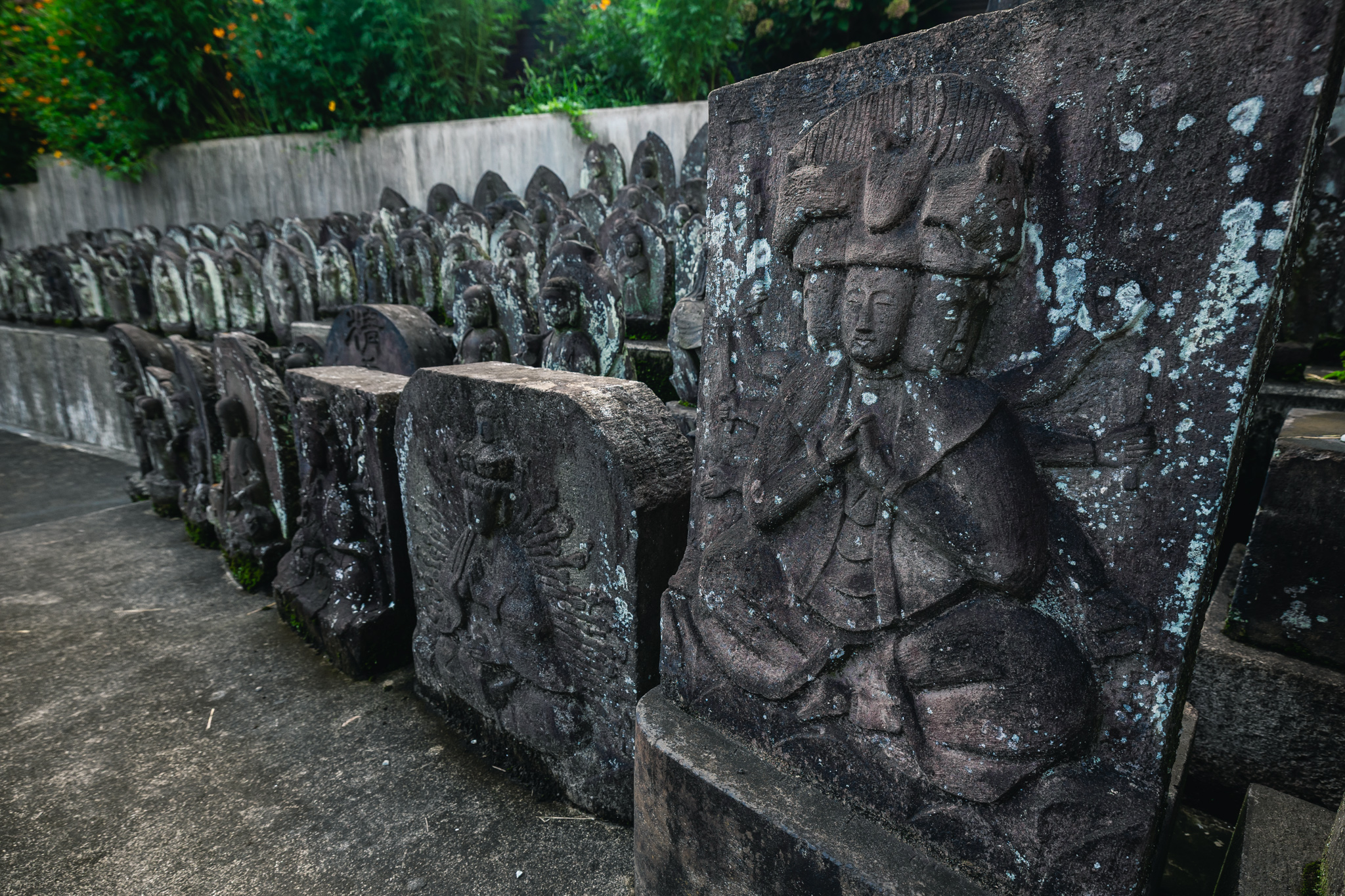
At the far end of Chōsenji’s cemetery, more than two hundred stone Buddhist figures have gathered in rows. Some stand, others sit, and a few have considerably more arms than their neighbours. Even by Shibuya standards, it is quite an assortment.
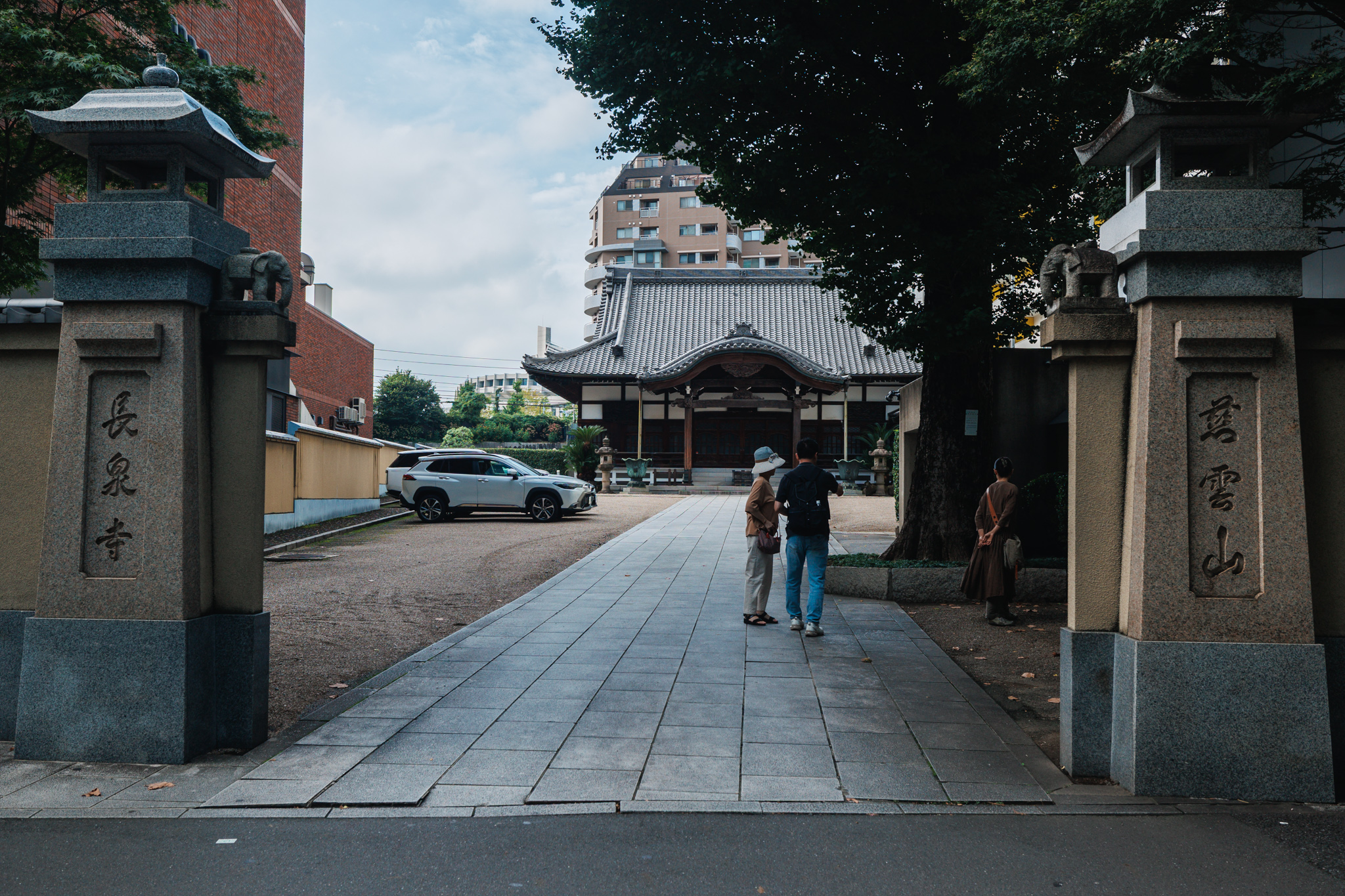
The temple stands on Meiji-dōri, between Shibuya and Harajuku. Small stone elephants flank the entrance, with the main hall beyond them and taller buildings rising behind it. A parked car shares the view. This is still very much Tokyo; the elephants are simply an improvement on the usual street furniture.
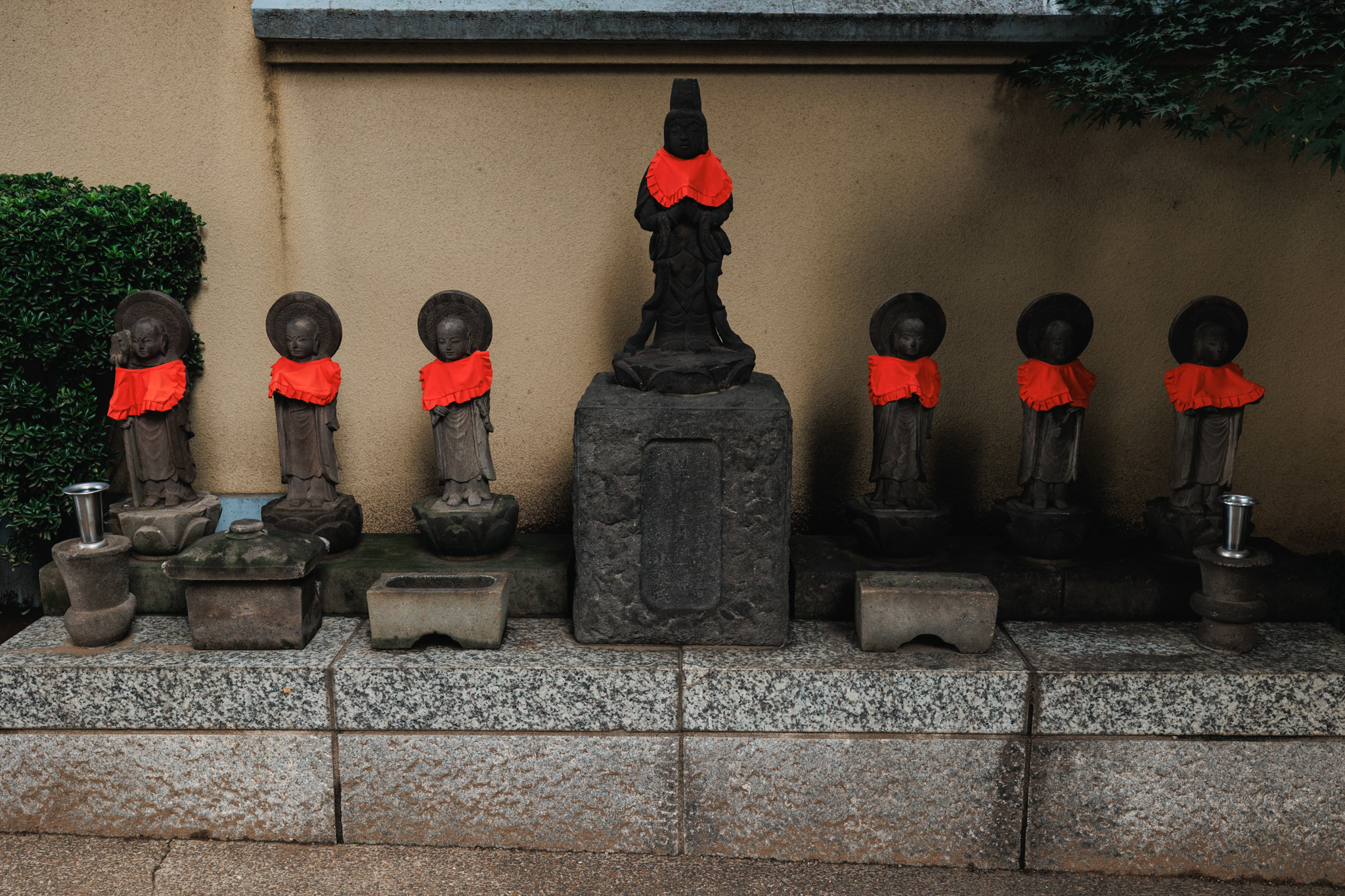
Inside the gate, a small group of stone figures wears bright red bibs. The larger gathering lies beyond the main hall, at the far end of the cemetery, where grey stone and pale lichen blend into the greenery.
Faces in the crowd
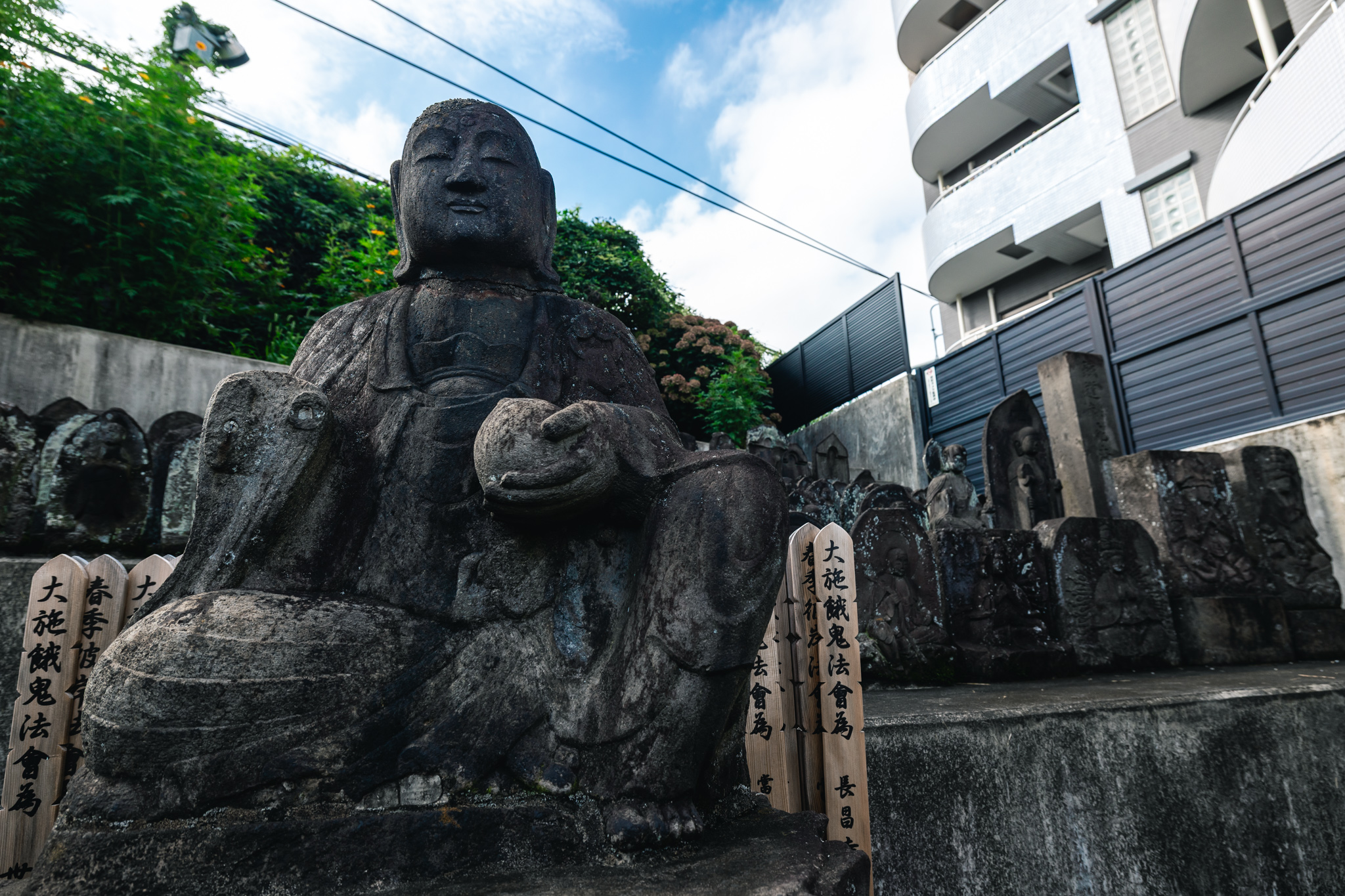
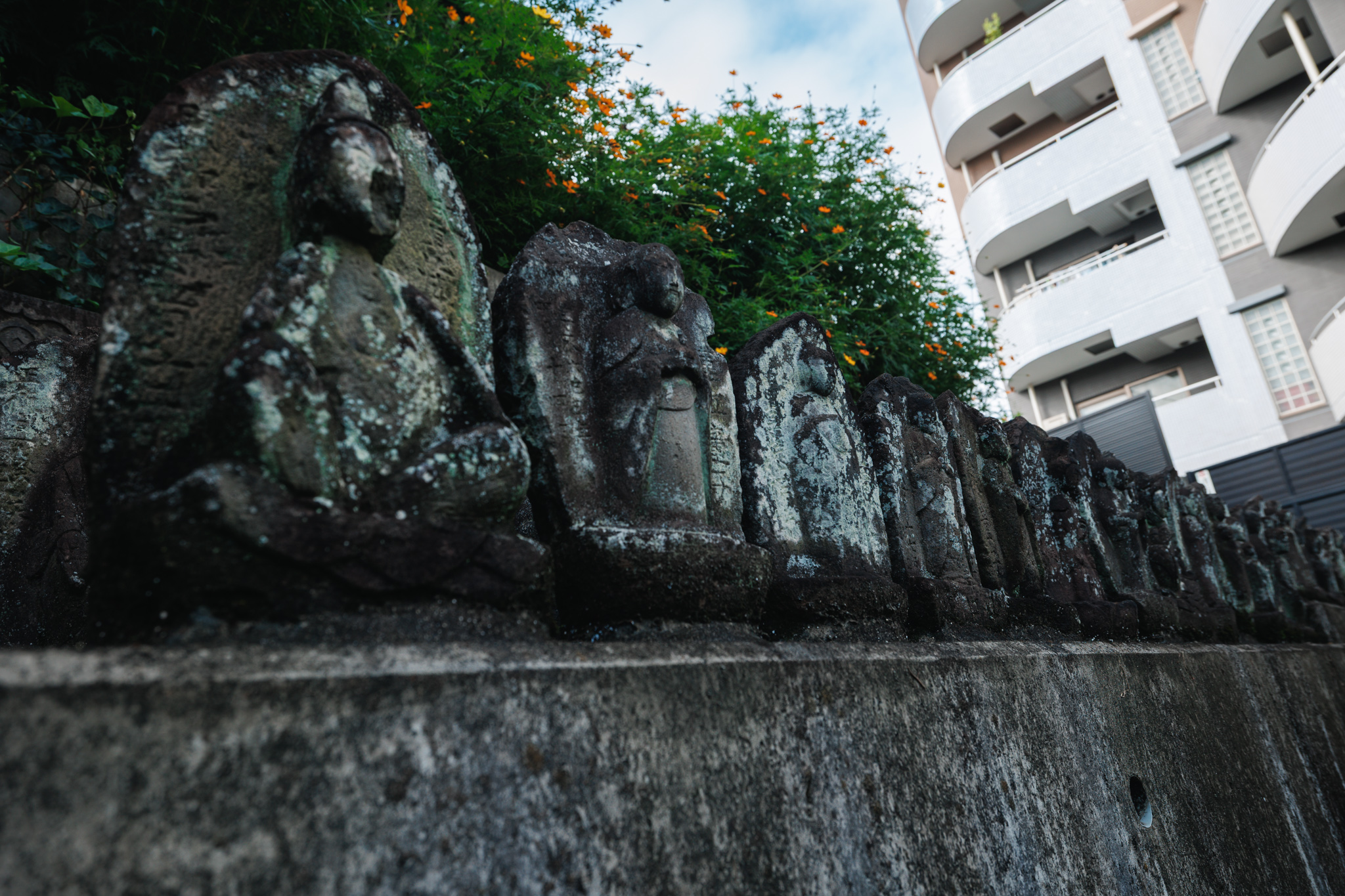
From a distance, the rows can look like a single mass of weathered stone. Up close, individual figures begin to emerge. A broad seated figure has a full, rounded face; nearby, slender figures are carved into upright slabs. One elaborate relief fits several faces and a fan of arms into its narrow outline. On other stones, the folds of a robe have become barely visible.
Some faces remain easy to read, while others require a little cooperation from the viewer. A closer look at one carving brings the smaller figure behind it into view, then another farther along the row. Two hundred is a number on a sign; on the ground, there is quite a lot to look at.
Keeping the subjects still is, for once, the easy part.
Gathered from the neighbourhood
An information board at the temple helps explain the assortment. Most of the figures depict Jizō, with several forms of Kannon also represented—Buddhist figures associated with protection and compassion.
These figures once stood around the neighbourhood. As housing development and other changes reshaped the area, they were moved to Chōsenji and brought together in the temple cemetery.
They were not conceived as one grand group.
Their neighbours, like their addresses, have changed.
Behind them, an apartment building rises above the cemetery wall. Tokyo is not easily persuaded to stay out of its own photographs.
Days off and devotion
The figures date from the Edo period to the Meiji era, when the area was still farmland, and their inscriptions preserve traces of the people who lived here. Local religious associations called kō formed around devotion to Jizō and Kannon. On appointed days, members took time off work and gathered in one another’s homes, taking turns to host. They chanted Buddhist prayers, shared food and drink, talked, and gave sweets to the children. The children had a particularly straightforward reason to keep track of the calendar.
For the villagers, these meetings were among the few occasions for recreation. Prayer, hospitality and a day away from work all had a place in the same gathering.
Chōsenji’s most celebrated figure has been kept rather warmer. Known as the Hitohada Kannon—roughly, the human-skin Kannon—it is a wooden figure that, according to the temple, the twelfth-century warrior Shibuya Konnōmaru kept with him on every battlefield. Wood though it is, it was said to be as warm as human skin.
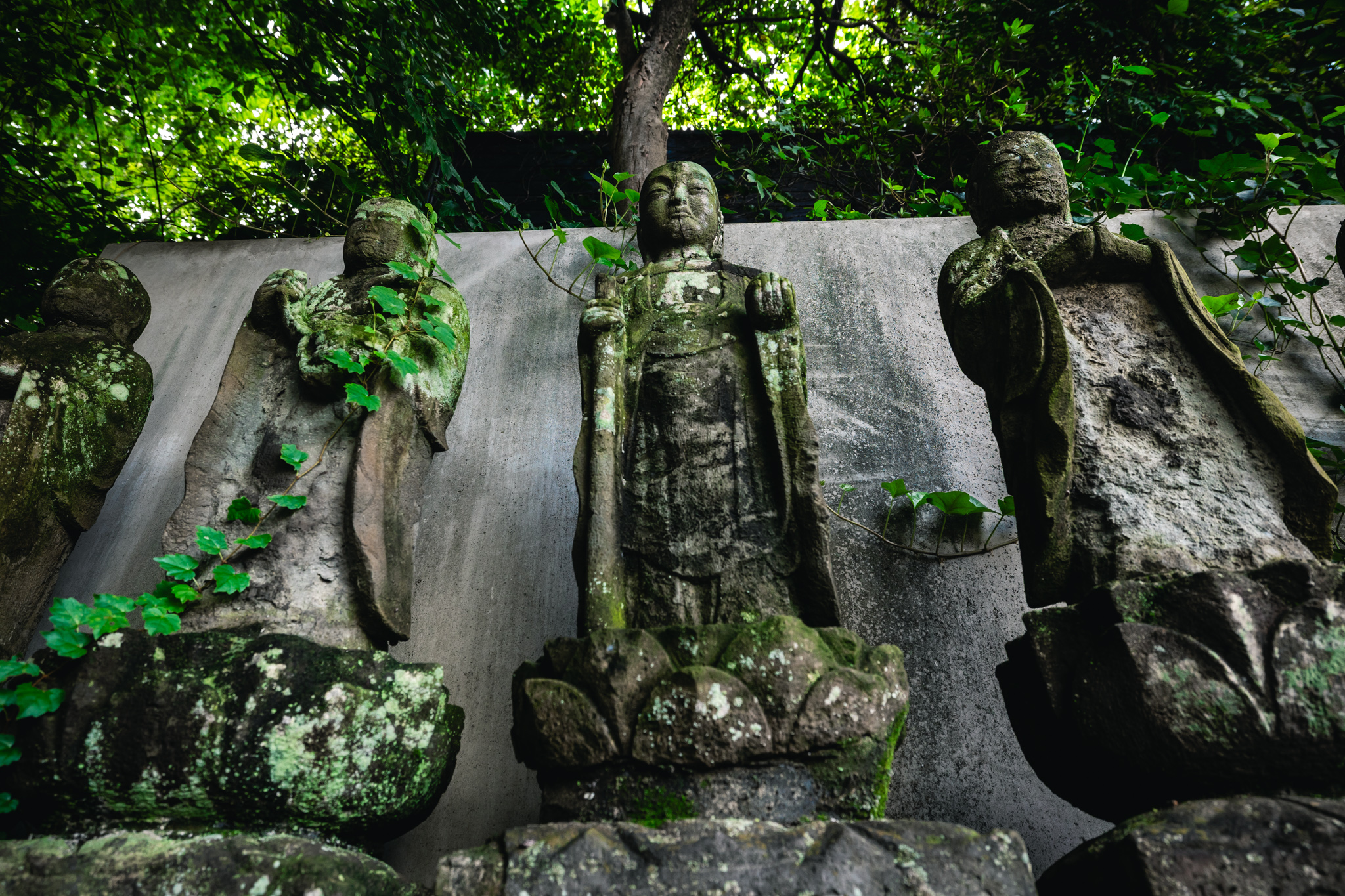
Under the leaves at the back of the cemetery, a few standing figures are edged with ivy. One still has a distinct expression; the face beside it has almost disappeared. The longer you look, the less interchangeable they become.
The cemetery backs onto the Yamanote Line, which runs on an embankment between Harajuku and Shibuya. Trains pass every few minutes.
In most Shibuya crowds, the faces keep changing. Here, that takes rather longer.
Visit this place
Location
Chōsenji Temple (慈雲山 長泉寺)
The stone figures are at the far end of the cemetery, behind the main hall
6-25-12 Jingumae, Shibuya City, Tokyo 150-0001, Japan
Practical Information
- Area
- Jingumae, Shibuya, Tokyo
- Address
- 6-25-12 Jingumae, Shibuya City, Tokyo
- Access
- About 5 minutes on foot from Meiji-jingumae ‘Harajuku’ Station
- Visitor note
- The stone figures stand at the far end of the temple cemetery. Please visit quietly and respectfully, and give priority to people visiting graves.
- Official website
- Chōsenji Temple
Information last checked: September 14, 2026 (official website, address and access only)
Conversation
Comments
Review pending commentsComments are reviewed before appearing. The internet already contains enough unattended surprises.
Checking comments…
Comments are not available in this migration preview yet. Existing comments remain on the current site.
Leave a comment