Echizen Daibutsu: One Man’s Very Large Idea
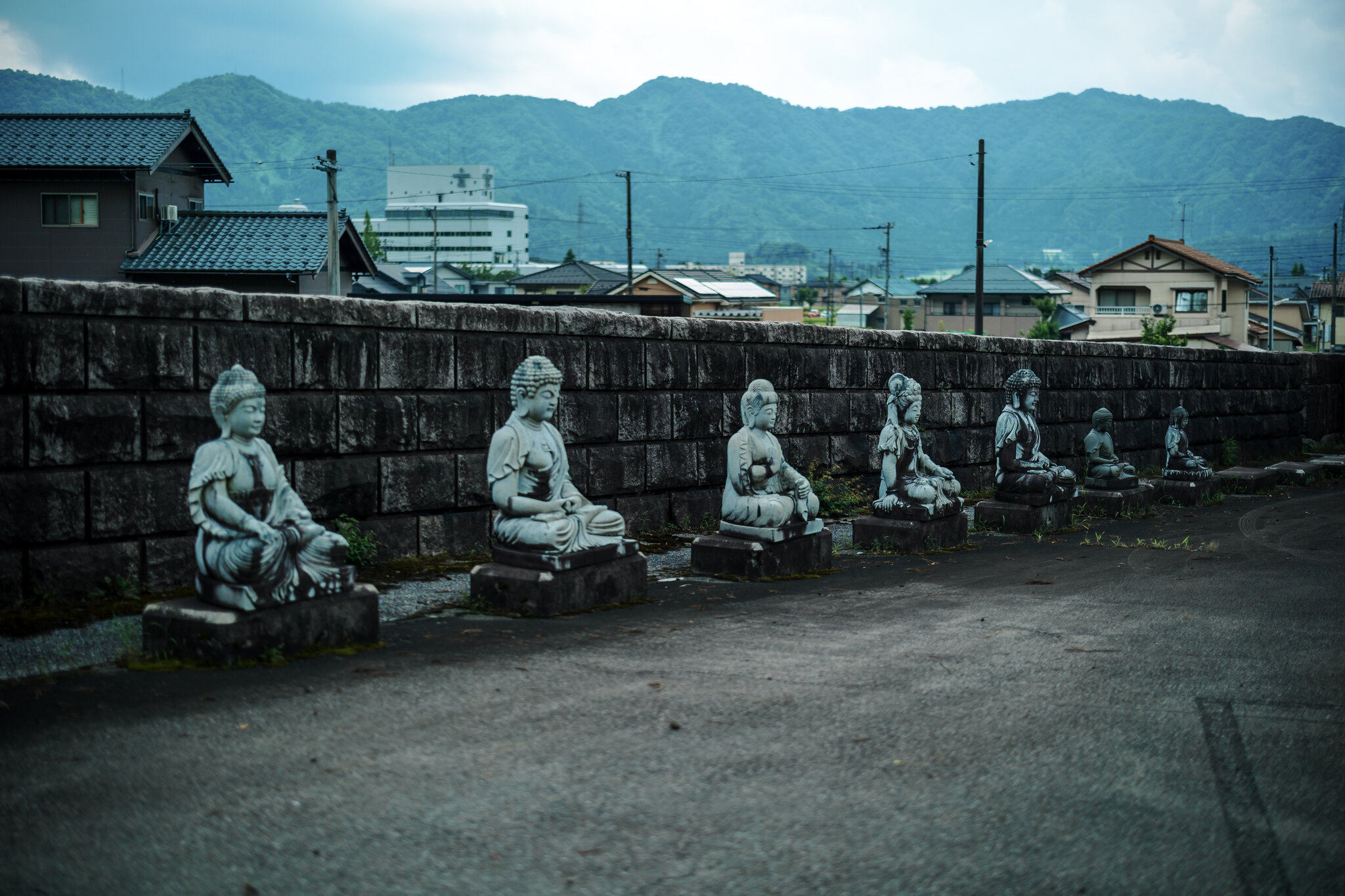
Outside Seidaiji in Katsuyama, small stone Buddhist figures sit in a row, with ordinary houses and wooded hills behind them. Some hold their hands together; others rest theirs in their laps. Beyond them are tiled rooftops, windows and the familiar proportions of a residential street.
An entrance with ambitions
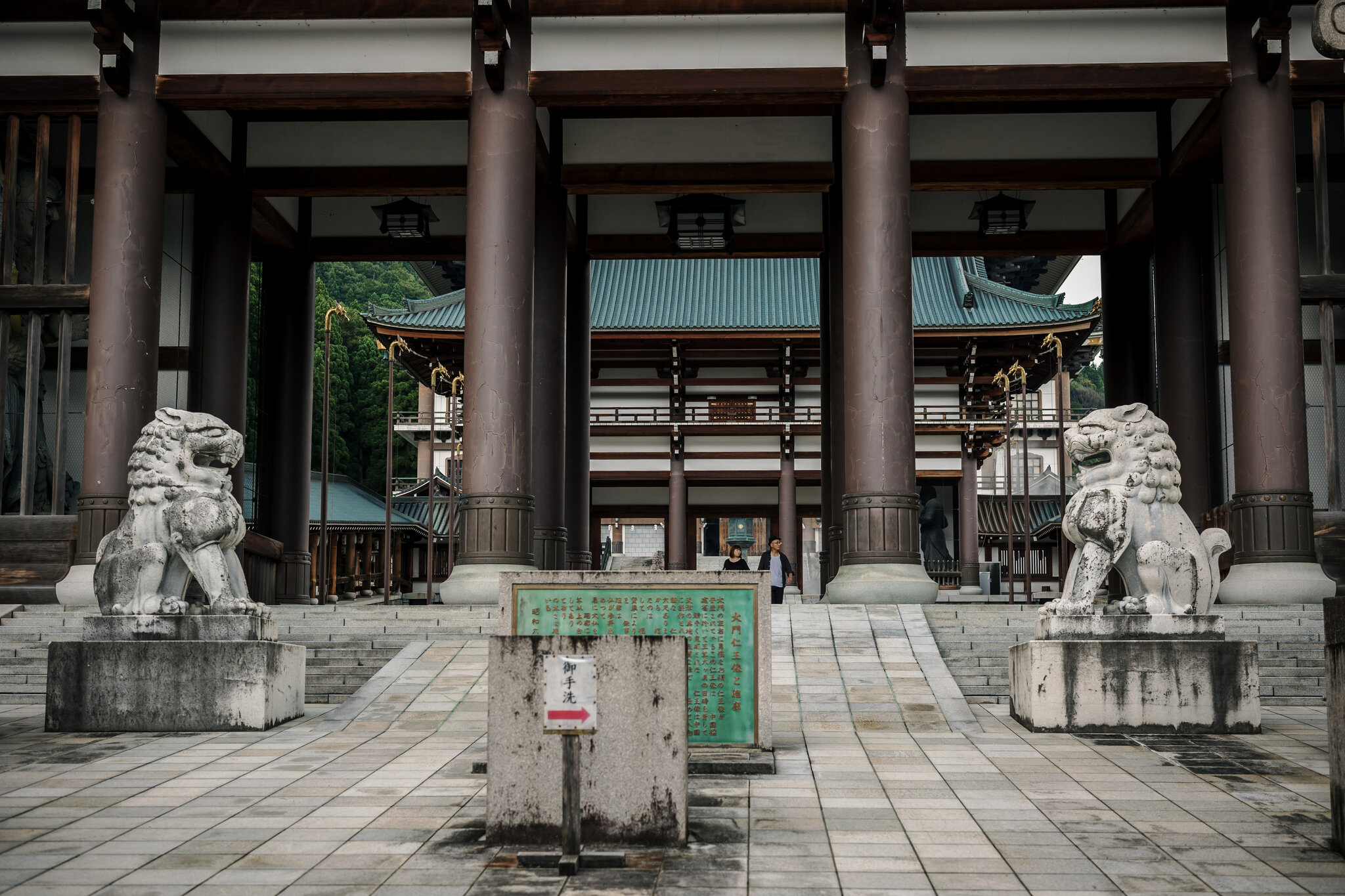
At the main gate, those proportions change. White stone lions flank the steps, enormous columns rise beneath the roof, and the people passing between them provide a useful reminder of how large a person normally is. Through the opening, another gateway waits beyond.
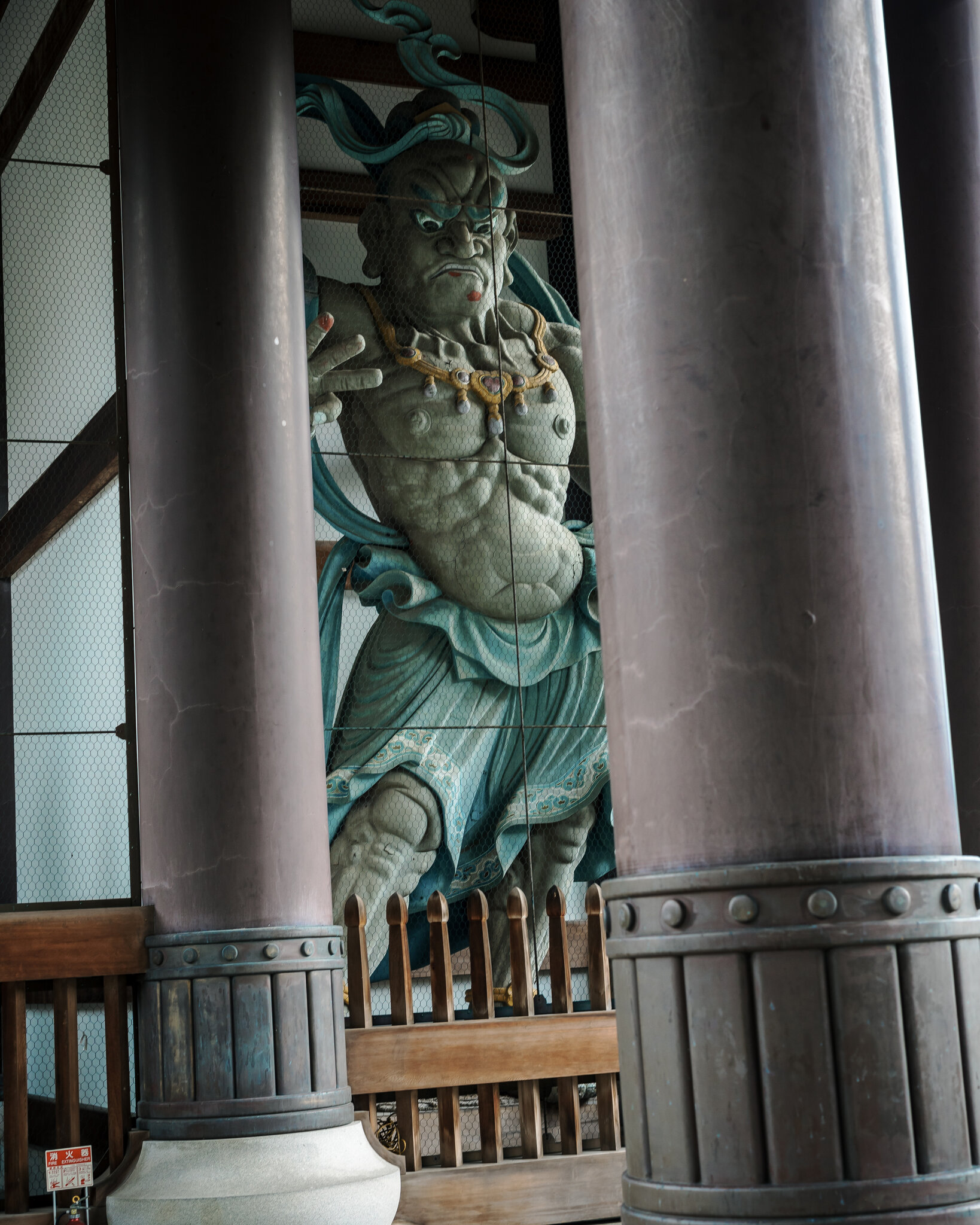
This is the home of the Echizen Daibutsu, the Great Buddha of Echizen, in Fukui Prefecture. A muscular Niō guardian stands between the gate’s columns, partly hidden behind them. He and his partner on the other side were made in China, a job that took three and a half years, before being shipped to Fukui. He has the expression expected of someone employed to keep evil out, rather than welcome coach parties in.
A temple from 1987
For all its monumental gates and traditional roofs, Seidaiji was inaugurated in 1987.
The centuries of history suggested by the entrance turn out to fit comfortably within a human lifetime.
Behind it was a businessman named Kiyoshi Tada, whose family had left Katsuyama for Osaka after the family business collapsed when he was a small child. His working life took him through shop work and dock labour before he became a taxi driver and, eventually, the founder of Sōgo Taxi.
The temple was a project of his later years, back in the town his family had left. What took shape here was an entire setting for worship: gates, a vast hall, a pagoda and Buddhist figures by the thousand. The cost has been reported at ¥38 billion.
It was not his only very large idea in Katsuyama. Katsuyama Castle Museum, another of his projects, opened in 1992, housed in a castle-keep-style building billed as the tallest in Japan, at 57.8 metres. Katsuyama Castle, historically, never had a keep.
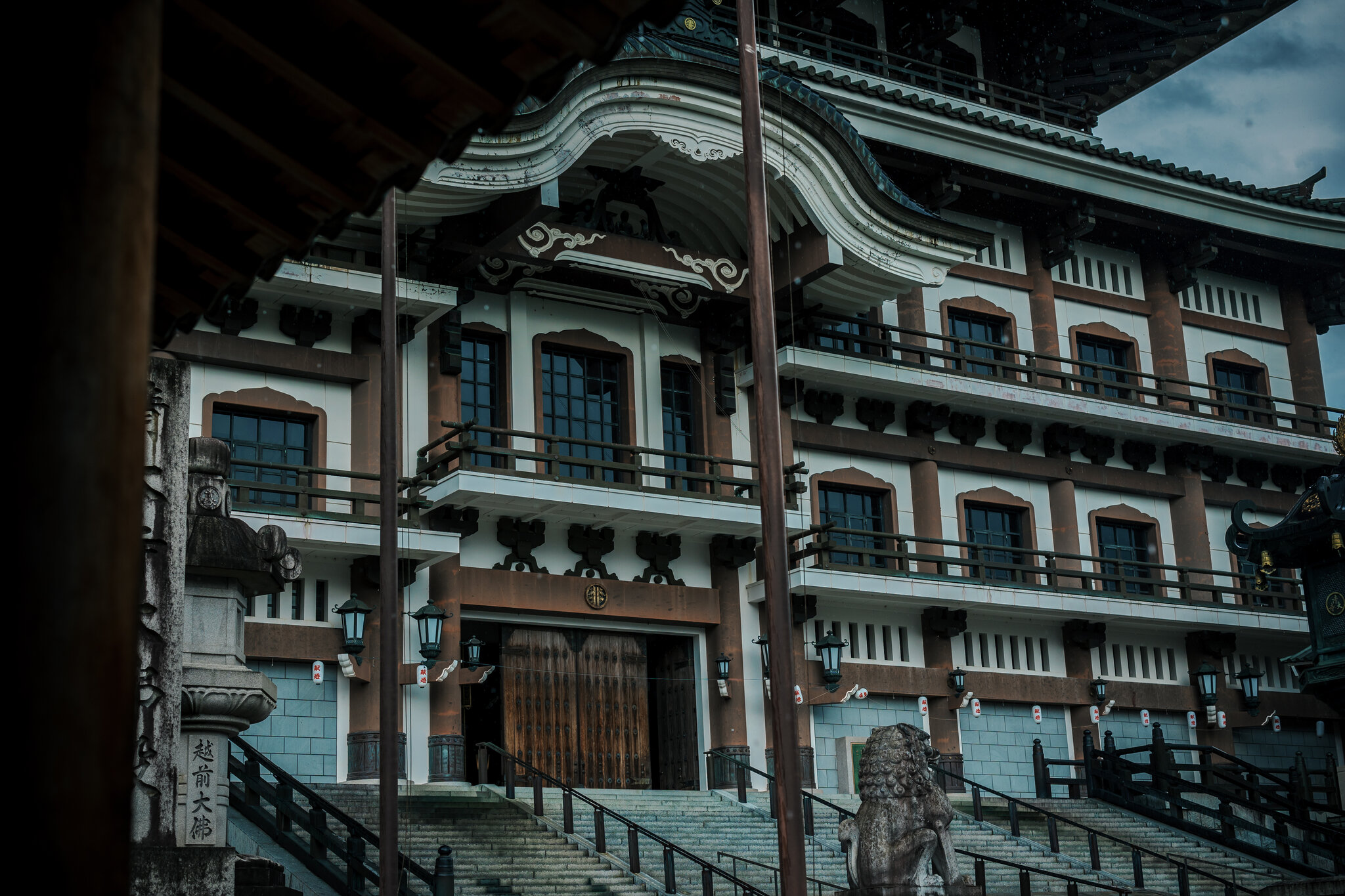
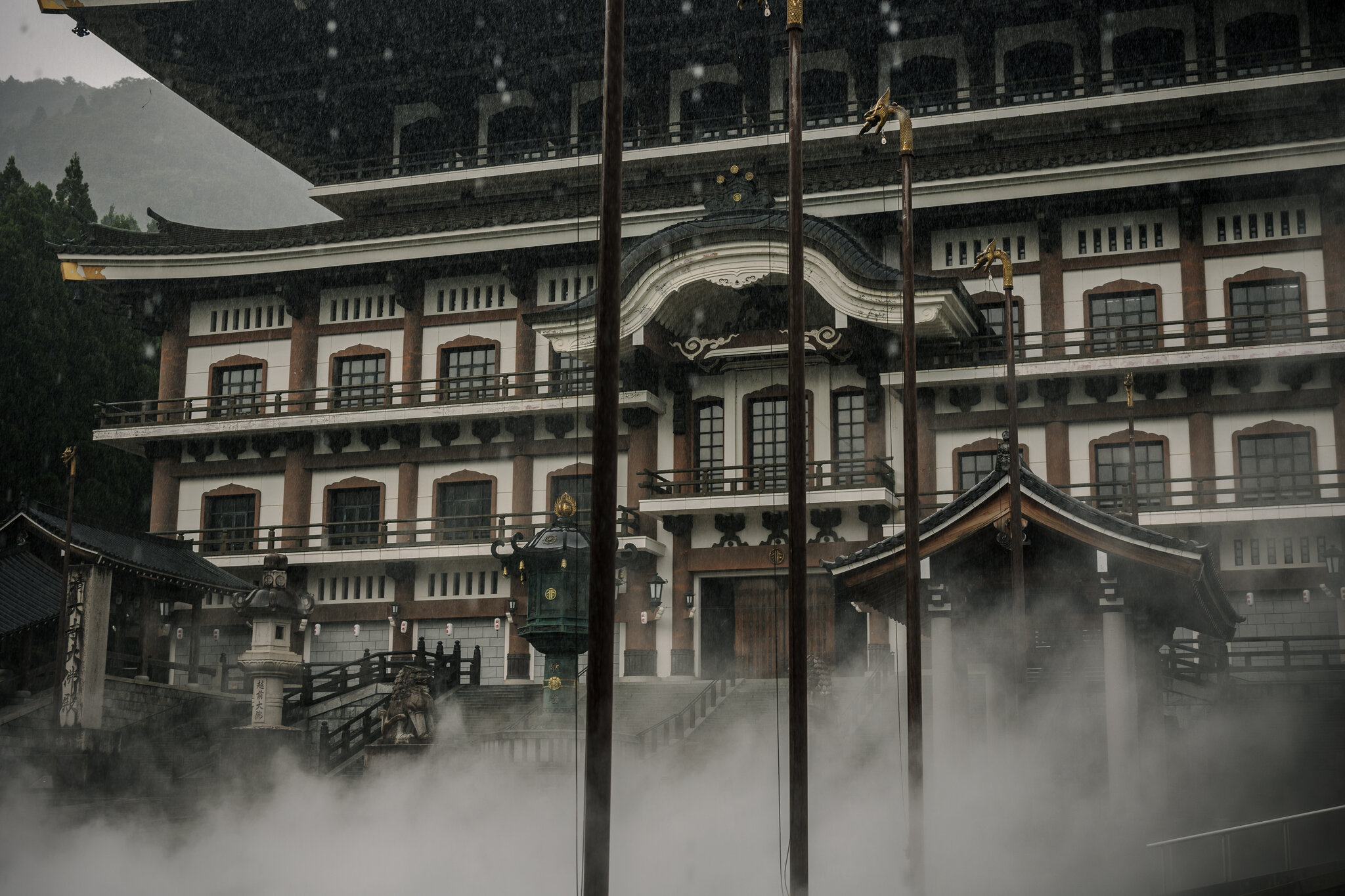
Seidaiji now belongs to the Myōshinji branch of Rinzai Zen Buddhism. Beyond the gates, covered corridors frame a courtyard facing the Great Buddha Hall. Brown pillars divide its white walls into bays, and each bay has arched windows and a railed balcony. From the courtyard, it looks less like a temple hall than a grand hotel. The approach leads towards the central entrance and the seated figure inside.
In considerable company
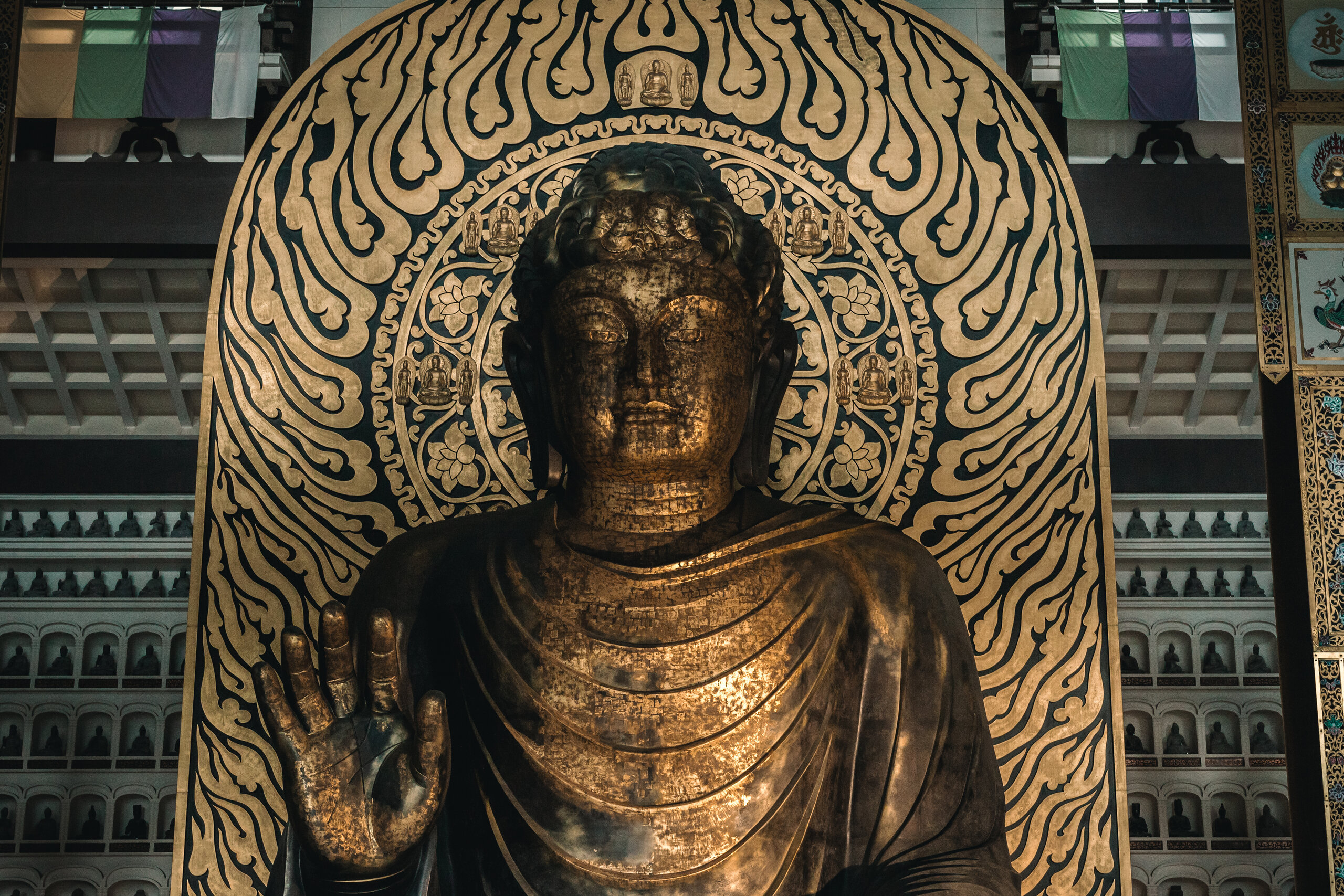
The Buddha sits against a huge gold-and-black halo. His face is dark, with gold catching on his cheeks and across the folds of his robe. One hand is raised; the other rests open above his lap. Down near the base, small candle flames burn among the lotus ornaments.
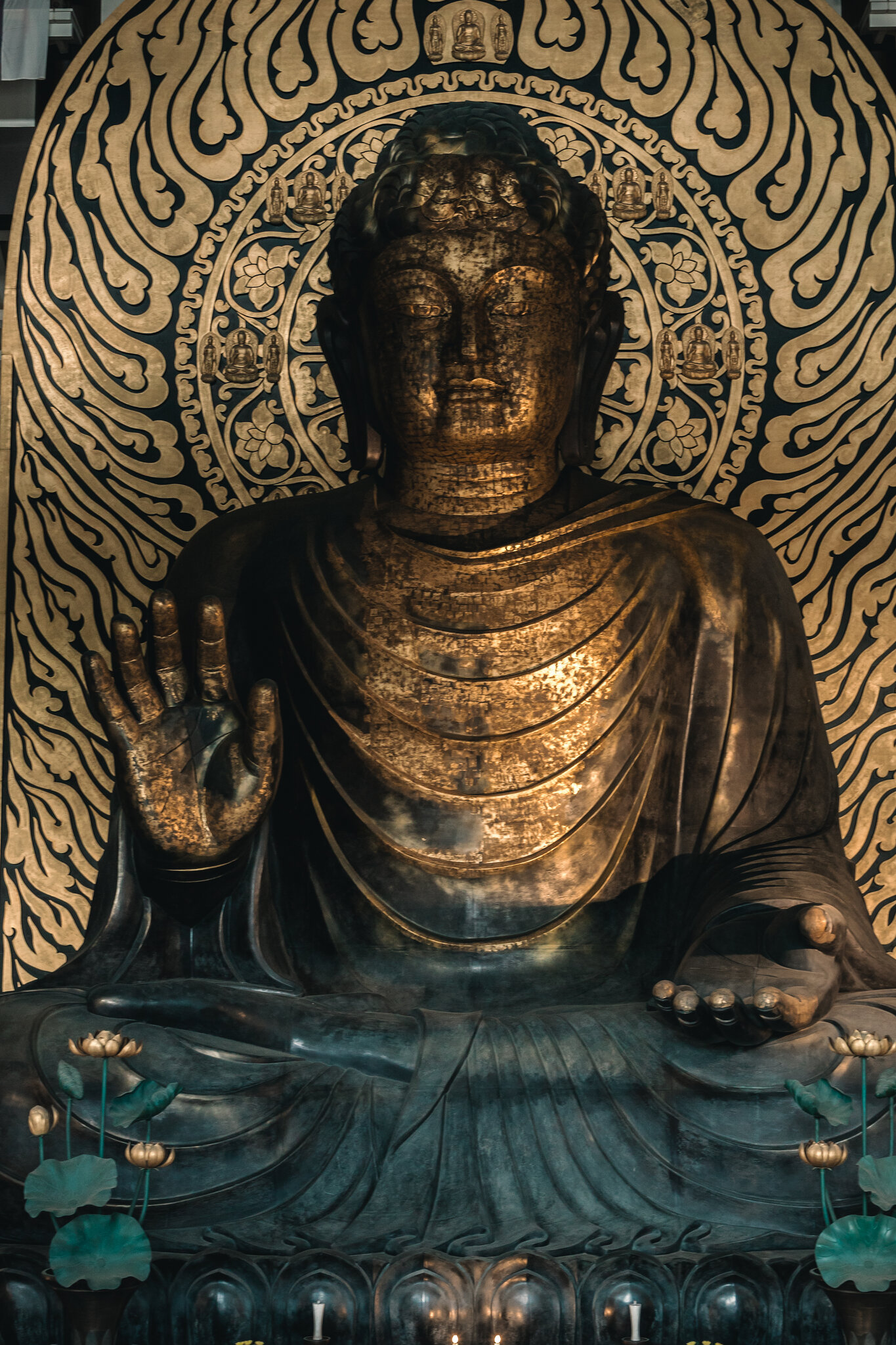
The figure represents Birushana Nyorai, also known as Vairocana, and measures seventeen metres in height while seated—more than two metres taller than the Great Buddha at Nara. His appearance takes its model from China: the great seated figure at Fengxian Temple in the Longmen Grottoes near Luoyang. Seidaiji’s recent construction draws on a much older Buddhist image, recreated here beneath a roof in Fukui.
The standing figures beside him initially seem like a useful point of comparison. They are smaller, certainly, but the four attendants themselves exceed ten metres in height.
Elsewhere, any one of them could reasonably expect to be the main attraction. Here, they stand to the side.
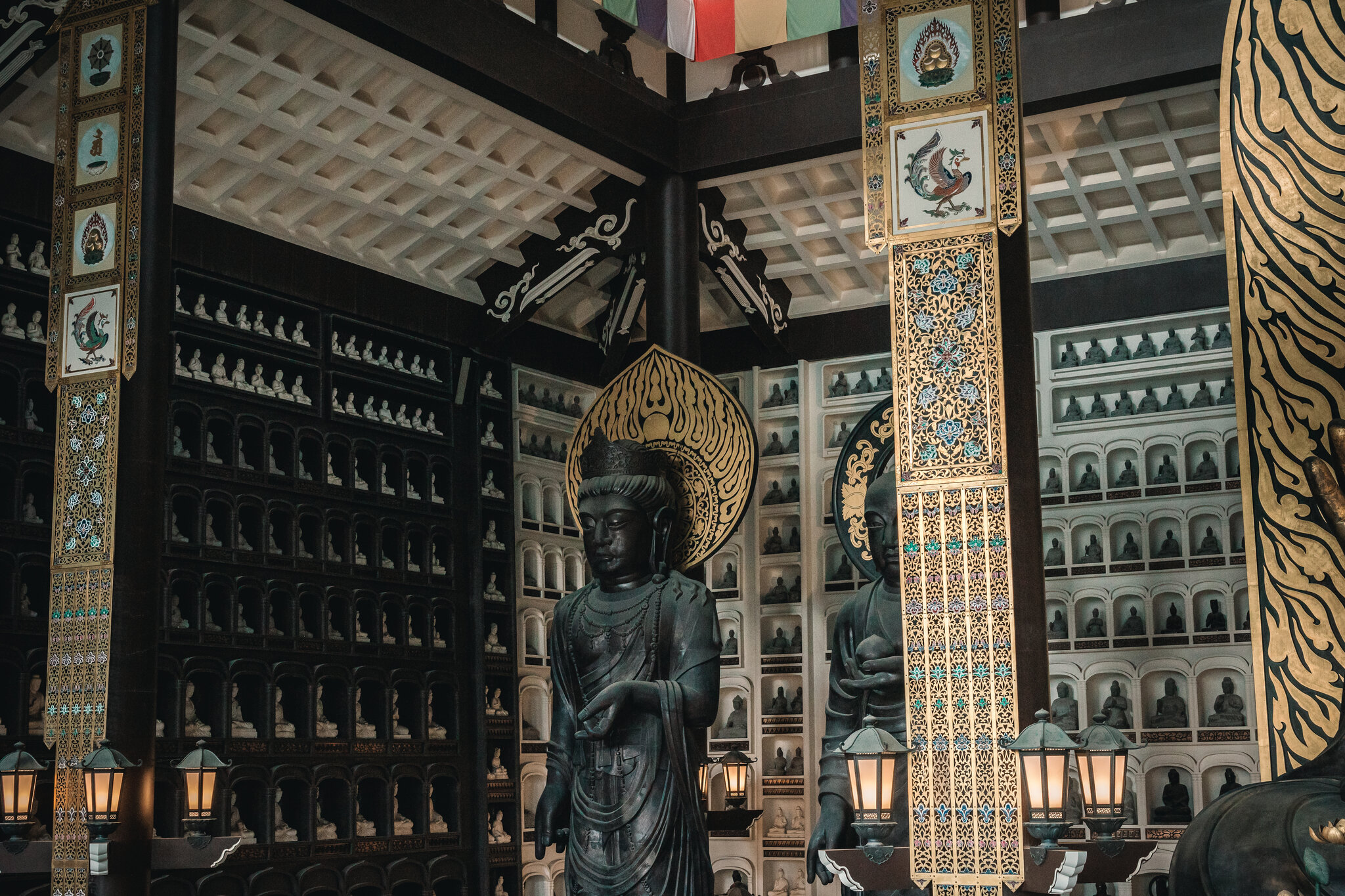
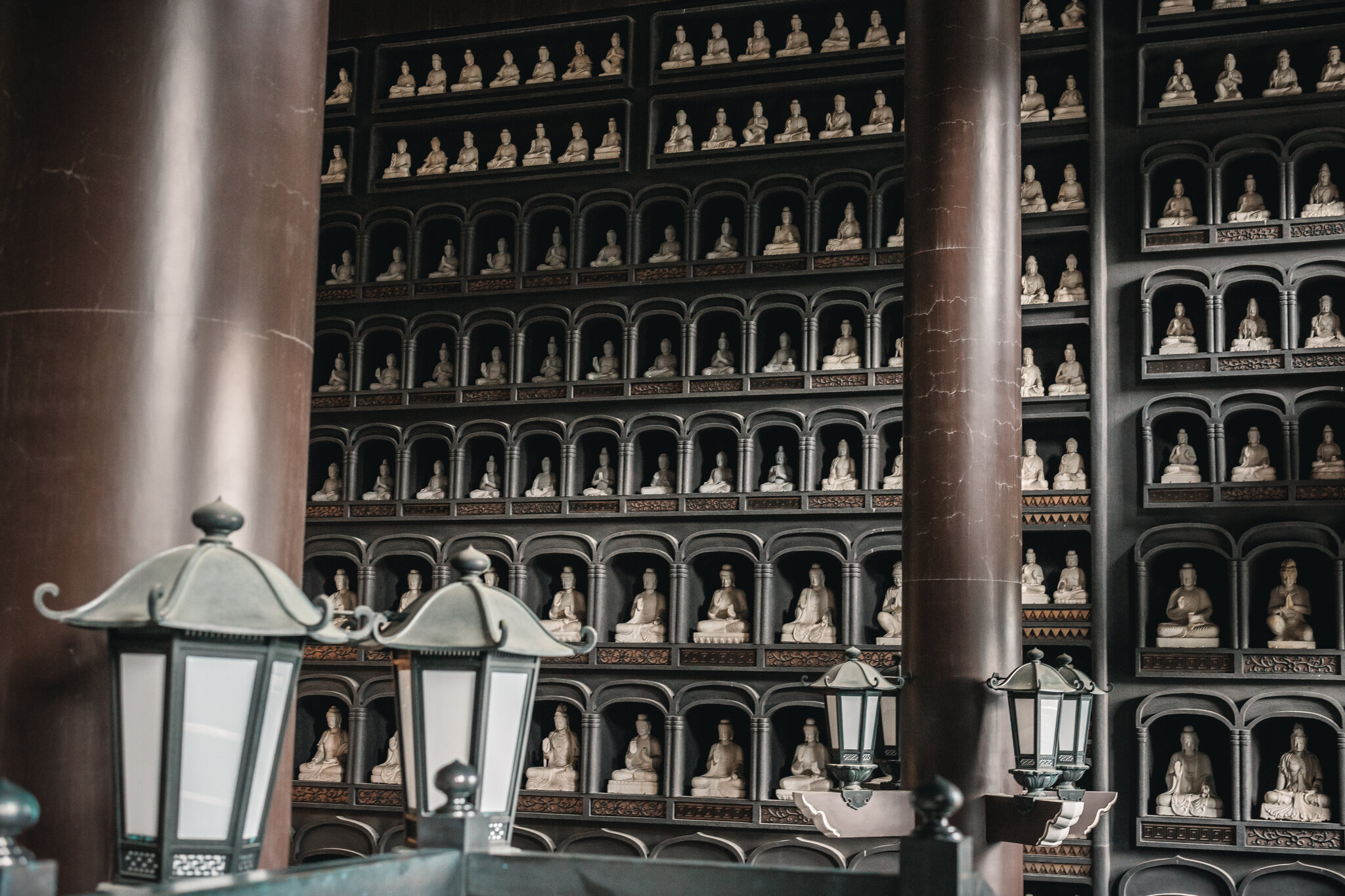
Then there are the walls. On three sides, 1,281 stone and metal Buddhist figures occupy rows of niches and ledges. Near the floor, individual postures are easy to pick out. Higher up, the figures become a repeating pattern, interrupted by columns and picked up again on the next stretch of wall. Looking away from the main Buddha does not mean looking away from Buddhas.
The pale niches make the darker figures stand out, while gold ornaments hang in front of them and lanterns glow below. From an angle, these layers overlap: a crowned head, a strip of intricate gilding, another wall of seated figures beyond. The main Buddha’s hand remains at the edge of the view, but now there are faces to pick out behind it, above it and across the room.
A place for the three poisons
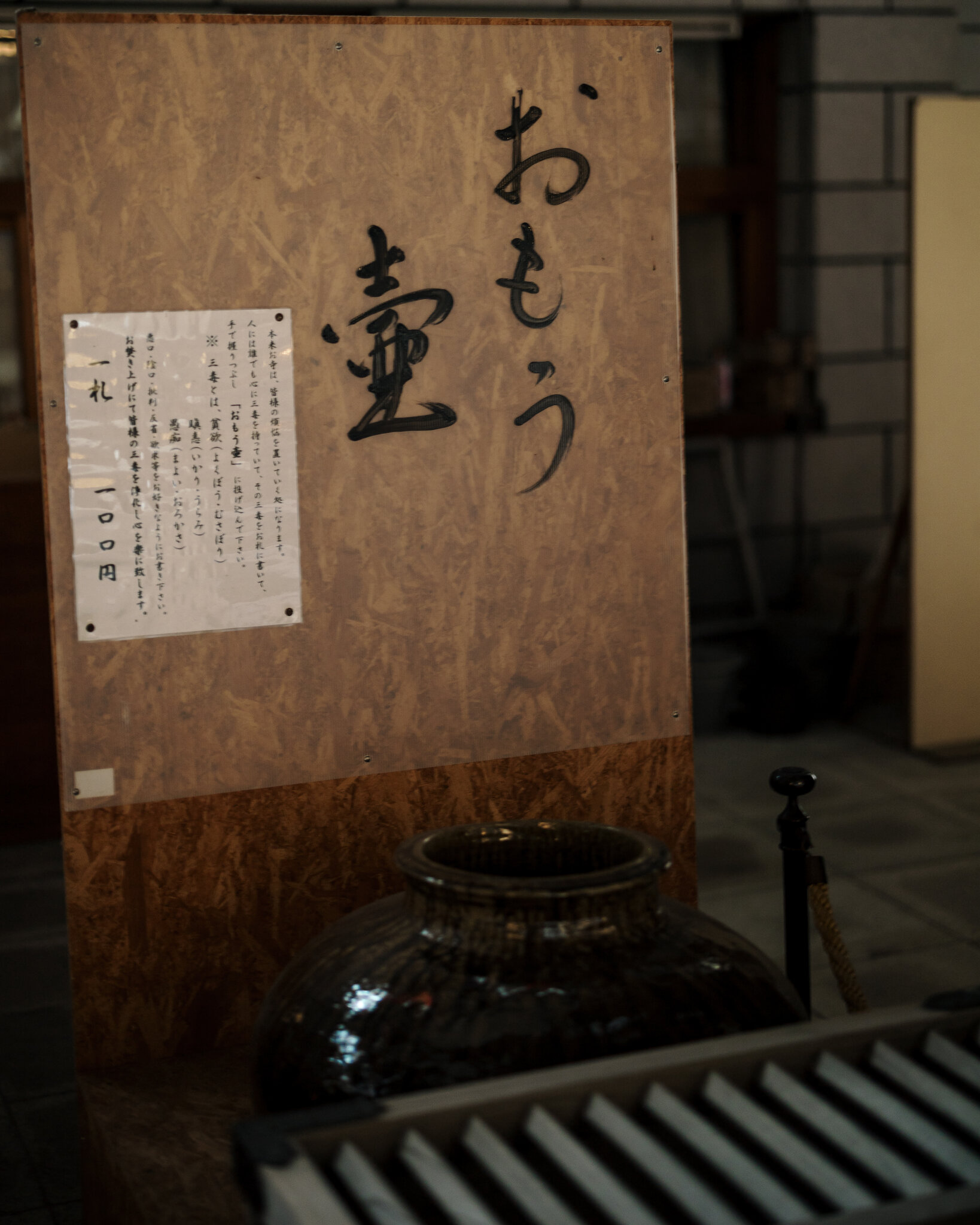
Among all this, a much smaller object offers visitors something to do with their own less serene thoughts. A wooden sign reads omou tsubo, beside a large jar. In Japanese, omou tsubo means things going exactly as someone intended; to fall into someone’s omou tsubo is to play right into their hands. Here, tsubo—a pot or jar—has also been supplied literally.
The instructions explain the Buddhist “three poisons”: greed, anger and delusion. Visitors are invited to write these faults on a slip, crumple it in their hand and throw it into the jar. At the time of my visit, a slip cost ¥100. There is no requirement to arrive free of faults. The jar rather depends on the opposite.
Outside the hall
Back outside, the five-storey pagoda draws the view away from the Great Buddha Hall. Beyond the buildings, the wooded hillside is still visible through the rain.
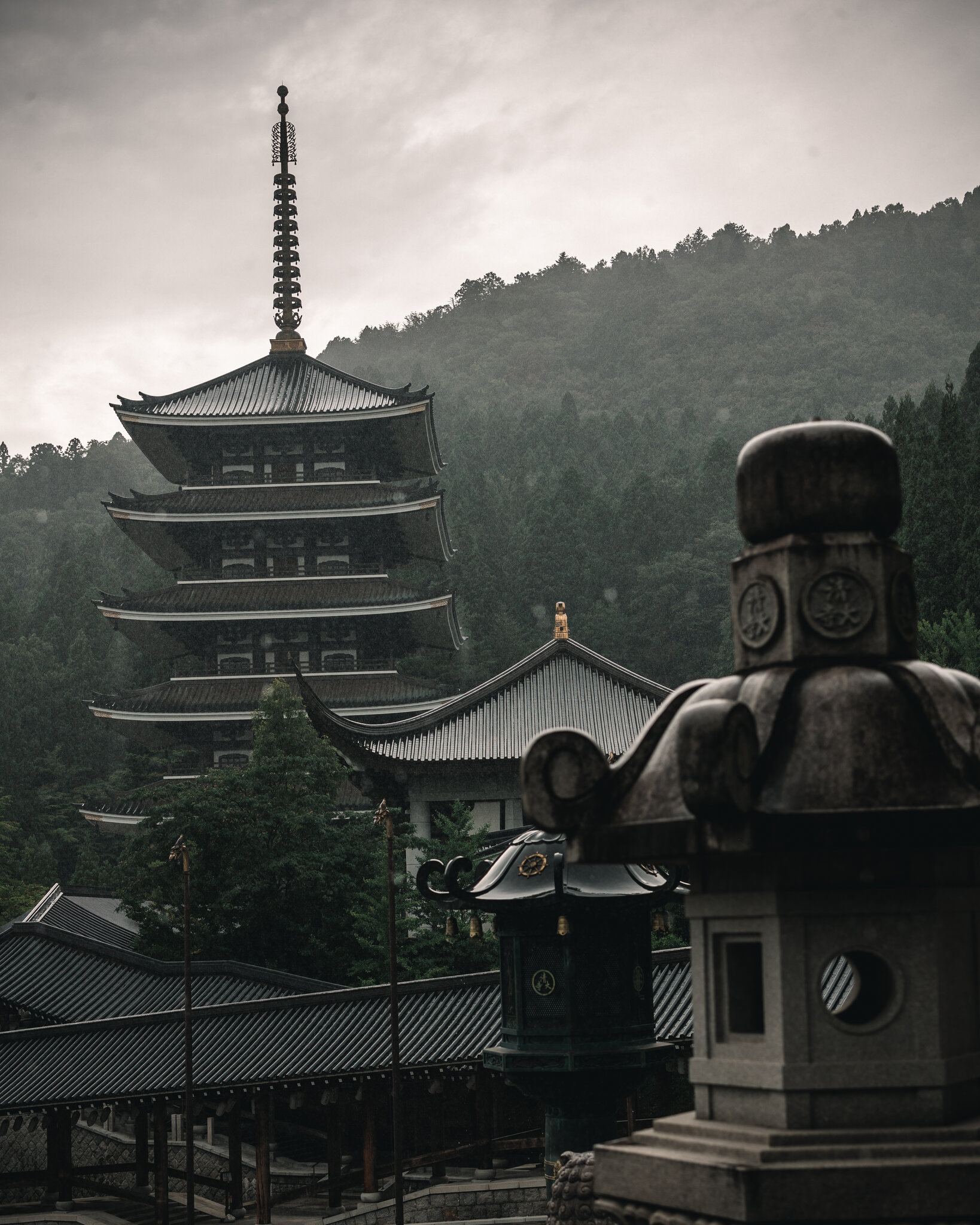
At 75 metres, the pagoda is billed as the tallest in Japan. In 2007, over unpaid taxes owed by the former operating companies, the city of Katsuyama put it and other property up for public auction. No buyer came forward, then or in later auctions. By 2018, the city had written off about ¥4 billion in unpaid city taxes. There was, it turned out, no market for a 75-metre pagoda.
In the courtyard, white mist spreads behind a row of stone figures, softens the bases of the columns and gathers around the steps of the Great Buddha Hall. The roofs remain solid and dark above it. Beneath them, the ground begins to disappear.
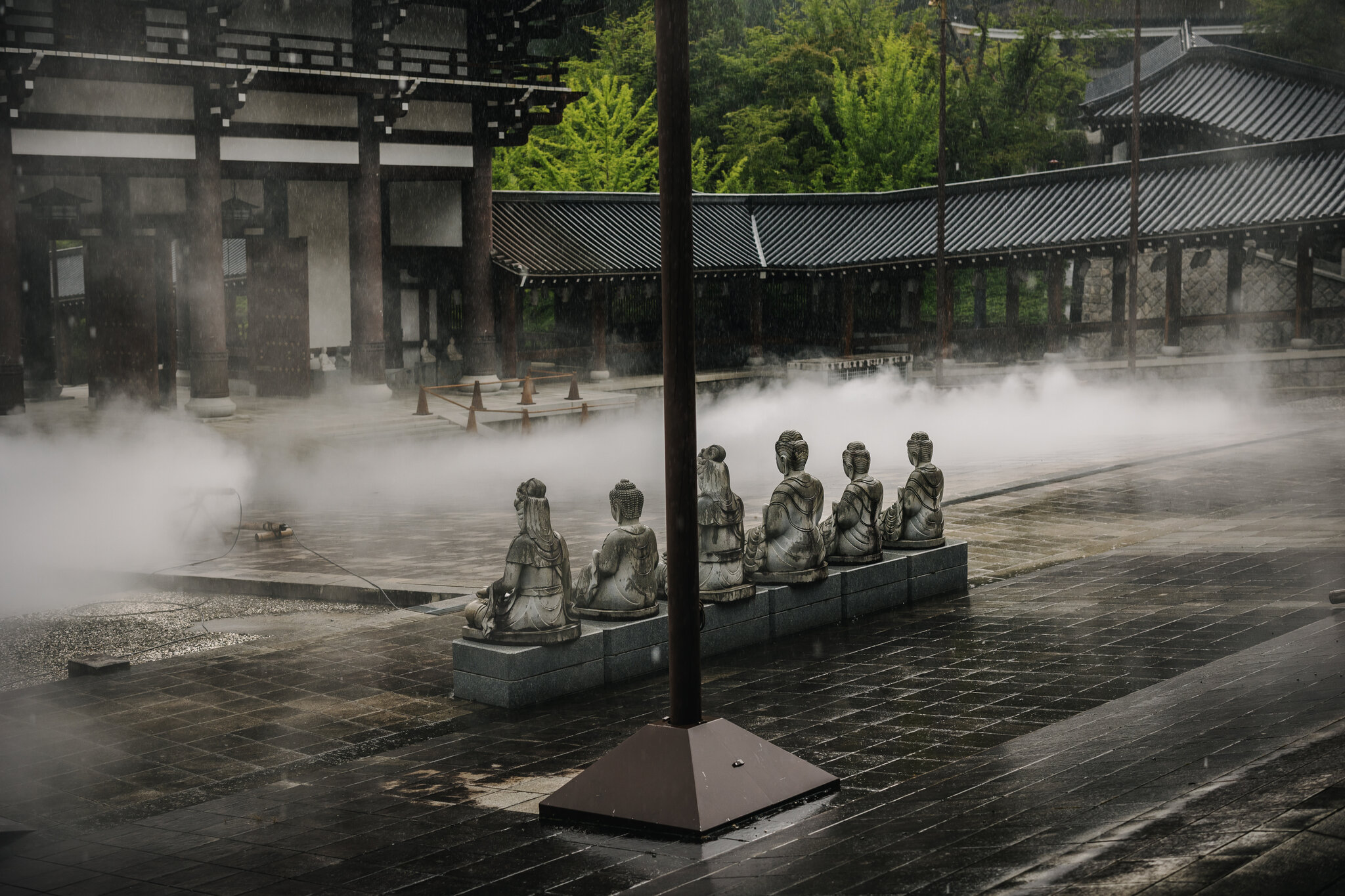
The mist is provided by the temple: an artificial “sea of clouds” for special morning and late-afternoon viewing sessions, offered since 2023.
Rain falls through the scene as well, streaking past the eaves and shining on the paving.
The clouds have a timetable. The rain is outside the temple’s jurisdiction.
Visit this place
Temple
Daishizan Seidaiji (Echizen Daibutsu)
Main gate and Great Buddha Hall at Seidaiji in Katsuyama, Fukui. The pin marks the temple complex.
50-1-1 Katase, Katsuyama, Fukui 911-0811, Japan
Practical Information
- Area
- Katsuyama, Fukui
- Opening hours
- 8:00–17:00; January–March 9:00–16:00. Hours may change by season.
- Admission
- Regular admission — adults: ¥500; elementary, junior high and high school students: ¥300. During the sea-of-clouds season, regular admission applies from 9:00 to 16:00.
- Sea-of-clouds viewing
- 8:00–9:00 and 16:00–17:00, scheduled from April 23 to the end of November 2026, subject to weather and snow conditions. Adults: ¥1,000; elementary, junior high and high school students: ¥500, including admission.
- Parking
- Free; approximately 400 spaces
- Access
- About five minutes by taxi from Katsuyama Station; about one hour from JR Fukui Station by Echizen Railway.
- Official website
- Daishizan Seidaiji
- Viewing information
- Visitor information
- Seasonal schedule
- Katsuyama Tourism — 2026 sea-of-clouds schedule and fees
- Access information
- Access and directions
Information last checked: September 25, 2026 (regular admission and the published 2026 sea-of-clouds schedule and inclusive fees).
Conversation
Comments
Review pending commentsComments are reviewed before appearing. The internet already contains enough unattended surprises.
Checking comments…
Comments are not available in this migration preview yet. Existing comments remain on the current site.
Leave a comment