Enoshima's Fukuishi: The Stone That Tripped a Blind Man
There is a rule about a certain stone on Enoshima. Pick something up beside it, and good fortune follows.
The first man to find something there was blind, and he found it by falling over the stone. Most acupuncturists in Japan are still working with what he picked up.
The stone sits just above the gate of Enoshima Shrine, up the street of shops that climbs from the bridge.
A palace for a gate
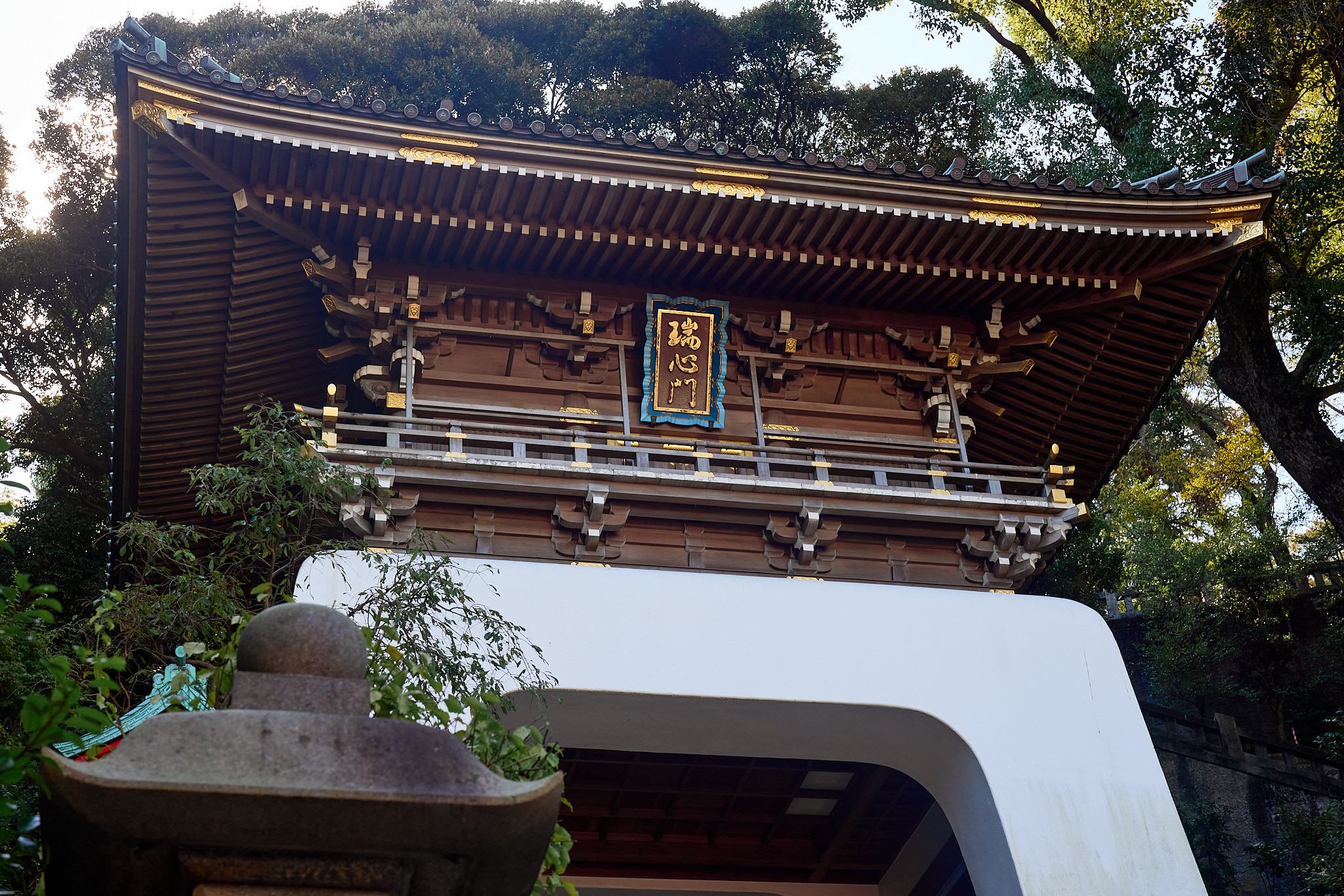
The gate is called Zuishinmon. Like the railway station across the bridge, it is modelled on the Dragon Palace, the palace under the sea in a Japanese folk tale. The white, rounded lower storey gives it away.
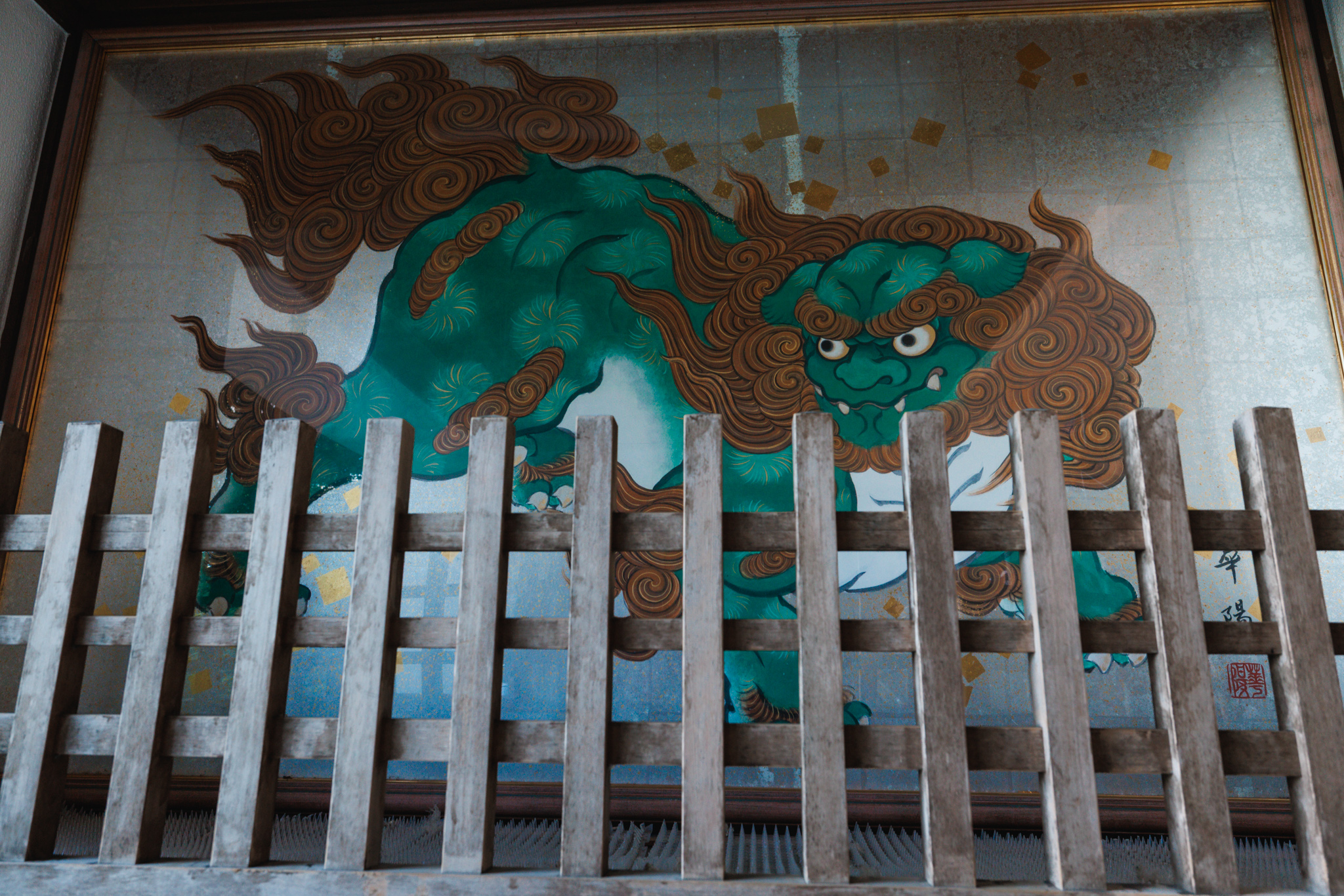
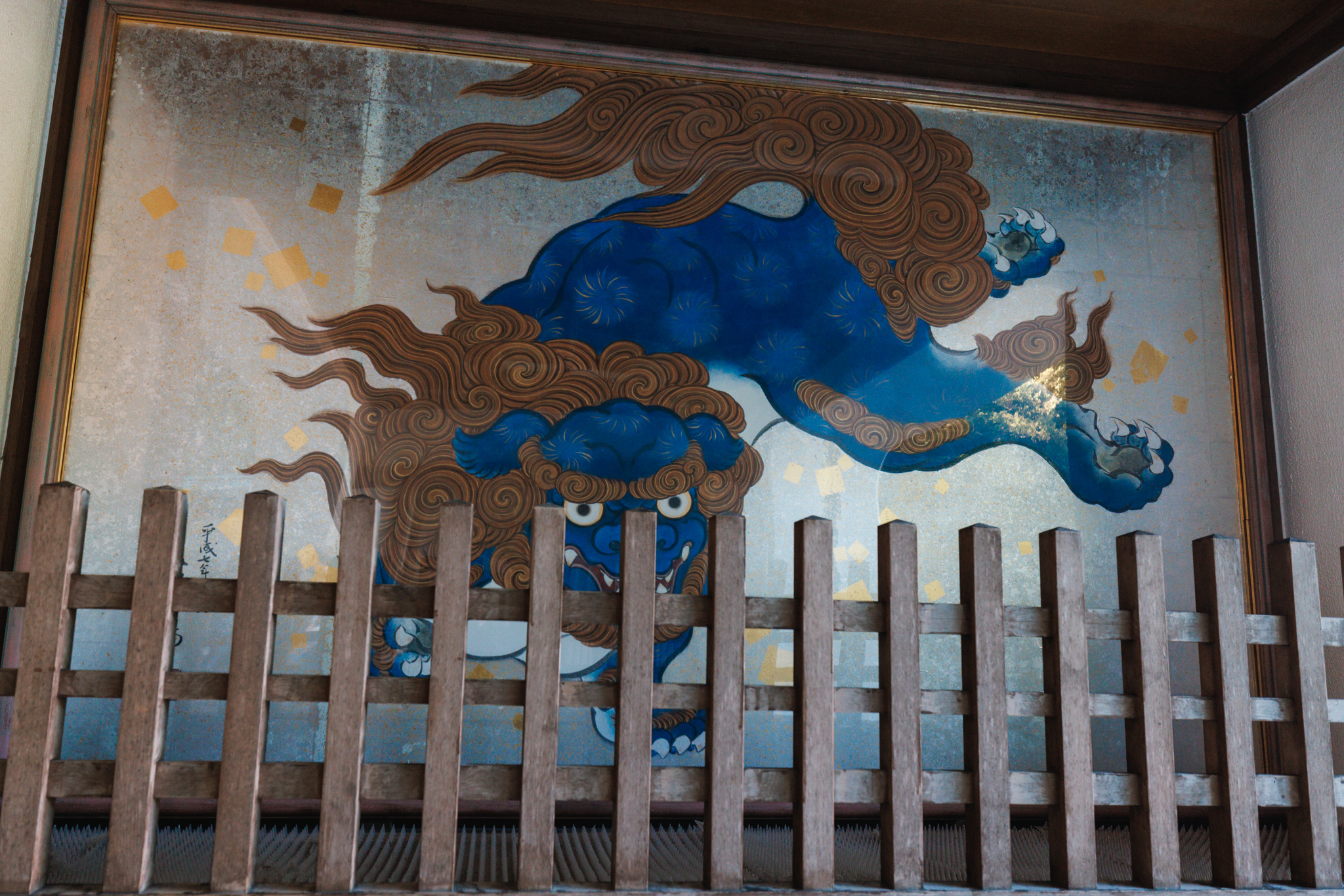
Inside, two Chinese lions face each other across the passage, one green and one blue. They are the work of Kataoka Kayō, who also painted the turtle on the ceiling of Okutsumiya, at the far end of the island.
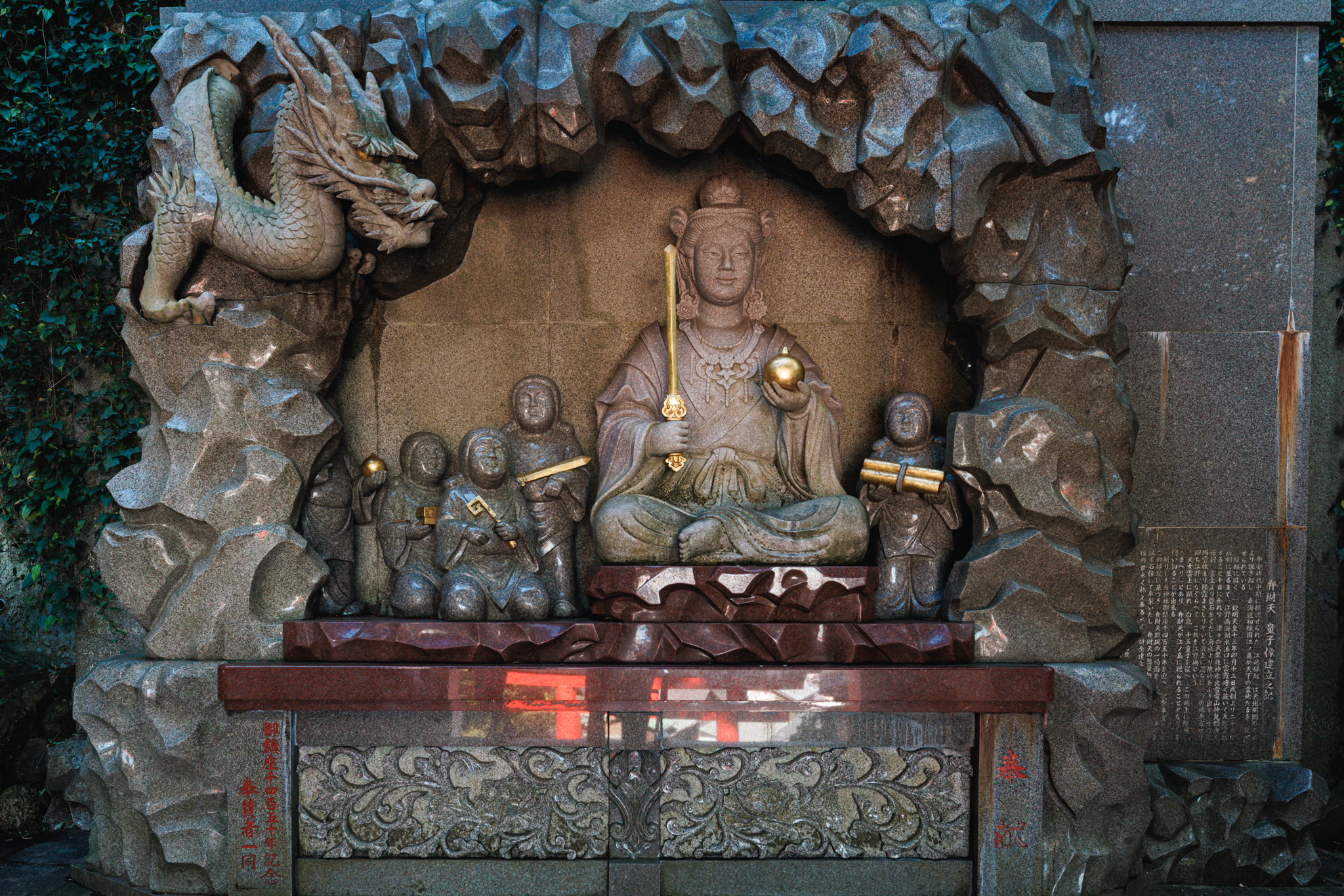
Just past the gate, the island's founding legend has been carved in stone: Benzaiten, the goddess Enoshima is best known for, arriving with her boy attendants and a dragon.
Lost and found
A few steps further up, on the right, a stone post marks the spot with two characters: 福石, Fukuishi, the Lucky Stone.
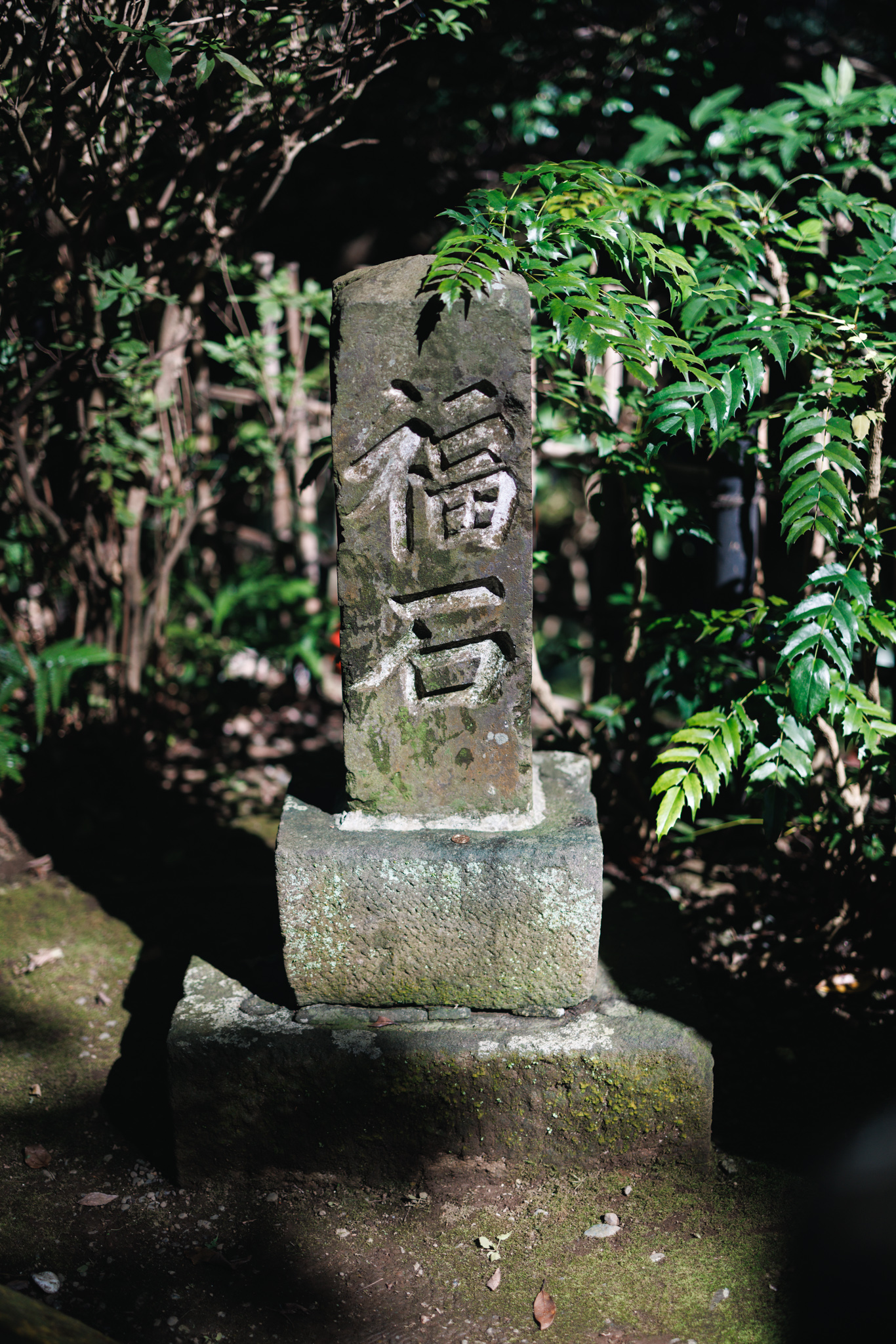
A sign nearby tells the story in four languages.
Sugiyama Waichi was born in 1610 and lost his sight as a child. He went to Edo, today's Tokyo, to train in acupuncture under a master. According to the sign, he was too clumsy to learn.
So he came to Enoshima, shut himself away and fasted for twenty-one days, praying to Benzaiten. On his way back on the final day, he tripped over this stone and passed out.
In a dream, the goddess appeared on a five-coloured cloud. As he put his hands together to pray, something pricked him. He woke, felt for it, and found a bamboo tube with a pine needle inside.
He had fallen over the answer.
From it, he worked out a way of guiding a fine needle through a slim tube and tapping it in. Ever since, the sign says, picking something up beside the stone has been thought to bring luck.
The shogun's question
The tube took him a long way. He treated the fifth shogun, Tokugawa Tsunayoshi, for an illness, and was made head of the guild of blind men across the Kantō region around Edo.
The shogun is said to have asked him what he wanted. He asked for one eye.
He was given land instead, in a part of Edo called Hitotsume. The word can mean “one eye”. Here it meant “the first one”: the district took its name from the first of a row of numbered bridges over a canal.
On that land, he set up a shrine to Enoshima's Benzaiten and a school where blind students trained in acupuncture and massage. It is often described in Japan as the world's first school for the blind. The shrine is still there, in Tokyo's Sumida ward.
He kept coming back to Enoshima to pray, even in old age, and set up stone signposts along the roads to guide pilgrims to the island. Some of them still stand. A blind man, putting up signs for people who could see.
The shrine at the bottom
Back on the island, the stone is on the way to Hetsumiya, the first of Enoshima Shrine's three shrines on the climb up the island. Because it is the lowest of the three, it was once known as the Lower Shrine. Its goddess is one of three sisters; the other two have the shrines further up.
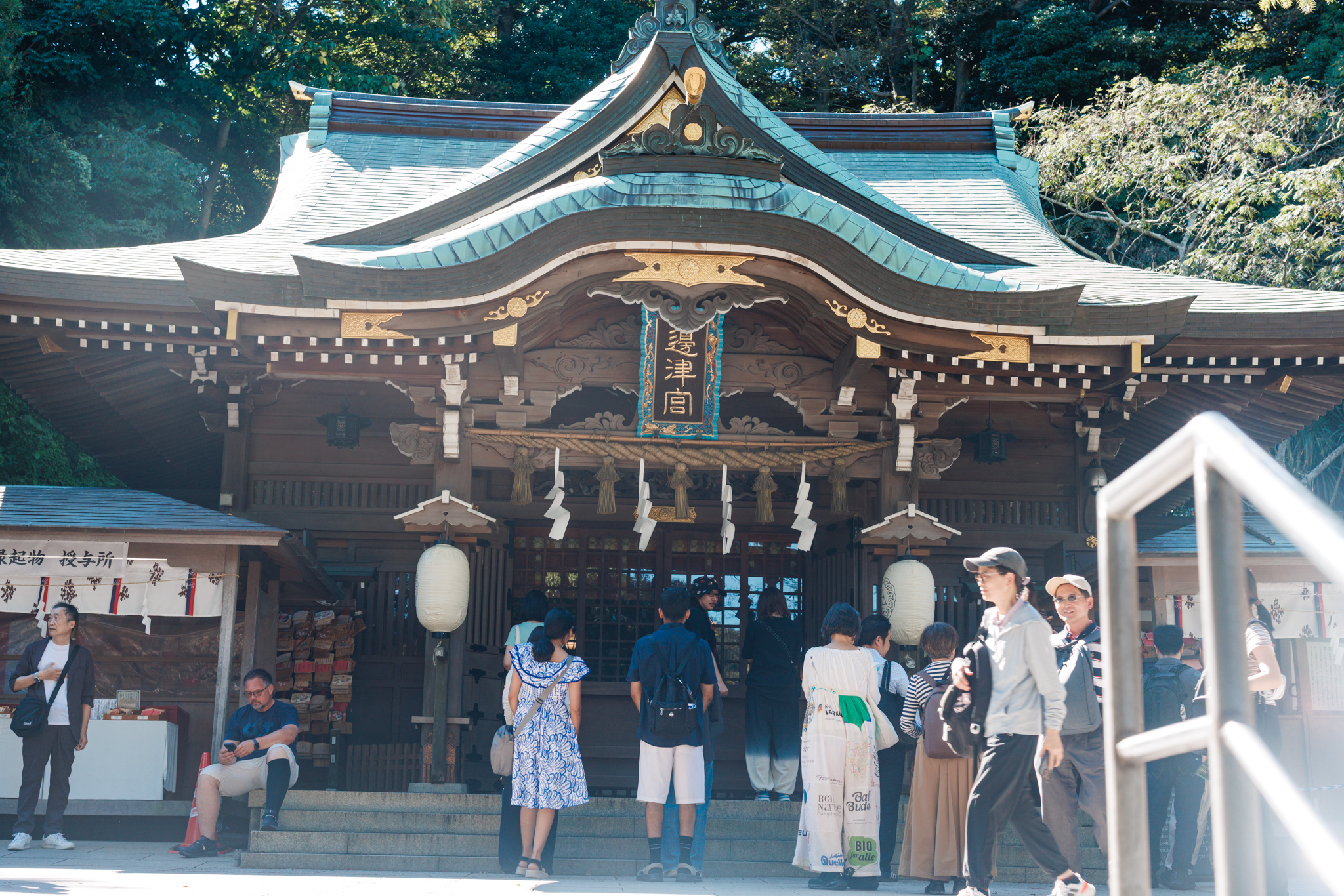
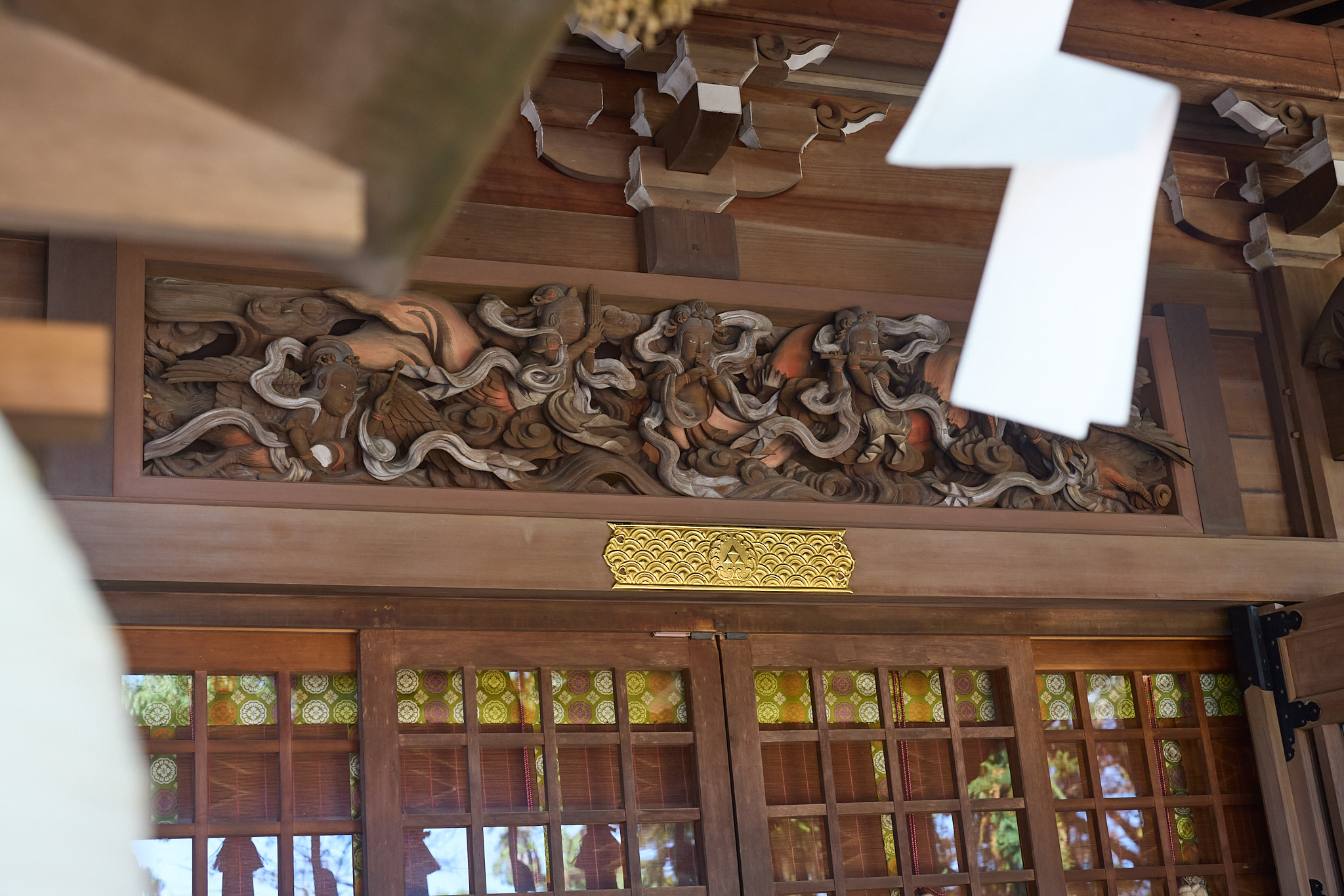
Over the doors, carved musicians drift among the clouds, playing flutes. Benzaiten is also a goddess of music, so the band is well chosen.
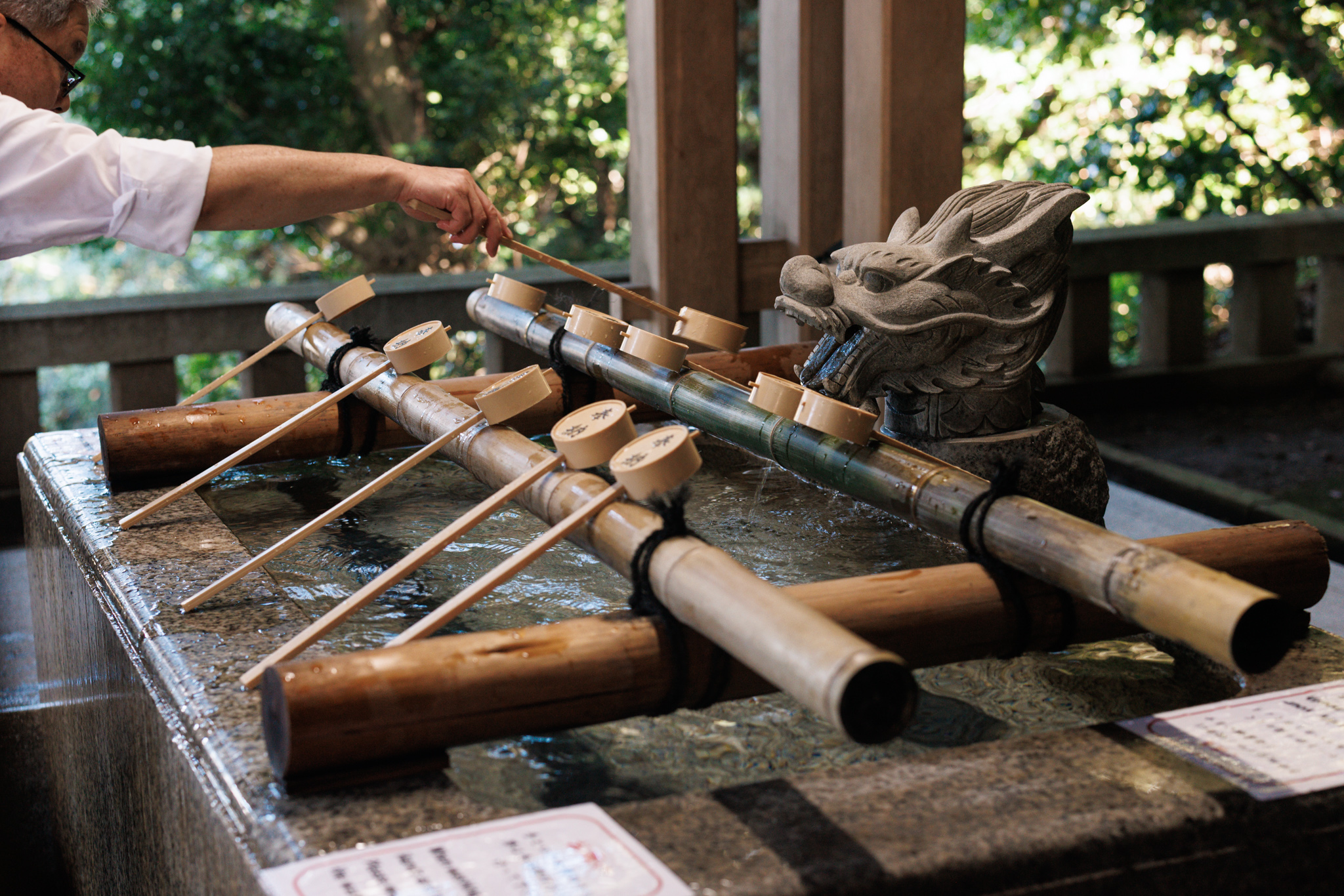
The grounds around the shrine are full of other ways to ask the goddess for things: washing coins, writing a single character on a white snake. Those belong to another story.
Hands on
Beside the Lucky Stone sits a bronze statue of Sugiyama, eyes closed, a tube and a needle in his hands.
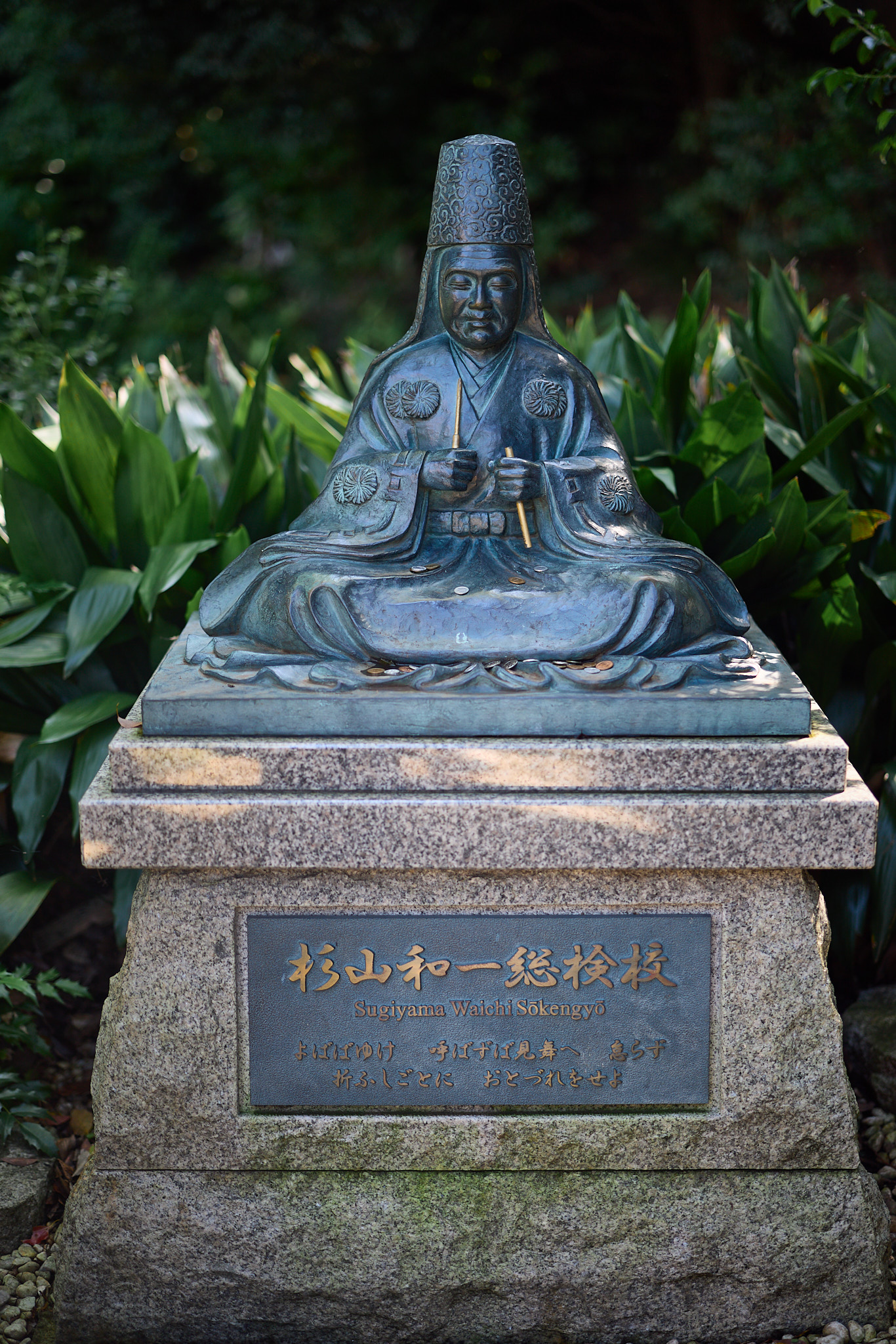
A sign from the local association of acupuncturists and masseurs lists what he can help with: wishes coming true, recovery from illness, success in study, progress in the performing arts, and the advancement of acupuncture and massage as a field of study.
It also explains how to ask. Touch the part of him that matches the part of you that is giving you trouble.
My eyes aren't great. I touched his.
He once asked a shogun for one eye. Now people come and ask him about theirs.
Visit this place
Location
Fukuishi (Lucky Stone), Enoshima Shrine (江島神社 福石)
In the grounds of Enoshima Shrine, a few steps above Zuishinmon gate on the right, on the way up to Hetsumiya.
2-3-8 Enoshima, Fujisawa, Kanagawa 251-0036, Japan
Practical Information
- Access
- About 15–20 minutes on foot from Katase-Enoshima Station (Odakyu Enoshima Line), across the bridge and up the shrine approach and steps
- Admission
- Free (the grounds). Hōanden, the hall of Benzaiten statues next to Hetsumiya, has a separate admission fee.
- Visitor note
- The Lucky Stone marker and the statue of Sugiyama Waichi are on the right, a few steps above Zuishinmon gate. A sign by the statue invites visitors to touch it.
- Official website
- Enoshima Shrine — grounds guide (Japanese)
Information last checked: October 26, 2026 (location, access time from Katase-Enoshima Station and admission).
Conversation
Comments
Review pending commentsComments are reviewed before appearing. The internet already contains enough unattended surprises.
Checking comments…
Comments are not available in this migration preview yet. Existing comments remain on the current site.
Leave a comment