Enoshima Iwaya Caves: The Candle Is Still Lit
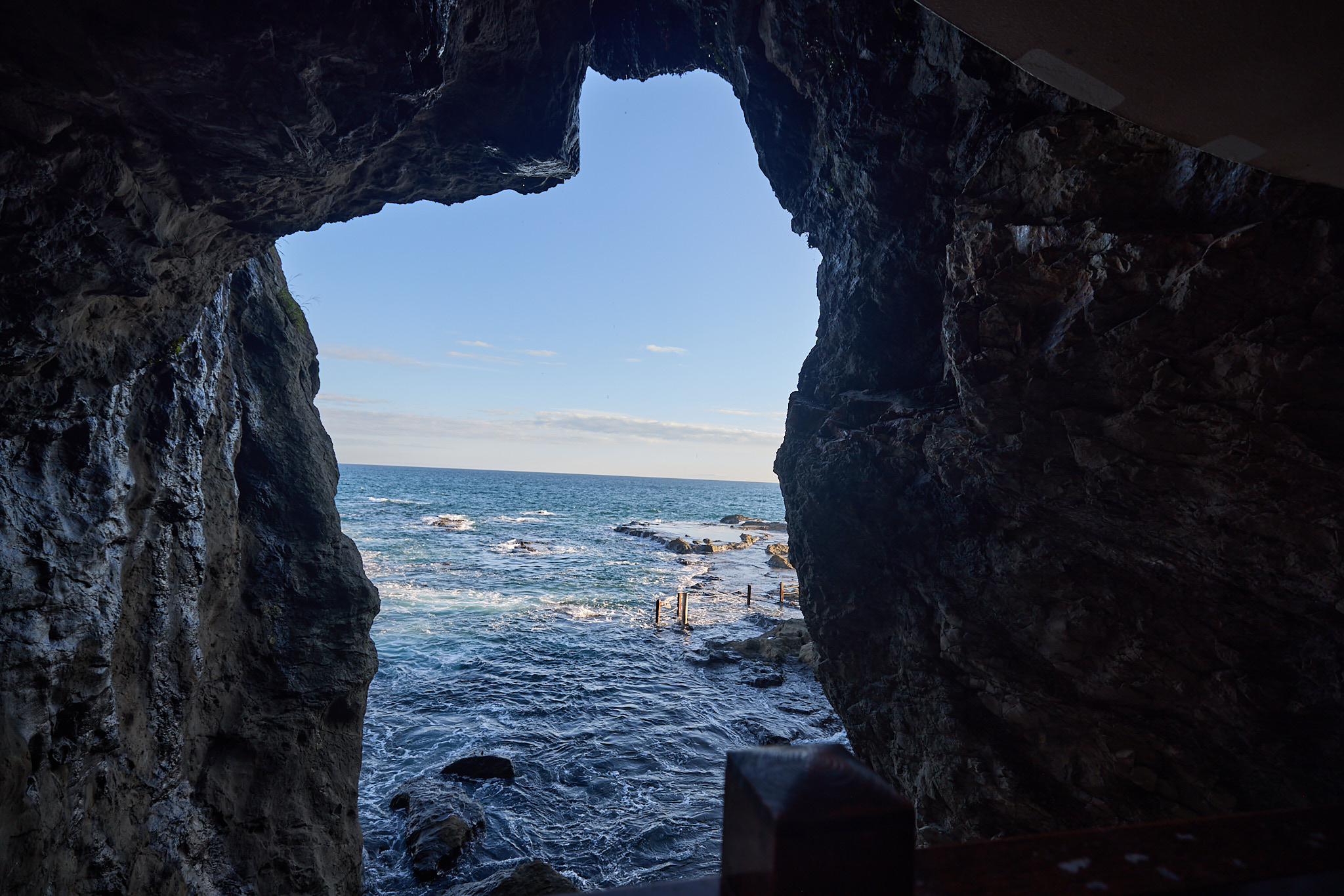
The wind from the open sea
sets the candle flickering,
and in its light
the drops go scattering:
the cave of Enoshima.
Akiko Yosano, one of the great poets of modern Japan, wrote this in July 1911. The cave is the Iwaya, at the far end of Enoshima, a small island off the coast of Kanagawa Prefecture, south of Tokyo.
More than a century later, visitors to the Iwaya are still handed a lit candle. I was handed one too.
Dug by the sea
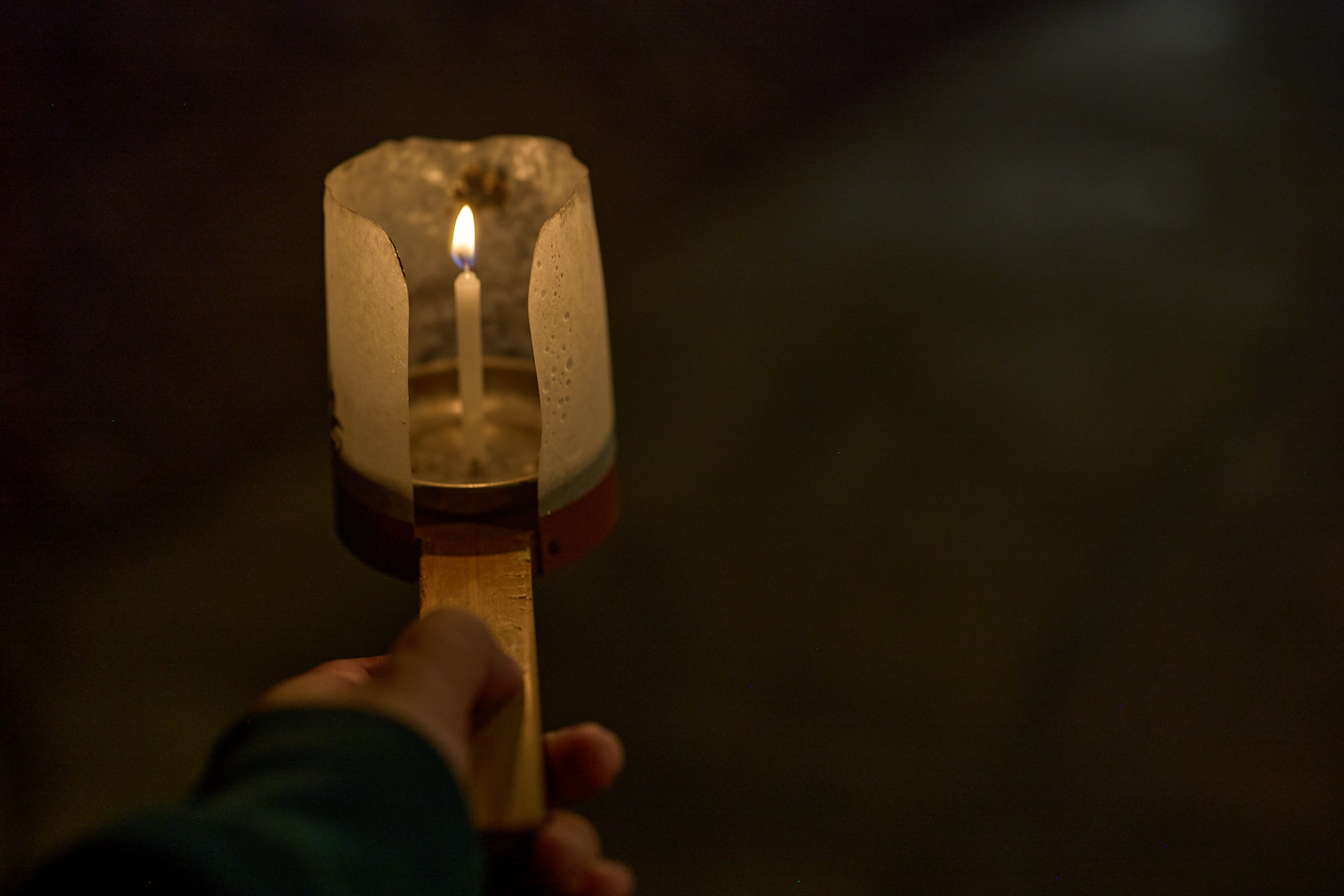
There are two caves, and the waves dug both, working their way in along faults in the cliff. The first runs 152 metres into the rock, the second 56. The digging is thought to have started about seven thousand years ago.
The way in is Iwaya Bridge, which runs along the foot of the cliff with the sea on the other side, its red railings bending with the rock.
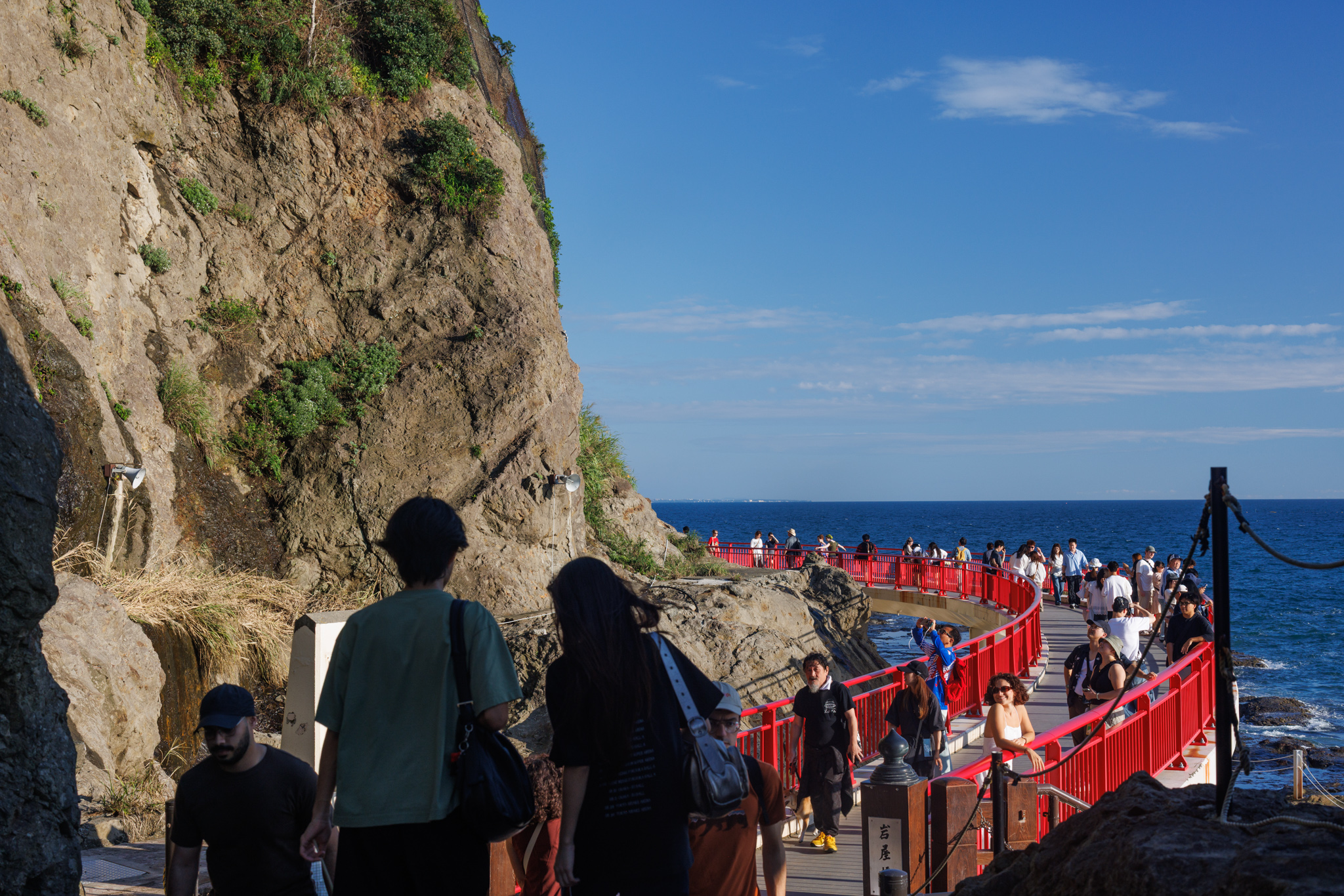
Worship on Enoshima is said to have begun in these caves, and the monks Kūkai and Nichiren are both remembered as having practised austerities here. Having dug the caves, the sea did not always stay out of them. In summer it came in, and the deity enshrined here used to spend the warmer months up the hill.
Two kinds of light
The first cave begins as a gallery. Framed panels line both walls, each under its own electric lamp, telling the island’s history and its legends.
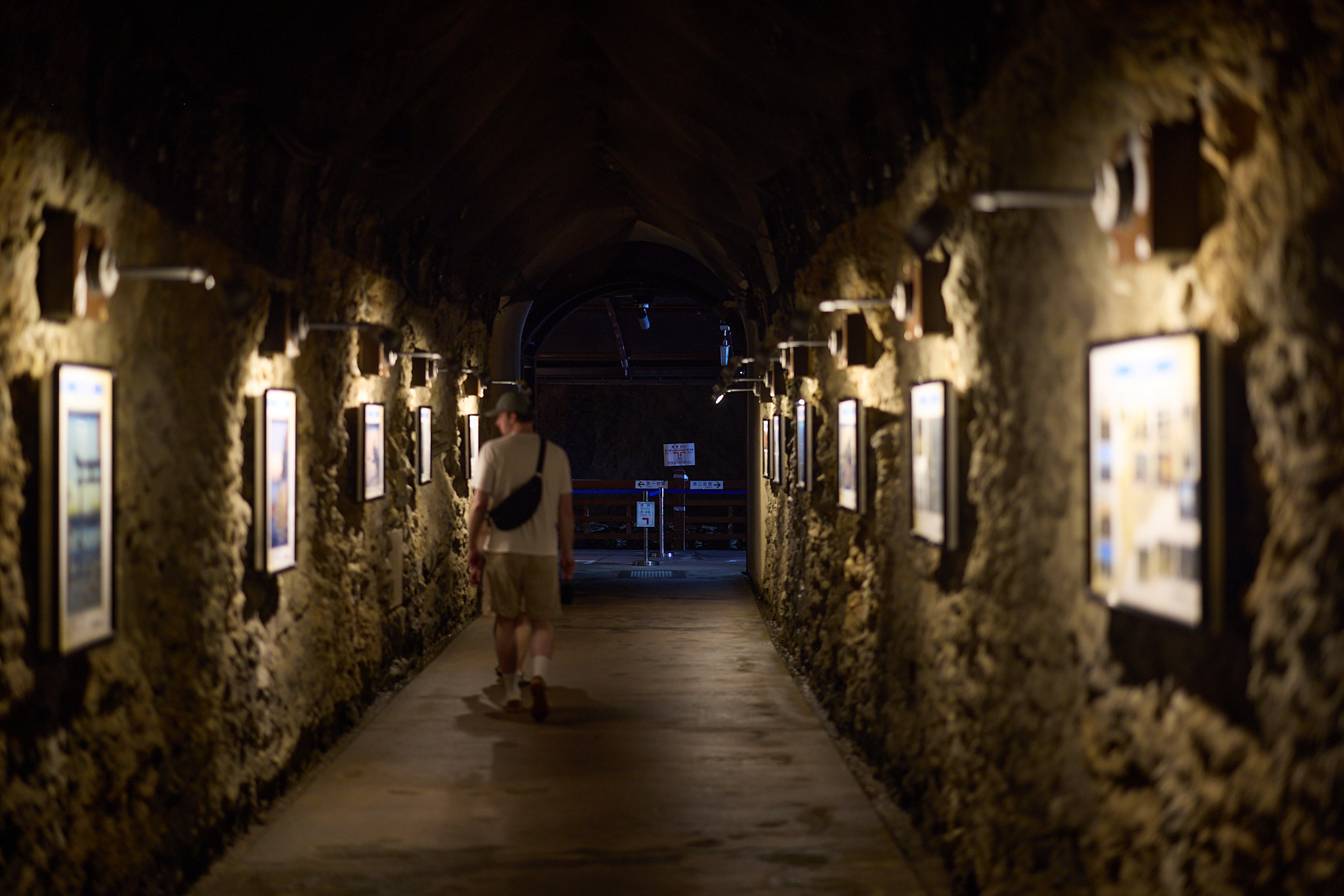
The lamps have not put the candle out of work.
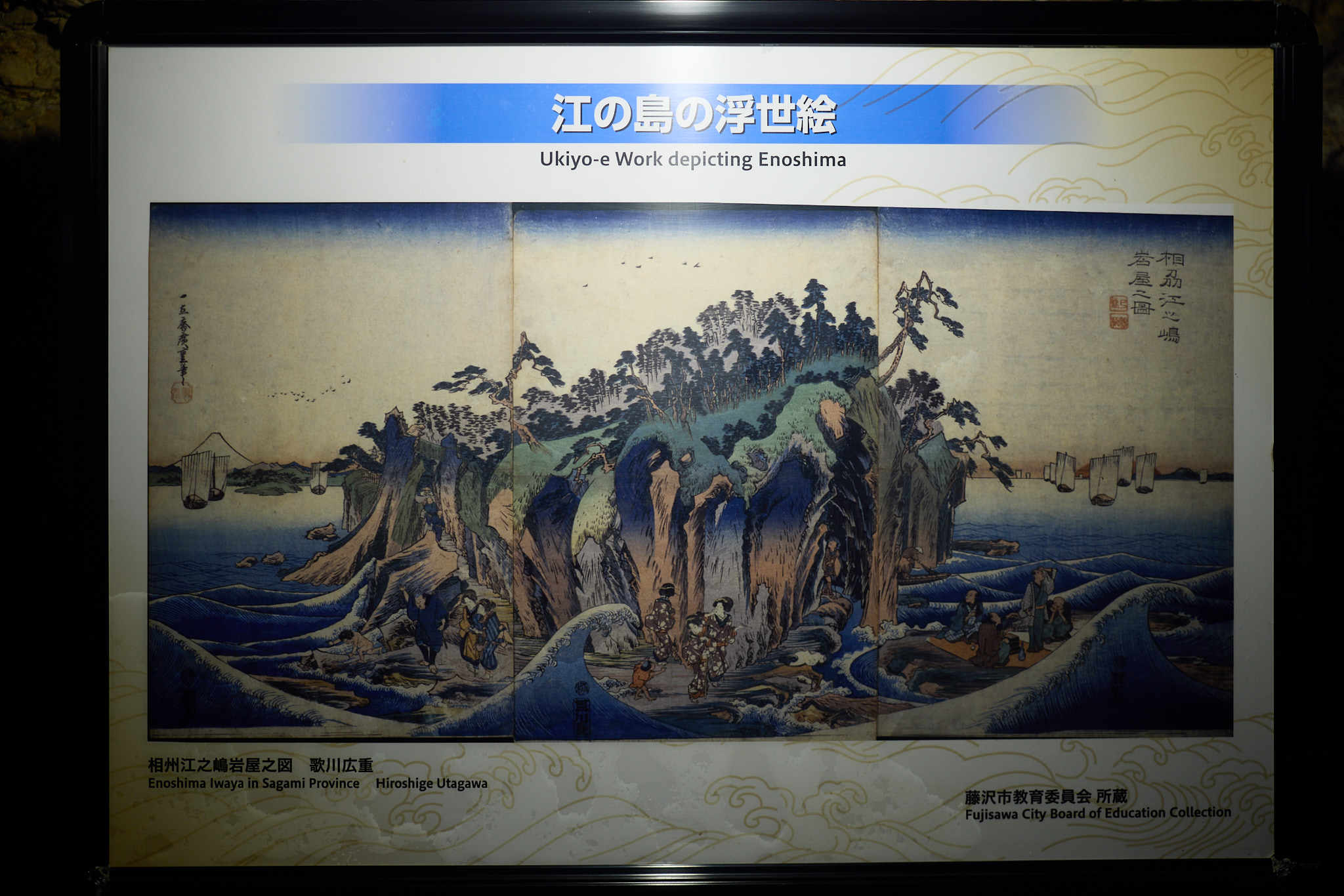
One panel reproduces a print of this very spot by Utagawa Hiroshige. Huge waves curl around the rocks. The visitors at the mouth of the cave carry on strolling about as if the sea were someone else’s problem. In Hiroshige’s day, coming here was a pilgrimage and a day out at the same time.
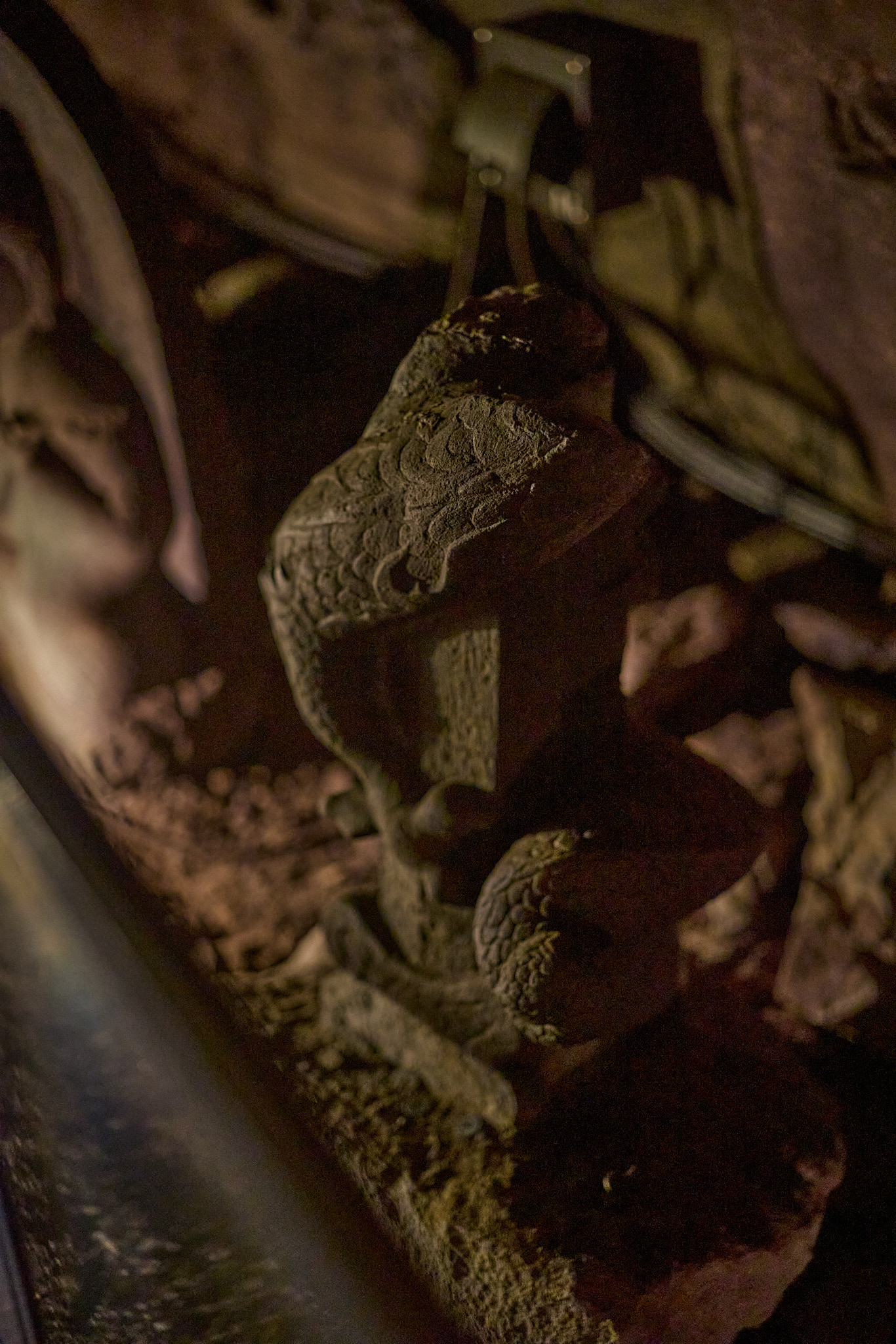
Deeper in, the candle earns its keep. Stone figures sit in hollows of the rock, and the candlelight picks them out one by one. One is a dragon, wrapped around a small roofed stone structure.
The ceiling drops and the floor turns wet. Somewhere in here, according to a small sign, the cave carries on all the way to Narusawa Ice Cave, at the foot of Mount Fuji, about eighty kilometres away.
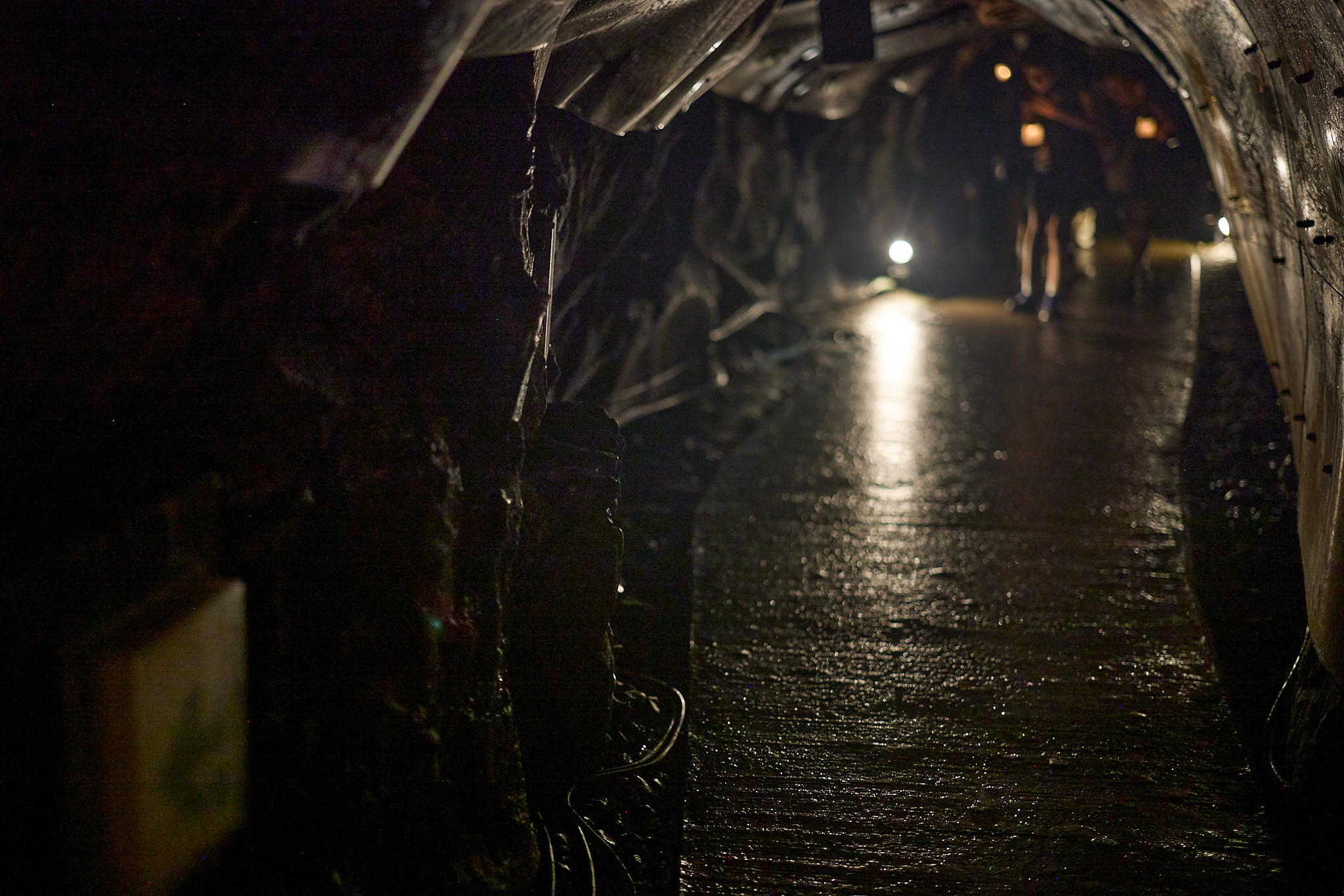
At the Narusawa end, they tell it the other way round. A hole in the ice cave swallows water, nobody knows how far down it goes, and it is said to come out in a cave on Enoshima. It would be quite a tunnel. The Iwaya was cut by the sea; the ice cave formed in cooling lava. The two holes have nothing in common but the story.
The poem by the water
In the first cave, at the edge of a shallow pool, stands a stone carved with Akiko’s poem.
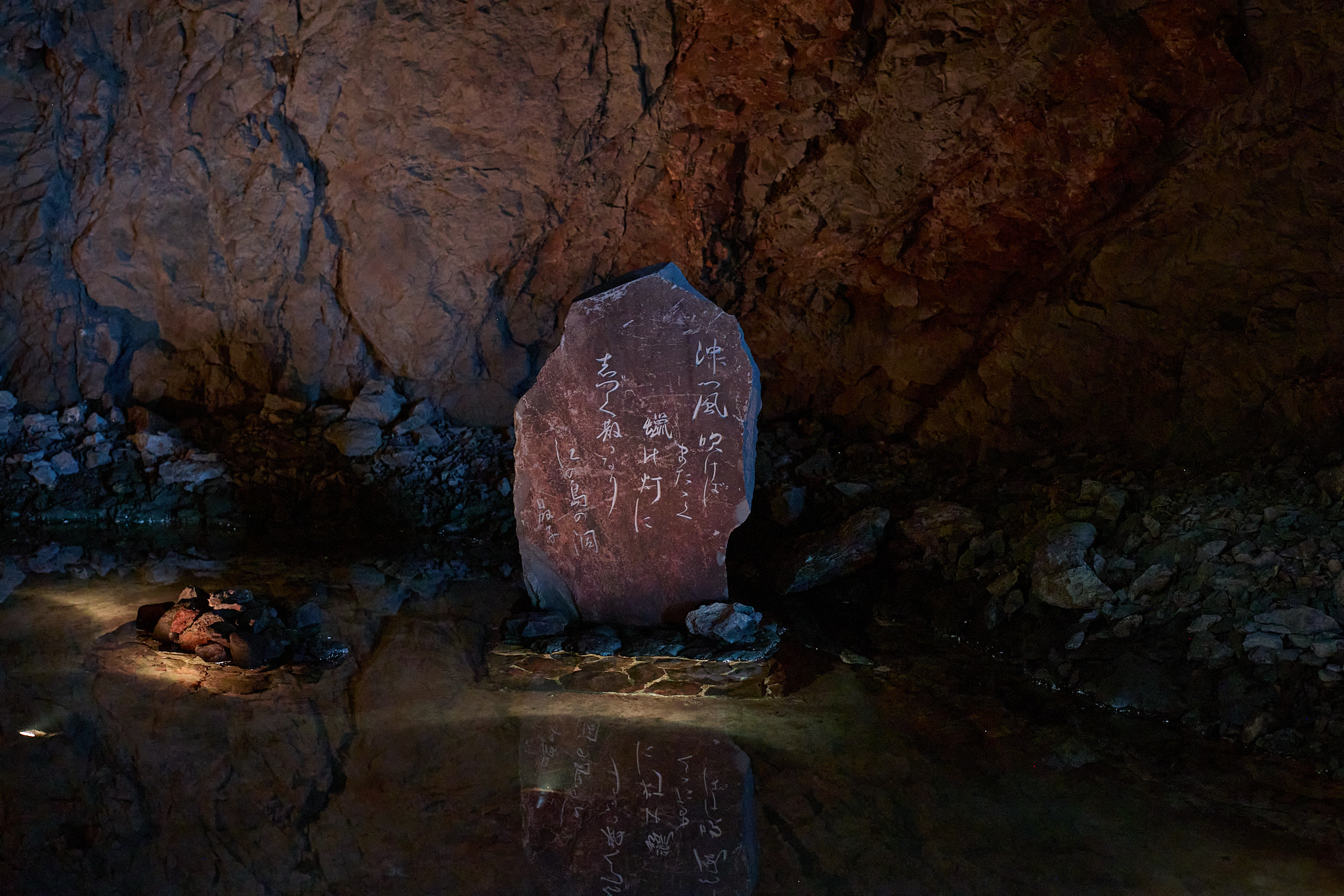
The handwriting on it is not hers. It belongs to Saeko Ozaki, a poet and scholar of Akiko’s work, and the stone was set up in 2002. The sign beside it says: “Over ninety years later, the candles are still burning and light the way for visitors within the cave.”
That was written in 2002. The ninety years have since grown to more than a hundred and ten.
The years have a gap in them, though. In March 1971, rocks fell from the cliff at the entrance to the first cave, killing a visitor and injuring several others. The caves were closed, and they stayed closed for twenty-two years. Since they reopened in 1993, the candles have been handed out again.
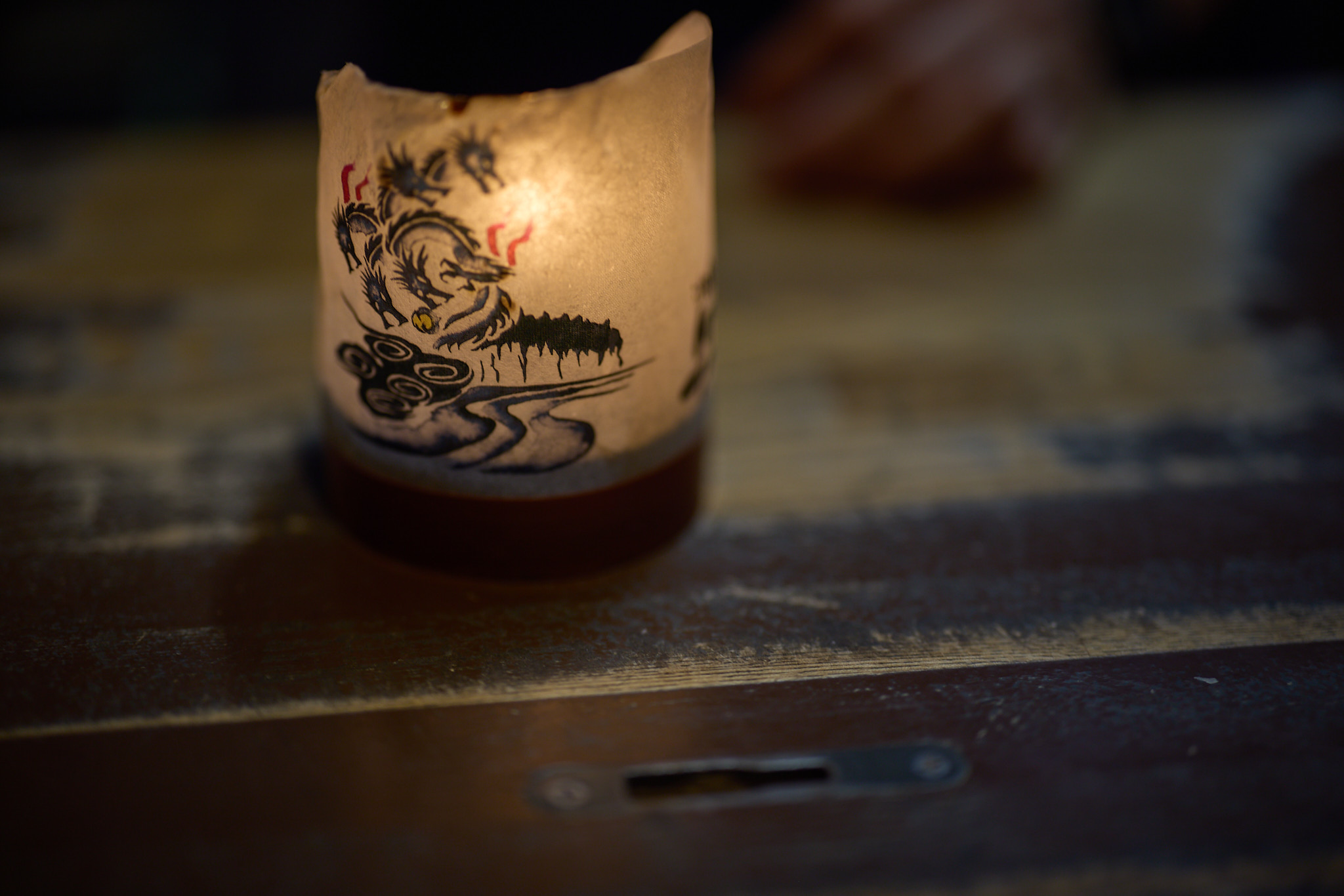
At the end of the first cave, I handed mine back, and only then took a proper look at its shade. Drawn on it were swirling clouds, waves, a dark island and a dragon. I counted the heads. There were five.
Between the caves
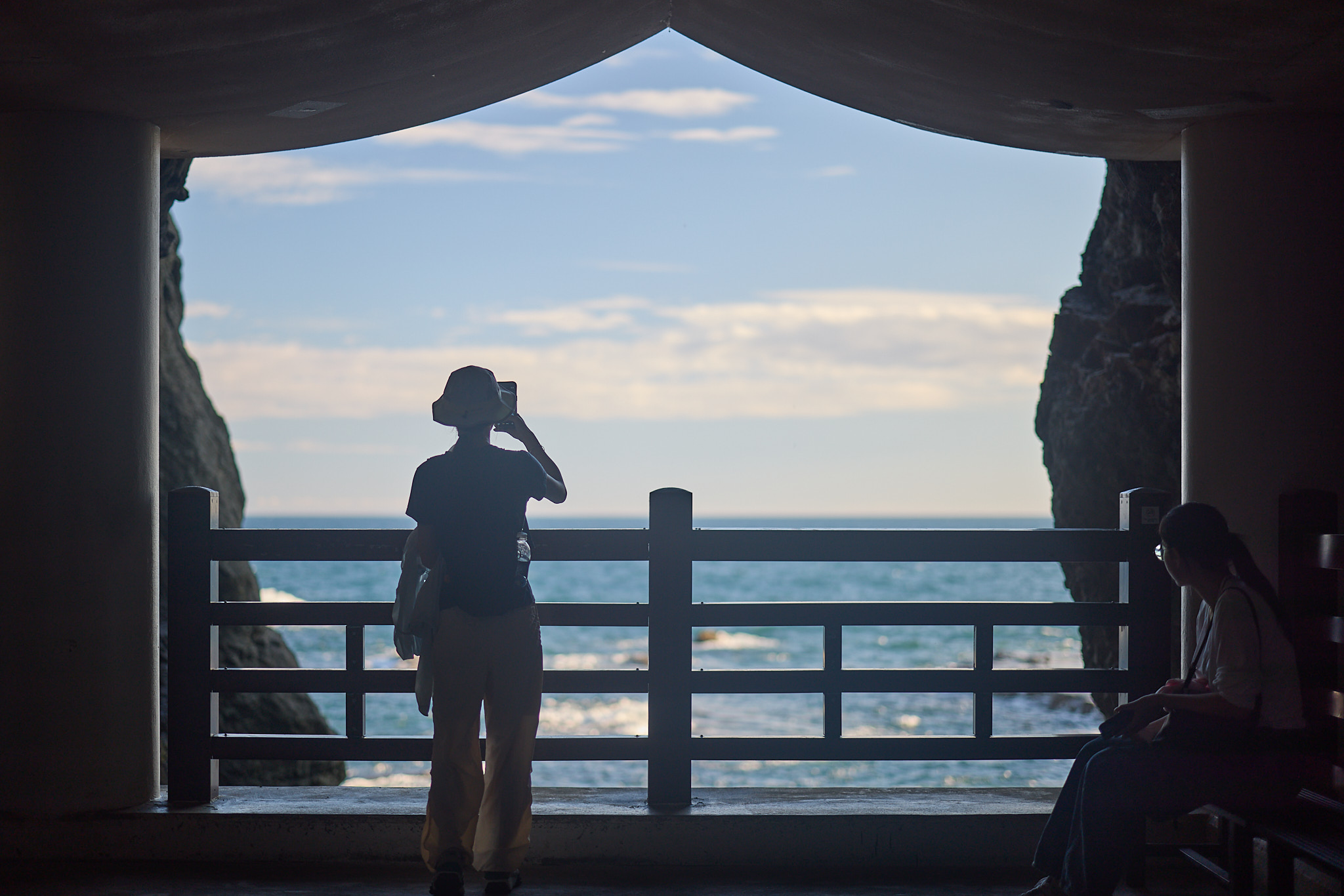
Out of the first cave, the path comes back to the sea. A shelter here has a wide opening, its top cut in a curve like a stage curtain drawn back. People stand at the railing and photograph the view, which is the whole show.
One head
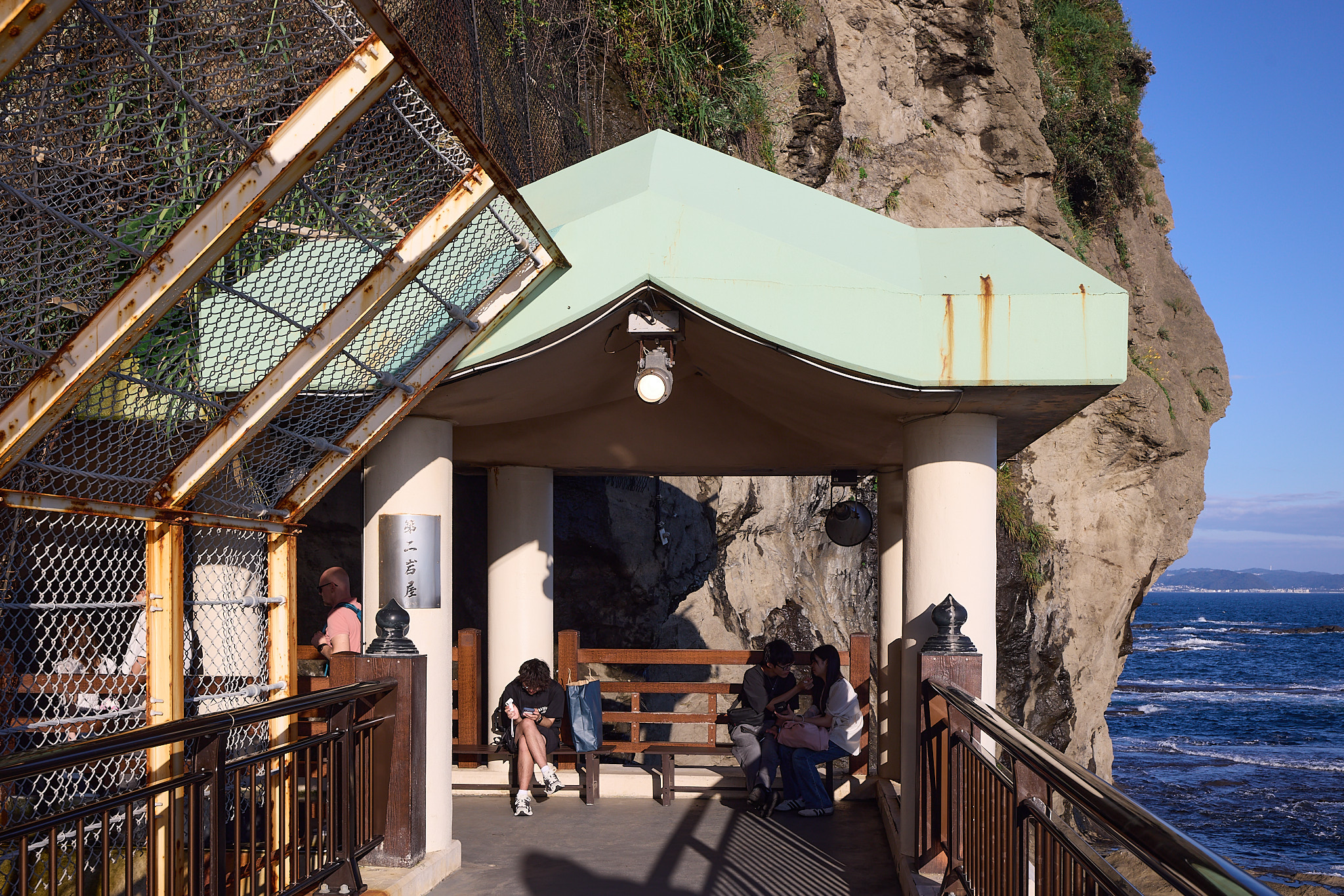
The entrance to the second cave looks like a bus shelter that has taken a wrong turn into a cliff.
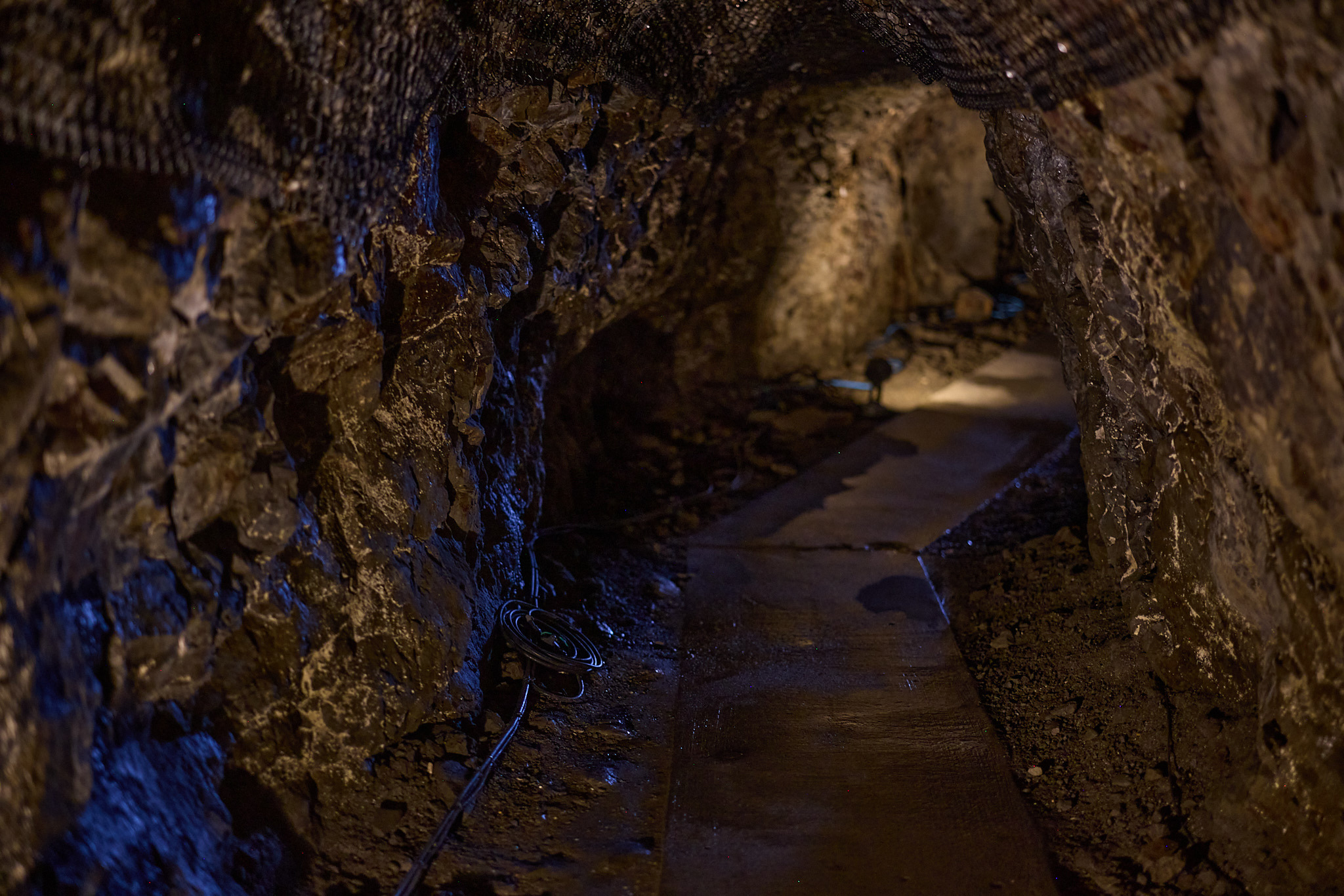
The second cave is shorter and narrower. Netting is strung overhead, and blue light seeps along the walls from somewhere ahead.
At the end, a dragon rears up out of the dark, lit violet and pink, with a mane of red spines, its claws out and its mouth open.
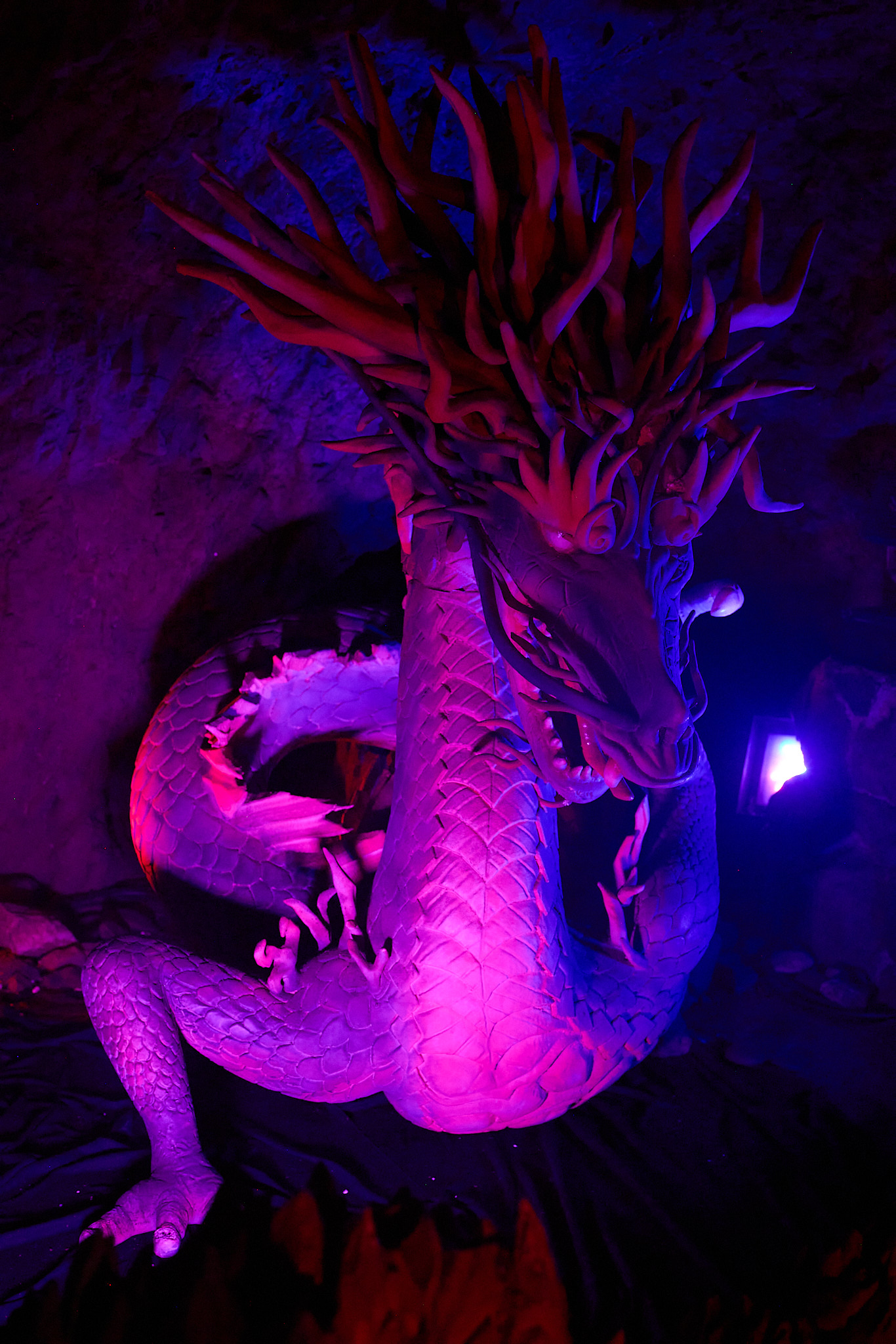
Fujisawa, the city Enoshima belongs to, once hinted in its newsletter that something might happen if you clapped in front of him. On an earlier visit, I clapped. This time, the mechanism was under maintenance, so whatever might happen will have to wait.
The second cave is where the island’s dragon legend is said to live. In it, a dragon tormented the villages along the coast until a heavenly maiden came down and an island rose from the sea. He proposed. She refused until he mended his ways. That dragon had five heads.
This one shows one.
The one with all five, I had already handed back.
The way back
Outside, Iwaya Bridge curves back toward the rest of the island.
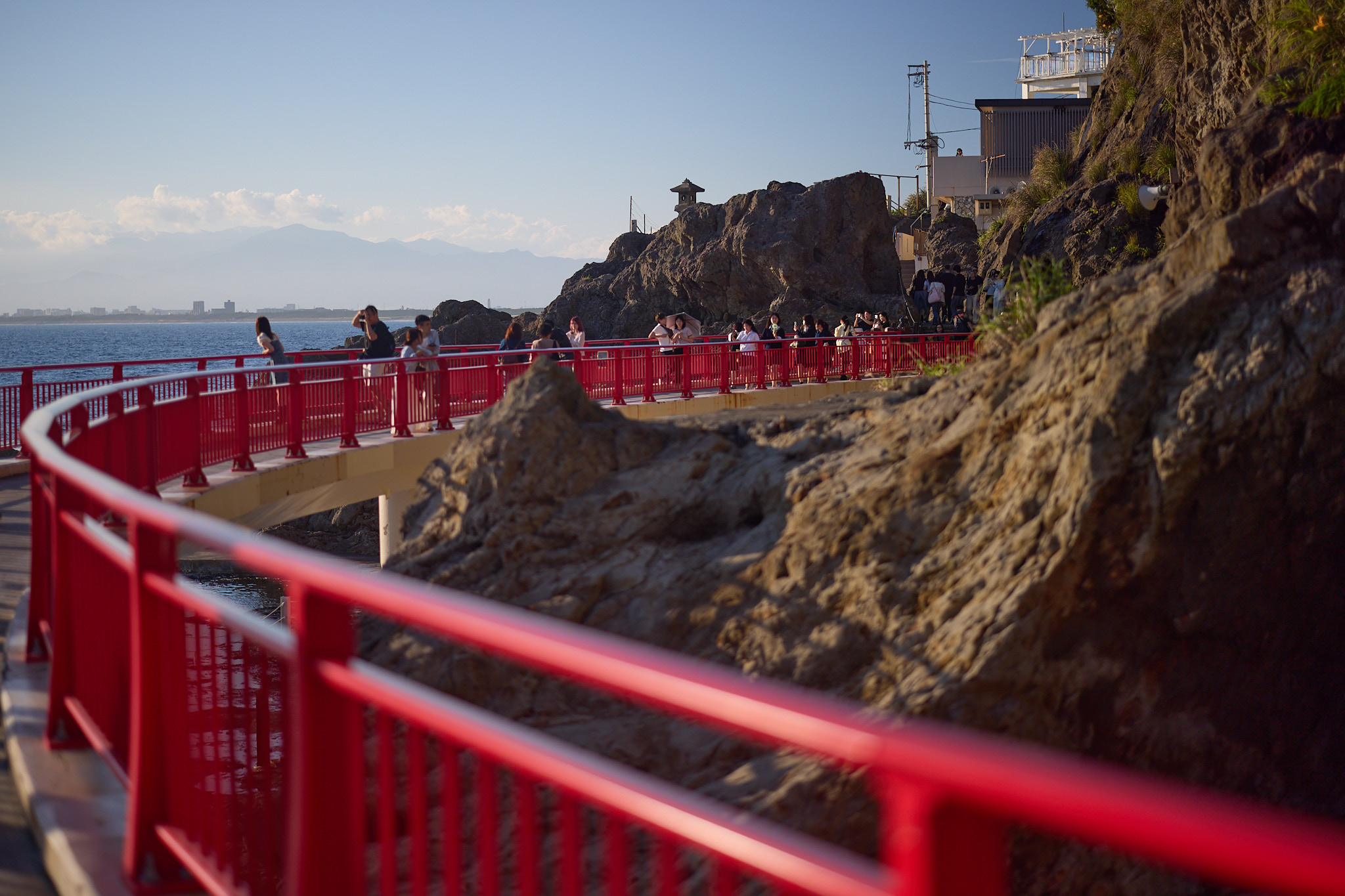
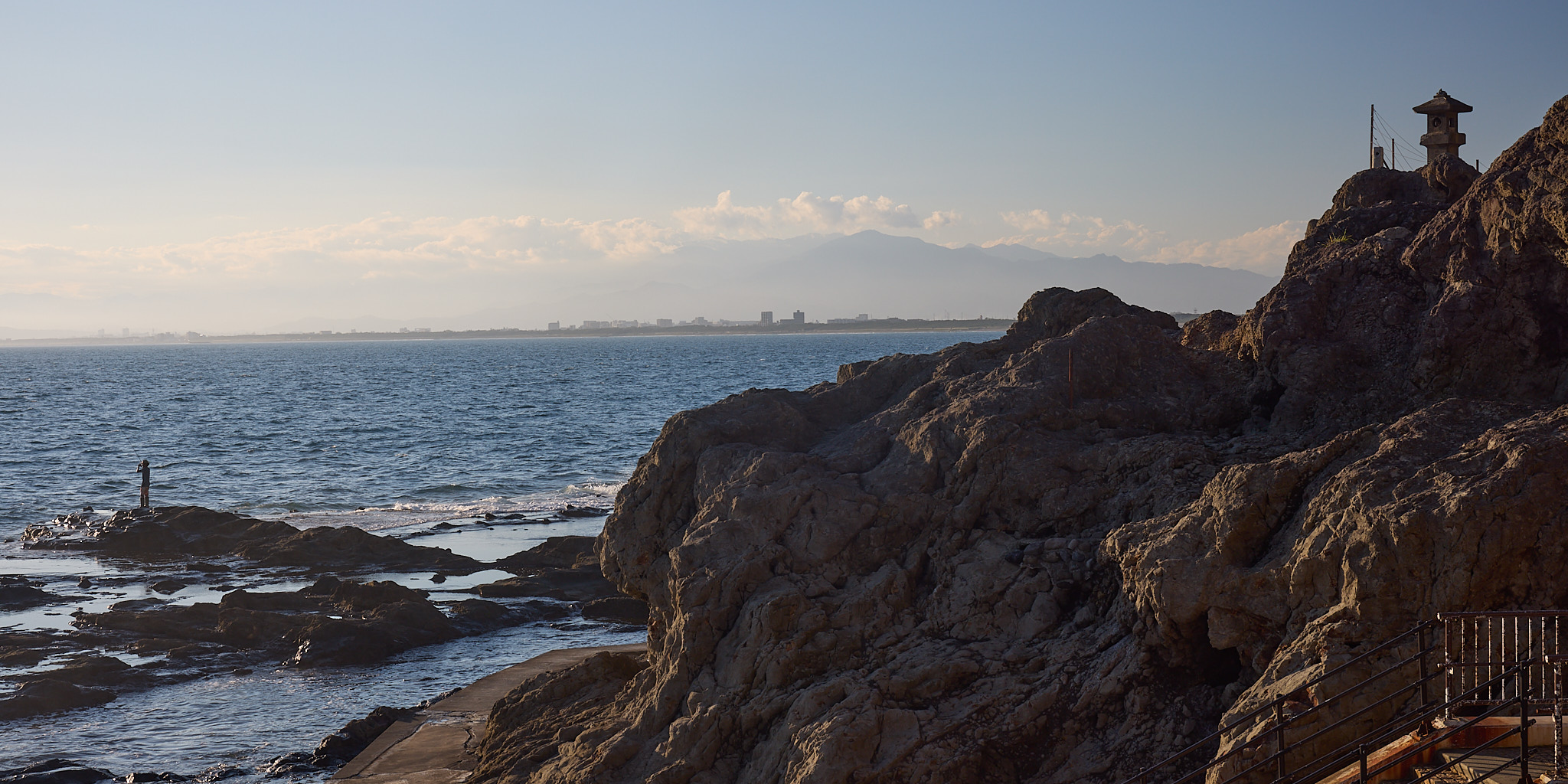
The wind was still coming in from the open sea, as it had in 1911. I no longer had a candle for it to set flickering.
Visit this place
Location
Enoshima Iwaya Caves (江の島岩屋)
At the far seaward end of Enoshima, below Wadatsumi-no-miya and Okutsumiya, reached along Iwaya Bridge at the foot of the cliff.
2 Enoshima, Fujisawa, Kanagawa 251-0036, Japan
Practical Information
- Access
- About 28 minutes on foot from Katase-Enoshima Station (Odakyu Enoshima Line). The route crosses the island and includes many stairs; the last stretch runs along Iwaya Bridge at the foot of the cliff.
- Opening hours
- Usually 9:00–17:00; hours vary by season. The tourism association’s website shows the day’s hours.
- Closing days
- Open daily. The caves may close or change their hours in typhoons and other rough weather.
- Admission
- Adults (junior high school age and over) ¥500; elementary school children ¥200. 20% off for groups of 20 or more. Free for holders of a disability certificate and similar documents listed by the operator, plus one companion.
- Visitor note
- Candles are handed out for the cave. Some passages are low, and the floor can be wet.
- Tourism information
- Fujisawa City Tourism Association — Enoshima Iwaya (Japanese)
Information last checked: October 24, 2026 (access time from Katase-Enoshima Station, opening hours, closures and admission).
Conversation
Comments
Review pending commentsComments are reviewed before appearing. The internet already contains enough unattended surprises.
Checking comments…
Comments are not available in this migration preview yet. Existing comments remain on the current site.
Leave a comment