Meguro Parasitological Museum: An Inside Story
Content note: This article contains photographs of parasite specimens. Some readers may find them unsettling.
The jars were neatly arranged. It was their contents’ previous addresses that gave me pause.
Against a dark blue background, pale bodies curled and gathered in the bottoms of glass containers. Each had a label. One identified parasites collected from a whale’s intestine.
This was the Meguro Parasitological Museum, a small research museum in Tokyo. Its public displays occupy two floors, enough space to introduce visitors to a surprising number of creatures that make their living in or on other animals.
Some resembled narrow threads. Others had broad, segmented bodies that folded over themselves like lengths of ribbon.
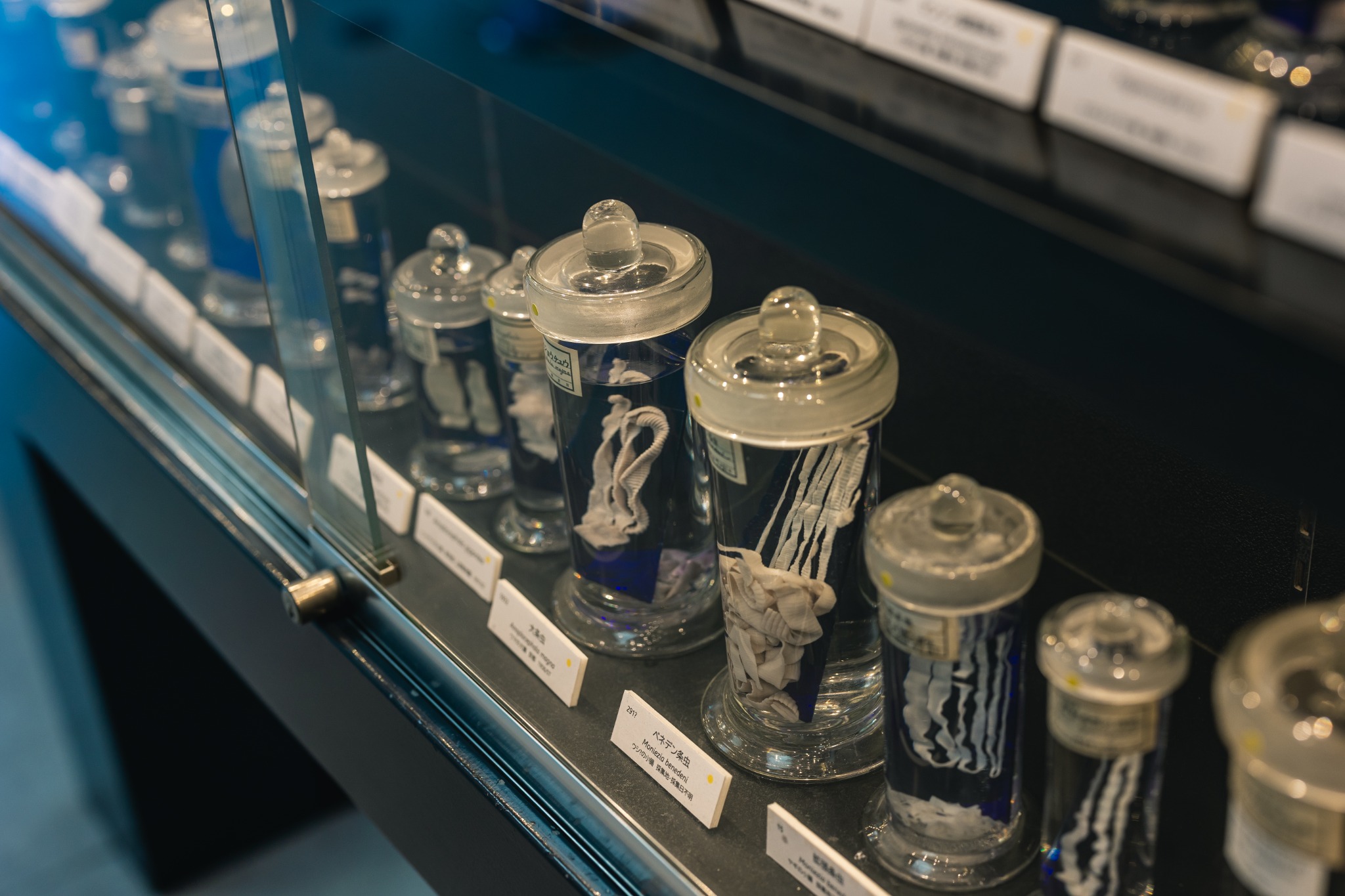
The glass made it possible to examine creatures usually concealed inside something else. The labels named not just the parasites but their hosts.
For the moment, I could regard this as other animals’ business.
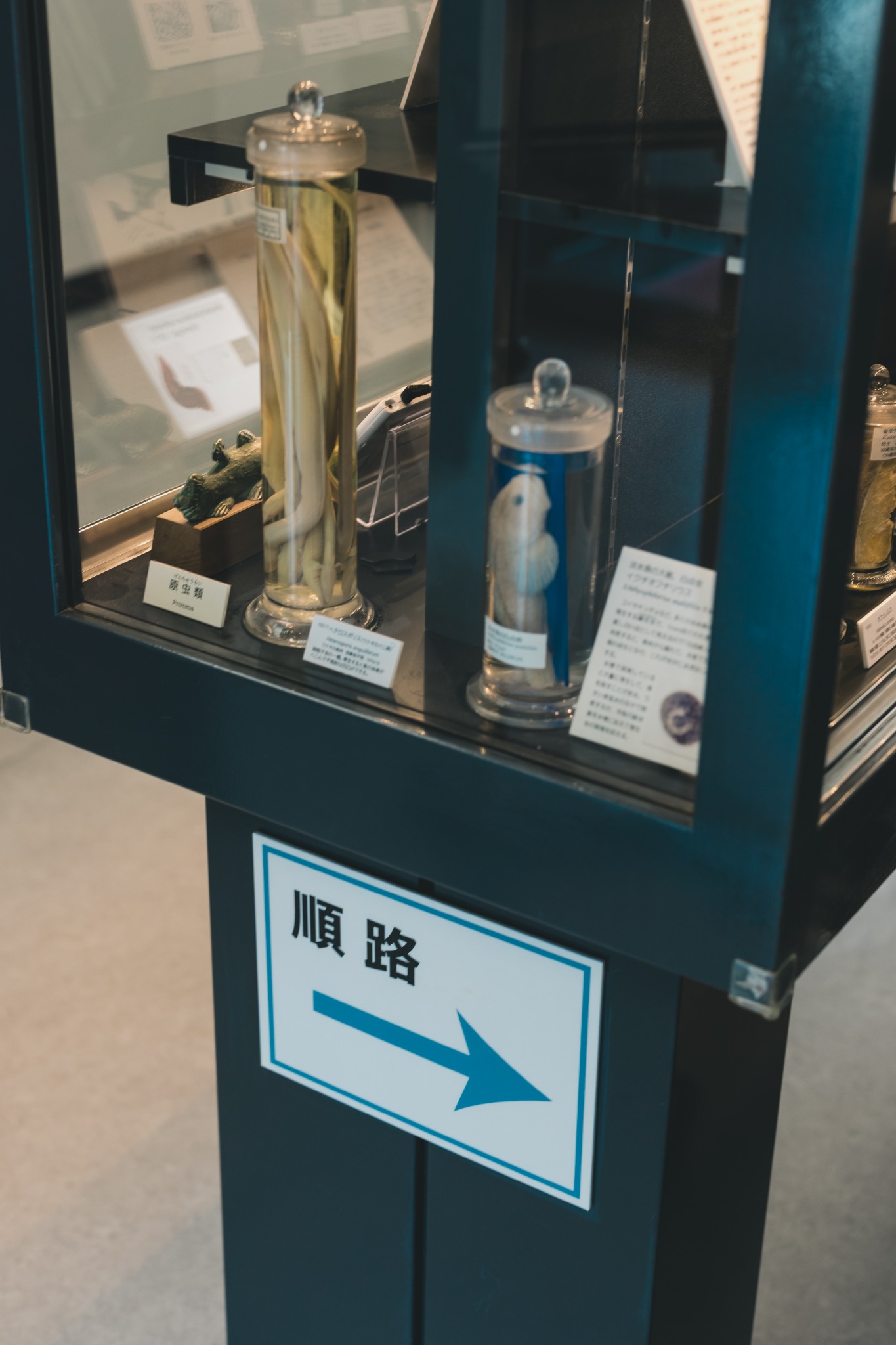
The subject gets closer
The first floor introduces the diversity of parasites. The second turns to parasites associated with the human body. A short climb, and the subject felt considerably closer to home.
In the years before the museum opened, it was closer still. In 1949, a pinworm test found eggs in about 64 percent of Japanese primary-school children.
The displays also make room for the people who studied them. An open volume contained intricate drawings surrounded by small handwritten notes. The pages were worn, their edges uneven, and there were a great many of them.
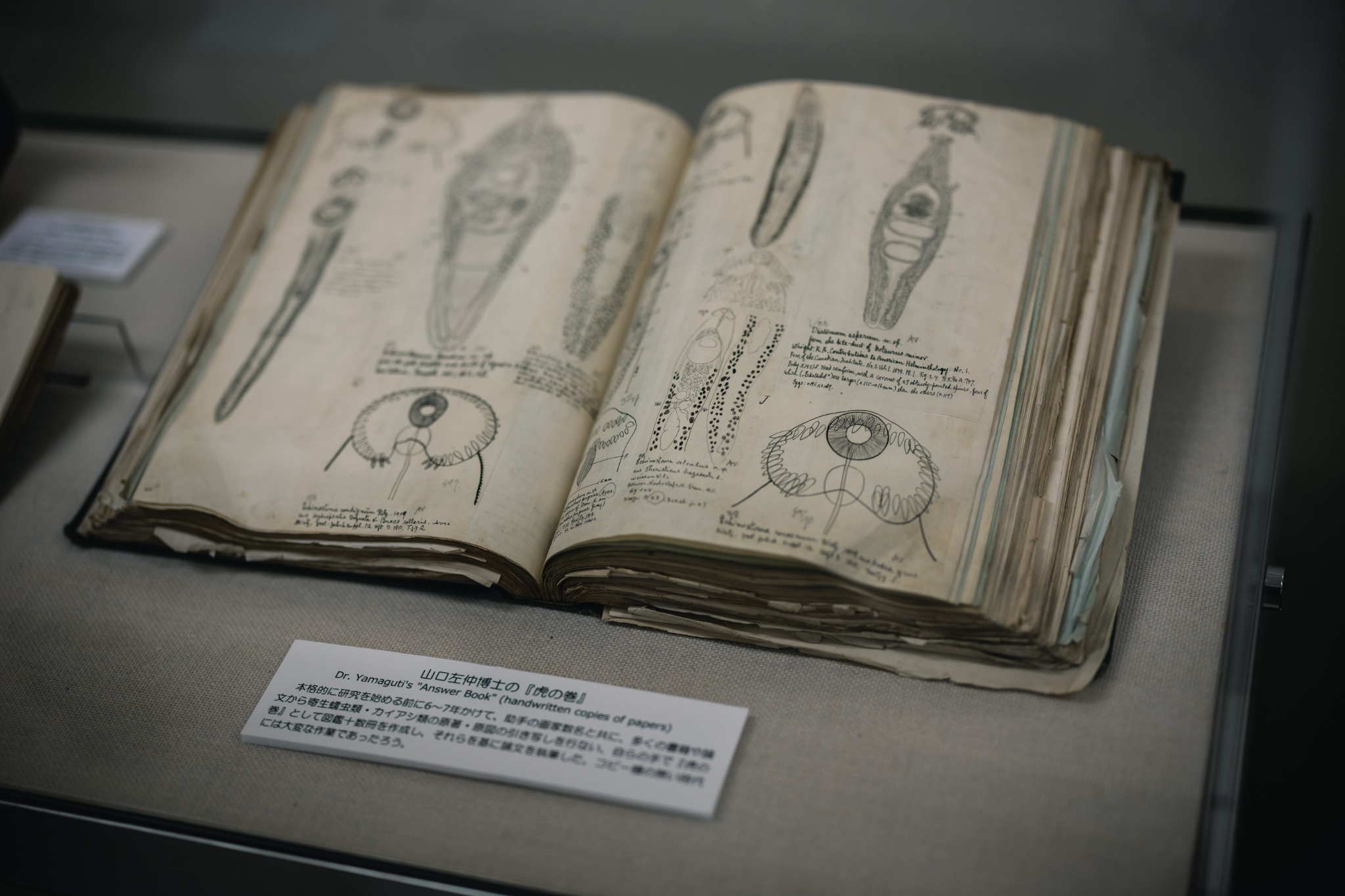
Yamaguti compiled these notes by copying material from scientific papers by hand. Looking at the carefully drawn outlines and internal structures, I found it easier to appreciate the creatures as things someone had worked hard to understand.
I could preserve the page with a photograph. He had assembled it one line at a time.
That patient work belongs to the museum’s purpose. A physician, Satoru Kamegai, founded it with his own funds in 1953, five years after opening a clinic in Meguro. Alongside its public displays, the institution maintains collections and conducts research into parasites—their forms, classification and distribution. About 300 specimens are on display. The collection holds some 60,000, including around 1,500 type specimens, the individuals on which descriptions of species are based. The small rooms are the public face of a much larger undertaking.
Kamegai insisted that visitors should not be charged, and admission is still free. In 2022, Bill Gates came in on the same terms and left with a souvenir strap featuring the Miyairi snail, intermediate host of a blood fluke.
One specimen brought Kamegai’s work as a doctor into particularly sharp focus.
Eight point eight metres
A long, pale tapeworm ran down a narrow blue display, turned and travelled back up, then repeated the journey. Following it with my eyes required several changes of direction.
Its total length was 8.8 metres. It had come from a human being.
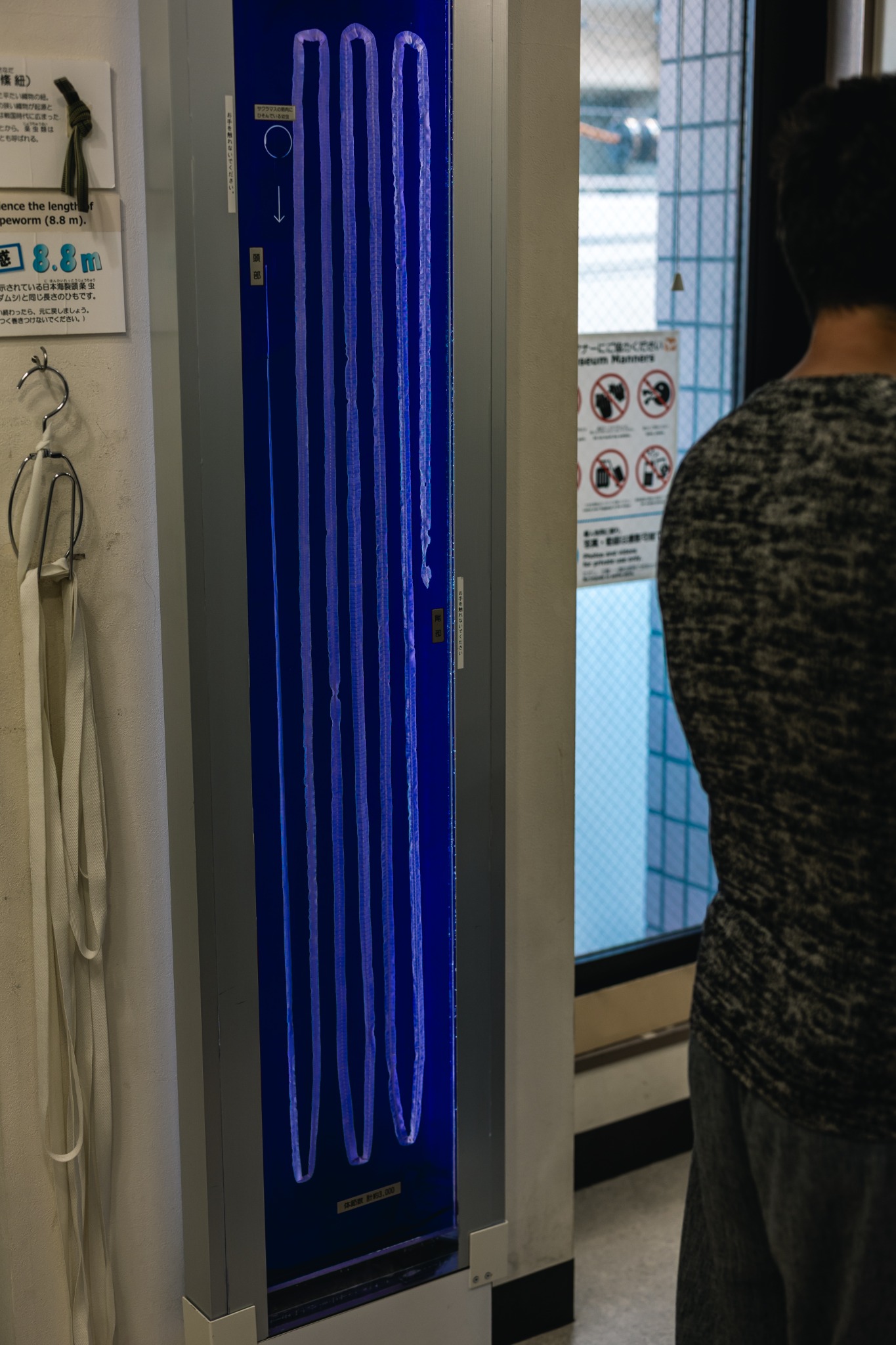
This was a Japanese broad tapeworm, or nihonkai rettōjōchū. The museum’s exhibition text records that the man from whom it was recovered had eaten trout sashimi three months earlier. He had noticed no symptoms before part of the worm appeared during a bowel movement. Kamegai treated him and recovered the specimen almost intact.
The length was startling enough on the wall. Trying to imagine it inside someone made the display seem unexpectedly restrained.
Beside it hung a ribbon of the same length, allowing visitors to turn the measurement into a physical exercise. The museum was not prepared to let a failure of imagination interfere with the lesson.
I had thought of this as a small museum. I was beginning to reconsider what could fit inside a person.
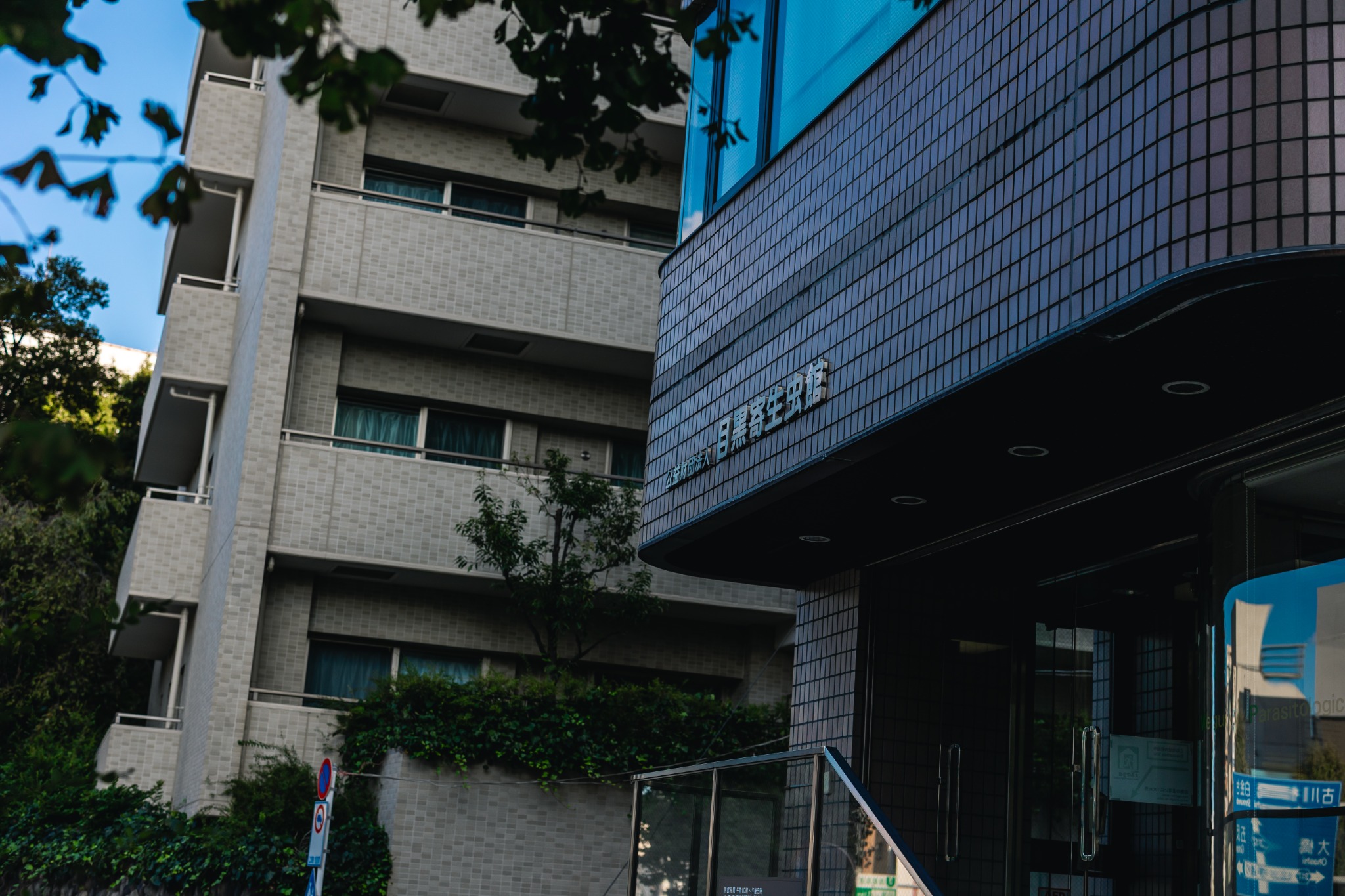
Outside, the museum stood beside an apartment building, its name fixed to the curved tiled frontage. It fitted easily into the neighbourhood.
I was still thinking about the man who had unknowingly provided three months of meals.
On my current income, I wasn’t sure I could support an 8.8-metre freeloader.
Visit this place
Location
Meguro Parasitological Museum (目黒寄生虫館)
About 12 minutes on foot from Meguro Station’s west exit
4-1-1 Shimomeguro, Meguro-ku, Tokyo 153-0064, Japan
Practical Information
- Opening hours
- 10:00–17:00
- Closing days
- Mondays and Tuesdays
When a national holiday falls on either day, the museum opens and closes on the following weekday. Also closed for New Year’s holidays. - Admission
- Free
Donations are welcome. - Access
- About 12 minutes on foot from Meguro Station’s west exit
Buses from the west exit stop at Otori-jinja-mae (大鳥神社前), one minute from the museum. - Parking
- There is no museum car park. The museum asks visitors to use public transport.
- Official website
- Meguro Parasitological Museum
Information last checked: September 9, 2026
Hours and closures can change. Check the official calendar before visiting.
Conversation
Comments
Review pending commentsComments are reviewed before appearing. The internet already contains enough unattended surprises.
Checking comments…
Comments are not available in this migration preview yet. Existing comments remain on the current site.
Leave a comment