Field Guide · Greater Tokyo · 6 places

Ghost Jizō, 108 Foxes and a Giant Kannon: Unusual Sacred Figures Around Tokyo

Six unusual sacred figures within easy reach of central Tokyo — from statues reshaped by prayer to crowds of cats and foxes, with practical ways to combine them.

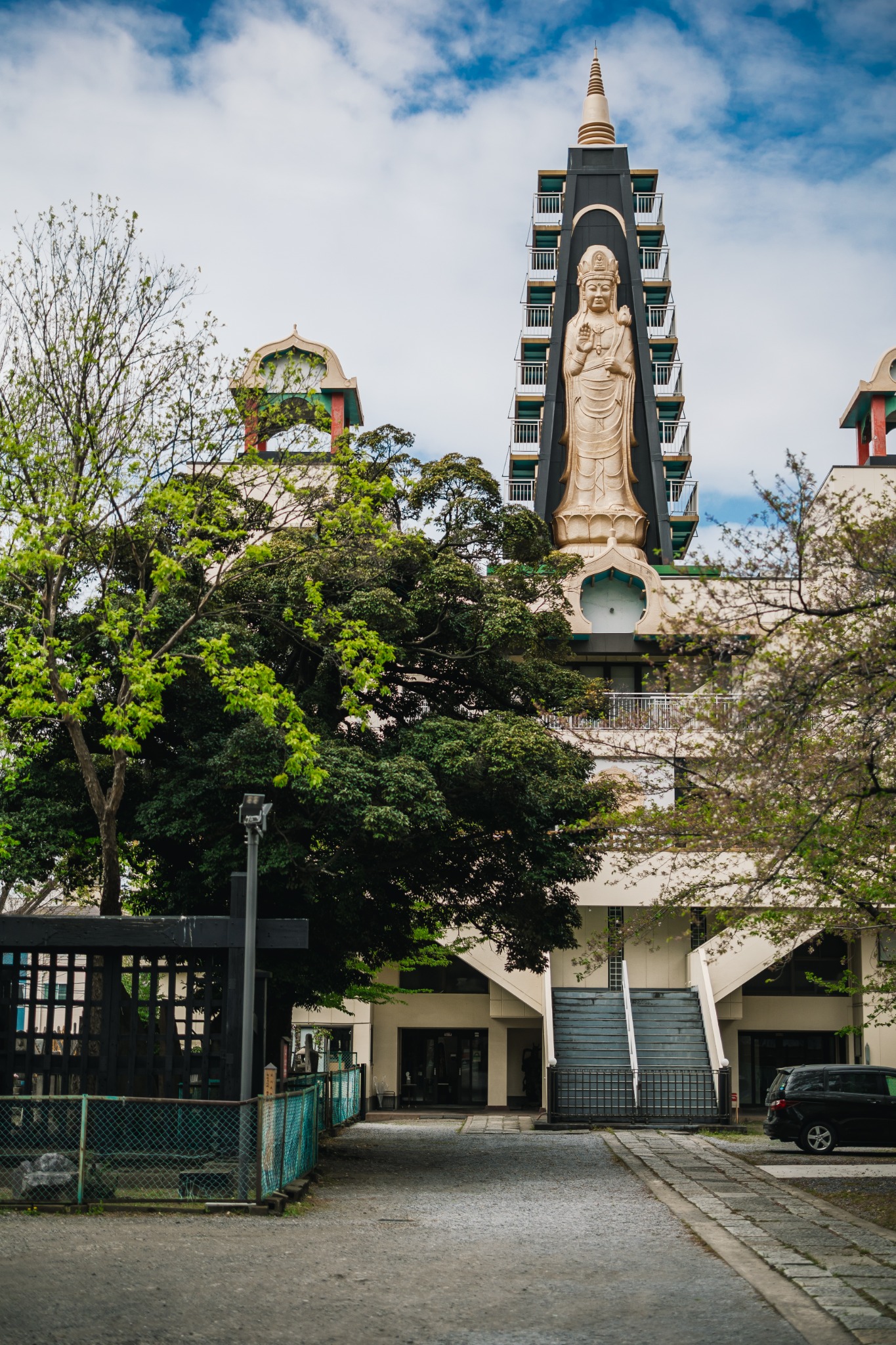
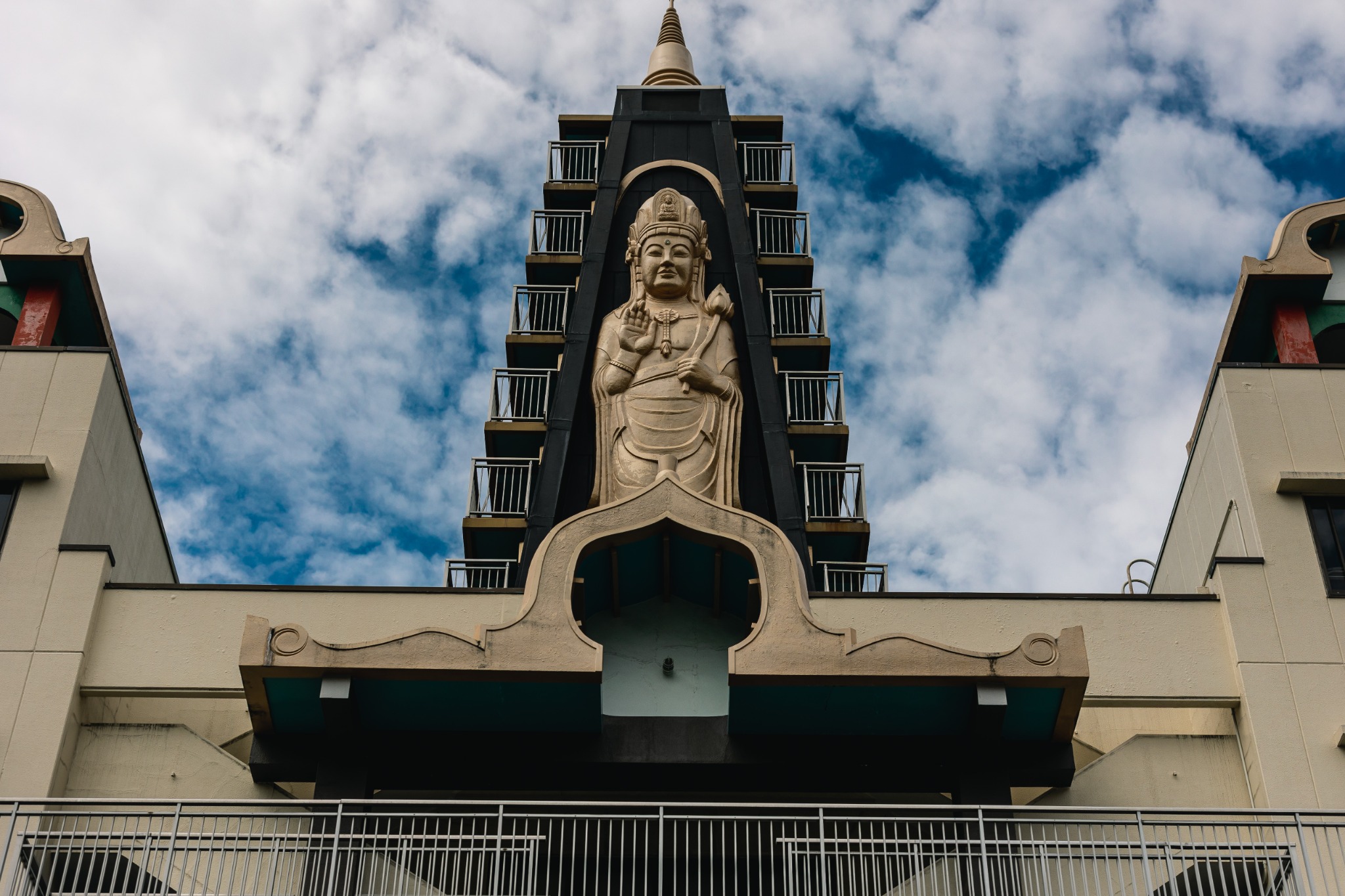
Golden Shō Kannon rising above Entsuji Temple, with rows of balconies on either side of the modern temple building in Tokyo.
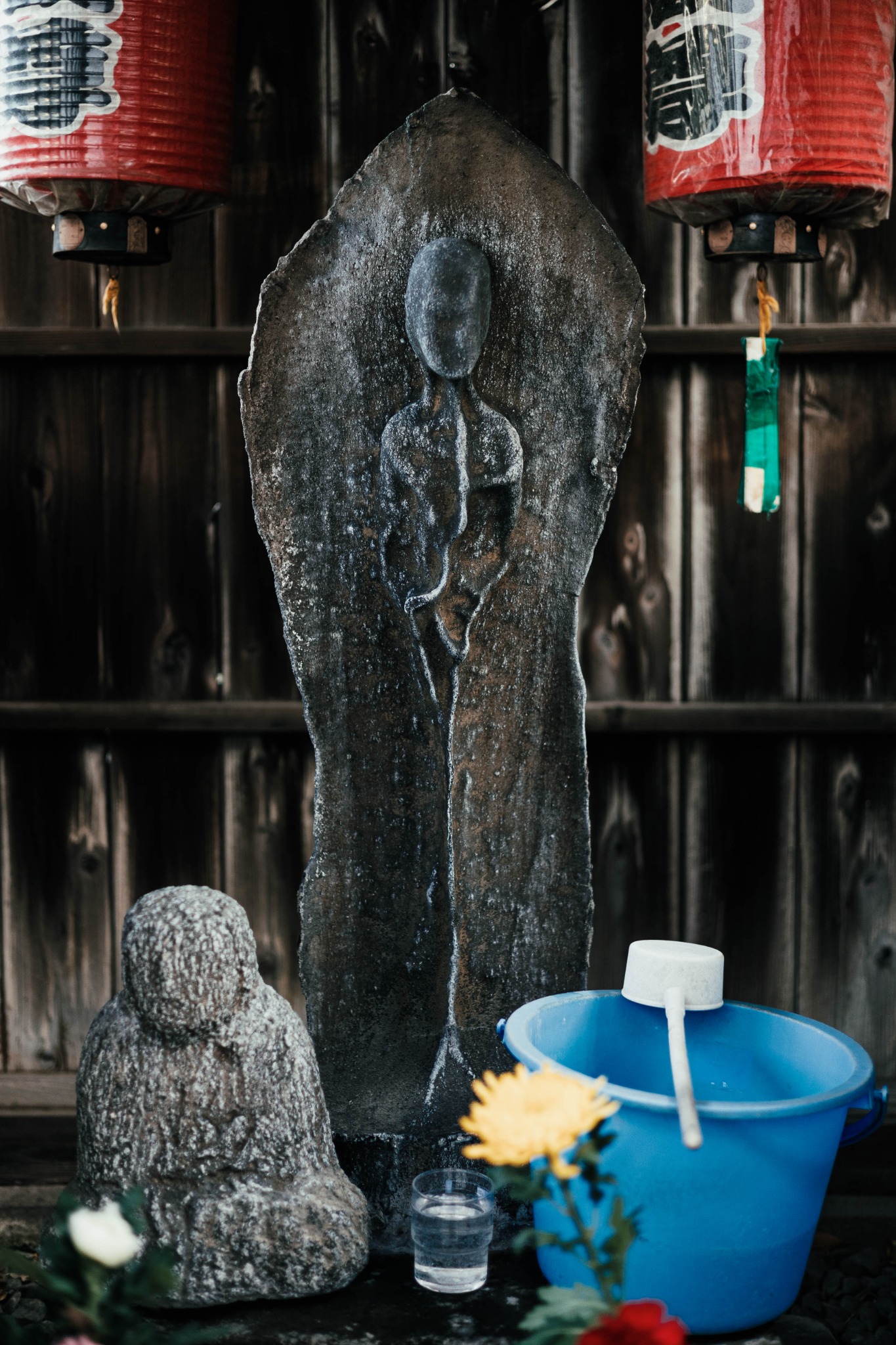
Ghost Jizō statue at Kofukuji Temple in Takanawa, Tokyo.
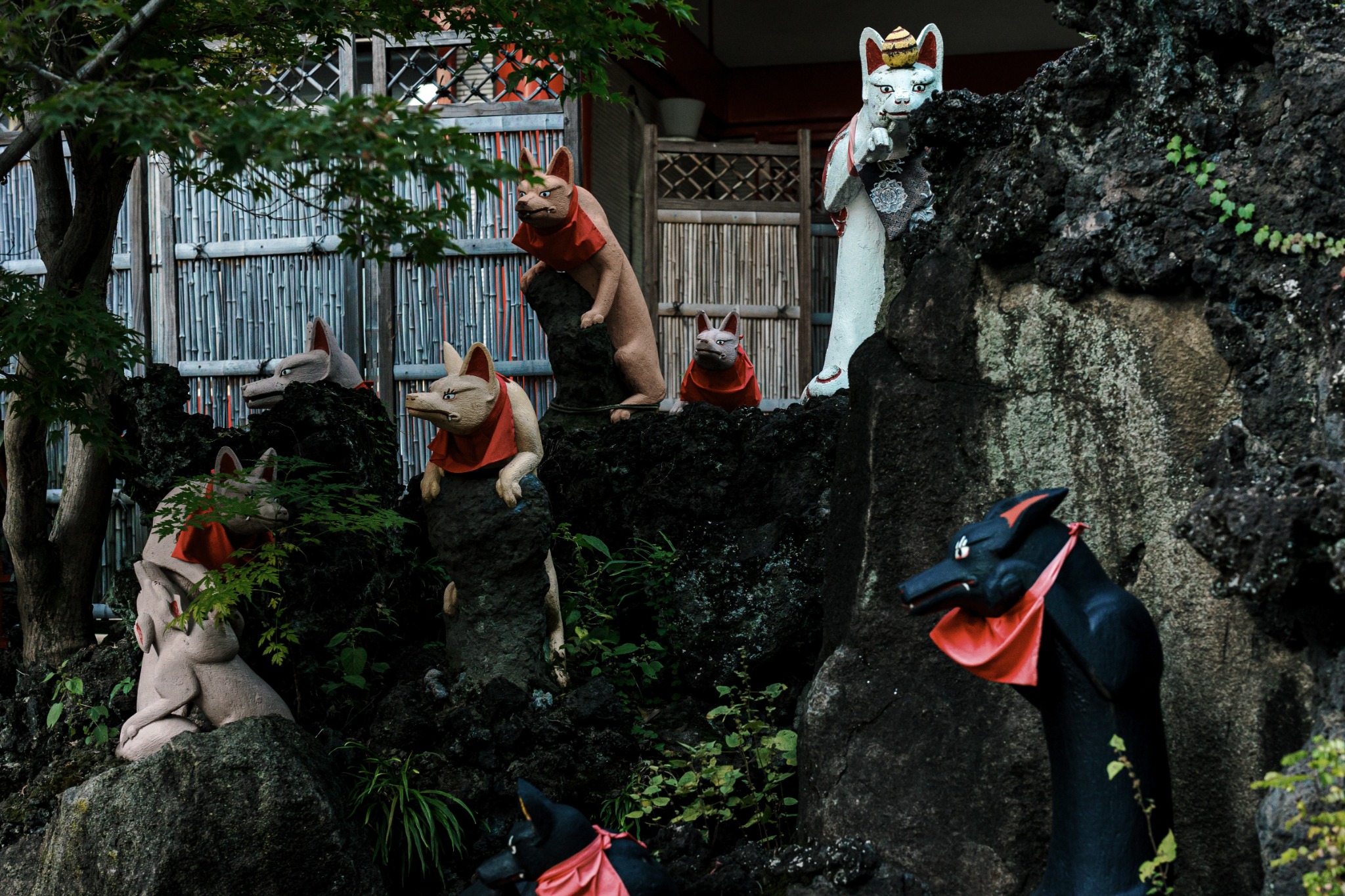
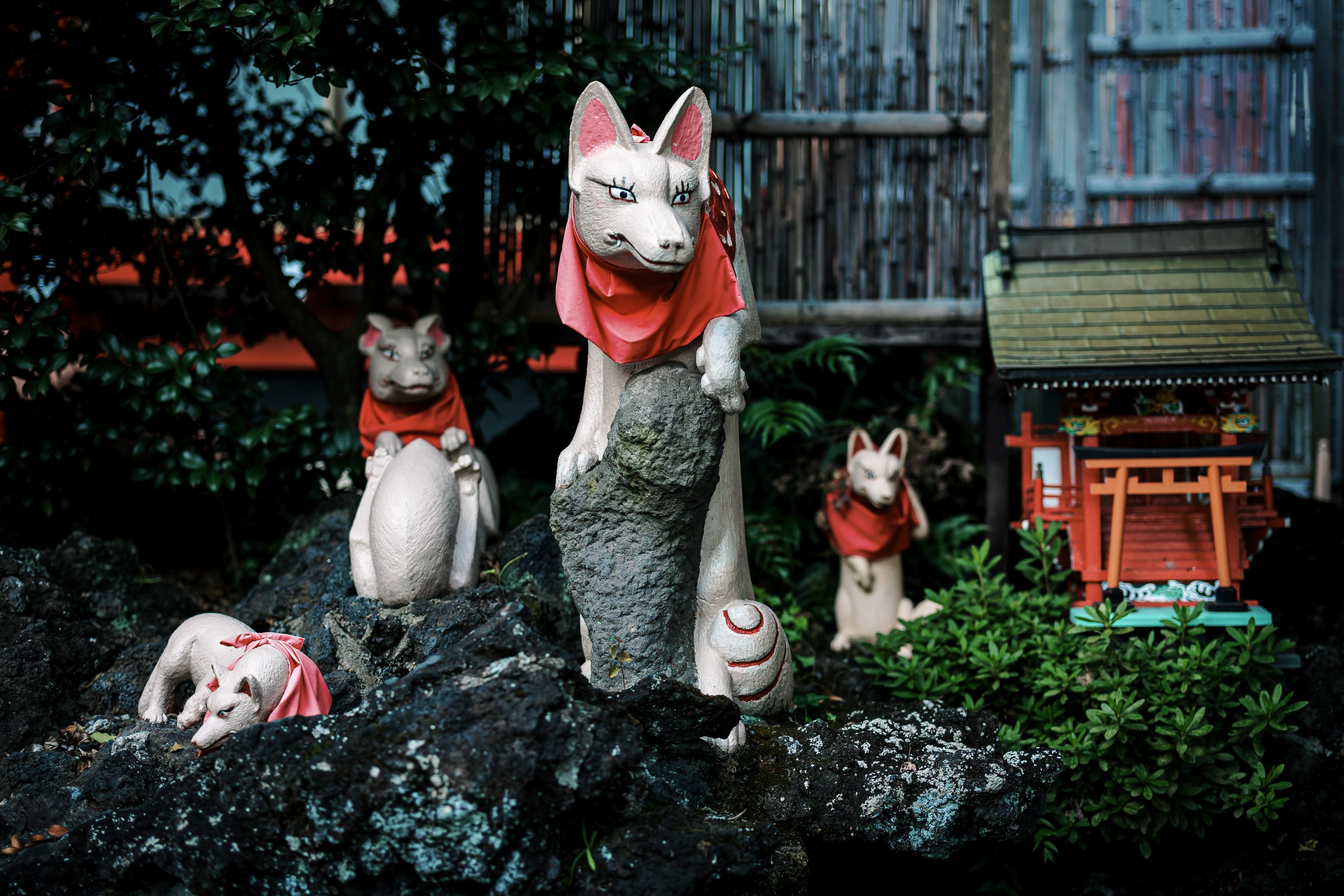
White fox statue leaning over dark volcanic rock, with several other foxes and a small shrine behind it at Keihin Fushimi Inari Shrine.

At Gotokuji, a fulfilled wish may bring another lucky cat back to the temple. At Anyoin, a request for help is accompanied by striking a Jizō with a small stone.

One temple gains cats. The other loses a little more of its carving.

These six places are in Tokyo and neighbouring Kawasaki. They range from a figure almost worn out of its own face to a golden Kannon tall enough to occupy several floors of a building.

Worn by worship

Where prayer meets stone

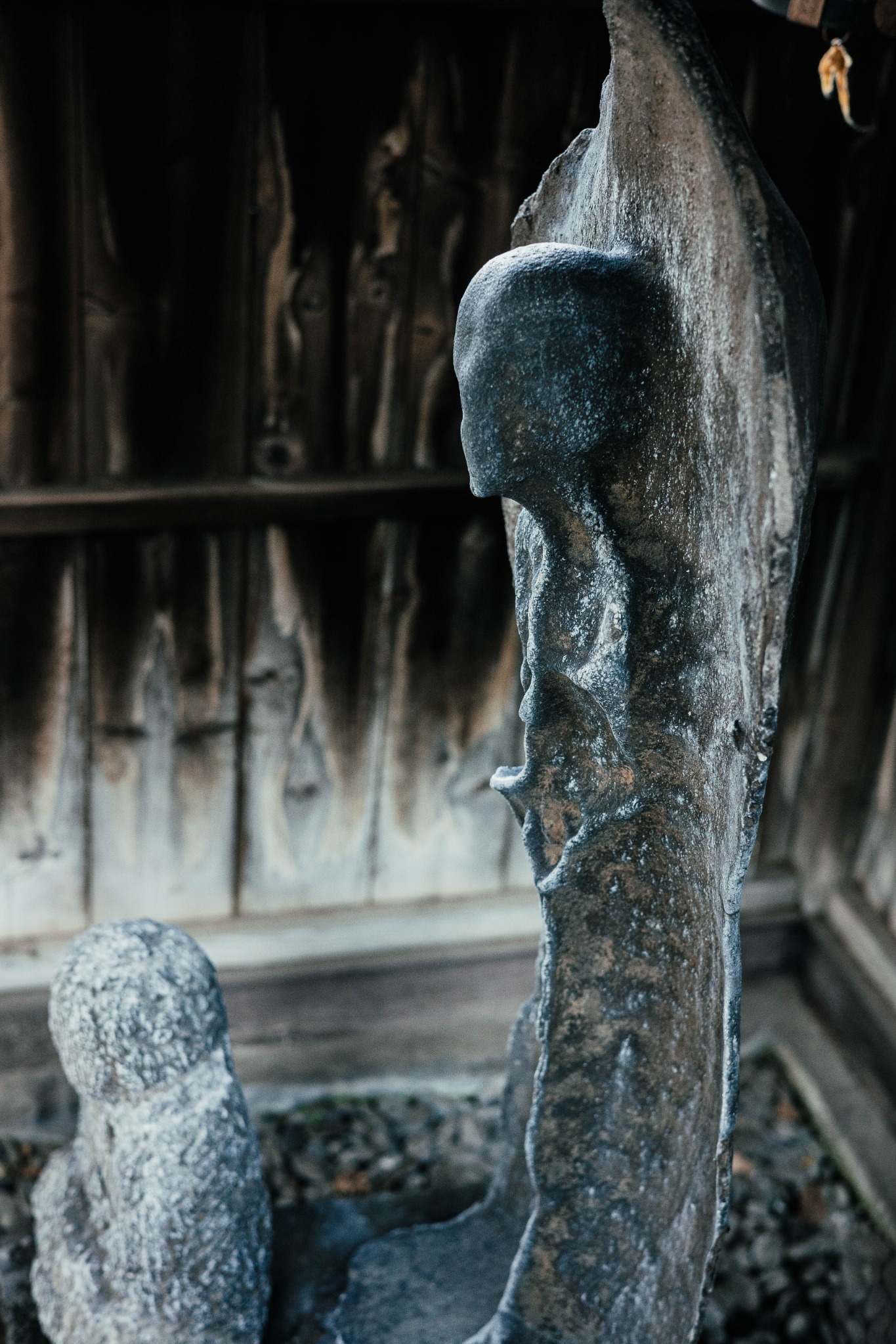
Side view of Yūrei Jizō, showing how little the relief projects from the stone slab.

Takanawa, Tokyo · Takanawadai

Kofukuji Temple — The Ghost Jizō

From the front, Kofukuji’s Yūrei Jizō still has something resembling a human face. From the side, it looks as though much of the figure has already left.

How it came to look this way is uncertain. In an interview, the temple’s priest suggested that an older Jizō might have gradually worn down, partly through worshippers pouring water over it.

Jizō is a Buddhist figure associated with protection and compassion. At Kofukuji, people pray to this figure for children to grow up healthy, although its nickname means “Ghost Jizō”.

Its appearance is not an obvious advertisement for the service.

Read the full story
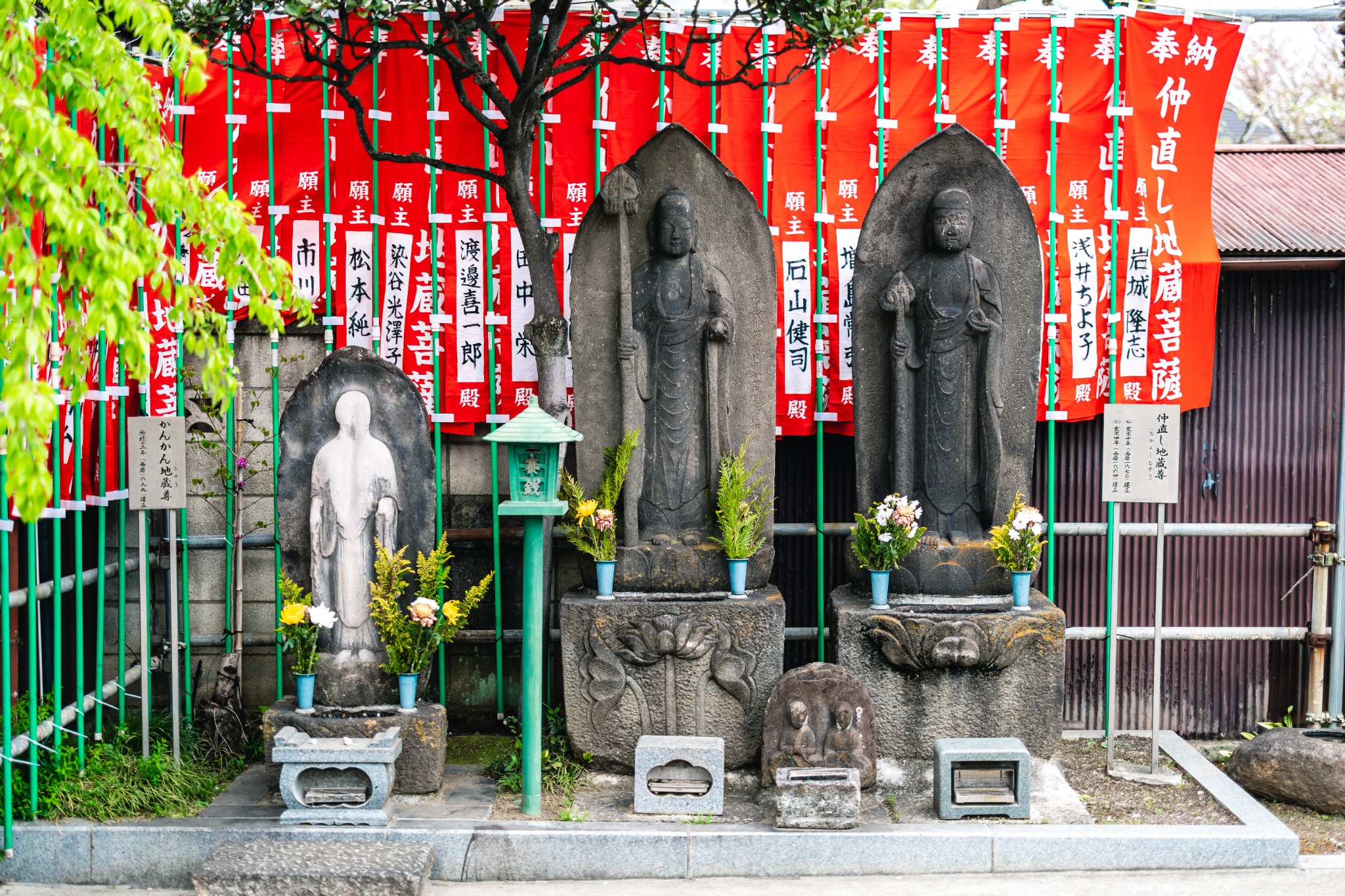
Kankan Jizō standing beside less-worn neighbouring stone figures at Anyoin Temple.

Senju, Tokyo · Kita-senju

Anyoin Temple — Kankan Jizō

Anyoin’s Jizō has also lost most of its face, but this one comes with a soundtrack.

Kan. Kan.

Worshippers strike the figure with small stones while praying for relief from illness and other troubles. The sound gives Kankan Jizō its name; the repeated impacts have helped give it its present shape.

Beside it, two older stone figures retain distinct faces, clothing and objects in their hands. Kankan Jizō has become something closer to an outline. For a figure asked to relieve discomfort, it has accepted an unusually physical workload.

At Kofukuji, the missing features leave a question. Here, the small stones laid out in front of the statue supply a fairly direct explanation.

Read the full story

Cats and foxes

Faith in multiples

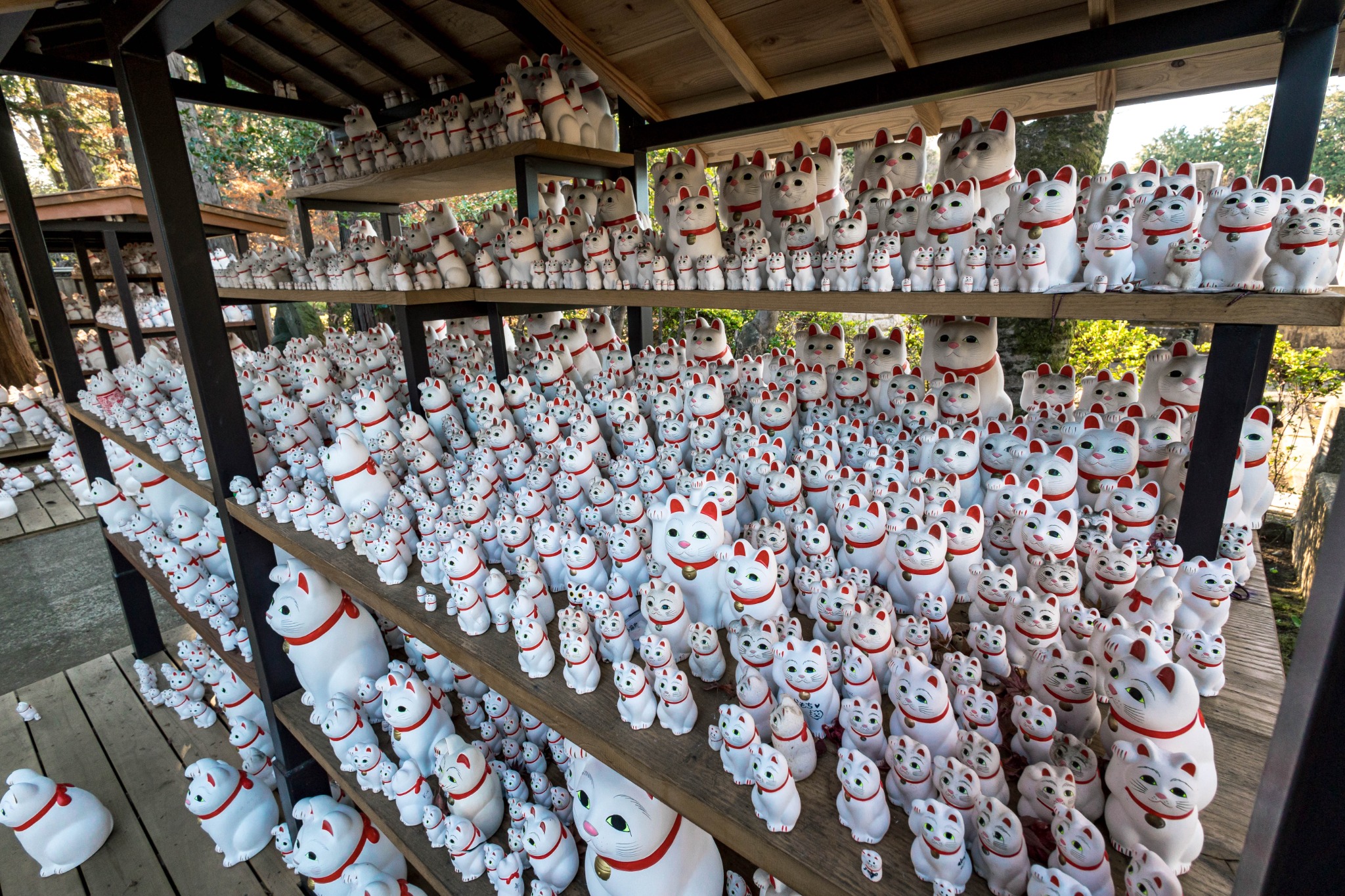
Dense rows of maneki-neko figures filling outdoor shelves at Gotokuji Temple.

Setagaya, Tokyo · Miyanosaka / Gotokuji

Gotokuji Temple — Where Lucky Cats Come Back

Gotokuji’s white maneki-neko gather in rows, with tiny figures fitted into the gaps between larger ones. Each has a paw raised. Individually, they are quite polite. Collectively, they have taken over.

Many have been brought back as offerings after a wish was fulfilled. What looks like a vast collection of the same object is the result of separate people having something to hope for, then a reason to return.

Unlike the familiar maneki-neko associated with wealth, Gotokuji’s Shofuku Manekineko carry no gold coin. The temple associates them with en: connections and fortunate encounters. Making something of those encounters remains the human part of the arrangement.

Read the full story
Black and white fox statues in different poses at Keihin Fushimi Inari Shrine.

Kawasaki, Kanagawa · Shin-Maruko / Musashi-Kosugi

Keihin Fushimi Inari Shrine — 108 Foxes

Foxes are the messengers of Inari, the deity associated with rice, agriculture and prosperity. Keihin Fushimi Inari has 108, arranged among rocks in an assortment of sizes, expressions and attitudes towards sitting upright.

Some are alert. Others lean, recline or tuck themselves into hollows. Being a divine messenger appears to leave room for personal preference.

The count is exact: a stone monument in the grounds records the enshrinement of 108 divine messengers on 8 March 1964.

In Japan, the number 108 is also familiar from Buddhism, where it represents earthly desires and delusions. Temple bells are traditionally struck that many times at New Year. The shrine gives a different explanation for its foxes: 100, a very large number, plus eight, a lucky one. The foxes give the solemn number a remarkably informal appearance.

At Gotokuji, the crowd grows through returned offerings. Here, the headcount was carved in stone.

Read the full story

What the city kept

Sacred figures beside violent history

The crowds of cats and foxes make faith conspicuous. In Minamisenju, two temples ask you to notice something less cheerful: how people who died violently continue to be remembered.

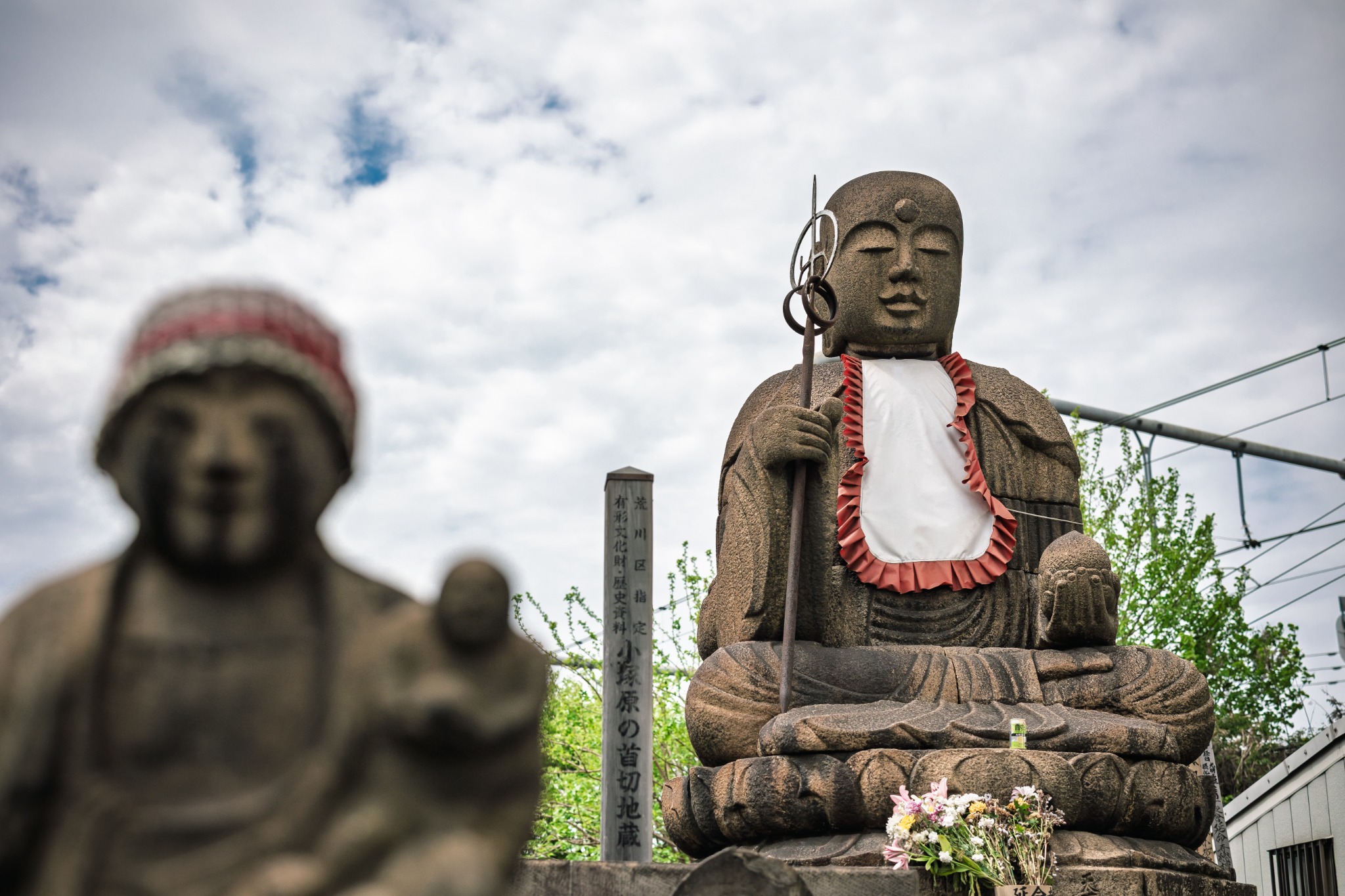
The large Kubikiri Jizō rising behind smaller stone Jizō figures in the grounds of Enmeiji Temple.

Minamisenju, Tokyo · Minamisenju

Enmeiji Temple — The Beheading Jizō

“Beheading Jizō” is a difficult name to reconcile with a white bib edged in a pink frill.

The statue stands on part of the former Kozukappara Execution Ground. It was erected in 1741 to commemorate people executed there. The name belongs to the memorial, not the executioner.

The flowers and carefully fitted bib belong to the continuing work of remembrance.

Railway wires cross the sky behind the Jizō. The railway is part of the history too: its construction divided the old temple grounds. Tokyo has repeatedly rearranged the surroundings. Keeping the statue here has required rather more effort than its calm expression suggests.

Read the full story
Entsuji Temple courtyard with the giant Kannon above and the historic Kuro-mon visible below.

Minamisenju, Tokyo · Minamisenju / Minowabashi

Entsuji Temple — The Giant Kannon and the Black Gate

Entsuji’s golden Kannon is difficult to miss. She rises above the temple grounds on a scale usually reserved for buildings.

An old wooden gate nearby requires a different kind of attention. Its surface is pitted with bullet scars from the Battle of Ueno in 1868.

The battle took place elsewhere. The gate is here because of what the temple did afterwards.

Entsuji’s priest sought permission to care for the bodies of the defeated Shōgitai fighters, who had been branded rebels. Their remains were brought to the temple, which continued to hold memorial rites for them. The gate followed decades later.

One part of Entsuji announces itself from a distance. The other keeps its history in small holes in the wood.

Read the full story

The carving is only the beginning of the story. What happens afterwards leaves its own traces: a missing face, a crowded shelf, flowers placed before a memorial.

You can photograph the figures without knowing any of this. It is harder to look at them in quite the same way once you do.

Before you go

Visiting these places

Active places of worship

These are active temples and shrines, not collections assembled for curious visitors. Keep voices low, avoid getting in the way of people who are praying, and follow current notices about photography and access.

Some of these stories involve touching, pouring water over or even striking sacred figures. Follow current on-site instructions before taking part.

Check before setting out

At Gotokuji, grounds and office hours differ: the temple currently lists 6:00–17:00 for visiting and 8:00–15:00 for its office. Check the official website if you want a cat figure or goshuin, rather than only a walk around the grounds.

For commercial photography or guiding at Gotokuji, consult the temple in advance. The individual stories link to location and visitor information for each stop; do not assume all six keep the same hours.

Comfortable walking shoes are useful. Carry some cash if you plan to make offerings or request goshuin; neither is required simply to follow this guide.

Information last checked: September 26, 2026 for Gotokuji’s access, opening hours and commercial-activity notice, and the Shinjuku access example; October 3, 2026 for the Ueno access example.

Choose your route

Planning your visit

Several of these places combine easily into a single outing. The photographs suggest a fairly compact gathering; the railway map is less accommodating.

Plan the route

The six places at a glance

Three sit around Senju and Minamisenju. The other three form a wider route through Setagaya, Kawasaki and Takanawa.

The map loads as you approach it.

Explore this guide in Google My Maps

Includes stations and suggested stops. Opens in a new tab.

The compact route

Allow 2–3 hours

Senju–Minamisenju

  1. Enmeiji
  2. Entsuji
  3. Anyoin

Getting there: Ueno to Minamisenju takes about 6 minutes on the Hibiya Line.

Start at Enmeiji, about 4 minutes on foot from Minamisenju Station, then walk on to Entsuji. Return to Minamisenju and take the Hibiya Line one stop to Kita-senju; Anyoin is roughly 10 minutes on foot from there. The route ends at Kita-senju, a major interchange: see Tokyo Metro’s station information for onward connections.

The individual subjects are compact stops, although Entsuji deserves a little longer for both the giant Kannon and the bullet-scarred black gate.

The route also fits easily before or after Ueno or Asakusa. Ueno has an additional connection: it is where Entsuji’s gate stood during the battle.

For a shorter outing: visit just Enmeiji and Entsuji around Minamisenju. You can leave out the final leg to Kita-senju.

The wider route

Allow half a day

Gotokuji–Kawasaki–Takanawa

  1. Gotokuji
  2. Keihin Fushimi Inari
  3. Kofukuji

These three take you through Setagaya, Kawasaki and Takanawa. The journeys between them account for a larger share of the outing.

Getting there: from Shinjuku, allow about 15–20 minutes by Odakyu train to Gotokuji Station, then about 15 minutes on foot to the temple. Check Odakyu services; a local train is the straightforward option. Miyanosaka Station on the Tokyu Setagaya Line is closer to the temple, about 5 minutes on foot.

For the next legs, search for Shin-Maruko for the foxes and Takanawadai for Kofukuji. These are separate rail journeys, not a continuous walking route.

Gotokuji and Keihin Fushimi Inari reward wandering: small cats fill gaps, and foxes occupy places you may miss on the first pass. Kofukuji offers a more concentrated encounter with one particularly elusive face.

The three work well if you want the widest visual range in a single outing: hundreds of white cats, a shrine full of foxes, and one Jizō that has almost faded away.

The complete guide

Allow a full day

All six in one day

Possible, but not a checklist you need to finish.

A practical geographic order is:

  1. Gotokuji
  2. Keihin Fushimi Inari
  3. Kofukuji
  4. Enmeiji
  5. Entsuji
  6. Anyoin

The individual sights are compact, but crossing Tokyo and Kawasaki adds train journeys, station walks and waiting time. Start early, check each temple’s visiting arrangements, and allow a full day with breaks.

Conversation

Comments are reviewed before appearing. The internet already contains enough unattended surprises.

Checking comments…