Ōe Church: A French Priest with an Amakusa Accent
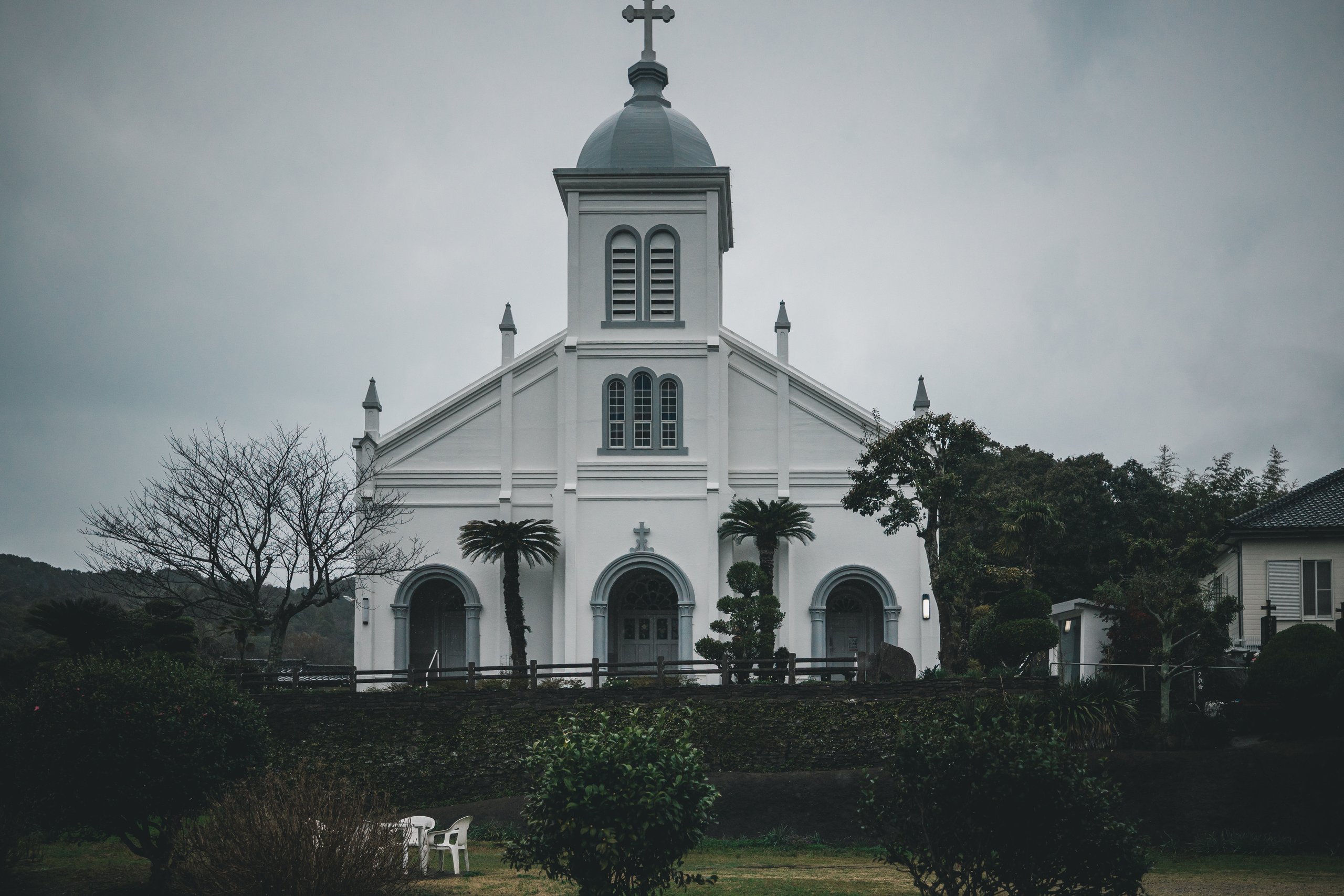
Three arched entrances face the garden at Ōe Church. Above them, narrow windows rise towards a domed tower and a cross. The white façade stands out against the wooded hills of Amakusa, a group of islands in Kumamoto Prefecture, off the west coast of Kyushu in southwestern Japan.
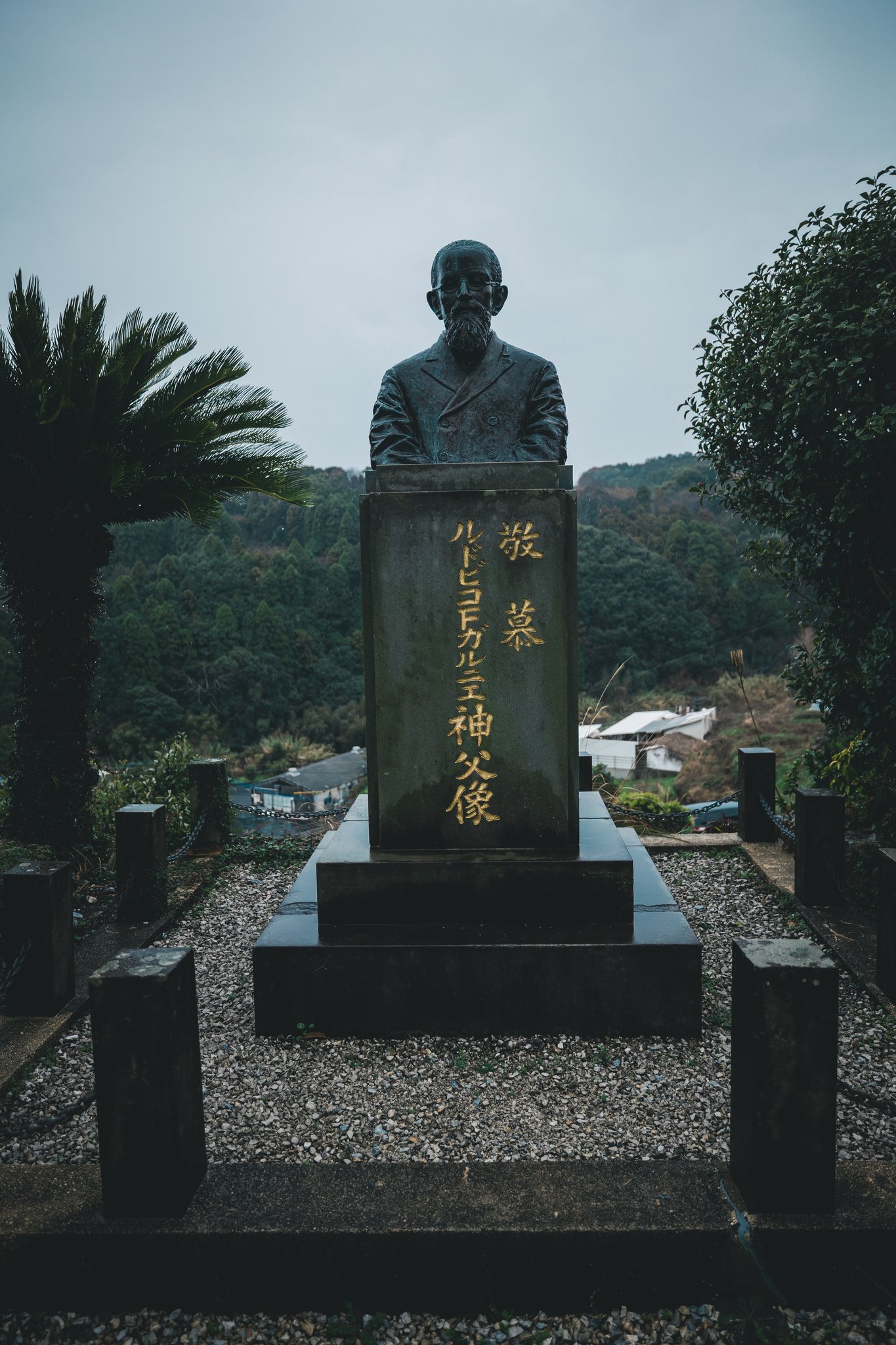
A French priest helped build this church. Nearby, his bearded likeness stands on a tall stone pedestal, his name written in Japanese. Father Garnier had become rather more local than his birthplace might suggest. His sermons were delivered in the Amakusa dialect.
A local voice
Christianity had reached Amakusa in the sixteenth century. Under the bans and persecution that followed in the seventeenth, communities continued their faith in secret, passing down prayers and baptism without resident priests. Japan lifted the prohibition in 1873, allowing churches and public Catholic worship to return.
Garnier belonged to that later chapter. Born in France in 1860, he became a missionary with the Paris Foreign Missions Society and spent nearly half a century serving Ōe. The community he joined had a Christian history extending far beyond his own arrival.
He is remembered for speaking to his congregation in their own dialect and calling out to sick parishioners in the same familiar language when he visited them. The French priest had gone some way beyond textbook Japanese.
In 1907, five writers from Tokyo, among them the poets Yosano Tekkan and Kitahara Hakushū, came down the coast on foot on the journey later published as Gosoku no Kutsu, or Five Pairs of Shoes. At one stop along the way, an elderly man who let them rest upstairs spoke to them only in stiff, formal Japanese. The local speech, they noted, was all but unintelligible to outsiders; perhaps for that reason, he thoughtfully avoided it.
The next day in Ōe, they called on the priest the villagers called Pāteru-san, roughly ‘Father’. He had been in the village for fifteen years, they wrote, and his Amakusa speech was rather good. He sent his cook, Mosuke, for water and invited them in: “Ue ni oagari masse.” Do come up.
The Japanese host had spared them the dialect. The French priest did not.
The church they saw that day was not the one in the photographs. That was still twenty-six years away.
His work also took him to nearby Sakitsu. He travelled between the two communities over a mountain pass, along a route known as the Priest’s Road.
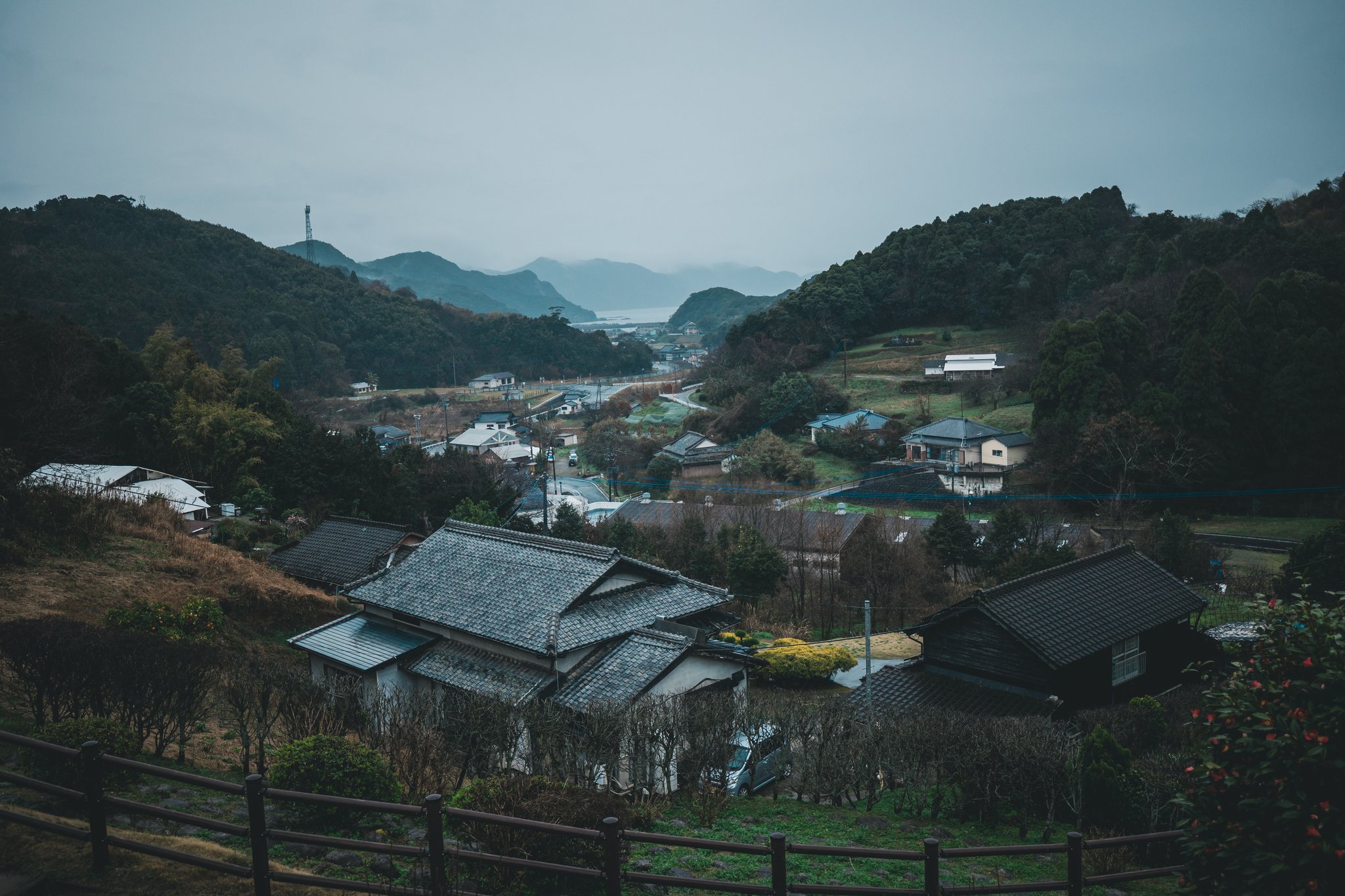
From the hillside at Ōe, tiled roofs fill the foreground. Roads wind between the houses and fields, while a strip of sea appears between the hills. The church looks out over the place where he spent much of his life.
A church worth saving for
Garnier kept his own expenses low. He wore a patched cassock, ate the same food as the poorer local faithful and saved financial help sent by his family in France. Over the years, he built up a fund for a new church.
Garnier had been working here for about forty years when the present church was completed in 1933.
He committed his personal funds to its construction, working with local parishioners. The architect and builder was Tetsukawa Yosuke, whose churches stand across the Nagasaki region. At Ōe, his Romanesque design gave the hillside its rounded entrances, orderly windows and broad white front.
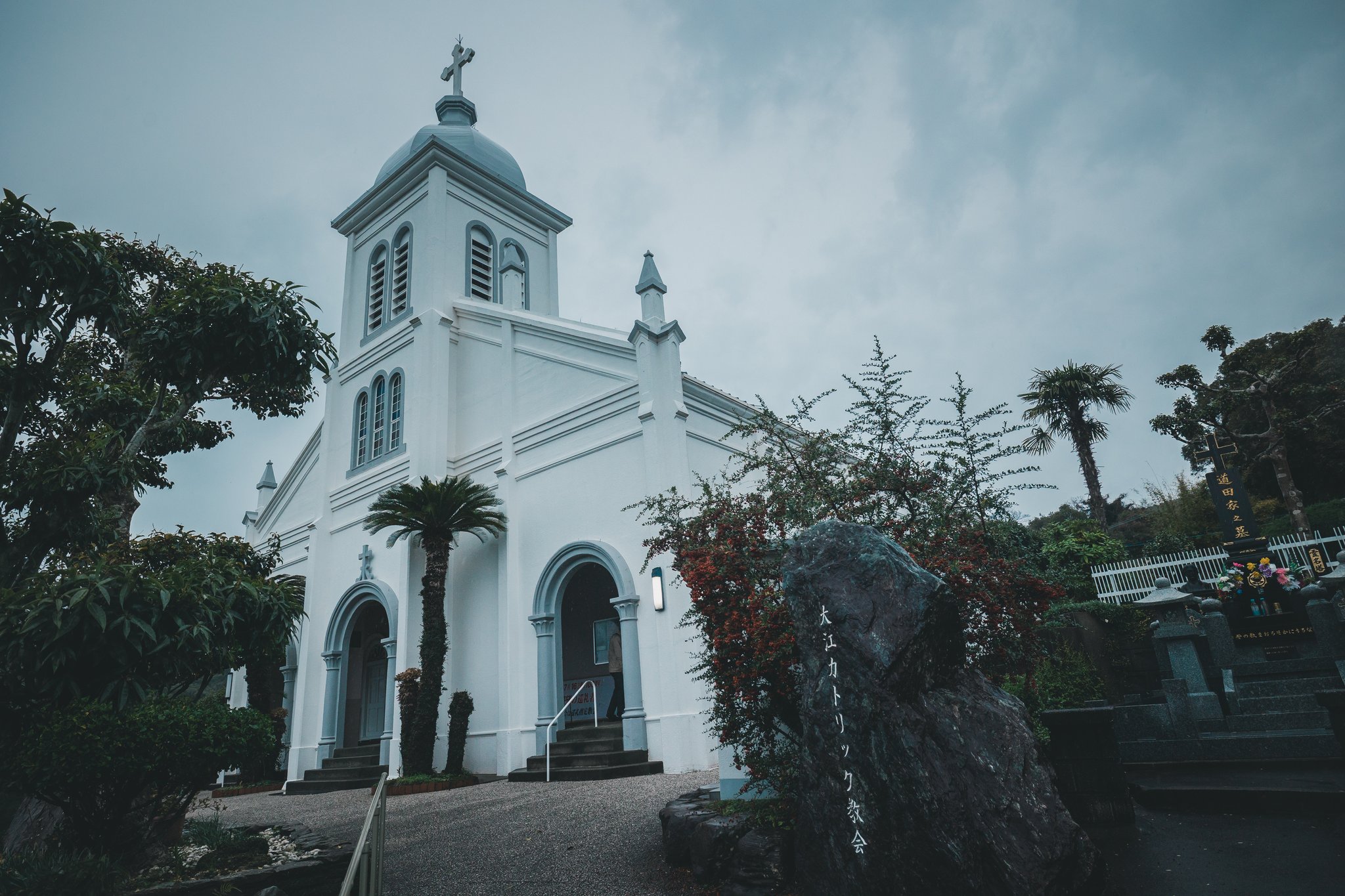
Nearby, the family graves are Japanese in form, with the family name carved down the dark stone, stone lanterns and flowers in front. Then there is a cross on top.
Beside the church
Garnier died in Ōe in 1941. He is said to have asked that money intended for an elaborate grave be given instead to the sick and people in need.
His parishioners nevertheless erected the substantial Garnier memorial that stands beside the church.
In the records of the Paris Foreign Missions Society, he is Louis Frédéric Garnier. On the memorial and the bust, he is Ludovico, another form of Louis, and even those two cannot agree on the katakana: ルドヴィコ on one, ルドビコ on the other. To the village, he was Pāteru-san.
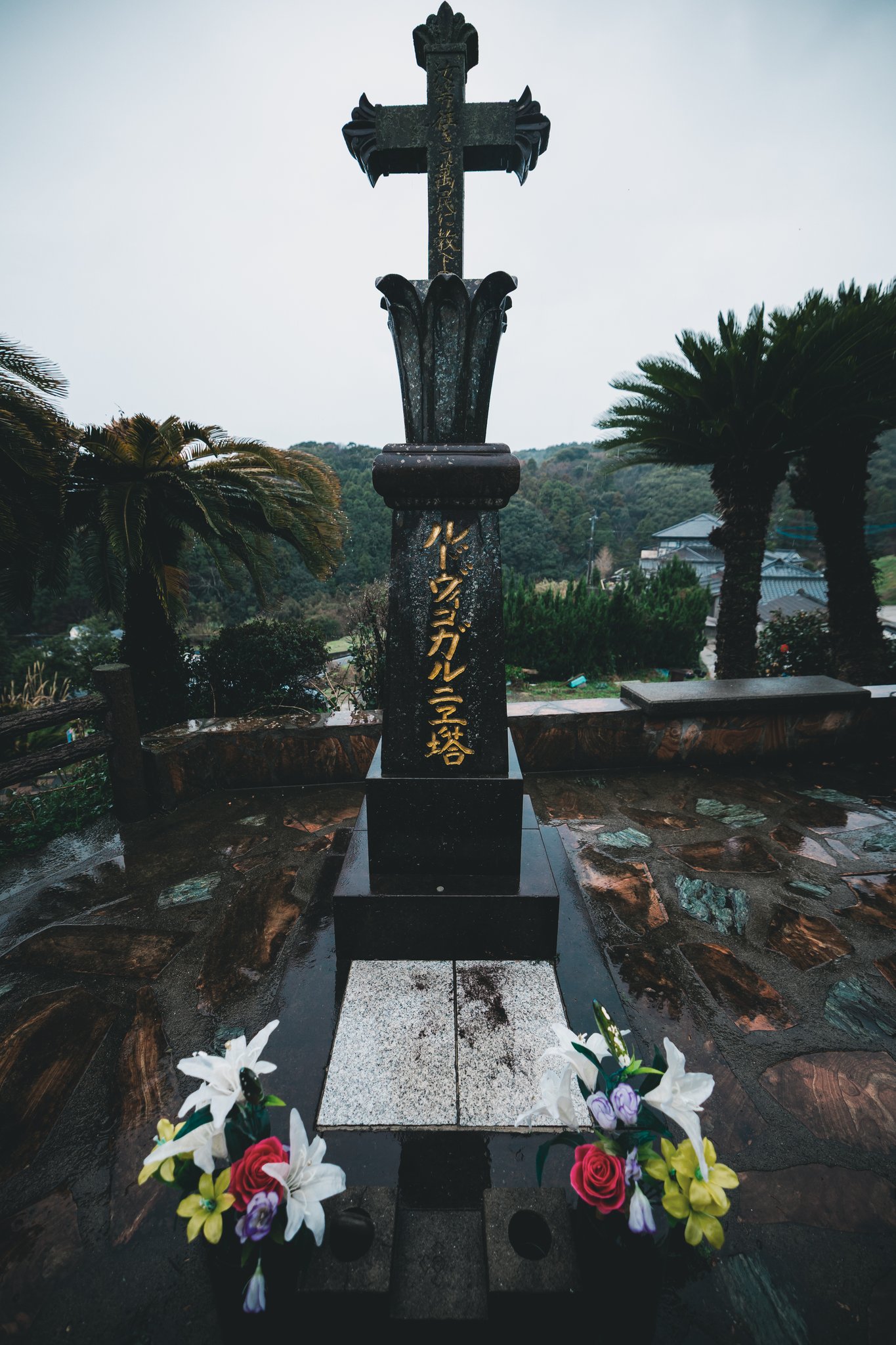
Beside the church he helped pay for, his name is picked out in gold beneath a tall stone cross.
Location
Church
Ōe Catholic Church (カトリック大江教会)
On a hillside in Ōe, western Amakusa, Kumamoto Prefecture
1782 Amakusamachi Ōe, Amakusa, Kumamoto 863-2801, Japan
Practical Information
- Opening hours
- 9:00–17:00. Sightseeing visits pause during Mass, weddings, funerals and other church activities.
- Admission
- Free
- Access
- About 5 minutes on foot from Tenshudō Iriguchi (天主堂入口) bus stop, with an uphill approach. From Hondo Bus Center, change at Ichimachi Chūō (一町田中央). Check bus connections before travelling.
- Parking
- Available; larger buses should use the Amakusa Rosario Museum parking area
- Photography
- Photography is prohibited inside the church. For photography in the grounds and use of images, consult the tourism association’s permission guidance.
- Visitor note
- This is an active place of worship. Visit quietly and check the latest closure notices before travelling.
- Tourism information
- Amakusa Takarajima Tourism Association — Ōe Church
- Closure notices
- Church visiting restrictions — tourism association
- Bus information
- Sanko Bus — routes and timetable search
Information last checked: September 26, 2026Opening hours, access, admission, photography guidance and closure notices
Conversation
Comments
Review pending commentsComments are reviewed before appearing. The internet already contains enough unattended surprises.
Checking comments…
Comments are not available in this migration preview yet. Existing comments remain on the current site.
Leave a comment