Nakatsumiya: Where the Thief Learned His Trade
In one of kabuki's best-known scenes, a young woman of good family appears to be caught shoplifting in a kimono shop. When the trick is exposed, the young woman drops the act. He introduces himself.
He is Benten Kozō, a thief, and his past, he announces, was on Enoshima. Loosely translated:
My misdeeds climbed like the road to the Upper Shrine.
At Iwamoto-in, I robbed the pilgrims in their sleep so often
that in the end I was driven off the island.
The Upper Shrine is this one.
The upper shrine
Today it is called Nakatsumiya, the Middle Shrine: the second of Enoshima Shrine's three shrines on the way up the island, and home to the middle of three goddess sisters. In the thief's day, it was the Upper Shrine.
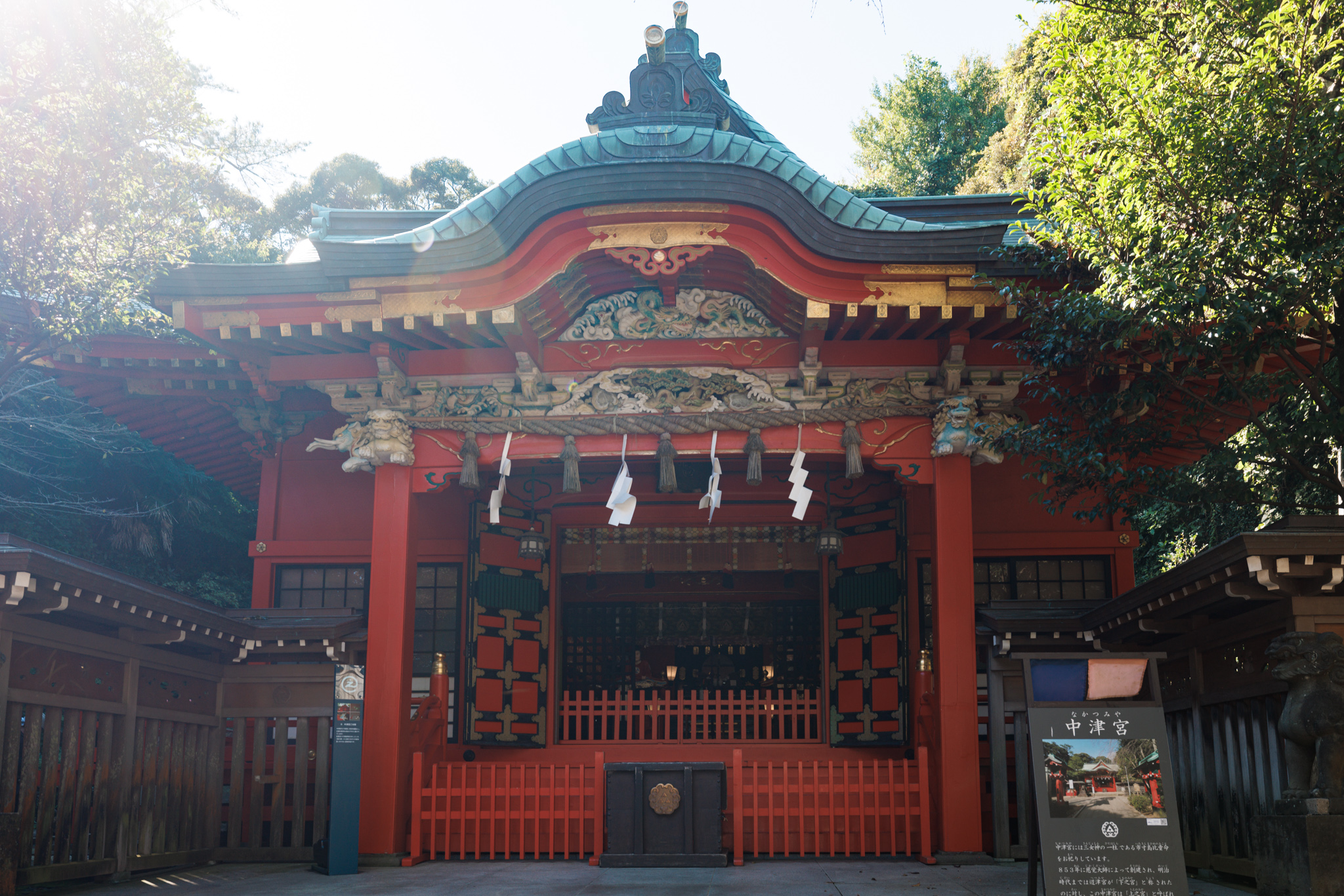
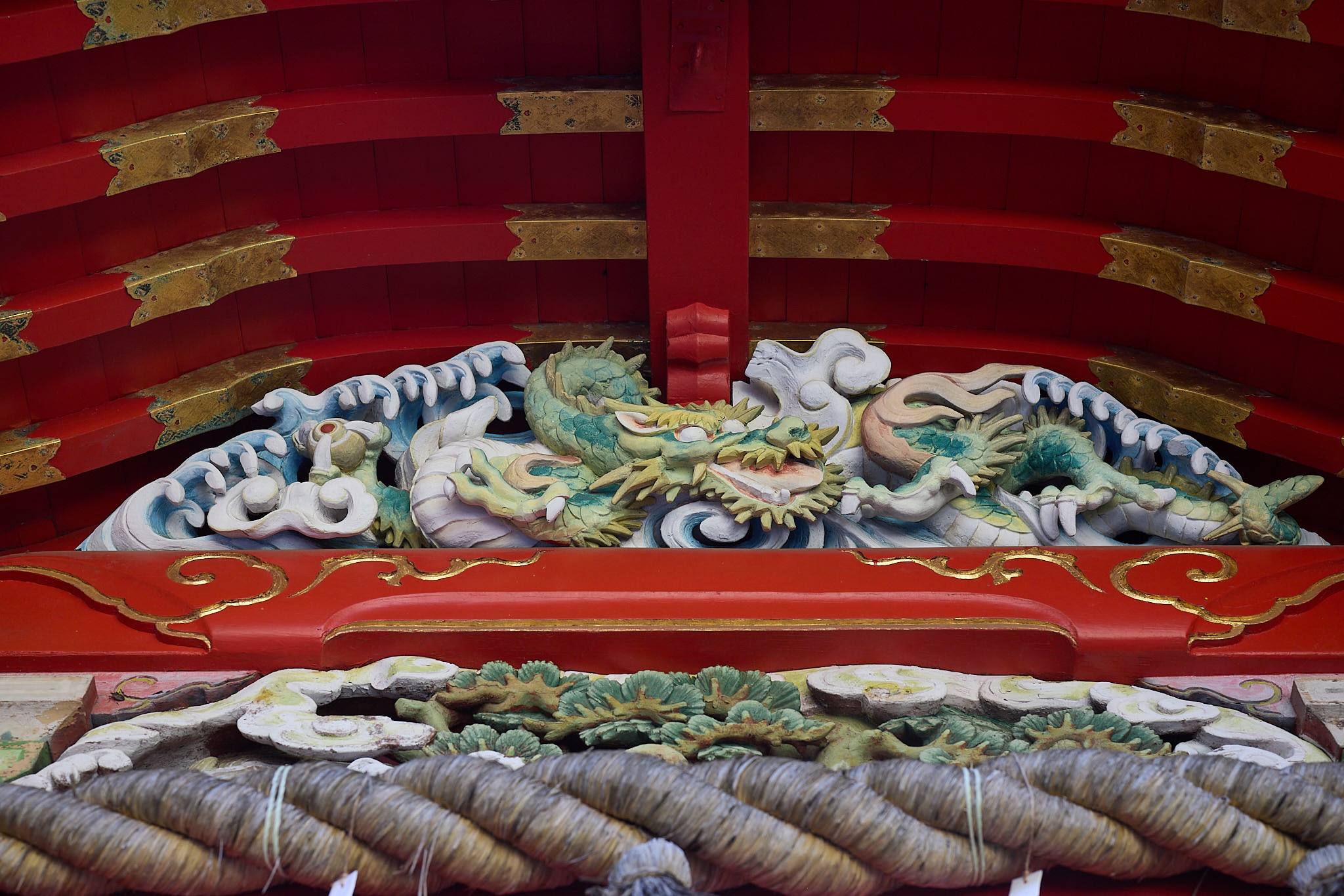
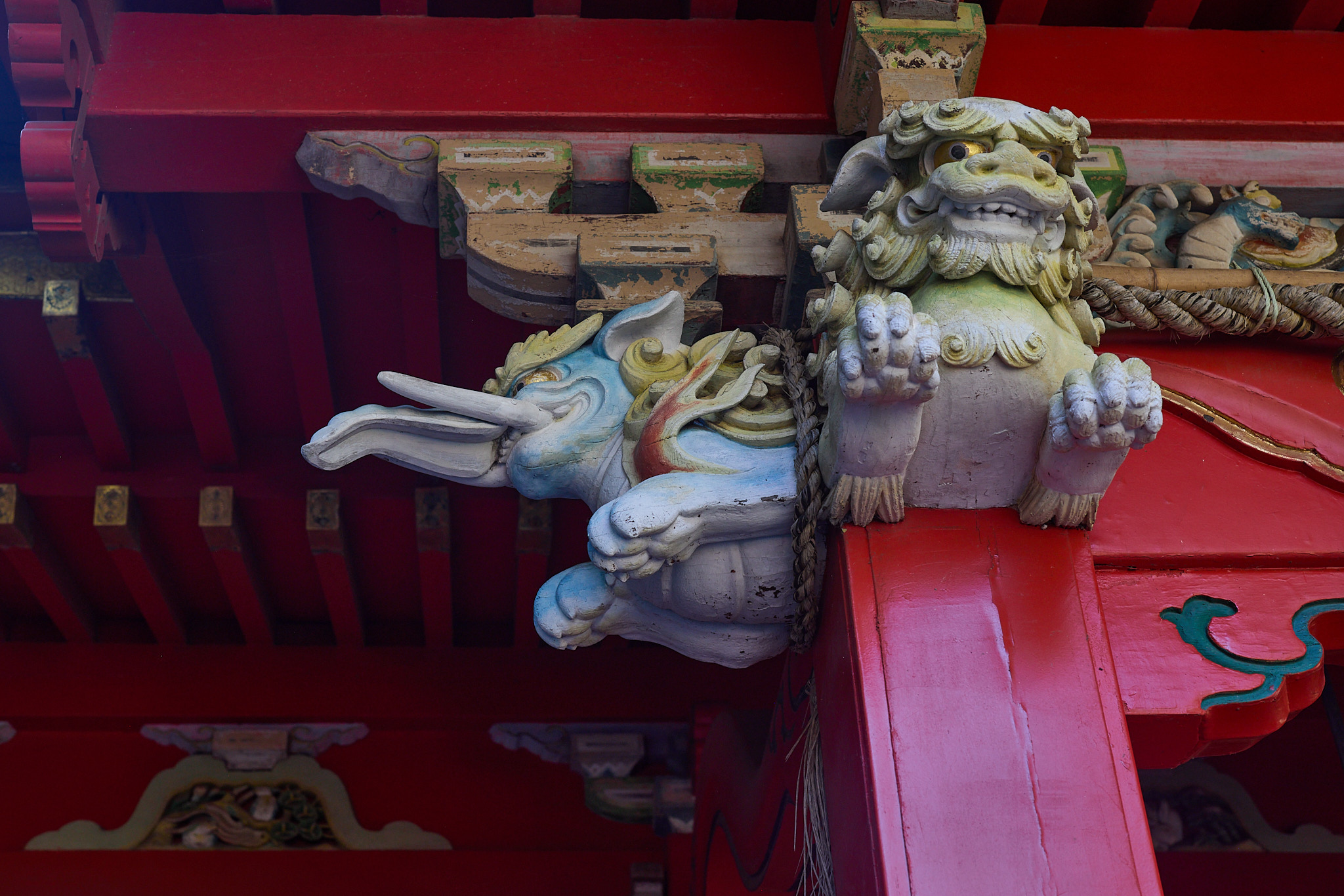
The shrine dates its founding to 853. The present building, all vermilion and gold, recreates the one put up in 1689. Dragons ride the waves under the eaves, and lions hold up the beams.
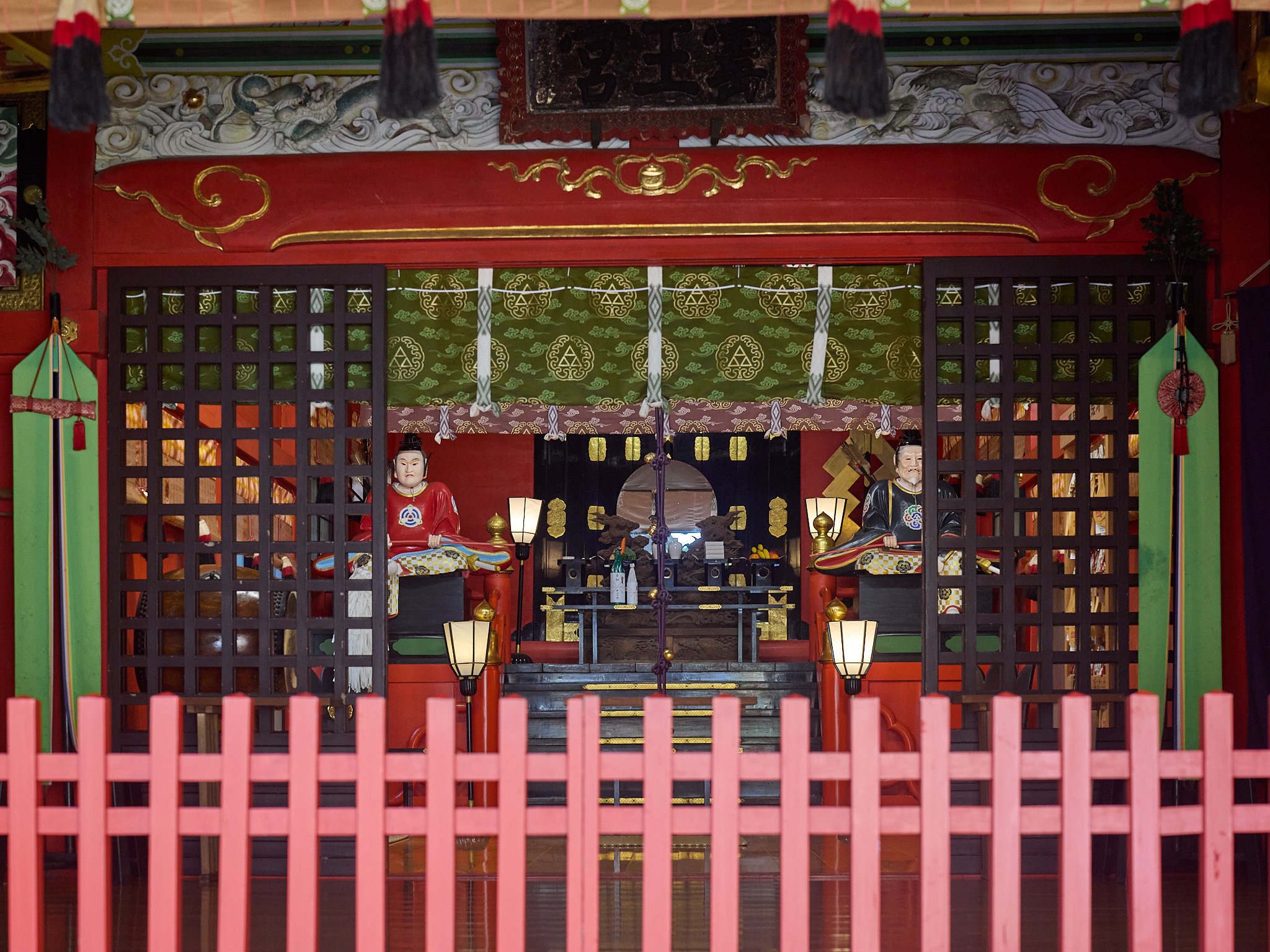
The sign at the shrine says that the stone lanterns in its grounds speak of the faith of Edo's merchants, performers and ordinary people. Benzaiten is a goddess of the performing arts, and Edo's actors came here to pray. Among the lanterns are two given by Edo kabuki theatres, the Nakamura-za and the Ichimura-za.
The Ichimura-za gave its lantern in 1777. In 1862, it was the theatre where Benten Kozō first took the stage.
The theatre that staged the thief had already paid for a lantern at his shrine.
The thief
The play was written by Kawatake Mokuami. The young actor who created the role, later known as Onoe Kikugorō V, made his name with it, and it has stayed in the Kikugorō family ever since. The year after it opened, he came to Enoshima to pray.
It does not hurt that the thief is named after the goddess. Benten is short for Benzaiten.
A beautiful love
The wishes made here now run in a different direction.
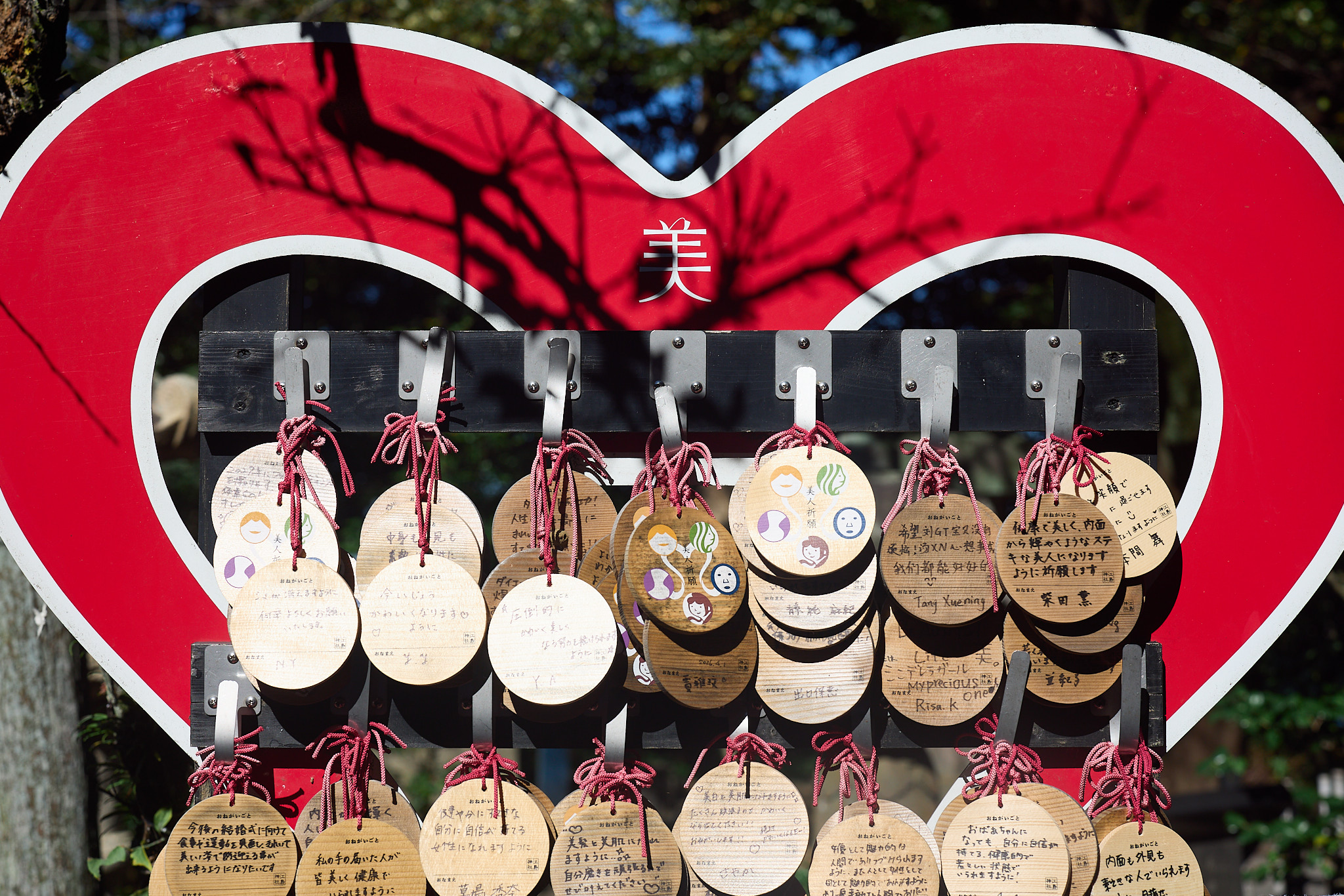
A sign beside the shrine introduces its own pink mark, modelled on the goddess's heavenly robe, with a line in large letters: I want a beautiful love. Round wooden plaques printed “Prayer for beauty” hang inside a heart-shaped stand marked with a single character, 美, beauty.
One of them asks to still be confident, healthy and beautiful when she is a grandmother.
The water harp
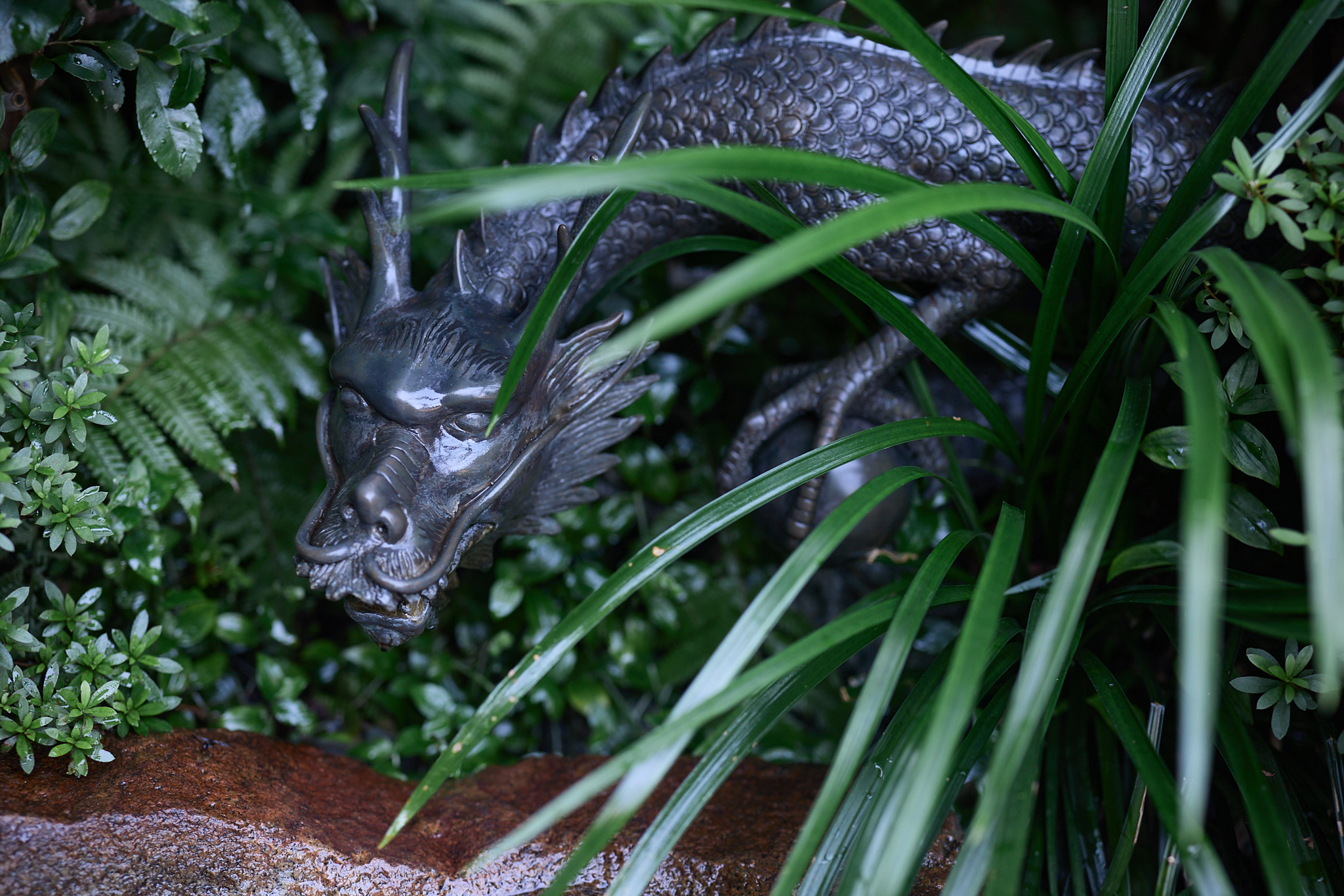
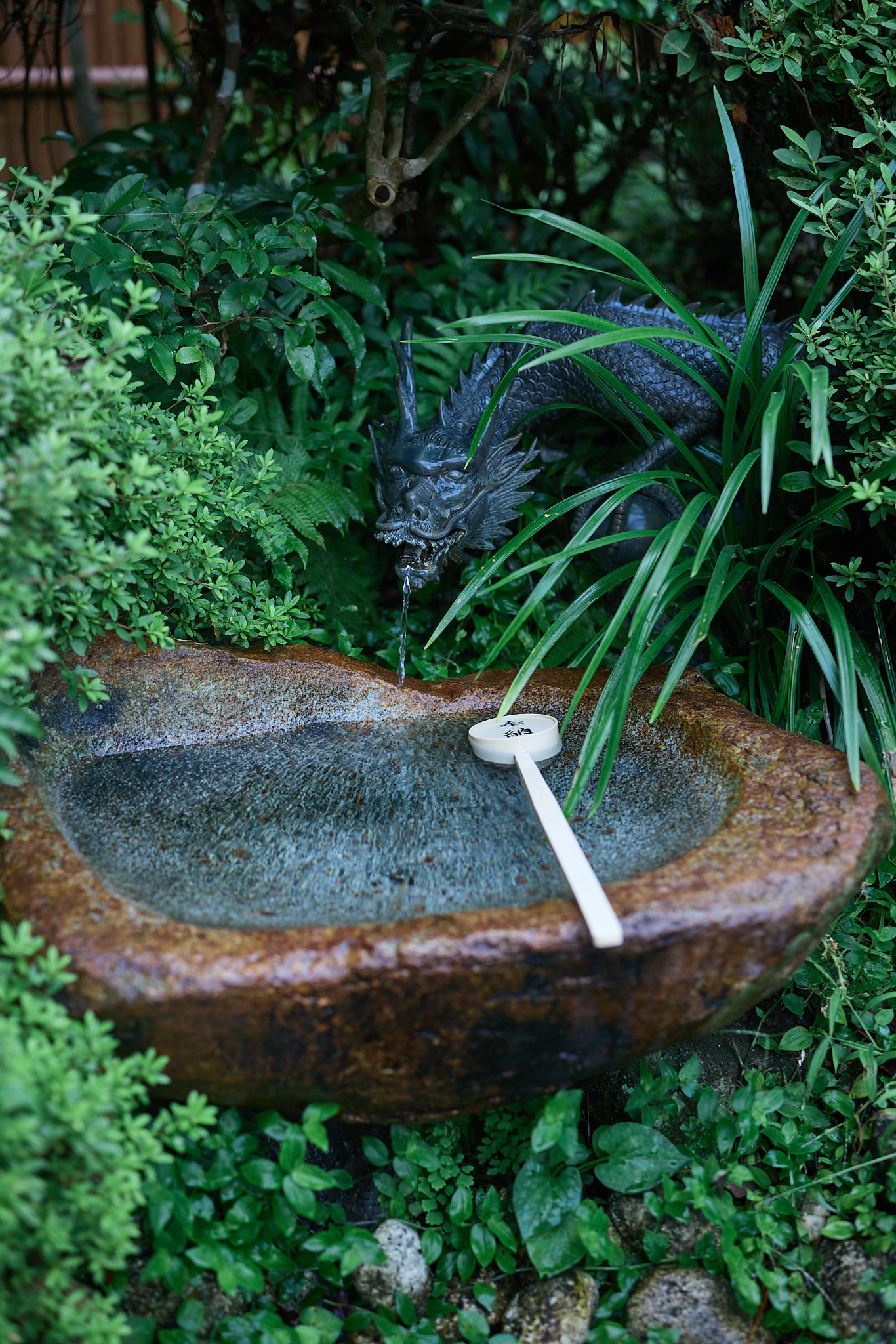
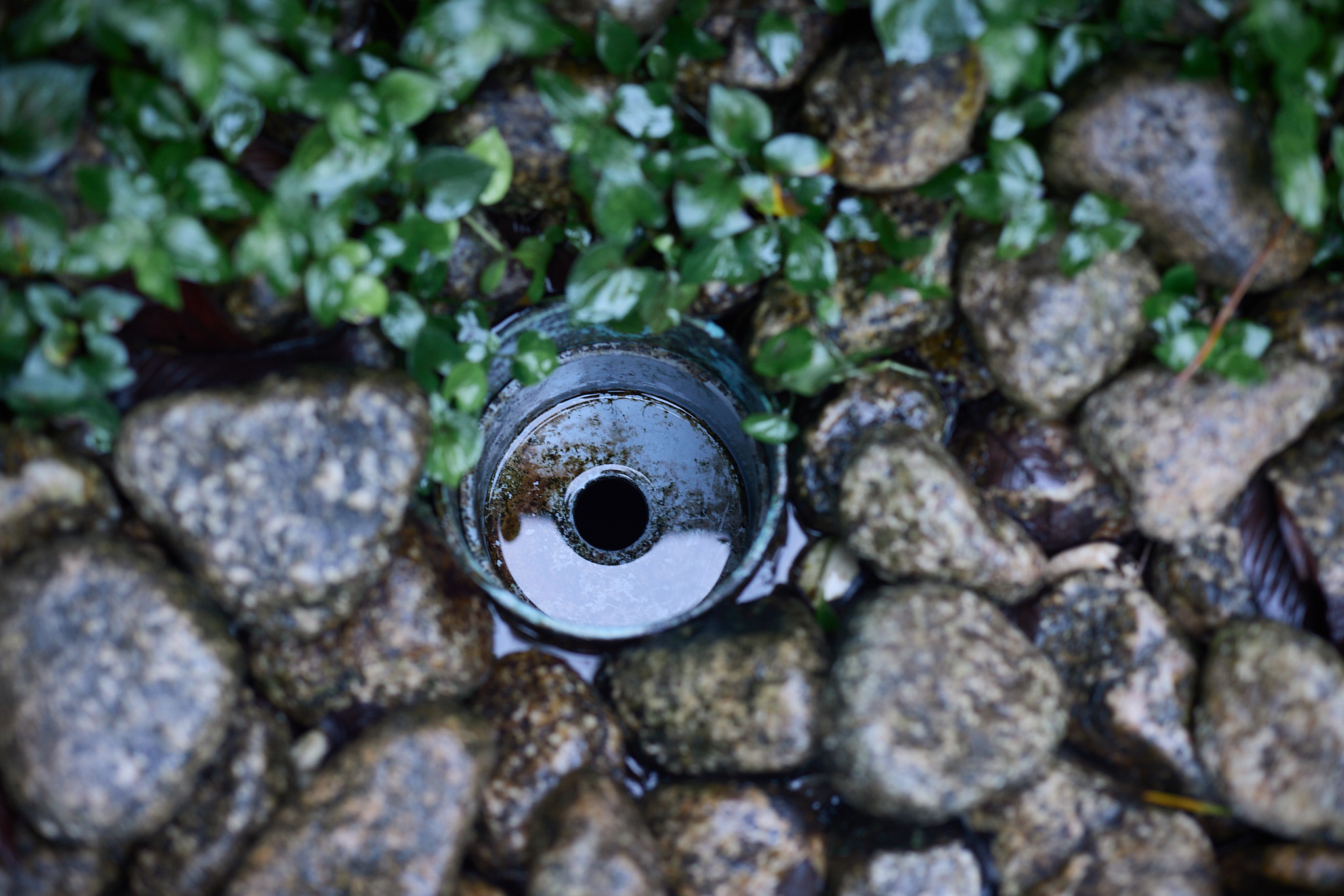
In a small garden beside the shrine is a suikinkutsu, a water harp. Scoop water from the basin and pour it into a hole among the pebbles, and it drips into a jar buried underground. The sign says the echo sounds like a koto, a Japanese harp, and that is where the name comes from.
A dragon watches from the leaves. I poured some in and listened. It is a calming sound.
The handprints
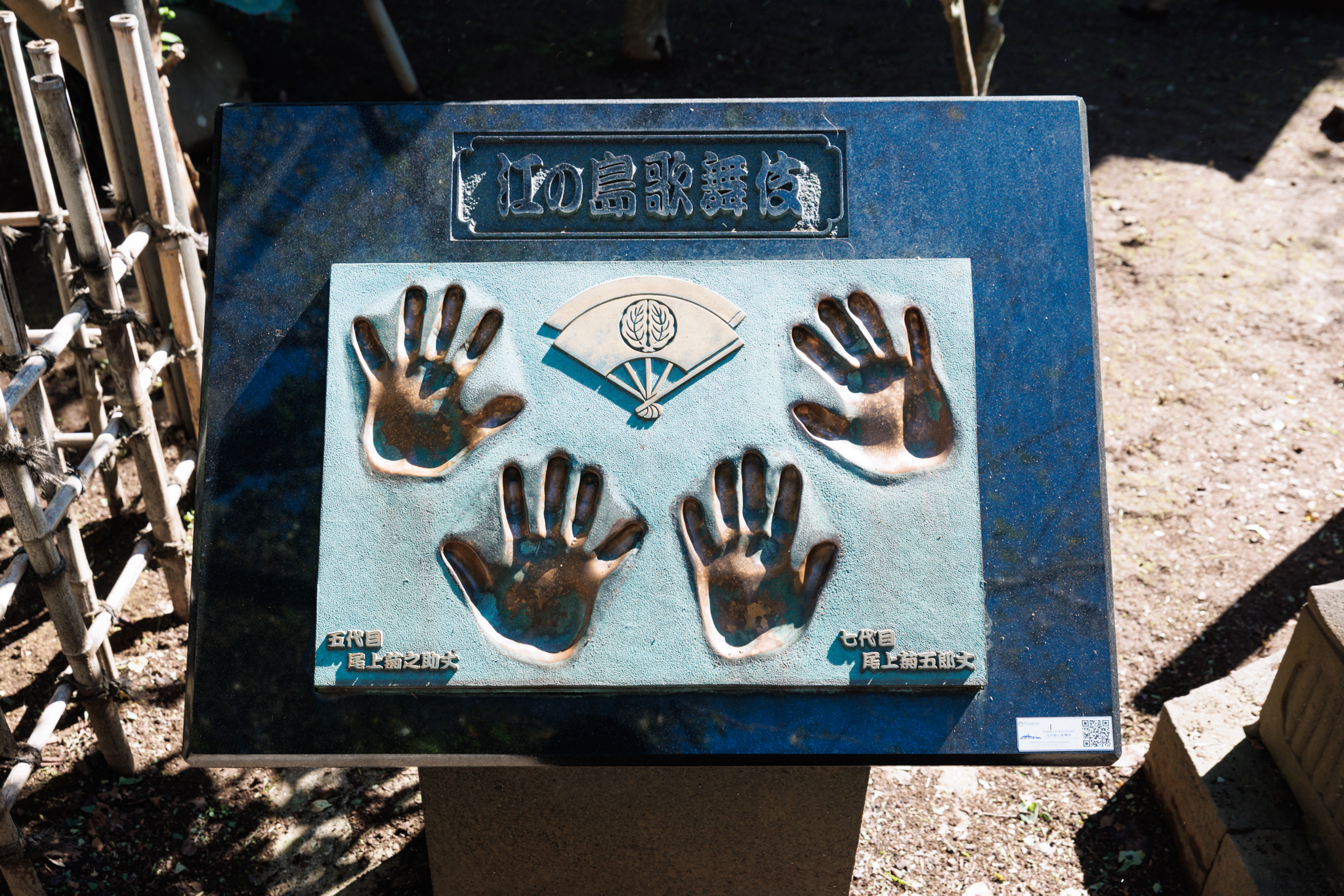
In front of the shrine is the plaque in the photo at the top. In 1999, the island staged the play itself, with Onoe Kikunosuke V as Benten Kozō and his father, Onoe Kikugorō VII, in the cast. The hands are theirs: the son's on the left, the father's on the right, each with his name beneath.
In 2025, the son took his father's name and became Kikugorō VIII. The father kept it too, and is still on stage. For the first time, kabuki has two Kikugorōs at once.
The thief gave his name to prove who he was.
The name under the son's hands now belongs to his own son.
Visit this place
Location
Nakatsumiya, Enoshima Shrine (江島神社 中津宮)
Halfway up Enoshima, above Hetsumiya and below Okutsumiya, reached by stairs or the Enoshima Escar outdoor escalators.
2-3-21 Enoshima, Fujisawa, Kanagawa 251-0036, Japan
Practical information
- Access
- About 20–25 minutes on foot from Katase-Enoshima Station (Odakyu Enoshima Line), across the bridge and up the island by stairs. The paid Enoshima Escar outdoor escalators also run up the hill.
- Admission
- Free
- Visitor note
- The handprints are in front of the shrine. The water harp (suikinkutsu) is in a small garden beside it: scoop water from the basin with the ladle and pour it into the hole among the pebbles, then listen.
- Official website
- Enoshima Shrine — grounds guide (Japanese)
Information last checked: October 27, 2026 (location, access and admission).
Conversation
Comments
Review pending commentsComments are reviewed before appearing. The internet already contains enough unattended surprises.
Checking comments…
Comments are not available in this migration preview yet. Existing comments remain on the current site.
Leave a comment