Shintengai: A Street Growing Older Under a Young Name
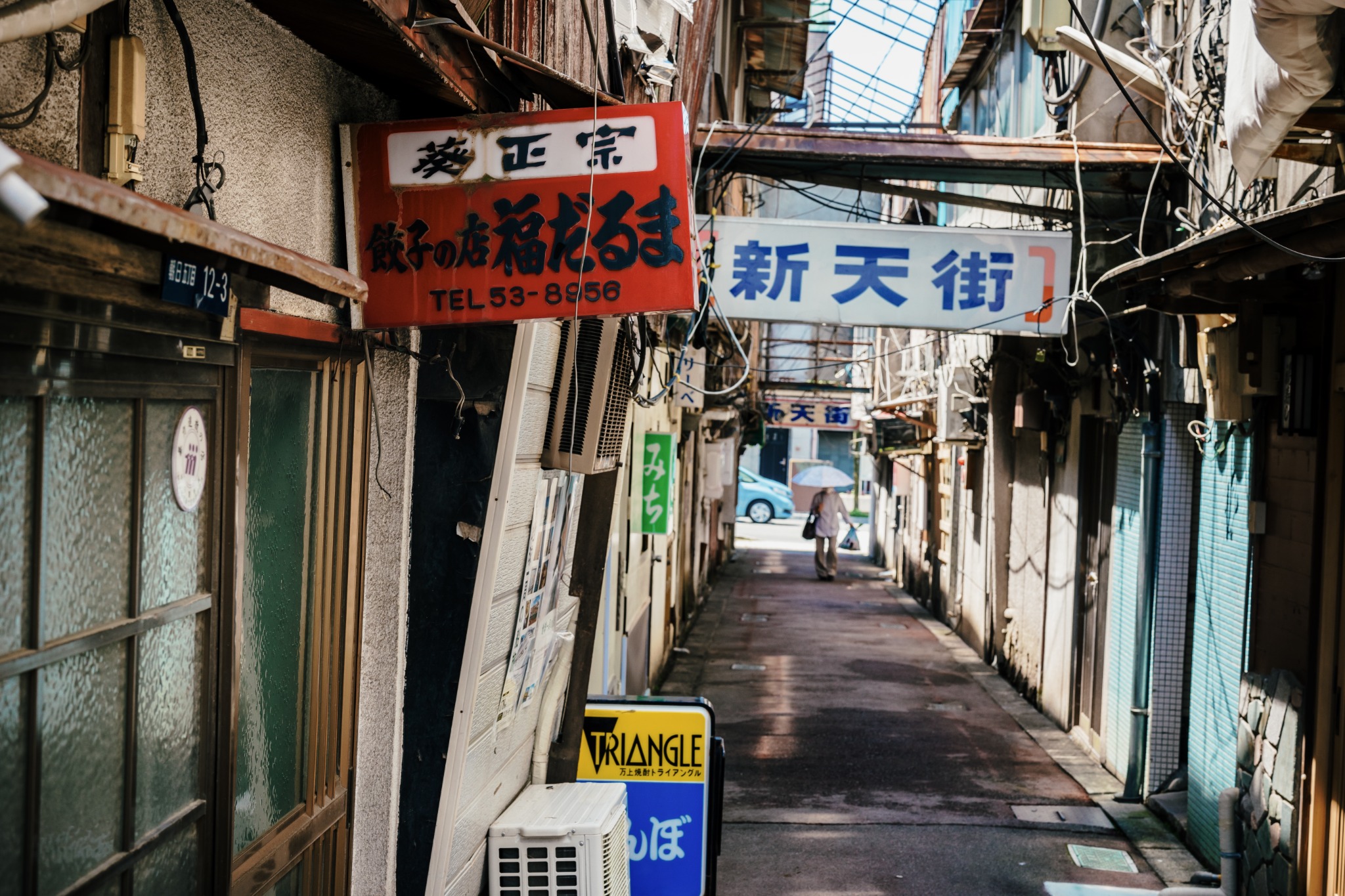
The name still sounds like a beginning. The street beneath it does not.
Above a narrow passage in Kofu, the capital of Yamanashi Prefecture west of Tokyo, hangs a sign reading 新天街 — Shintengai. Its first character means “new.” Below it, old shopfronts, tangled wiring and the bare frame of an arcade roof suggest that the buildings have taken a different approach.
The sign itself looks considerably younger than its surroundings. It is also useful: without it, you might not realise there was a street here at all.
Next to the Shintengai sign, a red one for a gyoza shop gives a phone number in a format Kofu retired in 1999.
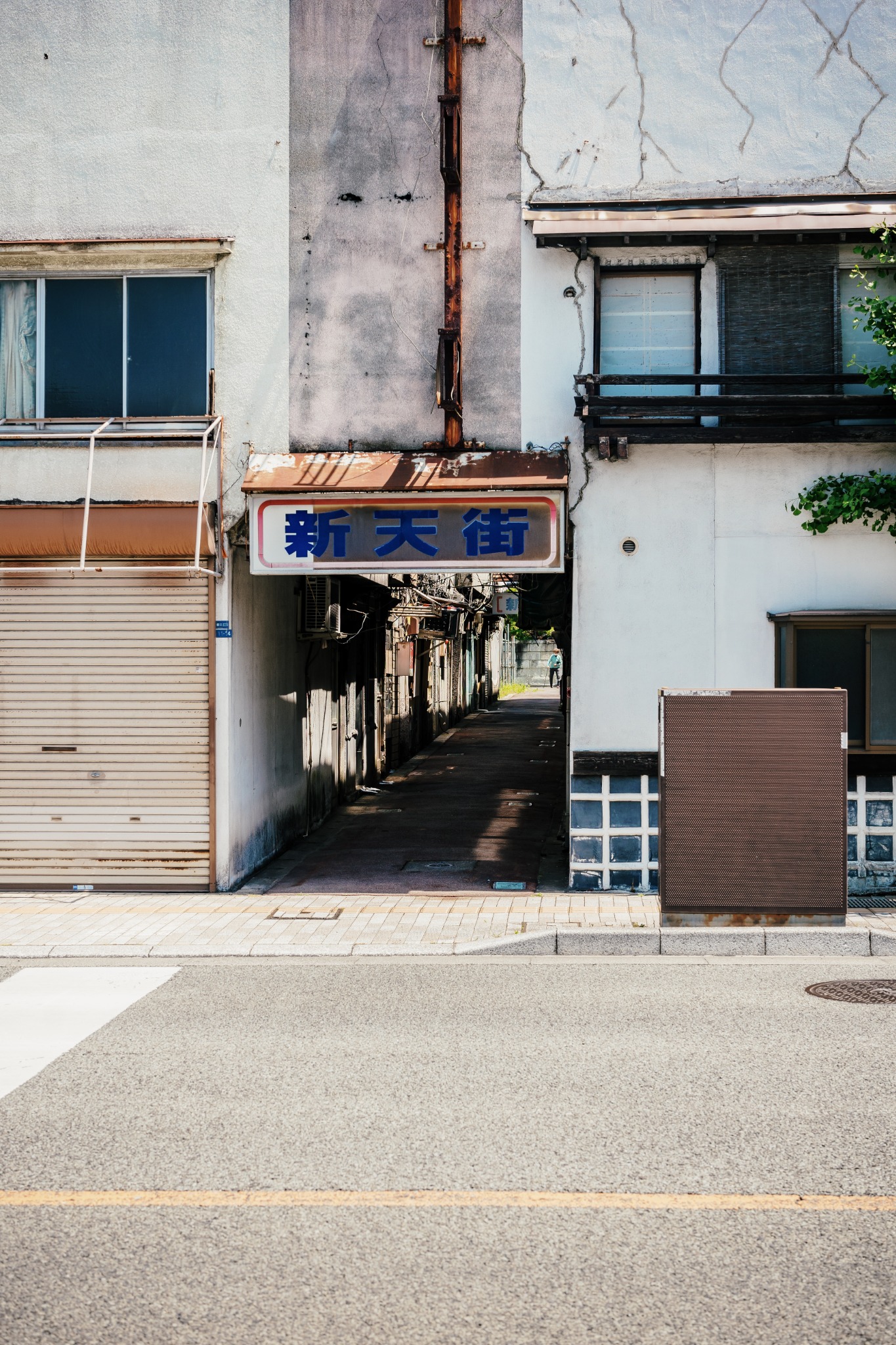
A street with a front door
From the main road, the southern entrance looks almost like the doorway to a single business. It cuts through the ground floor of an old building, with little indication of how much lies behind it.
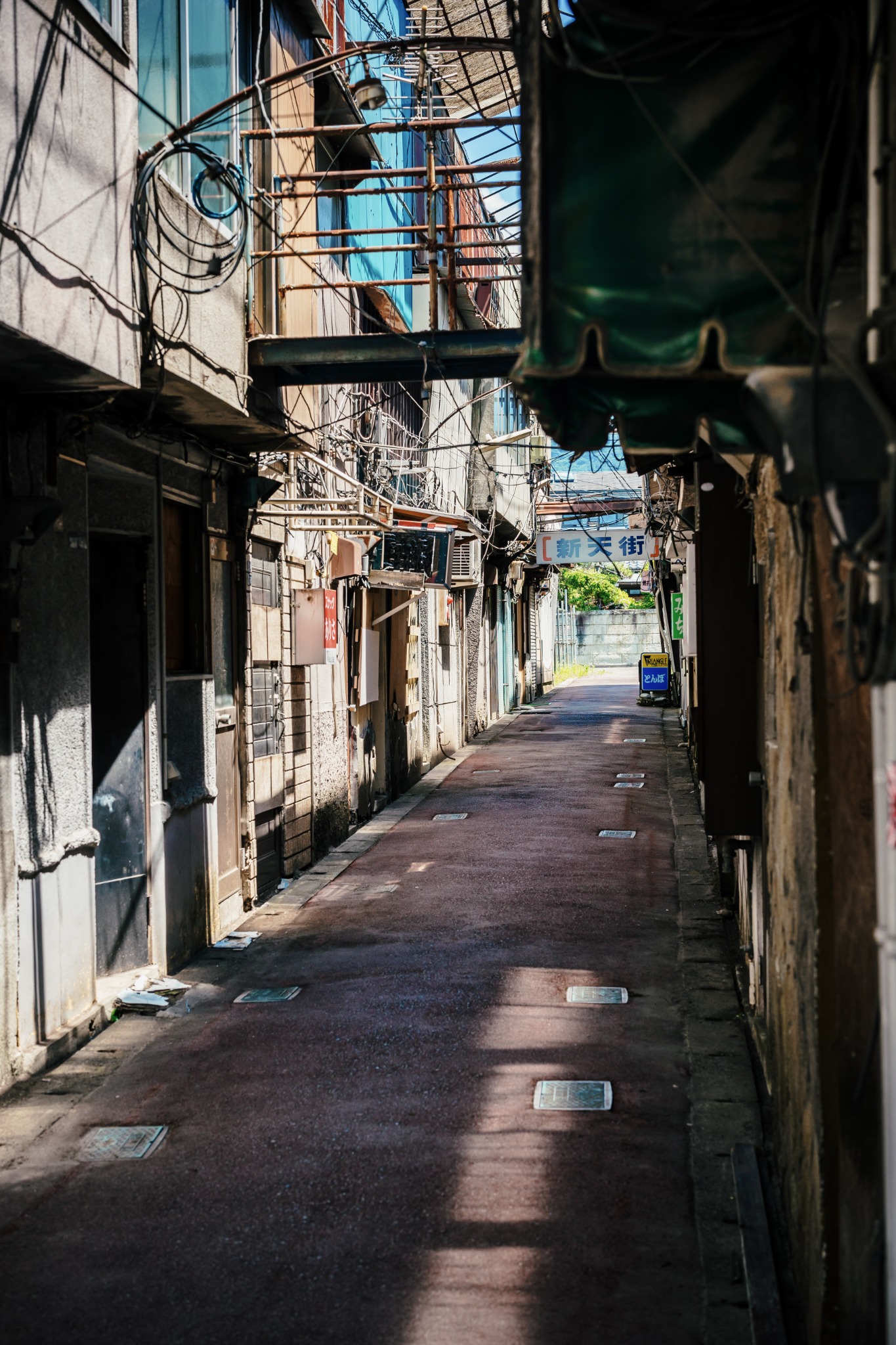
Pass beneath the sign and the doorway becomes a lane. Shops face one another across the narrow passage, while pipes, cables and air-conditioning units find space along the walls. There is a great deal installed here, and very little room to stand back and appreciate the arrangement.
Shintengai is generally said to have taken shape around 1949, during the postwar reconstruction years. A longtime proprietor’s recollection describes a busier period when almost every unit was a drinking establishment, with living quarters upstairs.
Work, home and somewhere to drink: a considerable amount of adult life fitted into a very small strip of buildings.
That density is still easy to feel. The opposite shopfront is never far away, old signs sit close to eye level, and the buildings crowd the passage from both sides. Looking up offers rather more room.
The roof did not simply wear away. According to one account, it burned in a fire in 1963, and some legal restriction kept it from being put back as it was. One shop’s second-generation owner is said to remember the fire, from the age of three.
If the street took shape around 1949, the roof lasted fourteen years at most.
The street has now spent more than four times as long without it.
The frame still gives the street a ceiling of sorts. Now it mostly divides the blue sky into rectangles.
It also makes the earlier enclosure easier to imagine. Put a roof back over those beams, lights behind the signs and customers in the bars, and the same small space begins to feel quite different.
The street outlasts its surroundings
Walking north, I reached a more abrupt change. The closely packed buildings began to run out, but the passage carried on.
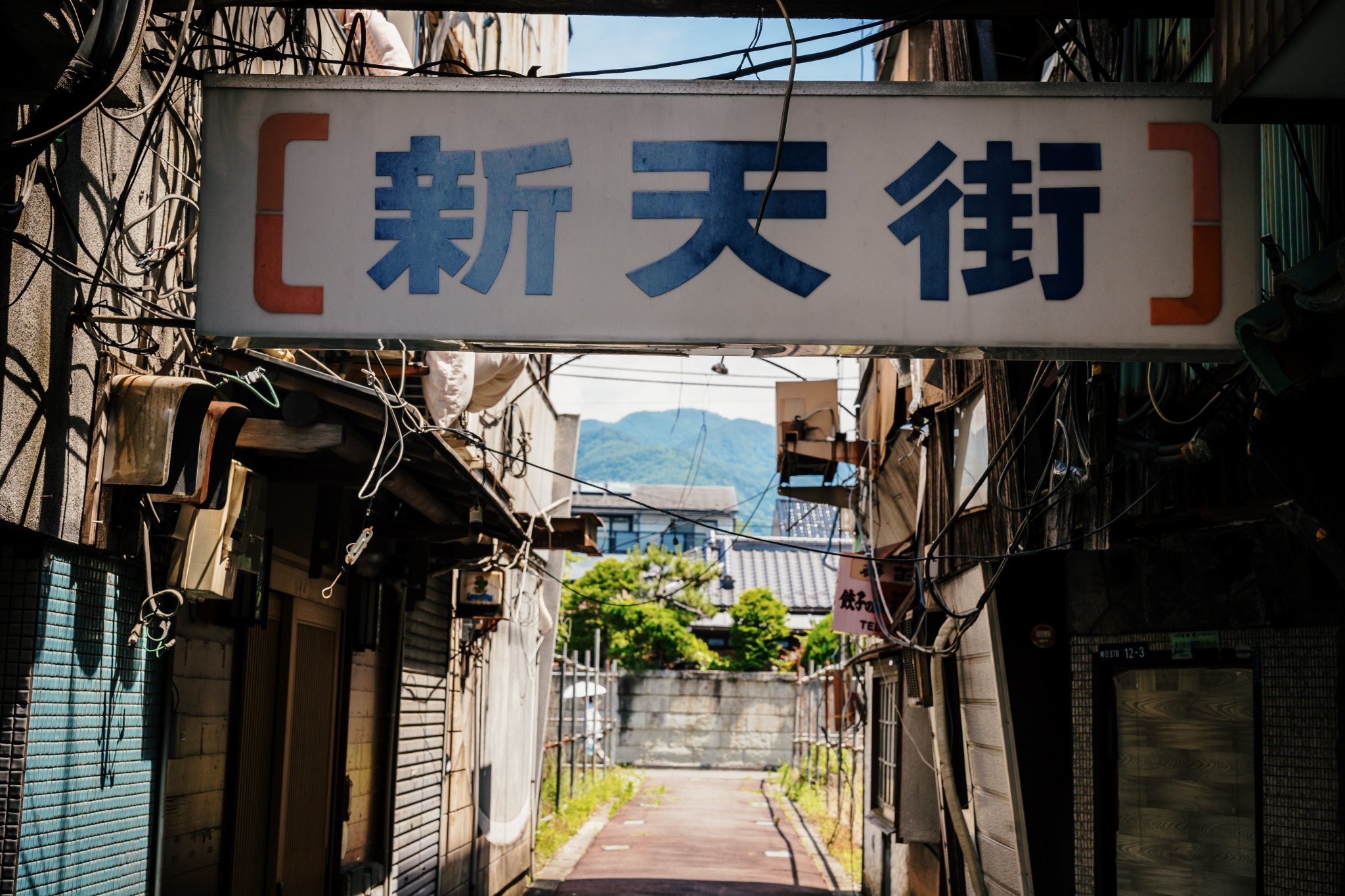
Beyond the surviving shops, the paved route extended into open ground. After the tightness of the alley, there was suddenly space to see it from a distance.
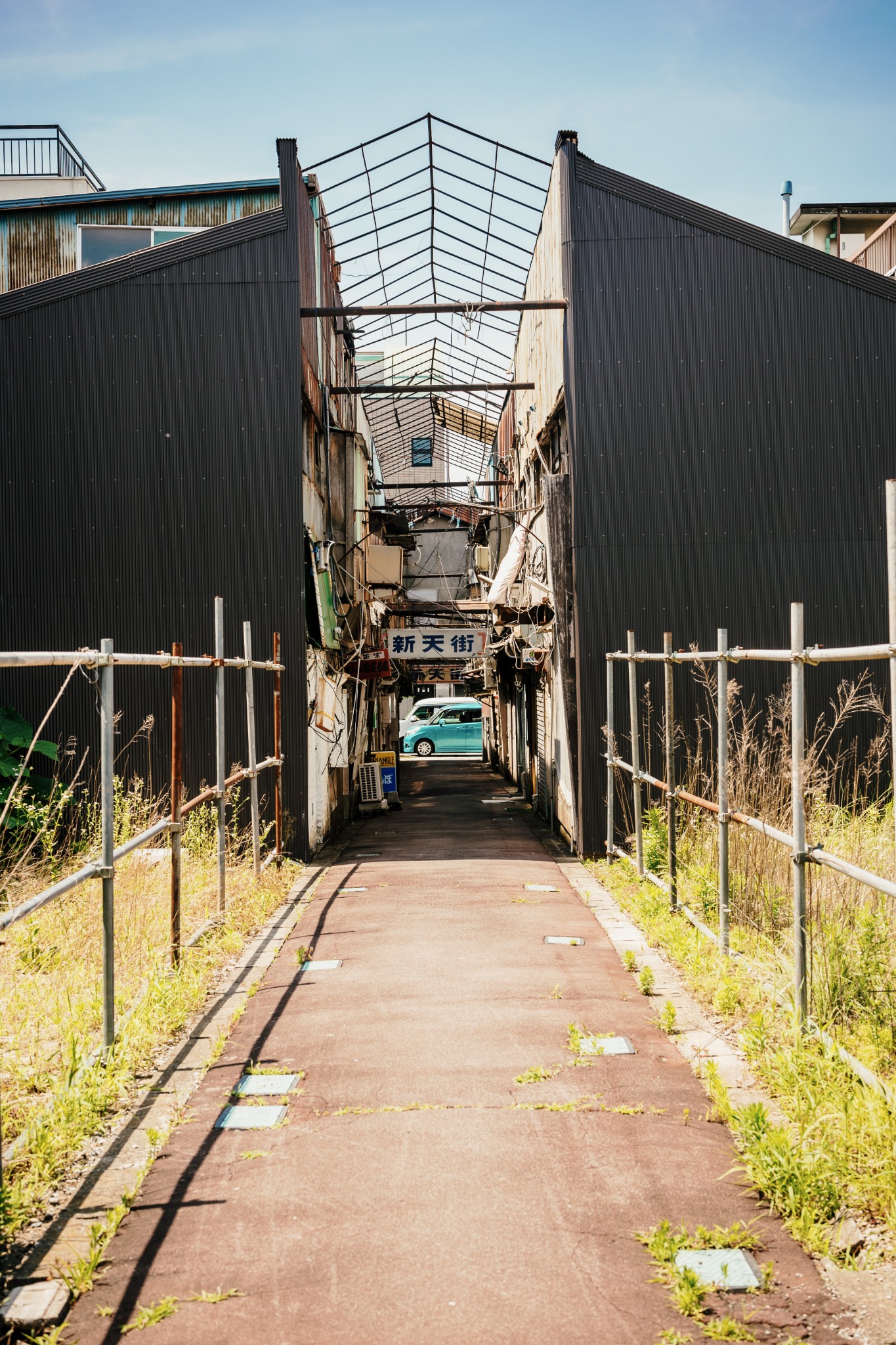
Earlier photographs show buildings continuing into areas that were vacant when I visited. What now looks like the end of a short alley was once part of a more continuous streetscape.
Here, the narrowness acquired a different meaning. Between the shops, it was simply the width available. Out in the open, it recorded how closely the missing buildings had stood.
The path still followed an arrangement the buildings were no longer there to explain.
That was more striking to me than the worn walls. From the open ground, I could follow the route back towards the surviving shops and see it become a tightly enclosed alley again.
Still a way through
Looking back towards the southern entrance, I could see the Shintengai sign again. The same three characters hung above a street much changed from the one in the older photographs.
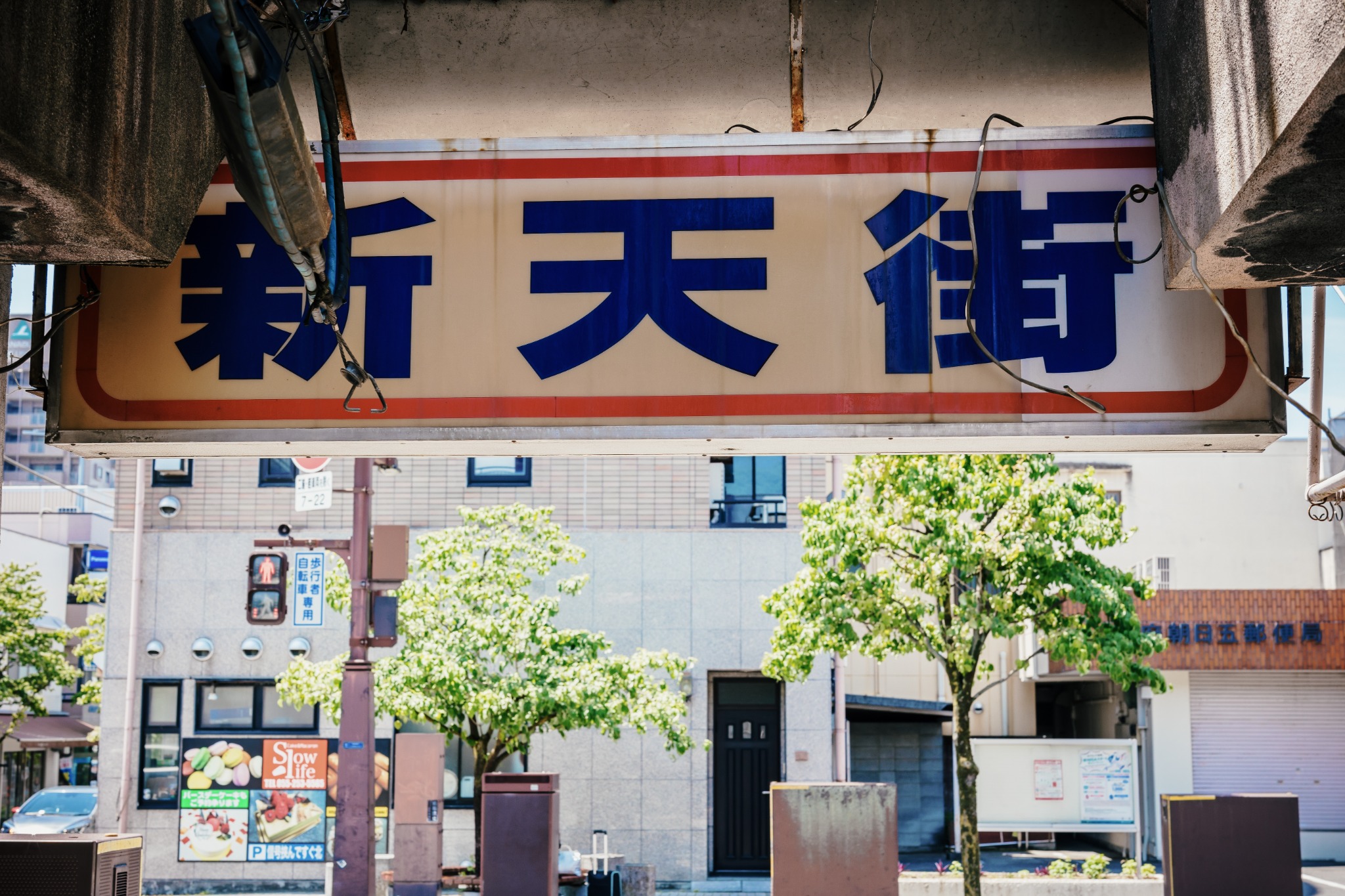
It would have been easy to photograph the missing roof, the old signs and the empty ground, then treat the whole place as something that belonged to the past.
But someone was walking beneath the sign.
I was stopping to examine what the street had lost. They were using what was still there.
Shintengai has lost its roof and some of its buildings.
It has not yet lost the present tense.
Visit this place
Location
Kofu Shintengai (甲府新天街)
A narrow postwar drinking alley in Asahi 5-chome, about 15 minutes on foot from Kofu Station
5-11-13 Asahi, Kofu, Yamanashi 400-0025, Japan
Practical Information
- Area
- Asahi 5-chome, Kofu, Yamanashi
- Access
- About 15 minutes on foot from Kofu Station
- Admission
- Free
- Viewing
- The alley can be seen from the public-facing passage and surrounding streets.
- Business hours
- Individual businesses have their own schedules.
- Visitor note
- Shintengai is not an abandoned attraction. Businesses and local activity remain. Do not enter closed premises, block doorways, or treat the alley as a ruin.
Information last checked: September 3, 2026
Conversation
Comments
Review pending commentsComments are reviewed before appearing. The internet already contains enough unattended surprises.
Checking comments…
Comments are not available in this migration preview yet. Existing comments remain on the current site.
Leave a comment