Tojinbo Tower: So Close, Yet So Far
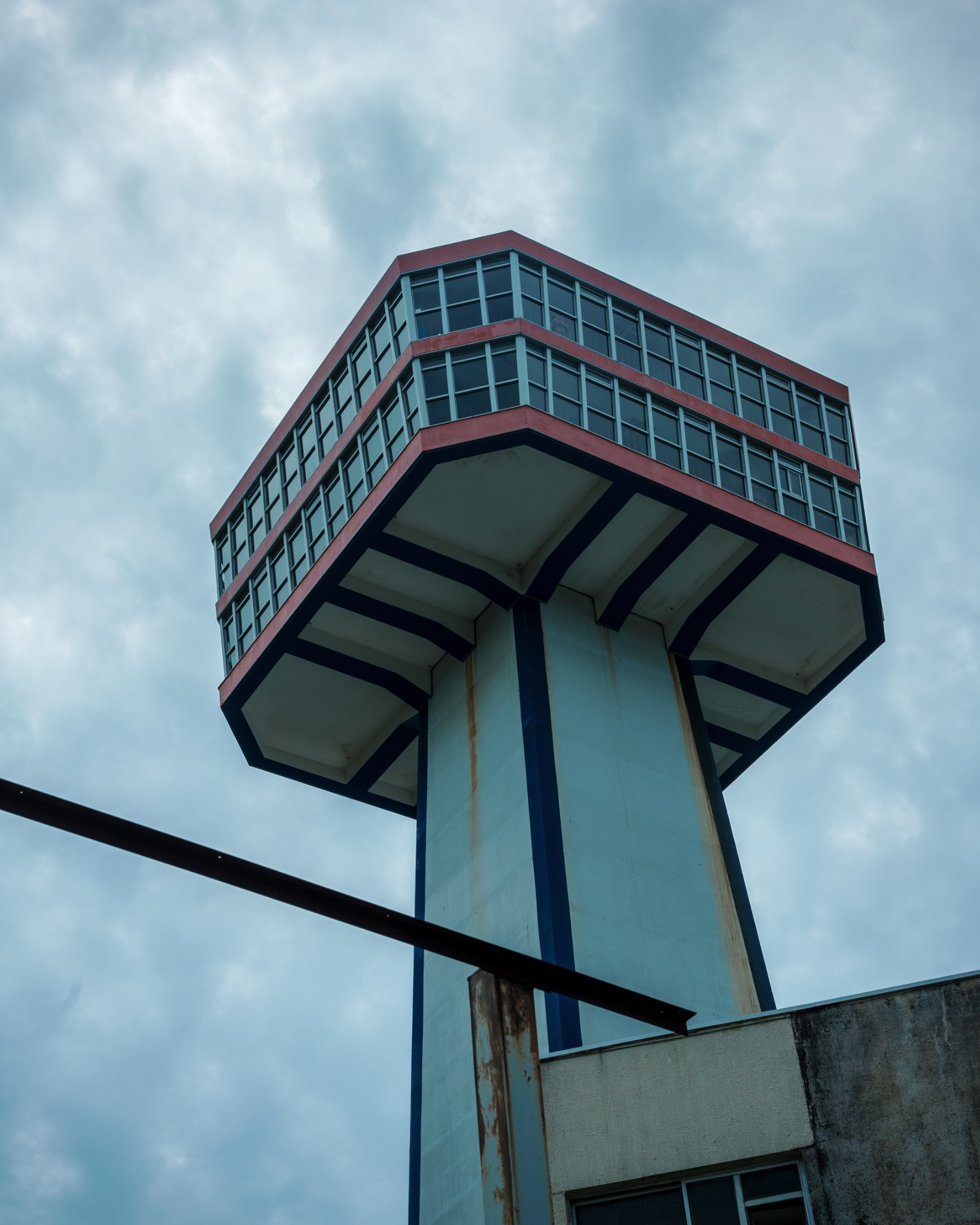
Tojinbo Tower seems to have one fairly obvious purpose.
It stands a few minutes’ walk from the famous cliffs in Fukui Prefecture, on the Sea of Japan coast. With TOJINBO TOWER displayed prominently on the building, I went up assuming the name would be a reasonably accurate description of the view.
The elevator takes you to a glass-walled observation deck about 100 metres above sea level, inside a tower 55 metres high. The Sea of Japan spreads out beyond the windows, with Oshima, the coastline, forests and distant mountains all visible. There was plenty to look at.
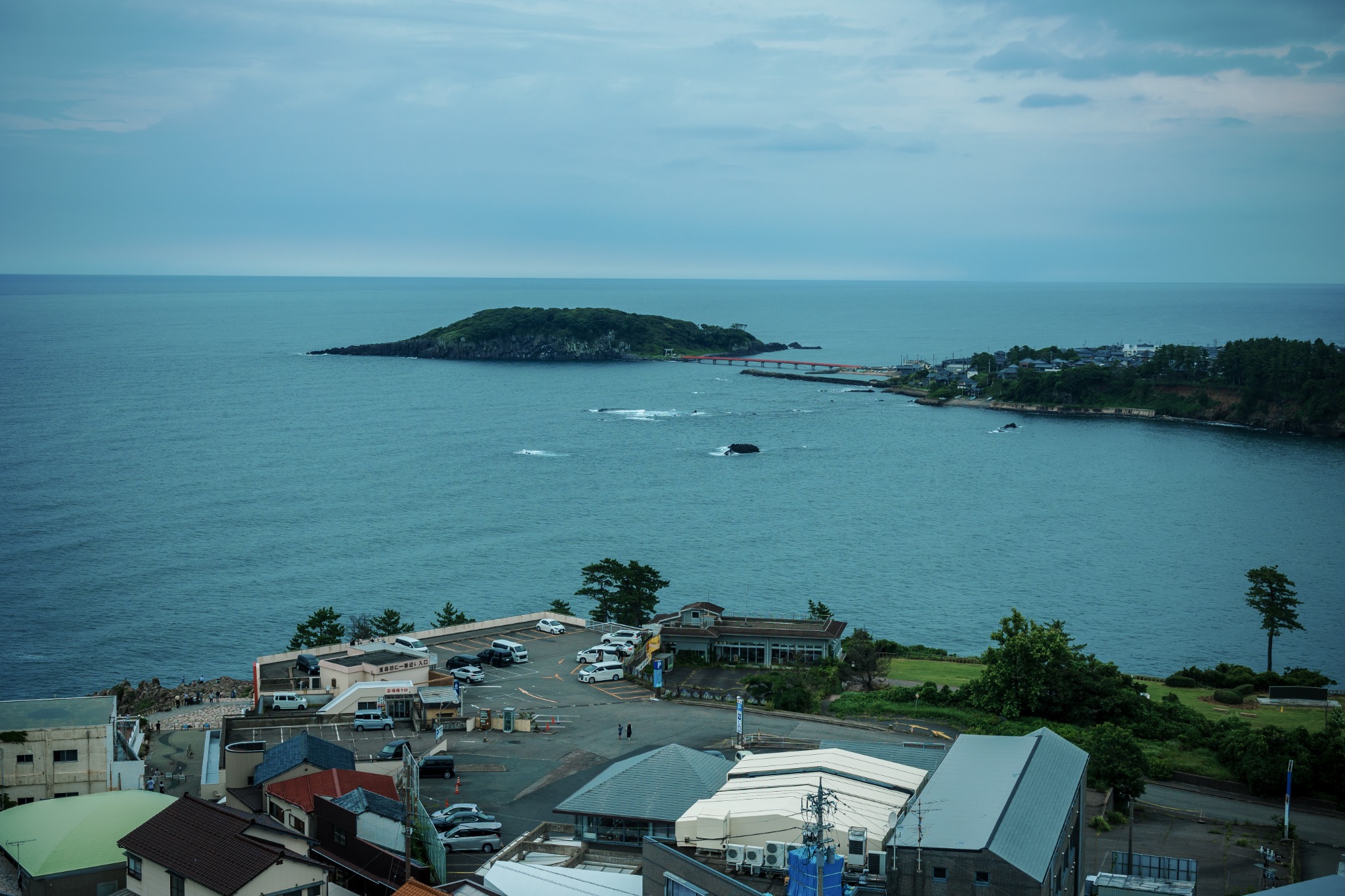
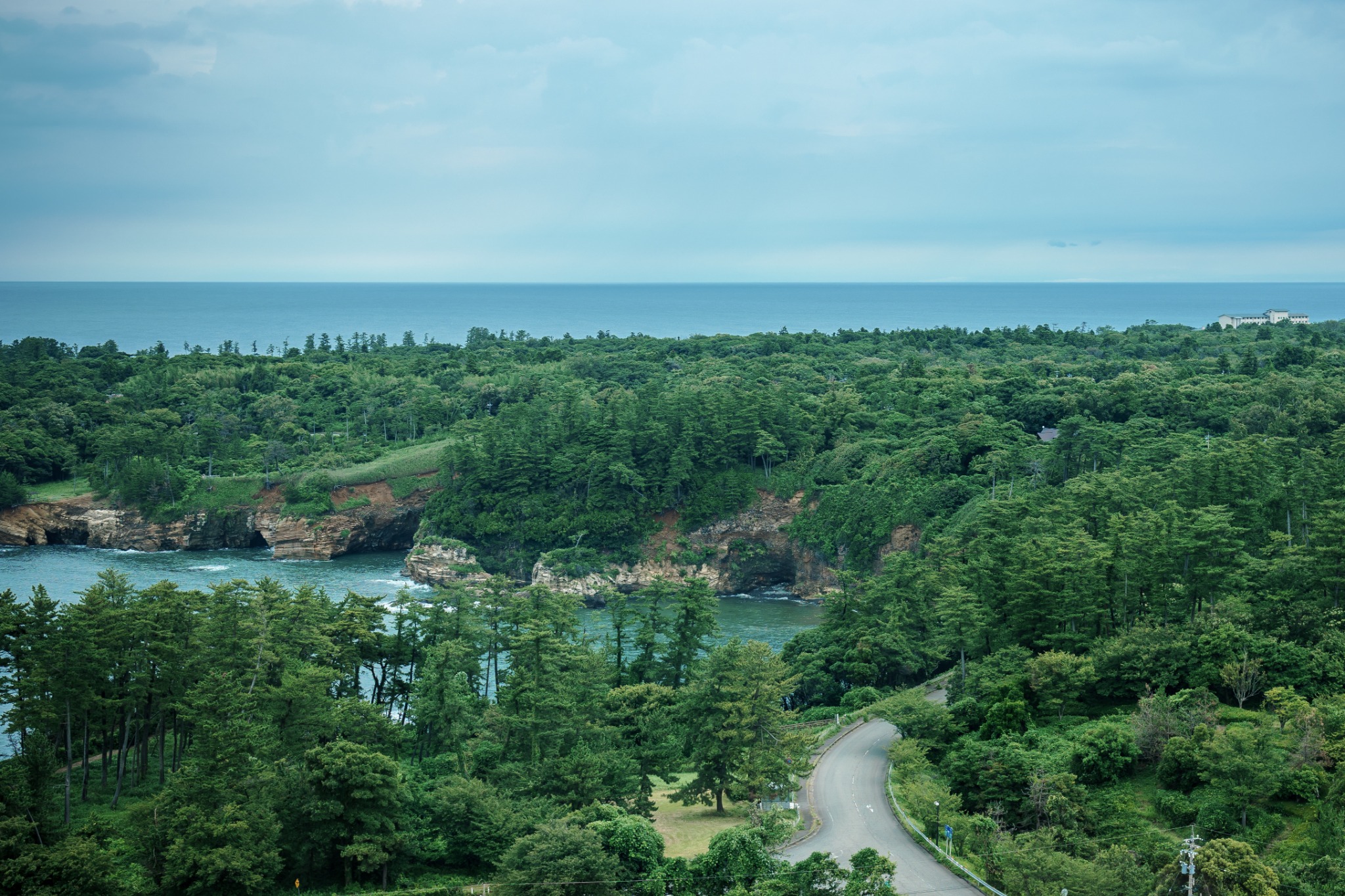
What I could not find, despite looking for it, was Tojinbo’s famous cliff face.
That seemed like a fairly serious omission for something called Tojinbo Tower. The website of the shopping street beside the cliffs sees it differently: from the deck, it says, you can take in the whole of Tojinbo at a glance. One Japanese travel guide disagrees. It describes the cliffs as a blind spot.
So I stopped looking for the cliffs and started looking at the tower instead.
A different kind of observation
On the observation floor, a machine offered to measure my heart rate and stress for ¥100. Having spent some time examining the horizon, I could now pay to have something examine me.
Naturally, I tried it.
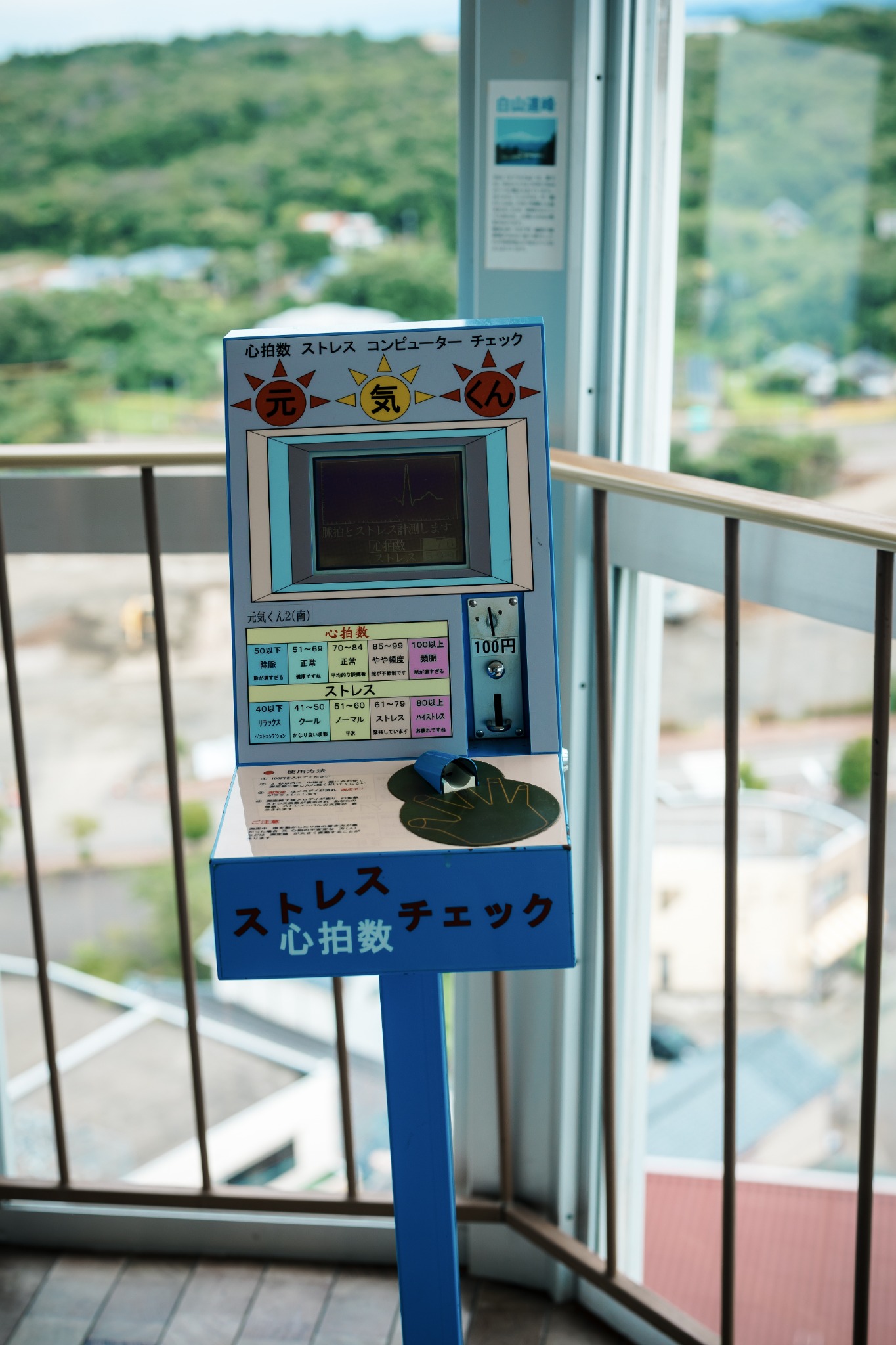
At that point, I had not yet walked out onto the cliffs, where remarkably little stands between the rock and the drop. Stress: 13 was, in effect, a “before” reading.
Elsewhere on the same floor sat Hotei, the cheerful, large-bellied figure associated with good fortune. Here, he also has a role in matchmaking: couples who stroke his head together are said to receive good fortune in love.
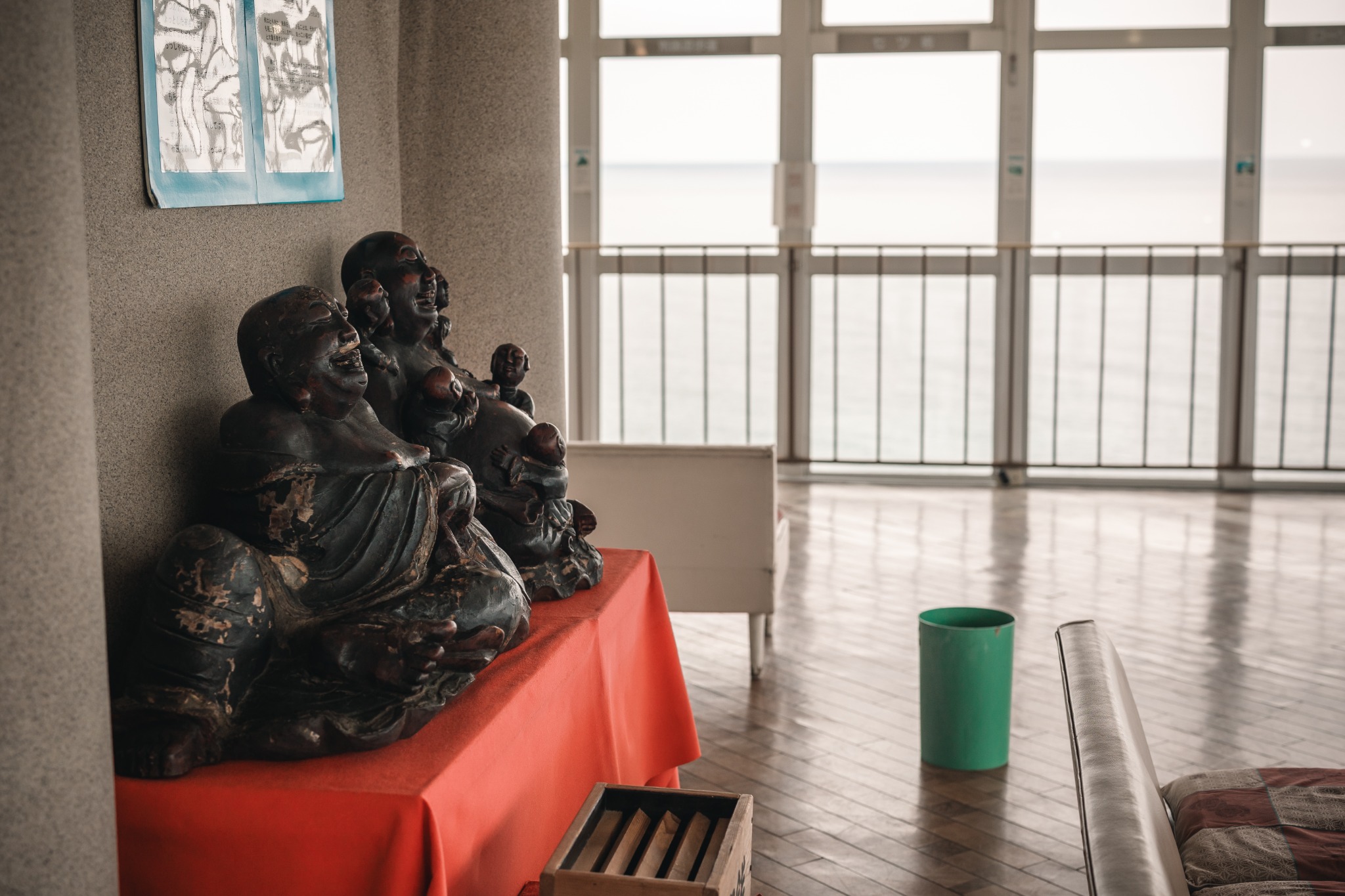
The windows dealt with the coastline, the machine with my stress, and Hotei with matters for which ¥100 and a pulse reading might not be enough.
Built in 1964, and not pretending otherwise
Tojinbo Tower opened on September 27, 1964, the year of the Tokyo Olympics. It remains part of Japan’s national network of observation towers, though its appeal is increasingly as much about when it was built as how high it goes.
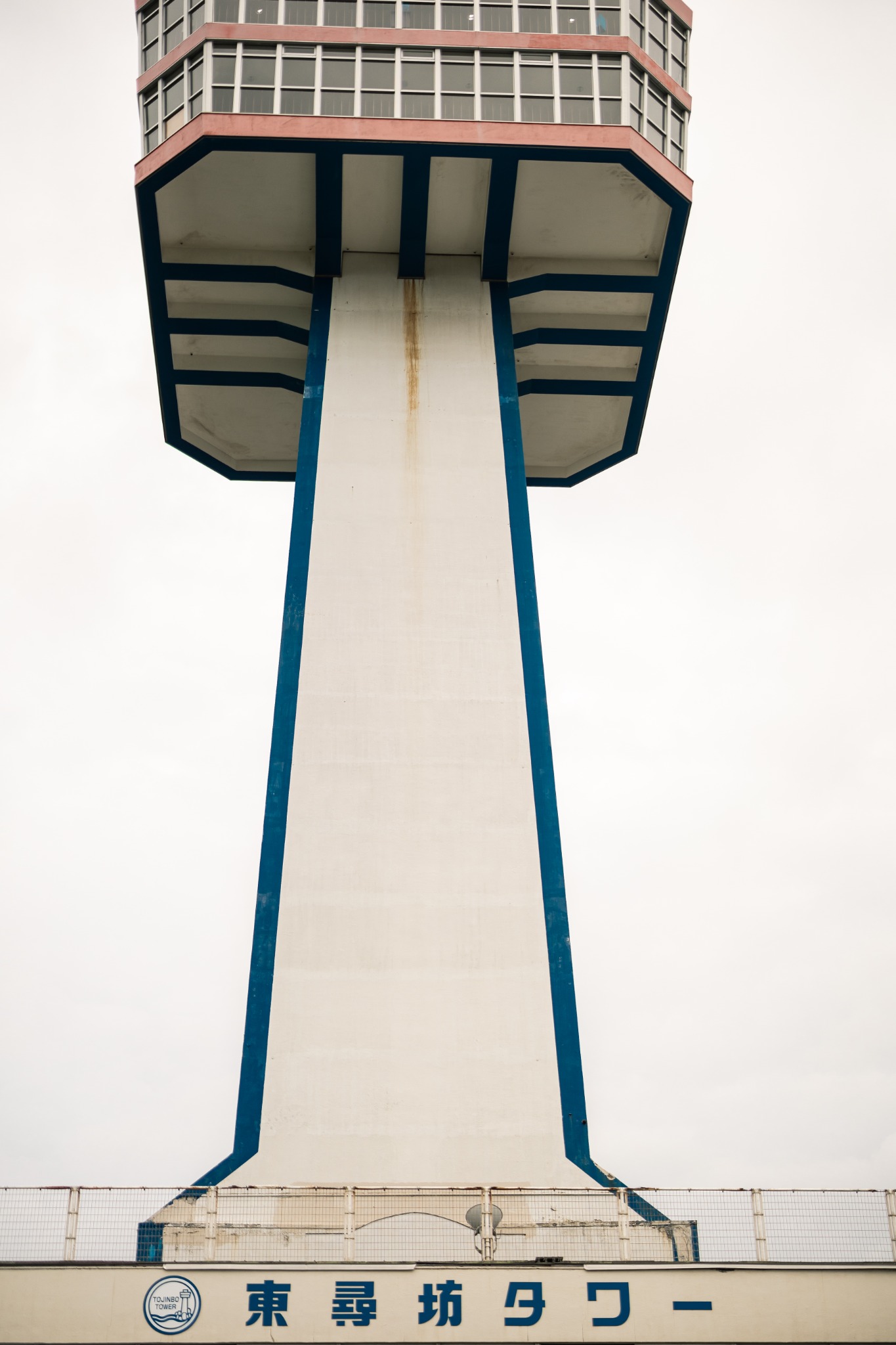
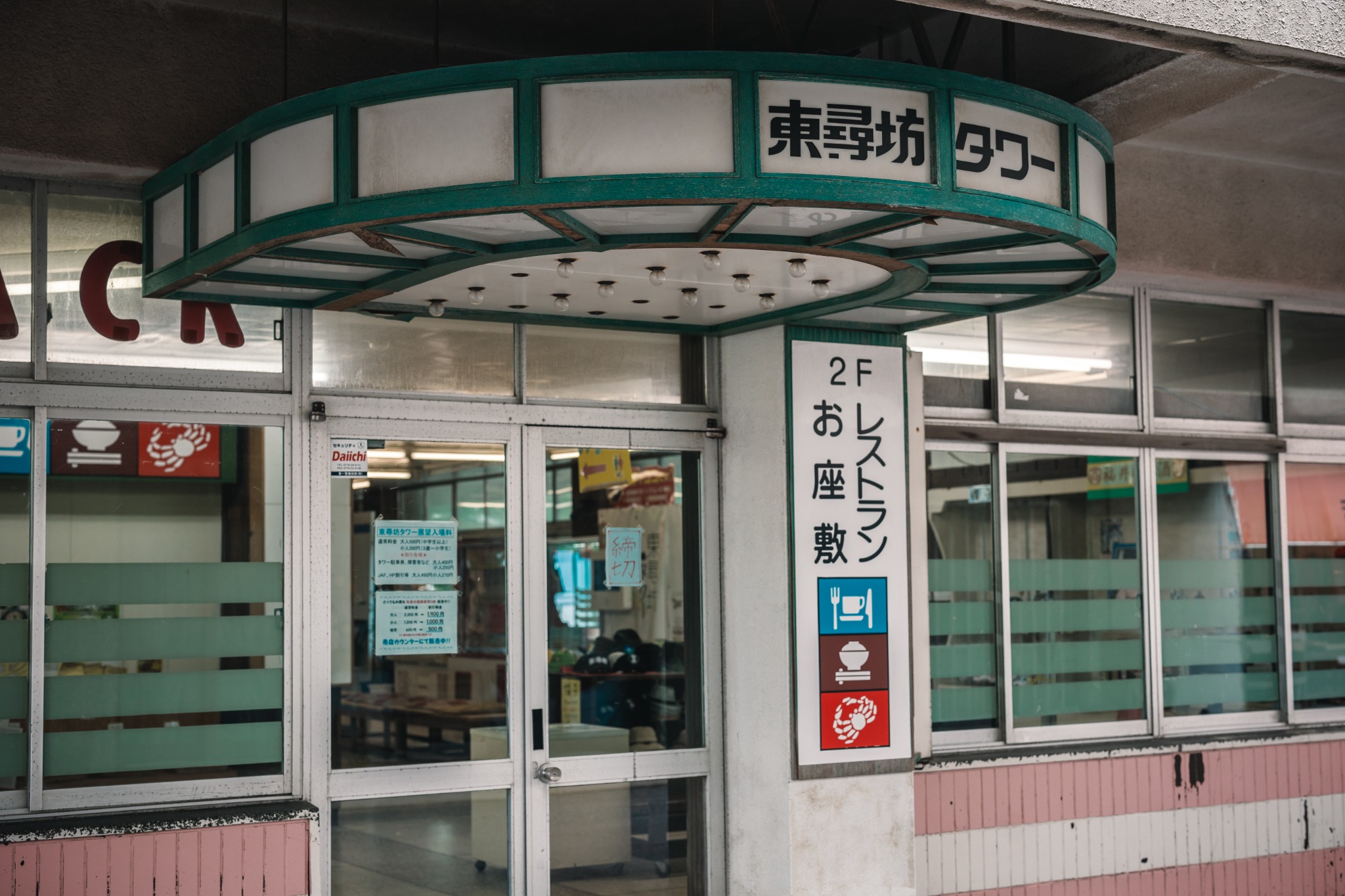
This is not a modern attraction decorated to look retro. It has simply survived long enough to become retro.
Old signs, hand-painted characters and assorted entertainments give the place the feeling of something added to over the years. Downstairs, the details kept drawing my attention away from the building’s original job. Outside, a collection of wooden animals extended the sightseeing a little further.
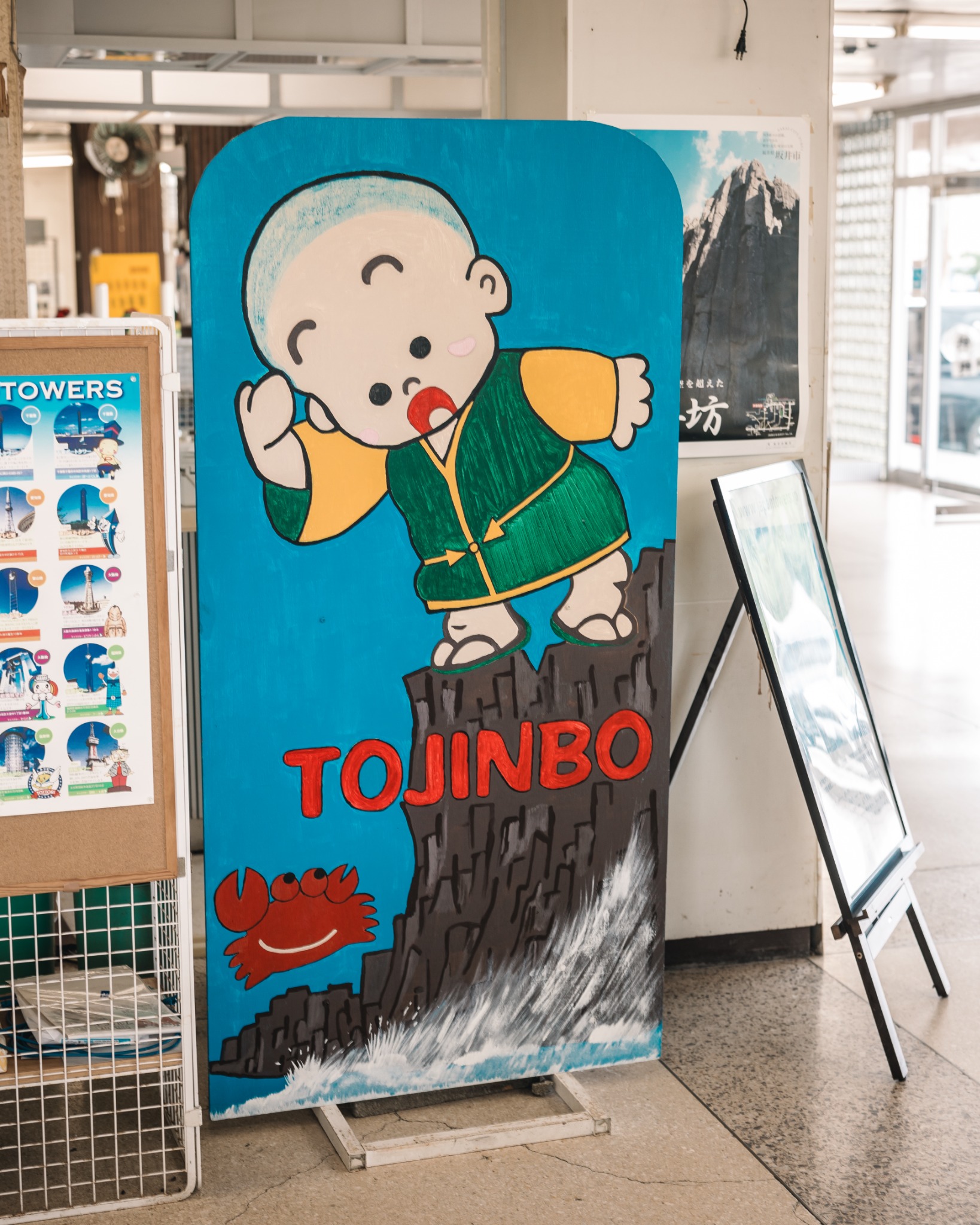
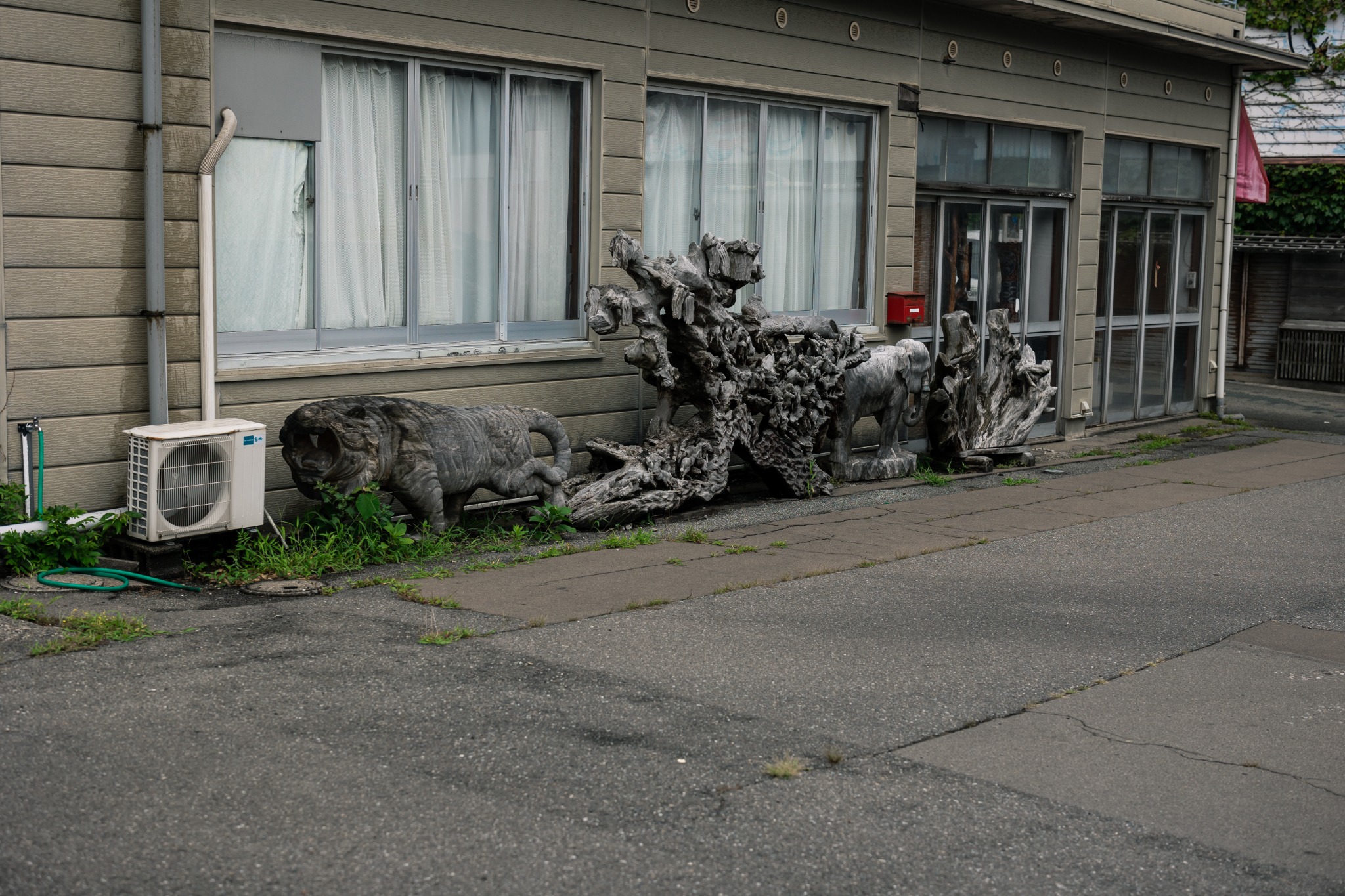
I had expected the tower to give me one view. It was proving rather good at distractions.
Even the tower’s website added another layer of nostalgia. Its panorama page directed visitors to QuickTime Player. Apparently, viewing the coast from home involved a little technological archaeology.
So close, yet so far
The cliffs were still a few minutes’ walk away. I was in less of a hurry to reach them now.
I went up looking for Tojinbo. I came down having found Tojinbo Tower.
Location
Observation tower
Tojinbo Tower (東尋坊タワー)
A few minutes on foot from the Tojinbo cliffs and shopping street
64-1-41 Anto, Mikuni-cho, Sakai, Fukui 913-0064, Japan
Practical Information
- Height
- 55 m
- Observation level
- About 100 m above sea level
- Opened
- September 27, 1964
- Admission
- Adults: ¥500; children: ¥300
- Opening hours
- 9:00–17:00, as listed by Sakai City; call the tower to confirm current hours and closing days.
- Phone
- +81 776-81-3700
- Tourism information
- Sakai City — Tojinbo Tower
Information last checked: September 25, 2026 (municipally listed hours, admission and contact details).
Conversation
Comments
Review pending commentsComments are reviewed before appearing. The internet already contains enough unattended surprises.
Checking comments…
Comments are not available in this migration preview yet. Existing comments remain on the current site.
Leave a comment