Mandarado Yagura Caves: Where the Floor Came Out of the Walls
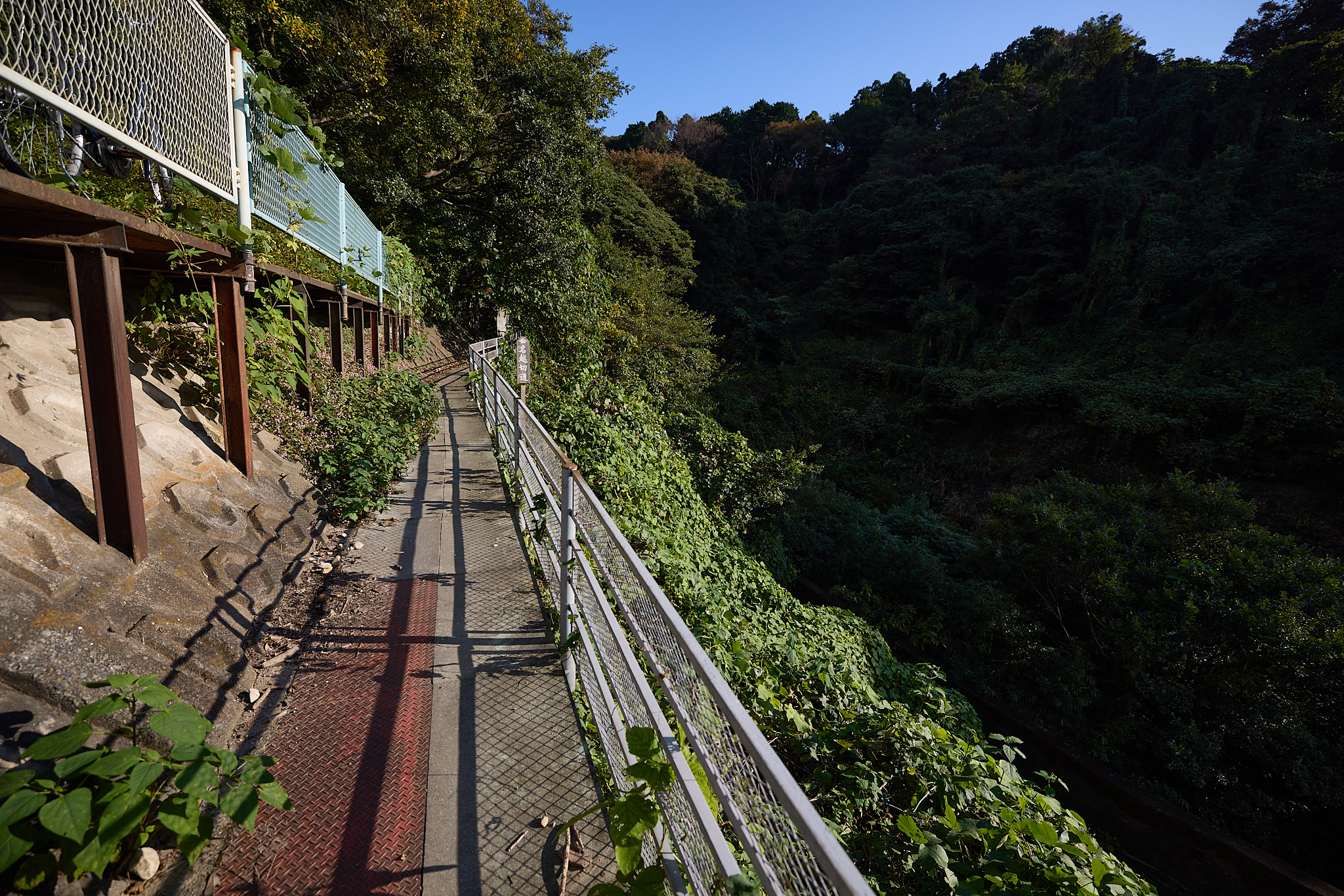
Nagoe Kiridoshi, the old road from Kamakura over the hills towards the Miura Peninsula, is said to take its name from nagoshi, “hard to get over”. It has done its best to live up to it. At its narrowest point, it was once more than 2.7 metres wide. It is now about ninety centimetres.
Kamakura, about an hour south of Tokyo, was the seat of Japan’s first military government, and it is ringed by hills; a kiridoshi is a pass cut through them. This one turns up in a chronicle entry from 1233, and it served as a main road until the late nineteenth century, when a railway and a road were tunnelled through the hill directly beneath it. The Yokosuka Line still runs underneath, on its way to and from Tokyo.
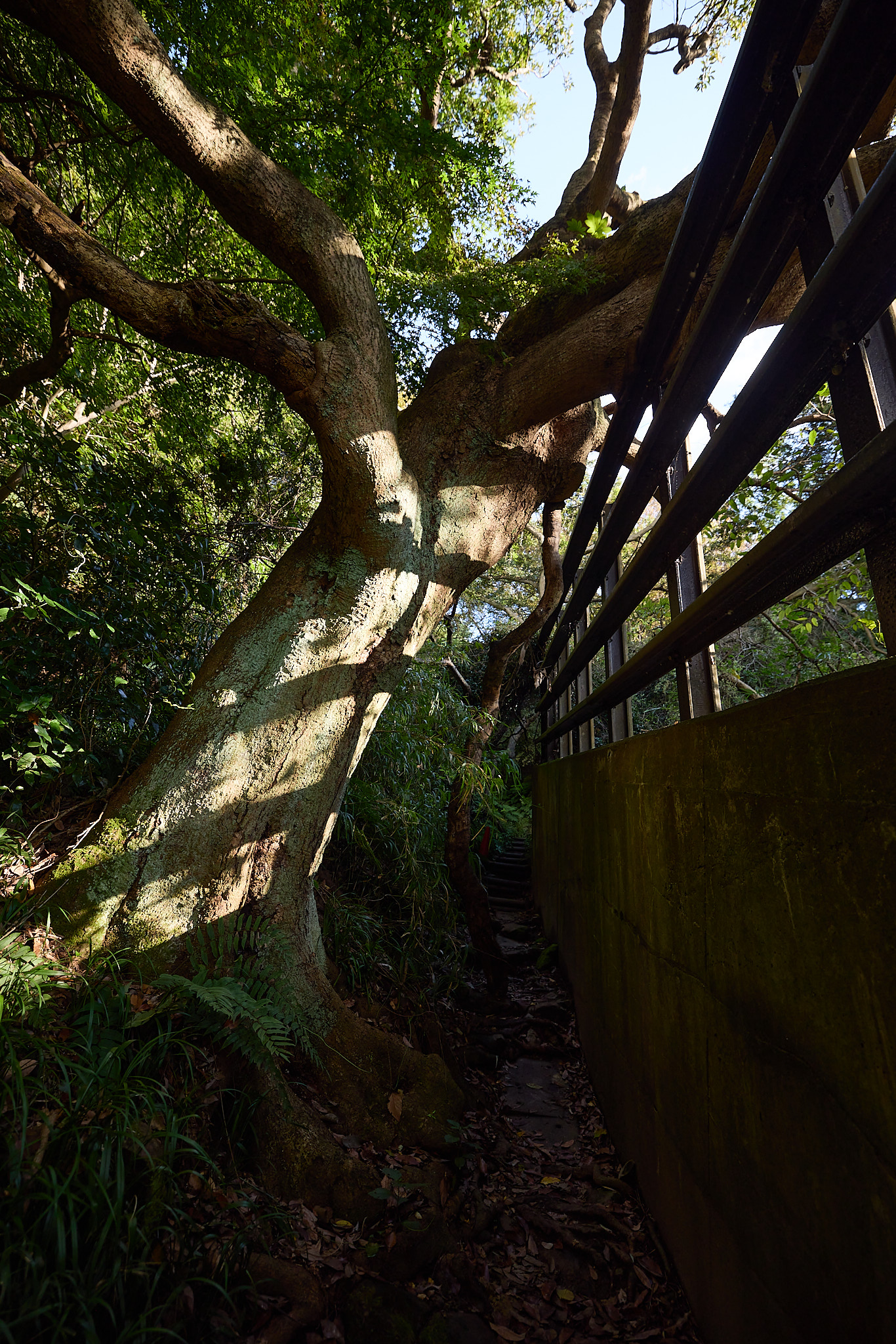
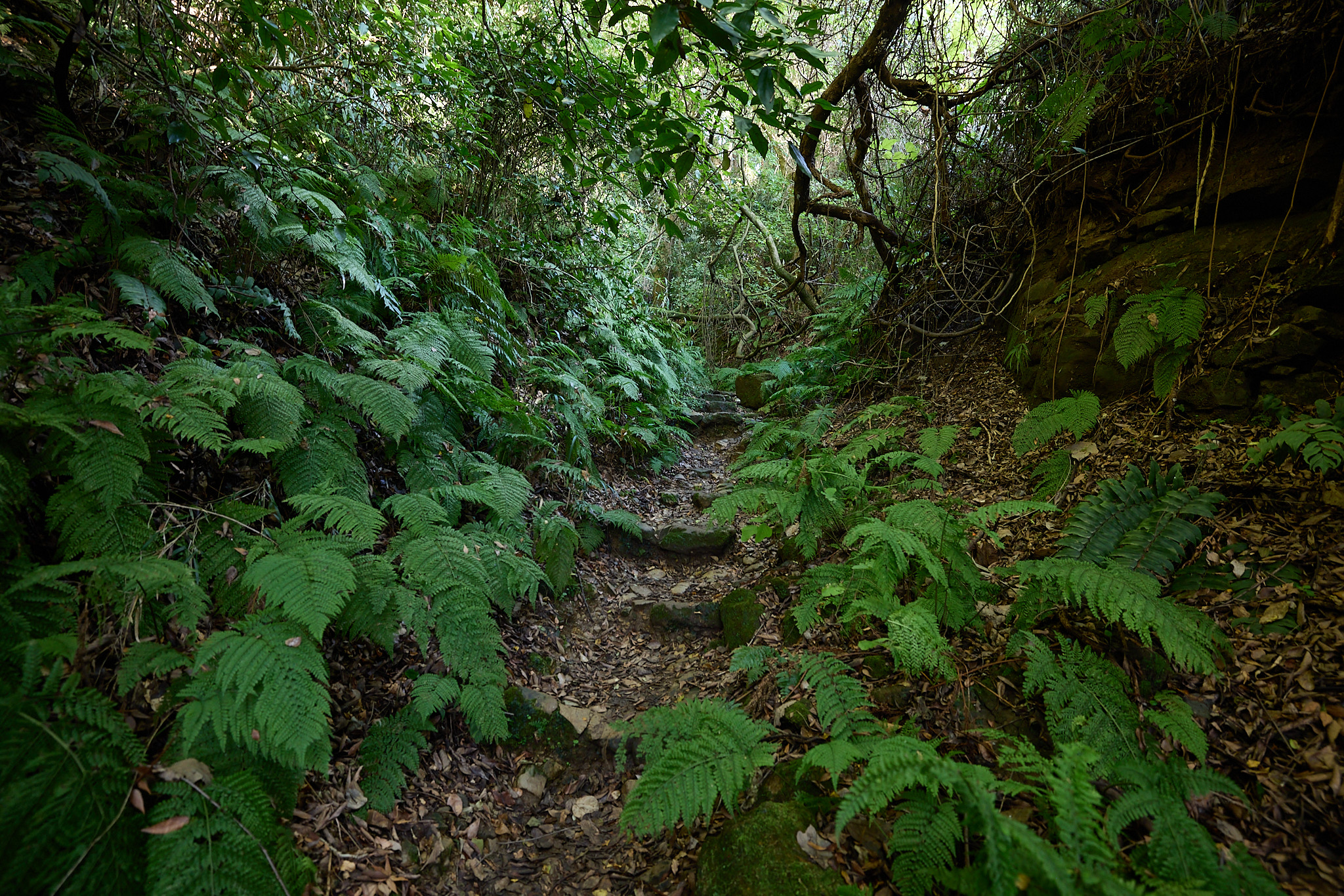
I came in from the Kamakura side on a Saturday afternoon at the end of October. It is a short climb, but a proper hike rather than a stroll. The path starts out looking thoroughly modern, and looks older the further it goes.
Swipe to explore
Tap to enlarge
Level ground
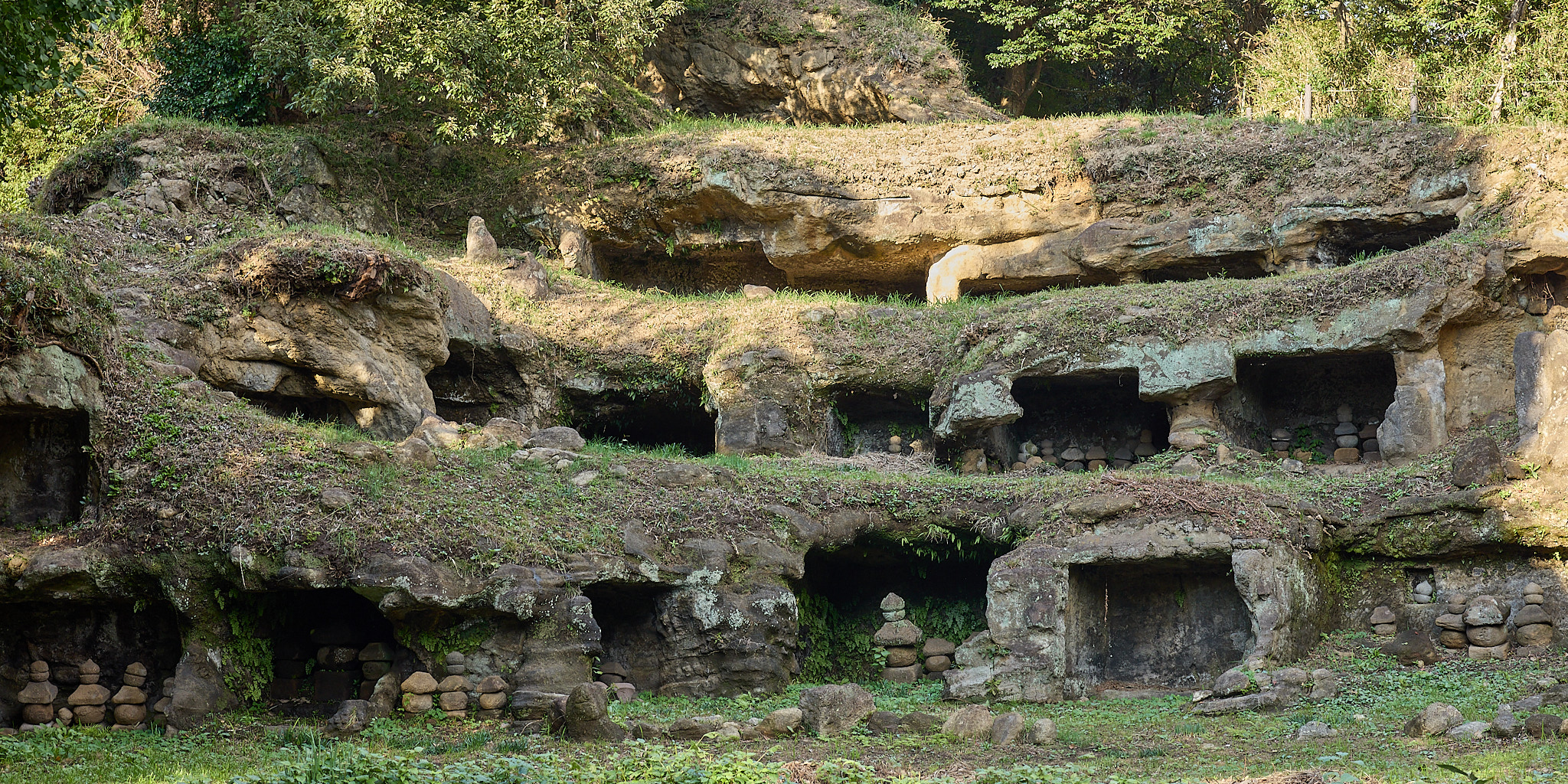
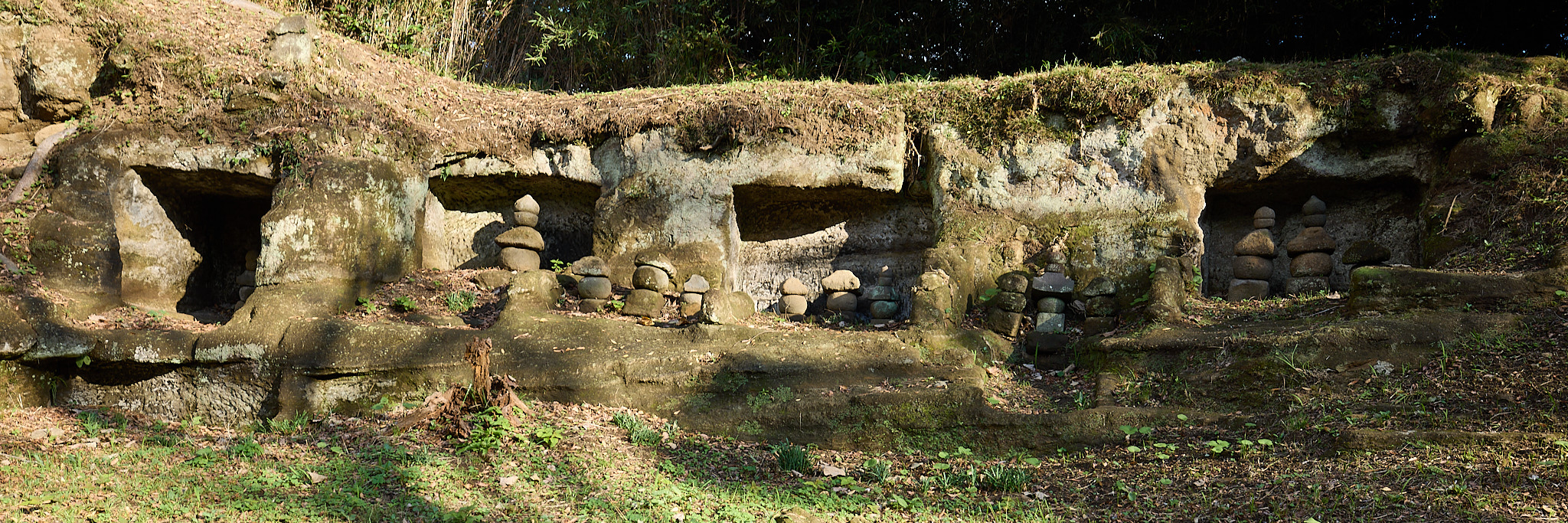
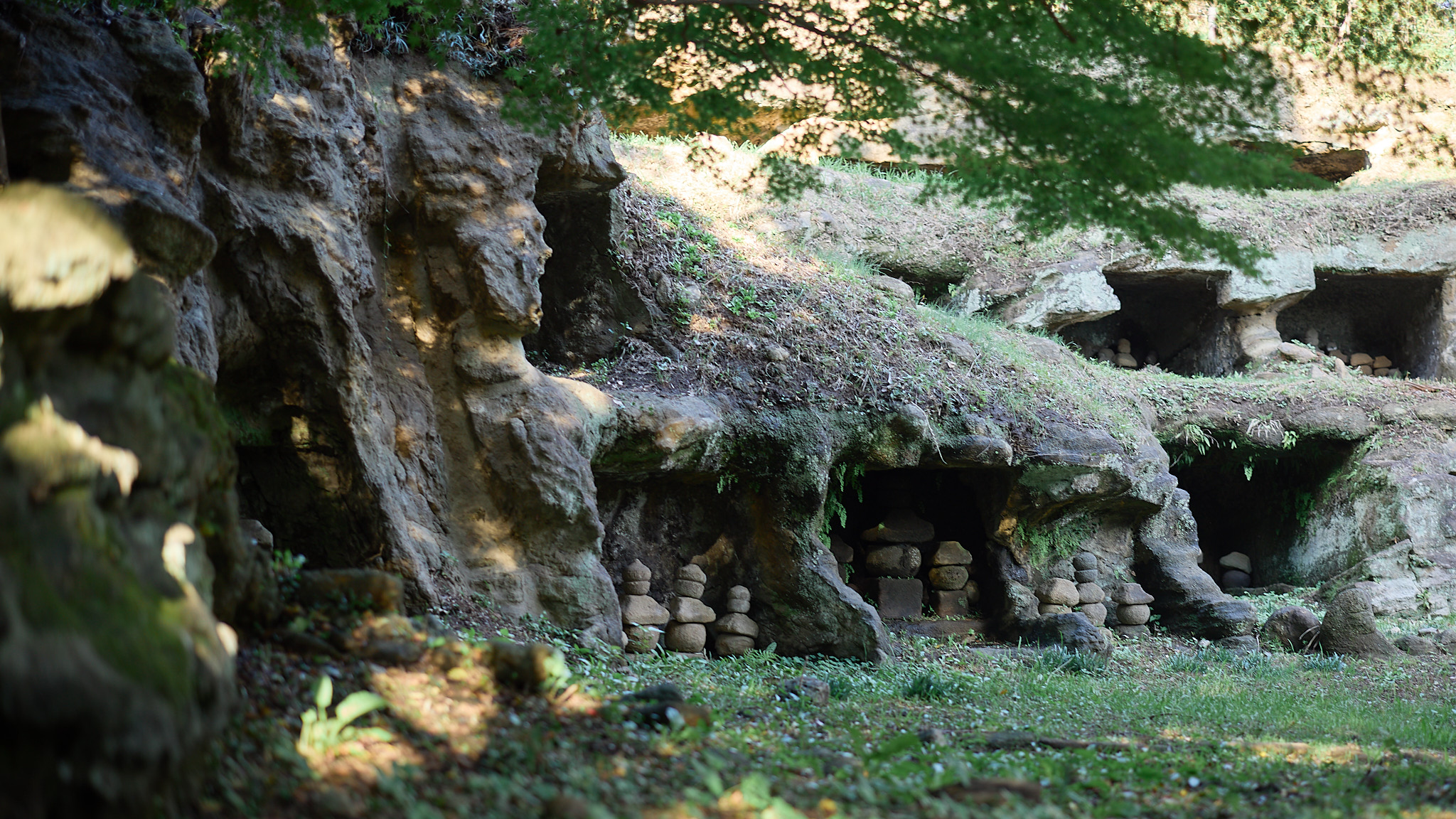
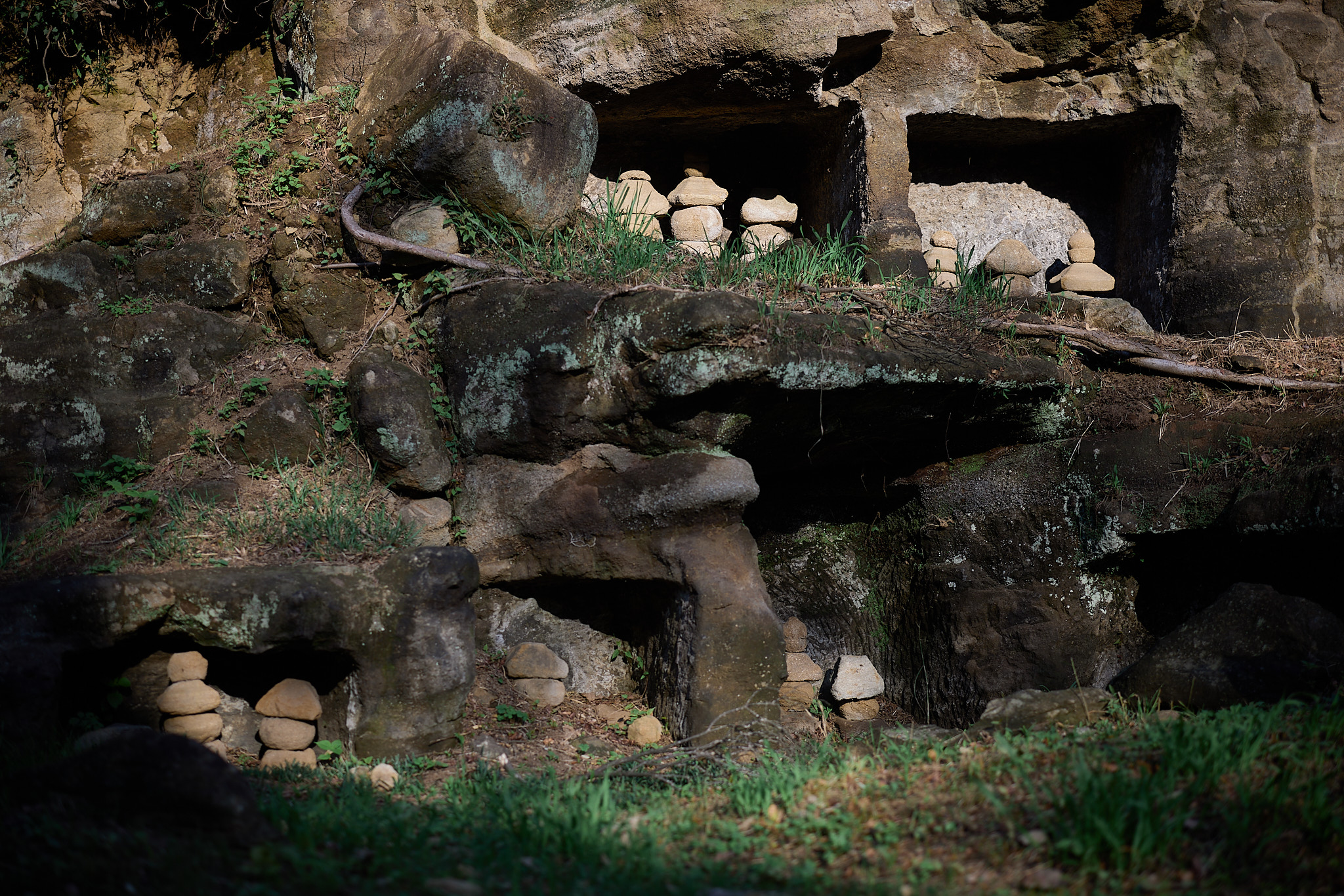
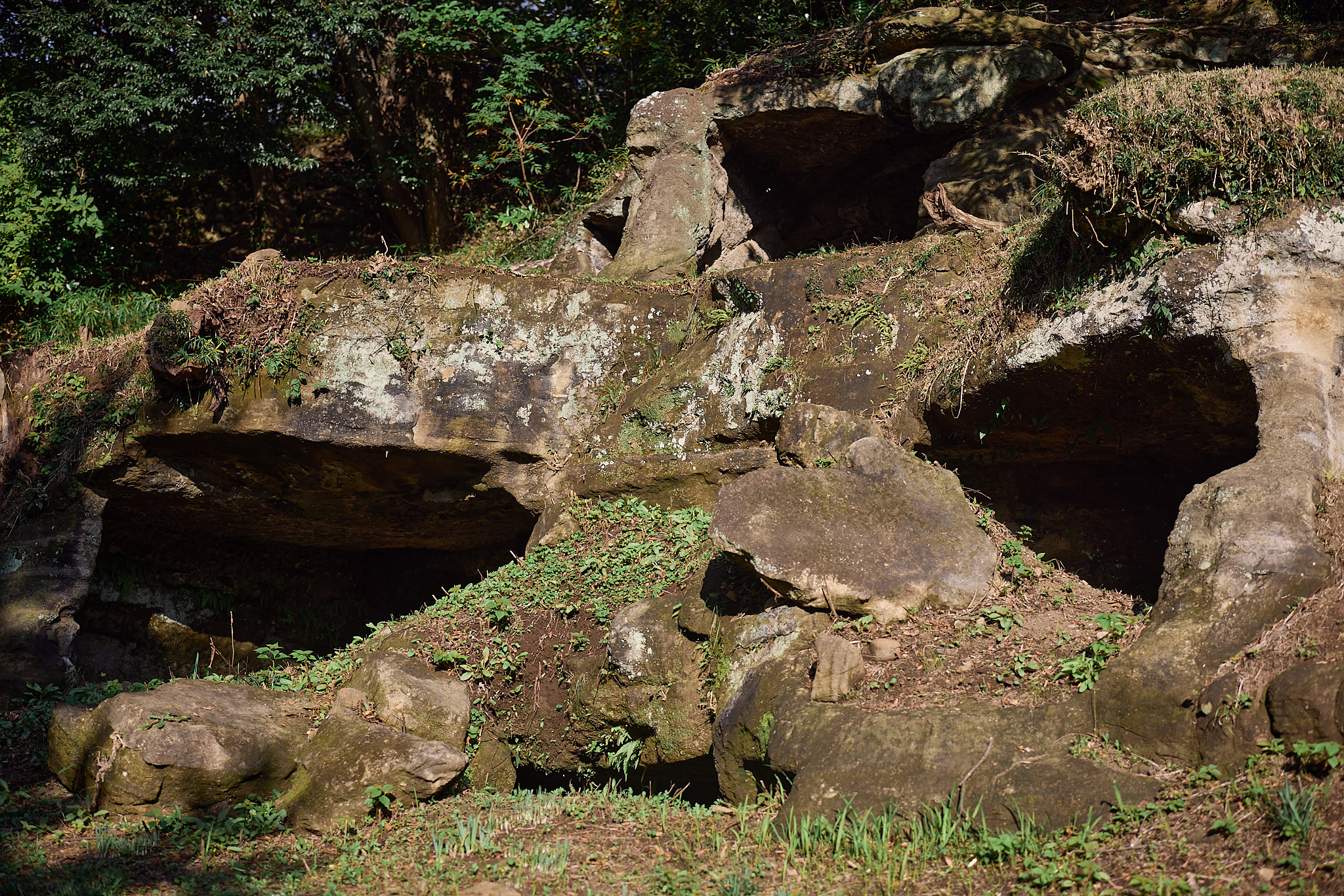
The yagura lie just off the old road, behind a fence. The site opens only for limited periods in spring and autumn, at weekends, on Mondays and on public holidays. Inside, the ground opens out into a broad stretch of level grass. Across it, the cliff rises in tiers, cut with dark, rectangular openings.
Yagura are chambers cut into rock for the dead, found mostly in and around Kamakura. More than 150 have been cut here, many no more than two metres square, starting towards the end of the thirteenth century.
The ground had not always been level. As the chambers were cut, the rubble was used to fill the valley in front.
Part of the ground I was standing on had come out of that cliff.
Seven hundred and fifty towers
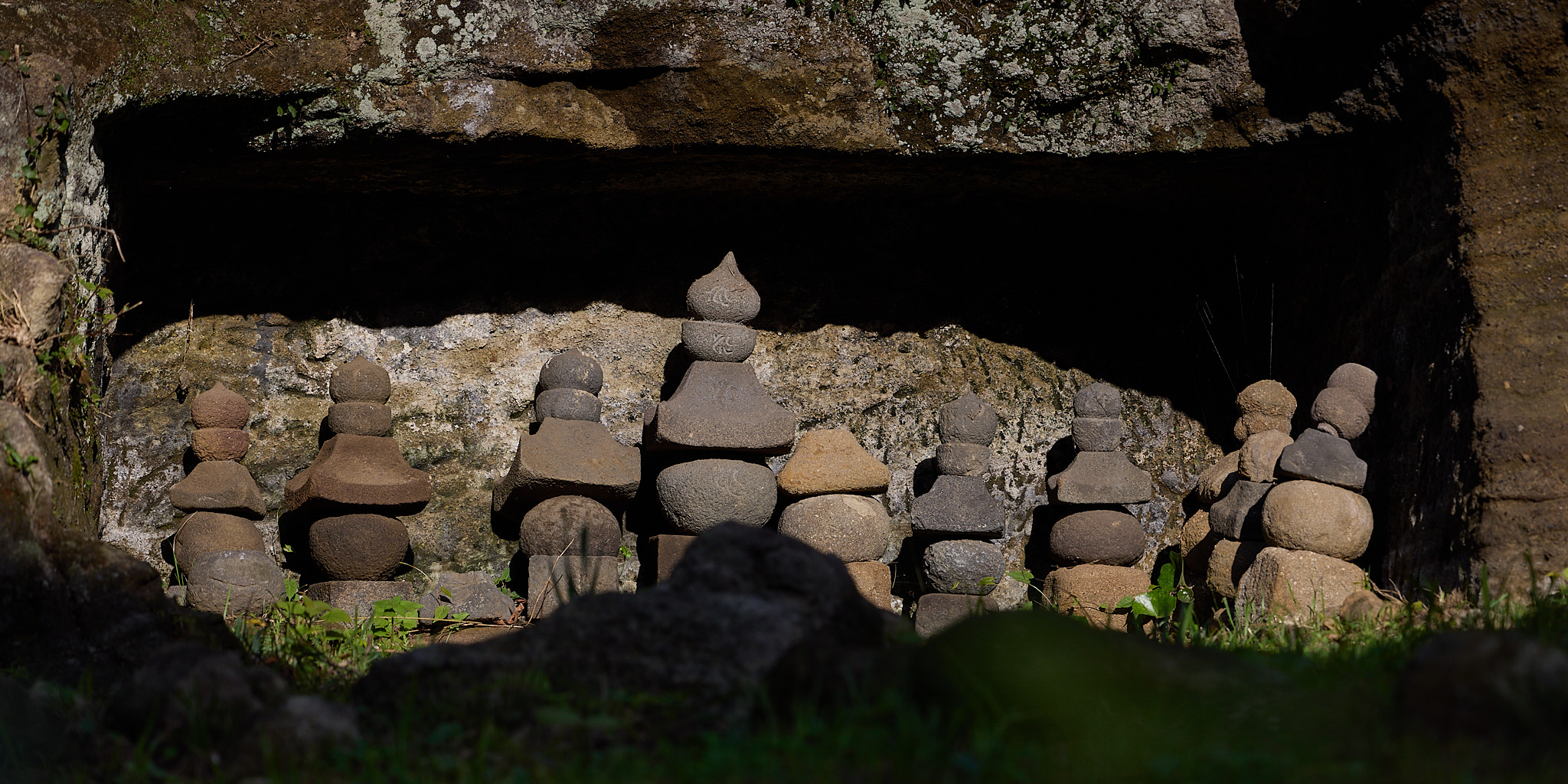
Inside the chambers stand gorintō, stone memorial towers in five parts: from the bottom, a cube, a sphere, a roof, a half-moon and a jewel-shaped tip, for earth, water, fire, wind and void. Cremated remains were laid in the chambers, and the towers set up for the rites that followed.
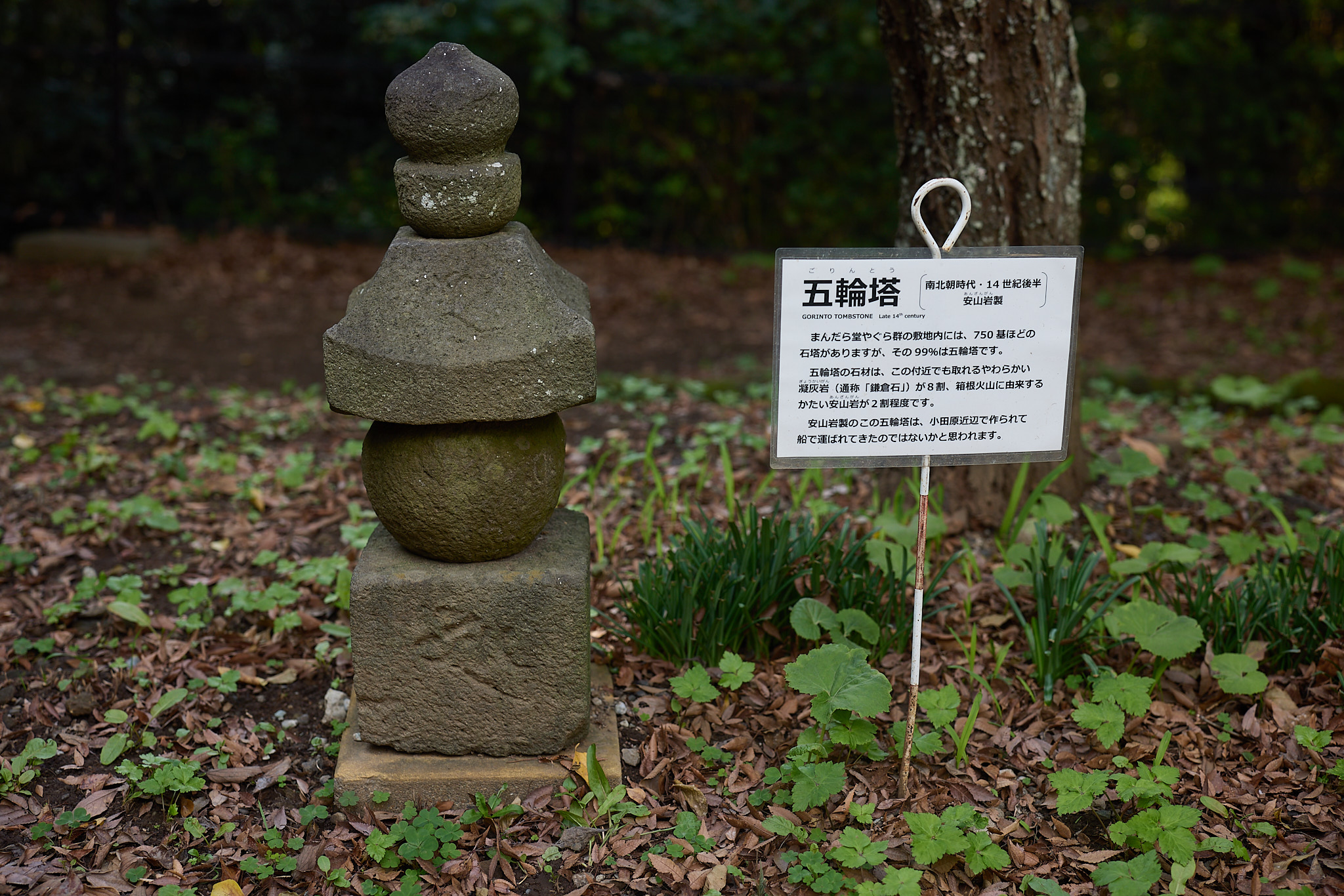
Beside one of them, under a tree, a small sign on a wire stake puts the number of stone towers on the site at about 750, of which 99 per cent are gorintō. That is far more towers than chambers, so the holes say little about how many people were remembered here. Who they were is a matter of informed guesswork: warriors and monks, mostly, and perhaps merchants and craftsmen with money to spend.
Most of the towers have since been moved, and where each one first stood can no longer be worked out. The towers sharing a chamber today did not necessarily start out together.
The same sign has something to say about the stone. About eight in ten of the towers are a soft tuff that could be quarried nearby, commonly called Kamakura stone. The rest are a hard andesite from the Hakone volcano, to the west. The tower beside the sign is one of these: late fourteenth century, and thought to have been carved somewhere near Odawara, then brought here by boat.
Here was a whole hill of stone, and someone, it seems, still had a tower brought in by sea.
Underfoot
Some of the site’s more remarkable finds are out of sight altogether.
Less than a metre below one patch of the level ground, excavators found two rectangular pits cut into the bedrock, their insides burned black. Bodies are thought to have been cremated in them in the fifteenth century. Traces of cremation are common on the ground in front of the chambers, but most are shallow ovals; square pits like these are unusual. The ashes presumably went into the chambers, though no one can match a pit to a chamber.
On a small ridge facing the chambers, another dig uncovered a fourteenth-century arrangement of cut stones, laid side by side. The eastern half had collapsed. On the western side was a pit holding a single human skull, believed to be that of someone who had been beheaded. The stones may have been the base of a memorial to that person. Who it was, and why, is not known.
Both finds have since been covered over again. All there is to see now is a pair of signboards.
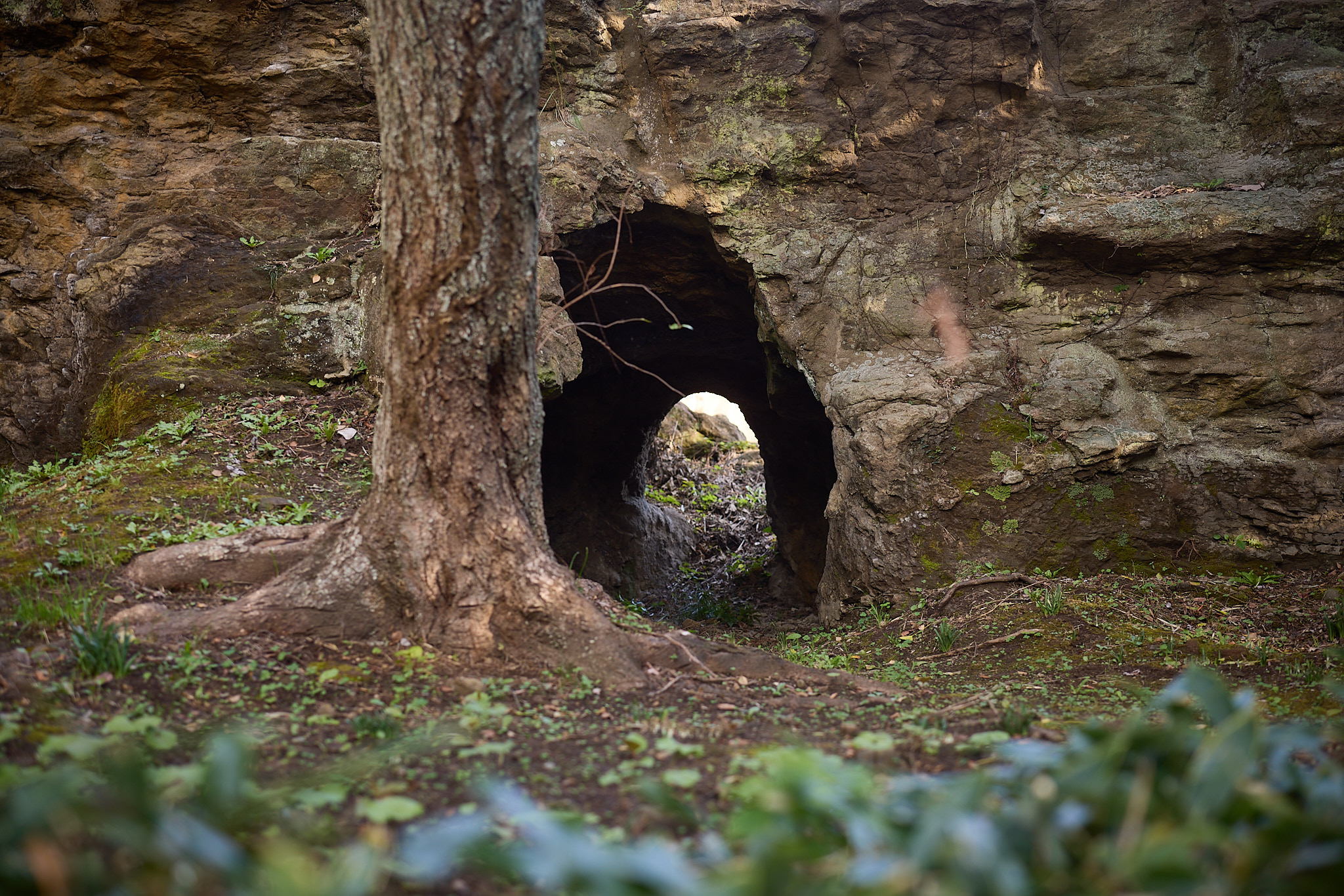
The chambers that remain in view have not stayed as they were dug, either. Where the rock between neighbours has fallen away, separate chambers now read as one. Some have broken through to chambers on the far side of the ridge, and one was, for a while, part of a footpath.
Much of the damage comes from trees. They grow on top of the chambers, adding their weight, while their roots work into cracks and prise them open. The trees that make the place look so peaceful are slowly taking it apart. Some of the chambers have since been fitted with rock bolts, and where a chamber’s ceiling fell in, the hole has been capped with plastic.
In name only
Then there is the name. Mandarado means, roughly, “mandala hall”. No hall has been identified.
The name first appears in a land survey from the end of the sixteenth century, which lists Mandarado as a field: a low-grade one, registered to a man called Hikoemon. On the level ground facing Kamakura, excavators did find post holes, along with many kawarake, small unglazed clay dishes, so something seems to have stood there. What it was, nobody can say.
Farming was not the site’s last job, either. A town history from 1925, among other sources, records people living in the chambers, and in the mid-twentieth century the landowner ran a small Buddhist hermitage here.
The hall is still missing. The name has stayed put.
Over the line
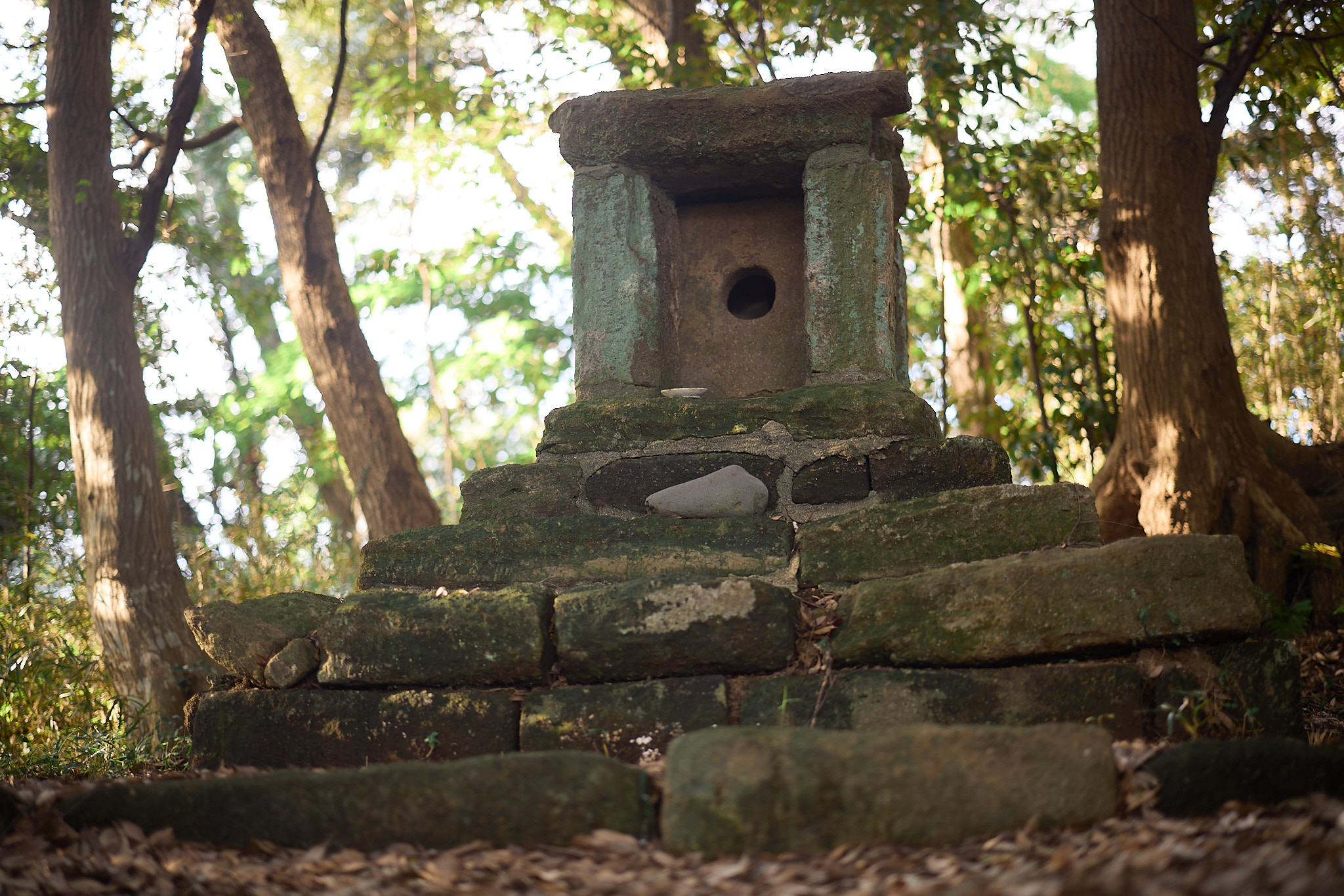
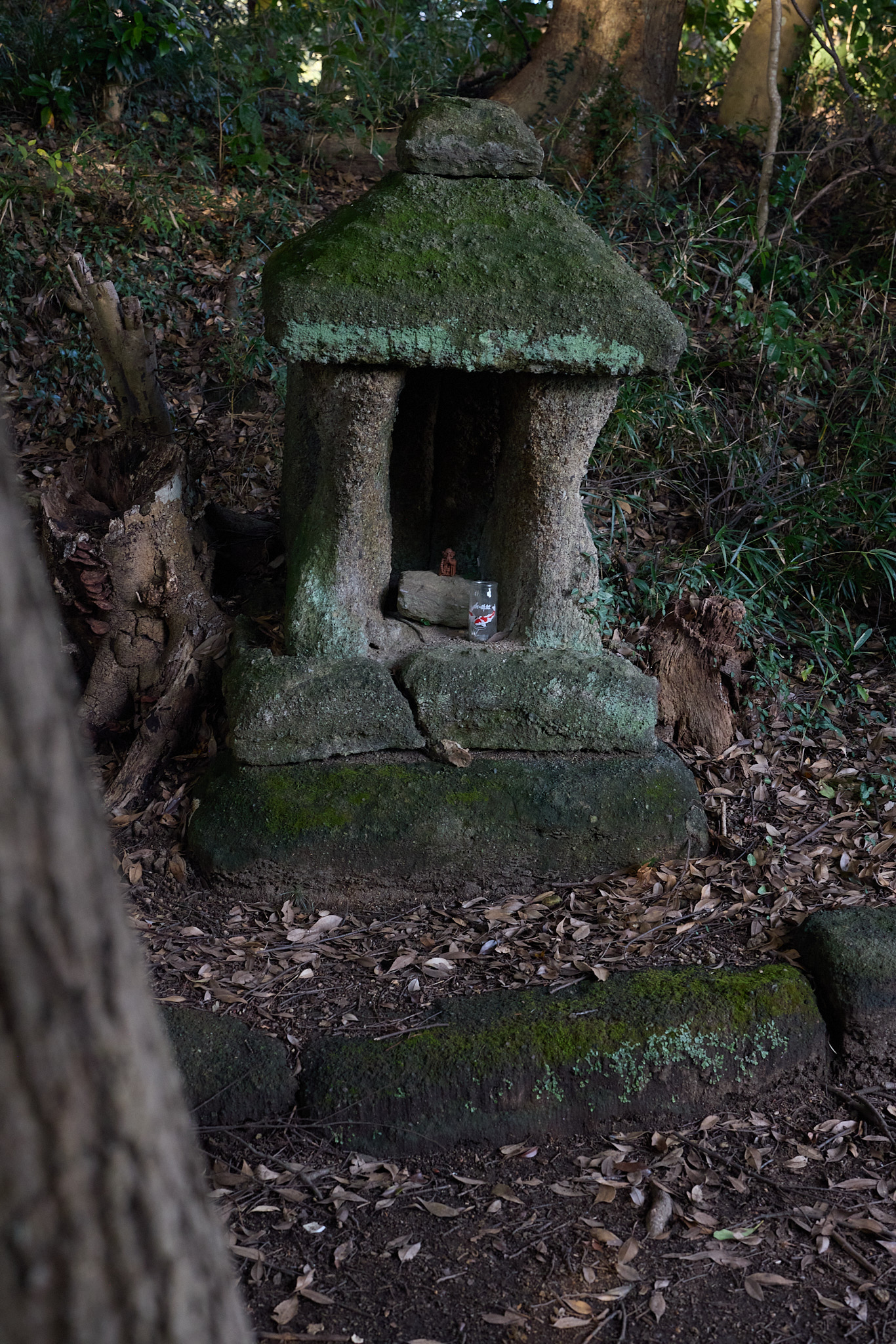
After the yagura, the path brought me to two small stone structures among the trees. These were built rather than dug. Kamakura lists them as cultural properties under the name “stone mausoleums”. The historic site, named after the road, straddles the city boundary: the chambers are in Zushi, the mausoleums in Kamakura. One has a round hole in its front; the other, a pointed roof and an open front. The sign nearby does not say what they held, or for whom.
Not a wall
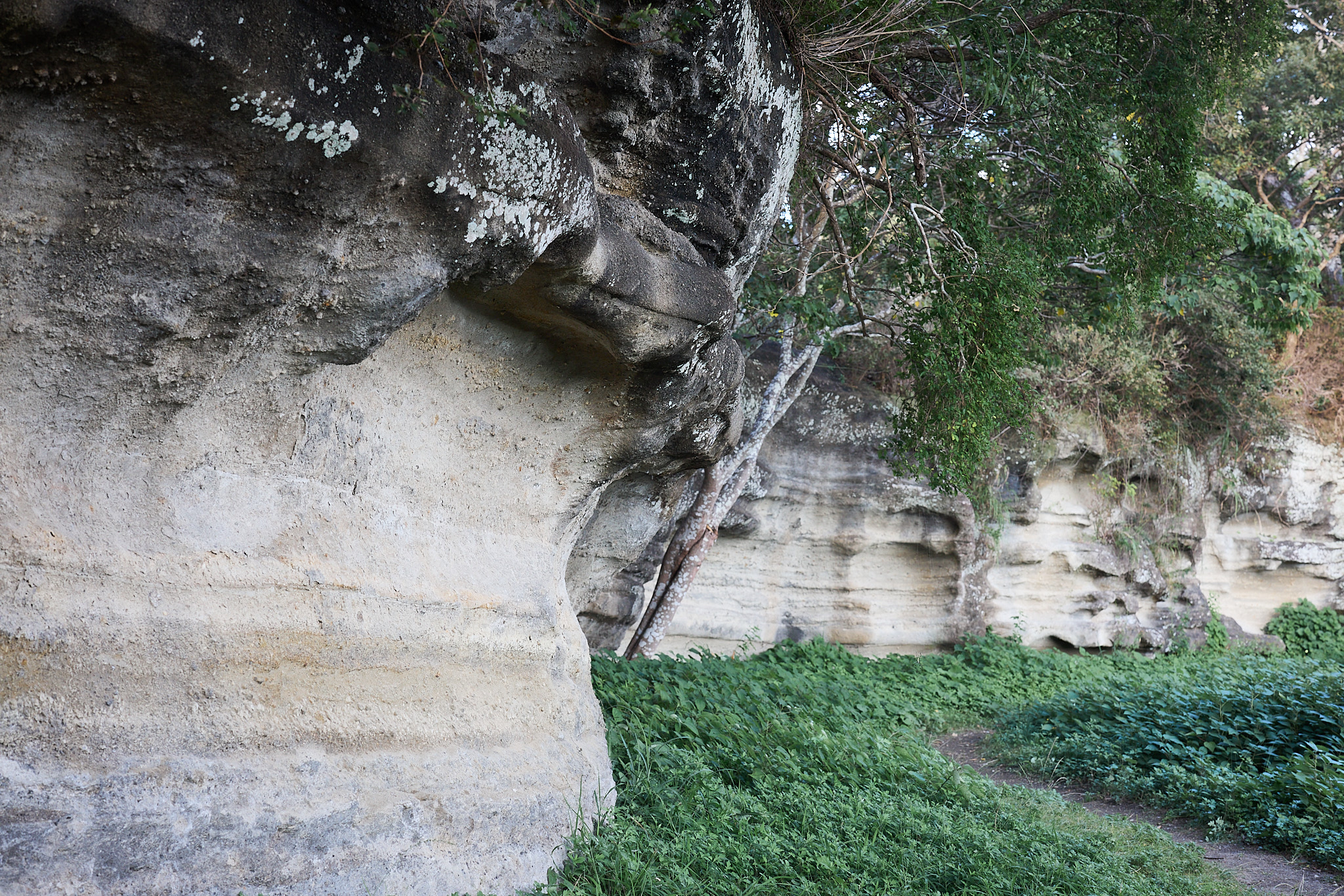
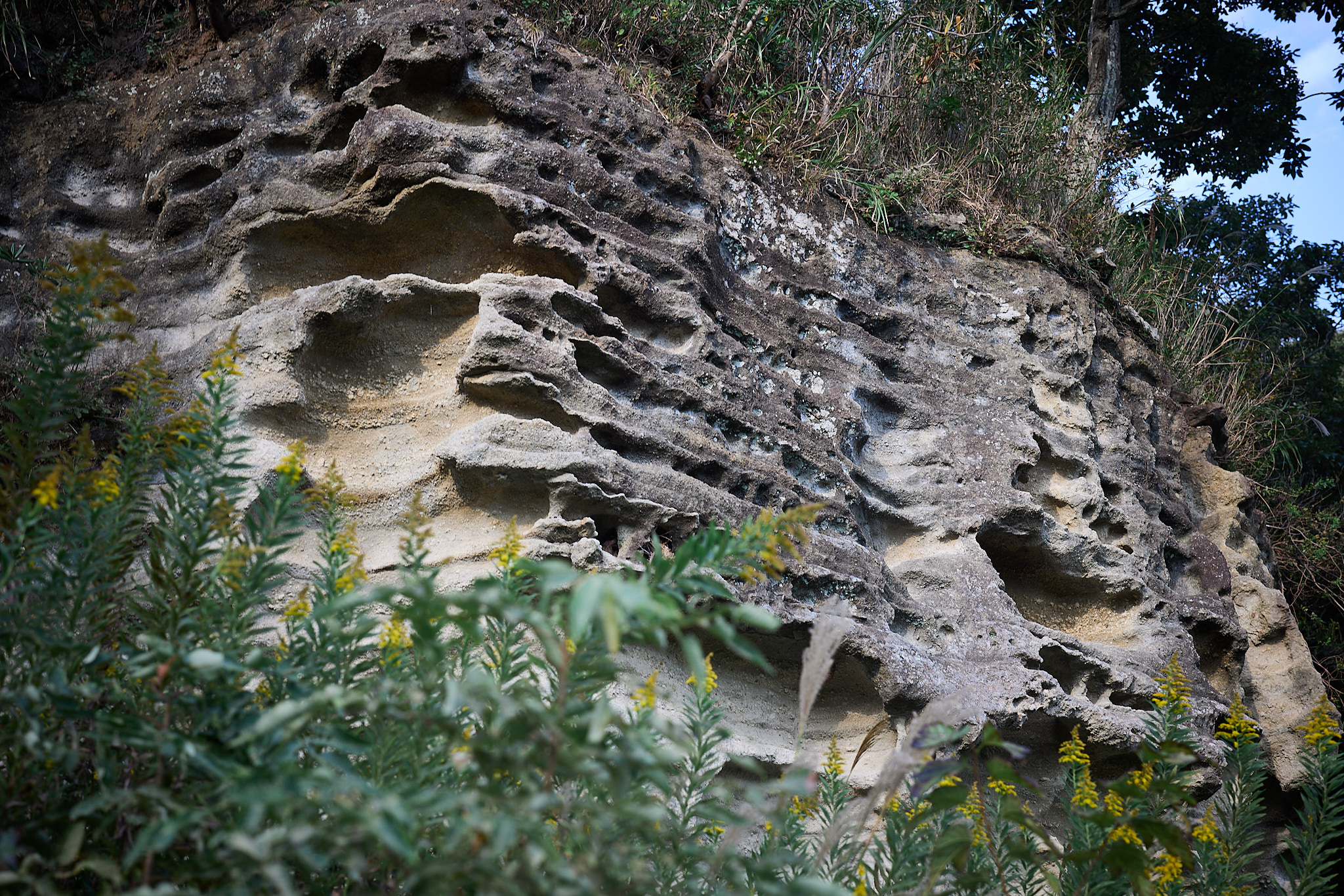
A few minutes further on, a cliff runs beside the path. The Ōkirigishi, the “great cut slope”, stretches along the ridge for more than 800 metres and rises as high as ten. For a long time it was explained as a defence: the shogunate, the story went, had cut the hillside sheer to hold off the Miura, a powerful warrior family based on the peninsula. Then an excavation at its foot found the marks of stone being cut out in slabs.
The cliff was not the point. The stone was.
Mount Fuji helps with the date. Ash from its most recent eruption, in 1707, lies in the upper layers of the soil that later filled the workings, so the quarrying was over by then. It was probably at its busiest in the fourteenth and fifteenth centuries. Nobody has ruled out that a sheer rock face also came in handy against attackers.
The name in full is Osarubatake no Ōkirigishi, the great cut slope of the Monkey Field. That part comes from a story that Nichiren, the Buddhist monk, was helped near here by three white monkeys after he was driven out of Kamakura. The monkeys, as far as anyone knows, did no quarrying.
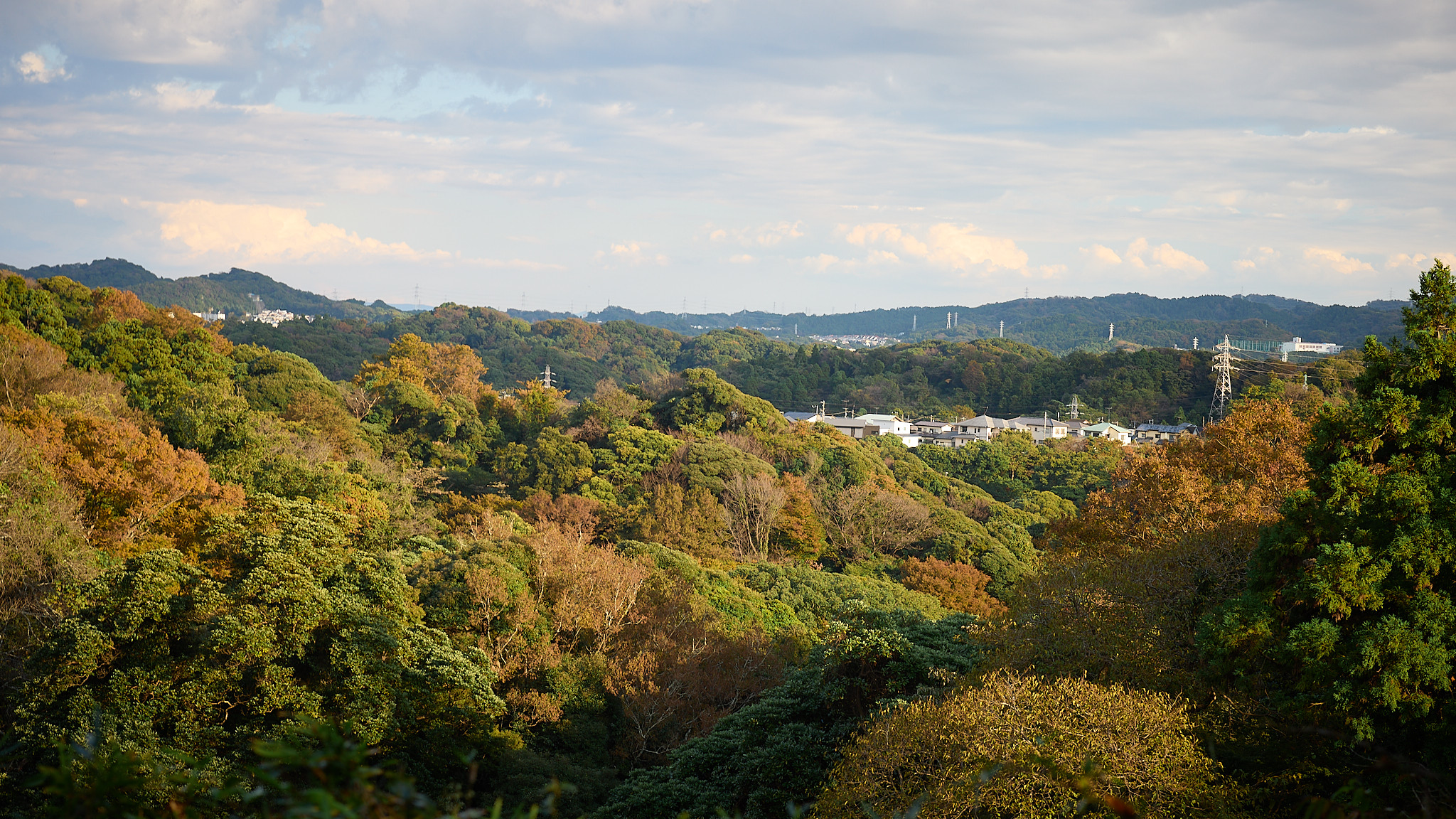
The quarrymen are long gone. In their day, Kamakura was building on cut stone, and this ridge is thought to have been one of the places it came from.
The ridge that gave the dead their rooms seems also to have helped line Kamakura’s wells.
Visit this place
Location
Mandarado Yagura Caves (まんだら堂やぐら群)
Inside the Nagoe Kiridoshi historic site, on the ridge at the edge of Kamakura, reached on foot by steep hill paths.
Within the Nagoe Kiridoshi historic site, 7-chōme Kotsubo, Zushi, Kanagawa 249-0008, Japan
Practical Information
- Area
- Kotsubo, Zushi, Kanagawa, on the ridge at the edge of Kamakura
- Opening
- Open only during limited periods in spring and autumn, on Saturdays, Sundays, Mondays and public holidays. In 2026: 18 April–31 May, 10:00–16:00, and 24 October–14 December, 10:00–15:00. Last entry 5 minutes before closing. The dates change every year.
- Weather
- Usually open in light rain. The site may close without notice when heavy rain or storms are forecast.
- Other days
- The site is closed, but part of it can be seen through the entrance fence, except when summer growth hides it.
- Admission
- Free. Donations towards the upkeep of the historic site are welcome.
- Access
- From the east exit of JR Kamakura Station (bus stop 3), take a bus to Midorigaoka Iriguchi (about 10 minutes), then walk about 10 minutes. From JR Zushi Station (east exit, stop 6) or Keikyū Zushi·Hayama Station (north exit, stop 3), take a minibus either to Midorigaoka Iriguchi (about 12 minutes, then about 15 minutes on foot, via the Kotsubo stairs entrance) or to Kamegaoka Danchi Kita (about 18 minutes, then about 10 minutes on foot, via the Kamegaoka Danchi entrance). Times are approximate.
- Visitor note
- The way up is steep, with muddy and slippery stretches. It is short, but a proper hike: wear suitable shoes. There is no parking or bicycle parking.
- Food
- Please don’t eat inside the site (drinks are fine). Kites have snatched food from visitors’ hands, causing injuries.
- Official information
- Zushi City — Mandarado Yagura limited opening (Japanese)
Information last checked: November 1, 2026 (opening periods and hours, weather closures, admission, bus access and visitor rules).
Conversation
Comments
Review pending commentsComments are reviewed before appearing. The internet already contains enough unattended surprises.
Checking comments…
Comments are not available in this migration preview yet. Existing comments remain on the current site.
Leave a comment