Chinsekikan: Where Stones Acquire a Personality
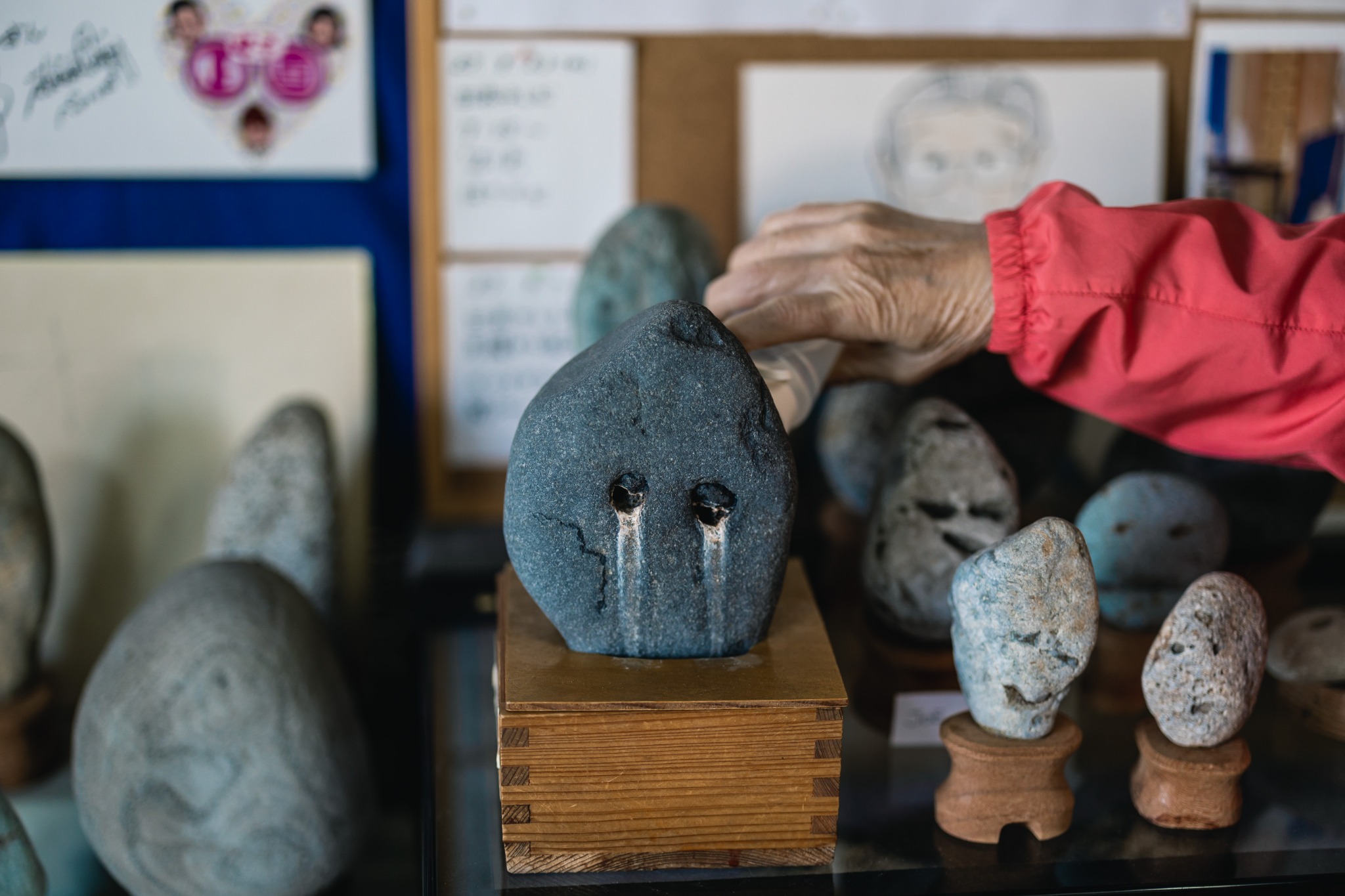
A stone was crying, and the museum director was helping it along.
She poured water into a hole at the back, and it emerged through two eyes, running down the stone’s face. There was no need to enquire after its personal circumstances.
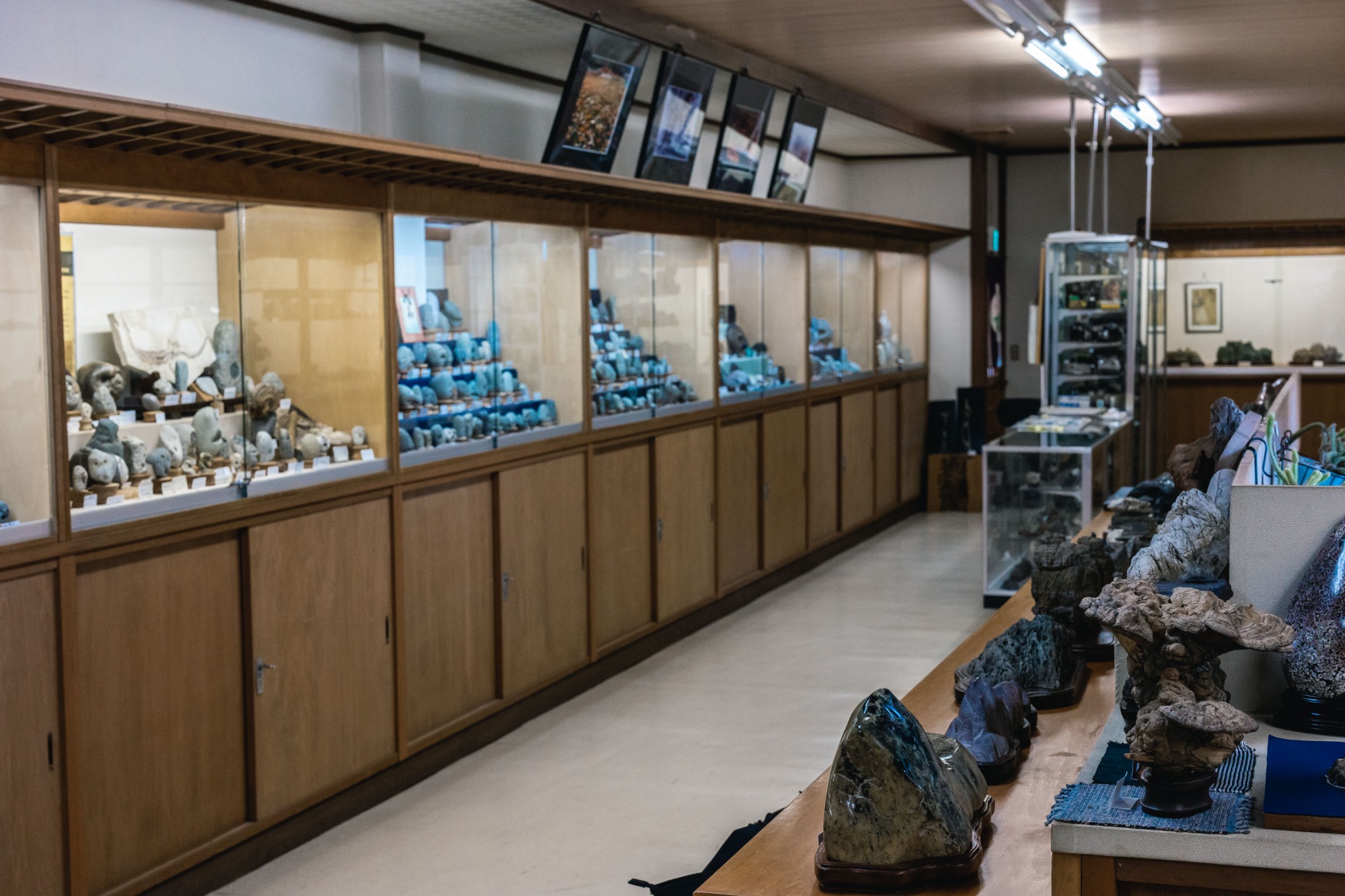
This was Chinsekikan, a small private museum in Chichibu, in the mountains of Saitama Prefecture northwest of Tokyo. The name means “Hall of Curious Rocks.” Behind glass, rows of stones sat on individual wooden stands, their hollows, markings and uneven edges resolving into eyes, noses and mouths.
The faces had not been carved. Someone had found them, recognised a resemblance and brought them here.
The crying stone had plenty of company.
A familiar face
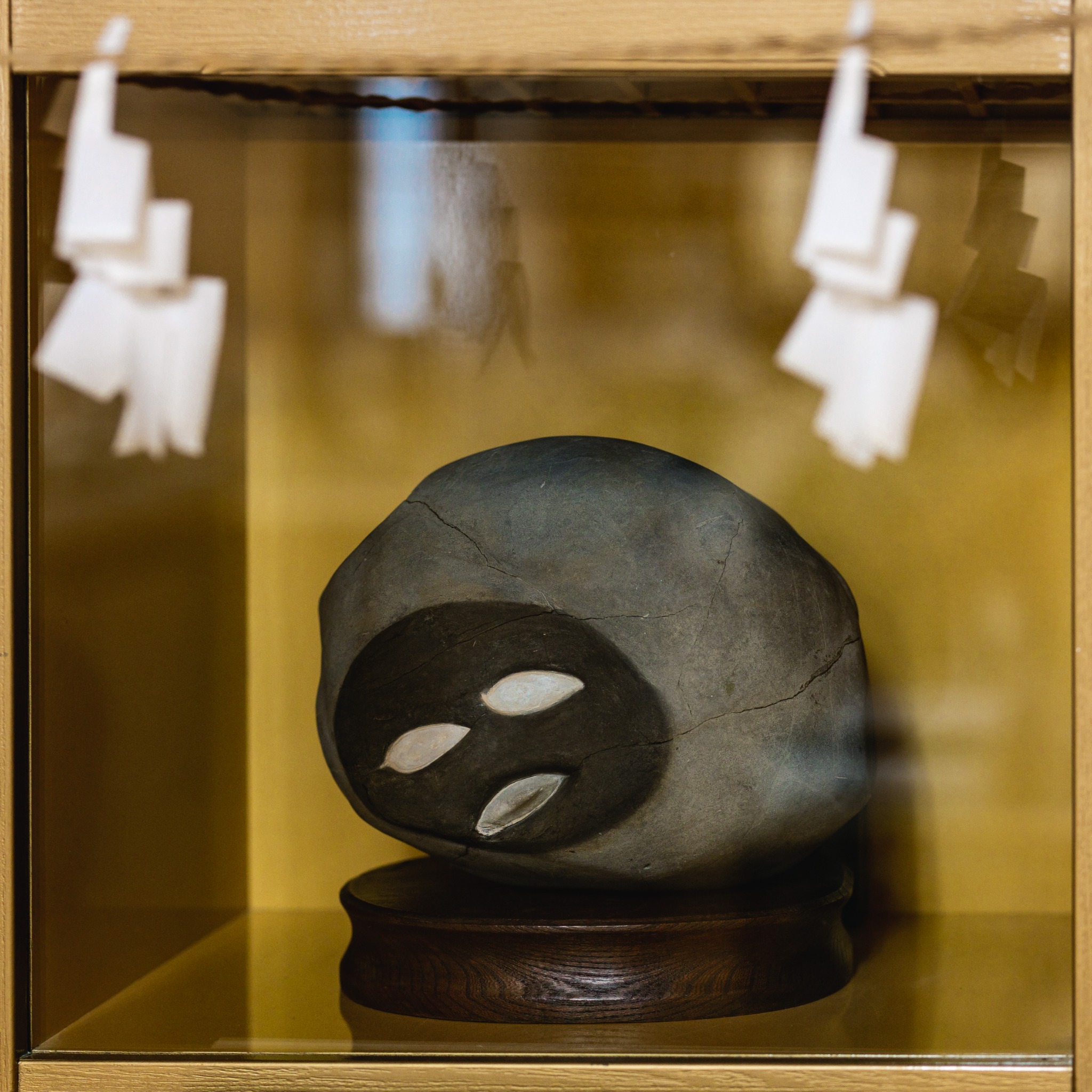
One face already had a place in my memory: the rounded stone with pale eyes and a mouth, displayed against gold in its own cabinet. A replica had appeared as Jinmenseki-kun on Black Variety, a Japanese television programme I used to watch. I had been particularly fond of that character.
Its pale eyes and mouth were shell fossils. What I remembered as a television personality was an arrangement of ancient marine remains. An unconventional route into show business.
The original has a grander name: Kami no Warabe, the Divine Child. It was the stone that turned the museum’s founder, Shōji Hayama, a silk-textile businessman, from collecting elegant ornamental stones to collecting faces. A dream, the story goes, then told him to collect face stones.
The replicas came later. Hayama ordered about a thousand of them, and they did not sell—until one appeared on television as Jinmenseki-kun. They sold out.
I had been a fan of the merchandise.
Other stones had found less public roles. Many of their handwritten names came from visitors, whose contributions were best appreciated in two stages: look at the stone, then read the label.
The second look is rarely quite the same.
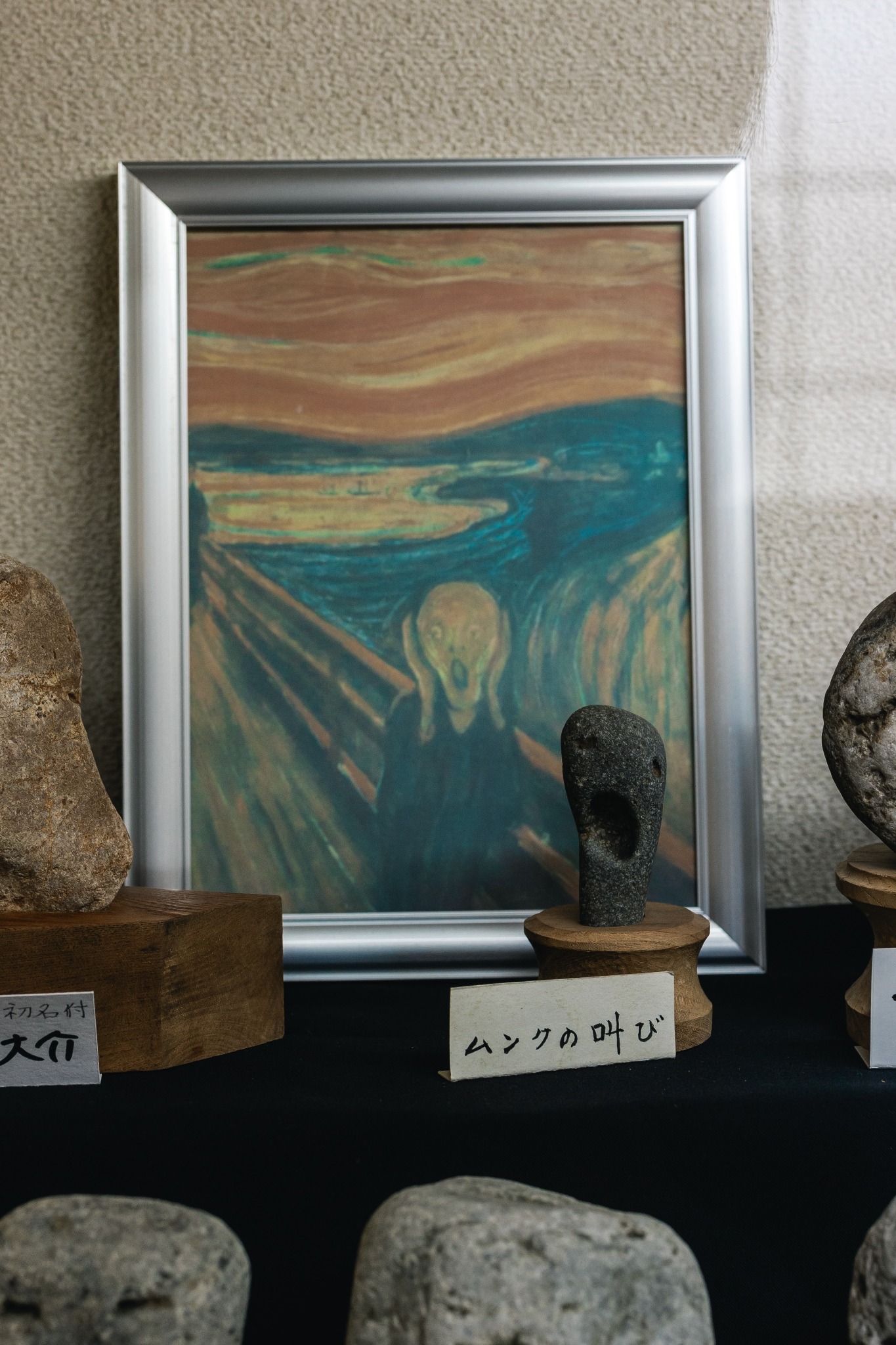
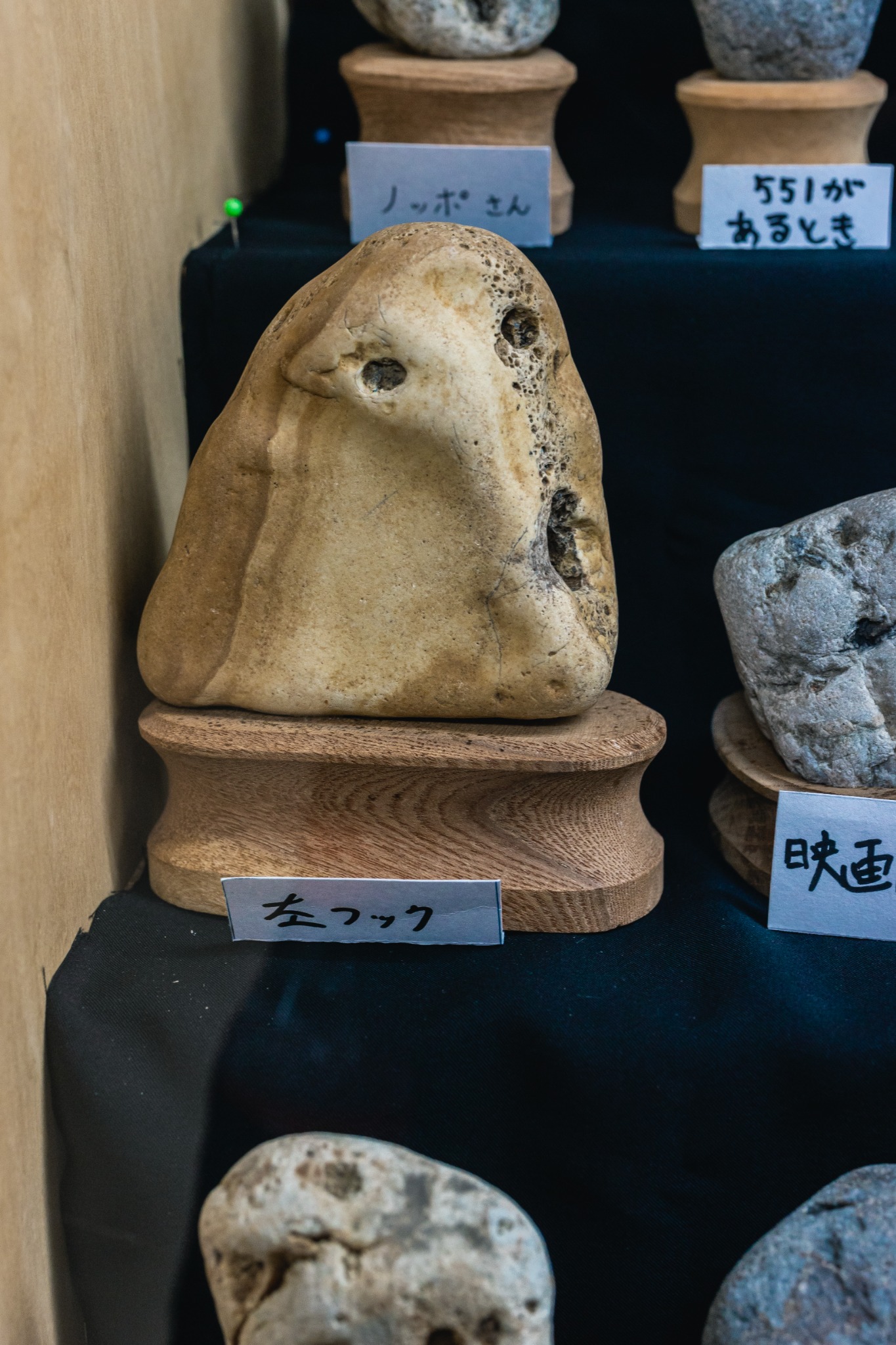
Some names identified a recognisable face. Others supplied considerably more than an identity.
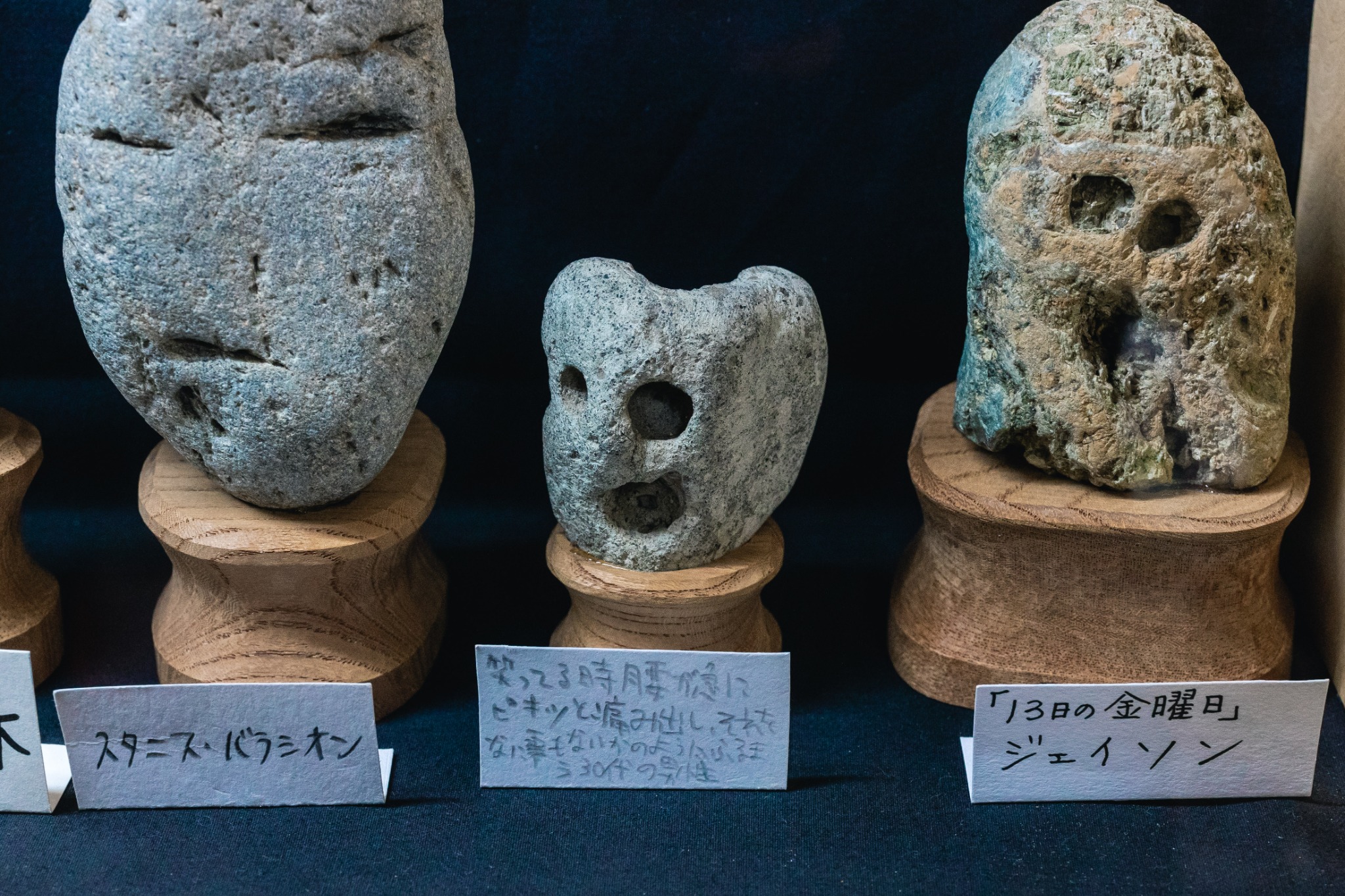
A few holes in a rock, and someone had supplied an age bracket, a medical complaint and a coping strategy.
Another stone had acquired an unresolved romantic history.
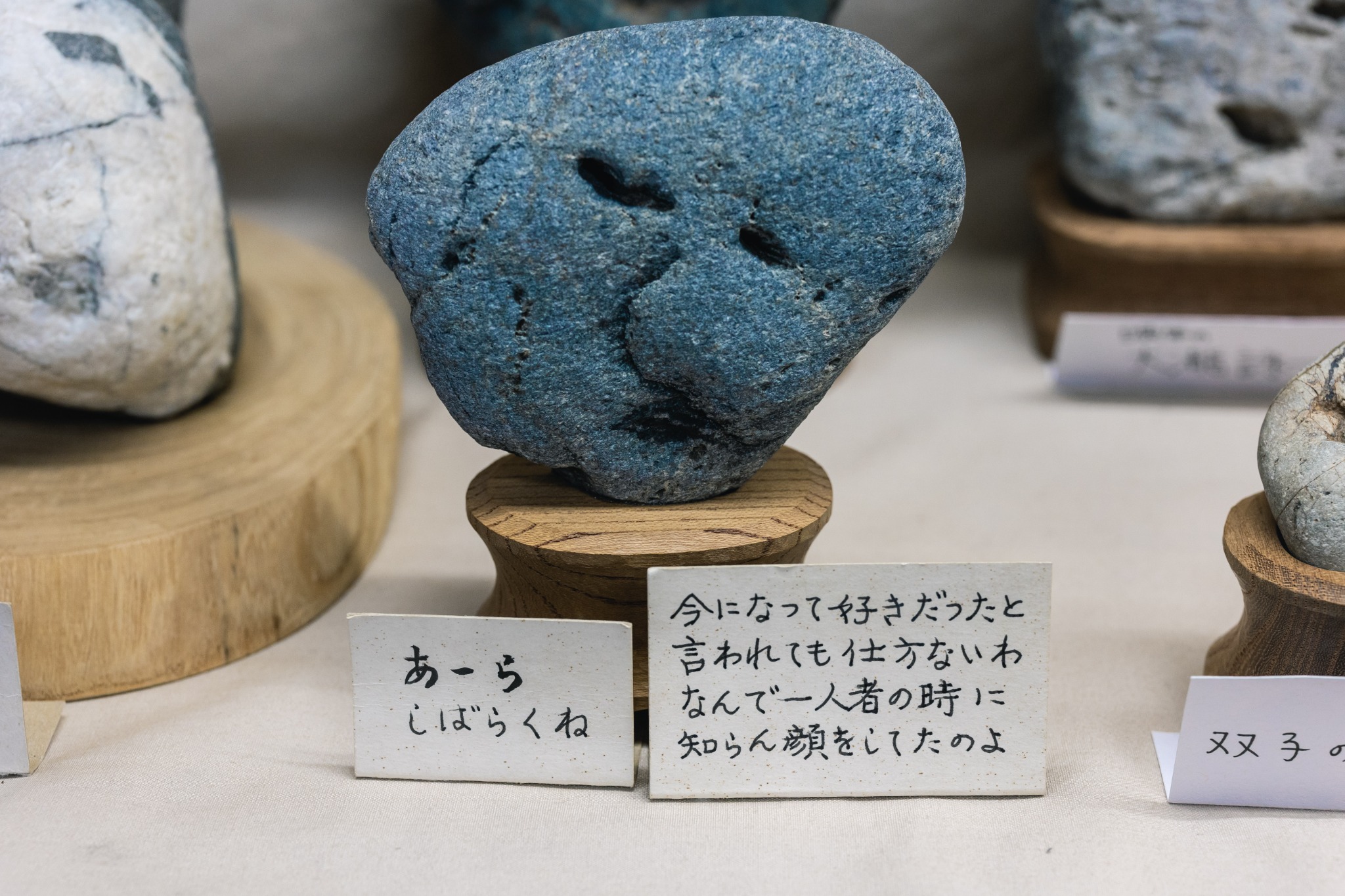
This was beginning to sound like an awkward reunion.
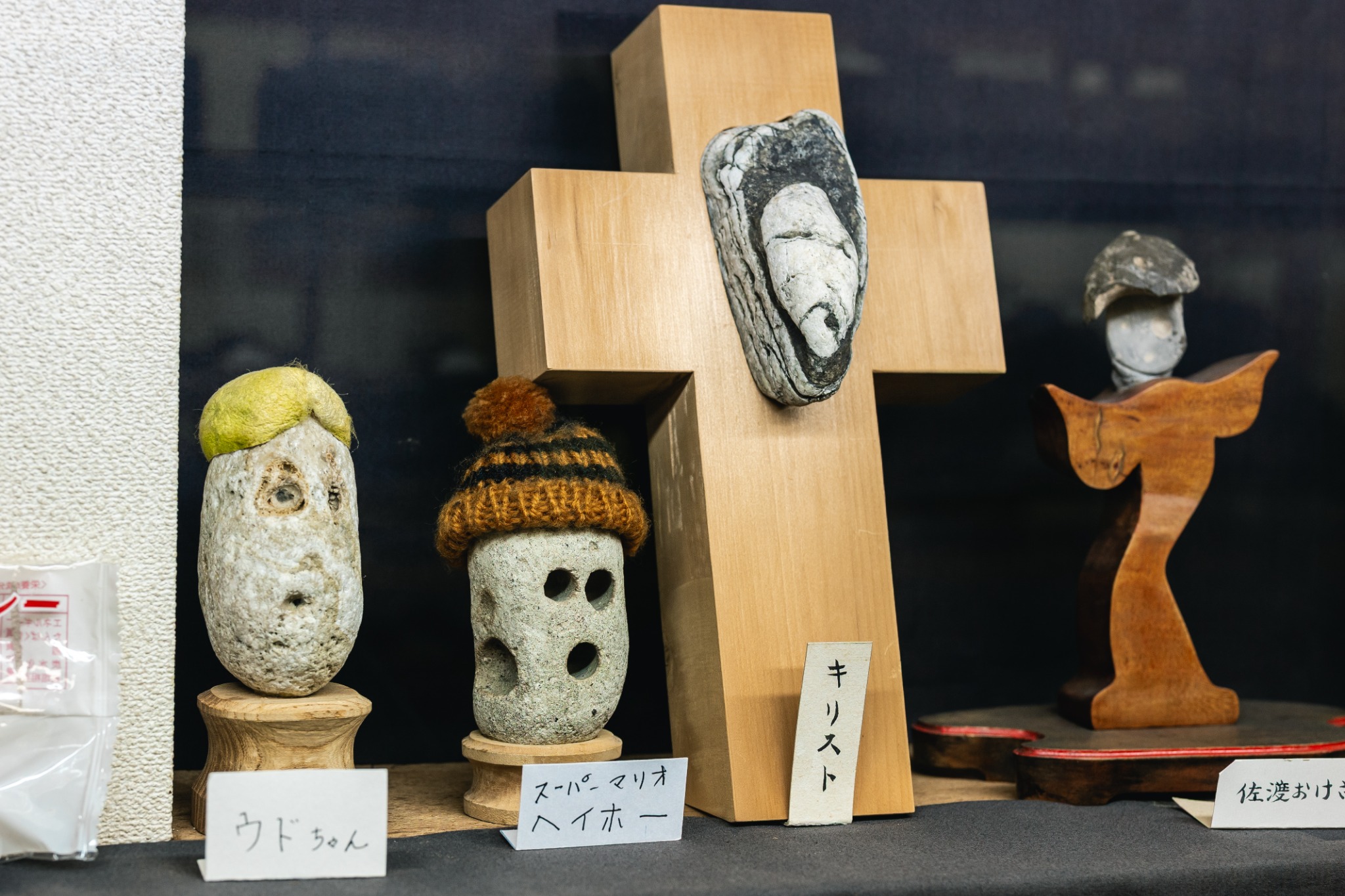
Sometimes the display offered a little assistance: a hat, a tuft of hair, a carefully chosen support. Nature had supplied the faces; the wardrobe was a separate department.
More than a face
The shell fossils in Jinmenseki-kun were a reminder that these stones had histories long before anyone gave them names.
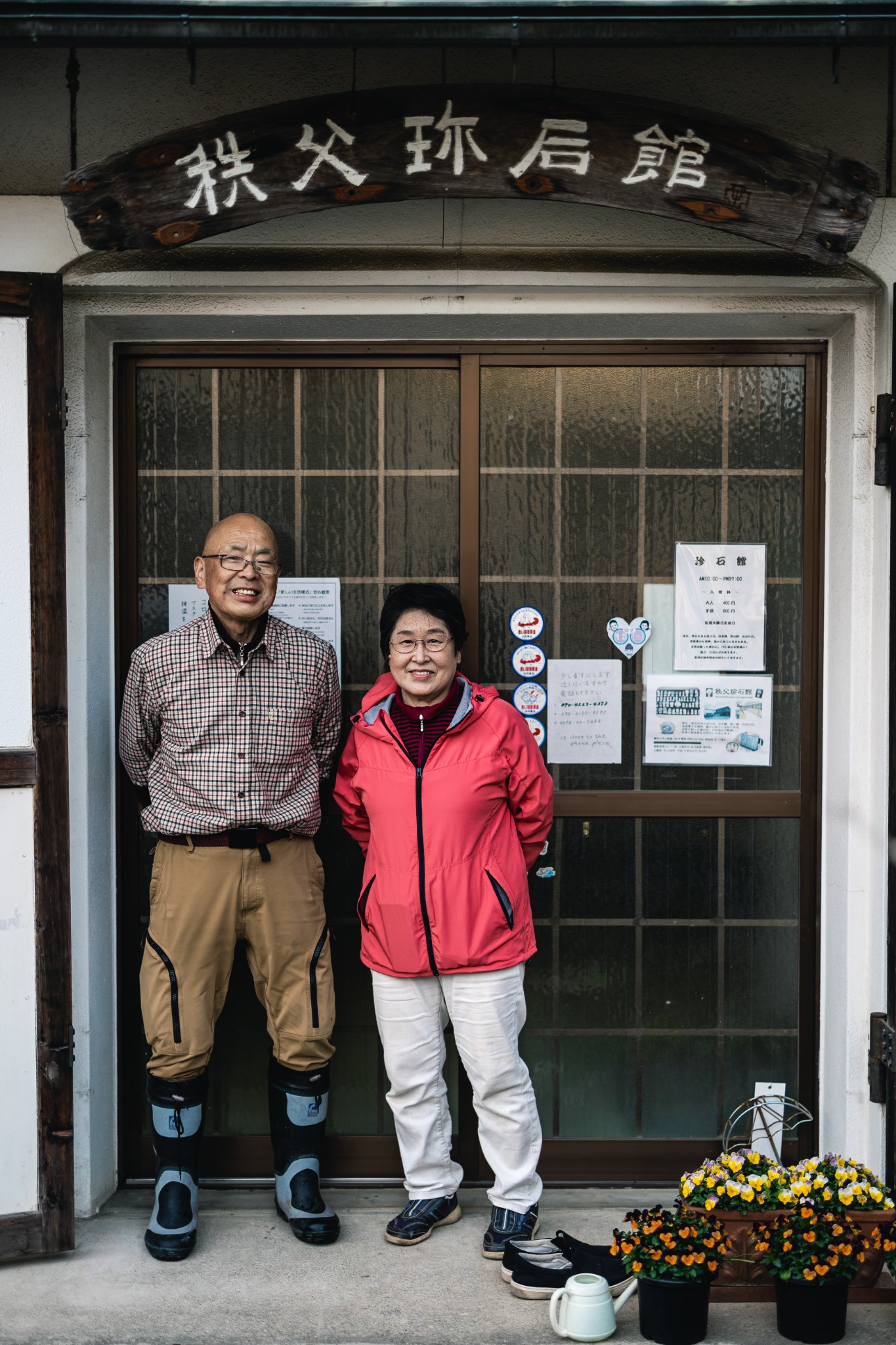
The museum’s director, Yoshiko Hayama, and her husband talked with me about stones and Chichibu’s geology. Between about 17 and 15 million years ago, the Chichibu Basin was a bay. Its old seabed left fossil-bearing layers behind, helping explain why the area offers so much for fossil hunters and stone collectors to examine.
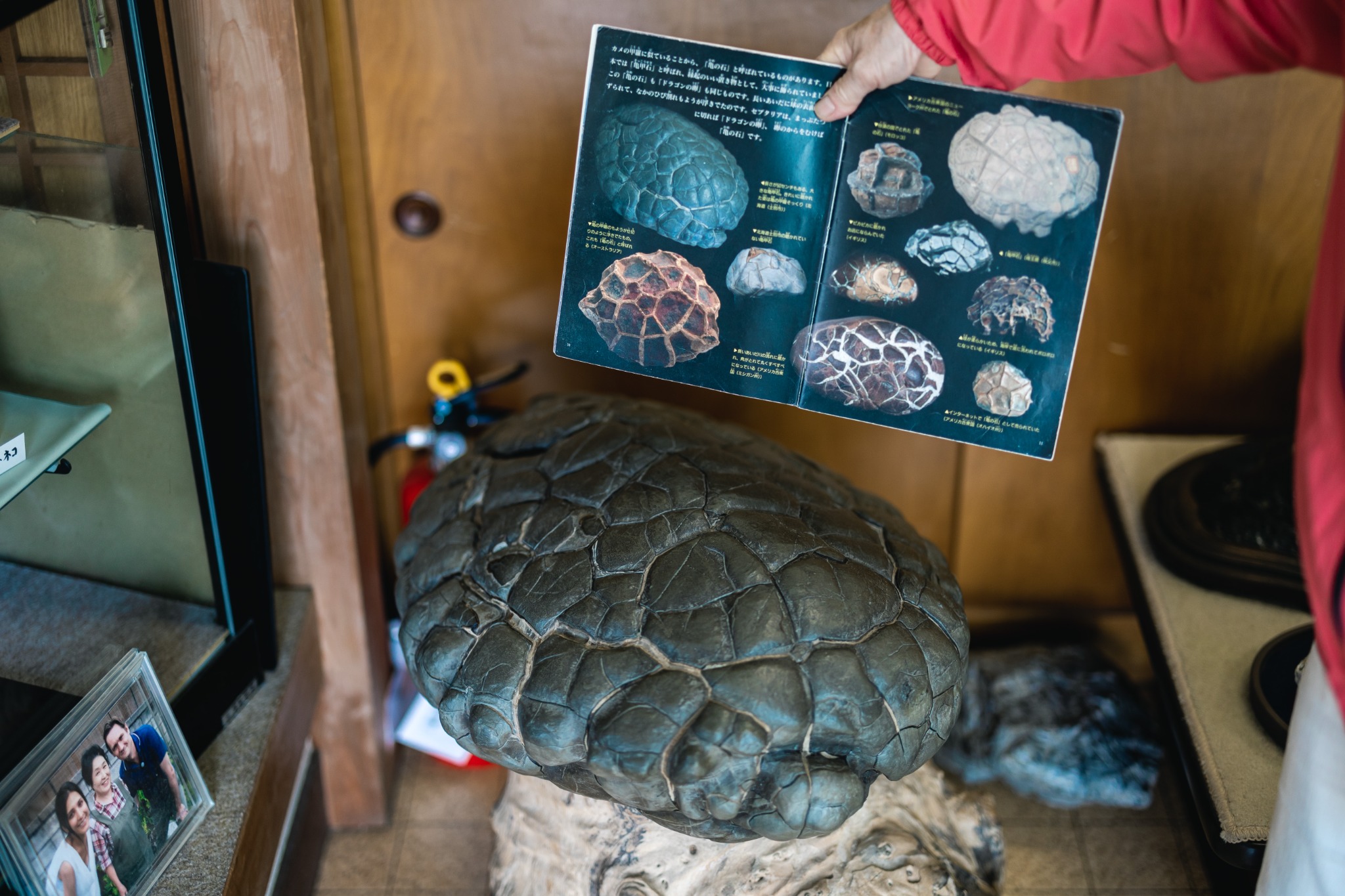
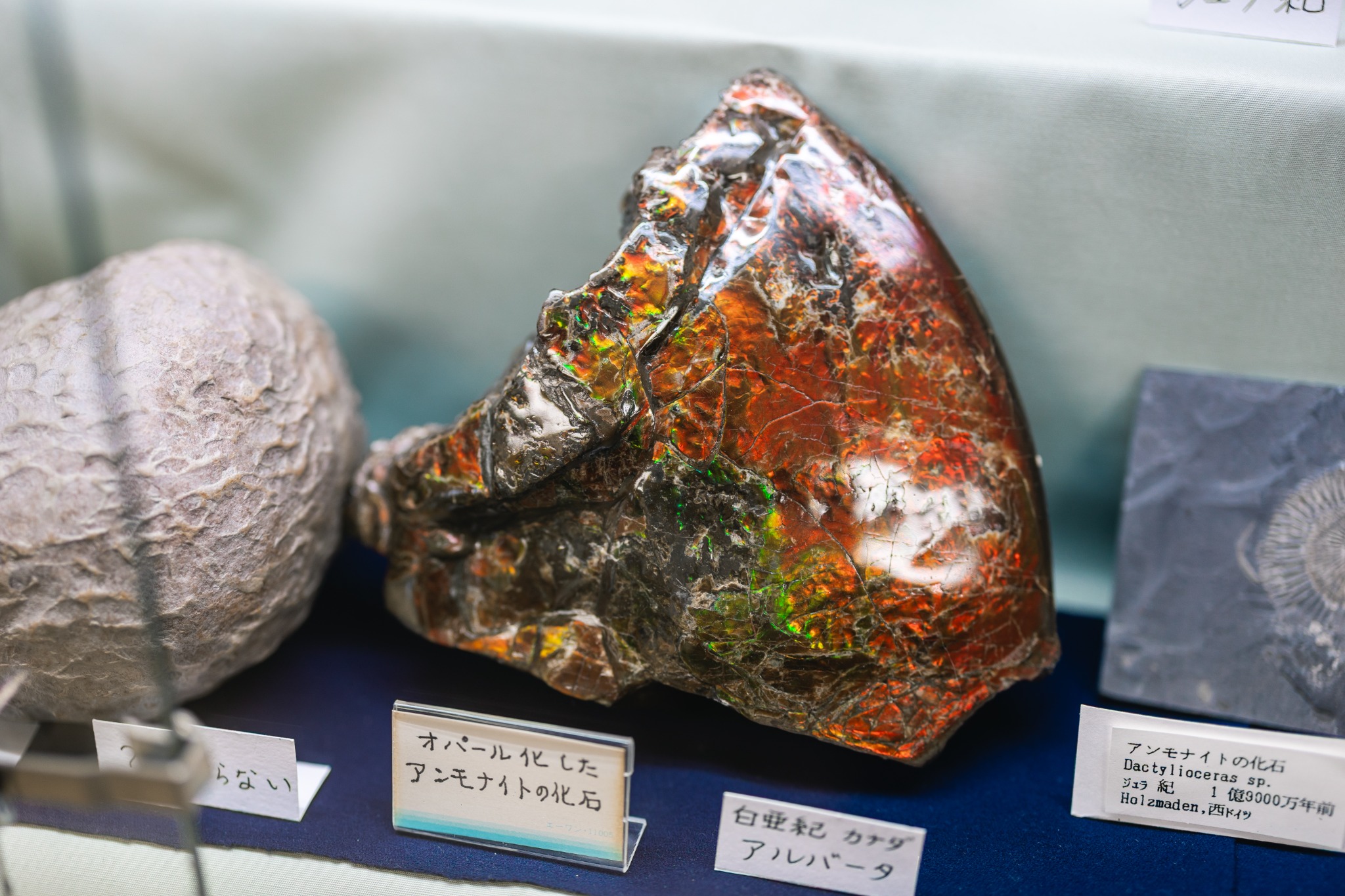
The collection reached well beyond Chichibu, too. An ammonite from Canada shone red and green beneath the cabinet lights. Beside a large stone divided into irregular, shell-like sections, an illustrated reference book lay open to show comparable specimens.
Not every resemblance was human. One stone’s clustered pinnacles had earned it the name of an entire landscape.
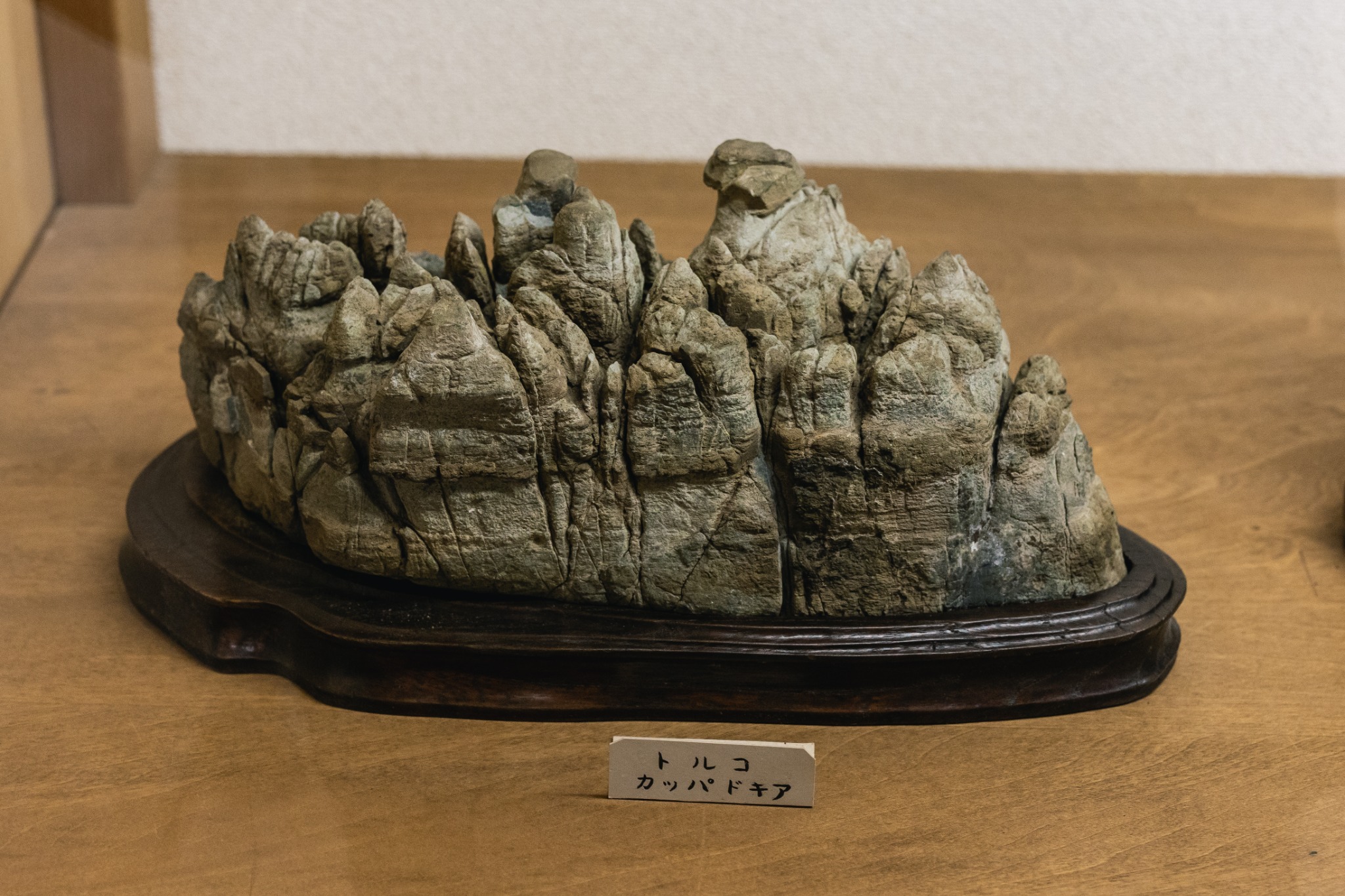
The stand deserved a look of its own. Yoshiko’s father had made wooden bases to fit individual stones.
Beneath the casual jokes on the labels was patient work: finding a stone worth keeping, deciding which way it should face, fitting a base to an underside that had never been designed for exhibition.
In talking with Yoshiko and her husband, I learned more about her father and his collection. Our conversation also took in cameras—a subject particularly likely to distract me. A glass cabinet held rows of them.
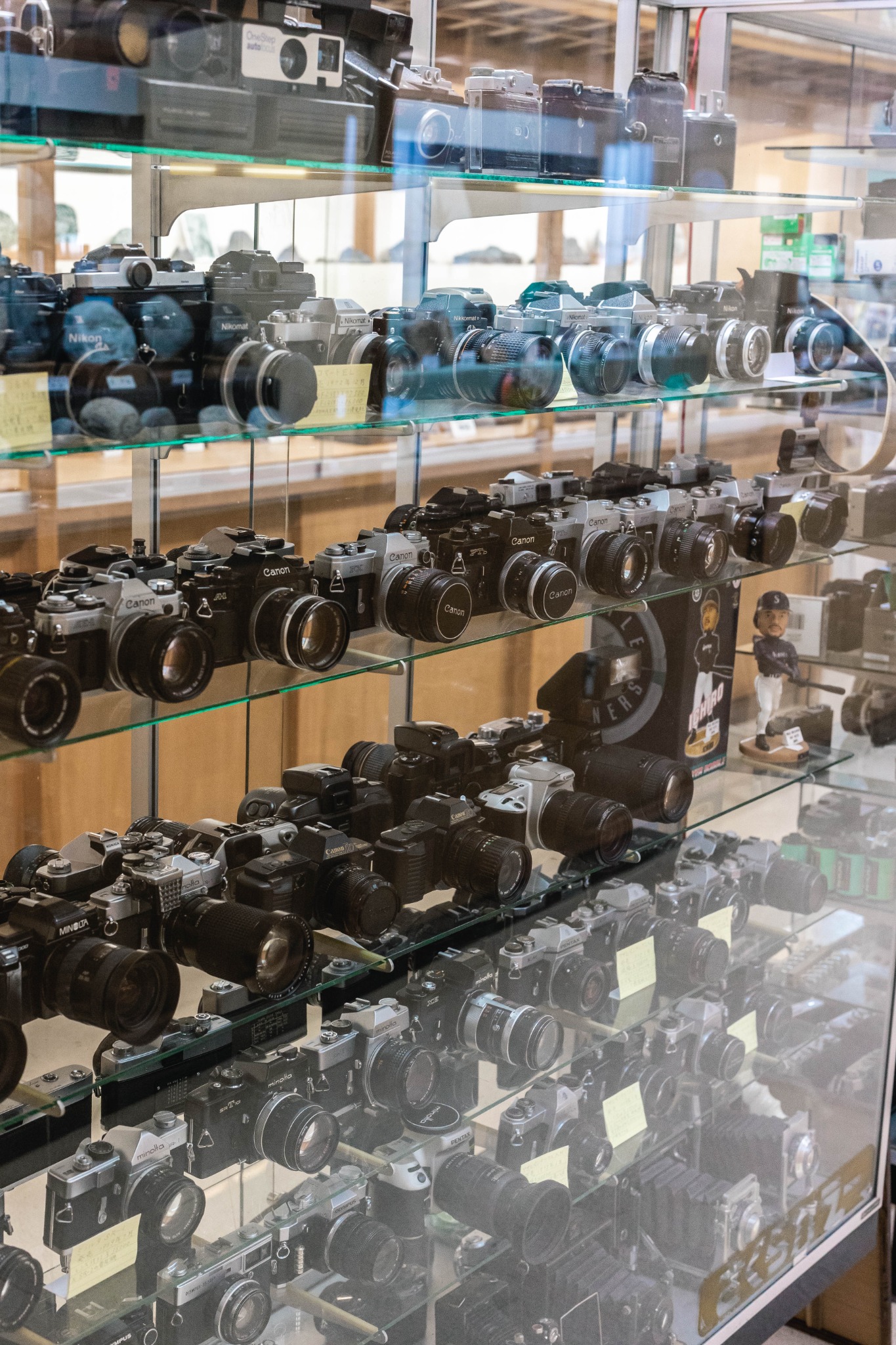
There was plenty to photograph, but also plenty to put the camera down for.
My contribution
When an unnamed stone is available, visitors may be able to give it a name. Having enjoyed everyone else’s interpretations, I had an opportunity to contribute one of my own.
The stone had marks that reminded me of the rounded eyebrows associated with Heian courtiers, whose makeup included brows painted higher on the forehead. They seemed sufficient evidence of courtly standing.
I wrote “Maro” on its card—an old-fashioned word for “I,” now associated with the speech of Japanese court nobles.
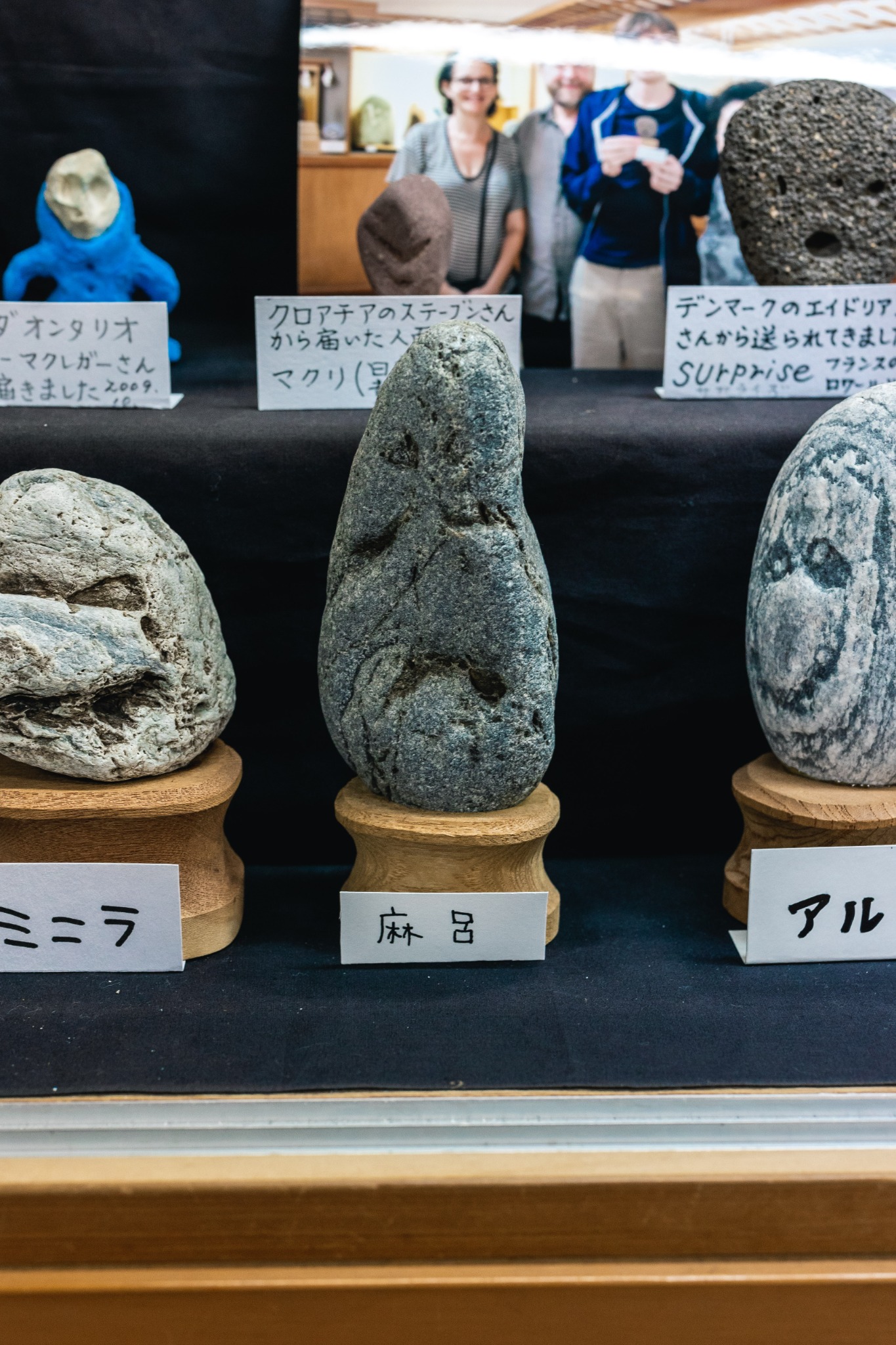
I had made no alteration to the stone. I had, however, improved its social position.
Visit this place
Museum
Chichibu Chinsekikan (秩父珍石館)
About 15 minutes on foot from Kagemori Station on the Chichibu Railway. Parking is available.
764-6 Kamikagemori, Chichibu, Saitama 369-1872, Japan
Practical Information
- Opening hours
- 10:00–17:00
- Closing days
- Tuesdays
- Admission
- Junior high school students and older: ¥500; elementary school students: ¥200; preschool children: free
- Access
- About 15 minutes on foot from Kagemori Station on the Chichibu Railway
- Parking
- Available
- Official Instagram
- Chinsekikan
Opening arrangements can change. Check the museum’s official Instagram before travelling.
Information last checked: September 5, 2026
Conversation
Comments
Review pending commentsComments are reviewed before appearing. The internet already contains enough unattended surprises.
Checking comments…
Comments are not available in this migration preview yet. Existing comments remain on the current site.
Leave a comment